Get Premium
Dark mode theme is available exclusively for premium users. Learn more about the benefits of subscribing.
No fees, cancel anytime.

 Dark Mode Ad-Free Browsing Unlimited Content
 Ad-Free Browsing Unlimited Content Dark Mode
Join 1.2 million Panda readers who get the best art, memes, and fun stories every week!
28submissions
1week left

Many book lovers have turned to Goodreads as a source of inspiration or a venue to gush or vent after reading something truly moving. Its extensive sections for reviews, quotes, and thoughts allow casual readers to learn more before buying.
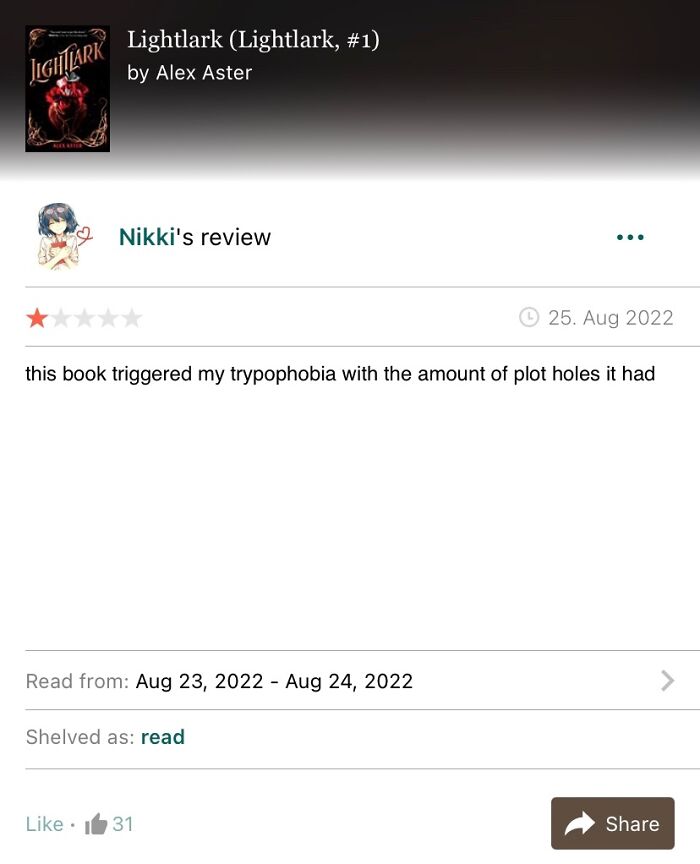
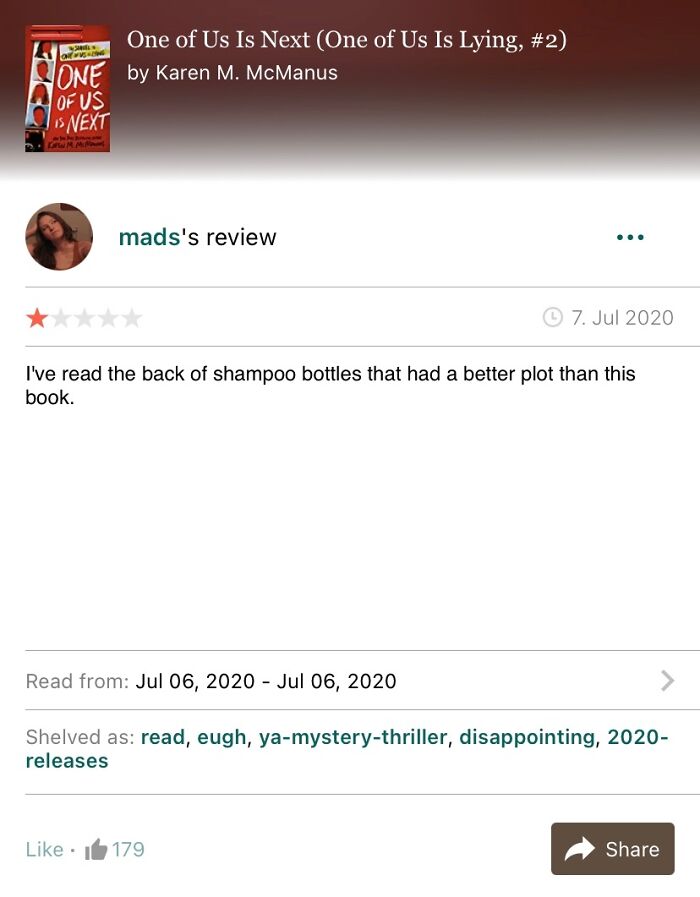
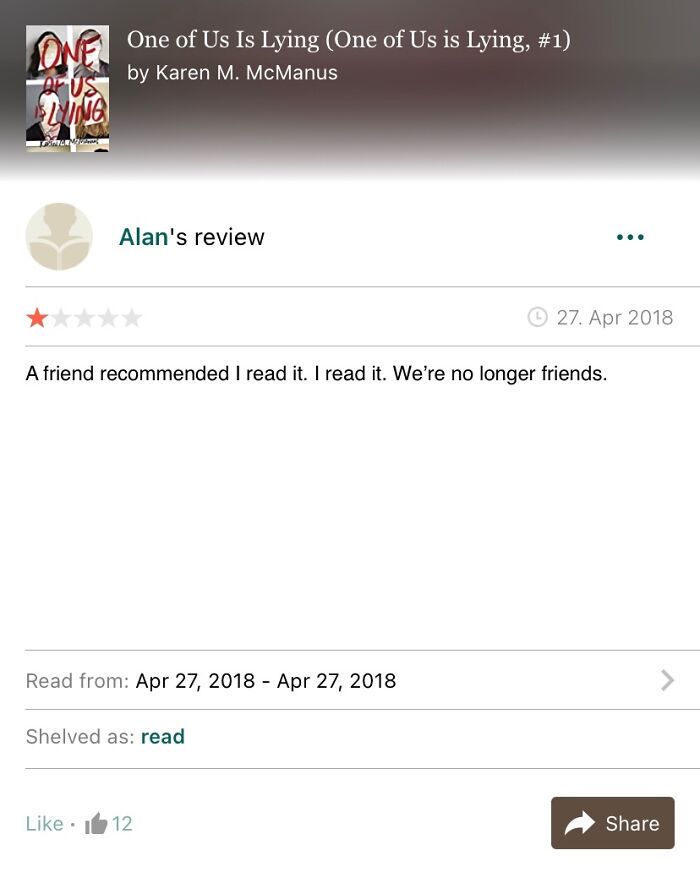
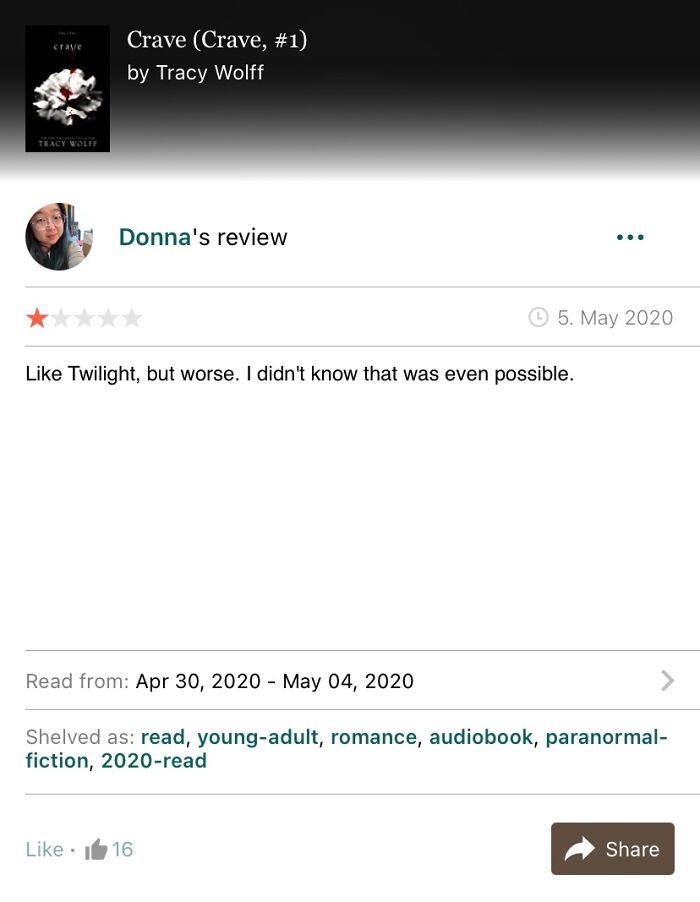
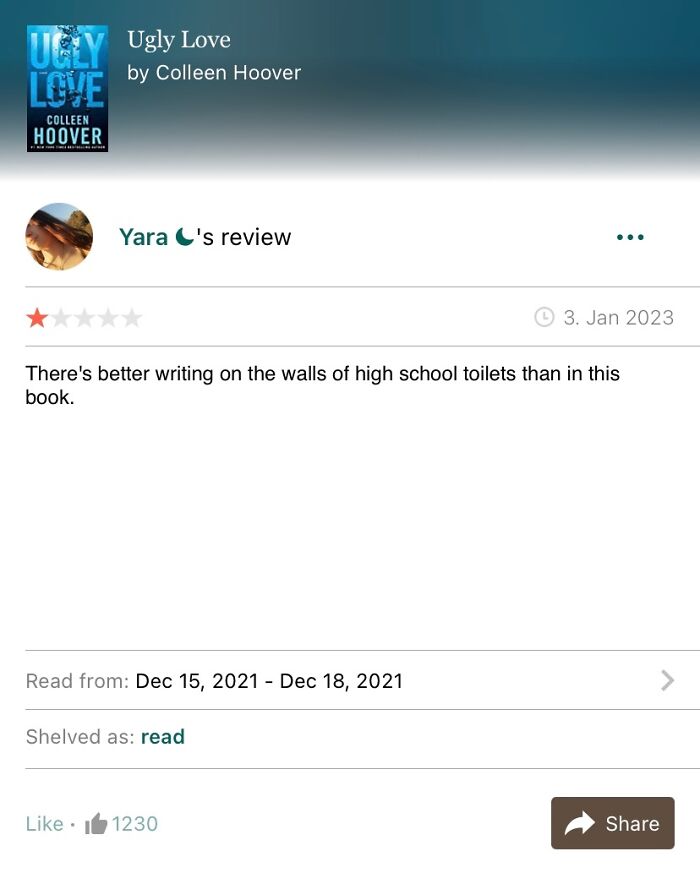
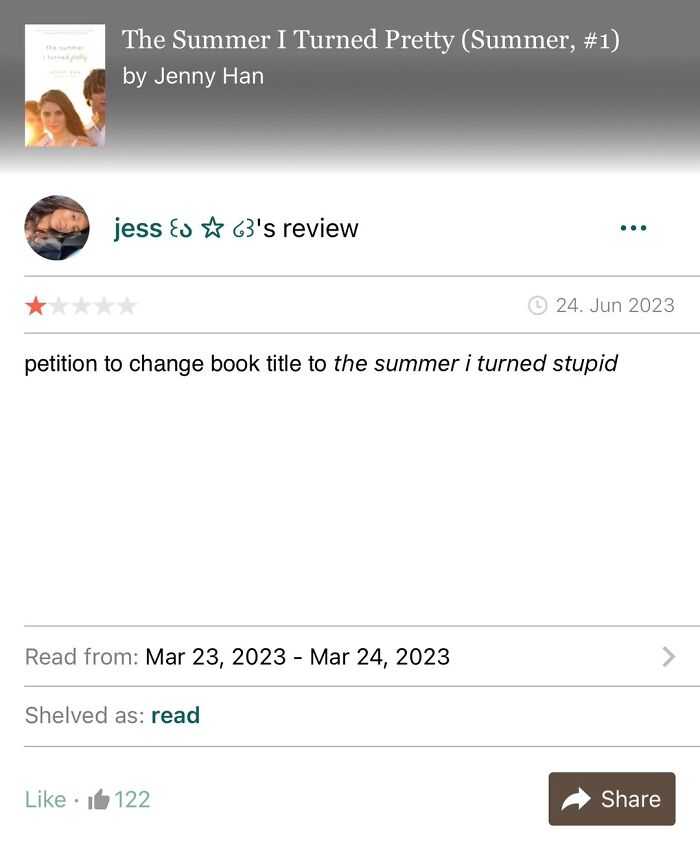
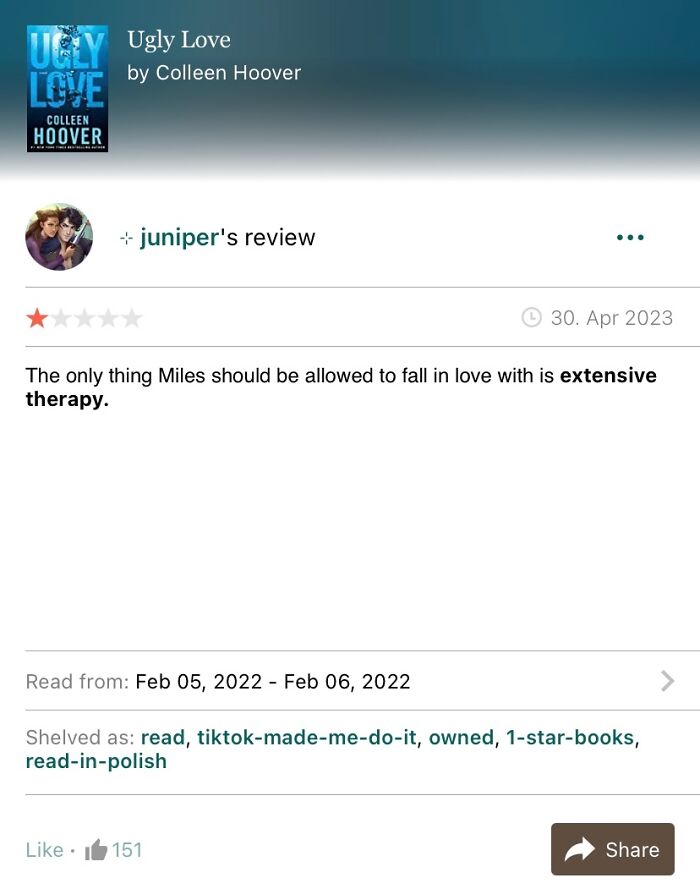
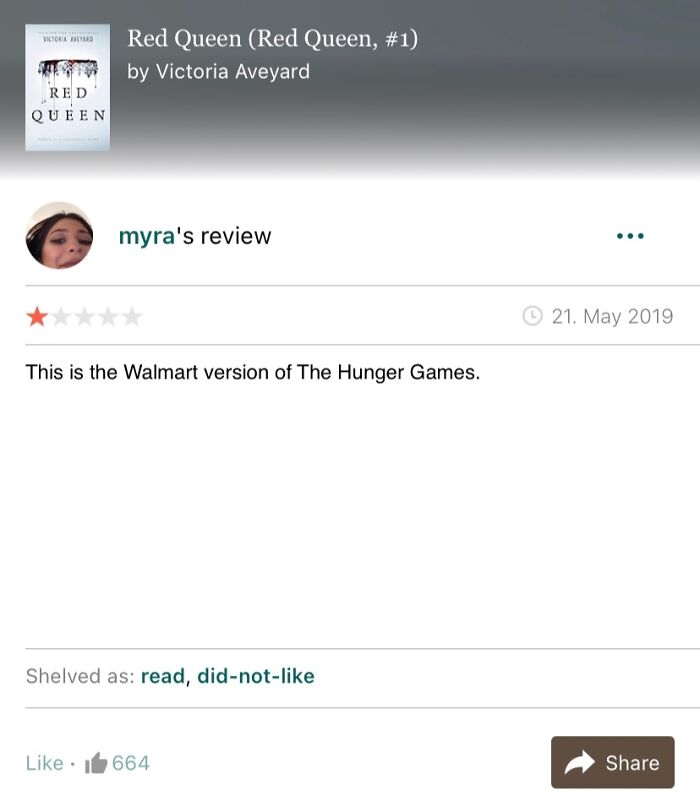
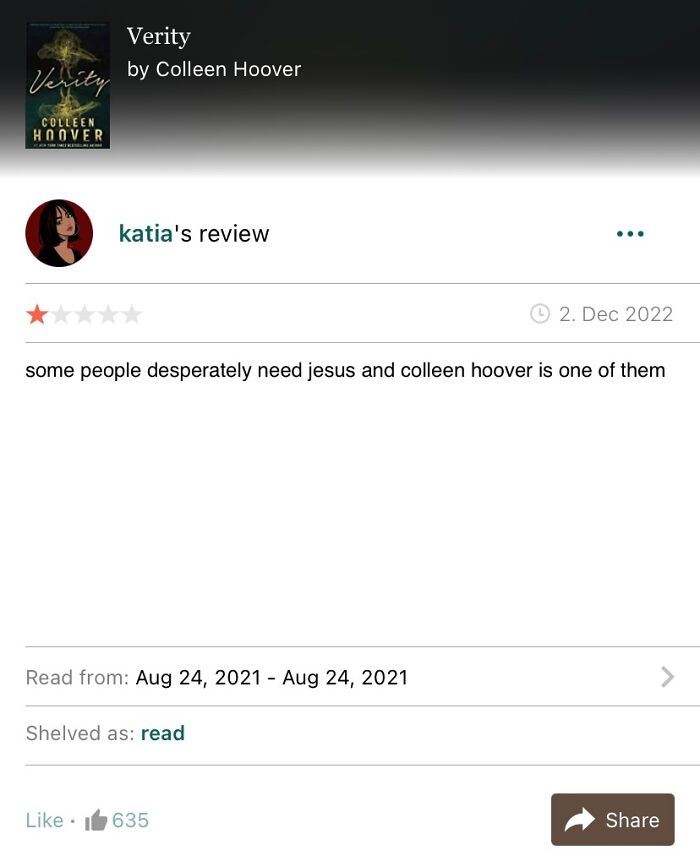
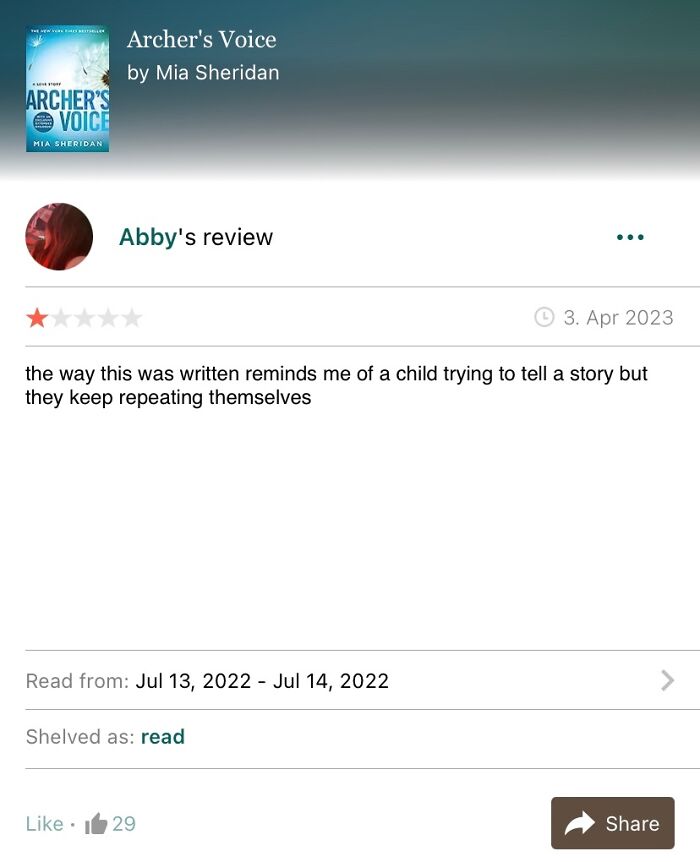
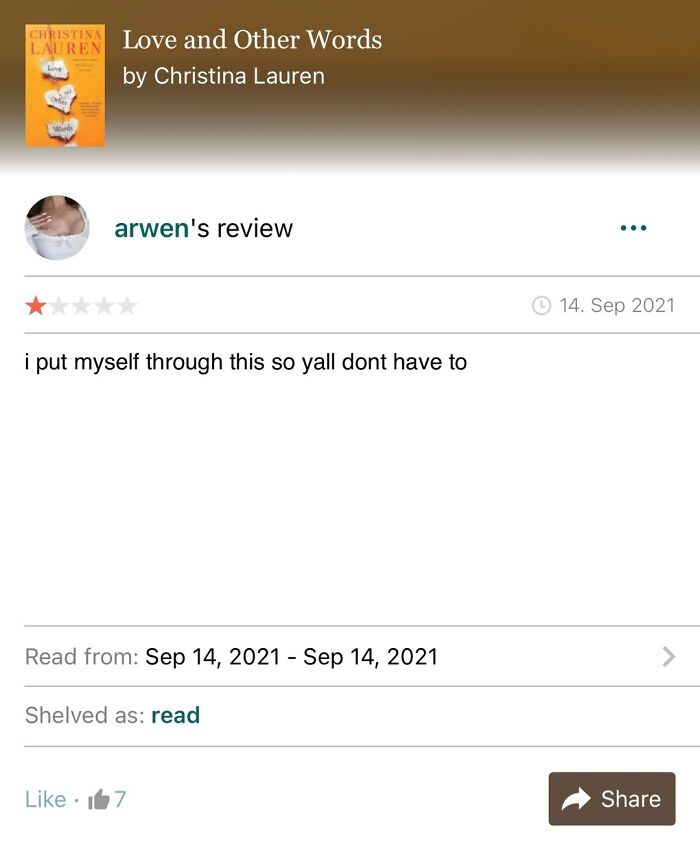
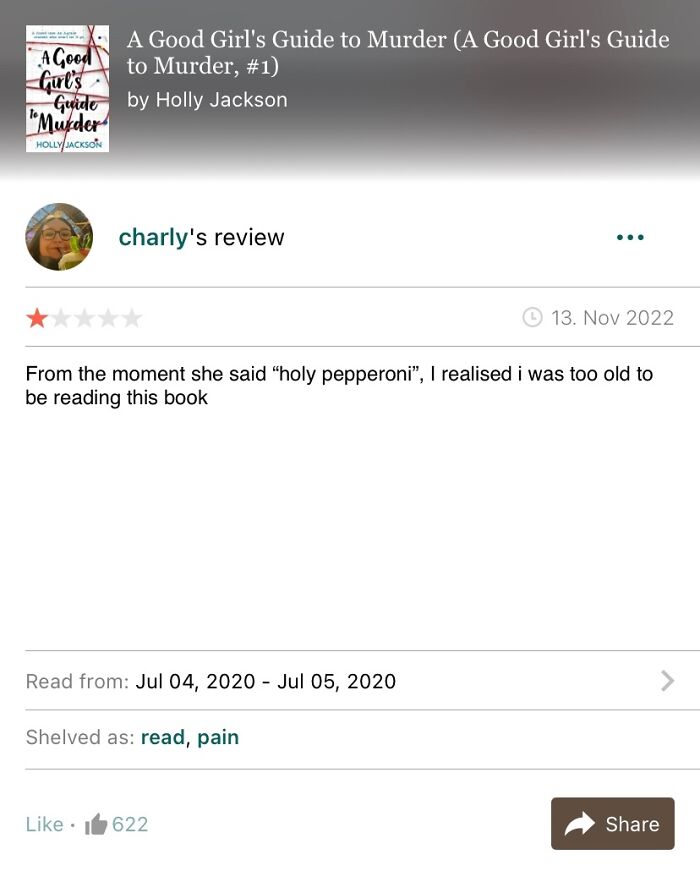
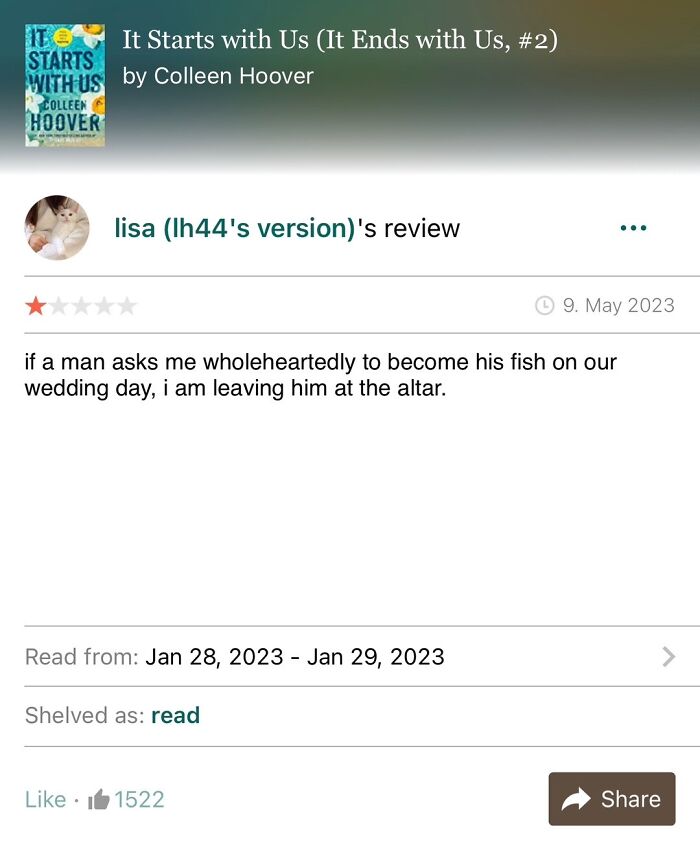
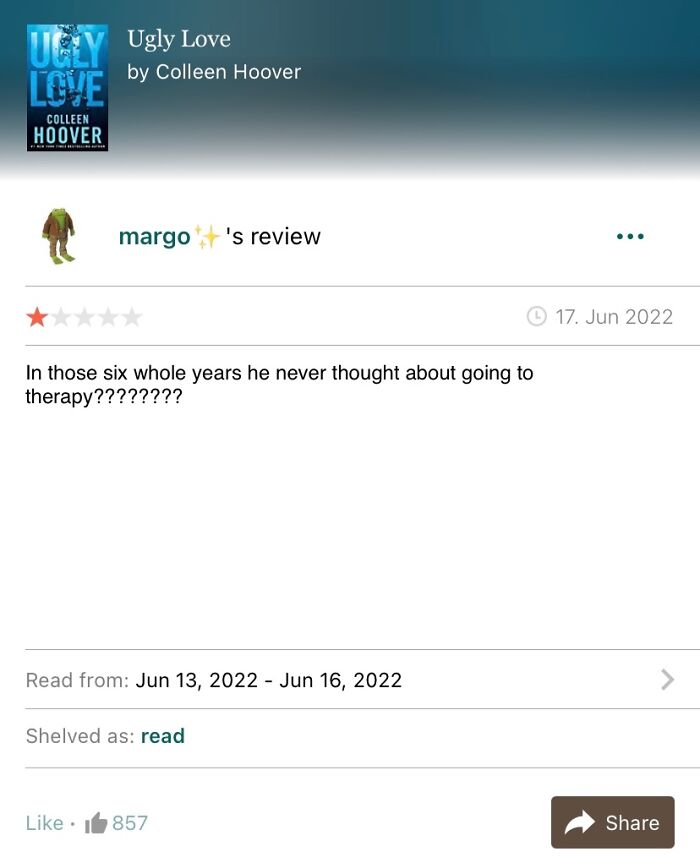
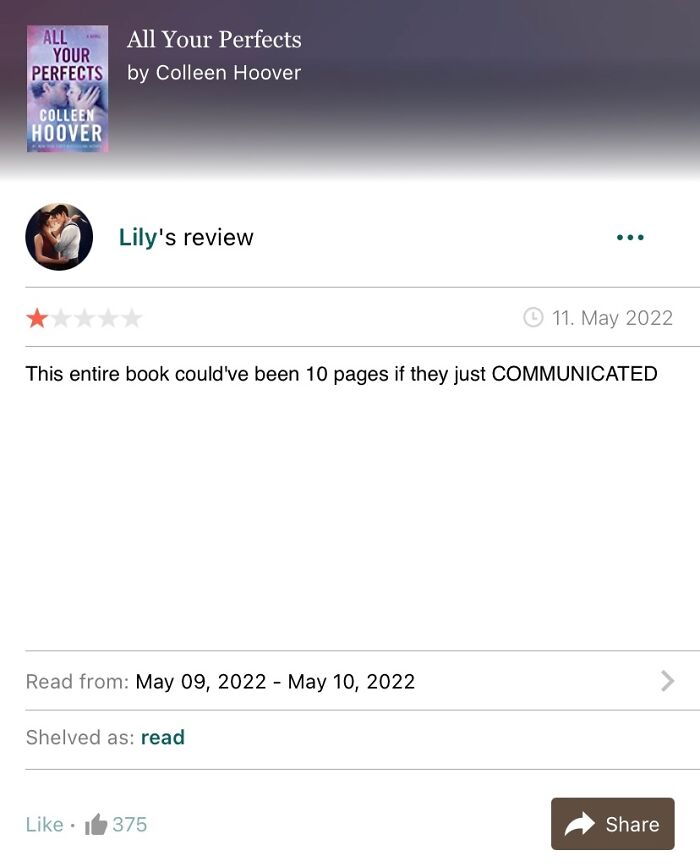
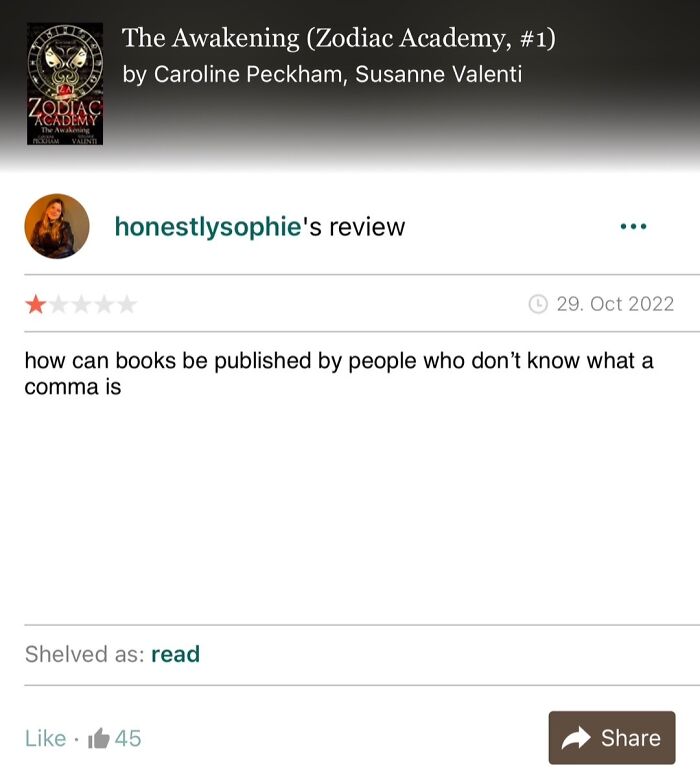
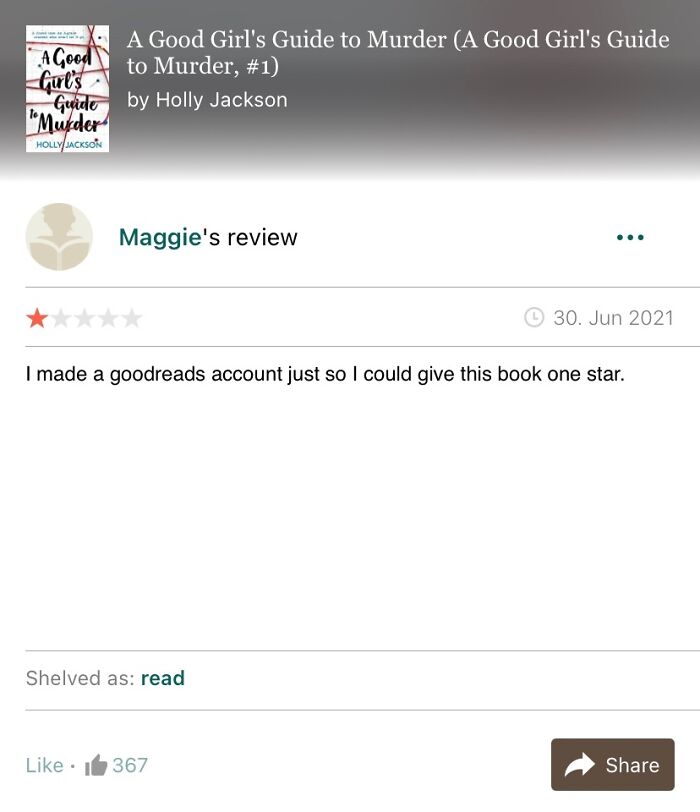
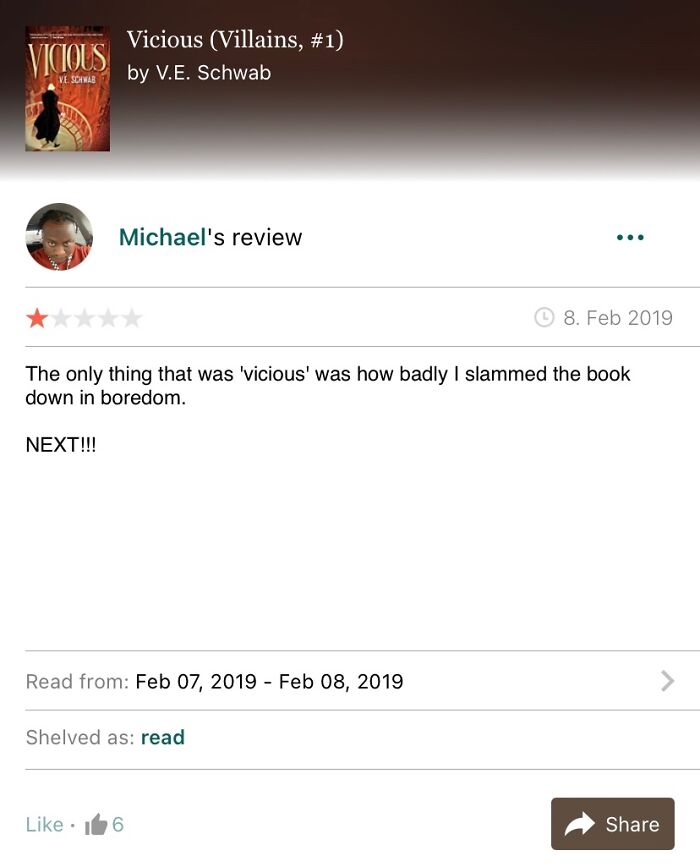
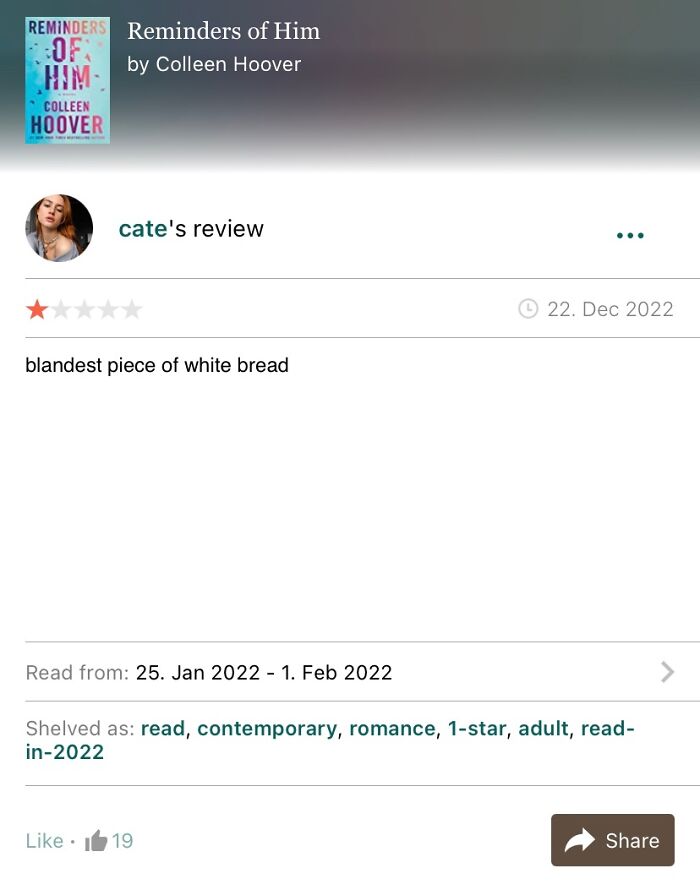
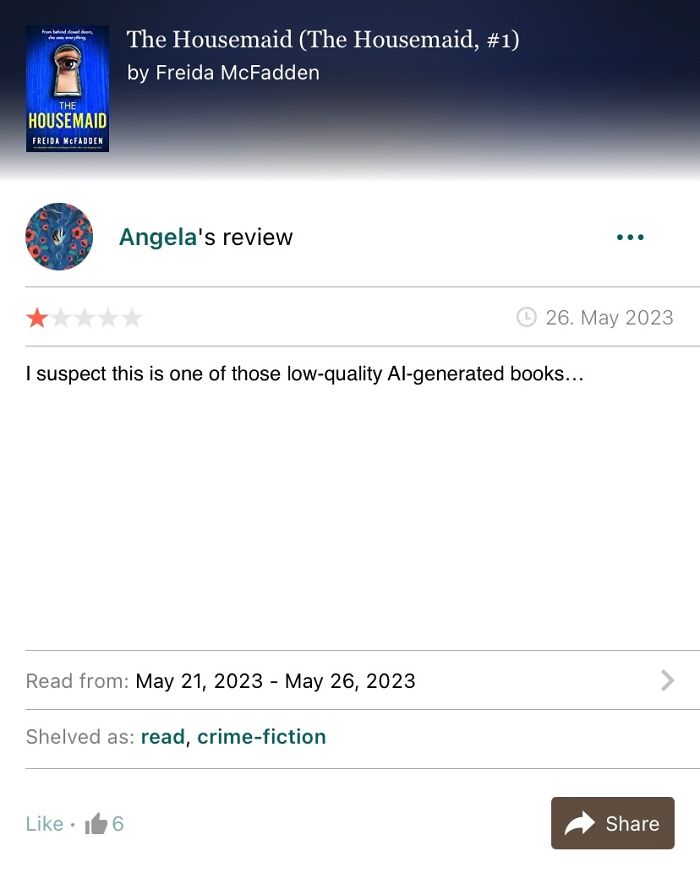
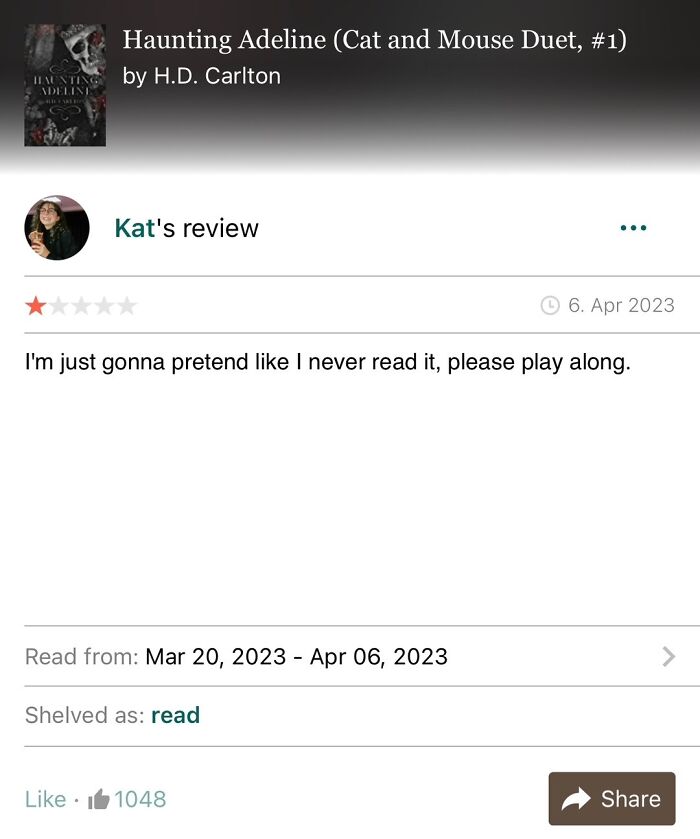
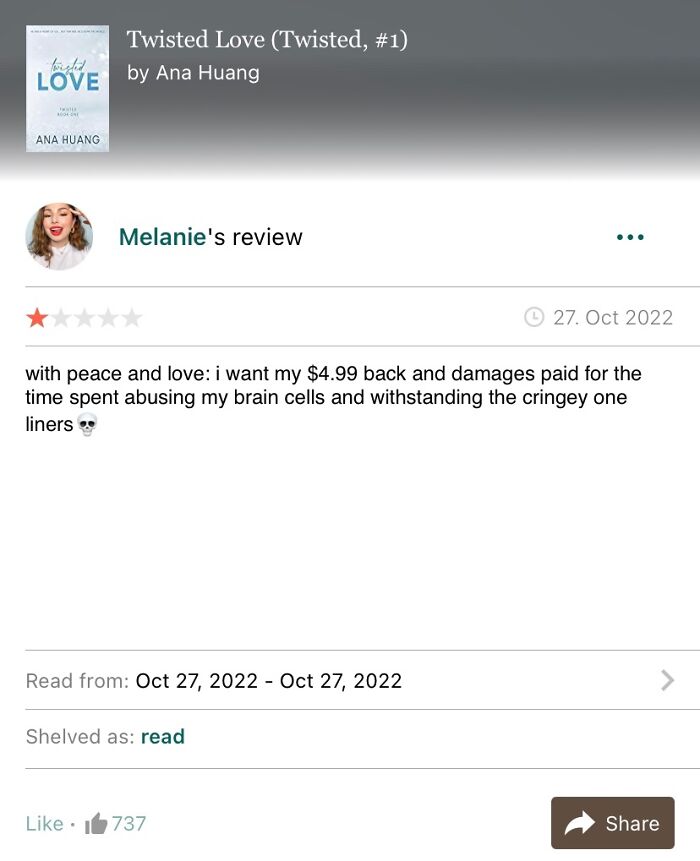
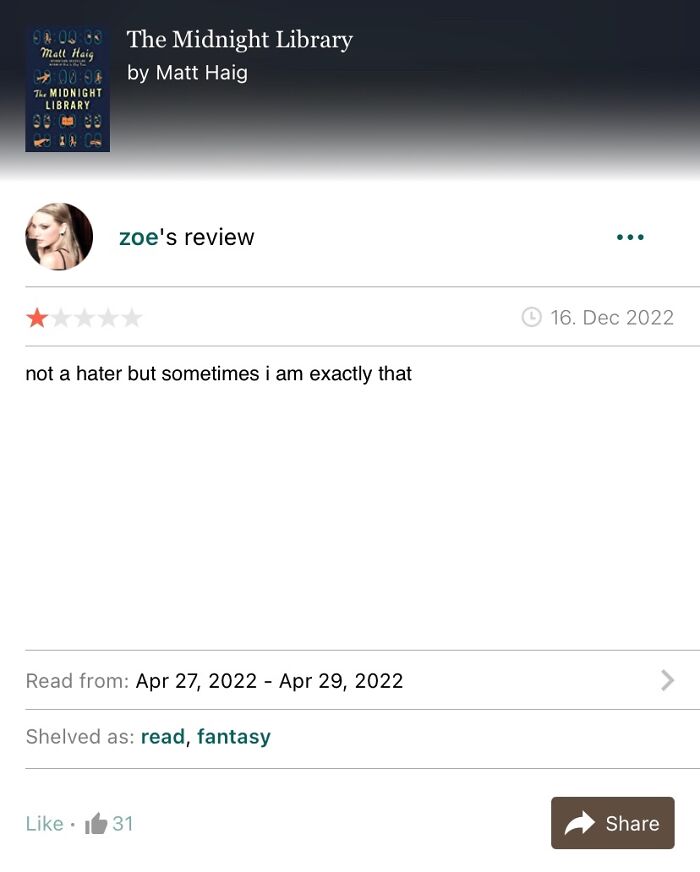
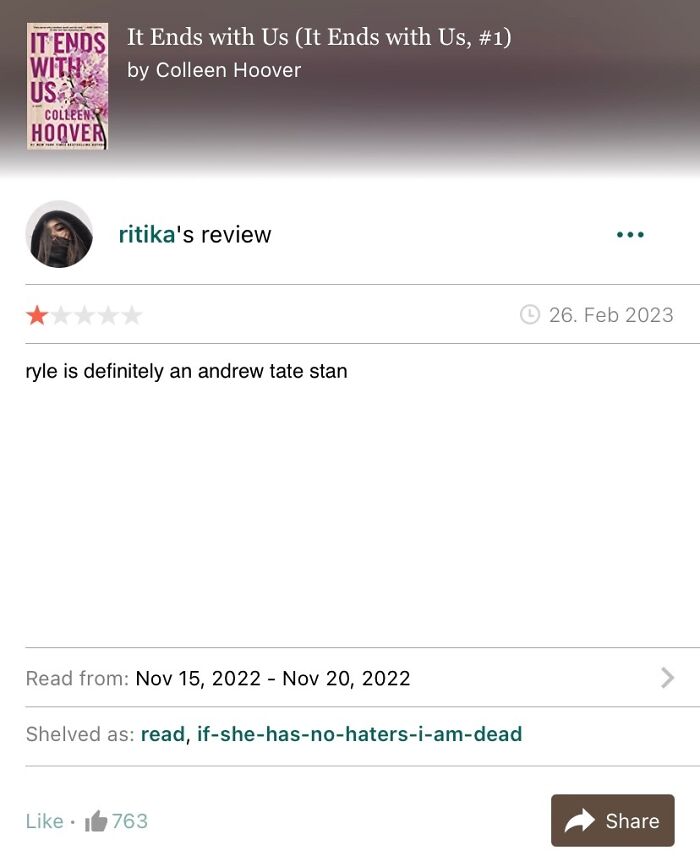
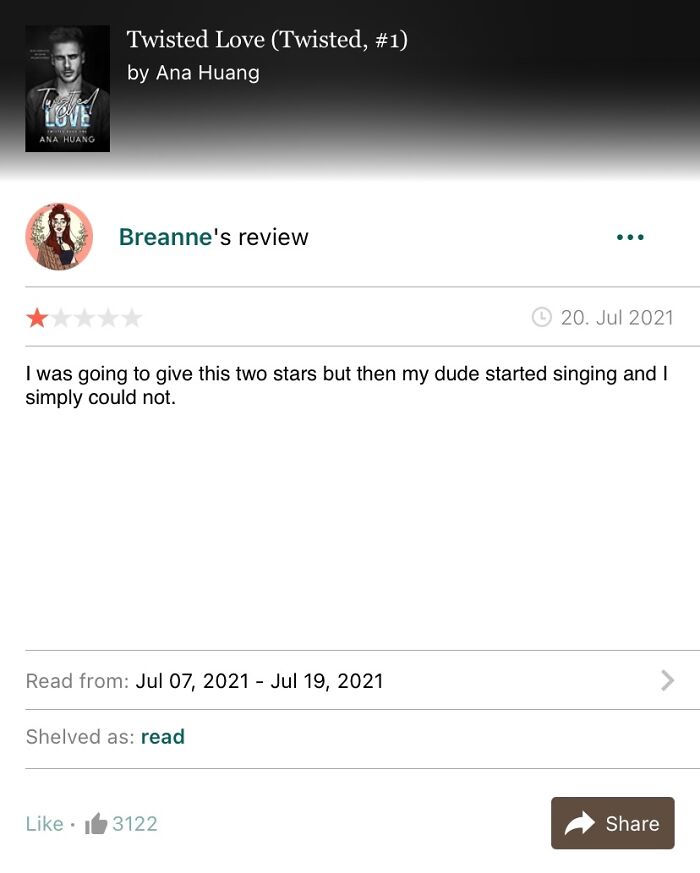
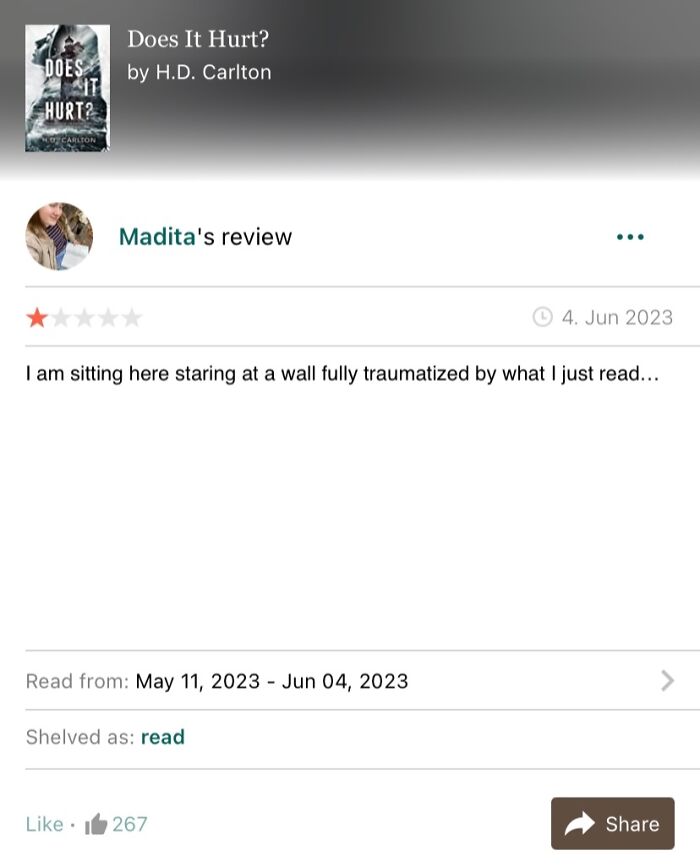
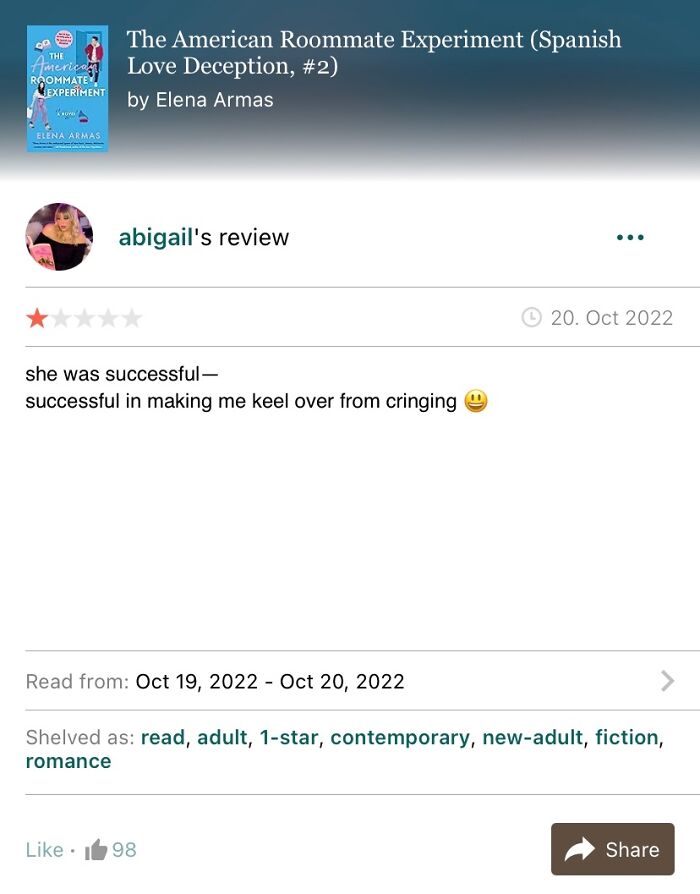
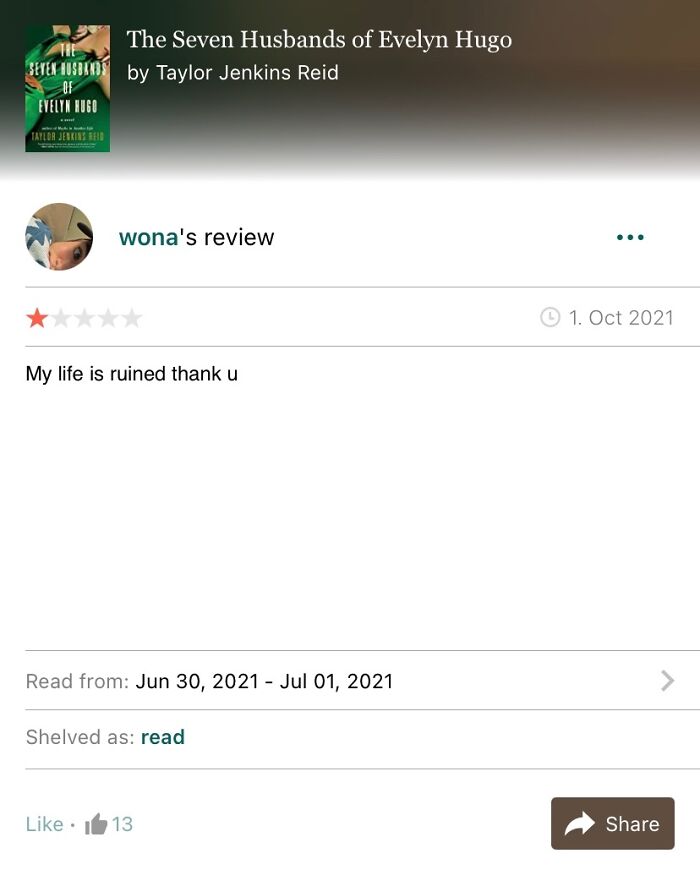
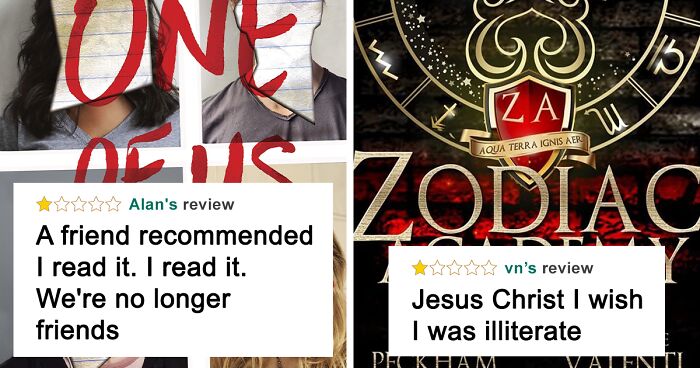
But hidden beneath the surface, there is a gold mine of absolutely hilarious and unhinged one-star reviews, which the laurasbooktalk TikTok account gathers and shares with the world. So get comfy and prepare to scroll through some people's thoughts on quite possibly the worst literature has to offer, upvote your favorites and comment your worst reading experience below.
More info: TikTok
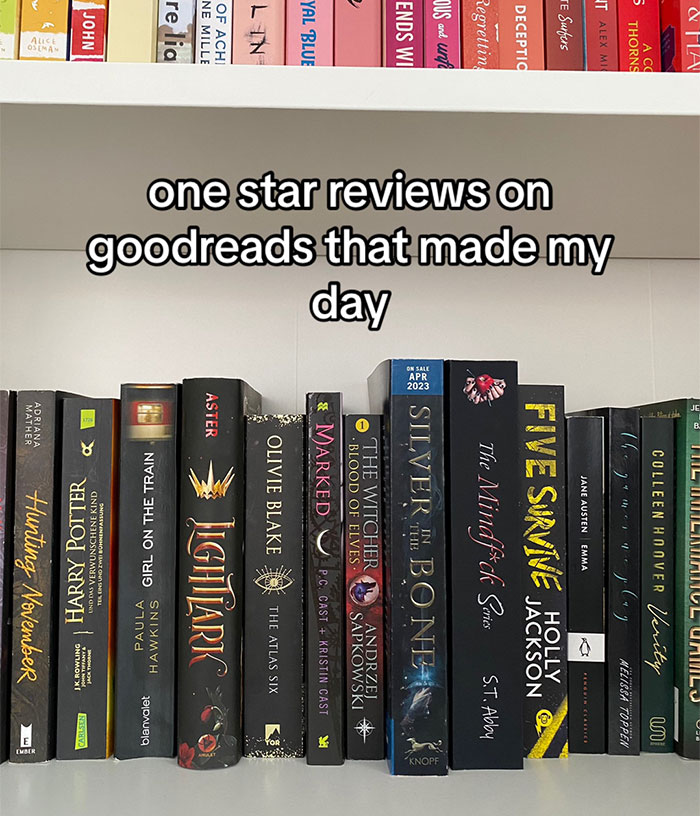
Image credits: laurasbooktalk
Click here & follow us for more lists, facts, and stories.
This post may include affiliate links.
People seem to enjoy literary criticism (or any criticism for that matter) almost as much as literature itself. Some of the oldest texts still available to humans have sections critiquing other texts of the time, for example, the Nāṭya Śāstra, a Sanskrit text on the performing arts from roughly 200 BCE has parts listing the advantages and disadvantages of similar texts.
Similarly, Aristotle and Plato both published texts criticizing ideas, works, and texts that they found distasteful. While most authors will write for the sake of writing, the copying and preservation of these works does indicate that deep down, most of us love reading about someone tearing something apart.
Of course, before the relatively modern era, literacy rates were so low that reading, let alone reading about reading was pretty uncommon. But as more and more people “learned their letters,” a review, of anything really, became a genre all to itself, as most people still preferred to know about a thing before they potentially spent hard-earned money on it. This popularity meant that reviews started to evolve from pure evaluations into a form of content in of itself.
One of the most popular critics, among his many claims to fame, was Jonathan Swift. Without knowing, many people might be at least familiar with not just one, but two of his portraits, which as memes are appropriately used to display someone's confusion and revulsion for something particularly bad. His works are still read today, a pretty clear sign that writers in particular can still learn about their craft by watching someone just dissect a text they have never seen before.
The internet has allowed for a democratization of reviews and literary criticism, for better or worse. Certainly, one disadvantage of the “classic” way to read reviews, in a magazine, for example, is that a single critic's taste might differ from yours and people are not infallible. But sites like Goodreads let people mix and match research, both seeing what specific people and even authors think, but also seeing the mass of data created by anonymous users.
At its inception, the site mostly functioned as a way for early internet users to actually find things to read, as digitalization and even just online bookstores massively increased the options for the average buyer. But options are useless if the person doesn’t know they exist. But, of course, even when one sees all the books out there, it’s important to have some way to figure out what you would like.
Now the site and its catalog are so large that Goodreads has its own “librarians” to curate, sort, and keep track of all the literature being added to it. While this is of little interest to the average user, it’s a pretty good representation of just how large the platform is these days, with over 50 million reviews and 90 million users as of 2019. Of higher interest to many users is the ability to follow verified author accounts and see what they are reading and reviewing.
Of course, humans are pretty ingenious creatures and we will find all sorts of ways to entertain ourselves in a pinch. One-star reviews are a good example, but a lot of people do actively like seeing the “fail state” of something. Whether it’s a car crash or “Kitchen Nightmares,” there is something exhilarating about learning the nitty, gritty, horrible details as an observer.
In other words, we love to hate, but most people also realize that just hating stuff is boring, unappealing, and often pretty unhealthy. So particularly bad books and most of the ones on this list qualify, are a safe target, as they can be hated, mocked, and made fun of without that little voice inside wondering if this is perhaps an ugly look.
On this basis, many authors who would have and perhaps should have remained unknown rose to prominence. Twilight and its film adaptations had large fan bases but were equally well known for a large, very vocal group of critics who attacked it at every turn. If you happen to be a Twilight hater, even one who never read the book in the first place, bad reviews are no doubt a great source of entertainment.
You might also like: 38 seriously confusing photos that require a second look














 No fees, cancel anytime