Get Premium
Dark mode theme is available exclusively for premium users. Learn more about the benefits of subscribing.
No fees, cancel anytime.

 Dark Mode Ad-Free Browsing Unlimited Content
 Ad-Free Browsing Unlimited Content Dark Mode
Join 1.2 million Panda readers who get the best art, memes, and fun stories every week!
Flying in an airplane can feel like a whole emotional rollercoaster in itself. One minute you’re stressing about reaching the airport on time, double-checking your gate, your bag, your life choices… and the next you’re squeezed into a seat, wondering how something so heavy is actually in the sky. There’s turbulence, announcements you barely hear properly, and that one passenger who somehow always has the loudest snack wrapper in existence. And yet, in all that chaos, there’s also a strange kind of humor tucked in between the clouds.
That’s exactly why today we landed on Instagram pages dedicated to aviation and aero engineering memes. It takes all those familiar flight experiences and turns them into something hilariously relatable. Think pilot jokes, passenger struggles, and engineering humor that only makes sense if you’ve ever looked at a plane and thought, “How is this even flying?” So buckle up. Read these before take-off, or maybe while you’re safely cruising at 35,000 feet—either way, you’re in for a smooth scroll.
This post may include affiliate links.
During the pandemic, scheduled flights and revenue passenger kilometers (RPK) declined significantly, hitting lows that the industry hadn’t seen since the dawn of the jet age. It was a surreal period where the world’s most connected networks essentially vanished overnight, leaving giant hubs like Heathrow and Changi looking like echoing ghost towns.
But since then, the industry has recovered with a vengeance, finally surpassing 2019 traffic levels in early 2024. Today, air travel demand is still climbing toward new peaks, proving that our collective itch to explore and connect is stronger than any global lockdown. This "bounce back" isn't just a return to normal; it’s a structural expansion of how we move across the planet.

I am waiting for the comparison Iron Maiden plane vs Angela Merkel's! This could be it
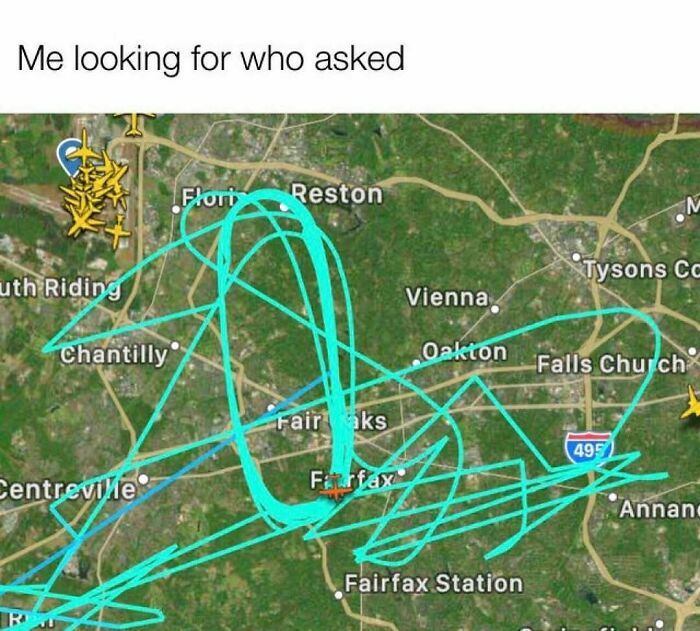
This recovery is best visualized through the digital eyes of Flightradar24, which tracks between 100,000 and 130,000 flights per day worldwide. This massive daily ballet isn't just vacationers; it includes cargo freighters keeping the global economy alive, military maneuvers, and the tiny Cessnas of the next generation of pilots. On the busiest summer days, that number can actually spike much higher; sometimes crossing the 250,000 flight threshold within a single 24-hour window. Managing all of that traffic without a hitch is arguably one of the greatest feats of modern logistics and human engineering ever achieved.
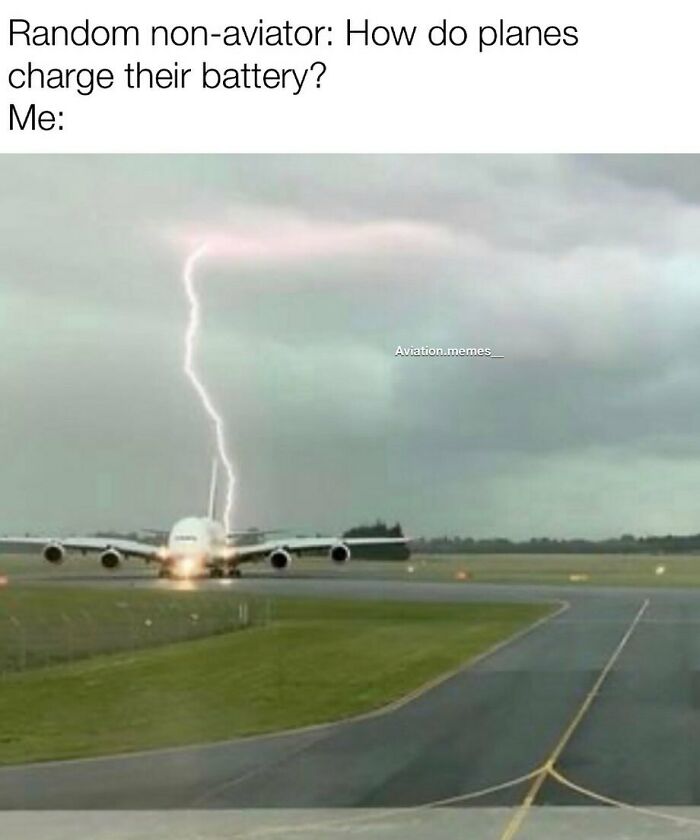
Emmett: 1.21 gigawatts? But the "strike" being so short we look at 200+ kWh :-) Checks out!
To put those flight numbers into a human perspective, roughly 10 to 12 million people are airborne every single day. At peak hours, particularly during the "afternoon rush" in the Northern Hemisphere, more than 1 million passengers are in the sky at the very same time. That is like taking an entire major city (think San Jose, California, or Austin, Texas) and literally floating it above the earth at 35,000 feet.
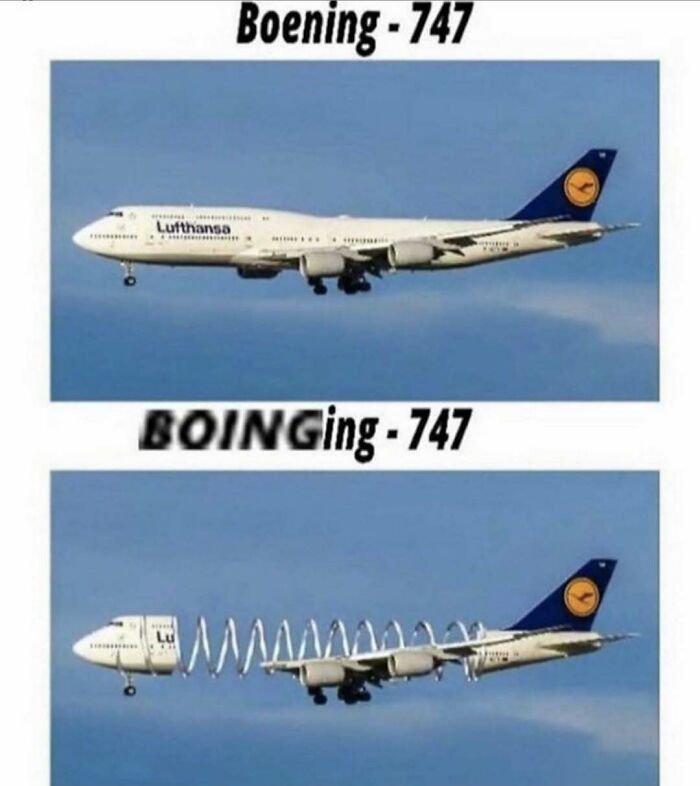
Maintaining this "floating city" requires a level of mechanical precision that is almost hard to wrap your head around. For instance, a single Boeing 747 is composed of roughly six million individual parts, each requiring its own rigorous maintenance schedule and safety certification. Every time you take off, you are trusting that these millions of components are working in perfect harmony across a global supply chain. It is a testament to this engineering that 2023 was recorded as the safest year in history for passenger jet travel.
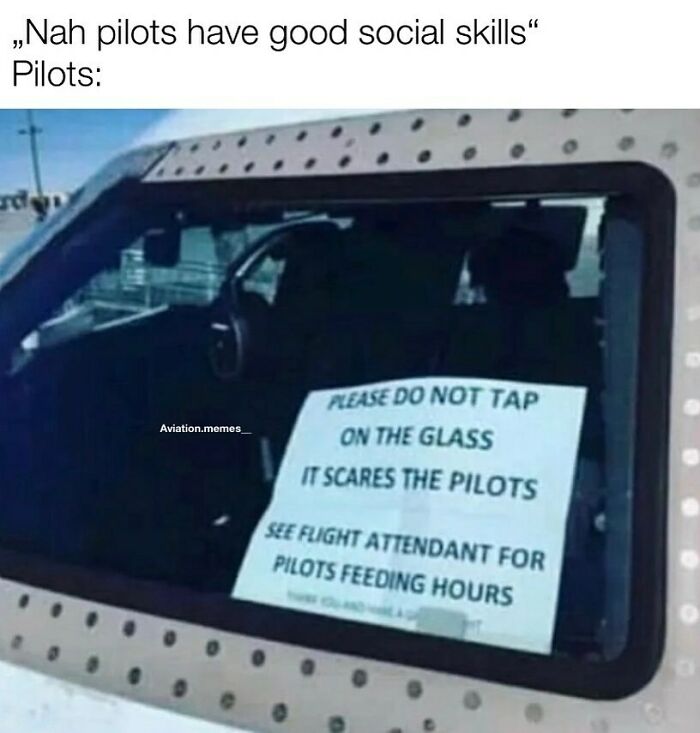
Beyond the machines, there is a fascinating human protocol designed to keep this complex system from failing. You might notice your pilots eating different meals; this isn't about personal preference, but a strict safety rule to prevent both from being sidelined by food poisoning simultaneously. It’s a "don't put all your eggs in one basket" philosophy that ensures someone is always fit to fly, even if the catering goes south. This level of redundancy extends from the cockpit to the control towers, where every single move is double and triple-checked. It’s the hidden layer of caution that allows millions of people to sleep soundly while hurtling through the stratosphere.

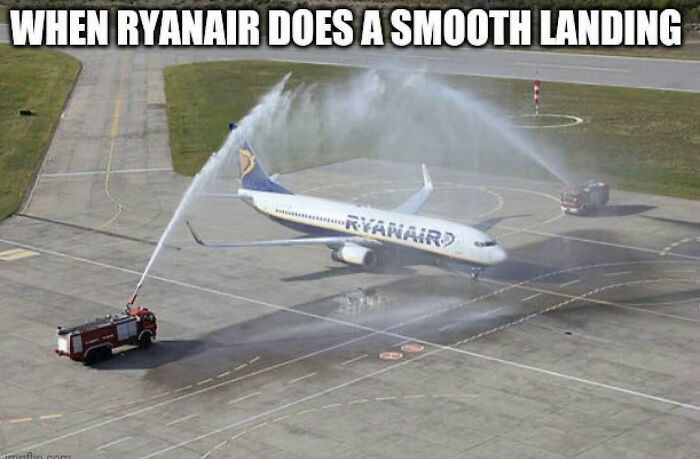
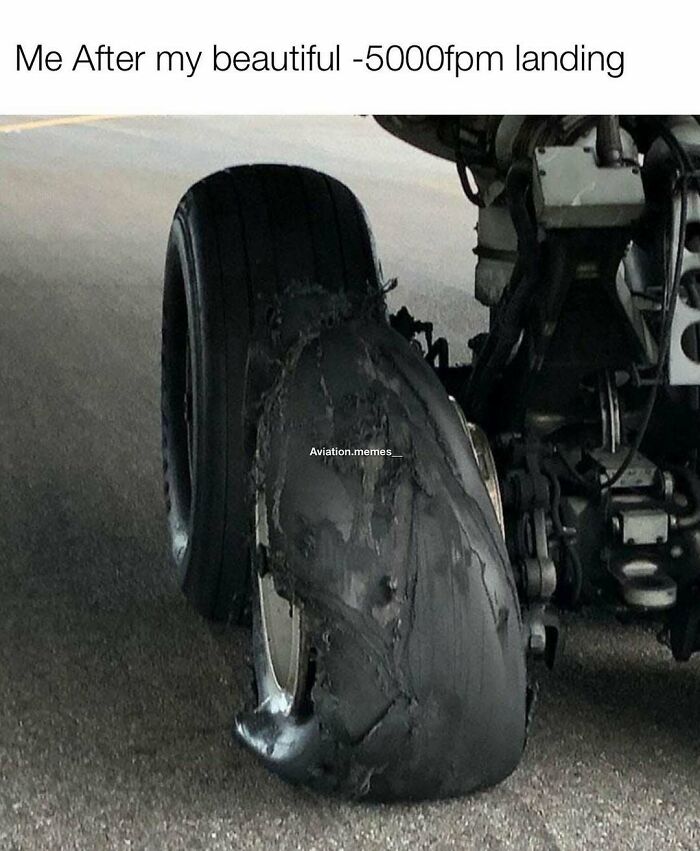
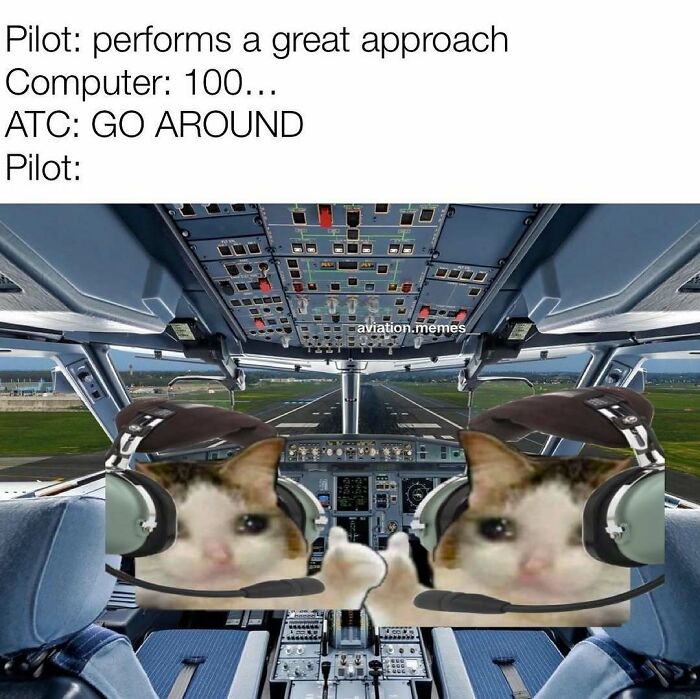
Never used FPM, which I assumed to be 'feet per minute', so I had to convert it, and oddly it's one of those that's very simple , works out to almost exactly 50 knots, which is the standard aero/nautical measure. Around 56mph, 91kph, sounds quite slow for a landing. So I conclude that this is the speed of descent, hence the units, and that sounds like a crash, with normal values of around 150-200fpm for commercial airliners.
Even the air you breathe inside that floating city is a masterpiece of engineering, though it comes with its own biological side effects. To keep you safe at high altitudes, cabins are pressurized and the air is swapped out every few minutes, which makes the environment incredibly dry. This dehydration, combined with lower oxygen levels, actually changes your biology mid-flight; alcohol enters your bloodstream faster and your taste buds lose about 30% of their sensitivity. That’s why airline food often tastes bland and that "relaxing" glass of wine hits you twice as hard.
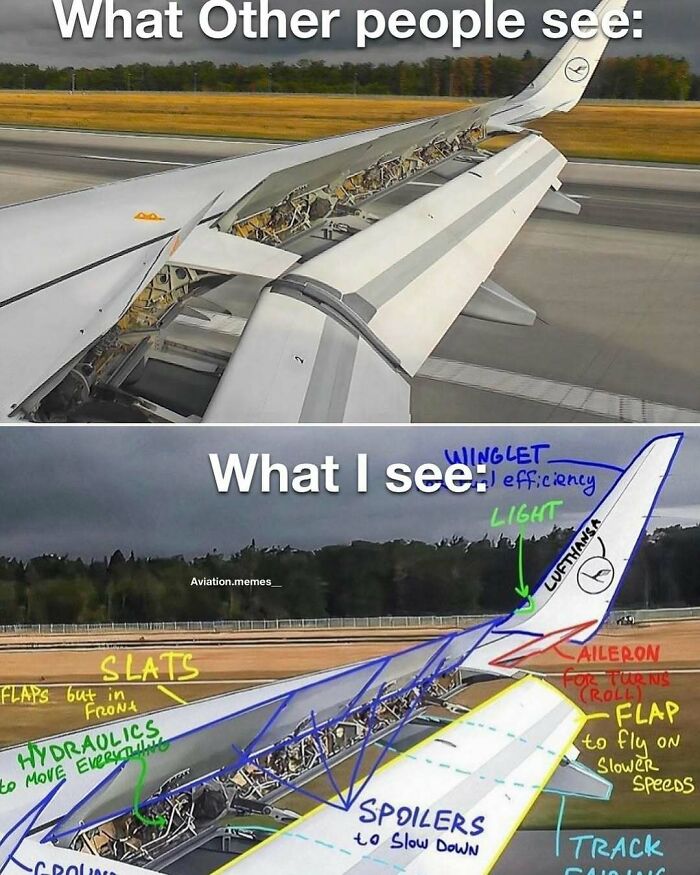
it's amazing how long it took to implements the winglets while the end feathers of some birds point upwards since.
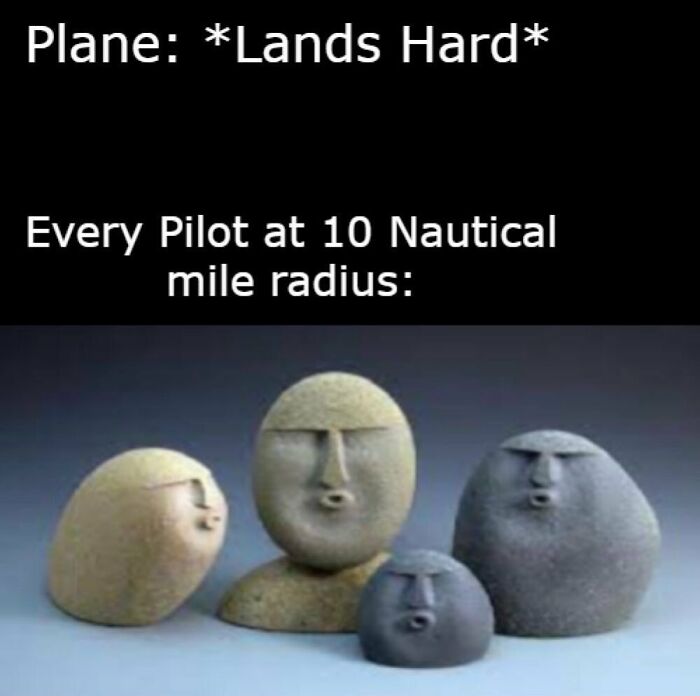
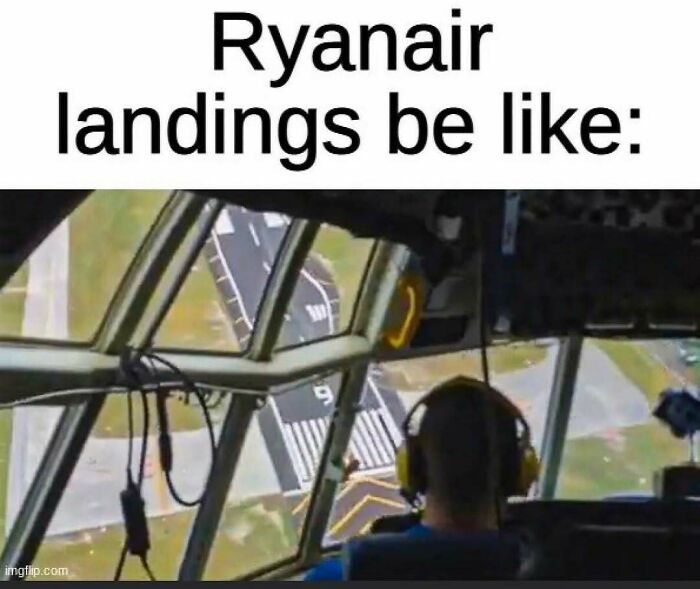
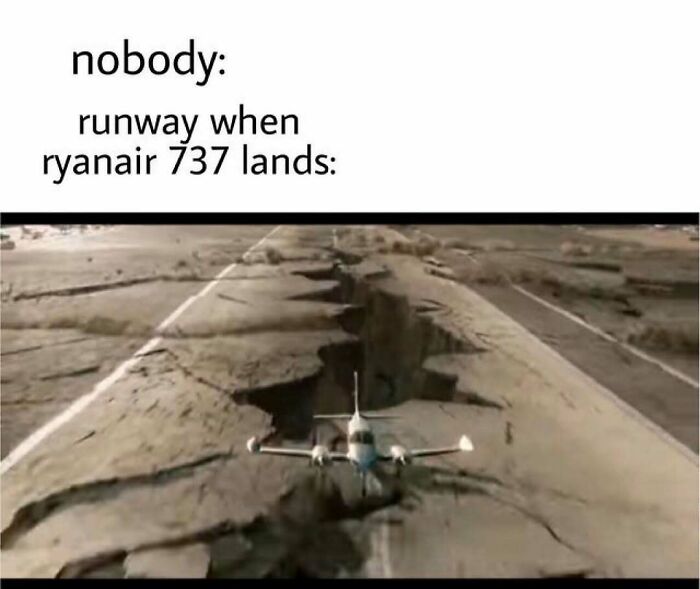
:-) But also: A plane lands hard deliberately or due to weather, aimed at ensuring safety on short or slick runways, preventing hydroplaning, or fighting strong winds.
Ultimately, the entire aviation machine relies on a delicate balance of high-tech sensors and basic human behavior. This is most visible at the gate, where the "gate lice" (the cheeky nickname for passengers who crowd the boarding area too early) often create the one bottleneck that technology can't fix. Despite the use of facial recognition and biometric boarding, the speed of a flight still often comes down to how quickly people can stow their bags and sit down. From the six million parts of the plane to the millions of miles in your bank account, the industry is a beautiful, chaotic blend of peak science and very human habits.
And well, these posts prove that even an industry built on precision, pressure, and packed schedules knows how to have a sense of humour. Between the pilot jokes, passenger struggles, and sky-high sarcasm, aviation comedy really does know how to land perfectly. Now over to you, pandas—which one of these had your laughter cleared for takeoff? Or should we say… which meme really soared above the rest?
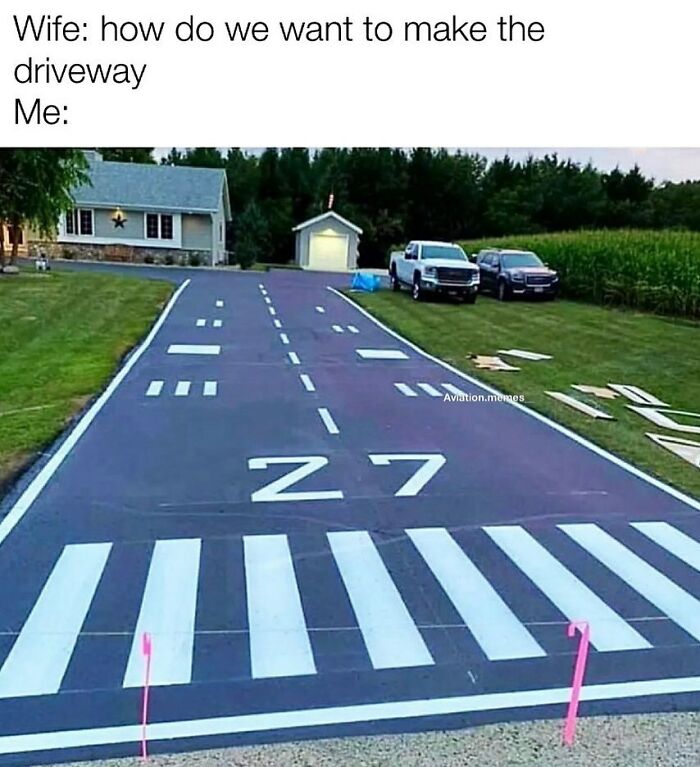
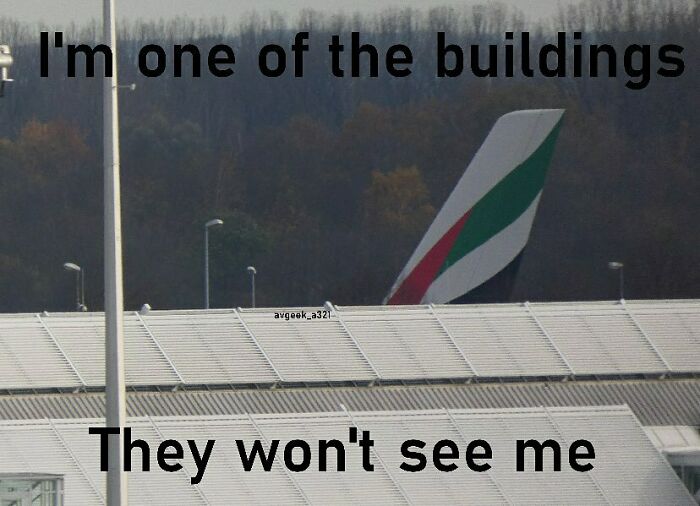
fortunately, once inside, you don't care anymore. Same as for many houses.

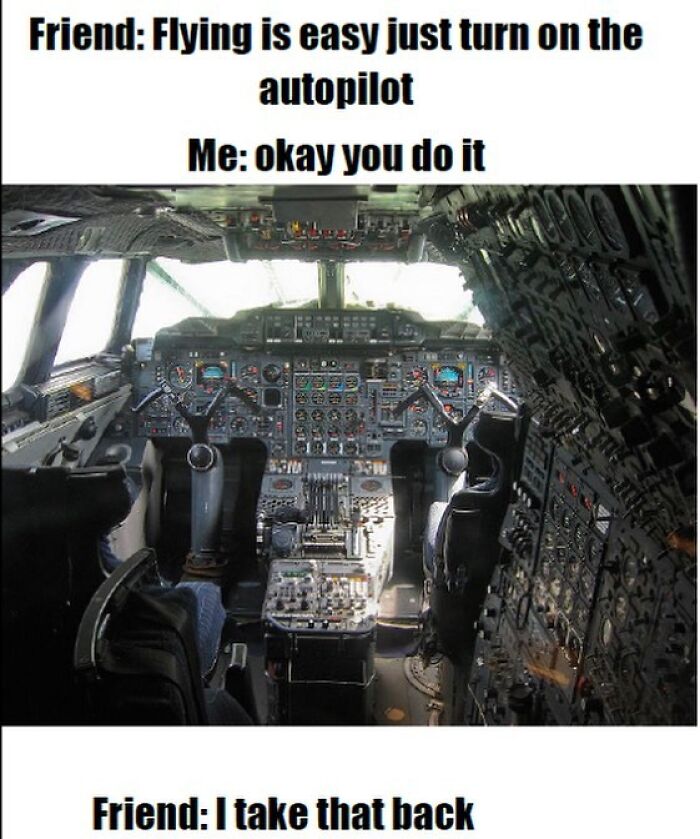
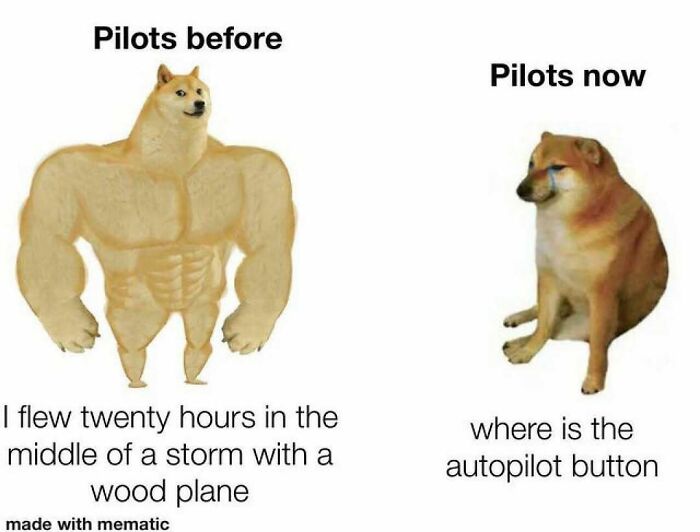
Autopilot is like using cruise control in cars. The person operating the vehicle still needs to concentrate and be prepared to take over at any time. The average life expectancy for a WW1 pilot was a couple of weeks.





























 No fees, cancel anytime