Get Premium
Dark mode theme is available exclusively for premium users. Learn more about the benefits of subscribing.
No fees, cancel anytime.

 Dark Mode Ad-Free Browsing Unlimited Content
 Ad-Free Browsing Unlimited Content Dark Mode
Join 1.2 million Panda readers who get the best art, memes, and fun stories every week!

Going on a trip with your best friends can feel like the ultimate adult freedom. Coordinating plans, managing schedules, and escaping the daily grind with your favorite people can be exhilarating. But now imagine this: you’re not just going on any trip, you’re eagerly waiting for an international adventure with your closest friends, and suddenly, they decide to exclude you.
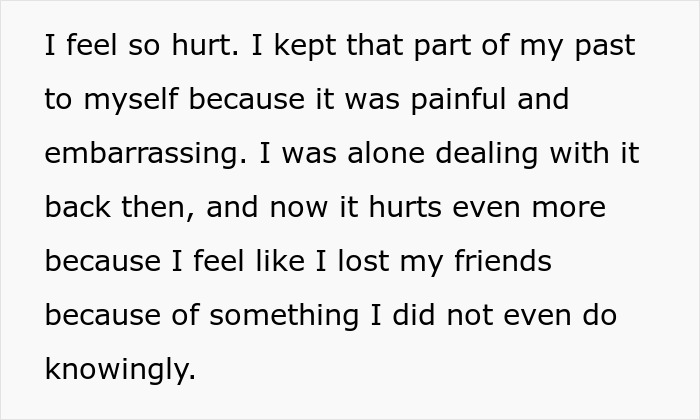
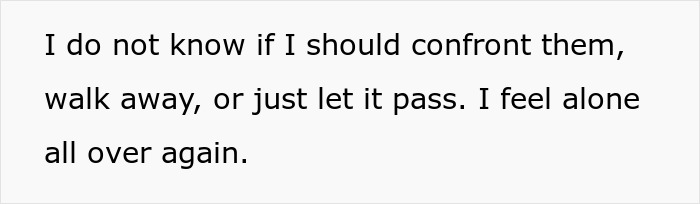
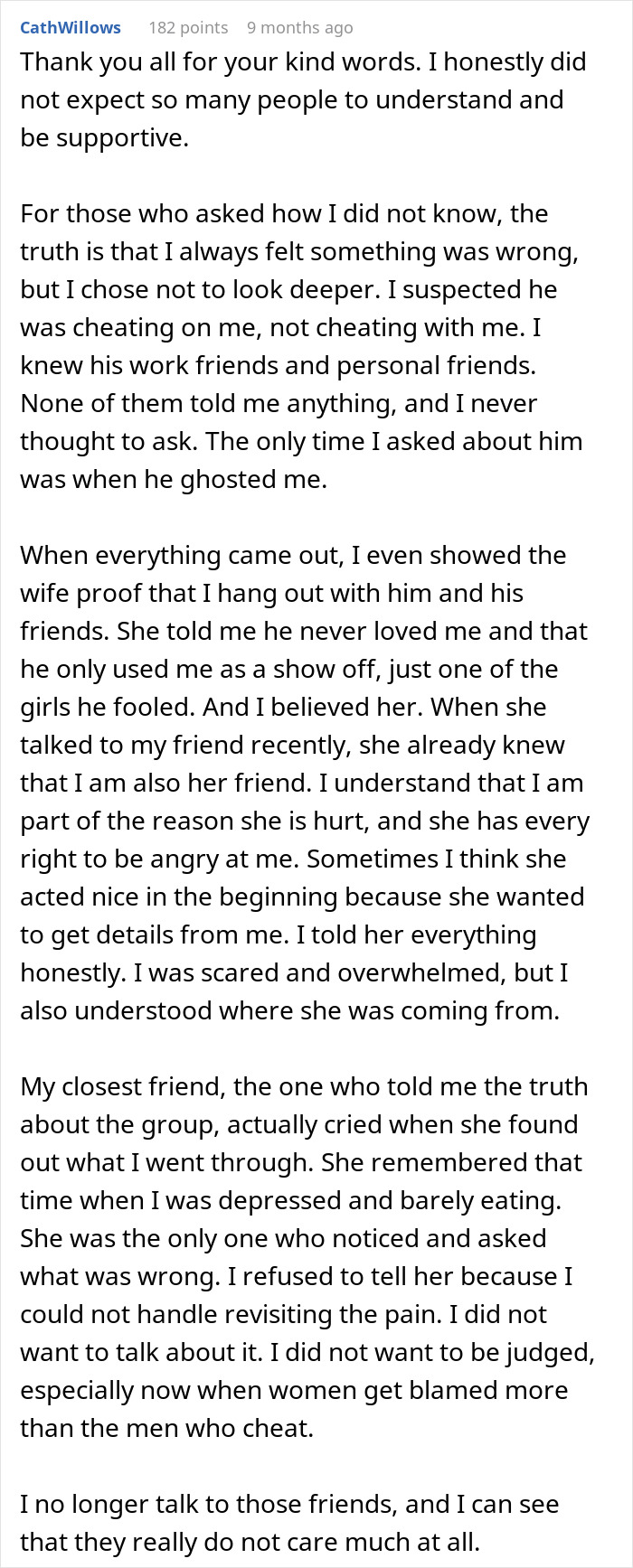
For one woman, that nightmare became real. She was left out of an out-of-country trip, not because of anything she did, but because a long-buried revelation from her past came to light. Years ago, she had been in a messy, painful relationship; one she kept private out of shame and heartbreak. But when her friends discovered the story, it didn’t stay private. They turned it into gossip, joked about it behind her back, and eventually decided she “wasn’t the right person” to join them. Keep reading to find out how a private past led to public hurt, friendship fallout, and a woman’s struggle to reclaim her peace.
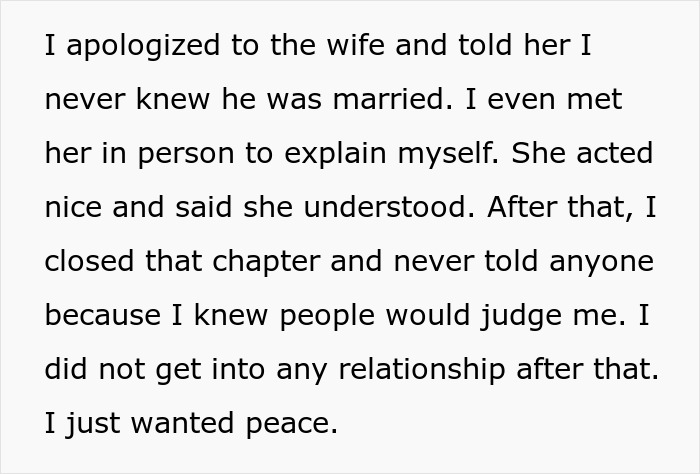
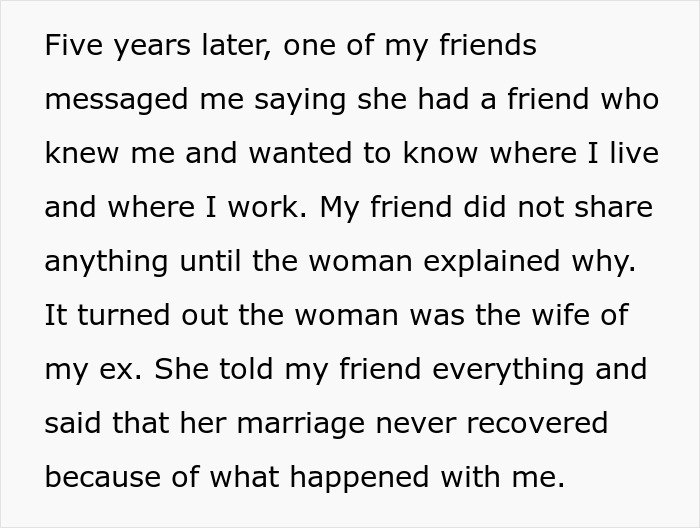
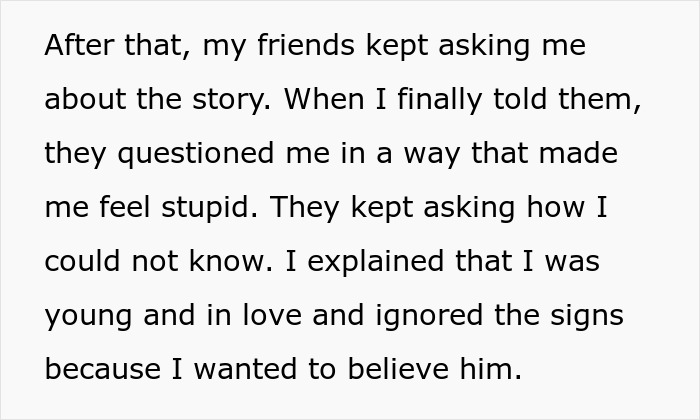
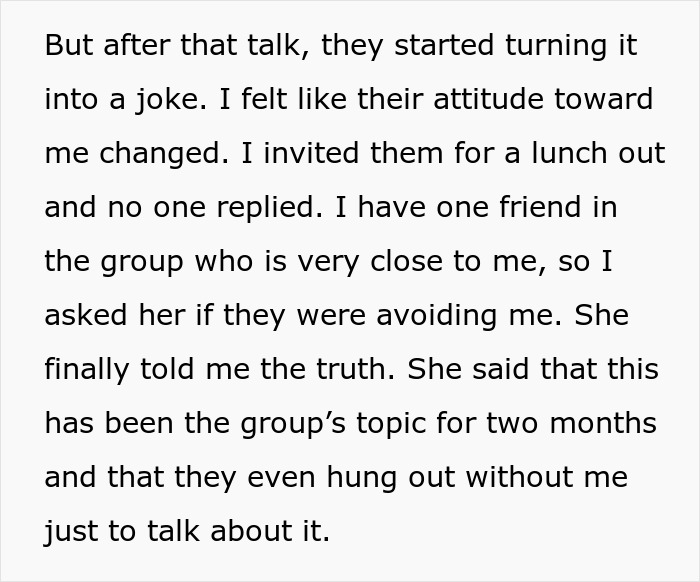
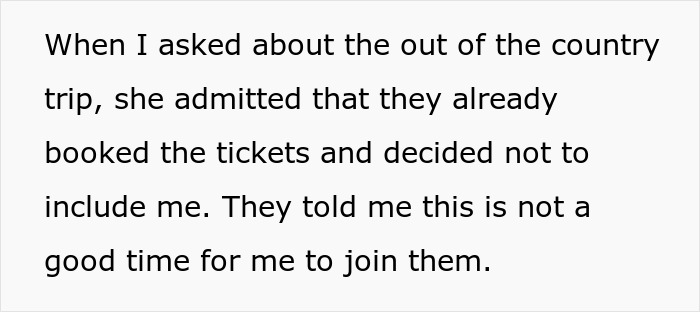
We often hear about the heartbreak of romantic relationships; the sleepless nights, the endless “what-ifs,” and the overwhelming pain. But here’s a truth many of us overlook: losing a friend, especially as an adult, can hurt just as much. Friendships are built over years, shared experiences, and countless memories. When those bonds break, it’s not just the absence of someone in your life; it’s the loss of someone who knew you, supported you, and shared your laughter. The sting of betrayal, abandonment, or exclusion from people you trusted can cut deep, sometimes deeper than we imagine.
It’s a common misconception that adult friendships are stable forever. Even friendships that have lasted a decade or more can end abruptly, sometimes over reasons that feel small but carry emotional weight. Research supports this reality. A study titled “Betrayal, Trust and Forgiveness among Adolescent Friendship Groups in Pakistan” found that 42.5% of participants reported being betrayed by friends, and 40.75% by best friends. While the context was adolescent, the pattern mirrors adult friendships: betrayal, misunderstandings, and unresolved conflict can quietly erode trust. Friendships, just like romantic relationships, require effort, communication, and care. Without these, even the closest bonds can unravel.
Friendships are often described as the family we choose for ourselves, and there’s a reason those relationships can become so important. In Platonic: How the Science of Attachment Can Help You Make—and Keep—Friends, psychologist Dr. Marisa G. Franco explains that many people assume friendships should simply happen naturally, when in reality, building meaningful connections often requires effort and intention, especially in adulthood.
Over time, friends can become the people we trust with the parts of ourselves we don’t show everyone else. They’re often the ones who hear about our fears, relationship problems, insecurities, and biggest struggles. That’s why it can hurt so deeply when a friend takes something you shared privately and repeats it to other people. It isn’t just about the information itself—it’s the feeling that someone you trusted with your vulnerability chose not to protect it. When that sense of safety disappears, it can leave you questioning not only that particular friendship, but how well you can trust the people around you.
Another form of betrayal happens when a friend refuses to recognize or apologize for actions that hurt you. It’s one thing to make a mistake, but refusing to acknowledge it signals a lack of respect for your feelings. Imagine telling your friend that something they did was hurtful, only for them to dismiss it or justify it. It’s a subtle but powerful way to feel undervalued. You begin to doubt yourself: are your emotions unimportant, or are they choosing to ignore them? Over time, this lack of acknowledgment can build resentment and erode the safety and understanding that make friendships meaningful.
Some friendships survive only when it’s convenient for one person. Perhaps your friend reaches out when they need help, a favor, or company, but disappears when you need support. While this isn’t always intentional, the lack of reciprocity creates an imbalance that’s impossible to ignore. Over time, the giving friend may feel drained, unappreciated, and frustrated, while the friendship begins to feel like a transaction. Healthy friendships require mutual effort, shared care, and emotional investment. When only one side invests, the imbalance can create tension, disappointment, and eventually, the realization that the relationship is no longer fulfilling or fair.
Friendships should be a source of support, encouragement, and validation. But sometimes, a friend does the opposite; they bring you down, belittle your choices, or diminish your accomplishments. Constant negativity is toxic, even if the friend isn’t intentionally cruel. Over time, being around someone who refuses to celebrate your successes or support your ambitions can drain your confidence and make you question your worth. True friends lift each other up, cheer each other on, and act as a safe space. If someone consistently drags you down, it’s a red flag that the friendship may no longer be healthy.
Physical distance can also quietly strain friendships. Moving away, changing cities, or simply having a busy schedule can create a sense of disconnect. While absence doesn’t always equal the end of a friendship, it can amplify small issues, weaken bonds, and make communication more challenging. Friends may unintentionally drift apart simply because life gets in the way. In some cases, long-distance relationships require more effort to sustain, and when one or both parties stop trying, resentment, misunderstandings, or feelings of neglect can creep in.
Sometimes friendships end because one or both people simply evolve in different directions. Personal growth is inevitable, and as people change, their values, interests, and priorities may shift. When one friend grows in ways the other cannot relate to, a disconnect naturally emerges. It’s not always anyone’s fault, but the emotional gap can be painful. Conversations that once flowed easily may feel strained, shared activities lose their appeal, and eventually, the friendship may quietly fade. Understanding that growing apart is a part of life can help frame endings as natural rather than malicious.
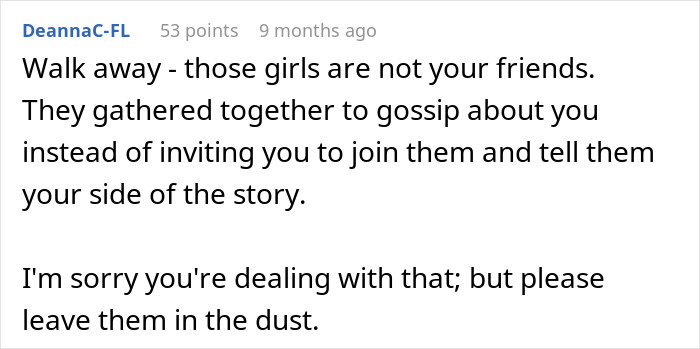
Another common reason friendships dissolve is when friends refuse to understand you and instead start gossiping about you behind your back. Sharing private details, mocking decisions, or misrepresenting you to others is an unmistakable breach of trust. These behaviors can leave you feeling isolated, humiliated, and betrayed. Once trust is broken in this way, even attempts at reconciliation are difficult. Friendships thrive on loyalty, empathy, and mutual respect; gossip undermines every element of that foundation.
Finally, recognizing the red flags is essential. While disagreements and misunderstandings are normal, persistent disrespect, betrayal, or toxic behavior cannot be ignored. You can always attempt to resolve conflicts through conversation, but if a friend refuses to acknowledge their actions, understand your perspective, or respect your feelings, it may be time to step away. Ending a friendship doesn’t mean failure; it’s a step toward protecting your mental and emotional well-being. Choosing to surround yourself with people who uplift, understand, and genuinely care is the healthiest decision you can make.
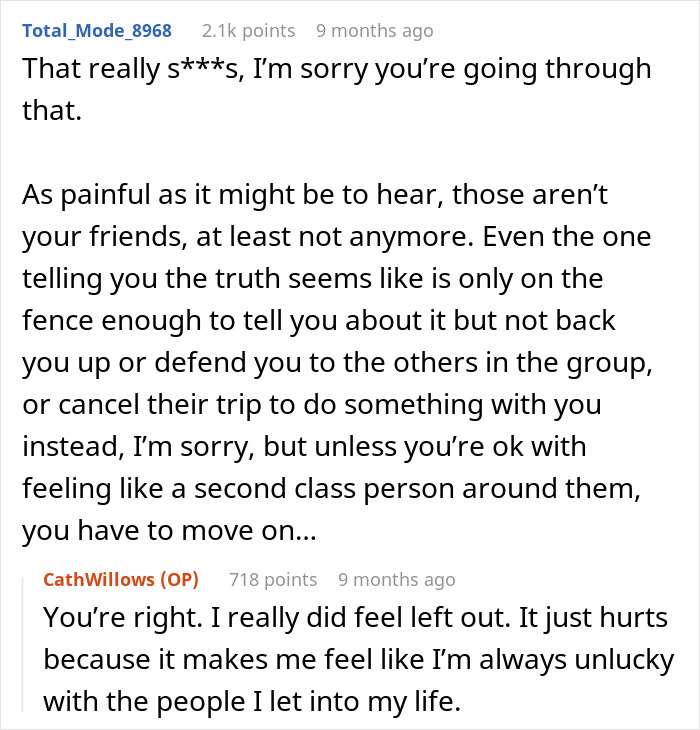
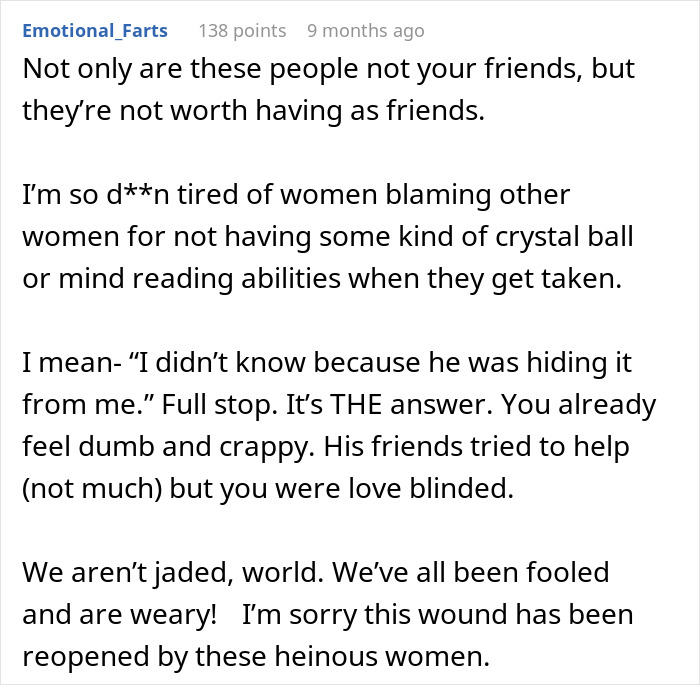
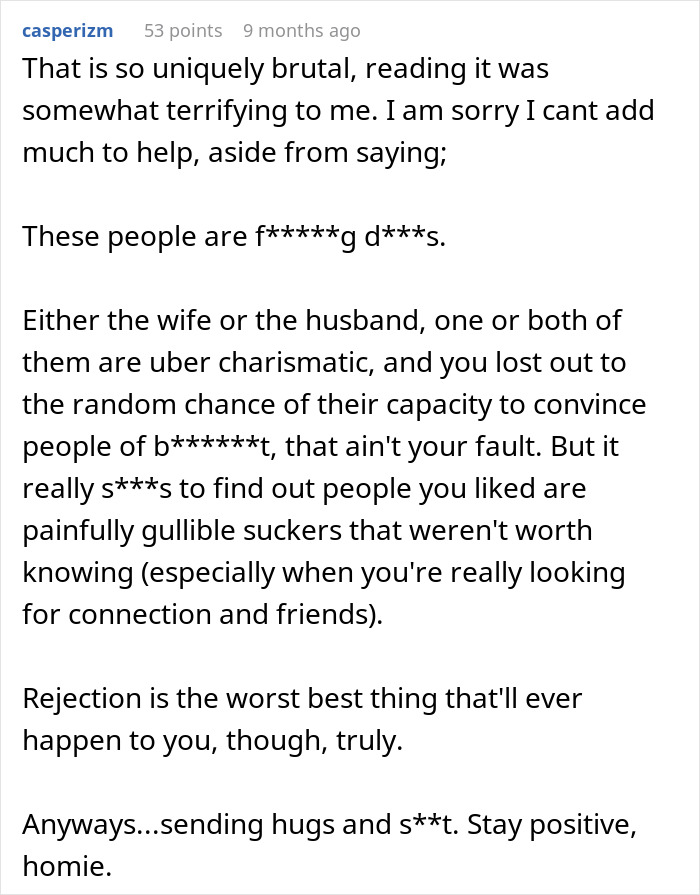
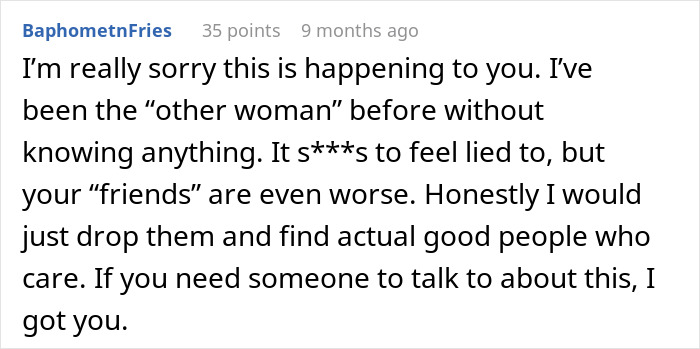
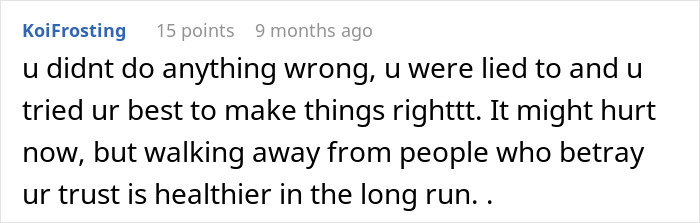
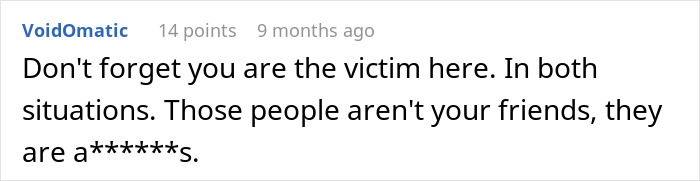
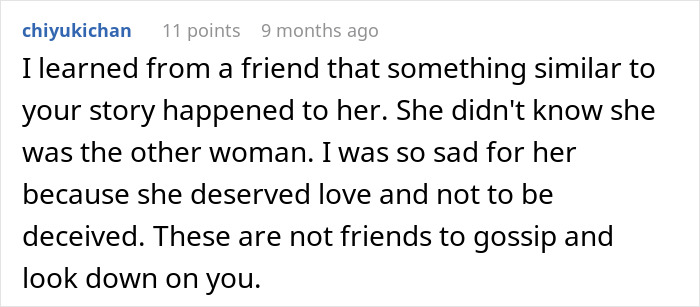
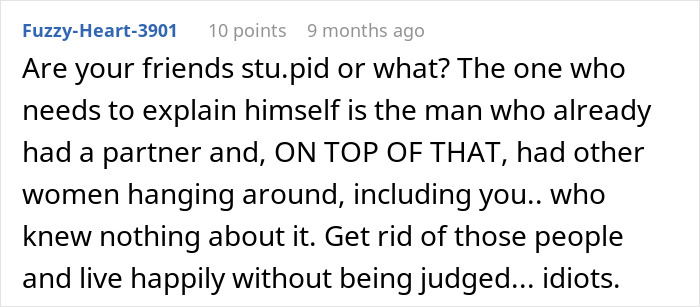
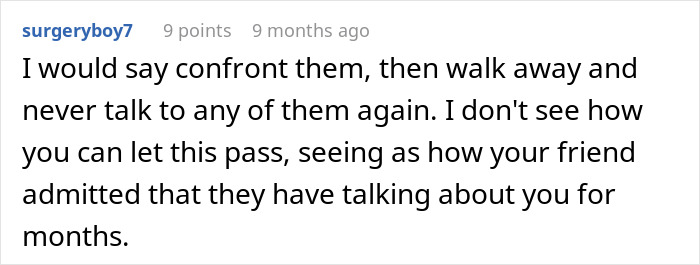
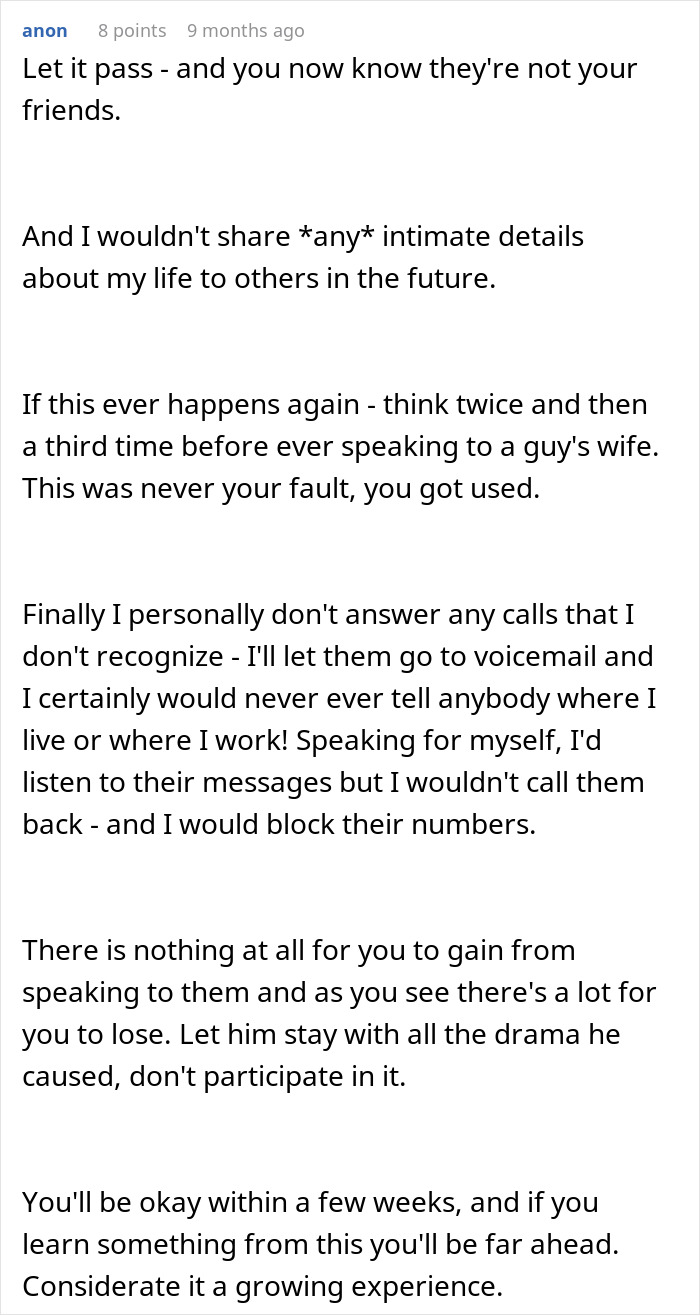
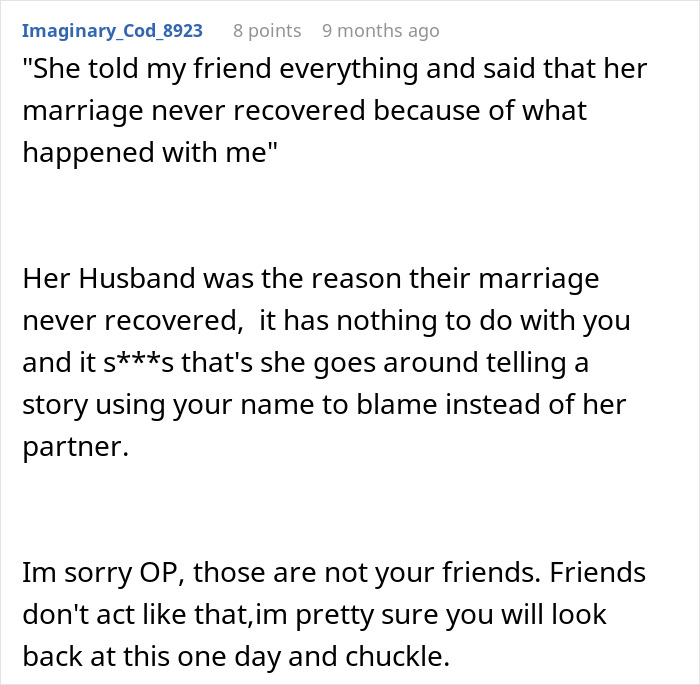
In this particular case, the friends became judgmental over something the author wasn’t even aware of at the time. While infidelity is never acceptable, judging someone for something they didn’t knowingly cause is unfair and hurtful. It’s the kind of betrayal that cuts even deeper because it comes from people you trusted. Have you ever been judged by friends for something you didn’t do or didn’t know? How would you feel if your close friends turned a private part of your past into a reason to exclude you or gossip about you? Situations like this make you question who you can truly trust, and they remind us how fragile even long-term friendships can be when judgment replaces understanding.









By entering your email and clicking Subscribe, you're agreeing to let us send you customized marketing messages about us and our advertising partners. You are also agreeing to our Privacy Policy.
Thank you! You've successfully subscribed to newsletters!


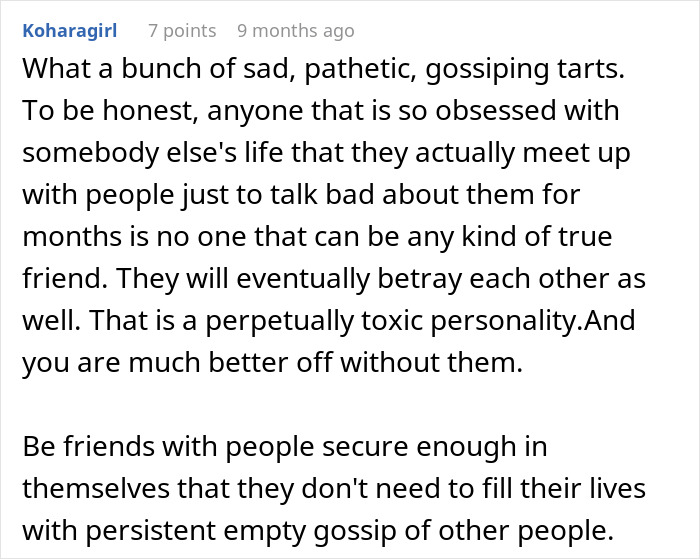
May every one of that group of miserable b*****s end up deceived, abandoned, and gossiped about themselves. Karma can be a real b***h, and I hope she visits every one of them, including the wife who is directing her angry revenge toward the wrong person. She needs to redirect it to her POS ex-husband (if he is her ex, because it almost sounds like she took him back, or would take him back given the opportunity).

May every one of that group of miserable b*****s end up deceived, abandoned, and gossiped about themselves. Karma can be a real b***h, and I hope she visits every one of them, including the wife who is directing her angry revenge toward the wrong person. She needs to redirect it to her POS ex-husband (if he is her ex, because it almost sounds like she took him back, or would take him back given the opportunity).

























 No fees, cancel anytime









30
8