Get Premium
Dark mode theme is available exclusively for premium users. Learn more about the benefits of subscribing.
No fees, cancel anytime.

 Dark Mode Ad-Free Browsing Unlimited Content
 Ad-Free Browsing Unlimited Content Dark Mode
Join 1.2 million Panda readers who get the best art, memes, and fun stories every week!
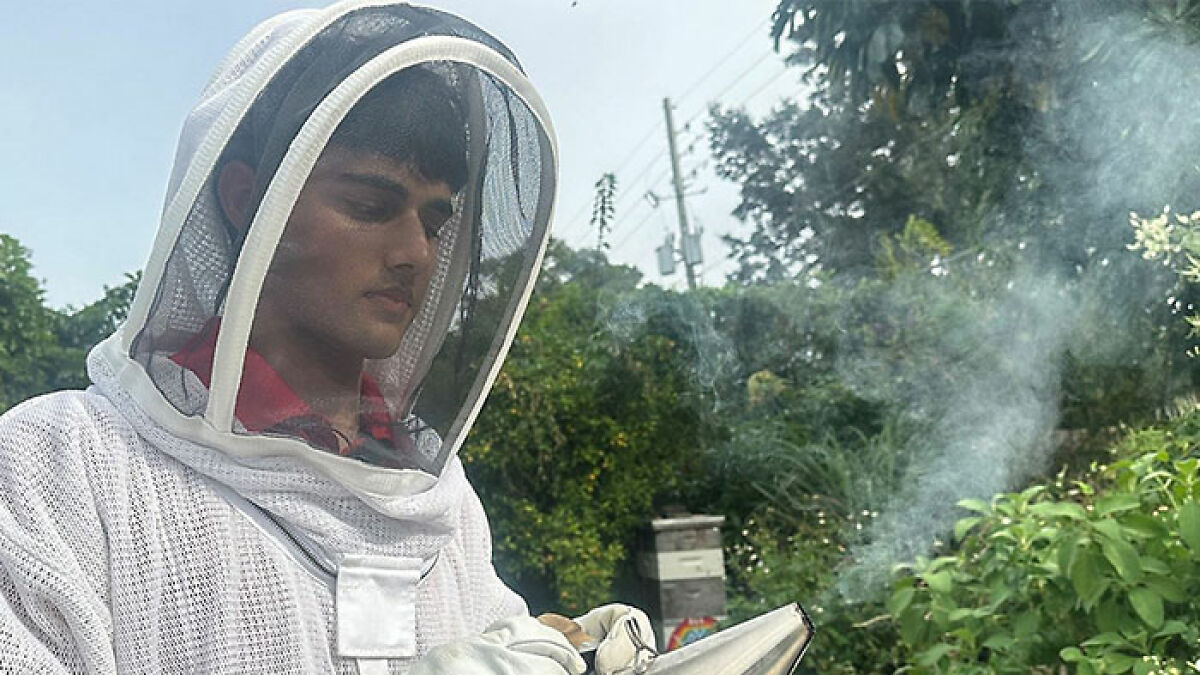
A Florida teenager may have found an unusual way to save honey bees from a destructive parasite.
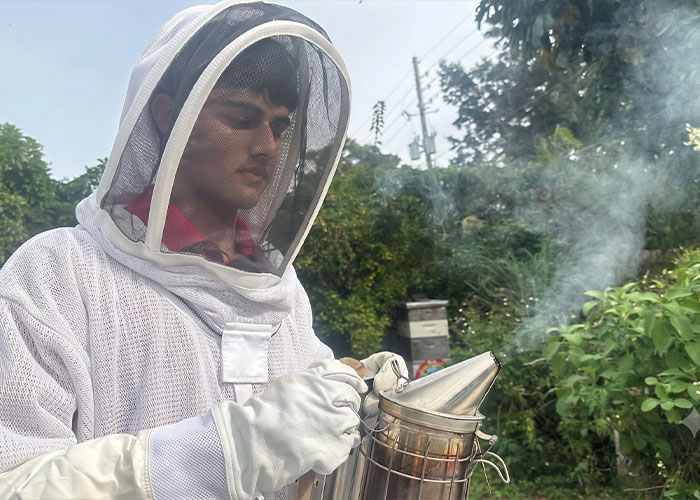
Aakash Manaswi‘s invention uses carbon dioxide to knock Varroa mites off bees without relying on chemical pesticides.
After being tested across 60 hives, the device was linked to healthier colonies and increased honey production.
According to multiple wildlife researchers, one in four native wild bee species in North America is at risk of extinction, while the figure is more than twice as high in Europe.
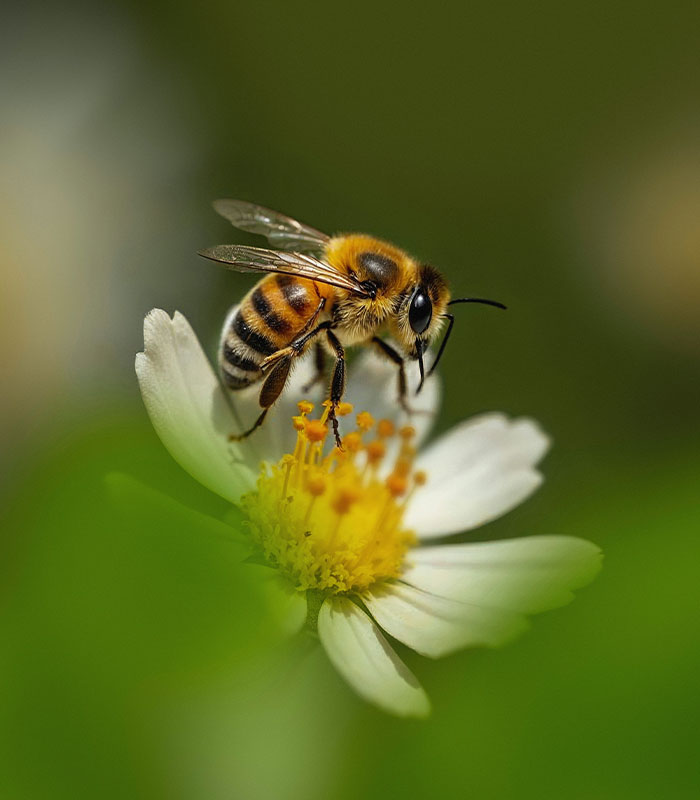
Honey bees play a crucial part in the food chain and the environment, acting as major pollinators for flowering plants and crops.
Their work sustains several flora and fauna, making them an important link in maintaining biodiversity.
Apart from agriculture, bee populations help support diverse ecosystems, with the plants they pollinate contributing to soil stability, habitat creation and the health of natural landscapes.
Manaswi’s interest in the problem began after visiting a local apiary with his older brother and seeing empty beehives.
When he asked why the boxes were empty, the answer was simple: Varroa mites.
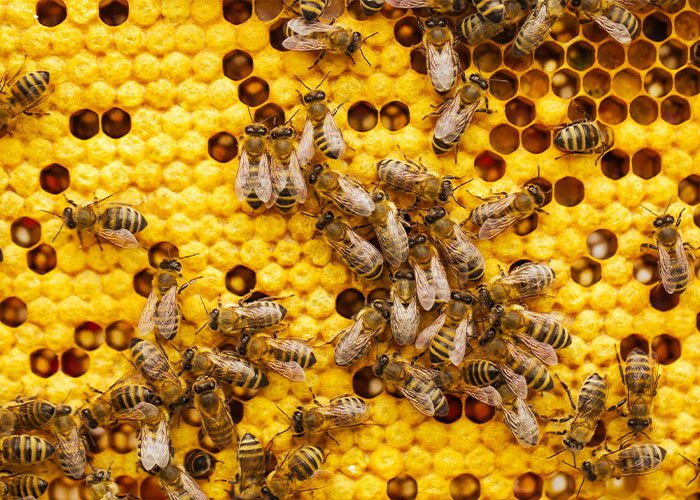
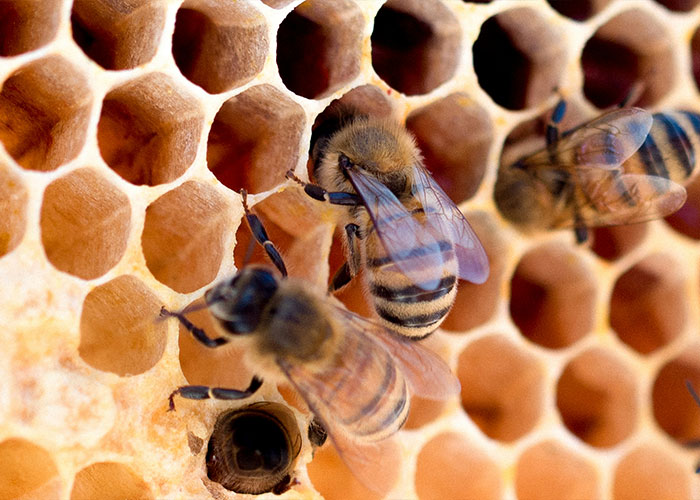
The parasite is particularly destructive because it feeds on honey bees and can spread viruses throughout a colony.
And protecting bees matters far beyond the hive, as honey bees play a crucial role in pollinating many of the crops that make up the global food supply, while also helping maintain wild plants and biodiversity.
For beekeepers, controlling the mites often means turning to chemical treatments, which can be expensive and may become less effective as resistance develops.
Rather than accepting those options, Aakash began looking for a way to target the mites without putting the bees or their honey at unnecessary risk.
His research eventually led him to the discovery that honeybees can tolerate much greater changes in blood acidity than Varroa mites.
That difference sparked an idea: What if carbon dioxide could be used to exploit it?
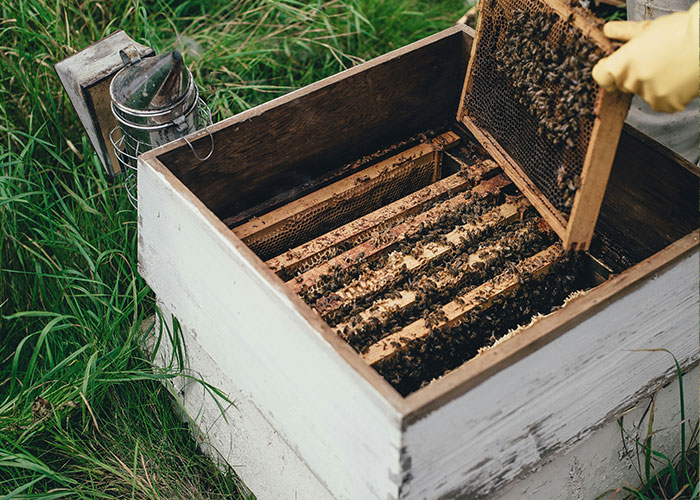
The resulting device is designed to fit onto a standard beehive and connect to a regulated carbon dioxide tank.
A custom airtight lid distributes a carefully controlled concentration of carbon dioxide through the hive.
The gas moves downward through the stacked boxes, exposing the bees and mites to the treatment.
When it enters an insect’s body, it can contribute to the formation of carbonic acid and alter the acidity of its hemolymph, or insect blood.
Honey bees are able to withstand the change at the concentration used in Manaswi’s system, while Varroa mites are far less tolerant.
The mites lose their grip on the bees and fall away, allowing them to be removed from the colony without coating the hive in conventional pesticides.
And because the gas dissipates rather than leaving a chemical residue, the approach could potentially offer beekeepers a cleaner alternative to traditional mite treatments.
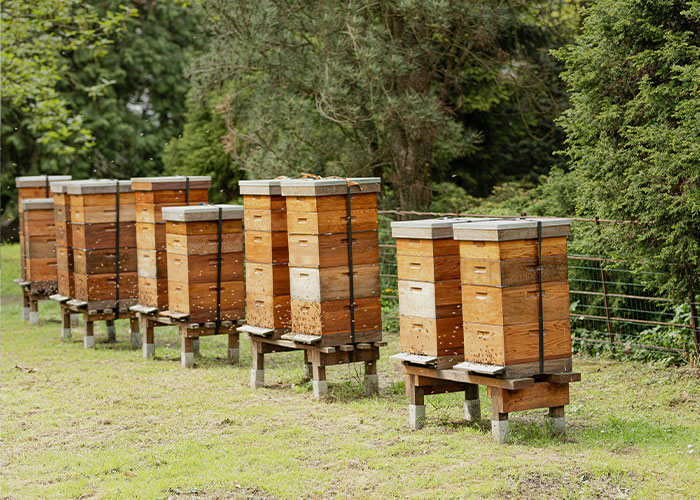
Working with beekeepers and USDA researchers, he put the system through 10-week field trials involving 60 active hives, tracking factors including mite levels, bee mortality and hive productivity.
The results were particularly striking because the project wasn’t simply about keeping the bees alive.
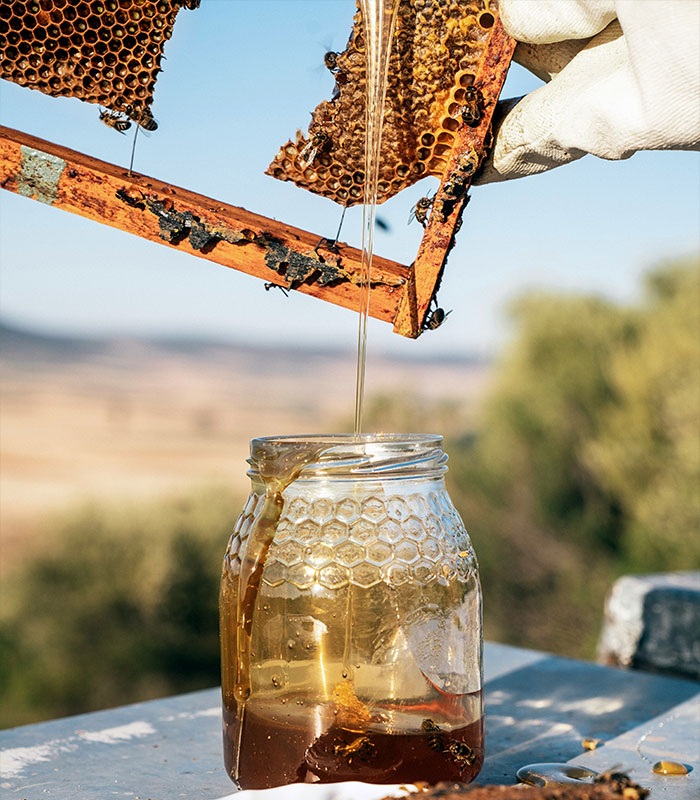
The treated colonies also showed increased honey production and improved overall hive health compared with colonies exposed to conventional chemical treatments.
The invention could also have a major financial advantage.
According to the information surrounding Manaswi’s project, the carbon dioxide-based approach costs roughly 13,500 times less than commercial chemical pesticides and could potentially save an average commercial beekeeper close to $64,000 a year.
Those numbers helped propel the project beyond a school science experiment.
The 17-year-old became a top-10 finalist in the 3M Young Scientist Challenge and later won the $10,000 Peggy Scripps Award for Science Communication at the 2026 Regeneron International Science and Engineering Fair.
Aakash has spoken about bringing the technology to beekeepers more broadly and continuing his work on solutions to the pollinator crisis.
He also plans to study entomology in college and pursue a long-term career focused on insects.
His work has already taken him into international conversations about climate and agriculture.
“When I start talking about my research, which I’m super passionate about, I just completely get in a different zone. It’s like I’m not a student anymore,” he said in an interview while discussing the experience of presenting his work on major international stages.
Manaswi is also thinking about developing a technology that could help beekeepers protect their colonies while reducing their reliance on chemical treatments.

By entering your email and clicking Subscribe, you're agreeing to let us send you customized marketing messages about us and our advertising partners. You are also agreeing to our Privacy Policy.
Thank you! You've successfully subscribed to newsletters!





one must not forget about the bumblebees (around 40 species in sweden), and solitary bees (about 287 species in sweden) etc etc. Honeybee is important to take care of, but they should not have all of the focus so we forget about all of the other good insects 🙃 Honeybees produce honey so I think there always be an economical reason do save them, but not as much for the other? they can pollinate crops, but give no honey to sell. Therefor even more important to look after bumblebees and solitary bees 🥳
Load More Replies...
one must not forget about the bumblebees (around 40 species in sweden), and solitary bees (about 287 species in sweden) etc etc. Honeybee is important to take care of, but they should not have all of the focus so we forget about all of the other good insects 🙃 Honeybees produce honey so I think there always be an economical reason do save them, but not as much for the other? they can pollinate crops, but give no honey to sell. Therefor even more important to look after bumblebees and solitary bees 🥳
Load More Replies... 
































 No fees, cancel anytime


















55
21