Get Premium
Dark mode theme is available exclusively for premium users. Learn more about the benefits of subscribing.
No fees, cancel anytime.

 Dark Mode Ad-Free Browsing Unlimited Content
 Ad-Free Browsing Unlimited Content Dark Mode
Join 1.2 million Panda readers who get the best art, memes, and fun stories every week!

I imagine family vacations bring a rare week when nobody has to think about school schedules, work deadlines, or who is picking up whom. However, in blended families, even deciding who counts as part of the vacation can become complicated.
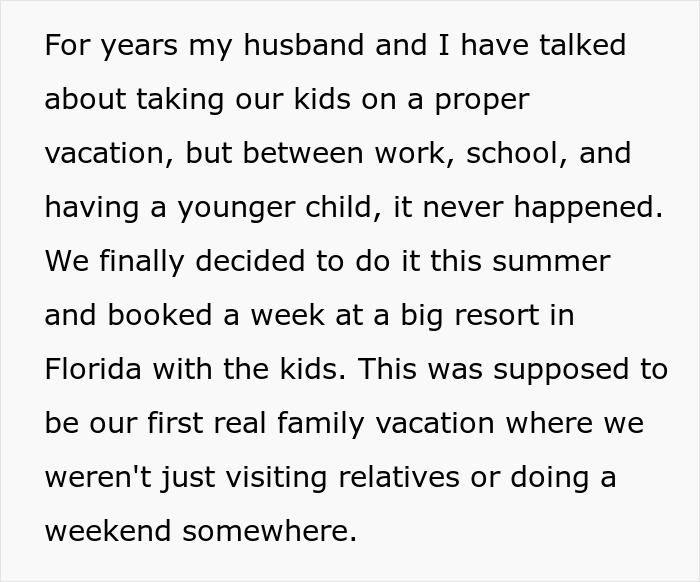
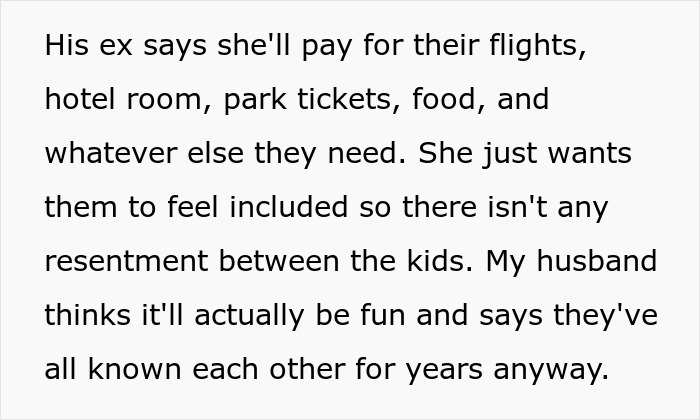
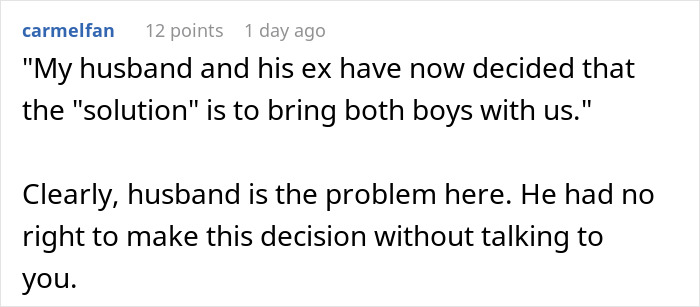
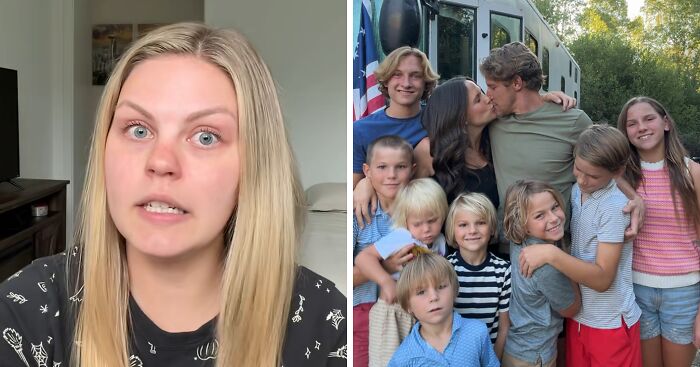
That tension sits at the center of this story. A woman and her husband had spent years talking about taking their children on a proper vacation and finally planned a week in Florida with their two young children and the husband’s 12-year-old daughter. When a disagreement occurred, the proposed solution left the woman reeling.
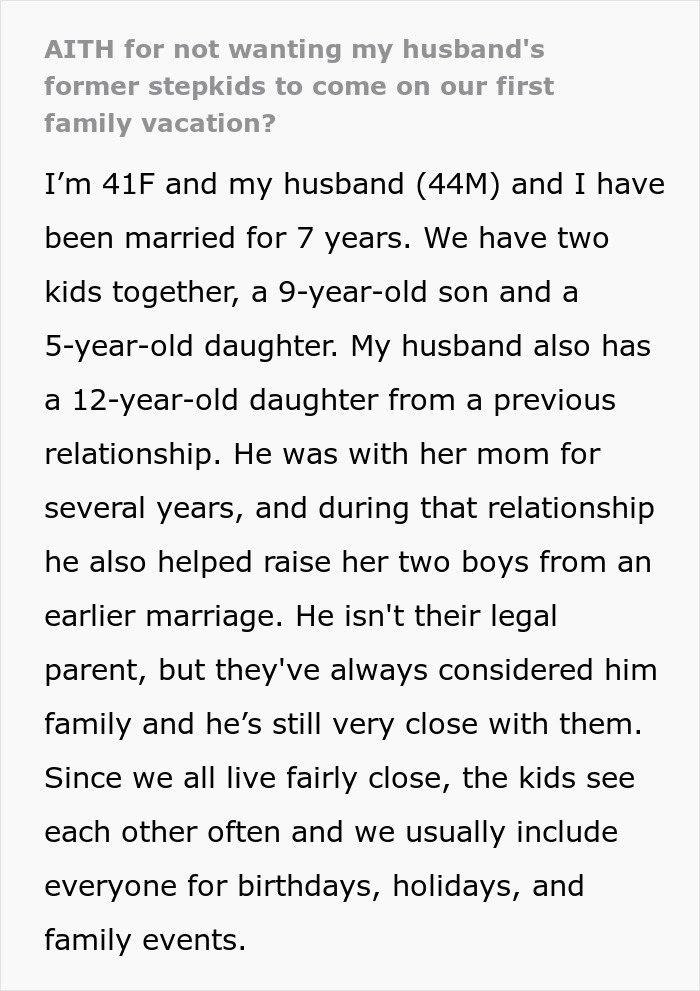
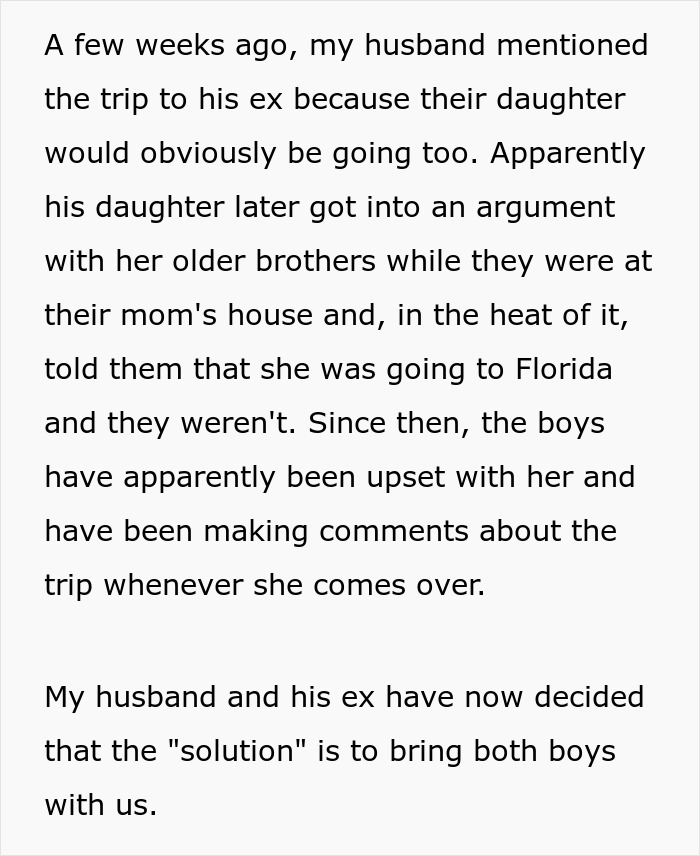
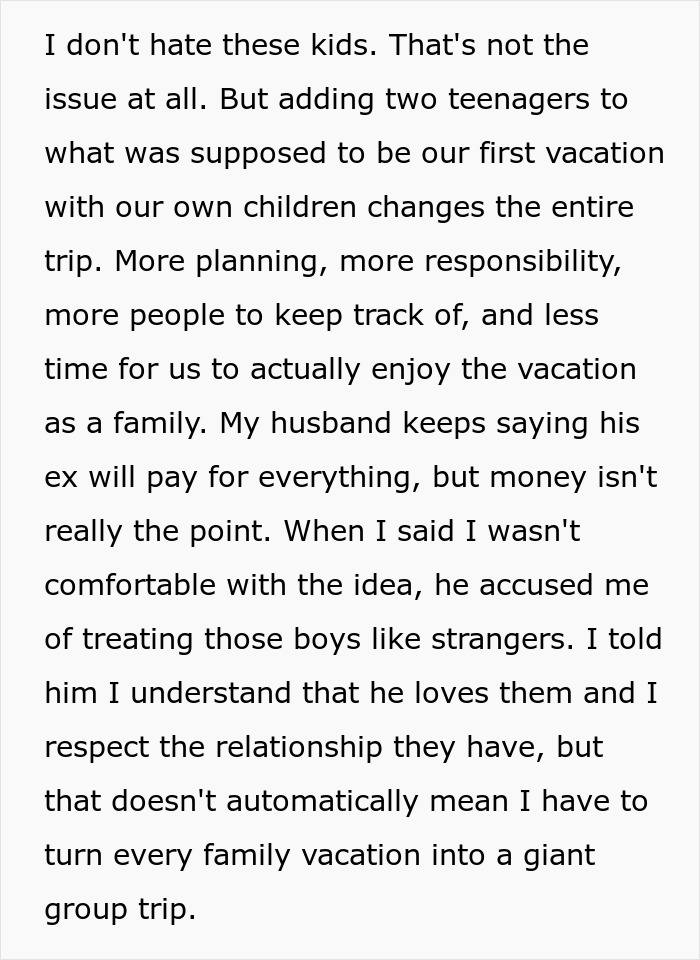
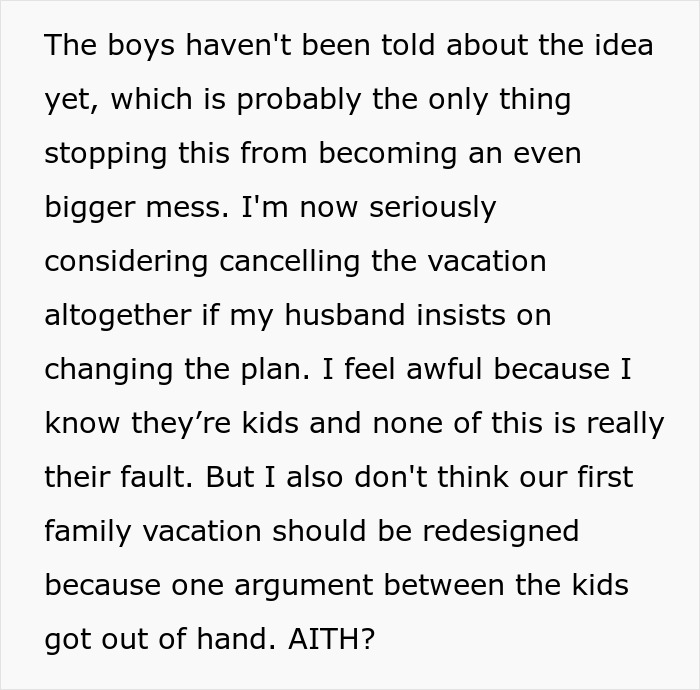
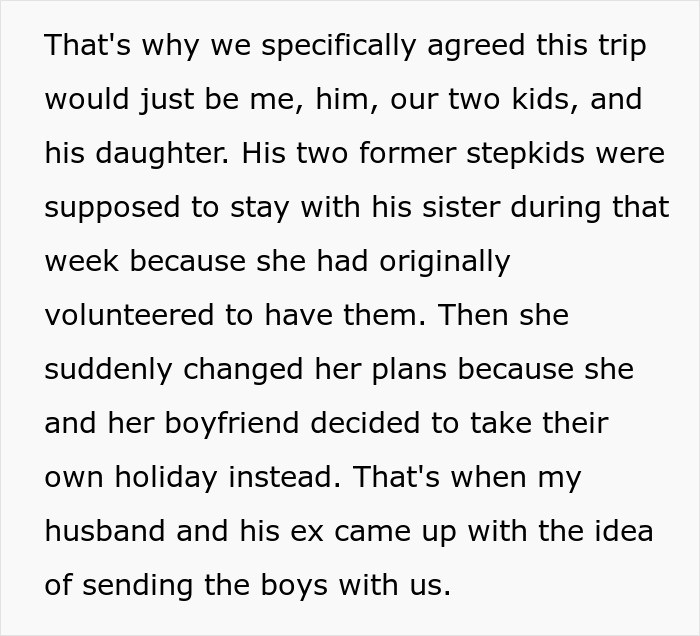
Blended families are often less straightforward than the neat family trees people draw on paper. Research on stepfamilies has repeatedly found that family roles can be difficult to define because there are biological parents, stepparents, stepsiblings, half-siblings, former partners, and relatives across different households.
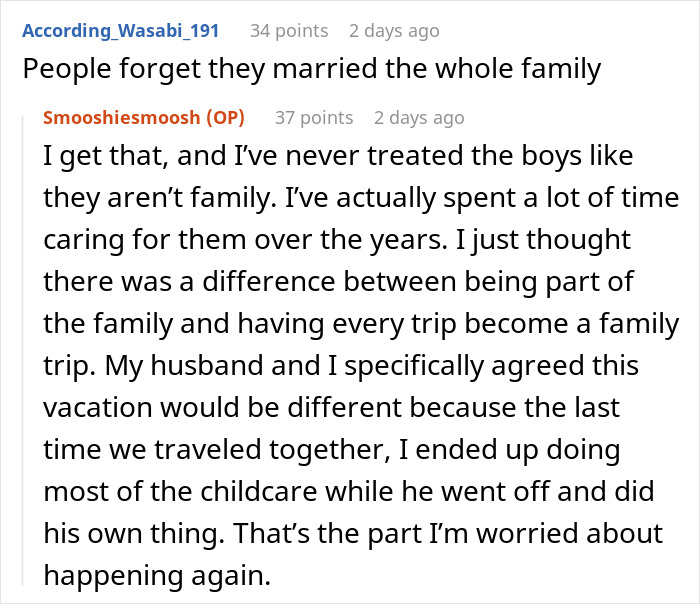
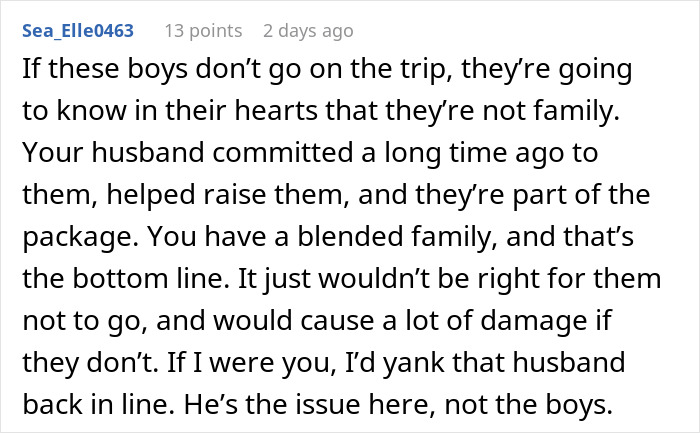
They touch on the concept of boundary ambiguity, which is the uncertainty that can arise when people do not share the same understanding of who belongs to a family unit and what responsibilities come with those relationships. That does not mean the boys in this story are somehow less family because they are former stepchildren. Stepfamily relationships can actually become wonderful over time.
A systematic review of 56 studies found that higher-quality stepparent-child relationships were associated with better outcomes for children and adolescents. The important distinction is that emotional closeness does not automatically create identical responsibilities in every situation. People can genuinely love a child while still needing clearer boundaries around when they are acting as a parent, stepparent, caregiver, or extended family member.
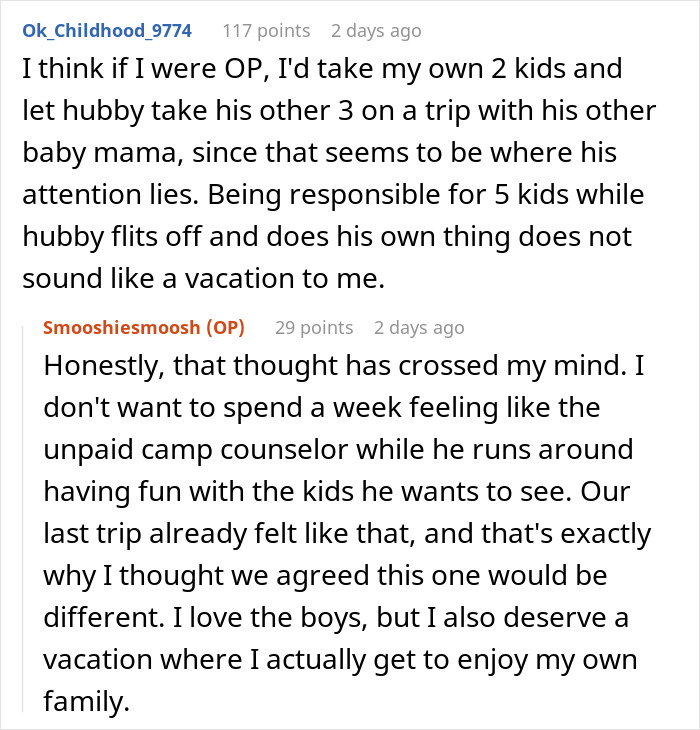
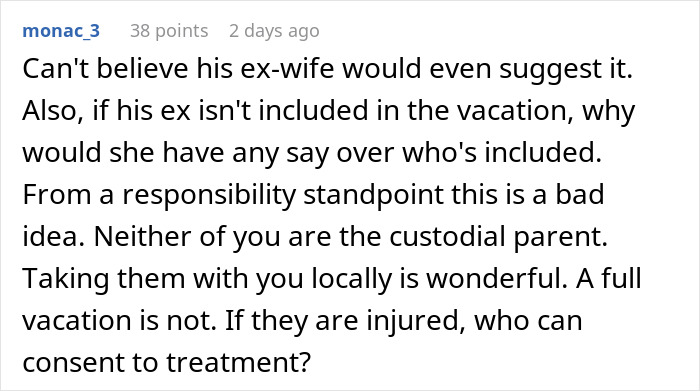
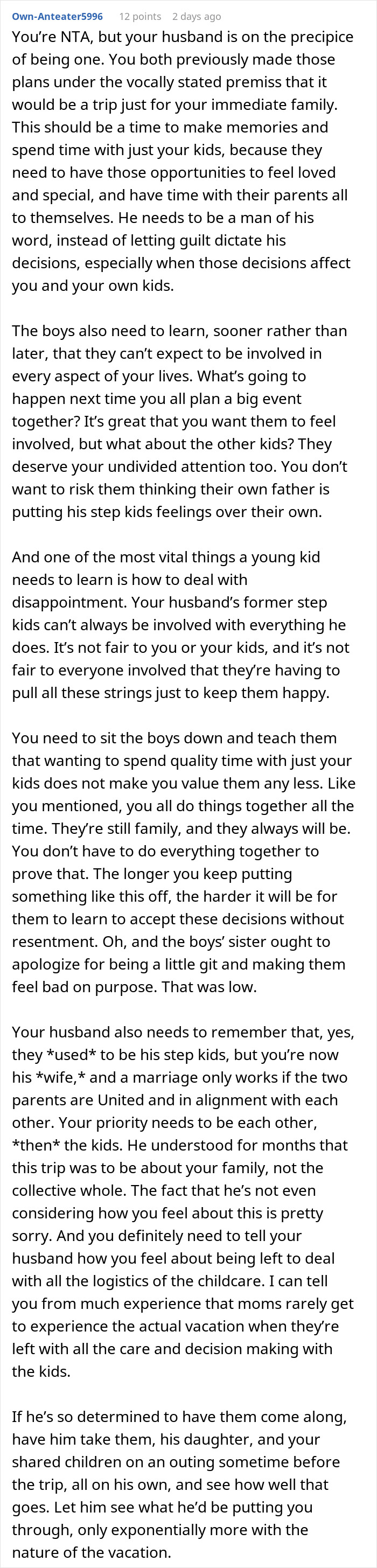
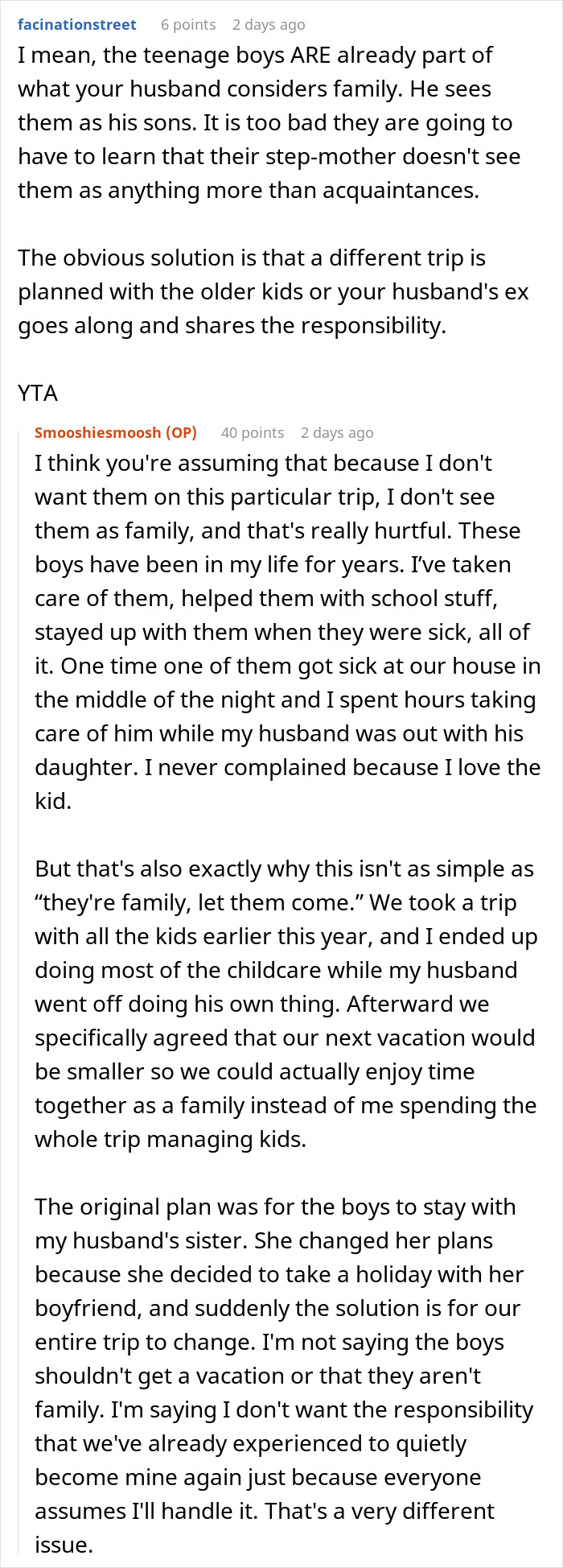
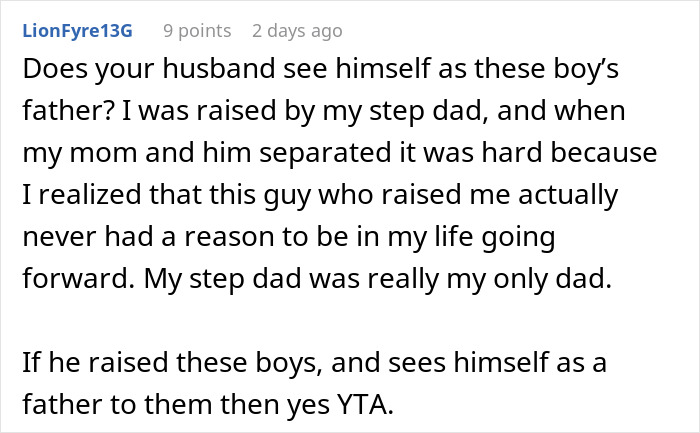
The proposed vacation also illustrates why family boundaries can become particularly complicated when several sibling relationships overlap. The husband is the biological father of one child, a stepparent figure to two others, and a father to two children with his current wife. Naturally, these more complex arrangements are especially likely to produce disagreements about obligations and expectations.
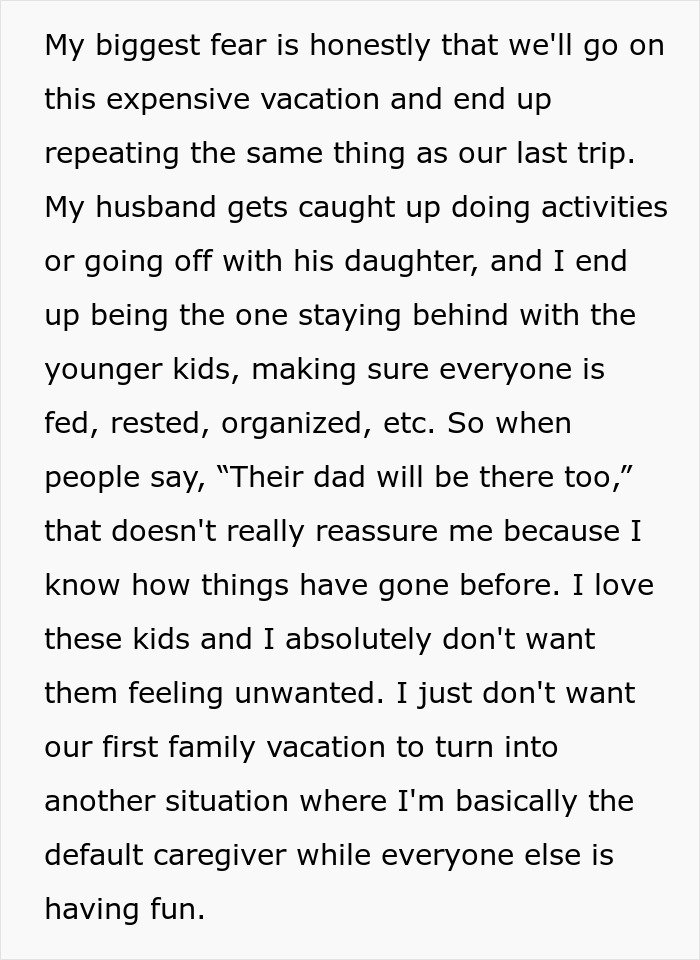
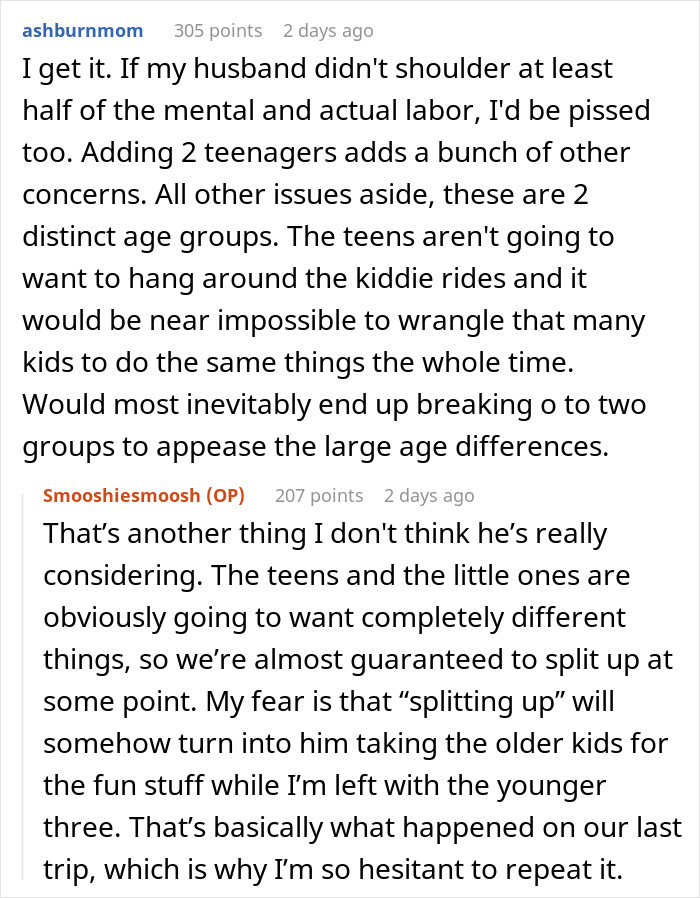
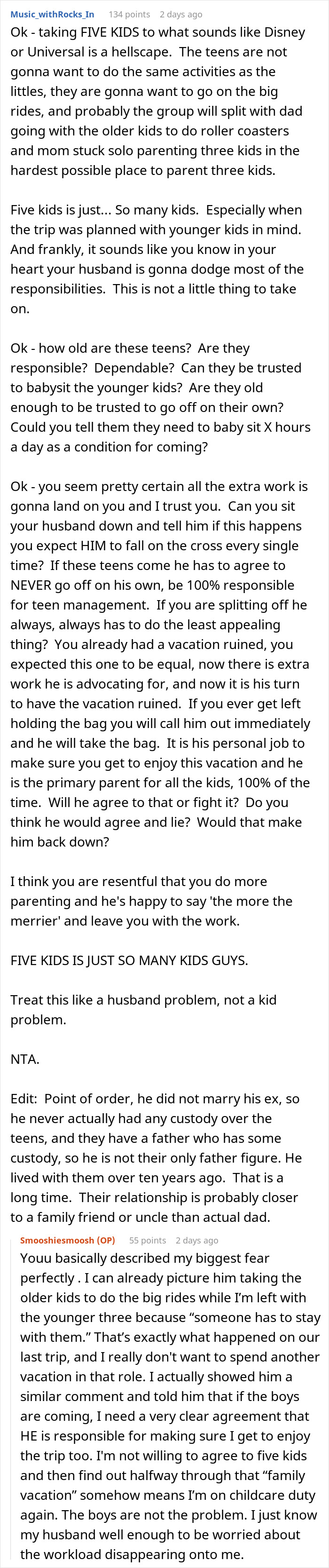
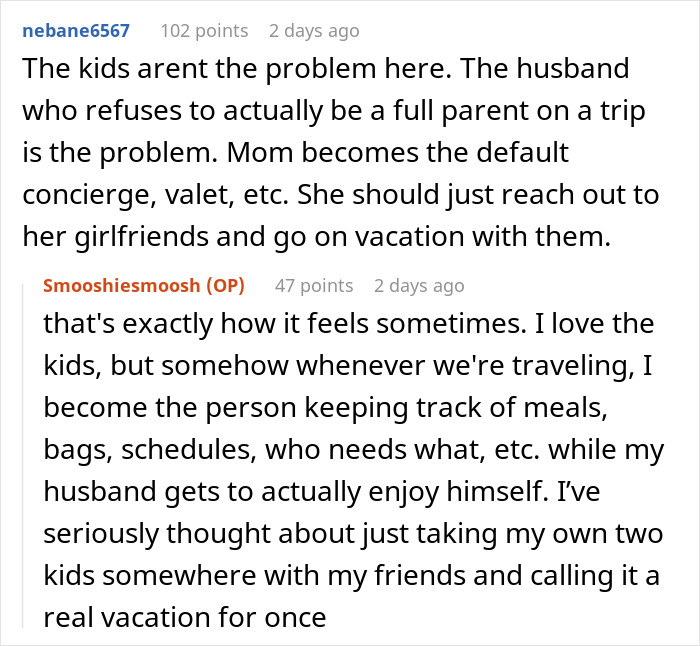
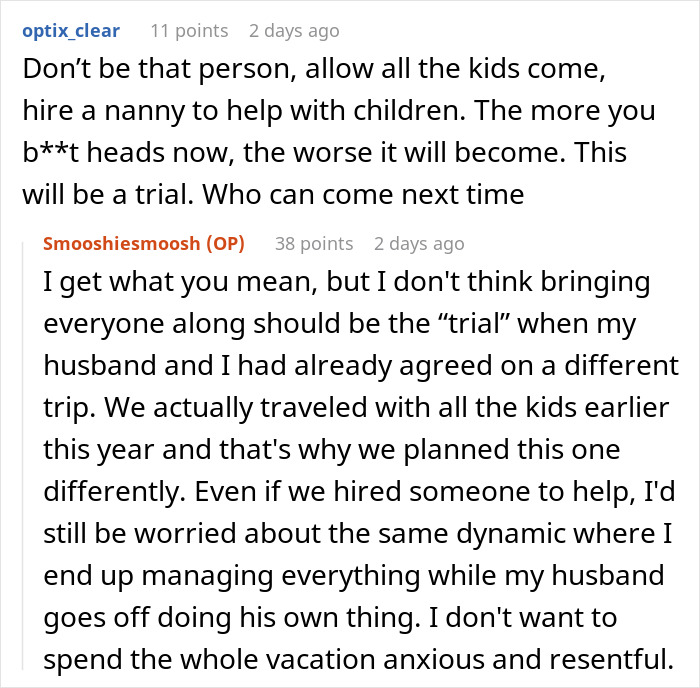
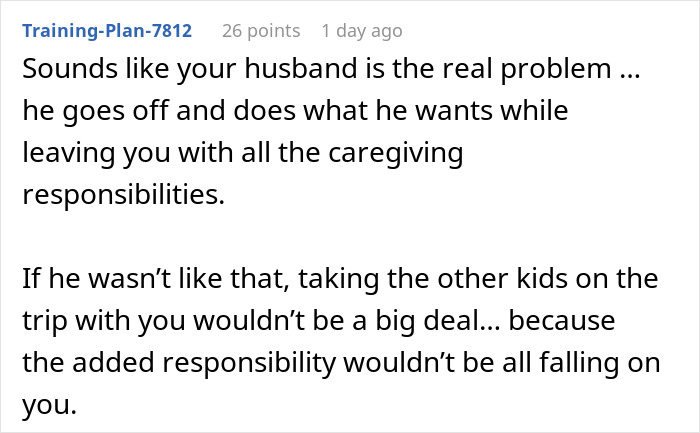
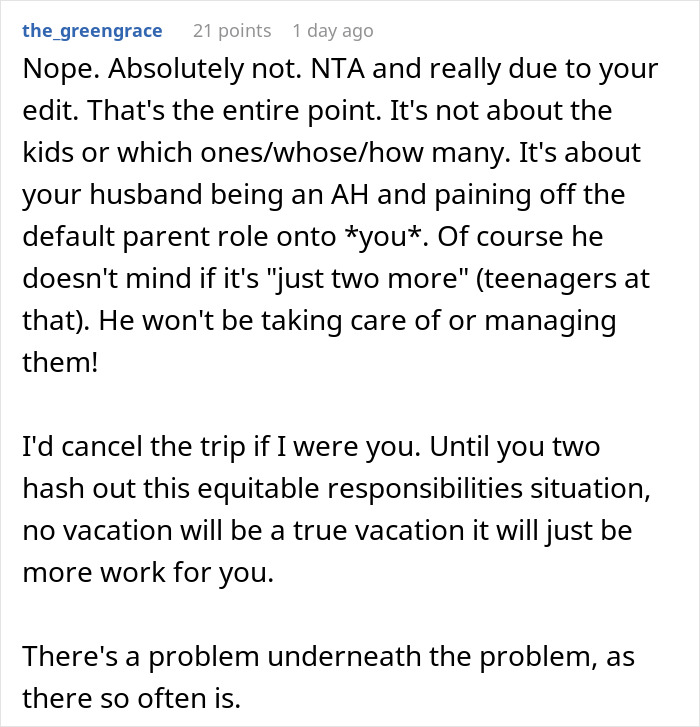
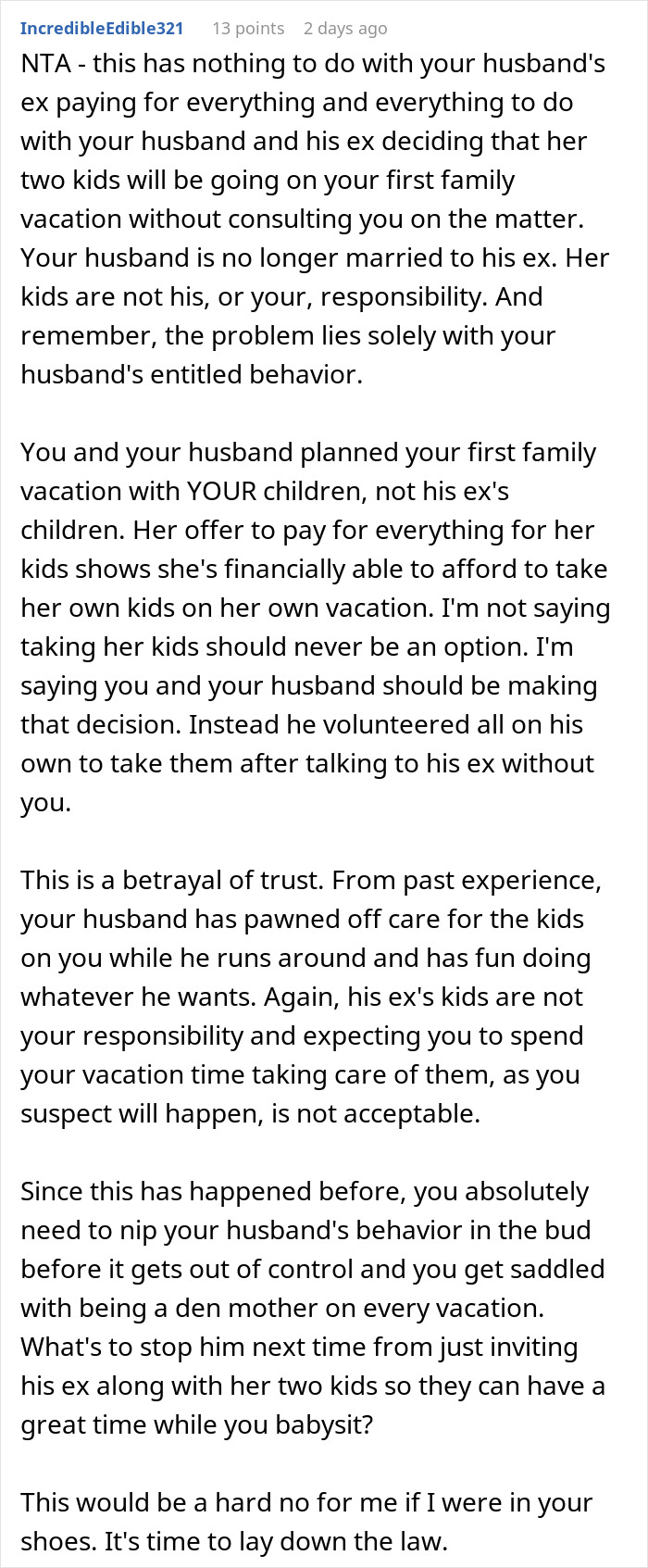
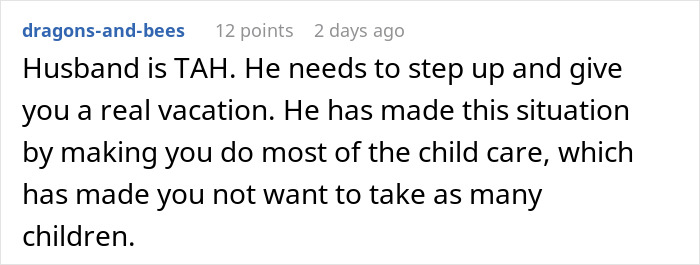
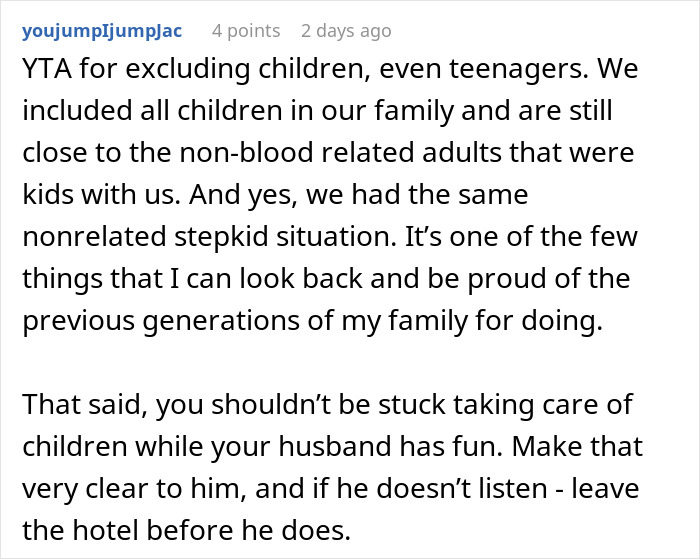
Perhaps there’s also the less visible part of bringing more children on a trip. Realistically, someone has to manage them. Adding two teenagers may not mean doubling the workload, but it can change who needs supervision, who coordinates activities, who handles meals, and who stays behind when everyone wants to do different things. And as has been found, women are expected to take on the role of keeping everything and everyone together.
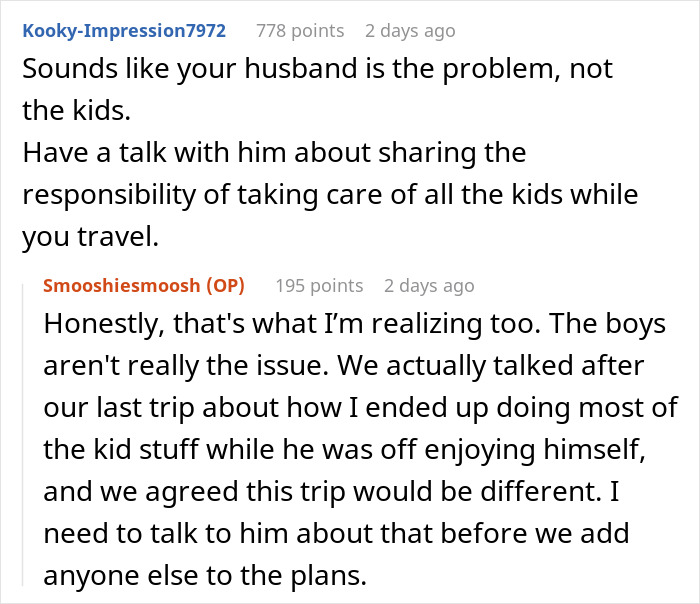
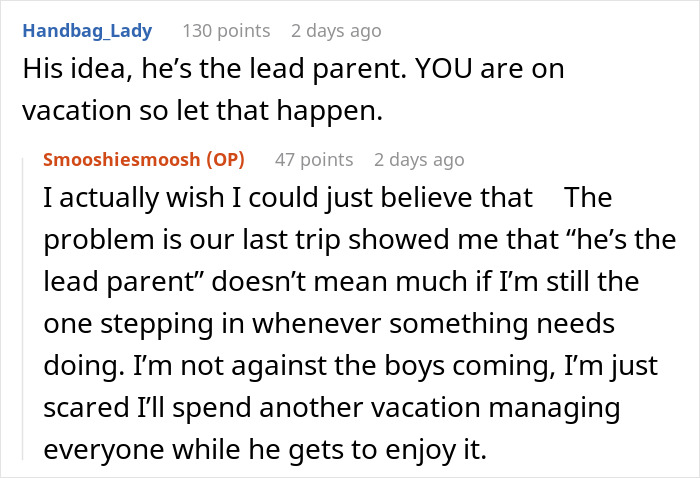
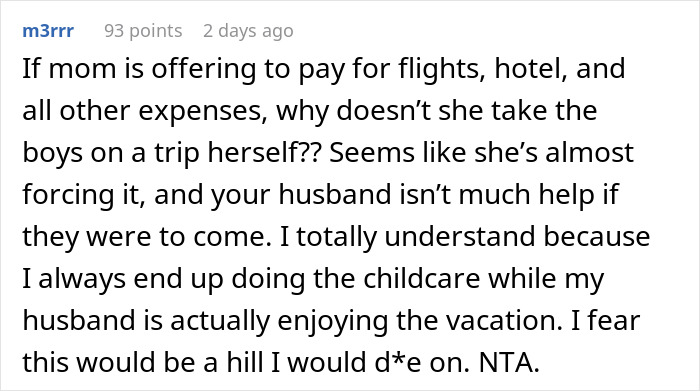
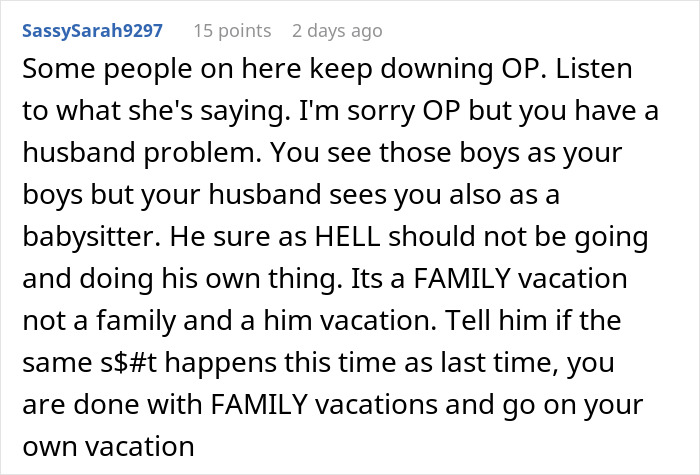
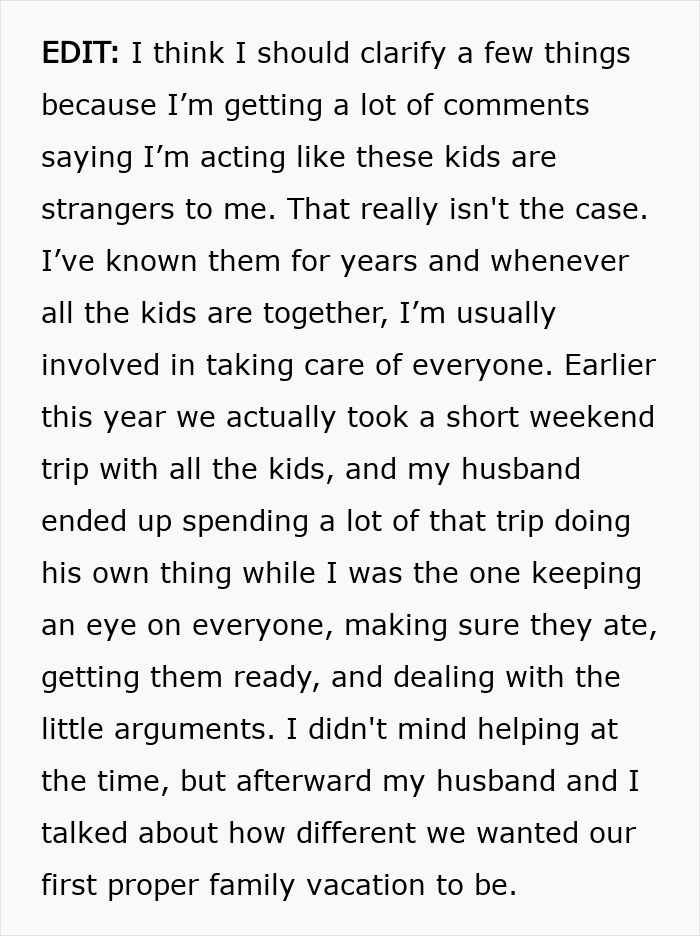
That makes the woman’s previous vacation experience relevant rather than incidental. She says that during an earlier trip involving all the children, her husband spent much of the time doing activities while she handled practical childcare. Her refusal to allow her husband’s step kids on the vacation is also about what it was meant to accomplish.
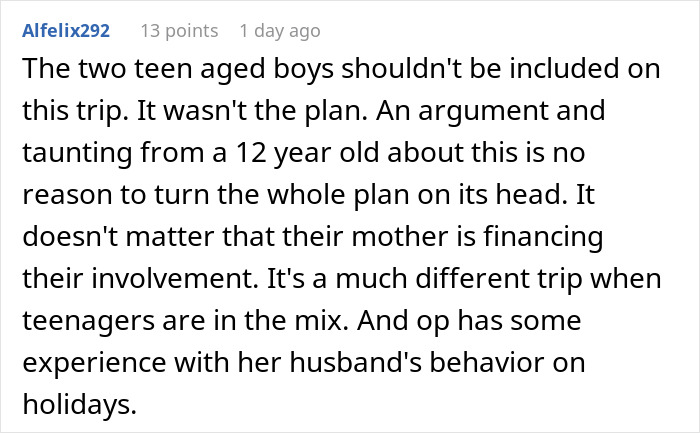
When people spend months looking forward to something, the details often become part of the experience itself. Changing the plan at the last minute can feel disappointing because it changes more than the guest list. Rather, it can alter the atmosphere and take away from what made the original idea special, as Thinking Layers highlights.
The best way to resolve that kind of disagreement is probably to focus less on who gets invited and more on what each person needs from the plan. If the husband is willing to take primary responsibility for the additional children, while still protecting the time the wife wants with their younger children, the arrangement may become more manageable.
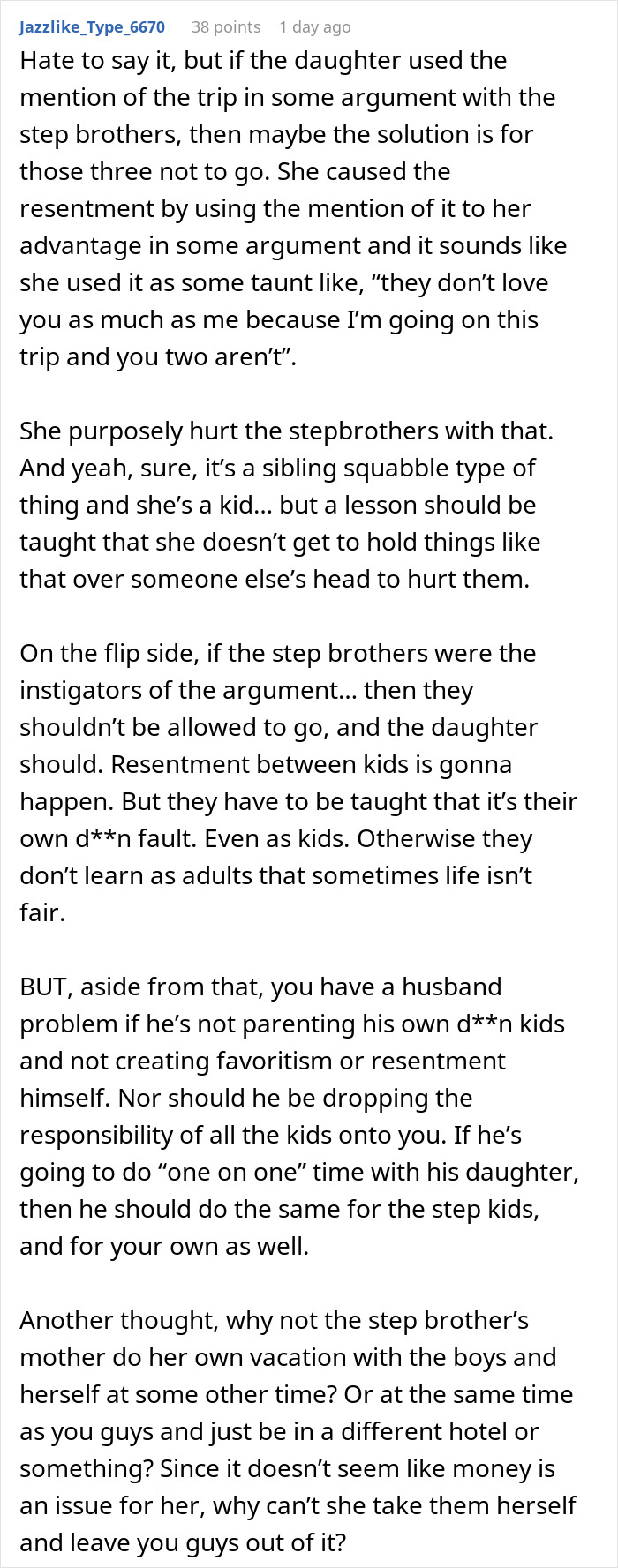
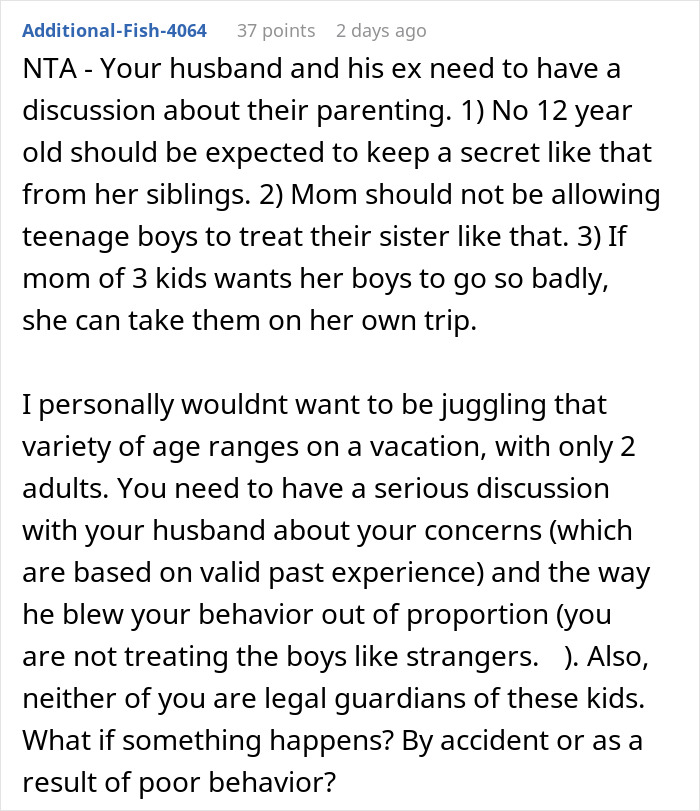
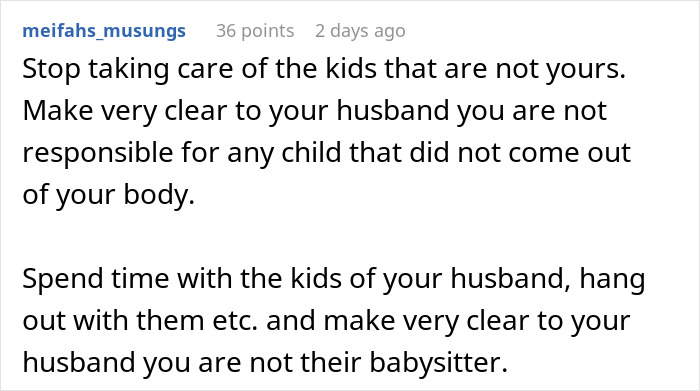
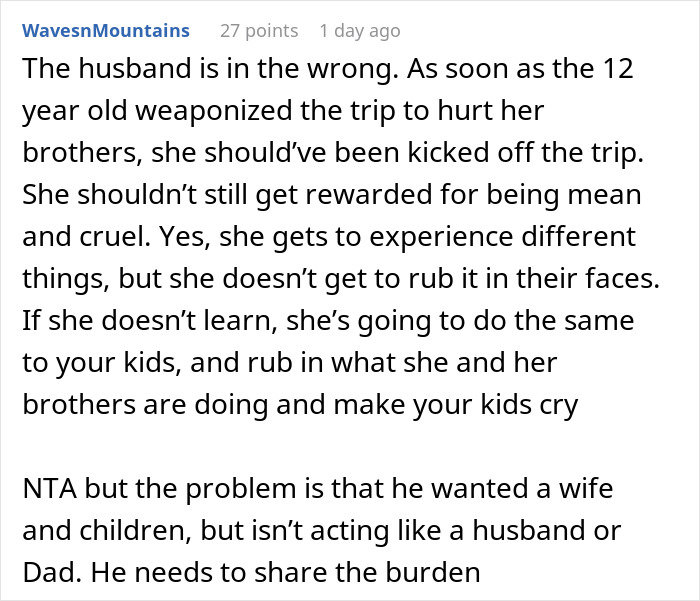
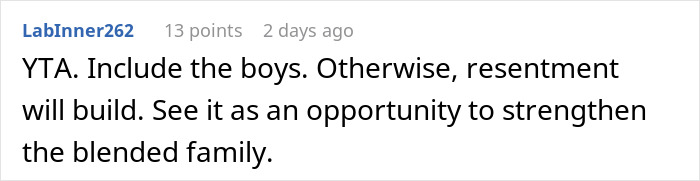
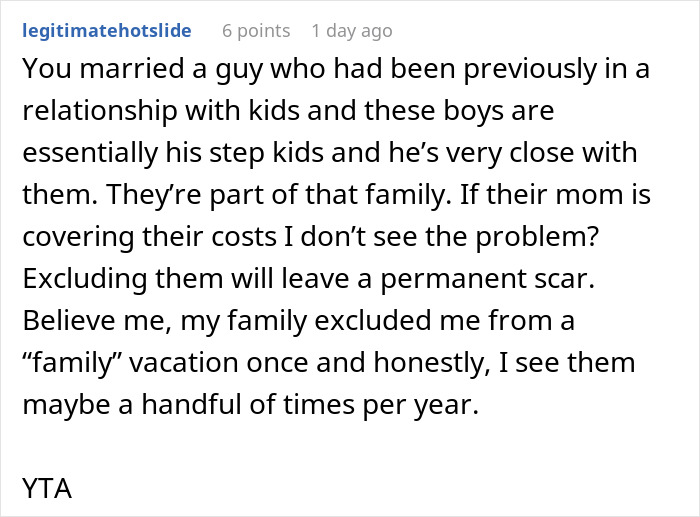
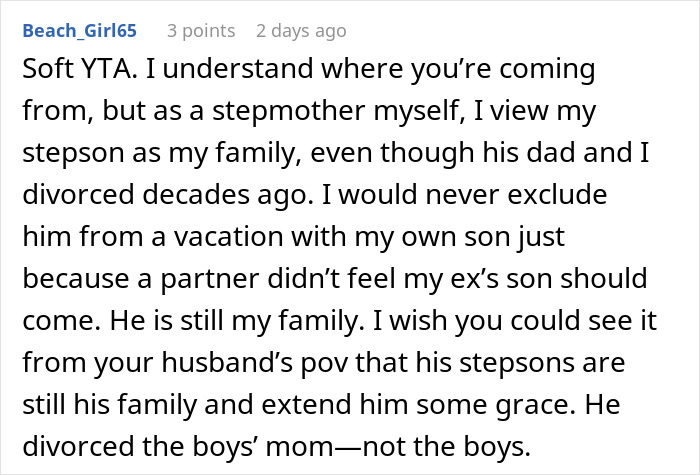
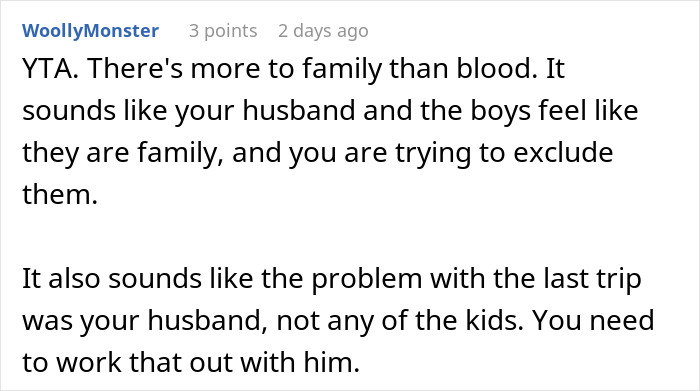
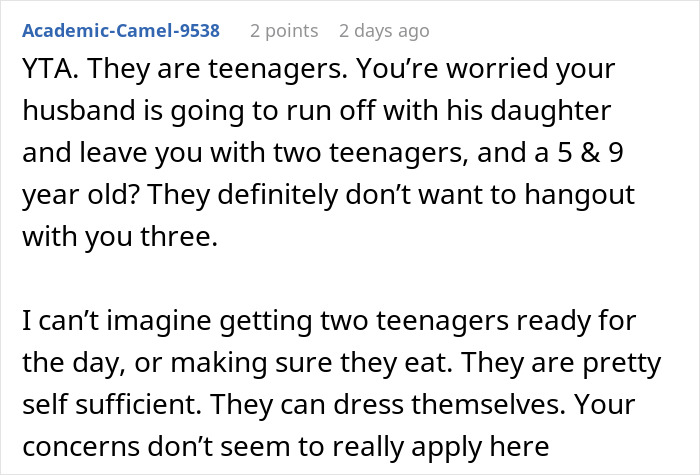
What do you think? Should the husband be responsible for the extra childcare if he insists on bringing his former step kids? We would love to know your thoughts!

By entering your email and clicking Subscribe, you're agreeing to let us send you customized marketing messages about us and our advertising partners. You are also agreeing to our Privacy Policy.
Thank you! You've successfully subscribed to newsletters!

























 No fees, cancel anytime







29
0