Get Premium
Dark mode theme is available exclusively for premium users. Learn more about the benefits of subscribing.
No fees, cancel anytime.

 Dark Mode Ad-Free Browsing Unlimited Content
 Ad-Free Browsing Unlimited Content Dark Mode
Join 1.2 million Panda readers who get the best art, memes, and fun stories every week!
With today's solar eclipse drawing the attention of millions around the world, it's the perfect opportunity to look back at the extraordinary eclipses that changed the course of science and photography. For thousands of years, total solar eclipses inspired fear, myths, and religious interpretations. Many of the greatest breakthroughs in astronomy have taken place during these fleeting moments of darkness.
The photographs featured below tell the story of those remarkable events. Spanning nearly 175 years, they document not only the evolution of eclipse photography, from early daguerreotypes to images captured from aircraft, spacecraft, and the International Space Station, but also the extraordinary discoveries these rare events have made possible. Each image represents a milestone in the history of astronomy, reminding us that some of humanity's greatest scientific achievements have unfolded during just a few fleeting minutes beneath the Moon's shadow.
This post may include affiliate links.
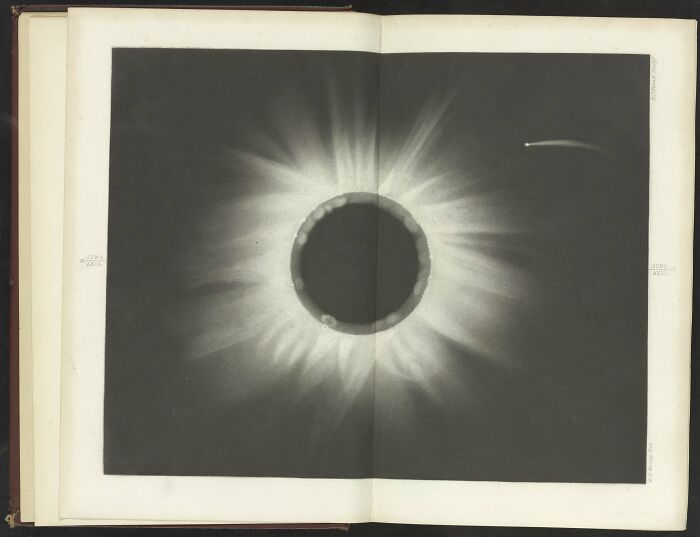
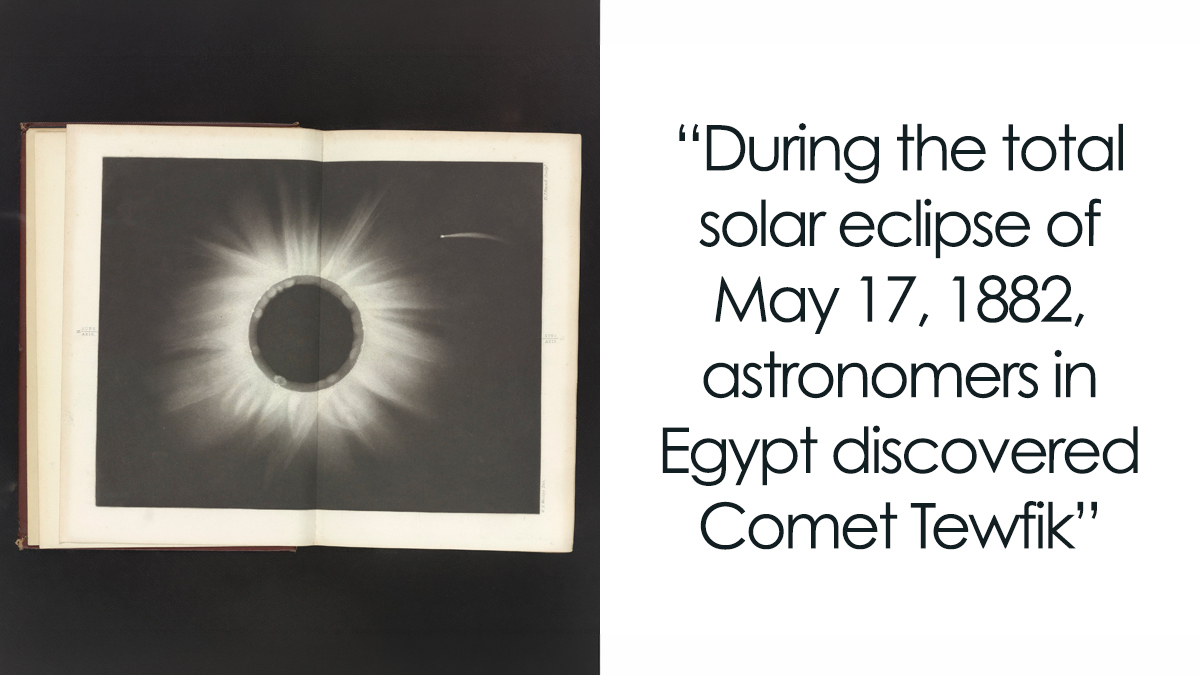
The total solar eclipse of May 17, 1882, produced one of the most unexpected discoveries in eclipse history. As totality began over Egypt, astronomers noticed a bright object close to the darkened Sun that had never been observed before. By remarkable coincidence, the eclipse occurred just as Comet Tewfik (X/1882 K1), a member of the Kreutz sungrazer family, was passing extremely close to the Sun, allowing observers to detect it during the brief darkness. Under normal daylight conditions, the comet would have remained hidden by the Sun's intense glare. Even more remarkably, photographs taken during the eclipse captured the comet's movement over the course of just 1 minute and 50 seconds, providing one of the earliest examples of an eclipse leading directly to the discovery and documentation of a previously unknown celestial object.

I'm looking forward to this evening! Even if just above 80% here. edit: d**n, yr.no claims even more cloud now! 😐⛅
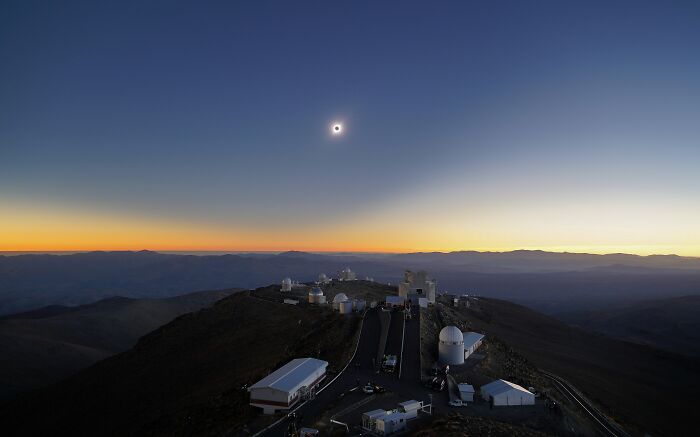
The total solar eclipse of July 2, 2019, swept across Chile and Argentina, producing some of the most spectacular landscape eclipse photographs ever captured. The path of totality crossed the Andes Mountains and Chile's world-famous Atacama Desert, home to several of the world's leading astronomical observatories, including ESO's La Silla Observatory. With exceptionally clear skies and the eclipsed Sun hanging low above the horizon, photographers created unforgettable images of totality framed by snow-capped peaks, rugged mountain landscapes, and giant observatory domes. The event also provided scientists with valuable opportunities to study the Sun's corona during a period of solar minimum, when its delicate magnetic structure is especially visible.
This photograph was taken from ESO's La Silla Observatory, where thousands of visitors gathered to witness the eclipse. With the observatory domes silhouetted beneath the darkened Sun, it beautifully illustrates why Chile's Atacama Desert is considered one of the finest places on Earth for astronomical observation.
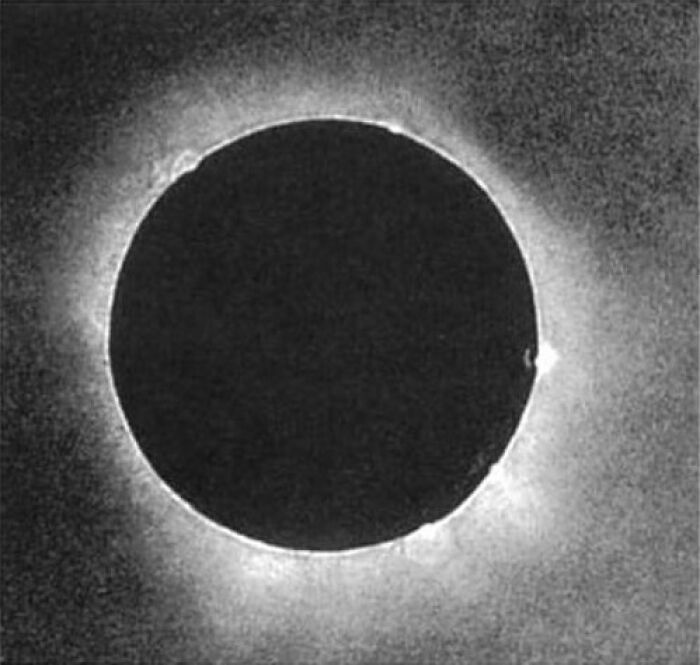
Captured on July 28, 1851, in Königsberg (now Kaliningrad, Russia), the first successful photograph of a total solar eclipse marked a turning point in both astronomy and photography. Taken by Prussian photographer Johann Julius Friedrich Berkowski using a small daguerreotype camera attached to a telescope, the image provided the first permanent photographic record of the Sun's corona. Until then, eclipses could only be documented through sketches, making Berkowski's photograph a groundbreaking achievement that transformed how scientists studied these rare celestial events.
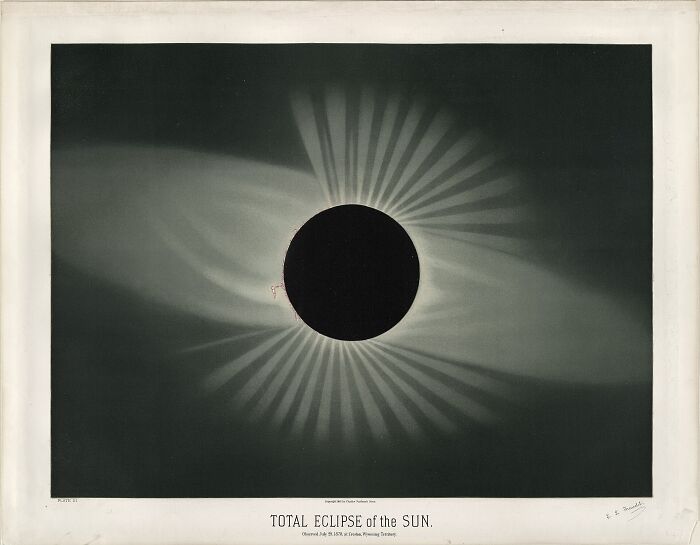
The 1878 total solar eclipse became one of the largest scientific expeditions of the 19th century, bringing together some of America's most celebrated minds, including astronomers Simon Newcomb, Samuel Pierpont Langley, pioneering astronomer Maria Mitchell, and inventor Thomas Edison. While Edison used the event to test his newly invented tasimeter, designed to detect tiny changes in heat, astronomers focused on studying the Sun's mysterious corona. The expedition helped transform eclipse observations into coordinated scientific research, producing valuable insights into the Sun's outer atmosphere and cementing solar eclipses as some of the most important opportunities for astronomical discovery.

'[...] Turned America Into A Scientific Powerhouse"? No, but the work on that eclipse was significant in the development of modern astronomy world-wide. Link follows.
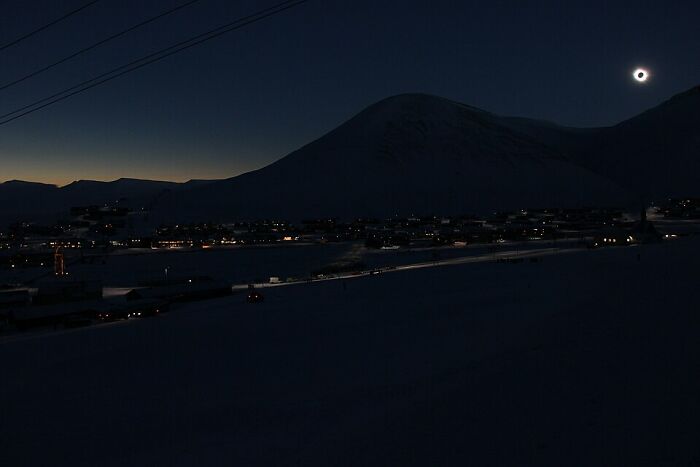
The total solar eclipse of March 20, 2015, became famous for its breathtaking photographs captured against the icy landscapes of Svalbard, one of the northernmost inhabited places on Earth where totality was visible. With snow-covered mountains, frozen fjords, and the Sun hanging low above the Arctic horizon, photographers documented some of the most dramatic eclipse images ever taken. The rare combination of totality and a polar setting drew thousands of eclipse chasers despite subzero temperatures, producing a collection of iconic photographs that remain among the most celebrated in modern eclipse photography.
The hybrid solar eclipse of April 20, 2023, was one of the rarest astronomical events on Earth. Unlike a typical eclipse, a hybrid eclipse changes type along its path, appearing as an annular eclipse in some locations and a total solar eclipse in others because of Earth's curvature. The path of totality crossed the remote town of Exmouth in Western Australia, where thousands of eclipse chasers gathered beneath exceptionally clear skies to witness up to 58 seconds of totality. The event produced spectacular photographs of the Sun's corona, vivid red prominences, and the dramatic "diamond ring" effect, while Exmouth briefly became one of the few places on Earth where the rare phenomenon could be seen in its full glory.
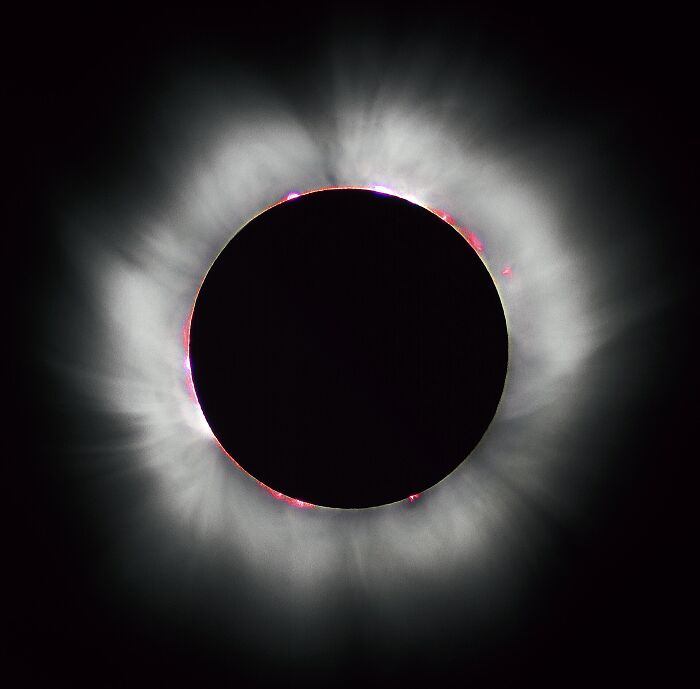
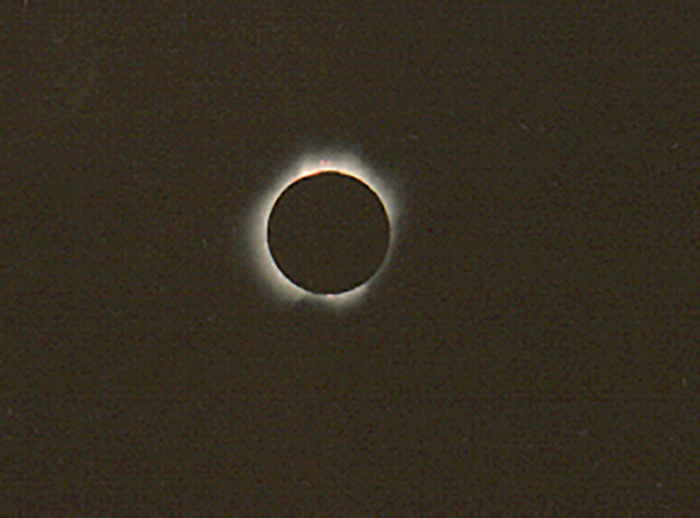
The total solar eclipse of August 11, 1999, became one of the most widely observed celestial events in history, with an estimated 350 million people across Europe and Asia witnessing at least part of the spectacle. The Moon's shadow swept from the Atlantic Ocean across southern England, France, Germany, Austria, Hungary, Romania, Turkey, and into India, drawing millions of spectators along its path. While cloudy skies disappointed many observers, others enjoyed clear views of totality, which lasted the longest, up to 2 minutes and 23 seconds, near Râmnicu Vâlcea, Romania. As the final total solar eclipse of the 20th century, it inspired one of the largest eclipse-chasing events ever recorded and remains one of the most memorable astronomical events of modern times.

I saw it in a zoo. everything went silent really quick.. the animals didn't even move for a few minutes
The total solar eclipse of August 21, 2017, became known as the Great American Eclipse after the Moon's shadow crossed the entire continental United States from Oregon to South Carolina, the first coast-to-coast total solar eclipse visible in the U.S. in 99 years. Millions of people traveled into the narrow path of totality, making it one of the largest mass astronomy events in history, while millions more watched live broadcasts around the world. The eclipse also sparked an unprecedented boom in eclipse photography, with professionals and amateurs capturing millions of images and contributing to projects such as the Eclipse Megamovie, which stitched together photographs taken along the eclipse's path into a continuous record of totality.

I have great pix of this because our deer came out to feed when the sun was covered and they normally only came out in the early morning and early evening.
The total solar eclipse of June 30, 1973, produced one of the most remarkable scientific observations in eclipse history. Instead of watching from the ground, an international team of astronomers boarded a specially modified Concorde supersonic jet and flew at nearly 2,150 km/h (1,330 mph), chasing the Moon's shadow across Africa. By matching the speed of the eclipse, they extended totality from just over 7 minutes on the ground to an astonishing 74 minutes, still the longest continuous observation of a total solar eclipse ever achieved. The unprecedented flight gave scientists far more time to study the Sun's elusive corona and remains one of the most ambitious astronomical expeditions ever undertaken.
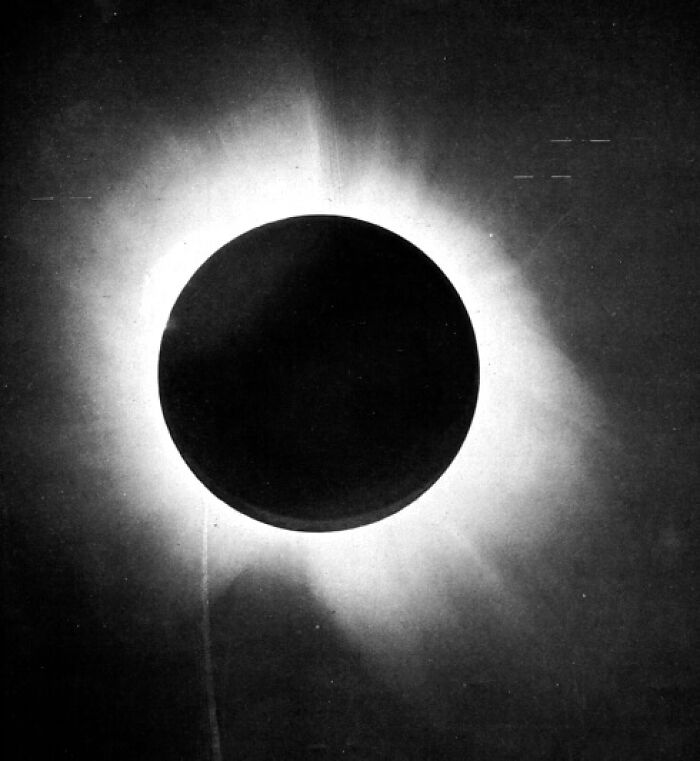
The total solar eclipse of May 29, 1919, became one of the most influential scientific events in history. British astronomer Sir Arthur Eddington led expeditions to Príncipe (West Africa) and Sobral (Brazil) to photograph stars positioned close to the eclipsed Sun. According to Albert Einstein's General Theory of Relativity, the Sun's gravity should bend starlight, a prediction impossible to test under normal daylight conditions. The eclipse provided the perfect opportunity, and Eddington's measurements matched Einstein's calculations. The results made headlines around the world, transformed Einstein into an international scientific icon, and forever changed our understanding of gravity, space, and the universe.
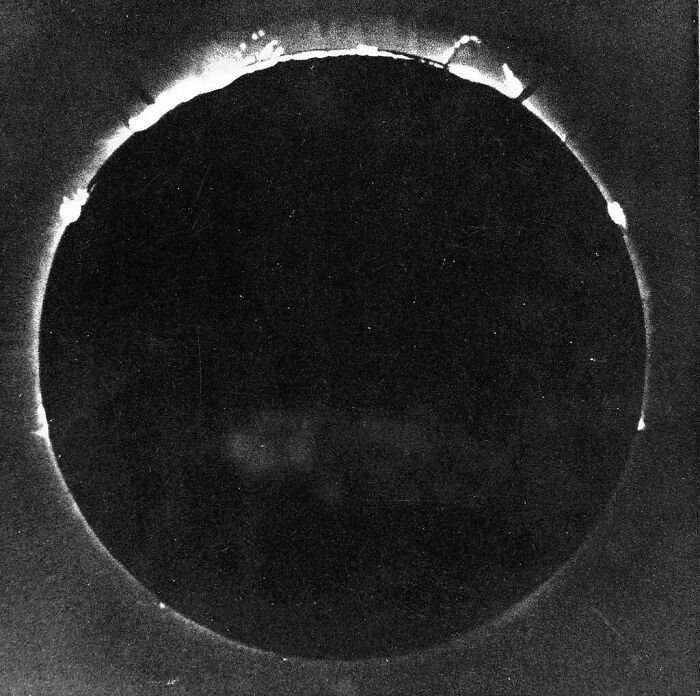
During the total solar eclipse of July 18, 1860, British astronomer and photographer Warren De La Rue captured a series of remarkably detailed photographs from northern Spain using a custom-built photoheliograph. By comparing his images with those taken simultaneously by other observers, scientists confirmed that the glowing red solar prominences remained fixed relative to the Sun, not the Moon. The discovery settled a long-standing scientific debate, proving that these dramatic arcs of plasma are part of the Sun itself and marking one of the earliest occasions when photography directly advanced astronomical research.
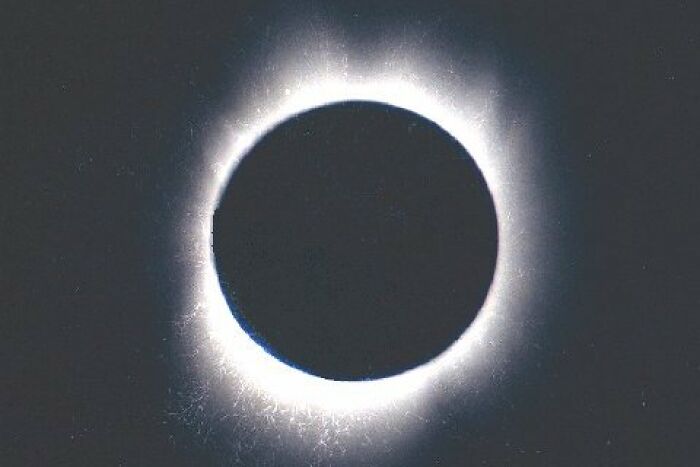
The total solar eclipse of July 11, 1991, lasted up to 6 minutes and 53 seconds, making it the longest total solar eclipse of the 20th century visible from land and earning the nickname "The Big One." Visible across Hawaii, Mexico, Central America, and parts of South America, it attracted thousands of scientists, photographers, and eclipse chasers.

I was 11 years old, in Costa Rica. It was magnificent and unforgettable. I remember my cat going crazy because of the 7 minutes night, turning into day so quickly.
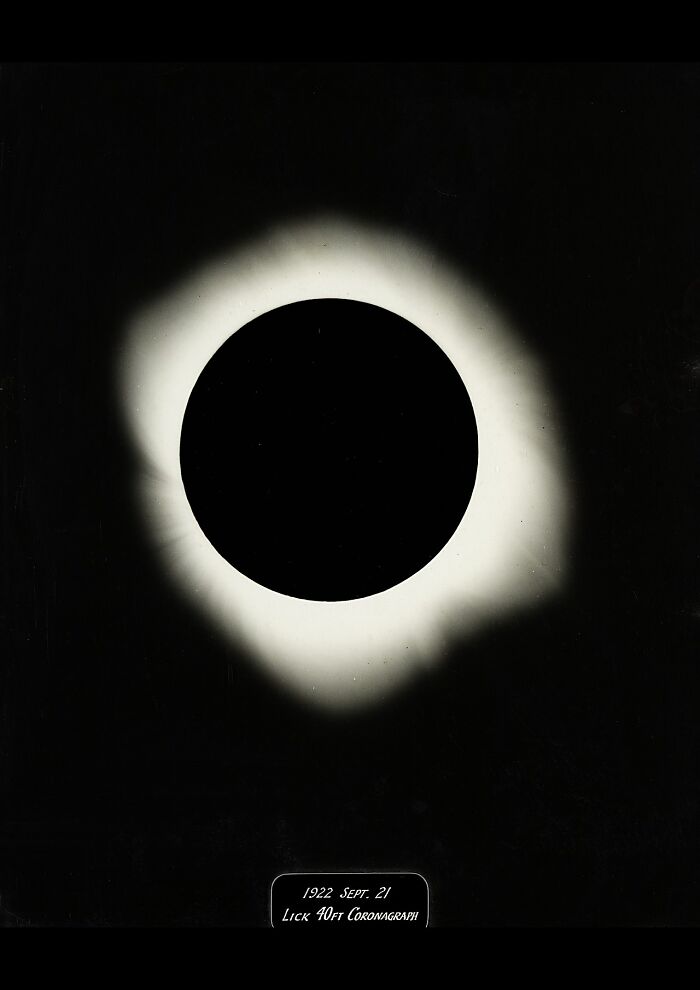
The total solar eclipse of September 21, 1922, provided astronomers with an even better opportunity to test Albert Einstein's General Theory of Relativity. Observed from Wallal, Western Australia, the expedition benefited from clearer skies and more precise instruments than those used in 1919. By measuring how the Sun's gravity deflected the light of distant stars, scientists obtained results that closely matched Einstein's predictions, reinforcing the earlier findings and convincing many remaining skeptics. The expedition became one of the most important astronomical observations of the 20th century, helping establish general relativity as a cornerstone of modern physics.
Well. I mean, the 1919 observations three years earlier were arguably just as significant. The 1922 observations confirmed the earlier results. There are plenty of other contenders for the most important astronomical observations of the 20th century. Link follows.
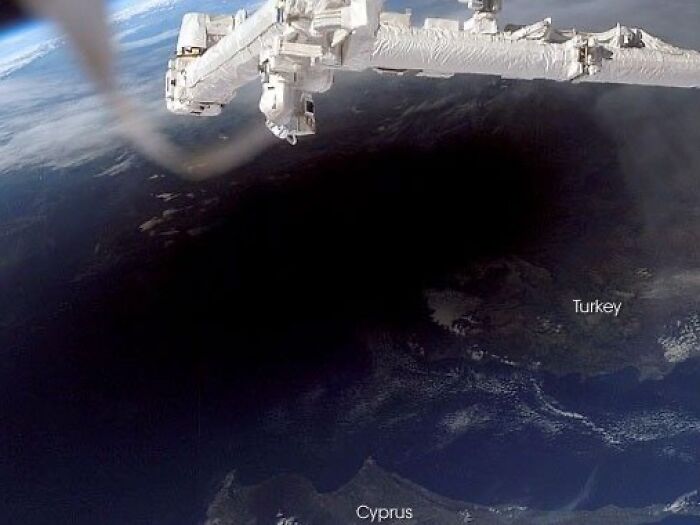
The total solar eclipse of March 29, 2006, swept across Libya, Egypt, Turkey, and several other countries, offering exceptionally clear skies that attracted thousands of astronomers, photographers, and eclipse enthusiasts. Lasting up to 4 minutes and 7 seconds, the eclipse provided ideal conditions for capturing the Sun's delicate corona, prominences, and the dramatic "diamond ring" effect. Thanks to advances in digital photography, the event produced some of the most iconic modern eclipse images ever taken, many of which remain widely published and have inspired a new generation of eclipse photographers.
The photograph shows the Moon's umbra crossing southern Turkey, northern Cyprus, and the Mediterranean Sea as seen from the International Space Station.
The total solar eclipse of July 22, 2009, holds the distinction of being the longest total solar eclipse of the 21st century, with maximum totality lasting 6 minutes and 39 seconds over the Pacific Ocean. The Moon's shadow swept across India, Nepal, Bangladesh, Bhutan, China, Japan, and the Pacific, attracting millions of observers and countless scientific expeditions. The exceptionally long period of darkness gave astronomers an unprecedented opportunity to study the Sun's corona, magnetic activity, and solar prominences, while photographers captured some of the most spectacular eclipse images of the modern era. This record will not be surpassed until well into the 22nd century.
We were going to a marché nocturne in a nearby village tonight and we got to watch it. I lent my glasses to anyone who walked by who didn't have a pair because it lasted so long. It was amazing how dark it got. A man drove by in a car and slowed down to grin and yell, "J'ai confisqué le soleil!" so I got to translate for all the British people who are here on holiday.

I got to see a total in 2024. I’m excited for those of you who get to experience that today!
We were going to a marché nocturne in a nearby village tonight and we got to watch it. I lent my glasses to anyone who walked by who didn't have a pair because it lasted so long. It was amazing how dark it got. A man drove by in a car and slowed down to grin and yell, "J'ai confisqué le soleil!" so I got to translate for all the British people who are here on holiday.
I got to see a total in 2024. I’m excited for those of you who get to experience that today!








































 No fees, cancel anytime