Get Premium
Dark mode theme is available exclusively for premium users. Learn more about the benefits of subscribing.
No fees, cancel anytime.

 Dark Mode Ad-Free Browsing Unlimited Content
 Ad-Free Browsing Unlimited Content Dark Mode
Join 1.2 million Panda readers who get the best art, memes, and fun stories every week!
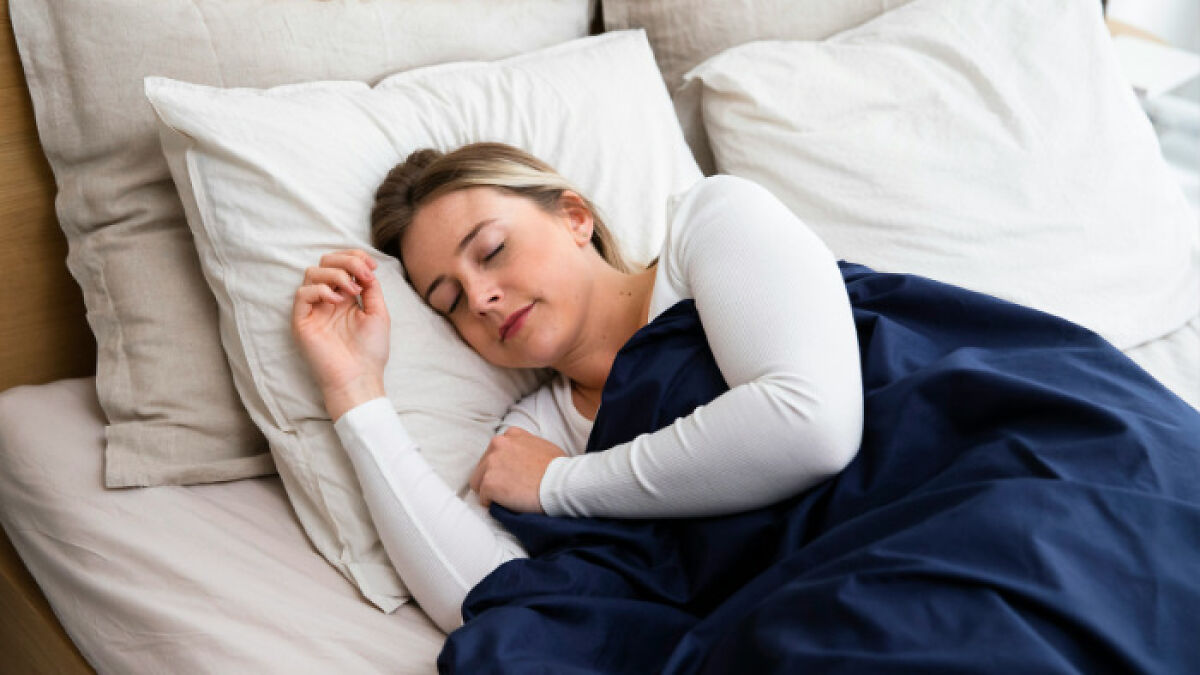
For years, adults have been told that eight hours of sleep is the magic number.
But a new review has challenged the idea that everyone needs exactly that much rest to stay healthy.
Researchers examining sleep patterns across different societies found that humans may naturally sleep for different lengths of time, and that factors such as light exposure, biology, and sleep timing can also affect our rest.
The findings suggest that getting good sleep may be less about chasing one perfect number and more about understanding what your own body needs.
A study published in Brain Medicine on August 25, 2026, examined sleep research from anthropology, history, and other fields to look at how humans slept before modern lifestyles changed the way we live.
The researchers challenged the idea that modern humans are biologically programmed to sleep for one fixed amount of time every night.
“Human sleep patterns in pre-industrial societies exhibit substantial flexibility, suggesting that contemporary norms of consolidated nocturnal sleep are not evolutionarily fixed,” the authors wrote.
In simple terms, people have not always followed the same eight-hour schedule that is commonly recommended today.
Researchers have studied hunter-gatherer communities because their lifestyles involve far less artificial light than modern life. One study published in Current Biology found that people in communities in Tanzania, Namibia and Bolivia slept between 5.7 and 7.1 hours per night.
Another analysis published by the Royal Society estimated that people in preindustrial societies slept about 6.4 hours per night on average.
That does not mean sleeping five or six hours is automatically healthy for everyone.
Instead, the findings suggest that human sleep has always been more flexible than the simple “eight hours for everybody” rule makes it sound.
Modern life has also changed when people sleep.
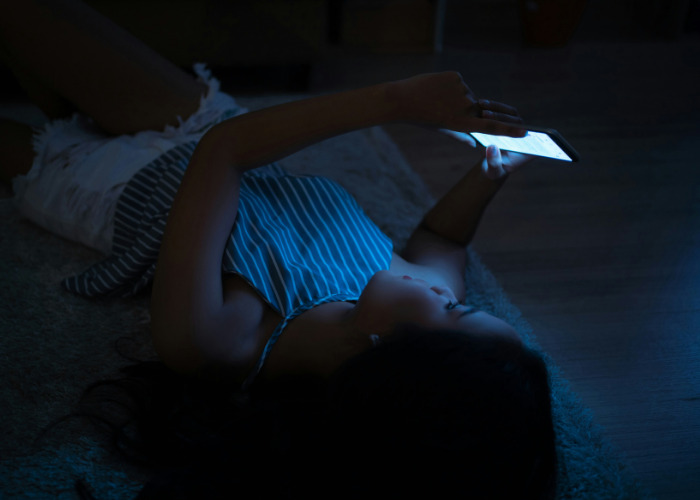
Before electric lights, computers and smartphones, humans were much more closely connected to the natural light-dark cycle. Today, artificial light can push bedtime later and interfere with the body’s internal clock.
The Conversation, citing research published in Nature, explained that artificial light “changes our sleep habits and delays our body clock, which controls the timing of sleep and wakefulness.”
That could help explain why many people struggle to wake naturally in the morning.
Modern work schedules also create another problem.
People may sleep less during the working week and then try to make up for it on their days off.
As The Conversation noted, many people now have “short sleep during the working week and longer catch-up sleep on work-free days.”
Thus, sleep health isn’t just about counting hours. Timing and consistency matter too.
Health status and biological sex can affect individual sleep requirements. Several large studies suggest that the amount of sleep associated with the best health may actually be less than eight hours for some people.
Another study published in Nature used brain and body scans, together with molecular measurements, to study the relationship between sleep and the aging of different organs.
It estimated an ideal sleep range of 6.4 to 7.8 hours, depending on the person’s sex and the organ being studied.
That is why one person’s perfect night’s sleep might leave another person feeling exhausted.
As the Conversation put it, “The eight-hour rule is clearly too simple. People need different amounts of sleep, and when we sleep matters too.”
The National Sleep Foundation recommends seven to nine hours for adults aged 26 to 64, although some adults may need between six and 10 hours.
The idea that sleep is about more than counting hours is also supported by another study published in PLOS Biology.
Researchers analyzed data from 770 healthy young adults and looked at their sleep habits, brain scans, memory performance, and other biological, psychological, and social factors. They identified five distinct sleep-related profiles.
The study’s lead researcher, Aurore Perrault of Concordia University in Canada, explained, “Sleep is made up of many dimensions, not just how long we sleep.”
The researchers found that different sleep patterns were connected with different health and behavioral characteristics.
People who regularly slept less than six to seven hours showed an association with problems involving emotional processing and aggressive behavior.
Frequent nighttime awakenings were linked with issues involving memory, language processing, anxiety, and other behaviors.
Another group experienced poor sleep overall, including difficulty falling asleep, disrupted rest, and daytime tiredness. Those patterns were associated with depression, anxiety, anger, and stress.
The researchers therefore viewed sleep as a broader experience rather than treating duration as the only important measure.
Published in Health Data Science in 2025, the study examined objectively measured sleep data from 88,461 UK Biobank participants over an average follow-up period of about 6.8 years.
Researchers found associations between different sleep traits and 172 diseases.
The researchers examined factors including sleep duration, when people fall asleep, sleep rhythm, sleep efficiency, and nighttime awakenings.
For 42 diseases, the researchers found associations with at least double the risk, while 92 diseases had more than 20% of their attributable risk linked to sleep traits.
The researchers also found that sleep rhythm contributed to many associations that looking at sleep duration alone would not have captured.
Senior author Prof. Shengfeng Wang said, “Our findings underscore the overlooked importance of sleep regularity. It’s time we broaden our definition of good sleep beyond just duration.”
However, the researchers acknowledged important limitations.
The participants were mainly middle-aged or older adults, sleep was measured during a limited period, and the study could not establish that irregular sleep directly caused the diseases.
The research suggests that eight hours should not be treated as a rigid rule that applies the same way to every adult.
Some people may feel refreshed after around seven hours, while others may genuinely need closer to nine.
What matters is whether the amount and pattern of sleep leave you rested and functioning well.
Newer research also points to other questions worth considering: Are you going to bed and waking at consistent times? Are you waking repeatedly during the night? Are you constantly tired during the day despite spending enough time in bed?
While eight hours may still be exactly right for you, it is not necessarily the only healthy number.
The old rule may have been too simple for something as individual and complicated as sleep.

By entering your email and clicking Subscribe, you're agreeing to let us send you customized marketing messages about us and our advertising partners. You are also agreeing to our Privacy Policy.
Thank you! You've successfully subscribed to newsletters!


I wake up multiple times during the night. And this stupid corpse I inhabit insists upon switching itself on after five hours of disturbed rest. It's a wonder I'm not completely gaga already...

Yawn. The 8-hour myth was debunked decades ago. The amount of sleep I'd need to feel properly rested is probably different from the amount you might need. There are no right and wrong answers. It's not universal and depends entirely on the individual.
I wake up multiple times during the night. And this stupid corpse I inhabit insists upon switching itself on after five hours of disturbed rest. It's a wonder I'm not completely gaga already...
Yawn. The 8-hour myth was debunked decades ago. The amount of sleep I'd need to feel properly rested is probably different from the amount you might need. There are no right and wrong answers. It's not universal and depends entirely on the individual.
























 No fees, cancel anytime











31
6