Get Premium
Dark mode theme is available exclusively for premium users. Learn more about the benefits of subscribing.
No fees, cancel anytime.

 Dark Mode Ad-Free Browsing Unlimited Content
 Ad-Free Browsing Unlimited Content Dark Mode
Join 1.2 million Panda readers who get the best art, memes, and fun stories every week!

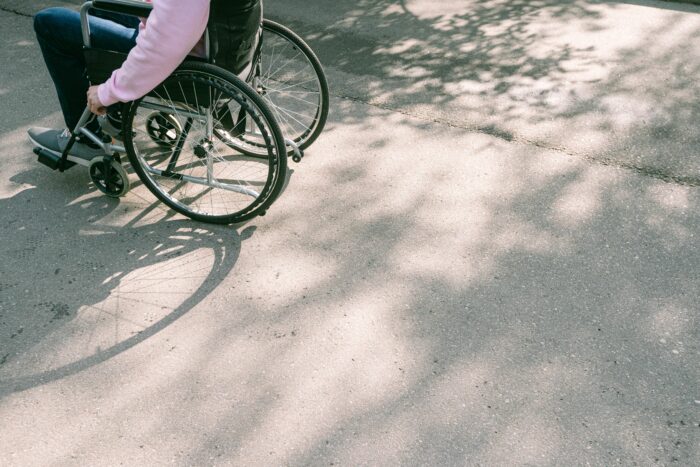
Wheelchairs are more than just a means of getting around. For people who can’t walk or have difficulty walking, they can provide greater independence, freedom, and the ability to take part in everyday life. Still, not everyone understands that using a wheelchair doesn’t necessarily mean being unable to stand or take a few steps. And when that misconception is paired with a hefty dose of entitlement, things can get pretty ugly.
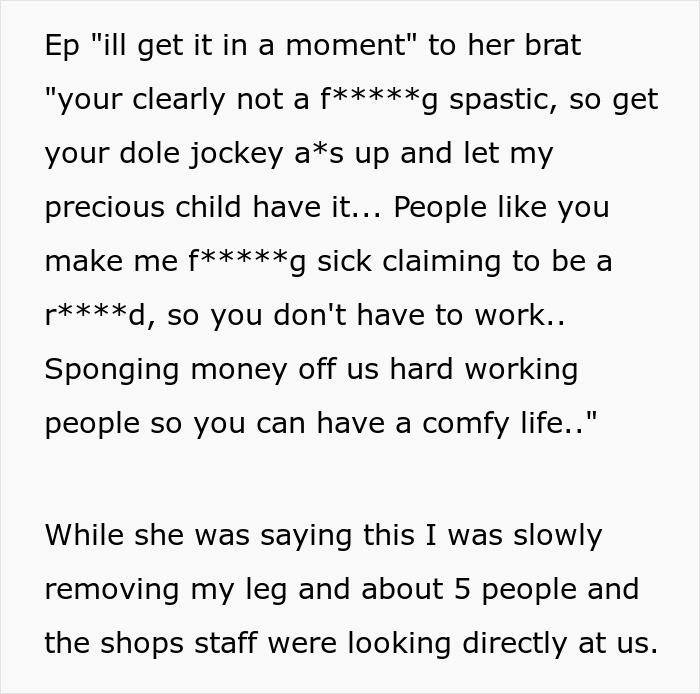
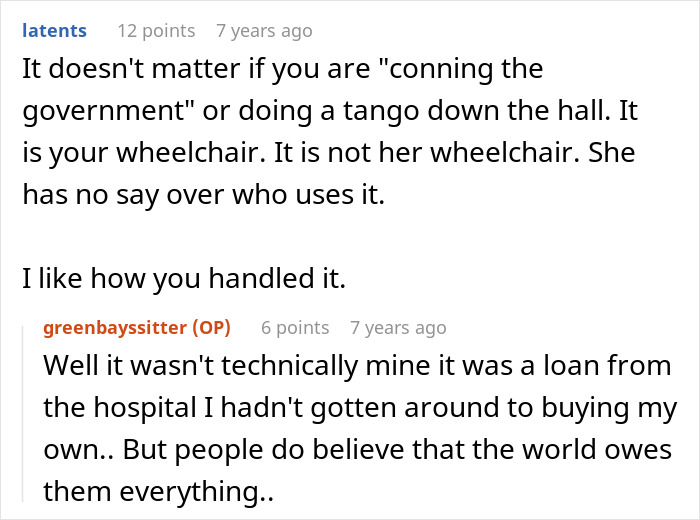
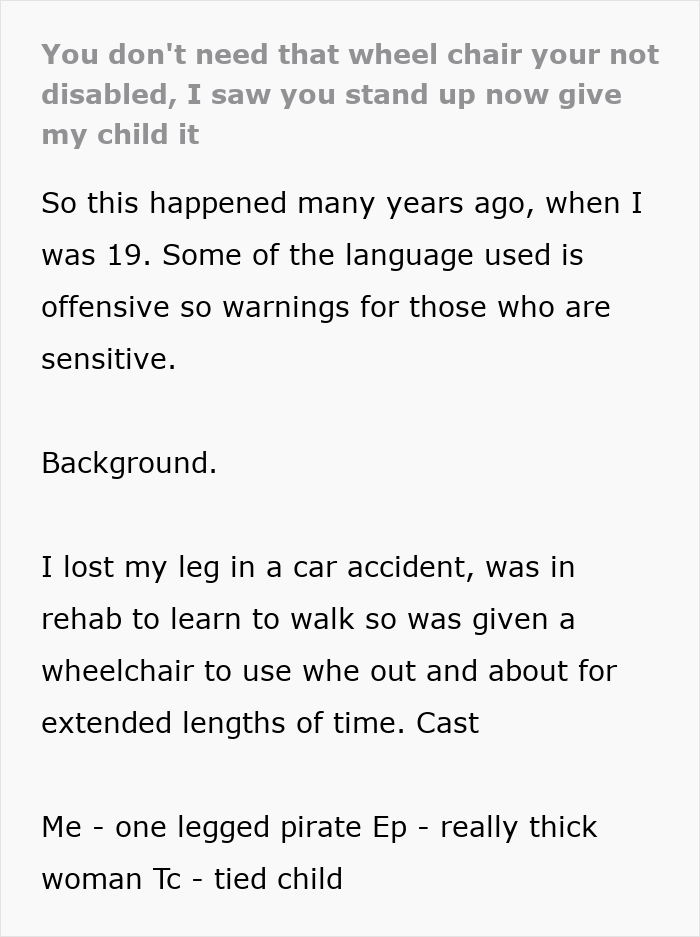
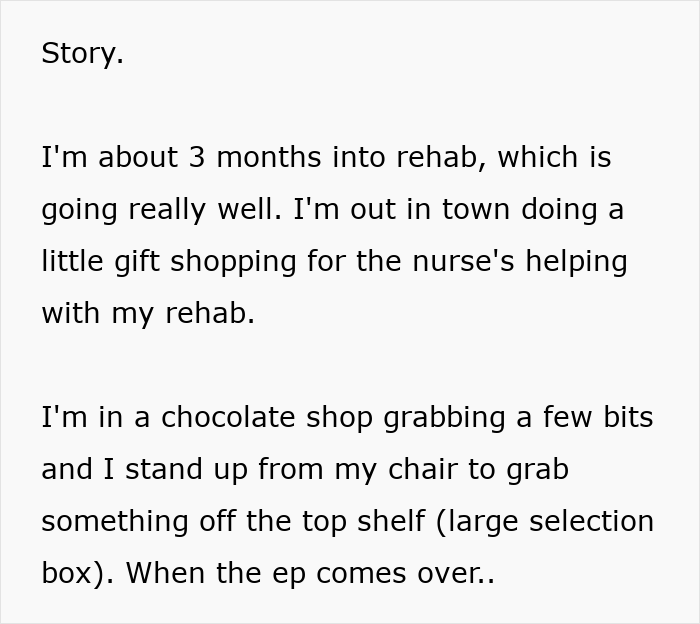
One 19-year-old experienced this firsthand, three months into rehabilitation following a car accident. While out shopping for gifts, they encountered an entitled mom who took one look at their wheelchair and decided her child needed it more than they did. But the woman was in for a surprise.
Disability is perhaps far more common than many of us realize. The U.S. Centers for Disease Control and Prevention (CDC) estimates that 1 in 4 Americans lives with some type of disability. Yet negative attitudes remain a problem: in the UK, research by the charity Scope found that 3 out of 4 disabled people experience negative attitudes or behavior.
These experiences can take different forms, ranging from staring to outright verbal and even physical mistreatment. According to Scope’s research, 33% of respondents said others had made assumptions about or judged their abilities, while 25% had been accused of faking their impairment or not being disabled.
Karen Stollznow, Ph.D., explores this issue in a piece for Psychology Today, describing how her friend who uses a wheelchair is frequently asked intrusive questions about his health and body by complete strangers. Some even attempt to guess his condition or how he acquired it. This, she explains, “is a form of ableist language, i.e., language that is offensive or harmful to people with disability.”
Ableist language, however, goes beyond insults and outdated terms, such as those the entitled mother used in this interaction. Stollznow explains that it can also take the form of “the impolite, disrespectful, and demeaning questions that strangers ask of people with disabilities.” Such questions, she writes, can reflect “a sense of entitlement to demand to know how a person became disabled” by asking things like “What happened to you?” or “Were you born that way?”
This expectation that disabled people should share personal details about themselves with strangers has been described as “forced intimacy.” The term, coined by Mia Mingus, refers to the “common, daily experience of disabled people being expected to share personal parts of [themselves] to survive in an ableist world.” In other words, disabled people can find themselves pressured to explain or justify their bodies and their needs to people who have no right to that information.
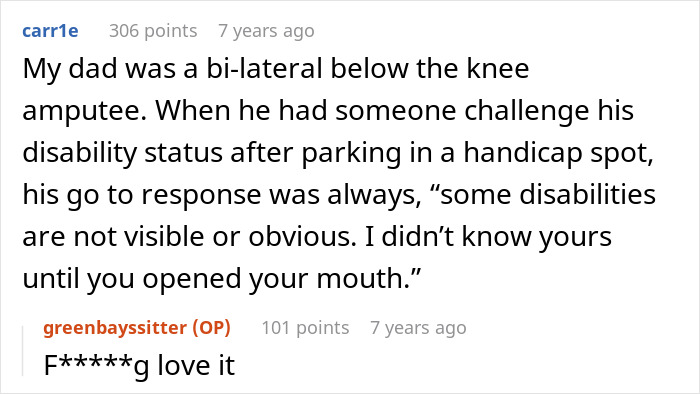
The same assumptions can also lead people to question whether someone is disabled at all. Remarks such as “But you look so normal” or questions like “Are you actually disabled?” can be offensive because they rely on preconceived ideas about how disabled people are supposed to look or act. In this case, the woman saw the poster standing and drew her own unfounded conclusion: they must be faking.
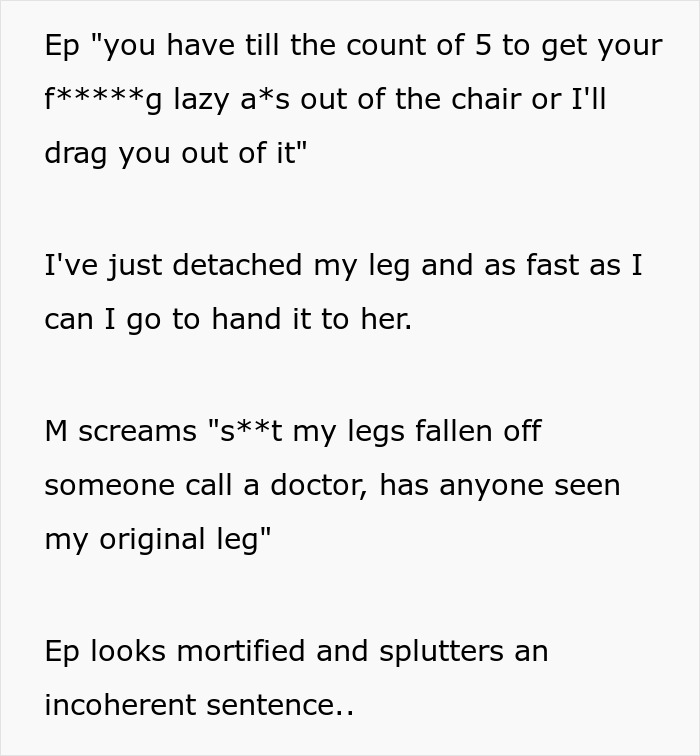
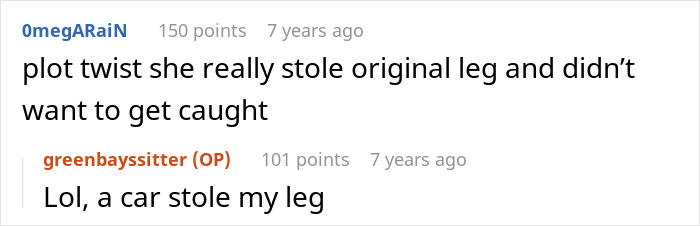
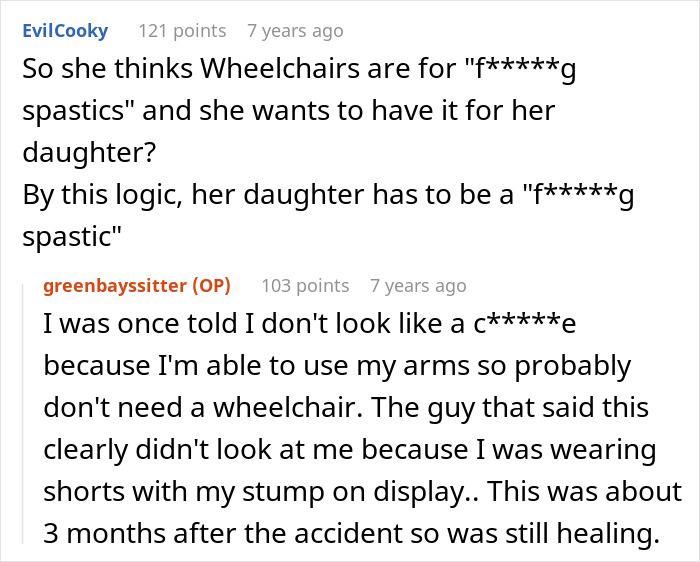
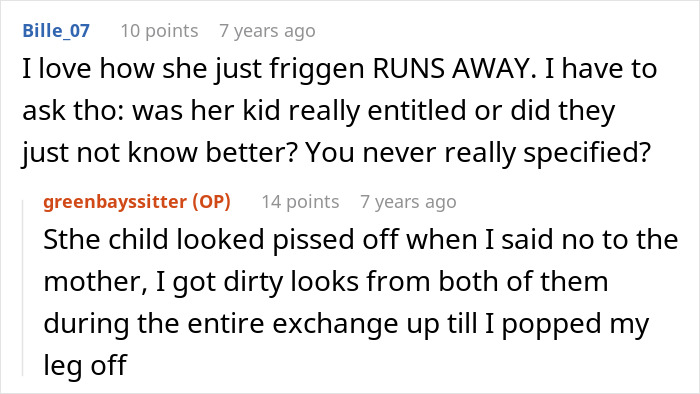
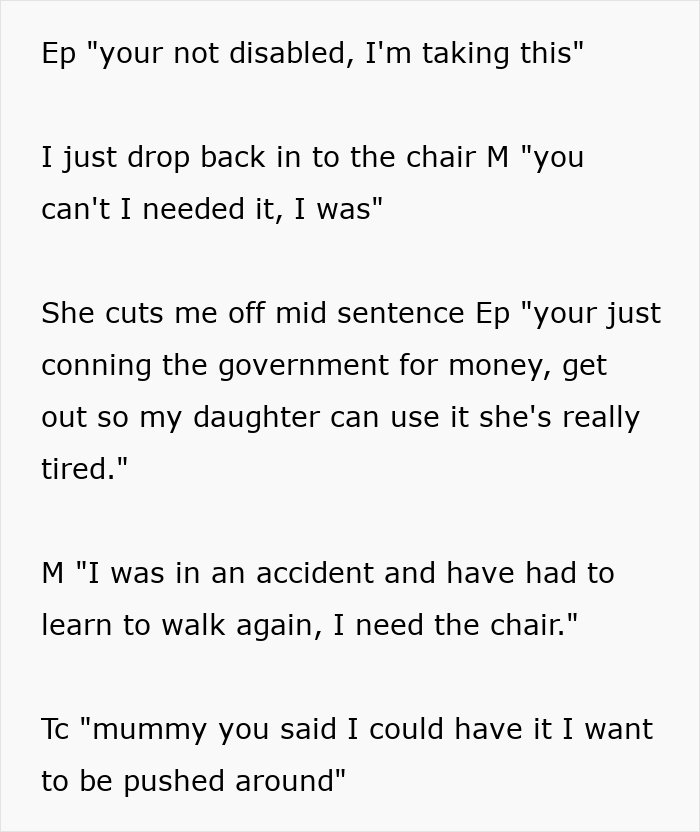
And naturally, because entitled people feel they should get whatever they want, she demanded the wheelchair while accusing the poster of faking their disability and hurling offensive slurs. Worse still, she threatened to drag the poster out of it, turning her misguided assumptions into an increasingly hostile confrontation that could have been terrifying for anyone in the same position.
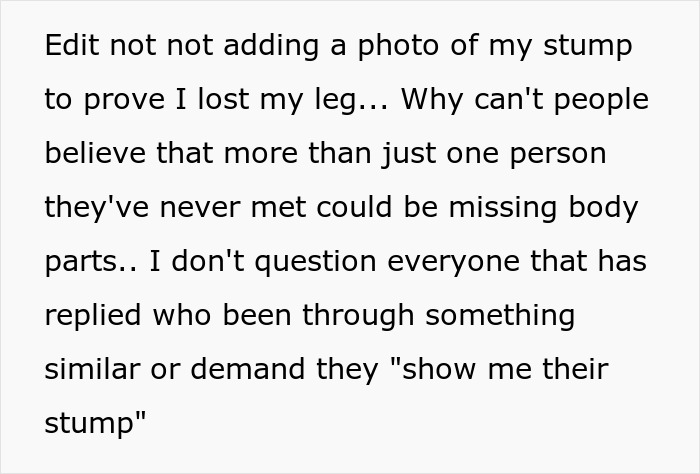
In doing so, she put the poster in the uncomfortable position that, unfortunately, many people with disabilities find themselves in: having to “prove” that their disability is real. When others assume they know better than disabled people themselves what they can and can’t do, those affected can feel pressured to demonstrate or “perform” their disability just to have their needs taken seriously.
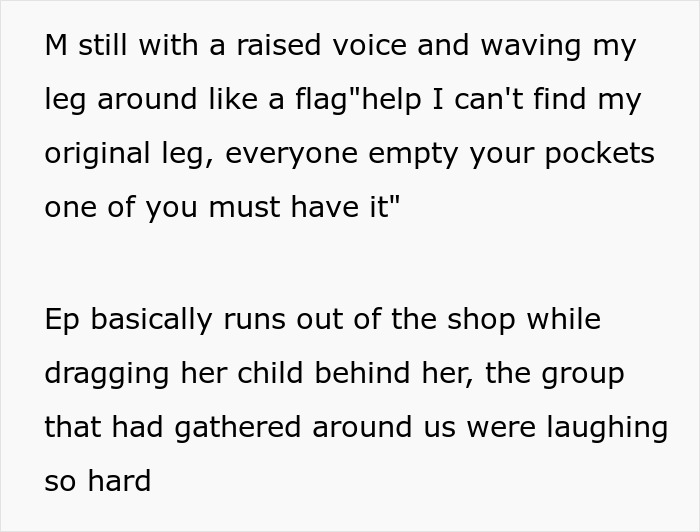
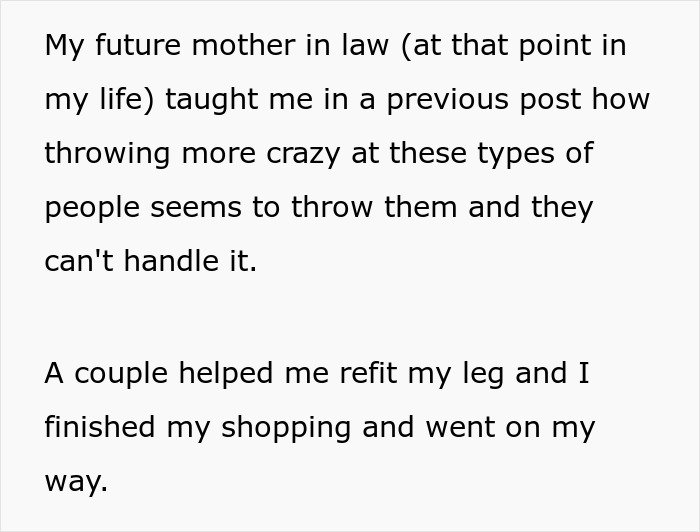
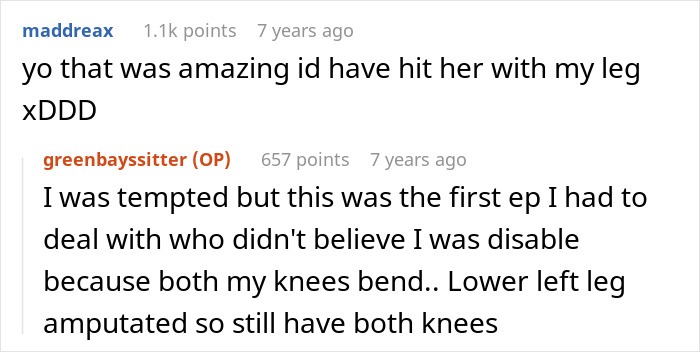
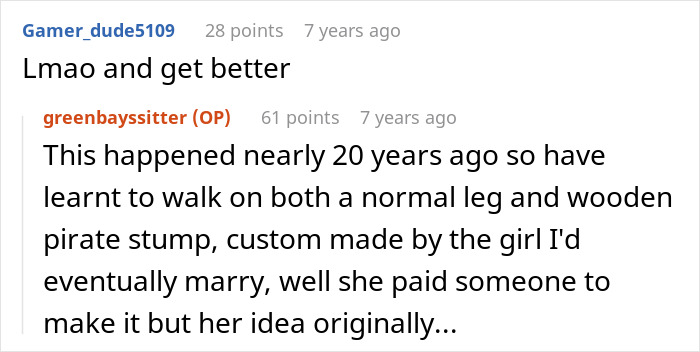
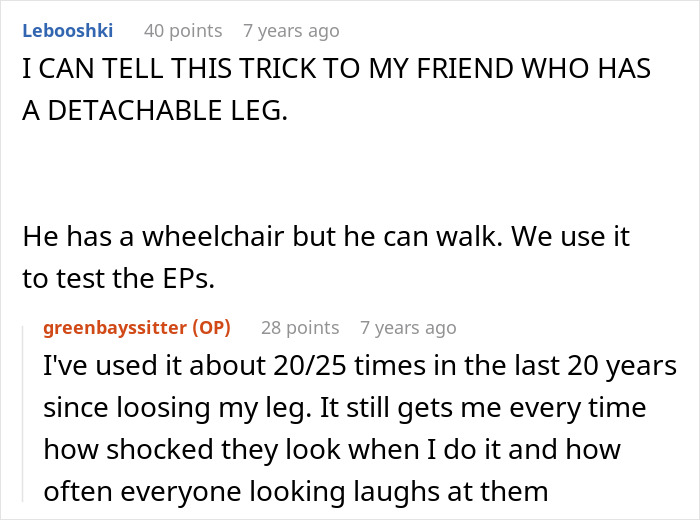
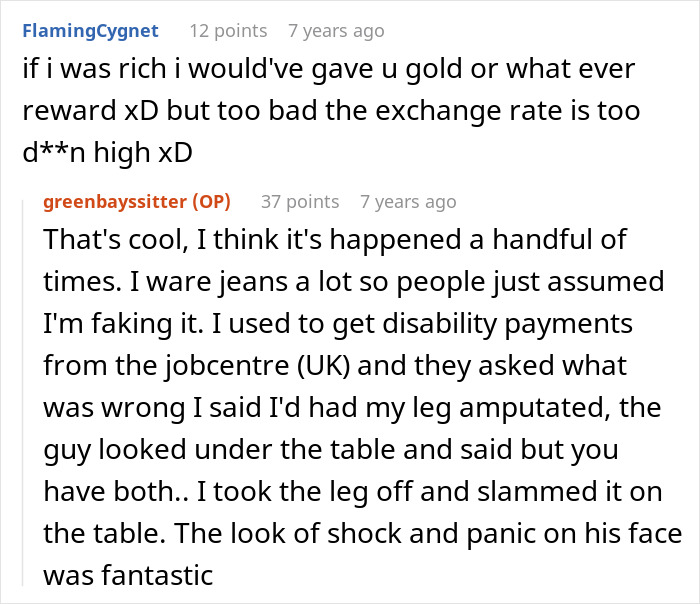
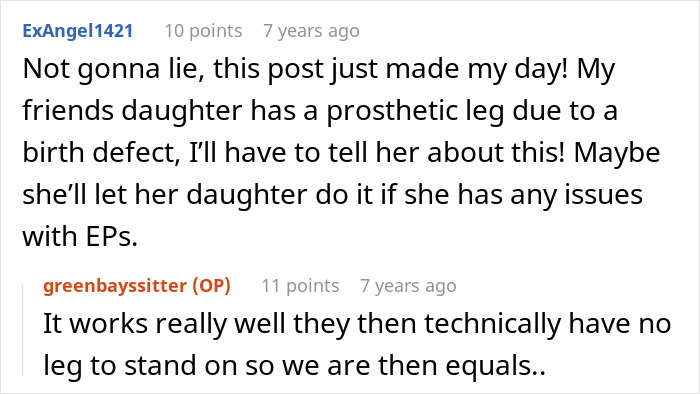
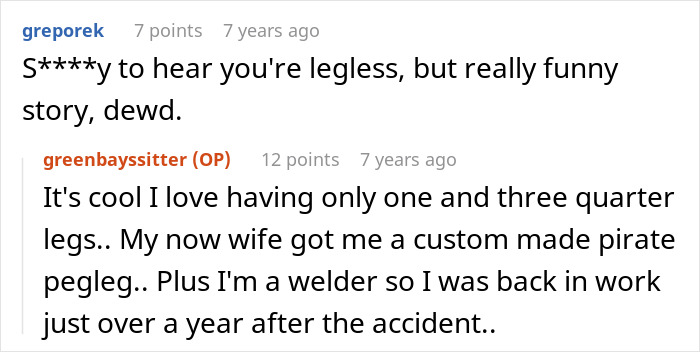
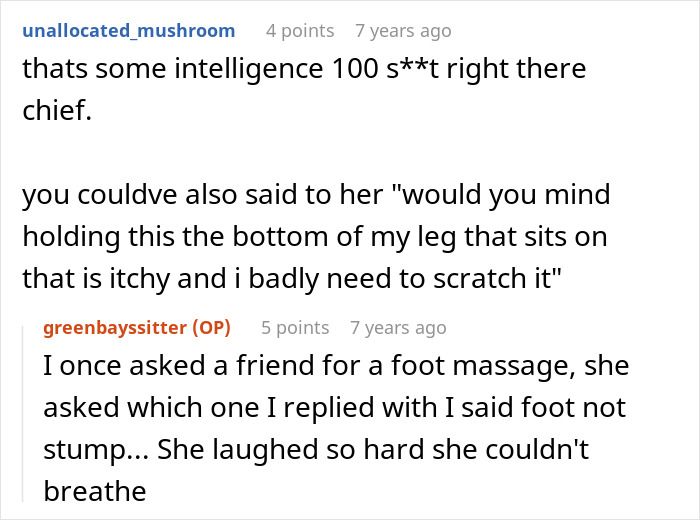
The poster had tried explaining, “I was in an accident and have had to learn to walk again, I need the chair.” But it made no difference. Explanations rarely work once an entitled parent has decided their kid is owed something. And while the poster shouldn’t have had to prove their disability to anyone, really, who can argue with a prosthetic limb?
Someone’s disability isn’t for anyone else to verify. Still, we’re glad the poster got their point across, and we suspect the woman and her child won’t forget the lesson anytime soon.


By entering your email and clicking Subscribe, you're agreeing to let us send you customized marketing messages about us and our advertising partners. You are also agreeing to our Privacy Policy.
Thank you! You've successfully subscribed to newsletters!

So tired of these fake stories. This one comes a week after "man demands wheelchair from amputee grandma." I mean, really.

So tired of these fake stories. This one comes a week after "man demands wheelchair from amputee grandma." I mean, really.





























 No fees, cancel anytime












33
5