Get Premium
Dark mode theme is available exclusively for premium users. Learn more about the benefits of subscribing.
No fees, cancel anytime.

 Dark Mode Ad-Free Browsing Unlimited Content
 Ad-Free Browsing Unlimited Content Dark Mode
Join 1.2 million Panda readers who get the best art, memes, and fun stories every week!

Always, always be kind to the people who support you. Or else you might regret it. You can tell a lot about a person not by how they treat their superiors, but by their behavior with their coworkers lower in the command chain. The reality is, your subordinates have a lot of power, too. And they might just decide to use it if you go out of your way to intentionally ruin their day.
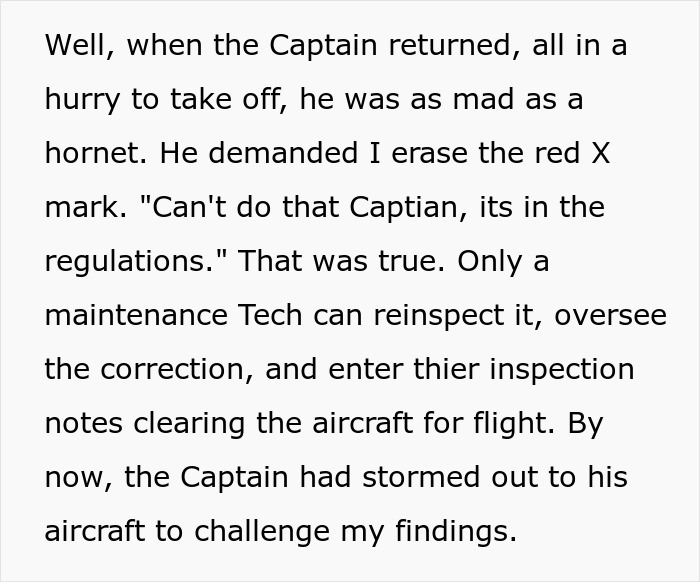
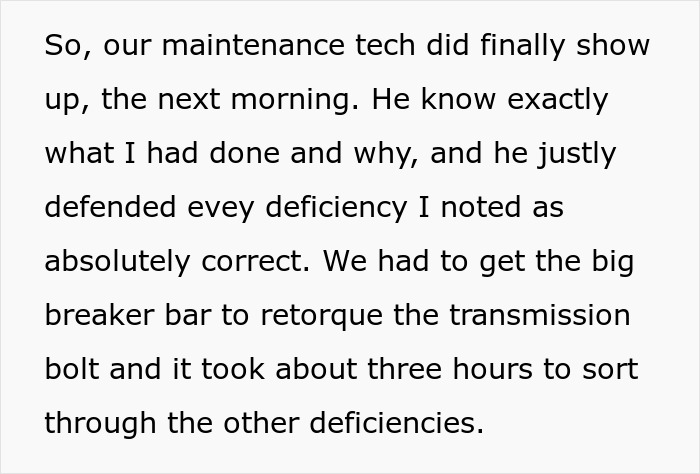
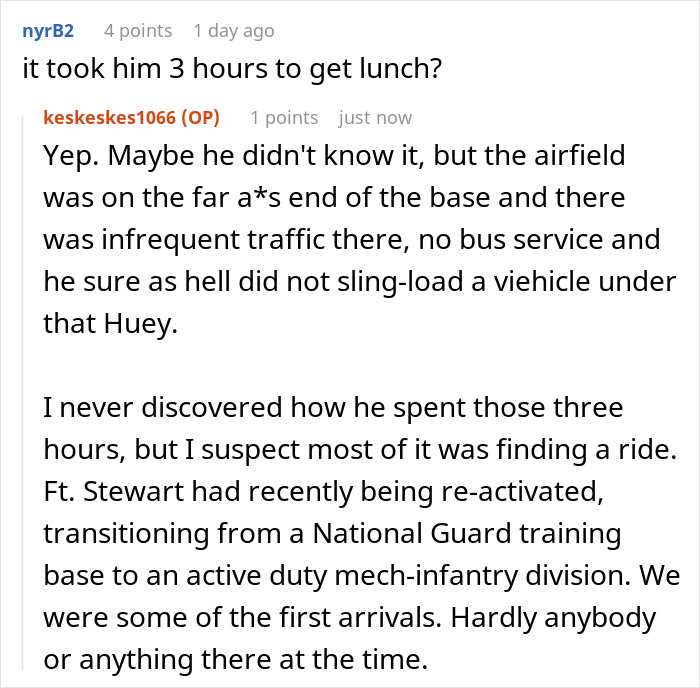
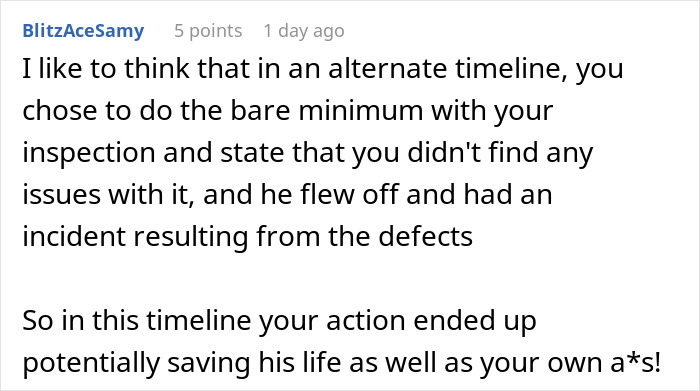
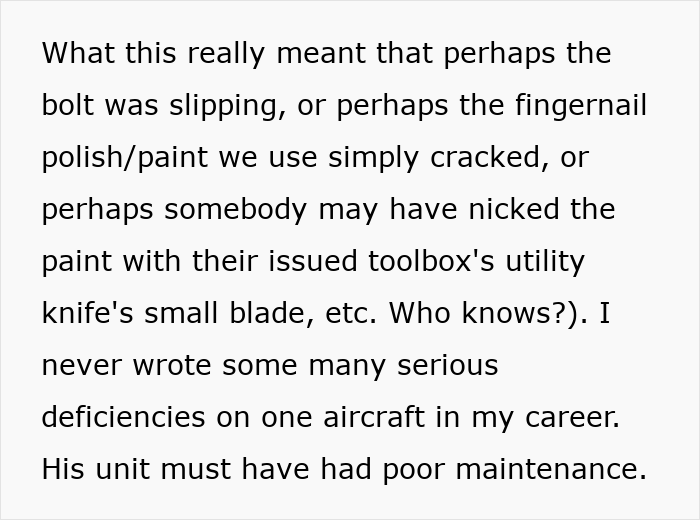
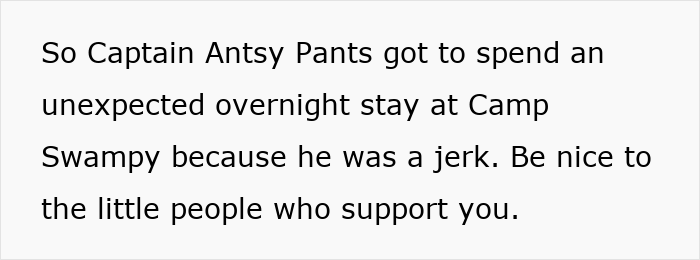
A helicopter crew chief’s post went viral on the ‘Malicious Compliance’ online community. He shared how ‘Captain Entitled’ interrupted him during lunch to have his own lunch break, demanding that his aircraft be preflighted. Annoyed by the arrogance and rudeness, the professional decided to follow the request to the letter, with lots of attention to detail. This was something the captain regretted after a three-hour lunch. You’ll find the full story and the internet’s reactions below.


Entitled behavior can damage your relationships. As a long-term social strategy, it simply doesn’t work. The obvious has to be said: most people don’t enjoy being around someone selfish who constantly belittles them, tramples over their boundaries, and ignores their needs. That being said, there’s nothing like a redemption arc to change people’s perception. People can (and actually do) change for the better. However, it requires consistent effort and patience.
Verywell Mind suggests that the best approach when dealing with someone who is entitled is to set clear and healthy boundaries, practice saying “no” when they make excessive demands, and encourage them to independently solve their own problems.
Alice Boyes, PhD, the author of The Anxiety Toolkit: Strategies for Fine-Tuning Your Mind and Moving Past Your Stuck Points, emphasizes that if you choose to work on your entitlement tendencies, your relationships will likely improve.
People with entitlement tendencies usually:
The good news is that positive change is definitely possible. But you have to be realistic about it. Real behavioral change takes months and years of practice to become habitual. Meanwhile, it can also take a long while for you to rehabilitate your reputation as an entitled individual.

According to Boyes, you can practice perspective-taking to shift your mindset and become more objective and empathetic. “Take a recent example of a time you got mildly annoyed with someone and spend three minutes writing about the situation from the other person’s perspective. Practice understanding what their agenda was.”
Meanwhile, really focus on all the alternative evidence you can think of with regard to your entitlement tendencies. Be specific about where you can improve. “What are some reasons the same rules that apply to everyone else should also apply to you? What are some reasons why keeping peace and avoiding upsetting or offending people (unless absolutely necessary) is a virtue? What are some examples of how people are generally more generous to you than you are to them?” Boyes writes.
Something else you can try is to promote other people’s successes (not just your own!) for some time. Not only is it a kind thing to do, but (from a selfish perspective) it feels good: you get a positive effect from all of this. Next, open yourself up to observing what happens when you start changing your entitled behavior. Notice how your relationships change when you become more supportive and less abrasive.
What’s more, keep in mind that if you feel motivated to change, try not to be too harsh on yourself. Over-the-top self-criticism leads to less positive change.
Who is the most entitled, rude, and arrogant colleague you ever had the ‘pleasure’ of working with? Did you ever manage to get through to them and convince them to grow as human beings, or did they stick to their old behaviors? Have you ever maliciously complied with someone’s request, just to make sure that you got revenge against them?




By entering your email and clicking Subscribe, you're agreeing to let us send you customized marketing messages about us and our advertising partners. You are also agreeing to our Privacy Policy.
Thank you! You've successfully subscribed to newsletters!

I work in an office with a cleaning crew that maintains shared spaces during working hours as well as after hours. My attitude has always been, those people make your job easier so treat them with respect. Many of them are immigrants with limited English and work very hard. I also hate that people create more work for them by acting entitled and leaving a mess. Get over yourself and stop being an a****t


Army rotorheads are some of the most arrogant @$$hats you'll ever meet.
I work in an office with a cleaning crew that maintains shared spaces during working hours as well as after hours. My attitude has always been, those people make your job easier so treat them with respect. Many of them are immigrants with limited English and work very hard. I also hate that people create more work for them by acting entitled and leaving a mess. Get over yourself and stop being an a****t
Army rotorheads are some of the most arrogant @$$hats you'll ever meet.


























 No fees, cancel anytime











35
13