Get Premium
Dark mode theme is available exclusively for premium users. Learn more about the benefits of subscribing.
No fees, cancel anytime.

 Dark Mode Ad-Free Browsing Unlimited Content
 Ad-Free Browsing Unlimited Content Dark Mode
Join 1.2 million Panda readers who get the best art, memes, and fun stories every week!

When they give birth, many new moms face the dilemma: to breastfeed or not to breastfeed? According to the CDC, 83.2% of mothers breastfeed their infants right after they give birth. As time goes by, that share diminishes, but 55.8% still do it as their babies reach the age of six months.
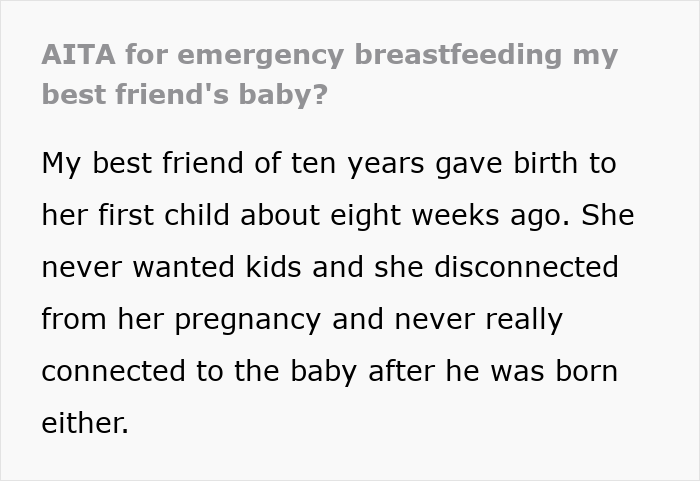
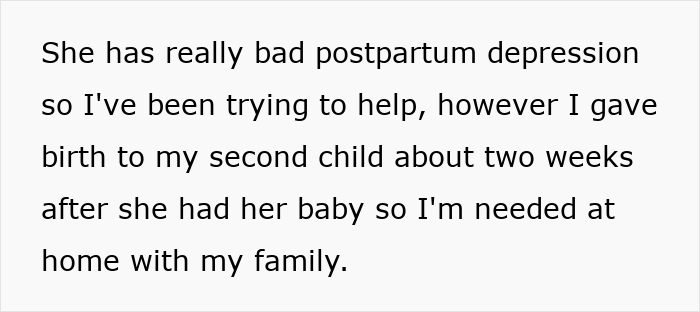
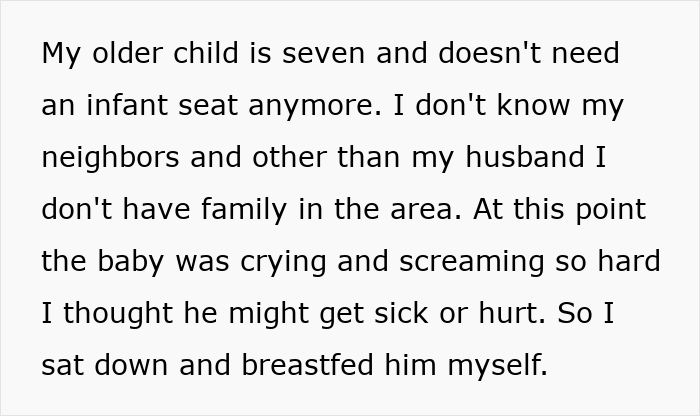
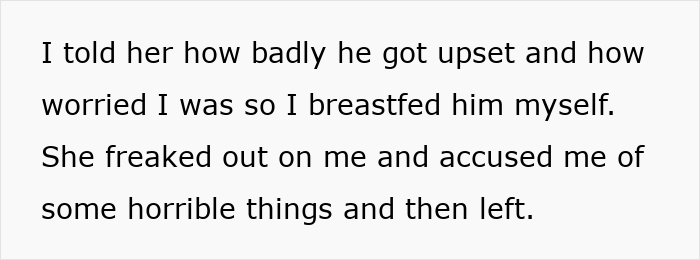
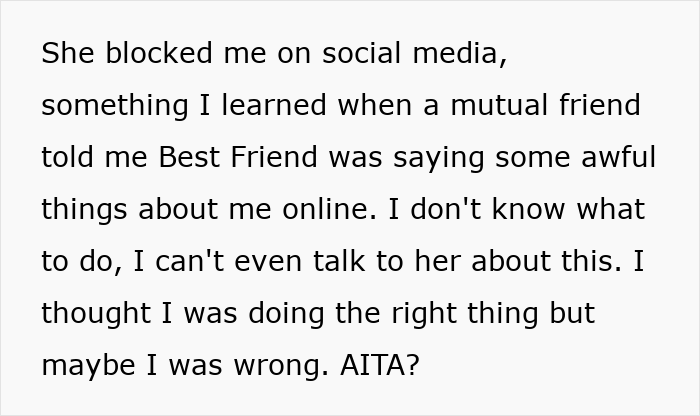
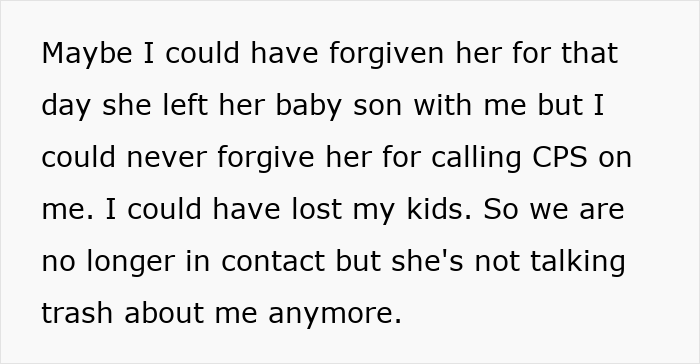
These two moms both breastfed their babies, but they had a falling out over an unusual thing. When babysitting, one friend breastfed the other’s baby since she couldn’t get in touch with the mom. After she appeared a few hours later, she freaked out and blocked her friend. The friend thought this was a normal thing to do in an emergency, but still asked people online to weigh in.
Image credits: bnenin/Envato (not the actual photo)
Image credits: wirestock/Envato (not the actual photo)

Image credits: LightFieldStudios/Envato (not the actual photo)
Image credits: anonymous
Inherently, breastfeeding can seem like a very intimate thing. The WHO recommends exclusively breastfeeding a baby until six months of age. They claim that it’s the best choice for optimal growth, development, and health of an infant. But breastfeeding is not only about a baby getting all their nutrients.
It’s one of the primary ways for a mother and infant to bond, and it’s understandable why a mother would get mad at another woman for breastfeeding her baby. It’s only a mother and her baby’s business, and some moms may feel possessive about it.
As research shows, breastfeeding and skin-to-skin contact release oxytocin, the “bonding hormone.” This builds a strong emotional connection between the mother and child. During breastfeeding, a baby learns to recognize their mother’s scent and voice and learns to love and trust their mom.
The bond also works the other way around: the mother bonds to her baby as well. Research also suggests that it might even help avoid or lower the chances of postpartum depression. When there are no latching or other difficulties, breastfeeding can help regulate the mother’s stress levels and mood, as she focuses her attention on the baby and relaxes. Some experts even liken breastfeeding to a meditative activity.
In some cases, a mother might not be able to breastfeed her baby at all. The experts at The Doula Group claim that relatives and friends sometimes step in to breastfeed, but there’s one important condition: it should always happen with the full consent of the mother.
“It is essential to have open and honest communication with the mother to ensure that she is comfortable with the idea of someone else breastfeeding her child,” according to The Doula Group. “The mother’s feelings and wishes should be respected and considered before making a decision.”
Some mothers feel maternal confidence and have better self-esteem because of breastfeeding. Someone else breastfeeding their child can make them feel inadequate. Others may feel guilty for not being able to provide their child with the sustenance they need. Research has shown that some mothers even connect their ability to breastfeed with the perception of their parenting capabilities.
Letting another woman breastfeed your baby also has some risks. Public Health Wales cautions that wet-nursing or breast milk sharing comes with dangers such as blood-borne viruses, infections, and transfer of chemicals. So, it’s understandable that a mother would have safety concerns when someone breastfeeds her baby without her knowledge.
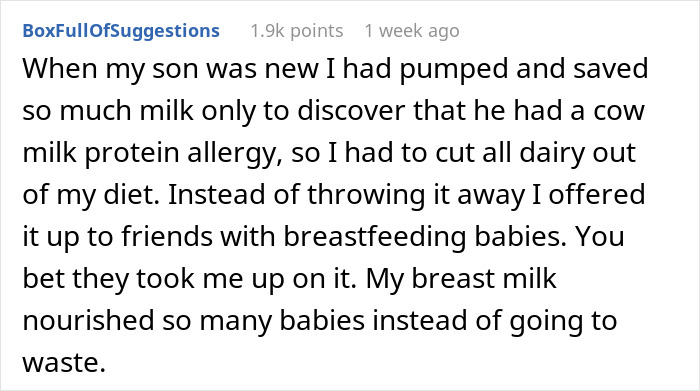
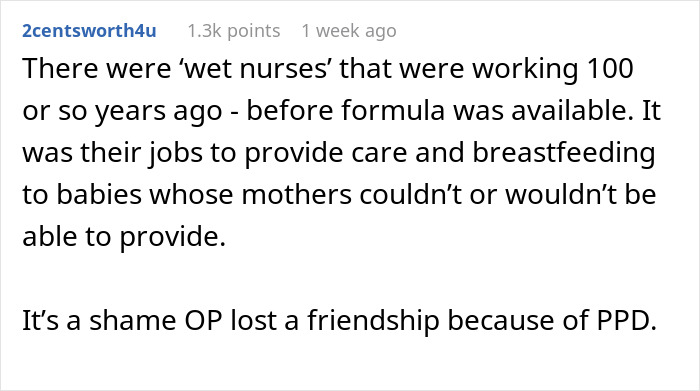
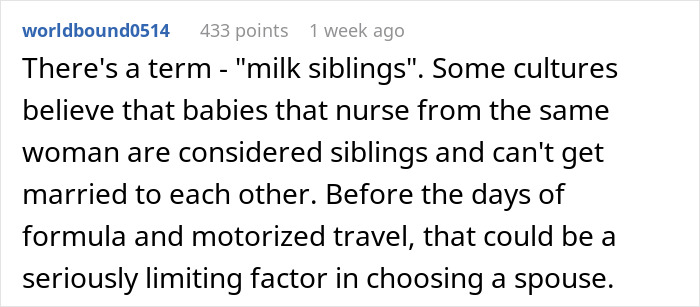
In some communities, mothers share breast milk. The phenomenon is also referred to as communal nursing, cross-nursing, allomaternal nursing, or simply breast milk sharing. While that may have been a more common occurrence in the past, it’s still quite common in equatorial Africa and some parts of Asia.
In Western societies, it’s a practice that is still frowned upon and stigmatized. In a 2014 survey, 25% of American mothers considered sharing their breast milk with other moms, and 4% did so already. At the same time, 77% were aware of the possibility of sharing breast milk.
In the end, the FDA doesn’t recommend it. Women’s health expert Jennifer Wider, M.D., told Women’s Health magazine that a baby may get confused and even have difficulty nursing from the mother. There are some potential benefits, she notes, but to do it safely, a mother should know everything about her friend’s medical history.

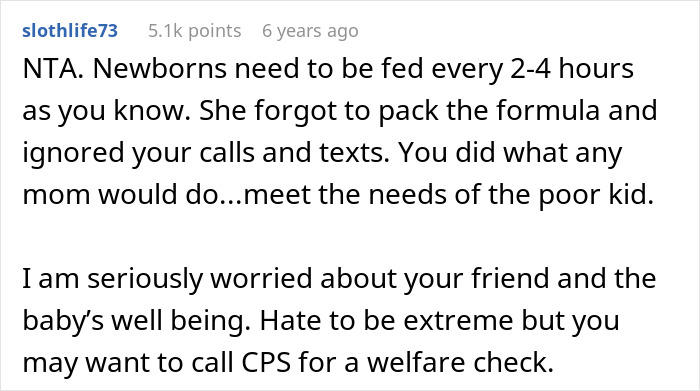
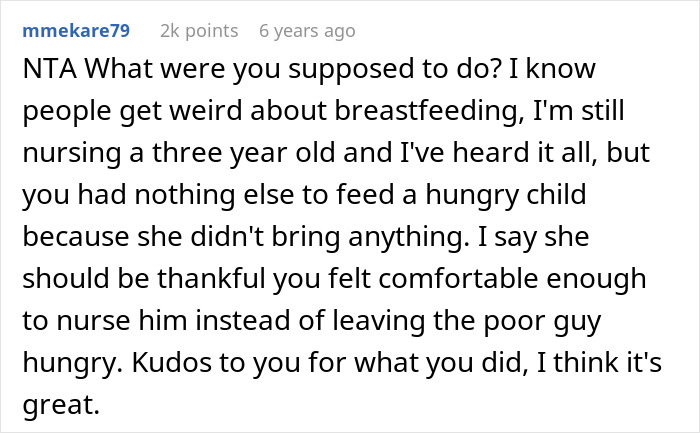
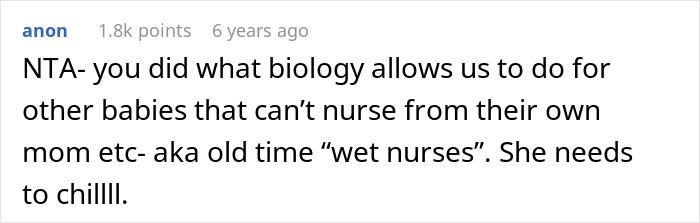


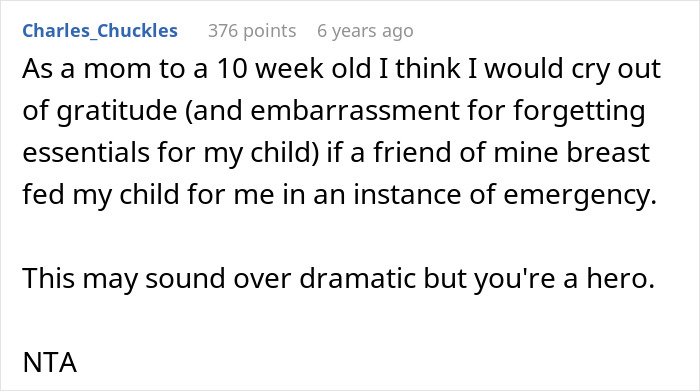
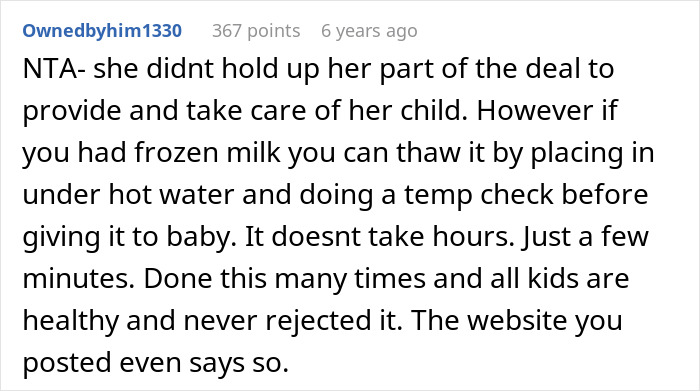


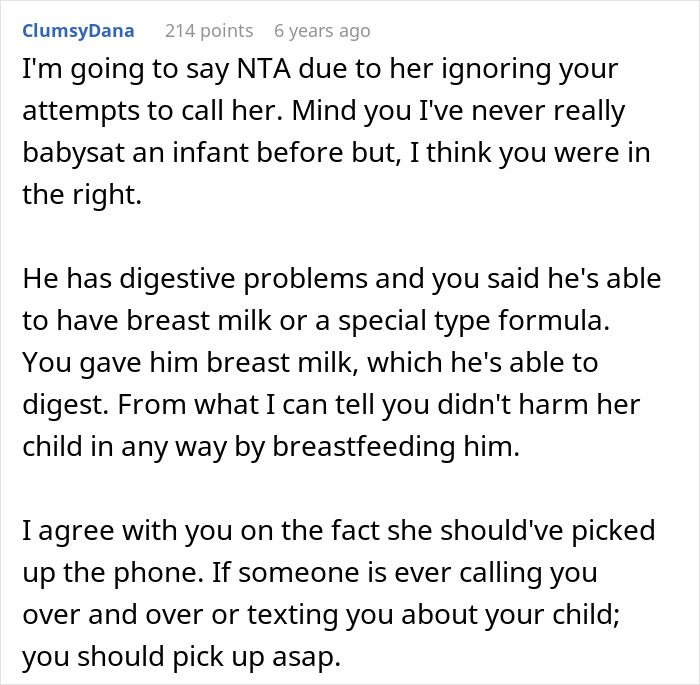

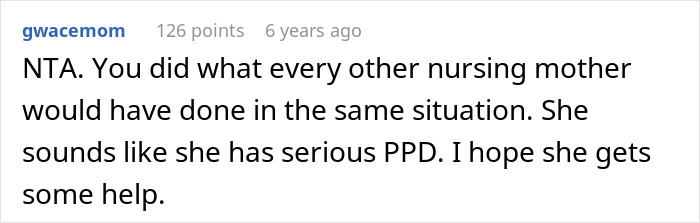

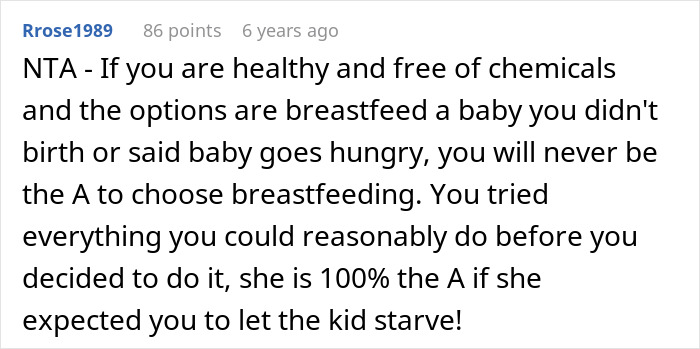




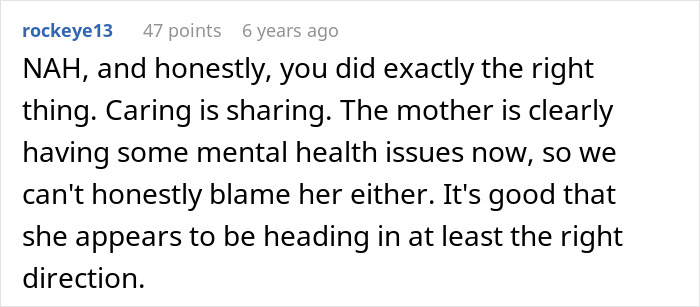
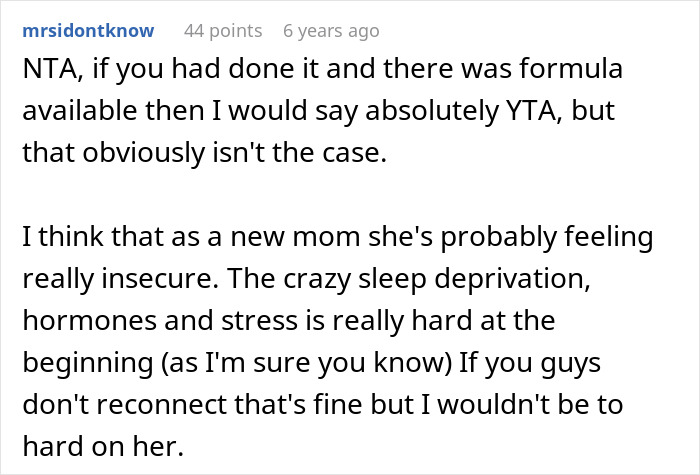

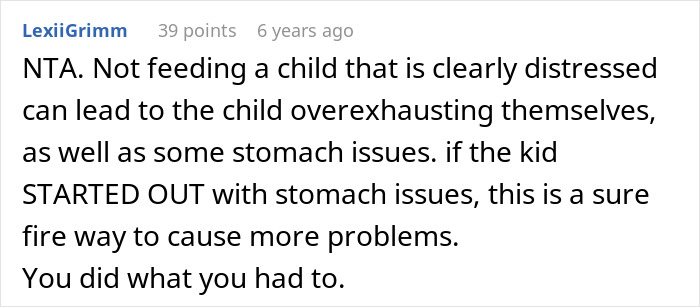
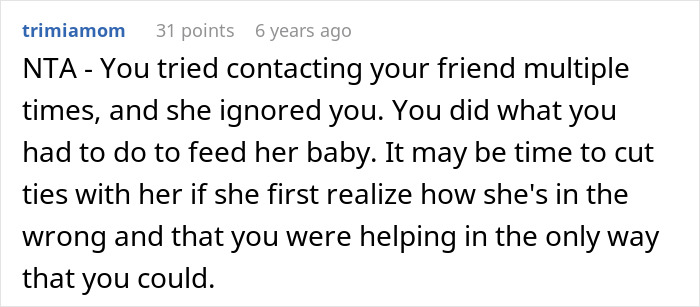
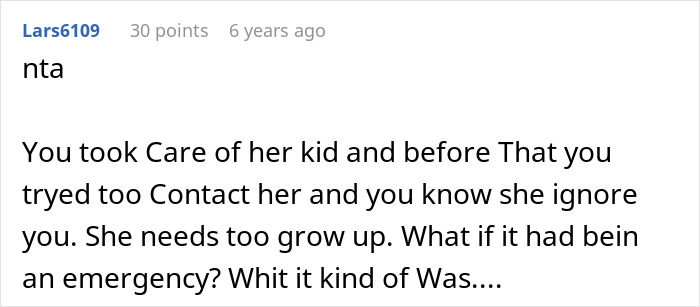

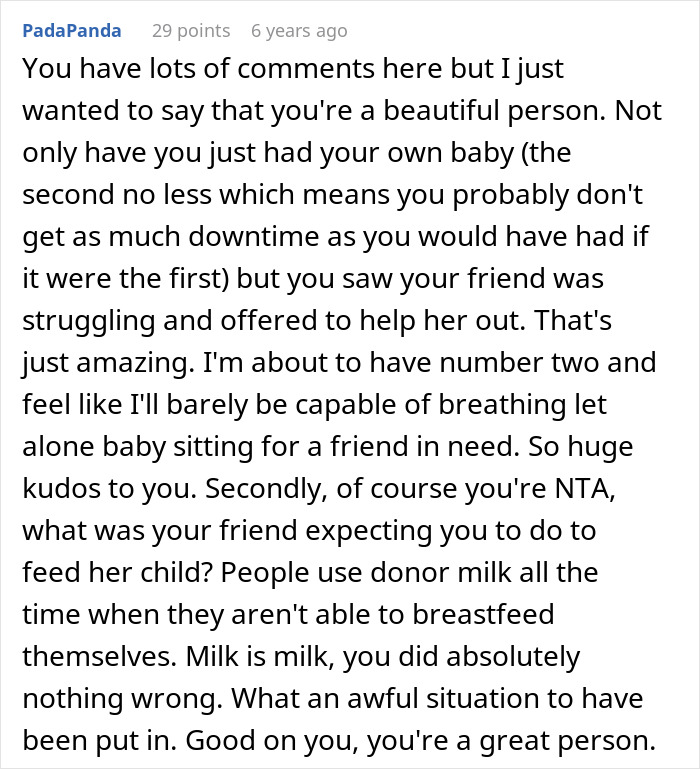
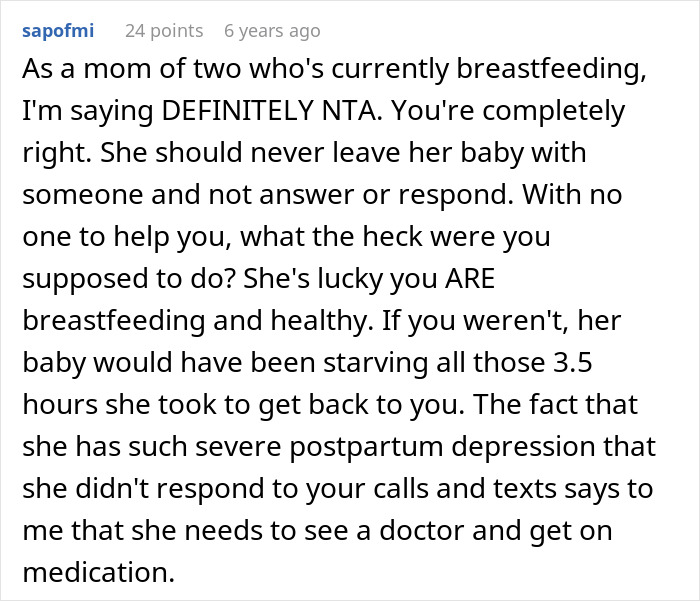
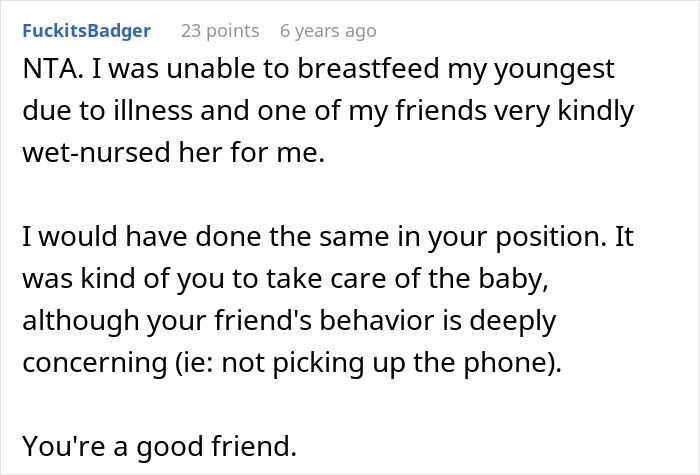

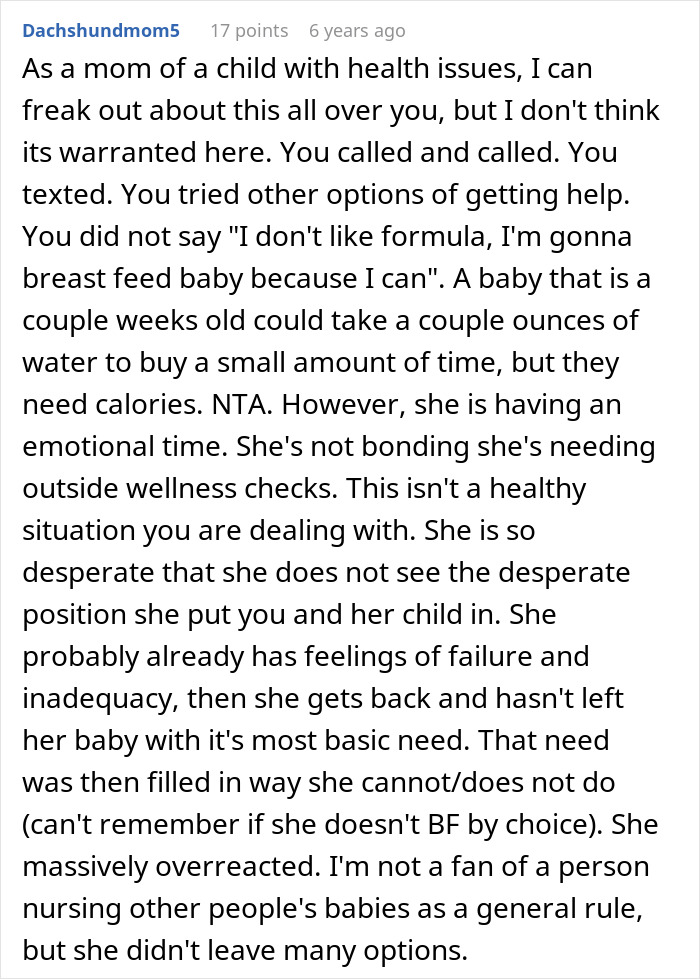




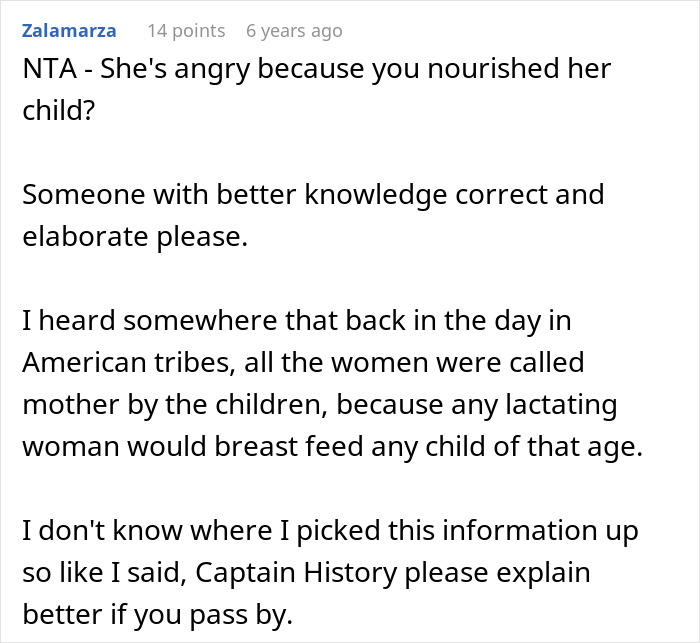
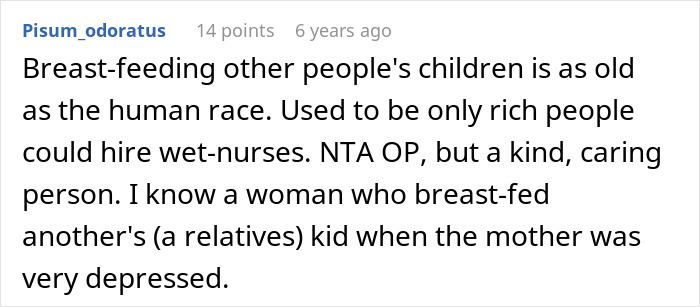
Image credits: Hans/Unsplash (not the actual photo)
Image credits: anonymous













































 No fees, cancel anytime












32
0