Get Premium
Dark mode theme is available exclusively for premium users. Learn more about the benefits of subscribing.
No fees, cancel anytime.

 Dark Mode Ad-Free Browsing Unlimited Content
 Ad-Free Browsing Unlimited Content Dark Mode
Join 1.2 million Panda readers who get the best art, memes, and fun stories every week!
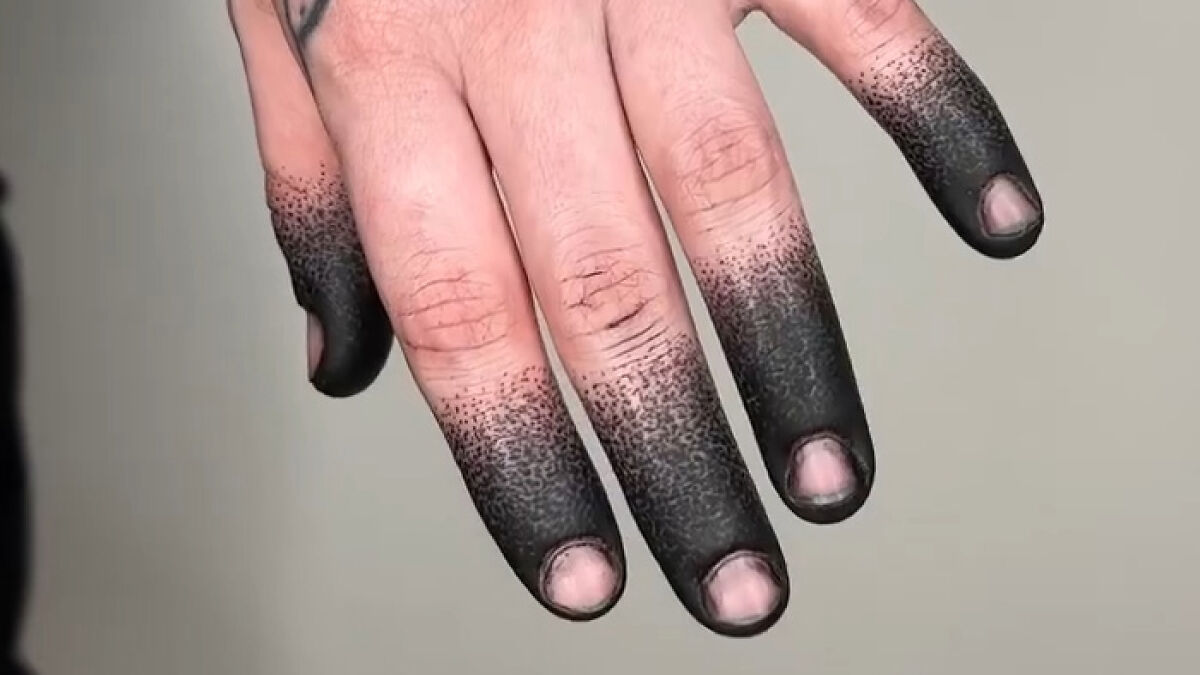
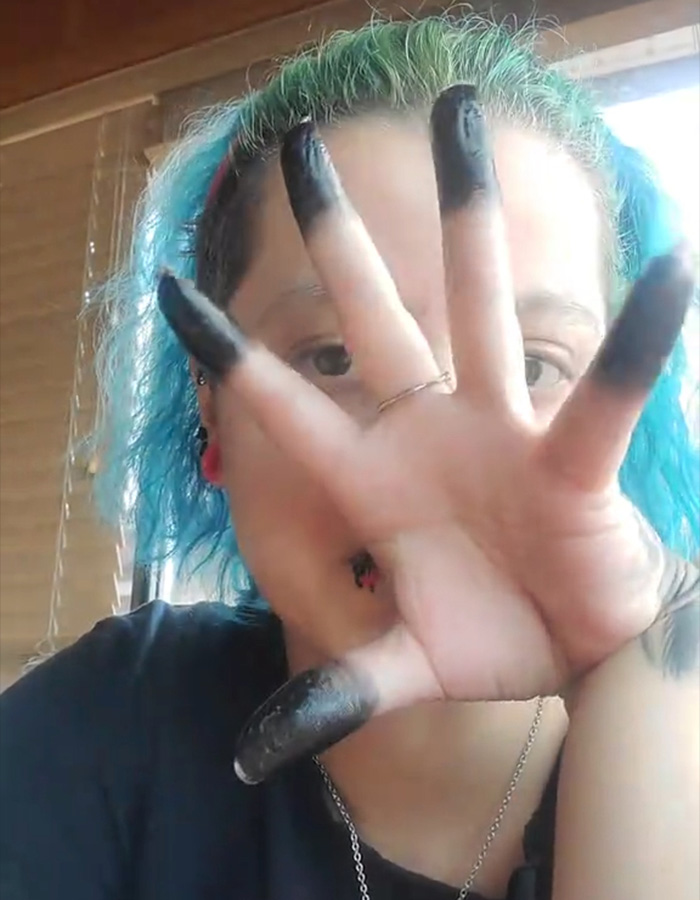
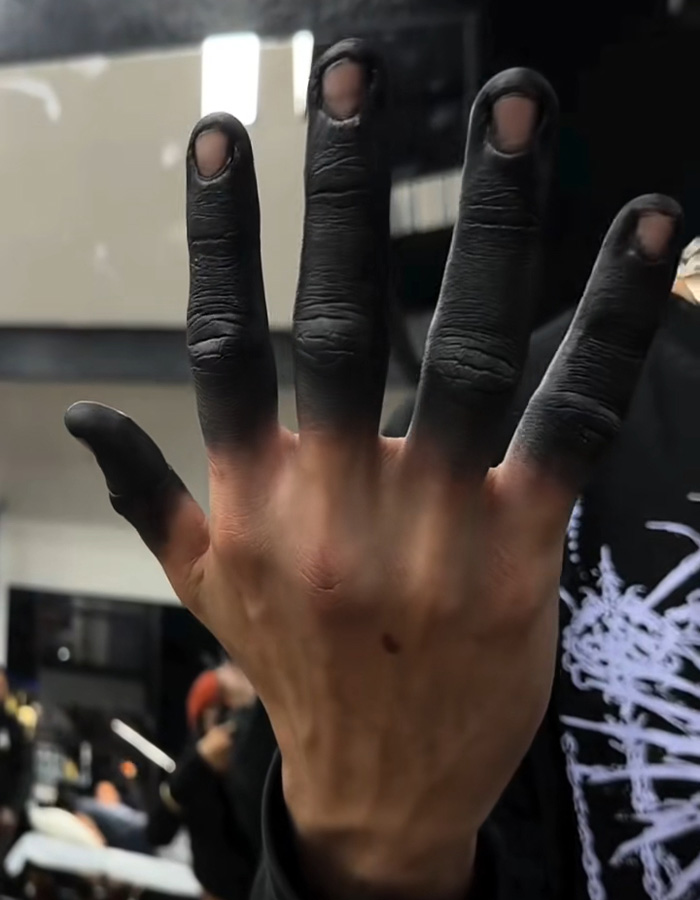
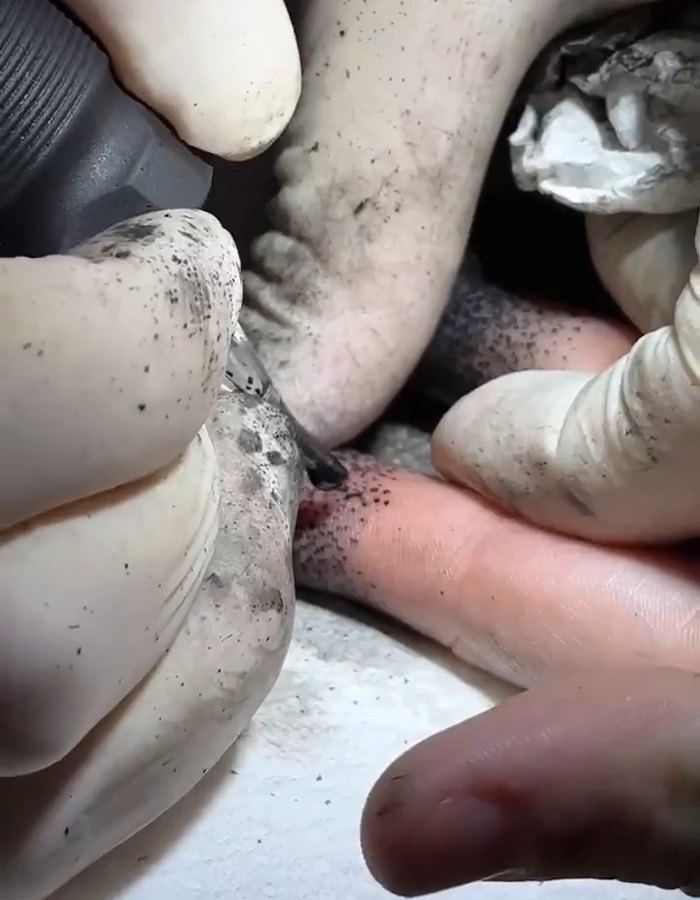
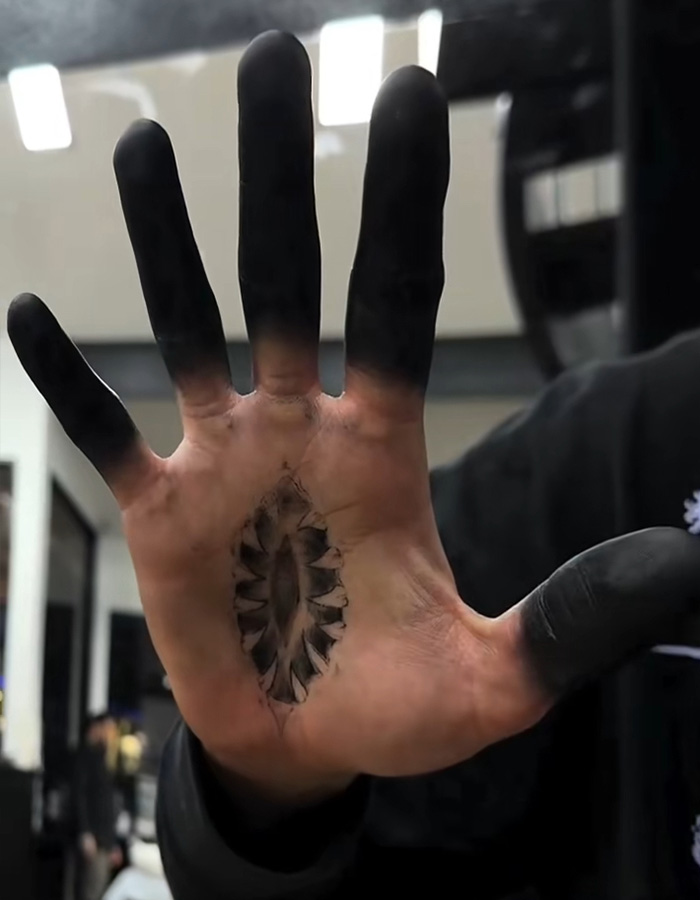
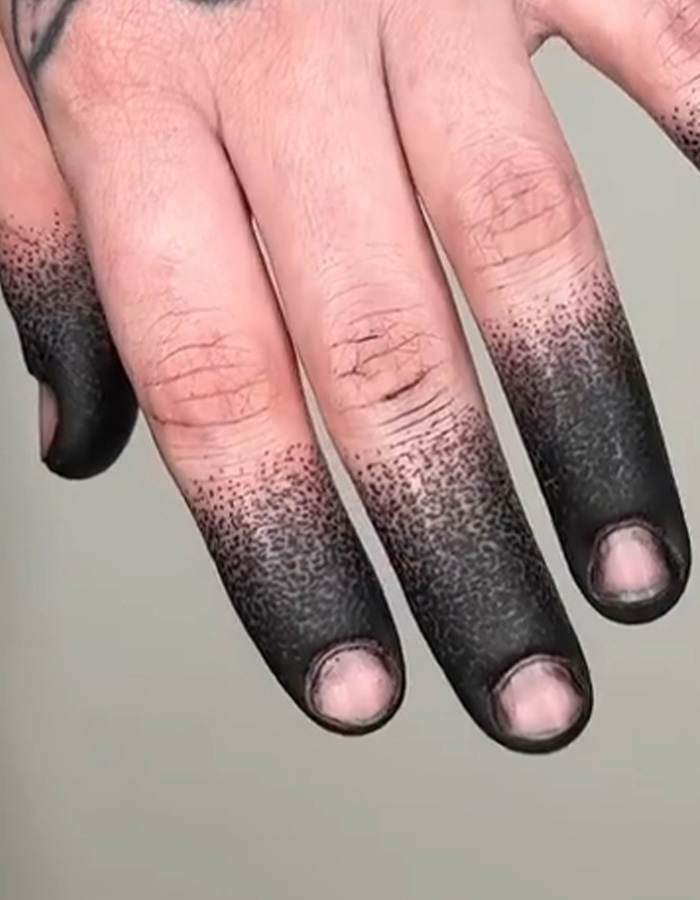
There is something almost hypnotic about watching the ink spread across the tips of someone’s fingers, turning each fingertip into a tiny pool of black before the pigment dissolves into delicate dots.
The effect is bold and unusual, and online, people have compared the look to everything from gothic body art to Wanda Maximoff’s blackened fingertips in Doctor Strange in the Multiverse of Madness.
But behind the satisfying transformation is a part of the body that tattoo artists know can be notoriously difficult to work with.
As the trend continues to spread online, medical experts have weighed in on the risks associated with the dramatic look, warning that the real complication may begin after the tattoo is finished.
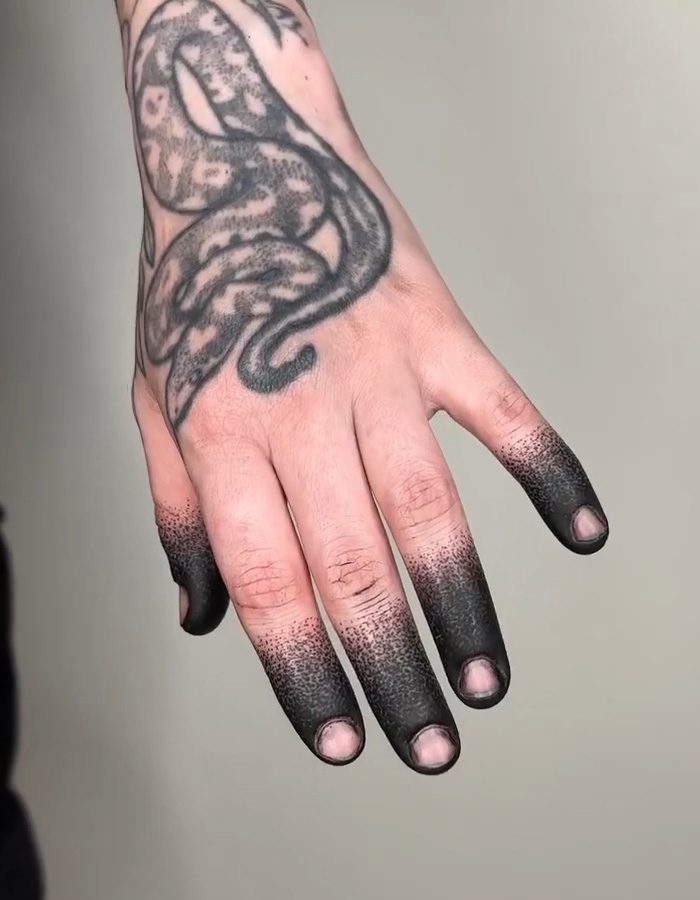
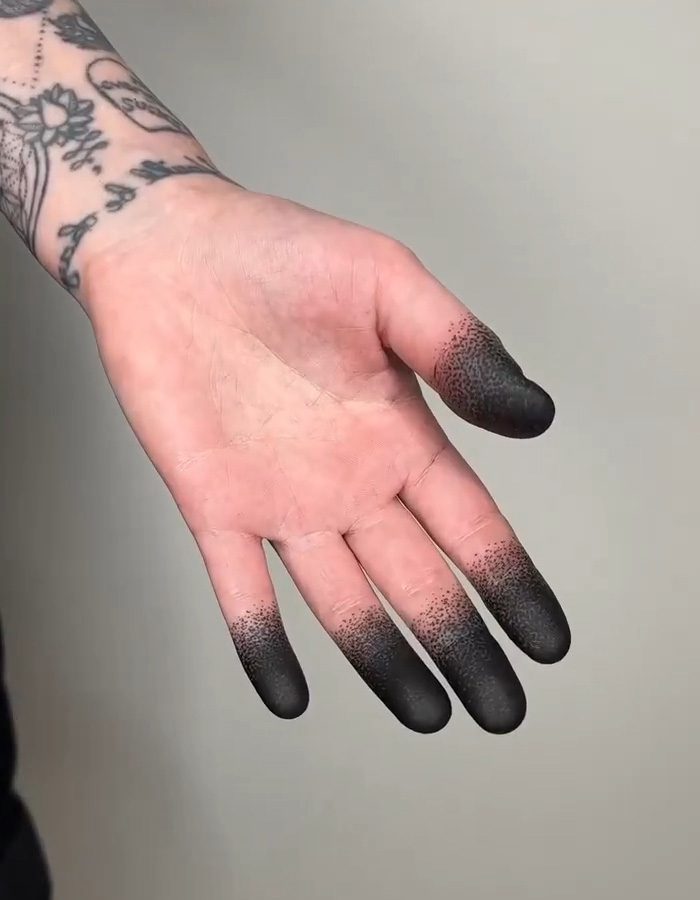
The trend involves tattooing the very tips and pads of the fingers, often using dense black pigment that gradually fades into a stippled or dotwork effect toward the base of the finger.
Online, the style has been described as “black fingertips,” “blackout fingertips,” or gradient dotwork.
While the look is gaining popularity now, darkened fingertips have actually been used as an aesthetic for much longer.
Black or dark fingertip staining has existed in traditional body-art practices, including the use of natural pigments in parts of North Africa and the Middle East.
The current viral trend, however, is a distinctly modern tattoo interpretation, amplified by short-form videos showing the process.
However, the fingertips are constantly moving, touching, washing, gripping, and rubbing against things, making them a particularly challenging place for a tattoo to heal and hold its shape.
Prof. Dr. Fuat, a board-certified plastic surgeon, told Bored Panda that fingertip anatomy is one reason this placement can be particularly challenging.
“The fingertips contain a very high concentration of sensory nerve endings,” he explained. “This means any trauma to the skin in this area can feel particularly uncomfortable, and swelling or tenderness during healing may be much more noticeable.”
And yes, the pain involved in both getting the tattoo and healing afterward can be intense.
But Dr. Fuat stressed that “feeling significant pain during tattooing does not necessarily mean a nerve has been injured. Pain is a normal response when tissue is irritated or injured.”
A warning sign would look different.
“Persistent numbness, tingling or changes in sensation should be checked by a doctor,” the expert said. “These symptoms should not simply be assumed to be part of the normal healing process.”
A tattoo creates a temporary wound in the skin, and fingertips are arguably one of the least convenient places to have one.
“We use them constantly, from typing and holding objects to washing our hands,” Dr. Fuat explained. “This repeated contact and friction may further irritate the skin as it recovers.”
Double board-certified dermatologist Monica Li similarly told Bored Panda the same everyday habits can complicate healing.
She shared, “Our hands have constant contact with the environment, with exposure to millions of microbes despite frequent washing.”
That creates an awkward balancing act: the tattoo needs to be kept clean, but frequent washing, harsh soaps, gripping, typing, and friction can all irritate healing skin.
Dr. Li added, “This can easily wash out pigment, delay wound closure, and create an open portal of entry for pathogens, such as Staphylococcus aureus.”
Dr. Fuat meanwhile stressed that this does not mean every fingertip tattoo will become infected, “but it does mean the area needs careful attention during recovery.”
Evidence shows infections are a genuine, if relatively uncommon, complication of tattooing.
In a 2015 survey of 501 tattooed adults across 38 U.S. states, 3.2% reported having had an infected tattoo, while 21.2% reported a tattoo that had been itchy.
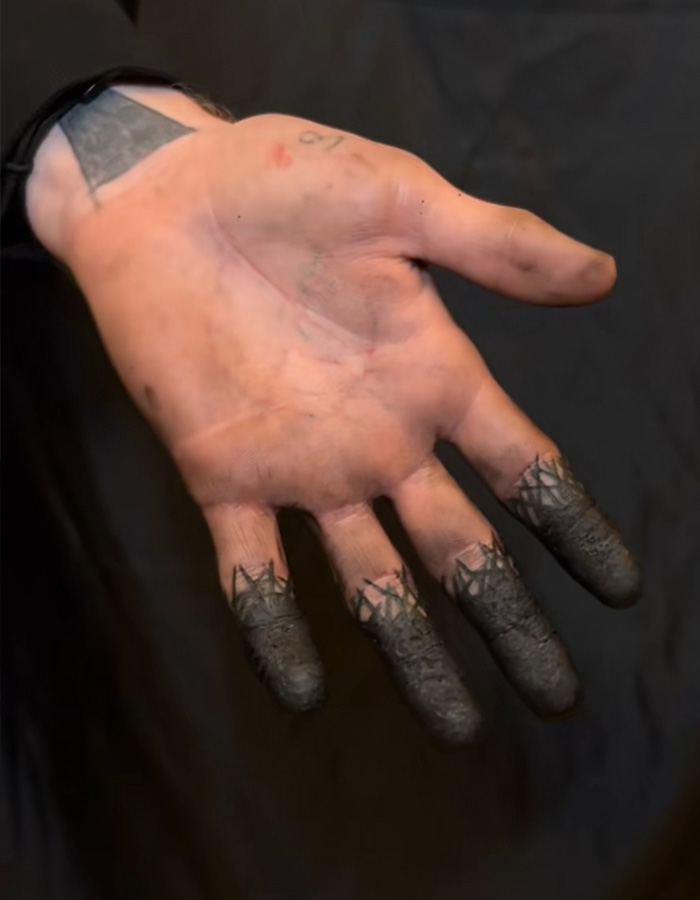
While freshly tattooed fingertips can look intensely black and crisp, months later, the same design may look very different.
One tattoo enthusiast summarized the problem bluntly online: “Finger tattoos are mostly a bad idea.”
The same user continued, “They will never heal as well as tattoos on the majority of the rest of your body unless you don’t use your hands at all, and I mean at all for at least a week. The skin is not great to work with and is easy to blow out, even for a very experienced artist.”
Another commenter added, “They fade fast and are very painful. A finger tattoo should last (cleanly) for one to four years. After that it will probably become a faded smudgy mess.”
The exact lifespan varies considerably, but the practical problem is well recognized by tattoo professionals: hands experience constant mechanical wear, washing, sun exposure, and friction, all of which can affect how tattoos age.
Dr. Li explained, “As solid saturation of tattoo ink is difficult to achieve on the first pass, this current trend often demands multiple touch-ups.”
“And repeatedly traumatizing the same confined area of thin skin increases the cumulative risk of traumatic dermal scarring (fibrosis), replacing flexible dermal tissue with stiff scar collagen that distorts the skin’s natural texture and function.”
Meanwhile, Dr. Fuat stressed that healing varies by person.
“Everyone’s skin responds differently, so healing after repeated trauma can vary from one person to another,” he said.
Tattooing is not simply putting color onto the surface of the skin.
Pigment is deliberately introduced into the dermis, where the body’s immune system encounters material that does not naturally belong there.
Dermatological research has documented infections, allergic reactions, inflammatory reactions, and granulomatous responses following tattooing.
In one retrospective study of 301 patients with 308 tattoo complications, 91.9% were chronic.
Allergic red-tattoo reactions accounted for 50.2% of complications, while chronic inflammatory black-tattoo reactions accounted for 18.2%.
Explaining why such reactions occur, Dr. Li shared that heavily pigmented tattoos can trigger “delayed hypersensitivity reactions (Type IV contact dermatitis) or foreign-body granulomas.”
She added that dense black designs “may chronically activate local dermal macrophages,” potentially producing persistent swelling, papules, or increased sensitivity.
Heavily pigmented tattoos have also raised concerns that they could make concerning skin changes harder to spot.
The American Academy of Dermatology warns that tattoos can disguise skin cancer by changing the appearance of moles and other suspicious spots.
Tattoo ink can obscure borders and color changes that dermatologists use when evaluating potentially cancerous lesions.
Dr. Li specifically raised this issue for fingertip tattoos.
“Heavy black pigmentation on the fingertips may also obscure clinical examination of the nail apparatus and skin, potentially masking early signs of lentigo maligna or subungual melanoma,” she said.
@btwtoxic No pain no gain 🖤 #tattoo#foryou#dark#brutal#fyp#tattoos♬ kerekesha – 🔱KESHA 🔱
That does not, however, mean a black fingertip tattoo causes melanoma.
Highly visible tattoos can also affect how others perceive someone, particularly in workplaces where appearance policies remain conservative to this day.
That is why one commenter on Reddit said their own knuckle tattoos had become a source of anxiety during job interviews.
“I’ve had many interviews, and straight away their facial expressions change as soon as they see my knuckles.”
The anonymous user added, “I may be fully qualified for the job I’m going for, but as soon as I see that change in their expression or attitude, I know they’ve probably already decided against hiring me, affecting employment too.”
View this post on Instagram
Another commenter agreed, writing, “I’d suggest Anyone who is thinking about getting tattooed knuckles or fingers or hands in general to double think it, it makes a lot of things way harder than they should be.”
Notably, the most important warning from the trend is not that nobody should ever tattoo their fingertips.
It is that the freshly inked version seen online is only the beginning of the story.
For Dr. Fuat, the decision should ultimately come down to understanding how your own skin responds to trauma.
“Before making a decision, it is important to consider how your own skin tends to heal and to be aware that any persistent or unusual symptoms should be medically assessed,” he said.

By entering your email and clicking Subscribe, you're agreeing to let us send you customized marketing messages about us and our advertising partners. You are also agreeing to our Privacy Policy.
Thank you! You've successfully subscribed to newsletters!


I am making a real GOOD MONEY (200$ to 400$ / hr )online from my laptop. Last month I GOT check of nearly 13,000$, this online work is simple and straight forward, don't have to go OFFICE, Its home online job. HERE ----------->> 𝗝𝗼𝗯𝟰𝟬.𝗰𝗼𝗺
I am making a real GOOD MONEY (200$ to 400$ / hr )online from my laptop. Last month I GOT check of nearly 13,000$, this online work is simple and straight forward, don't have to go OFFICE, Its home online job. HERE ----------->> 𝗝𝗼𝗯𝟰𝟬.𝗰𝗼𝗺
































 No fees, cancel anytime



















30
1