Get Premium
Dark mode theme is available exclusively for premium users. Learn more about the benefits of subscribing.
No fees, cancel anytime.

 Dark Mode Ad-Free Browsing Unlimited Content
 Ad-Free Browsing Unlimited Content Dark Mode
Join 1.2 million Panda readers who get the best art, memes, and fun stories every week!

Colds, flu, broken bones, and dreaded diseases are among the many health issues that doctors are taught to treat. Experts are trained to record footage inside the human body, transplant organs, repair damaged hearts and even use 3D printers to create prosthetic limbs. But despite how far medicine has come, there are certain things that still leave doctors stunned. It's the stuff that might need a real “Dr. House” to help diagnose.
Doctors around the world have been sharing the most bizarre medical mysteries they've ever encountered on the job. Some are strange, others scary, and a few are just plain mind-blowing. Bored Panda has put together a list of the best stories: From weird blood pressure issues, to the sudden onset of psychosis, and even a heart being found on the wrong side of someone's body. There's enough her to keep you captivated while you worry whether the mild headache you had the other day might point to something a lot more serious.
This post may include affiliate links.
 I had a young guy who came in with new-onset psychosis.
Now, that’s not an uncommon presentation for people in their early twenties but there was just something odd about him. He was very off and intermittently agitated but I couldn’t put my finger on it, it was weird, it wasn’t quite like the other new-onset schizophrenia patients we see. (I’m an ER doctor)
He was an otherwise normal guy. College graduated. Gainfully employed. No medical problems.
Workup totally benign. Really starts just looking like a first break psych presentation
A few hours in he spiked a fever and I decided to do an LP. These we rarely do without a good reason but none of it fit, and LP had low probability of showing anything meaningful, but I thought with the fever I at least had to try.
LP goes without issue and since I didn’t really know what I was looking for I clicked pretty much all the boxes for CSF labs I could send…
One of which came back positive. He had anti-NMDA Encephalitis. Which is incredibly rare and unfortunate.
Edit: For anyone interested there’s a fascinating book called Brain on Fire about this condition.
Edit 2: For those who wanted an update on him, I followed his chart for a little. There was clinical value in learning more about this outcome so that I or others I work with might be better clinicians by recognizing the patterns/symptoms. He never came back around. Had multiple seizures. Ends up on a ventilator and got transferred to our academic mothership. He couldn’t be extubated successfully so ended up with trach & PEG. I stopped following the chart after awhile, I can only argue that there’s clinical value in it without it becoming unprofessional for so long, then it would be more personal curiosity driven which is not appropriate. In that time that I did check, I never saw any substantial improvement.
 NAD but a rad tech, when I was a student we had a patient that had most of his heart removed and had a portable heart pump. They came in frequently for chest xrays. Super odd to see the image pop up with basically no heart. I remember the other techs telling me I'd probably never see something like that again, and I haven't.
 I had a patient once come in with tinnitus and on a hunch decided to check an aspirin level - it was sky high and we got her into emergent dialysis. Super lucky catch.
For the context, I am a surgeon, but a curious nerd for strange diseases.
I moved to my hometown and had just started working at the ER of a new hospital, when I listen to my collegues talk about a strange case.
A 19 yo woman has been having strange neurological symptoms. She started with some mild dizzyness that was suspected as a inner ear issue that was tested and discarded after she developed difficulty to do fine movements with her hands. She had been tested with a TP and a CT scan of the brain back then, with no abnormalities showing up.
After that she started to have trouble speaking and was seen at a private clinic (we have public and private health centers here), where she was admitted for a week with nothing showing up on her new CT scan, lab work, spinal tap, MRI. She was sent home where the mother found a progression on her speak difficulty and decided to seek help at the small town hospital where they live, to then end up being sent to our ER, with the suspicion of an encephalitis vs a ruptured aneurism.
While I was writing up some papers of my own patients, my collegues were talking about the case and it sparked my curiosity because I had known of 2 other similar cases back at the hospital I had done my residence. Heck, I even remember taking with the neurology and the neurosurgery residents about those 2 cases for hours, while also talking about other prion diseases (Kuru, Fatal Familial Insomnia and Scarpie).
I remember looking at the older clinician of this new hospital (who ended up as one of my best friends after a few months there) and asked if they were suspecting Creutzfeld Jakob, and she looked at me at disbelief.
We then talked to the neurologist who came to examine her and he also agreed on our observation
She got tested and ended up passing away a week before her test came back as positive.
Scary as heck disease.
 NAD, but a nurse. During my clinical rotation I was caring for a patient with a diagnosis of “alien arm syndrome”. One day, her arm just started moving on its own. She lost control over it. She went into the doctor, who had no idea how or why this was occurring, and sent her to our urban hospital. I was working with a fantastic infectious disease doctor who actually wanted to hear my opinion, especially because all of her tests came back negative. I suggested mad cow disease. The doctor already had this idea of course but agreed with me! I felt pretty cool as a student nurse - but also horrified at the idea that this could be an unexpected sentence for one of my patients. The doctor asked the patient if she ate raw cow meat, and the patient had told the doctor she has been eating “tiger meat” for the past 40 years. Her husband has as well… but he wasnt sick, at least not at the time. The alien arm progressed into an alien leg within a matter of days. Before my clinical rotation had ended, her opposite arm had began twitching on its own. She still had some strength and control over her arms and legs before I left. She was fully conscious and aware and was able to speak to us. All of this happened in a matter of weeks… She was in her early 60s and was very healthy before. I was doing a different rotation several weeks later and ran into the same doctor and asked how she was doing. He had told me the LP fluid they sent off to Mayo had came back and pointed toward mad cow disease- CJD and that was her official diagnosis. She would have passed away within that year.
NAD of course, but a strange series of patients.
When my little brother was an infant in 2001, he had a real bad intussusception, almost passed away, but thankfully he made it. An intussusception, btw, is when your intestines get folded and tangled together. I recall the doctor comparing it to when you take your sock off and it comes off all inside out.
When my younger cousin was a kid, ~2013(?), he ALSO had an intussusception. His was solved with them blowing air through his intestines, he didn’t have to go through all the surgery and colostomy bags and drama that my brother did. Still odd and scary though.
In 2018, my mf’ing CAT got an intussusception... or something similar. I had to rush her to the closest vet for emergency surgery, and they removed a whole mess of her colon. The vet described her intestines as “tangled like a garden hose”. What the hell.
AND NOW, at this moment, as we speak, my future father-in-law is in the ICU of a hospital after getting a section of his intestines removed. Tomorrow he shall go back into surgery to have things reattached.
So the question remains: what is it about me that causes people nearby to get their insides all messed up? My intestines are fine as far as I know, all I’ve ever had removed is my gallbladder. How mysterious.
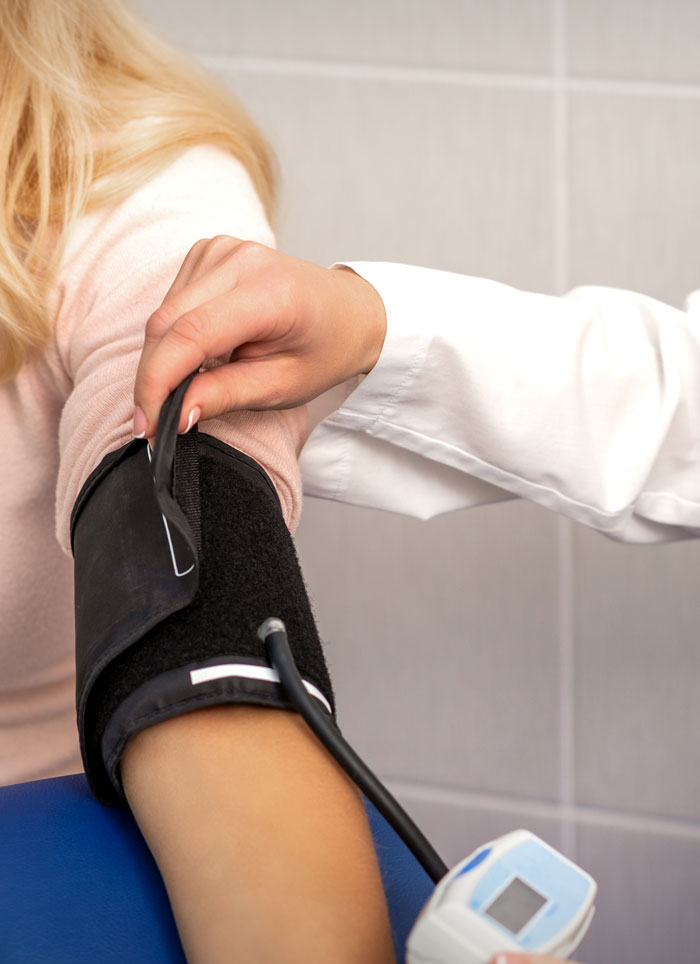 Had a patient who was being treated for low BP by her PCP but her blood pressure continued to be low so she was sent to cardiology where we did a work up but couldn’t find anything wrong. BP continued to be low even maxed out on midodrine. I checked both arms, BP was 80/40 on the left, 180/100 on the right. Checked her carotids and sure enough I heard a bruit. Sent her for a scan and we found she had subclavian steal syndrome and significant stenosis to the left arm arteries. She was being treated for hypotension for months when she actually had severe HYPERTENSION but they had been checking the wrong arm. Sent her to a vascular surgeon who cleared her arteries and I got her on antihypertensives and she stabilized! Now I tell everybody to ALWAYS check BOTH arms if something seems off.

For those of us who don’t have a medical background. A carotid bruit (pronounced "broo-ee") is an abnormal, whooshing or swishing sound heard with a stethoscope over the carotid artery in the neck. Subclavian steal syndrome is a medical condition where a narrowing or blockage one of the arteries under the collarbone causes blood to flow backward into the arm from the brain, "stealing" its normal blood supply. Stenosis of an artery means it’s abnormally narrow, which cuts down blood flow.
I’m not a doc but a nurse. Extremely fit, big hiker in mountains and deserts, absolutely no problem until I went to Woodland Park, CO before I was doing a big trek. Woodland Park isn’t even that high…maybe 8,000 feet…and I stayed there for two days before the trek.
First day, I couldn’t get my breath. I thought maybe I hadn’t prepared well, so I stayed back with the less experienced group.
Good thing I did.
Somewhere between Denver and Colorado Springs’ base camp, I threw a clot. I thought it was just a cramp in my calf from flying from sea level to altitude.
Nope.
If I hadn’t gone to urgent care, I probably wouldn’t be here now. I had the worst headache I’ve ever had.
They called the helicopter transport to take me to Denver. I was barely conscious when they loaded me onto the helicopter. The pain was awful.
Many people don’t understand that going from sea level, flying to a mountainous area, and trying to hike the fourteeners might not be a good choice.
I was extremely lucky that clot didn’t travel to my brain.
My brother has Familial Mediterranean Fever. He had years of intermittent heart issues, testicular pain, and rashes. He was tested for all the issues someone in their teens and twenties might have. My dad, a family doc, didn’t figure it out until he received his own genetic testing results back and it showed he had a marker for FMF. Now my brother takes some cheap ~~steroid or something~~ anti-inflammatory and it's totally managed.
Super weird. Sometimes it's actually a zebra.
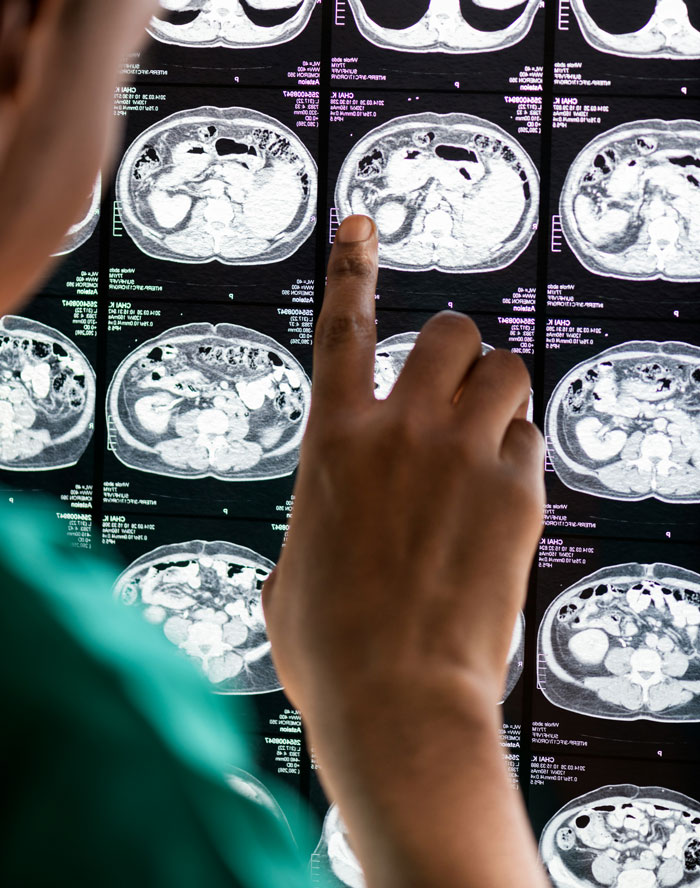 A person who has been suffering from unexplained epileptic seizures for many years was found to have a calcified small suture needle inserted in his brain.
 As a 2nd year resident we had a young, previously healthy female pt who came in for fevers and erratic behavior. I clock into my shift on day 2 of hospitalization, while initial CSF studies were cooking, and nurse immediately messages me that pt is acting “crazy”. Go into the room and she is standing up in her bed, bent over backwards and screaming, like a possessed person from a horror movie, needless to say nurse and I were freaked tf out. We did a pretty extensive workup for her and found an ovarian mass, turned out to be a teratoma and she had anti-NMDA encephalitis (confirmatory labs took forever to come back). Apparently she got the treatment/teratoma removed and back to normal pretty quickly. In hindsight it was a pretty classic presentation but definitely not something any of us were suspecting on admission, pretty cool.
I was the weird one!
Back in 2009, I started having right shin pain. Achy pain that wouldn't go away. It progressed rapidly in a few hours to what felt like being hit with a sledgehammer. I worked at a hospital and so I went to the ER every day for a week straight. The pain was almost unmanageable and nothing helped it. If I moved around, it got a little better but if I stood still the pain migrated to my ankle and felt explosive.
I had: x-rays, ultrasounds, blood cultures, and a blood test after being dismissed for the first few days. I had 3 days of IV antibiotics with the assumption it was an infection although the blood work didn't really show much. I saw a Rheumatologist who thought maybe it was a rheumatological disorder.
But the pain persisted. My leg looked fine. There was no swelling. No redness. No tenderness. You could push on all parts of my shin and ankle and it didn't increase the pain. The pain was just there.
A week and a bit after it first started, I bent down at work to plug in my space heater and immediately felt like I couldn't breathe. My heart felt like it was slamming through my chest. At first I thought it was my asthma and maybe some anxiety because of the pain and I almost left to go home. But my heart rate would not come down and I was really having trouble catching my breath.
My coworker wheeled me to the ER and they gave me a CT scan which showed a massive saddle pulmonary embolism. I think the report said something like 80-85% occlusion. My heart rate laying still was in the 160s and any movement spiked it into the 180s and above (which constantly set off the alarms haha). The doctor I had seen to remove the IV after the short course of antibiotics said "I bet you thought we thought you were crazy."
I spent a night in the ER and then went to the ward for 2 days and then I went home. When I saw the internal medicine doctor in followup, she had a med student with her and the doctor said to the student "in your career, you will never see patient with this type of clot burden who didn't end up in the ICU or the morgue."
Why did I have the clot? No one knows. I went through all genetic testing and nothing came back. The best guess is that I had taken Yazmin (a birth control pill) for just 30 days before developing the clot and that's what triggered it.
There was a patient who, based on imaging and symptoms, was thought to have a glioblastoma, but histology revealed he actually had a massive brain abscess. The cause was his poor dental health. He was left with severe impairments.
 I had an elderly woman on a bit of insulin, at least 100 units a day. We started her on a GLP1 but it needed to be held for a colonoscopy. She was wearing a continuous glucose monitor before, during, and after the colonoscopy.
Something magical happened during this colonoscopy. Her blood sugars went from very elevated (200s to 300s) just before the colonoscopy to MUCH better controlled afterwards. Insulin was entirely stopped. Eventually we got her on a starting dose of GLP1 and that is all she has needed since then. Life changing colonoscopy.
I once had a patient come in that we were treating her for a thoracic disease (can’t remember) but she had been struck by lightning. Not once but twice! She was an incredibly kind soul. Kinda had some issues with talking and sorta had some delayed thinking but you would never really know she had been struck. She showed me her left arm which was pretty gnarly and scarred from the lightning.

The 2 lightning strikes. I cant help but think Zeus was involved somehow. Had she been rejecting any romantic advances by swans or rain lately?
 Probably functional illnesses in general. I’ve seen too much of it to not be convinced that there’s something pathological going on that modern medicine can’t really detect.
People will have excruciating pain but all the blood tests and scans in the world are normal. No doctor believes these people are pretending. There are theories as to how this happens but no one knows why it happens. Why is it that some people are prone to getting functional disorders and others are not.

This is why I want to see a breathing-stress test. In cases of pain, breathing changes by the addition of more glottal stops. Counting the glottal stops using either a rubber chestband with strain gauge or using a throat microphone with high pass filter should give a completely objective measure of pain and other stressors.
 Not going to give specifics to be safe, but I had a woman with large quantities of a very rare heavy metal throughout her GI tract. Pretty sure her husband was doing it. Got an XR to look for implants before getting an MRI and just found shards of metal throughout her body. Very hard to test for rare metals unless you know what you are looking for, because each metal needs different types of tests (urine, blood, etc).
I'm not a doctor but a patient. After 12 years I finally received a diagnosis of MADSAM, after losing use of two limbs. I started IVIG this week. 1 in a million. Fingers crossed.
Not a Doctor but a NICU nurse with a very unique story that is House levels of nonsense.
So we had a premature baby in my NICU that just kept having issues, not gaining weight. Not eating. Poor temp control. Mom had hypothyroidism, but the family was very crunchy and felt they knew better than doctors. So instead of taking levythyroxine she took over the counter iodine supplements that she dosed out herself after talking to her "naturopath". Well turns out the iodine crosses the breastmilk and he didn't tell her that.
And since iodine was a supplement and not a medication she never told the lactation consultants.
Anyways this kids thyroid levels were all over the place and she exhibited all of the symptoms of neonatal hypothyroidism. They started her on all the medications and none of them worked.
Eventually one of our doctors, that has been a neonatologist since before neonatology existed as its own specialty.
He sits down and is talking with the family that are VERY crunchy and VERY upset that their daughter isn't improving. He just straight asks the mom "Do you take iodine?" She says that she does. The entire unit just breathed a whole sigh of relief. And the biggest irony much like a case in House, the baby's condition was completely inflicted upon her by her mother, who swore that she knew better than the doctors.
 How a patient with a hemoglobin of 2.3 was still upright and talking. Turns out he had a severe esophageal bleed from years of alcohol use, he reported about 1 gallon of vodka per day was his “usual” daily consumption.
I had a patient who had a remote history of TBI, but about 20-30 years later had progressively worsening neurological changes including gait impairment, spasticity, cognitive changes. This is absolutely not something we expect decades after a TBI. After a long rocky course in the hospital with negative workup, he eventually passed away. Autopsy confirmed Prion disease! No idea where it came from, and hope I never see another case. It was pretty brutal.
I was the anomaly!
I was having weird “spells” where I could barely move or speak and was mostly unresponsive. Awake, aware, just sort of trapped in my own body. I’d feel fine but so tired afterwards. Once it happened at work they sent me to the doctor in the middle of my shift. But by the time I got to see her, I was fine again.
She asked me some questions and very seriously said that I was in the right risk group and showing the right signs of multiple sclerosis. I worked with MS patients so I knew exactly what I was in for, and I was terrified. She sent me off for a bunch of tests including an MRI.
Turns out, I had a sinus infection that was so severe it was weeks away from ending me. It was causing me to have seizures - that was literally the only symptom. She said it was causing a lot of pressure and was close to crossing over the membrane of my skull (or something - it’s been over 20 years now). If I’d waited any longer, I would have passed away. A couple weeks on some intense antibiotics and I’m fine. The only long term result is I now have epilepsy, which has been controlled for more than 11 years.
 Med student here. Patient on family med rotation comes to the office for a emergency room follow-up, blood work that they got in the hospital is absolutely atrocious. She was a poorly controlled diabetic with a history of chronic myeloid leukemia (blood cell cancer) in remission despite being incredibly non-compliant with every medication.
Her A1C and GFR were both 15 (A1C: average blood sugar levels over 3 months, normal is 5.5, we want diabetics to be under 7; GFR: measure of how well your kidneys are doing, normal is 90+). She came in walking on her own power, looking completely fine with no needed amputation or anything. The rest of the blood work they got at the ER somehow didn't have any of the other expected severe side effects of not having any kidney function but was still pretty bad
The attending, the resident, and I had to have a "come to Jesus" meeting with her about getting her blood sugars under control again, because the fact that she wasn't on dialysis and drove herself to the appointment is already a miracle.
NAD but after years of going from pillar to post, my mum's Myasthenia Gravis was caught by a guy fresh out of medical school. He picked up on her eye issues and on a hunch decided to try chilling her eyes to see if she could see again.
They both became rather popular rather quickly.
 Not overly rare, but subcutaneous emphysema is pretty wild. Had a pt in ICU so bad that every time she tried to move it sounded like a box of rice krispies popping in a gallon of milk.
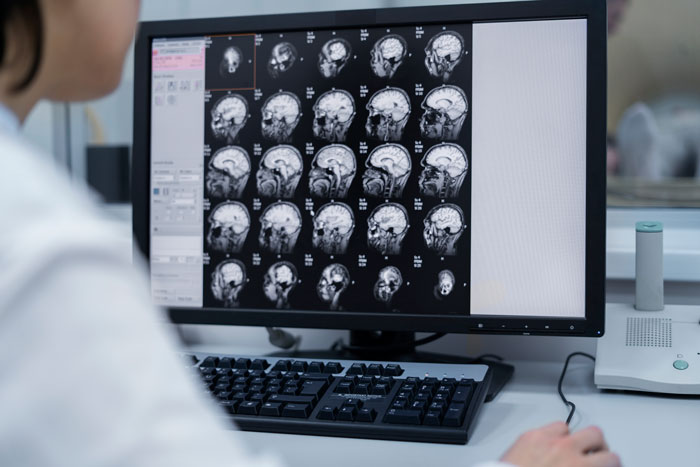 Had a lady come in to the neurological ward during my nurses practice with sudden vision loss. She was in her 70's, seemingly as healthy as could be and had for her entire life been a dance teacher and to that day was dancing several times a week.
The doctors suspected a tumor and sent her to radiology. Her entire body and brain was littered with tumours. It looked like someone had splashed paint on a wall. It had most likely started in her colon, metastasized to her liver, then lungs, lymph nodes and brain. She had no other symtoms, none. No rectal bleeding, no pain, no coughing, no balance or congnitive issues, just the sudden loss of vision.
A young man with personality changes, then seizures. Nothing on scans. Was in hospital for weeks. Then muscle weakness. Wound up getting a brain biopsy. It was some weird melanoma affecting some really specific cells (can't remember now). He'd had a melanoma fully removed from his arm about 5 years prior and that was the only possible source. He died a few weeks later.
Another middle aged guy developed about a year of paralysis, no pain, nothing. Was quadriplegic by the end of it, and nearly palliated but got a muscle biopsy. Statin mediated muscle necrosis. The magic of IVIG and steroids resulted in him being mostly cured.
Not really fancy but - Had a patient with well controlled HTN. It started going up pretty quickly seemingly out of the blue. Rather than just throwing more meds at him, I did a cardiac work up and sure enough he had some blockages. Got him into cardiology stat and he got some stents placed.
The lesson there is that we treat HTN every single day all day long. So it’s super easy to just treat it and move on. But sometimes it’s important to ask “why” and dig deeper. I also feel like having a good “spidey sense” has paid off for me in clinic many times.
 This didn’t happen to me, but to my brother when he was in med school & dissecting his first cadaver. As they started working, my bro & his group were getting more & more freaked out because they couldn’t find certain structures where they were supposed to be. It wasn’t until they cracked the sternum & saw the heart on the **right** side of the body that they realised this person had *situs* *inversus* - a condition where all the organs in the torso & abdomen are essentially flipped. It’s pretty rare and odd but doesn’t pose a risk to health, and some people go through life without even knowing they have it.
One in 10,000 people. Always good fun to try medical students on. It enforces the observation that anatomy isn't always where you expect it to be.
Several of my mystery very ill patients have ended up having HLH (hemophagocytic lymphohistiocytosis).
Hispanic male, teenager, with Sturge-Weber Syndrome and choroidal melanoma. My math is roughly approaching one in one billion.
Female age 40. Extreme multiple joint pains for a year dismissed by multiple PCPs, and started to develop generalized rash+high fevers+flu like symptoms, so the rash was blamed on the flu(even though respiratory panel was all negative), she ended up being hospitalized not once but maybe ten times for flu like illness in the span of a few months, and every time got discharged home with fever/sepsis precautions. I thought was weird, ended up curb siding a rheumatologist and they told me to do a work up for rheumatic conditions, basic rheum conditions were negative which was initially really frustrating, finally she was able to get in with rheum and she ended up being diagnosed with adult onset Stills disease. Incidence is 1-7/1,000,000.
Had a colleague on another part of the campus need an ambulance to the ER for chest pain. As the story goes (I’ve only heard the story, wasn’t there) my other colleague in Emergency just couldn’t put his finger on what was a bit off, maybe the first doctor wasn’t completely his normal self? But they decided to CT instead of thrombolyse (clot buster) his heart attack. Thankfully they did because he had dissected (the layers of his artery had separated and could rupture) all the way from his coronary artery (heart artery; hence the chest pain) into his carotid (neck artery) and the thrombolysis would have ended him instead of saving him!
A bleeding retina caused by a congenital hole in his heart. Mid-50s.
There's got to be more to it than that. For example blood pressure or blood sugar or myopia.
Another one - I knew a medical mystery! When I studied neuroscience I had a classmate get into it because she had migraines.
Problem was whenever she had migraines she became paraplegic until it passed. Whenever she had an aura she had to sit down somewhere and wait it out. .
I took care of (what the patient’s mom said was) the world’s oldest Trisomy 3 survivor while in residency. The person had vital signs and a trach. And a diaper. Was maybe 8 or 9 yrs old. Seemingly seized all the time.
It sucked.
I'm the patient(47m).
I had dozens of concussions as a child and knocked unconscious at least twice as a child plus numerous occasions where, as a child, I'd wake up in the morning with a sore spot on my head and a splitting headache plus double vision and no memory of the previous few days too months
My neurologist is a bit puzzled as to how the hell I only have YOPD, C-PTSD and a few relatively minor cognitive issues as a result.
A guy dropped his wife off for a routine surgery. A couple of days later he’s found by the side of the road by a member of the public, wandering around aimlessly and incoherent. Brought in by ambulance, his level of consciousness steadily deteriorates over several weeks of his admission. Usually fit and well, no relevant family history or occupational exposure. Imaging is clear. Bloods mildly abnormal - mildly raised CRP, neutropenia, otherwise unremarkable. No substances in system. LP is abnormal but not fitting any clinical picture (apologies, can’t recall exact abnormality). Trialled on several antibiotics without effect, put through more investigations (apologies, I can’t remember what these were anymore!) but unremarkable. Our team and his family just watch him slowly become a vegetable, all of us powerless to do anything because we can’t figure out what he has.
He ended up being made palliative and passing away, sent for autopsy but unfortunately I changed jobs so never got to know the results of the autopsy. I’m hoping that my new role leads me to run into my old SMO so I can ask what the answer was.







































 No fees, cancel anytime