Get Premium
Dark mode theme is available exclusively for premium users. Learn more about the benefits of subscribing.
No fees, cancel anytime.

 Dark Mode Ad-Free Browsing Unlimited Content
 Ad-Free Browsing Unlimited Content Dark Mode
Join 1.2 million Panda readers who get the best art, memes, and fun stories every week!



So much of our daily reality is weird, creepy, or mind-bending, but we rarely slow down enough to notice. Take our own bodies, for instance. A chunk of our DNA actually comes from ancient viruses.
Look up at the night sky, and things get even wilder. Some scientists actually hypothesize that our entire universe is sitting inside a massive black hole right now.
If you’ve never looked at human existence from these angles, prepare to have your mind blown. We’ve rounded up some of the most disturbing facts about humans, evolution, and the cosmos shared by people in an online forum.
These aren’t the kind of thoughts that usually pop into your head over morning coffee — but once you read them, you won’t be able to stop thinking about them.
This post may include affiliate links.
Eventually, all stars will burn out, all matter will decay, and time itself will cease to have meaning. But somehow, despite this insane cosmic horror, I still have to wake up at 7 AM tomorrow to answer emails. The juxtaposition is genuinely terrifying.
 That all of us alive have a continuous unbroken link of generational reproduction going all the way back to when life first got established on earth..

And my sons are the end of the road. Genetic intellectual disability. It is a hard truth to face. All I can do is be the best caretaker I can be until my time runs out.
Fetuses put out a hormone called human placenta lactogen (hpl) that makes the mother resistant to her own insulin, which keeps more sugar in the bloodstream so the baby can get more sugar and grow bigger faster.
In response, the mother creates more insulin, to survive.
So what does the baby do? Creates more hpl! And the mother produces more insulin to negate it.
And it goes on like that until hpl becomes the most plentiful protein hormone in the mother's body. It gets wildly out of hand.
The baby is making 100x more of this hormone than necessary, just to claw sugar away from her, and the mother is producing 3x her baseline insulin just to counteract the effects and stay alive.
When her body loses this arms race, you get gestational diabetes.
Both would be better off if they just settled on a number and made that much hpl and insulin, but evolution doesn't work that way.
Why bother learning these weird facts? For the exact same reason we explore deep oceans, wild forests, or outer space. Humans have always searched for answers to understand our world, find new resources, and build a better life.
Learning how we evolved and how the universe works helps us find our place in the cosmos. It pushes technology forward, opens our minds, and reminds us that we all share one home worth protecting.
Wheat literally domesticated humans, for inexplicable reasons as far as is known so far. We went from a nomadic, hunter gatherer society, to a stationary farming society very quickly as a whole.
Wheat wasn't particularly nutritious, and takes care and effort to grow effectively. At that time we as a species didn't really turn to cereal grains unless it was times of hardship, because they were filler at best. Yet, all over the world, everyone started growing wheat.
Wheat didn't even exist outside of a relatively small area of the world as far as we know, yet legitimately became a backbone of human existence. If you dig deeper into it, it's an absolutely insane shift in human behavior.
*ONE* of the "backbones" of human existence. People cultivated and bred different grasses and similar plants in several places around the world, rice and corn being the first to come to mind.
The fact that the atoms making up our bodies were forged from ancient stars.
The top of the windpipe is lower than the back of the tongue, rather than at the back of the tongue, as with chimpanzzes. This is good for making a lot of speech sounds, but this also makes us more vulnerable to choking.
Most of the time, these wild facts just fill us with pure awe and make us want to see what’s over the next hill, just like our ancestors did.
Humans are naturally nosy. Honestly, we spend a ton of time on totally unproductive stuff — reading celeb gossip, learning useless trivia, or looking up places we’ll never visit. We love knowing things, even when there’s no practical point.
Homo sapiens has existed for only about 300K years.
To put that into perspective, if the entire 4.5 billion year of Earth were compressed into 24hrs, humans would appear at roughly 11:59:54 PM, just 6 seconds before EOD.
If you are a white person descended from Europeans, you only have to go back between 200 and 320 generations (5000-8000 years ago) to find the start of your dark-skinned ancestors. All your ancestors before that where dark skinned. Prior to then, Europe itself was populated by dark-skinned people who came from Africa about 60,000-70,000 years ago and retained their dark skin for tens of thousands of years.
The advent of the Agrigultural Revolution in Europe about 8000 years ago caused dietary Vitamin D deficiencies which suddenly strongly favored people with lighter skin (because they could more easily make it themselves from sunlight in the far north low sun of Europe). The adaptation took about 3000 years to became widespread.
tldr; only 200-320 generations back, white people were all black.
Also white people, those most obsessed about "racial purity", carry Neanderthal DNA which people of color don't tend to carry. A nice fact to piㅤss off a racist.
Human curiosity is an evolutionary survival tool.
Early humans needed to explore their environments to find food, discover safer shelters, and spot potential threats before it was too late.
Science shows that our brains actually reward us for learning new things; when we encounter fresh information, the brain releases dopamine.
That is why we get such a rush when solving a puzzle or falling down an internet rabbit hole — our biology literally treats new information like an essential resource.
Weird thing about clothing: we wear much more than our ancestors did before some 50,000 years ago, and we seem to like doing so.
Defining clothing as body coverings made from outside materials, clothing is rare in the animal kingdom. Outside of our species, the main example I know of is caddisfly larvae. They make casings for themselves using found objects like twigs and sand and gravel, held together with silk that they secrete.
The origin of human clothing has been dated indirectly using the divergence of head lice, which prefer our head hair, and body lice, which prefer our clothing. Origin of Clothing Lice Indicates Early Clothing Use by Anatomically Modern Humans in Africa - PMC 170,000 to 83,000 years ago, about the time of the emergence of behavioral modernity or a little before.
But low-tech people in warm climates do not wear much clothing. Some of us moved to northern Eurasia around 45,000 - 40,000 years ago, and we had to make much more clothing to get through the cold winters there. The main surviving evidence is indirect: bone sewing needles.
Our first clothing was likely animal skins, and we still use animal skin in leather and fur coats and the like.
With the invention of agriculture was the domestication of plants raised for their fibers: flax, cotton, ... Also, some domestic animals were bred to have thick fur for fibers: sheep, Salish wool dogs, ... These fibers were then woven into cloth to make clothing, blankets, tents, ...
Clothing became common in large-scale societies, even in warm climates. As cloth became easier to make, cutting away some cloth became more tolerable, thus enabling clothing cut to fit.
Most recently, we have invented plastics and rubbers, for both woven clothing and shaped clothing, like rubber boots.
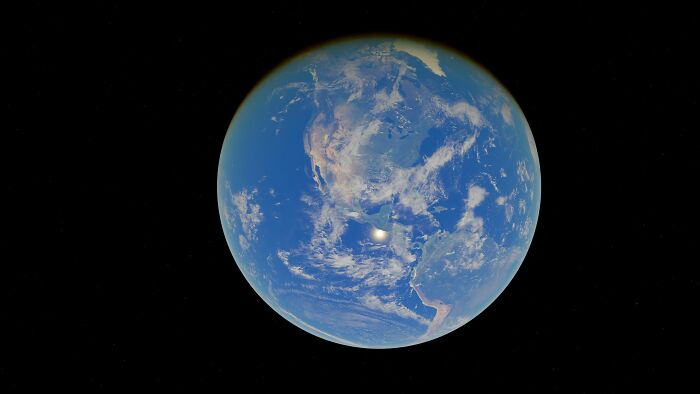 That time you experience varies wildly with speed and the gravity you’re under. the speed at which we move through time is local to earth.

or listening to history lessons at school. Ironically those feel the longest
The kneecap has two properties that are interesting- 1. It acts as a fulcrum for leg muscles, increasing the power and efficiency of those muscles for walking and running. 2. It keeps your knees from bending the other way.
I've read a sci-fi book where aliens are very similar to humans except their knees bend the opposite way. Someone was needed with the same anatomy to control an alien machine, so they took one of the main characters who suffered a car crash and just gave him bionic knees that can bend in either direction.
We are especially drawn to weird, dark, or disturbing facts because of an information gap. When we spot something bizarre or threatening that doesn’t fit what we already know, our brain feels uncomfortable until we figure it out.
Digging into strange realities, like dark universe theories or creepy human biological quirks, lets us test scary situations safely from the comfort of our couch. It satisfies our drive to make sense of the unknown.
“There is something that has been dubbed perceptual curiosity. That’s the curiosity we feel when something surprises us or when something doesn’t quite agree with what we know or think we know. That is felt as an unpleasant state, as an adversity state. It’s a bit like an itch that we need to scratch. That’s why we try to find out the information in order to relieve that type of curiosity,” says astrophysicist Mario Livio.
 Humans have evolved to be incredibly OP as an animal, even without modern technology. Our ability to walk on two legs freed up our hands, which could be used to throw rocks with fatal accuracy. No other animal can do that, not even our close primate cousins. Sure they can throw objects but it lacks pinpoint accuracy and power an average human can achieve (it’s not even close). A rock to the face is enough to convince most predators to back off, let alone a barrage of projectiles from a group of humans from +20 meters away.

also humans are the best long distance runners on the planet other animals might be faster than us but we can run further for longer
 Our teeth aren't bones, they're derived from part of the neural crest during early embryonic development. In other words, teeth are *bitey brain-bits.*.
I recently went down a rabbit hole on comparative mythology and it's kinda wild the similarities in the mythologies of cultures who never interacted with one another.
My favourite two examples:
1. The theft of fire - basically every culture has a tale of fire being stolen from the gods either by a human hero or a trickster god and then given to humanity.
2. Chaoskampf - The battle between a hero god (usually in the domain of the sky) and a sea-serpent or dragon.
It's really interesting as it shows the similarities in human thinking and the priorities and values of early hominids.
Also, some kind of massive flood is mentioned in so many myths, legends and religious texts that a lot of experts agree that something like that had to actually happen
Some people worry that having endless info at our fingertips is making us lazy and destroying our curiosity. But experts say the internet actually fuels our drive to learn — it just changes how we do it.
It helps satisfy what psychologists call specific curiosity. That’s the sudden, nagging itch to know one exact fact: Who wrote that book? What’s the name of that actor?
Instead of obsessing all day, you get your answer in two seconds. Getting that instant fix frees up mental space.
“The digital age helps us because we can find that information, and that may drive us to look for something else about this. And that would drive perhaps epistemic curiosity, which is this love of knowledge and wanting to learn new things,” says Livio.
It seems that processes related to consciousness are inherent to our universe yet we have no slightest idea what actually causes them or what they even actually are. All we know is that something biological and/or electrical happens in our brain and boom, we see things and hear our thoughts.
Idk but I don't really believe that our consciousness can be reduced to some electrical and/or chemical signals in the brain. Yeah, that's the hardware, but I believe in some metaphysical software that truly makes us who we are. That's also why I don't think that stuff like sentient computer or uploading human mind to a machine is possible unless we learn to transfer, copy or replicate this metaphysical component.
That evolution doesnt care about or favor intelligence, "free will", or sentience. Our self aware nature is just a by product and not necessary to evolutionary persistence.
It took us some 100,000 years to invent agriculture, but when we did, we invented it at several places.
That time is from Behavioral modernity - Wikipedia from dates of various artifacts, like from Blombos Cave, South Africa, about 100,000 - 80,000 years ago.
Vavilov center - Wikipedia and Current perspectives and the future of domestication studies | PNAS -- there are at least four sites of independent invention of agriculture: the Fertile Crescent in the Middle East, South China, Central America, and the Northern Andes in South America.
What made the difference? I've found the theory that climate was erratic during the Last Glacial Period - Wikipedia and stable in the Holocene: Was Agriculture Impossible during the Pleistocene but Mandatory during the Holocene? A Climate Change Hypothesis | American Antiquity | Cambridge Core
The Holocene is the most recent interglacial period, and the previous one is the Last Interglacial - Wikipedia from 130,000 years ago to 115,000 years ago, known as the Eemian and various other names. So why didn't we invent agriculture back then? Were we not behaviorally modern enough? Or was that interglacial's climate also too unstable?
The bad news is that curiosity tends to decline as we age, but it is also increasingly important to our health as we get older.
A 2020 study of over 850 people found that when people start to feel like their time is running out, they subconsciously stop investing energy in learning new things. Their trait curiosity — the everyday urge to explore — diminishes.
But giving up on curiosity is a huge mistake.
A study in Neuroscience and Biobehavioral Reviews found that staying curious literally shields your brain and body from decline. It activates two key neural pathways that help fight off dementia and Alzheimer’s.
The good news is that curiosity isn’t a fixed personality trait. It can be cultivated.
Everyday habits, like asking more questions and seeking interesting facts online, are the exact sparks that jumpstart a bored brain and get you motivated to learn again.
We are evolving to rely on society as there is no pressure to prevent this. This means we are evolving to rely on medical interventions like babies growing so big that they require c-sections.
We've always relied on society, and the compulsion to not lose babies or mothers.
I majored in biological evolution and this is what keeps me up at night….
Humans have become so intelligent that we can temporarily “fix” what are evolutionary fails. Can’t see? Get contacts and pass those genetics on… massive amount of allergies? Avoid all the foods and take an epipen…. Can’t deliver your child naturally? Get a c-section and pass on genetics with a small pelvis on… can’t hear? Take these cochlear implants…. Have cancer that’s genetic? Get chemotherapy and radiation and pass those genes on.
While humans have made amazing inventions to save a single person based on what they get. It’s a bandaid. In the natural world, people who get cancer, can’t see or hear, can’t walk, can’t fend for themselves don’t reproduce and don’t pass on these genes to the next generation.
By saving the present, we are dooming our future.
There will be a time that humans lose vision naturally. There will be a time that everyone gets cancer but we have a cure.
We better keep up with our inventions because we are literally acting against evolution.
This one reeks of eugenics. I have a feeling that if we let this person ramble for a little longer, they'd eventually come to a conclusion that only attractive, skinny, blue-eyed and fair-haired people should be allowed to reproduce.
As we evolve, as technology evolves, as AI develops our senses - which were once our best attributes - are slowly becoming more and more acute. Humans once were able to see in the dark almost as well as some night animals for there was no artificial light. We were once able to hear the smallest of noises and our range of hearing was broader and perception was better as we need it to hunt and survive the wild. We were once able to handle colder and hotter temperatures as there was no climate control. We were able to sense the slightest of changes in humidity, temperature, pressure and the environment as we were one with the wild. Our sense of smell was heightened and allowed us to track game and perceive danger.
Slowly we are letting technology take over what we once were able to do ourselves. Sure our brains are developing but our bodies are atrophying.
We gained trichromatic color vision instead of better night vision, some even have receptors for four colors
Kids ask endless questions because everything around them is completely new. As adults, the world doesn’t run out of mysteries… we just stop paying attention to them.
That is why reading through a list of disturbing facts actually matters. It breaks the routine, forces you to question what you take for granted, and drags you into weird corners of reality you’d otherwise ignore.
Pick some of the most unsettling facts on this list and bring them up at dinner, at the water cooler, or in the group chat. Watch how it instantly shifts the mood, sparks a wild conversation, and wakes your brain right back up.
Humans (homo sapiens) have prehuman ancestors (like millions of years back before homo sapiens) .We know that - but only recently we faced evidence that fire was discovered by pre-homo sapiens, as was construction.
From the perspective of subatomic physics, our bodies are composed of more than 99.99% empty space: we are nothing but empty space.

Using this logic, people should be able to figure out a way to travel INSIDE THINGS!! Let me get my overthruster!!!
 The Observer Effect: Watching reality changes it.
Humans are extremely resistant to prion diseases when compared to other animals. Prion resistances are linked to the practice of cannibalism. At some point, our species was so cannibalistic, we evolved protections so we could better consume human flesh. We didn't just drive the other hominid species to extinction: we ate them.
 We’re born premature, because our brains need to fit through the birth canal.

"because" implies a specific cause and effect, which isn't really evident. Some early animal species developed in, and later to be able to provide, a stable enough environment for helpless infants, which may have allowed earlier-borns to survive, which may have allowed them to develop larger brains as they grew outside the mother...
 We are not evolved to almost anything in the modern world, leaving our nervous system almost permanently on edge.
I heard a theory about this called Evolutionary Lag. For the majority of human history our technology has kept pace with our evolution, but within the last 100 years our technology has increased at an exponential rate and our evolution hasn't kept up. It's why everything is awful right now, cause we literally arent evolved enough to live in the world we've built. I also have a feeling that this could be the Great Filter. Same thing has happened to every other advanced civilization, which is why they aren't around anymore.
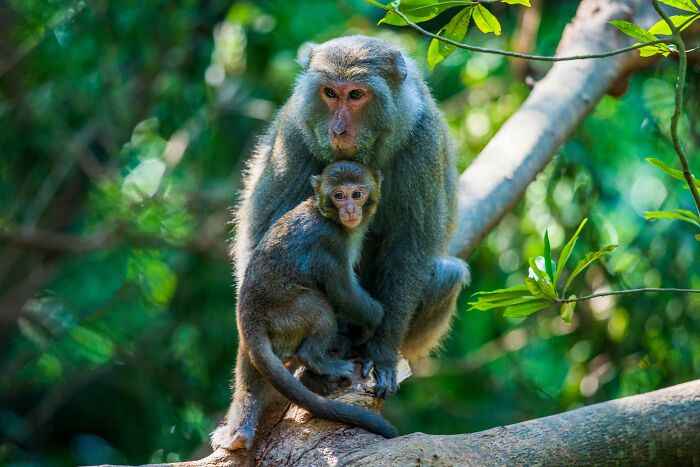 A mother’s love is simply a strategy developed by natural selection to improve the odds of the survival of offspring. That’s all YOUR mother’s love is. Mine too.
"All" is too strong a word here. As an adoptive mother, I have often sacrificed my own needs and well-being for children who do not carry any of my DNA. I routinely make carefully thought-out decisions to do so, whereas their biological parents repeatedly chose to neglect and abandon them. I'm not suggesting that biological instincts do not inform parental care, even where genetics have been removed from the equation. However, those instincts, that reproductive strategy, is far from universal among the current human population. And for those who do experience maternal (and paternal/parental) love, I firmly believe it has evolved far beyond a mere survival strategy.
Haven't seen this one yet so I'll chime in. For every beneficial mutation there are many more detrimental mutations. This isn't a problem evolutionarily, because those traits are selected out of the population. But someone has to live those lives. All of the genetic diseases and deleterious inheritable attributes are the price we pay as a species and people for all the things we love about ourselves. But the price isn't paid evenly by everyone; some suffer more. So even if you love your life and humanity for all of its creativity and passion and potential, those things rest on a foundation of mountains of individual suffering.
Yes, and even those with no painful genetic illnesses get infectious ones, get injuries, and in any case decay and d*e, and with grief watch others decay and d*e. There is suffering everywhere, constantly. There's also love, life, beauty, compassion , connection, wonder, awe.
Our brain size has been decreasing since the Paleolithic.
because neural networks reorganized to become more metabolically efficient rather than needing a larger raw size.
That we evolve at a ridiculously lower pace when compared to plants and fruit flies.
 Placentas evolved from a virus.
The people who survived the bubonic plague had more reactive immune systems, which we inherited, so humans are more likely to have autoimmune issues now than they were before the plague.
That it's most likely, that we would not have developed from apes if climate change (global warming end of ice age) would not have dried out the sahara. thx, climate change.
The sahara goes through periods of wet and dry roughly every 10000 years or so, it's not a one-off thing, nor inherently connected to an ice age. So although each time may trigger human populations to move, it's been a green and fertile region many times since early humans started to migrate out of Africa.
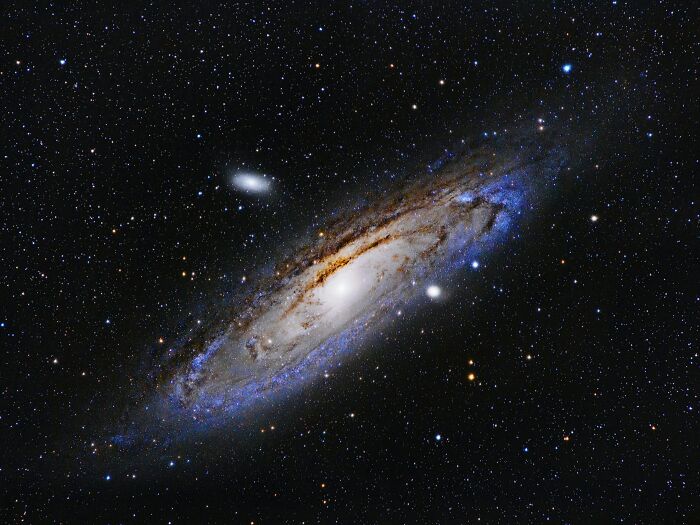 I saw somewhere yesterday that there’s a hypothesis that we are inside a black hole currently.
I always think about how you can be born with a maladaptive trait and, like, that's just your life. Like, you won't reproduce and it sort of just sucks to be you.
Nah! That's that oversimplistic genetics and neoDarwinism again. We DONT KNOW what is gonna be "useful." And what is gonna be "maladaptive" long term. And bodily reproduction is not some ultimate usefulness. Esp in a human culture - there's educating others, passing on ideas, inventing stuff, helping, loving, being present. We don't KNOW how to measure our value, but I wouldn't do it by using nineteenth century eugenics as a starter... Yes we can be born with illnesses and traits that make life hard, yes that s***s. But it says nothing about our value to others, or our societies. Or to our species.
H sapiens exchanged rationality for processing speed.
The vast majority of humans use cognitive shortcuts based on emotional response and social context to make decisions, this is far more energy efficient and much faster cause instead of analyzing each decision, we just do whatever everyone else is doing or use an arbitrary association with your personal likes and dislikes. Like choosing a product cause it has your favorite color even though you can get a cheaper one in other colors or something better with the same price.
There's a really long list of Cognitive biases in Wikipedia that covers Us vs Them mentality to Confirmation bias.
 Every bad thing we are capable of doing to each other is possible because it was advantageous at some point in time to do so.
BS, evolution doesn’t mean everything we can was advantageous, it just means it wasn’t disadvantageous enough to eradicate us.
 Jobs are just modern day survival of the fittest. I guess it beats smashing each other over the head with rocks caveman style. (My answer is probably more obvious and talked about, but if you really ponder it, we will always have hierarchies, the harsher ones are just more intricate and cleanly now.) It seems we will always be stuck in some sort of loop. The violence of humanity is pretty harsh compared to some species and even worse because we have that intelligence to commit true atrocities.
I dunno hey! I sometimes feel like smashing my various bosses over the head with a rock!
Interpersonal violence played a huge role daily and only recently decreased. I have no statistics. Only the horrifying thought that our social evolution put the brakes on violence relatively quickly. But for the previous nearly 200,000 years......yikes.
A side effect of an organised society, aka bureaucracy. We "outsourced" many responsibilities, like hunting/gathering for our next meals in favour of paid work with no immediate effect on our pantry, streamlining production processes and mbaximizing output (no farmer could live from his wheat alone, they have to buy meat and milk like everyone else - but their wheat feeds far more people than just their family). And we outsourced regulating factors in society away from strength ("I want that, I'll take it - fight me if you can") towards laws and a justice system that are also less biased. (The policeman arresting you for stealing your neighbour's treasured jewellery or the judge sentencing you don't have anything to do with the matter presonally - but without them the biased and enraged neighbour might have kiIIed you in retaliation, because they're more emotionally invested, i.e. píssed). One might say bureaucracy civilised us.
Homo sapiens interbred with other archaic human species. Makes you wonder what else early humans tried to mate with.
Judging from certain media content (including medieval court cases about "lonely" farmers or shepherds): just about anything they could. To be fair, though, there have been cases of animals "in love" outside of their own species, too. Grizzly bears and polar bears, for example, or wolves and coyotes. We're not that special after all, even in our vices.
Just how staggeringly empty most of it is, and the incomprehensible distances involved.
Life on Earth may have started twice
Which means the radical idea that something so rare as the formation of life from organic compounds is actually twice as likely.
... which means we should be finding life on other celestial objects twice as often...
... which means any of the theories of The Great Filter is twice as scary. .
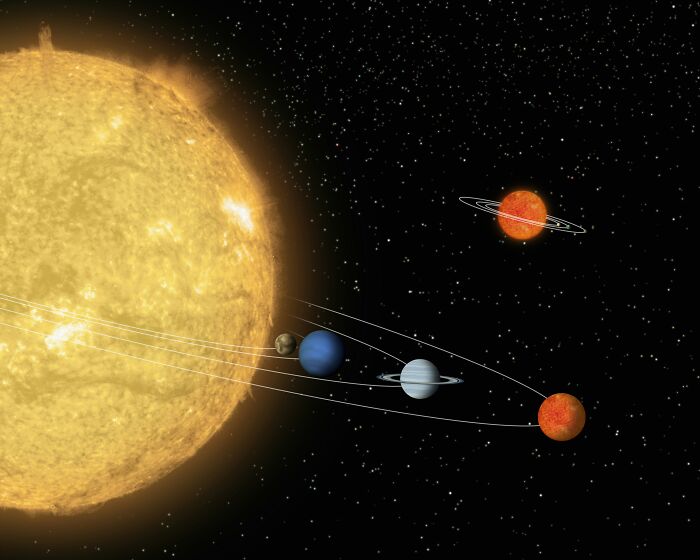 We only know less than 1% of what’s actually happening in the solar system.
Your grandparents were (still are) fish?

You can't evolve out of your clade. We're all fish that really suck at surviving underwater.
 Racism is likely to be an evolved trait in humans to fear and to avoid other groups of slightly different looking humans from ancient times when every stranger is an automatic enemy.
If true, this means that every new generation will need to learn to look beyond just race when interacting with other people.
There isn’t much racism in children so racism is learned. And we don’t fear groups of different looking people, we fear groups of other people no matter the looks. If we all look the same we still make up groups to separate us. Black vs White, Christians vs Jews, Catholics vs Protestants, Fans of different football clubs. Has nothing to do with racism, we just love to separate and fight
Given the title "disturbing... facts", well I can see why some of them are disturbing to te people who posted them, mostly because they have completely failed to understand the difference between fact and speculation, yet have chosen to believe the latter. So mostly these are either disturbing or fact, but not both.
There were quite a number of interesting ones here. Thanks for digging them up, Ridhima!
Given the title "disturbing... facts", well I can see why some of them are disturbing to te people who posted them, mostly because they have completely failed to understand the difference between fact and speculation, yet have chosen to believe the latter. So mostly these are either disturbing or fact, but not both.
There were quite a number of interesting ones here. Thanks for digging them up, Ridhima!





















 No fees, cancel anytime