Get Premium
Dark mode theme is available exclusively for premium users. Learn more about the benefits of subscribing.
No fees, cancel anytime.

 Dark Mode Ad-Free Browsing Unlimited Content
 Ad-Free Browsing Unlimited Content Dark Mode
Join 1.2 million Panda readers who get the best art, memes, and fun stories every week!
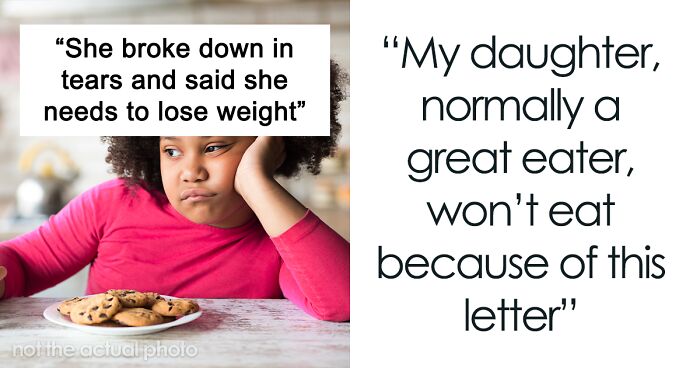
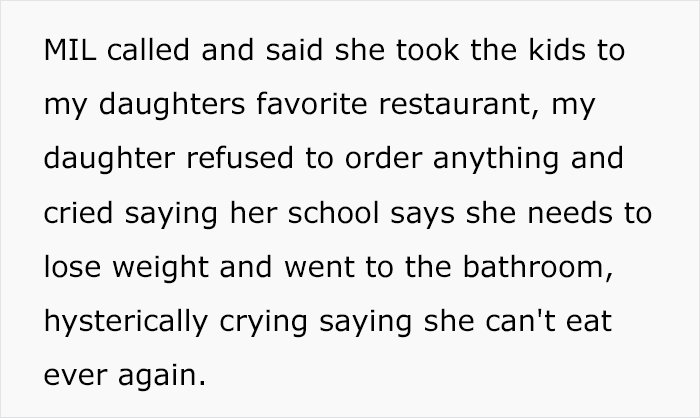
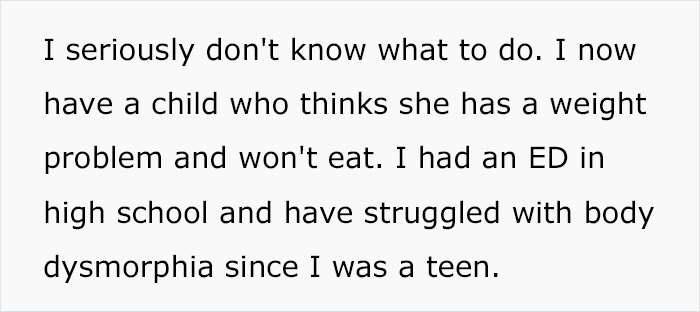
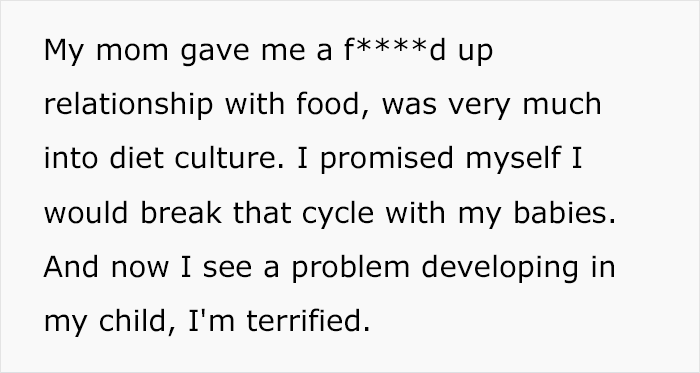
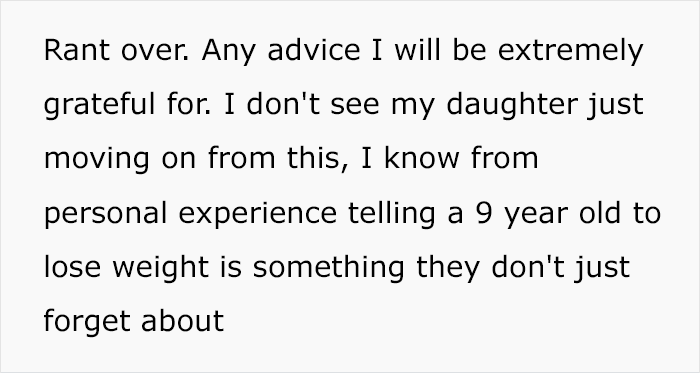
This woman swore to herself that she would do everything in her power to allow her kids to enjoy their life free of eating disorders. She knows how much of a toll they can take; she had one.
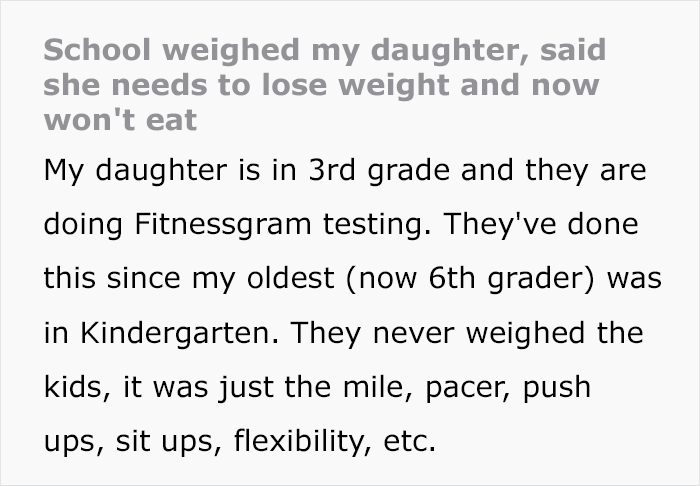
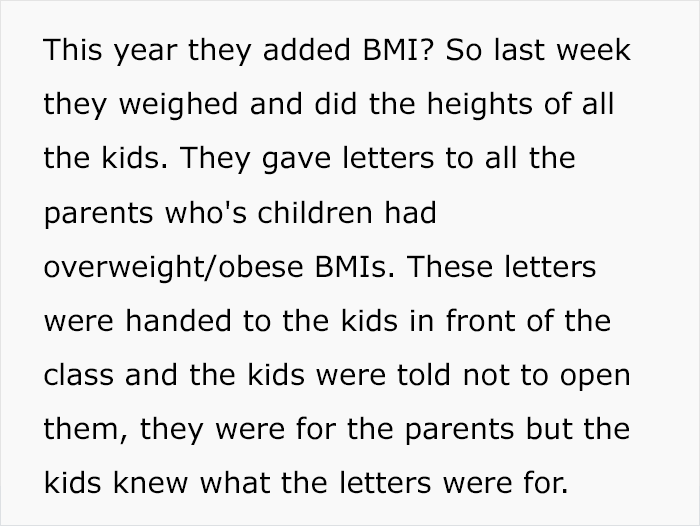
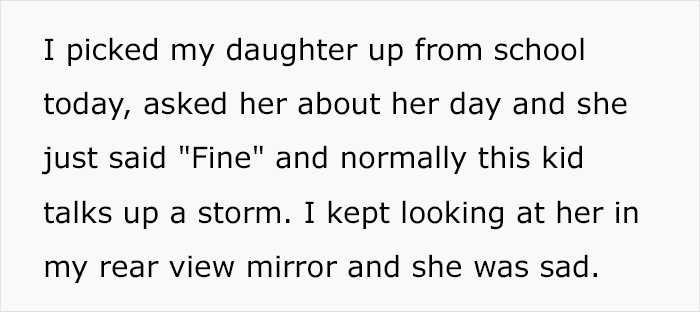
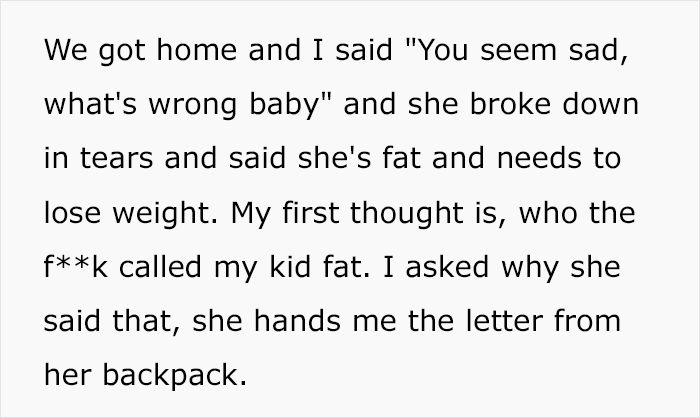
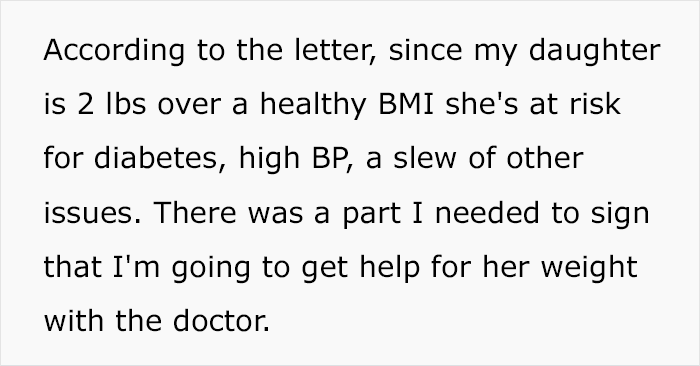
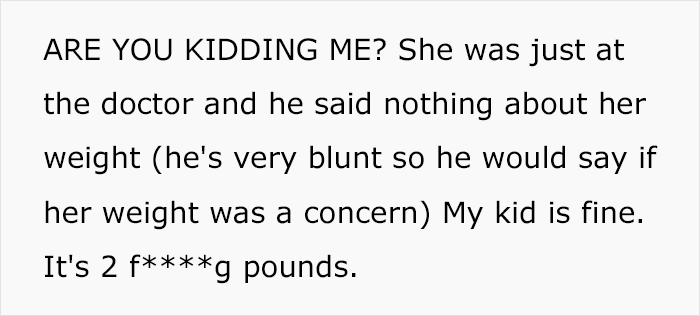
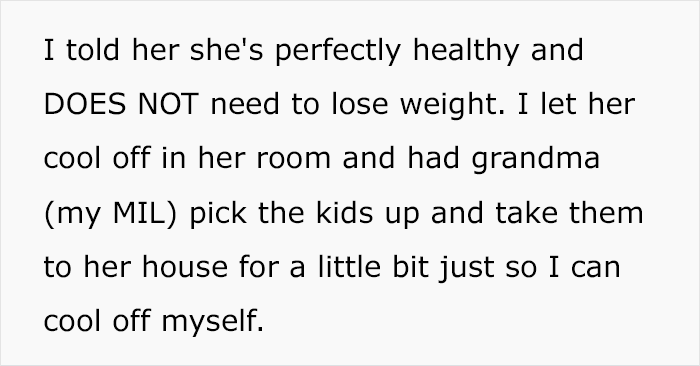
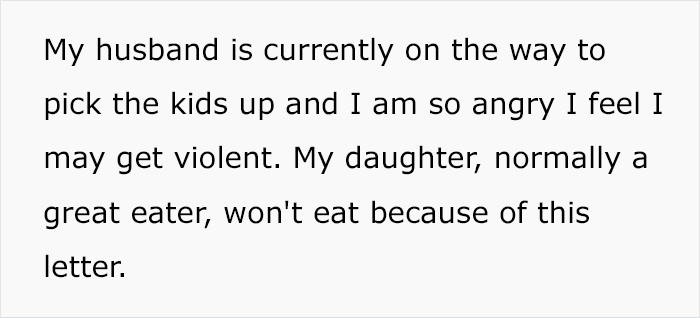
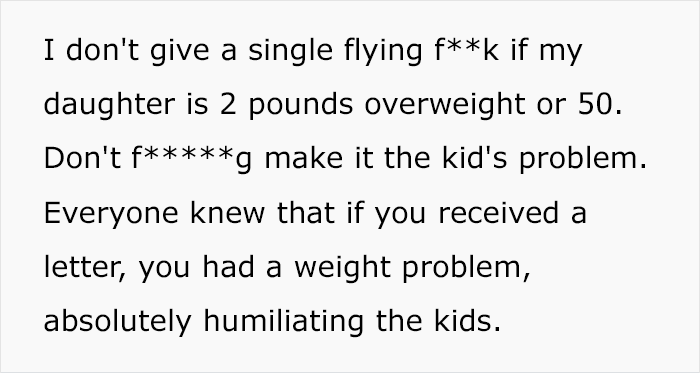
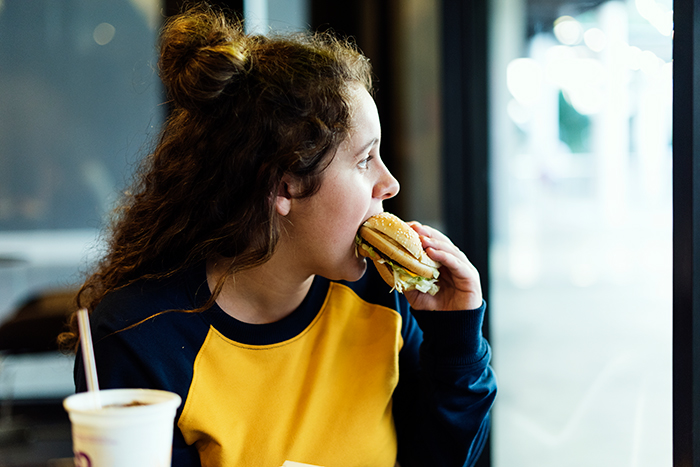
So you can imagine how devastated the woman was when her 3rd grader stopped eating because the girl started thinking she was “too fat”. However, the mom’s emotions turned even rowdier when she learned that the little one got this ‘lesson’ at school.
Image credits: Rawpixel (not the actual photo)
Image credits: valeriygoncharukphoto (not the actual photo)
Image credits: Prostock-studio (not the actual photo)
Image credits: defleppardfan94
You can understand where the school is coming from. Childhood obesity has been called one of the most serious public health challenges of the 21st century.
Obesity can harm nearly every system in a kid’s body—heart and lungs, muscles and bones, kidneys and digestive tract, as well as the hormones that control blood sugar and puberty—and can also take a heavy social and emotional toll.
What’s even worse, youth who are overweight or obese have substantially higher odds of remaining overweight or obese into adulthood, increasing their risk of disease and disability later in life.
Image credits: Rawpixel (not the actual photo)
This issue is especially bad in the United States. In the 1970s, 5 percent of U.S. children ages 2 to 19 were obese.
According to the CDC, for the same age group in 2017-2020:
(The organization defines obesity as a body mass index (BMI) at or above the 95th percentile of its sex-specific BMI-for-age growth charts.)
Image credits: Yan Krukau (not the actual photo)
However, good intentions aren’t enough to find a solution. The way this school attacked the problem among its students may have only made it worse.
Many people assume that you should approach eating disorders just like you would any other topic that could impact kids or teens—by talking about it. After all, you’re encouraged to talk about everything from dating and sex to vaping and drinking.
But when it comes to general education about eating disorders, that may not be the best strategy.
Image credits: gpointstudio (not the actual photo)
“Eating disorder education is tricky,” said Lauren Muhlheim, Psy.D., who is a psychologist and certified disordered eating specialist with Eating Disorder Therapy LA. “There is no research to support the idea that teaching children general information about eating disorders is helpful, and there is evidence to suggest it may be harmful.”
She explained that teaching a child or teen about eating disorders can lead to the adoption of these behaviors.
Instead, Dr. Muhlheim suggests that people instead teach kids about the dangers of dieting, a behavior that is the most common gateway into an eating disorder. She also thinks you also should not talk about healthy eating but try to express and model flexible eating with an “all foods fit” philosophy.
“Unlike most other mental disorders, eating disorders tend to be glorified in our culture,” Dr. Muhlheim added. “Thus, [talking about eating disorders] must be done with care not to describe eating disorder behaviors.”
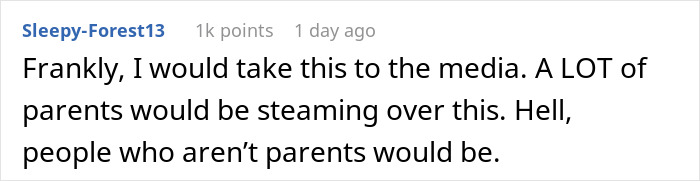
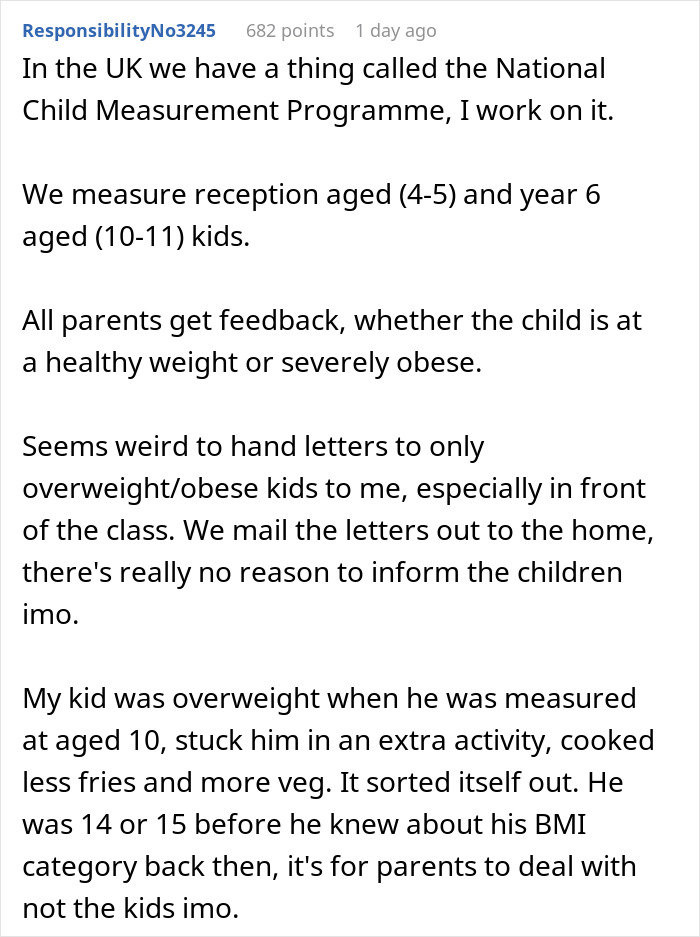
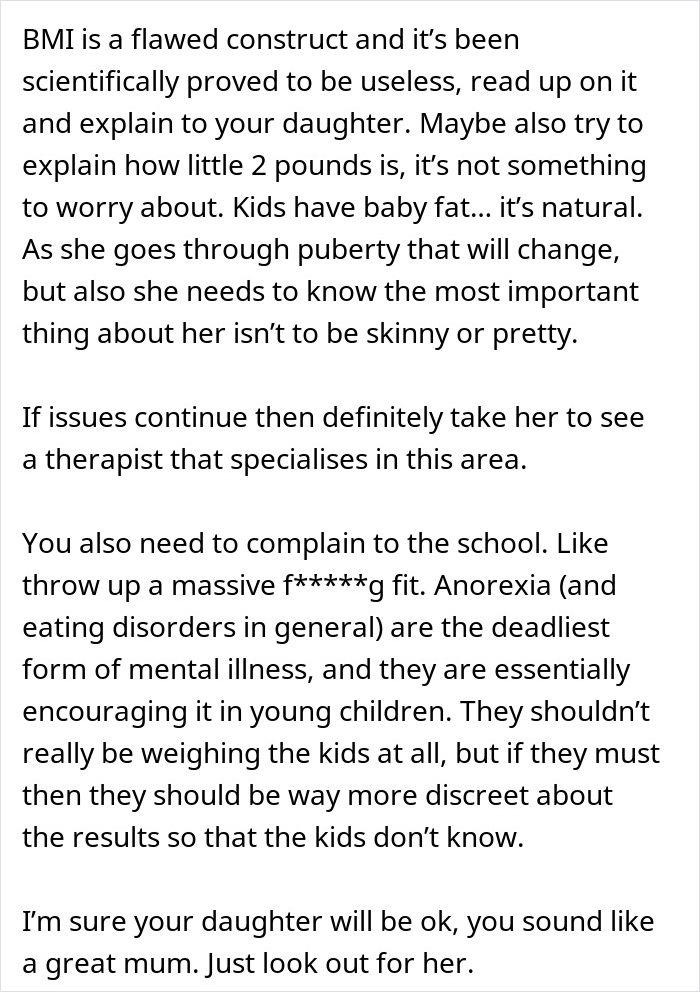
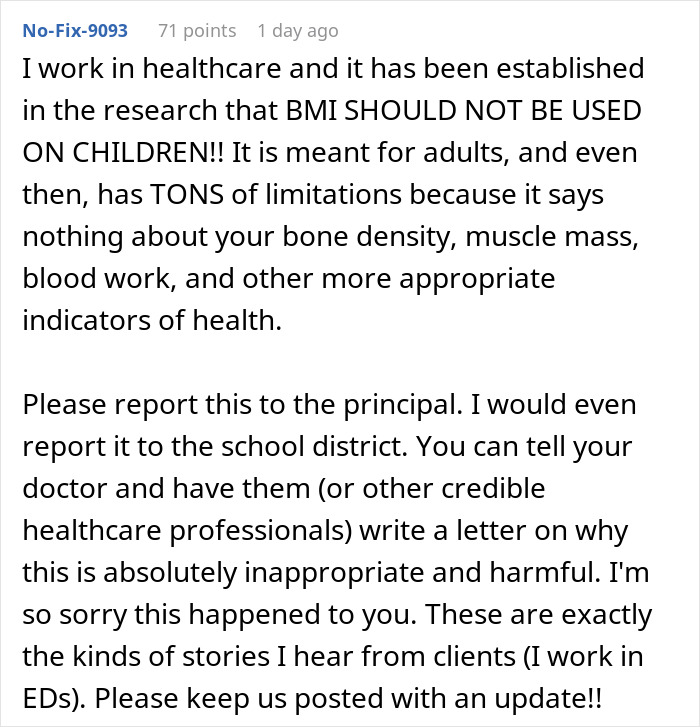
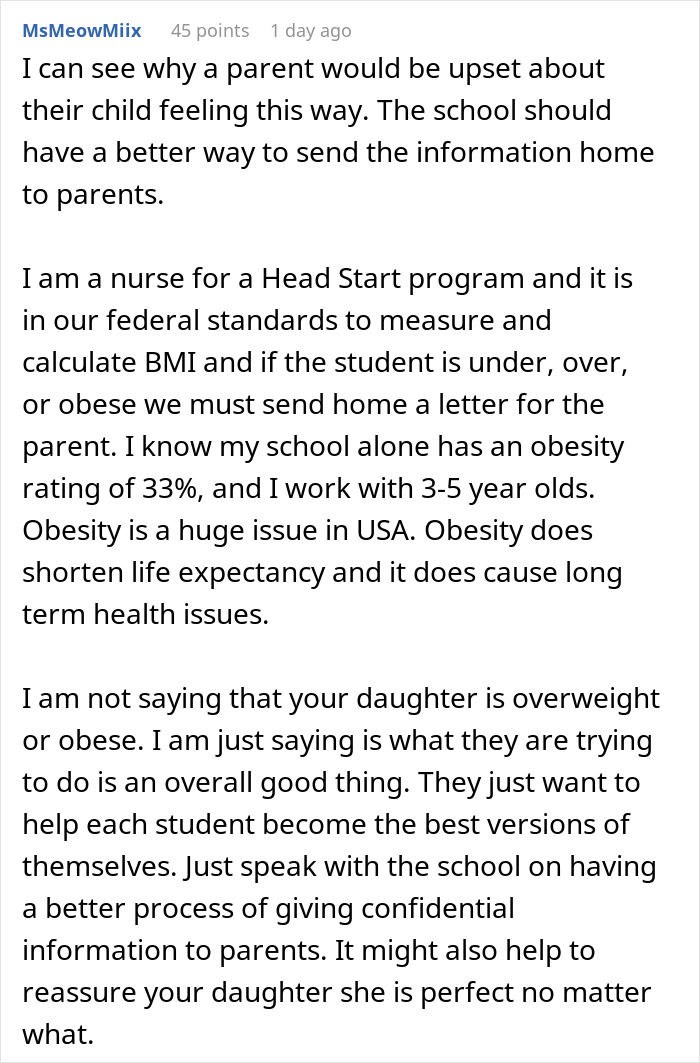
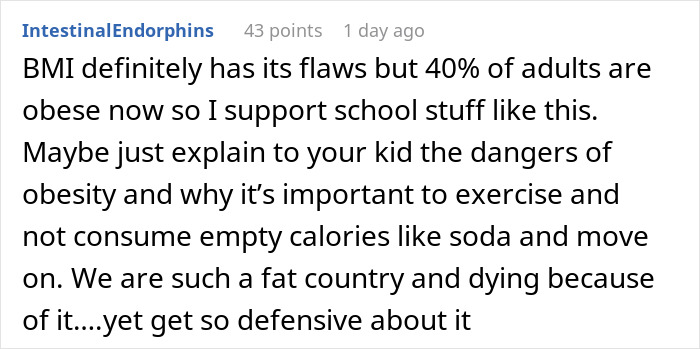
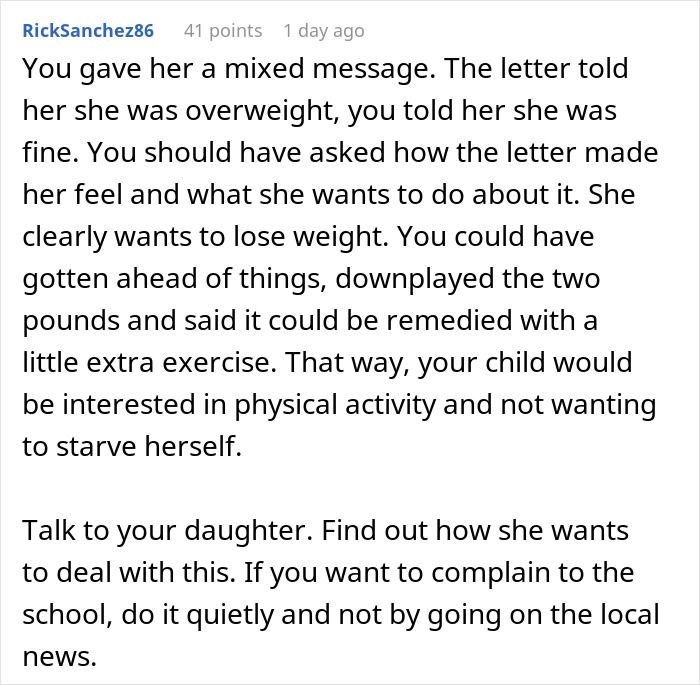
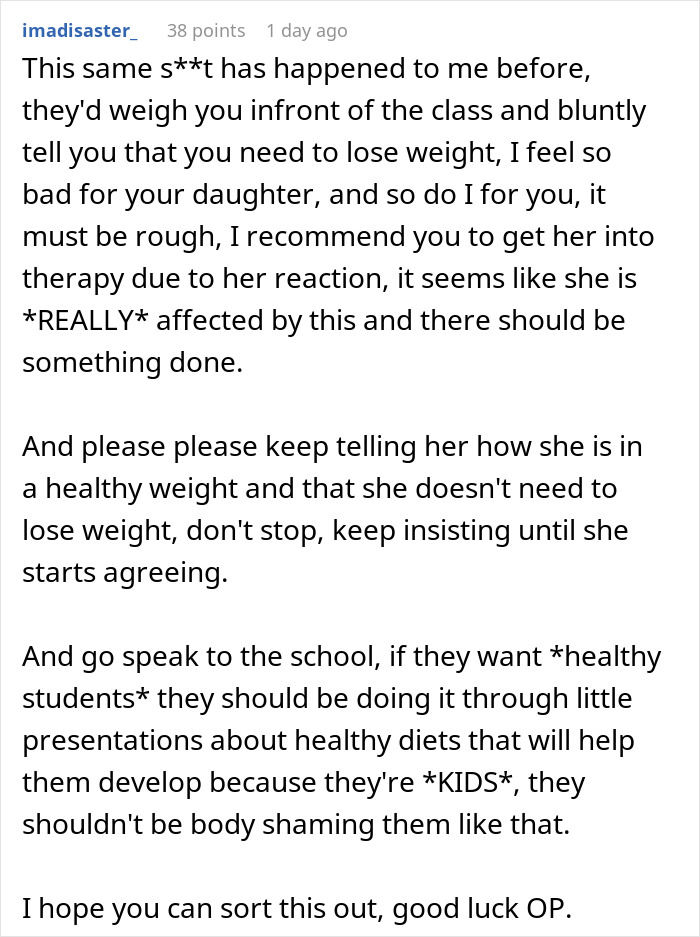
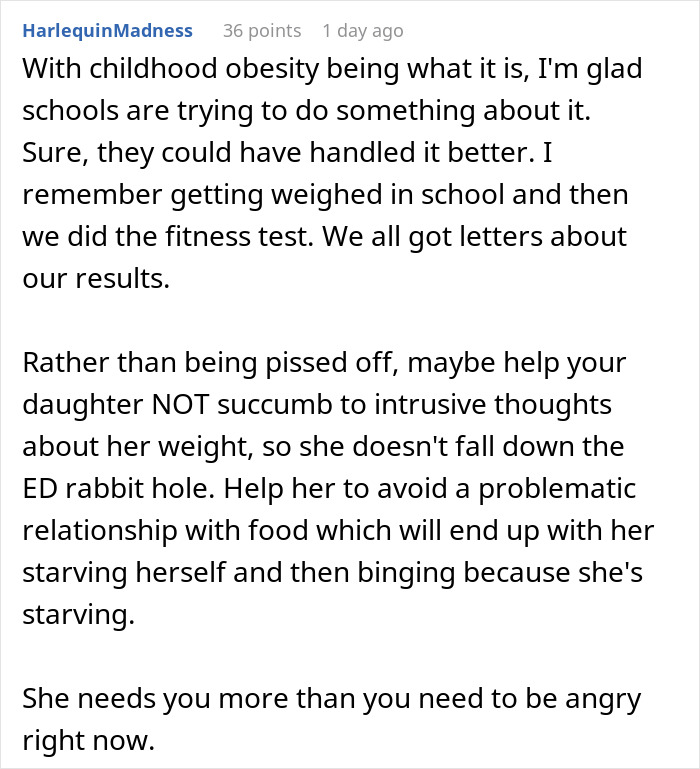
I understand childhood obesity is a problem, but this isn’t the way to handle it. This is only setting OP’s daughter for being bullied and/or developing an eating disorder.

Never in my kid's 11 years of schooling (so far) has her school weighed her. That's not their job. However, if it's some kind of government initiative they have to do in some countries, send a letter to every parent (don't give it to the kids) along with how to address any possible issues WITHOUT kicking off an eating disorder. Kid in the story was only upset the same day as the post was made, so hopefully hunger and good parenting will see her right within 24 hours. The school however, needs dealing to.
Load More Replies...
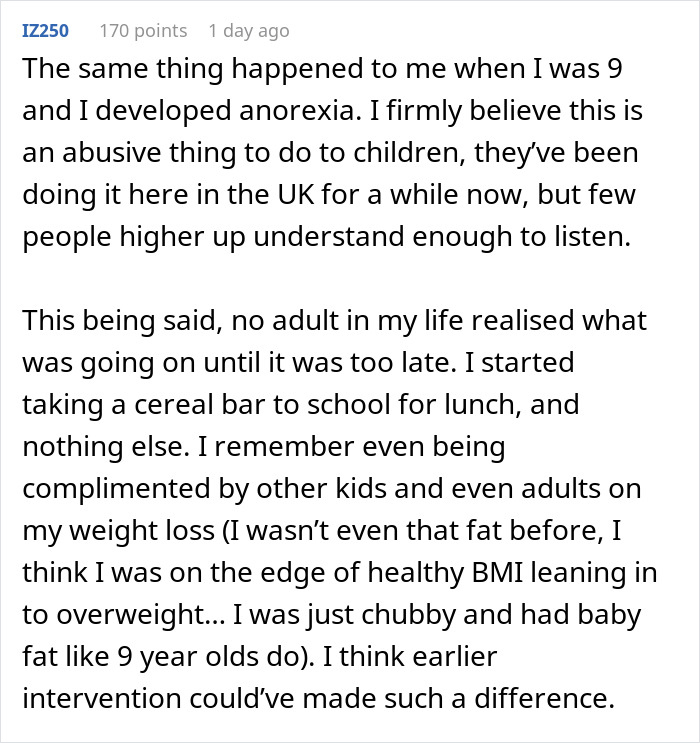
This made me cry. I got diagnosed with Rheumatoid Arthritis when I was 7 and the medication made me gain so much weight that I started my ED when I was 9 years old and it was because of the fitness program and getting a letter. I was severely bullied until I went to a private school for high school. The mom is 100% doing the right thing and not sweeping this under the rug. I wish there was something I could do to help her and her child

Same, I have JIA, was it prednisone? That stuff is the woooorst. Crazy bloating, crazy munchies, crazy mood swings.
Load More Replies...
Wow. School administrators here need a giant wake up call. Shaming people publicly about weight is never the way. I remember the funeral I attended in high school for a fellow student who died of her ED. It’s only more heartbreaking the more I think about it
I understand childhood obesity is a problem, but this isn’t the way to handle it. This is only setting OP’s daughter for being bullied and/or developing an eating disorder.
Never in my kid's 11 years of schooling (so far) has her school weighed her. That's not their job. However, if it's some kind of government initiative they have to do in some countries, send a letter to every parent (don't give it to the kids) along with how to address any possible issues WITHOUT kicking off an eating disorder. Kid in the story was only upset the same day as the post was made, so hopefully hunger and good parenting will see her right within 24 hours. The school however, needs dealing to.
Load More Replies... This made me cry. I got diagnosed with Rheumatoid Arthritis when I was 7 and the medication made me gain so much weight that I started my ED when I was 9 years old and it was because of the fitness program and getting a letter. I was severely bullied until I went to a private school for high school. The mom is 100% doing the right thing and not sweeping this under the rug. I wish there was something I could do to help her and her child
Same, I have JIA, was it prednisone? That stuff is the woooorst. Crazy bloating, crazy munchies, crazy mood swings.
Load More Replies... Wow. School administrators here need a giant wake up call. Shaming people publicly about weight is never the way. I remember the funeral I attended in high school for a fellow student who died of her ED. It’s only more heartbreaking the more I think about it


























 No fees, cancel anytime














76
70