Get Premium
Dark mode theme is available exclusively for premium users. Learn more about the benefits of subscribing.
No fees, cancel anytime.

 Dark Mode Ad-Free Browsing Unlimited Content
 Ad-Free Browsing Unlimited Content Dark Mode
Join 1.2 million Panda readers who get the best art, memes, and fun stories every week!

Sure, raising a child takes a village. But the village has its own life too—and having people around doesn’t mean you can dump your responsibilities on others whenever it’s convenient for you.
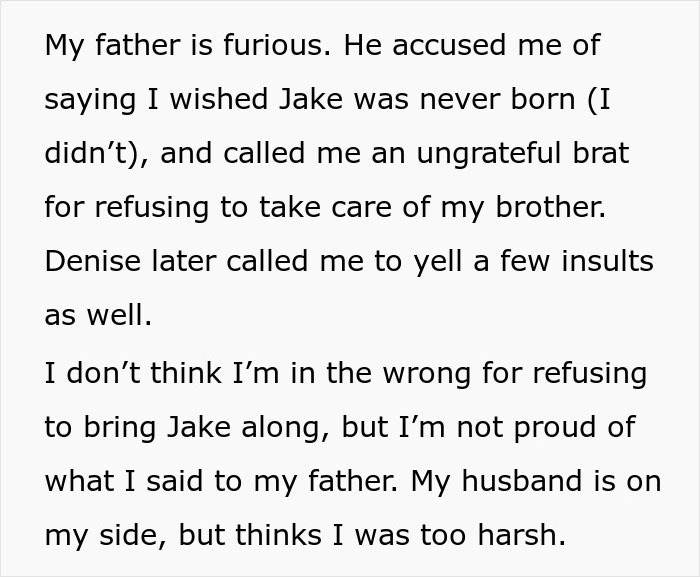
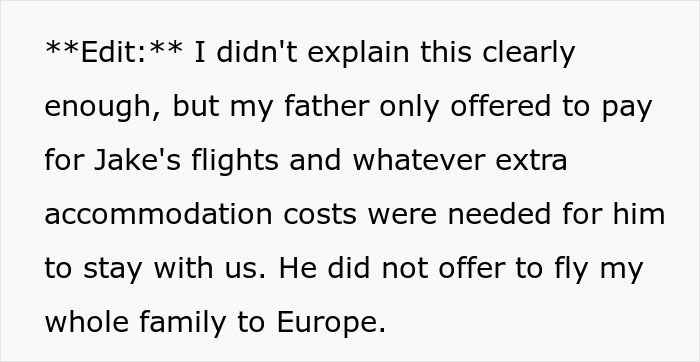
One woman in her 30s had been dealing with exactly that. For years, her father and stepmother expected her to help raise her 9-year-old half-brother, despite her having her own children to look after. She had said no countless times, but when they asked her to bring him along on her family’s dream trip to Paris, she finally lost her patience.
They didn’t take it well. Read the full story below.
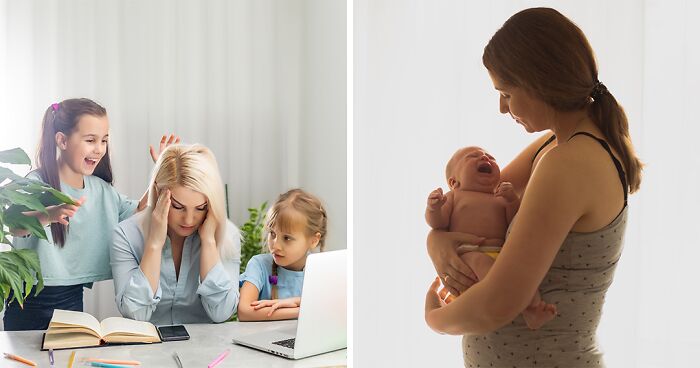
Image credits: vh-studio / freepik (not the actual photo)
Image credits: prostock-studio / freepik (not the actual photo)
Image credits: rina.chu / freepik (not the actual photo)

Image credits: miksturaproduction / freepik (not the actual photo)
Image credits: PianistHoliday3484
“It takes a village to raise a child” is a proverb most of us have heard at some point. The idea is simple: children thrive when an entire community is involved in their upbringing, providing care and a safe environment to grow up in.
Nobody really knows where the saying originally came from, but the sentiment behind it is widely shared. Raising a kid is genuinely hard work. The sleep deprivation alone in those early months is enough to bring even the most prepared parents to their knees.
Add in the feeding, the school runs, the tantrums, and the never-ending laundry, and it’s easy to see why so many parents feel stretched thin, especially those juggling a career on top of everything else.
What’s interesting is that the nuclear family model so many of us grew up with is actually a relatively recent invention. For most of human history, parenting looked very different. Evolutionary anthropologist Dr. Nikhil Chaudhary of Cambridge University points out that for the vast majority of our species’ evolutionary history, mothers had far more support than they do today in Western societies.
His research with colleagues Dr. Salali and Dr. Annie Swanepoel found that hunter-gatherer infants received attentive care and physical contact for around nine hours a day from up to 15 different caregivers.
“For more than 95% of our evolutionary history we lived as hunter-gatherers. Therefore, contemporary hunter-gatherer societies can offer clues as to whether there are certain childrearing systems to which infants, and their mothers, may be psychologically adapted,” said Chaudhary.
Fifteen caregivers is obviously unrealistic today, but even a handful of trusted people can make a real difference. A survey of 1,000 parents of children aged 10 and under, commissioned by Vitabiotics Pregnacare, found that 71% admitted they would have been lost without the support of others, with the average parent relying on around five people to help make life easier.
Image credits: Drazen Zigic / freepik (not the actual photo)
For a village to work, it needs to be a two-way street. People show up for each other because they want to, because there’s mutual care and respect involved. The moment it becomes one-sided, it stops being a village.
Which is exactly the problem in this story. The woman’s father and stepmother had been leaning on her for years, with little indication that the support ever flowed back in the other direction. Constantly asking someone to step in for you isn’t building a community around your child.
So it’s not surprising that after one too many demands, they finally got a very firm no. That said, standing your ground in family situations is rarely easy, especially for women. Anne Tumlinson, founder of Daughterhood, argues that daughters in particular often find it hard to push back because of the roles society expects them to play.
But she believes that saying no is sometimes the most necessary thing a person can do to protect their own wellbeing. After all, just because someone asks you to do something doesn’t mean you have to do it. Instead of focusing on the refusal, think about what you genuinely can or want to offer, and lead with that.
It’s also worth remembering that when someone reacts badly to a boundary being set, that reaction belongs to them. Someone’s frustration at hearing no is a sign of their own discomfort, and that discomfort is theirs to manage.
At the end of the day, the woman’s half-brother is not her child. She can choose to be present in his life on her own terms, and perhaps in different circumstances she might have wanted to be. But with years of pressure and guilt trips, it’s hard to blame her for drawing the line where she did.
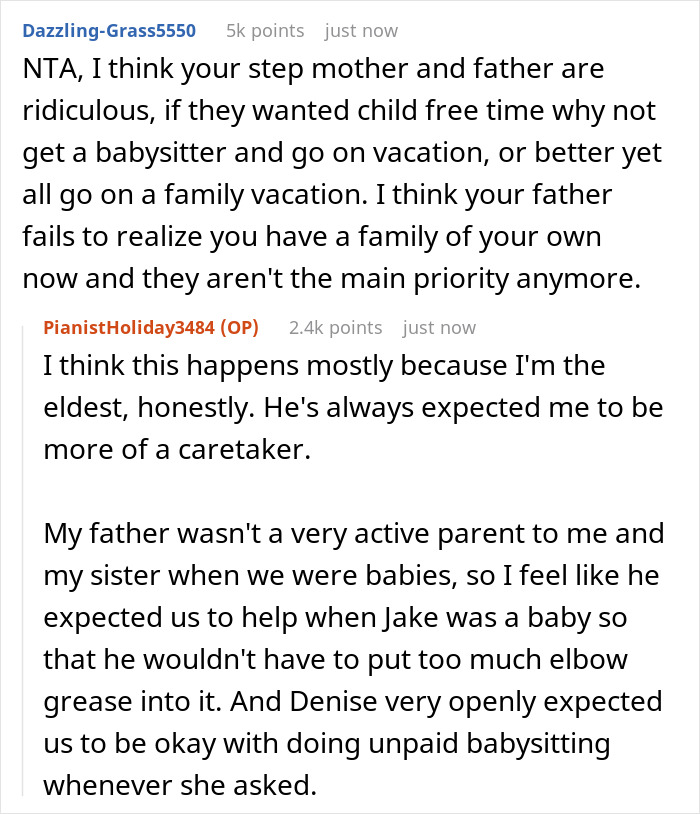
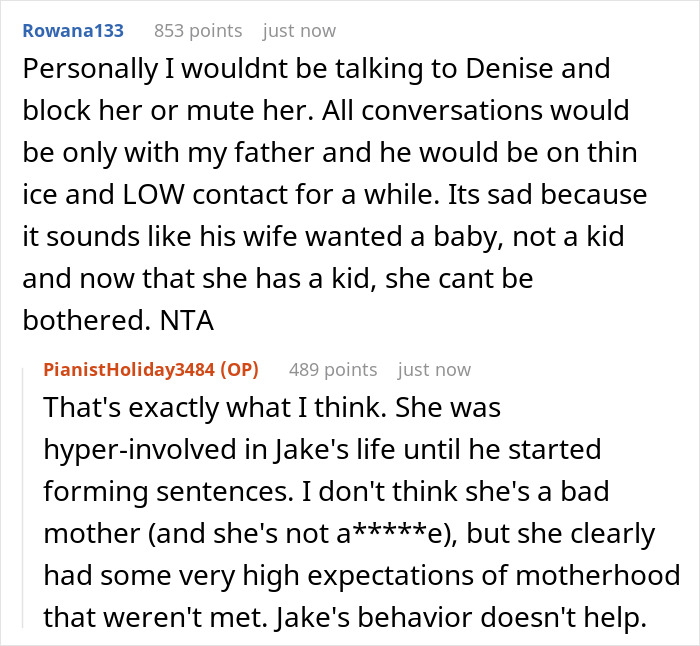
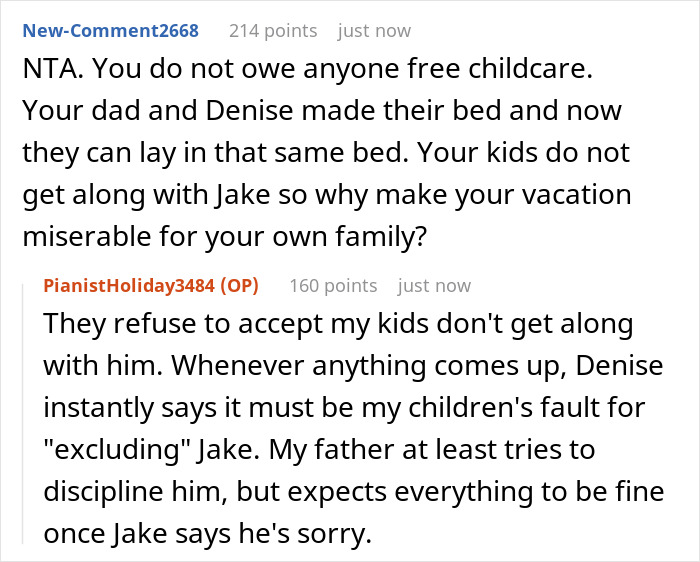
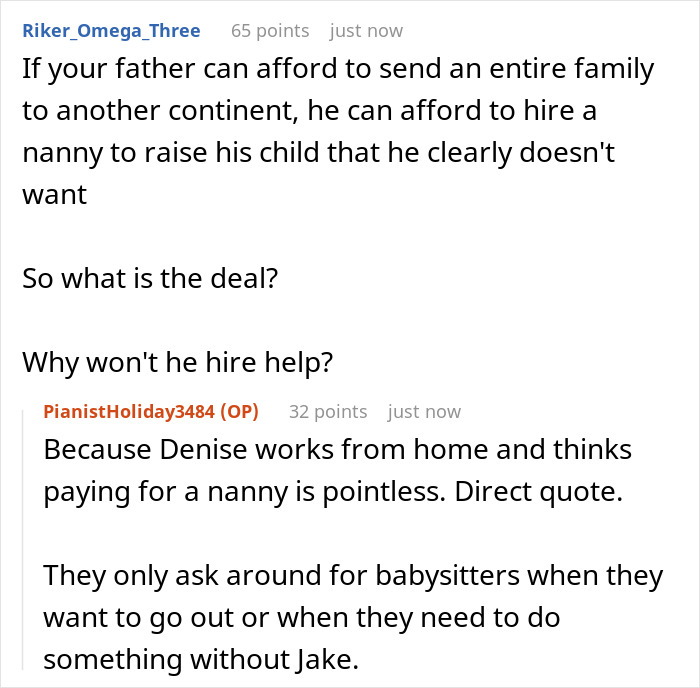

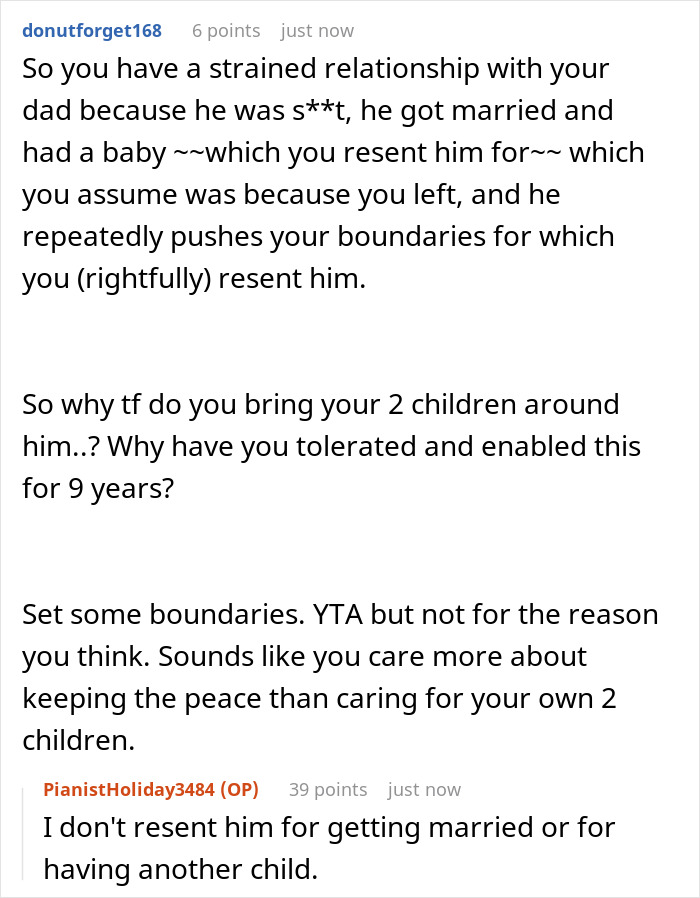

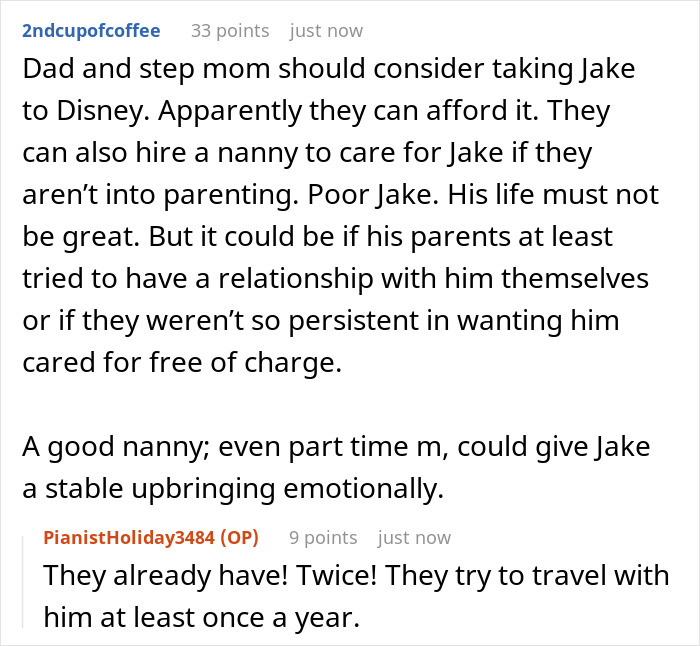
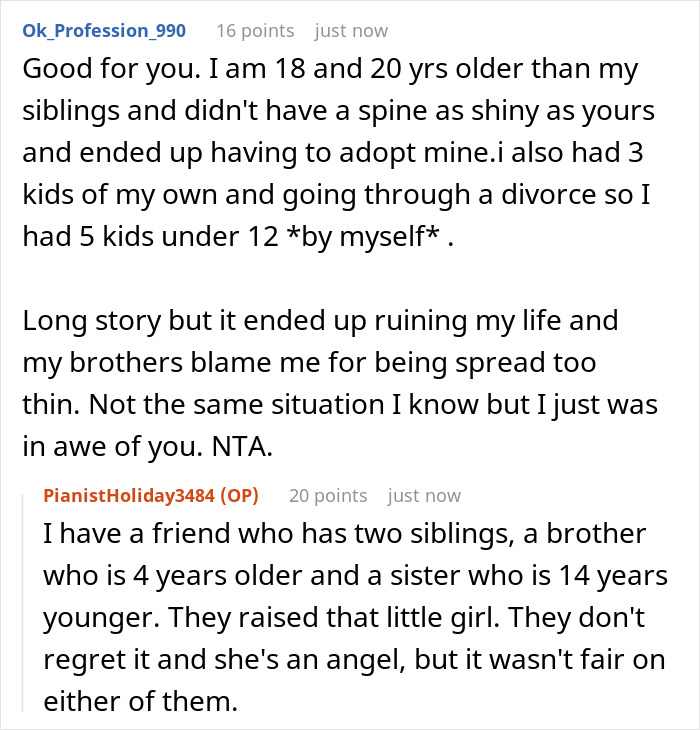
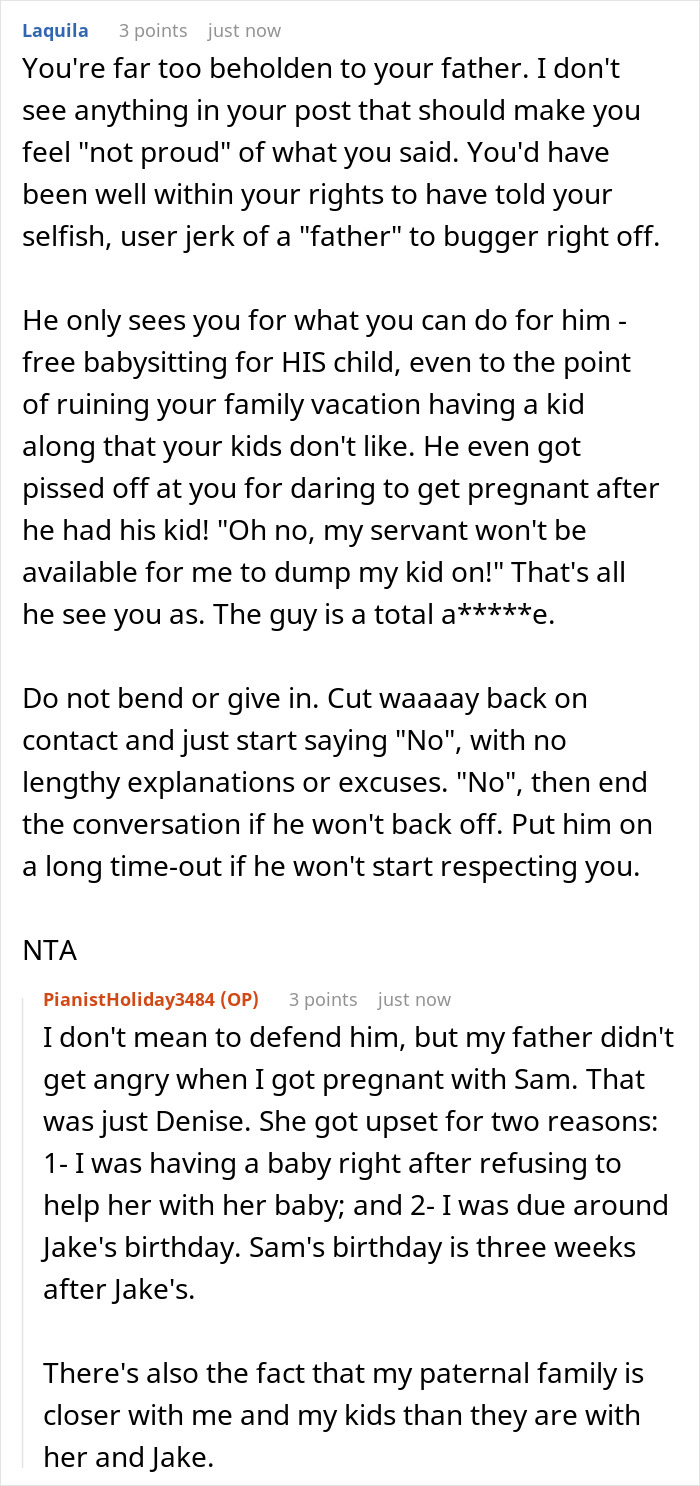

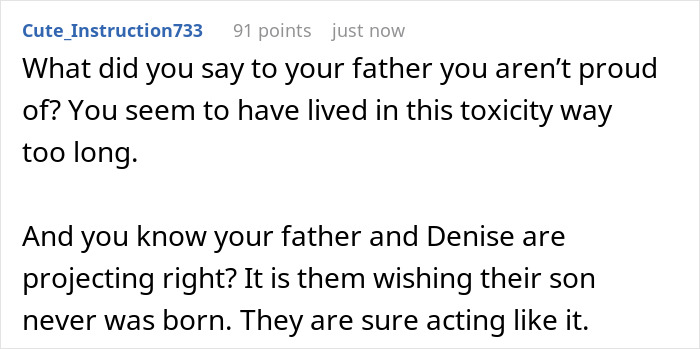


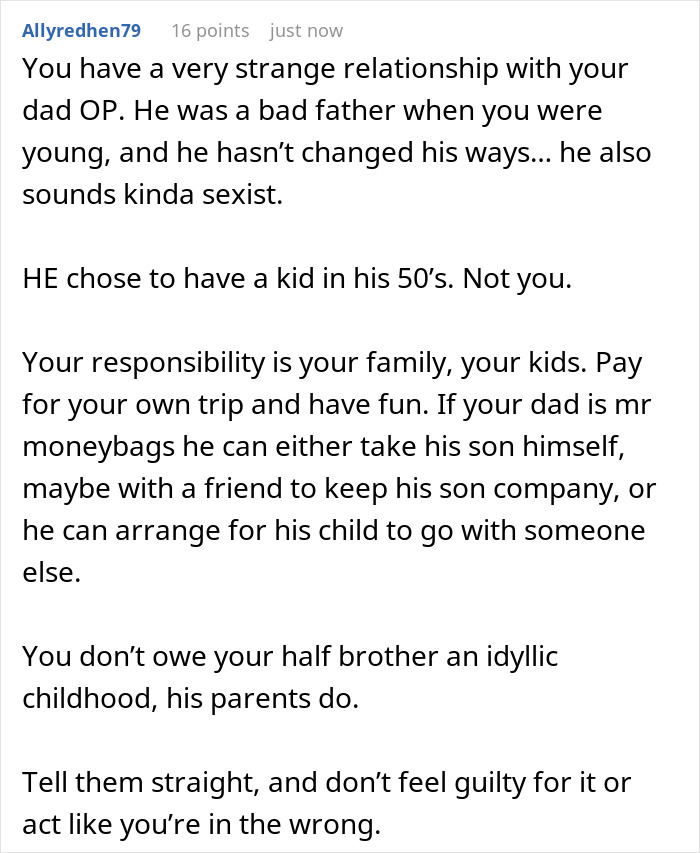
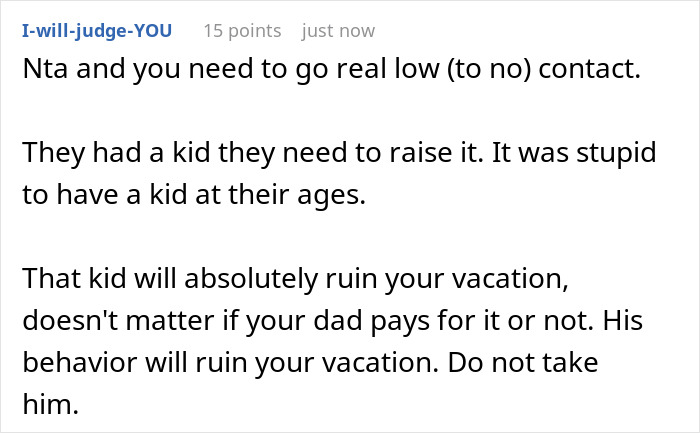
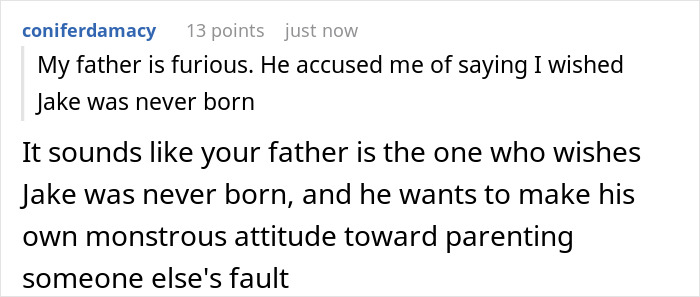




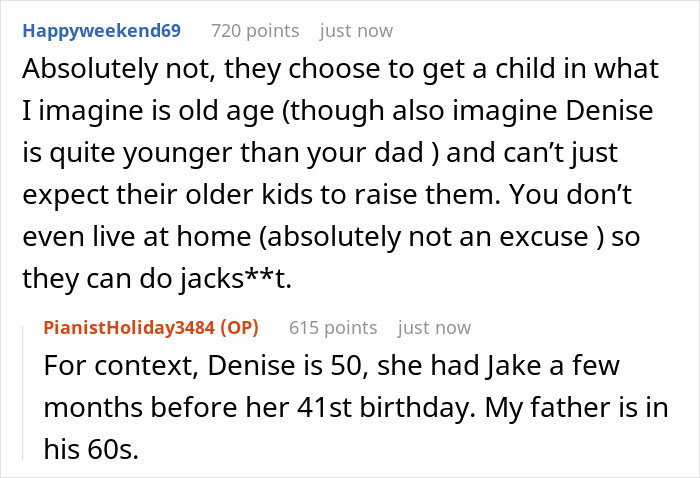
Very true. Jake is 4 and only knows what he has been taught. He deserves much more in life than parents who try to push him off on others. I wanted both my kids and love spending time with them even though they are fully grown adults. They mean the world to me.
Load More Replies...
"Dear Dad, parenting is 24/7 - just because you didn't do that first time doesn't mean you shouldn't do it now. Also, since your wife decided I am a b***h, I guess I will behave like one and send you lots of photos of MY family holiday at Disney"
Very true. Jake is 4 and only knows what he has been taught. He deserves much more in life than parents who try to push him off on others. I wanted both my kids and love spending time with them even though they are fully grown adults. They mean the world to me.
Load More Replies... "Dear Dad, parenting is 24/7 - just because you didn't do that first time doesn't mean you shouldn't do it now. Also, since your wife decided I am a b***h, I guess I will behave like one and send you lots of photos of MY family holiday at Disney"

























 No fees, cancel anytime










45
13