Get Premium
Dark mode theme is available exclusively for premium users. Learn more about the benefits of subscribing.
No fees, cancel anytime.

 Dark Mode Ad-Free Browsing Unlimited Content
 Ad-Free Browsing Unlimited Content Dark Mode
Join 1.2 million Panda readers who get the best art, memes, and fun stories every week!

Some siblings can’t help being competitive, but I have found that it’s far more common if their ages are similar. My sister and I have a large age gap, so competitiveness or even jealousy never really came into play.
But at times, the people who cause a rift between brothers and sisters are actually the ones who brought them into this world: the parents. More often than not, it’s because they end up playing favorites, but when that extends into adulthood, it becomes a real problem, just like in today’s story. A woman felt as though the parents were still playing favorites, even though she was now a full-blown adult, and here’s what happened.
Read more: Reddit
Image credits: muqddas65 / Magnific (not the actual photo)
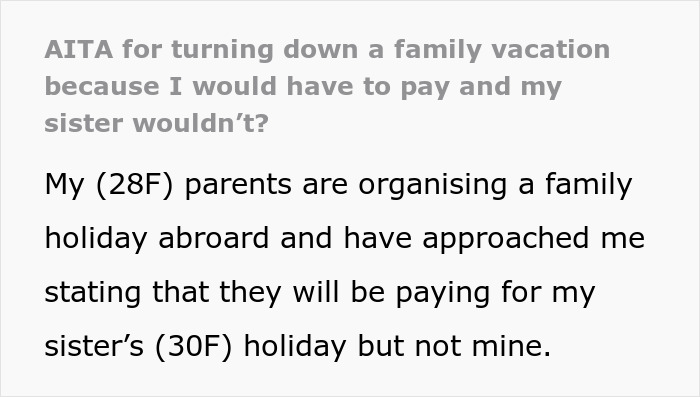
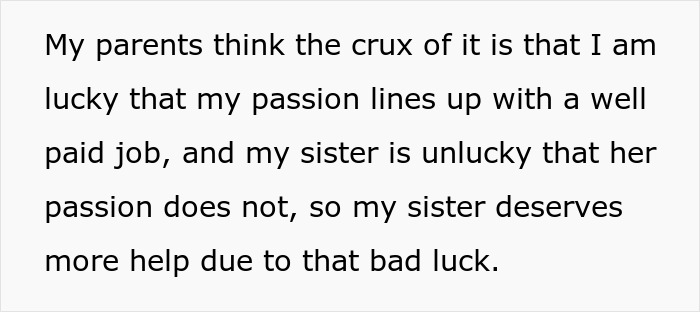
Image credits: Freepik / Magnific (not the actual photo)
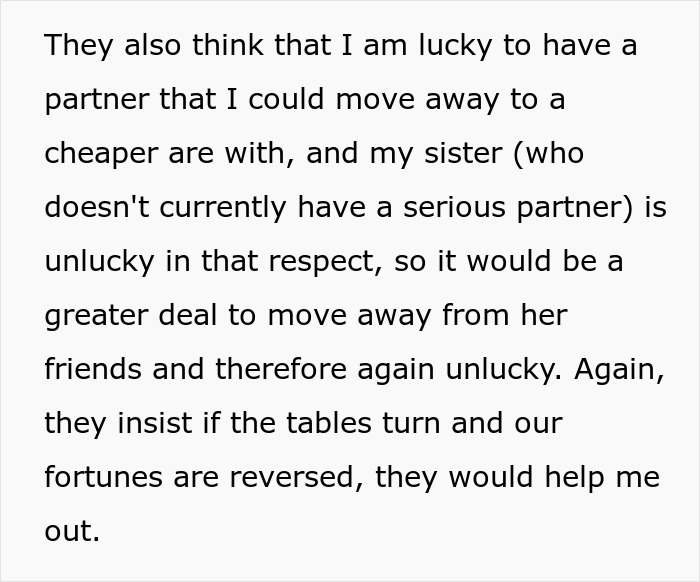
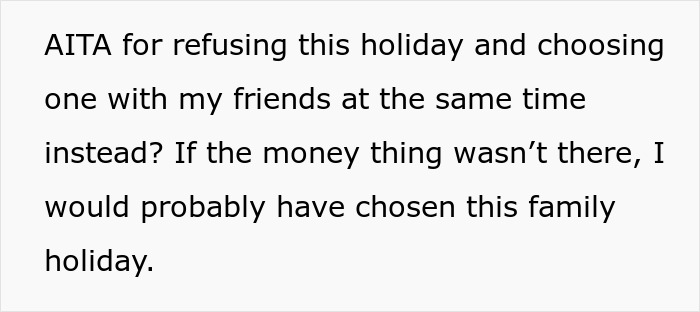
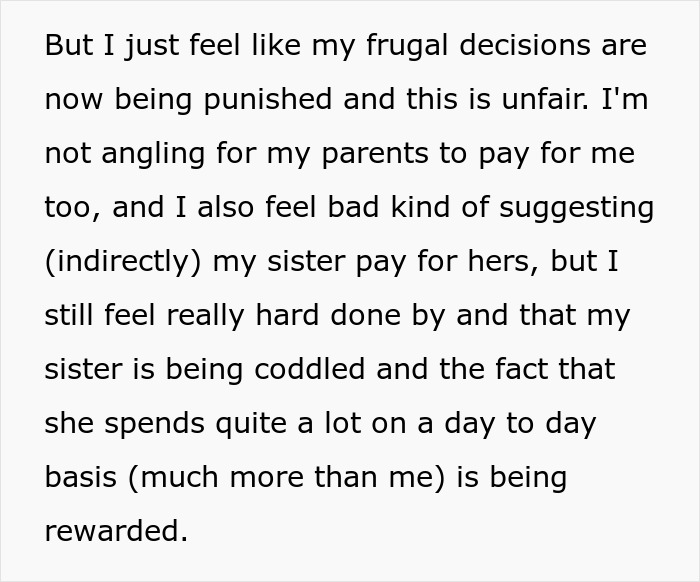
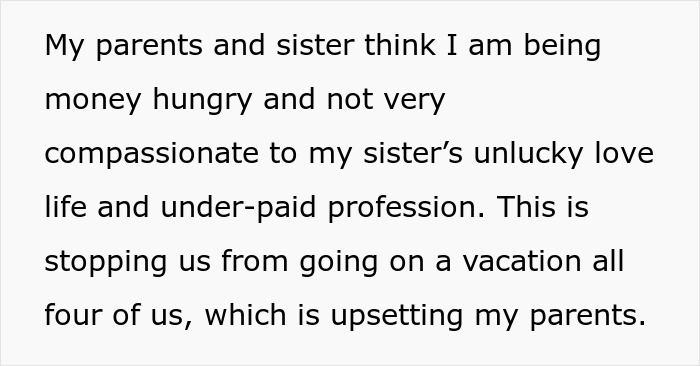
Image credits: simonapilolla / Magnific (not the actual photo)
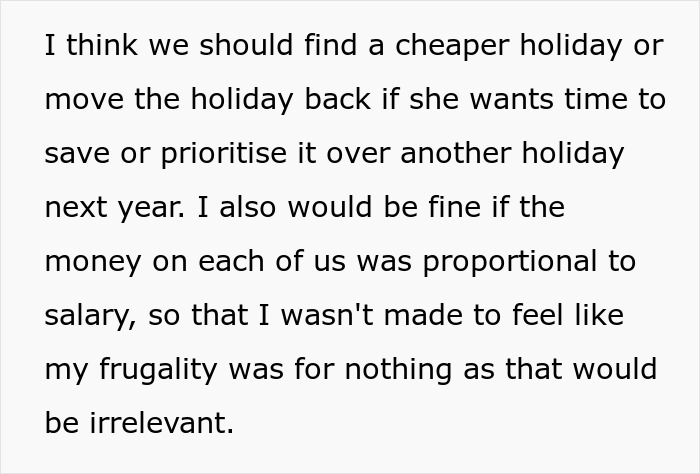
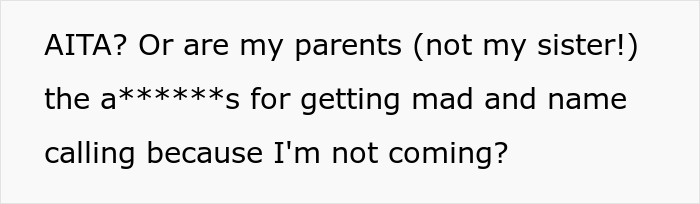
Image credits: Extension-Fly-241
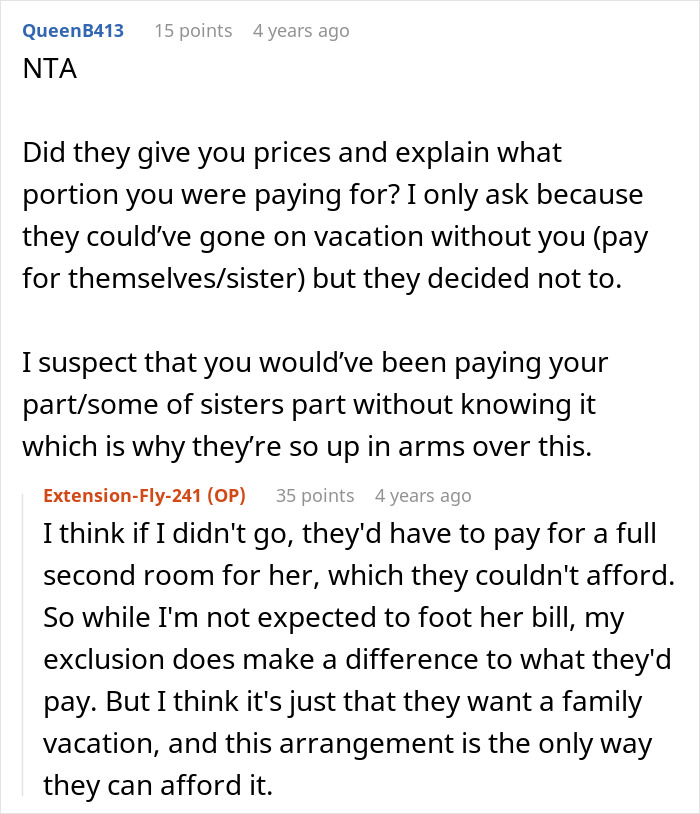
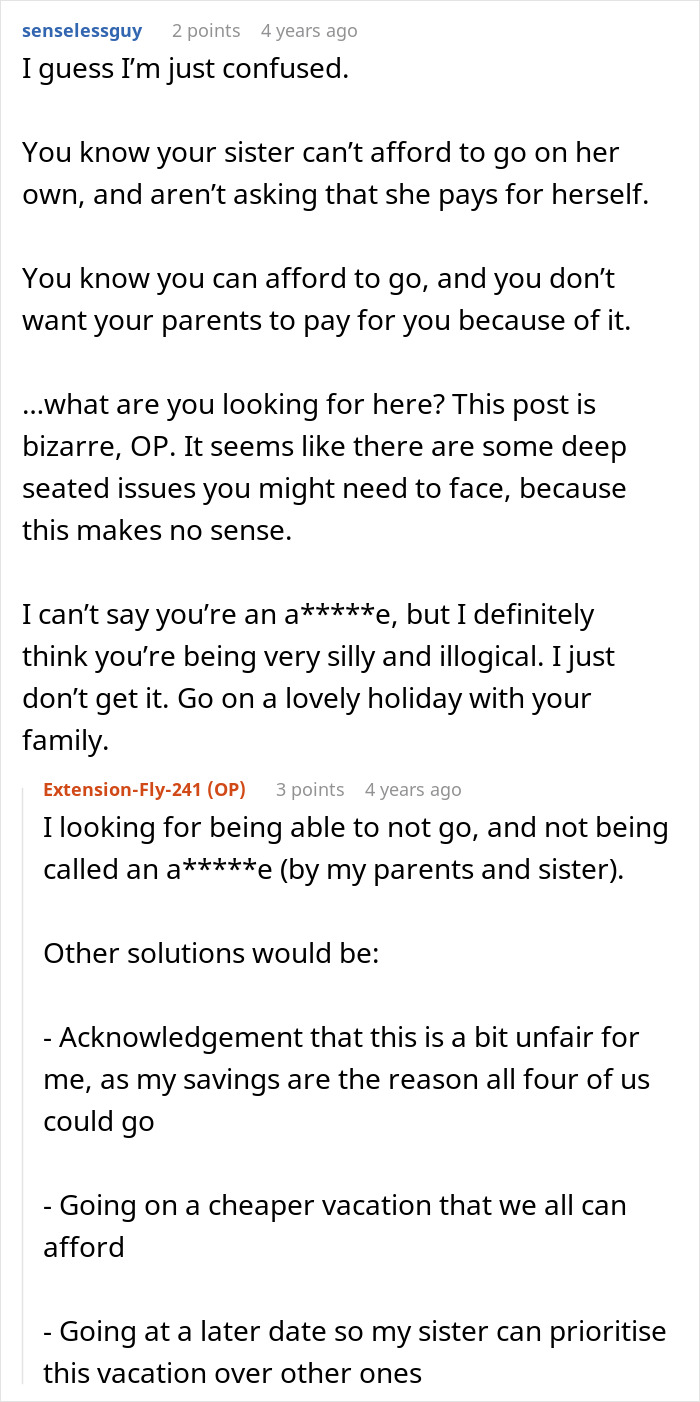
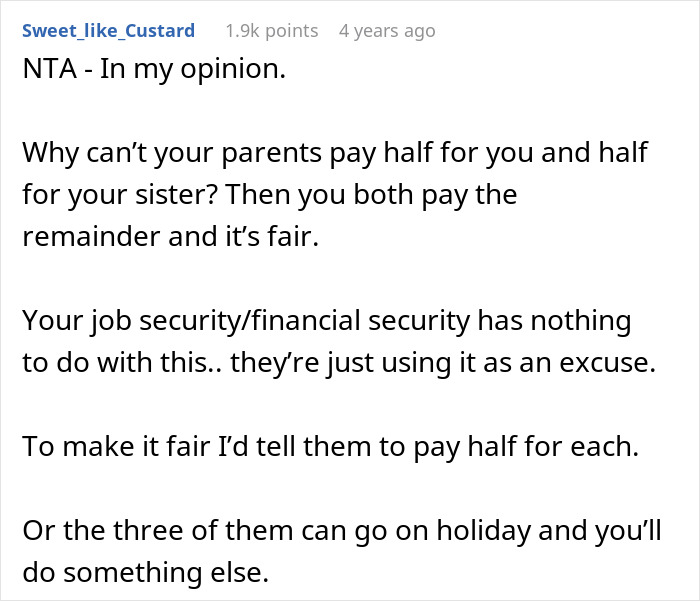
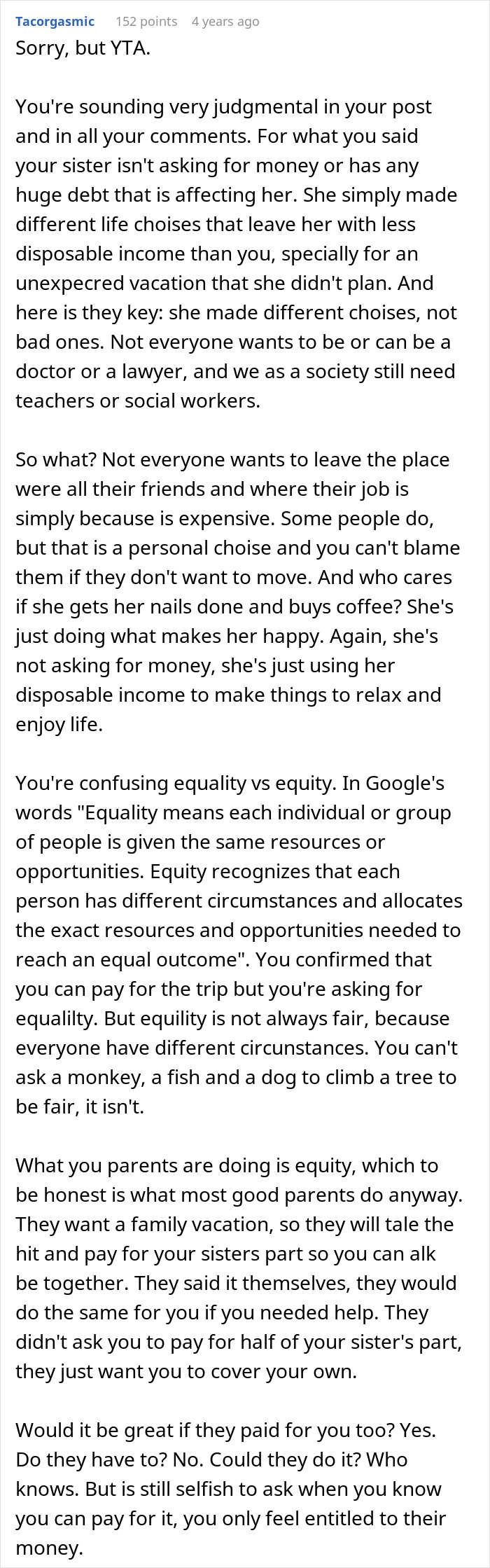
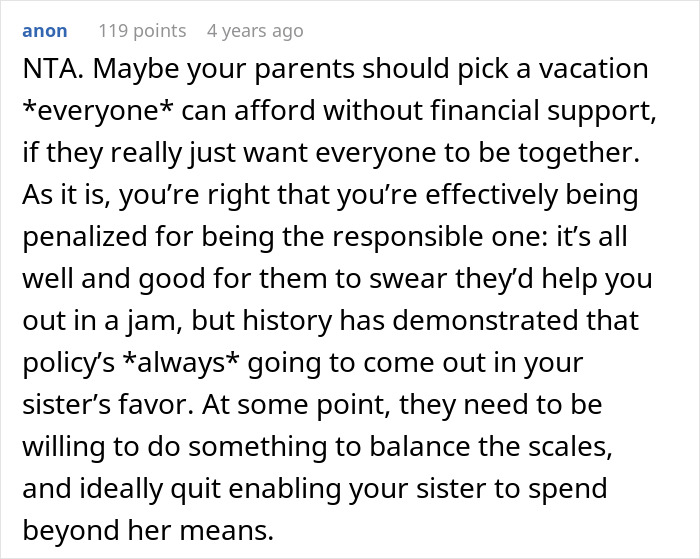
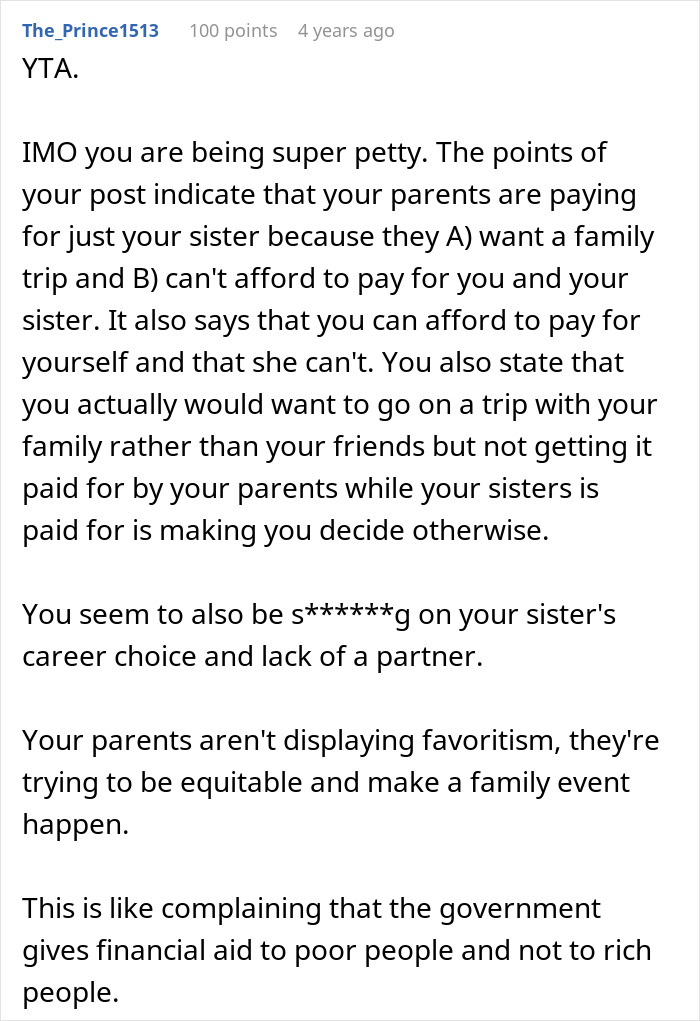
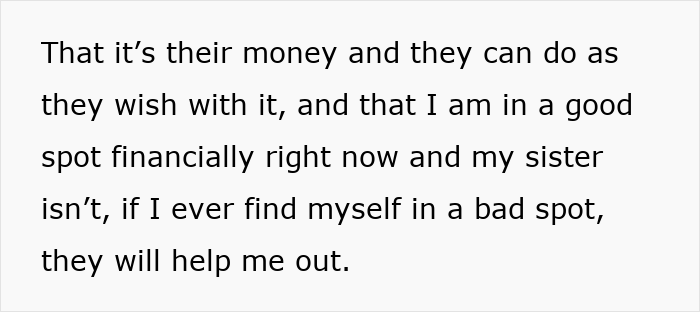
The Original Poster (OP) of today’s story is a 28-year-old woman who finds herself in a bit of a pickle. She starts by explaining that her parents began planning a family vacation, but immediately told her they were considering paying for her 30-year-old sister’s trip in full. At the same time, they warned their younger daughter that they didn’t plan to do the same for her for several reasons.
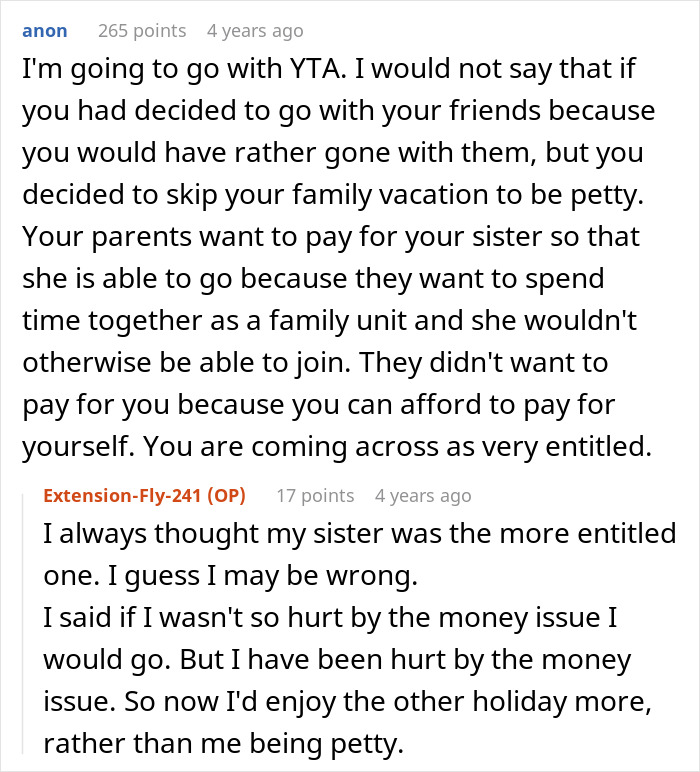
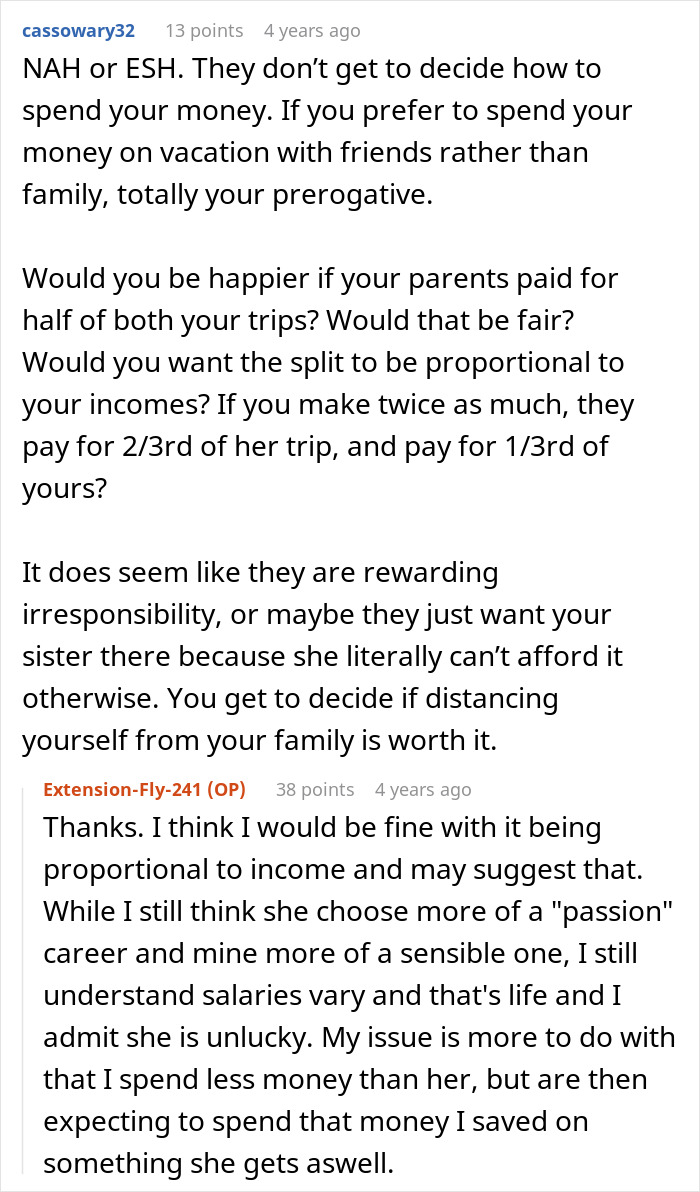
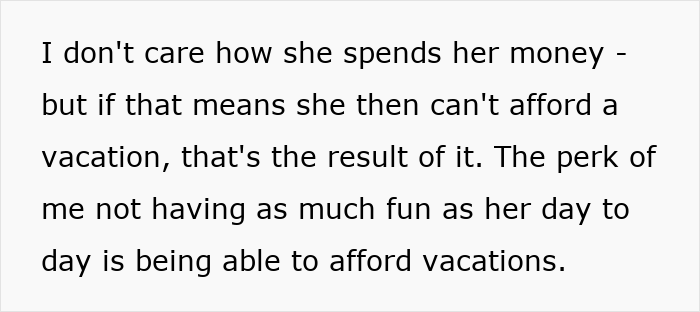
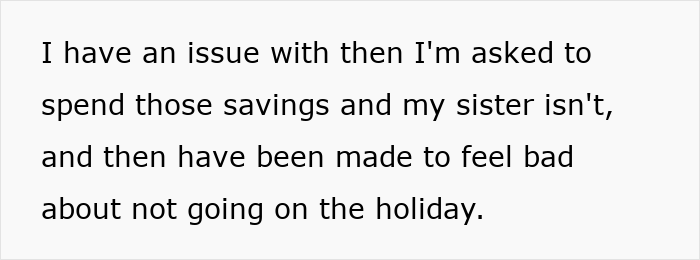
The parents explained that because the 28-year-old has fewer financial pressures, they were funding her sister’s vacation so the whole family could go together — otherwise, her sister wouldn’t have been able to join them. However, the OP says it felt like her sister was essentially being rewarded for making less sound financial decisions, while she was being punished for being more responsible.
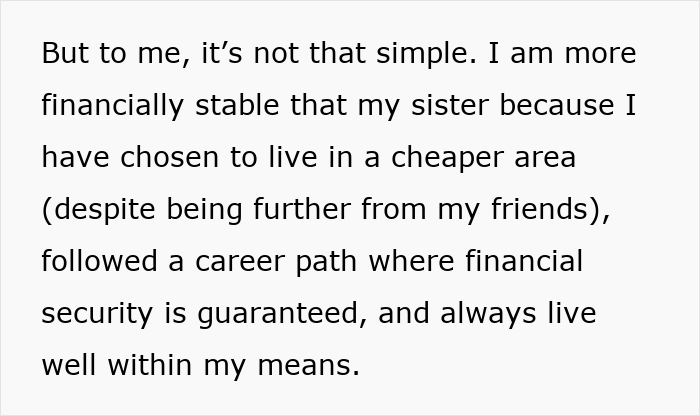
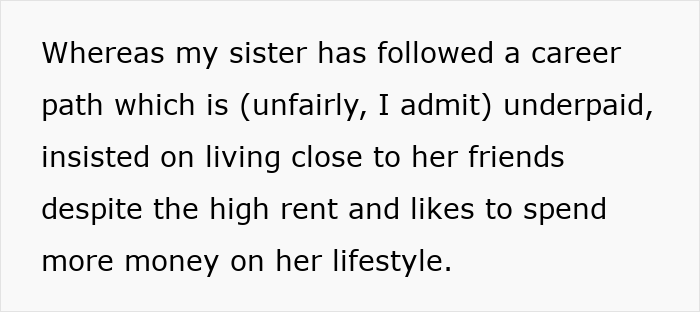
She explains that she leads a much more frugal lifestyle, choosing to live outside the city to pay lower rent and enjoy a calmer way of life, which helps her spend less money. According to her parents, the situation isn’t necessarily about her choices, but rather that her career passion pays more, while her sister’s passion is not as well paid. Plus, the OP also has a partner, whereas her sister is single.
Nonetheless, the 28-year-old still feels as though her sister is getting a fully paid vacation because of her choices, while she receives nowhere near the same level of special treatment. Because of this, she’s considering skipping the family vacation altogether and using the money for a trip with friends instead. However, her parents did not take that decision, or her criticism of the situation, very well.
Image credits: pressfoto / Magnific (not the actual photo)
So, this situation is tricky because it ultimately comes down to how the daughter and her parents define “fairness.” Research shows that parents often operate on an altruistic or needs-based model of support. They may choose to provide more financial assistance to an adult child who is single or has a lower earning potential, simply to ensure family cohesion, and may see that as a fair way to distribute support.
On the other hand, the OP is a clear example of what some experts call equity theory, which suggests that people may feel distressed or resentful if they believe their efforts and contributions (like responsible choices, hard work, and frugality) lead to fewer rewards than someone else’s. Basically, she views fairness through equity, where rewards should match effort and responsibility.
So, what could the OP do? Psychologists suggest that one of the most powerful things she can do is shift her perspective by embracing a core psychological principle: accepting what is outside of her control. Psychologists frequently remind us that we cannot control how others choose to spend their money, nor can we control how parents choose to support another adult child.
Once she accepts that, she can free herself from the emotional trap, allowing her to make a logical decision based on her own financial goals. Netizens’ responses, on the other hand, were a bit mixed. Some believed the OP was within her rights to be upset, while others couldn’t really understand why she cared about her parents’ finances in the first place. So, what would you have done?









By entering your email and clicking Subscribe, you're agreeing to let us send you customized marketing messages about us and our advertising partners. You are also agreeing to our Privacy Policy.
Thank you! You've successfully subscribed to newsletters!


as OP keeps saying it's their parents money, so they can pay for the sister. But that also cuts the other way, it's OP's money, so she can decide not to pay for a holiday where she is obviously being given the short stick

NTA. Sis is the "golden child" + chose *not* to move away from mommy, daddy + her friends + to pursue a not-well paying career. Plus, she spends beyond her income. Not OP's circus or her monkey.

nope, didnt get this vibe at all. op is an a*****e. you seem like one too tbh.
Load More Replies...
NAH. Parents are not obligated to pay for younger sister, full stop. Younger sister is not obligated to go on the vacation, for whatever reason she wishes, full stop. My passion is calligraphy, and while I do make some money at it, I'm never going to have the job of White House calligrapher. So I chose to become a toolmaker and an engineer, you know, for money.
as OP keeps saying it's their parents money, so they can pay for the sister. But that also cuts the other way, it's OP's money, so she can decide not to pay for a holiday where she is obviously being given the short stick
NTA. Sis is the "golden child" + chose *not* to move away from mommy, daddy + her friends + to pursue a not-well paying career. Plus, she spends beyond her income. Not OP's circus or her monkey.
nope, didnt get this vibe at all. op is an a*****e. you seem like one too tbh.
Load More Replies... NAH. Parents are not obligated to pay for younger sister, full stop. Younger sister is not obligated to go on the vacation, for whatever reason she wishes, full stop. My passion is calligraphy, and while I do make some money at it, I'm never going to have the job of White House calligrapher. So I chose to become a toolmaker and an engineer, you know, for money.








































 No fees, cancel anytime












27
10