Get Premium
Dark mode theme is available exclusively for premium users. Learn more about the benefits of subscribing.
No fees, cancel anytime.

 Dark Mode Ad-Free Browsing Unlimited Content

 Ad-Free Browsing Unlimited Content Dark Mode
Join 1.2 million Panda readers who get the best art, memes, and fun stories every week!

Controlling parents often forget that their kids will eventually grow up and have to make their own decisions. Either they will struggle to make choices as adults or push back hard as soon as they can.
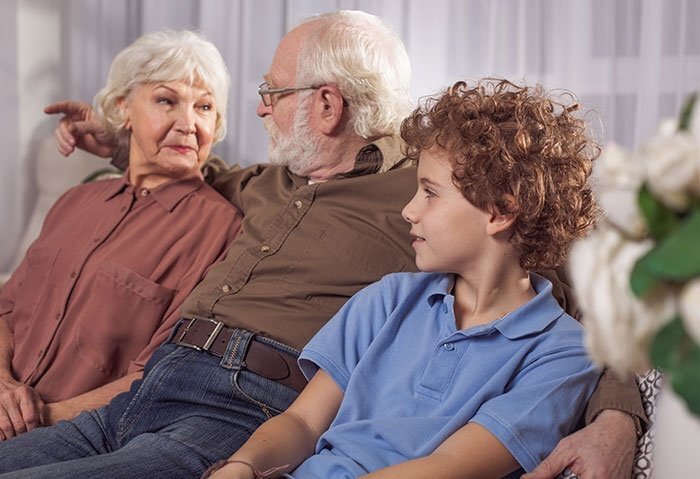
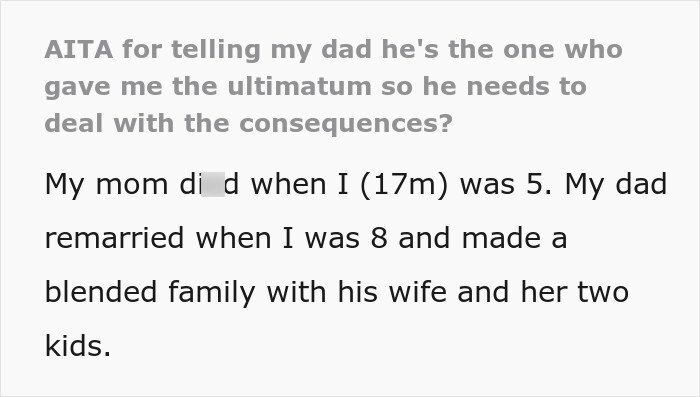
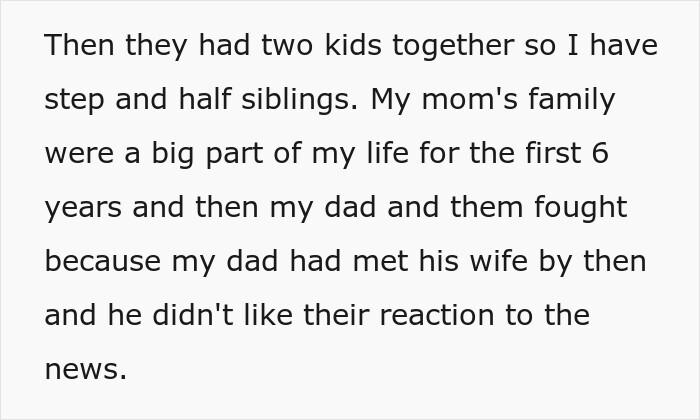
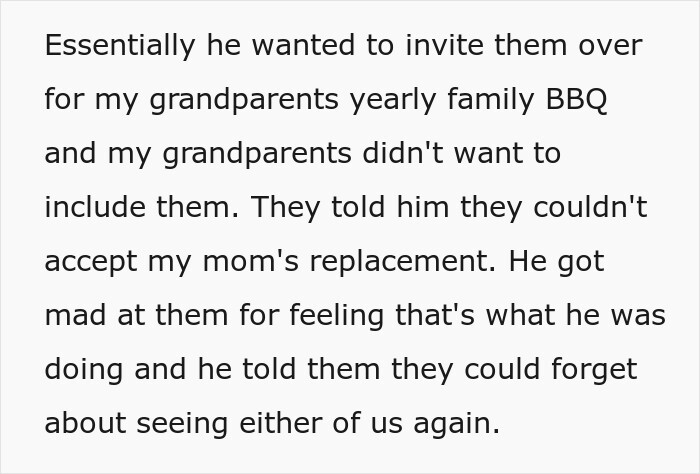
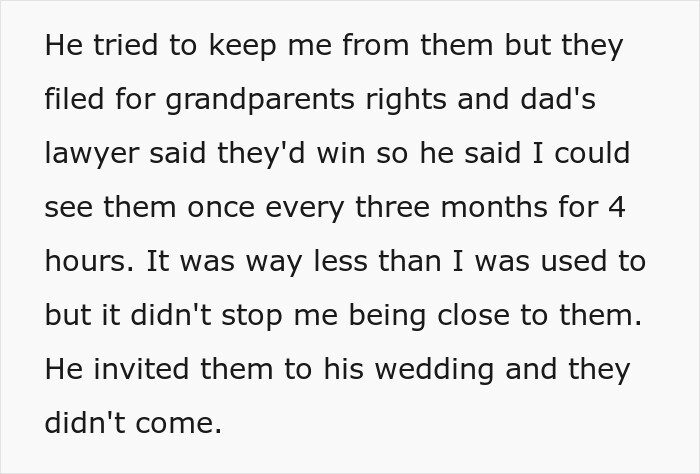
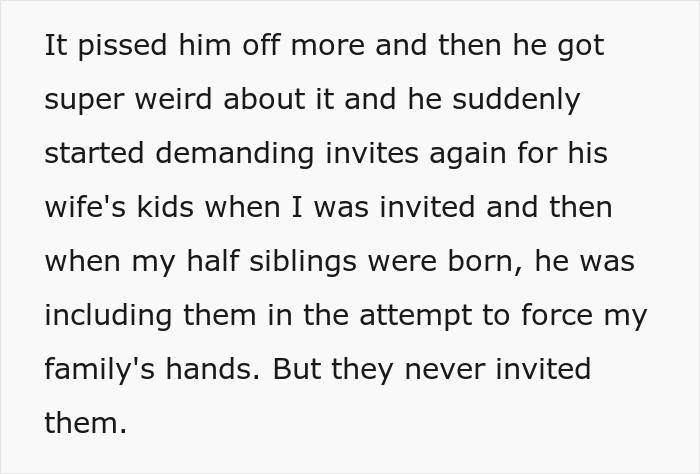
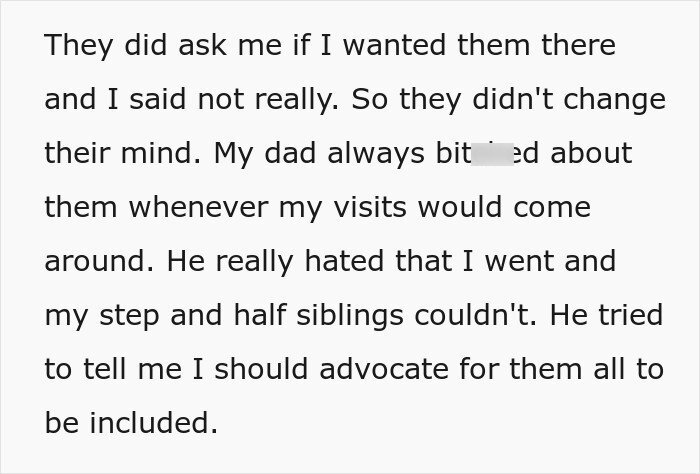
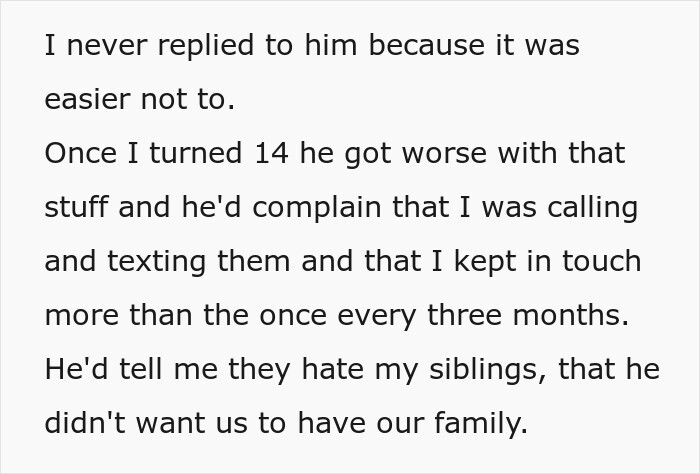
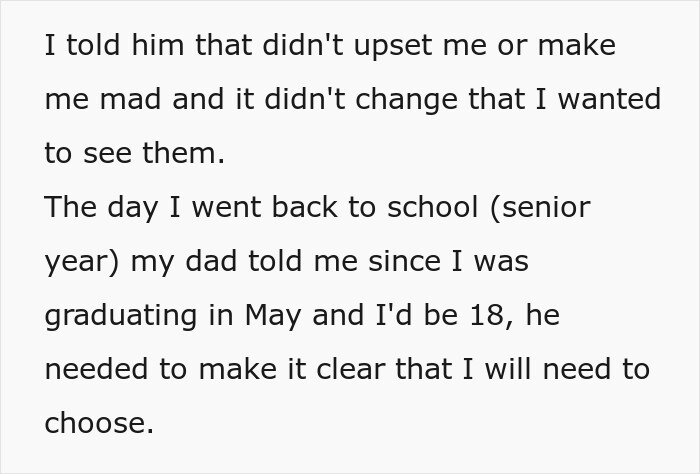
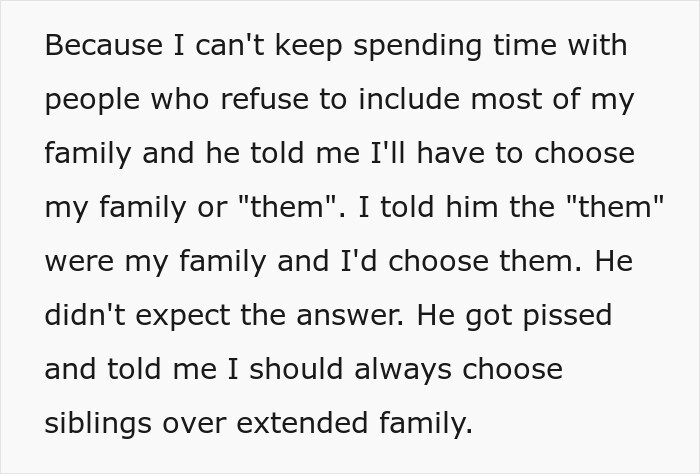
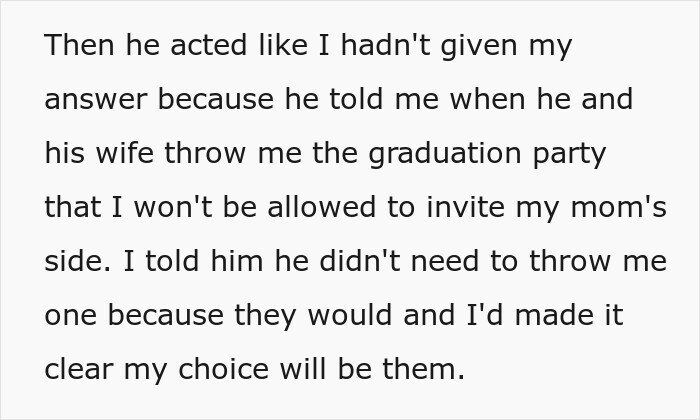
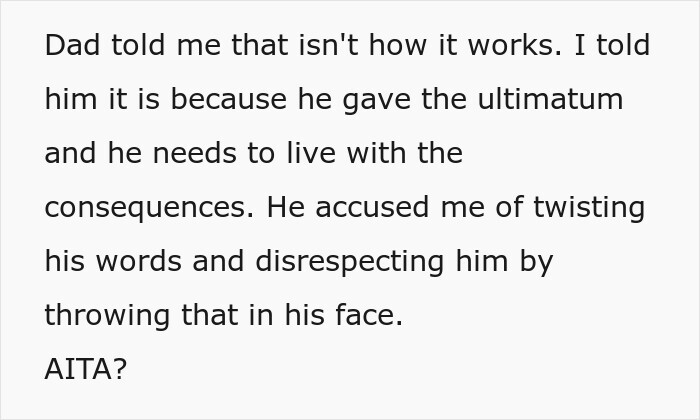
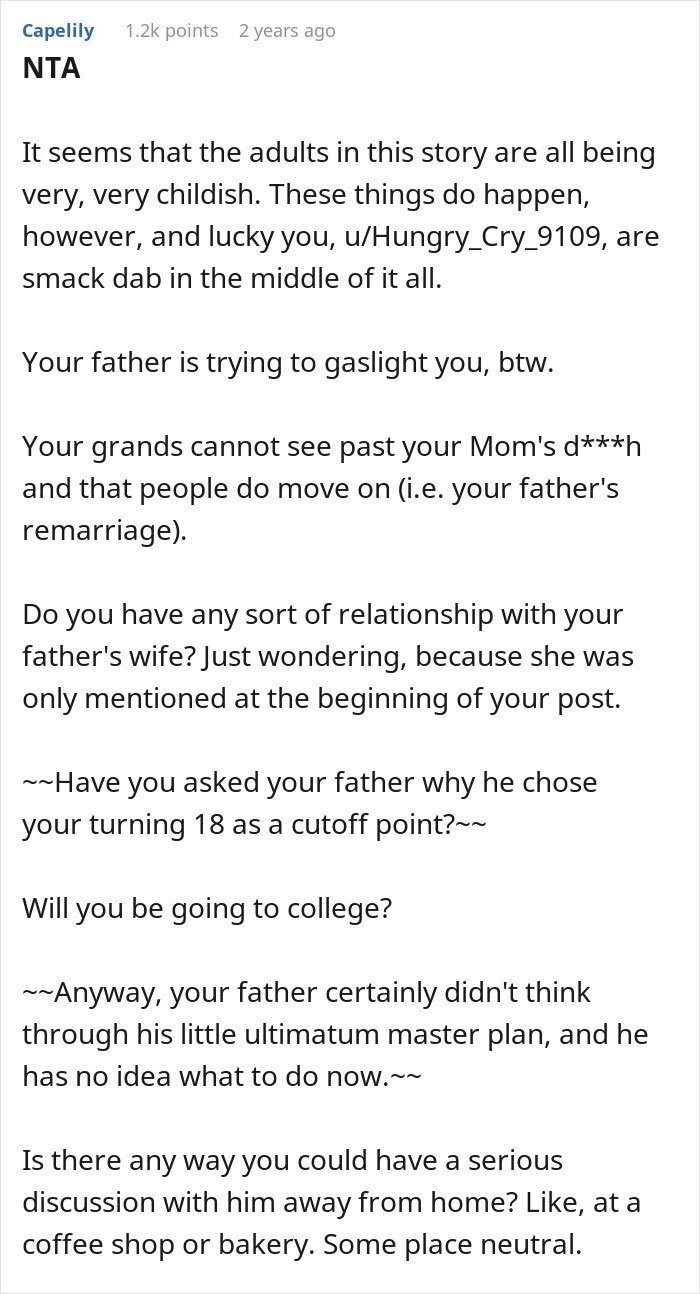
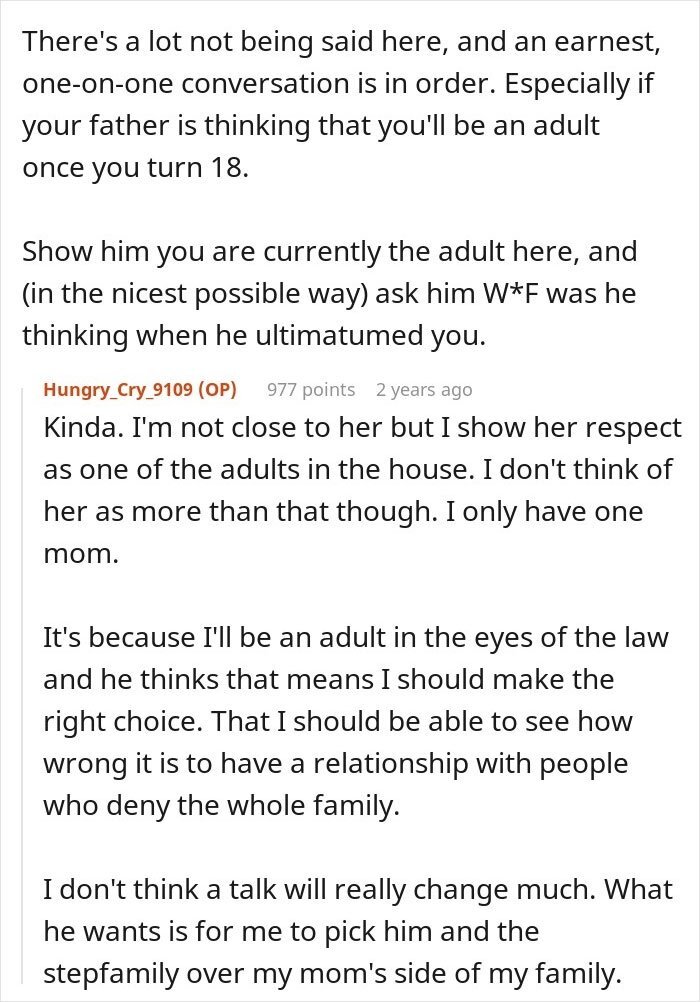
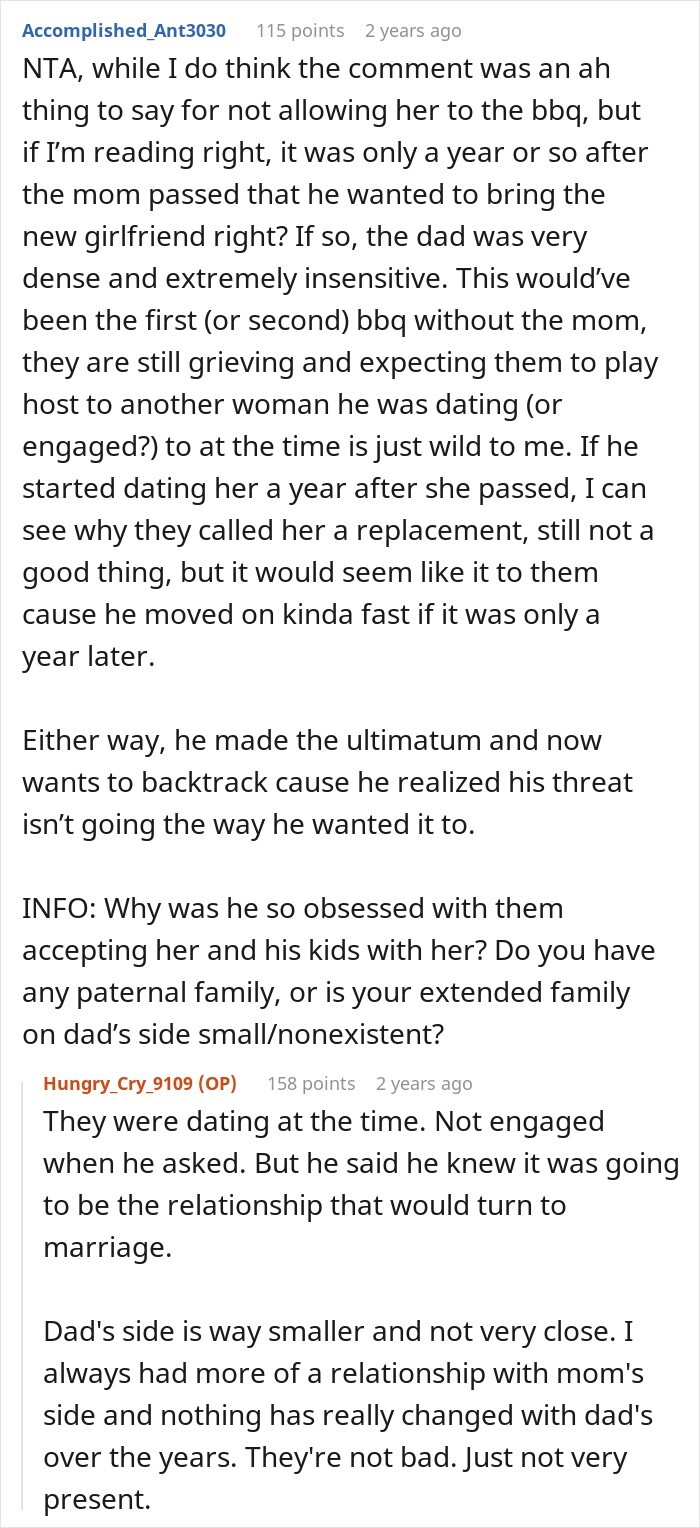
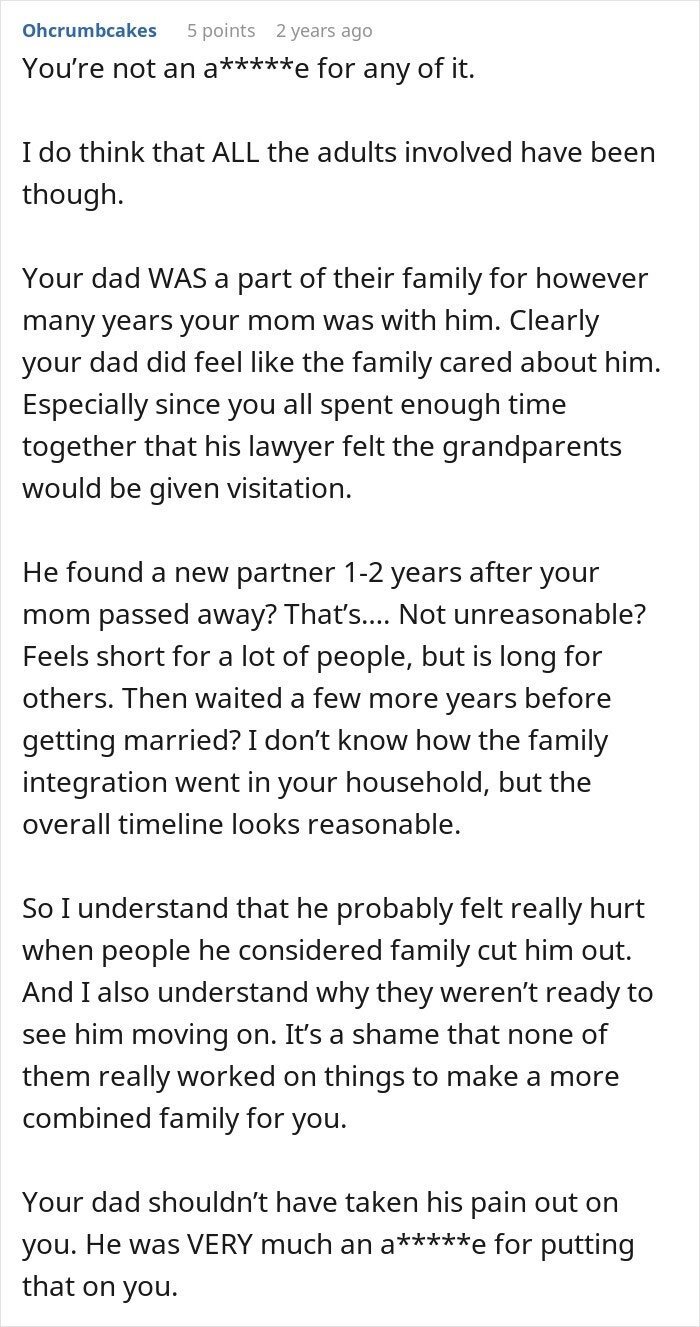
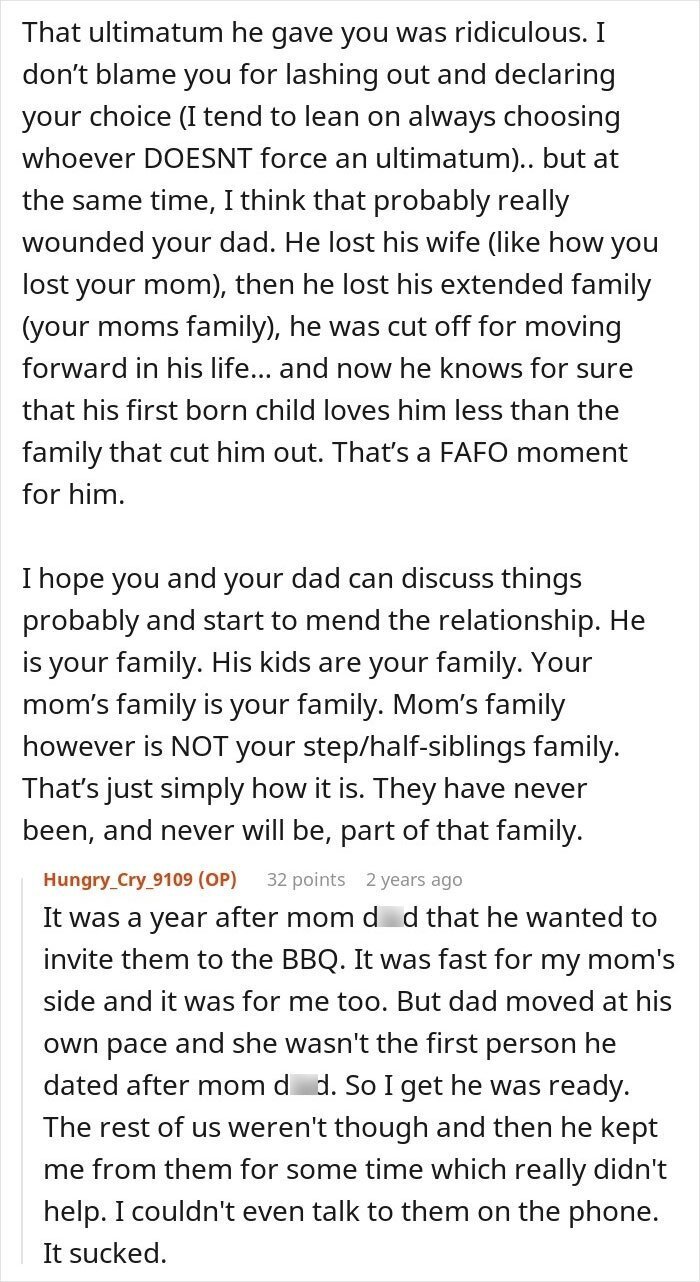
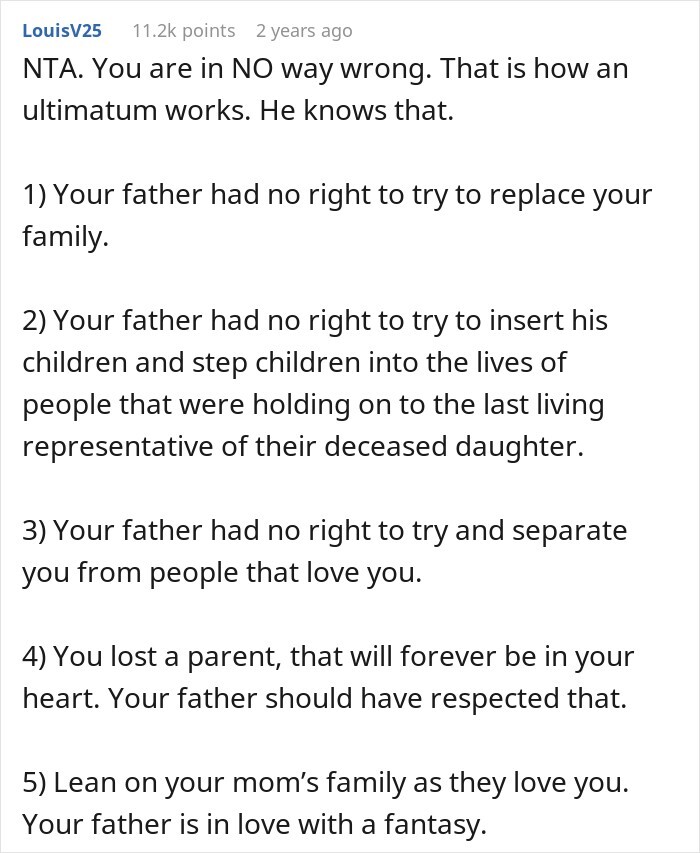
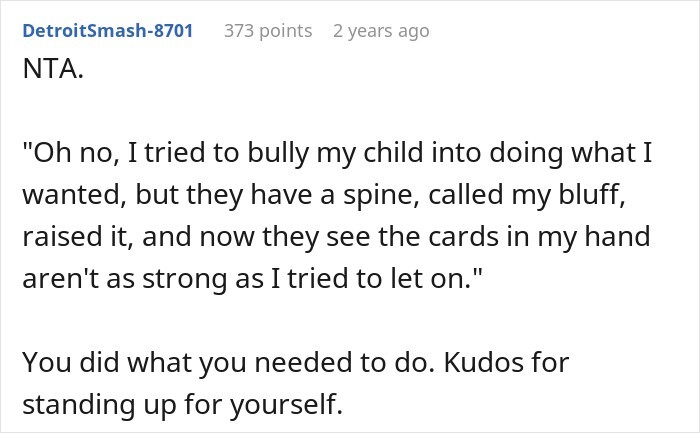
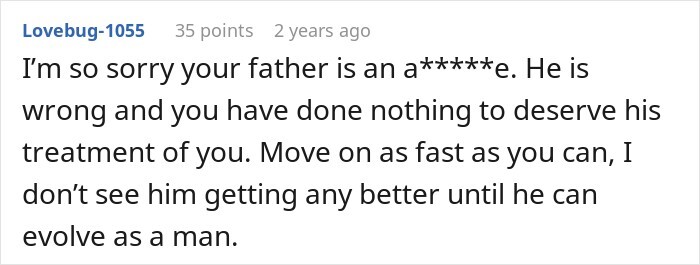
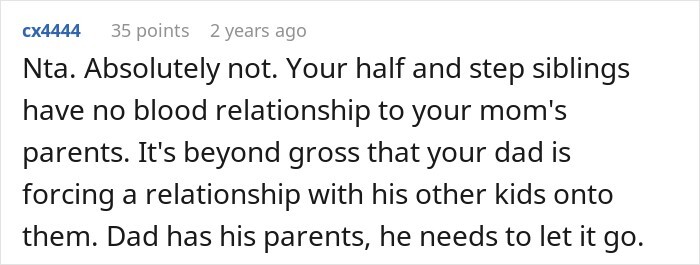
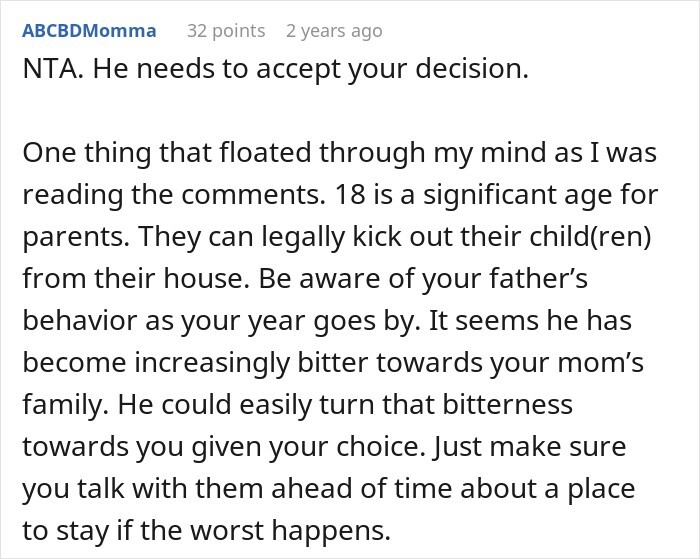
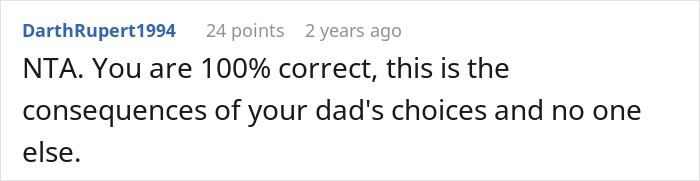
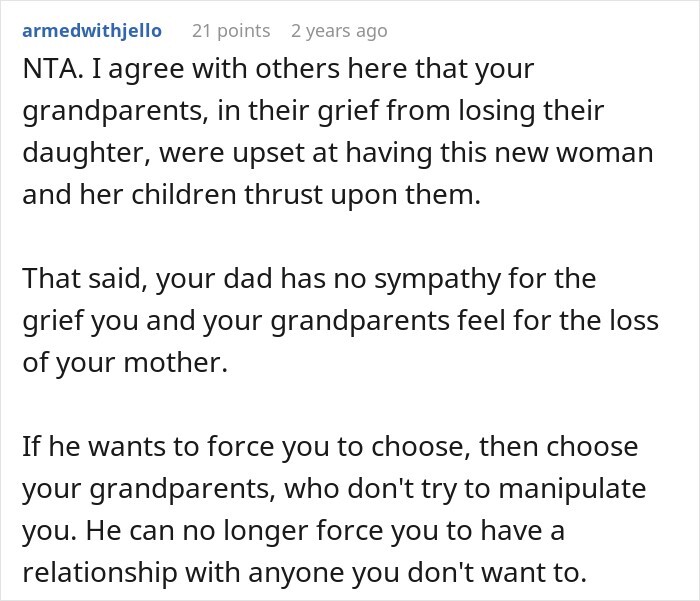
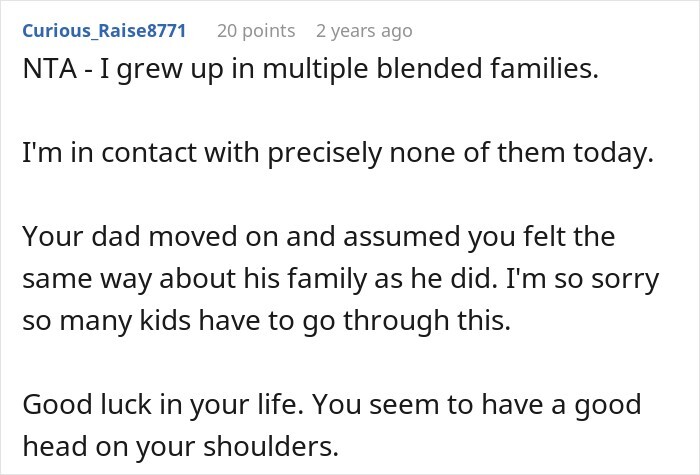
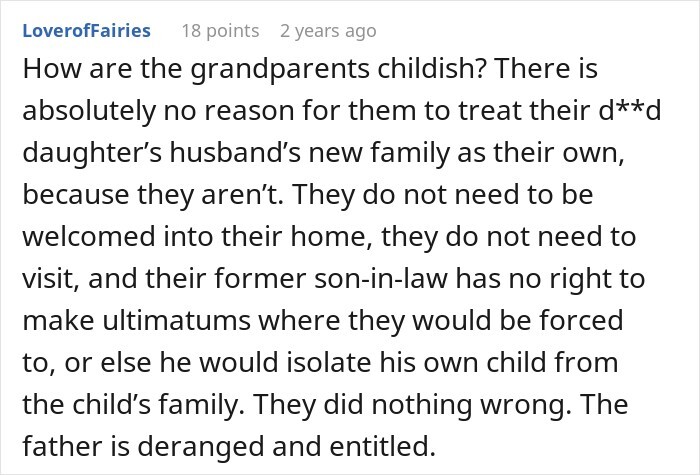
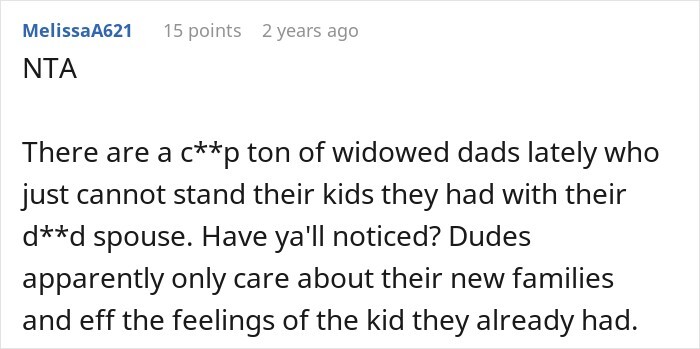
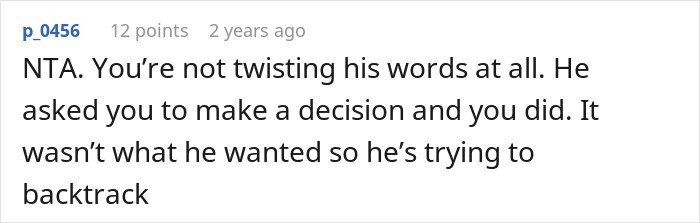
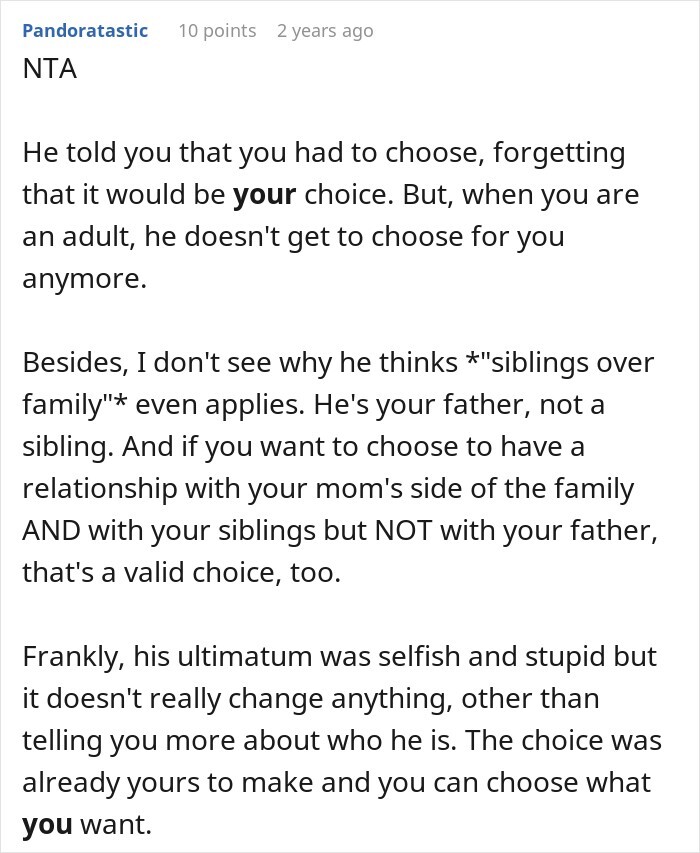
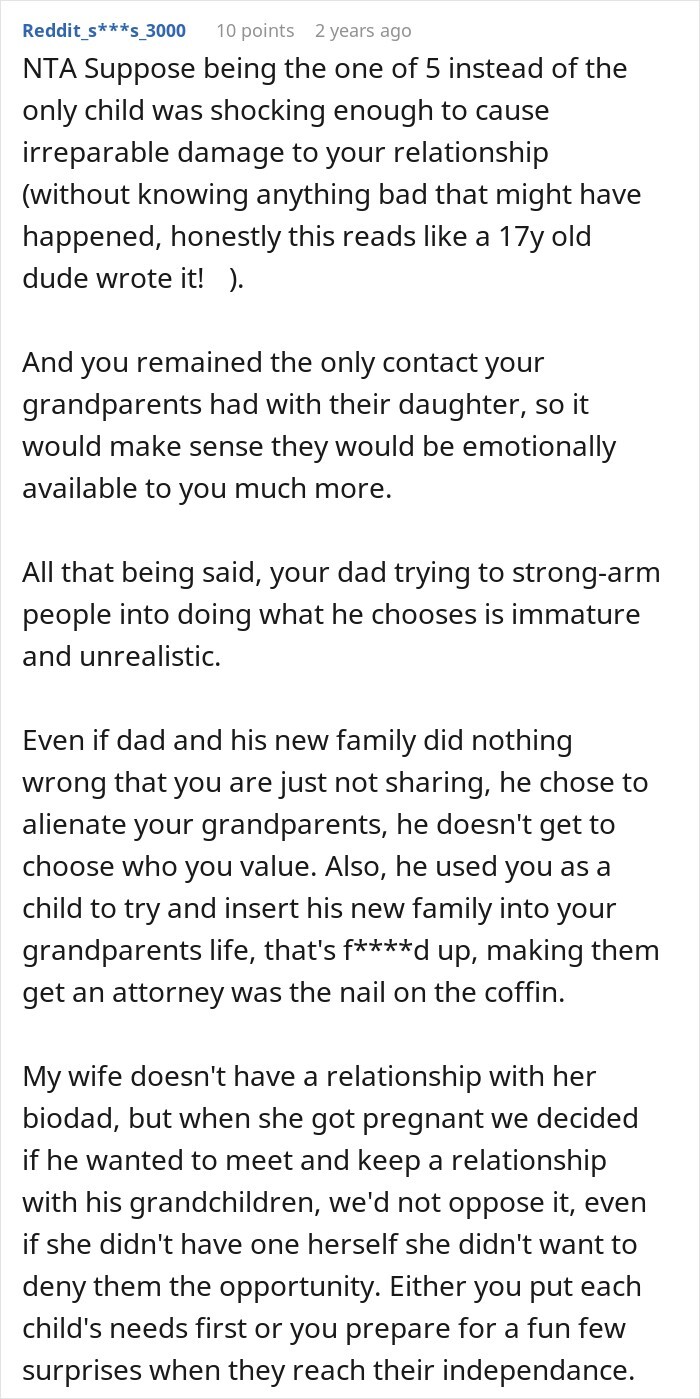
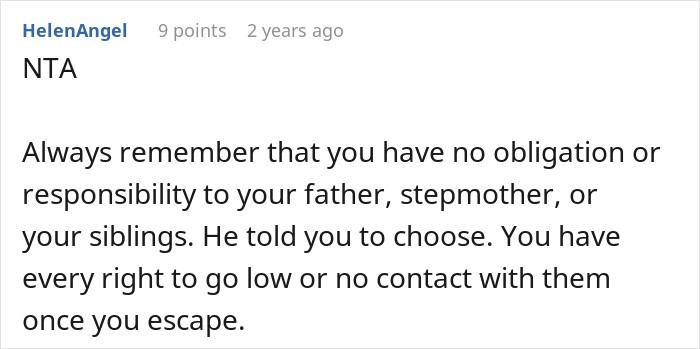
For over a decade, one dad tried to dictate every part of his son’s relationship with his late mother’s family. He restricted their visits and complained about their phone calls. He even tried to force his new blended family into the picture.
Then came his ultimatum, which completely turned the tables. Read the full story that the teenage son shared online to see who crossed what boundaries.
Monitoring and micromanaging a child starts out as a way to keep a helpless baby safe, so it feels natural at first. While many parents learn to loosen their grip as their kids grow up, others never quite manage to cut the cord. Instead, that tight control can follow the child well into adulthood.
This kind of parenting is often driven more by the parent’s own anxieties, ego, or emotional needs than what is actually best for the kid.
Research shows that growing up under this kind of tight thumb takes a heavy toll on a person’s mental health. A study by University College London (UCL) tracked more than 5,000 people over decades and found that the negative impact of having overly controlling parents is comparable to the emotional grief of losing a close friend or relative.
The UCL researchers noted that high “psychological control” — things like invading a child’s privacy and making decisions for them — restricts a young person’s autonomy and stops them from building a strong sense of self. Controlling parents rarely leave room for normal trial and error, so their kids miss out on learning how to bounce back from mistakes.
Other studies back this up. Research published by the American Psychological Association found that overcontrolling “helicopter” parenting in early childhood makes it harder for kids to regulate their own emotions and impulses by the time they hit school age.
Later on, during the teen and college years, studies show that constant micromanagement is leads to anxiety, depression, and burnout — simply because these young adults never got the chance to trust their own judgment.
“All parents are to a certain extent caring and to a certain extent controlling. It’s whether we feel our parents invaded our privacy or we feel we were well looked after. The more caring and the more understanding we are, the more we listen to our children and speak to them in a warm and friendly way,” says Dr Mai Stafford, a UK-based social epidemiologist and public health data analyst.
There’s no doubt that we all need guidance and support growing up. But the tricky part is telling where care ends, and control begins.
A study done in the US found that about 1 in 10 teens reported consistently high levels of parental psychological control throughout their teenage years. Many of them also showed higher levels of anxiety and depressive symptoms over time.
Whether you are a teenager still living under their roof or a fully grown adult, the healthiest way forward is learning how to draw — and hold — clear boundaries.
“Start with the smallest boundary you are actually prepared to enforce. A boundary isn’t ‘You have to stop criticizing me.’ It’s ‘If the conversation becomes insulting, I’m going to end the call, and we can try again another time.’ You’re not trying to control the other person’s behavior; you’re deciding what you will do when a particular behavior occurs,” author, speaker, and expert Tracy Malone tells Bored Panda.
“And if you have any reason to fear retaliation, stalking, violence, financial consequences, or other forms of coercive control, safety planning should come before confrontation,” she adds.
At the end of the day, kids don’t stay close to their parents because they have to… they stay because they actually want to be there.

By entering your email and clicking Subscribe, you're agreeing to let us send you customized marketing messages about us and our advertising partners. You are also agreeing to our Privacy Policy.
Thank you! You've successfully subscribed to newsletters!





















 No fees, cancel anytime














29
1