Get Premium
Dark mode theme is available exclusively for premium users. Learn more about the benefits of subscribing.
No fees, cancel anytime.

 Dark Mode Ad-Free Browsing Unlimited Content
 Ad-Free Browsing Unlimited Content Dark Mode
Join 1.2 million Panda readers who get the best art, memes, and fun stories every week!
Everyone has that one fact they wheel out at dinner parties. The Napoleon height thing or the we-only-use-10%-of-our-brains tidbit. Delivered with complete confidence, received without question, repeated to the next person, and so on, forever, until the myth has outlived everyone who could remember where it came from in the first place.
Reddit recently asked people to share the historical facts that everyone believes but that are completely untrue, and the thread is humbling to every know-it-all out there. Me included.
This post may include affiliate links.

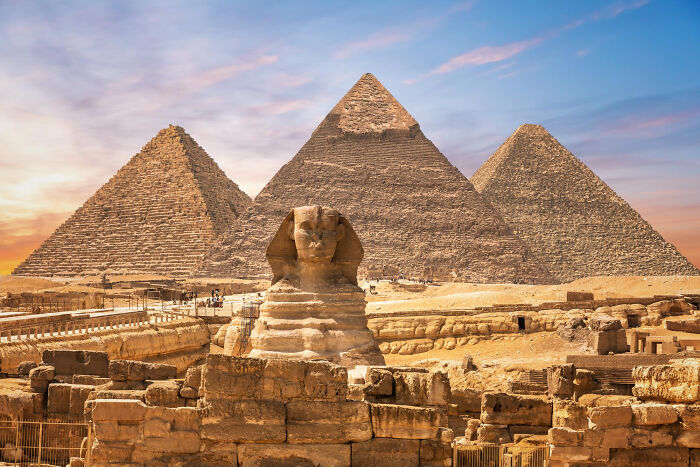 The Great Pyramid of Giza was not built by slaves.
King Khufu tasked Hemiunu, his vizier and chief architect, along with commissioned skilled laborers, artisans and craftsmen from across the lands to help construct the great structure. Many of them are actually buried in a separate chamber of the pyramid in fact.

I've had so many arguments about this, and most people refuse to believe that they weren't slaves. The people who worked on the pyramids were really well respected and treated very well. I've visited Deir el-Medina (the place of truth) 5 times, a village where the artists who worked on the tombs lived and learned a lot about them, they definitely weren't slaves but very skilled craftsmen, artists and scribes.
 Columbus discovering America is a big one. People were already there, and he wasn't even the first European to reach it. That myth got pushed hard in schools though.

Columbus discovered that he didn't know where the hell he was. And it took him several trips to figure that out.
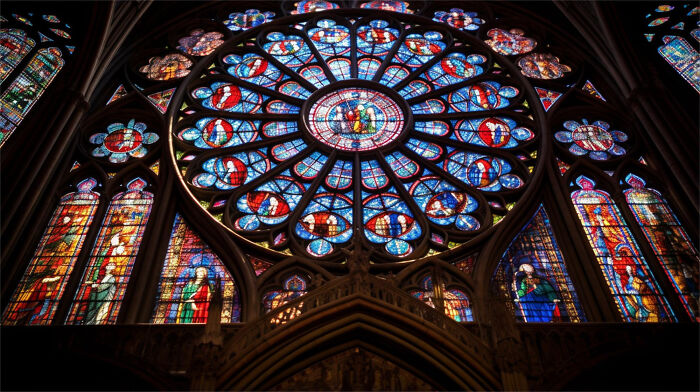 Old cathedral windows are **not** proof that glass slowly flows downward over centuries.
You’ll often hear that medieval windows are thicker at the bottom because glass is technically a liquid and has gradually sagged under gravity. But old window glass was already uneven when it was made, because historical manufacturing methods produced panes with varying thickness. Glaziers generally installed the heavier edge at the bottom for stability. And in some instances, they didn't bother and the glass is thicker at the top.
At ordinary temperatures, glass is an amorphous solid. If it flowed quickly enough for cathedral windows to noticeably sag over a few hundred years, ancient glass objects would show the same deformation. They don’t.
It’s one of those wonderfully persistent “facts” that sounds scientific enough to survive long after it’s been debunked.
Napoleon Bonaparte being a small man is one of the most persistent myths in history. Poor guy! He was approximately 5'7", which was above average for a French man of his era. The myth originated from a combination of British wartime propaganda, a unit conversion error between French and English measurement systems, and the fact that his nickname among his troops was "le petit caporal," a term of affection, not a physical description.
British cartoonists, particularly James Gillray, depicted him as a tiny, temperamental figure, and the image stuck so completely that we named an entire psychological phenomenon after it. The Napoleon Complex is the theory that short men overcompensate with aggression and ambition, and is named after a man who was not actually short. It is one of history's more successful character eliminations.
 Sir Isaac Newton discovered gravity when an apple fell on his head.
The ancient Greeks theorised about gravity centuries earlier
In NO account did the apple fall on his head. Other people, writing decades after his works were published, recall how he described apples falling from the trees in his family's orchard and wondered what attraction made apples fall perpendicular to the ground, and how far that attraction extended.

Indians knew about planets and the sun.. we have the concept of navgraha. gravity too.. we are so dismissive of many of our ancestors
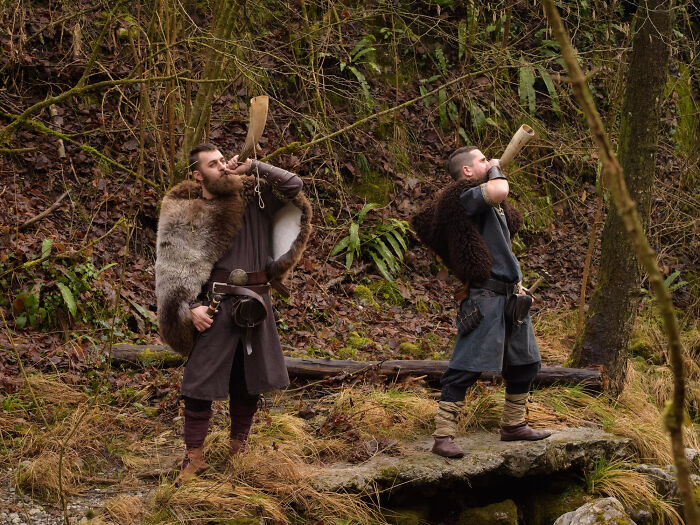 That Vikings dressed as Norwegian Black Metal fans with tattoos all over their faces, the sides of their heads shaved, and their top hair pulled back in a pony tail.
TV and movie art departments invented and have been lazily recycling this 'viking' look for years.
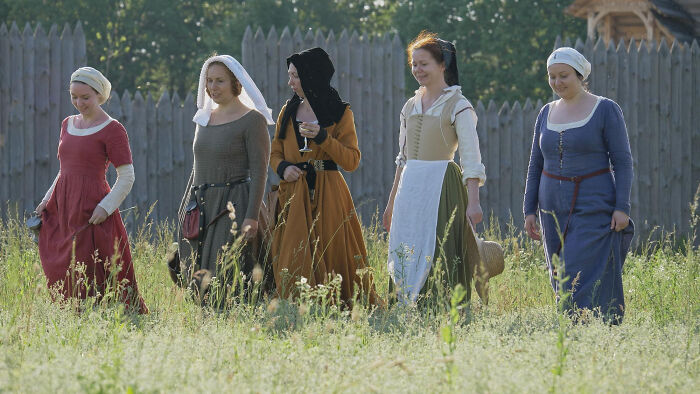 Thanks to current Hollywood tropes everyone thinks the mediaeval period was drab and everyone wore brown or black clothing and the pants only wore dirty clothes.
The reality was that people in the mediaeval period wore all sorts of bright colourful clothing. Some of the colour combinations would be seen as gaudy with our modern sensibilities and style choices. The only thing restricting people's choice of colour was the cost and difficulty of getting hold of certain coloured dyes and, in some places, sumptuouary laws that strictly defined how folk could dress depending on their social standing. .
“He must be a king”. “How do you know?” “Because he hasn’t got s**t all over him.”
The name Mother Teresa has become so synonymous with selfless goodness that it functions as its own shorthand. "She's a real Mother Teresa" needs no further explanation in any language. She was even canonised as a saint in 2016. She is one of the most recognisable figures of the twentieth century. But upon closer examination, she is considerably more complicated than the sainthood suggests.
Critics, including the late Christopher Hitchens who wrote an entire book on the subject, documented serious concerns about the conditions in her Calcutta missions. Patients in significant pain were denied adequate medical care on the grounds that suffering brought them closer to God, while the organisation itself received hundreds of millions in donations.
She accepted money and praise from dictators and fraudsters without question. She opposed contraception and abortion in countries where poverty and overpopulation were causing enormous suffering. Her own letters, published posthumously, revealed decades of private spiritual crisis. None of this erases the genuine good she did. It does complicate the mythology significantly, and the mythology is what most people are working with.
 Women didn't work outside the home until the 1940s/WW2 or 1980s. Whichever time period the person is referring to during the argument. (Looking at you manospehere/red pill.)
Women have always worked whether it was on a farm, in the fields or in the industrial age. There are pictures from the Victorian era with factories filled with female and child workers and almost no adult men. Women did not "go to work for the first time because of WW2." They weren't doing the same jobs before then but they were certainly working.
Many professions were filled with women such as: sailmakers, seamstresses, store clerks, cashier's, typists, telephone operators, office workers cleaning and cooking staff, etc.,.
This is one of the most inaccurate arguments I have heard in my life. My grandmother was a telephone operator for Ma Bell from the late 1920s until she retired in the 1960s. During the Great Depression she supported the family and half of every paycheck was paid in stock rather than cash. This is what enabled the family to survive. I find the whole premise that women didn't have jobs absurd in the face of actual history.
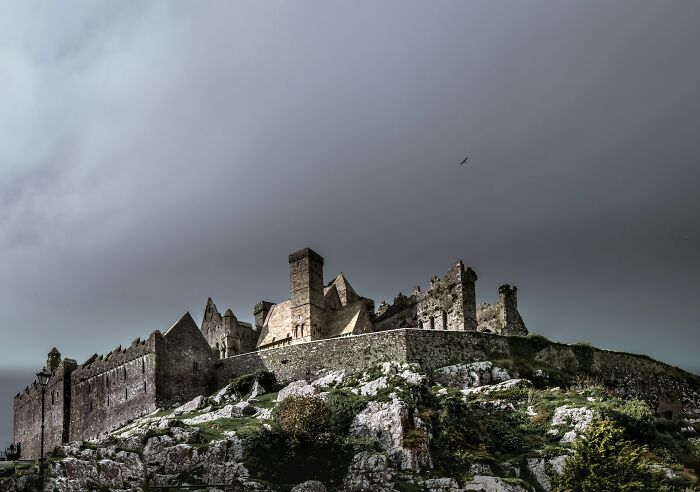 People d**d at 30-40 in the Middle Ages. Sure some did, but life expectancy was in that range because of high infant mortality. If you made it to adulthood you would probably live to 50+, maybe 60+. 70+ would be notable but not unheard of.
 Spices were used to cover the taste of expired meat.
If you can afford spices then you can afford fresh meat.
The woman that we all love to hate, Marie Antoinette, never actually said "let them eat cake." The phrase appears in Jean-Jacques Rousseau's autobiography "Confessions," written when Marie Antoinette was approximately nine years old and living in Austria. The phrase was simply attributed to "a great princess." And if we are being really nitpicky, she actually said: "then let them eat brioche."
By the time the French Revolution made Marie Antoinette the most famous queen in Europe, the quote had been circulating for years and simply got attached to her name because it fit the narrative of aristocratic indifference so perfectly that nobody felt the need to verify it. She was, by many accounts, aware of the poverty surrounding her and made genuine charitable efforts. The cake quote, however, was already too good to let accuracy get in the way.
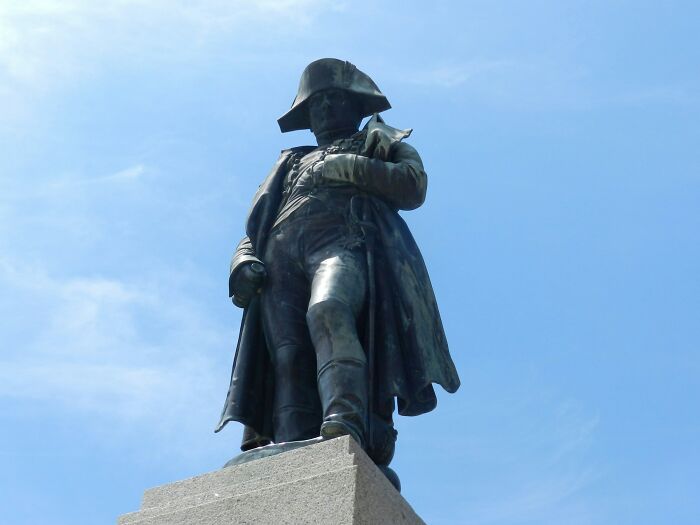 Napoleon Bonaparte was actually of average height.
He often had his portrait done while standing with his Imperial Guards, who had to be at least 6 feet tall.
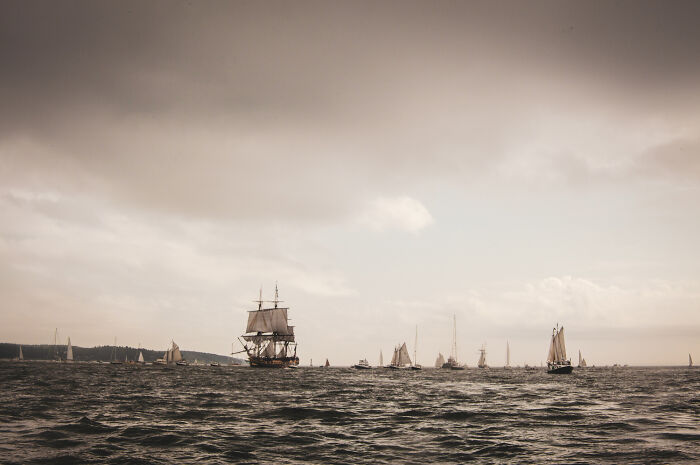 The pilgrims came from England fleeing religious persecution.
They came from Leiden, where they had lived with almost complete religious autonomy for over a decade.
They left the Netherlands because they didn’t want to participate in Dutch society.
They established a theocracy in the new world that would go on to severely oppress its citizens.

They originally came from England, the Leiden (in NL) thing was an early attempt. What they wanted was simply to replace the authority of one church, the Church of England, with another one, of their own making. It was neither about religious persecution nor freedom, they specifically wanted a society where only followers of their beliefs and teachings were allowed to hold any position of authority.
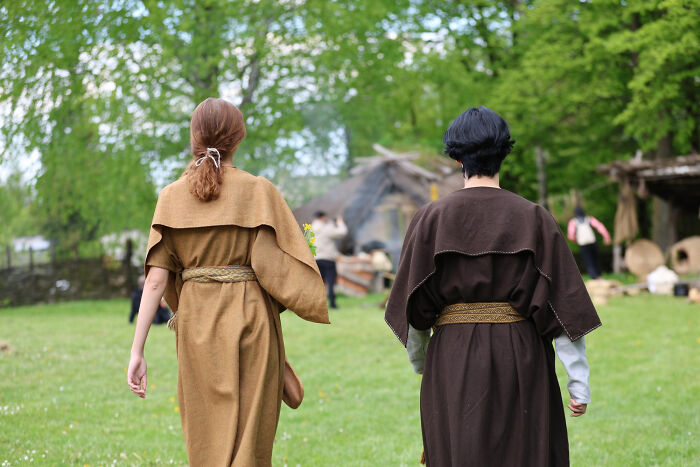 That medieval Europe was puritanical. It wasn’t all black and brown in color schemes. They moved bright colors. They also liked to party and hold festivals. They weren’t Cromwell’s England .
Cromwell's England occurred more than a century and half after the medieval era ended.
The Mandela Effect is the phenomenon where large groups of people share the same false memory with total confidence, and it is named after Nelson Mandela because thousands of people incorrectly remembered him never surviving prison. He was actually released in 1990 and became President of South Africa in 1994.
The false memory was so widespread and so specific that it spawned an entire theory about parallel universes and alternate timelines. We just can't accept when we are wrong, can we?
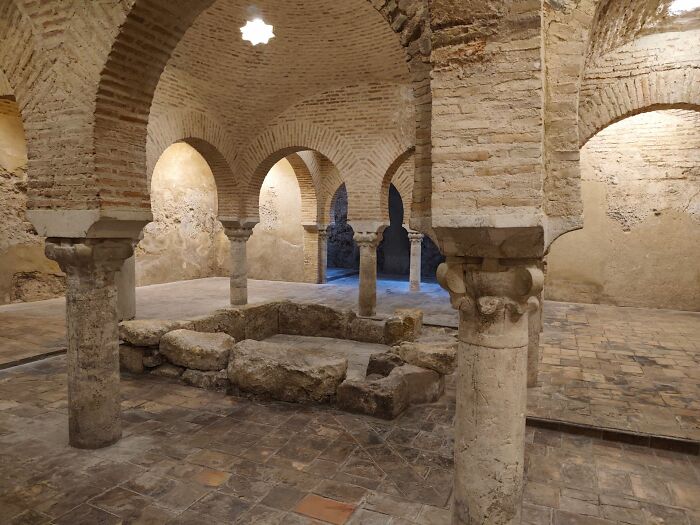 That people in medieval times never bathed and hated being clean. bathhouses were everywhere and popular. the whole "dirty middle ages" idea comes mostly from a later period when bathhouses got shut down over disease fears. the medievals would be offended.
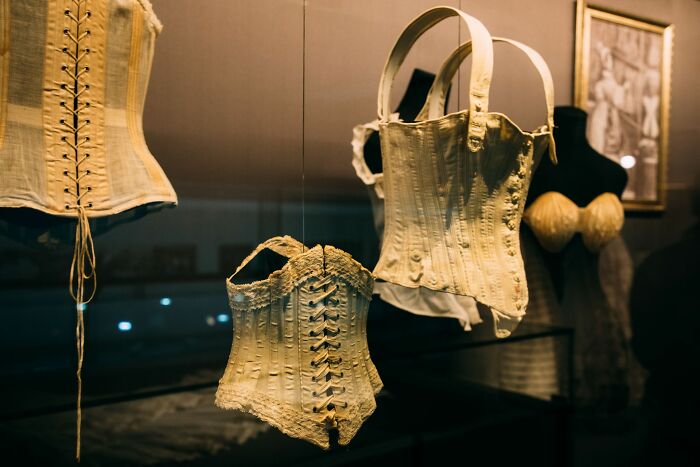 Corsets were some evil t*****e machines and tools of oppression that women generally hated, and caused everyone to faint because they couldn't breathe.
In reality, corsets helped distribute the weight of your clothes more evenly and supported your back. It took some getting used to, but you could breathe fine and it was pretty comfortable. Tight-lacing was the equivalent of tik-tok trends that most people mocked and very few people actually practiced.
It was also not worn directly on your skin. And sometimes men wore them as well.
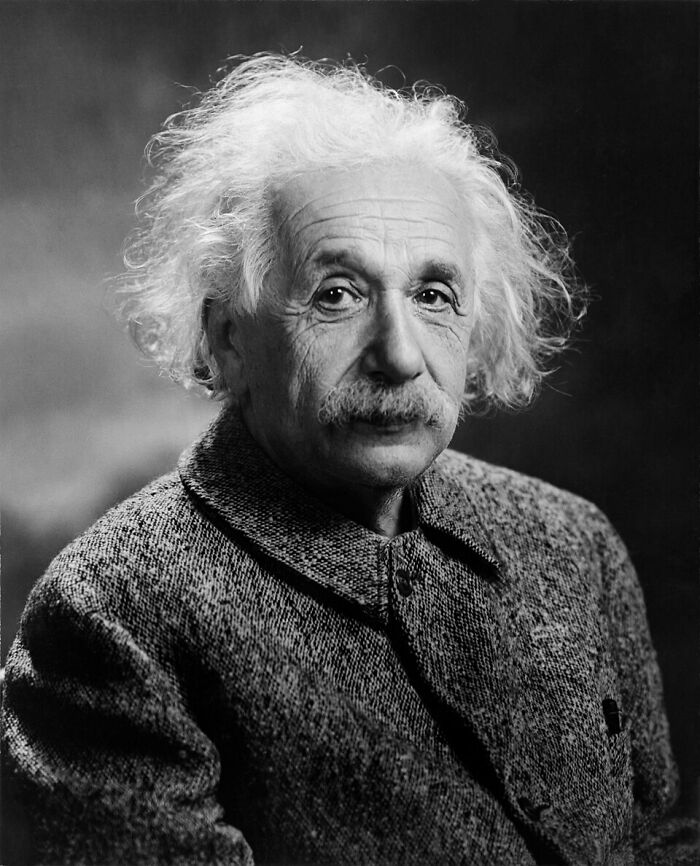 Einstein was a bad student and particularly bad at math.
Nope. He was a great student. The myth has a few roots, but some of them tie back to a misunderstanding of the grading scale of the school he went to at the time as well as some comments he made during his life about how he disliked rote learning and other traditional teaching approaches that kind of made it sound like he had an axe to grind with respect to his childhood education.

People with functioning brains dislike rote learning because it is intensely boring and offers no challenges.
Spoiler alert for everyone who still wants to celebrate Columbus Day, but Christopher Columbus did not discover America. He arrived in the Caribbean in 1492, never set foot on the North American mainland, and encountered millions of people already living in the Americas who had been there for tens of thousands of years and had therefore, by any reasonable definition, beaten him to it.
Leif Erikson and Norse settlers established a settlement in Newfoundland around 1000 CE, approximately five centuries before Columbus left Spain. The framing of Columbus as a discoverer requires accepting that a place is not discovered until a European arrives, which is a position that has aged extremely poorly.
The myth of Columbus as a heroic discoverer was largely constructed in the 19th century, significantly boosted by Washington Irving's 1828 biography, which invented several details, including the flat-earth story, the idea that Columbus bravely sailed against the consensus that the world was flat. Medieval scholars had known the earth was round for centuries.
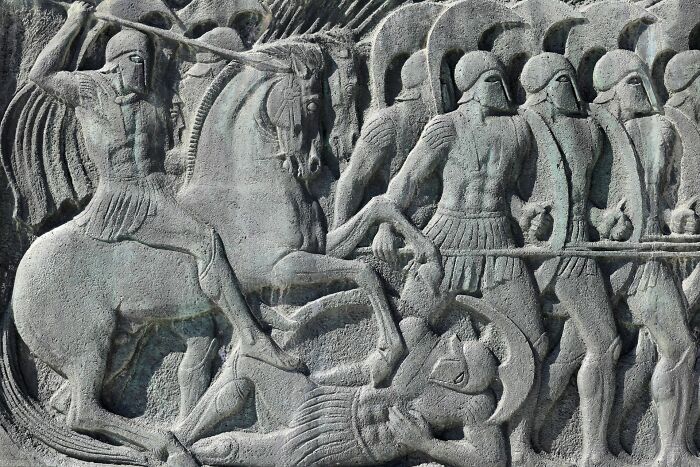 That the Greco-Persian wars
* were some sort of struggle between Greek "civilization" and Persian "barbarians". If anything, Persia was a much more modern and civilized society even compared to Athens, let alone Sparta.
* were a struggle between Persia on one side and "Greece" on the other. A lot of the time it was just pro-Persian Greeks versus anti-Persian Greeks.
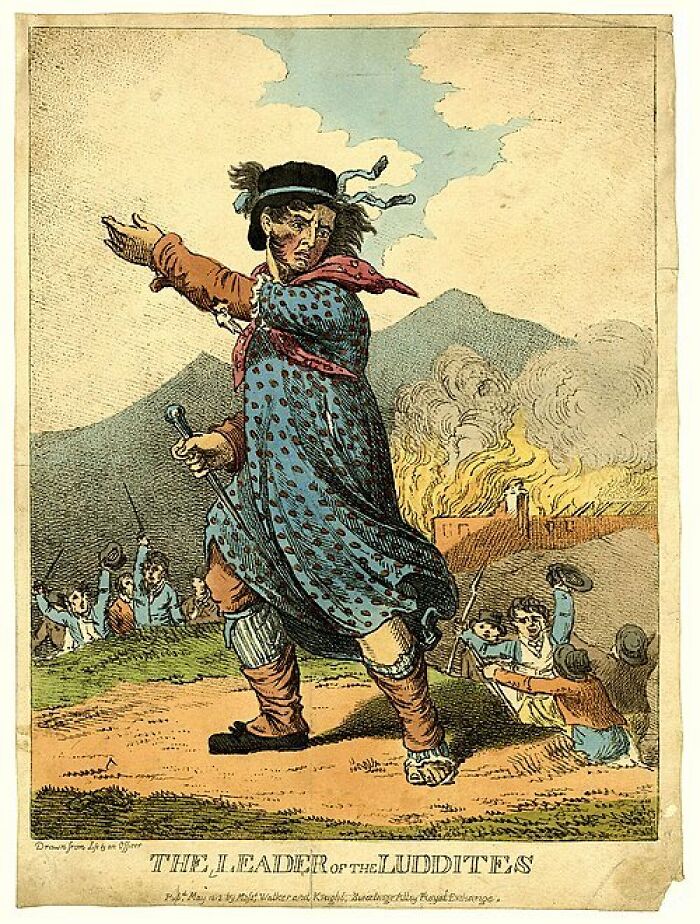 Luddites hate technology.
In reality: Luddites hate technology stealing their jobs.
 "The last of the samurai refused to use muskets when they tried and failed to rebel during the Meiji period."
Wrong. They used muskets and only fell back on their katanas when they ran out of ammo. The movie The Last Samurai is not historically accurate by any means.

What!?! A Hollywood movie not being historically accurate? I am shocked!
One of the more bizarre facts that we throw around proudly is that George Washington had wooden teeth. False! He had several sets of dentures over the course of his life, made from a combination of human teeth, animal teeth, and ivory from elephant and hippopotamus tusks, held together with metal springs. They were reportedly extremely uncomfortable and significantly affected his speech.
The wooden teeth myth is so persistent that it appears in children's history books and has essentially become a founding father fun fact, despite having no basis in fact whatsoever. Wood would have been a spectacularly poor material for dentures because it absorbs liquid, swells, and warps. Nobody designing dentures in the eighteenth century was reaching for timber. The actual materials were unpleasant enough without introducing carpentry into the situation.
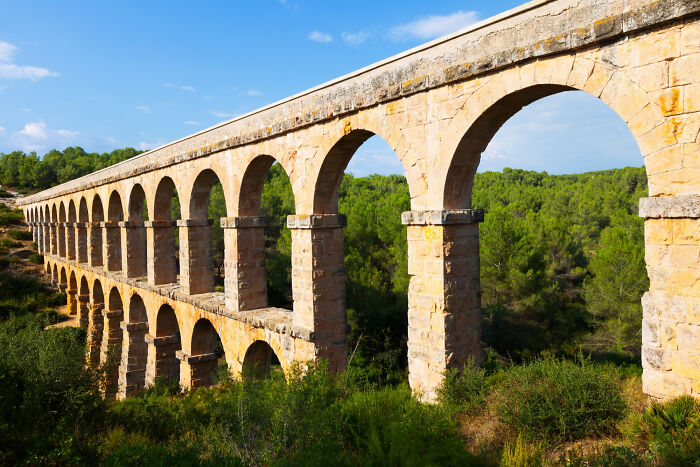 That Early Middle Age was like a prehistorical time because we lost a lot of Roman technology.
Actually, most of the technology was preserved. This is the time when they built cathedrals...etc.
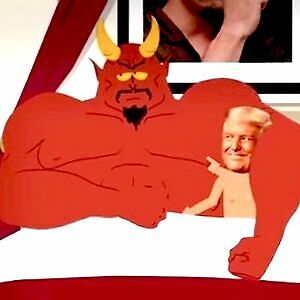
Because after all, what have the Romans actually done for us?
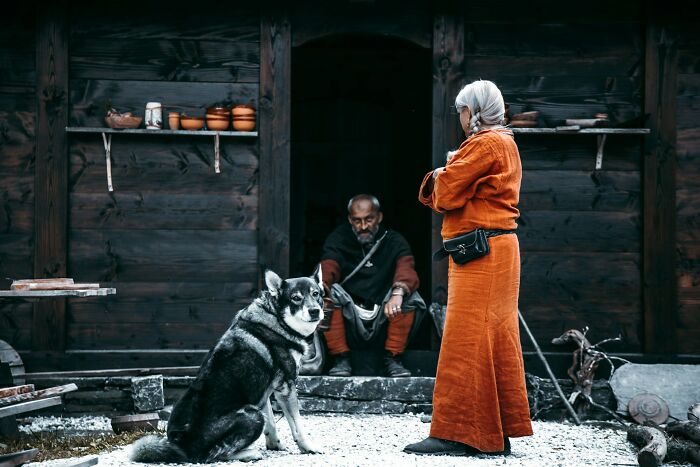 Vikings weren't savages. Most Ancient Norse people from Scandinavian kingdoms were peaceful farmers, fishermen, or craftsmen. Even the sailors were mostly traders with massive trading networks stretching from Baghdad to North America.

Some of their contractual dispute resolution procedures would be frowned on nowadays however.
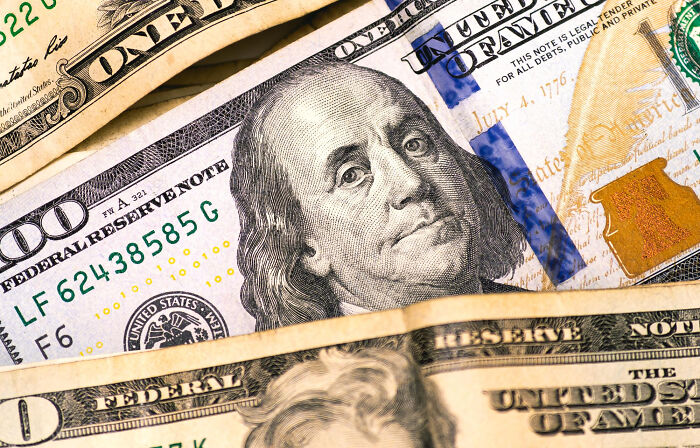 That Benjamin Franklin discovered electricity. Somehow the story gets changed with a lot of people.
He helped establish that lightning was electrical. He suggested the kite experiment, but someone else actually performed it.
Hollywood representations don't really help these historical inaccuracies. Viking helmets did not have horns, regardless of how many $1 plastic versions there are in the streets on Halloween. The horned helmet image comes primarily from 19th-century Romanticism, particularly costume designs for a 1876 production of Wagner's Ring Cycle opera, where the designer put horns on the helmets for dramatic effect, and the image lodged itself permanently in popular imagination.
Actual archaeological evidence of Viking helmets is extremely limited and only one complete helmet from the Viking Age has ever been found, and it has a nose guard and absolutely no horns whatsoever. Horned helmets did exist in Scandinavia, but they predate the Viking Age by over a thousand years and were used in ceremonial contexts, not battle. A horned helmet in combat would be a significant liability, giving an opponent something to grab and use against you. Vikings were many things. Impractical was not among them.
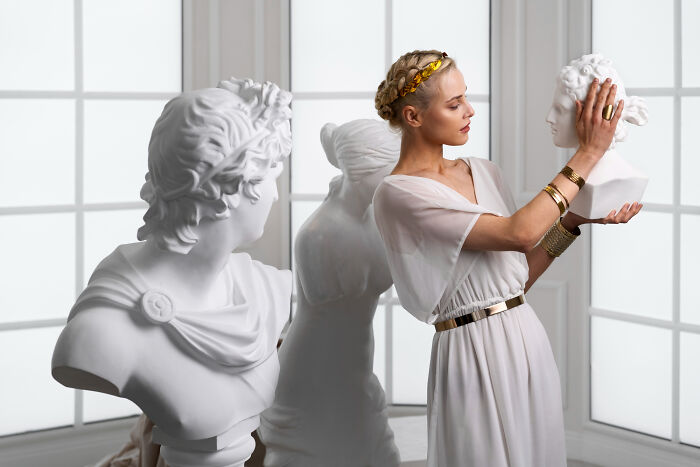 Not exactly sure how prevalent this is now, but, for a very long time, centuries: Roman and Greek marbles are white. And, related, that the interiors had things like exposed beams, bricks, etc.
The Romans and Greeks painted all of their statues, and their houses we plastered, and covered in paint. Ceilings
too.
A Roman city was not white on white on white. It was very colourful in all aspects.

In the Acropolis museum in Athens there are replicas that are depicted in their very colorful true state!
 People are wrong about horses a lot. Native Americans didn't have horses before the Spanish arrived in America. Mounted calavry replaced the chariot by 400bc, so the Roman Empire didn't fight with chariots. Horses would have been very rare on a battlefield before 1300bc. And anyone riding a house before 2500bc is almost unheard of.
Edit: Spelling.
The Romans didn't have much use for cavalry because stirrups hadn't reached Europe yet. They mostly depended instead on mounted non-Roman auxiliaries. In "The Gallic War" (I:42-43), Caesar describes a peace parley with the Germanic king Ariovistus, who insisted both leaders must arrive only with cavalry. (Ariovistus feared an ambush by Roman infantry.) Not fully trusting his Gallic cavalry, Caesar mounted heavily armored legionaries from his favorite infantry unit on horses instead.
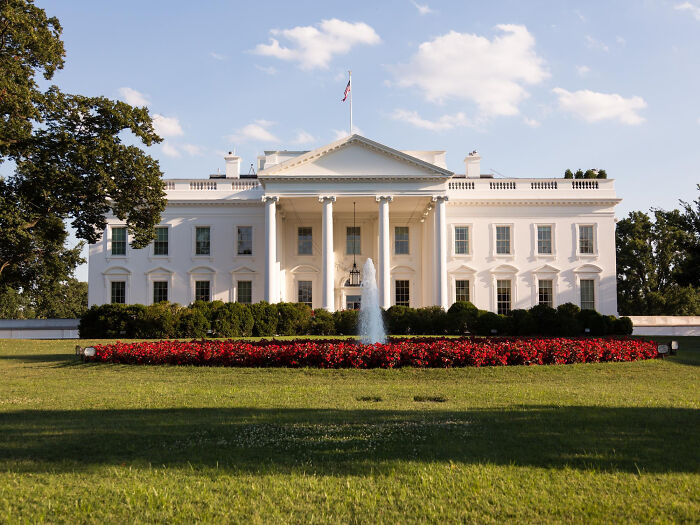 Canadians burned the White House during the war of 1812.
This has always been a bit of a misunderstanding for some people and given the current levels of animosity between the two countries I’ve seen a surge of this “fact” being thrown out there again.
The Chesapeake campaign was led by Major General Robert Ross whose regiments came from units diverted to North America from Europe following the the victory of the Peninsular war, the corps of colonial marines, and English forces garrisoned in Bermuda. The campaign originated from Bermuda, not Canadian territory, and no Canadian based English troops or Canadian raised militias were involved.
There seems to be a commonly held belief that Canadian forces marched straight south to Washington DC. That’s just not remotely true.
Can Canada come and stop the White House ballroom from being finished? Please? And while you’re here, make sure that g**-awful arch doesn’t get built.
The good news is that some long-standing distortions are being formally addressed. The Mercator projection is the world map that has hung in classrooms for centuries, and it makes Greenland appear roughly the same size as Africa despite Africa being approximately fourteen times larger. It is finally being phased out in favour of more accurate representations.
The UN recently voted to phase out this archaic map, as it was primarily used for navigation. Ironically, the whole world voted "yes," while the US was the only country that wanted the map to stay the same. They cited that it was a "radical ideological project," definitely not because it would remove the size distortion of America on a map. Definitely not.
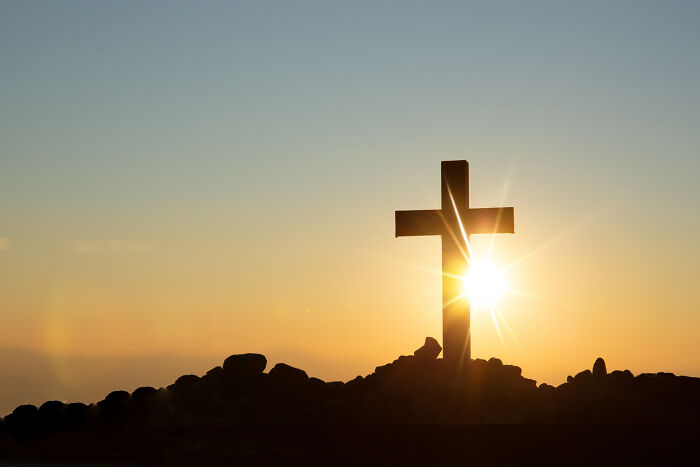 Christianity caused the downfall of the Roman empire and civilisation.
This belief is largely due to Edward Gibbon's "The History of the Decline and Fall of the Roman Empire" (1788). One of Gibbon's main theses was that the spread of Christianity undermined traditional Roman civic virtues and military spirit, shifting people's focus away from defending the state to preserving their own souls. He conveniently ignored the fact that for over a thousand of the 1,300 years that his history covers, the Roman Empire was officially a Christian imperium. (Until the end, the Eastern Roman Empire and its Greek-speaking population referred to themselves as "Roman". The term "Byzantine" did not gain widespread use until the 19th century.)
 People knew the Earth was round from ancient times, it wasn't something they suddenly figured out during the renaissance.
 People in the Middle Ages did not have anything to season food until spices were imported.
They had lots of savory herbs, and spicy delights like horseradish!

Europe was importing spices from India during the Roman period. Spices were big business in Europe of the Middle Ages - although there was a reduction in trade.
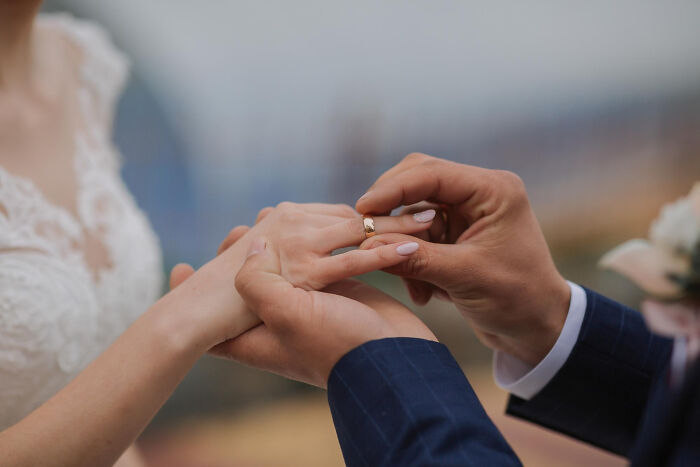 That everyone married as teenagers in the medieval period.
It turns out that teenage marriages were primarily in the upper class for dynastic reasons, and peasants mostly married in their mid-20s. The urban tradesmen class had the men marrying even later as no family would let their daughter marry a man who was not certain to have a trade to support her (and at some points the 'journeyman' phase of training was literally travelling hundreds of miles to learn from many masters).
History is not a fixed record. It is a story told by people, edited by time, and shaped by whoever had the loudest platform at the moment of telling. Napoleon's propagandists had printing presses, and Marie Antoinette's enemies had a revolution.
The myths in this thread are not accidents, though. Most of them served someone's purpose at some point, whether that was wartime ridicule, political narrative, or simply a good story that was too satisfying to correct. The truth has been sitting there the whole time. It just rarely gets invited to the dinner party.
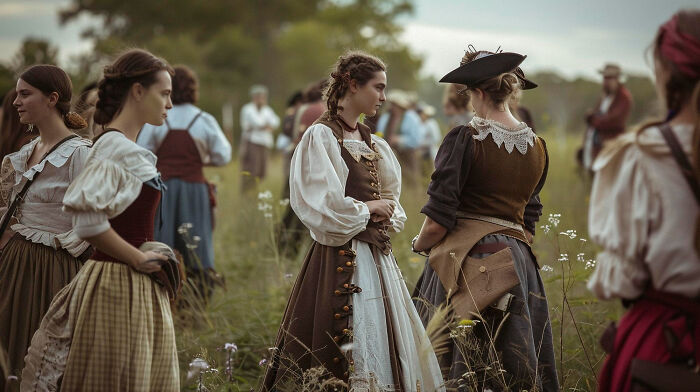 The myth that the Middle Ages were a time of regression and excessive cruelty.
It's based on propaganda from the 16th century about how enlightened and skilled beyond all before them certain 16th century people portrayed themselves essentially as advertisement and on bad historic research, as quality in historic research was quite bad until fairly recently, which caused a huge amount of hilarious errors, including taking obvious satire about manners at face value or all the theories about hiding rot with spices. The latter is based on the culinary experience of central European historians about 100 years ago, who knew their own cuisine to be very lean on spices, so they concluded that a spice use as it is common in many Asian and especially Indian cuisines must be an effort to hide rot, there can't be any other way.
That "f**k" stood for "fornication under consent of king" and came from some kind of mandate that soldiers should r**e women in villages they invade.
This is entirely incorrect. The word relates to old Northern European words like Middle Dutch fokken (to thrust or copulate) and dialectal Norwegian fukka (to copulate or strike). Much more boring, but true.
Roman lifestyle was so excessive that they had a room called a "vomitorium" that was specifically for them to vomit in after eating too much.
Completely untrue, and it stems entirely from people just assuming Latin words had the exact same meaning as English words that would come into use thousands of years later.
A vomitorium was an architectural passageway or exit tunnel in an amphitheater or stadium that allows large crowds to empty out rapidly. It "vomited" people out into the street.
There's no proof Marie Antoinette ever said "Let them eat cake". The philosopher Jean-Jacques Rousseau wrote that a "great princess" said these words, but at that time Marie Antoinette was a child.
- "The Mayans predicted the end of the world would happen in 2012"
Not only did they never predict any end of the world, the Mayan calendar doesn't end in 2012 either. It's just the end of a time cycle. After that one, another cycle would begin
- "The Maya empire disappeared mysteriously around the first millennium"
There was never any Maya empire, and it didn't disappear mysteriously, there's still around 11 million Mayan people today.
 Germany wanted to conquer the entire world in WW1.
I don't know how common this belief was, but I remember in elementary school being taught that had Germany won, they would have taken over everything. We actually have details of their ambitions and saw some of it with the Treaty of Brest-Litovsk. They pretty much wanted Luxembourg, Belgium (as a puppet state), some territories in France, Poland, the Baltic States, Ukraine, and Belarus in Europe, and then some territories in Africa and the Pacific. Or in other words, they were your typical 19th century European imperial power.

Ok, now do WW2! As far as I can tell, Hitler's original plan was not even to go to war with France and England; his interests lay mostly in the East, and he did not want to conquer all of Russia either. So Poland would have become part of the Reich, and most of Western Russia, which he planned to turn into farmland. Most Slavic people would have been eliminated, and the remaining people would have been servants/ slaves for the German settlers. But since France and Britain declared war on Germany, his plans changed a bit. His plan for France was basically to turn it into a puppet state for Germany, and he kept on hoping for a peace deal with Britain, as he saw them as more or less equal to the Germans. If peace could not be achieved, then Britain would probably become a puppet of Germany also. So the Reich he envisioned, and how that vision changed as the war progressed, was (in case of victory) for it to span from the Low Countries (Netherlands, etc.) to the Ural Mountains in Russia.
The Lusitania really was transporting weapons, despite US denials.
The ethical debate is then about whether a passenger liner being used as a human shield to transport war munitions through a war zone is a lawful military target.
But it wasn't simply a passenger ship. There really were weapons on board.
 The whole "the average empire only lasts 250 years before it collapses" thing is totally made up and baseless. I think the only reason it's gained steam as an internet truism is that the U.S. is 250 years old now.
That women didn't work. I'm genuinely flabbergasted that so many people think there was a time were child labour was common but every woman was a SAHM.
Back in the old days, being a stay-at-home-mum meant you stayed in and around the home and you worked hard at all *this* stuff while other people were out working hard at all *that* stuff. Also, 'stay at home' has a different meaning in a fishing village where the men go out in the boats and the women collect the catch when it's landed, carry it up the cliff, and gut it for preservation right there and then, out in the open and never mind the weather. Oh yes the women often stayed home - but that doesn't mean a cutsy trad-wife life the way the influencers make it out to be.
I have two. George HW Bush was never amazed at a grocery store scanner. He expressed surprise that the new one he was viewing could read UPCs that were ripped or half missing (until then, scanners were persnickety). Also, Al Gore never said he ‘invented’ the internet. Instead he said he helped it along, and as chairman of a key Senate committee, he did in fact play a role.
Gore didn't invent the Internet. He was just one of the few people in Congress smart enough to understand what it was.
In the US it's widely claimed that the US was the reason Germany lost WW2. While it was a HUGE help in the production of supplies and weapons, Information made public the last couple decades makes it clear that the UK could have won the war of the atlantic utilizing their knowledge of Enigma, and the Soviet union essentially broke the Wehrmacht at Stalingrad. After that, yes, Germany theoretically could have still won, but it was very very very very very very unlikely.
As with World War I, US involvement meant defeat for Germany to be a certainty. However, it would be fair to say that the US was the reason Japan lost World War 2.
 The Great Emu War.
No, Australia didn't declare war on birds and lose. They sent out a few guys with one truck, once machine gun, and not enough ammo. It wasn't a war it was a poorly planned hunting trip.
Calling it the Great Emu War was a joke made bu the press.
That slavery was a ”white”-made. Every single civilization took slaves, almost.
No honest person ever said that slavery was white-made. They myth that anyone ever claimed that is white-made, however.
That everyone in the English-speaking world was s******y repressed until the middle of the 20th century. There were certainly periods of s****l repression, but they tended to be brief, and what we read as repression was usually just a general social rule not to talk about certain things in public or in print. Victorians didn't put socks on their pianos because they might remind them of ankles. If you read actual historical letters or underground novels from the era, you will see that they got up to a lot of stuff. Some of it is downright naaaaasty.
Society is like a pendulum, it swings back and forth between periods of repression and liberation, the extent and length of time it swings in one direction just changes each time. People just assume that whatever came before was the way things had always been, and forget that people have always been people, regardless of the overall attitudes of societies
That 8% of men are related to Genghis Khan. The Y-chromosome from the study that popularised this myth is in fact over 2000 years old, so much older than Genghis.
Vikings never wore horned helmets in battle - that image was created by 19th-century opera designers for stage effects. Just think about it, going into battle with two huge handles on your head would be nothing short of handing the enemy a tool to grab onto.
It is actually impossible to prove that Vikings never wore horned helmets.
Carrots help your eyesight. This was propaganda from the British to explain why their pilots were so adept at shooting down bombers. It was actually the radar.
Carrots were also plentiful in the UK as you can easily grow your own, so it was a way to encourage Brits to eat them. Carrots contain beta carotene which gets converted into Vitamin A, which is important for good eye health so there is a small nugget in truth in the claim.
This one is quite small one, but that Elisabeth Bathory was innocent. It became a fact... for some reason. All things showing her innocence are from sources that ignored many contemporary ones (It doesn't mean she did it, but the evidence claiming she did not do it is more or less fabrication). Sadly, I've seen this being mentioned by some historians (or better said pop historians), too.
Neither Alexander Bell nor Elisha Gray invented the telephone. Fifteen years prior to "Mr. Watson, come here; I want to see you.", German scientist Johann Philipp Reis made a working telephone. Over the years, many other scientists were also working on developing their own phones. Bell just got to the patent office first (he beat Gray by two hours).
That it was scandalous to show ankles in the Victorian era. There are plenty of examples of women's clothing styles from the time that show ankle.
Only in the US. The US won the war of 1812 because they won one battle in New Orleans. White house burned to the ground. Their troops chased south to New Orleans where upon the Brits turned around and went home. Not chased out, but they just went home. The US invaded Canada and were chased out? How can that be a victory if Canada and the Brits did not surrender? And Canada will win this war as well. Even if a treaty is signed Canadians are just never going to trust the US again.
George Custer's last stand was in no way a heroic moment of true courage, it was a turbo racist so d**d set on seizing all the perceived glory for himself he attacked a significantly larger force with **significantly superior armament** (custers men had breech-loading single shot rifles, the gathered nations tribes had wincheater repeaters) out of formation without waiting for assistance, ruining months of planning and maneuvers and got himself and all his men k****d.
His name should have been synonymous with command incompetence and the dangers of allowing unhinged moronic narcissists into positions of power.
The only reason for the utter myth of "custers last stand" was his widow, a charismatic woman who invented a completely b******t story about bravery in the face of savagery and performed this b******t to congress and the president, who used it as an excuse and rallying cry to dramatically increase anti-indigenous measures.
That white men ran through the jungles of Africa capturing slaves. In reality, the s***e trade had already been going on there forever with the Muslims and there were whole markets where Africans caught and sold other Africans. One of the most notable s***e sellers was an African woman.
Slavery happened everywhere throughout history, every country took part on the s***e trade at some point in history. Slavery was everywhere and had nothing to do with racism as is generally believed by most today. Most countries throughout history captured and enslave people after winning wars/battles, this was the norm for thousands of years.
People in medieval times don't drink water at all.
People thought Orson Welles’s 1935 radio broadcast of War of the Worlds was a real invasion, leading to mass hysteria, and s******s. In reality, most people weren’t listening to the War of the Worlds broadcast. They were listening to some ventriloquist program. There are no major reports of Mass hysteria either. Newspaper was just trying to discredit radio.
Stupidly, people still believe the Titanic-Olympic switch theory. It's so stupid and there's so much evidence of it being false.
 George Washington had wooden teeth.
They were actually human teeth, pulled from the mouths of slaves. .
This is replacing one myth with another. Some human teeth were used in some of his dentures, as was common at that time, along with other sources like ivory, but there's really nothing to suggest that they were pulled from the mouths of living slaves. Much more likely they were taken from corpses.
People still believe Herbert Hoover was fluent in Mandarin even though he wasn't by his own admission. His WIFE was the one who actually became fluent.
Kamikaze pilots weren't sent on missions without enough fuel to return to base.
They were permitted to return without punishment if they suffered from mechanical problems or couldn't find their targets, plus more fuel would create bigger explosions on impact.
William Howard Taft getting stuck in a bathtub. As far as we are aware there are no recorded instances of President Taft getting himself stuck in a tub, it was likely a rumour because he was the fattest President in US history.
The problem with Taft's presidency wasn't that he got stuck in a bathtub. The problem was that they got him out of it.
That every woman from about 1300 to about 1935 was wearing an agonising tight-laced corset designed to give her a 16-inch waist and render her incapable of breathing.
Sparta was a modern militaristic state that produced courageous and robust soldiers through an excellent educational program, and provided more equality for women because: "Only Spartan women produce strong warriors.".
"The library of Alexandria burned down completely during an attack by Julius Caesar and it basically destroyed an immense wealth of knowledge that the world never recovered from."
Except that there was some disagreements among historians at the time, where some early writers say it was burned down to the ground, while later ones say the damage was minor or didn't mention the world famous library at all. people still wrote about having visited the library, gifting books to the institute or how great the institute was relatively soon after that fire.
The library of Alexandria stil had a large collection for several centuries after the fire, and when it disbanded most of the collection was simply transported to other libraries.
That the Vietnamese attacked the US in the Gulf of Tonkin. That is what everyone was told happened to get them on board with the war, but it was entirely fictitious.
Medieval Europeans had soap. They weren’t filthy. They washed themselves with soap. They did laundry with soap. Soap has been with humanity for something like 4500 years.
The Israelites exodus from Egypt from abrahamic mythology. No Egyptian records of it or any other events in exodus ever happened.
The American Bison did not roam the central plains of North America in huge numbers until AFTER smallpox devastated the Plains People’s population. The First Nations people hunted bison to near extinction - as demonstrated by the Bison’s genetic bottleneck in the 1560’s. With the d***h of the predators, the hunted grew in population to giant herd sizes seen in the 1800s.
That there was an actual pirate accent during the golden age of Atlantic priacy. The accent comes from the Disney film Treasure Island.
1. Mossadegh was the democratically elected prime minister of Iran. He was elected by the parliament; not the pubic and confirmed by the Shah.
2. The US and UK removed Mossadegh. The US/UK effort failed. Mossadegh was removed by Iranians a few days after the US/UK attempt. He was dismissed by the Shah prior to these events.
3. The US/UK replaced Mossadegh with the Shah. The Shah was the monarch since 1941 and continued to be the monarch.
4. Mossadegh was a democratic leader at the time of his removal. Mossadegh had dismissed parliament and was ruling by decree when he was removed.
Very misleading in every respect. The Iranian system was similar to the UK system. The UK has never had a democratically elected prime minister. It's not how it's done. The leader of the biggest party in the House of Commons is invited to form a government by the monarch. The coup which removed Mossadegh was orchestrated by the CIA and MI6. The Shah ended up in full political charge, ending Iranian democracy. (the US has never had a democratically elected leader in Congress, nor a democratically elected president. In the first case, the House and the Senate select their leaders; in the latter case, the Electoral College was designed to ensure one voter in a smaller state had more power than a vote in a single state - an anti-democratic system)
Civil War buff here. Contrary to the popular myth, most Civil War amputations (estimated 90–95%) were performed with anesthesia, usually chloroform or ether. Anesthesia wasn’t always administered precisely, so accidents did happen.
The battle of Gettysburg didn’t start because Confederate soldiers were looking for shoes. The area had already been picked over for supplies weeks earlier. Gettysburg was a major strategic crossroads, so the two armies kind of stumbled upon each other there.
That is what our Gettysburg guide said. Hey, we're both here at these major crossroads so let's have a battle.
Lord's Right to the first night is very real thing. Movies like brave heart and Asoiaf perpetuated it even more, not to mention the avengers line drop.
Irl it
seems to be something that has not existed , in widespread practice at least in medieval era Europe. Sure there were cultures that did have accounts of it happening like Hawaii ' s chiefs right and Kurdistan( though it was mainly targeted on a minority like Armenians) but it overall been viewed negatively and been perpetuated by propagandist in later eras to paint the previous era as brutes
In fact when a Spanish king ✍️ a decree outlawing it, his vassal were like umm why ban something that were have never done.
The Irish famine occured because the potato crop failed due to blight, wholly inaccurate.
Nope. The famine was most definitely caused by the potato blight. It was much worse in Ireland for many reasons, mainly that they had become quite dependent on the potato as their main crop and source of food. It was made a lot worse by government policy, true, but the underlying cause was definitely the blight.



























 No fees, cancel anytime