Get Premium
Dark mode theme is available exclusively for premium users. Learn more about the benefits of subscribing.
No fees, cancel anytime.

 Dark Mode Ad-Free Browsing Unlimited Content
 Ad-Free Browsing Unlimited Content Dark Mode
Join 1.2 million Panda readers who get the best art, memes, and fun stories every week!
25submissions
1week left
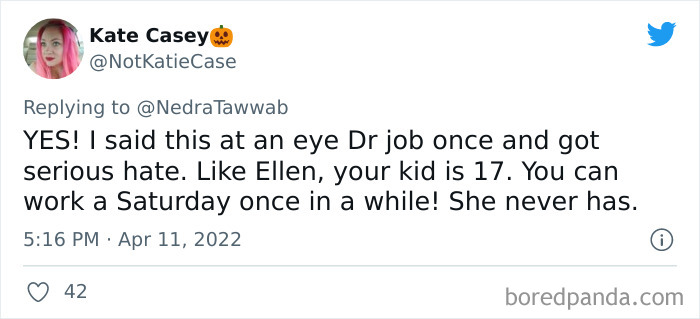
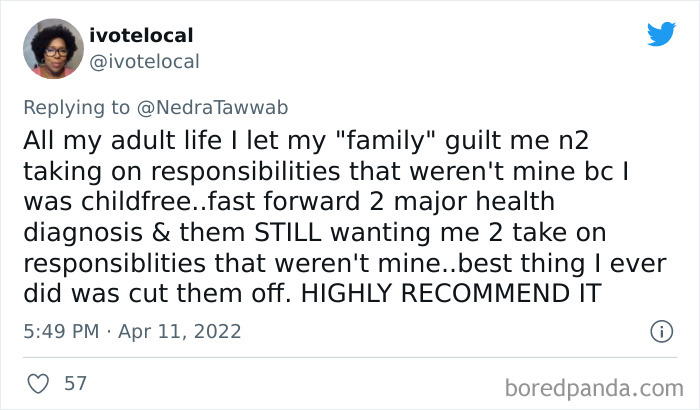
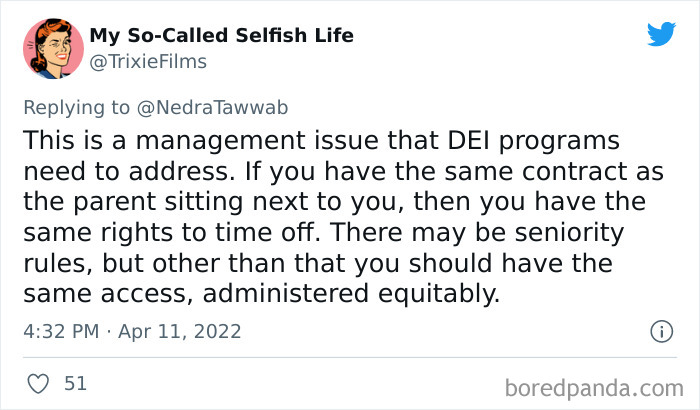
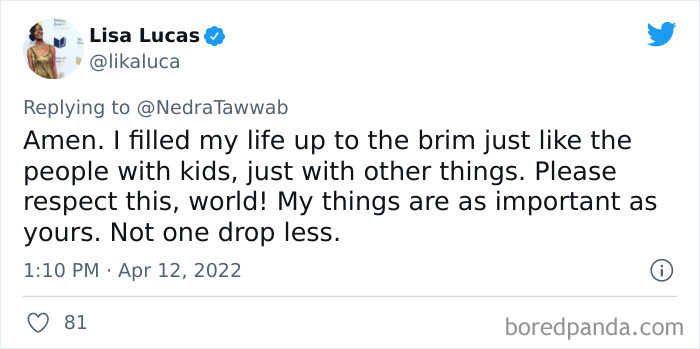
While more and more people are now opting to stay childfree, some still find it hard to understand this conscious decision. Things become even more complicated when it comes to aiming for a healthy work-life balance. You see, managers or coworkers can suddenly decide that people without kids have plenty of time on their hands to cover the less-desired shifts and work during holidays or other important events.
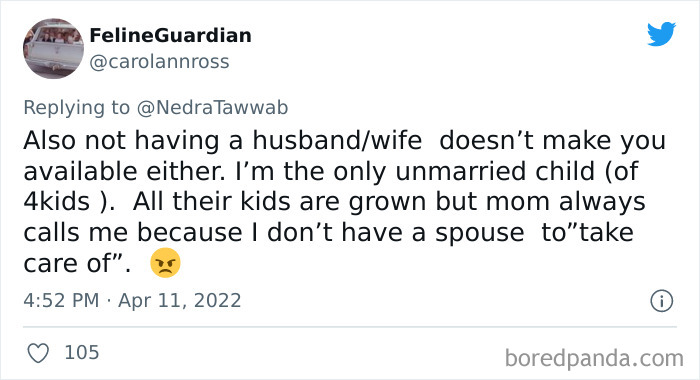
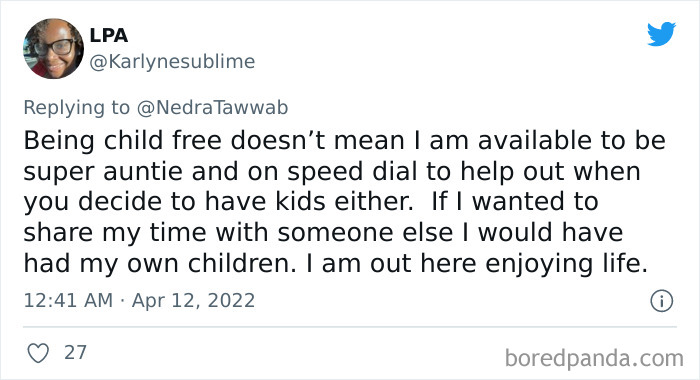
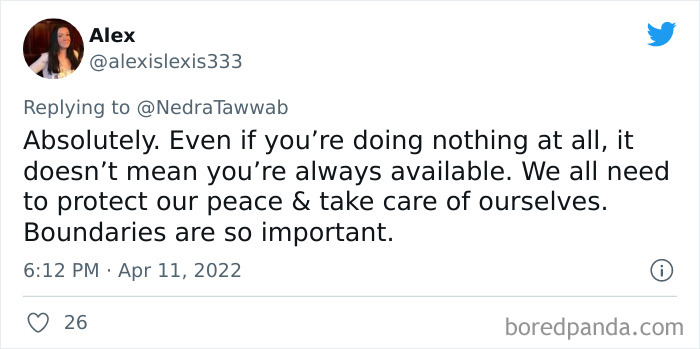
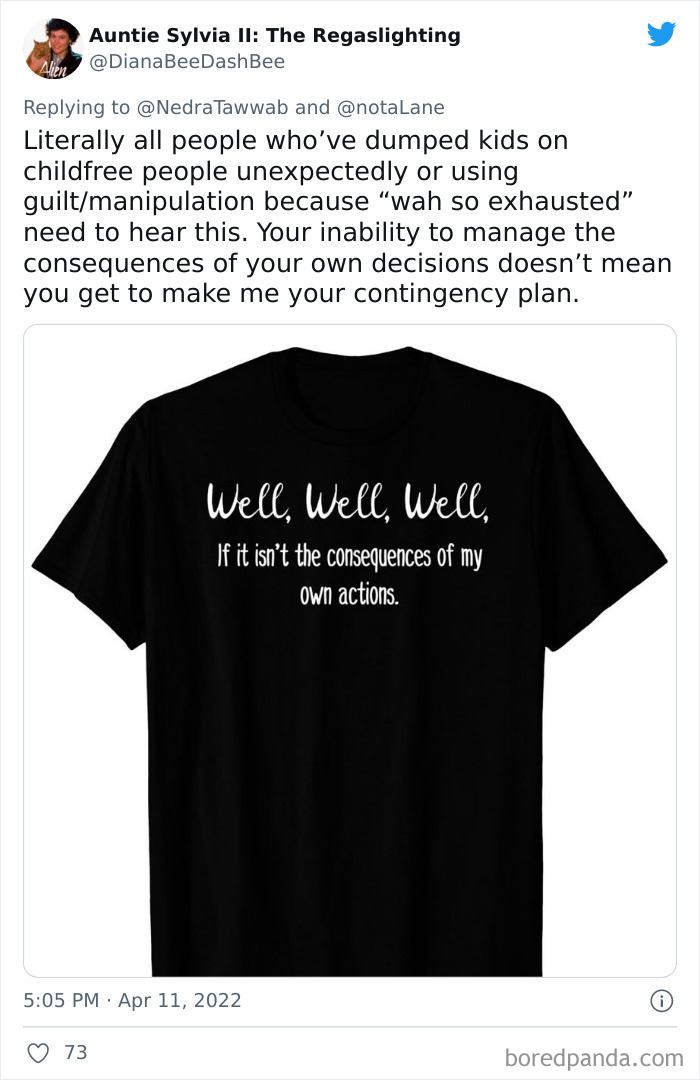
And this viral Twitter thread illustrates it all too well. Therapist, bestselling author and relationship expert Nedra Tawwab recently tweeted, "I don’t know who needs to hear this, but: Being childfree doesn't mean being more available," and it deeply resonated with a lot of users.
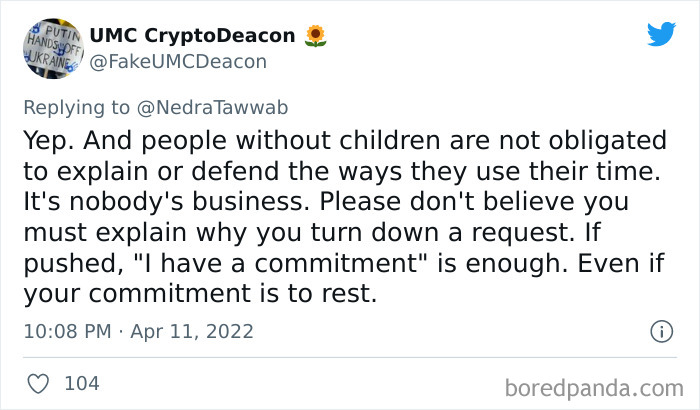
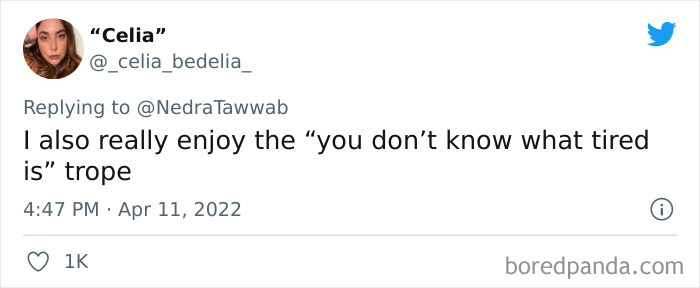
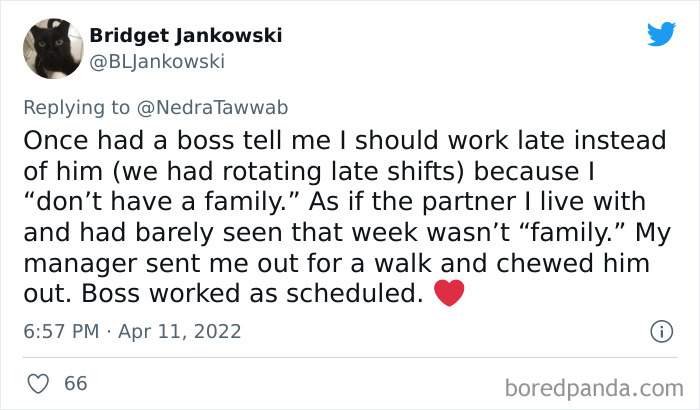
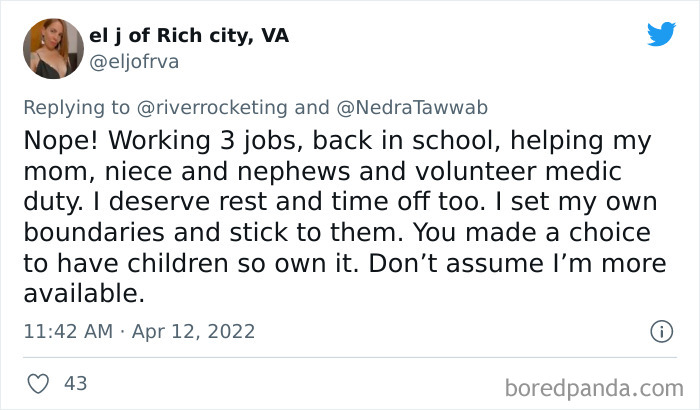
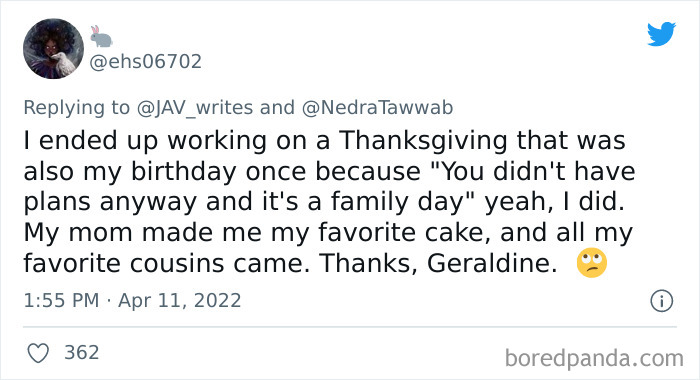
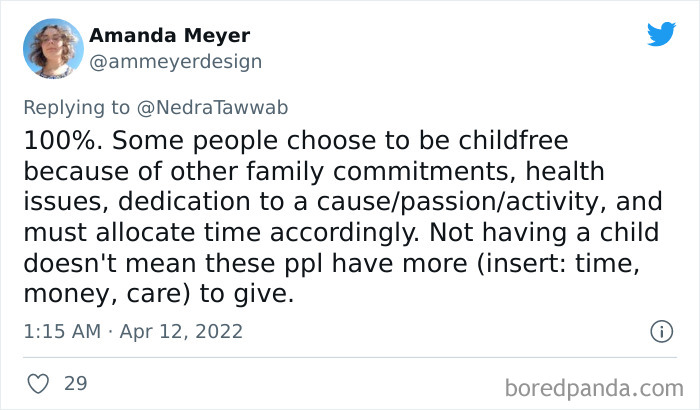
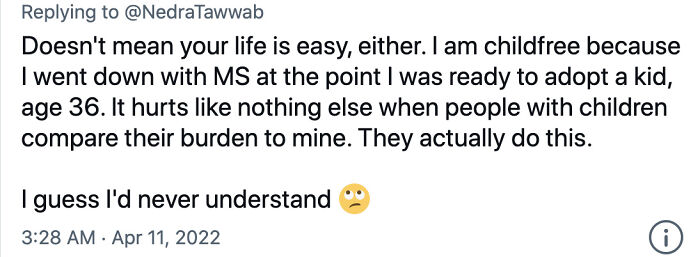
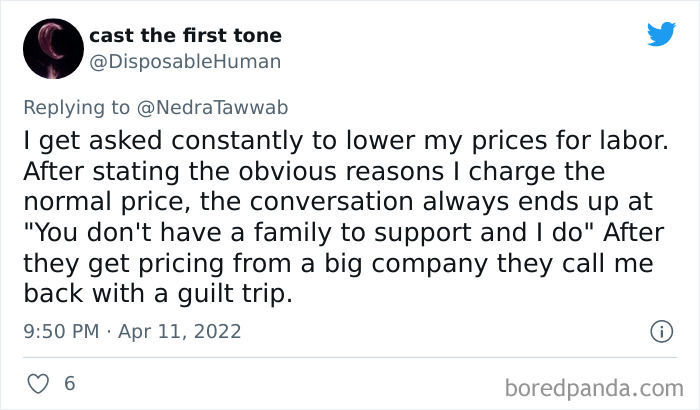
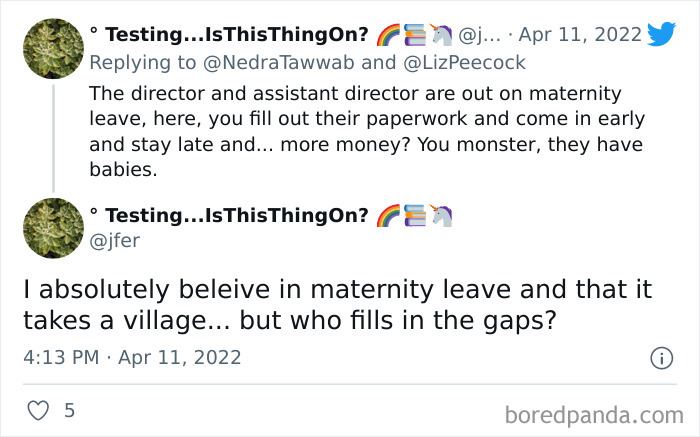
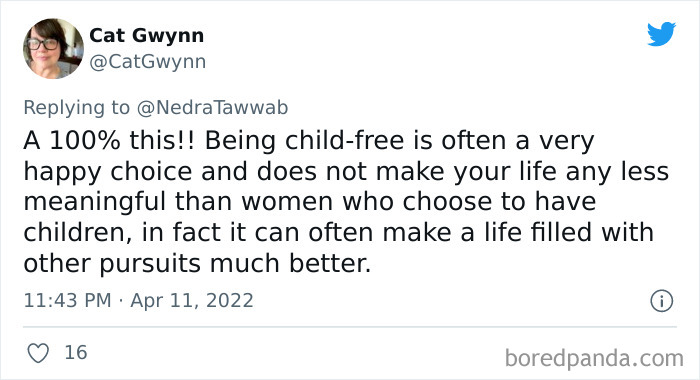
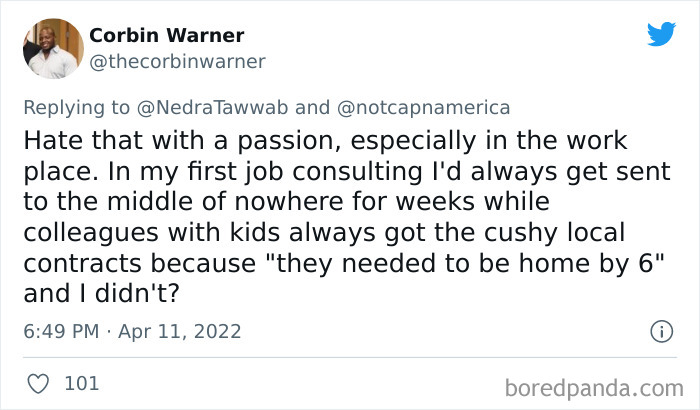
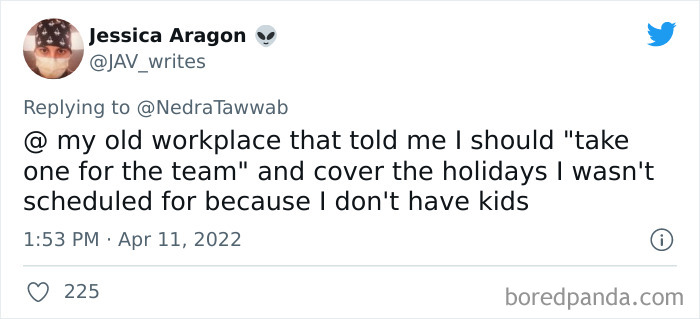
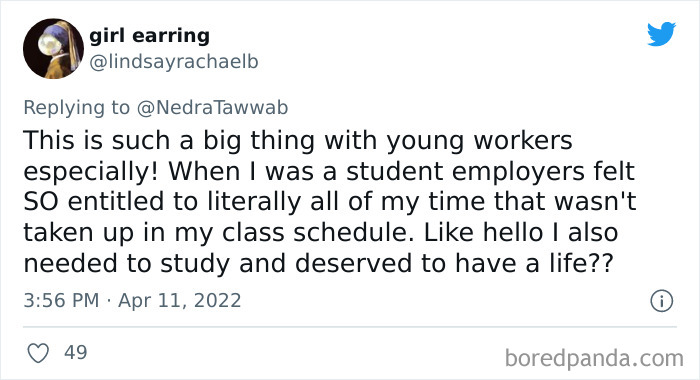
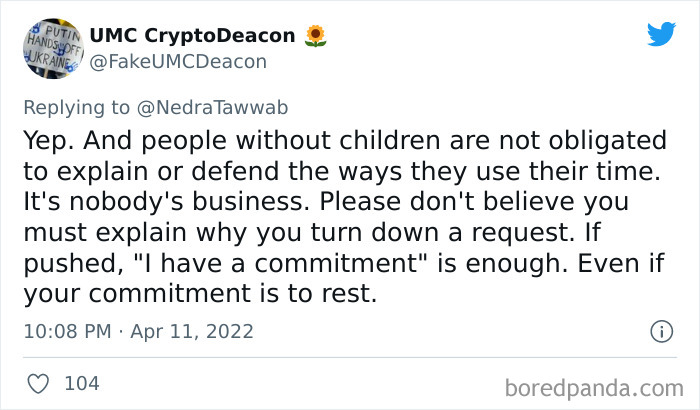
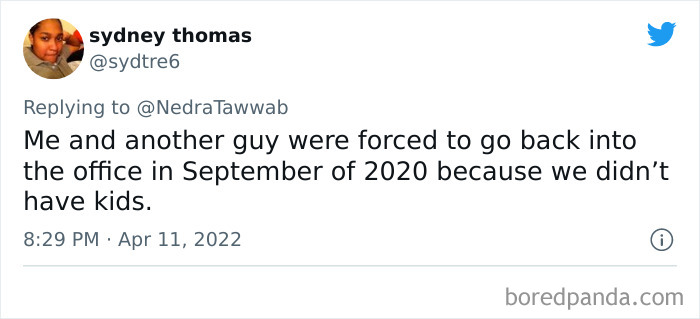
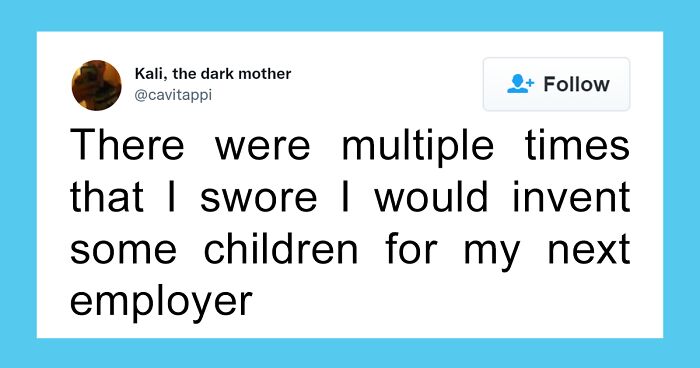
Hundreds chimed in on how their bosses or colleagues show little respect for their personal life choices. Bored Panda has collected some of the most illuminating answers frustrated workers had to share, so check them out right below. Make sure to upvote the ones you agree with and, if you have any similar stories to share, tell us about them in the comments!
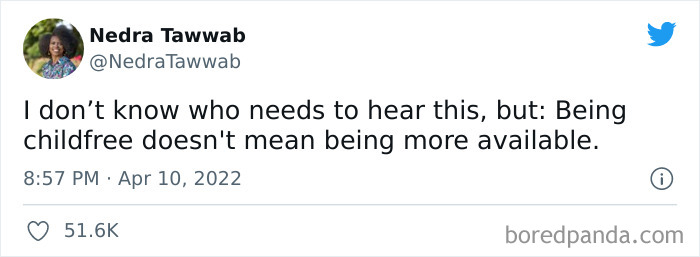
Image credits: NedraTawwabClick here & follow us for more lists, facts, and stories.
This post may include affiliate links.
Nedra Tawwab, who is also the author of Set Boundaries Find Peace: A Guide to Reclaiming Yourself told BuzzFeed, "People without children have become burnt out, especially during the pandemic, as they've been expected to do more. The perception is that when you don't have children, you have more time available and can therefore offer others more support."
"People must advocate for free time and challenge the expectation that they must be more flexible," she added. "It seems like a punishment to have more expected of you because you don't have children. All humans have a specific capacity to operate effectively — demanding more of people when their capacity is full doesn't increase productivity; it decreases it."
Bored Panda was curious to learn more about why the decision not to have children is often a stigmatized one, so we reached out to Erin Spurling, founder of Curiously Childfree. "I think it stems from having children being seen as 'the norm' for so long, it’s then hard for people to understand something different to that," she told us.
This is partly why she set up this childfree space, which you can also find under the handle @curiouslychildfree on Instagram. Spurling wishes that people could speak more openly about this choice and help others understand and be more accepting.
The decision not to parent is sometimes hard to grasp for people who see kids as a crucial part of having a fulfilled family. "A very prescriptive view of life has been presented for such a long time," she explained. "Life is typically seen as — grow up, get married, buy a house, have children. Lots of people don’t consider something outside of that norm."
Spurling also added that non-parents are a minority, so those who have little or no interaction with childfree people can jump to conclusions or go along with stereotypes. "It’s often assumed we all choose this way of life because we’re selfish but that’s often far from the truth, and there are so many reasons."
Pew Research Center conducted a survey that found there’s a rising share of Americans who say they are unlikely to ever have kids. More than half (56%) of childless adults younger than 50 said they simply don’t want to have them. Non-parents who have other reasons stated it’s due to medical reasons (19%), financial reasons (17%), and because they do not have a partner (15%).
Around one in ten pointed out their age or their partner’s age (10%) or the state of the world (9%) is their main motivation to remain childfree, and 5% cite environmental concerns, including climate change.
The founder of Curiously Childfree told Bored Panda childfree people might also be reluctant to talk about their life choices because of the harsh critique they so often receive. "The lack of conversation about it means there are fewer opportunities for people to learn and understand," she said.
People without kids face double standards at work because they are generally viewed as having more time, no commitments, no responsibilities, and lots of flexibility, Spurling argued. "But there is also an attitude that caring for children is more important than anything a childfree person might be involved with in their life, which can be frustrating. It can make you feel like you’re not valued, your time isn’t important and your choices aren’t respected."
Recently, Spurling stumbled upon a job ad that stated parents got an extra week’s annual leave every year. "That could be hard to accept as a childfree person, but I would argue it might be even harder for a childless person who very much wanted to have children but then couldn’t, and now they find themselves covering the extra workload of those lucky enough to have been successful in their choice to have children."
Spurling somewhat agrees with Tawwab’s line of thinking: "I do think it can be true that we have more flexibility. … But I don’t think that means we should be expected to cover work for those who do have children." After all, people who opt not to have kids do have commitments in other forms — second jobs, caring for relatives, volunteering, pets, hobbies, she explained.
"I think it’s important to remember that committing to any of these is someone’s personal life choice, and none of these life choices should be seen as lesser or more important than another. Each of us lives our life to reflect what we want, for some that involves children and for others it doesn’t."
If you want to change your situation and set some healthy boundaries, Spurling advised you to stand your ground but not in a confrontational way. "When you find yourself being judged or devalued because of your choice, it can be easy to become quickly defensive in these situations but discussing it calmly will be far more helpful to both sides."
"It’s not that childfree people can’t or don’t want to help if a colleague needs to leave because a child is unwell for example, it’s about that help being a two-way street. Sticking to your own boundaries can be tough but once you start doing it, it does become easier, people will adjust and you will feel happier because you’ll be living within your own limits," she concluded.
You might also like: Perfect online, different offline: 34 photos that tell another story























 No fees, cancel anytime