Get Premium
Dark mode theme is available exclusively for premium users. Learn more about the benefits of subscribing.
No fees, cancel anytime.

 Dark Mode Ad-Free Browsing Unlimited Content
 Ad-Free Browsing Unlimited Content Dark Mode
Join 1.2 million Panda readers who get the best art, memes, and fun stories every week!
Many cat owners find themselves puzzled by certain feline behaviors like knocking objects off shelves, refusing favorite food, or waking us up in the middle of the night. These actions are often labeled as “bad behavior,” but in reality, they are usually rooted in instinct, communication, or unmet needs, rather than intentional mischief.
To help make sense of these everyday mysteries, we collaborated with Purina pet behaviorist and Certified Applied Animal Behaviorist (CAAB), Dr. Annie Valuska.
Scroll down to explore some of the most common cat behaviors that are often misunderstood, along with expert explanations from Dr. Valuska that reveal what cats are really trying to tell us.
More info: Instagram | tiktok.com

This post may include affiliate links.
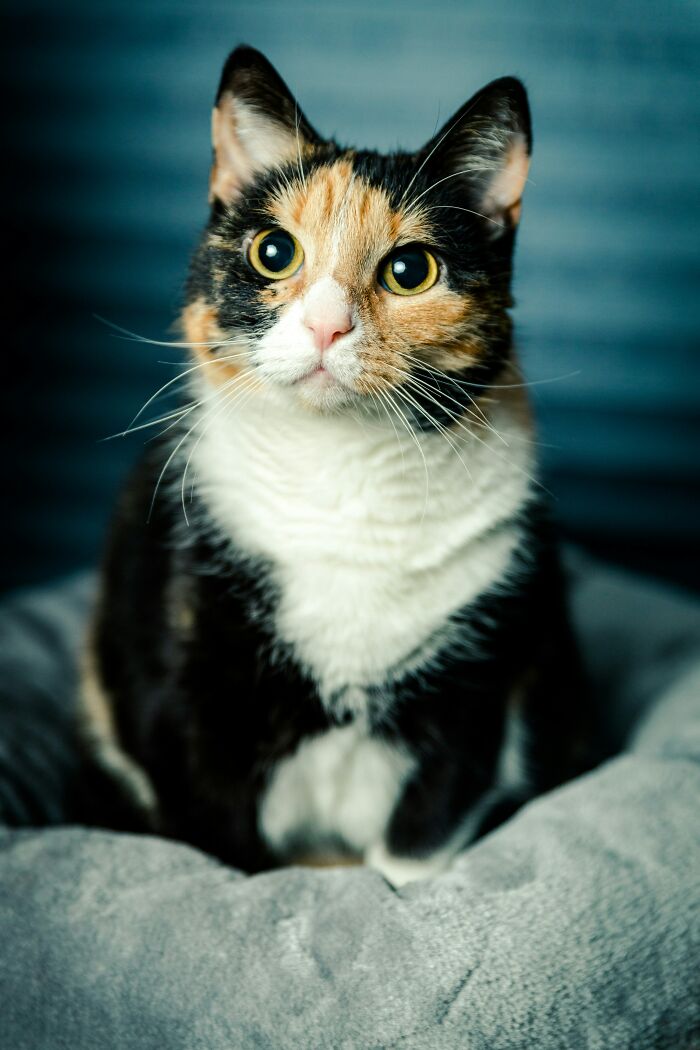
While cat owner survey data shows that people believe that cats of different coat colors behave differently, direct observational studies of cat behavior do not support this belief. In other words, coat color is not a reliable indicator of behavior or temperament in cats! If you expect a calico cat to be “spicy,” your bias and subsequent treatment of the cat may directly contribute to the cat’s behavior. Keep an open mind and don’t judge a cat by their coat!
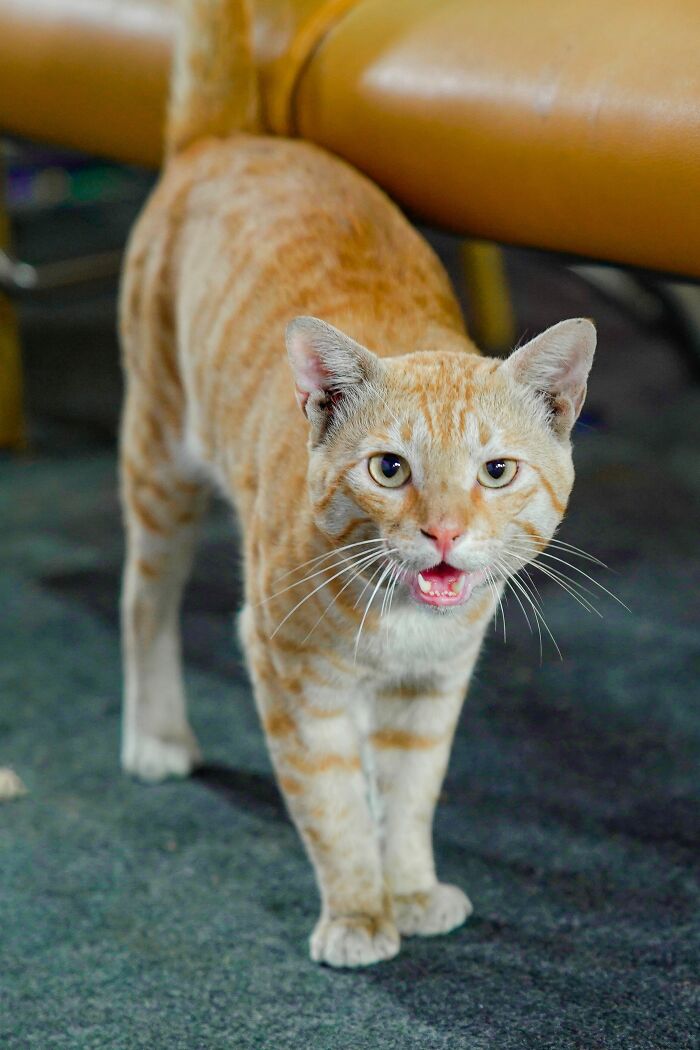
Do you feel like your cat is sassing you by always answering you with a meow? It might be your fault! Cats’ vocal communication is highly affected by their interactions with people. If you frequently talk to your cat or respond to their meows with attention, you are likely reinforcing their meowing and training them to “talk” to you.
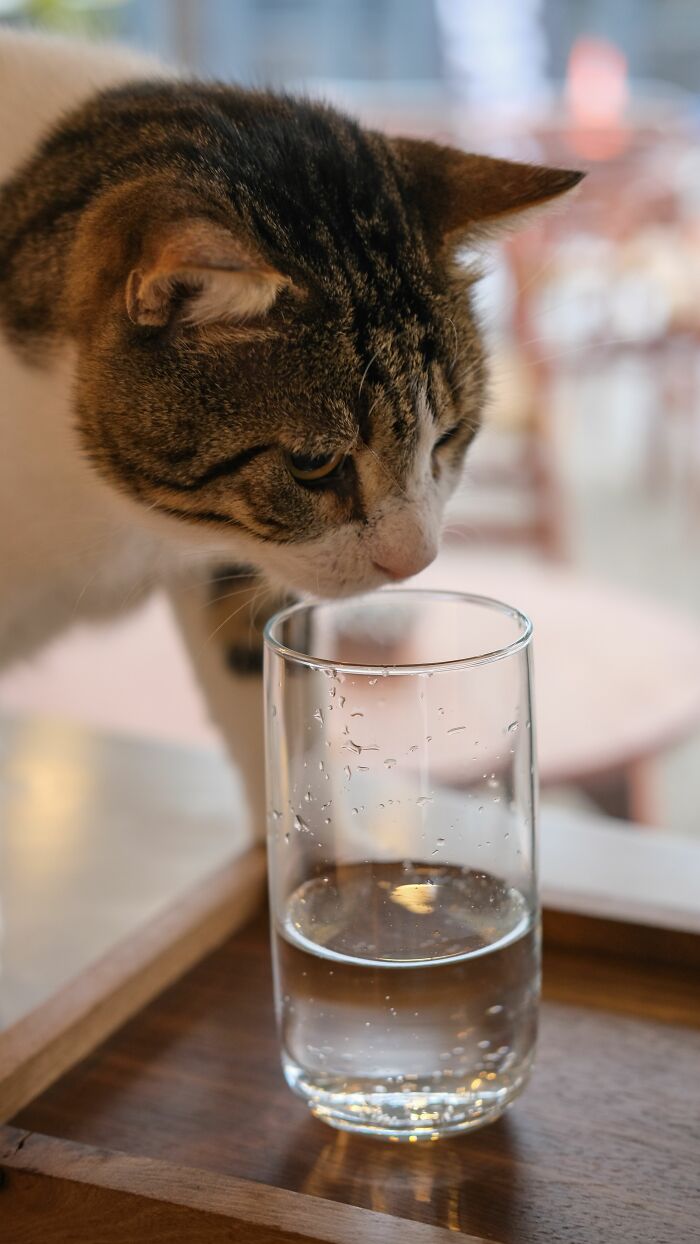
Cats learn to “test gravity” because they are territorial animals sensitive to changes in their environment, and their high play drives may lead them to explore new things by trying to engage with them. If the item falls, it becomes even more interesting and appealing, and cats may start seeking out the opportunity to have that kind of fun again! Cat parents may inadvertently contribute to this behavior by not providing the cat with enough appropriate outlets for these needs, like scheduled playtime with toys and attention (even “negative” attention!) when they mess with your stuff.
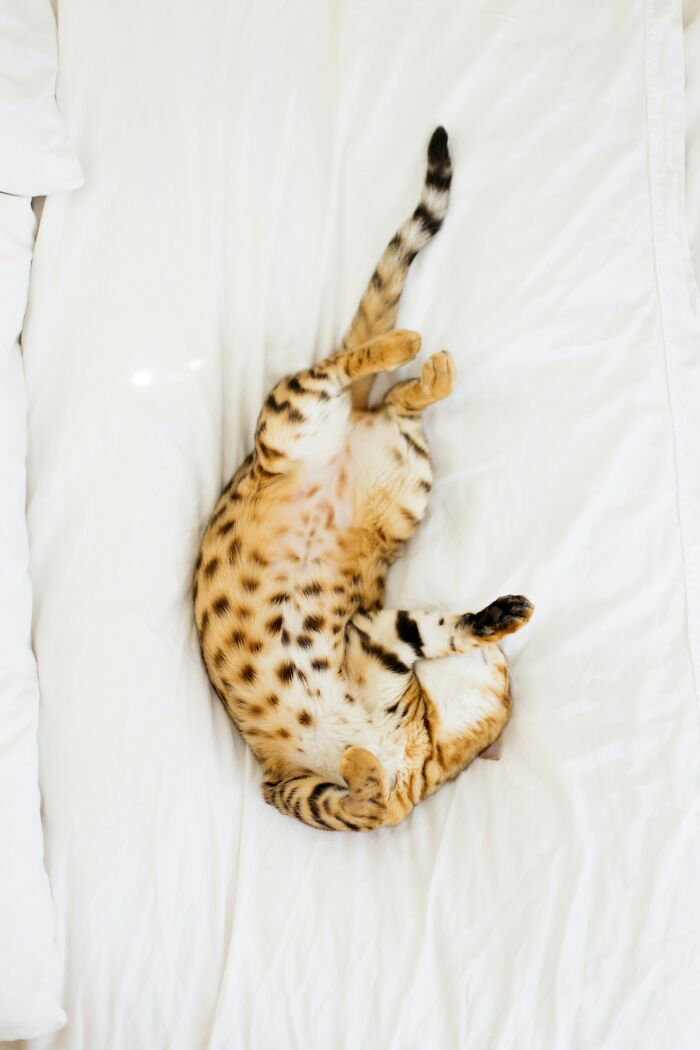
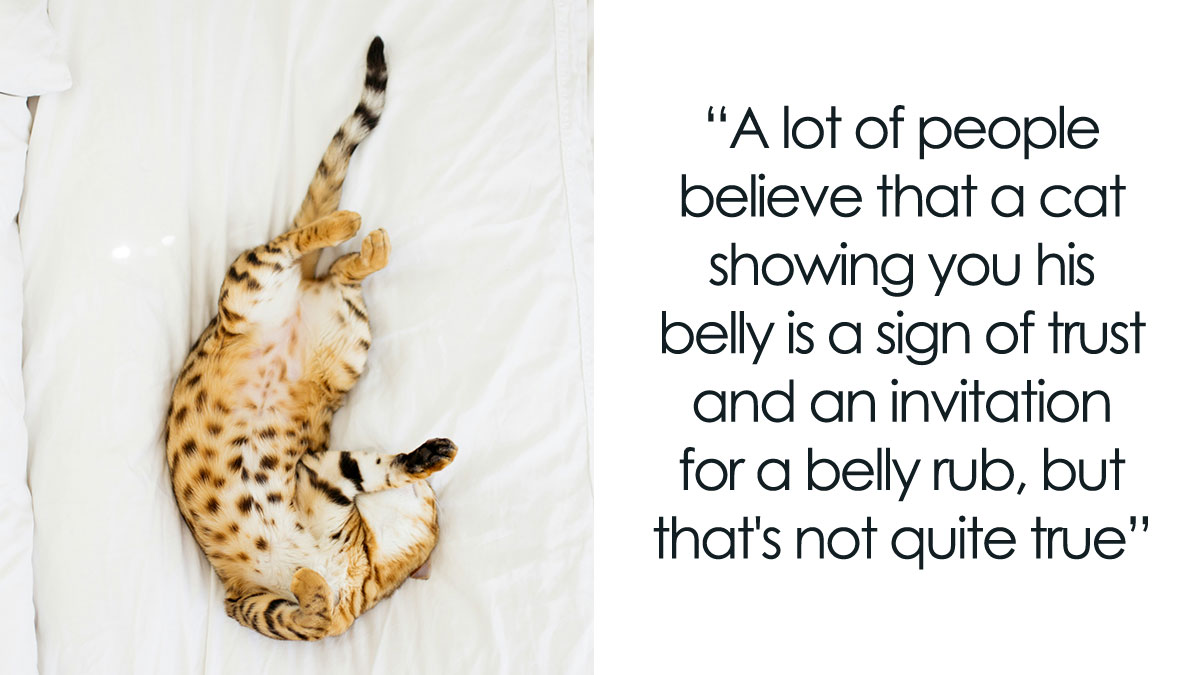
A lot of people believe that a cat showing you its belly is a sign of trust and an indication that it is safe to approach, but that’s not quite true. If that pose is accompanied by very relaxed body language, it likely means the cat is feeling safe with you. Still, it's probably best to avoid a belly rub: many cats have very sensitive stomachs and do not enjoy being petted there. Note that cats will also adopt the “belly up” pose to signal that they are prepared to defend themselves, as this position puts all their weapons (4 clawed feet and teeth) at the ready!
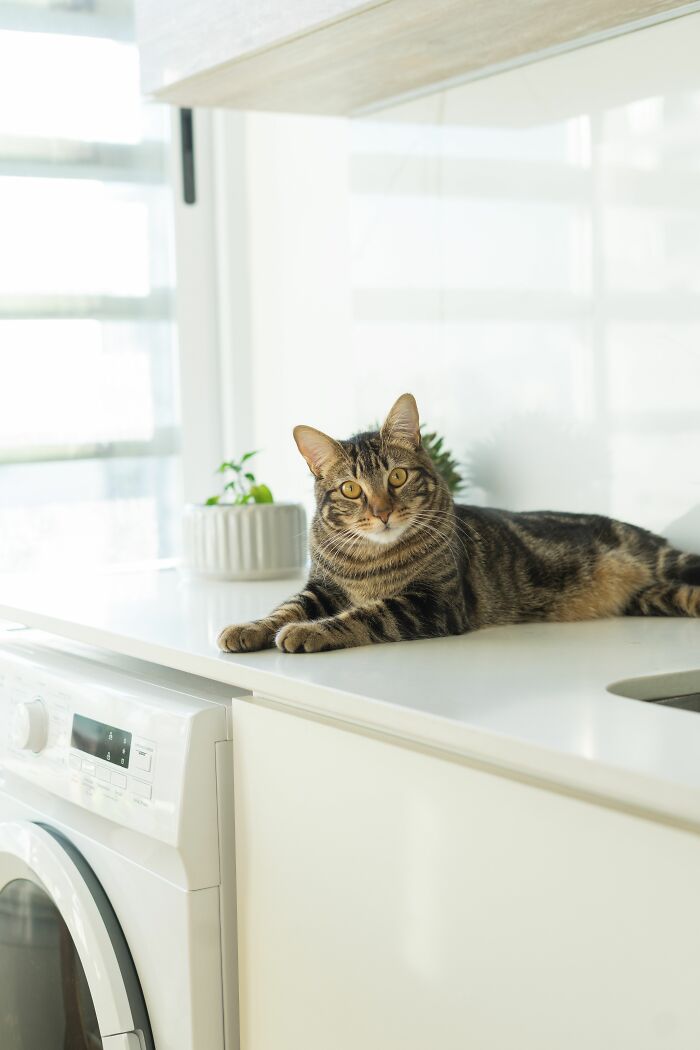
Cats aren’t jumping on countertops just to pester you: it’s in their DNA! Cats are “mesopredators” (i.e., middle of the food chain), and as a result, they have behaviors consistent with both predators and prey. Higher resting spots meet their need for safety (prey), and their desire to see all the action happening around them (predator), and our kitchen counters are especially enticing because they are associated with stuff cats like, such as food and proximity to their human family members. If you want your countertops to be less appealing to your cat, consider providing an alternative resting spot that meets all those needs, and reinforce your cat’s use of it with high value treats and praise.

Rabbits also love to be in higher places, especially if they got something over their head there. You see things better when you're on top of it.
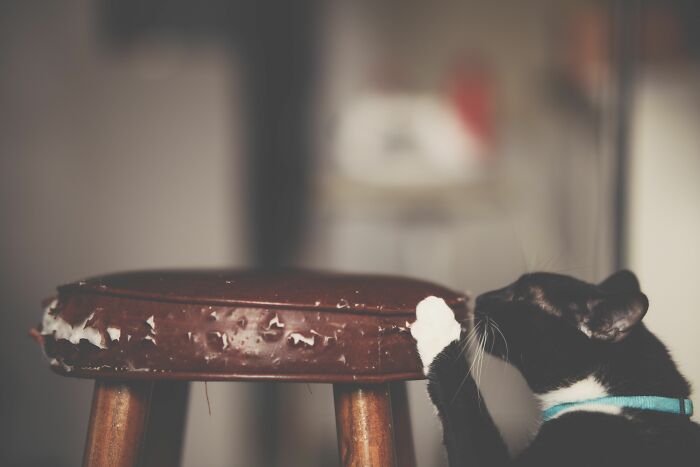
You may see a shredded sofa arm, but your cat sees (or more accurately, smells) a sign that she’s home! Scratching is a natural territorial behavior in cats, and they need an appropriate outlet for it. Furniture can be appealing because of its sturdy build, interesting texture, central location in the home, and options for horizontal and vertical orientation. When selecting a scratcher for your cat, you may need to test many different materials, weights, orientations, and placement options to find something your cat likes!
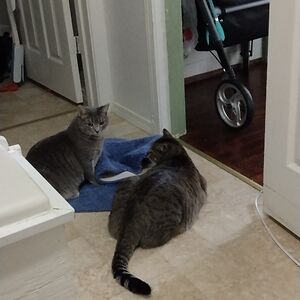
Audi and I scratch at everything. How else would our soft can-opener know it was ours?
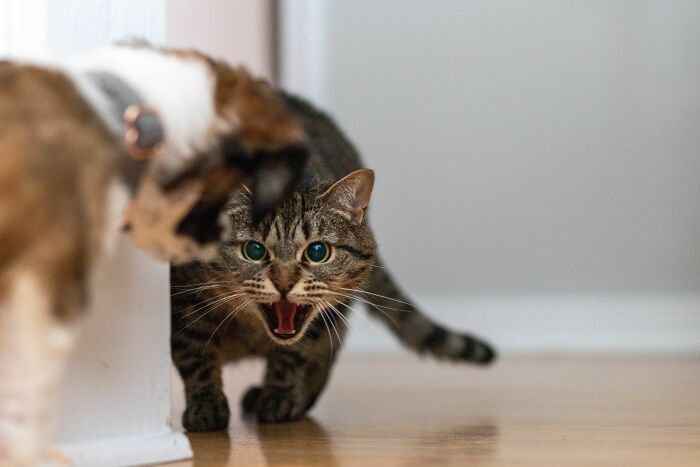
Hissing might be one of the most misunderstood cat signals. While hissing is commonly interpreted as aggressive, it’s more accurate to think of a hiss as an expression of “too much.” In situations where a cat is interacting with a new person or cat, it’s a cat’s way of saying, “I’m not too sure about this, so please slow down and give me space”. You may also see a hiss during play, which can be a sign to bring the intensity of the play session down a notch!
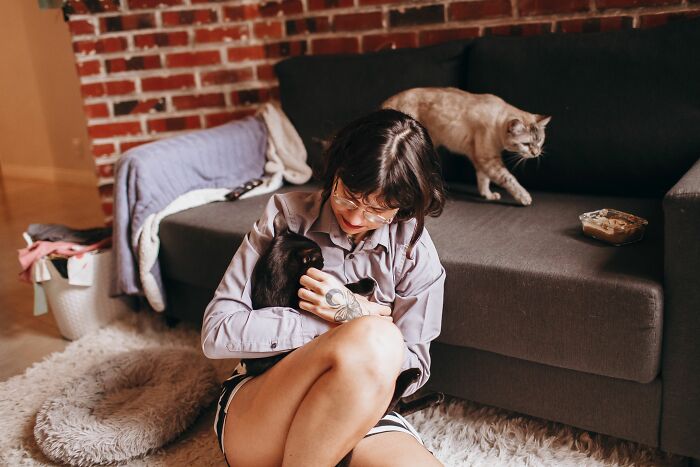
Cats’ tendency to gravitate towards the one person in the room who has a cat allergy is likely linked to their status as mesopredators. When new people are staring at a cat, talking to them, or trying to approach them, that can be scary – but someone who is avoiding eye contact and not attempting to engage at all looks very safe and, therefore, is a more appealing person for the cat to approach.

Cats can be very easily physically overstimulated from petting! This means that a touch that was OK for a little while may quickly become “too much” for a cat, leading to petting-induced aggression. You can minimize this by pausing every 3-5 seconds while petting to give the cat a break and assess the cat’s body language; signs that the cat has had enough for now include ears rotating towards the sides or back of the head, a swishing tail, and dilated pupils.

The last cat I had loved to be petted and brushed. When I brushed her I would do it a little bit of aggressively. She loved it. She loved it so much that she would slightly stick her tongue out. I never saw that before. But since then I have seen it in other cats.
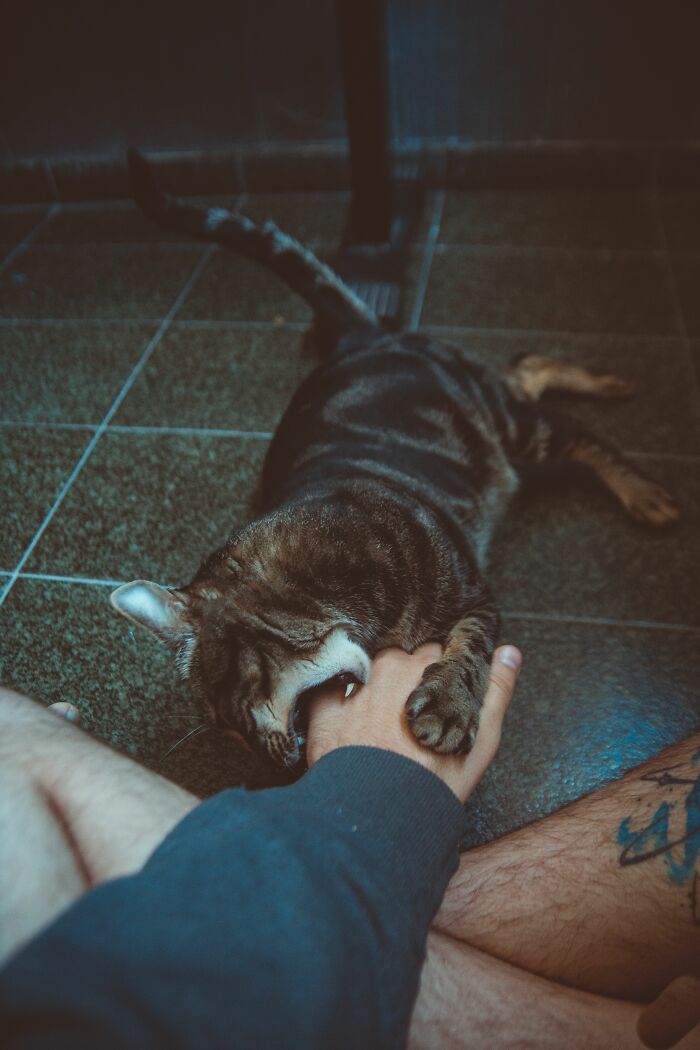
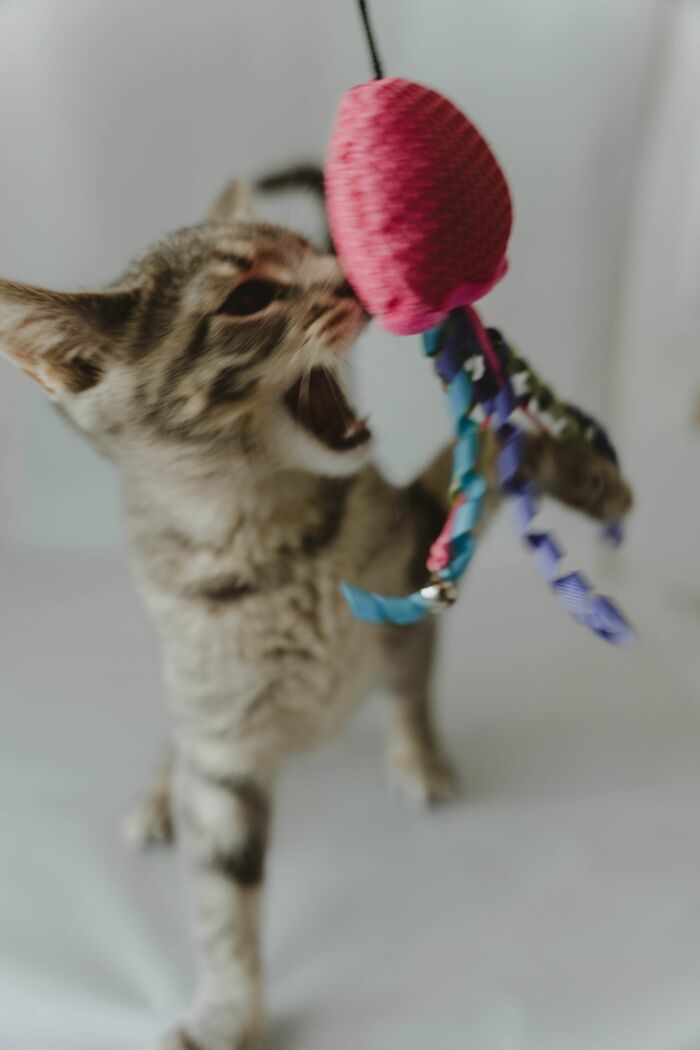
Cats are obligate carnivores that evolved to spend most of their waking hours hunting. Even though they may not need to hunt to put food on the table anymore, your cat still has those hunting instincts, and if you don’t give them an appropriate outlet, he will find one – and it might be your ankles as you walk past the couch! To discourage these “attacks,” make sure you’re not accidentally reinforcing the behavior, and give your cat plenty of interactive playtime with toys (having cat toys scattered around the house is not enough!). Most cat parents seriously underestimate how much play time their cat needs – try adding at least one more 10-minute play session to your current schedule.

I turn off the lights and play with my cat by throwing pompoms for him to chase just before bed. I think he thinks we go hunting every night. Afterwards, he eats and then sleeps for a few hours. It really calms him down.
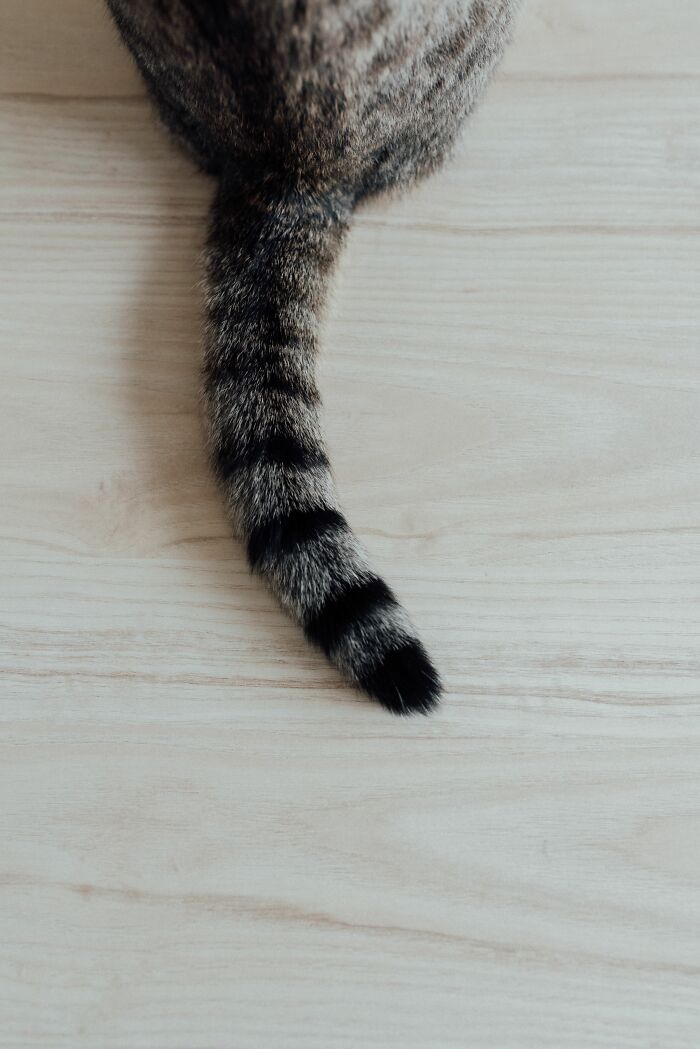
A wagging tail does not equal a happy dog – or cat! In both species, a wagging tail is associated with increased physiological arousal, and in cats, that arousal is usually tied to an unpleasant emotional state (a.k.a. “negative valence”). When you see a cat’s wagging tail, it should be interpreted as an indicator that the cat may be feeling stressed, overstimulated, or irritated, and should not be seen as an invitation to start or continue with petting.

It depends on how fast, how far, orientation, etc. There's at least 6 to 8 different ones.
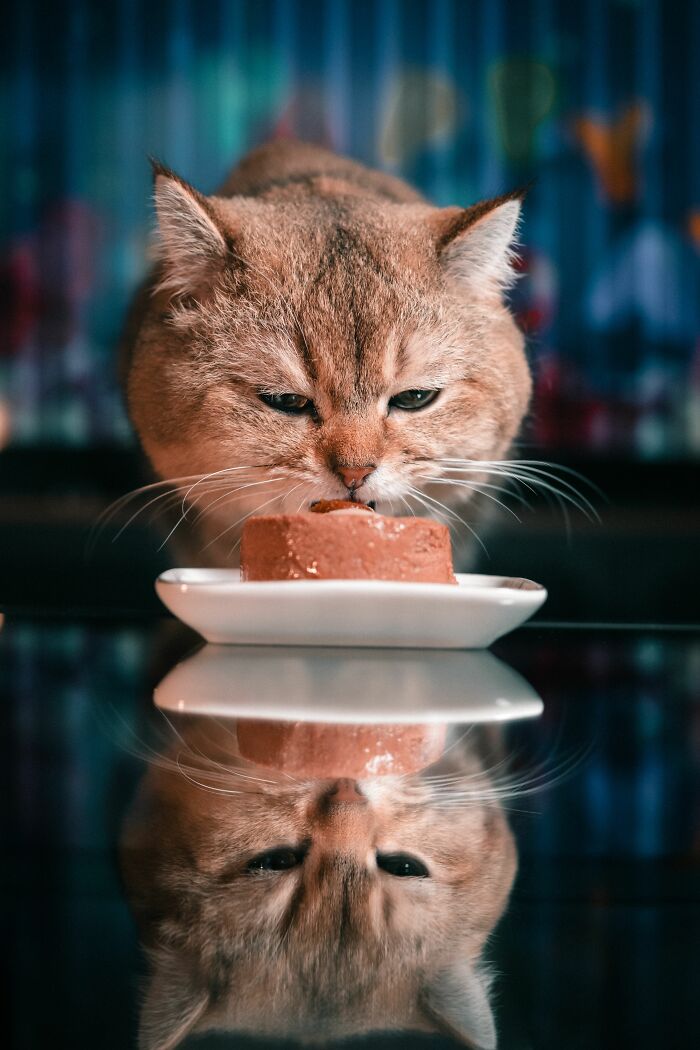
We’ve all seen the meme about cats refusing to eat a formerly favorite food…as soon as you buy a whole case of it. While it’s important to rule out any underlying health concerns that may cause a change in appetite, healthy cats may do this, too. They are not intentionally being difficult; they are wired to prefer new foods over more familiar ones (a tendency known as “neophilia”). It’s hypothesized that this tendency evolved in cats to ensure they always hunted different prey in the wild and maximized their chances of obtaining all the required nutrients.

Luckily i have 2 cats and for whatever reason the food in the other cats dish is always good. So even if they dont like it in their dish, they will eat it from the others.
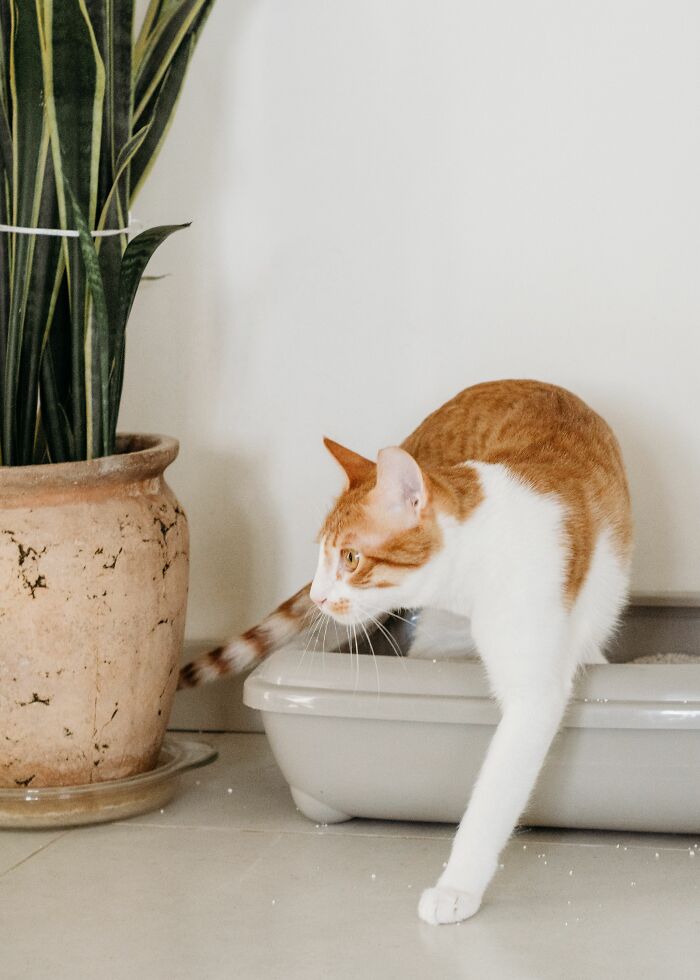
When a cat goes to the bathroom outside the litter box, it can be easy for cat parents to see it only as a mess to clean up or even as a sign that the cat is being spiteful. The truth is, “elimination” behavior is so much more to cats than just a physiological process: it’s a key part of how they communicate, an important health metric, and a way for cats to make a space feel safe and comfortable. Out of box elimination is a sign that the cat is feeling bad, not being bad. Take it as a cue to schedule a vet visit, re-evaluate their litter box environment, and look for other changes in the cat’s life that might be causing them stress.
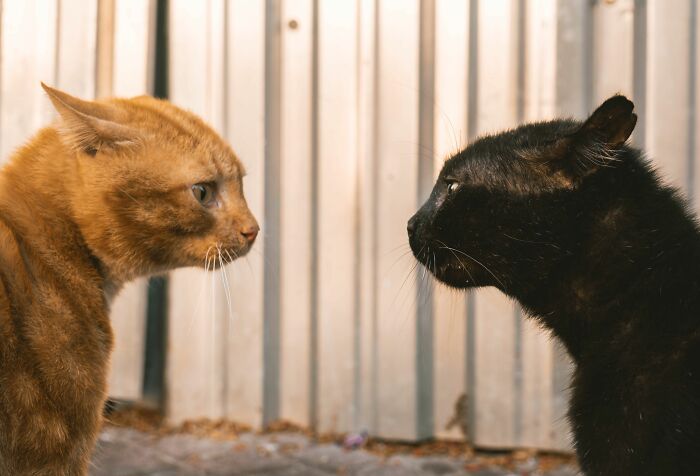
Cats are considered a facultatively social species, meaning that their social behavior is flexible and is heavily influenced by their environment and life experiences. If healthy cats in a home are not getting along, it may be a sign that their needs for resources (such as preferred resting spots, scratching posts, food, litter boxes, space, and time with people) are not being met. While not all cats are destined to be best friends with one another, adapting their environment to meet their needs can go a long way towards setting them up for a successful relationship.
Cats may begin waking people up in the middle of the night for a variety of reasons, including boredom or hunger, but in most cases, that behavior persists because the human is inadvertently reinforcing it! If you respond to your cat waking you up in the middle of the night by giving them attention, tossing a toy, or getting up to feed them, you are essentially training the cat to keep doing it. A better long-term solution is to address the root cause – does the cat need more playtime during the day, or a different feeding schedule? – and stop reinforcing the unwanted disturbances in the middle of the night.

No. Nope, Nopity, nuh uh, not changing or discouraging anything. The *only* one who wakes me during the night, usually around 3AM, is my 15+ year old, when he wants snuggles. Standard approach is a gentle headbùtt to my face while purring loudly. I raise my arm, he snuggles into my body, wrap my arm around him, we go back to sleep. He won’t be here forever, I’m snuggling him every chance I get.
Has anyone done this. When getting done with an article and get down to poll question, you go to scroll down and accidentally hit the poll question and answer the poll question and end up answer it differently than what you wanted? I have done that a few times.
Yes, but I've given up on these poll questions for the most part because they rarely offer the option I'd pick if it were there.
Load More Replies...
I am surprised by the displayed breeds. Orange ones, that is orange and white striped ones work overtime for the people they live with. Basic black cats are already training us to be more involved. And the ones who wear the coats of certain breeds of wild cat are just there.
Has anyone done this. When getting done with an article and get down to poll question, you go to scroll down and accidentally hit the poll question and answer the poll question and end up answer it differently than what you wanted? I have done that a few times.
Yes, but I've given up on these poll questions for the most part because they rarely offer the option I'd pick if it were there.
Load More Replies... I am surprised by the displayed breeds. Orange ones, that is orange and white striped ones work overtime for the people they live with. Basic black cats are already training us to be more involved. And the ones who wear the coats of certain breeds of wild cat are just there.




























 No fees, cancel anytime