Get Premium
Dark mode theme is available exclusively for premium users. Learn more about the benefits of subscribing.
No fees, cancel anytime.

 Dark Mode Ad-Free Browsing Unlimited Content
 Ad-Free Browsing Unlimited Content Dark Mode
Join 1.2 million Panda readers who get the best art, memes, and fun stories every week!

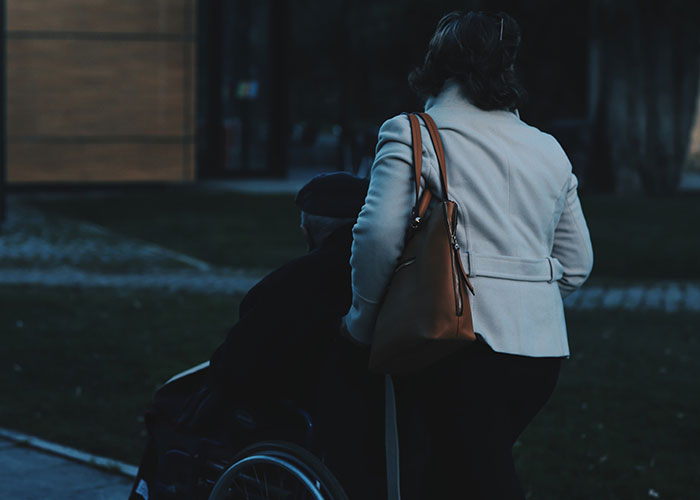
“In sickness and in health” are the vows a couple utters on their wedding day. In some cases, the sickness part might start way sooner than they imagine. It’s not uncommon for spouses to be primary caregivers to their disabled partners, as in the U.S. alone, there are 5.7 million partner caregivers. But what happens to a marriage after years of such a predicament?
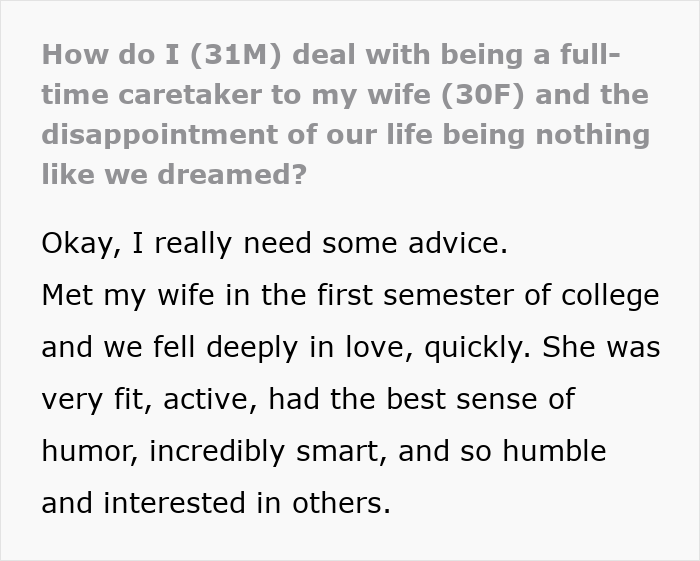
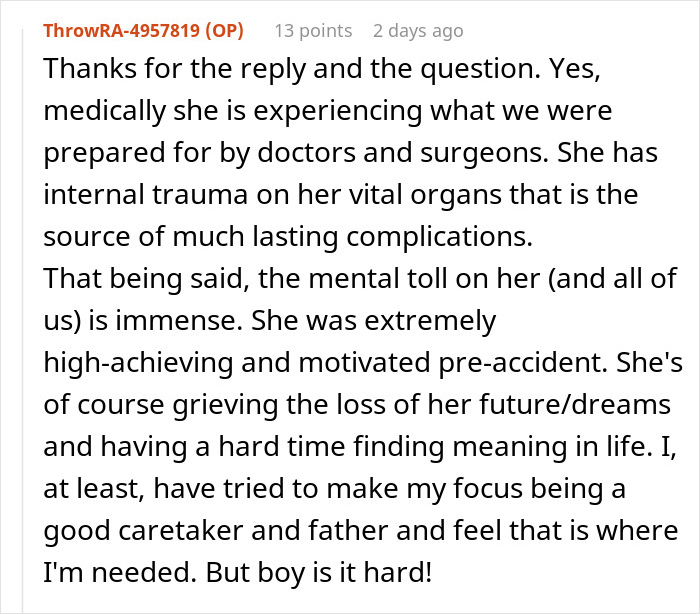
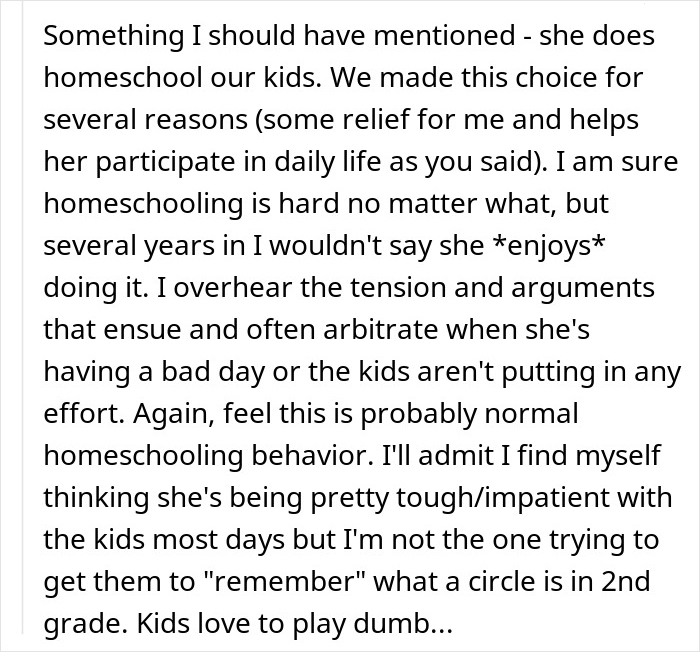
One husband recently confessed online about how he was reaching his breaking point after seven years of caring for his disabled wife. In his post, he asked for advice about how to navigate his desire for a happier, more fulfilling life, romance, and intimacy, and a heartbreaking urge to run away with his two kids.
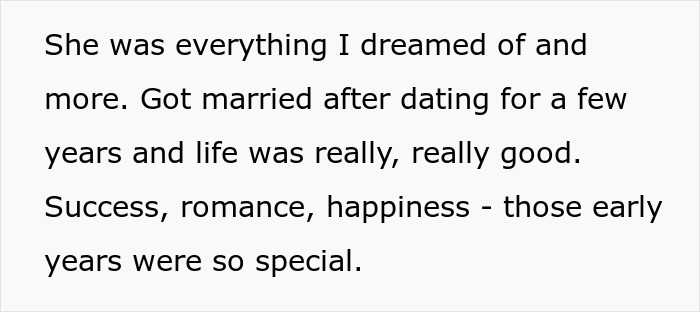
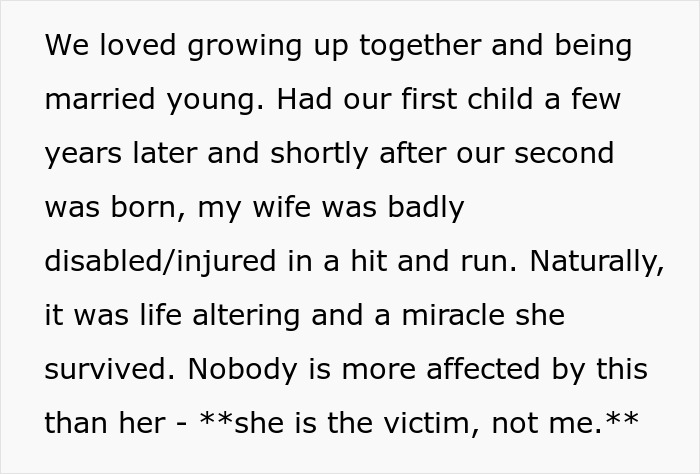
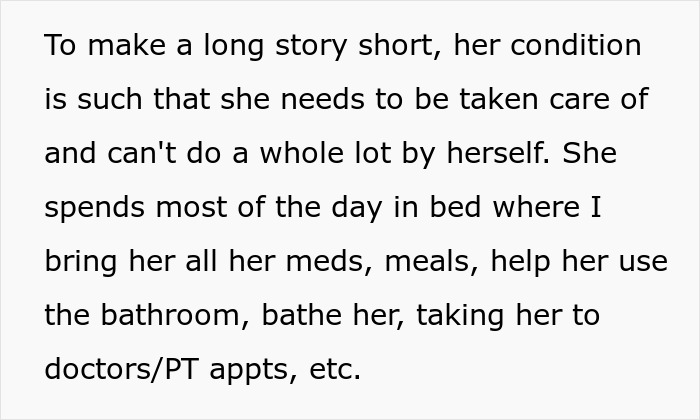
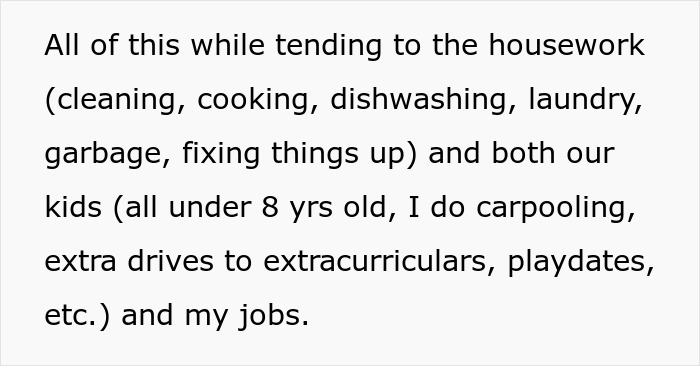
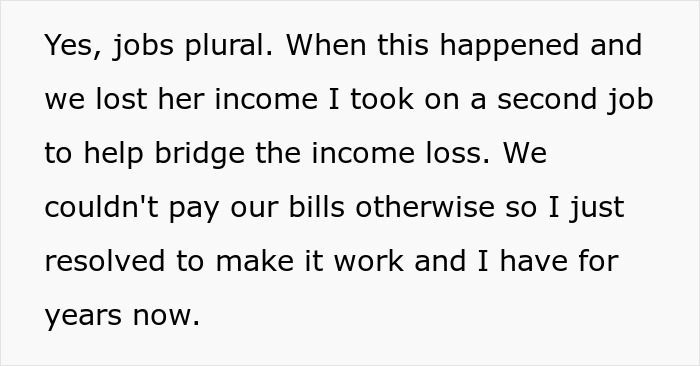
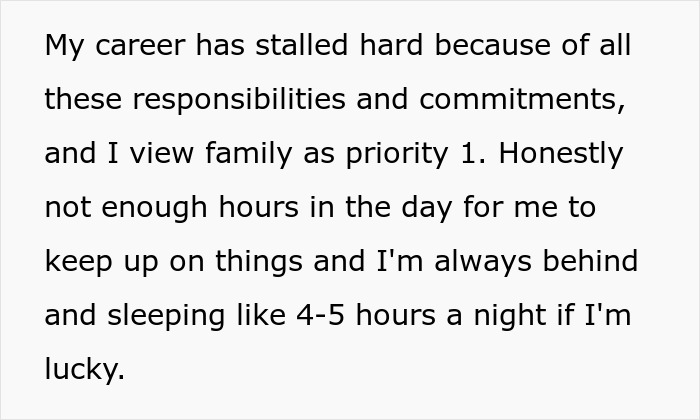
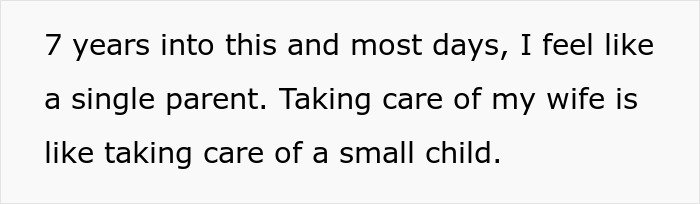
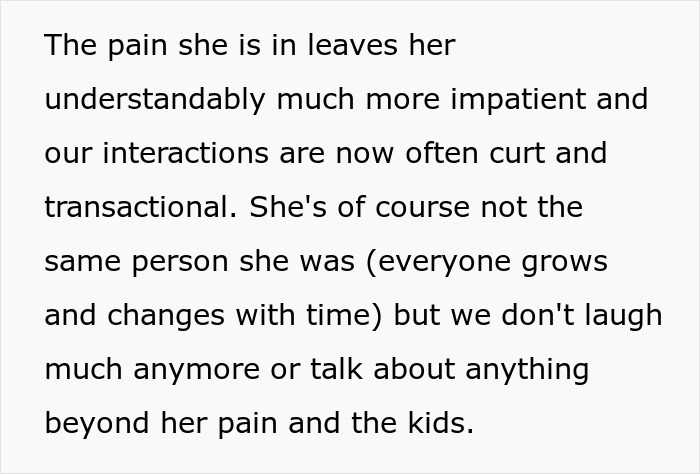
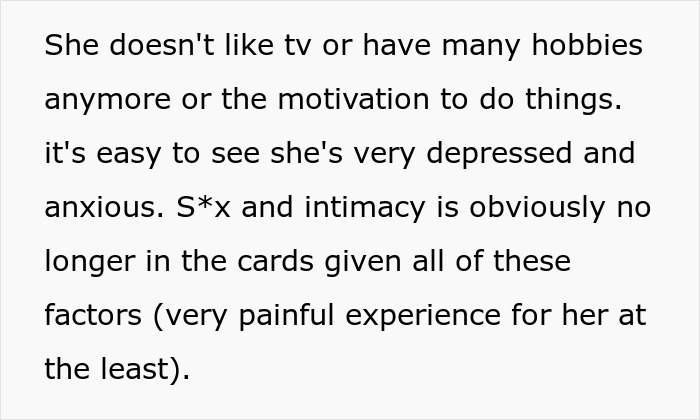
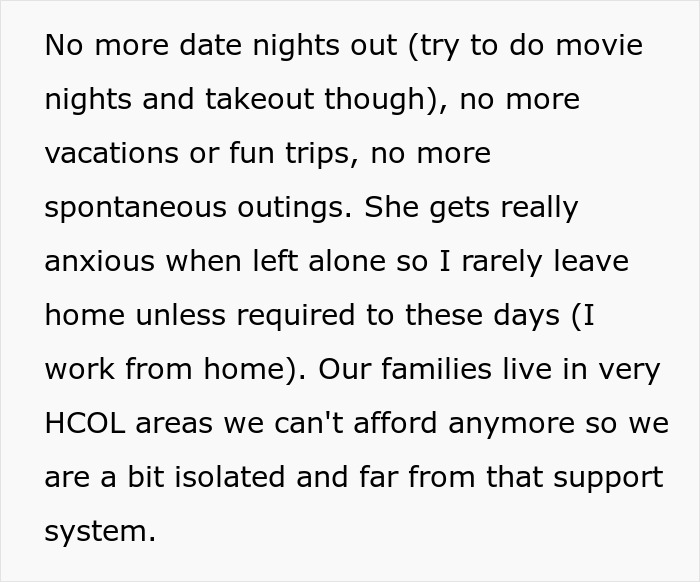
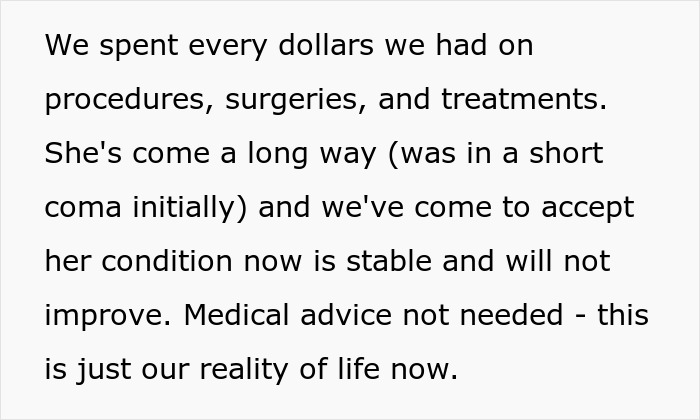
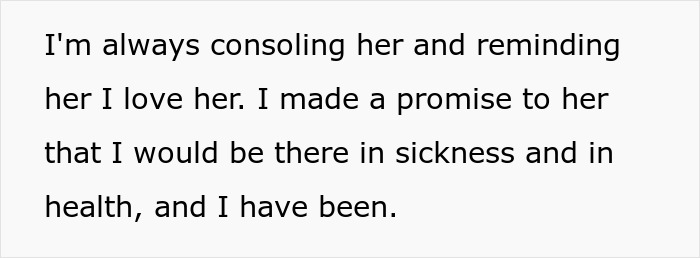
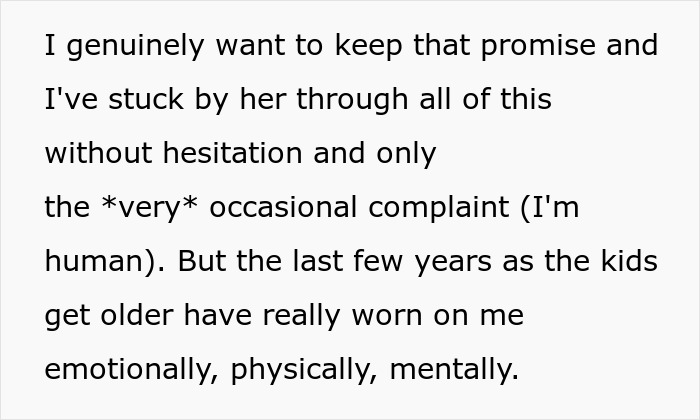
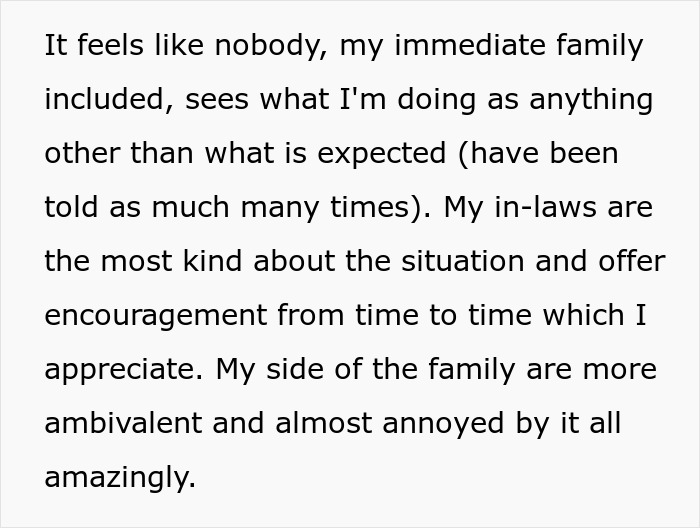

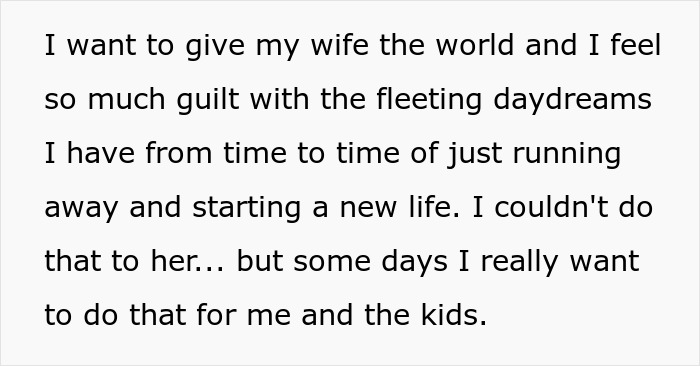
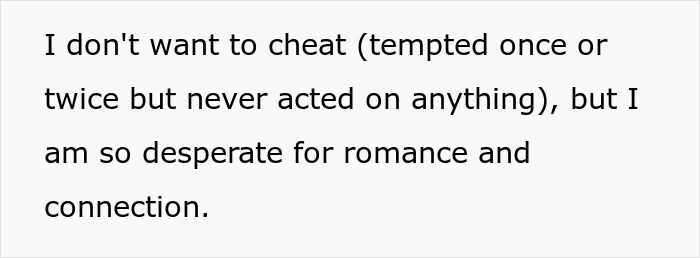
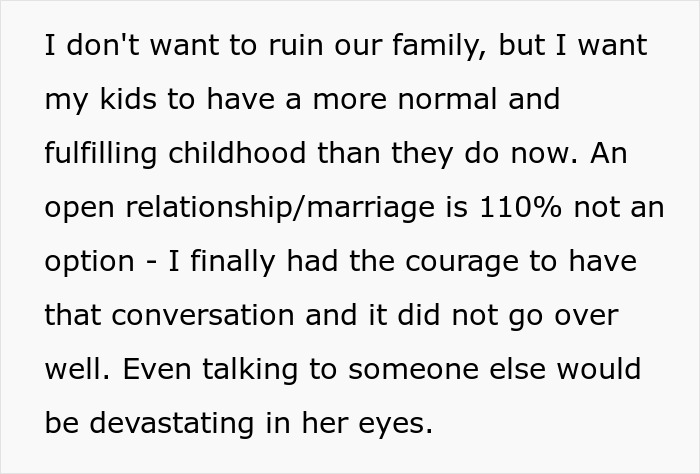
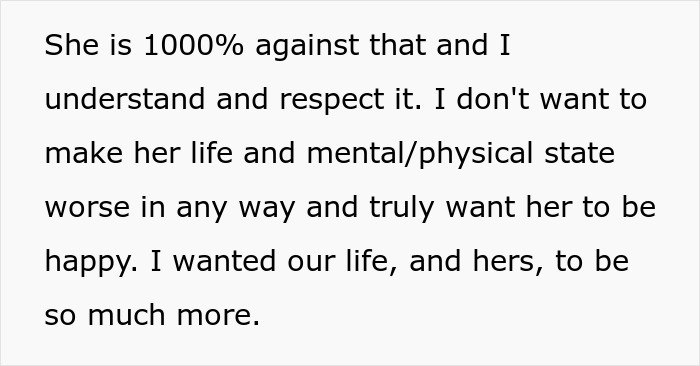
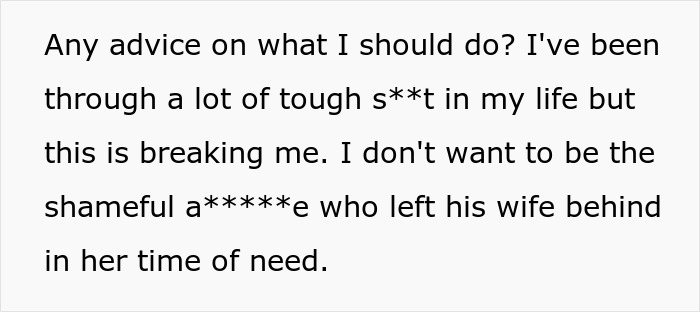


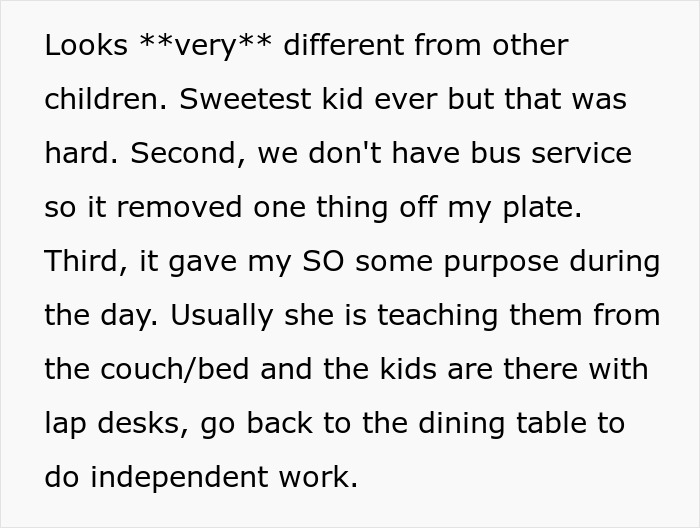
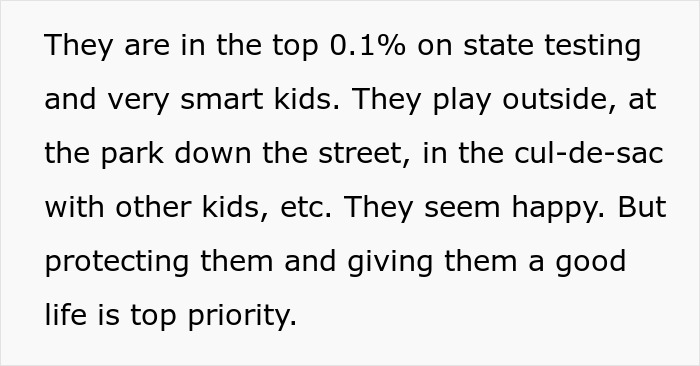
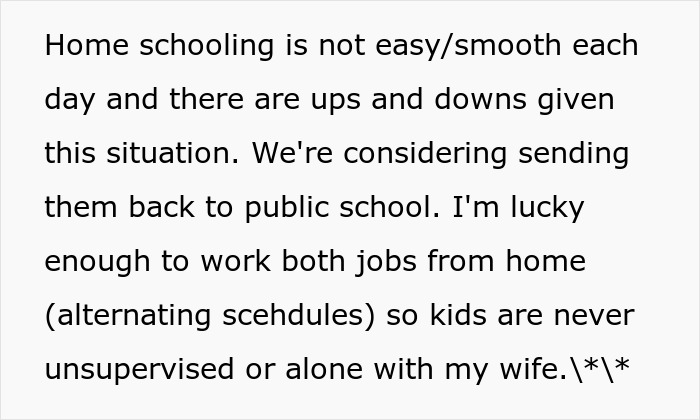
Taking care of a relative, child, or spouse who has special needs is a serious challenge. So much so, in fact, that researchers and mental health professionals are noticing that many caregivers are experiencing burnout and even resentment, like the husband in this story.
According to the Anxiety and Depression Association of America, four in 10 family caregivers find their situation extremely stressful. There are a lot of sources of anxiety for a caregiver: financial, childcare, and, of course, the everyday care of the disabled person. It’s not unusual that a caregiver stops taking care of themselves: they sleep less, eat worse, ignore their mental health issues, and just generally feel unhappy.
But it’s like the age-old saying goes: you can’t take care of someone else if you’re not taking care of yourself. Caregivers must ask for help when they feel overwhelmed, but the majority don’t. Research shows that caregivers have a higher mortality rate because of the physical and emotional strain. What’s more, they even have a 23% higher risk of stroke compared to their non-caregiver counterparts.
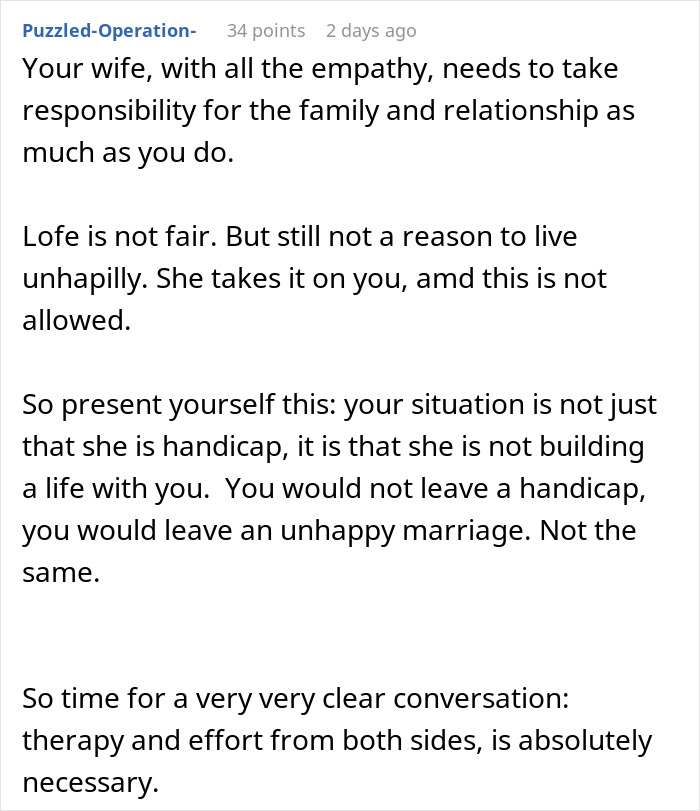
The husband in this story is not alone in carrying the burden. According to a 2019 study, 55% of spouses caring for partners with special needs are solo caregivers. Social isolation is a big part of being a caregiver, and so is the loss of intimacy between spouses. One study involving older male caregivers showed that they feel a substantial lack of emotional and physical intimacy, and when they bring it up, they’re often shut down, leaving them to deal with their loneliness by themselves.
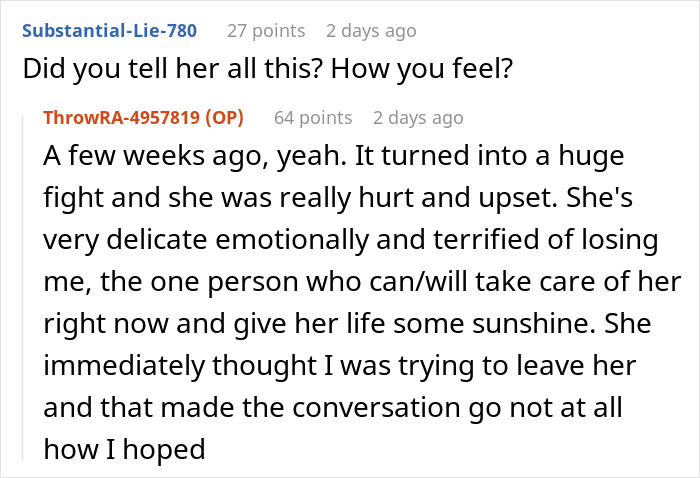
The fact that the husband is experiencing burnout and loneliness is not the only issue. His unhappiness also stems from the fact that he’s grieving his marriage, love, and his wife despite the fact that she’s still physically there.
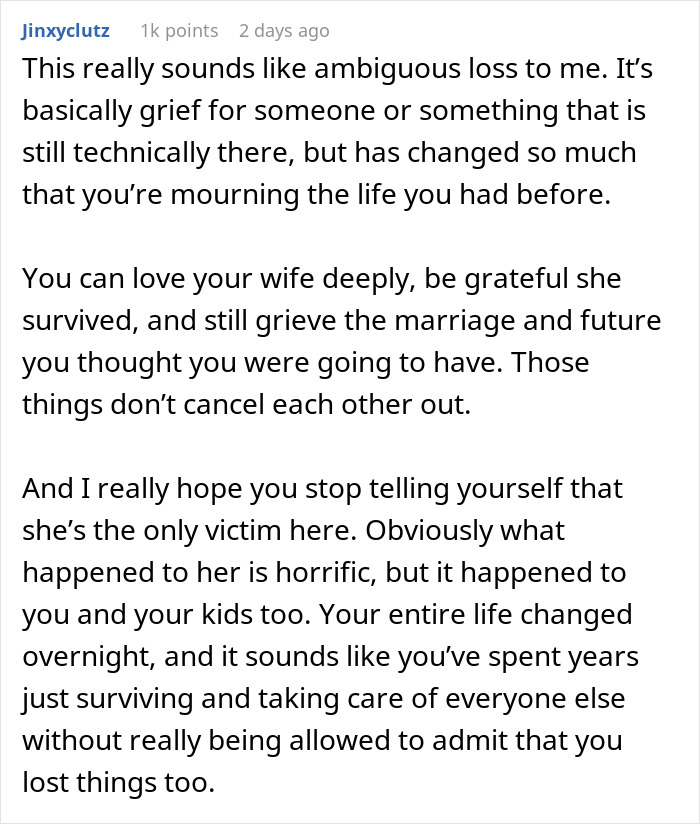
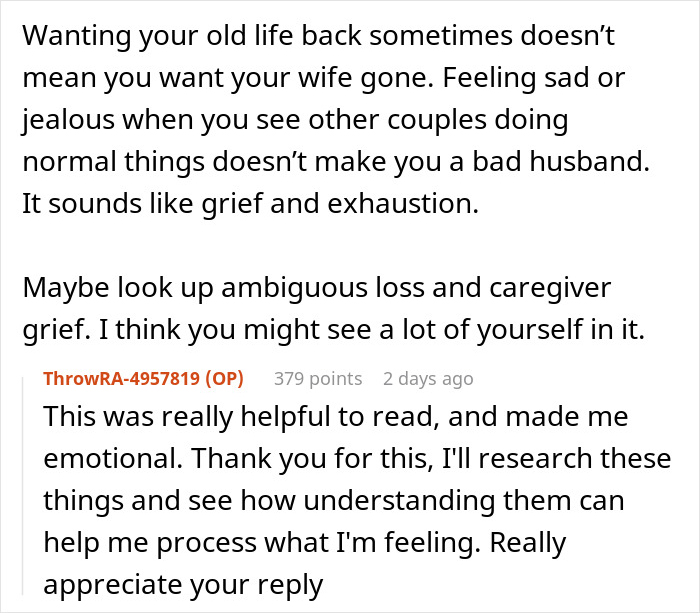
Like some commenters already pointed out, the husband is most likely dealing with ambiguous loss. That’s a term coined by family therapist Dr. Pauline Boss, author of Ambiguous Loss: Learning to Live with Unresolved Grief in the 1970s.
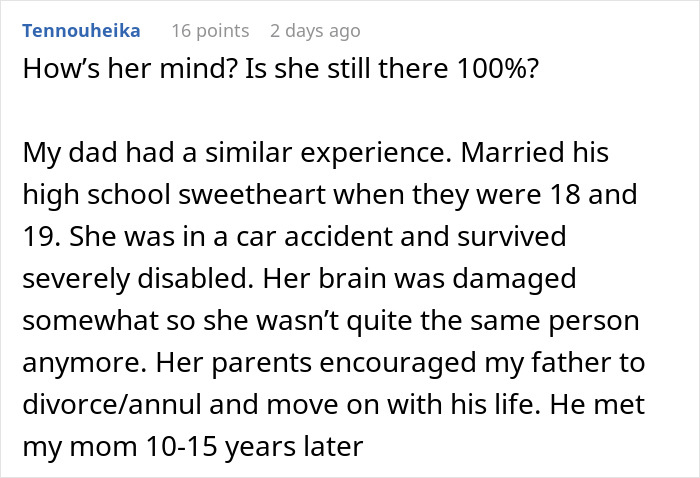
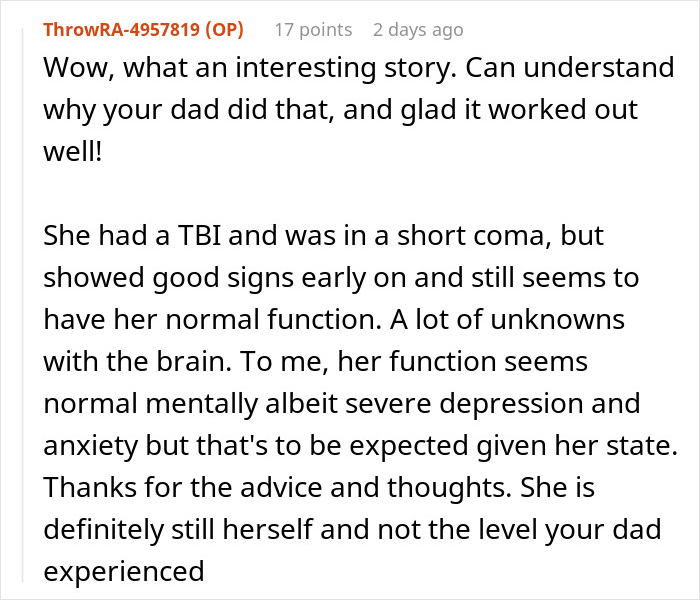
She singled out two different types of ambiguous loss: physical and psychological. Physical ambiguous loss happens when a loved one is physically absent but emotionally there, like in the military or incarcerated. Psychological loss applies to this story: the person that you’re grieving is still there physically, but they’re emotionally unavailable, e.g., dementia patients, dealing with substance dependency, or have suffered a traumatic brain injury.
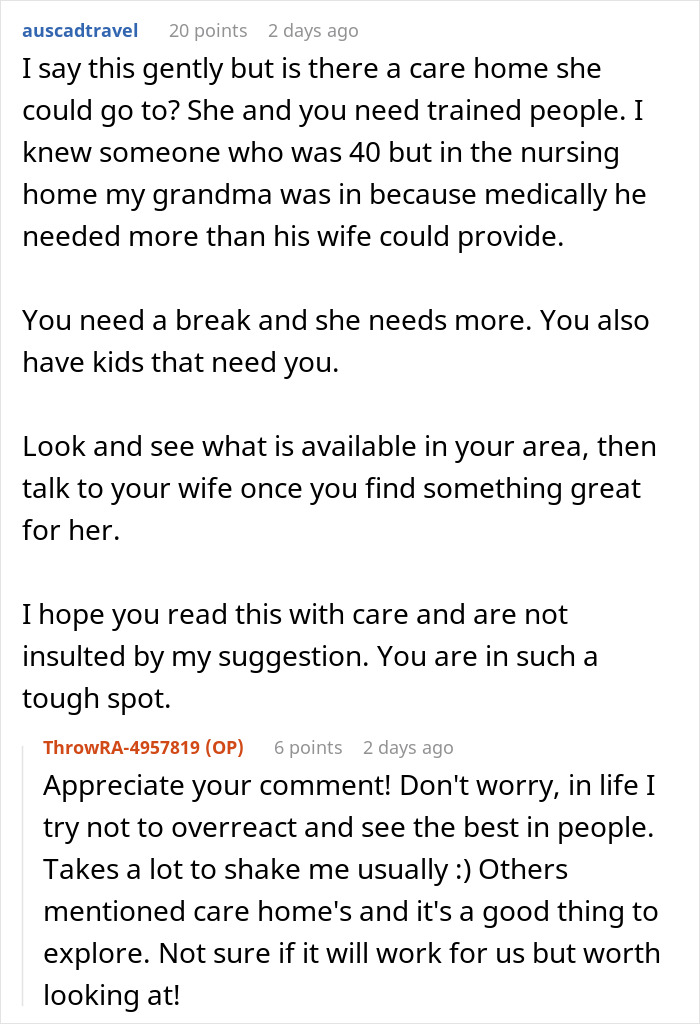
An important mindset shift in dealing with ambiguous loss is to change your thinking from “either/or” to “both/and.” Two things can be true at the same time: the husband might be tired of being the primary caregiver to his wife but still want the best care for her. He can be both a caregiver and someone who takes care of his own needs. He can grieve the person that his wife was and the life he imagined for them and be happy about future plans and goals.




By entering your email and clicking Subscribe, you're agreeing to let us send you customized marketing messages about us and our advertising partners. You are also agreeing to our Privacy Policy.
Thank you! You've successfully subscribed to newsletters!


I can't reply to The Starsong Princess, but the possibility of his wife being able to work remote since she home schools their children hadn't occurred to me, and I don't think any of the replies to the original post mentioned it either. In any case, I hope this family works things out so everyone involved is in a better place.

I've come to this article late I guess. Why is Starsong Princess's comment Hidden?
Load More Replies...
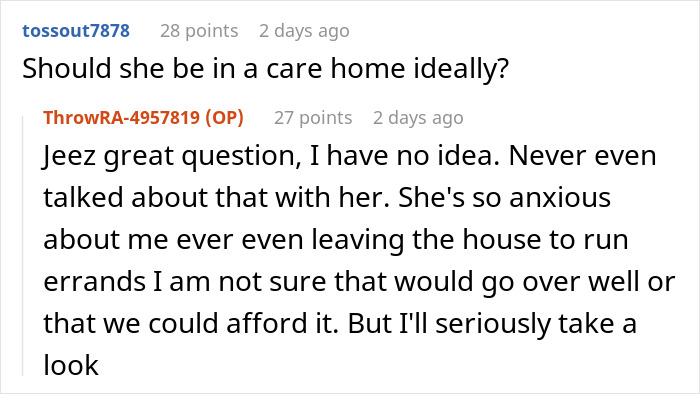
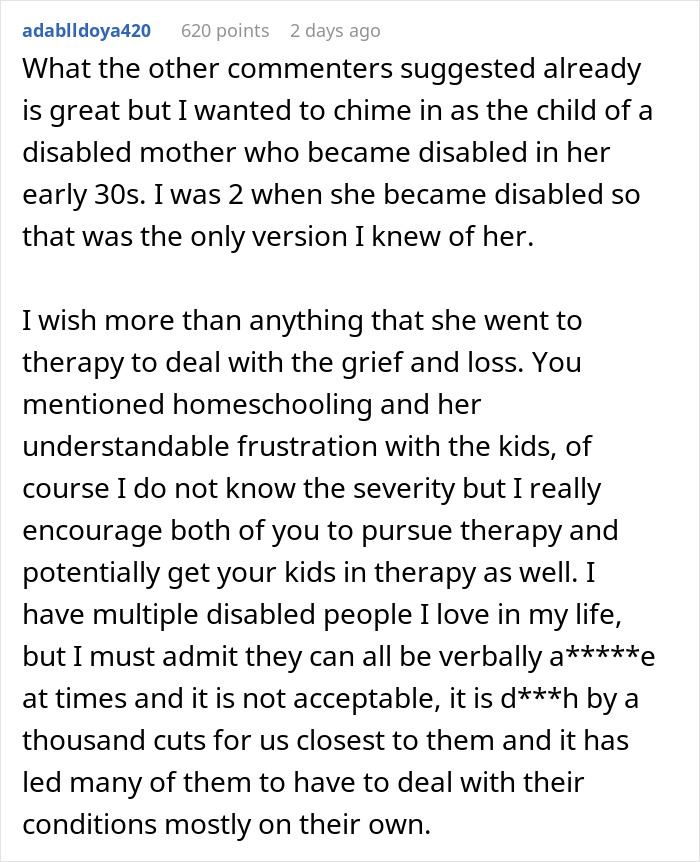
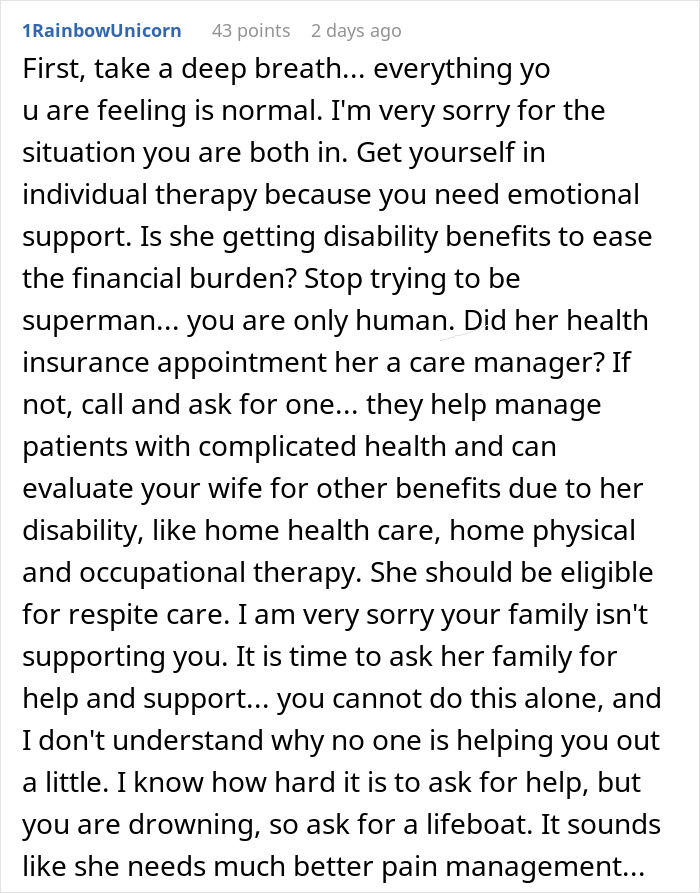
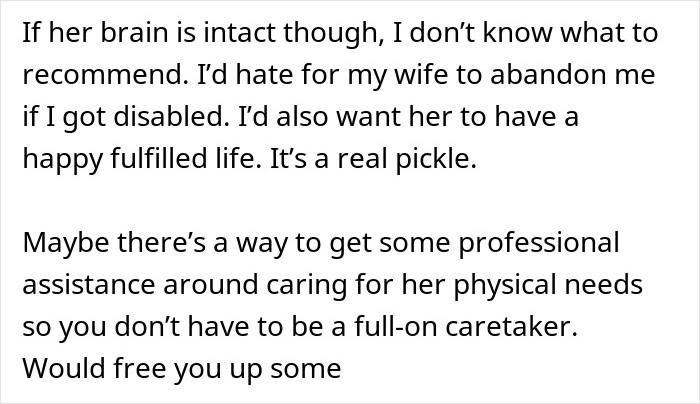
Respite care, either in or away from home. Likely part of the wife"s mental battles is knowing the strain on her husband, but being petrified of losing that support. Having a professional help out occasionally is a win for everyone.

I thought of respite, he needs to be able to take the kids away for a break.
Load More Replies... I can't reply to The Starsong Princess, but the possibility of his wife being able to work remote since she home schools their children hadn't occurred to me, and I don't think any of the replies to the original post mentioned it either. In any case, I hope this family works things out so everyone involved is in a better place.
I've come to this article late I guess. Why is Starsong Princess's comment Hidden?
Load More Replies... Respite care, either in or away from home. Likely part of the wife"s mental battles is knowing the strain on her husband, but being petrified of losing that support. Having a professional help out occasionally is a win for everyone.
I thought of respite, he needs to be able to take the kids away for a break.
Load More Replies...



























 No fees, cancel anytime











24
11