Get Premium
Dark mode theme is available exclusively for premium users. Learn more about the benefits of subscribing.
No fees, cancel anytime.

 Dark Mode Ad-Free Browsing Unlimited Content
 Ad-Free Browsing Unlimited Content Dark Mode
Join 1.2 million Panda readers who get the best art, memes, and fun stories every week!
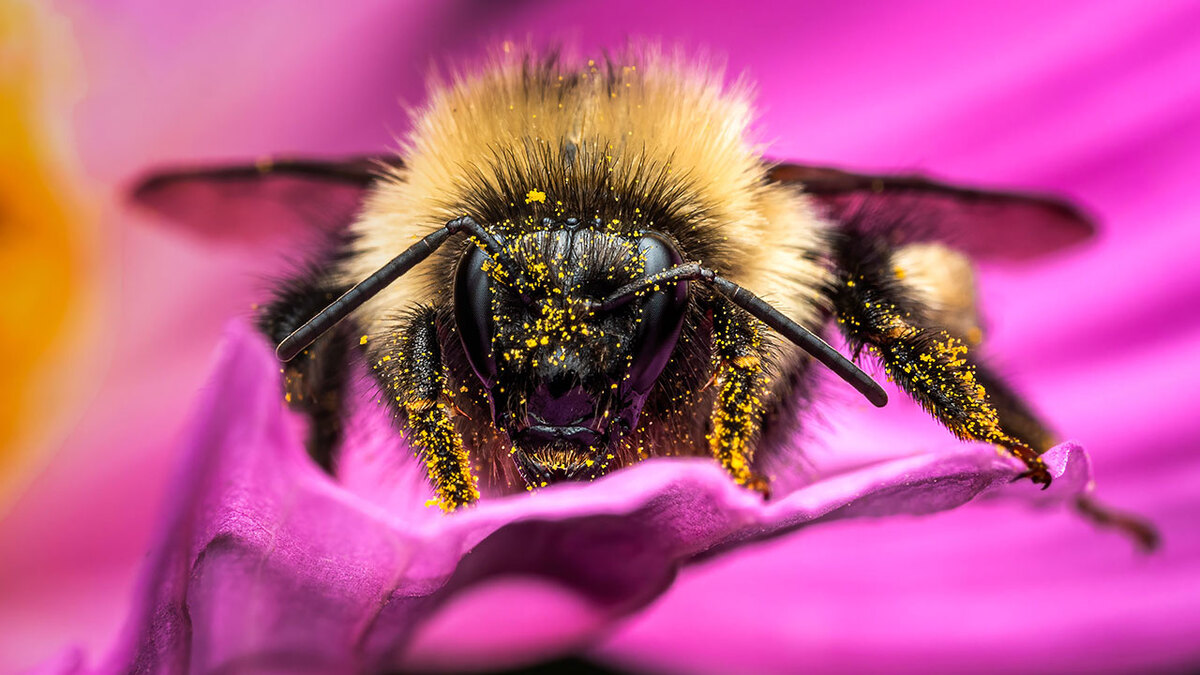
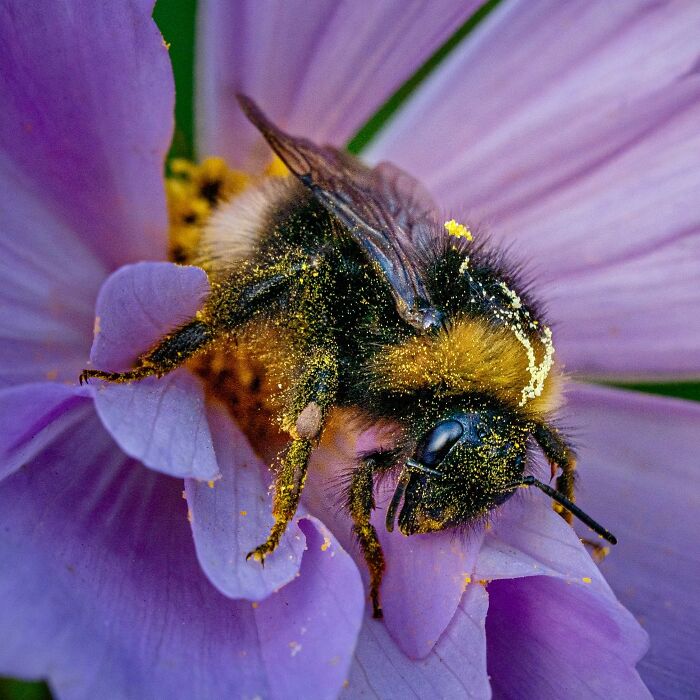
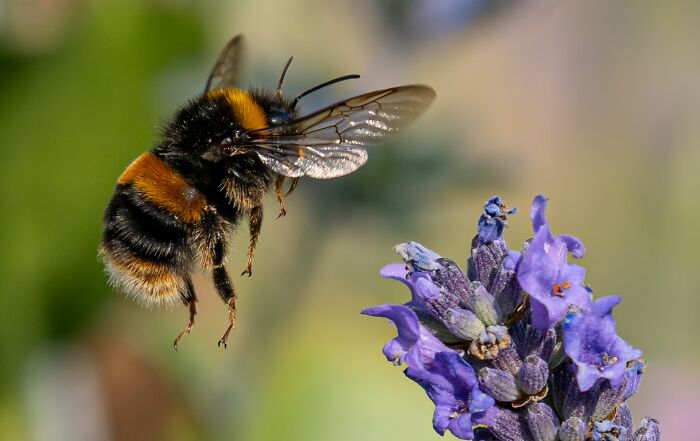
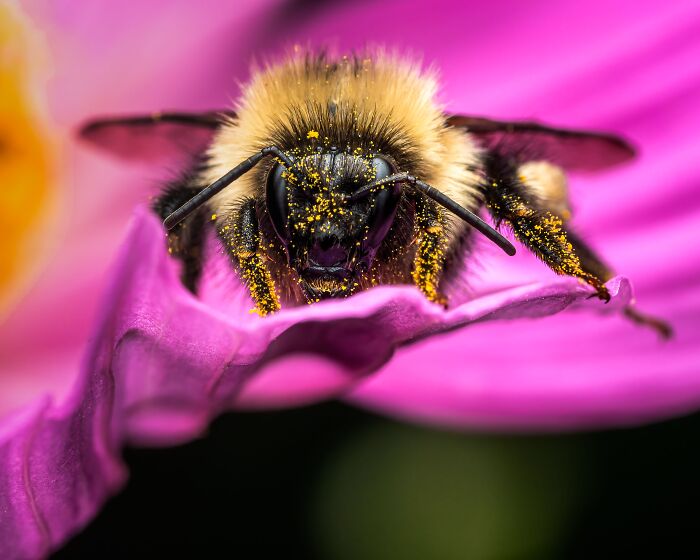
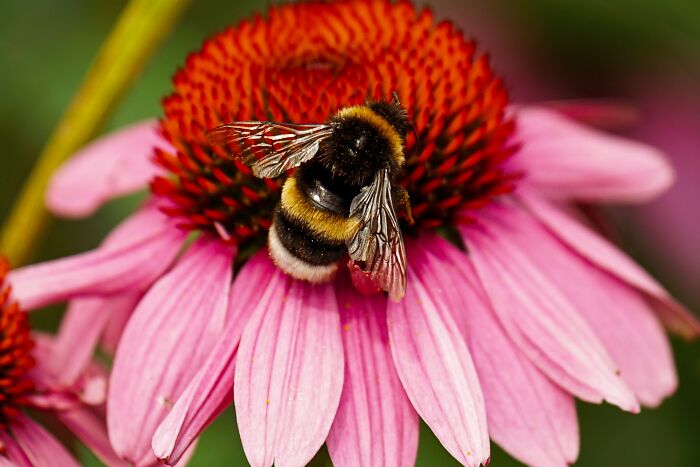
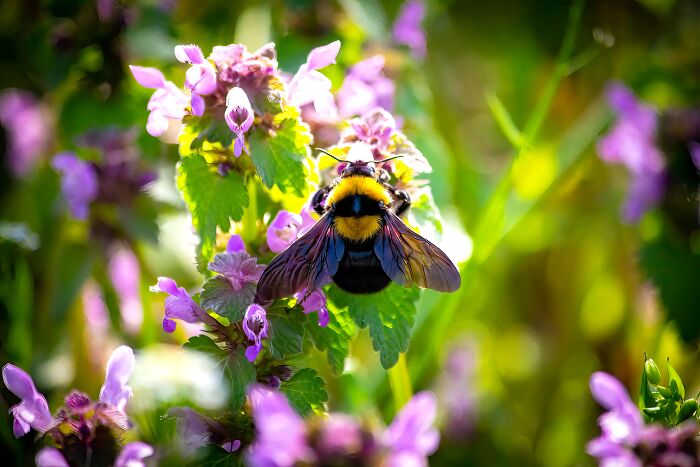
Most of us think of the bumblebee as a fuzzy, slightly clumsy passerby that bumbles from flower to flower. There are more than 250 species of them, and they are among the hardest-working pollinators on the planet. Their secret weapon is “buzz pollination”: they grip a flower and vibrate their flight muscles at more than 130 beats per second, shaking loose pollen that other insects can’t reach. That’s why they’re so good at tomatoes and blueberries, and why some species are sold to greenhouses in a pollination trade worth up to $10 billion a year.
More info: youtube.com
Their home life is just as remarkable. A bumblebee colony is a modest affair, peaking at a few hundred bees, while a honeybee hive can top 60,000. Each colony begins with a single queen who survives the winter alone underground, then wakes in spring to find a nest site and raise the first workers herself. By late autumn everyone else is gone, and the cycle starts again.
For years, the small size of the colony was matched by an assumption about the small size of the brain. A bumblebee’s brain is about the size of a sesame seed, so it seemed unreasonable to expect much from it. Researchers have been steadily proving otherwise.
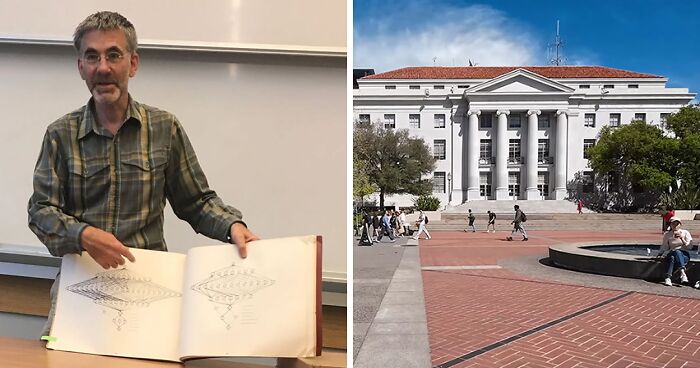
One of the most striking experiments came from Queen Mary University of London. Scientists set up a puzzle usually reserved for vertebrates: pull a string to slide a fake flower, with a sugar reward, out from under a table. Only two of 25 untrained bees worked it out on their own, mostly by accident. But the rest could be taught, and bees that watched a trained demonstrator picked up the skill too. Once a single bee knew the trick, it spread through the colony and carried on even after the original expert had died. It was, in effect, an insect culture.
That wasn’t a one-off. Bumblebees have since been shown to teach each other to score goals in a six-legged version of soccer, and some studies suggest they may even have something like emotions. There’s a note of caution, too. A 2024 study found that their string-pulling skills seem to rest on learned visual associations rather than a true grasp of how the string works. So the bees were clever, but there was always a nagging question: how much of this was learned, and how much was real understanding?
That question is exactly what a team at the University of Oulu in Finland set out to answer, and the answer, published in Science on June 4, 2026, was a surprise. The test descends from a famous experiment by psychologist Wolfgang Köhler more than a century ago, in which chimpanzees seemed to suddenly “see” how to reach food without any training. Scientists call this kind of insight spontaneous problem-solving, and it’s the standard that has been hard for any invertebrate to meet. Vertebrates such as chimps and parrots can manage it, but they’re usually captive animals with a lifetime of puzzle experience.
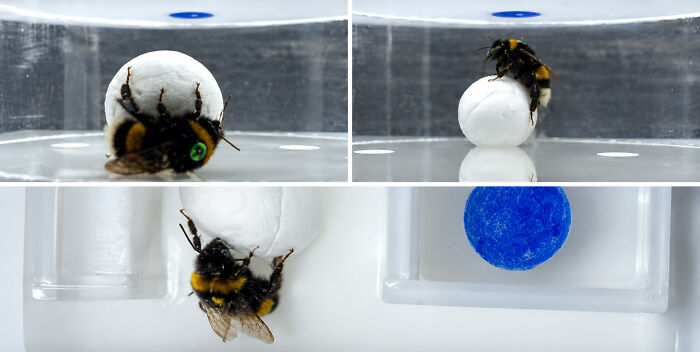
To get around that, the team used buff-tailed bumblebees that had never faced a puzzle of any kind. First, they taught them only two simple facts: balls can be moved, and a blue ring means food. Then they released them into small plexiglass arenas where the blue ring was printed on the ceiling, far too high to reach by flying. The only way up was to roll a ball beneath the ring and climb on it, like a tiny ladder. More than 70 percent of the bees worked it out.
Skeptics could say the bees were just playing with the balls and got lucky, and the researchers took that seriously. They added barriers and split the arena into two rooms, with the “flower” hidden in one of them. Now the bees had to find the flower, remember where it was, go back for the ball, and bring it to the right spot. Still they succeeded. In a follow-up run with a new group of bees, about 80 percent rolled the ball right under the blue circle. “They had a goal in their mind,” says behavioral ecologist Akshaye Bhambore.
The study’s lead, Olli Loukola, who has spent about a decade studying these insects, points out something no earlier experiment could claim: these bees were completely naive. Nothing in their lives could have prepared them for this challenge, and spontaneous problem-solving had never been shown in an invertebrate before.
The mystery isn’t fully solved. The arenas were too small to film the subtle behaviors that might signal an “aha” moment, so the team plans to return with slow-motion cameras, watching for things like grooming just after a bee cracks the puzzle. Someday, Loukola suggests, it may even be possible to image a bumblebee’s brain mid-solution.
Whatever those cameras reveal, the bees have already earned a new kind of respect, and they could use it. In North America, you’re nearly 50 percent less likely to spot a bumblebee than you were before 1974. The rusty patched bumblebee became the first wild bee in the continental U.S. to receive federal protection in 2017, and Franklin’s bumblebee hasn’t been seen since 2006. Scientists are only now discovering how much goes on inside that sesame-seed brain, and some of these animals may disappear before we’ve had the chance to find out.

































 No fees, cancel anytime





34
1