Get Premium
Dark mode theme is available exclusively for premium users. Learn more about the benefits of subscribing.
No fees, cancel anytime.

 Dark Mode Ad-Free Browsing Unlimited Content
 Ad-Free Browsing Unlimited Content Dark Mode
Join 1.2 million Panda readers who get the best art, memes, and fun stories every week!

It’s frustrating when someone reads a hidden motive into a decision you’ve made for your own good. Add a big family occasion, like a wedding into the mix, and something as personal as changing your appearance can cause unnecessary drama.
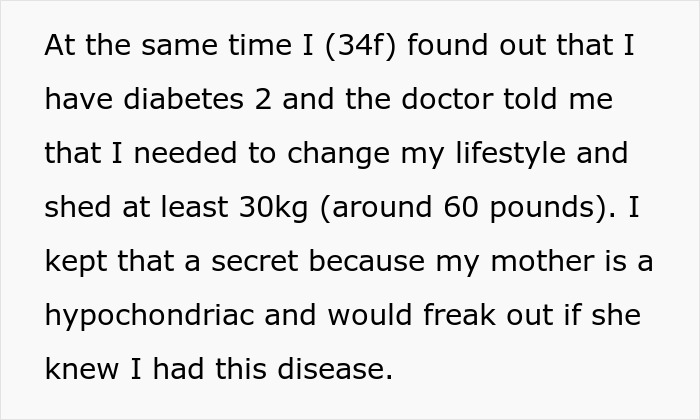
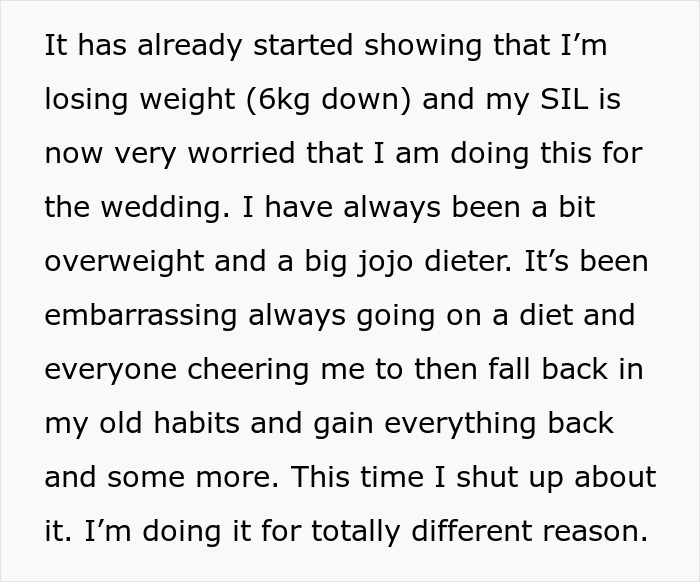
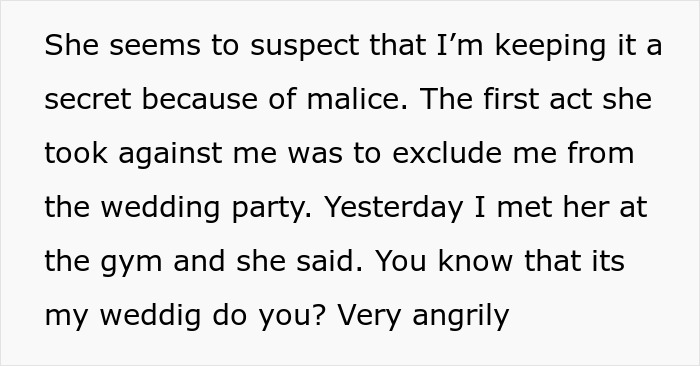
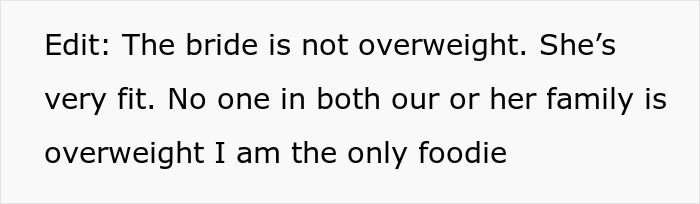
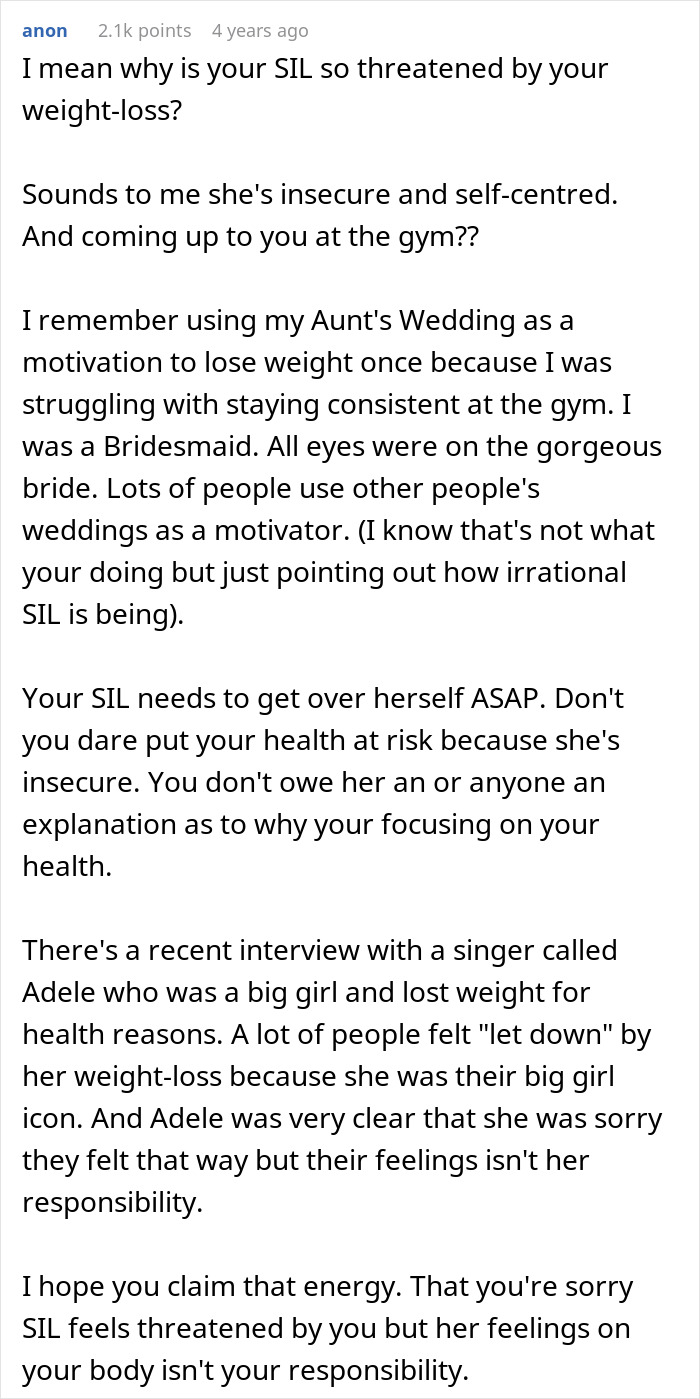
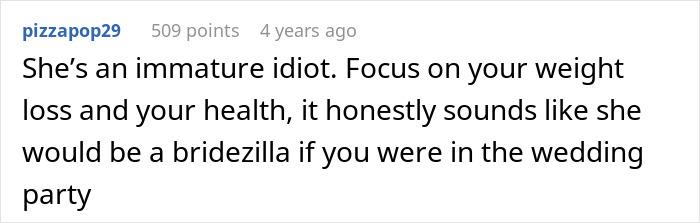
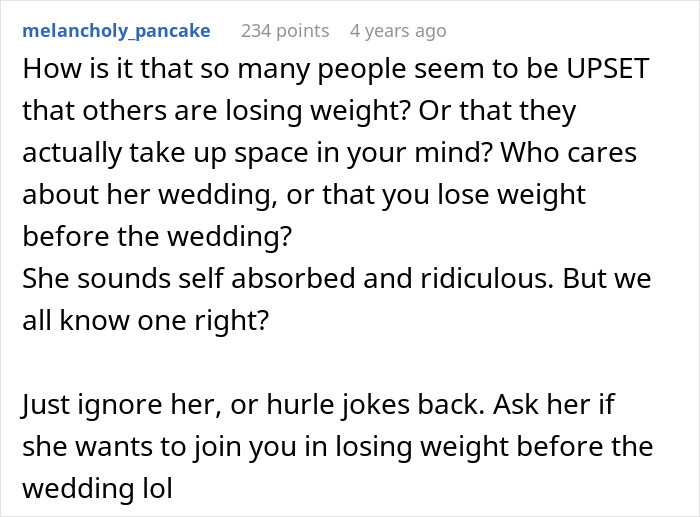
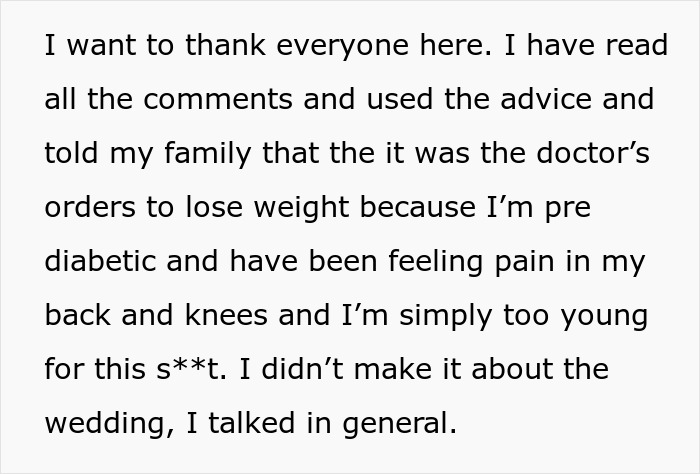
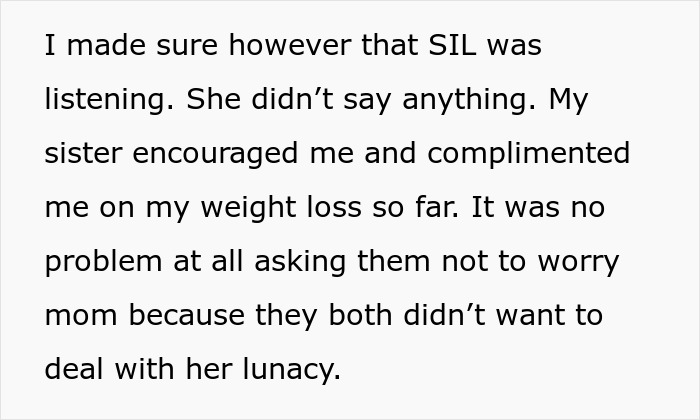
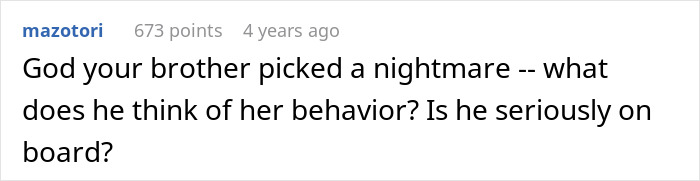
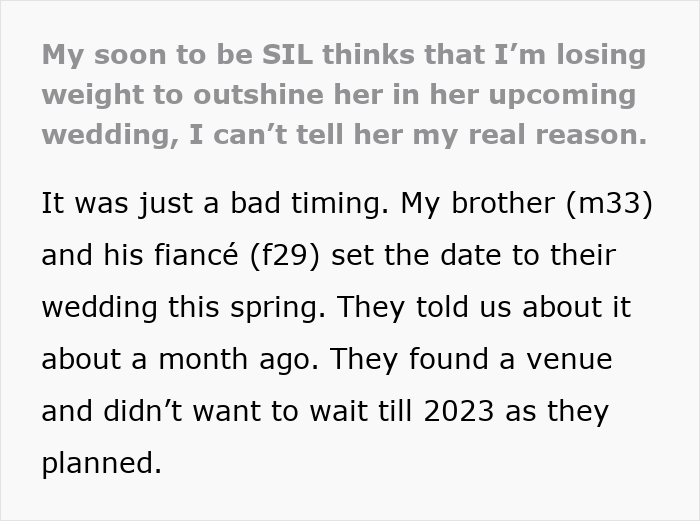
That’s what happened to this woman who started losing weight after being diagnosed with type 2 diabetes. Her future sister-in-law suspected she was doing it to steal the spotlight at her upcoming wedding, and the tension grew when the bride-to-be began making demands about what she could wear.



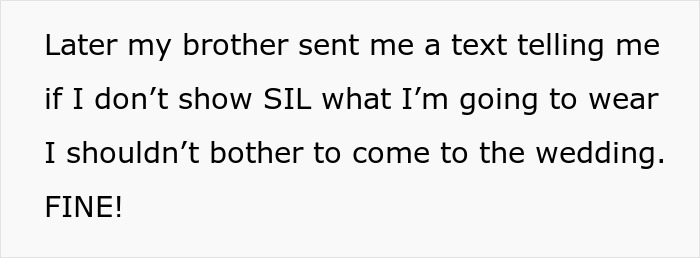
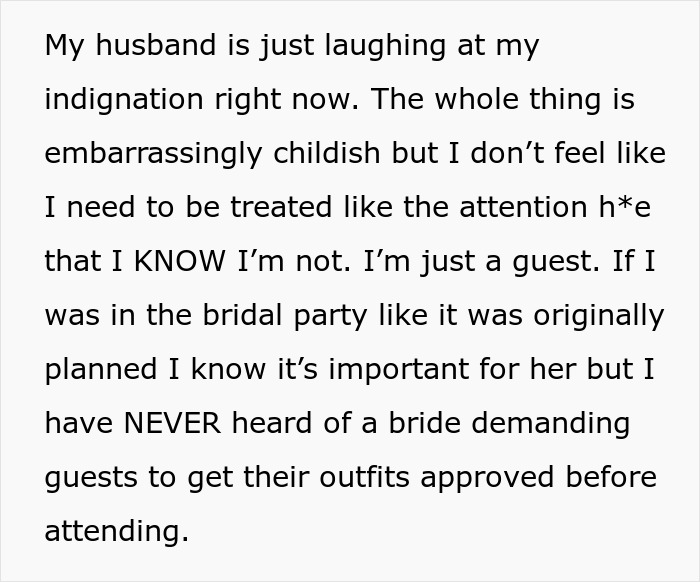
After months of planning, a bride may have a clear picture of how she wants the day to look. Some have even imagined their wedding day since childhood. They want everything to be perfect and hope the occasion will live up to their expectations. With so much riding on one day, the desire to have everything go as planned can create a need to control every detail.
Weddings also come with an unspoken rule that the bride should be the center of attention on her wedding day. Wanting to feel special on such an important occasion is understandable, but it can become harder to enjoy when other people’s appearances and choices start to feel like competition.
Psychologists use the term social comparison to describe how people evaluate themselves by comparing their experiences and circumstances with others’. For a bride who expects to be the cynosure of all eyes, this might mean comparing her appearance with other women’s or worrying that someone else will draw attention away from her.
Research on brides-to-be has also found links between appearance-related pressures, comparisons, and body dissatisfaction, suggesting that expectations about how a bride should look can add to the pressure surrounding the day.
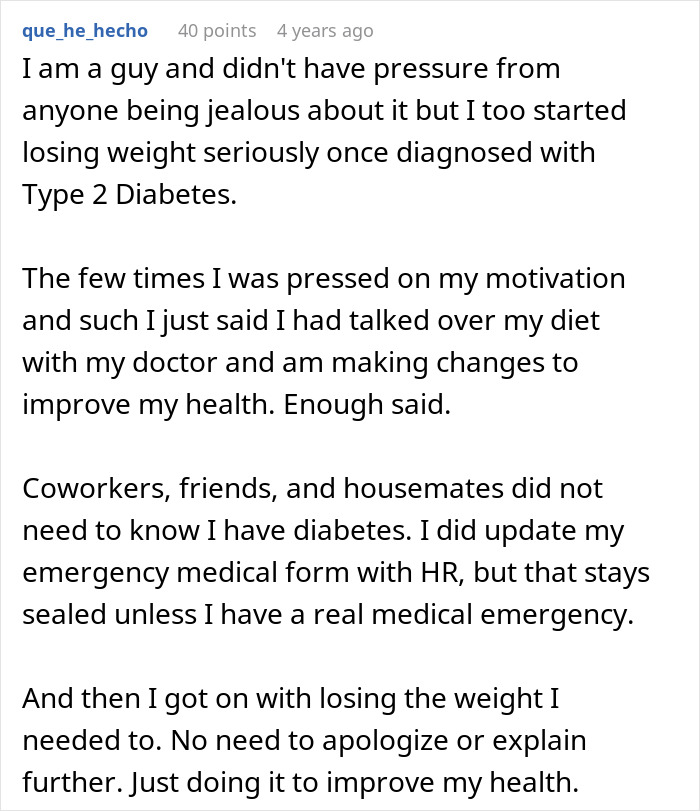
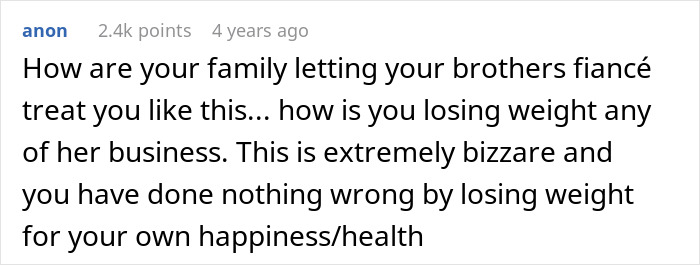
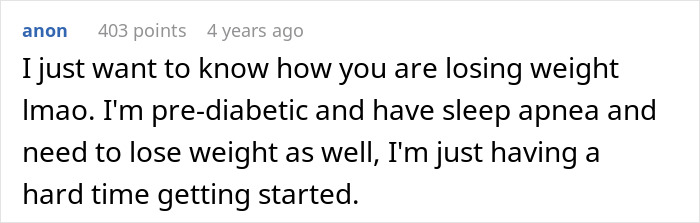
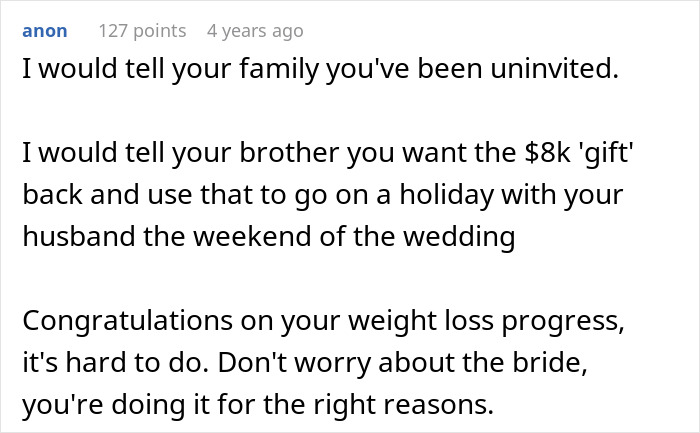
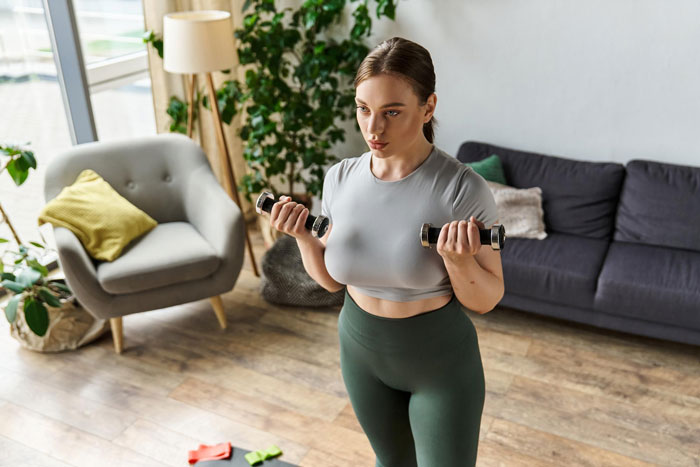
But another guest looking good or receiving compliments doesn’t take anything away from the bride. In this case, the woman wasn’t losing weight to compete with her future sister-in-law. She had been diagnosed with type 2 diabetes and was trying to improve her health. According to the CDC, healthy eating, regular physical activity, and weight loss can help people manage the condition.
Couples can set reasonable expectations for their guests, such as a dress code or rules about photography. But there’s a difference between setting event guidelines and expecting guests to meet personal demands that have little to do with the celebration itself.
Psychologists explain that boundaries involve deciding what you’re comfortable with and how you respond when those limits are crossed. Control, by contrast, involves trying to dictate another person’s behavior. The distinction comes down to whether you’re setting a limit for yourself or deciding what someone else is allowed to do.
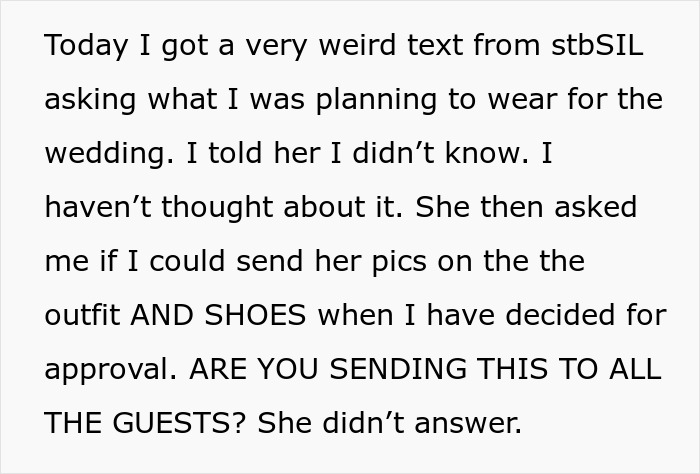
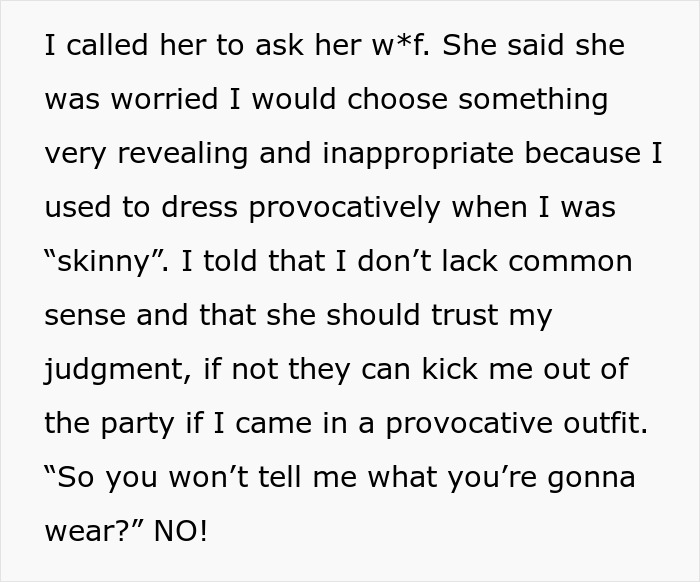
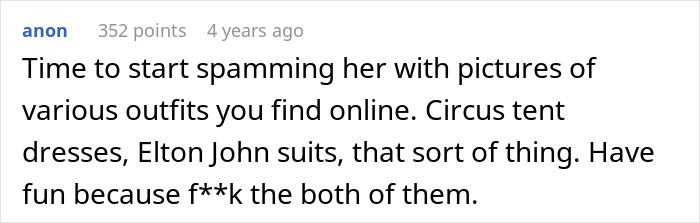
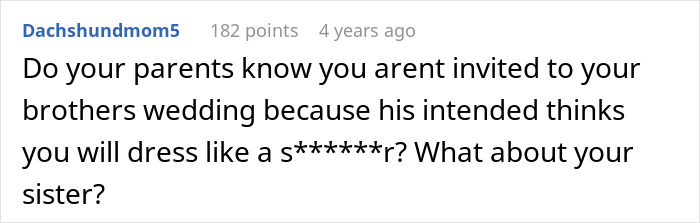
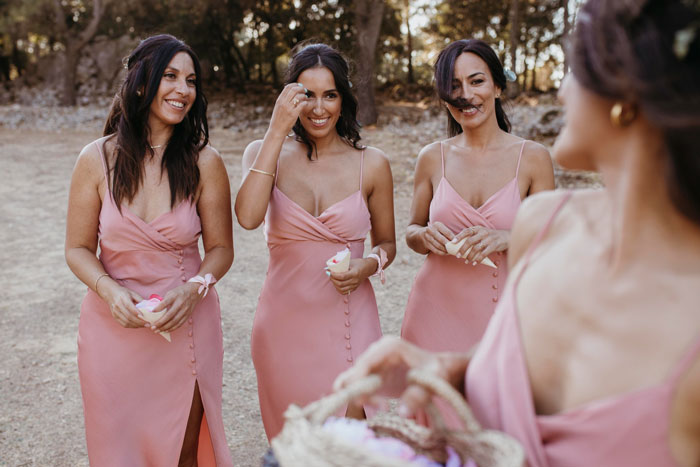
In this story, the bride-to-be wanted to see the woman’s outfit and shoes before the wedding because she was worried about how she might dress. A dress code would have given guests a clear standard to follow, but asking to approve the woman’s specific clothes went further, crossing personal boundaries and moving toward control.
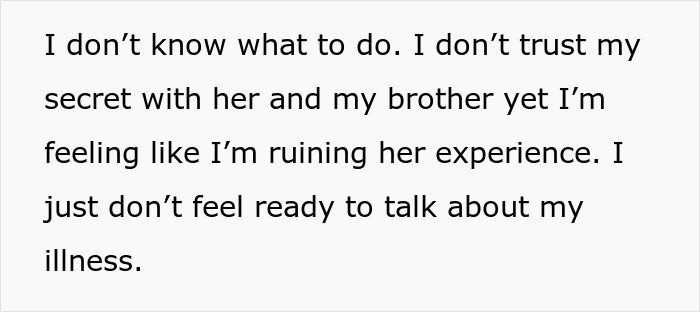
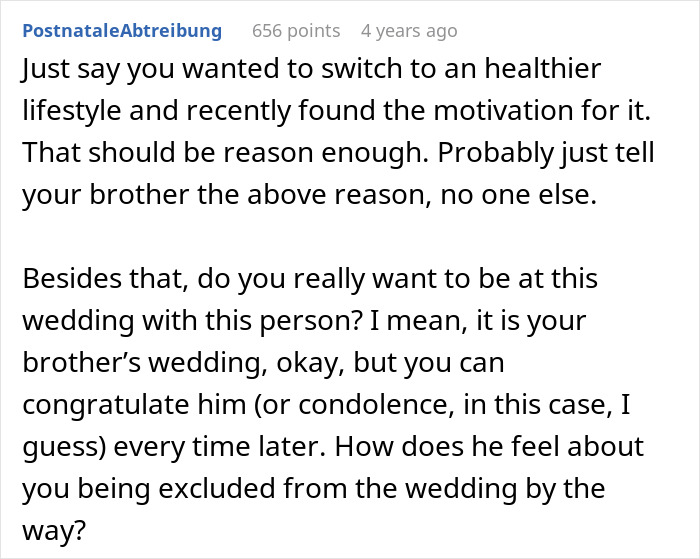
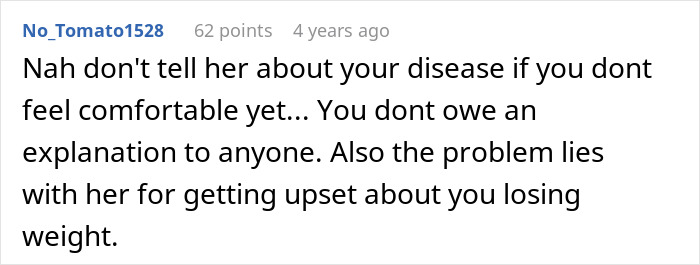
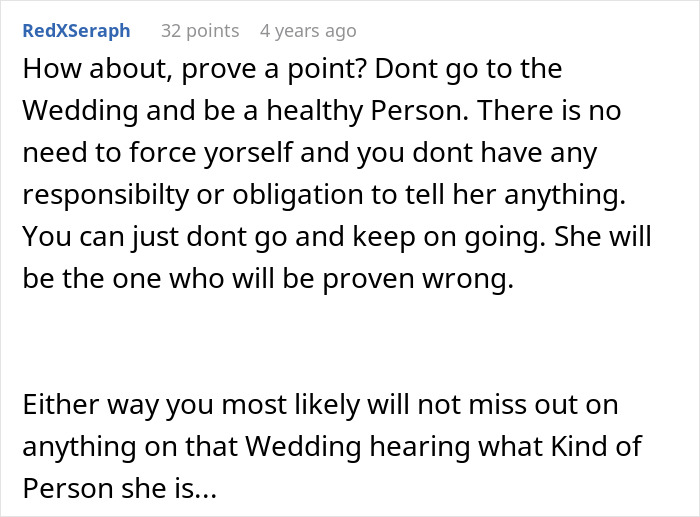
People don’t owe others an explanation for every personal decision, especially when it involves their health. The woman had a medical reason for losing weight, but she wasn’t required to disclose her diagnosis to prove she wasn’t trying to compete with the bride.
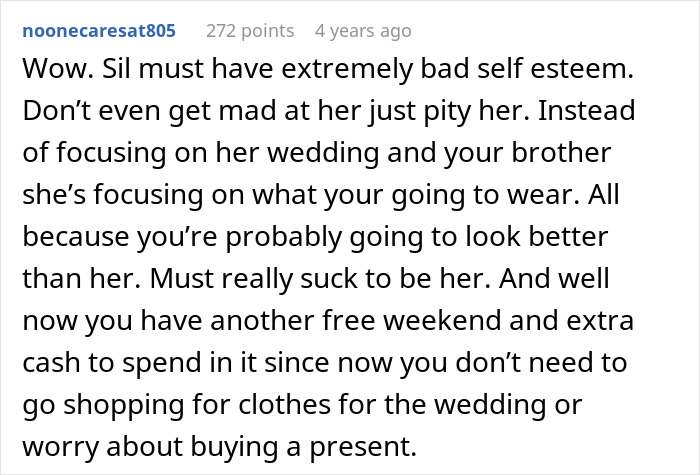
A bride can want to feel special on her wedding day, just as a guest can want to take care of her health and feel comfortable in what she’s wearing. Those things don’t have to conflict, but assumptions about someone’s motives can create tension.
What do you think? Was the woman right to refuse the outfit check and stand her ground, even if it meant missing her brother’s wedding? What would you have done in her situation?




By entering your email and clicking Subscribe, you're agreeing to let us send you customized marketing messages about us and our advertising partners. You are also agreeing to our Privacy Policy.
Thank you! You've successfully subscribed to newsletters!


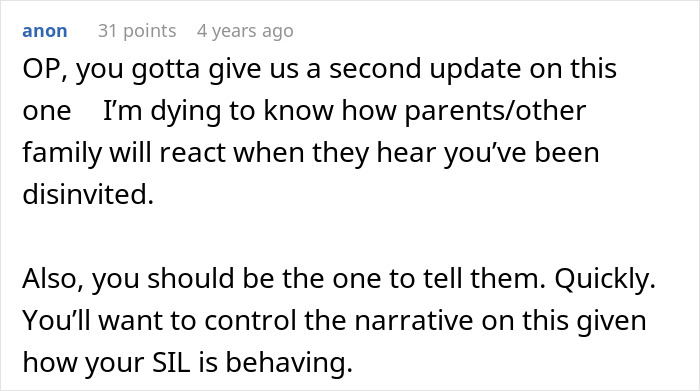
Ok, so since this is a recycled article, my comment was "don't go to the wedding but make it very clear as to why you were excluded" - f**k that insecure b***h. Go live your best life.
Ok, so since this is a recycled article, my comment was "don't go to the wedding but make it very clear as to why you were excluded" - f**k that insecure b***h. Go live your best life.



































 No fees, cancel anytime










34
2