Get Premium
Dark mode theme is available exclusively for premium users. Learn more about the benefits of subscribing.
No fees, cancel anytime.

 Dark Mode Ad-Free Browsing Unlimited Content
 Ad-Free Browsing Unlimited Content Dark Mode
Join 1.2 million Panda readers who get the best art, memes, and fun stories every week!

For richer or for poorer. It is one of the most quoted lines in the wedding vow canon, right up there with in sickness or in health. But the real test of that particular vow is not what happens when money gets tight. It is what happens when one person has plenty of it and still makes the other person split the Whole Foods bill down the middle.
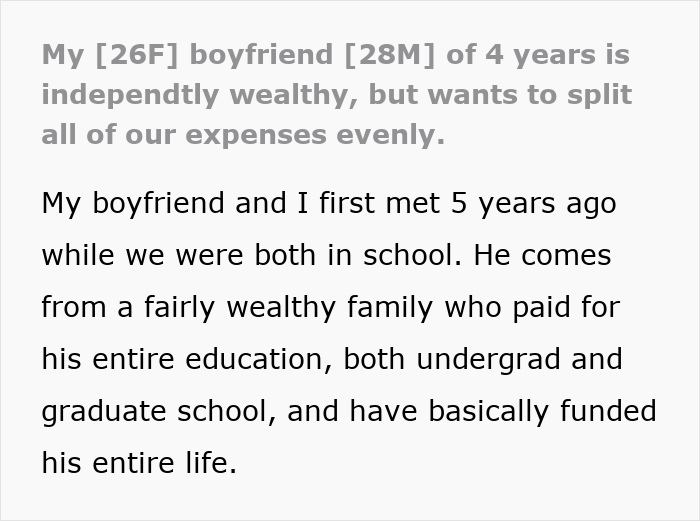
One woman spent four years with a man who had enough inherited wealth to never work another day in his life, never expecting a penny. But what was fair in her eyes seemed like an exercise in gold-digging in his.
More info: Reddit
Image credits: dikushin / Magnific (not the actual photo)
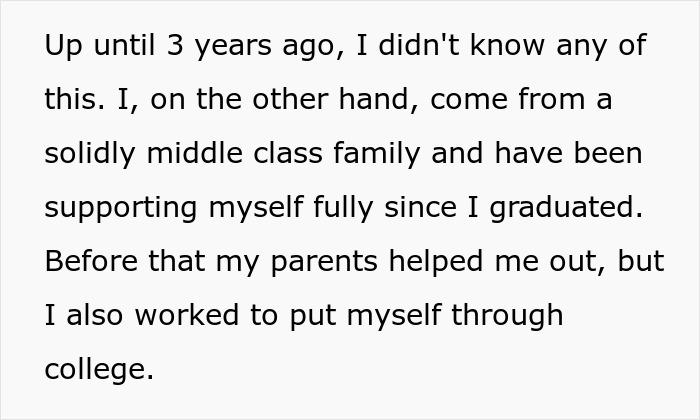
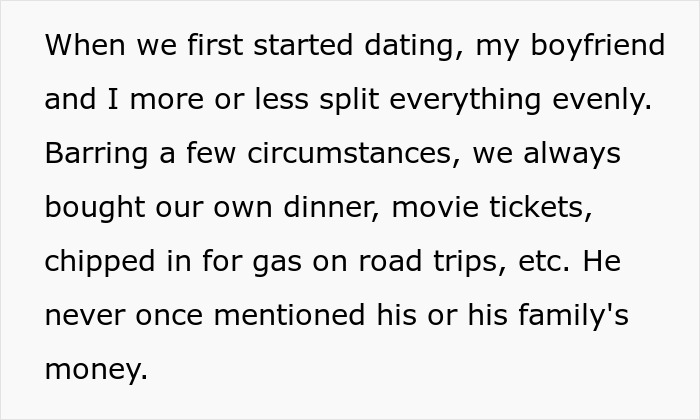
Image credits: Wavebreak Media / Magnific (not the actual photo)
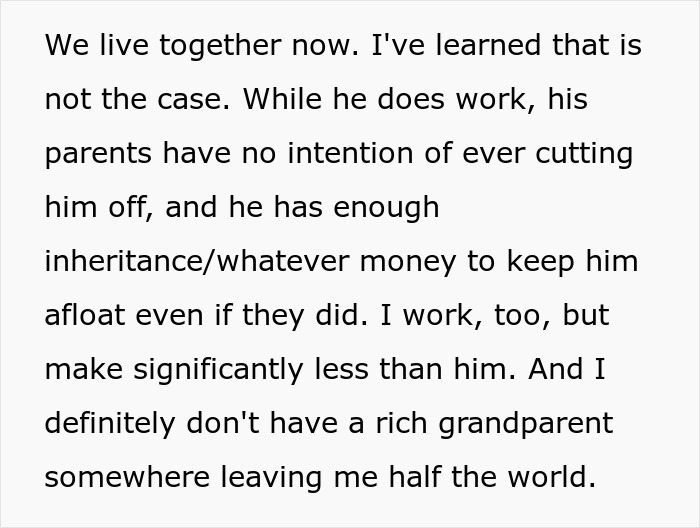
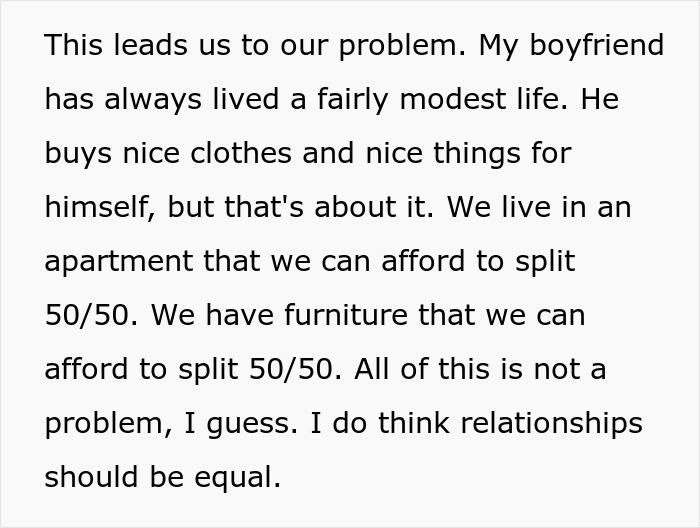
Image credits: SkelDry / Magnific (not the actual photo)
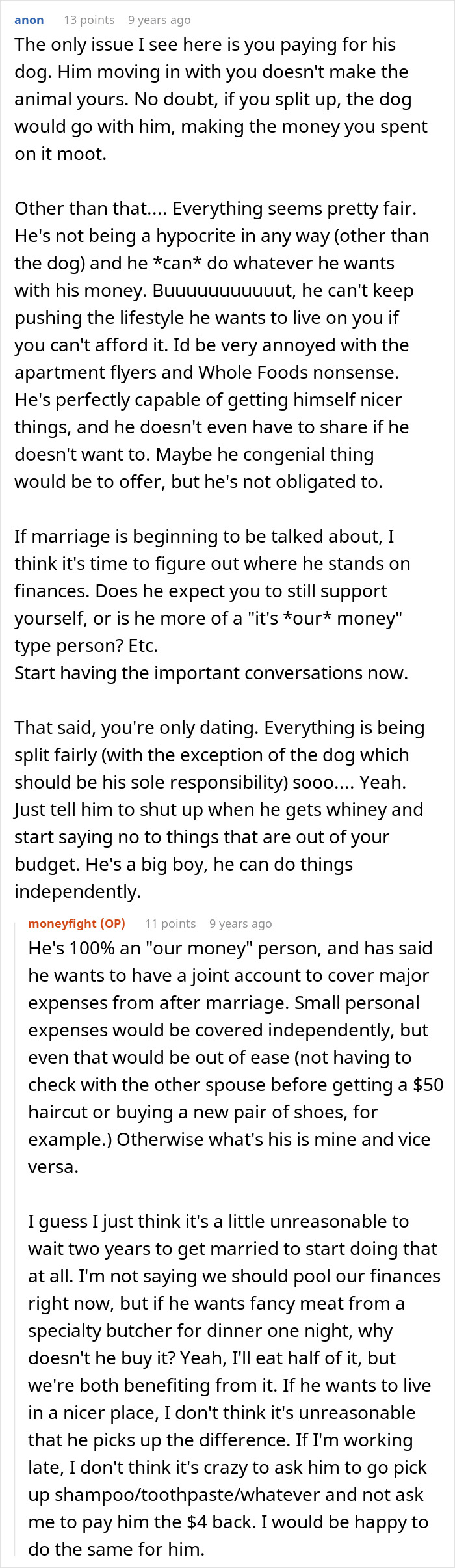
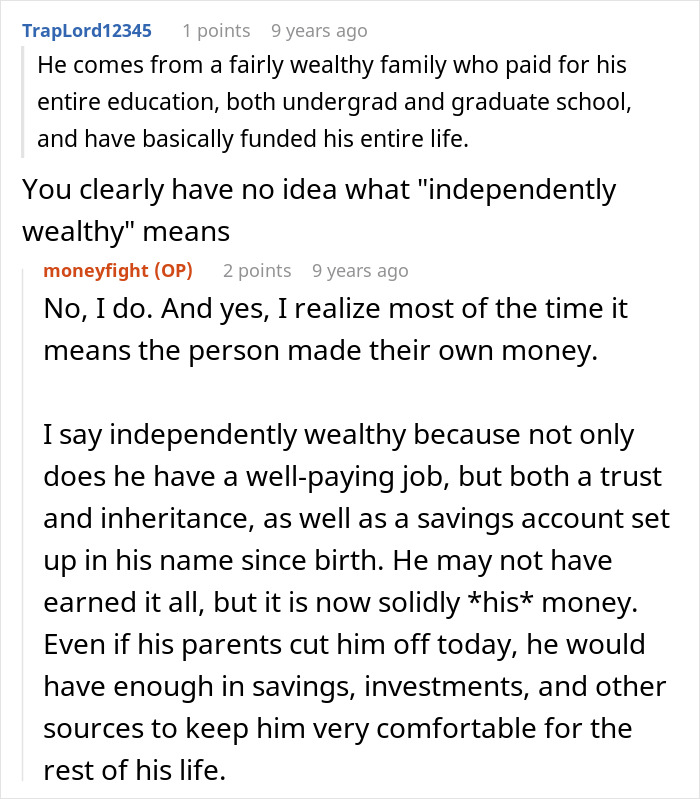
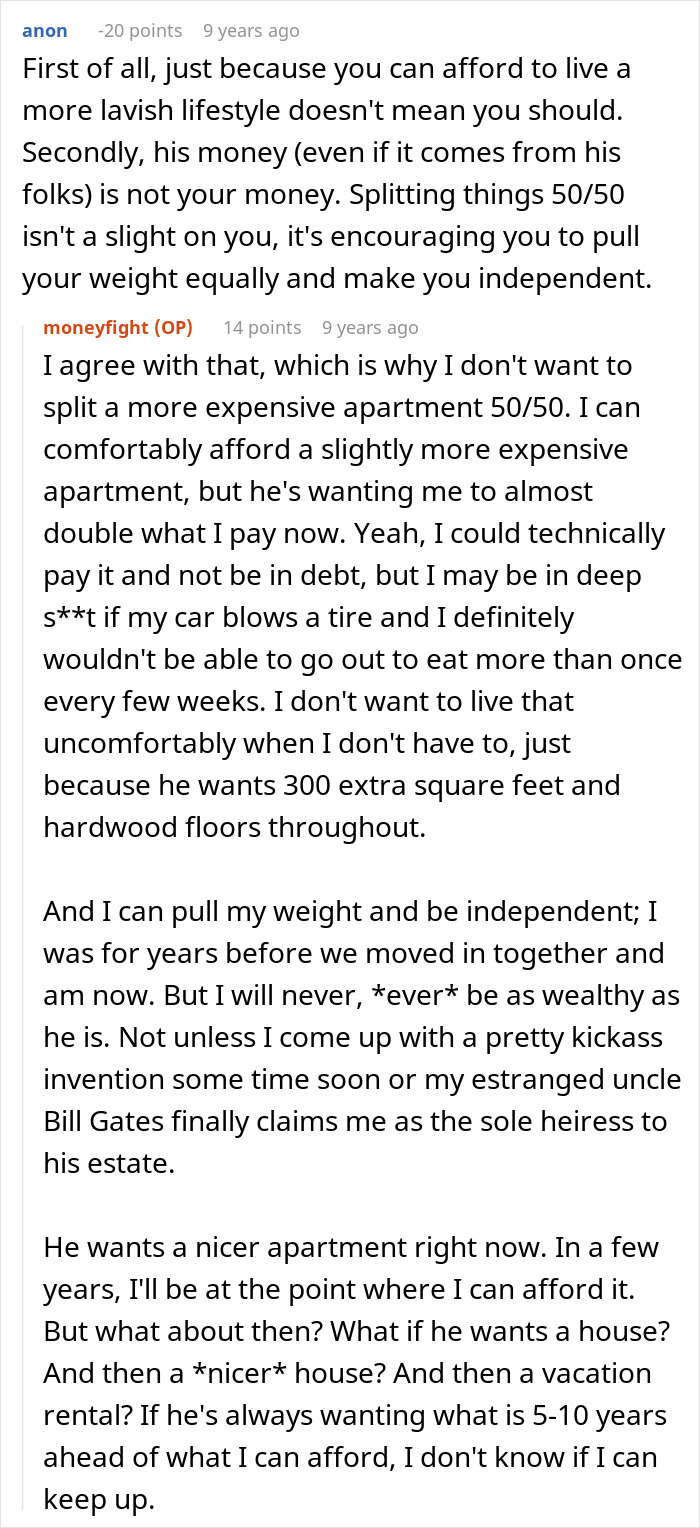
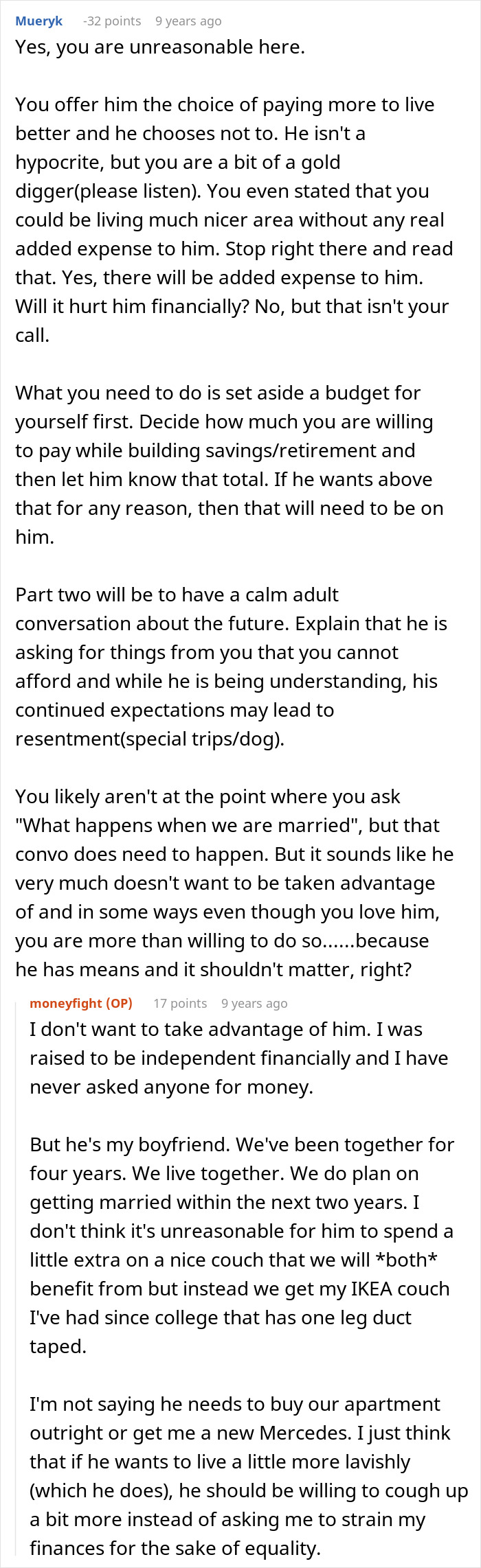
Image credits: moneyfight
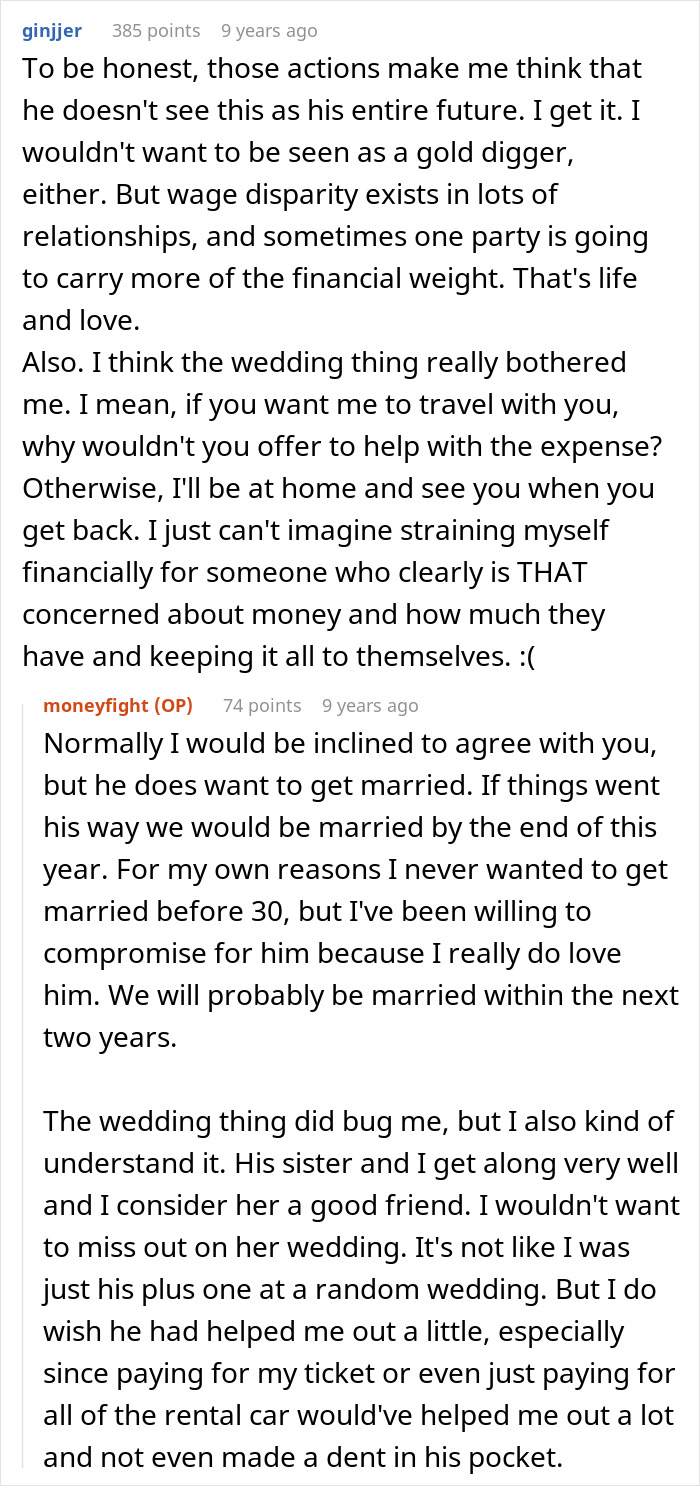
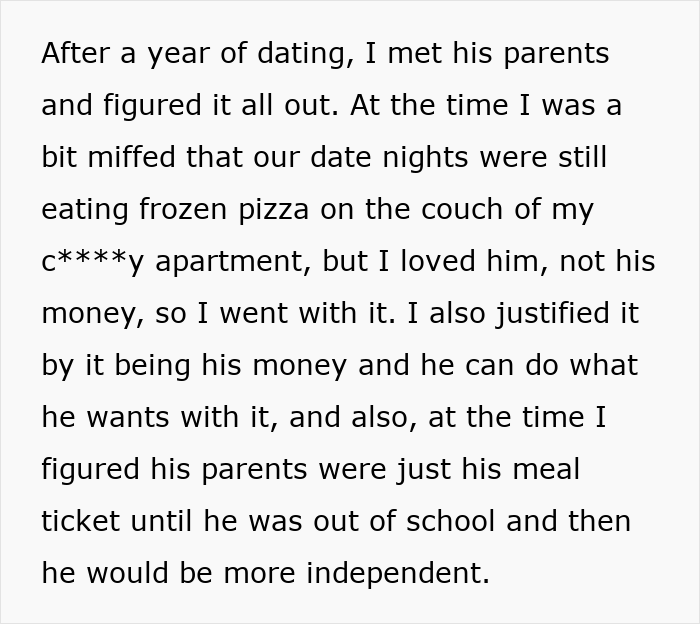
They met in school, both students, both apparently on equal footing. She was working her way through college and supporting herself. He was doing the same, or so she thought, for the first year of their relationship. Then she met his parents, and the picture shifted considerably. His modest student existence was, it turned out, a choice rather than a necessity, and he had simply never mentioned it.
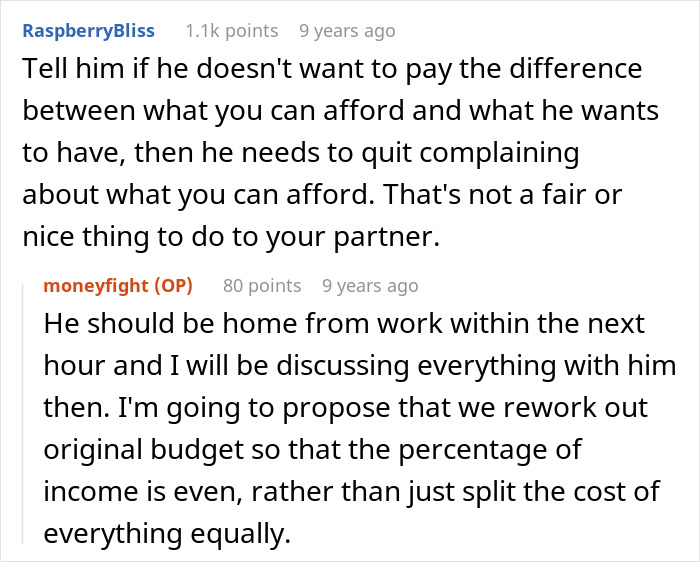
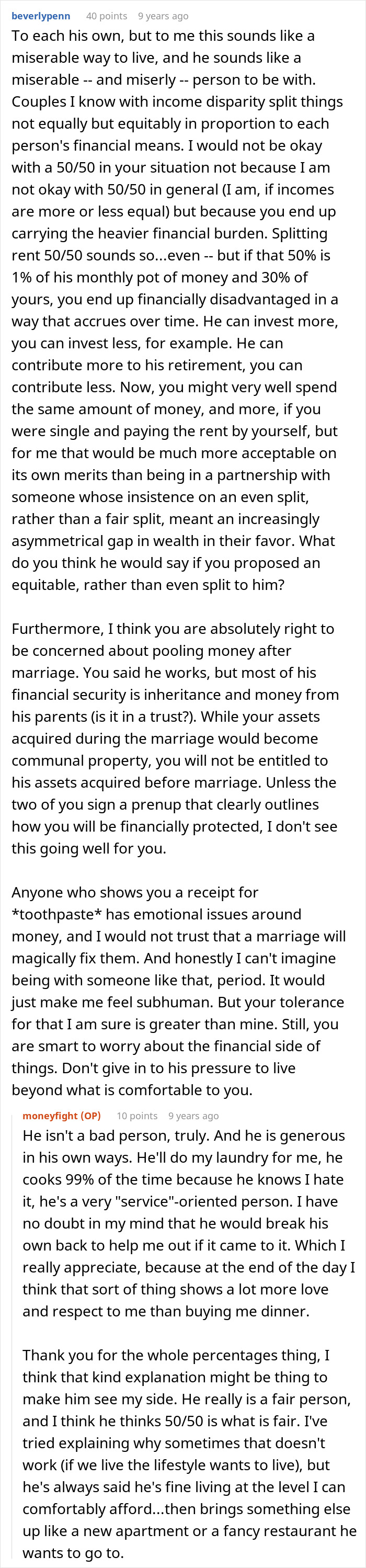
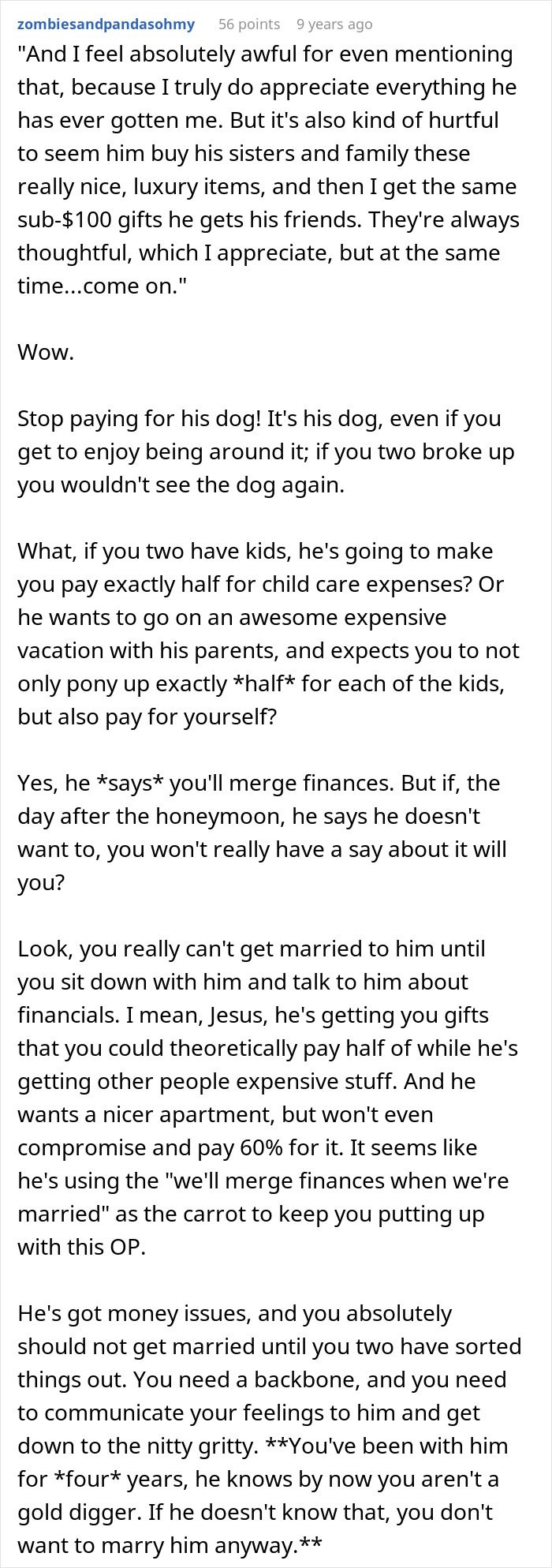
She loved him anyway, not his money, and told herself that was the right attitude to have. What she did not anticipate was that the 50/50 split they had started with as equals would continue indefinitely, even as the context around it changed completely.
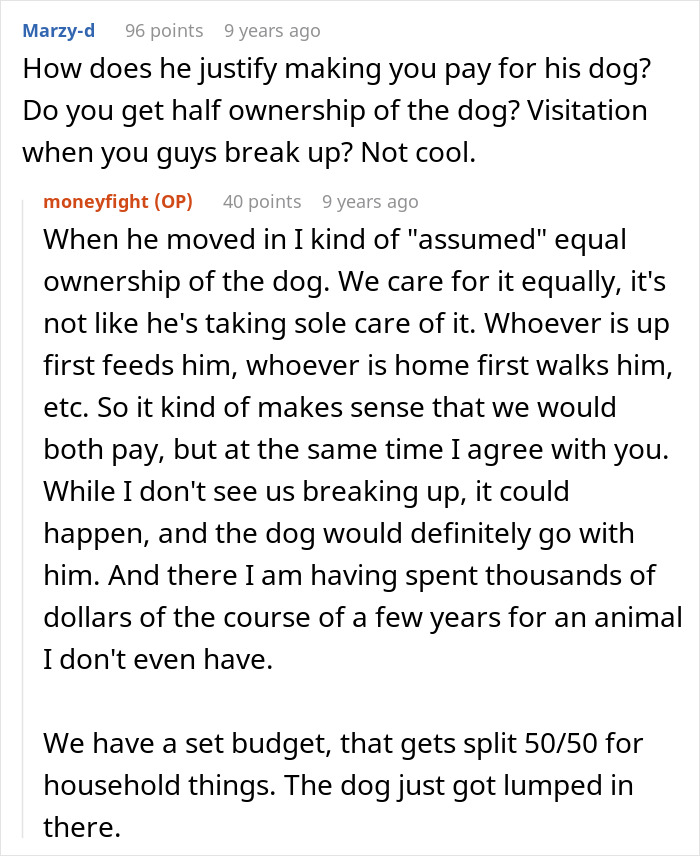
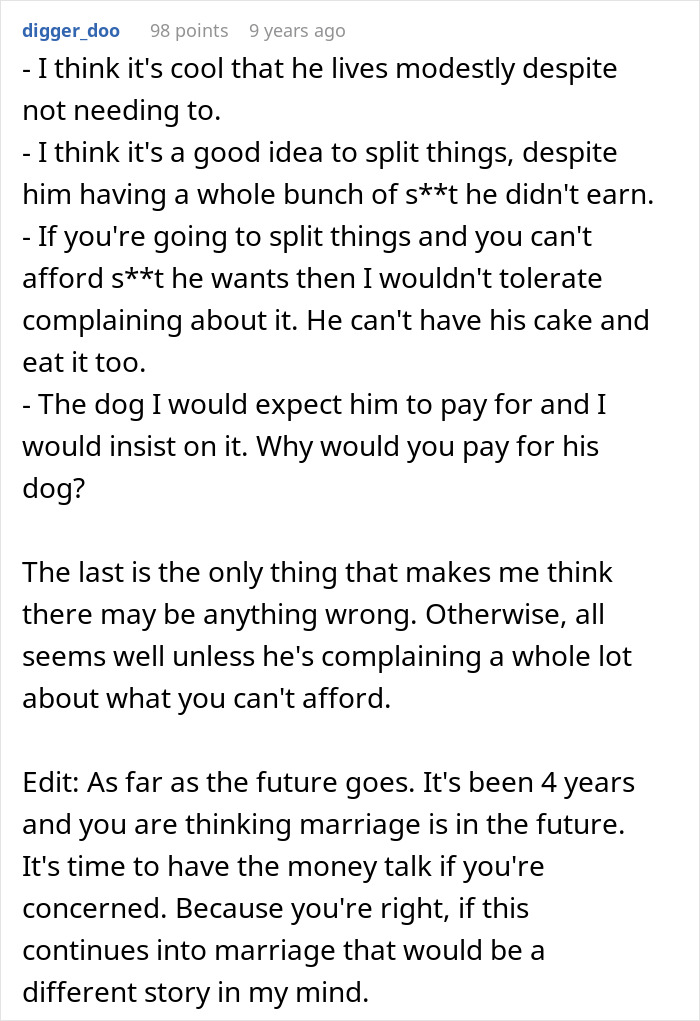
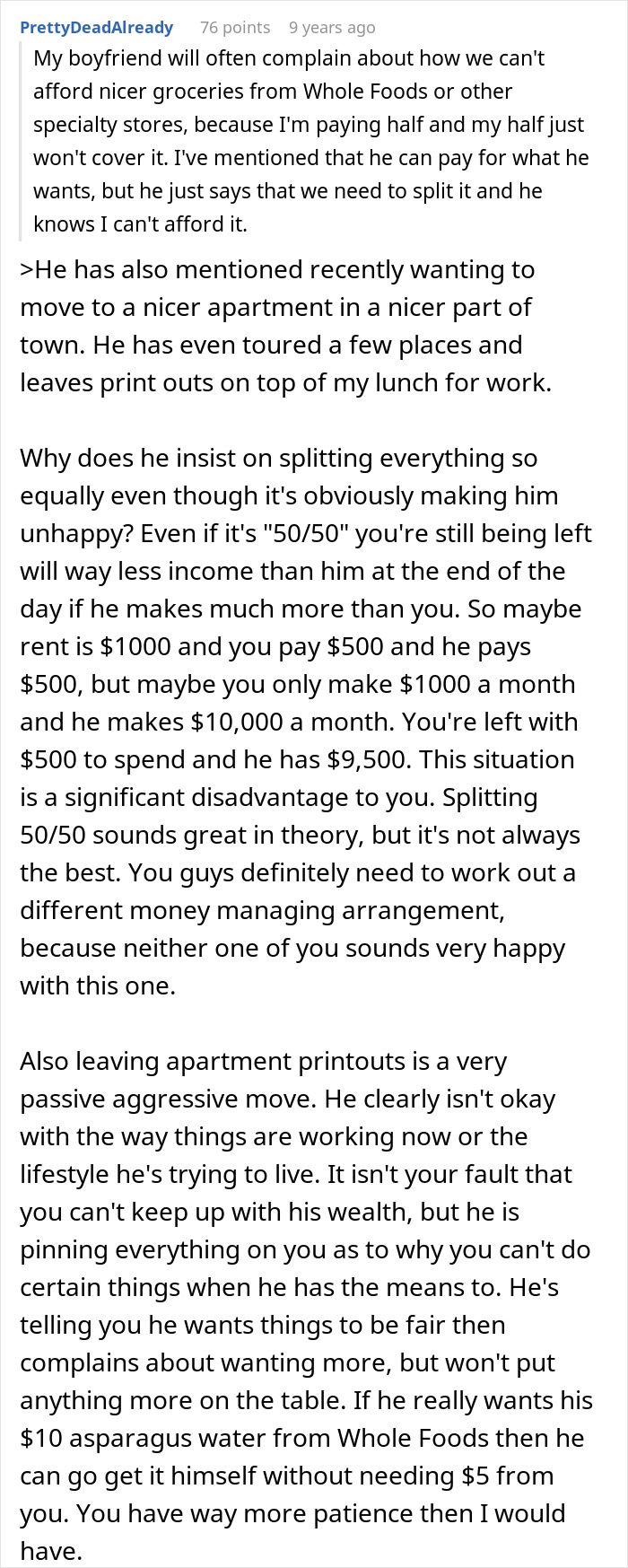
His sister’s wedding in Maine meant a six-hour flight she paid for herself. The dog he brought when they moved in together became their dog on the expense sheet while remaining his dog in every other sense. He would come home with expensive cuts of meat, leave luxury apartment flyers on her packed lunch, and then note that they simply could not afford Whole Foods on an equal split.
Her half could not cover what he wanted, and she prepared a presentation to lay everything out. She just asked for a proportional split, something like 60/40. He listened but did not budge an inch. He would only shift things once they got married, and even said they could get married sooner. But she was not willing to marry for financial stability and packed her things that afternoon.
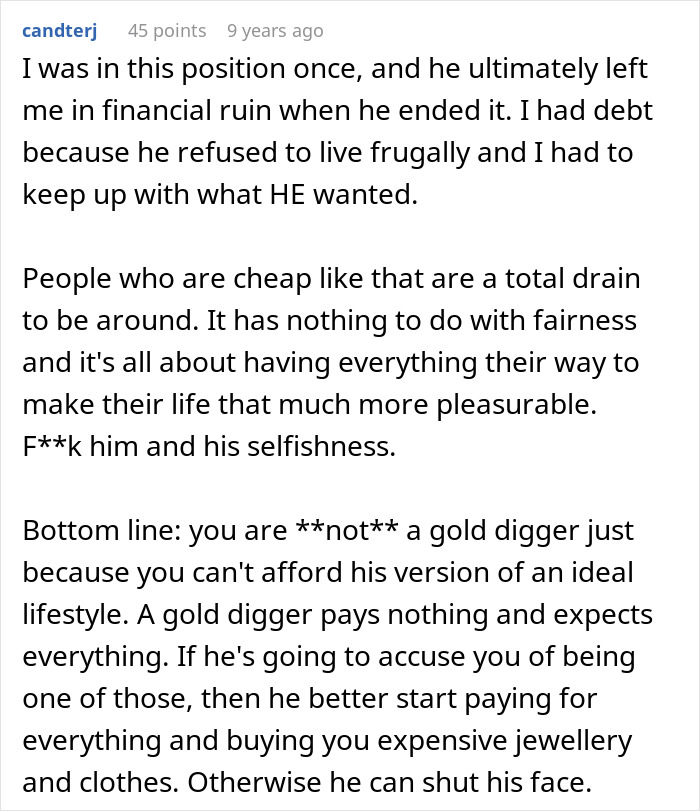
On her way, out he handed her a check. He had calculated what he owed her, her prepaid rent portion, the estimated value of groceries she would not be consuming, and the dog expenses she had paid over the course of the relationship. Every penny accounted for. One final financial blow.
Image credits: katemangostar / Magnific (not the actual photo)
The solution she was asking for was not complicated, and it is actually a pretty smart angle. WECU suggests calculating each partner’s percentage by taking your individual income and dividing it by the total household expenses. That gives you a percentage to work from. She was not asking for his inheritance, just basic arithmetic.
Flow Financial Planning identifies two main approaches to couples’ finances. The first is ‘what is mine is ours’, where total household income is treated as shared. The second is ‘mine, yours, and ours’, where each person maintains individual accounts alongside a joint one. Both can work, but as Flow points out, the latter only functions fairly if the chosen lifestyle reflects both people.
CNBC identifies financial incompatibility through three specific markers: a lack of willingness to share information, an ambition gap, and control issues. The way he had hidden his wealth for a year, refused to adjust the split despite a significant income disparity, and responded to her entirely reasonable request the way he did checks all the boxes and then some.
Recent studies confirm that financial disagreements remain one of the most powerful predictors of divorce, contributing to between 20% and 40% of all splits. So basically, she saved herself years of rehashing this argument by having it at 26, and the check he handed her on the way out at least confirmed she had made the right call.
Do you think what she was asking was fair? Share your thoughts in the comments!

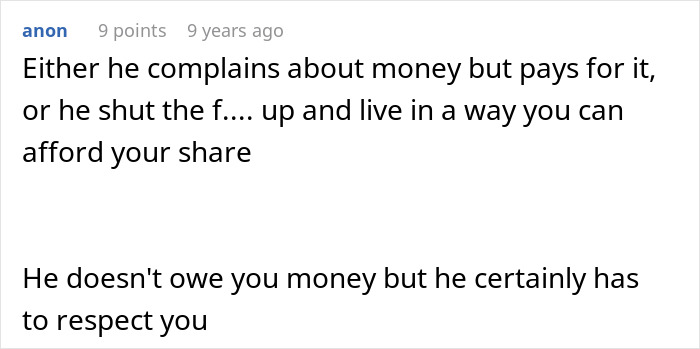
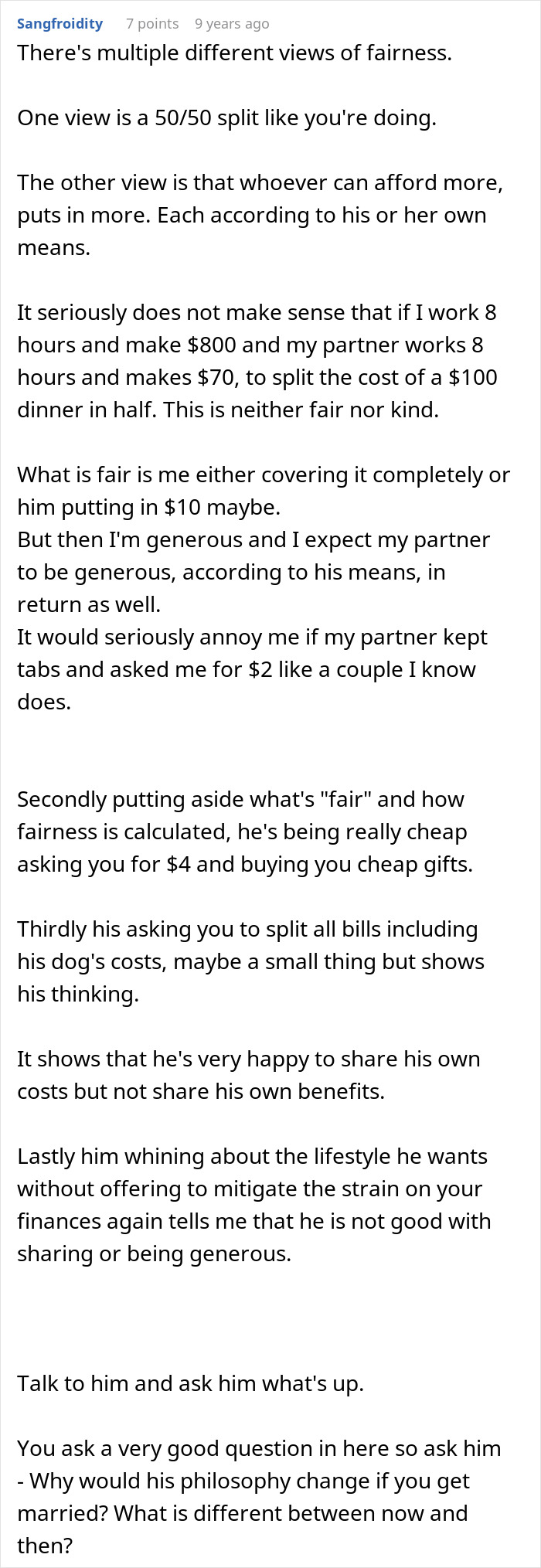


This story is a perfect example of why flat taxes unfairly penalize those who make less money. They should be splitting expenses as a percentage of their income. That would be fair.

I agree, a flat tax without an across the board large standard deduction is unfair to the low earners. A flat tax with a good deduction could be fair, or at least fairish. If the poverty line is 25k, and a person could live a decent modest lifestyle at 50k, then set the deduction at 50k. Anyone who earns less than 50k pays no tax. If you earn 60k, the first 50k is tax free and you pay on 10k. If you earn 250k, you pay on 200k. Done right, it could be a much fairer system than we currently have, especially if profits from investments is part of income and not capitol gains. But such a system would need to be phased in so we don't suddenly have a bunch of unemployed tax preparers and accountants. And I don't see that ever happening 😕
Load More Replies...
This story is a perfect example of why flat taxes unfairly penalize those who make less money. They should be splitting expenses as a percentage of their income. That would be fair.
I agree, a flat tax without an across the board large standard deduction is unfair to the low earners. A flat tax with a good deduction could be fair, or at least fairish. If the poverty line is 25k, and a person could live a decent modest lifestyle at 50k, then set the deduction at 50k. Anyone who earns less than 50k pays no tax. If you earn 60k, the first 50k is tax free and you pay on 10k. If you earn 250k, you pay on 200k. Done right, it could be a much fairer system than we currently have, especially if profits from investments is part of income and not capitol gains. But such a system would need to be phased in so we don't suddenly have a bunch of unemployed tax preparers and accountants. And I don't see that ever happening 😕
Load More Replies... 













 No fees, cancel anytime











21
13