Get Premium
Dark mode theme is available exclusively for premium users. Learn more about the benefits of subscribing.
No fees, cancel anytime.

 Dark Mode Ad-Free Browsing Unlimited Content
 Ad-Free Browsing Unlimited Content Dark Mode
Join 1.2 million Panda readers who get the best art, memes, and fun stories every week!
11submissions
1week left
Thousands of medical textbooks have been written, establishing a blueprint for how the human body is meant to work, how the heart is supposed to beat, and how skin is supposed to skin.
But every now and then, doctors come across a patient who doesn't follow the script, much like the hit ER drama The Pitt, where every episode sees a new medical curveball.
Some medical stories begin with something small, maybe a strange mark on the body or an odd reaction to something so normal. These small oddities led to the strangest medical mysteries, including a woman who spent years getting “drunk” without ever touching alcohol, and a boy whose pain couldn’t be explained by 17 doctors.
Scroll on to discover some of the most bizarre medical mysteries that made figuring out what was actually going on much harder than the actual treatment.
This post may include affiliate links.
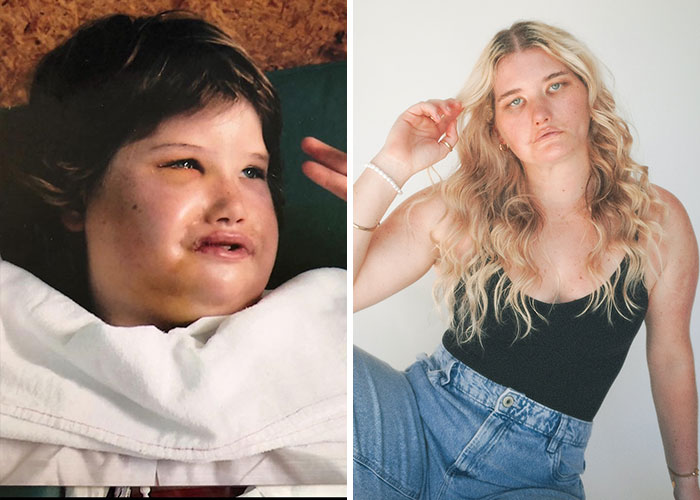
Imagine not being able to smile. Not once. Not ever.
That’s exactly what Tayla Clement has lived with since birth. It wasn’t because she never felt like smiling, but because her body simply wouldn’t let her.
Born with Moebius syndrome, a rare condition that affects the facial nerves, Tayla cannot move her eyebrows, track her eyes side to side, or lift her upper lip.
“I can’t smile,” she said. “That’s why people call me the girl who can’t smile.”
Growing up, that difference made her a target.
“People would bring plastic bags to school and tell me to put them over my head,” she recalled. “They said I didn’t deserve to be seen.”
For years, Clement believed them.
At the age of 12, she underwent surgery in the hope that it would change everything; tissue was taken from her thigh and transferred to her face to try to create a smile.
It didn’t work.
“I thought the surgery would solve all my issues because I was bullied so much,” she told 7 News Australia. “But it didn't.”
As the bullying continued, the impact it had on her ran deeper.
By her late teens, she began experiencing dissociative seizures, sometimes up to ten a day, linked to psychological stress she had endured.
“I had such severe depression,” she said, “that doctors compared it to PTSD.”
But her story didn’t end there.
Slowly, things began to shift.
By rebuilding her confidence in the gym and through meditation, she reclaimed how she saw herself. And with time, Clement began to move away from the version of herself shaped by other people’s reactions.
Then came something she had never imagined: a modeling contract signed with Zebedee Talent. Clement began using the same face she was once told to hide to represent something else entirely: visibility.
“I had no one to look up to growing up,” she said. “I didn’t see anyone like me.”
Now, she is that person who gets to inspire people.
“And that makes me so happy.”
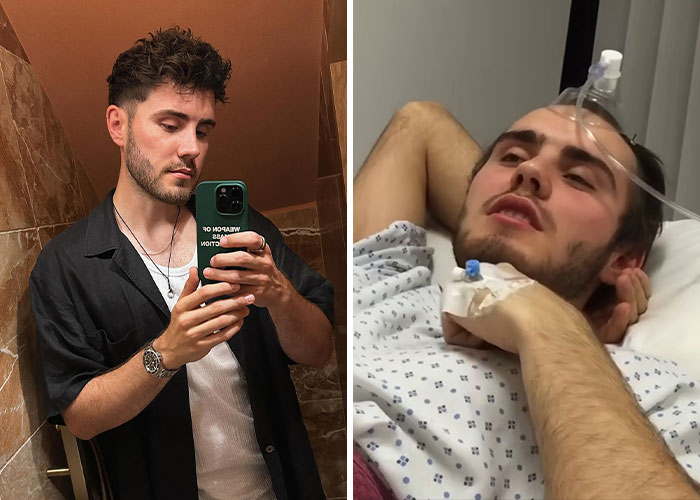
Influencer Alfie Deyes, best known for sharing content with his 4.54 million YouTube subscribers, spent more than a decade thinking he had an aggressive case of acid reflux.
Back when he was putting out dozens of videos a month for his fan-following, Deyes often spoke candidly about cutting out coffee, alcohol, bananas, bread, and carbonated drinks to quell his acid reflux symptoms, which generally include indigestion, difficulty swallowing, and a burning chest pain from stomach acid flowing back up into the esophagus.
His symptoms became so severe about 10 years prior that he began visiting doctors. Most of them attributed it to stress.
“I had seen so many different doctors at this point,” he told his followers in a YouTube video last year. “Nothing I could do could literally make an impact on just how severe this acid reflux was, and it was so incredibly often.”
“It was really hard to be told the problem — the thing causing all of the issues — was stress, because it was so hard to try and combat that,” he said elsewhere in the video.
Cutting out different foods didn’t solve the problem for Deyes, who began having severe difficulty swallowing food.
This led to him eating smaller quantities and, in turn, struggling to keep weight on. He even stopped going out with friends because he wouldn’t be able to finish a meal.
“Sometimes I would start a meal and have one mouthful, and I couldn’t swallow it. It would feel like the food was stuck,” he said. “It just got to the point where it was taking over my life too much.”
Things took a turn when Deyes was flicking through TikTok one day and stumbled upon a video of a woman getting a barium swallow test.
The test involves drinking a liquid that contains a small amount of barium, which makes body parts appear more clearly on an X-ray. This helps in the diagnosis of esophagus-related issues, as the test shows what happens to food when it is swallowed.
When Deyes showed the test to one of his doctors, he was told that it might not always reveal much about a patient’s condition. But the doctor agreed to do the test anyway.
“Within no more than 10 seconds, [the doctor’s] like, ‘Oh yeah, I can see what it is. I can see what’s going on,’” the YouTuber recalled.
The test led to Deyes being diagnosed with achalasia, an extremely rare disorder that affects about eight to 12 people in 100,000.
For people with this swallowing disorder, the esophagus muscles do not contract properly, and this affects the swallowing of food into the stomach. It typically affects adults between 30 and 60 years of age.
Deyes recalled being “mind-blown” after his diagnosis because it meant being one step closer to a solution. And the solution was in the form of a 10-minute procedure, where doctors manually opened his esophagus to help food pass faster.
The content creator said he has had no issues swallowing food since then.
“I can’t even explain how different my life is,” he added.
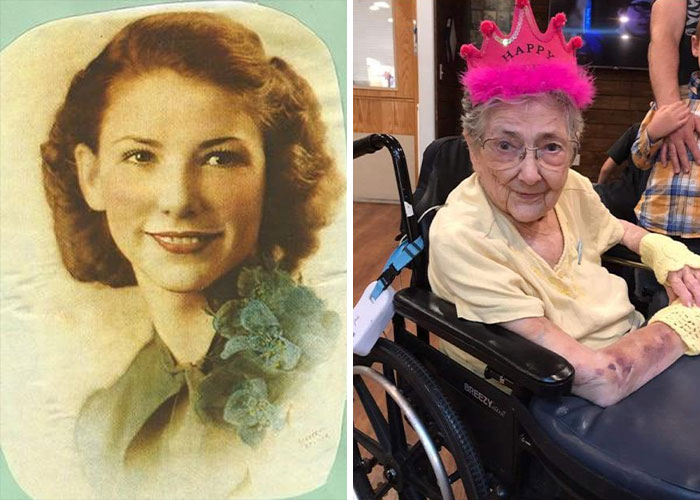
Imagine living your entire life with your organs arranged in reverse. And never knowing it.
In the case of Rose Marie Bentley, it wasn’t a medical mystery she spent years trying to solve. It was a discovery made only after she had passed away.
Bentley, a feed store owner from Oregon, lived to the age of 99 with no idea that her body was structured differently from almost everyone else’s.
After she passed away, her body was donated to Oregon Health & Science University, where medical students began to notice something unusual.
During an anatomy class, they struggled to locate key structures where they were expected to be. What started as confusion turned into a kind of lesson no textbook could prepare them for.
In that lab, Bentley wasn’t just a donor. She became a silent teacher, guiding students with a body that rewrote what they thought they knew.
Her organs weren’t missing. They were mirrored.
Bentley had a rare condition called situs inversus with levocardia, meaning many of her abdominal organs, including the liver and stomach, were positioned on the opposite side of her body, while her heart remained in its usual place on the left.
The condition was extraordinarily rare, one in 50 million, and was often associated with severe heart abnormalities that prevent people from surviving into adulthood.
Yet Bentley lived nearly a full century.
Doctors and educators were stunned. Some had spent decades teaching anatomy without ever encountering a case like hers.
Even more surprising was that Bentley had undergone multiple surgeries during her lifetime, and the condition still went largely undetected. Only one surgeon, during an appendectomy, noted that something was unusual.
To her family, however, the discovery felt fitting.
They described her as someone who lived a full, healthy life, with no major medical issues aside from arthritis. And when they learned about her rare anatomy, they believed she would have found it fascinating.
“My mom would think this was so cool,” her daughter Allee said.
In a way, Bentley became what she never knew she was: a once-in-a-generation case that left a lasting impression on every student who learned from her.
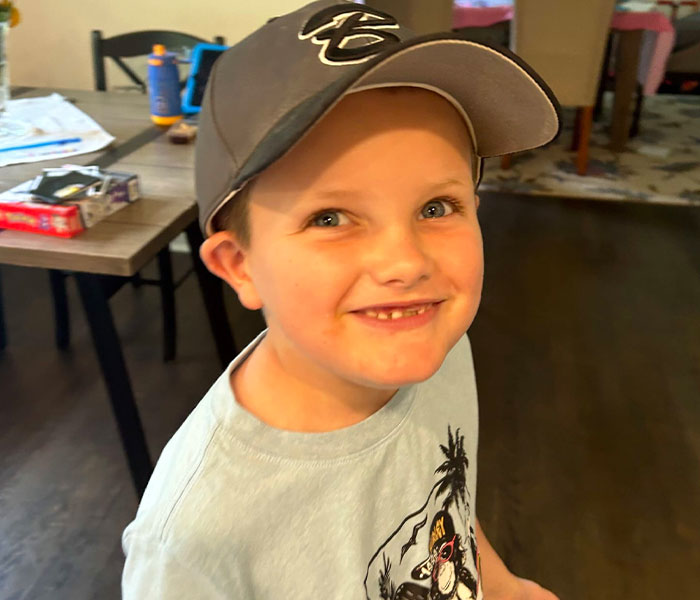
For three years, a mother named Courtney didn’t get a proper answer for why her once-happy little boy, Alex, was behaving differently.
She said several doctors couldn’t explain why the four-year-old boy was “dissolving into this tantrum-ing crazy person that didn’t exist the rest of the time.”
Courtney said her son was in a lot of pain, had started chewing on things, and even stopped growing taller. His headaches were also getting worse with time.
They also noticed some imbalances between the left and right sides of his body. “He would lead with his right foot and just bring his left foot along for the ride,” the mother said.
Each different symptom took the family to a specialist. They went to a dentist for the strange chewing, a pediatrician for not growing taller, and an ENT doctor to check whether his sinus cavities or airway had issues that contributed to his sleep problems.
They went to 17 doctors in total for over three years, but “nobody [was] willing to solve the greater problem. Nobody will even give you a clue about what the diagnosis could be,” she told Today in 2023.
A frustrated and exhausted Courtney then turned to ChatGPT for help. She painstakingly went through every line in his MRI notes and fed them to the AI chatbot.
“I put the note in there about ... how he wouldn’t sit crisscross applesauce,” she said. “To me, that was a huge trigger (that) a structural thing could be wrong.”
ChatGPT finally spewed an answer: tethered cord syndrome, a neurological condition where the spinal cord is abnormally attached to surrounding tissue, thus affecting movement, causing pain, and so on.
After doctors confirmed the diagnosis, Alex underwent surgery in 2023 to fix his tethered cord syndrome.
Courtney said she wanted to share her son’s story so that others also don’t give up until they find an explanation.
“There’s nobody that connects the dots for you,” she told the outlet. “You have to be your kid’s advocate.”
While ChatGPT is useful for information, it can never replace a doctor, and medical diagnoses must always come from trained professionals.
It started earlier than it should have.
She was just 13 weeks pregnant when her body began producing milk, far more than anyone expected.
“At that point, I knew something wasn’t right,” Elisabeth Anderson-Sierra later recalled.
But what felt unusual at the time didn’t stop.
Years later, it still didn’t.
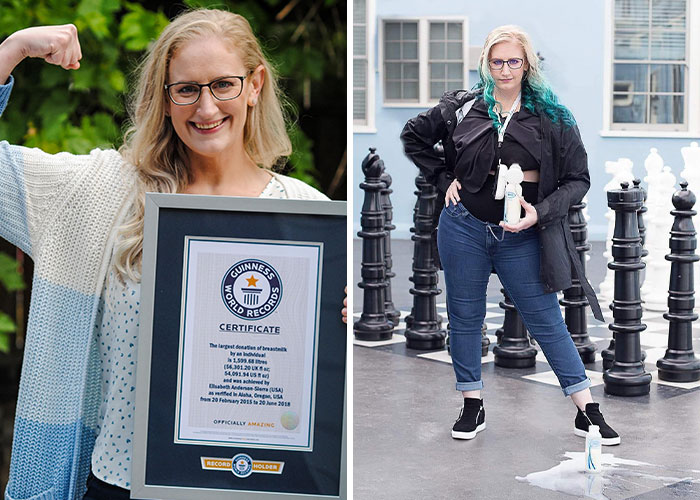
Elisabeth, a mother of three from Oregon, lives with a rare condition known as hyperlactation syndrome, where the body produces an extreme and continuous oversupply of breast milk.
In her case, it wasn’t just excess. It was constant.
“I now pump about 200 ounces a day,” she wrote for Today in 2023. “And it never really stopped in between pregnancies.”
For her, feeding wasn’t a routine part of motherhood.
It became her entire schedule.
Pumping eight to ten times a day, often for nearly an hour each session, meant that much of her life revolved around staying connected to a machine.
“It was like a full-time job,” she told People. “And that doesn’t even include cleaning, storing, or transporting everything.”
At one point, her equipment was so large and powerful that she couldn’t leave the house for long periods of time.
“It felt like a ball and chain,” she admitted.
But the condition didn’t just affect her time. It took a physical toll, too.
“If I’m not pumping, things start to happen—inflammation, mastitis, even abscesses,” she said.
Hospital visits for dehydration and malnutrition became part of the reality. And still, her body kept producing.
Doctors traced the cause to an overactive hormonal pathway, where elevated levels of prolactin continuously signal the body to produce milk, regardless of need.
“With this excess of prolactin, my body just makes milk on its own,” she explained.
The condition is rare and often misunderstood, which is why Elisabeth chose to speak about it publicly and also appeared in the Netflix documentary (Un)Well, where her story brought visibility to a condition few people had ever heard of.
“I’ve seen moms look at what my body produces and feel like they’re not doing enough,” she said. “But the truth is, you don’t want this.”
Because what looks like abundance from the outside can feel very different from within. Still, she found a way to reshape it.
“There’s a lot of negatives,” she said. “But I try to focus on the good that’s come out of it.”
Over the years, Elisabeth donated hundreds of thousands of ounces of milk, helping premature babies and families who needed it most. But even that came with trade-offs.
In 2023, Anderson-Sierra set the Guinness World Record for the largest donation of breast milk by an individual. She said she was “humbled” by the record she set with her donation of 1,599.68 liters (more than 420 gallons).
For now, the condition continues. And while there are medical options and treatment plans to deal with the condition, the side effects were “too much,” she said.
“My body just won’t stop,” she added.
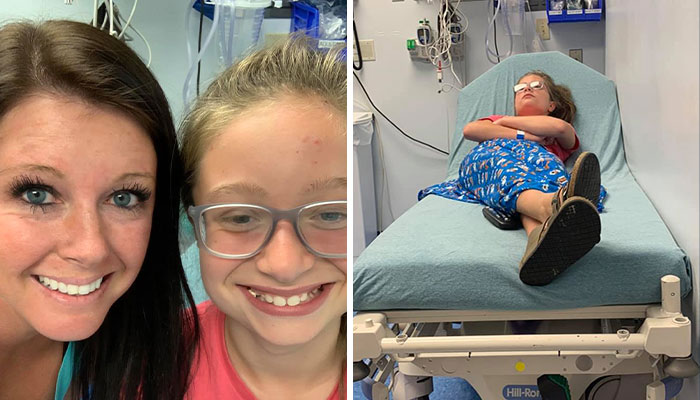
Gracie Brown was getting her hair curled before church when she suddenly went limp and unresponsive.
Her sister, Alicia Brown Phillips, revealed on social media that she was helping 10-year-old Gracie get ready when the scary 2019 incident unfolded.
While Alicia was curling her hair, Gracie started to gag and lose color in her face.
The older sister scrambled to take the child’s temperature, which was found to be normal. But things only took a turn for the worse from there.
Her hands began shaking, almost like she was having a seizure. She went completely limp after her lips went blue and her pupils became big.
“I was screaming for my husband to come into the bathroom, and he was taking her pulse, trying to say her name,” the older sister told Good Morning America. “It was probably the scariest thing I’ve ever seen.”
When Gracie regained consciousness, she said she was feeling “much better.” But the child was taken to the emergency room to be on the safer side.
A series of tests, including an electrocardiogram (EKG), a head scan, and blood pressure tests, gave out normal results. Doctors finally gave a diagnosis that Alicia had never heard of: hair-grooming syncope.
The rare condition makes young patients, mostly girls, feel lightheaded or faint when their hair is tugged.
“Turns out brushing, curling, braiding, or drying can cause nerve stimulation on the scalp and cause some children to have seizure-like symptoms … They said they see about 1-5 cases a year,” Alicia wrote in a viral Facebook post at the time.
When hair is being groomed, it can sometimes stimulate what’s known as the vagus nerve, which in turn causes the blood pressure and heart rate to slow down. This could even lead to loss of consciousness and even look like an epileptic seizure.
Dr. Dan Fain, a pediatric neurologist in Grand Rapids, Michigan, told Today that there were ways to prevent hair-grooming syncope. This would include making sure the child is seated instead of standing.
Fainting could also be associated with poor hydration or food intake, so it could also help to comb the child’s hair after they’ve had breakfast or a glass of water.
Dr. Deborah Sokol, another pediatric neurologist, said it helps to “keep the tank fueled and hydrated.”
If a child faints and doesn’t wake up for several minutes, or if they stop breathing, it is essential for parents to seek emergency care.
Six different diagnoses. None of them worked.
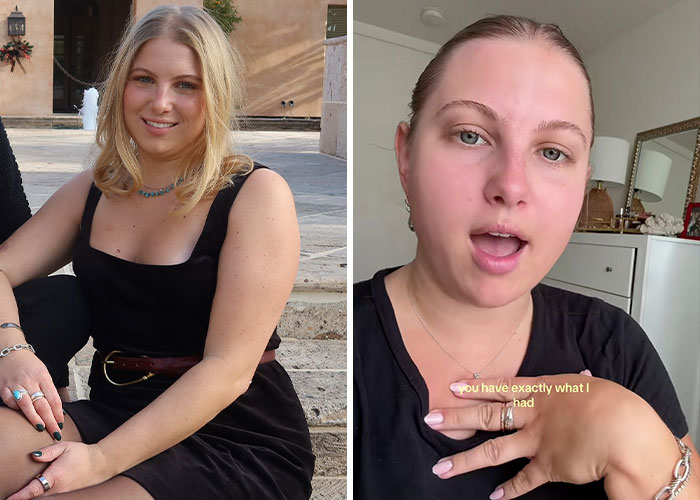
A woman had already been told she had everything from Ménière’s disease to IBS to general vertigo. The medications changed, but the symptoms didn’t: crushing fatigue, migraines, dizziness, brain fog, sinus pressure, skin flares.
Then came a conversation with her friend Makenna Kovach that lasted less than a minute but changed the rest of her life.
As she listed her symptoms to Kovach, the friend noticed something familiar. She had lived through the same pattern herself the year before.
So instead of suggesting another possibility, she asked a single question.
“Are you hypermobile?”
The answer was immediate: extremely.
That was enough.
Kovach recognized what the previous doctors hadn’t linked together. The symptoms weren’t separate conditions, but part of a larger system.
She suspected histamine intolerance and mast cell activation syndrome, conditions where the body reacts as if it’s under constant allergic stress, often overlapping with connective tissue disorders linked to hypermobility.
Instead of waiting for another appointment, the friends acted.
They went to a pharmacy, picked up a combination of over-the-counter medications—an antihistamine, a digestive enzyme, and a decongestant.
Within two hours, her friend felt better than she had in weeks.
Later, the diagnosis was confirmed.
What six doctors had treated as separate issues turned out to be pieces of the same puzzle.
And in that one-minute conversation, the difference wasn’t just knowledge.
It was pattern recognition.
“I know how confusing it is when nothing quite fits,” Kovach said. “When your symptoms don’t line up with what anyone expects, you start to feel like it’s all in your head.”
It started with a bite she almost ignored.
In the middle of the night, Sarah Neal felt something crawling on her skin. Half-asleep, she brushed it off and went back to bed, thinking nothing of it.
By the next evening, her body told a different story.
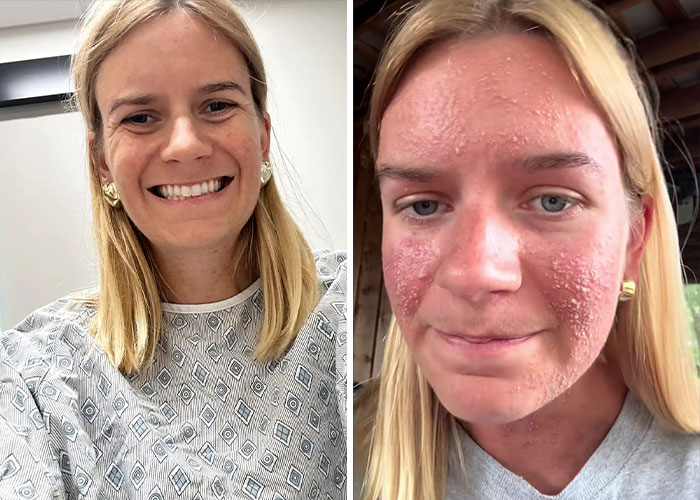
A rash began creeping across her arms and legs. Her face turned red, hot to the touch. By the time she looked in the mirror, it wasn’t just irritation. She knew that something was clearly wrong.
Then came the fever.
By morning, her face was swollen, her skin tight and burning, with pustules (small, pus-filled bumps on the skin) beginning to form. What had started as a mild annoyance had escalated into something she couldn’t ignore.
So she went to the ER.
But instead of answers, she left with more confusion.
Doctors dismissed the bite and suggested it might be a reaction to sunscreen or skincare. She was given steroids and antibiotics and sent home, still unsure of what was happening to her body.
At home, the symptoms continued to worsen.
It was her mother who pushed her to try again.
After calling multiple clinics, Neal managed to get a same-day appointment with a dermatologist, something even people online told her was rare.
This time, the pieces started to come together.
The dermatologist listened, examined the rash, and then gave a diagnosis she had never heard before: acute generalized exanthematous pustulosis.
It was a rare skin reaction, most commonly triggered by medications. But in even rarer cases, it can be caused by something else.
A spider bite.
The mark on her skin matched what doctors see in bites from a brown recluse spider, a species known for causing tissue damage and, in extreme cases, necrosis.
Within days of treatment, the rash began to fade, confirming the diagnosis.
But the bite itself told a slower story.
The tissue around it darkened, hardened, and began to die. For weeks, the pain made it difficult to sit, sleep, or move comfortably.
“I felt like a medical mystery,” she said.
And for a while, she was.
Eventually, her body healed.
What remained was a small scar, and the memory of how quickly something ordinary could spiral into something no one immediately understood.
“I think I’m going to get a tattoo of a spider drawn on it,” she said. “Just for the memories.”
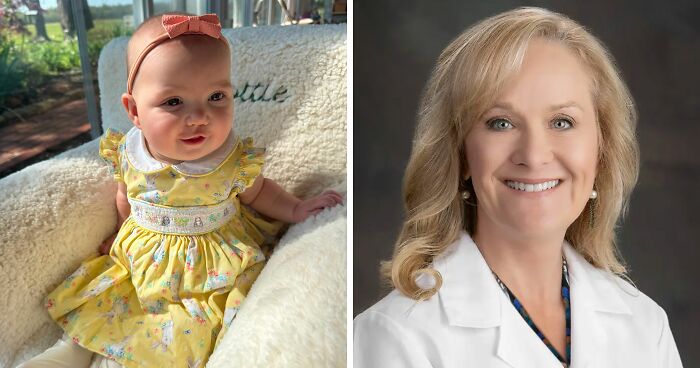
Every baby’s smile has a way of melting hearts. But baby Ayla Summer Mucha’s smile was extra special because it had a story to tell.
Born in Australia in 2021, Ayla went viral for her “permanent smile,” something that doctors at the Flinder’s Medical Centre in Adelaide, South Australia, had never seen before.
“We were instantly worried,” her mother Cristina Vercher said after her baby was delivered via C-section.
Born in Australia in 2021, Ayla’s condition was immediately visible and unexpected.
She was diagnosed with a rare genetic condition known as bilateral macrostomia. While the cause is still unknown to this day, the symptoms are very evident, with the baby’s face presenting with an unusually wide mouth that looks set in a permanent smile.
The rarity of the condition meant that even doctors at Flinders Medical Centre in Adelaide were initially uncertain, as it had gone undetected during the prenatal scans, and very few documented cases exist in medical literature.
Ayla’s condition was immediately visible at birth, prompting both concern and confusion for her parents, Cristina Vercher and Blaize Mucha.
The overwhelmed parents received a diagnosis shortly after they welcomed their little one, bringing a different kind of distress for Cristina.
Despite being meticulous throughout her pregnancy, she wondered if she had done something wrong. However, after multiple consultations, genetic testing, and scans, doctors reassured the family that the condition was spontaneous and not caused by anything within their control.
While the “permanent smile” drew attention online, the condition itself is more than cosmetic. In some cases, it can affect feeding, as babies may struggle to latch or breastfeed properly.
Despite the challenges, Ayla’s story resonated with thousands. Her parents shared her journey online, hoping to raise awareness about a condition so rare that only a handful of cases have been documented in medical journals.
And while her smile may look different, it has come to represent something else entirely for her fans, including resilience, visibility, and a story that refuses to go unnoticed.
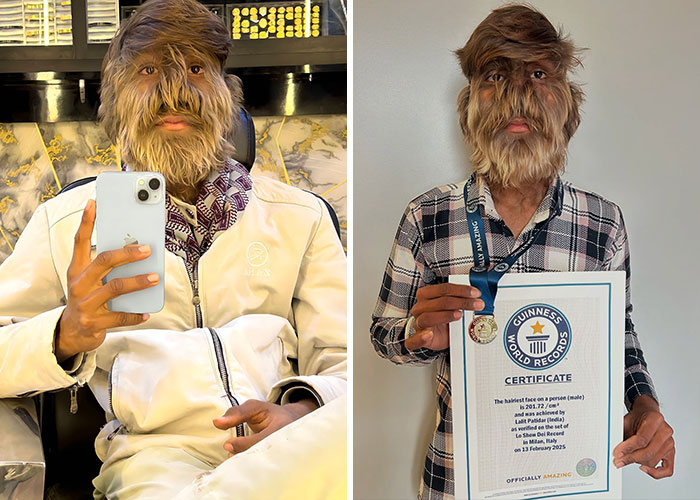
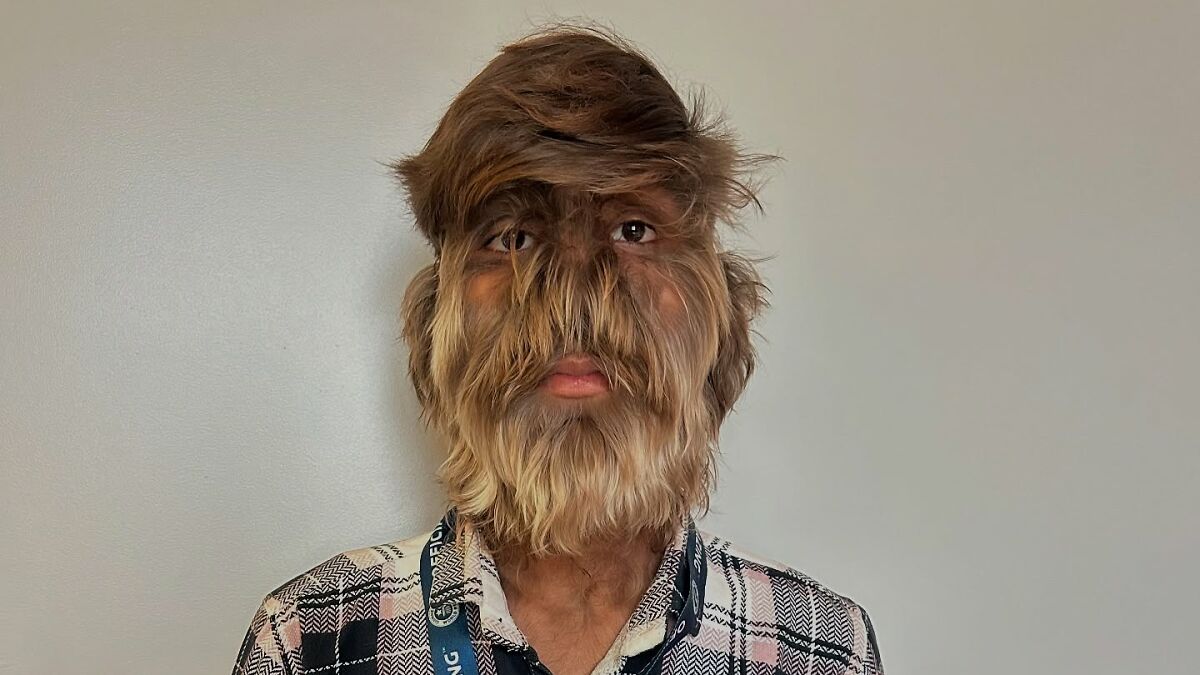
Before winning a world record, there were stares. Children in school were afraid to come near him.
“They were scared of me,” Lalit Patidar said.
Born with hypertrichosis, a rare condition that causes abnormal hair growth, Patidar’s appearance set him apart from the very beginning. Nearly his entire face, about 95% to be exact, was covered in hair.
The condition was so rare that only 50 cases have reportedly been documented worldwide since the Middle Ages. But Patidar wasn’t proud of his rarity; strangers stared, classmates hesitated, and some even kept their distance.
But over time, something shifted.
“When they started knowing me and talking to me, they understood I was not so different,” he told the Guinness World Records last year. “It was just on the outside.”
Years later, that same difference led to something unexpected, and that was worldwide recognition.
Lalit Pardar, at the age of 18, earned a Guinness World Records title for having the hairiest face, with more than 200 strands of hair per square centimeter.
“I am speechless,” he said after receiving the award. “I don’t know what to say because I’m very happy to get this recognition.”
For Lalit, the story wasn’t just about rarity. It was about ownership.
Despite suggestions from others to change his appearance, he made his stance clear.
“I like how I am,” he asserted. “I don’t want to change my look.”
Today, he shares his life with hundreds of thousands of followers online, many of whom see something very different from what others once did.
Refusing to shave his facial hair, he held up his certificate for a social media post and wrote, “Proud of me.”
She hadn’t had a drink in years. Not a sip. And yet, she kept showing up to the emergency room with slurred speech, overwhelming fatigue, and the unmistakable smell of alcohol on her breath.
Each time, the conclusion was the same: alcohol intoxication.
But there was one problem. She wasn’t drinking.
Over the course of two years, she was admitted multiple times with the same symptoms. She would suddenly become drowsy, falling asleep while getting ready for work, struggling to stay alert, and losing her appetite.
To doctors, the pattern looked obvious. But to her family, it didn’t. They knew she had been abstaining from alcohol for the past few years because of her religious beliefs.
So something else had to be happening.
The clue came from her medical history.
Years of recurrent infections had required repeated courses of antibiotics. Over time, those treatments had quietly reshaped something far less visible, her gut.
When doctors finally connected the dots, the explanation was as strange as it was precise.
She had auto-brewery syndrome, a rare condition where microbes in the gut ferment sugars into ethanol, effectively producing alcohol inside the body.
“We found that gut bacteria, including Escherichia coli and Klebsiella pneumoniae, ferment sugars into ethanol in the intestine in patients with ABS,” said Bernd Schnabl, a professor of medicine from the University of California San Diego School of Medicine.
In her case, the process was strong enough to raise her blood alcohol levels to the point of visible intoxication.
She wasn’t drinking.
Her body was.
For patients, the effects go far beyond confusion.
Episodes can lead to cognitive impairment, liver damage, digestive issues, even withdrawal-like symptoms. And because the condition is so rare and poorly understood, many spend years being misdiagnosed before getting an answer.
In this woman’s case, the diagnosis changed everything.
What once looked like a behavioral problem turned out to be biological. And what felt like a mystery was, all along, happening in plain sight, just not where anyone was looking.
You might also like: Doctors share 51 ridiculous lies they have heard from their patients

















 No fees, cancel anytime