Get Premium
Dark mode theme is available exclusively for premium users. Learn more about the benefits of subscribing.
No fees, cancel anytime.

 Dark Mode Ad-Free Browsing Unlimited Content
 Ad-Free Browsing Unlimited Content Dark Mode
Join 1.2 million Panda readers who get the best art, memes, and fun stories every week!

We’ve all seen enough parenting memes to know that raising kids can be chaotic, messy, and downright hilarious, but that doesn’t mean parents stop trying. They pour their hearts into it, juggling endless responsibilities, sleepless nights, and tiny tantrums, all while doing their best to guide and love their children. Still, not every parent naturally knows how to connect with their kids or understand their needs.
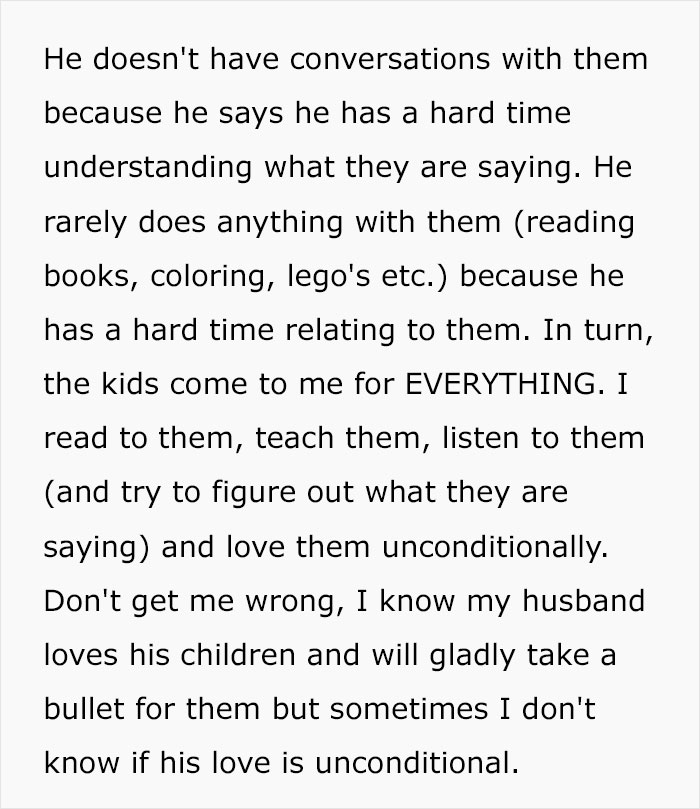
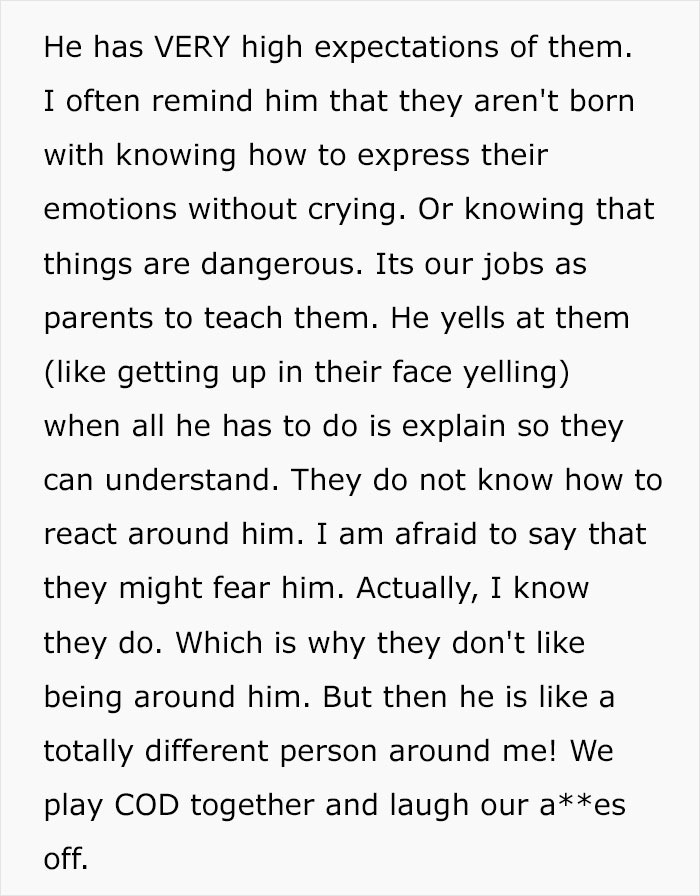
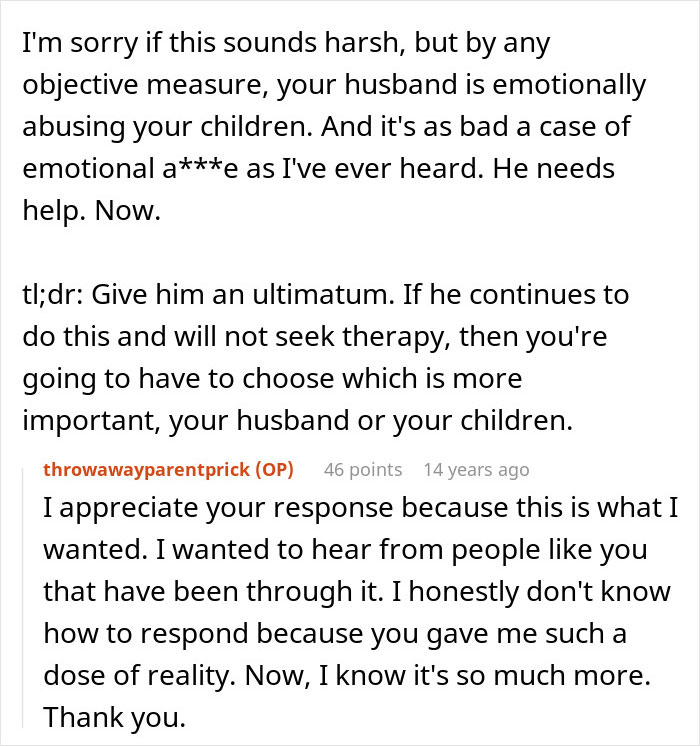
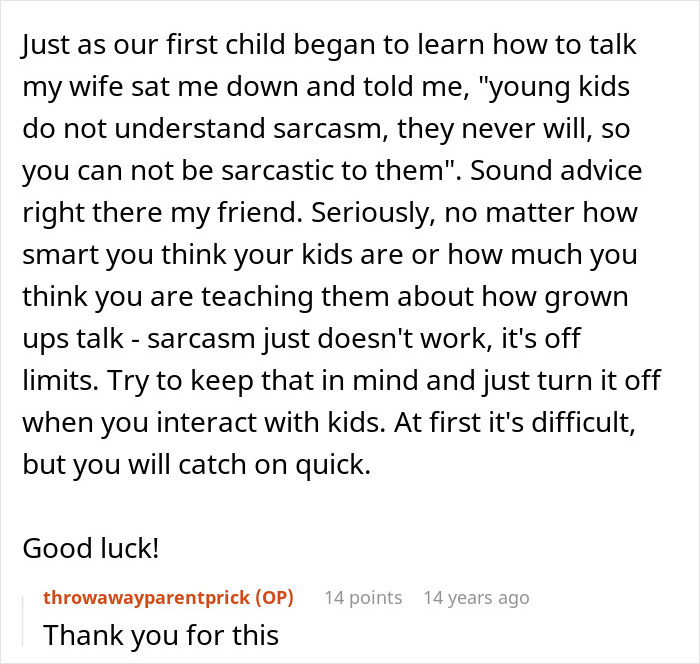
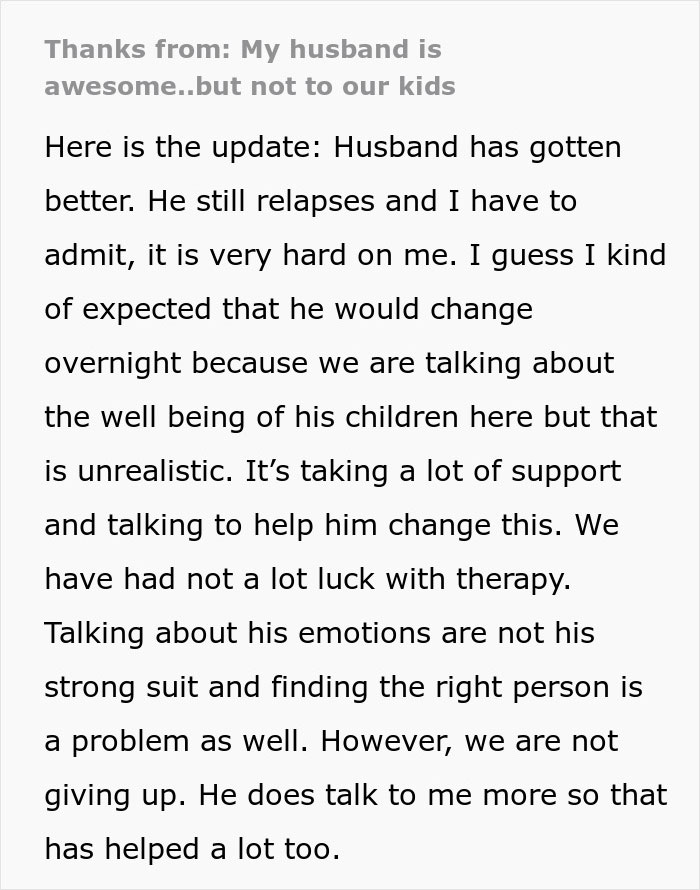
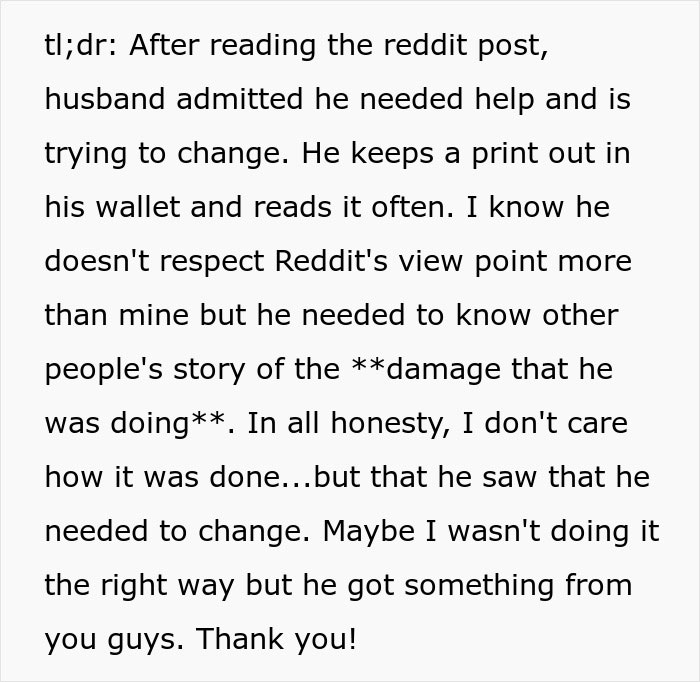
For example, one woman shared how she felt her husband was an amazing partner but struggled when it came to parenting. She revealed that he often relied on sarcasm, seemed distant from the kids, and didn’t engage with them in ways that helped them feel heard or understood. Concerned about the impact on their children, she turned to online communities for advice, hoping to find ways to bridge the gap and help her husband bring out the best in his parenting. Keep reading to see what she discovered and how the situation unfolded.
Image credits: gzorgz / freepik (not the actual photo)
Image credits: Kireyonok_Yuliya / freepik (not the actual photo)





Image credits: showtimeag / freepik (not the actual photo)


Image credit: throwawayparentprick
When it comes to parenting, there’s no perfect rulebook to follow. Every family is different, and every child comes with their own personality, needs, and quirks. What works beautifully for one parent might not work at all for another, and that’s okay. Most parents are simply figuring things out as they go, learning through trial, error, and love. But even with all these differences, one thing remains constant—children don’t just need care; they need connection. Feeling seen, understood, and valued by a parent is what truly shapes their sense of security. It’s not about grand gestures; it’s about the everyday moments of attention and warmth. That emotional bond becomes the foundation for everything else in their lives.
That connection goes far beyond just having a good relationship; it quietly shapes how a child grows into the world. When children feel emotionally supported, they tend to develop confidence, trust, and a stronger sense of self. They learn that their feelings matter and that they can rely on someone when things get tough. On the flip side, when that connection is missing or inconsistent, it can leave a lasting impact. Children may struggle to understand their own emotions or feel unsure about how to express themselves. Over time, this can affect not just their mental health but also their physical well-being. Simply put, feeling connected at home gives children the emotional tools they carry for life.
Researchers have found that when children don’t receive consistent emotional support, it can show up in many areas of their lives. They may find it harder to focus, learn, or solve problems effectively. Socially, they might struggle to make friends or feel comfortable around others. Emotionally, they can have difficulty regulating their feelings, leading to frustration, anxiety, or withdrawal. These aren’t just short-term issues; they can shape how a child sees themselves and interacts with the world. A lack of warmth or stability at home can quietly create challenges that follow them into adulthood. That’s why emotional presence from a parent matters just as much as physical care.
In fact, a large study involving around 14,000 children in the United States found that nearly 40% did not have strong emotional bonds with their parents. That’s a significant number, and it highlights how common this issue can be. Children who don’t form these early connections, especially in their first few years, may face more behavioral challenges later in life. They might become more aggressive, defiant, or struggle with hyperactivity as they grow older. Without that early sense of safety and attachment, the world can feel confusing and overwhelming. These findings remind us just how important those early relationships are. The way children are nurtured in those first years often echoes throughout their lives.
As researcher Sophie Moullin explains, when parents truly tune in to their children (listening, responding, and offering comfort), they help them build emotional strength. A parent who is reliable and present becomes a safe space, someone the child can return to in moments of fear or uncertainty. From that place of security, children feel more confident exploring the world around them. They take risks, learn new things, and develop independence, knowing they have support to fall back on.
Image credits: prostooleh / freepik (not the actual photo)
Sometimes, the challenge isn’t a lack of love; it’s a lack of connection. There are families where everyone cares deeply for one another, but still struggles to truly “click.” Parents and children may spend time together, yet feel like they’re on completely different wavelengths. Maybe their interests don’t align, or conversations feel forced or awkward. It’s not that anyone is doing something wrong—it’s just that connection takes effort and understanding. Bridging that gap often means stepping into each other’s world, even in small ways.
So how do you build that connection? Like any meaningful relationship, it starts with communication—but not just talking, truly listening. Spending one-on-one time with a child, even for a few minutes a day, can make a huge difference. It’s about giving them your full attention, without distractions or judgment. Letting them express themselves freely, even if it’s messy or unclear, helps them feel safe and valued. Sometimes, it’s not about solving their problems but simply being present with them. These small, consistent moments of connection build trust over time.
It also helps to unplug from the constant noise of everyday life. Putting away phones, turning off the TV, and being fully present (even briefly) can transform how meaningful those interactions feel. Trying something new together, like a game, a hobby, or even a simple walk, can open up natural ways to bond. Shared experiences often create the strongest connections because they’re built on moments, not just words. Even laughter, silliness, or doing nothing together can strengthen that emotional link. It doesn’t have to be perfect; it just has to be genuine.
At the end of the day, connection comes down to showing up and showing interest. Children notice when you listen, when you care, and when you make the effort to understand them. It’s in the little things—the questions you ask, the patience you show, the time you give. Parenting isn’t about being flawless; it’s about being present and willing to grow. Even small steps toward connection can leave a lasting impact.
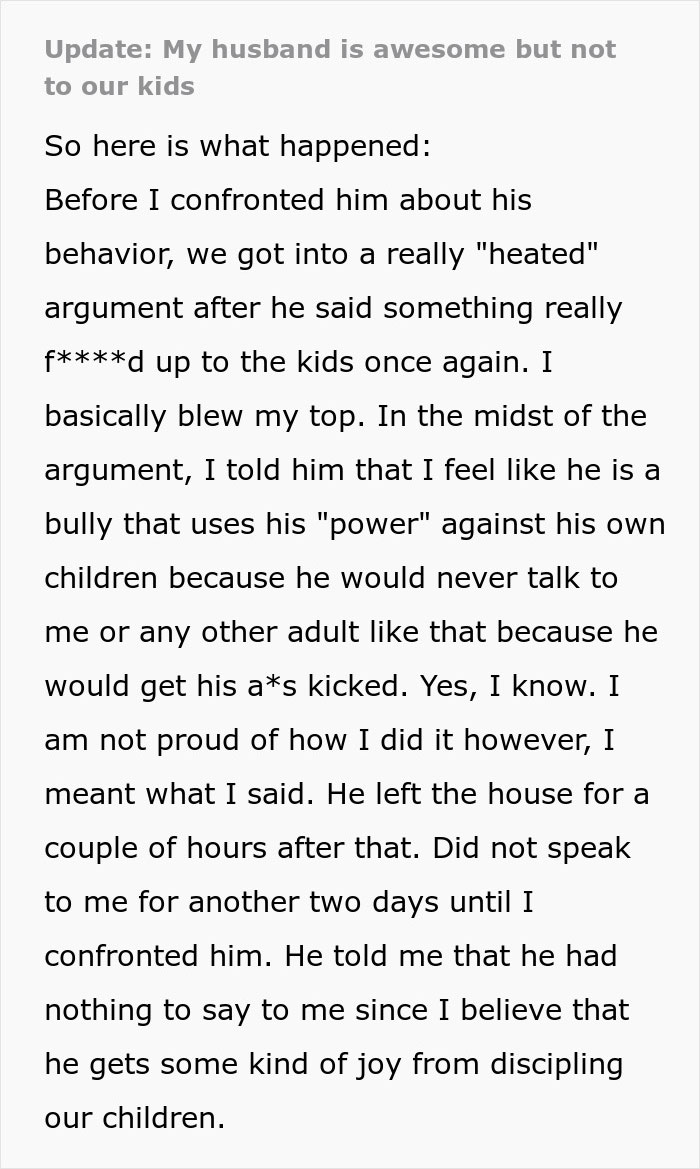
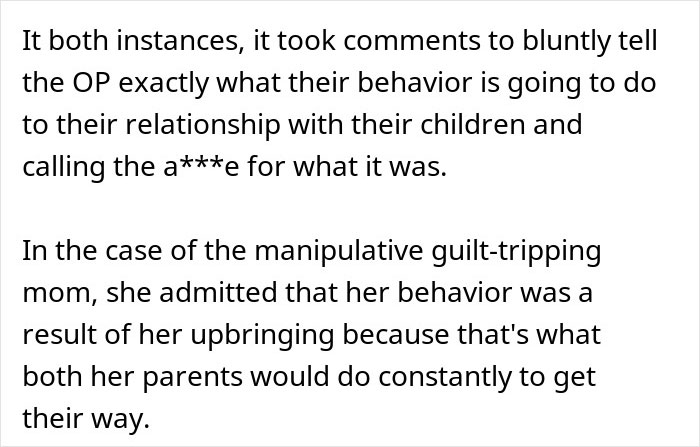
In this particular case, it seemed like the father wasn’t fully aware of how his actions were affecting his children. Sometimes, these things aren’t intentional; they build up over time without us realizing the impact. The author stepping in may have been the wake-up call he needed to reflect on his behavior. Sarcasm, especially with young kids, can be tricky—they often take things literally and may end up feeling confused or hurt. What are your thoughts on this situation? Let us know in the comments.
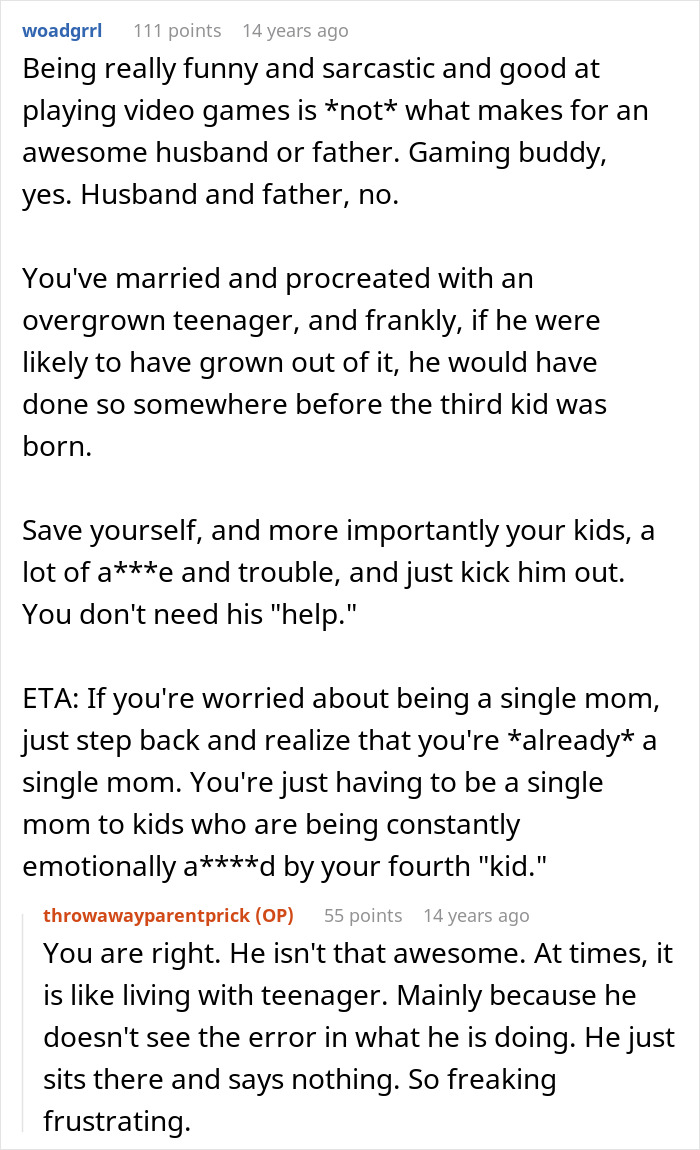
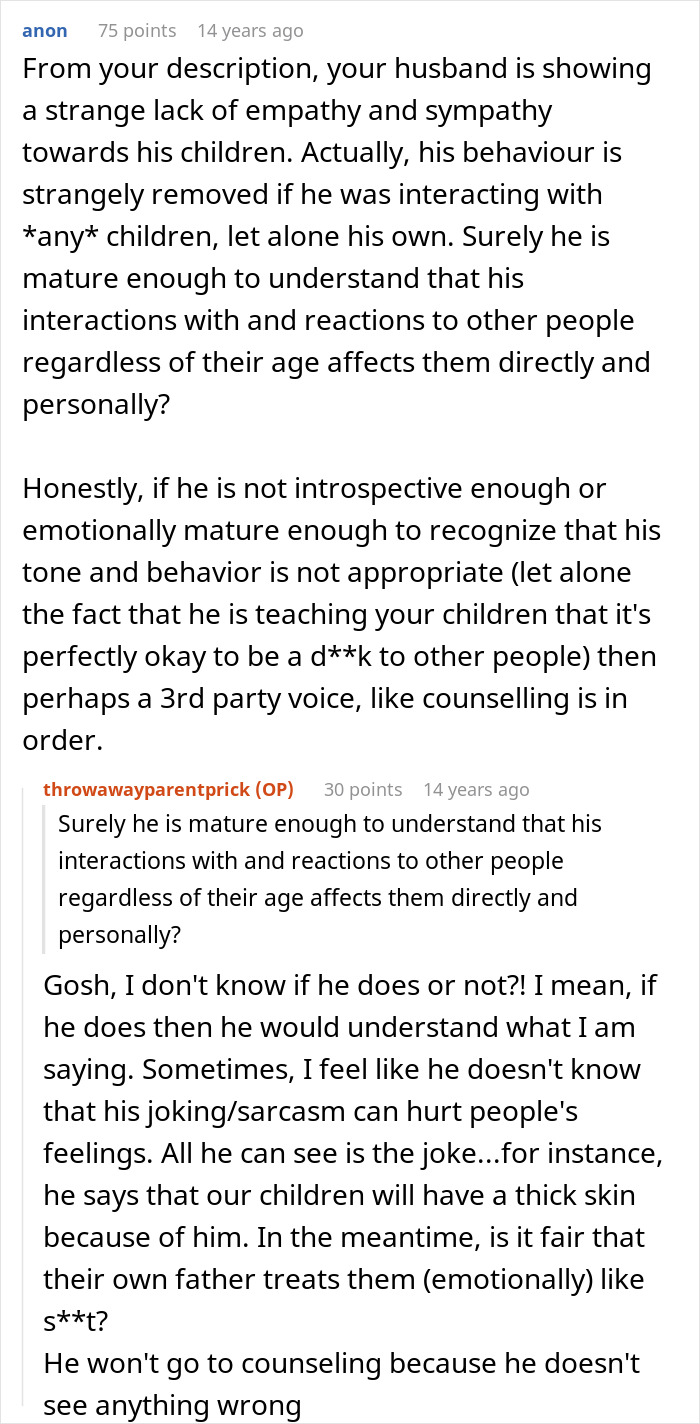

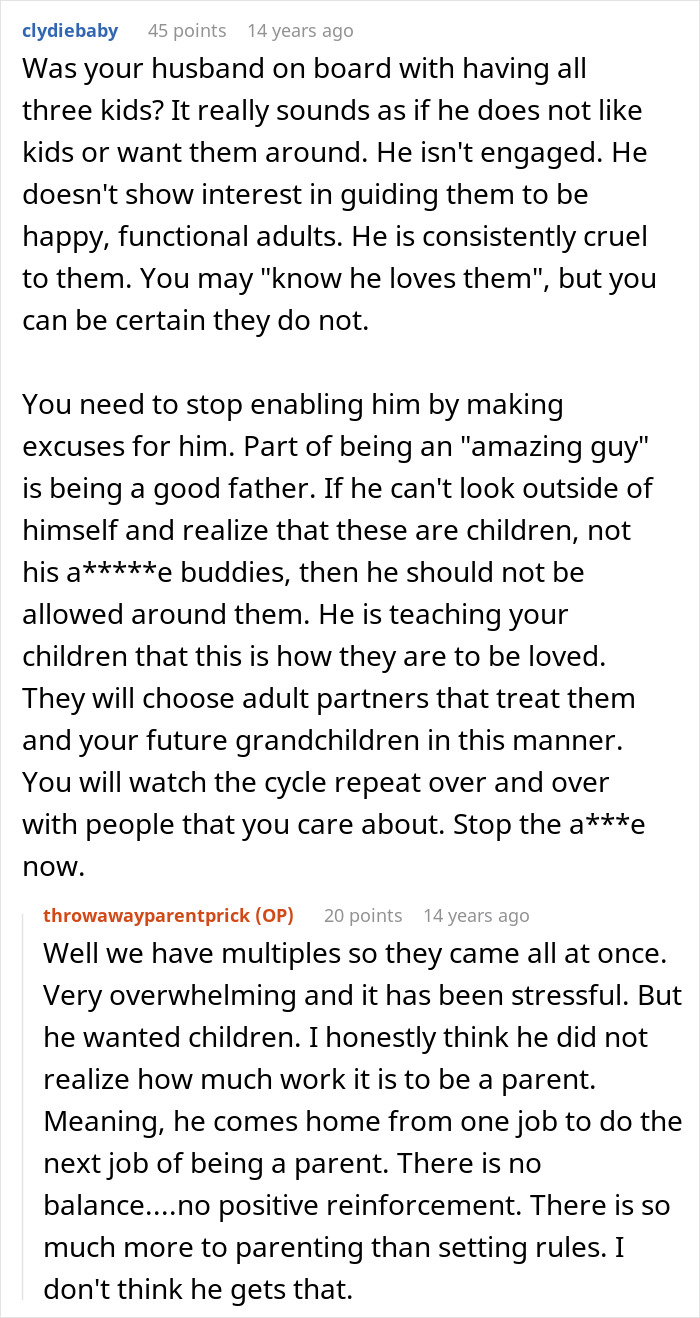






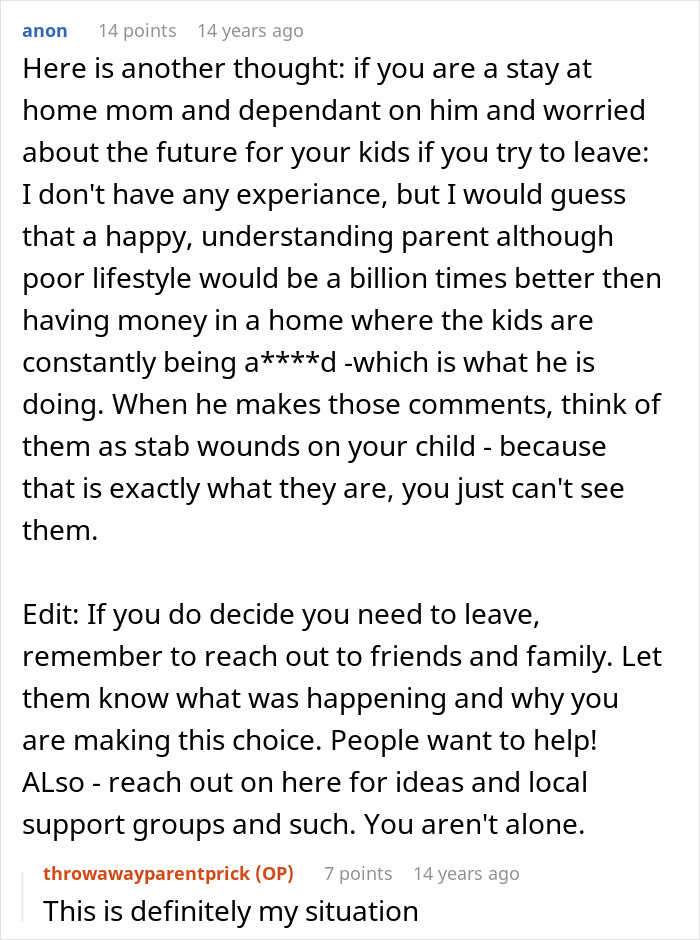
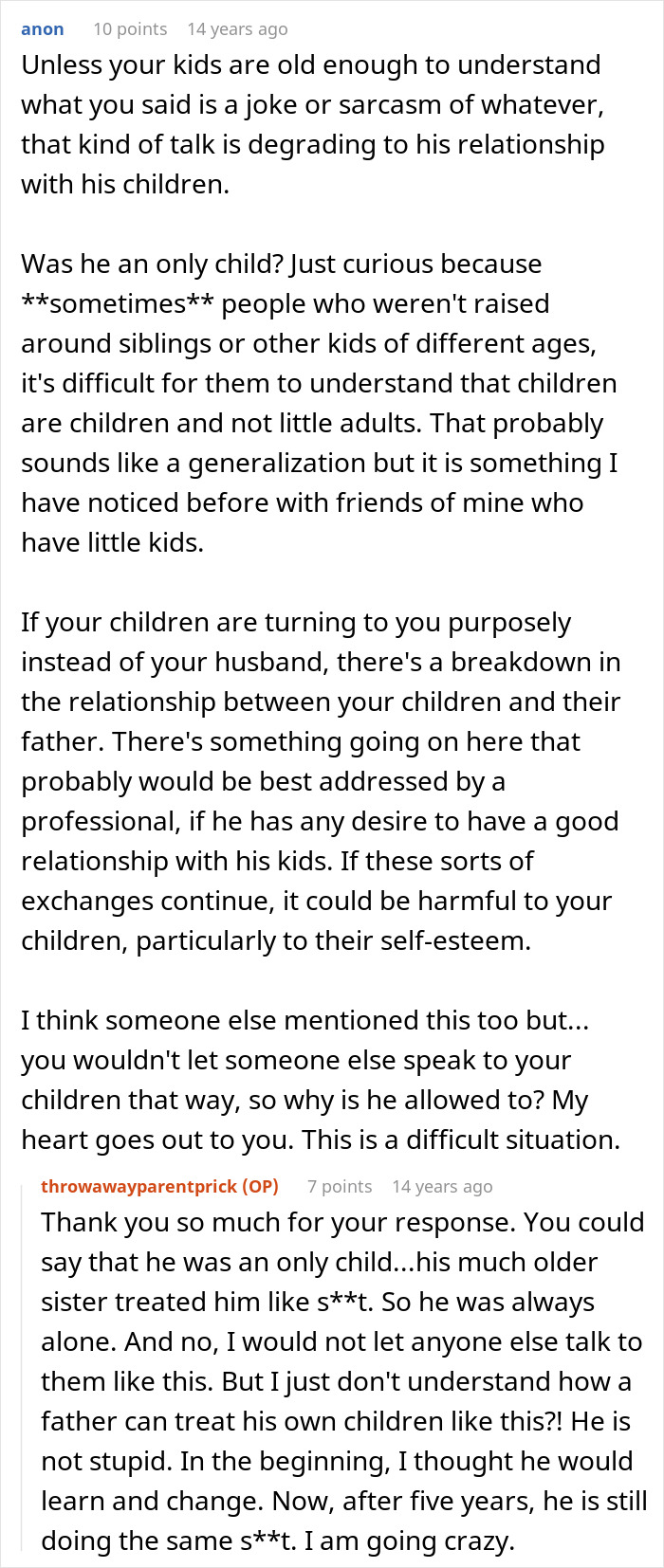

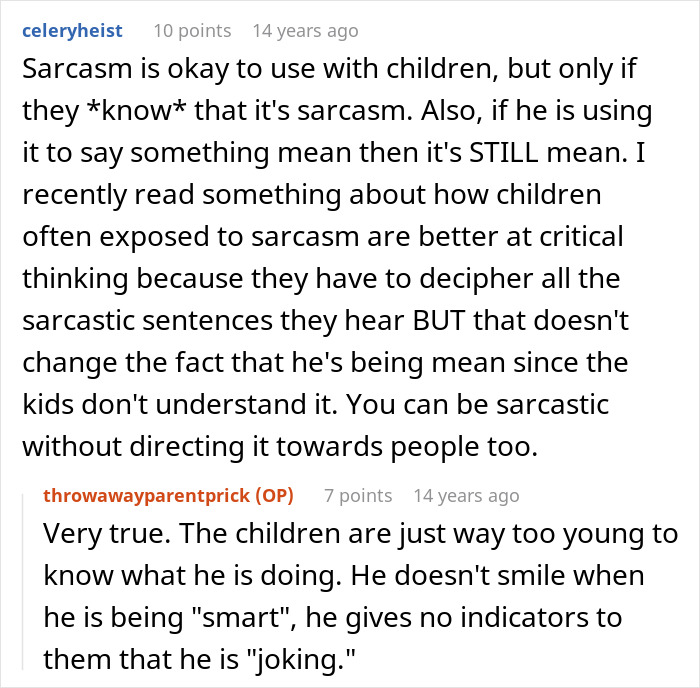
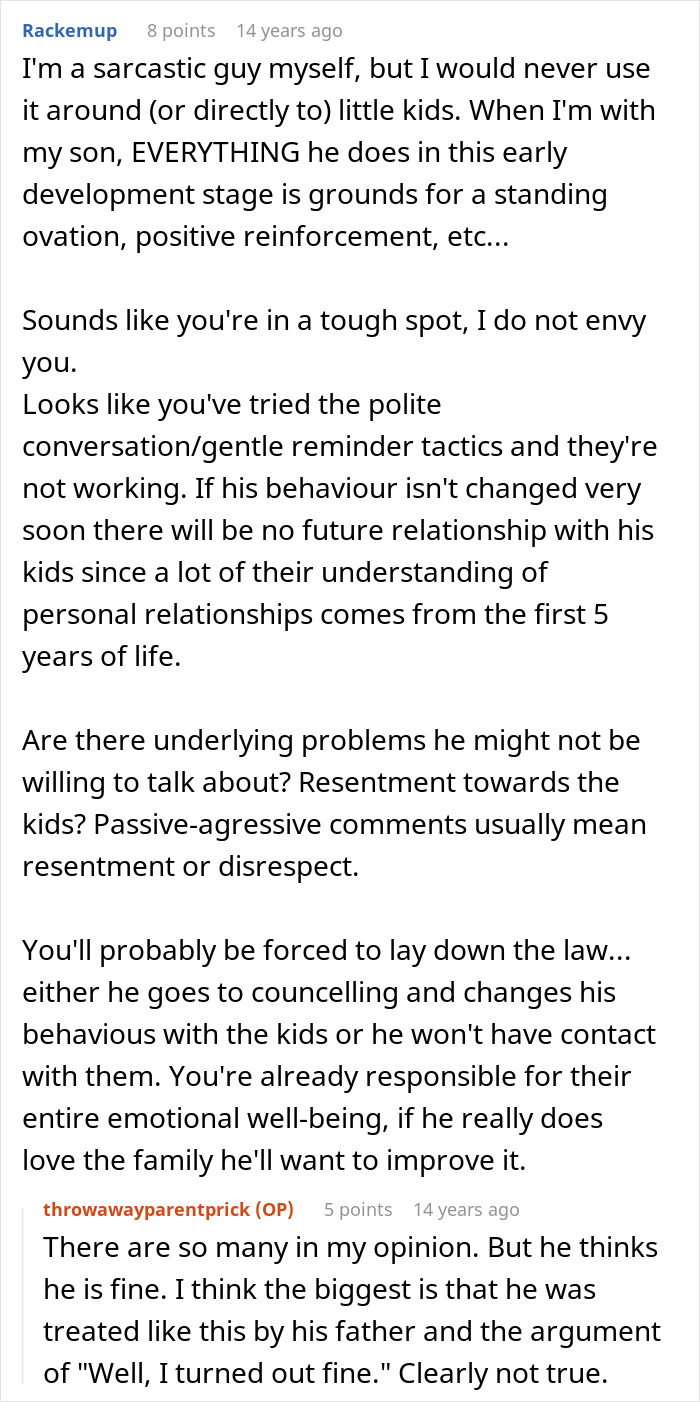
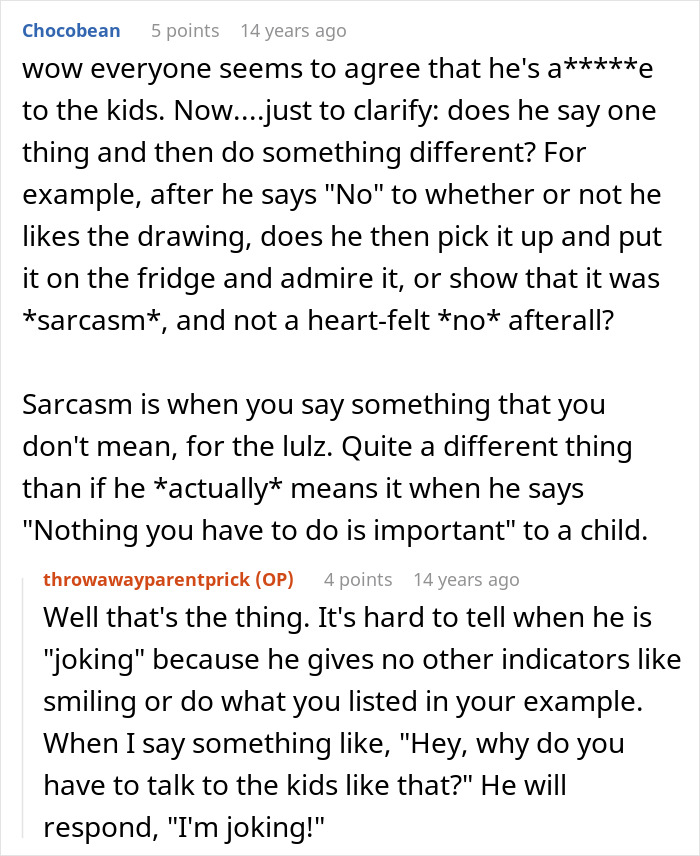
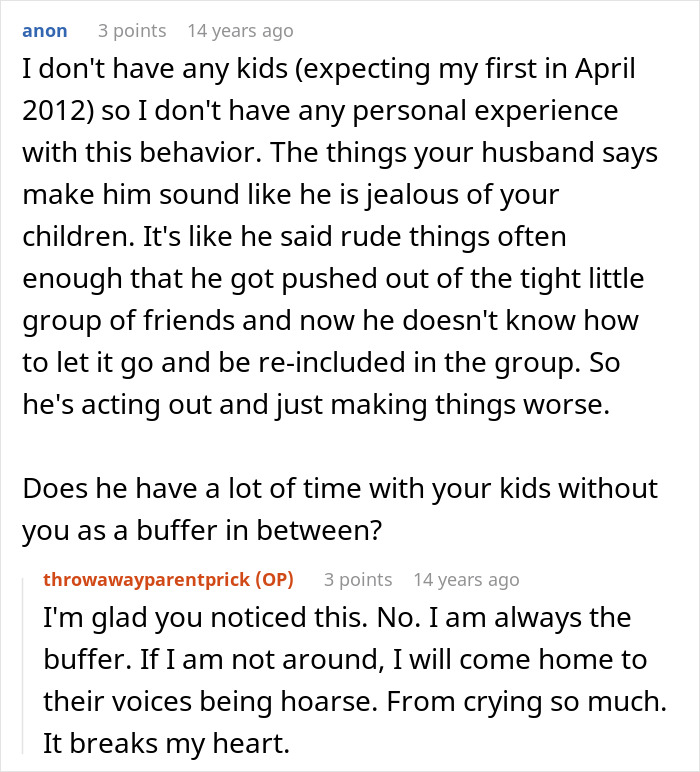

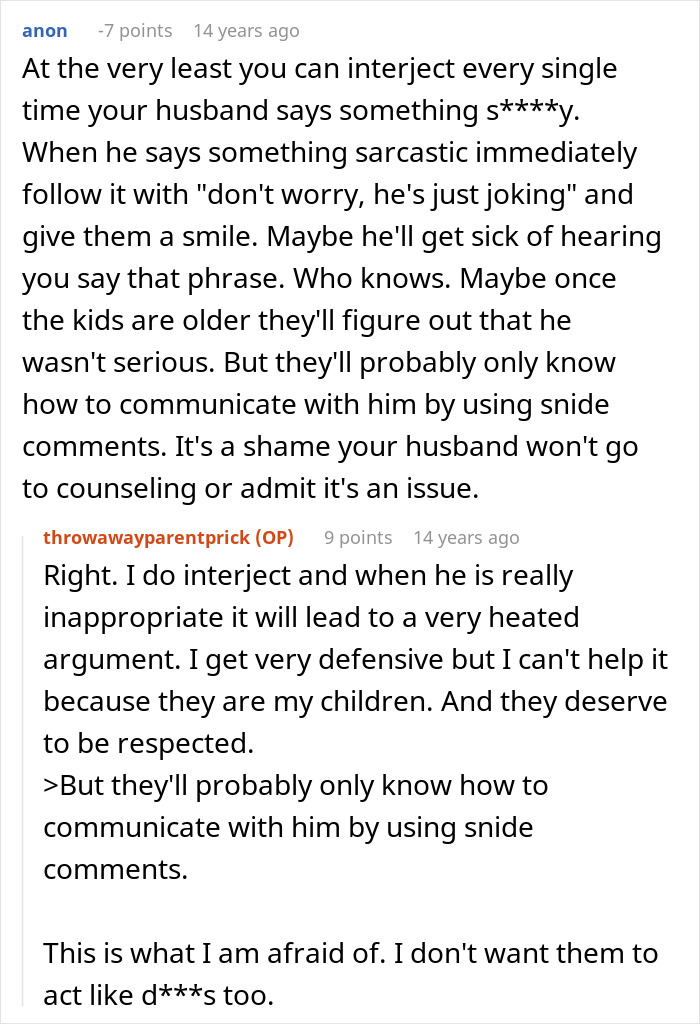


Image credits: The Yuri Arcurs Collection / freepik (not the actual photo)
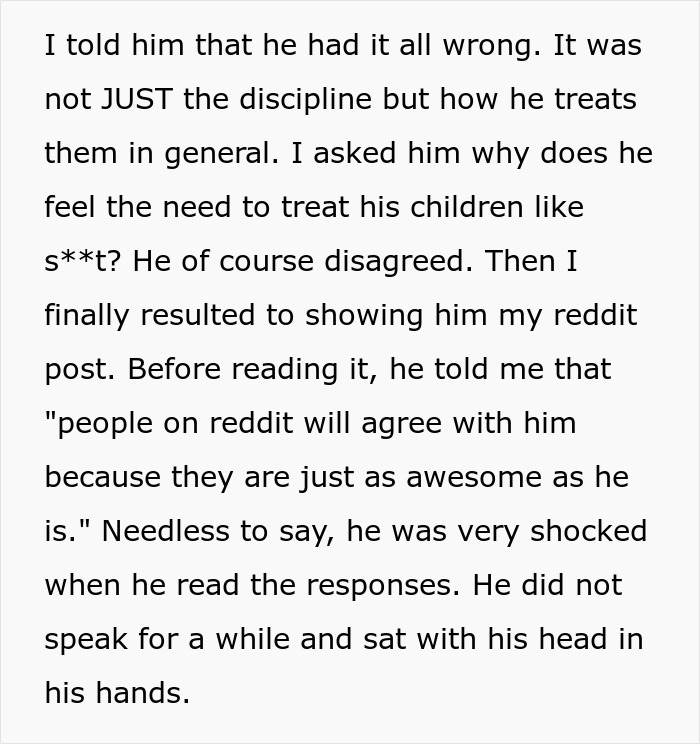
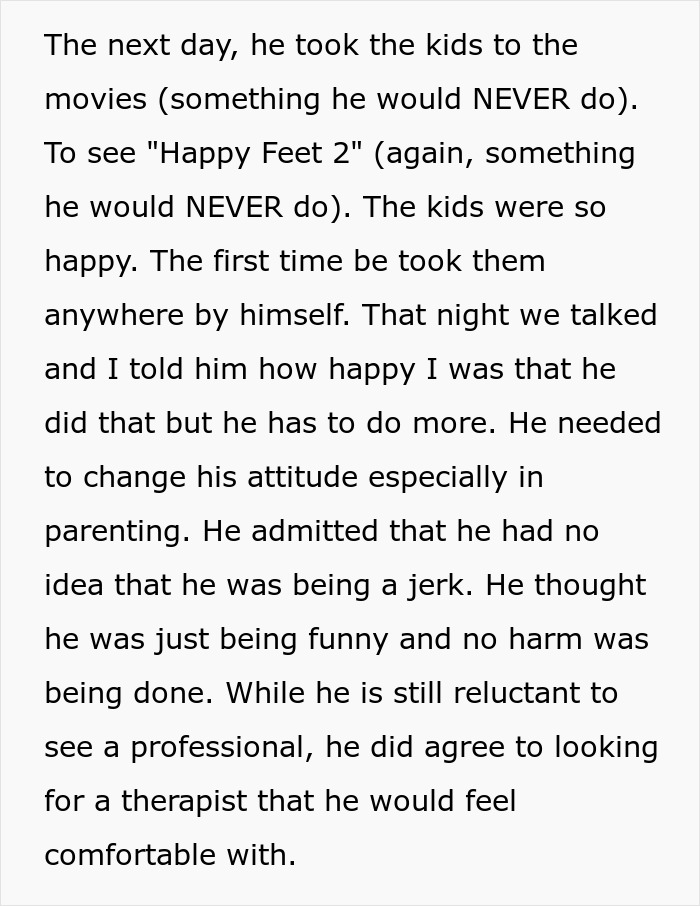
Image credits: freepik (not the actual photo)
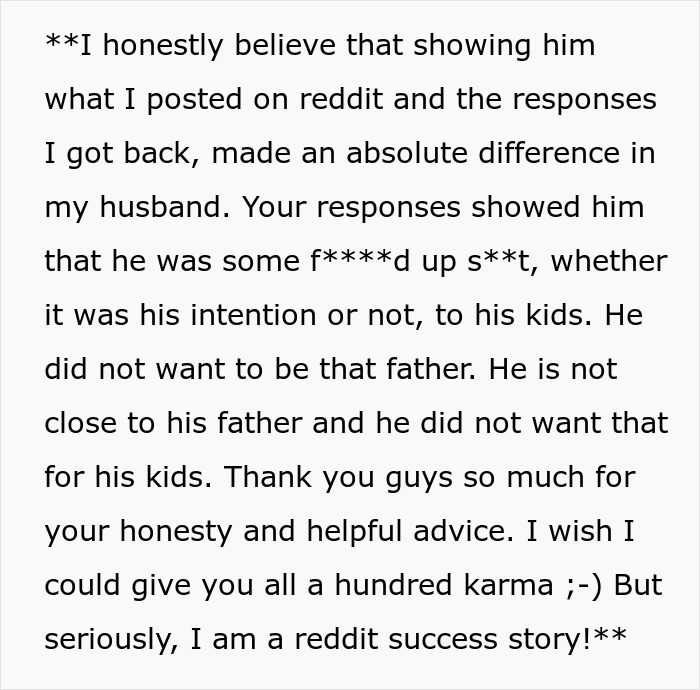

Image credits: throwawayparentprick

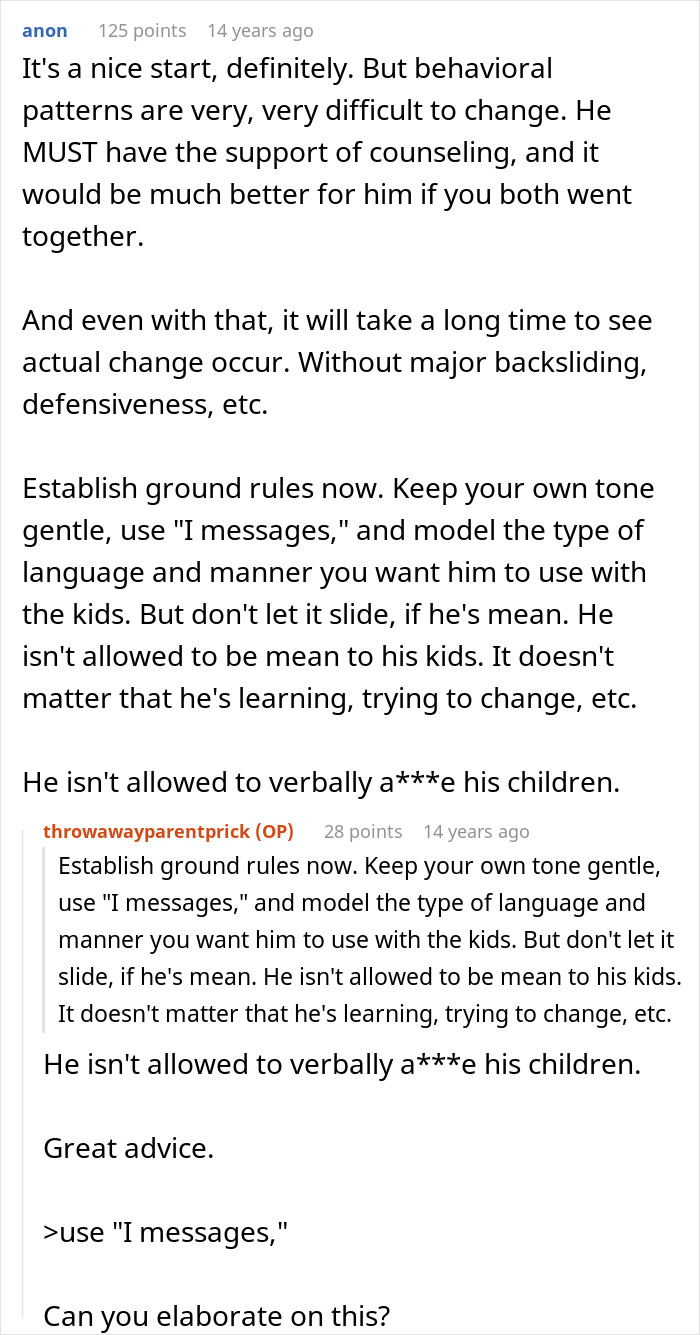





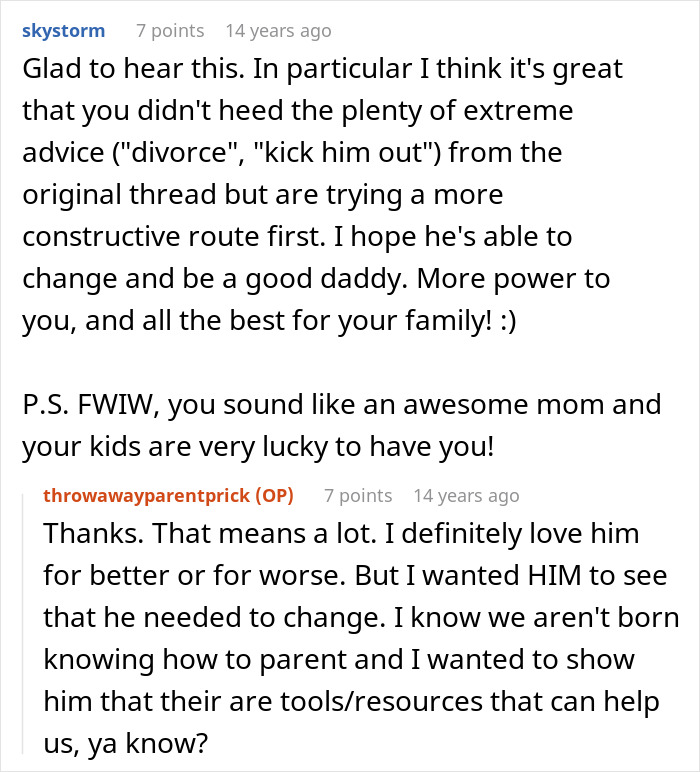


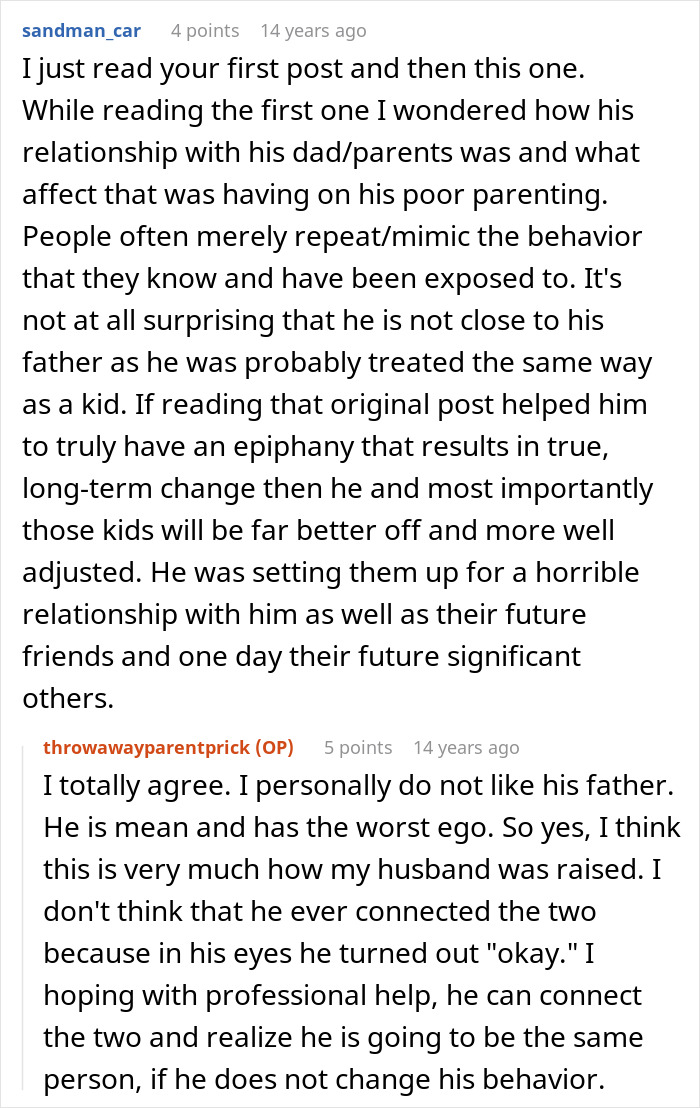



Image credits: prostooleh / freepik (not the actual photo)


Image credits: Camandona / freepik (not the actual photo)

Image credits: throwawayparentprick
















By entering your email and clicking Subscribe, you're agreeing to let us send you customized marketing messages about us and our advertising partners. You are also agreeing to our Privacy Policy.
Thank you! You've successfully subscribed to newsletters!



When I read the first part, the problem was obvious to me. I did the same exact thing. I parented like my parents, too. It takes effort to recognize it and unlearn it. Your parents probably did the exact same thing. If you hold resentments towards your parents, it helps them fade away. It did for me, at least.

Idk if I've just had bad luck with people, but so far, without fail, all of those who take pride in being "fluent in sarcasm :)" are the most rude, miserable and exhausting people I've ever interacted with. Good thing that dude apparently had a change of heart. Imagine the kids being messed up for life just because some a$$hat watched too much Rick and Morty.
Sarcasm is great but like anything gets ruined if used too often. Besides I always use the rule that people that need to announce what they are, i.e. alpha male, are performative wannabes. People fluent in sarcasm know when to quit, IMO.
Load More Replies... When I read the first part, the problem was obvious to me. I did the same exact thing. I parented like my parents, too. It takes effort to recognize it and unlearn it. Your parents probably did the exact same thing. If you hold resentments towards your parents, it helps them fade away. It did for me, at least.
Idk if I've just had bad luck with people, but so far, without fail, all of those who take pride in being "fluent in sarcasm :)" are the most rude, miserable and exhausting people I've ever interacted with. Good thing that dude apparently had a change of heart. Imagine the kids being messed up for life just because some a$$hat watched too much Rick and Morty.
Sarcasm is great but like anything gets ruined if used too often. Besides I always use the rule that people that need to announce what they are, i.e. alpha male, are performative wannabes. People fluent in sarcasm know when to quit, IMO.
Load More Replies...




































 No fees, cancel anytime





















35
19