Get Premium
Dark mode theme is available exclusively for premium users. Learn more about the benefits of subscribing.
No fees, cancel anytime.

 Dark Mode Ad-Free Browsing Unlimited Content
 Ad-Free Browsing Unlimited Content Dark Mode
Join 1.2 million Panda readers who get the best art, memes, and fun stories every week!
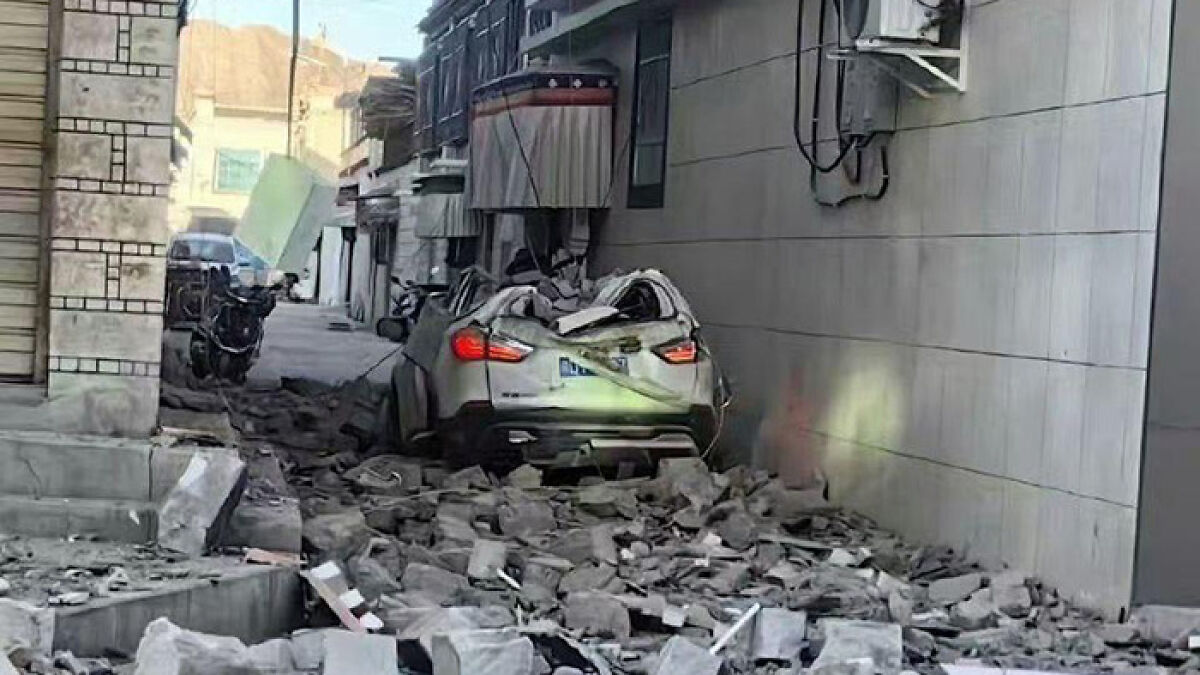
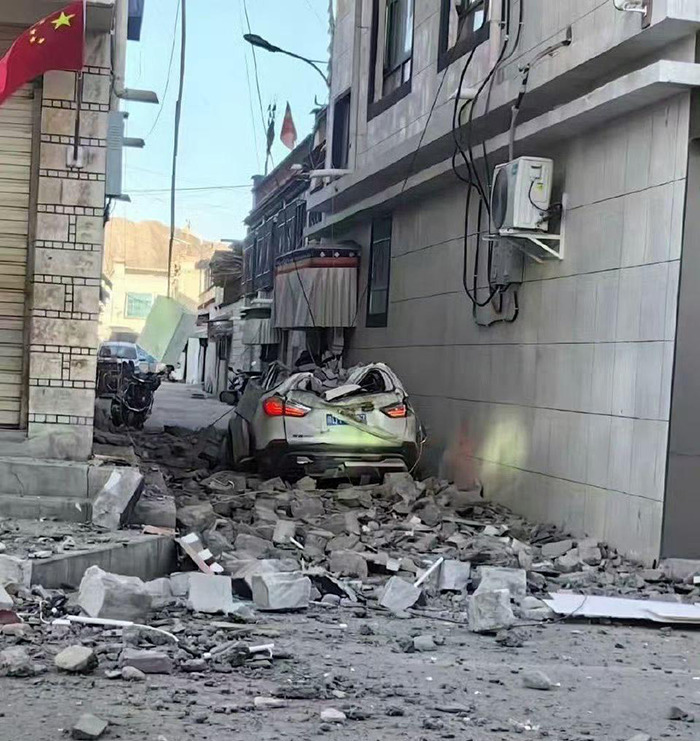
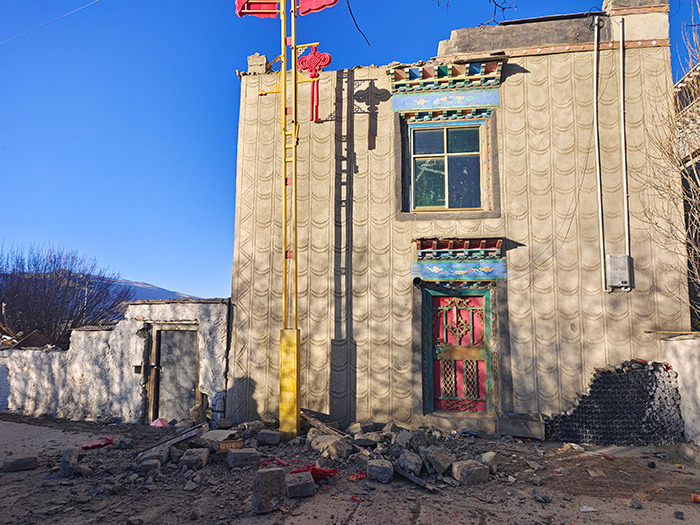
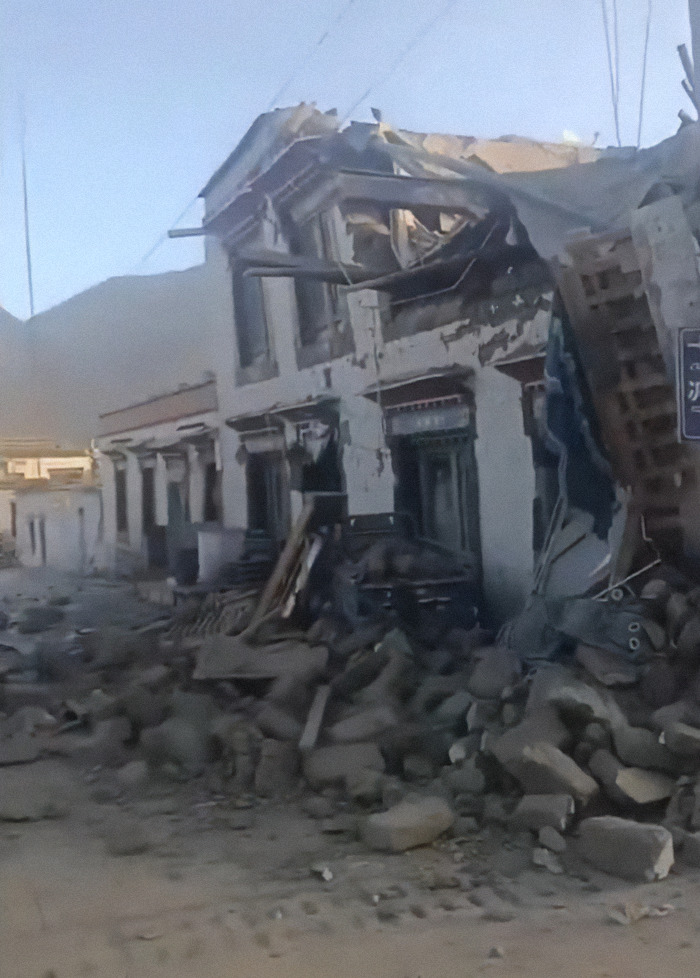
The devastating aftermath of a 7.1 magnitude earthquake in Tibet’s holy city of Shitgatse on the morning of January 7 has raised a well-known, common question that most wonder after such disasters: could this have been prevented?
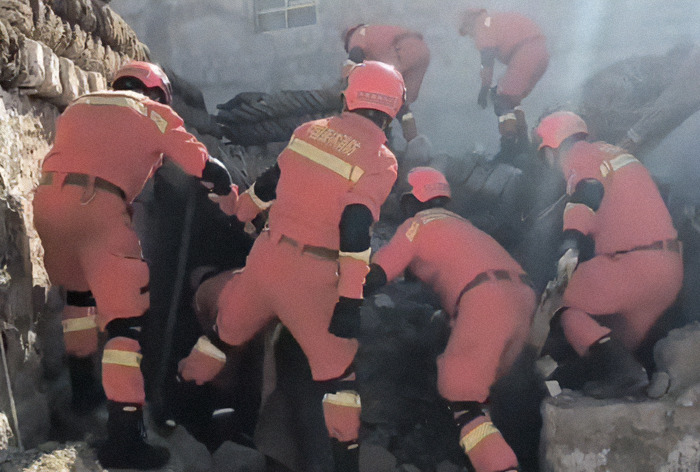
According to the Associated Press, the “high-altitude region of western China and across the border in Nepal” experienced intense shaking and multiple aftershocks at around 9 a.m., which resulted in at least 95 people being confirmed to have been killed, with another 130 injured.
But given the scientific advancements of today, it’s almost impossible not to wonder if these numbers could have been made smaller.
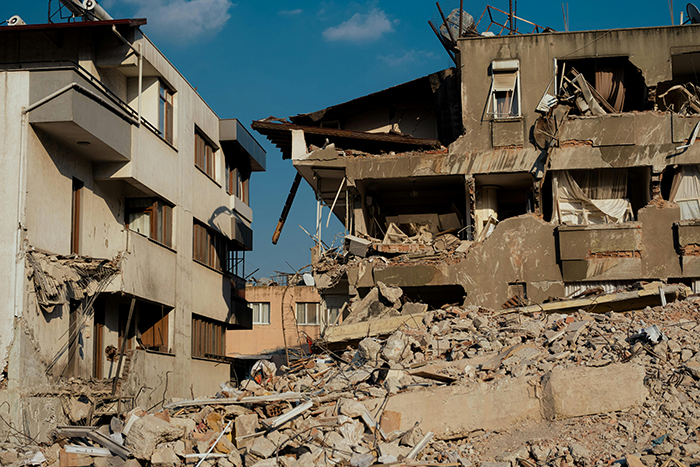
Image credits: Çağlar Oskay/Unsplash (Not the actual photo)
Throughout the years, artificial intelligence has exponentially broadened our horizons, taking the impossible and making it a reality — but it seems as if even technology falls short when it comes to Mother Nature.
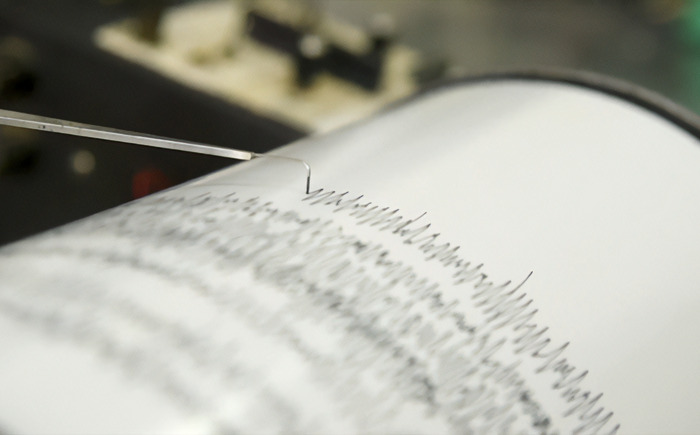
In recent years, scientists have made continuous efforts to create devices capable of foreshadowing devastating natural disasters, such as the next “monster earthquake” set to hit certain areas.
And although a recent breakthrough even illuminates the possibility of mitigating future disasters, the truth is that humans won’t be able to fully predict when one will occur.
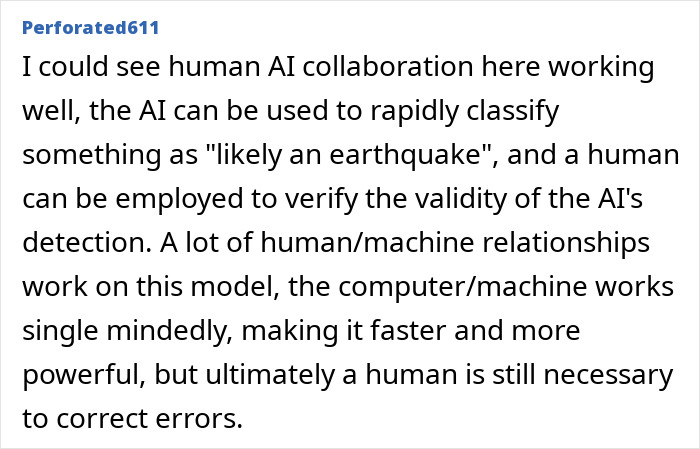
A discovery made by Zachary Ross, an assistant geophysics professor at Caltech, highlights how AI is already playing a massive role in seismology.
Image credits: WIRED
Image credits: caltech
In the past, using even the best computer programs for quake-hunting has been a painstaking, slow, and sometimes imprecise method that “just sucked, quite honestly,” said Ross, as per National Geographic.
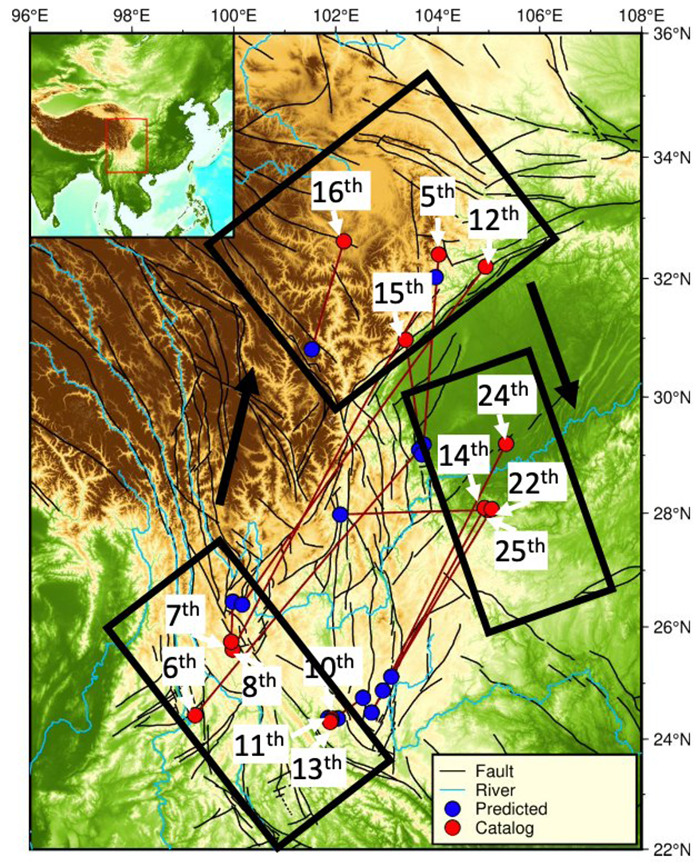
But things started to shift when he and his colleagues utilized machine learning technology to collect data from seismic waveforms all across Southern California, making templates and snapshots of each.
His main targets were “tiny, imperceptible quakes” created by the smallest fault slips because even though they were harmless, their behaviors were more important than they looked.
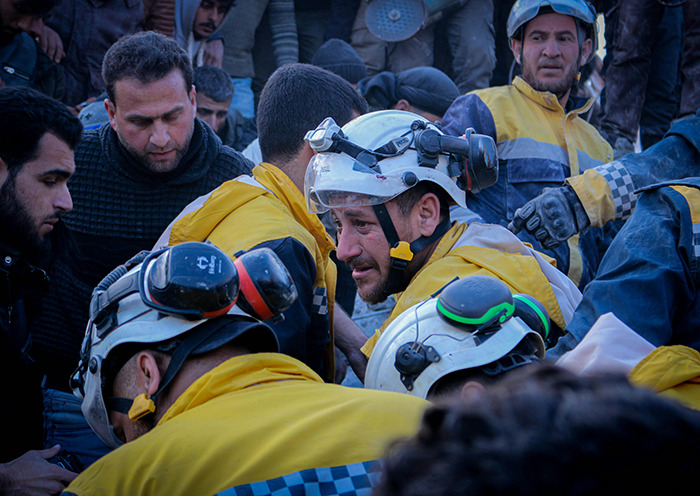
Image credits: nexta_tv
Ross later set up an algorithm focusing on the “elusive” quakes that coincided with these templates and sure enough, it did exactly what he was hoping for.
Two million previously hidden tiny quakes from 2008 to 2017 were identified and subsequently, an entire network of faults and features previous searches were unable to pinpoint were found.
“[The findings] were so good that you had to even question if what you were seeing was really legitimate,” Ross said. After all, applying the findings seen in past data may roughly create a guideline of sorts for future disasters.
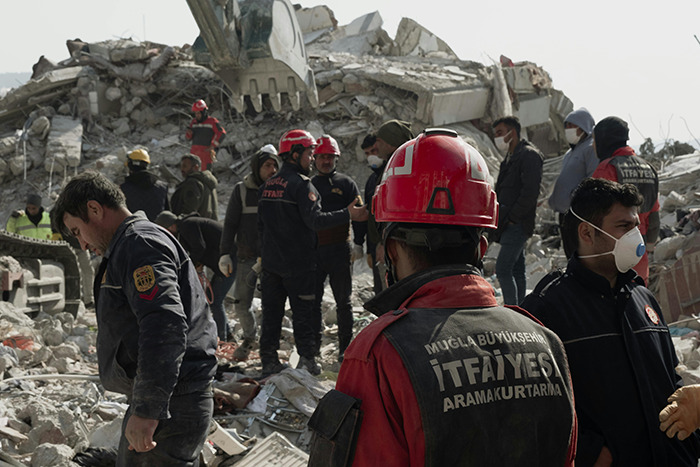
Image credits: VCG/VCG/Getty Images
Image credits: University of Victoria
Edwin Nissen, Professor and Canada Research Chair in seismology at the University of Victoria, told Bored Panda that these results were extremely useful for creating an approximation.
“What we can do is estimate the probability of an earthquake happening,” he said, adding, “Just as weather forecasters produce forecasts, seismologists can produce earthquake forecasts, and I think that’s where AI would have a bigger role.”
Image credits: Tibetankyi
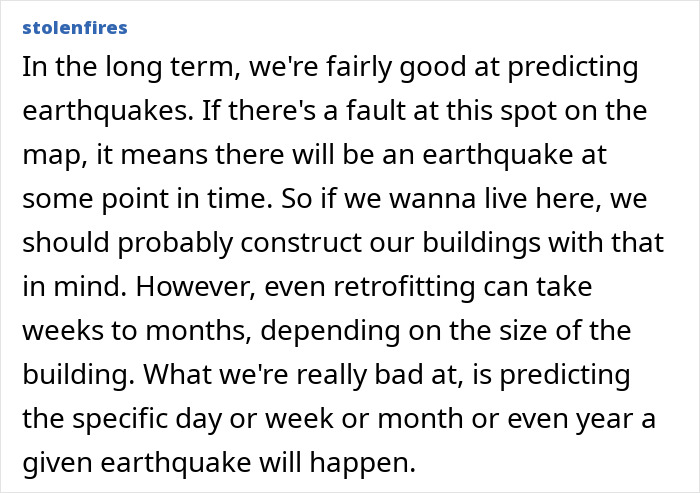
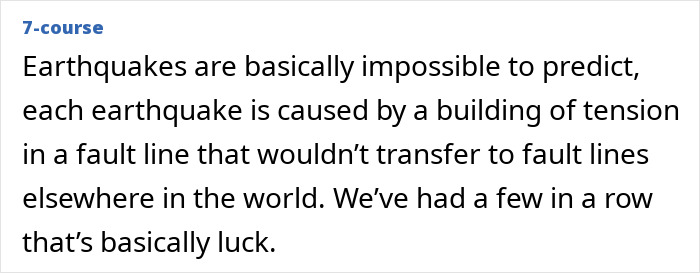
But AI isn’t capable of predicting when, exactly, an earthquake will happen. For Nissen, this milestone is “a categorical no,” even going insofar to say that we will “never” be able to achieve this.
To clarify, “An earthquake prediction means you’re specifying when that future earthquake will happen very precisely,” Nissen said. An example of this would be saying, with confidence, that a magnitude seven earthquake will happen in Vancouver tomorrow, as it covers the when, where, and size.
Image credits: New China TV
Image credits: txgeosciences
Right now, there are seven major tectonic plates that make up the Earth’s crust that are consistently moving. Eventually, their edges may get stuck due to friction, causing stress to build up as two of these plates collide — at a war of sliding past one another.
Once the pressure becomes too overwhelming, the blocks will slip past each other along a fault, releasing massive amounts of energy in the form of seismic waves, shaking the Earth’s surface.
But “faults are quite complicated structures,” Nissen explained, and their unexpected nature makes them an unpredictable force.
Image credits: Doruk Aksel Anıl/Pexels (Not the actual photo)
“They’re not just simple, planar structures. So there are too many unknowns and there are too many things that we just can’t observe.”
And most importantly, there aren’t “any patterns to find.” The pressure released before these disasters builds up very slowly with time but the moment before an earthquake happens, “there’s nothing necessarily to suggest that there is going to be an earthquake.”
Dr. Hom Nath Gharti, a digital earth scientist from Queen’s University, echoed this statement.
“Earthquake forecasting is challenging primarily due to the complex mechanics of subsurface fault systems,” he told Bored Panda. “While AI technology is powerful, accurately forecasting earthquakes depends on our ability to understand and model the intricate behavior of these underlying fault systems.”
Image credits: Ahmed akacha/Pexels (Not the actual photo)
For decades, and even centuries, scientists and experts have been trying to predict earthquakes to no avail. And AI, no matter how advanced, will not change that.
But reality is not as bleak as it seems, and there are still plenty of things humans can do to help prepare themselves and their families in case disaster strikes.
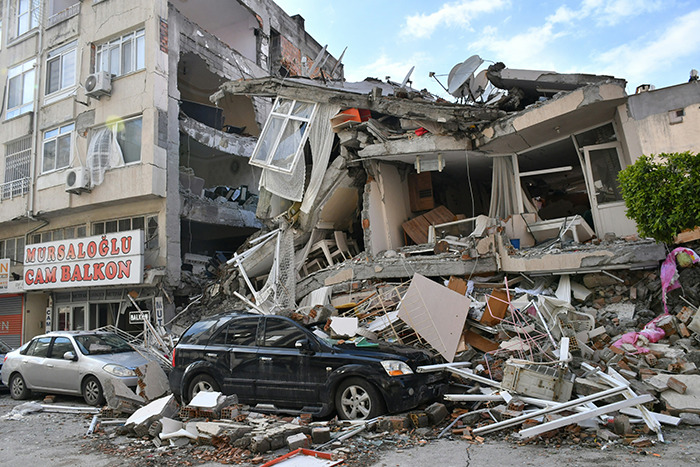
Because, as Nissen put it, “Earthquakes don’t kill people — buildings do.”
At least 95 people have died and 130 are injured after a M7.1 earthquake struck a remote region of Tibet and parts of Nepal. The quake occurred at 9:05am local time. Tremors were also felt in Nepal, Bhutan, and Northern India.pic.twitter.com/nUp2Uqbte3
— Volcaholic 🌋 (@volcaholic1) January 7, 2025
Building codes, a set of rules that engineers and builders must follow to create a structure, have been updated frequently enough that most “modern buildings will withstand shaking in an earthquake.”
What’s most important is ensuring schools, hospitals, emergency response services, police, etc. are able to hold their ground.
Image credits: Doruk Aksel Anıl/Pexels (Not the actual photo)
On an individual level, people can prepare for unexpected natural disasters by having an emergency kit with all important belongings. Once an earthquake does strike, Nissen advises ducking under something sturdy and holding until the shaking stops.
If outside, fleeing from open areas where objects or buildings may fall is a priority.
With the threat of “monster earthquakes” looming over the heads of anyone who resides near fault lines, such as the recent tragedy that just hit the area near Mount Everest, these small tips could be the difference between life and death.
Image credits: WIRED
The AP reported that approximately 1,000 buildings were damaged in the Tibetan earthquake, whether that be a crack or an entire demolition of its structure.
And while these disasters are somewhat common in these regions, which lie on a major geographical fault line, this Tuesday’s earthquake was one of the deadliest ones China has experienced in recent years.

By entering your email and clicking Subscribe, you're agreeing to let us send you customized marketing messages about us and our advertising partners. You are also agreeing to our Privacy Policy.
Thank you! You've successfully subscribed to newsletters!

"Because, as Nissen put it, “Earthquakes don’t kill people — buildings do.” Well that's a big fat fallacy. What about the estimated 250,000 killed by the 2004 Indian Ocean earthquake caused tsunami? And earthquakes trigger landslides that can kill people.

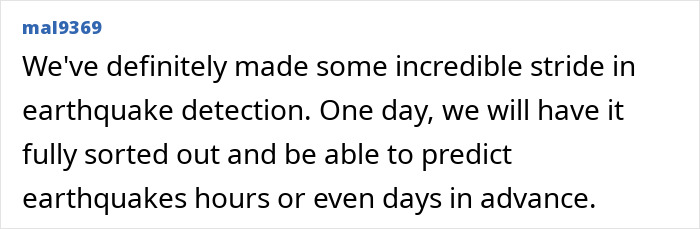
My understanding of "AI" may be flawed, probably is if I'm honest. But, if seismologists were to attempt to utilize AI as a tool to predict seismic activity, would they be able to read the results/answers they got, and then use them to predict upcoming activity with accuracy? In my mind, it's the problem of how do you read the results that you've been given. The current state of AI doesn't inspire much confidence in that area because with the exposure we currently as examples, it is not accurate enough to rely on as a primary indicator of probable upcoming activity.

I dont know if you really can. I do find the comment funny that they say " earthquakes dont kill people buildings do" . What a bout a mud slide or rock slide or is some cases avalanches. My though process is that its because of the earth quake the building fell. So should we be coming up with better ways for buildings to with stand and earth quake. i know its out there but with technology evolving so much and so quickly there should be a better way to even stabelize the older buildings
"Because, as Nissen put it, “Earthquakes don’t kill people — buildings do.” Well that's a big fat fallacy. What about the estimated 250,000 killed by the 2004 Indian Ocean earthquake caused tsunami? And earthquakes trigger landslides that can kill people.
My understanding of "AI" may be flawed, probably is if I'm honest. But, if seismologists were to attempt to utilize AI as a tool to predict seismic activity, would they be able to read the results/answers they got, and then use them to predict upcoming activity with accuracy? In my mind, it's the problem of how do you read the results that you've been given. The current state of AI doesn't inspire much confidence in that area because with the exposure we currently as examples, it is not accurate enough to rely on as a primary indicator of probable upcoming activity.
I dont know if you really can. I do find the comment funny that they say " earthquakes dont kill people buildings do" . What a bout a mud slide or rock slide or is some cases avalanches. My though process is that its because of the earth quake the building fell. So should we be coming up with better ways for buildings to with stand and earth quake. i know its out there but with technology evolving so much and so quickly there should be a better way to even stabelize the older buildings








































 No fees, cancel anytime

















29
9