Get Premium
Dark mode theme is available exclusively for premium users. Learn more about the benefits of subscribing.
No fees, cancel anytime.

 Dark Mode Ad-Free Browsing Unlimited Content
 Ad-Free Browsing Unlimited Content Dark Mode
Join 1.2 million Panda readers who get the best art, memes, and fun stories every week!

With a big wedding comes big etiquette — whether it is RSVPing on time, sticking to the gift registry, or wearing the right clothes.
Unfortunately for one 20-year-old woman, one crucial piece of etiquette completely slipped her mind when she was getting dressed for her boyfriend’s cousin’s wedding.
Seven years later, she recounted her experience online and said she “really messed up” by showing up in a white dress.
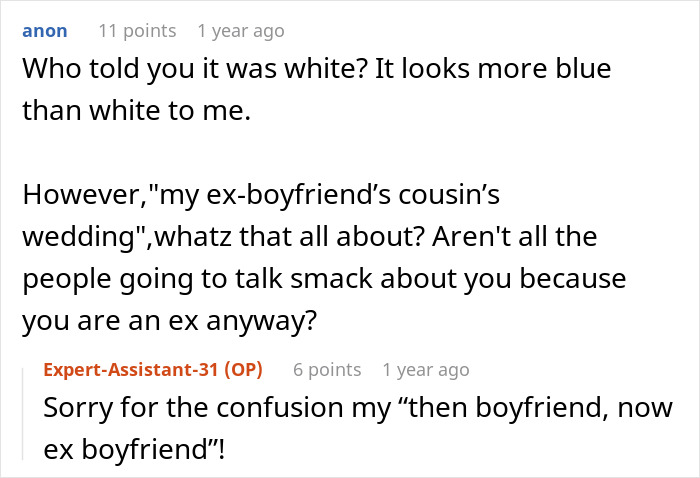
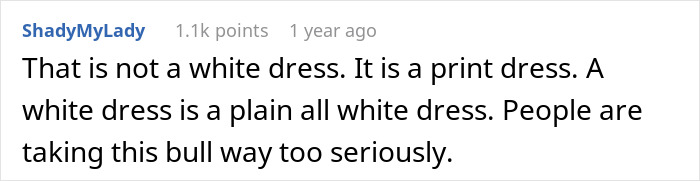
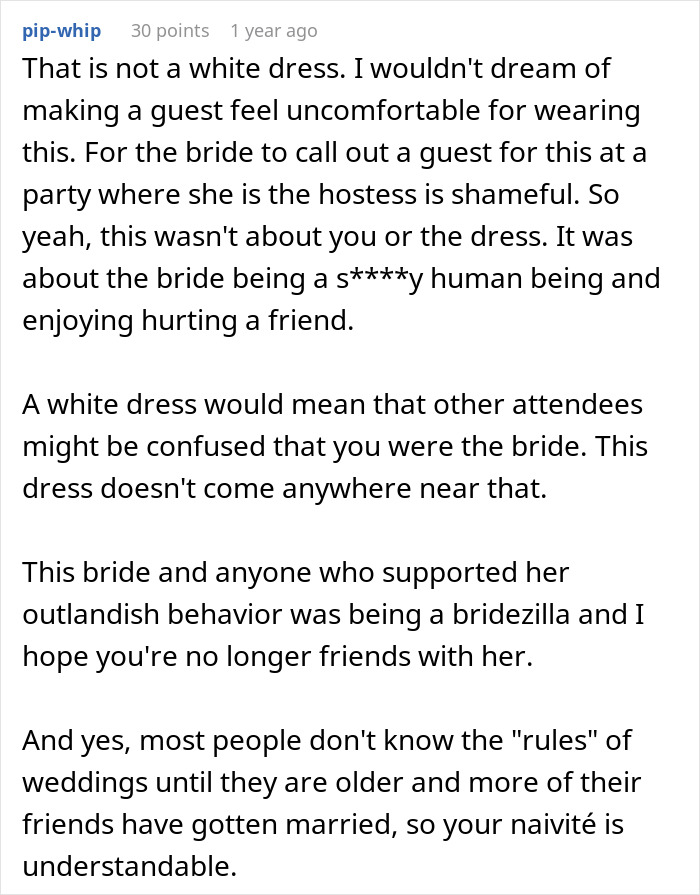
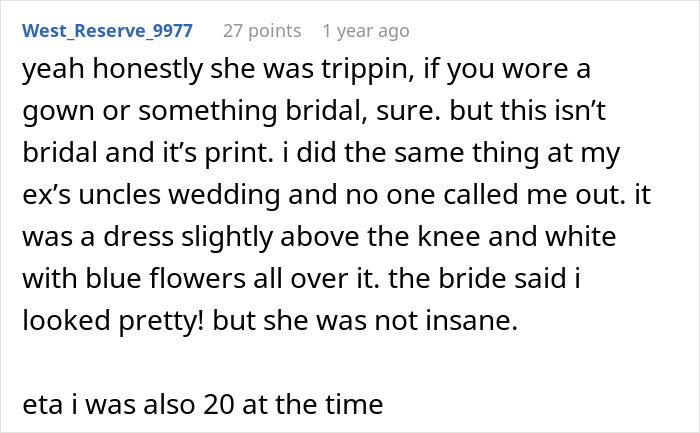
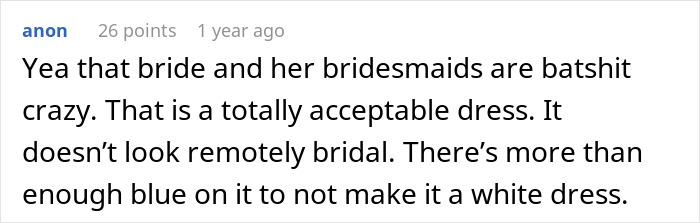
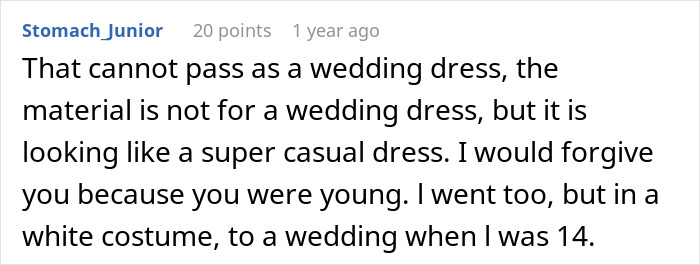
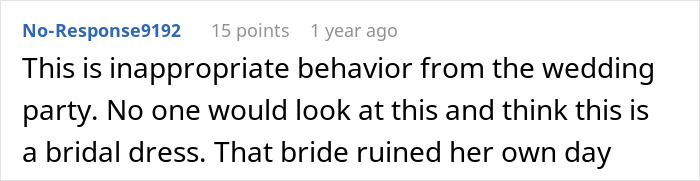
The savage and coordinated reaction from the bride and her bridal party left her crying outside the venue before the night even ended. She shared more information and a picture of the dress, leaving it to the internet to be the judge.
Image credits: Expert-Assistant-31
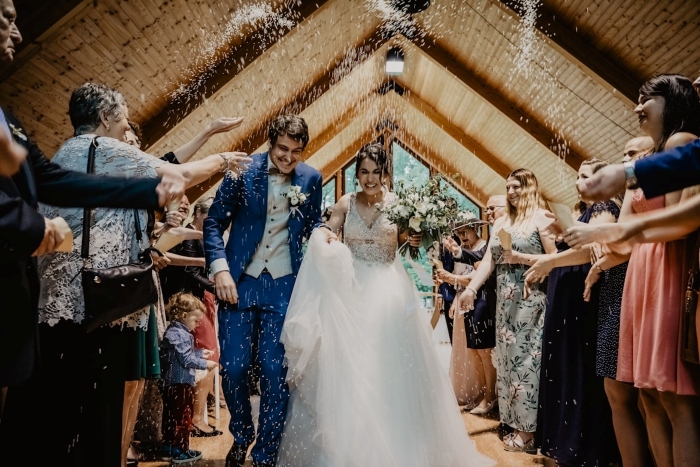
Image credits: alisaa / freepik (not the actual photo)


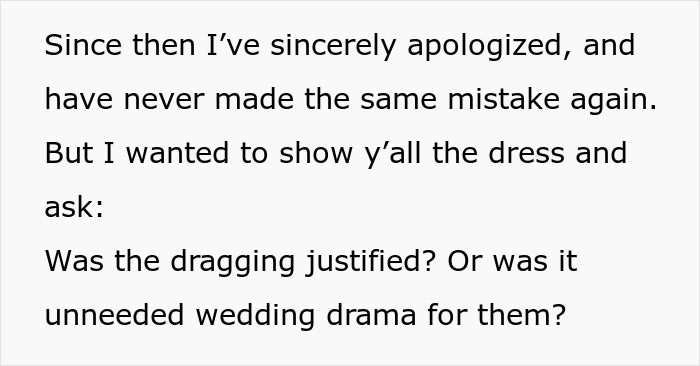
Image credits: Expert-Assistant-31
To understand why the bride and her bridesmaids went to war over an outfit, you have to understand the “rule” this guest accidentally broke.
For centuries, Western brides wore whatever color they wanted, and white was a rarity since it was too hard to keep clean. However, things changed in 1840 when Queen Victoria wore a white lace gown to her royal wedding. It became an instant trend. By the 20th century, white morphed into a strict symbol of the bride’s purity and innocence.
Today, the ultimate unwritten rule for wedding guests (particularly women) in some Western countries is to never wear white to a wedding — unless the invite specifically calls for it. Breaking it is seen as a direct insult.
“The bride may or may not wear white (maybe ivory, maybe champagne), but it’s her color for that day… You don’t want to stand with the bride and look as though you were attempting to look bridal on someone else’s day. Even if that wasn’t your intention, that’s what people (and possibly the bride) will think, and who wants to be ‘that’ person?” says Brandi Hamerstone, owner and wedding planner at All Events Planned.
The no-white rule also applies to cream, ivory, and beige.
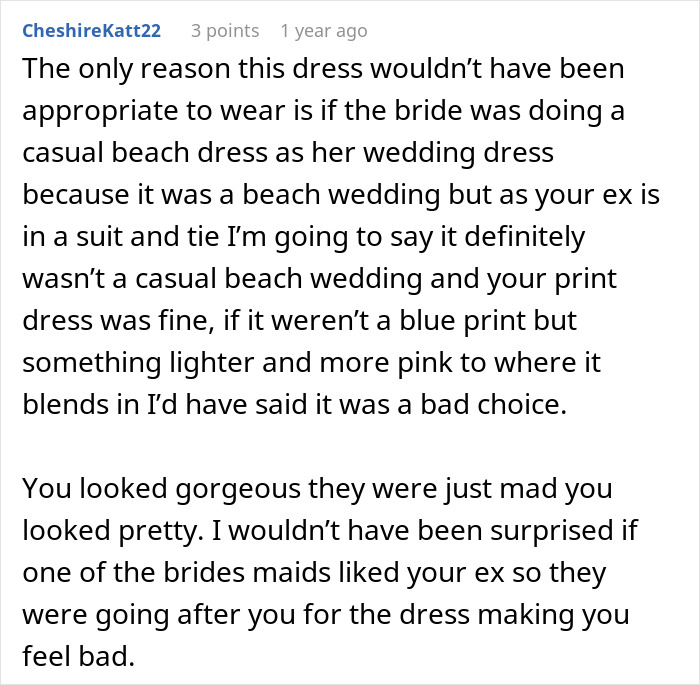
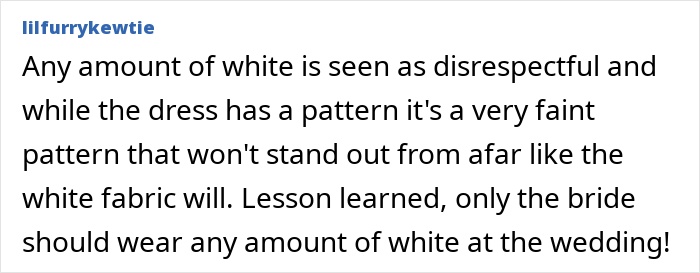
However, some experts believe that dresses that include white elements as part of a larger pattern are, in most cases, fine. “A colorful, cocktail-length dress with a white lace overlay is acceptable. A casual sheath dress also works well, but if the dress is white and floor-length or full-skirted, it won’t work,” says Kimberly Lehman, wedding and event planner at Love, Laughter & Elegance.
There is even a proposed 75/25 rule: if your outfit is more than 25% white, it is too much.
The idea that only the bride should wear white is largely rooted in European and North American wedding traditions, and is unheard of in several other places.
In major cultures across South Asia, East Asia, and parts of Africa, the wedding rulebook is completely different. In Indian and Chinese traditions, for instance, red is the sacred bridal color of luck and prosperity. In those cultures, wearing white to a wedding isn’t an insult to the bride — it’s actually a downer because white is traditionally associated with mourning and funerals.
Image credits: Victoria Priessnitz / unsplash (not the actual photo)
Experts believe that some weddings are naturally high-stress environments where couples feel pressured to achieve absolute perfection in every single detail.
“There’s this idea that a wedding has to be perfect and the bride has to be perfect, but of course, nobody’s perfect,” says Jennifer Thomas, Ph.D., a North Carolina-based psychologist.
She adds: “We have very high expectations of this event, which have only grown in recent years. Along with that, we have a lot of different parties to please — parents and family in particular. People may be feeling stressed financially and become more reactive. There can be control issues.”
As a result, some brides become so consumed with policing minor mistakes that they completely lose sight of their own joy.
In this story, instead of celebrating a major milestone or enjoying the day with her new husband, the bride and her bridal party wasted critical energy obsessing over a patterned sundress.
To be fair, this high-alert defensiveness doesn’t come out of nowhere. The internet is flooded with horror stories of mothers-in-law intentionally wearing full white bridal lace to upstage the bride. Or even some malicious guests dressing their children in all-white to spite the bride.
These kinds of incidents can breed paranoia, making it easy for a stressed-out bride to judge even the most innocent and unwitting guests.
In that case, how do we find the balance then?
While following basic wedding etiquette is a way for a guest to show respect, a wedding day is ultimately about celebrating a marriage.
Zola’s 2026 wedding report, based on a survey of over 11,500 couples, puts it plainly: “Modern etiquette is less about rules and more about respect for the couple.”
That cuts both ways, for the guest showing up and for the couple responding.
Ultimately, a wedding lasts for just one single day. But the grace extended between a couple and their guests is what leads to a lifetime of good relationships.


















By entering your email and clicking Subscribe, you're agreeing to let us send you customized marketing messages about us and our advertising partners. You are also agreeing to our Privacy Policy.
Thank you! You've successfully subscribed to newsletters!


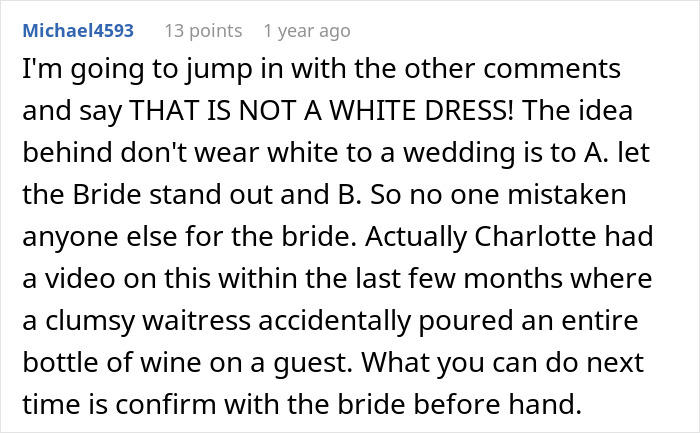
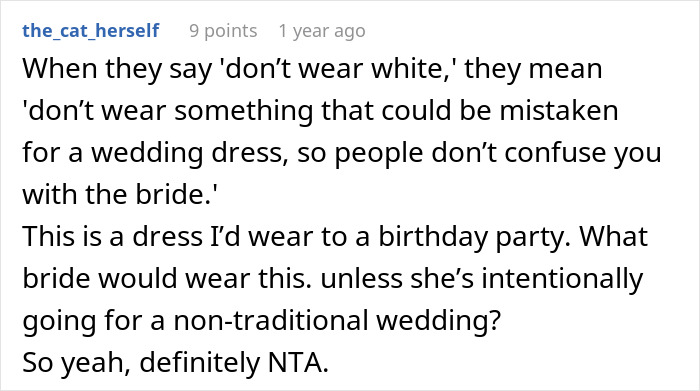
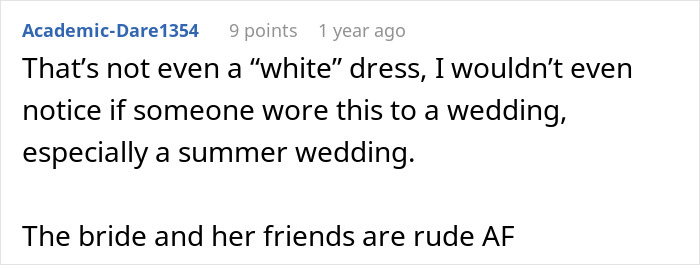
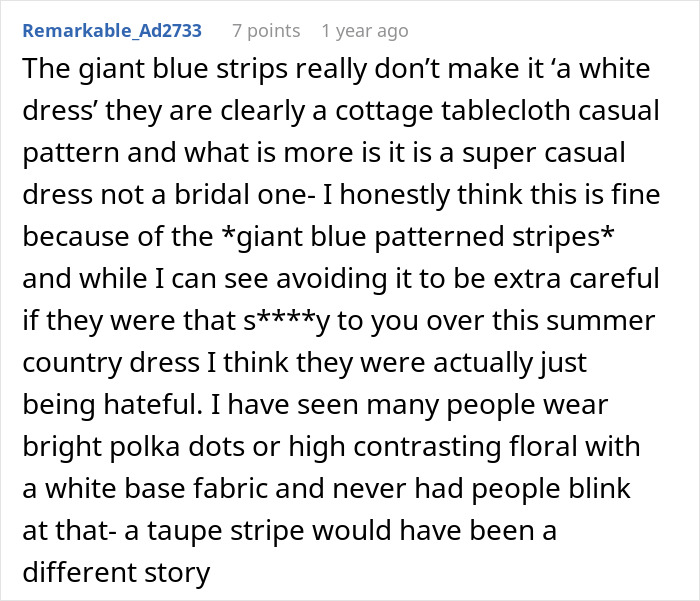
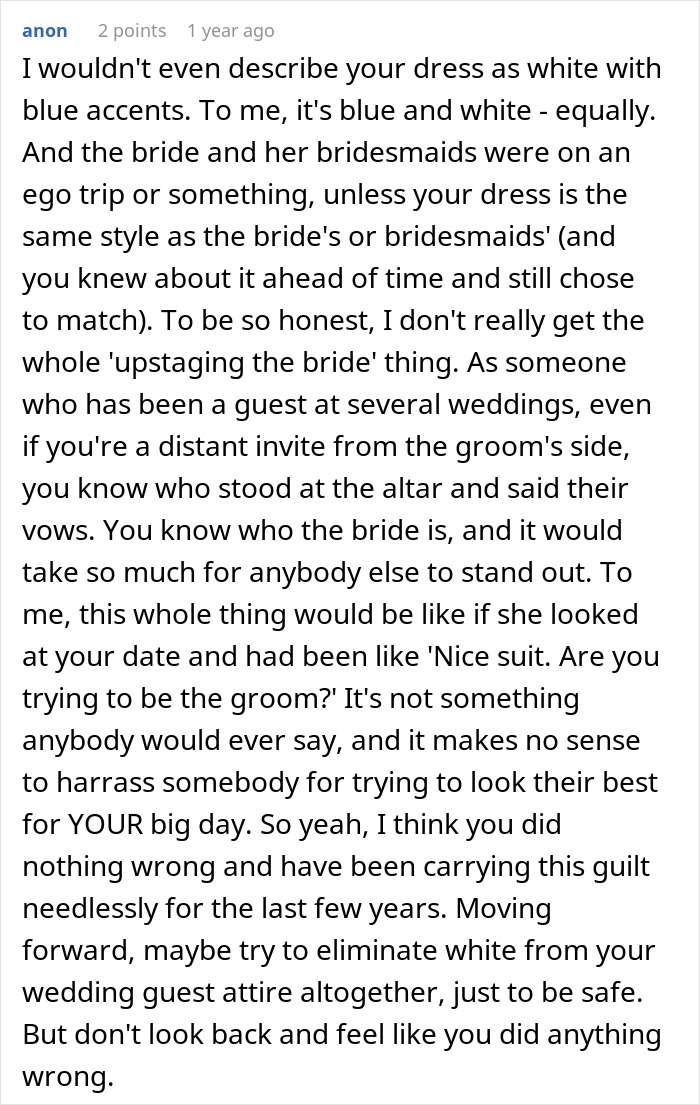
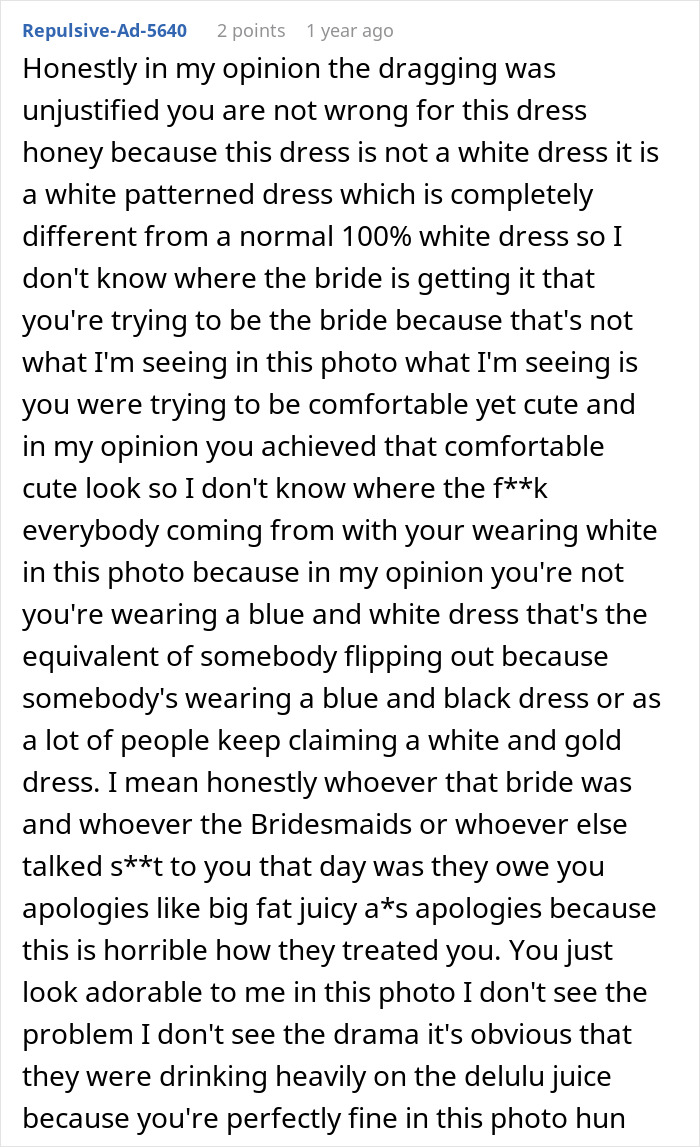
I feel people are taking the rule too literal. It should not look like a wedding gown/be possible to confuse her for the bride. Not to not have any white in it. Her dress was clearly a summer dress.

It is very clearly a sun dress. It's a cute dress, too!
Load More Replies...
Nothing remotely bridal about this dress, and too much "blue" to be a white dress. I went to a wedding when I was in college - knew it was a quicky "bride is pregnant" wedding, but it was also in a church so I assume my blue/gray short lace dress would be appropriate. Started getting bad vibes immediately on arrival - bride's family was greeting guests, and the mom was giving me serious evil eye. Imagine my surprise when the bride walked down the aisle wearing the EXACT SAME DRESS IN WHITE! She/I had a good laugh about it later.

FFS If you can see ANYTHING other than the person you are marrying on your wedding day you’re marrying the wrong person and you have bigger problems than other people’s clothing.

And it's not even a "white dress" it's a blue and white dress. It's fine, unless they were specifically asked to not wear blue. Anyone who has an issue with this dress has a stick so firmly up their behind you can probably see it when they open their mouths.
Load More Replies... I feel people are taking the rule too literal. It should not look like a wedding gown/be possible to confuse her for the bride. Not to not have any white in it. Her dress was clearly a summer dress.
It is very clearly a sun dress. It's a cute dress, too!
Load More Replies... Nothing remotely bridal about this dress, and too much "blue" to be a white dress. I went to a wedding when I was in college - knew it was a quicky "bride is pregnant" wedding, but it was also in a church so I assume my blue/gray short lace dress would be appropriate. Started getting bad vibes immediately on arrival - bride's family was greeting guests, and the mom was giving me serious evil eye. Imagine my surprise when the bride walked down the aisle wearing the EXACT SAME DRESS IN WHITE! She/I had a good laugh about it later.
FFS If you can see ANYTHING other than the person you are marrying on your wedding day you’re marrying the wrong person and you have bigger problems than other people’s clothing.
And it's not even a "white dress" it's a blue and white dress. It's fine, unless they were specifically asked to not wear blue. Anyone who has an issue with this dress has a stick so firmly up their behind you can probably see it when they open their mouths.
Load More Replies...
































 No fees, cancel anytime









27
44