Get Premium
Dark mode theme is available exclusively for premium users. Learn more about the benefits of subscribing.
No fees, cancel anytime.

 Dark Mode Ad-Free Browsing Unlimited Content
 Ad-Free Browsing Unlimited Content Dark Mode
Join 1.2 million Panda readers who get the best art, memes, and fun stories every week!
Some animal rescue stories are heartbreaking at first, but deeply hopeful by the end. The Animal Rescue Site by GreaterGood regularly shares emotional stories of animals who survived abandonment, cruelty, injury, illness, or neglect, only to be given a second chance by rescuers, shelter workers, volunteers, and adopters who refused to give up on them.
From dogs left tied to fences and puppies rescued from freezing woods to severely injured animals slowly learning to trust again, these stories show just how much kindness can change a life.
We gathered some of the most emotional and unforgettable rescue stories shared by the page, so scroll down to read them for yourself and vote for the ones that moved you the most.
More info: Facebook | Instagram
The information provided herein is for informational purposes only. Please refer to our disclaimer for more details.
This post may include affiliate links.
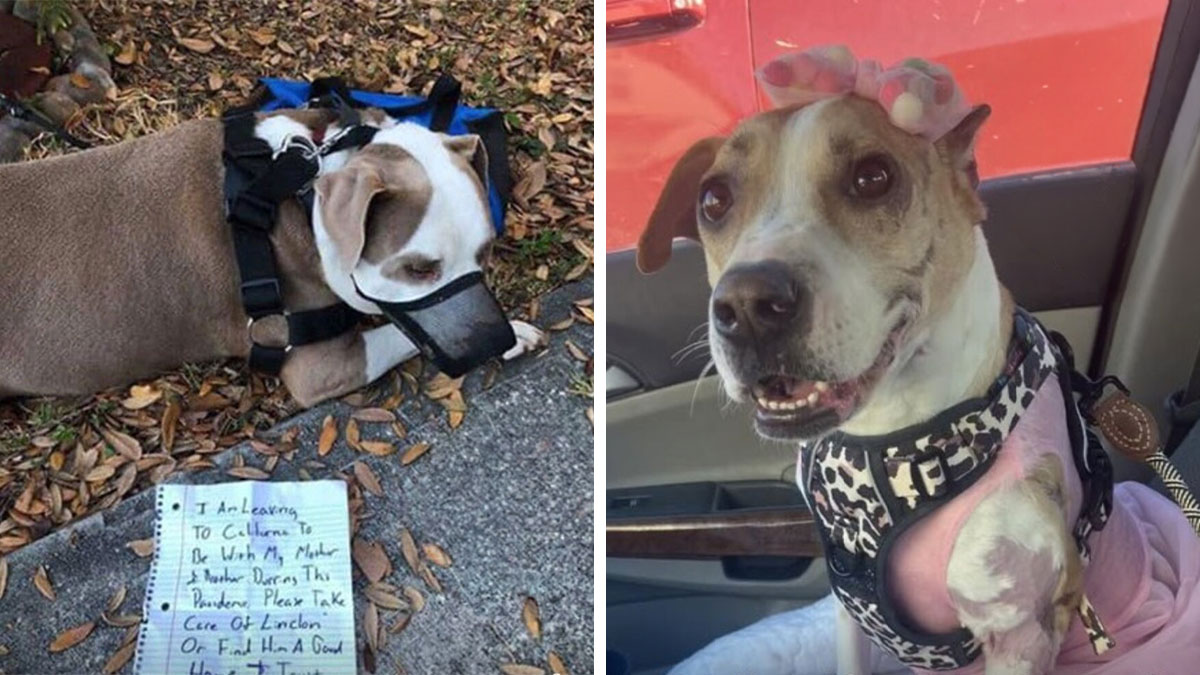
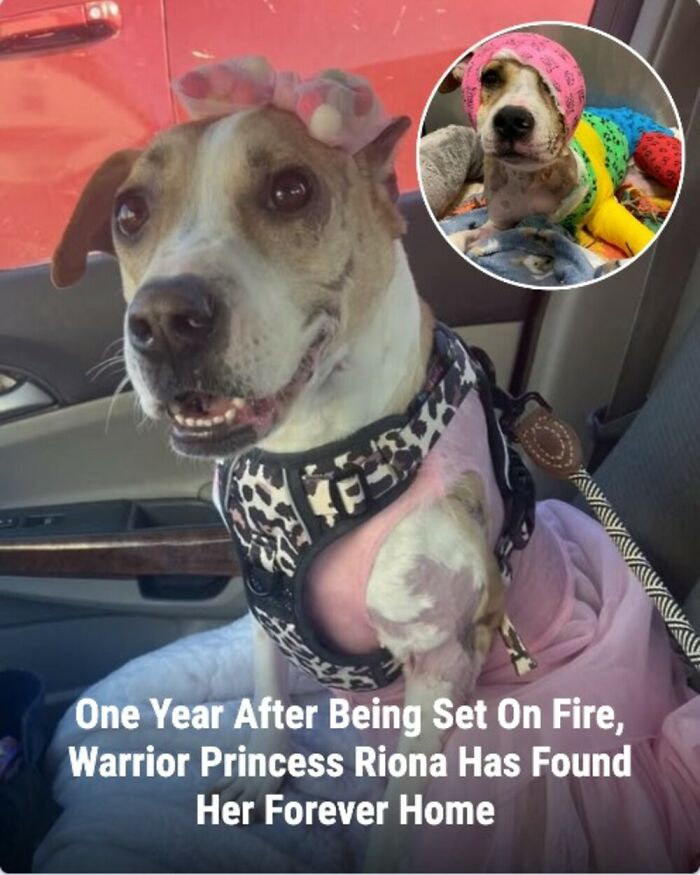
A sweet dog named Riona has endured horrific abuse at the hands of her cruel former owner but is ready to put the past behind her as she meets her new loving family.
Almost a year ago to the date, she was doused in gas and set on fire and found running through the streets of Memphis. She was taken in by Tails of Hope Dog Rescue who brought her to Bluff City Veterinary Specialists and her long road to recovery began.
The sweet pup underwent several surgeries and countless months of rehabilitation. According to the rescue, "60% of her body received 4th degree burns. (She needed) months of 24-hour care, numerous bandage changes multiple times a day, lots of pain medication and antibiotics, surgeries to close up whatever wounds could be closed, skin expanders placed under her skin to help harvest new skin for skin grafts," and much more.
She was fostered and nursed back to health by one of the technicians, Mallory Ward. Through it all, Riona remained a happy girl who still loves humans.
Her heartbreaking story was shared on social media and people near and far reached out to help with her care and eventually offered to adopt her.
The rescue shared, "It was a very tough decision to choose a family for her. So many wonderful applications! We finally narrowed it down, and though it is about an 8-hour drive, we are so happy for her! We have been in contact with this family for some time and are so excited!"
It was a happy day, but one filled with tears as Mallory and her medical team said goodbye to Riona. Mallory wrote, "The sweetest angel princess that I could ever ask for! Such a bittersweet day sending her off to her furever home, but I could not be more thankful for how her story turned out".
The location of her new home was not disclosed as the case against her previous owner is still ongoing. The rescue will continue to fight for #justice4riona and for stricter laws against animal cruelty.
Riona's journey to her forever home was shared on the rescue's social media so her supporters could witness just how happy she is to finally have a loving family of her own.
She was spoiled upon her arrival at her new home with welcome signs and everyone, including her new canine sisters, couldn't wait to meet her. Riona's tail never stopped wagging and it was clear that she was finally home.
The rescue said they will remain in contact with the family and will share updates as they receive them. Happy tails, Riona!

Whoever did this should be subjected to the same t*****e he inflicted on this poor animal and not given any help afterwards.
Dogs would never leave their humans and don't understand how the people they love can leave them behind. Sadly, this is happening around the world due to the uncertain times we are facing.
As shelters around the country have seen an increase in surrenders and intakes, some people are stepping up to help foster. However, some shelters are still overwhelmed with abandoned pets due to people losing their jobs or out of fear. Dogs and cats are proven to reduce stress, so the last thing people should do is abandon them.
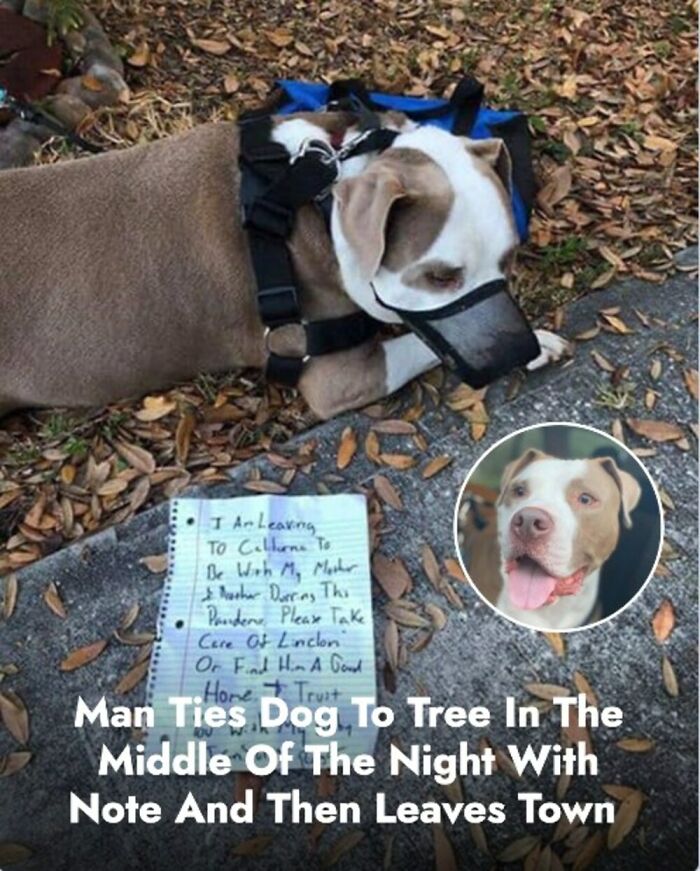
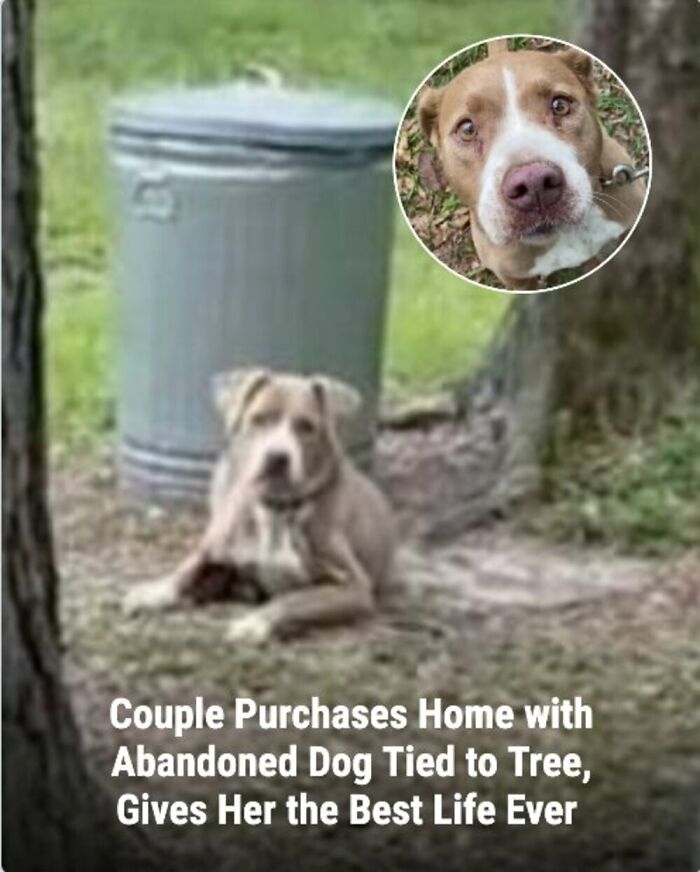
A man in Orlando, Florida, tied his brown and white pit bull to his neighbor's tree in the middle of the night and left town. In the morning, the neighbor found the sweet pit bull with a muzzle on lying beside a handwritten note. The note read, “I am leaving to California to be with my mother and brother during this pandemic. Please take care of Lincoln or find him a good home. I trust you with my baby. I’m sorry.”
The neighbor was unable to keep the sweet boy, so she reached out to The Pittie Party of Central Florida (TPPCF). Mayson Jones, a volunteer at the rescue, picked up Lincoln and brought him back to her house.
In an attempt to distract the dog from looking for his owner, she played fetch with him in her backyard. Lincoln had a blast and sported the biggest smile. Due to the situation, the rescue needed someone to foster Lincoln until they figured out when they could legally adopt him out.
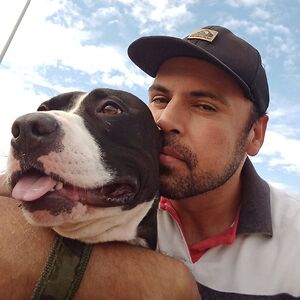
Melanie Anderson stepped up and offered to foster the mellow boy until a forever home was found. He is spending his days relaxing in the sun on a boat with his foster family.

This is just unfortunate. Some people had no choice, especially during that time. The owner was heartbroken too. But poor pupper. Glad he has a new forever home 🏡
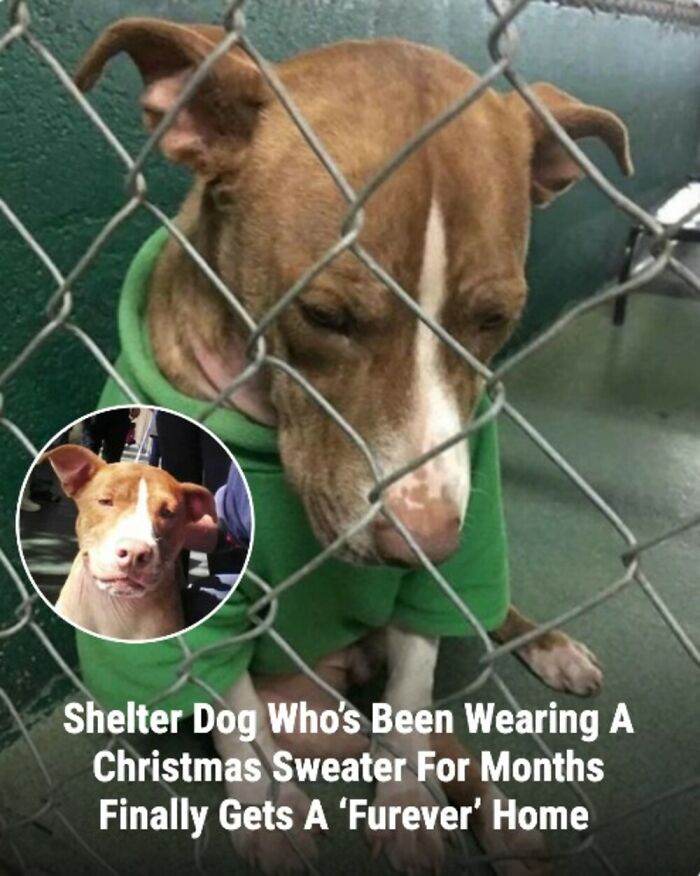
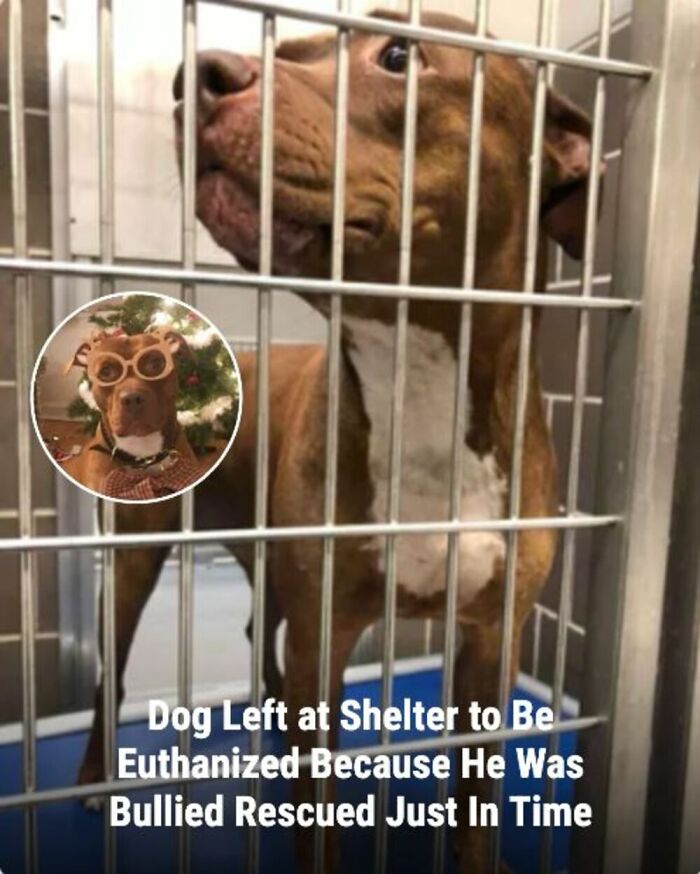
A dog named Bobby was surrendered to Miami Dade Animal Services, and soon melted the hearts of the volunteers and bonded with them.
Unfortunately, this didn't mean Bobby was immediately adopted. In fact, after only two months at Miami Dade Animal Services, things were looking very grim for him. That's because he was placed on the list no animal wants to be on: the code red list.
However, Bobby's luck was about to change, thanks to social media. A photo of him wearing a Christmas sweater was posted online. But Bobby's expression stood out in stark contrast to the festive sweater - he looked depressed and heartbroken.
The volunteers who worked with him hoped that this picture would lead to a miracle - that Bobby's life would be saved.
To sweeten the deal, Miami Dade Animal Services was willing to help pay for Bobby's adoption fees. They just needed someone to provide him his new home...
Which someone did!
Immediately, there was a flood of support. Many people wanted to save him -- and fast. One of those people was Robert Miller. When he saw Bobby's sweet, sad face, he knew he had to step in.
Robert works for a local rescue group, and so he knows firsthand what happens to pups like Bobby if they are unable to be placed with a new family.
But another shelter volunteer named Paola beat Robert to the punch! By the time he arrived at the shelter, Bobby had been swooped up by his new mother and taken to the vet's office to get checked out. There, he received treatment for a few minor issues.
Paola has vowed to make Bobby's life so much better than it has been. She knew that a post like Bobby's would bring out a lot of good people - and some bad people, too. That's why she wanted to get to Bobby as soon as she could.
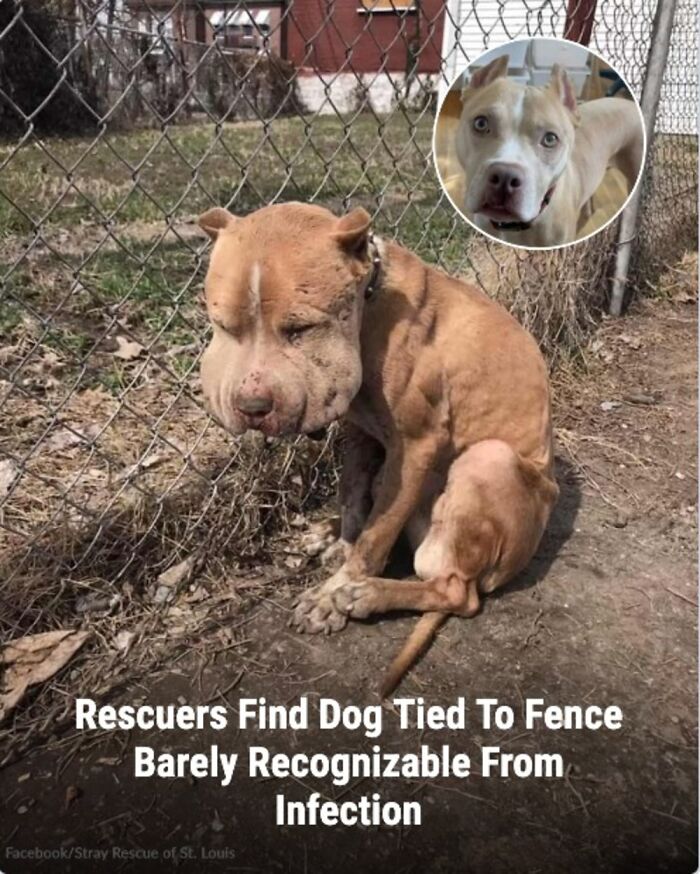
When volunteers from Stray Rescue of St. Louis arrived to help a wounded, puffy-cheeked dog left tied to a fence, they expected a difficult case. What they found was a dog so swollen and infected that he barely looked like a dog at all, yet still holding on to a deep capacity for love and trust. Stories of dog rescue and recovery can be emotional, but Marco’s transformation feels especially powerful.
According to Stray Rescue of St. Louis, the call came in during the spring of 2019. Someone had spotted an injured dog left alone and tied to a fence in the sun. Even before arriving, the rescue team understood that any animal left restrained and wounded was likely in serious distress. The scene that greeted them, however, exceeded their fears. The dog’s face was swollen to roughly five times its normal size, and his body showed clear signs that his injuries had been left untreated for far too long. His rescuers later wrote that he had simply been sitting there, suffering in the heat, with no way to escape or seek help.
The volunteers named him Marco. He had apparently been waiting for days tied to that fence, hoping that someone would notice him. By the time help finally arrived, he was septic, with infection coursing through his entire body. His rescuers described him as elated to see them, yet too weak and uncomfortable to fully express his excitement. That detail feels particularly striking, since it suggests that beneath all that pain, there was still a dog eager for connection.
Recognizing the urgency of Marco’s condition, the team carefully cut him free, lifted him into their arms, and transported him straight to their animal hospital. From that moment, their focus was on stabilizing him and giving his body a fighting chance. Stray Rescue of St. Louis later shared that Marco spent months in their clinic. He was placed on intravenous fluids, antibiotics, and additional medications designed to fight the overwhelming infection. It was not a quick or easy process. Every day that he remained under their care was a small victory.
Veterinarians and staff could not say for sure what Marco’s life had been like before he was abandoned. Nothing about his past was documented, and the dog himself could not tell his own story. However, the nature of his wounds suggested that he had likely been subjected to dog fighting. While the article does not dwell on graphic specifics, that context adds another layer to his journey. Many animals exploited in such environments experience repeated trauma and cruelty, and some emerge fearful or aggressive as a result. Marco’s case showed a different outcome.
What stood out to his caregivers was his response to kindness. Even with a body full of infection and a face so swollen that he looked almost unrecognizable, Marco still seemed to trust the humans working to save him. Stray Rescue of St. Louis noted that he continued to look to people for affection. He gave love and sought comfort, as if some part of him understood that this time, the hands reaching toward him were there to help, not to harm.
Over time, with continuous medical attention and patient care, Marco turned a corner. The swelling that once distorted his features began to recede. As the infections came under control, a very different dog started to appear. Underneath those puffy cheeks was a handsome, expressive face. His rescuers watched as his energy slowly returned, and as he began to resemble the dog he had been meant to be all along. The once puffy-cheeked dog left tied to a fence now had the chance to show his true self.
Eventually, Marco was healthy enough to leave the clinic and transition into foster care. That next step is often crucial in a dog’s emotional healing. A foster home can provide a quieter, more familiar environment where an animal can rebuild daily routines, learn what it means to feel safe, and start forming lasting bonds. In Marco’s case, his foster journey turned into something even more permanent. His foster mom, Katie, quickly fell in love with him and decided that he would not be leaving again. She adopted him, giving him a forever home as part of her family.
In an update shared by Stray Rescue of St. Louis, Katie described Marco’s new life with a mix of humor and affection. She said that Marco is “spoiled rotten,” repeating the phrase to show just how thoroughly he has embraced comfort. According to her, he has a huge personality and is an ideal combination of silly, sweet, smart, and protective. In other words, he is both playful companion and loyal guardian, an engaging mix that many dog guardians will recognize.
Marco’s daily routine now looks nothing like the desperate days he spent tied to that fence. He steals blankets before bedtime, a small but telling sign that he feels secure enough to indulge in his own preferences. He keeps a close eye on the neighborhood from his favorite bay window. That simple image of a dog watching the world from a cozy vantage point carries a quiet weight when placed beside the memory of him stranded and alone in the sun. Marco is no longer an injured dog abandoned outdoors. He is a cherished family member with places to nap, windows to patrol, and people who love him.
Katie describes him as “the cutest little man” and notes his charming head tilts, a detail that captures how fully he has reclaimed his identity. The dog who once could barely show joy due to pain now expresses himself in unmistakable, endearing ways. His new family would not have things any other way. For them, Marco is not a symbol or a story. He is simply their baby boy, part of a household that also includes other dogs from Stray Rescue of St. Louis.
Marco’s transformation from a severely swollen, suffering animal to a confident, much-loved companion highlights the impact of timely rescue and patient rehabilitation. It also underscores how deeply dogs can rebound when given medical care, stability, and affection. While his past cannot be erased, his present reality is defined by safety, play, and connection. For anyone who reads his story, Marco stands as a reminder that behind even the most heartbreaking beginning, there may be a beautiful face and a gentle spirit just waiting to be seen.
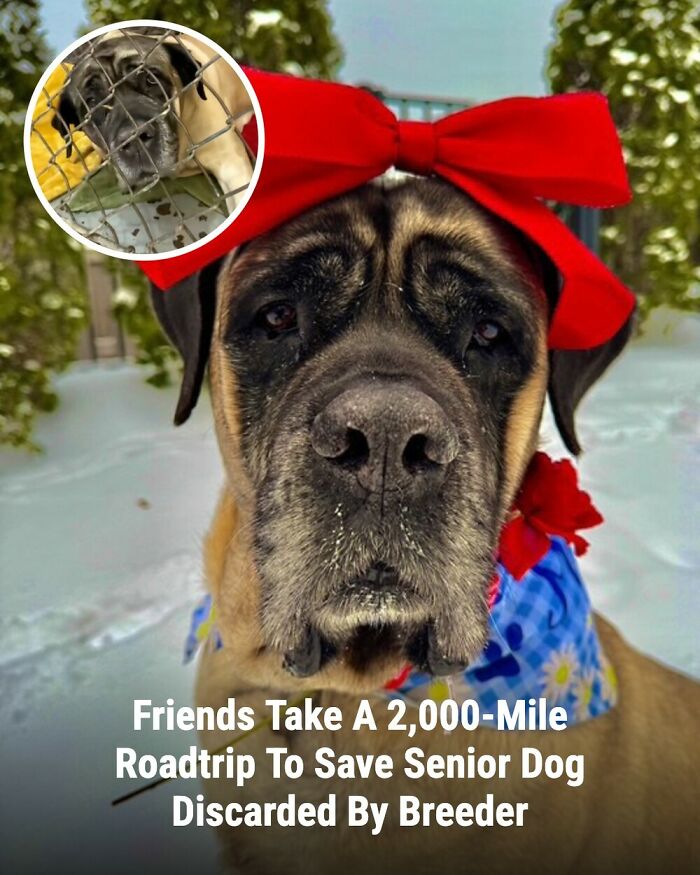
Some rescue stories stay with people long after the last scene, and Bertha’s journey is one of them. This senior mastiff’s 2,000-mile road trip to meet her adopter in Oregon is not just a feel-good moment. It is a quiet, powerful reminder of what happens when people refuse to give up on the animals the world has overlooked. For anyone searching for inspiration, or considering senior dog adoption, Bertha’s story offers a moving example of compassion in action.
Bertha spent most of her seven years knowing only a cage. She lived in a puppy mill, repeatedly bred and separated from her puppies. According to Border Tails Rescue, she was kept there solely to produce litter after litter. When those litters were no longer profitable and she was past breeding age, the puppy mill no longer saw her as “useful.” TikTokers Eric and Joey, who helped share her story, described how she was simply tossed aside, just discarded after a lifetime of service she had no say in offering.
For Bertha, that could have been the end of the story. Instead, it became the beginning of something better. Border Tails Rescue stepped in and gave her a safe place to land. Staff there described her as a “gorgeous, gentle soul,” a senior dog who had endured far too much yet still met people with softness. Like many rescues, the shelter was loud, busy, and full of constant motion. It kept her safe, but it was not the peaceful home that a tired senior dog like Bertha needed.
As the days turned into weeks and then months, Bertha settled into a painful routine. She watched people walk past her kennel, day after day, scanning for younger dogs or pets who would fit more easily into multi-dog households. Harleigh Goodman Garcia, director of Border Tails Rescue, shared on TikTok that no one who visited asked to meet her. In a world where puppies and younger dogs so often draw attention first, Bertha’s age and her need to be the only pet in the home made it much harder for her to be chosen.
Staff members could see what potential adopters were missing. They described how Bertha loved couch time, belly rubs, and the simple comfort of having someone nearby. On social media, Border Tails Rescue wrote that she enjoyed offering her paw for extra affection. That small gesture captured the essence of her personality. Even after everything she had been through, she was still ready to connect, still eager to share love with anyone willing to sit with her.
Although she was a senior dog, Bertha was not done enjoying life. She loved stretching her legs, soaking in fresh air, and having room to explore. The rescue emphasized that what she wanted most was a home with a big yard, a place where she could finally relax and feel the grass under her paws in peace. It was a simple wish, but for a dog who had spent years confined to a cage, it represented an entirely new way of living.
Then, after months of waiting, hope finally arrived. The rescue announced that Bertha had an adopter. Someone had seen past the number on her file and understood the value of her golden years. The match sounded nearly perfect. This adopter, April, was ready to give Bertha a forever home where she would be the center of attention and could enjoy that dream yard. There was only one complication. Bertha was in Illinois, and her new home was in Oregon, about 2,000 miles away.
That kind of distance might have ended things for many animals, but Bertha had people rooting hard for her. Eric and Joey, who had already been sharing her journey on TikTok, decided they would not let geography stand in the way of her second chance. Instead of relying on uncertain transport options, they volunteered to drive her across the country themselves. Border Tails Rescue celebrated this turning point with a farewell party for Bertha before she hit the road. It was a meaningful way to honor her resilience and mark the end of her life in the shelter.
With the party behind them and her bag packed, Bertha climbed into the vehicle and set off on the long road west. Over the days that followed, the three of them traveled nearly halfway across the country together. There is something quietly powerful about a road trip like this. A dog that once knew only confinement was suddenly watching miles of open road pass by, heading toward a future built on kindness rather than convenience. I found this detail striking because it highlights how far some people will go, literally and figuratively, to make sure a vulnerable animal reaches safety.
At the end of that journey, Bertha finally arrived in Oregon and met April, the adopter who had waited from afar. According to the accounts shared, it was immediately clear they were a good match. They celebrated Bertha’s arrival with a cake and a warm welcome, turning what might have been a quiet drop-off into a true homecoming. After so many years of being treated as a tool for breeding, she was now being welcomed as family.
For Eric and Joey, saying goodbye was not easy. Long hours on the road create a bond, and they had seen firsthand how gentle and trusting Bertha remained, despite everything she had been through. Letting her go meant feeling the weight of that separation. At the same time, they knew this farewell was exactly what they had hoped for when they first set out. Bertha was staying with a loving person, in a house with the big backyard she had always needed, and her days of waiting in a kennel were behind her.
Border Tails Rescue expressed deep gratitude that Bertha was getting this second chance. In their words, while they would miss her terribly, they believed her best days were still ahead. They even declared that Oregon was lucky to have her. That phrasing flipped the usual adoption narrative on its head. Instead of framing Bertha as lucky to be chosen, it recognized her inherent worth and the joy that a senior rescue dog can bring to a home willing to embrace them.
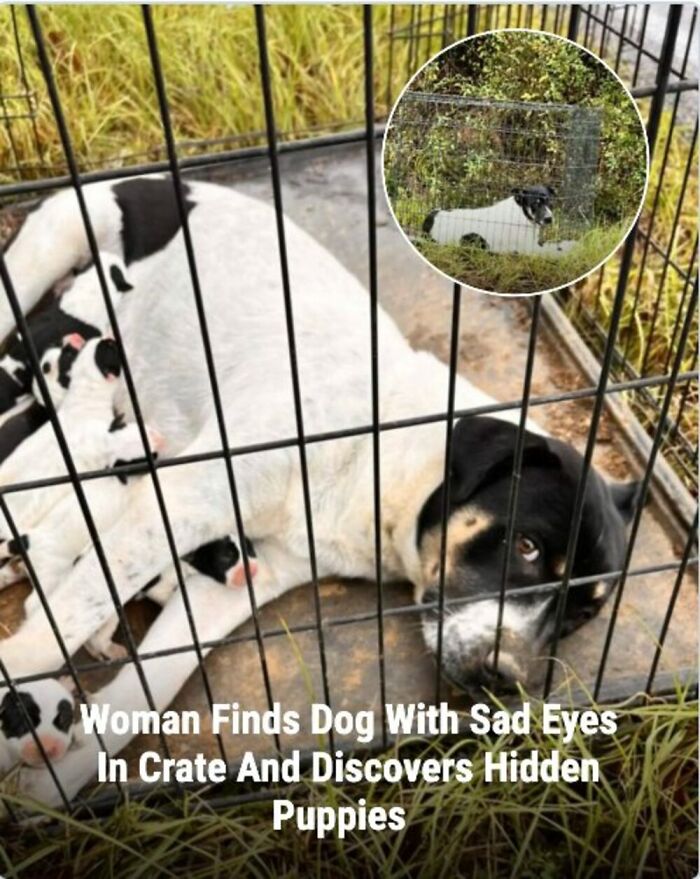
Every so often, a story appears that quietly captures the best of what humans can offer animals in need. This account of a mother dog with “the saddest eyes” abandoned in a crate on a Mississippi roadside is one of those rescue stories that lingers in the mind. It unfolds with a mix of heartbreak and hope, and it highlights the quiet heroism of animal lovers and shelters that step in when pets are left behind.
On an ordinary drive to Community Animal Rescue & Adoption, known as CARA, board president Valerie Hicks spotted something that made her turn her car around. At the edge of the pavement sat an open crate, and inside was a fuzzy form huddled against the plastic. At first glance, it looked like a single abandoned dog, one more case of roadside dumping that shelters across the country encounter all too often. In that moment, there was already a clear sense of urgency. Abandoned dogs near busy roads are vulnerable to traffic, weather and people who might not have their best interests at heart.
As Hicks pulled over to investigate, she expected to find a frightened adult pup who needed a safe ride to the shelter. Instead, the situation was far more serious. When she reached the crate and peered inside, the scene shocked her. The larger dog was not alone. Nestled tightly around her were tiny, fragile puppies, clearly only weeks old. They were her babies. Hicks later shared that she was stunned, asking aloud who could possibly abandon a brand-new little family like that. The discovery transformed an already distressing roadside rescue into an emergency involving a nursing mother dog and a litter of newborn pups.
The mother dog’s emotional state was immediately apparent. Hicks recalled that the dog’s eyes were among the saddest she had ever seen. The animal’s body language told a story of anxiety and uncertainty, yet there were also hints of trust. Even as the dog trembled, there were subtle signs that she understood someone had finally stopped to help. That mixture of obvious fear and quiet relief is familiar to many rescuers who have encountered animals abruptly cut off from the humans they once depended on.
Recognizing that this was not a simple pickup, Hicks called a rescue partner named Christina to help. While she waited for backup, she spoke gently to the mother dog and stayed close to the crate. Those moments at the roadside were about more than just logistics. The presence of a calm person can help a distressed animal begin to feel safe enough to accept help. With a litter of small puppies in play, it was especially important to keep stress as low as possible. The fragile family needed to be transported carefully so the pups could remain with their mother, and so everyone would arrive at the shelter in stable condition.
Once Christina arrived, the rescuers were able to move the crate and bring the family to CARA. That journey marked the transition from fear and abandonment to shelter and security. Back at the nonprofit animal shelter, the mother dog finally had a chance to relax in a clean, protected space. With consistent care and monitoring, she could focus entirely on tending to her seven babies without the constant threat of cars, weather or being left behind again. The simple act of providing a quiet room, soft bedding and regular meals created an environment in which the family could begin to heal.
Shelter staff watched closely as the mother’s demeanor shifted. Away from the roadside and surrounded by people who handled her gently, she started to settle. Her sad eyes, while still full of history, reflected a bit less alarm. What had been a moment of crisis turned into the start of a careful, structured rescue. CARA team members began reaching out to their foster network almost immediately. In many successful rescue stories, fosters are the bridge between an animal’s first safe landing and a long-term home. Here, that network responded quickly, with one foster family agreeing to take in the pups when they were old enough and stable enough to leave the shelter environment.
As the days passed, the staff and volunteers saw something remarkable. In the words the group later shared publicly, this mother dog proved to be one of the best moms they had seen. Her puppies were described as robust and healthy, nursing almost constantly. Between feedings, the little ones slipped into deep sleep, what CARA affectionately called “milk comas.” That image of puppies so thoroughly full and content that they fall into heavy sleep speaks volumes about the mother’s dedication and the supportive environment now surrounding them. I found this detail striking because it highlights how quickly animals can rebound when given the basics of safety and care.
Stories like this also remind readers how crucial early intervention is. Abandoning a crate of dogs on the side of the road puts the animals at extreme risk. Newborn puppies cannot regulate their own body temperature well, and they rely entirely on their mother’s milk and presence for survival. Without water, shade or shelter, and with traffic only a few feet away, the family’s outlook would have been grim if no one had stopped. The fact that Hicks was literally on her way to CARA at the time adds a twist of fate to the narrative. In that brief window, a tragic outcome was averted through swift, compassionate action.
From the shelter, the story progressed into a carefully managed plan for the family’s future. Once the puppies were stable and thriving with their mother, they moved to their foster home to continue growing in a quieter, home-based setting. Fostering often allows young animals to become accustomed to household sounds and routines, which can help them adjust more easily when they eventually join permanent families. By the time this story was reported, the puppies were five weeks old, a developmental stage when their personalities begin to emerge more clearly and their physical strength improves day by day.
The next chapter in their journey is already mapped out. When the dogs are old enough, fully vetted and ready to travel, the entire family will head to one of CARA’s trusted northern rescue partners. These foster-based organizations specialize in placing animals into adoptive homes across regions where demand for rescue dogs can be high and shelter space can be more available. This kind of collaboration among groups in different parts of the country is a common and effective strategy in modern animal welfare. It allows shelters like CARA to say yes to more abandoned animals locally, knowing there is a broader network ready to help place them later.
The emotional arc of this rescue story stretches from a lonely crate on the roadside to the promise of “great northern homes” for a once-forgotten dog and her litter. It highlights the power of one person deciding to turn the car around, the strength of a mother dog who cared for her puppies despite fear and upheaval, and the quiet work of foster families who open their doors to animals in transition. For anyone who cares about animal rescue, it offers a clear example of how organizations like CARA, partnered with foster networks and northern adopters, can transform a moment of abandonment into a path toward lifelong safety and love.
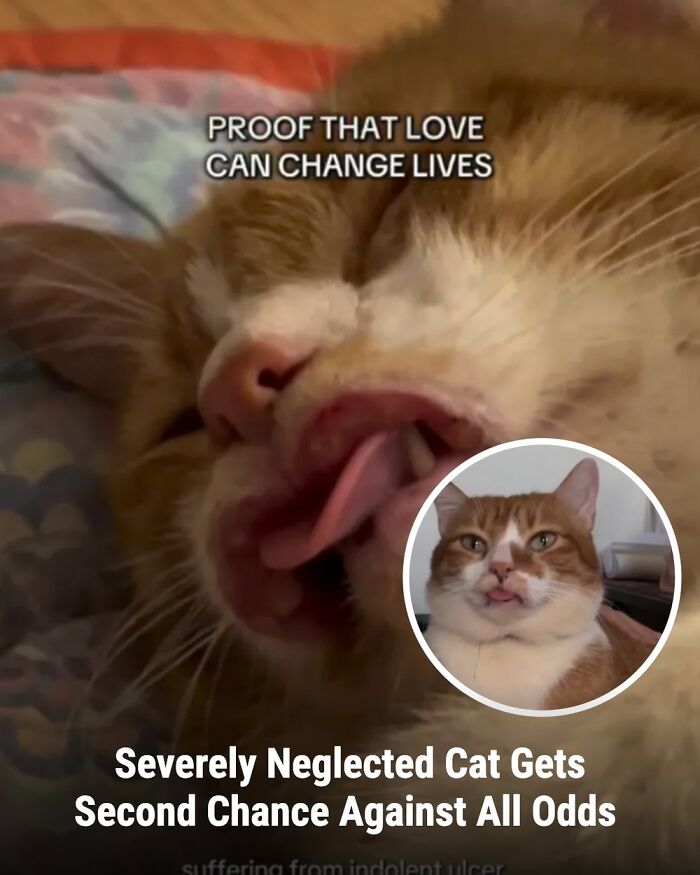
When an abandoned cat first staggered into a quiet garden in the Philippines, he looked like he was out of time. Drooling constantly, covered in flies, and painfully thin, he was the image of a life worn down by hardship. Yet what followed is a striking example of how compassion, patience, and proper veterinary care can transform even the most desperate case. Nicolas, a stray tom suffering from Feline Immunodeficiency Virus and a severe mouth condition, would soon become a powerful rescue cat transformation story.
The couple who found him, Keith Beja and Ivy Cuebillas, had never cared for a cat before. They were not rescuers, not experienced fosterers, just people who saw an animal in need outside their home. Nicolas began appearing in their garden in October 2024. His condition was immediately alarming. The nonstop drooling and extreme thinness signaled more than just a hard life on the streets. Flies swarmed around him and his overall appearance made it clear that he had been struggling for far too long.
Despite their inexperience, Beja and Cuebillas did not look away. They started with the simplest yet most vital act of kindness: food. Day after day, they fed Nicolas and tried to offer comfort. Without a cage or carrier, they might have felt limited, but they adapted. Instead of postponing care, they arranged for a home-service veterinarian to see him right where he stood in their garden. That decision became the turning point that would uncover the full extent of his medical problems and open the door to healing.
The initial tests brought sobering news. Nicolas tested positive for Feline Immunodeficiency Virus, often referred to as FIV. This condition is common among stray, unneutered male cats and is frequently spread through deep bite wounds during territorial fights. The diagnosis explained part of his weakened state and highlighted the dangers that many outdoor cats face when they are left unneutered and unprotected. While FIV itself is not an immediate death sentence, it does compromise the immune system and can make other health issues much harder to overcome.
Another, more immediate source of Nicolas' suffering soon came into focus. The veterinarian identified Eosinophilic Granuloma Complex, or EGC, manifesting as an indolent ulcer inside his mouth. This kind of lesion can make every bite agonizing. Cuebillas described how the flare ups made it both painful and difficult for Nicolas to eat, and how heartbreaking it was to watch him struggle to enjoy something as basic as food. To make eating as bearable as possible, they placed him on a soft diet while they searched for better treatment options and more specialized care.
At the Manila Feline Center, veterinarians carried out additional tests, including cytology, which confirmed the diagnosis of Eosinophilic Granuloma Complex. They also discovered that dental problems were making everything worse. Infected or damaged teeth can aggravate inflammation in the mouth and lips, and for Nicolas this meant additional swelling and pain. To address this, he underwent a thorough dental cleaning and tooth extraction. Every procedure chipped away at the layers of crisis that had built up in his body, from chronic infection to oral pain.
FIV remains a lifelong condition without a cure, but it can be managed with proper care and a safe environment. In Nicolas' case, the more urgent threat came from his EGC. The good news was that his indolent ulcer responded well to steroid treatment. With swelling under control, eating became more comfortable, which in turn made it possible for him to gain weight and rebuild his strength. I found this detail striking because it highlights how addressing pain and nutrition can dramatically shift an animal's entire outlook.
By December 2025, the difference in Nicolas was dramatic. The swelling in his mouth had significantly improved. He could once again handle dry food in addition to wet food, and he happily crunched on kibbles that had once been impossible for him to manage. With consistent treatment and better nutrition, he gained 2.5 kilograms and moved from being a frail stray to a visibly healthier and stronger cat. His transformation sent a reassuring message to others who care for FIV-positive cats or animals with complex medical issues. With the right support, many of these cats can lead comfortable, content lives.
Nicolas' impact went beyond his own recovery. Beja and Cuebillas have said that his journey reminded them that love, patience, and proper medical care can truly change lives. Caring for him reshaped their understanding of animals in need and changed the direction of their own lives. They became especially aware of how often local Philippine domestic shorthairs, commonly called "puspin," are overlooked simply because they are not pedigreed. What began as a response to a single cat in crisis evolved into a much larger commitment.
Inspired by Nicolas, the couple continued to open their home and their hearts to more cats. Over time, one rescue became many and today they share their lives with nine rescued cats. Nicolas was the beginning of it all and his influence can be seen in every animal who has since found safety with them. Their story also points to the quiet power ordinary people have when they choose to step in rather than turn away, even when they feel unprepared or uncertain.

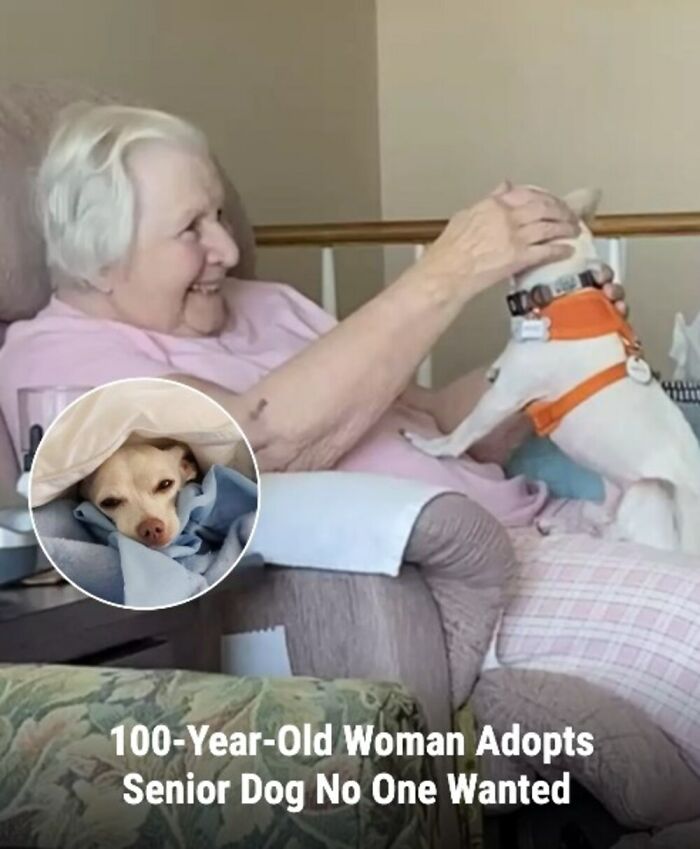
When a senior dog named Gnocchi struggled to find a forever home, few could have predicted that his perfect match would come in the form of a centenarian. At 100 years old, Johanna submitted an adoption application to Muttville Senior Dog Rescue, a San Francisco-based organization specializing in older dogs. While her age initially surprised adoption counselor Alice Ensor, the application quickly stood out for other reasons. Johanna’s strong support system, including her daughter Debbie and a dedicated caretaker, made her an ideal candidate for senior dog adoption, a cause close to Muttville's mission.
Senior dog adoption stories often highlight the quiet companionship and mutual comfort these animals and their adopters bring to each other. This story was no different, but what made it particularly remarkable was Johanna’s age and her unwavering commitment to giving a senior dog a second chance. According to Ensor, “100 years old is definitely a milestone in and of itself. We don't often have a centenarian looking to bring home a new mutt.” I found this detail striking—not only because of Johanna’s age, but because of the deep empathy and love that motivated her to adopt at a stage in life when many might shy away from new responsibilities.
Gnocchi, the dog Johanna would eventually adopt, had not had an easy path. Rescued from a home with 22 dogs, he needed to be the only pet in his new environment. This requirement made it more difficult for him to find a match, and his time at the rescue stretched longer than most. Kristin Hoff, Muttville’s adoptions manager, saw potential in pairing Gnocchi with Johanna. The decision proved to be inspired.
To introduce the two, Muttville arranged a virtual meeting. Gnocchi was shown in a home setting, allowing Johanna to see him in a more relaxed, everyday environment. The connection was immediate. Ensor recalled, “It was love at first sight.” The adoption was finalized the next day, and Debbie helped bring Gnocchi—soon to be renamed Gucci—to his new home.
Gucci’s arrival marked the beginning of a joyful chapter for both dog and human. According to Debbie, “Gnocchi walked into the house and jumped right into Johanna's lap.” That simple act of trust and affection set the tone for their relationship. Over the past year, the bond between Johanna and Gucci has only deepened. Johanna, now 102, credits her furry companion with bringing renewed purpose and happiness to her daily life.
“He brings me so much joy,” Johanna told Muttville. “I love it when he sits on my lap and keeps me company. Having Gucci in my life has given me someone to love and care for, and that makes a big difference at my age.” These words underscore the emotional benefits of adopting senior pets—not just for the animals who find homes, but for the people who welcome them.
Johanna and Gucci have settled into a routine that suits them both. Each morning, they move from the bedroom to the living room and settle into their favorite recliner. There, they watch the news and enjoy quiet time together until the afternoon. Gucci’s daily walks are handled by Johanna’s caretaker, ensuring that his needs are met without placing undue strain on his adoptive mom. The arrangement highlights how older adults, with the right support, can provide loving homes to senior pets in need.
Debbie describes the pair as “thick as thieves” and notes that Gucci is “spoiled rotten.” His couch potato tendencies turned out to be a perfect match for Johanna’s lifestyle. This compatibility is a reminder that adopting a dog doesn’t always require boundless energy or a large backyard. Sometimes, what a senior dog needs most is simply a warm lap and a gentle hand.

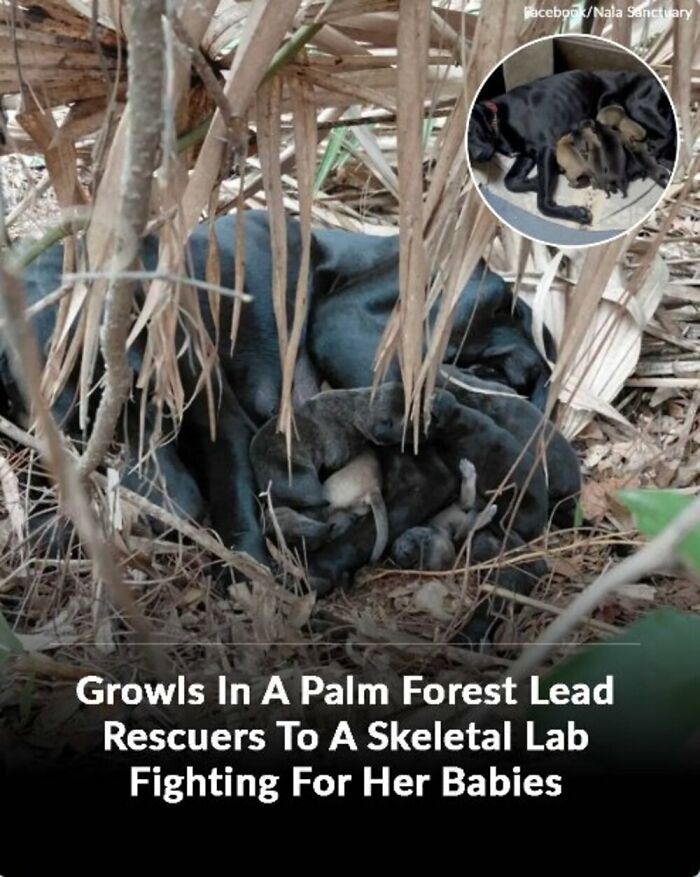
When a couple returned to their winter home in Interlachen, Florida, they expected the familiar quiet of the surrounding palm forest. Instead, they were met with a strange growling sound drifting out from the trees. It was after sunset, the forest was dark, and the noise was unsettling enough that they thought they might be hearing a bear. That eerie moment would soon turn into a powerful rescue story involving a starving black Lab, 11 newborn puppies, and a network of rescuers who refused to look away.
The couple tried to investigate that first night, but the fading light made it impossible to see clearly. With only the sound as a guide, there was no safe way to push deeper into the dense palms. The growling lingered, mysterious and unnerving, and they had to wait until morning to really understand what was happening in the forest behind their home. Overnight, the question of what or who was out there remained unanswered.
By the next day, with daylight cutting through the trees, they went back out to search. This time, they could follow the sound to its source. What they found was not a wild animal ready to defend its territory, but a desperate mother dog fighting to keep her babies alive. The “bear” in the forest turned out to be a black Lab, painfully thin, alone, and caring for an astonishing 11 newborn puppies.
As the couple looked more closely, it became clear that the tiny puppies were scattered across the forest floor in small piles. They were not nestled neatly in one den but spread through the underbrush in several spots. According to Nala Sanctuary director and treasurer Nikki Kell, who later spoke about the rescue, the babies were found grouped in multiple places among the palm trees. That detail paints a stark picture of how vulnerable they were. Without shelter, warmth, or reliable food, these newborns had almost no protection from the elements or from predators.
Recognizing they were facing more than a simple stray-dog situation, the couple began reaching out for expert help. They contacted local rescues who might have the resources to respond quickly and safely. Among those who received the call was Rocky’s Refuge Cat Rescue. Although it specializes in cats, the group relayed the urgent information to Nala Sanctuary, which had the capacity to step in for this particular dog rescue.
Rescuers from Nala Sanctuary rushed to the scene. They approached the mother carefully, aware that a dog in such a fragile state might be protective or fearful. With patience and treats, they slowly earned enough trust to coax her into their arms. Once they were close, the rescuers could fully see the extent of her condition. She was extremely skinny, her ribs evident, and she had an injured rear back leg. At the same time, observers noted her very sweet demeanor. She was wary of humans, which they felt she had good reason to be, yet there was gentleness beneath the fear.
It was evident to the team that this mama dog had been on her own for a very long time. The combination of heavy malnourishment and injury suggested that she had survived without consistent help or shelter. To still be nursing 11 babies under those circumstances is extraordinary. I found this detail striking because it underscores how strong a parent’s instinct can be, even when resources are almost nonexistent.
With the mother finally secured, rescuers carefully gathered each of the newborn puppies from their scattered nests on the forest floor. One by one, they moved the entire family to a nearby warm barn where everybody could rest in safety. After the cold uncertainty of the forest, the contrast must have been profound. For the first time in what was likely a long while, the mother dog had a roof over her head, soft bedding for her puppies, and access to food and water that she did not have to scavenge or fight for.
While the family took their first steps toward recovery in the barn, Nala Sanctuary staff and volunteers began searching for a dedicated foster home. Caring for a dog with 11 newborn puppies is an enormous responsibility that requires time, space, and specialized knowledge. In their search, they connected with Judy of Moonshine Kennel, who agreed to welcome the entire family. This decision was a turning point for the puppies and their mama, giving them not just temporary shelter, but a stable place to heal.
Once the mother dog arrived at Moonshine Kennel, rescuers finally saw her relax. Safe in her new environment, she lay down with her babies and allowed herself to fully rest. At that moment, as described by Kell, she fell asleep while her tail wagged and her puppies nursed. That simple detail speaks volumes. Her body, exhausted and underweight, could at last stop bracing for survival. The wagging tail as she drifted off to sleep showed a rare combination of relief, love, and trust returning all at once.
Rescuers named the black Lab Sarah. With a name and a secure home base, her story shifted from one of sheer endurance to one of recovery. Today, Sarah is caring for 11 beautiful babies in the safety of the kennel environment. Instead of scattered piles in a dark forest, the puppies now have attentive human support, consistent nourishment, and a mother who can focus on nurturing them rather than searching for scraps of food.
The 6-year-old Pit bull mix arrived with scars on his muzzle from previous attacks. Sherman's previous owners did not seek training or help with the situation, but instead dumped the scared dog at the shelter. Sherman's life was about to change for the better, thanks to a woman that was volunteering at the shelter the day he arrived.
Sarah Lauch, volunteer at Chicagoland Rescue Intervention & Support Program (CRISP), was helping out at the city shelter when Sherman was surrendered. CRISP helps to keep families together by offering help and assistance, but also saves dogs on death row at Chicago Animal Control. Lauch knew she needed to save the gentle soul. She arranged for the dog to be transferred to a foster home after the previous owners refused help.
“We offered neuters and training and the owner refused. The shelter talked the woman into signing the dog over for euthanasia and we fought to try to save him. The shelter director agreed and 10 days later, he was rescued,” Lauch said.
Sherman was pulled from the city shelter and brought to a foster home where he was shown the love he deserved. He arrived with an extreme upper respiratory infection, which he received treatment for. He started to come out of his shell and sat in everyone's lap, soaking up all the attention and affection. “I think he was so thankful for treats, food and some loving,” Lauch said.
The gentle boy is very friendly and loves children. Incredi-Bull Rescue posted, “Sherman is a laid back Netflix-watching companion with very good manners. He loves going for walks, happily greets strangers and new friends of all ages.”
If you are interested in adopting Sherman, you can visit Incredi-Bull Rescue. Help him find a home for the holidays by sharing his story. “A shelter dog has so much love to give and will forever repay you for saving them.”
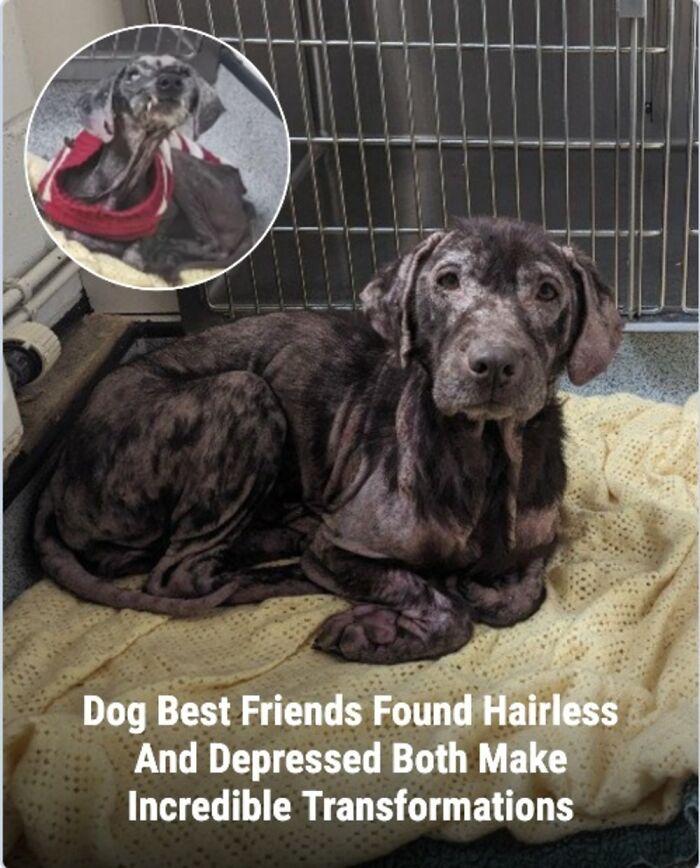
When two dog best friends were found wandering the streets, they were so neglected and frail that rescuers could barely recognize them as dogs. Poppy and William were almost entirely hairless, painfully thin, and emotionally shut down. Their story of rescue and recovery, shared by the RSPCA, is heartbreaking at first glance yet ultimately incredibly uplifting. It is a powerful example of how deeply animals can suffer from neglect, and how completely they can transform with patient care and love.
Members of the public first spotted Poppy and William on their own and knew immediately that something was very wrong. The pair were rushed to a local vet, where it became devastatingly clear that these dogs had endured a great deal. Both were missing most of their fur and looked exhausted. The initial sight of them made it hard for onlookers to believe they would ever truly recover. From there, they were transferred into the care of the RSPCA, where staff prepared for what they assumed would be a long and uncertain road back to health.
According to Hannah White from the RSPCA Kent Isle of Thanet Branch, thinking back to those early days still causes the team heartache. She explained that Poppy and William had clearly lived through significant trauma. They were withdrawn, depressed, and emotionally distant, almost as if they had given up. It was evident to those assessing them that both dogs had been used for breeding. Once they were no longer useful, they were likely abandoned and left to fend for themselves in a condition no animal should ever experience.
White described how their physical state reflected their emotional reality. The dogs were not only malnourished and hairless but also extremely hesitant around people. The bond between them, however, was unmistakable. Even in such poor shape, Poppy and William stayed close together, drawing comfort from each other. For rescuers, this close connection hinted at a long shared history, one where their companionship may have been their only source of stability.
Given the severity of their condition, RSPCA staff expected a lengthy, uncertain recovery. Intensive care, ongoing veterinary treatment, and a patient foster environment would be essential. Survival itself was not guaranteed in those first days. Yet something remarkable began to happen once Poppy and William were safe, warm, and consistently cared for. Over a span of just three months, these abandoned best friends moved from being hairless and depressed to making an incredible transformation that surprised even the people who saw them every day.
White later shared that today the pair are “full of beans and completely unrecognizable.” Their fur has grown back, their bodies have filled out, and their personalities have started to shine. What once looked like two broken, defeated animals has become two joyful, energetic dogs who finally have the chance to experience a normal, happy life. This shift did not occur overnight, but the relatively short timeline of three months speaks to the resilience many animals show once their basic needs are met and they are treated with kindness.
In their foster home, Poppy and William have been able to rediscover what it means to feel safe. They now run, play, and rest in comfort, and they no longer carry the same visible signs of suffering that marked their first days in rescue. Their foster environment offers not only physical healing but also the emotional security they were missing for so many years. The simple routines of regular meals, gentle interactions, and a stable space have helped them regain their confidence.
One of the most touching details is the way their bond functions in daily life. William has very poor sight, and Poppy has naturally taken on a guiding role for him. Staff have observed how Poppy acts as a kind of guide dog and companion, helping William navigate his surroundings. The pair is completely inseparable. They move together, rest together, and appear to reassure each other simply through their presence. I found this detail striking because it highlights not only their friendship but also the way animals can adapt to support one another in difficult circumstances.
The RSPCA team is clear that these two are bonded in a way that should not be disrupted. Because William relies on Poppy for both emotional and practical support, and because they have endured so much side by side, the organization hopes they will be adopted together into a single forever home. Their story is not just about individual recovery but about shared resilience. Their connection helped them survive neglect, and now it is central to their happiness.
I've just Googled them. They were found in 2023 and they did find their forever home.
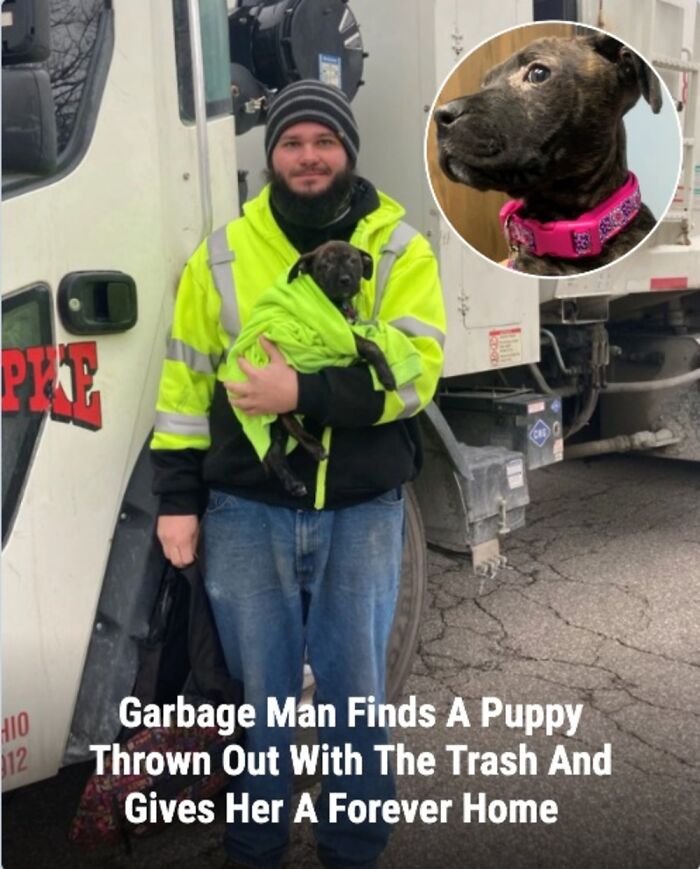
A waste truck driver in Ohio spotted a discarded backpack on his route and discovered a 10-week-old puppy inside, injured and dehydrated but still fighting to live. With his company stepping up to cover her medical care, he named her Tipper, stayed by her through leg amputation surgery, and officially welcomed her into his family as both a beloved pet and honorary team member.
This small dog had been left alone in the mud and rain, terrified and vulnerable, yet her journey from fear to the first flickers of trust reveals how powerful patient, compassionate rescue work can be. For anyone who cares about dog rescue stories and the healing of animal trauma, this account is both heartbreaking and quietly hopeful.
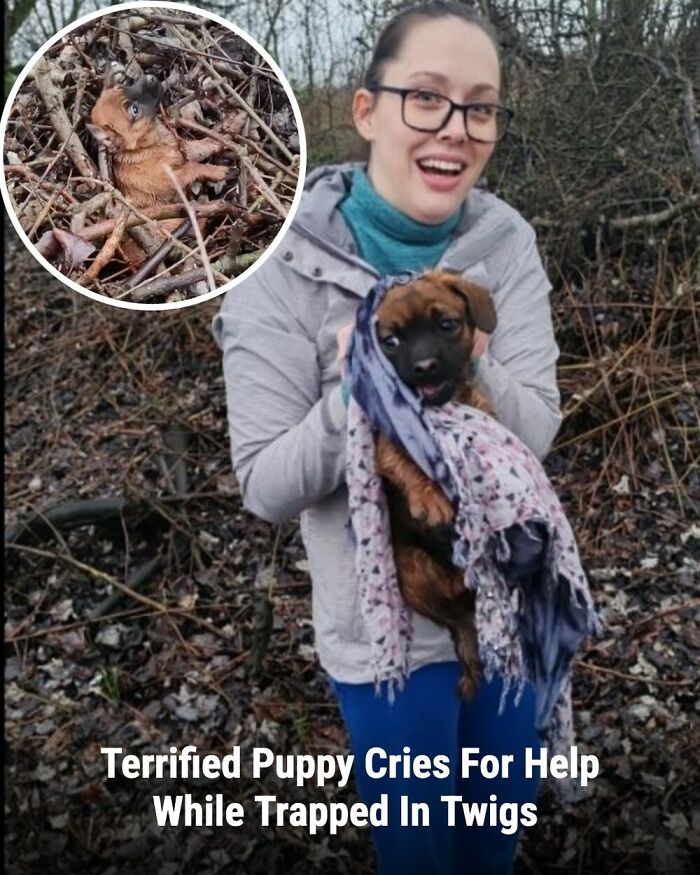
The events unfolded in a village in Borsod, Hungary, where animal rescuer Viktória Kelemen was called to help a puppy who had been abandoned without shelter. As founder of the Pamacs Dog Rescue Foundation, Kelemen is no stranger to hardship or cruelty, yet even she recognized that this case was especially painful. The puppy had been left exposed to the elements, with only mud and cold rain for company. The abandonment itself would have been traumatic, but it quickly became apparent that this little dog’s suffering went far beyond neglect.
According to Kelemen, the puppy showed all the signs of having been severely abused during her short life. The fear of people was immediate and overwhelming, as if every human presence promised new pain. When Kelemen and a colleague approached, hoping to offer help, the puppy did not respond with curiosity or even cautious interest. Instead, she bolted in terror, desperate to escape what she must have believed was yet another threat.
In that frantic attempt to flee, the puppy became tangled in a pile of twigs and sticks. It was there that the rescuers finally reached her. The scene, as described, is deeply affecting: a tiny body trapped among branches, utterly petrified, crying out while two gentle strangers tried to set her free. Far from understanding that help had arrived, the puppy reacted as if the worst was still to come. Her distress was so intense that, as Kelemen reported, the little dog screamed when touched and fought with all her strength, trying to bite and resist.
Once the rescuers managed to untangle her from the twigs and lift her to safety, the puppy began to calm, at least physically. In Kelemen’s arms, she was no longer trapped in the mud or at the mercy of the weather. Yet the fear in her eyes remained, a reminder that emotional healing rarely happens as quickly as physical rescue. The first steps of this animal rescue story did not end with a simple happy moment; they opened the door to a longer process of recovery and rebuilding trust.
In the short time since that first rescue, there have already been meaningful changes. Only a few days after being pulled from the mud and twigs, the puppy’s behavior began to shift. Where human touch once triggered panic and a desperate struggle, it gradually became something she could tolerate, and then even accept. As reported, the same puppy who once screamed when touched now finds herself able to cuddle at Kelemen’s side.
This transformation, though still in its early stages, speaks powerfully to the resilience of animals who have survived cruelty. The puppy has not forgotten what happened to her; her past is part of her story. Yet inside a stable, caring environment, the fear that kept her on constant alert has started to loosen its grip. The twigs that trapped her are now replaced by gentle arms, and the rain-soaked mud by a safe, dry place to rest.
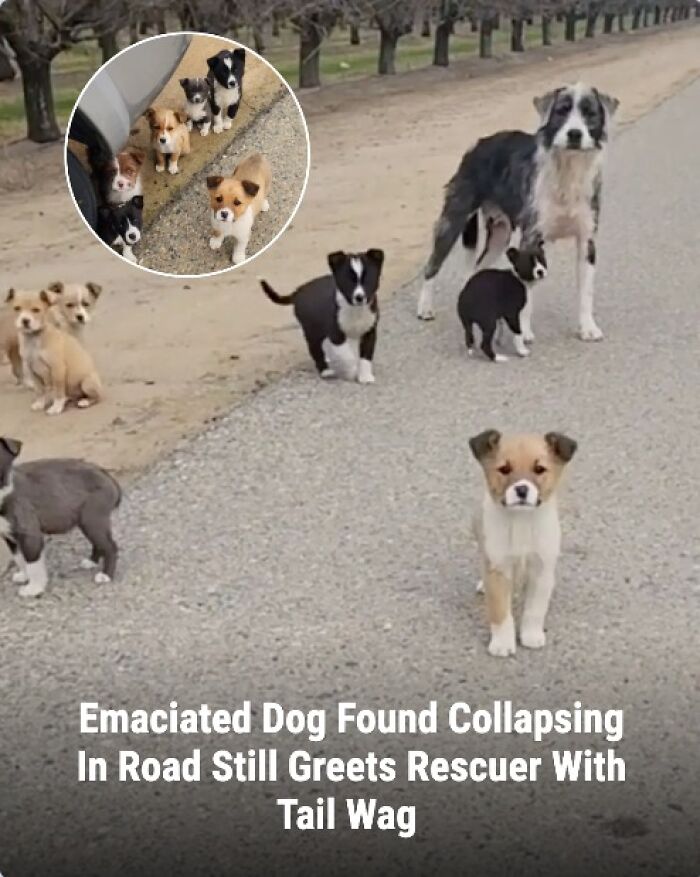
When a man driving through an orchard near Fresno, California, spotted a small family of dogs by the roadside, he had no idea just how dire their situation was. As he slowed down and approached, he discovered a mother dog standing guard over seven tiny puppies. The family had been fending for themselves for several days, and their cautious yet hopeful approach to his car was a silent plea for help. This abandoned dog family in Fresno would soon become the center of a remarkable rescue effort that speaks to both the challenges and triumphs of animal welfare work.
Unable to take the dogs himself, the man did what he could, providing food and water, and marking their location before reaching out to Helga Weiss, president of Paw Squad 559 and co-founder of California Spay and Neuter. Weiss, who receives over 100 rescue calls each day, agreed to intervene. That night, she was unable to sleep, haunted by thoughts of the vulnerable puppies and their mother trying desperately to protect them.
When Weiss arrived at the orchard the next morning, she met a ranch worker who had been feeding the dogs.
Thanks to his kindness, the little family had survived the harsh conditions. Tragically, he shared that one of the puppies had already been lost to a coyote. The mother dog, understandably shaken and wary, kept her distance. It took Weiss two and a half hours of patient coaxing, using sausages and gentle presence, before the dog finally trusted her enough to approach. The emotional weight of the moment was overwhelming—when the dog allowed herself to be picked up and placed in the car, she began to lick the tears from Weiss’s face.
I found this detail striking: the transformation of a fearful, protective mother into a grateful companion in just a matter of hours. It’s a reminder of how deeply animals can respond to kindness and care, even after experiencing trauma.
The journey for this rescued dog family was far from over. Weiss arranged for the mother, now named Mother Goose, and her puppies to be placed in foster care with Christie West, through Save-A-Mutt rescue. Initially, everything seemed stable, but West soon noticed troubling signs. A veterinary visit confirmed her fears: the puppies had contracted parvo, a highly contagious and often fatal virus, particularly dangerous for young dogs.
West immediately began round-the-clock care. Save-A-Mutt stepped in to fund the extensive treatment, ultimately spending over $11,000 in an effort to save the litter.
Thanks to their dedication and the availability of a new parvo treatment injection, all of the puppies pulled through. They are now thriving—healthy, happy, and full of life.
“The beautiful thing about it is they’re all alive,” West said. “They’re happy, they’re healthy. They’re just adorable.”
Mother Goose and her puppies, each named after fairy-tale characters, will soon be transported to Save-A-Mutt's in-person facility in Washington. There, they will be made available for adoption. For now, West is simply enjoying the ability to interact with them more freely. During their illness, strict parvo protocols meant she could only handle them while wearing protective gowns and gloves. With the danger passed, she looks forward to a weekend full of cuddles and affection.
“I’m going to be loving on [them] all weekend,” she said.
This story highlights the ongoing challenges of managing stray and abandoned animals. Weiss, whose organizations are deeply involved in animal rescue efforts, emphasizes that spaying and neutering is the most effective long-term solution. With over 100 rescue calls a day, the demand is overwhelming. Preventative measures like sterilization can help reduce the number of animals left to fend for themselves in dangerous conditions.
The rescue of Mother Goose and her puppies is a testament to what can happen when compassionate individuals and organizations come together. From the man who first stopped to help, to the ranch worker who fed them, to the tireless efforts of Helga Weiss, Christie West, and Save-A-Mutt, each played a crucial role. Their collective actions turned what could have been a tragic story into one of survival and hope.
For those moved by this story, there are ways to support the organizations involved. Donations to Paw Squad 559 and Save-A-Mutt help provide care for animals in need and fund treatments like the one that saved these puppies. As this case shows, even small acts of kindness—like offering food or making a phone call—can lead to life-saving outcomes.
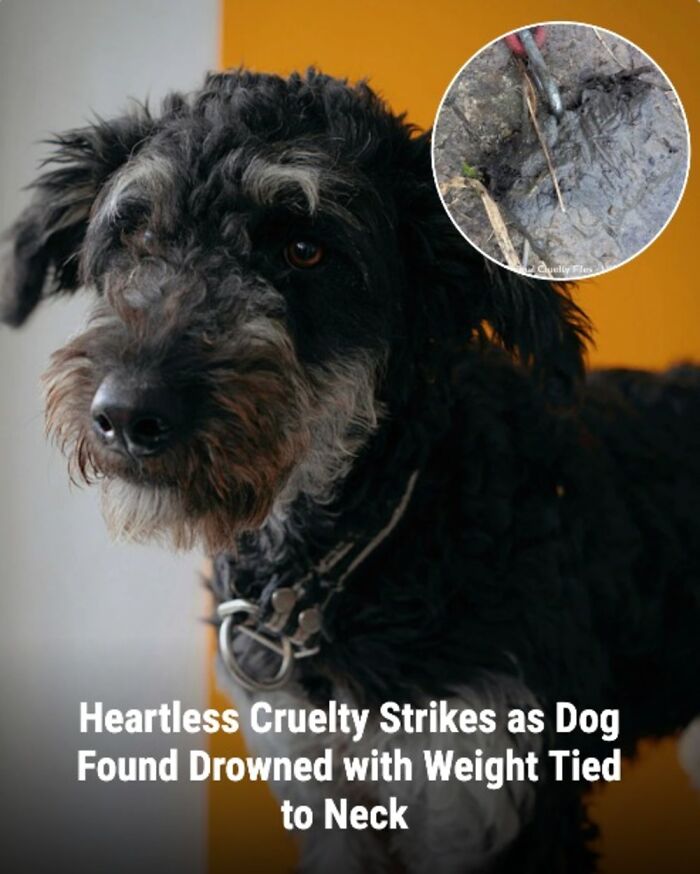
The community of Bath, Somerset, was stunned when the lifeless body of Buddy, a black and brown Jagdterrier, was discovered in the River Avon. The tragic discovery revealed that Buddy had been cruelly tied to a weight by a rope, causing him to drown.
His death, described by the RSPCA as a “heartless and gruesome” act of cruelty, has sparked an urgent investigation.
The grim details surrounding Buddy’s death were first reported by a member of the public, who found his body in the Weston area of Bath. The RSPCA, which immediately launched an investigation, confirmed that the animal had been dead for 24-48 hours before being found. The rope, still tightly knotted around Buddy's neck, was attached to a heavy weight that ensured his tragic end.
As RSPCA Inspector Dan Hatfield told the BBC, “Buddy was intentionally unalived in a heartless and gruesome way.”
The RSPCA immediately began its investigation to uncover the identity of those responsible for this senseless act. Inspector Hatfield confirmed the organization’s commitment to finding justice for Buddy.
“We are keen to find out who was responsible and bring them to justice,” Hatfield told Somerset Live. “Since his body was discovered, we've been investigating what happened and are now asking the public for their help.”
As part of the investigation, the RSPCA is asking for the public’s assistance. They have specifically requested any information regarding Buddy’s final days. The charity believes the dog had been seen by locals in Bath before his death and hopes that someone may have noticed something suspicious.
“We’re hoping to speak to anyone who saw him in the final days of his life," Hatfield added, urging people to come forward with any relevant information.
The loss of Buddy has resonated deeply with the local community in Bath, where he was known to many. As the investigation continues, the RSPCA is calling on anyone who might have seen Buddy after March 1, 2025, to contact them. The charity has emphasized that all information could be shared anonymously, and that they would protect the identity of those who choose to speak out.
This case is part of a broader effort by the RSPCA to combat animal cruelty in the UK. The charity has long advocated for the prevention of such tragic events, which leave both emotional and physical scars on animals and communities alike.
“Buddy’s death was a senseless and tragic act of cruelty, and we are determined to hold those responsible accountable,” Hatfield told the Daily Mail.
The investigation into Buddy’s death is ongoing, and the RSPCA is continuing to gather evidence. They are urging anyone with information about Buddy’s final movements to come forward. The case is a reminder of the darker side of human behavior and the cruelty that some animals must endure.
As Hatfield noted, “Buddy’s death was a senseless and tragic act of cruelty, and we are determined to hold those responsible accountable.”
This case serves as a stark reminder of the importance of reporting animal cruelty and supporting organizations like the RSPCA that work tirelessly to protect vulnerable animals.
I grew up less than 100 yards from a canal and, unfortunately, this disgusting behaviour was all too common. In 2025 with the large number of organisations to turn to, this is even more unforgivable. I hope they're able to identify and prosecute those responsible, but, I won't hold my breath waiting for them to receive any kind of meaningful sentence.
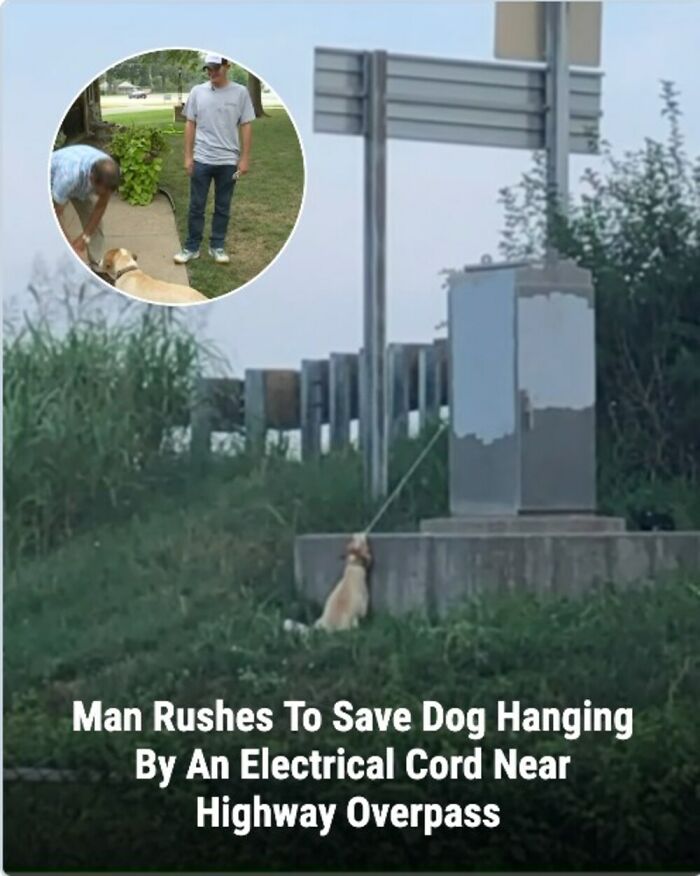
David Fredman was heading to work just like any other day in Independence, MO when he spotted a dog near the I-70 that appeared to be struggling.
“I saw what looked like a dog that was being hung over the side of some sort of power box. The cord was definitely strangling him,” Fredman told Fox4 KC. “His feet were touching the ground, but they were barely touching the ground. He was trying to whip his head left and right but could barely move it.”
Fredman called 911 and then grabbed a knife to save the struggling dog: “As soon as I cut him down, he couldn’t breathe. He was trying to breathe. I tried to get him to walk. He couldn’t walk," he said.
The KC Pet Project discovered the dog was microchipped and that his owner, Dee Vaughn, had reported his dog missing two hours prior to the event: “Two hours later there was a phone call came in asking if I was missing my dog," Dee Vaughn said.
It is unclear whether this event was an accident or an act of foul play. But Vaughn said that there is no way his senior dog could have walked a mile from his house where he was found hanging by the cord.
We are just thankful to see that this dog was saved in the nick of time!
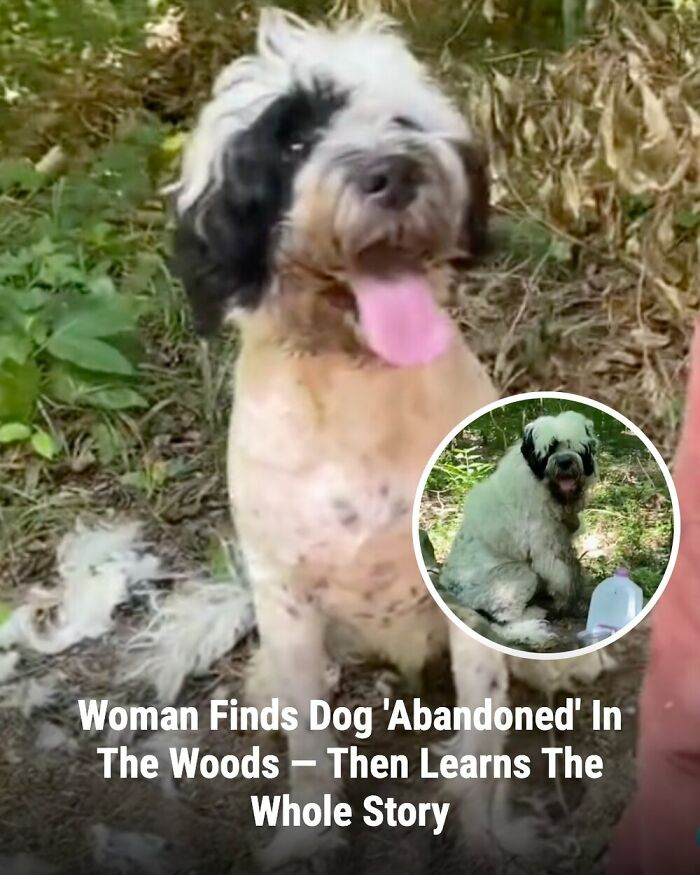
On a sweltering day in Atlanta, a simple misunderstanding on a walking trail turned into a powerful reminder about compassion, judgment, and the bond between people and their pets. What began as a report of a dog “abandoned” in the woods unfolded into a story of loyalty and community support, showing how quickly life can change for anyone and how vital it is to understand the whole story before drawing conclusions. For anyone who cares about homeless pet owners or has ever worried about an animal’s safety, this is a story worth sitting with for a moment.
The situation started with a call to Tiffany, a dog rescuer in Atlanta, who was told that a dog had been left alone on a local walking trail. The description sounded clear enough: a dog, seemingly on his own, in a wooded area, with no human in sight. Many animal lovers can probably relate to the immediate concern that arises in a moment like that. An “abandoned” dog calls to mind neglect, fear, and heartbreak. Acting on that concern, Tiffany headed straight to the trail to check on the pup and intervene if necessary.
As she got closer to the dog, prepared to step in and help, someone stopped her. The dog was not abandoned at all, they explained. He actually belonged to an unhoused person who spent time in the area. That brief conversation instantly reframed everything. Instead of an owner who had walked away and left their dog behind, there was a person living through a difficult chapter of life while doing their best to care for a beloved companion. What looked like neglect from a distance turned out to be a complicated reality that deserved empathy rather than criticism.
Rather than leaving the situation there, Tiffany chose to support both the dog and his person. She headed home and wrote a note for the dog’s owner, letting him know that someone had seen his dog and wanted to help. She also gathered a small supply bag, including food for both the pup and his dad. When she returned to the trail with the supplies and the note, she found the dog, named Simon, together with his owner.
In conversation, Tiffany learned that Simon and his dad had only recently become unhoused. They were in a transitional phase, trying to navigate a new and extremely challenging situation. Despite outward appearances, Simon was not unwanted or cast aside. He was deeply loved. The contrast between the initial impression of an abandoned dog and the reality of a cherished companion living on the margins is one of the most striking parts of this story. It highlights how quickly people can misread what they see, especially when someone is experiencing homelessness with a pet.
The weather that day added another layer of urgency. Atlanta was extremely hot, and Simon had a thick coat that made it harder to stay comfortable. Wanting to provide immediate relief, Tiffany helped by shaving Simon down so he could stay cooler in the intense heat. This simple act of care addressed a very practical problem and showed respect for both Simon’s comfort and his dad’s efforts. It was not a rescue in the traditional sense, where a dog is removed from a dangerous home. It was support offered to keep a dog and his owner safe and well together.
Wanting to do more, Tiffany booked Simon and his dad into a pet friendly hotel so they could sleep indoors and regroup. She then shared their story online, explaining that the goal was not to judge but to help. On TikTok, she urged viewers to withhold harsh comments and assumptions. “Please save the judgemental comments, this could be you and your dog,” she wrote. “You truly never know.” That message captures one of the most important lessons in this account. Circumstances can change quickly for anyone, and the presence of a dog in a difficult situation does not automatically signify irresponsibility or neglect.
The response to Tiffany’s post was swift and generous. Overnight, she was able to raise enough money to bring Simon to the vet. There, he was checked over and given pain medication for a sore paw that had been bothering him. Aside from that issue, he appeared to be healthy, which is a testament to the care his dad had provided despite the instability in their lives. At the veterinary clinic, Simon enjoyed meeting new people and made plenty of friends, demonstrating the easy charm many dogs bring to even the most serious places.
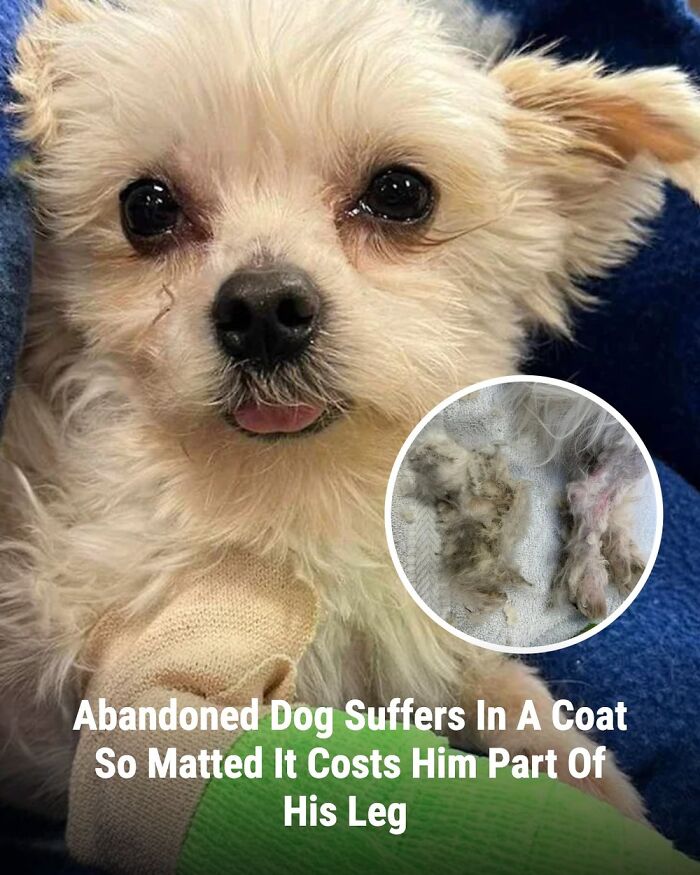
The story of a severely neglected dog found near a Home Depot in East Haven, Connecticut is heartbreaking, yet it also highlights the power of community compassion. This small white pup, now known as Paddy, was discovered with such severe matting that his injuries required an amputation. Cases of animal neglect, abandoned dogs, and severe matting in pets are difficult to witness, but they also remind people how much responsibility and care companion animals require.
According to the East Haven Animal Shelter, two girls spotted Paddy alone and struggling before they brought him to safety. When he arrived at the shelter on March 17, staff quickly realized that this was not a case of mild neglect. Paddy’s fur was matted to a shocking degree, especially on his right front leg. The shelter shared that the matting had embedded itself all the way through skin and muscle, reaching down to the bone. Photos documented the reality of his condition, with his leg visibly bleeding and ropes of matted, dirty fur twisted tightly around his paw.
Veterinary professionals emphasize that matting of this severity is the result of long-term neglect rather than a short lapse in grooming. The East Haven Animal Shelter echoed this, noting that such a severe case does not develop overnight. It suggests that Paddy may have been in pain for a significant period of time without anyone stepping in to help. The level of infection and tissue damage found when he was evaluated by veterinarians supported that concern.
Paddy was quickly transferred from the shelter to Branford Vet Hospital for urgent care. Once there, veterinarians assessed the full extent of his injuries and infection. They determined that the damage to his foot was too serious to repair. The shelter reported that his foot would need to be amputated because the infection, closely linked to the deep matting on his leg, had compromised his ability to recover with the limb intact.
In the photos shared publicly, the contrast is stark. One image shows Paddy’s leg tightly encased in filthy mats that had essentially acted like a tourniquet and a trap for moisture and bacteria. In other images, piles of matted fur lie on a surface after being carefully shaved away. Where endless tangles once pulled at his skin, he is now clipped and cleaned, beginning the process of healing under professional care.
While Paddy remains under observation at Branford Vet Hospital, the priority is to stabilize him and control the infection before surgery. The veterinary team is monitoring his condition to ensure he is strong enough for the amputation procedure. This period is critical for any animal in such a fragile state. Proper pain management, antibiotics, wound care, and gentle handling are essential steps in his recovery.
Life as a stray dog can be incredibly difficult. Stray dogs are often forced to scavenge for food and water, which can be a daily struggle. They may be constantly on the move, searching for shelter and safety from the elements, other animals, and even humans.
Stray dogs are also at a greater risk of disease, injury, and abuse, as they lack the protection and care that comes with a stable home environment. While some strays manage to survive on the streets, for many stray dogs, life is a constant struggle.
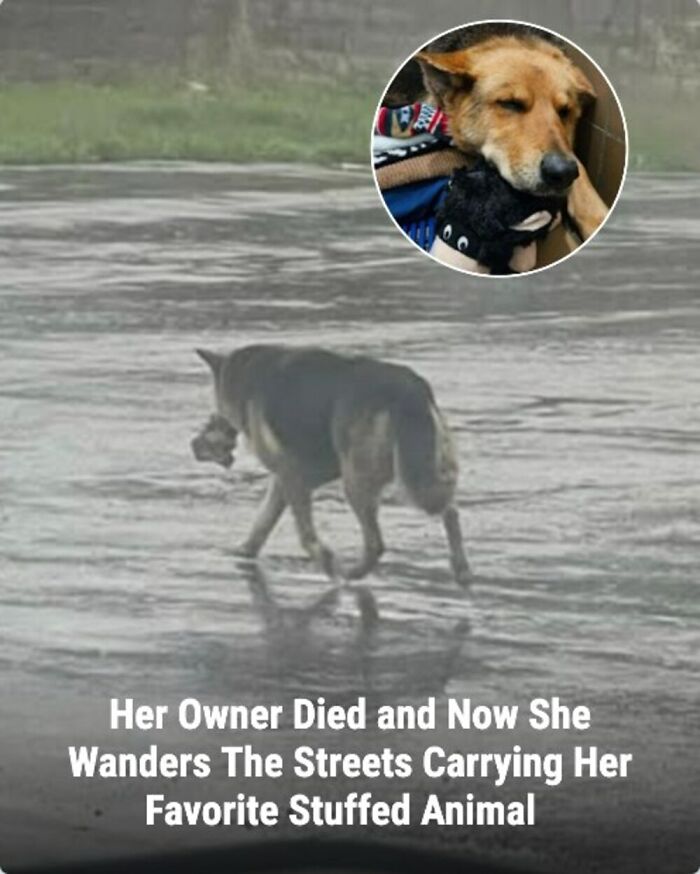
One poor pup in Detroit, Michigan was faced with not only living life as a stray dog, but also grieving her owner who'd passed away.
South Lyon Murphy Lost Animal Recovery shared a photo of the dog, Nikki, on Facebook, explaining that her owner had passed away and she was dumped on the streets with nothing but her favorite stuffed animal.
The animal recovery group added in the comments that someone in the neighborhood had been feeding the dog after she was dumped but no one would take her in.
Thankfully, help was called and Nikki was trapped and transferred to the care of Almost Home Animal Rescue.
The South Lyon Murphy Lost Animal Recovery shared an update saying that Nikki tested positive for heartworms and needed extensive medical care and testing. While the rescue is getting her health needs taken care of, it won't be cheap or easy.
Beyond her physical health issues, Nikki was also suffering emotionally from her loss and time on the streets. Thankfully, she still has her stuffy to keep her comfort.
Something very wrong is happening to the world. Innocent creatures are suffering the most.
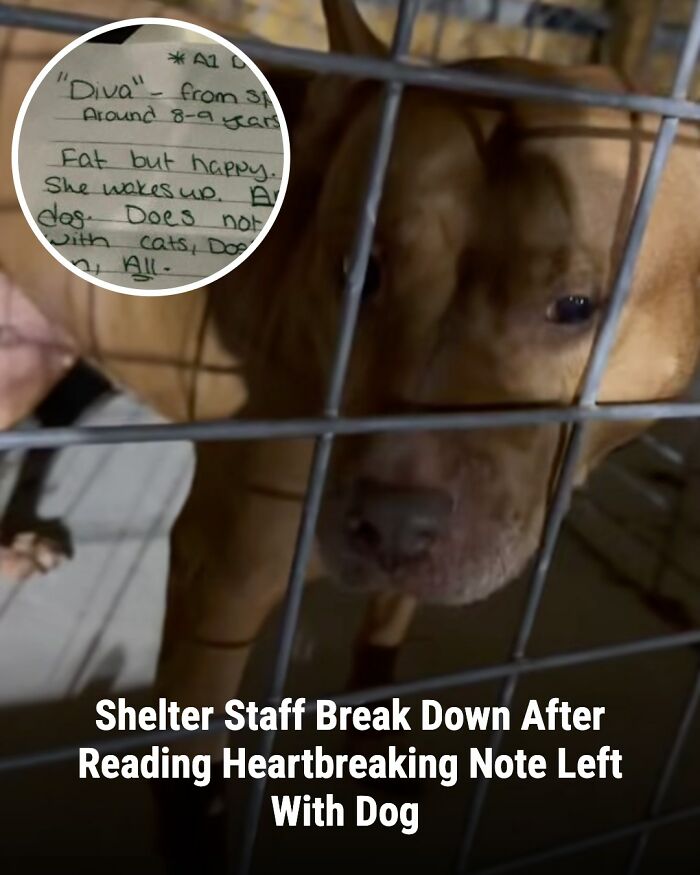
Some stories from animal shelters are quietly devastating, and the recent account of a senior dog named Diva left outside a Florida shelter with a handwritten note is one of them. The Polk County Bully Project shared Diva’s story on social media, and it quickly resonated with animal lovers across the internet. At its heart, this is a story about a beloved pet, a heartbreaking decision, and the hope that a gentle, older dog can find a new home where she will be cherished again. For anyone searching for a senior dog to adopt, Diva’s journey highlights both the vulnerability and the resilience of animals caught in difficult human circumstances.
Staff at the Polk County Bully Project arrived at work one morning to find Diva placed carefully in what they describe as their “safe space,” a spot where animals can be left securely. Alongside her was a handwritten letter from her owner. Shelter workers later shared that the note “broke” them, not because it told a story of neglect or cruelty, but because it expressed deep love and an impossible choice. The picture of the letter, posted on Facebook, drew thousands of reactions from people moved by the situation and concerned for Diva’s future.
According to the shelter’s post, Diva is around 8 to 9 years old and well into her senior years, a time when many dogs are often overlooked by potential adopters in favor of puppies or younger pets. Yet her history is full of affection and positive experiences. She was once featured as the SPCA’s Pet of the Month, which already suggests she made quite an impression on those who met her. Staff at the Polk County Bully Project describe Diva as an “absolutely AMAZING family dog” who knows her tricks and is comfortable living alongside cats, other dogs, and children. They present a clear picture of a calm, companionable animal used to being part of a household.
The note left by Diva’s owner offers even more detail, painting a portrait of a dog who is gentle, affectionate, and well-loved. Her person wrote that Diva has “zero aggression” and “zero barking,” emphasizing how easygoing and peaceful she is at home. She was described as an “all the love couch potato” content to relax quietly, joining her humans on the furniture only when invited. For those familiar with senior pet adoption, these qualities are often exactly what potential adopters hope to find. A dog like Diva is past the chaotic energy of puppyhood, already trained, and ready to simply share space and affection.
The note also contained practical details that showed how attentive her owner had been to her needs. Diva has a grain allergy, so she has been kept on a grain free diet. The letter explains that while she has some mobility issues, particularly that her hips hurt when she first wakes up, she remains a happy, gentle companion. These age related limitations are common in older dogs, and the fact that the owner highlighted them suggests a desire to be transparent and to help the shelter place Diva with someone who understands the realities of senior dog care. It also underlines that Diva’s previous home took her health seriously and worked to manage her discomfort.
The most painful part of the note appears at the end, where the owner explains why Diva had to be surrendered. The final lines read, in essence, that “Dad is homeless and unable to provide stable accommodations that she deserves.” That simple statement shifts the entire context of the story. Diva was not surrendered because of behavioral problems or lack of attachment. Instead, her person felt forced to choose between keeping her in unstable, unpredictable conditions or letting her go somewhere that could give her a secure environment. The shelter emphasized that Diva was not abandoned out of neglect but out of love, noting in their post that this decision happened “not because she wasn’t loved… but because she clearly was.”
For shelter workers, scenarios like this can be uniquely heartbreaking. They see the evidence of a strong bond in every line of the letter, and yet they also see the dog now facing an uncertain future in a kennel. The Polk County Bully Project framed the moment as the hardest day of Diva’s life, and they urged people to help ensure that it leads to something better for her. In a world where surrendered animals are sometimes stigmatized, the organization pushed back firmly against any suggestion of callousness and instead highlighted the compassion behind the owner’s decision.
There is at least one encouraging development in Diva’s story. In an update shared by the Polk County Bully Project, staff explained that Diva has since been taken in by a neighboring SPCA facility just a street away. They wrote that their “friends one street over at SPCA have taken sweet Diva back,” which suggests that Diva returned to an organization that already knew her from her earlier time as Pet of the Month. This move could increase her chances of being noticed and adopted, especially by people in the community who remember her or who are specifically looking for a calm, older companion.
When a 9-year-old mini poodle named Chiqui arrived at the San Luis Obispo County Animal Shelter, staff members were immediately heartbroken by her story. After losing the person she loved most, Chiqui was surrendered by extended family members who sadly could not care for her any longer.
Even through her grief, shelter workers could see just how special the little dog was. They were determined to help her find happiness again.
Chiqui was soon placed in a foster home through Woods Humane Society, where she finally had a quiet place to rest and heal. Not long after, she underwent surgery to remove a mass. Thankfully, the procedure went well, and tests later confirmed the mass was benign.
As the days passed, Chiqui slowly began to come out of her shell. In her second foster home, she found comfort going on walks, relaxing in the backyard, and spending time with her foster mom, Arianne, and her dog, Gator.
“Chiqui was very anxious and had a hard time being by herself,” Arianne shared with The Dodo. “She was happiest going on walks with me and my dog, Gator, and spending time with me in my backyard.”
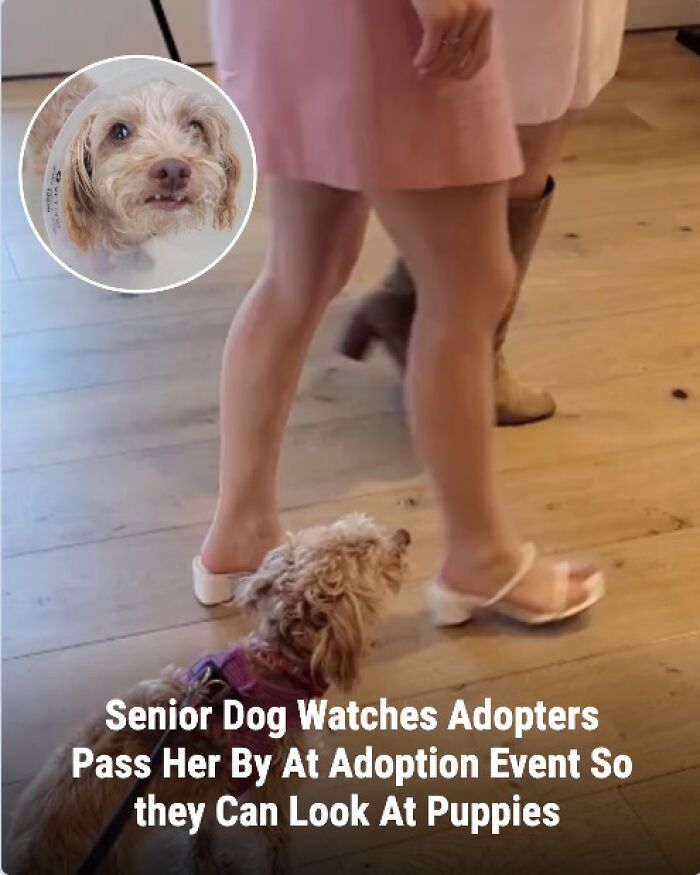
When Chiqui was finally ready for adoption, Arianne brought her to a local adoption event, hopeful someone would see how wonderful she truly was. Chiqui sat patiently by her foster mom’s feet, watching families walk by, eager to meet someone new.
But while people stopped to admire the puppies, no one paid attention to Chiqui.
“Everyone is more interested in the puppies …” Arianne wrote in an Instagram Reel.
It was heartbreaking for everyone who knew her. Chiqui loved people, got along beautifully with dogs and cats, was house-trained, and still had plenty of energy for long walks. Yet by the end of the event, not a single application had been submitted for her.
Still, Arianne refused to give up.
She later shared Chiqui’s story online, hoping the right person might see it. And that’s exactly what happened.
A couple named Tish and Joe came across Chiqui’s video and instantly fell in love.
“They saw her video and fell in love,” Arianne wrote.
The couple quickly applied to adopt her, and before long, Chiqui’s dream finally came true. On adoption day, the sweet senior pup climbed right into Tish and Joe’s laps, showering them with kisses before heading off to her forever home.
“Chiqui will be spoiled and living her best life with this loving family,” Arianne shared. “They are the sweetest, and Chiqui is sooo happy.”
Now, instead of grieving and feeling alone, Chiqui spends her days going on neighborhood walks and curling up beside the people who adore her most.
After everything she’s been through, this sweet little dog finally has the love and security she deserves.
“Chiqui’s dream came true.”
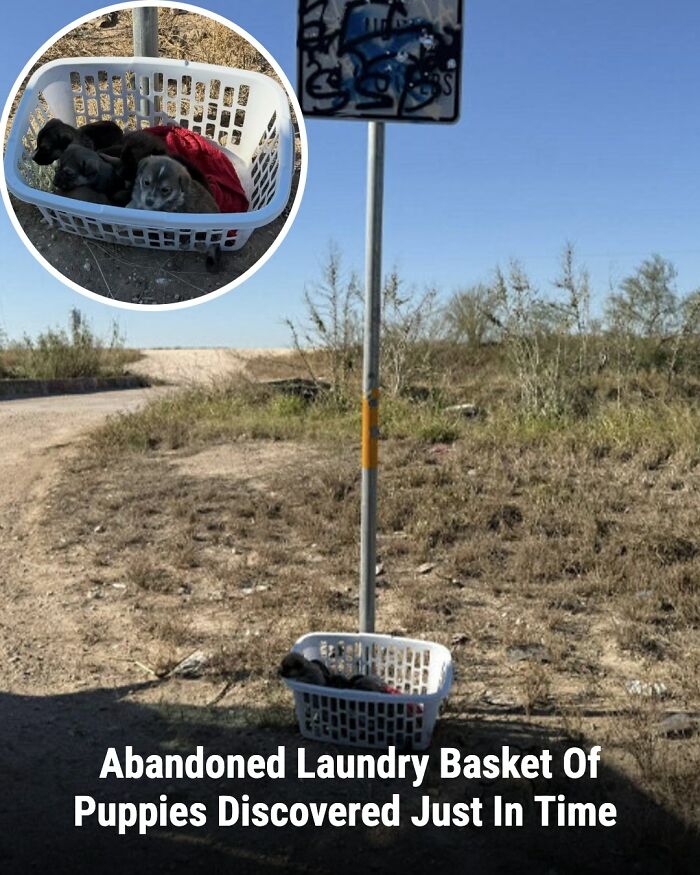
Along a quiet, forgotten dirt road in Texas, a simple bike ride turned into an emotional rescue that says a lot about both cruelty and compassion. A fire department chief from Donna, Texas, and his wife were cycling on an abandoned roadway when they spotted something moving ahead of them. At first it looked like just one stray puppy, alone and vulnerable on the side of the road. It did not take long for them to realize this was something much worse: a clear case of puppy abandonment that could easily have ended in tragedy.
That first puppy prompted the chief to call for help from the Donna Fire Department. Lieutenant Ruiz responded and arrived at the scene to pick up the frightened little dog. As he looked around, he noticed something that changed the entire situation, a laundry basket sitting near the base of an old street sign. Inside were four more tiny, furry bodies, huddled together and trying to survive the cold.
The puppies were clearly not just lost. They had been deliberately left there, far from homes, businesses, or anyone who might easily pass by. In that lonely location, finding a single puppy on the road had been unlikely enough. Discovering a hidden basket full of frightened babies felt almost miraculous. As Ruiz later shared, the sight of them left a deep impression. He described them as “little babies” and compared them to children, left alone without anyone to care for them. Their whimpers and shivers made it obvious they were hungry and cold.
Once the puppies were found, the firefighters did what first responders so often do. They shifted instantly from discovery to action. The pups were gently gathered up, loaded into the fire truck, and taken back to the station where it was warm and safe. Ruiz explained that the crew pet the puppies and gave them cuddles as they settled in. In the relative warmth of the station, with kind hands holding them instead of the cold ground beneath them, the puppies finally began to relax. Some even started drifting off to sleep, their tiny bodies no longer tensing against the chill.
At the firehouse, the immediate danger was over, but the larger question remained. What would happen next for these five puppies who had already endured so much in their short lives? The firefighters reached out to Dallas Dog Rescue Rehab Reform, also known as Dallas DogRRR, a group dedicated to rescuing and rehabilitating dogs in desperate situations. To this organization, stories of dogs dumped on roadsides or abandoned in fields are all too familiar. They see, again and again, the darker side of how some people treat animals when they become inconvenient or unwanted.
In response to this case, Dallas DogRRR called the situation exactly what it was. They described it as dumping and abandonment and pointed out that this kind of neglect is one reason a rescue group like theirs rarely gets a break. Their comment reflects the reality that while each story of saved puppies on the side of the road can feel like a small miracle, it is also part of a larger and ongoing issue of irresponsible pet ownership.
Still, this story carries more than sadness. Once the puppies were in the hands of Dallas DogRRR volunteers, their world changed. The organization shared an update showing a far cozier picture than the one that began along that dirt road. Rather than shivering in a basket, the puppies were cuddled together in warmth and safety, exactly as young dogs should be. They were settling in, free to sleep, play, and relax instead of fighting to survive.
When a dog named Sydney was found discarded in a dumpster, her story quickly became a heartbreaking example of cruelty, and, ultimately, of compassion. After reportedly urinating indoors, Sydney’s owner decided he was done with her and threw her away like garbage. The trauma of such abandonment is difficult to imagine, but what followed is a testament to resilience, kindness, and second chances. For anyone searching for stories about dog rescues or animal shelters that make a difference, Sydney’s journey is both sobering and uplifting.
Sydney was discovered and brought to a local shelter. Unfortunately, her challenges didn’t end there. She was sick with an upper respiratory infection and required isolation to recover, something the shelter was not equipped to provide due to limited space. Her life was once again at risk, this time not from cruelty, but from circumstance. It’s a stark reminder of the pressures many animal shelters face, especially when dealing with medical cases that require special care.
That’s when Dochas N Gra Animal Rescue stepped in. The organization, whose name means “Hope and Love” in Irish, learned of Sydney’s situation and acted swiftly. Victoria McGonigal, the rescue’s founder, explained that she often collaborates with the shelter on medical cases. Upon seeing Sydney’s story, she reached out immediately to bring the pup into their care. “We saw the post and contacted [the shelter],” McGonigal told The Dodo. This quick response likely saved Sydney’s life.
Once safe at Dochas N Gra Animal Rescue, Sydney began a new chapter. The facility is not just a rescue but also a sanctuary, providing space for animals to heal and thrive. Sydney quickly adapted to her new environment, meeting not only other dogs but also cows, horses, and goats. For a dog who had been discarded and nearly euthanized, this must have felt like an entirely different world. The joy she found in simply exploring her surroundings and bonding with other animals illustrates the transformative power of a supportive environment.
The human beings who treat sentient creatures like this are the true trash...
It was supposed to be just another normal day for Tambor, the beloved hospital dog at Clínica Medellín. But the moment he walked through the doors last week and was met with a standing ovation from staff, it became clear that this day would be unlike any other.
For seven years, Tambor brought comfort, calm, and joy to patients and healthcare workers alike. With his floppy basset hound ears and gentle presence, he became a familiar face throughout the hospital, visiting patients before procedures and quietly supporting exhausted staff during difficult days.
So when it was finally time for Tambor to retire, the hospital knew he deserved a farewell as special as the impact he had made.
Employees lined the hallways, cheering as Tambor made one last walk through the corridors he’d spent years brightening. His tail wagged nonstop as he passed the countless coworkers and friends who had come to celebrate him.
The tribute continued in a conference room, where emotional staff members shared heartfelt words about what Tambor meant to them.
“Today, we say goodbye to Tambor on his retirement and thank him for everything he gave to every corner of this hospital,” one employee said in an Instagram Reel. “He didn’t just offer companionship. He brought peace, comfort, and happiness to the people who needed it most.”
As the speech continued, tears filled the speaker’s eyes while Tambor happily soaked up the attention nearby.
“You were never just a surgery dog,” another staff member said. “You were a silent companion and a bridge through so many emotions. Today you leave this clinic, but you will always remain in our hearts.”
The celebration ended with Tambor’s favorite treats, a commemorative certificate, and plenty of goodbye kisses before he headed home with his loving family.
While the staff at Clínica Medellín already miss seeing Tambor around the hospital, they’re deeply grateful for the years they shared with him. Though more emotional support dogs may one day follow in his footsteps, Tambor’s paw prints will forever remain part of the hospital’s story.
“Today, one chapter closes,” a representative from Fundación Instintos said. “But his paw print will stay with us forever.”
A quiet kennel in Fresno, California has become the center of a story that is breaking hearts far beyond the walls of a local shelter. In a TikTok video that has steadily gained attention, a young dog named Harley sits silently, watching the shelter doors as if waiting for his family to walk back in. The scene is simple yet powerful, and it has sparked a wider conversation about adopted dogs being returned to shelters and what that experience might feel like from the animal’s perspective. As viewers learn more about Harley’s journey from puppy adoption to heartbreaking return, many are reflecting on what a true “forever home” really means.
The video was shared on TikTok by Jackie Gonzalez, a volunteer at Valley Animal Center in Fresno. Posted under the username @jjack.iie, it shows Harley seated in his kennel, still and subdued, his eyes following the movements outside. In the clip, he is not barking or bouncing with excitement. Instead, he appears confused and withdrawn, as if trying to make sense of why he is back in a place he thought he had left behind. Gonzalez uses on-screen text to recreate the conversation that happened when Harley was surrendered, presenting a familiar scenario that many shelters encounter: an owner saying they “no longer have time,” staff gently explaining that some dogs wait months or years for another chance, and the owner choosing to leave the dog anyway.
According to Gonzalez, Harley’s story began very differently. He was adopted as a very young puppy and spent a full year in the same home. For a dog, that period is incredibly formative. Over that time, Harley built his sense of security and belonging around that household. The routines of everyday life, the sound of familiar footsteps, his own bed and favorite spots all became the center of his world. When a dog is adopted as a puppy, that home is often the only reality they know. To have it disappear so suddenly is not something they can reason through. I found this detail striking because it underscores how completely pets depend on the stability humans provide.
Rather than adjusting quickly or seeking out play in the noisy environment, Harley has started to shut down. Inside his space, he spends much of his time quiet and still. Each time someone walks past, he lifts his head and watches closely, seeming to hold onto the hope that he might recognize a familiar face. Shelter staff interpret this as a sign that he is waiting for his family to return, still expecting that the people he trusted might appear at the door. This image of a loyal dog scanning each passerby has resonated deeply with viewers, who see in Harley’s eyes the confusion of being left behind.
Despite his emotional turmoil, Harley has not lost his gentle nature. Gonzalez describes him as a very sweet dog who finds comfort in the company of other dogs. He appears to get along well with them, which may help him cope with the stress of being in a kennel again. Around people, Harley leans into affection. Volunteers note that when someone takes the time to sit with him, he presses in close, as if afraid that connection might suddenly end. According to the shelter volunteer, Harley is not difficult and not “broken.” He is a good dog whose world has been upended, and his behavior reflects grief and confusion, not misbehavior.
Gonzalez has framed Harley’s situation as a call for a true second chance, one that goes beyond a simple adoption and toward a lasting commitment. For many dogs, the concept of a “forever home” is not sentimental language but a literal description of the only stable life they know. When viewers see a returned shelter dog like Harley looking so lost, it becomes easier to understand why careful, long term planning is vital before bringing an animal home. The story suggests that adopting a dog means becoming their entire world, and that choosing to surrender them later can have a profound emotional impact on the animal.
In practical terms, Harley is ready to begin again with someone who is prepared for that responsibility. Valley Animal Center reports that he is neutered, microchipped, and up to date on vaccinations. Staff say he is ready to go home the same day he meets a potential adopter, which means that for the right person or family, his new chapter could begin very quickly. The shelter’s willingness to streamline the process highlights how eager they are to get him back into a stable environment where he can decompress and rebuild his sense of security.
On TikTok, the video of Harley has gathered thousands of views and hundreds of likes. While those numbers may seem modest compared with viral sensations, the impact has been meaningful. Users have responded in the comments with empathy and reflection, often relating Harley’s story to their own experiences with companion animals. One commenter, Naomi Rebecca, expressed that when dogs look at her, it feels as though they “see” her, and that sense of connection makes the idea of abandoning a dog unthinkable. Another viewer, Justine, acknowledged the sadness of Harley’s situation but also appreciated that his previous owners chose to return him to a shelter rather than leave him on the streets.
Some rescue stories feel like they were written for a movie, and the determined dog who escaped a shelter and went looking for a home on his own is one of them. This heartwarming rescue features a scruffy white dog, a week of survival on the streets, and a rescuer who refused to give up. It captures exactly why “dog rescue,” “shelter dog transformation,” and “forever home” are such powerful phrases for animal lovers.
The story begins with a social media post about a shaggy white dog seen wandering a Los Angeles County neighborhood. He was not a stray in the usual sense. According to rescuer Suzette Hall, founder of Logan’s Legacy 29, the dog had escaped from a nearby shelter and had been missing for seven days. In that time, he had been alone in an unfamiliar environment, hiding wherever he could and simply trying to survive.
Hall could not ignore the thought of this scared dog navigating busy streets and backyards without anyone to protect him. So when a Good Samaritan shared an online update that the dog had been spotted miles away from the shelter, she decided to go out and find him herself. Instead of assuming someone else would step in, she got in her car and drove straight to the neighborhood where he had last been seen.
Once she arrived, Hall began an exhaustive search. She drove slowly through every street, scanning under cars, along sidewalks, and near any spot that might offer a frightened dog some cover. For a while, it seemed like her efforts might not pay off. There was no sign of a fluffy white dog, no movement that hinted he might be watching from a distance.
from under a car. It was a brief, fragile moment. The dog did not rush toward her. He simply looked out from his hiding place, wary and exhausted, as if he was not sure whom he could trust. From the earlier photo, Hall recognized him immediately. It was the same shaggy white dog that had been missing for a week.
Seeing him up close revealed how much that week had taken out of him. Hall described him as dirty, hungry, and clearly terrified. His fur, already overgrown before he escaped, was grimy from days spent under cars and in whatever cover he could find. His body language told the rest of the story. This was a dog who had not only been alone but had been on constant alert, trying to stay alive.
Hall knew she could not just walk toward him and hope he would come willingly. A scared dog, especially one who has been fending for himself, often needs a gentler, more careful approach. She set up a humane dog trap nearby, placing enticing food inside and then stepping back to give him space. It was a patient, compassionate strategy that recognized his fear and his need to decide for himself that it was safe.
Fortunately, hunger and exhaustion spoke louder than fear. According to Hall’s account, he went into the trap almost immediately. The food, shelter, and relative quiet of the crate must have felt like a small relief after days of tension. In that moment, the long, lonely journey that had started when he ran from the shelter was finally over.
Hall and fellow rescuer Rosario Ortiz carefully placed the crate in the car and began the next phase of his journey to safety. As they headed to a veterinary clinic, Hall made an important phone call to the shelter where he had originally been housed. She asked for permission to take him in permanently, to give him the chance to start over away from the place he had tried so hard to escape.
The shelter agreed. That decision changed everything for the little dog. Hall named him Ricochet, a fitting name for someone who had bounced from shelter to streets and now into a second chance. She later shared that he would never have to go back to the frightening environment he had fled. His next chapter would be written in safety and kindness.
Ricochet’s first stop was a full veterinary check. After all he had been through, the question of his health loomed large. At the clinic, he passed his health test with flying colors. He might have been filthy and anxious, but underneath the dirt he was physically sound and ready for a fresh start. That positive result cleared the way for the next step in his transformation.
A warm bath and a long overdue haircut followed. The images from that day show a remarkable contrast. The scared, matted dog from under the car gradually became a bright-eyed, freshly groomed pup. Clean fur, a relaxed posture, and a more confident expression replaced the earlier look of fear and exhaustion. Hall described his makeover as a transformation, and that description fits not only his appearance but also his emotional state.
In the days and weeks after his rescue, Ricochet began to settle into his new life. With his basic needs met and his coat trimmed, he could finally rest properly, eat regular meals, and experience gentle affection instead of constant stress. The rescue reports emphasize that he is now feeling better than ever and adjusting well after his ordeal. I found this detail striking, because it highlights how quickly a dog can rebound when given safety, care, and patience.
Ricochet is currently looking for a forever home. Hall is optimistic that the right adopter will recognize just how special he is. His story is the kind that resonates with people who value resilience and second chances. He survived a week alone on the streets after escaping a place that overwhelmed him, and he still found the trust to walk into a trap, accept care from strangers, and begin again.
Most of us would find it unthinkable to move away and leave our pets behind to fend for themselves, but we are reading about it with increasing frequency these days, and it's happened yet again. Molly, an adorably affectionate Pitbull believed to be age 10, found herself tied to a backyard tree after her owners up and left her.
While the cat was reportedly allowed to roam free, Molly was tied up outside to wait alone until she was rescued. Fortunately for her, the couple who purchased the property agreed to include the animals in their closing agreement. As soon as pen was set to paper and the home was legally theirs, they rushed over to check on the pair.
Since her rescue, it looks as if Molly has been able to accompany her new paw-rents everywhere. “She’s sticking to our side,” Parker wrote. “She won't stop following us around. It's so sweet.” She's probably a bit nervous about letting them out of her sight and possibly losing a good thing. One of those good things she now gets to enjoy is car rides.
And Molly's not the only one adjusting well to the change in ownership. Apparently, the cat is doing well, too. Plus, Molly now has two new indoor cat siblings who wasted no time welcoming her into their family unit. One of the videos Parker took depicts one of the cats comforting a frightened Molly during a thunderstorm.
Sometimes, the most unexpected moments can lead to extraordinary acts of compassion. That’s exactly what happened during a walk through Vancouver’s Pacific Spirit Park, where a simple attempt to discard a piece of gum turned into a life-saving rescue. The story of a dog named Oscar, found buried in a trash can, is a heartbreaking reminder of both the cruelty some animals face and the kindness that can turn their lives around. This emotional rescue story highlights the resilience of animals and the powerful impact of community support for pet recovery.
While strolling through the park, animal lovers Terry Sparrow and Krista Brisk were enjoying what should have been a peaceful outing. As Sparrow approached a trash can to throw away his gum, he noticed something moving inside. Initially, he assumed it was a squirrel or raccoon. But a closer look revealed something far more distressing: a fluffy brown dog, partially buried beneath layers of garbage.
According to Sparrow, the moment was shocking and deeply upsetting. Speaking to North Shore News, he expressed disbelief that anyone could abandon a dog in such a cruel manner. Brisk and Sparrow wasted no time. They carefully pulled the dog out of the trash and began searching for help. Their quick thinking and compassion set the stage for the next chapter in the dog’s journey.
The following morning, the pair connected with Laurie Schildt, a local dog rescuer known for her dedication to animal welfare. Schildt agreed to foster the injured dog and coordinate his medical care. In an interview with The Dodo, she described her reaction as both heartbroken and angry. “I knew I had to do everything in my power to help him,” she said.
The dog, soon named Oscar after the beloved Sesame Street character Oscar the Grouch, was taken to Canada West Veterinary Specialists for a thorough examination. The veterinarians discovered multiple serious injuries, including broken ribs, a broken leg, and a dislocated hip. While the extent of his injuries was alarming, the medical team was optimistic. Oscar would survive, but his road to recovery would be long and filled with challenges.
Despite the pain he had endured, Oscar began to show signs of resilience. Schildt welcomed him into her home, where he began the healing process surrounded by care and affection. She described him as a loving and adaptable dog, noting how impressed she was by his strength and spirit. “Oscar has adjusted beautifully into my home,” she said. “He’s a very loving boy, and [he] impresses me each day [with how] resilient he is, especially [given] what he has gone through.”
I couldn't read much of this. Despite the happy endings, it hurts too much to see what vile people will do. I'm in a bad place right now because my elderly service dog had a seizure yesterday for the first time in over a year and is seeing the neurologist as soon as they can get me in. Tentatively Thursday, but sooner if something opens up. I'm a low-income disabled senior and worry about having the money to care for her. We've been together 16 years.

Thinking of you and of your dog. I hope all goes well at the neurologist.
Load More Replies...
I could only read a few because these were so heartbreaking. Anyone who abuses an animal is the lowest of the low.However, thank you Hidrėlėy and Tarik for bringing us stories of hope, even though I couldn't read them all.

I couldn't read much of this. Despite the happy endings, it hurts too much to see what vile people will do. I'm in a bad place right now because my elderly service dog had a seizure yesterday for the first time in over a year and is seeing the neurologist as soon as they can get me in. Tentatively Thursday, but sooner if something opens up. I'm a low-income disabled senior and worry about having the money to care for her. We've been together 16 years.
Thinking of you and of your dog. I hope all goes well at the neurologist.
Load More Replies... I could only read a few because these were so heartbreaking. Anyone who abuses an animal is the lowest of the low.However, thank you Hidrėlėy and Tarik for bringing us stories of hope, even though I couldn't read them all.













 No fees, cancel anytime