Get Premium
Dark mode theme is available exclusively for premium users. Learn more about the benefits of subscribing.
No fees, cancel anytime.

 Dark Mode Ad-Free Browsing Unlimited Content
 Ad-Free Browsing Unlimited Content Dark Mode
Join 1.2 million Panda readers who get the best art, memes, and fun stories every week!
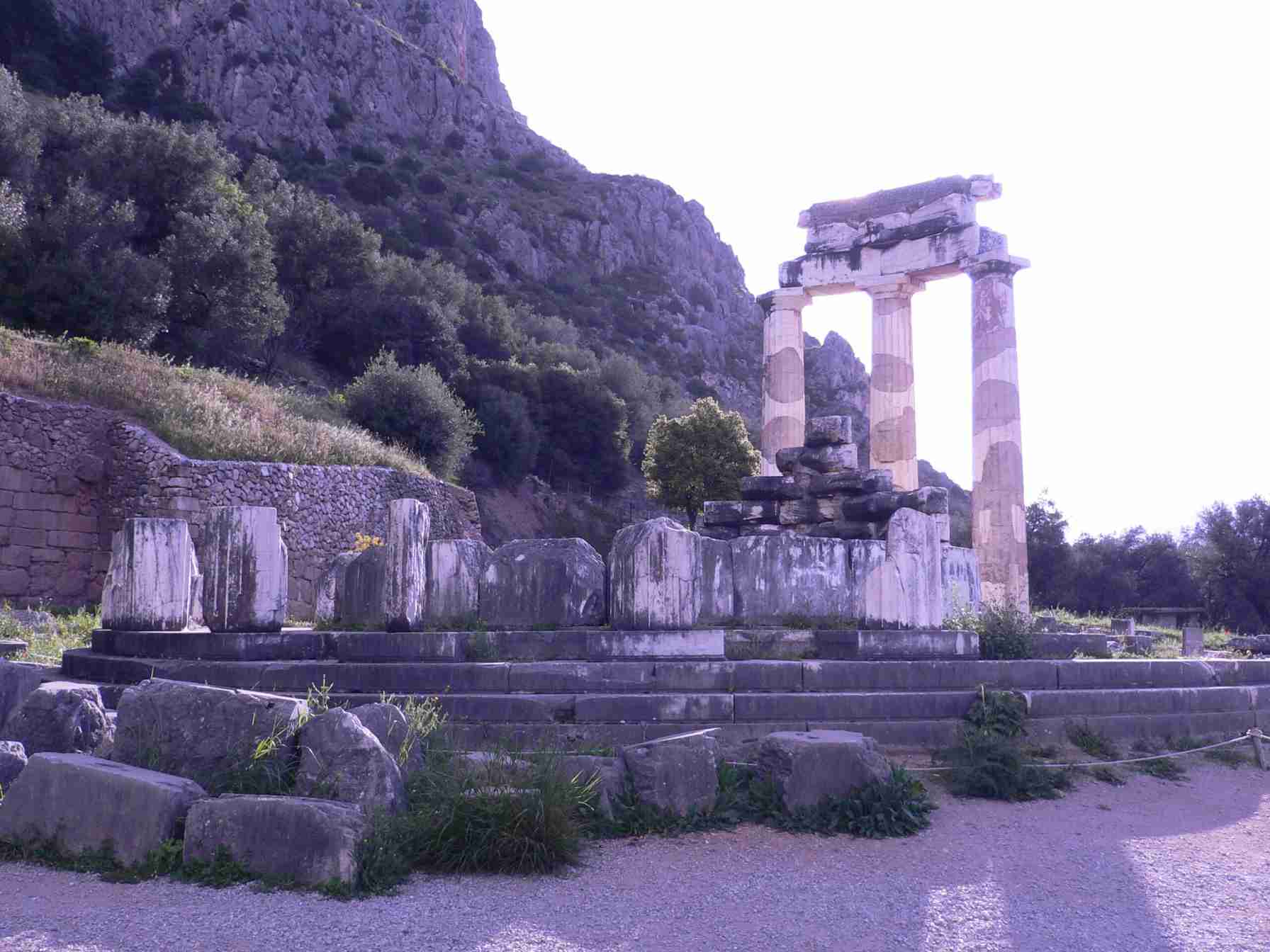
1. The Oracle of Delphi Wasn’t Just a Fortune Teller!
Let’s kick things off with a huge surprise: The Oracle of Delphi wasn’t your average “fortune teller” – she was a high priestess with real power! Known as the Pythia, she was believed to be the mouthpiece of Apollo, the god of prophecy. Pilgrims from all over the ancient world traveled to Delphi seeking her divine wisdom.
But get this — her prophecies were often cryptic, mysterious, and open to interpretation. Kings, generals, and regular folks would leave Delphi with answers, but those answers weren’t always as clear as they hoped. It’s like receiving a riddle that could change your life. Imagine walking up to a temple to get your future and hearing something like, “A great empire will fall” — sounds cool, but what does it really mean?
2. The Oracle Was a Place for the Rich… and the Royal
We’re talking about the big leagues here! The Oracle of Delphi wasn’t just a place for the average Joe. Kings, emperors, and military leaders from across the ancient world made pilgrimages to consult with the Oracle. King Croesus, one of the wealthiest rulers of his time, asked the Oracle if he should go to war with Persia. The answer? “If you cross the river, a great empire will fall.” Spoiler: It was his own. Oops!
But here’s the twist: Although the Oracle’s advice was often taken seriously, it was never 100% foolproof. The mysterious answers sometimes led to disastrous consequences. It’s almost like the Oracle had a way of guiding people toward their fates, no matter what!
3. A Sacred Place With a Weird, Mystical Vibe (Literally)
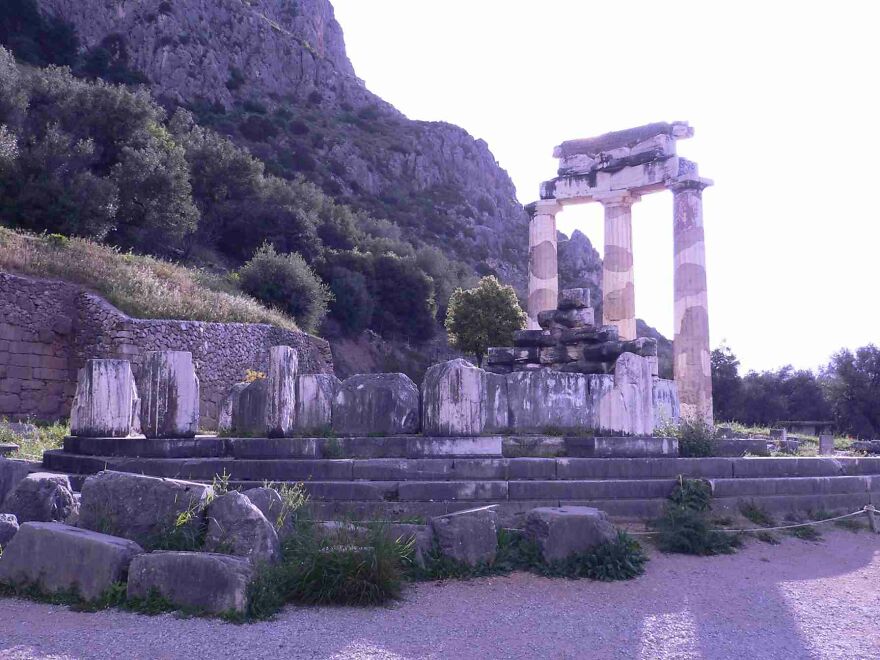
So, we all know Delphi was important, but did you know that the location of the Oracle was pretty… weird? The site of Delphi is nestled between two towering cliffs on Mount Parnassus, creating an otherworldly atmosphere. The cave where the Pythia spoke to Apollo was said to have been filled with intoxicating vapors, believed to enhance her prophetic visions. Some modern theories even suggest that natural gases like ethylene could have been seeping from the ground, causing her to enter a trance-like state. Whatever it was, it worked! The Oracle’s trance-like visions were considered a direct channel to the divine.
4. The Pythia Didn’t Speak Directly — She Had a Translator!
It’s true! The Pythia, the high priestess who communicated with Apollo, didn’t just blurt out prophecies in plain Greek. Oh no — she spoke in a trance-like state, sometimes mumbling incoherently or uttering cryptic phrases. The words were so mysterious that she had a translator (known as the “prophet”) who would interpret her divine messages into more understandable language.
And here’s the kicker: her answers weren’t always in full sentences. Sometimes, the Pythia’s words were more like poetic riddles. Imagine trying to make sense of something like, “Beware the man who wears a crown of gold.” You’d need a good translator (and probably a lot of luck) to figure that out!
5. The Oracle Wasn’t Just About Prophecies — It Was Also a Cultural Hub!
Sure, the Oracle of Delphi was famous for prophecies, but did you know it was also a major cultural center? It wasn’t all about visions and mysterious advice. Delphi was also home to the Pythian Games, a festival held every four years to celebrate music, poetry, and athleticism — all in honor of Apollo. These games were second only to the Olympics in importance, so you know they had some serious prestige!
But wait, there’s more! The Oracle also became a hub for artistic and philosophical debates. Think of it as the ancient version of a cultural convention, where famous thinkers and artists could gather to discuss ideas. If you wanted to hear some deep philosophical thoughts or watch an epic performance, Delphi was the place to be.
More info: athenstaxitour.com
309views
Share on Facebook
Delphi wasn't a scam. It was a useful diplomatic forum. From what I've read, it was a case of "never mind the mumbo-jumbo, here we are, talking and not fighting" - and the mumbo-jumbo itself was pretty good diplomacy a lot of the time. Things are not always as they seem...

Though it's not fully confirmed, it's believed by many archaeologists that the Pythia was high. Specifically, the location of the Oracle was above a cleft in the ground. Gasses from this cleft (most likely methane, ethane and ethylene) happened to also be intoxicants, and in right concentrations could produce a euphoric effect. One that could easily be mistaken in ancient times, for prophetic visions.

Aesop was tasked with investigating Delphi. Seeing it for the scam it was, he was leaving to make his report when the Delphics framed him for robbery and threw him off a cliff
Delphi wasn't a scam. It was a useful diplomatic forum. From what I've read, it was a case of "never mind the mumbo-jumbo, here we are, talking and not fighting" - and the mumbo-jumbo itself was pretty good diplomacy a lot of the time. Things are not always as they seem...
Though it's not fully confirmed, it's believed by many archaeologists that the Pythia was high. Specifically, the location of the Oracle was above a cleft in the ground. Gasses from this cleft (most likely methane, ethane and ethylene) happened to also be intoxicants, and in right concentrations could produce a euphoric effect. One that could easily be mistaken in ancient times, for prophetic visions.
Aesop was tasked with investigating Delphi. Seeing it for the scam it was, he was leaving to make his report when the Delphics framed him for robbery and threw him off a cliff





































 No fees, cancel anytime





0
4