Get Premium
Dark mode theme is available exclusively for premium users. Learn more about the benefits of subscribing.
No fees, cancel anytime.

 Dark Mode Ad-Free Browsing Unlimited Content
 Ad-Free Browsing Unlimited Content Dark Mode
Join 1.2 million Panda readers who get the best art, memes, and fun stories every week!
The Australian Geographic Nature Photographer of the Year celebrates the breathtaking landscapes, wildlife, and natural wonders of Australia, New Zealand, Antarctica, and New Guinea, an extraordinary region whose natural history stretches back more than 80 million years to the ancient supercontinent of Gondwana.
Owned and produced by the South Australian Museum, the annual competition showcases remarkable images that inspire a deeper appreciation for the region's unique biodiversity.
The winners will be announced on 27 August 2026, but before that, take a look at some of the breathtaking shortlisted images that are already turning heads.
More info: Instagram | Facebook | x.com | linkedin.com | australiangeographic.com.au
This post may include affiliate links.
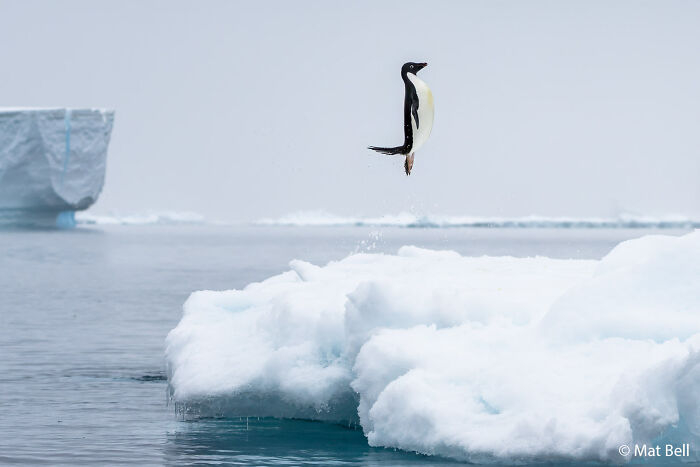
Adélie penguin (Pygoscelis adeliae)
Huddled in a Zodiac boat in icy waters off the Antarctic Peninsula, I waited patiently for an Adélie penguin to propel itself from the water to the safety of an iceberg. Persistence delivered as I captured this penguin in an almost levitational-like state, as if posing for the camera.
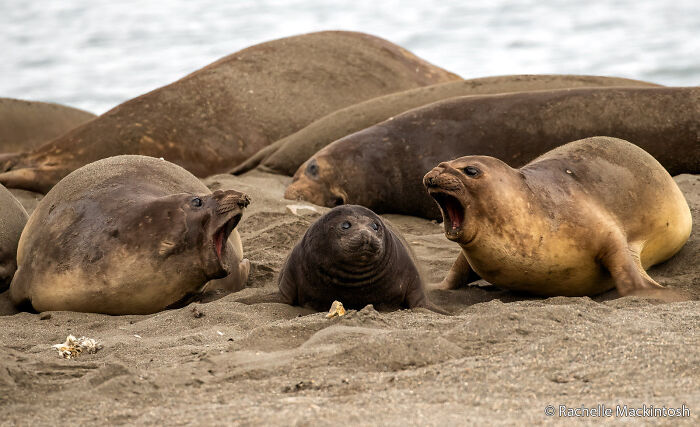
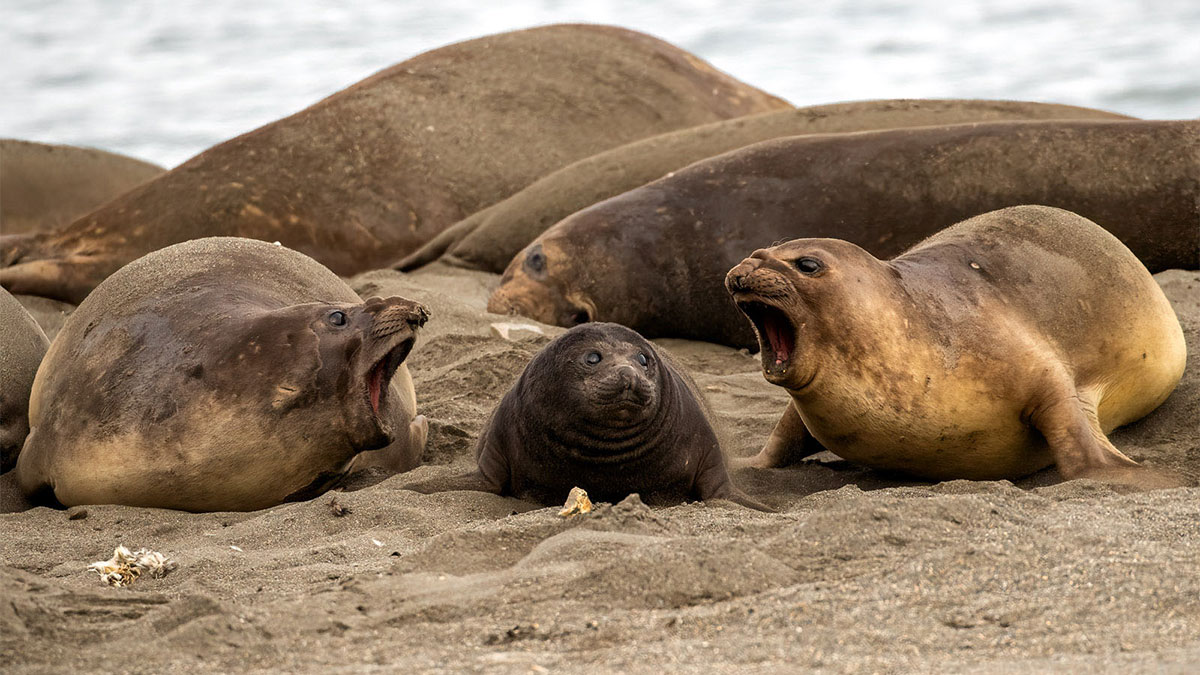
Southern elephant seal (Mirounga leonina)
There’s a small window in early spring when adult southern elephant seals are on land nursing their pups. Each youngster feeds for just three weeks before its mum heads back to sea. It was intriguing to watch two cranky females explain to this little fella that the milk bar was closed – permanently!

That is the universal look of a kid stuck between mom and dad arguing.
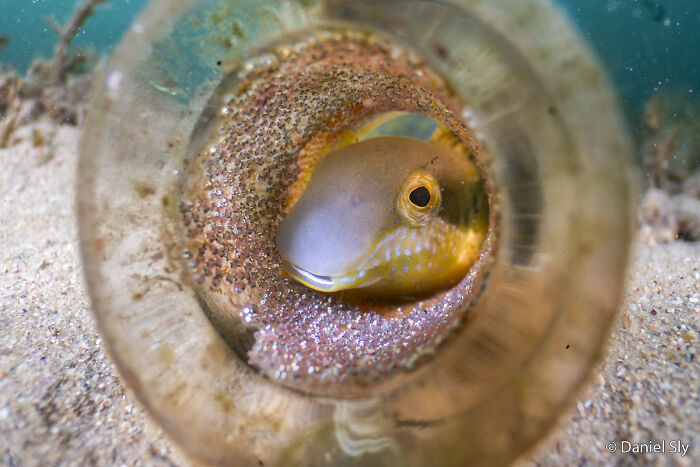
Brown sabre tooth blenny (Petroscirtes lupus)
Beneath the surface of Sydney Harbour, a brown sabretooth blenny shelters inside a discarded glass bottle, now transformed from careless waste into a vital sanctuary. Hundreds of eggs cling within as the parent stands guard, repurposing debris into a refuge for the next generation.
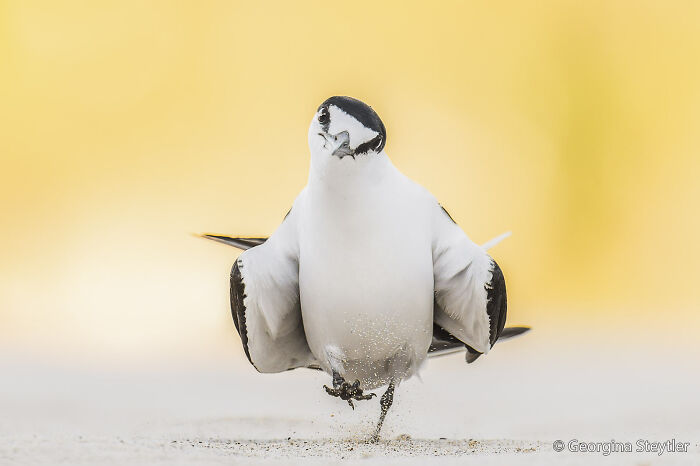
Sooty tern (Onychoprion fuscatus)
The quirky courtship ritual of sooty terns involves the birds cocking their head to one side, dropping their wings and goose-stepping around each other in unison, flicking sand with their feet as they go. I was delighted to get this shot showcasing their wonderful dance.
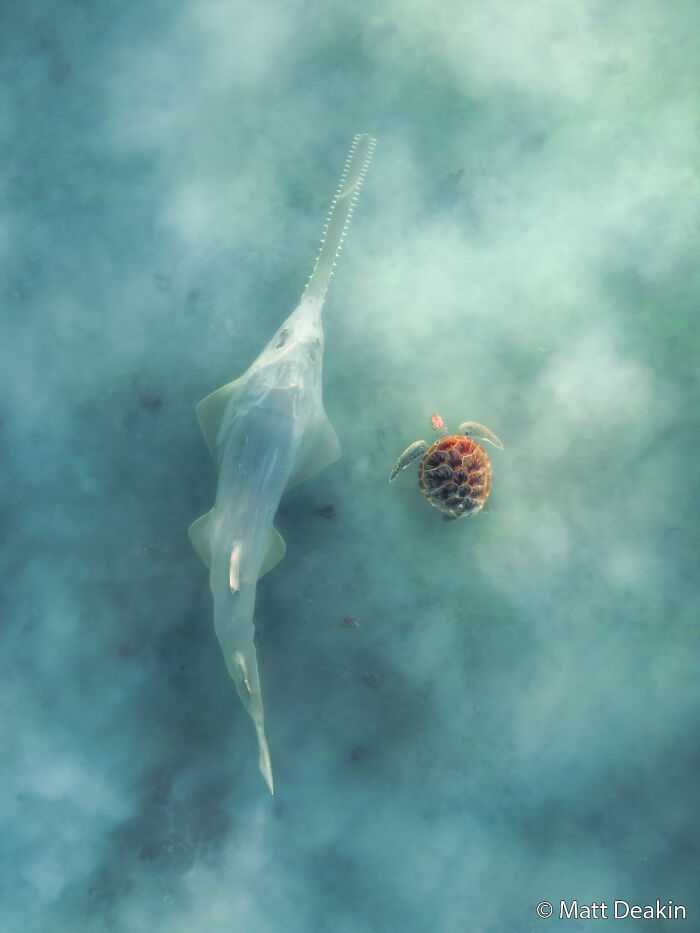
Green sawfish (Pristis zijsron), Green turtle (Chelonia mydas)
Capturing the last limbs of light touching the shallow reef, I saw a large shape moving through the milky water of the tidal estuary. As I came closer, I noticed the spectral shape of the critically endangered green sawfish moving towards and through a group of sea turtles, before disappearing into the depths.
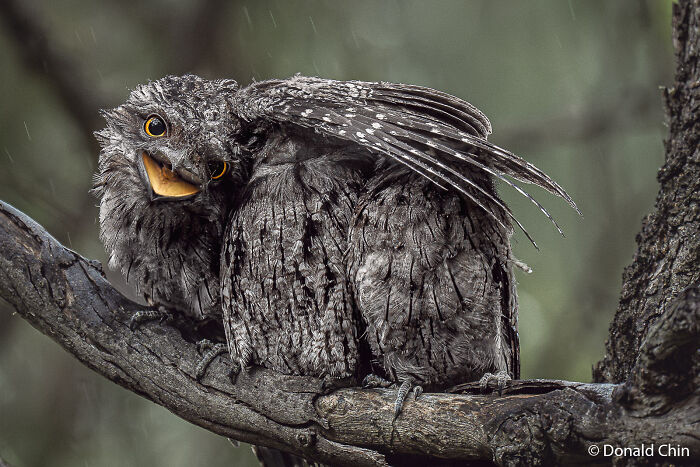
Tawny frogmouth (Podargus strigoides)
As light rain began to fall on a spring morning, a juvenile tawny frogmouth stirred to life. It stretched its wings wide, momentarily cloaking its siblings. With its mouth open in what felt like a joyful expression, the scene revealed a tender, unexpected moment of warmth, resilience, and quiet connection in the wild.
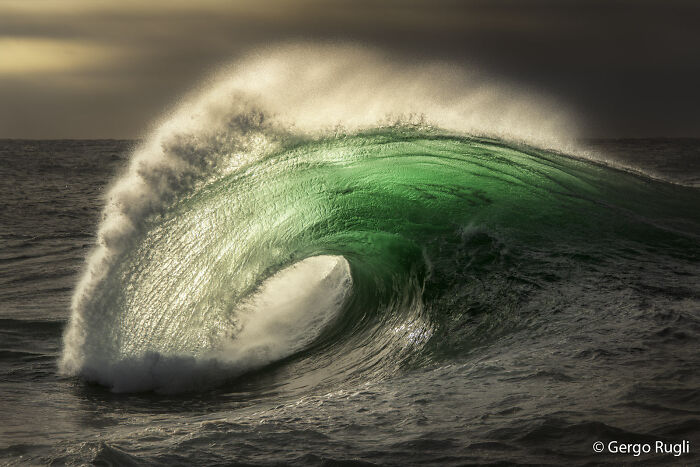
After forecasts predicted a 10–15-foot swell, I woke at 3 am to make the 3-hour drive south from Sydney through heavy rain. As the storm cleared at sunrise, a narrow break in the clouds briefly illuminated a perfectly formed wave breaking over the reef.
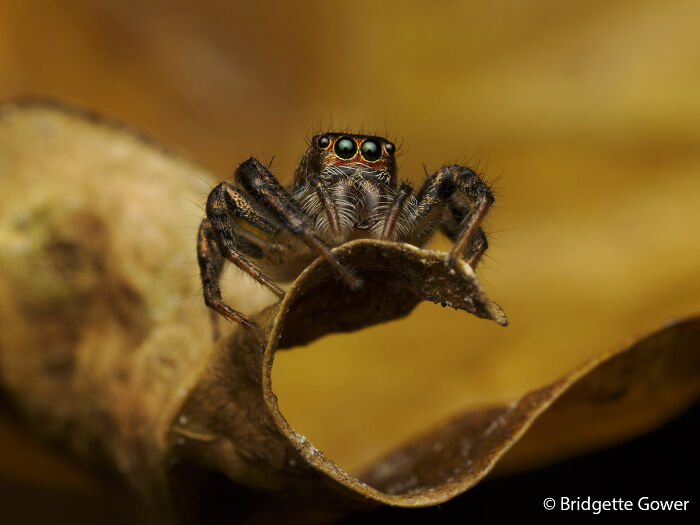
Red-and-white jumping spider (Cytaea alburna)
I came across this tiny jumping spider navigating a maze of fallen leaves within a low bush. I paused, watched and waited for the perfect moment. Eventually, it climbed to the very edge of a leaf—poised like a performer on a stage or a tiny king surveying its kingdom.
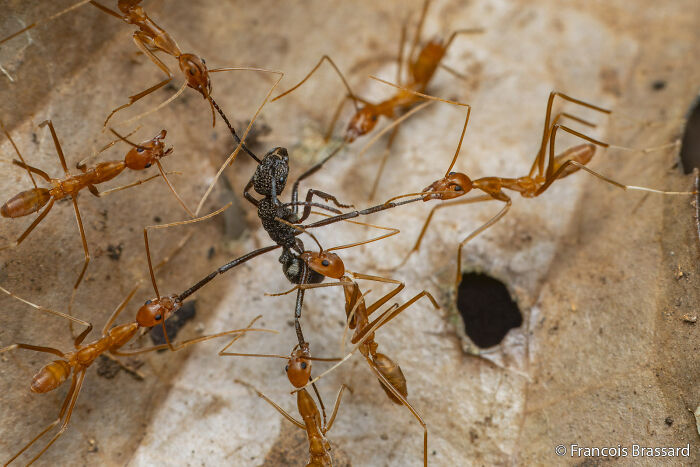
Spider ants (Leptomyrmex sp.), Pony ant (Rhytidoponera sp.)
Spider ants surround and immobilise a pony ant on the rainforest floor. They will carry their unfortunate prey to their nest, where they will feed it to their sister larvae.
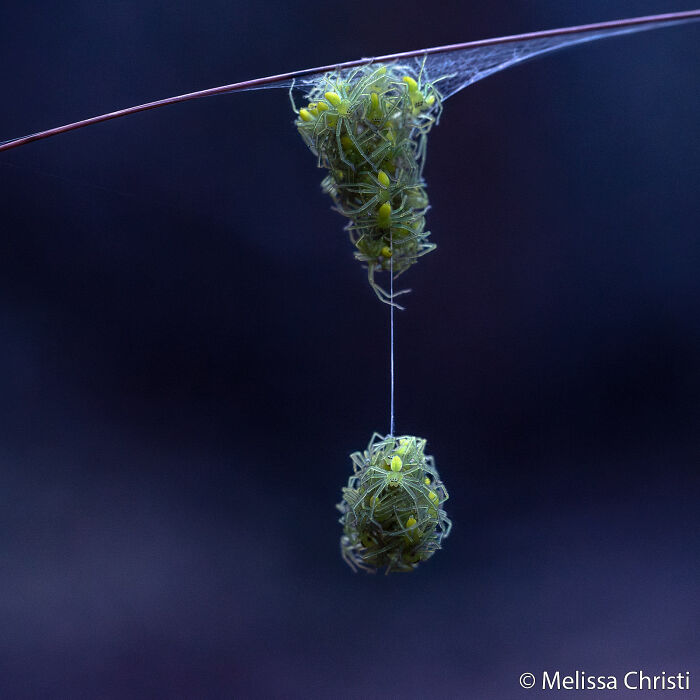
Huntsman spiderlings (Neosparassus sp.)
We spotted a faint yellow blob nestled in the grass; tiny spiderlings clustered after hatching. They do this to stay safe while they absorb egg nutrients and complete their first moult. Something had disturbed them, as a small clump of spiderlings dangled by a thread – not unlike a small piñata!
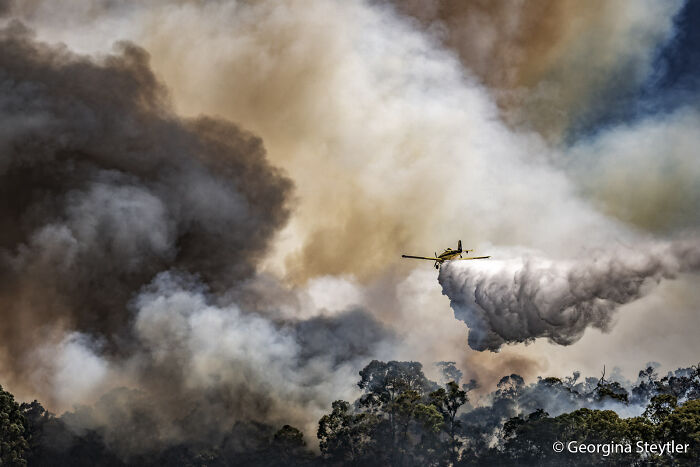
On a hot, dry January day, a diesel water pump sparked a fire on a nearby farm. Wind swept it into the surrounding native forest, and the eucalypt oils turned the dark, billowing smoke-clouds orange. Incredibly, and bravely, a water bomber flies straight into the heart of this inferno.

These pilots deserve every bit of our respect. What a hellish job.
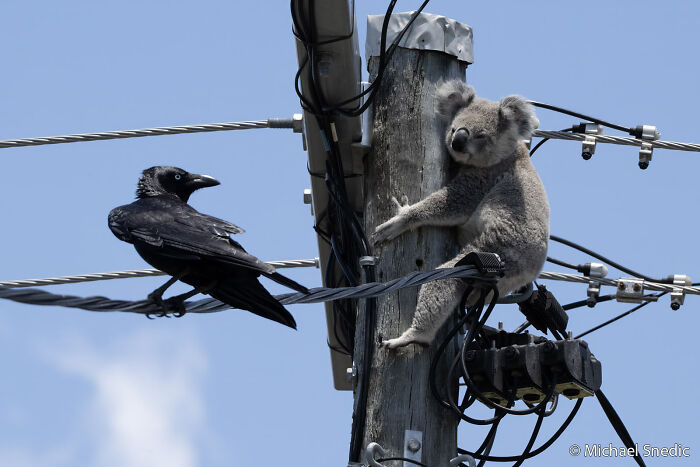
Koala (Phascolarctos cinereus)
Due to unabated land clearing, with huge tracts of koala habitat removed to make way for massive housing developments, koala numbers are rapidly deteriorating across Australia. Being forced out into suburbia, koalas are regularly killed by cars or chased by dogs, like this individual, which sought refuge up a telegraph pole.
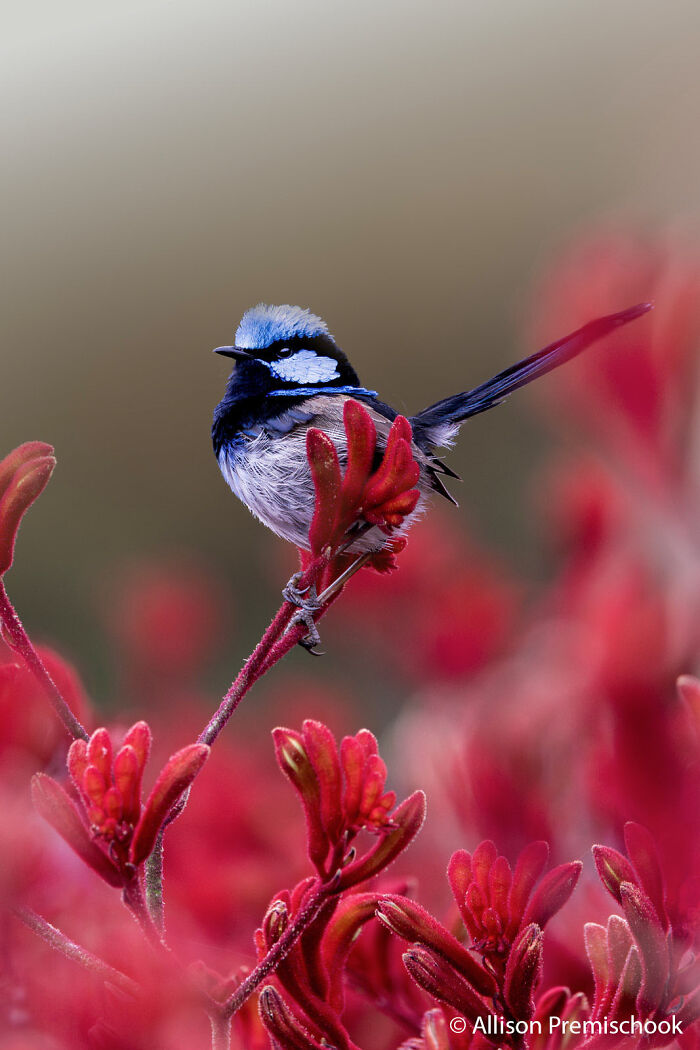
Superb fairywren (Malurus cyaneus)
The colour of the kangaroo paw caught my eye first. So, I made my way over and less than a minute later, he arrived – perched just long enough for a few frames before flying off. In that moment, he seemed proud, showing off the brilliance of his new season plumage.
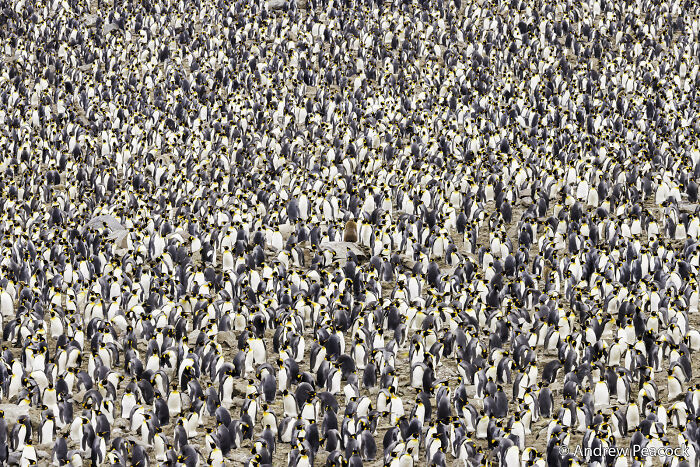
King penguin (Aptenodytes patagonicus)
Incongruously, a single king penguin chick stands atop a rock surrounded by adults in the world’s largest breeding colony of this species. ‘Oakum Boy’ is a historical nickname given by sailors because the chicks’ appearance reminded them of oakum, a pine-tar-soaked flax fibre used to seal gaps in wooden ships.
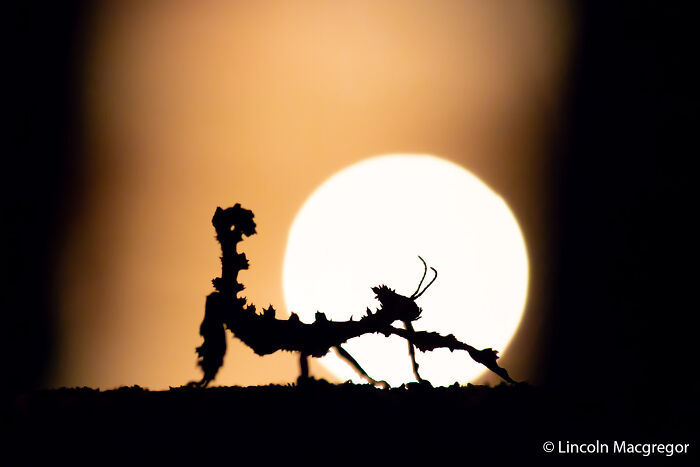
Spiny leaf insect (Extatosoma tiaratum)
The spiky silhouette of a spiny leaf insect reveals how well-defended these phasmids are from predators. I discovered it on a tree in my backyard one evening, backlit by a living room light. This image goes to show that you don’t always have to travel far to see extraordinary creatures.
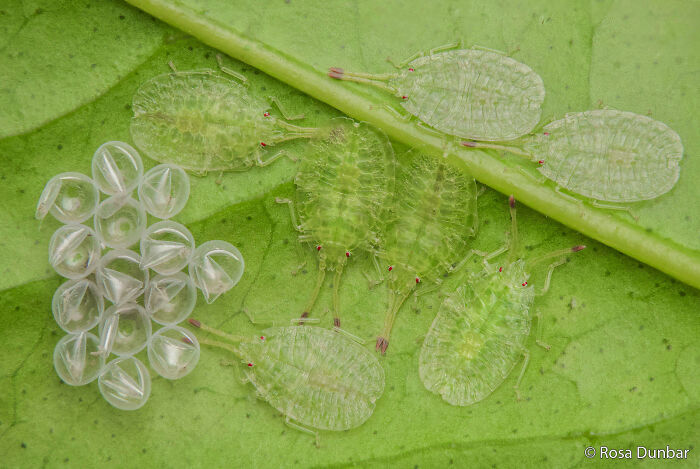
Bronze orange bug nymphs (Musgraveia sulciventris)
Translucent green nymphs of the bronze orange bug cluster near their emptied egg raft after hatching. During this first instar stage, they remain aggregated before dispersing following moulting. Their pale green colouration provides effective camouflage, making them difficult to detect. They are often mistaken for other insect species.
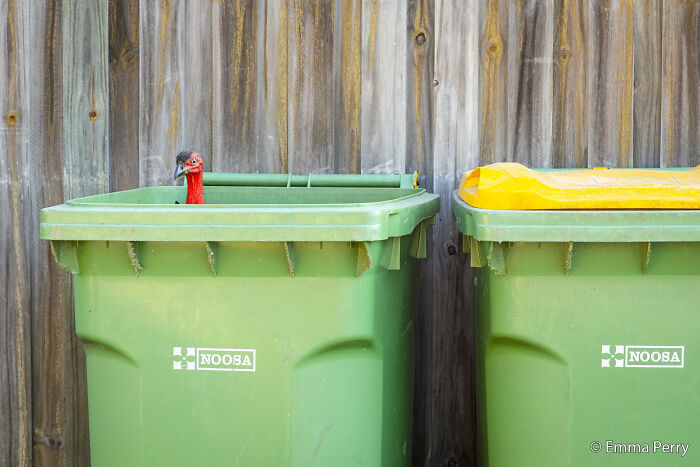
Australian brush turkey (Alectura lathami)
While camping in Queensland, I noticed an opportunistic brush turkey foraging for food through the rubbish bin.
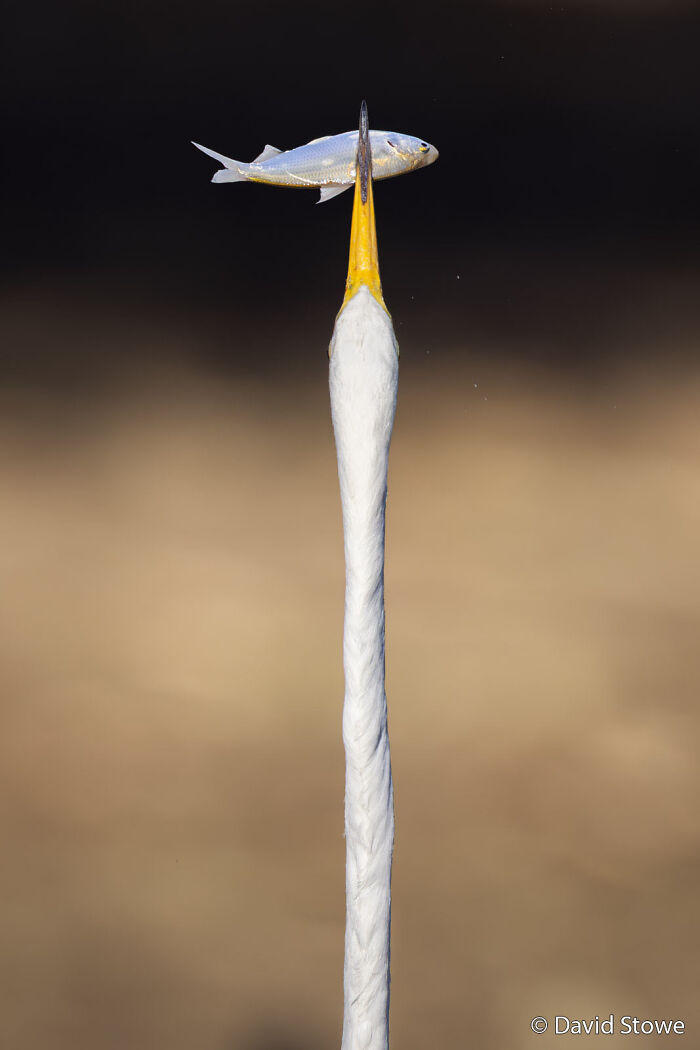
Great egret (Ardea alba), Bony bream (Nematalosa erebi)
As flooding from the Lachlan River subsided, large numbers of waterbirds were feeding in a drying waterhole. When this great egret plucked a fish from the water and lifted it high as he walked away, I was able to create a striking image, showing off the egret’s long, spear-like neck and bill.
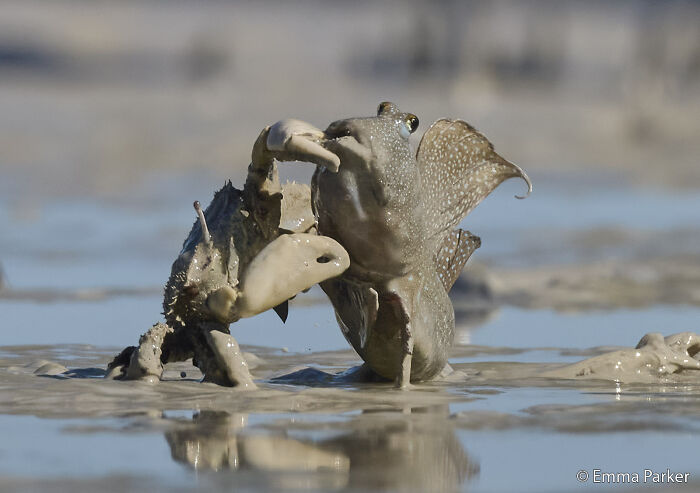
Blue spotted mudskipper (Boleophthalmus caeruleomaculatus), Mud crab (Scylla sp.)
I had this image in mind before my second trip to Broome. I wanted to observe and photograph a unique interaction between the species vying for space in the mudflats. After three days, I was lucky to witness a mud crab lift a mudskipper right out of the water.
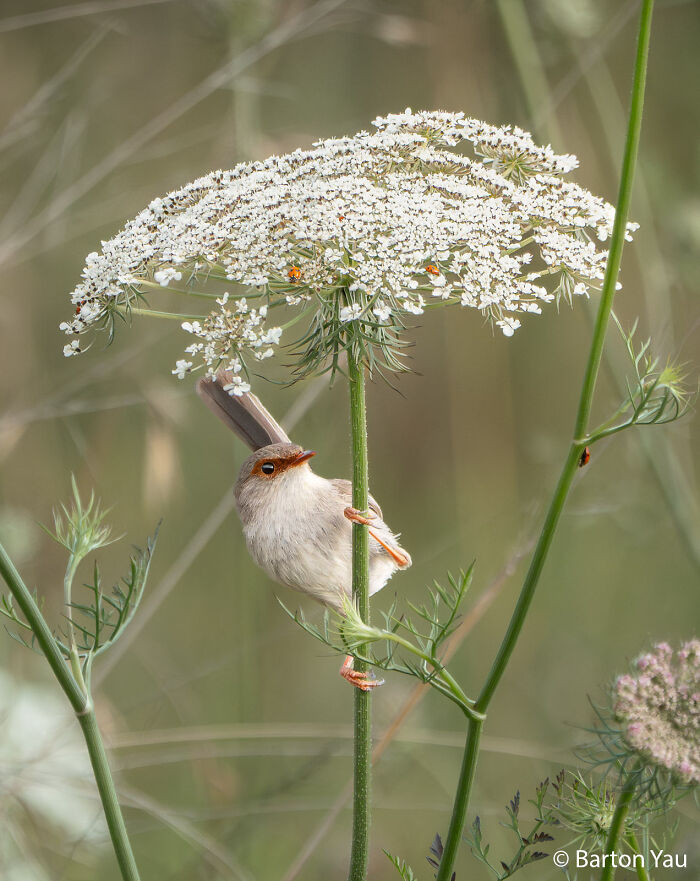
Superb fairywren (Malurus cyaneus)
While observing a group of superb fairywrens at a wetland reserve, I watched as this female suddenly landed on a lower stem with a tiny ladybug. In the soft, fading light, she paused just long enough for me to capture this quiet, handheld moment.
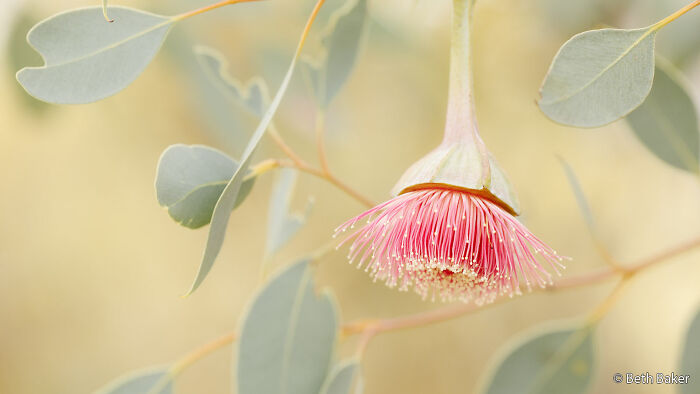
Pear-fruited mallee (Eucalyptus pyriformis)
Eucalyptus evokes Australia; its scent, its hush in the wind. Adapted to drought, fire and poor soils, it endures. Grey leaves deflect heat, bright blooms draw life and lignotubers promise return. Both ethereal and tough, this image captures a quiet resilience in which softness and strength exist in delicate, enduring balance.
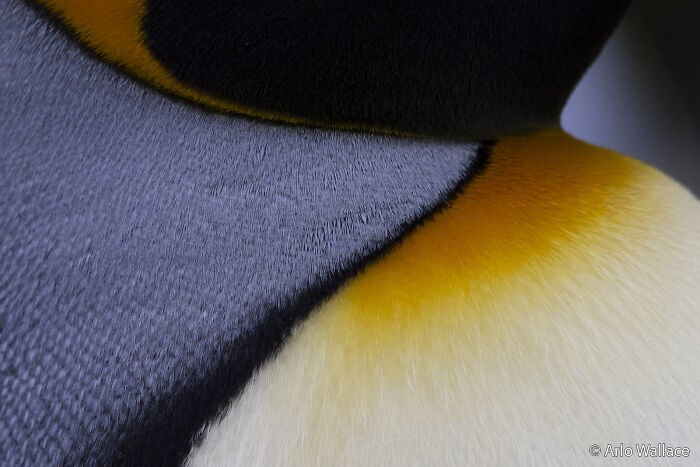
King penguin (Aptenodytes patagonicus)
On a subantarctic expedition, I journeyed to Sandy Bay on Macquarie Island to observe king penguins in their natural environment. I made this photograph to explore the plumage of a king penguin as an abstract study, highlighting its patterns, textures, colours, and form.
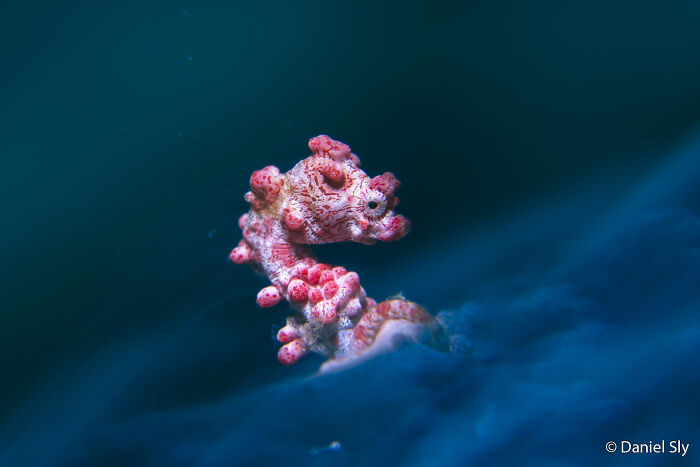
Pygmy seahorse (Hippocampus bargibanti)
A pygmy seahorse clings to a pink gorgonian sea fan, blending seamlessly into its surroundings. A narrow beam of light isolates the tiny subject from the reef, while a slower shutter speed transforms its habitat into a soft, dreamlike blue.
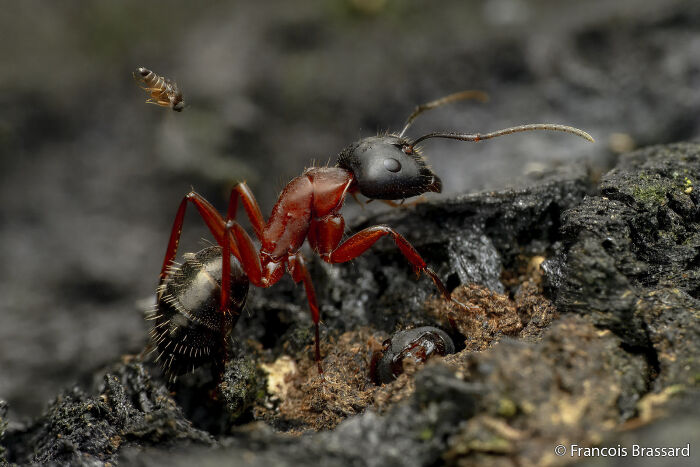
Sugar ant (Camponotus sp.), Ant-decapitating fly (family Phoridae)
This ant-decapitating fly is diving towards an ant. It aims to inject an egg into the ant’s head. The emerging grub will burrow in the ant’s head and eat it from within. Once the grub matures, it emerges and decapitates the ant, thus giving the fly its macabre name.
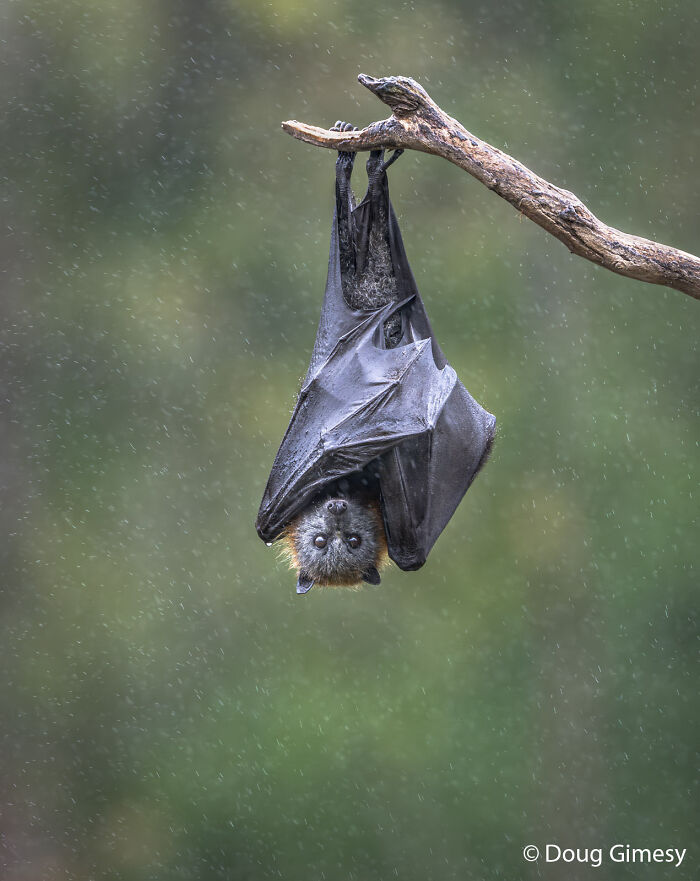
Grey-headed flying-fox (Pteropus poliocephalus)
Flying is just one of the many things flying-foxes use their wings for. They can use them as eye shades, sun shades, cooling fans, baby blankets and even to swim. But here, during a summer shower, a grey-headed flying-fox uses theirs as a raincoat.
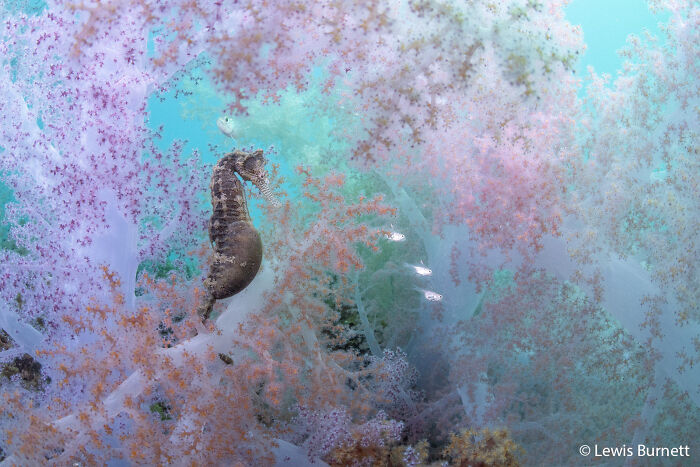
West Australian seahorse (Hippocampus subelongatus)
Fairyfloss depicts the aptly named tiger snout seahorse at home in its kingdom. These seahorses are usually found in murky, sediment-rich environments, which often leads to unappealing images. This site is known for spectacular soft coral growths, so I was able to photograph this iconic species with a background that does them justice.
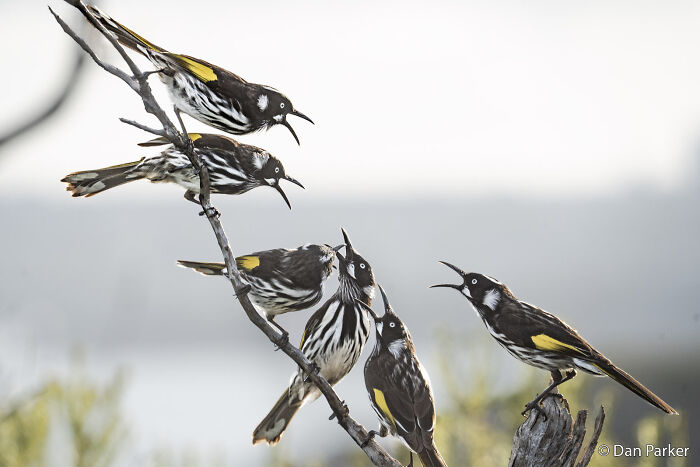
New Holland honeyeaters (Phylidonyris novaehollandiae)
The sun was nearly setting. I’d been watching them for the last five hours, flitting between the shrubs that covered the headland, fighting mid-air and chattering non-stop in large groups. I wanted to capture this action and, luckily enough I managed to get a shot I was pretty happy with.
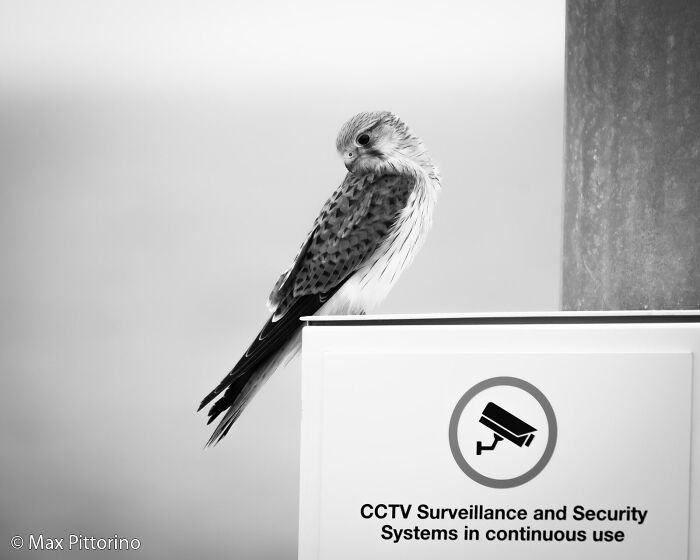
Nankeen kestrel (Falco cenchroides)
A nankeen kestrel pauses its hunting, resting beneath a security camera. The bird appears to be acting as an avian security guard, glaring down from its vantage point. I converted this image to monochrome to add to the mood I wanted the image to emanate.
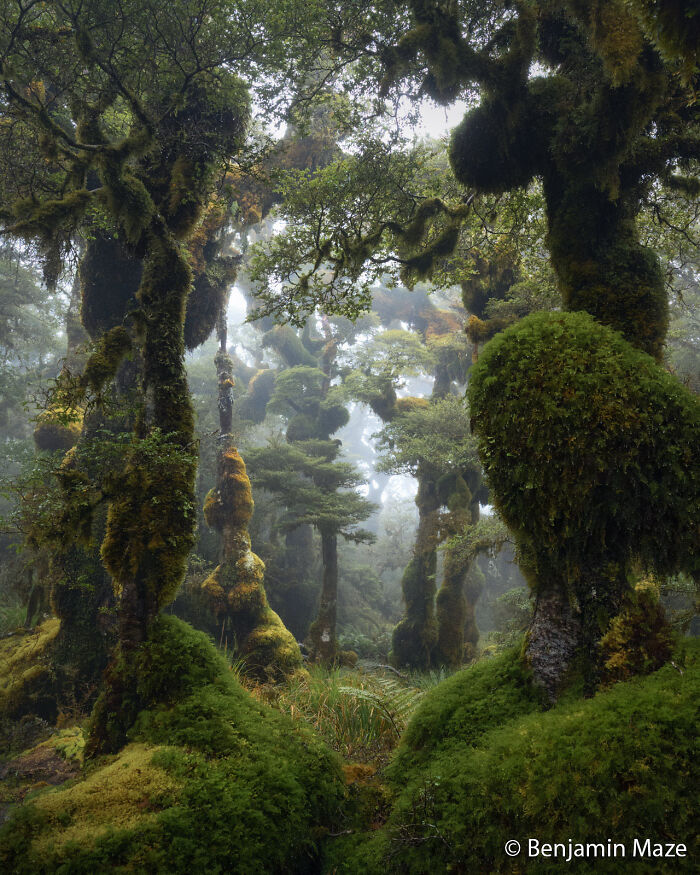
New Zealand’s alpine goblin forests are really something to behold. These stunted beech and kāmahi trees take on shapes, contours and proportions that are almost grotesque at times, which is only further personified seeing them in the rain and fog. It’s easy to let one’s imagination run wild in a forest like this.
Black kite (Milvus migrans)
The dramatic contrast of colour and texture reveals an ever-changing landscape. As I surveyed the landscape from above, I noticed these black kites hovering over the mudflats in search of easy prey. I waited for the moment when I could capture the landscape and the bird’s relationship to this scene.
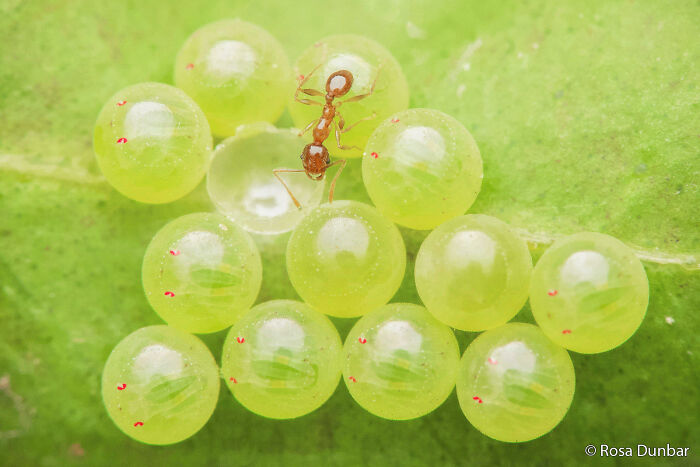
Coastal brown ant (Pheidole megacephala), Bronze orange bug eggs (Musgraveia sulciventris)
A coastal brown ant worker examines the hollow remains of a bronze orange bug egg on a citrus leaf following predation. As opportunistic foragers, these ants exploit both plant and animal resources. Nearby, red-eyed embryos are visible through translucent egg membranes, indicating the eggs were nearing hatching at the time of attack.
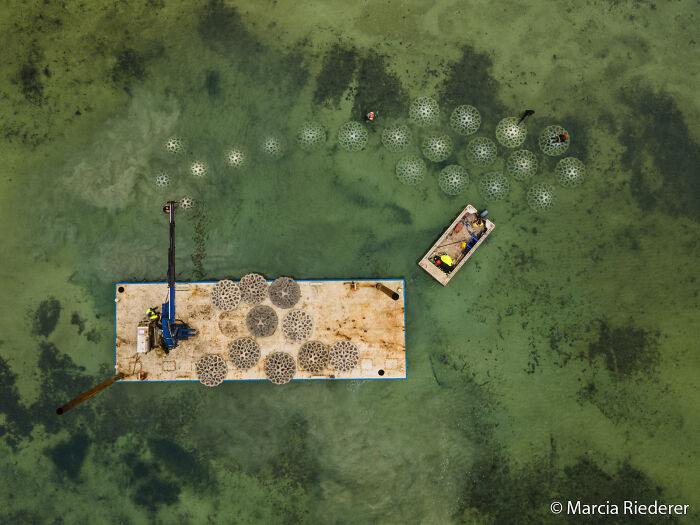
The bird’s eye view of the artificial reef being installed in Clifton Springs, Victoria. It was created by the Reef Design Lab to stop coastal erosion, reduce wave energy, and restore native flat oyster populations, which have been largely lost from the area.
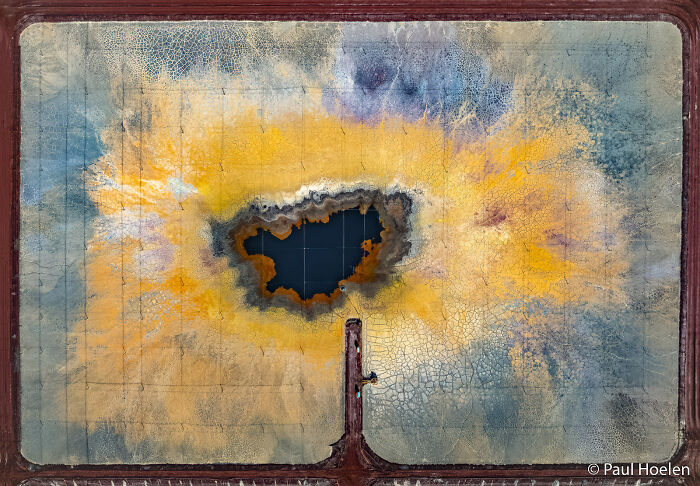
Framed within a human-shaped landscape, an evaporation pond reveals a quiet tension between both beauty and consequence. Rich textures and bold colour offer striking visual appeal, yet the process within leaves a lasting imprint of toxic residue that will alter the very fabric of Country for many years to come.
Bull ant (Myrmecia tarsata)
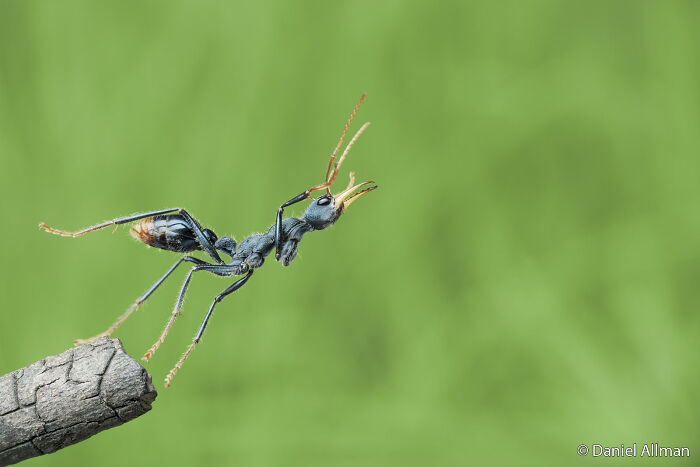
For the last 100 years it was believed that some Australian bull ants, like Myrmecia tarsata, were incapable of jumping. My photograph suggests the contrary, and despite having a flash duration of 1/9000 (0.11 milliseconds!), there is still observable motion blur; a testament to this species’ powerful, expeditious jumps.
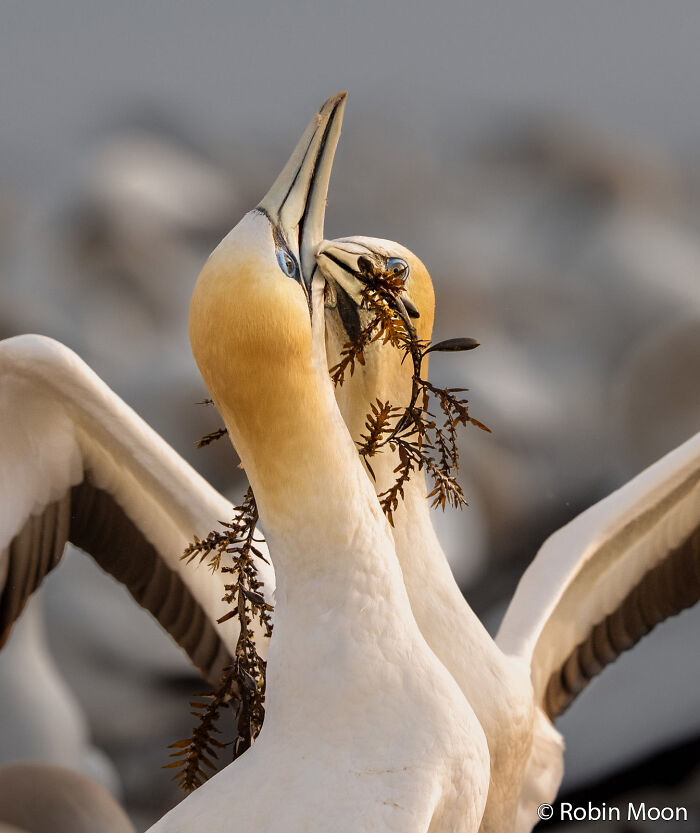
Australasian gannet (Morrus serrator)
Cape Kidnappers provides a raw, immersive birdwatching experience as over 6,500 pairs call this clifftop home. Returning mates present a precious gift – juicy seaweed. If the female deems it suitable for nest building, then they perform the intimate beak-tapping and sky-pointing ritual together.
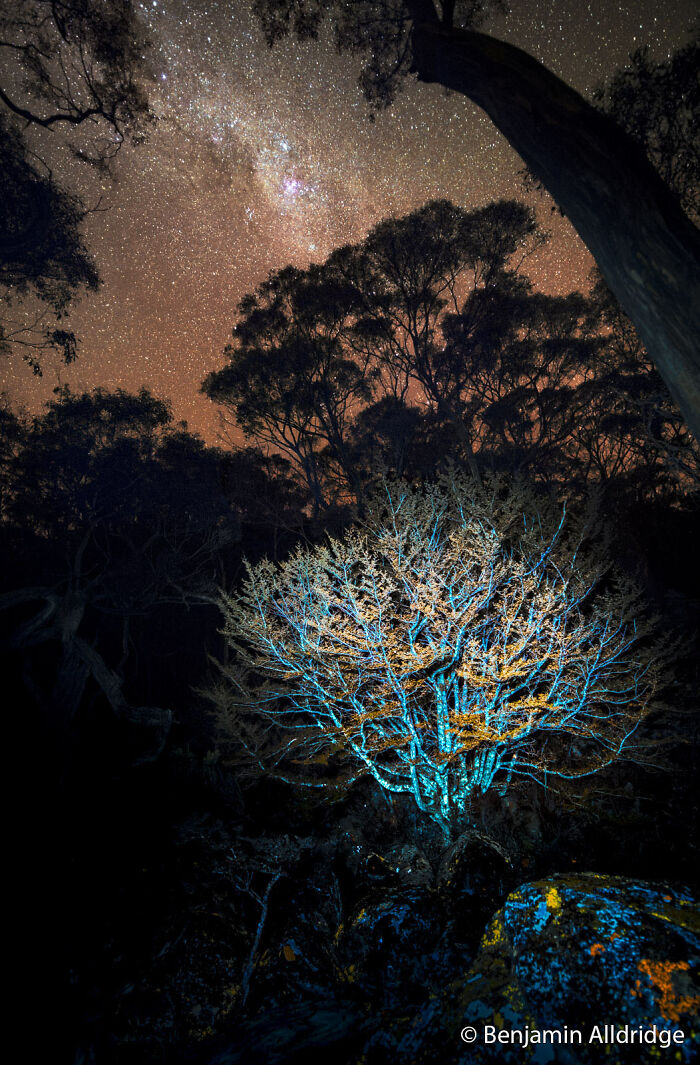
Tanglefoot (Nothofagus gunnii)
Tanglefoot, Australia’s only cold-weather deciduous species, attracts thousands to witness ‘the turn’. However, few will have seen them glowing in gold tones. The organism emits garish colours in response to UV light in a process called biofluorescence. This particular evening brought subtle aurora and airglow, a rare synergy in these forests.
Silver beech (Nothofagus menziesii)
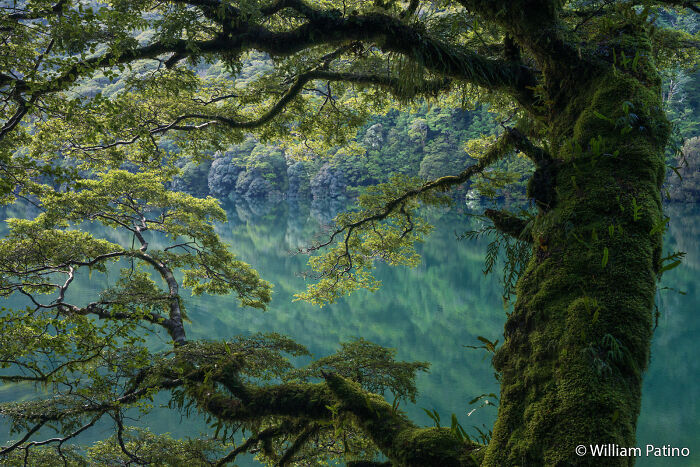
Many silver beech trees seem to defy gravity as they extend horizontally from mountainsides and lean precariously over rivers and lakes. On this particular morning, it was the calm waters of the lake that initially caught my eye, and I enjoyed searching for the right tree to complement the scene.
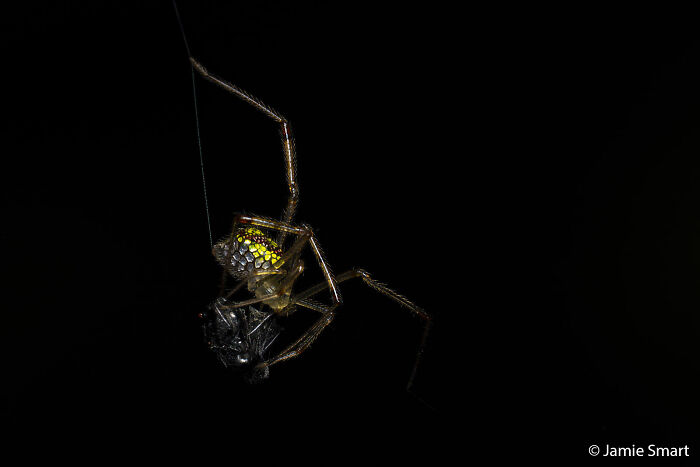
Mirror spider (Thwaitesia argentiopunctata)
I captured this image while exploring the rainforest at night. I spotted a spider hanging by its silk eating a fly and wanted to capture a photo of its behaviour. When my flash lit up its abdomen, I realised how beautiful it was and later learned that it was a mirror spider.
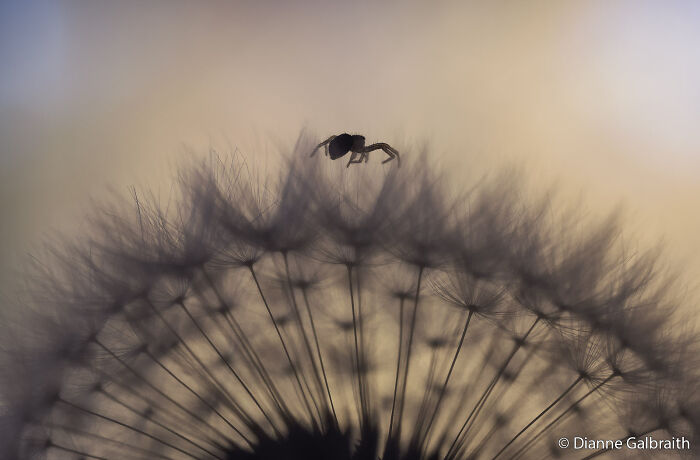
Jumping spider (family Salticidae)
Viewing this minute spider as it negotiated its journey through a forest of dandelion seeds was fascinating. I wanted to show the beauty of its shape in silhouette as it explored a myriad of those individual seeds.
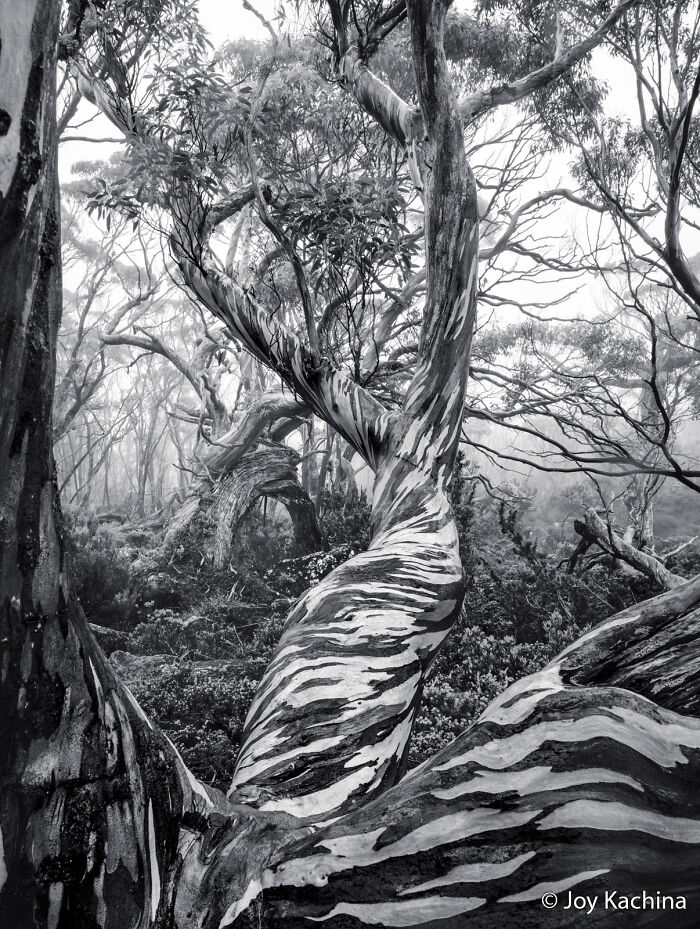
Tasmanian snow gum (Eucalyptus coccifera)
Snow gums twist and turn in sculptural forms shaped by extreme weather and time. To stand among them is to feel both endurance and grace. This photograph was created during a deeply personal journey. Despite long hours of travel, harsh weather and personal struggle, arrival brought profound peace. Here, the forest felt like home.
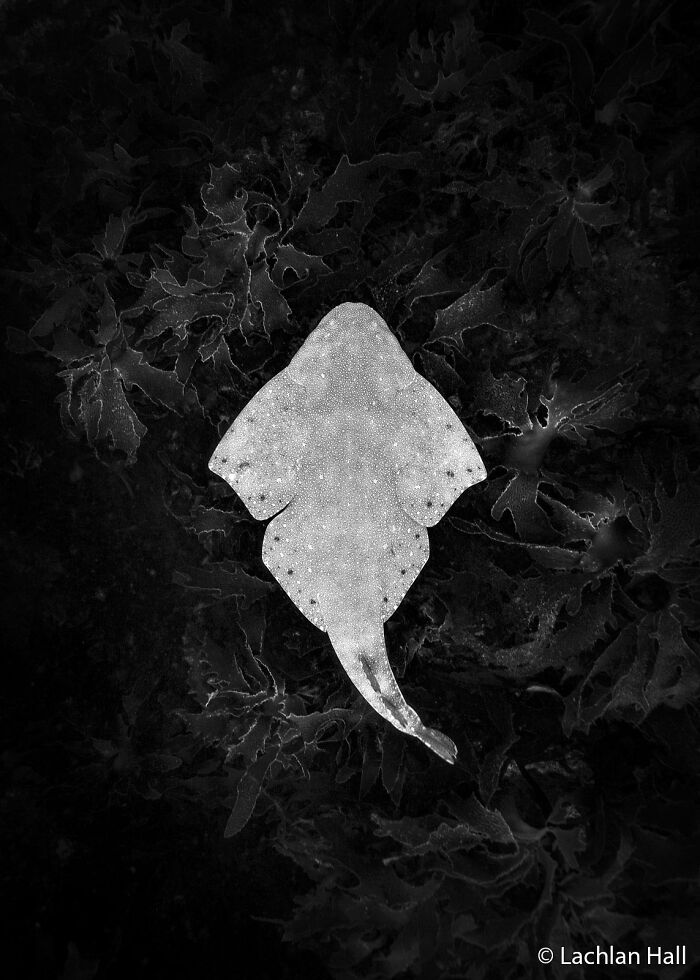
Australian angelshark (Squatina australis)
The angelshark is a master of camouflage. The ghostly white body and speckled markings render it near-invisible when lying in ambush on the sandy bottom. Chancing upon this individual gliding over the dark-coloured kelp beds allowed for a rare glimpse at the true form of an otherwise unseen species.
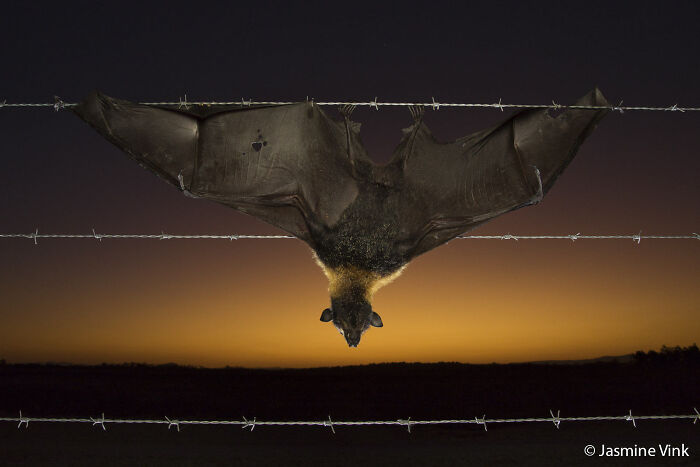
Spectacled flying fox (Pteropus conspicillatus)
An endangered spectacled flying fox has become entangled on a barbed wire fence and succumbed to her injuries. Barbed wire entanglement is common and devastating for flying foxes. Many agriculturalists have misconceptions about bats and the efficacy of wildlife-friendly fencing options, making transitions to sustainable fencing challenging.
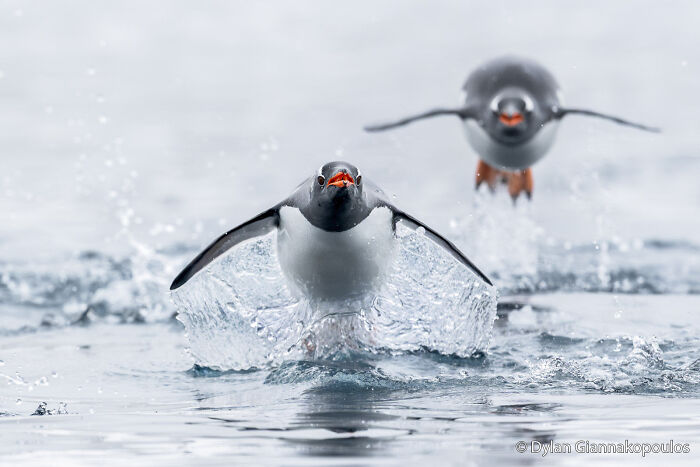
Gentoo penguins (Pygoscelis papua)
Gentoo penguins, the world’s fastest-swimming penguins, surge through the water with the grace of flight, driven by speed, instinct, and survival. Their elegant porpoising lets them breathe without slowing, evading predators that lurk in the icy Antarctic depths.
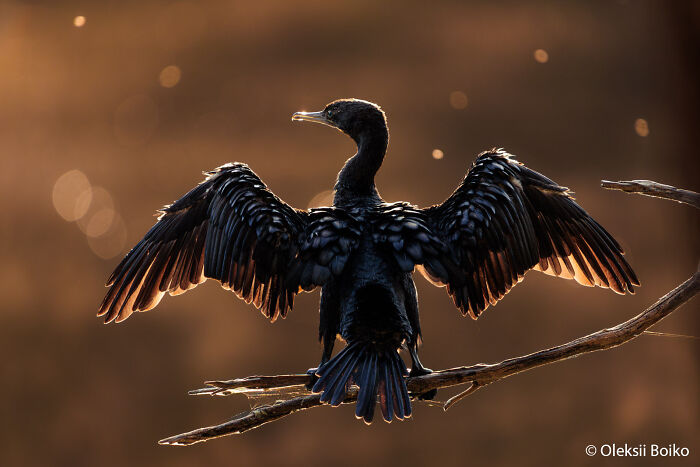
Little black cormorant (Phalacrocorax sulcirostris)
A little black cormorant spreads its wings to dry in the warm morning light at Enoggera Reservoir, Brisbane. Backlit against the golden hour glow, the bird's outstretched silhouette reveals unexpected colour and texture – a fleeting ritual of stillness before the day begins.
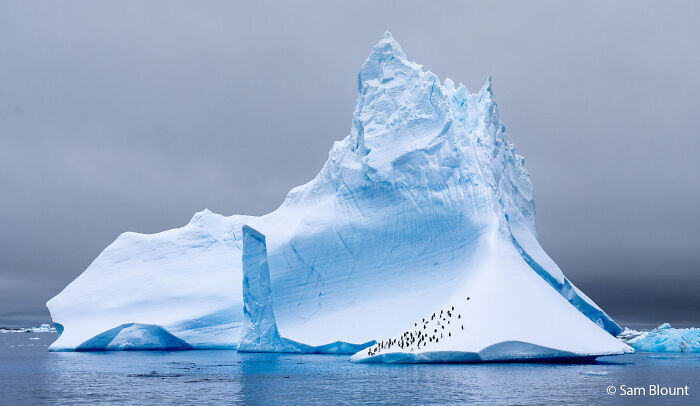
Gentoo Penguin (Pygoscelis papua)
After a few months cruising through Antarctica, we came across this beautiful iceberg. This group of penguins was taking a break while the rest were swimming in the calm water. I always loved watching these birds transform from uncoordinated to graceful as they left the ice and entered the water.
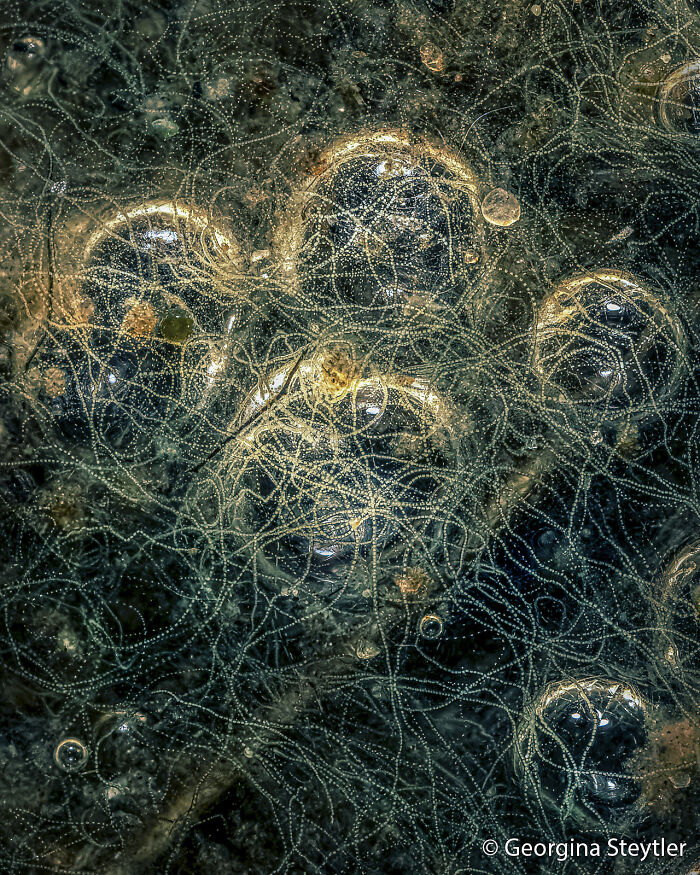
Unknown algae
I’m fascinated by shallow and ephemeral wetlands and the unique plants that grow in the shallows. I found this algae in an elevated wetland fed by a spring in the nature reserve behind my house. When I looked closely, I noticed the tiny string-like strands.
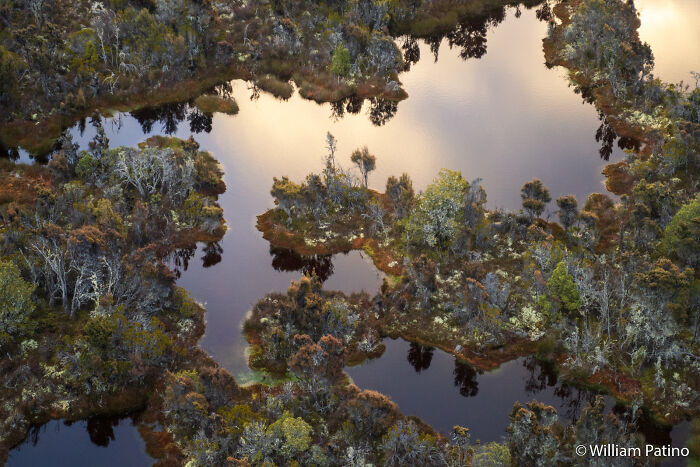
Dominated by sphagnum moss, bog pines and lichens, this wetland boasts a myriad of colours. It’s well hidden and best appreciated from the air, in this case, from a small helicopter. Once I spotted the tree, we worked the angle to showcase the reflective light and colour from the glowing clouds above.
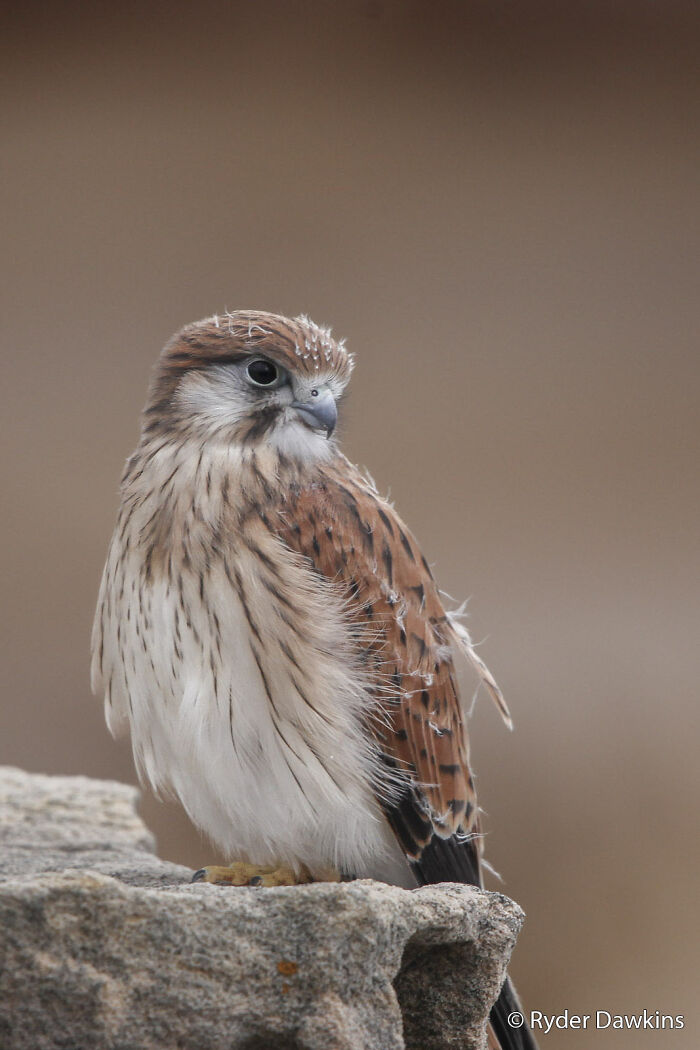
Nankeen kestrel (Falco cenchroides)
I saw this nankeen kestrel as I was walking along the south coast of Sydney. I first saw it standing watchfully over the cliff. As I approached, I was incredibly surprised by how close it let me get, completely unafraid. I sat there taking photos for a while just enjoying its company.
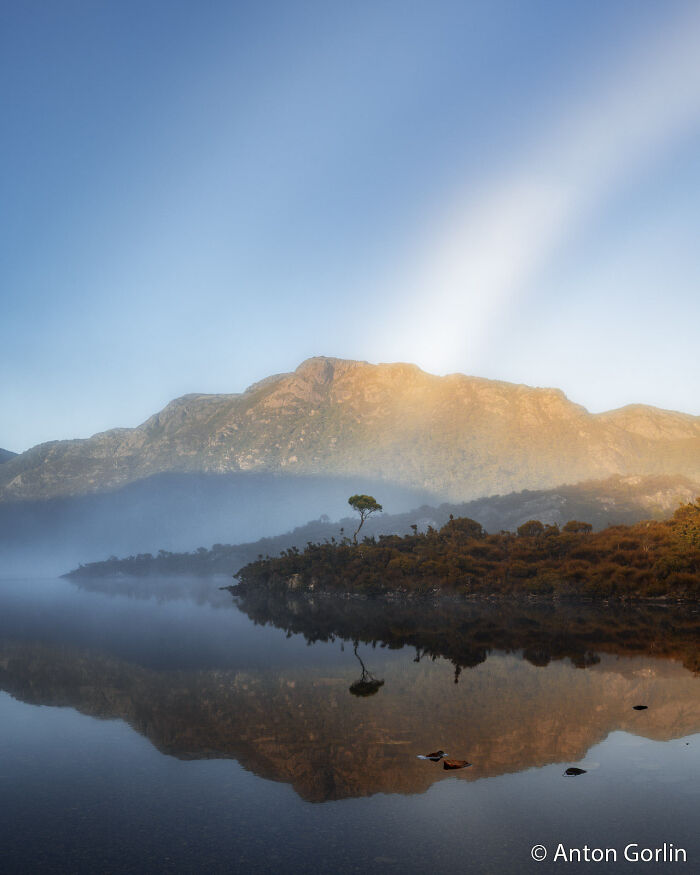
Captured at Dove Lake in Cradle Mountain-Lake St Clair National Park on a calm, foggy autumn morning. As the sun rose, a fogbow briefly formed above the still water. The absence of wind and diffused light simplified the landscape, softening the boundaries between land, water and sky.
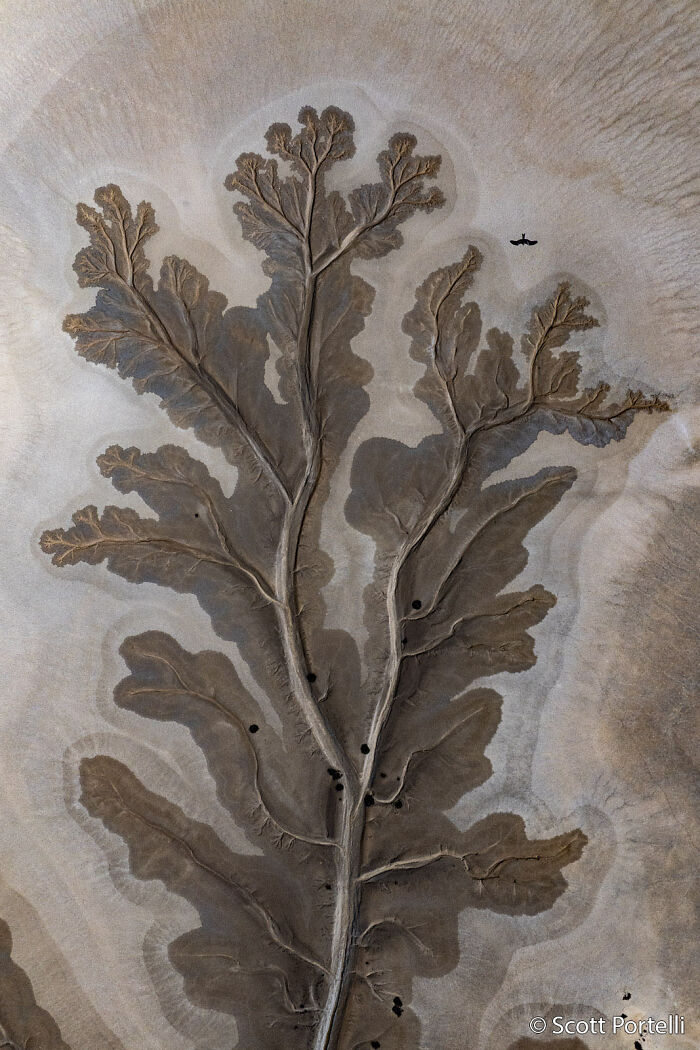
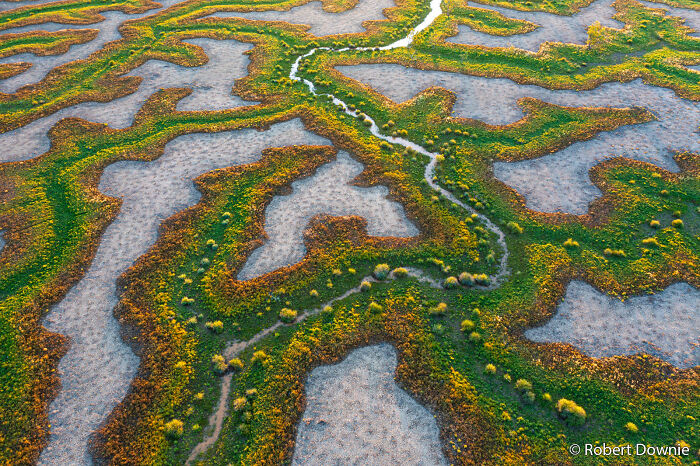
Water transforms the outback when rare floods sweep down from central Queensland, filling channels carved over millennia. Reached after days of four-wheel driving across outback floodplains, this fleeting landscape exists for only weeks. From the air, its veins of water reveal a story older than memory.
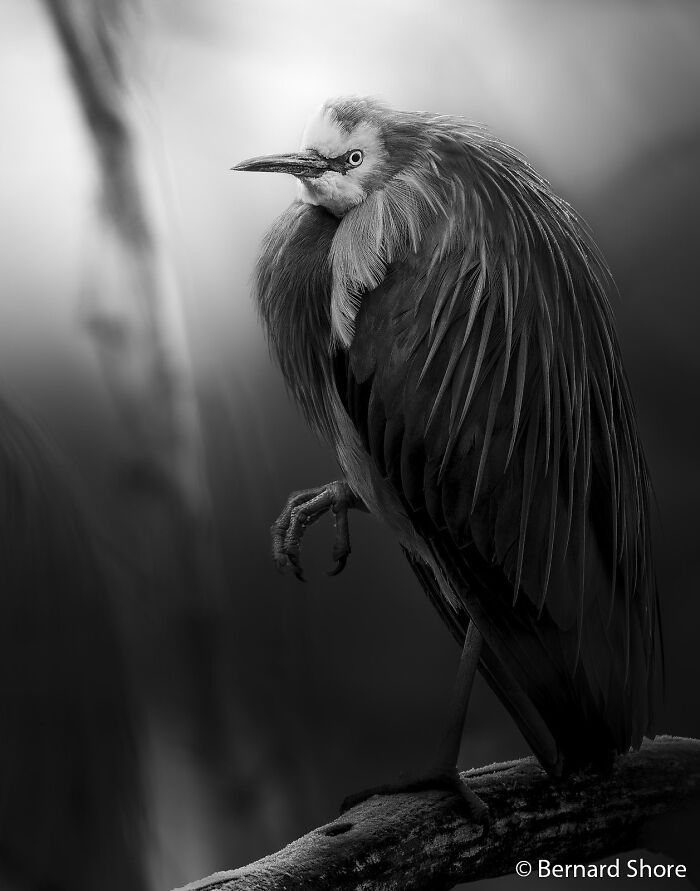
White-faced heron (Egretta novaehollandiae)
A pair of white-faced heron, overlooking Lake Hayes, New Zealand. I waited, knowing there was more to their character, than initially presented. The furthest slowly swivelling its head toward me and making eye contact while lifting one of its claws – backlit and dramatic.
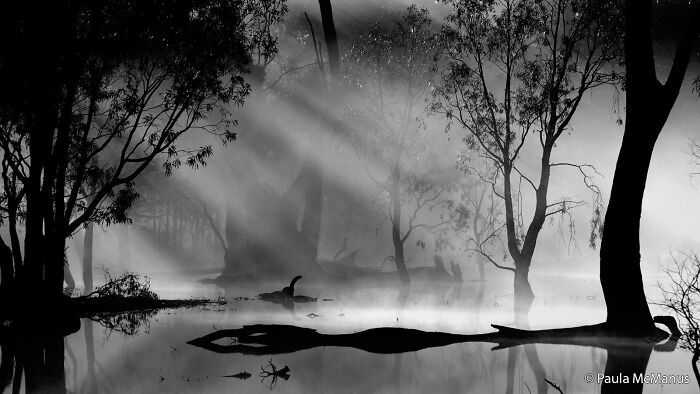
Mullinger Swamp is a protected area just outside of Kybybolite, near Naracoorte in South Australia. The swamp straddles the border of South Australia and Victoria. We waited four days for local cloud and rain to clear, and when it did, we were rewarded with this magnificent sunrise and low-lying fog.
I am afraid of swamps, but there's no denying their beauty.
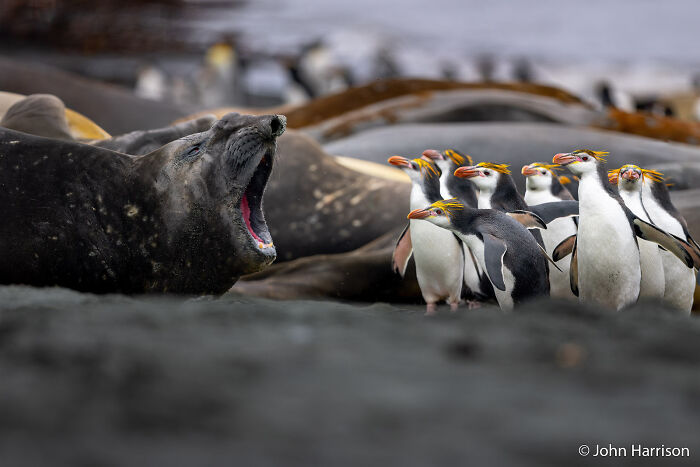
Royal penguin (Eudyptes schlegeli), Southern elephant seal (Mirounga leonina)
A group of royal penguins pause mid-march as an elephant seal voices objection. Confidently striding up the shoreline earlier, the penguins reconsider their route in the face of overwhelming size and sound. This fleeting negotiation between species, where determination meets dominance, shows that even the boldest procession knows when to hesitate.
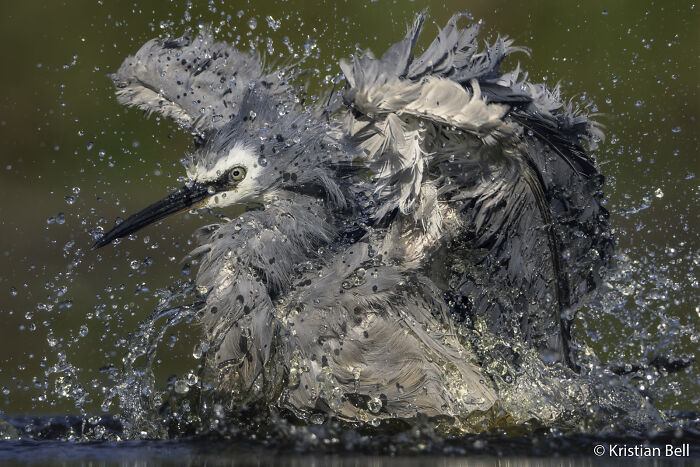
White-faced heron (Egretta novaehollandiae)
White-faced herons are typically reserved, quiet stalkers; experts at using guile to sneak up and prey on small animals. But catch one at bath time and all dignity goes out the window. Pure, uninhibited chaos.
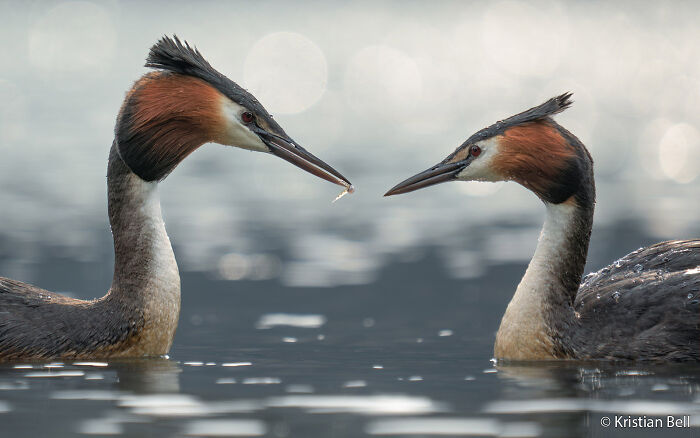
Great crested grebe (Podiceps cristatus)
Great crested grebes are famous for elaborate courtship displays, but sometimes romance is just quietly passing your partner a snack. This pair may be past the honeymoon stage, but it was lovely to witness such apparently thoughtful gestures between them.
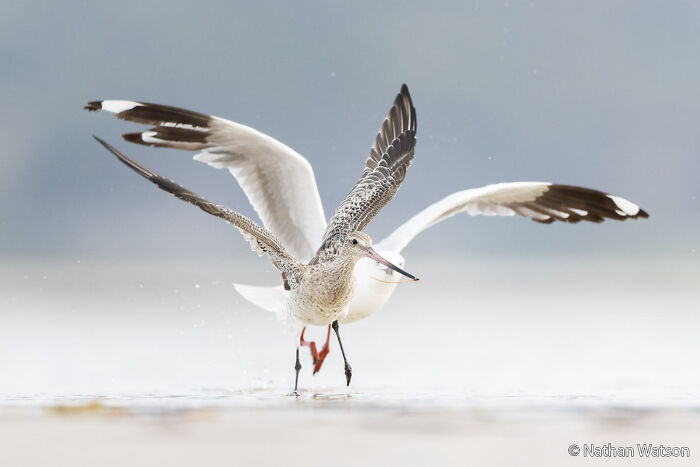
Bar-tailed godwit (Limosa lapponica), Silver gull (Chroicocephalus novaehollandiae)
After migrating thousands of kilometres to Australia, a bar-tailed godwit tries to feed on a juicy sandworm. But, at low tide, meals on the sandbar don’t come easy. As soon as the godwit pulls the worm free, a silver gull gives chase and eventually steals the prize.
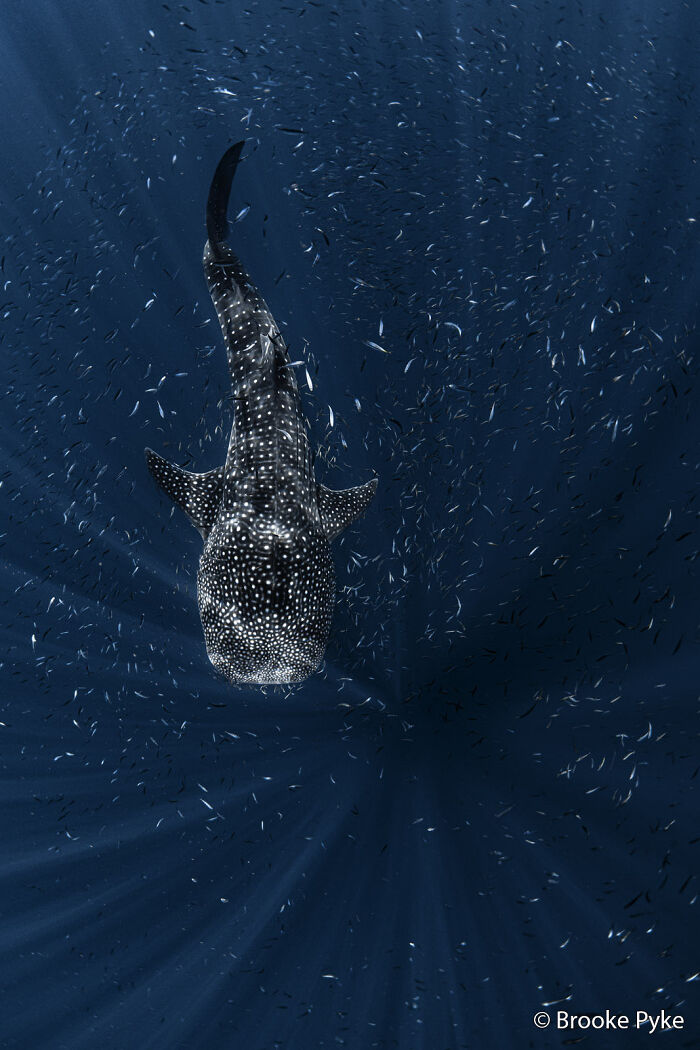
Whale shark (Rhincodon typus), Status: Endangered
We were greeted by this inquisitive young whale shark, surrounded by a school of sparkling silver fish. Everything aligned: the ocean was as calm as a lake, the late afternoon sun glimmered off the surrounding fish, and the whale shark’s white spots glowed. These encounters make me deeply appreciate the incredible place I call home.
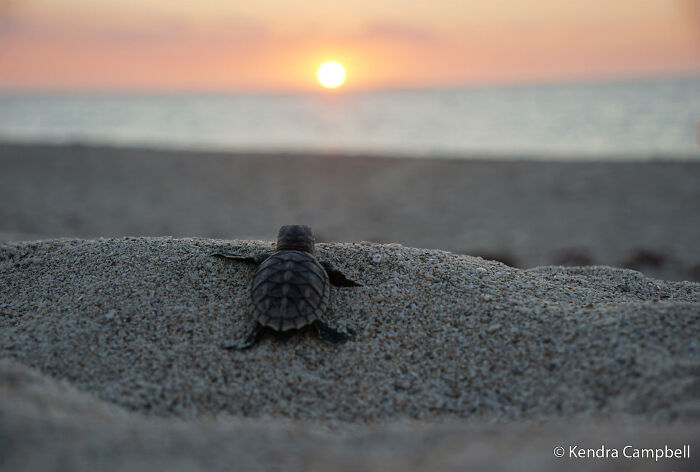
Hawksbill turtle (Eretmochelys imbricata), Status: Critically endangered
As I lay on the sand behind this hatching nest at sunset, I thought about how the statistics are against their survival. Then, that this may be the one in 1,000 that survives against the odds, returning to this same beach to nest in several decades.
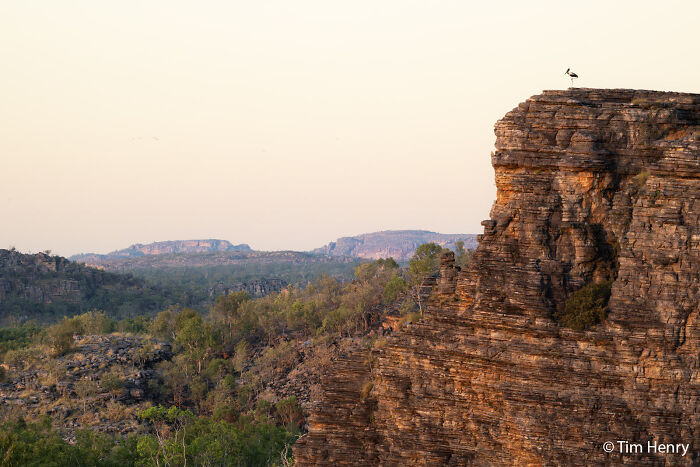
Black-necked stork (Ephippiorhynchus asiaticus)
At sunrise, a lone black-necked stork faces toward Arnhem Land. Perched high above its usual water’s edge, it rests with one leg raised, a distinctive posture marking the quiet beginning of a brand new day.
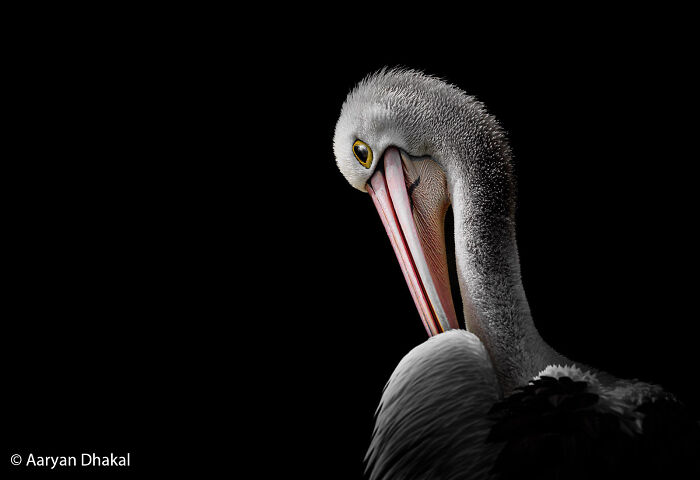
Australian pelican (Pelecanus conspicillatus)
Silent grace reflects my pursuit of balance between precision and emotion. I waited for light to reveal the pelican’s texture and form, capturing a moment of calm resilience. Inspired by traditional simplicity, the image expresses stillness and poise, where subtle detail and quiet presence speak most powerfully.
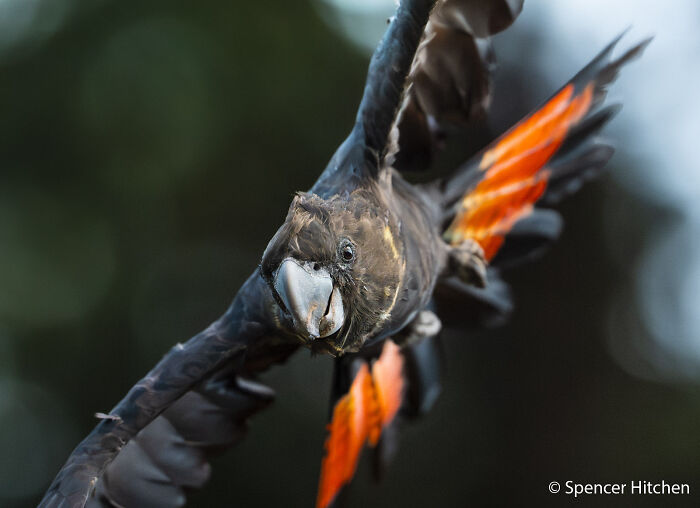
Glossy black cockatoo (Calyptorhynchus lathami lathami)
Most nights, you will find ‘Glossy Bob’ and I observing our local glossy black cockatoo flock as they drink at their local water hole. I photograph and observe their behaviours so that we can better understand these magnificent birds. Sometimes they even give me close-up fly-bys, like this female glossy.
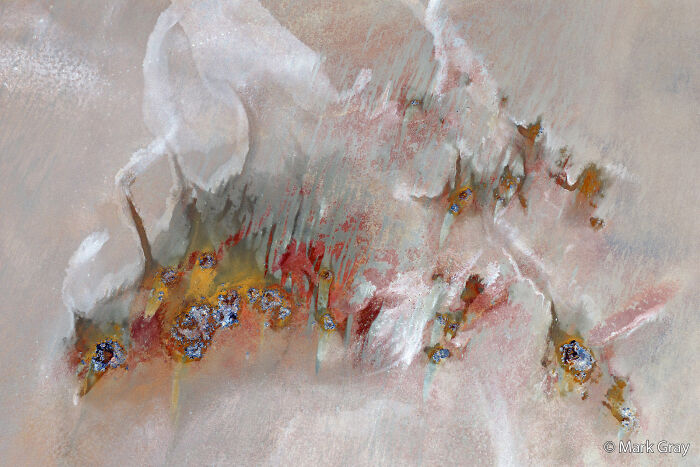
I captured this unique abstract aerial photograph while flying over beautiful Lake Tyrrell, a salt lake in country Victoria, Australia.
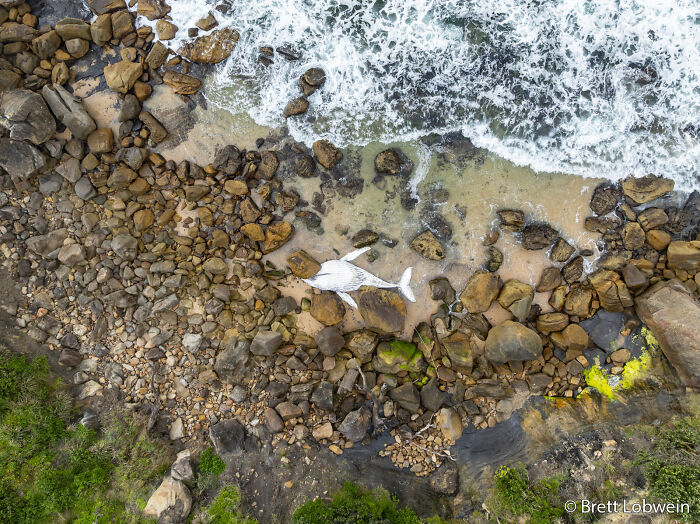
Humpback whale (Megaptera novaeangliae)
Every year over 40,000 humpback whales migrate up the east coast of Australia. This brings them in close contact with humans. I heard that a young whale had become entangled in a shark net, drowned and washed up on a beach. A sad reminder of the cost of shark nets.
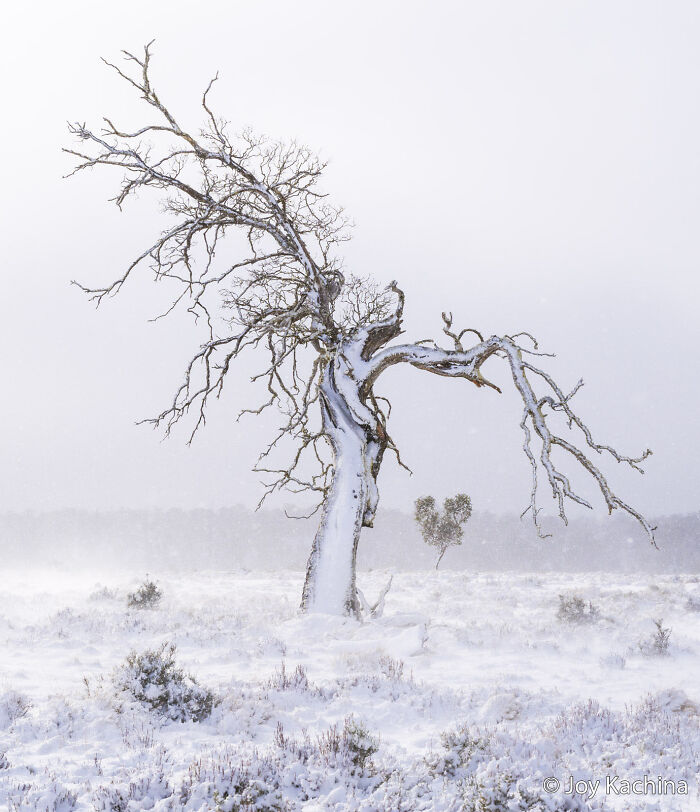
Cider gum (Eucalyptus gunnii), Status: Endangered
Cider gums are a vital part of our natural and cultural heritage. The small, heart-shaped gum tree, fragile yet resilient, grows beside the remnants of its deceased parent. Historically, Palawa elders tapped these trees for sugary sap to create the fermented drink wayalinah. The trees still bear the scars of generations of tapping, deeply etched into the fallen remains
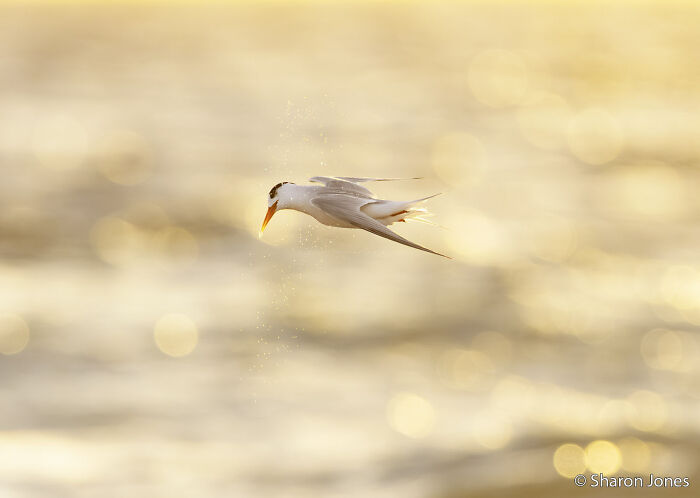
Fairy Tern (Sternula nereis), Status: Vulnerable
From my first visit to the fairy tern colony, I was hooked. Observing their antics, I began to anticipate the swift spin to shake off the sea. Working with the backlight, I waited for that fleeting moment when behaviour, light, and drifting spray aligned, creating art from nature.
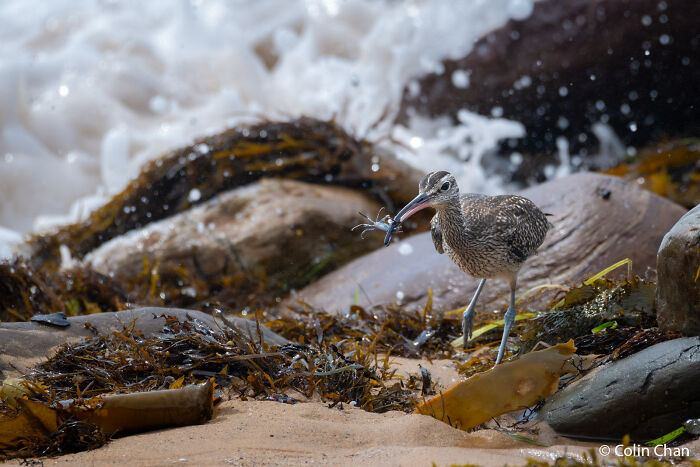
Whimbrel (Numenius phaeopus)
It’s a race against time for this whimbrel, which I watched expertly pluck this crab from the rocks. Not just to escape from the onrushing waves with its prized catch but also to ‘fill up’ with enough food along Australia’s coast for its long migration north towards the Arctic.
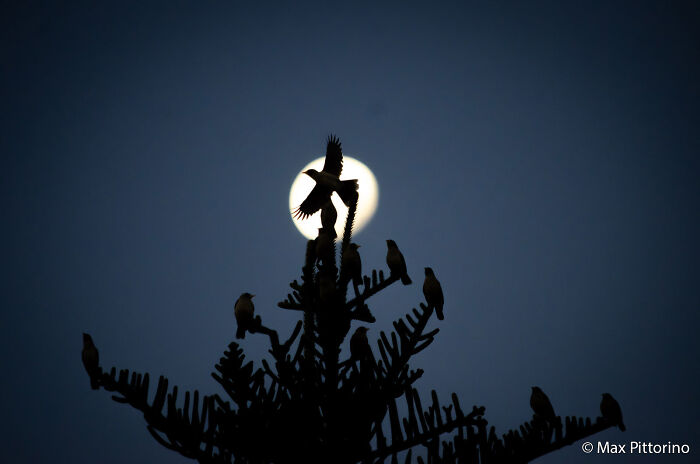
Noisy miner (Manorina melanocephala)
A large group of noisy miners congregate atop a large conifer tree at dusk. The miner perched at the top of the tree takes off, wings spread, before the glowing moon.
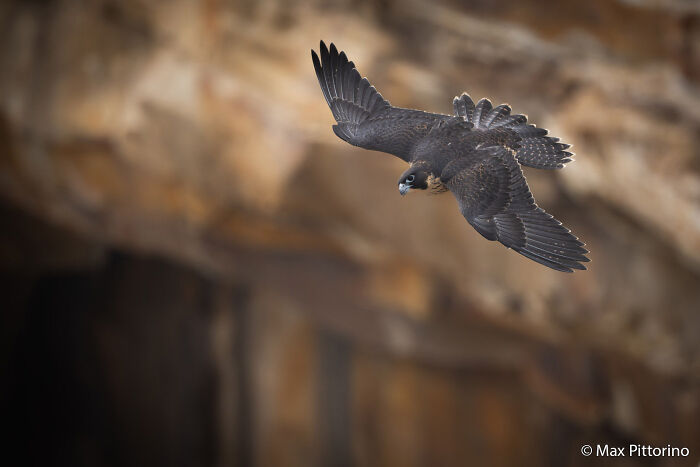
Peregrine falcon (Falco perigrinus)
The fledgling peregrine falcon portrayed in this image is soaring down towards one of its parents, which has landed on a cliff ledge just out of view with a freshly caught fish. I took this image moments before the young falcon flew out of my line of sight.
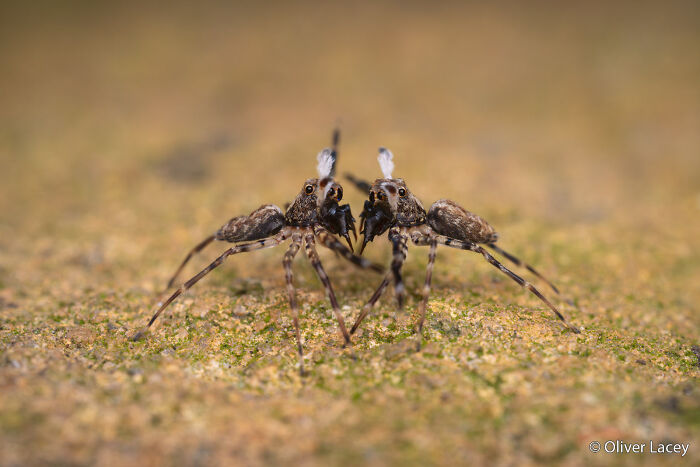
Jumping spider (Jacksonoides sp.)
These two male jumping spiders were engaged in a territorial dispute. They repeatedly advanced then broke off for over an hour. Each encounter featured elaborate visual displays, with both spiders waving their pedipalps and forelegs to appear larger and intimidate their rival, but without resorting to physical contact.
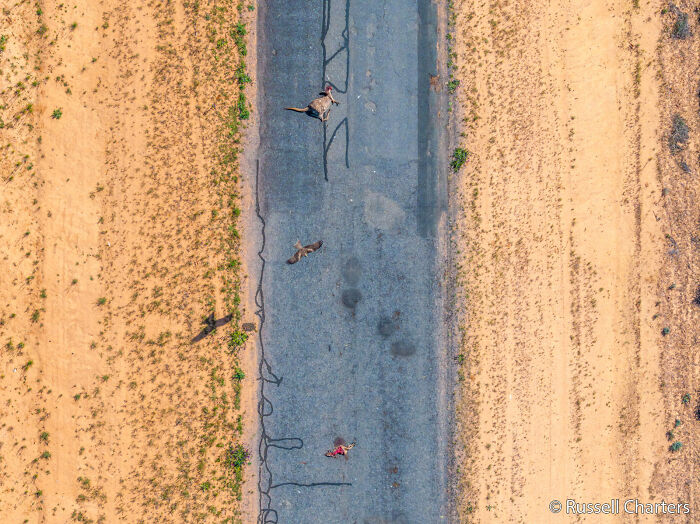
Western grey kangaroo (Macropus fuliginosus), Whistling kite (Haliastur sphenurus)
Captured from a distance with a drone’s telephoto lens, this sobering perspective documents the harsh intersection of wildlife and infrastructure. A mother and joey, lost to an overnight road strike, provide a grim sustenance for a scavenging whistling kite. This image witnesses the raw, cyclical reality of nature’s endurance amidst human-altered landscapes.
If these were portraits I would have a hard picking a fav 2 hang on my wall, several r wall worthy
There were some absolutely breath-taking shots in here - thanks!
If these were portraits I would have a hard picking a fav 2 hang on my wall, several r wall worthy
There were some absolutely breath-taking shots in here - thanks!



















 No fees, cancel anytime