Get Premium
Dark mode theme is available exclusively for premium users. Learn more about the benefits of subscribing.
No fees, cancel anytime.

 Dark Mode Ad-Free Browsing Unlimited Content
 Ad-Free Browsing Unlimited Content Dark Mode
Join 1.2 million Panda readers who get the best art, memes, and fun stories every week!
What starts as a viral video rarely stays on the screen.
Across platforms like TikTok, dangerous challenges spread at a pace that outstrips any warning label, often presented as harmless dares, they offer surefire ways to gain attention online.
For younger users, especially those growing up immersed in algorithm-driven feeds, the danger of these trends isn’t immediately apparent – until it’s too late.
Many of these challenges share the same pattern: A short clip shows someone attempting something extreme, the consequences are either minimized or not shown at all, and the format invites imitation.
Children and teenagers attempted these challenges in bedrooms, backyards, streets, and public spaces, often believing they would walk away unharmed.
Most of them lost their lives.
These are 10 extremely dangerous TikTok challenges that ended in tragedy.
This post may include affiliate links.
The “door-kick challenge” has circulated on social media platforms, including TikTok, where participants film themselves kicking in strangers’ front doors as part of a prank-style escalation of “ding-dong ditch.”
The trend typically involves approaching homes, knocking or ringing the doorbell, and then violently kicking the door before fleeing, with the act recorded and shared online for views. While often framed as a joke, the force involved can cause property damage and put both residents and animals at risk.
What is portrayed as a prank can quickly lead to serious consequences, especially when homes are occupied or pets are inside and react unpredictably to the sudden intrusion.
In one case in Deltona, Florida, 14-year-old Jerald “Trey” Lucas was arrested after kicking in the front door of a home in December 2025, an act investigators believe was tied to the viral challenge.
The homeowner, Dissany Cid, was not present at the time, but her dogs were inside. One of them, a Yorkshire Terrier named Spookie, escaped through the damaged door. Spooked and disoriented, the dog ran into the street and was later found lifeless after being hit by a car.
“If it was my door, I don’t care about my door,” Cid said. “But he didn’t deserve that. He didn’t deserve to d*e like that.”
Initially, authorities said there was not enough evidence to pursue charges, but after revisiting the case, the Volusia County Sheriff’s Office arrested the teenager on January 27, 2026.
The suspect now faces charges of burglary and criminal mischief.

This stupid trend could also get you shöt and kílled in certain areas of America where they're gun-loving and big on the Castle Doctrine.
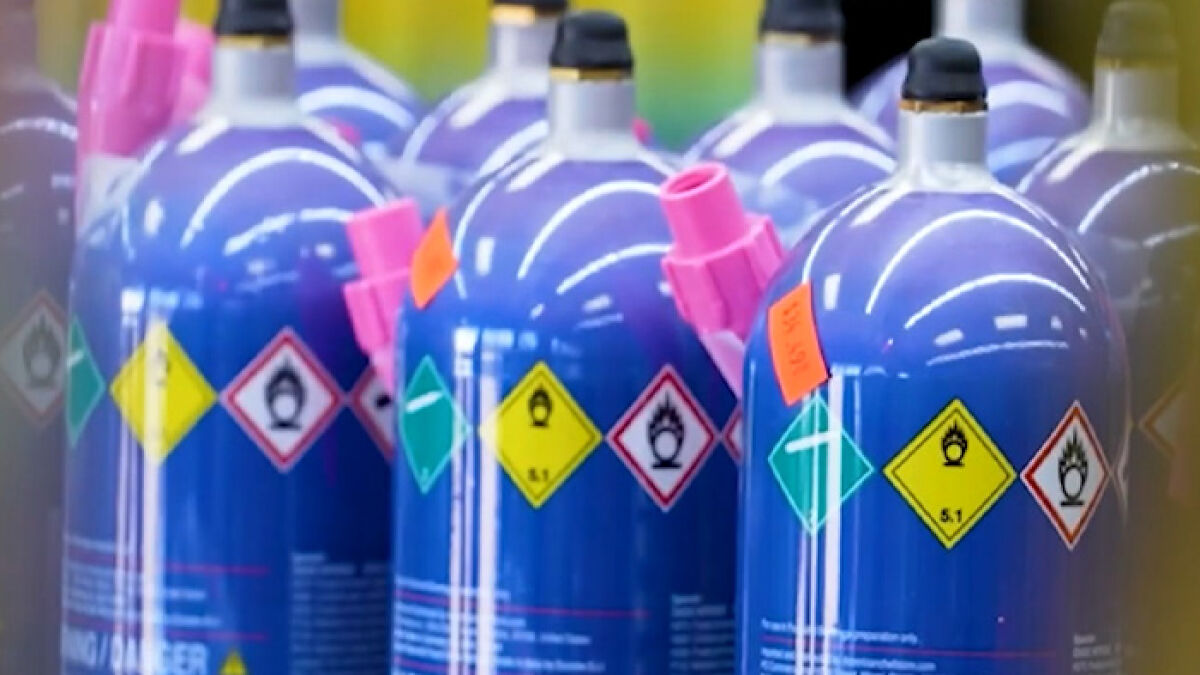
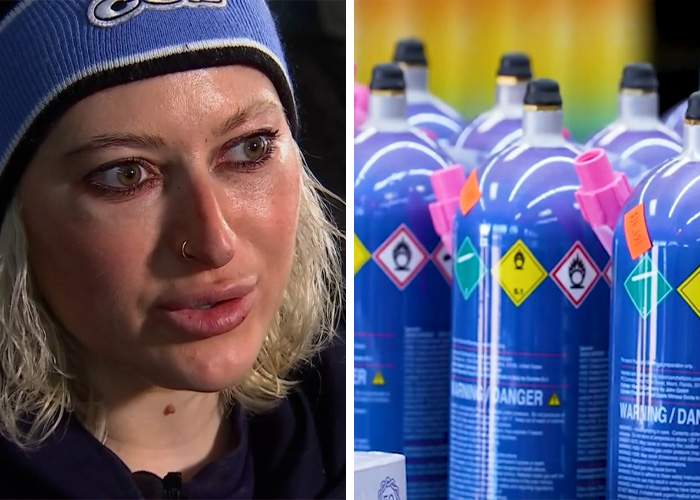
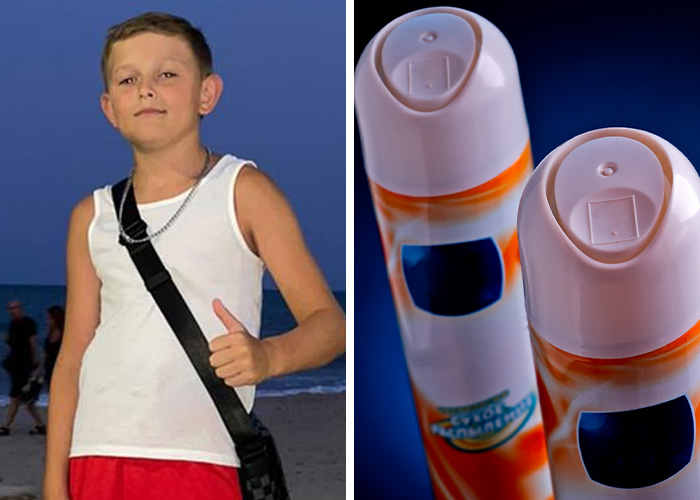
The “Galaxy Gas” trend started gaining traction across social media platforms in 2024, with users sharing videos of themselves inhaling nitrous oxide canisters for a brief euphoric effect.
The trend revolves around products originally intended for culinary use, particularly flavored whipped cream chargers sold under brands like Galaxy Gas. Despite clear disclaimers warning against inhalation, the gas is widely accessible and often marketed in colorful packaging that critics say appeals to younger audiences.
While nitrous oxide is legally used in medical and food settings, recreational inhalation can lead to serious neurological damage and fatal oxygen deprivation. The short-lived high has contributed to repeated use, increasing the risk of addiction and long-term harm.
One case that raised concerns involved Nashville resident Kelly Rosenthal, who publicly spoke about her addiction to nitrous oxide months before her passing.
In an interview, she admitted she continued using the substance even after undergoing brain surgery.“I was aware it was crazy, but I mean, I didn’t care. I was still so addicted to it and I couldn’t stop.”
Four months after sharing her story, Rosenthal was found lifeless in her apartment on June 23, surrounded by numerous nitrous oxide canisters.
According to a police report, both used and unused cartridges were scattered throughout her bedroom.
Her family and friends pointed to the widespread availability of the substance as a key factor, warning that its accessibility makes it difficult for users to break the cycle.
I worked at a grocery store during the pandemic. One of my co-workers was a young guy who had a seemingly endless access to, er, shall we say, a range of pharmaceuticals and other substances that he definitely did not have prescriptions for. He was also really into "poppers", which are small tubes of nitrous that are supposed to be used in whipped cream canisters. I tried poppers once and it was honestly terrifying and not really an "enjoyable" high. One night during closing shift, this guy did a couple poppers and suddenly laid down on one of the produce carts in the produce department backroom (where we were all hanging out) and his lips turned blue and he became completely unresponsive. I was a split-second from calling paramedics when one of the produce guys slapped the kid across the face and roused him. I did a lot of drúgs during this phase of my life (I'm not ashamed to talk about it) but nitrous is an absolutely terrifying drúg that is NOT worth the inherent risk.
The “Korean Love Game” is a rumored online manipulation scheme masquerading as a viral social media challenge, where predators – often posing as attractive Korean men or K-pop fans– befriend vulnerable teens via chat apps, TikTok DMs, or obscure sites.
They build fake romantic bonds over about 50 days, issuing daily “tasks” that start innocently – like pranks or K-drama recreations – but escalate to psychological control, self-harm, isolation from family, and a final dare to take their own lives.
The scheme has been compared to the infamous Blue Whale Challenge, an online hoax that emerged in Russia around 2013-2016, targeting vulnerable teens via social media groups with similar escalating “dares” that end in self-harm.
A case that brought renewed scrutiny occurred on February 4, 2026, in Ghaziabad, India, where three sisters aged 16, 14, and 12 lost their lives after jumping from the ninth floor of their apartment building.
Police were alerted around 2:15 am and found the girls critically injured before they were declared lifeless at a nearby hospital.
Investigators said a note recovered at the scene suggested a strong emotional attachment to Korean-themed online content, though no specific app or platform was identified.
The girls’ father told authorities they had been heavily engaged with such content since the COVID-19 lockdown and often spent time together playing games and consuming online media.
Officials have stressed that the investigation is ongoing and that it is too early to attribute the incident to a single challenge.
However, the case has intensified concerns about how immersive online trends and narratives can influence young users, particularly when combined with isolation and excessive screen time.

Missing large parts of the story... The parents, having realized what was happening, took the electronic devices from the girls and severely limited their access to their obsession (Korean EVERYTHING). That definitely influenced their behavior and choices too.
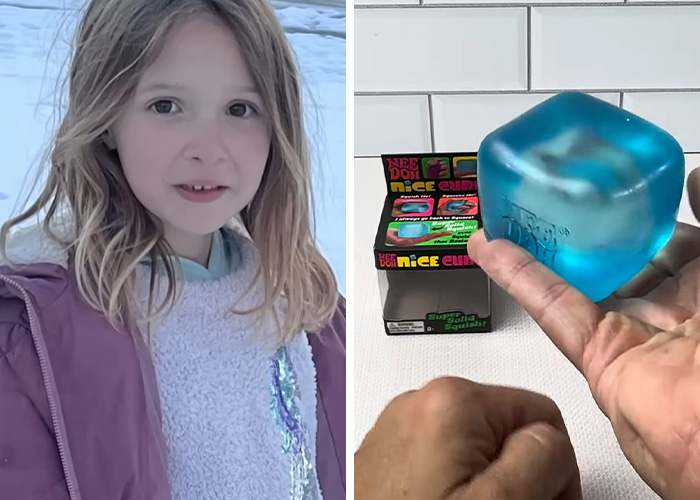
The “NeeDoh cube challenge” has spread across social media platforms, including TikTok and YouTube, where users experiment with the sensory toy by exposing it to extreme temperatures.
The trend typically involves freezing the squishy cube and then microwaving it, with the expectation that the texture will change. In reality, the gel inside heats unevenly, builds pressure, and can violently rupture seconds after being handled.
The trend has led to a growing number of severe burn injuries in children, with doctors warning that the hot, glue-like substance sticks to skin and causes deep tissue damage.
One of the most serious cases occurred in October 2025, when seven-year-old Scarlett Selby from Missouri was placed in a medically induced coma after the toy exploded and covered her face and chest in burning gel.
A similar incident was reported in early 2026, when nine-year-old Caleb Chabolla from Illinois suffered second-degree burns to his face and hands after microwaving the cube.
His mother recalled him screaming, “It burns, it burns,” as the substance adhered to his skin.
Doctors later confirmed Caleb was not an isolated case. By March 2026, Loyola Medicine said it had treated at least four children with nearly identical injuries linked to microwaved NeeDoh cubes exploding on contact.
In another case in April 2026, a 10-year-old girl in Cleveland suffered second-degree burns to her hands and fingers after attempting the same challenge, with firefighters warning the outcome could have been far worse had the substance struck her face.
Following the incidents, the manufacturer Schylling issued a public statement, stressing that the product must not be heated, frozen, or microwaved. The company also said it had worked directly with TikTok to remove videos of the trend.
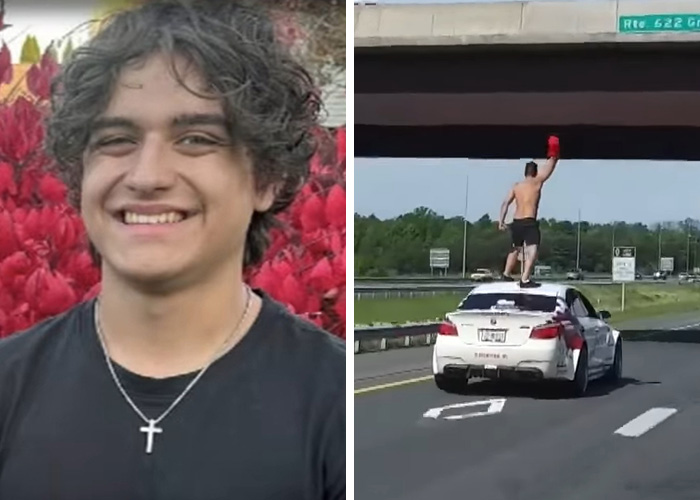
The “car surfing” challenge has gained traction on social media platforms, including TikTok, where users attempt to perform high-risk stunts involving moving vehicles.
The trend typically involves individuals standing on, being dragged by, or attaching objects to cars while they are in motion, often at significant speeds. Participants film the act and share it online, presenting it as a thrill-seeking challenge.
While these stunts are portrayed as daring or entertaining, they carry an extreme risk of serious injury. Loss of balance, sudden acceleration, or impact with other vehicles can lead to catastrophic consequences within seconds, not only for those participating in the “challenge,” but also for those around them.
One fatal case occurred on June 1, 2025, in Bethlehem Township, Pennsylvania, when a 17-year-old boy passed away during one such stunt. According to authorities, he was riding on top of an upside-down table being pulled by a moving vehicle when the driver accelerated, causing him to be thrown into a parked car.
“The juvenile driver recklessly operated the vehicle at a significant speed such that it whipped the rider… into another parked vehicle, resulting in the d**th of the 17-year-old,” District Attorney Stephen Baratta said.
In a separate but related incident in the same area on March 18, a 20-year-old woman suffered permanent brain injuries after falling from the trunk of a moving car driven by her friend, who faced multiple criminal charges.
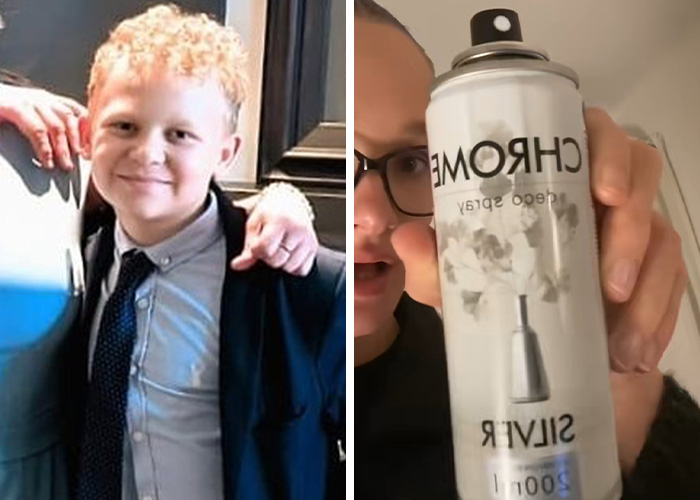
“Chroming” was also linked to the passing of 11-year-old Freddie Davis, whose mother had warned him about the trend a year before the tragedy.
Freddie was found unresponsive in his bedroom in Harold Hill, east London, in January 2026, after failing to wake up for school.
His mother, Roseanne, said she opened his bedroom door, called out “Fred” as she usually did, and immediately noticed something was wrong when he did not respond.
In a written statement read at the inquest, Roseanne said Freddie was lying face down and felt “colder than usual” when she touched his shoulder. She called for help before dialing 999.
“I think my son is d*ad,” she told the operator.
When police arrived, a Ted Baker body spray can fell from Freddie’s dressing gown as he was rolled over. Officers also reported a smell coming from the room. Toxicology later found propane, butane, and isobutane in his tissue samples, matching the contents of the aerosol can.
Pathologist Dr. Liina Palm gave the cause of passing as inhalation of butane aerosol propellant, and the coroner ruled Freddie’s an accident. Roseanne later warned other parents that she would no longer keep aerosols in her home.
“Children are easily led, and they do not realize the dangers. These things do k*ll people.”
“Subway surfing” has resurfaced as a dangerous trend on social media platforms, including TikTok, where users film themselves riding on top of moving trains.
The stunt involves climbing onto the exterior of subway cars while they are in motion, often at high speeds and with no protection from obstacles, electrical equipment, or sudden movements. Videos of the act are frequently shared online, turning the behavior into a high-risk challenge among young users.
Despite repeated public safety campaigns, the practice continues to result in fatal consequences. Falls, collisions with structures, and electrocution are among the most common causes of fatalities linked to the stunt.
One such tragedy occurred on October 8, 2025, in New York City, when two girls, aged 12 and 13, were found unconscious at the Marcy Avenue subway station after riding atop a Brooklyn-bound train. Emergency responders pronounced them lifeless at the scene.
One of the victims, 12-year-old Zemfira Mukhtarov of Bay Ridge, had been weeks away from her 13th birthday. Transit officials later condemned the trend, with Metropolitan Transportation Authority president Demetrius Crichlow stating, “Getting on top of a subway car isn’t ‘surfing’ — it’s s**cide.”
Authorities noted that multiple fatalities had already been recorded that year due to the same stunt, underscoring how a behavior amplified online continues to claim lives despite ongoing warnings and enforcement efforts.
“Chroming” has emerged as a dangerous trend on social media platforms, including TikTok, particularly among teenagers.
The practice involves inhaling chemicals from aerosol products such as deodorants or spray paints in order to experience a brief euphoric effect. Many of these products contain butane gas, a substance that can disrupt heart rhythms and lead to sudden cardiac arrest.
While often treated online as a reckless stunt, inhaling aerosol gases carries a high risk of fatal consequences. Medical experts have warned that butane exposure can cause immediate heart failure, even on a first attempt.
Among the victims was 12-year-old Oliver Gorman, who lost his life on May 5, 2025, after attempting the trend in his bedroom in Hyde, Greater Manchester. He was found unresponsive by his mother after returning home from a family trip, with empty deodorant cans nearby.
Despite emergency efforts, he was pronounced lifeless at 7:31 p.m. A post-mortem later confirmed that he passed away from butane inhalation.
At an inquest, Assistant Coroner Andrew Bridgman described the case as “quite frightening,” pointing to the accessibility of such content online and warning that these challenges are “easily accessible” to young users.
Oliver’s mother, Clare Gillespie, said the loss came in a matter of minutes, recalling, “He had just 20 minutes in his bedroom and he was gone,” adding, “I didn’t know it could k*ll you, especially that quickly.”
The “blackout challenge” has circulated widely across social media platforms, including TikTok, particularly among younger users.
The trend, sometimes referred to as the “choking challenge,” involves intentionally restricting oxygen by holding one’s breath or using objects to apply pressure to the neck until the participant loses consciousness.
While the challenge is often framed as a test of endurance, it carries severe and immediate risks. Oxygen deprivation can cause brain damage, cardiac arrest, or the person passing away within minutes, especially in children.
Among the victims was 9-year-old JackLynn Blackwell, who lost her life on February 3, 2026, after attempting the challenge at her home in Texas.
According to her family, she had previously seen a video of someone performing the act and had been warned not to try it. Her father, Curtis Blackwell, found her unresponsive in the carport with a cord around her neck.
JackLynn’s parents, Curtis and Wendi Blackwell, have since spoken out about the dangers of viral challenges, warning that “it’s not a joke, it’s not a game, it’s life and death.” Curtis added that many children underestimate the risks.
“I got her off the cord. I tried to give her CPR until the first responders got there,” he said. “It was the most terrifying, shocking thing I’ve ever seen.”
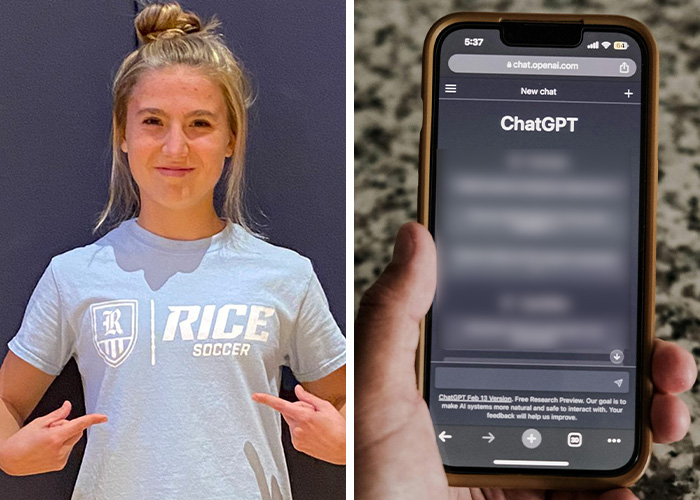
The “devil trend” has circulated on platforms like TikTok in recent years, in which users engage in a scripted interaction designed to generate deeply personal and often harsh responses about themselves.
The format typically involves prompting an AI-style exchange that escalates into intense, self-reflective, or emotionally charged statements. While some participants treat it as a form of introspection or dark humor, the content can become psychologically distressing, especially for vulnerable users.
Mental health experts have warned that repeated exposure to negative, self-directed narratives can reinforce harmful thought patterns, particularly when combined with isolation or pre-existing struggles.
A case that raised concern involved 19-year-old Rice University student Claire Tracy, who was found lifeless in her off-campus housing in December 2025.
Medical examiners later confirmed her cause of passing as asphyxia due to oxygen displacement by helium, meaning she took her own life.
The day before the incident, Tracy had posted a video participating in the “devil trend,” sharing a series of responses that included intensely critical and introspective language directed at herself.
In one exchange, the response read, “You didn’t need the devil to tempt you; you handed him the blade and carved the truth into your own mind.”
Rice University described Tracy as a “talented athlete” and a student with a “bright spirit,” as her passing added to growing scrutiny over how emotionally charged online content can affect young users.


Anybody needs reasons why kids shouldn't have unfettered access to antisocial media, well here it is...

Half of these have been around far longer than any social media. Dumb kids have been huffing aerosols since the 70s at least.

When the movie "Teen Wolf" came out in the '80's, people were driving around on the tops of cars.
Load More Replies... Anybody needs reasons why kids shouldn't have unfettered access to antisocial media, well here it is...
Half of these have been around far longer than any social media. Dumb kids have been huffing aerosols since the 70s at least.
When the movie "Teen Wolf" came out in the '80's, people were driving around on the tops of cars.
Load More Replies...

























 No fees, cancel anytime