Get Premium
Dark mode theme is available exclusively for premium users. Learn more about the benefits of subscribing.
No fees, cancel anytime.

 Dark Mode Ad-Free Browsing Unlimited Content
 Ad-Free Browsing Unlimited Content Dark Mode
Join 1.2 million Panda readers who get the best art, memes, and fun stories every week!

You’ll often hear friends referring to each other as sisters or brothers. After all, some people do get so close to one another that the only way to describe that bond is that of a sibling. Sometimes, even a bit of sibling rivalry.
But at times, those ties and bonds thin over time — life gets in the way, after all. But not to the point where core values shift radically. Or at least, not usually. In this story, a woman accepted an adopted sister into her family, but after being invited to spend some time with her new family, she realized their values didn’t really align anymore, and here’s why.
Read more: Reddit
Image credits: Freepik / Magnific (not the actual photo)

Image credits: ASphotofamily / Magnific (not the actual photo)

Image credits: cookie_studio / Magnific (not the actual photo)

Image credits: AvocadoSalt
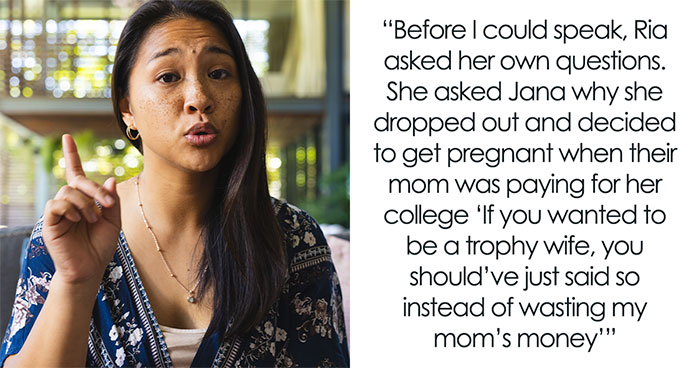
The story we bring you today is told by the Original Poster (OP), a woman who was baffled by her sister’s actions. As she explains, the woman in question was adopted into her family after her own mother decided to move away without her. The narrator’s dad then decided they would care for the 15-year-old, and that’s how their sisterhood began, even though they weren’t biologically related.
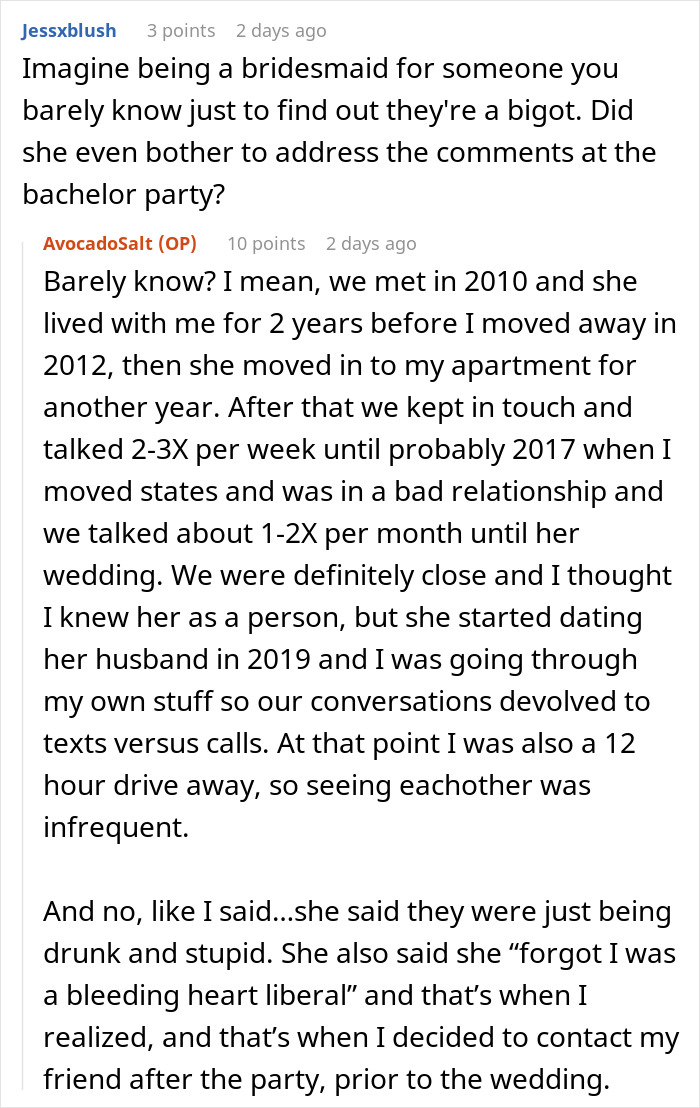
Years later, when the OP turned 18, she moved out of her home with her sister. The sister later returned to their home state, but the two remained close and stayed in touch. Several years later, however, the sister invited the narrator to her wedding to a man she hadn’t yet met because she had been living away. She, of course, said yes and returned home to take part in the bachelorette party celebrations.
Only, things didn’t go as planned. While the OP explains that she already knew the family was conservative, during a drunken conversation at the party, she realized they were far more than just economically conservative: they were racist. This concerned the OP because her plus-one to the wedding was her Black best friend. But her sister assured her that everything would be fine.
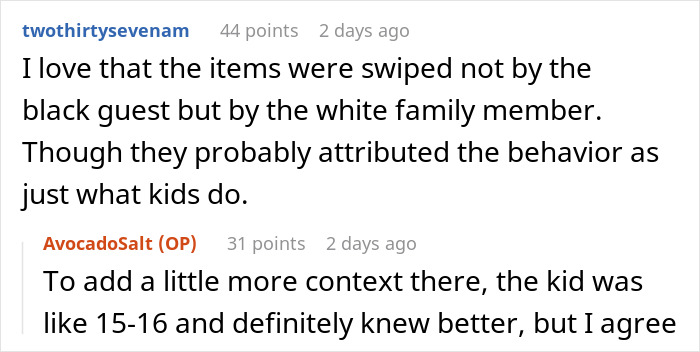
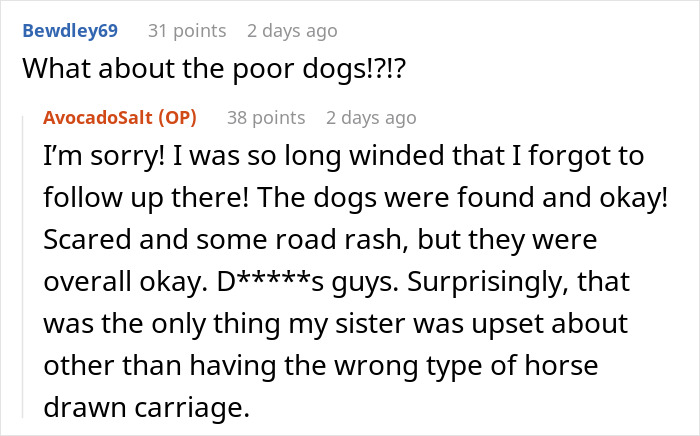
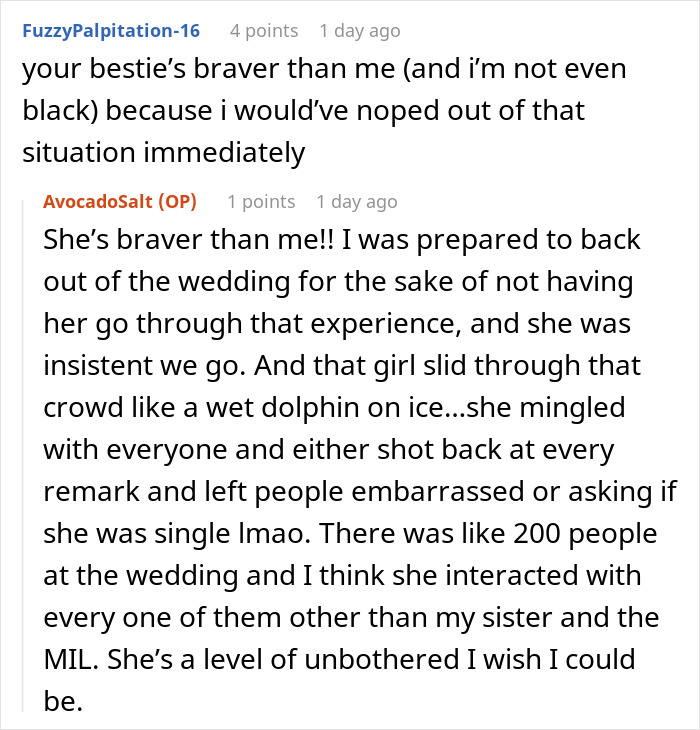
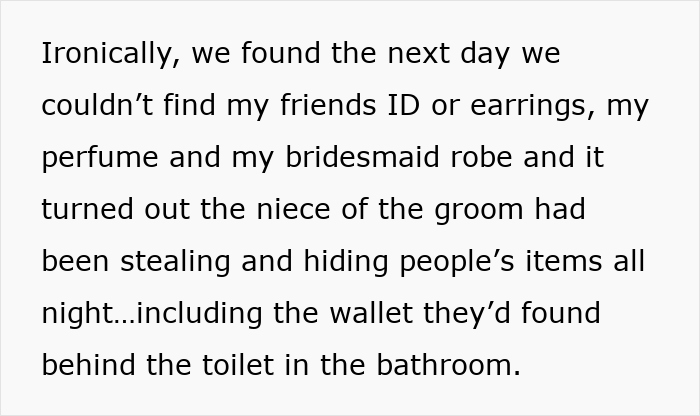
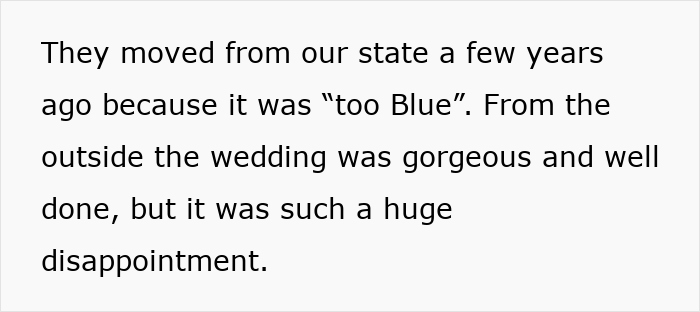
It wasn’t. The wedding was a debacle, and the OP explains that members of the groom’s family took turns making microaggressive remarks. They also followed her best friend around as though she might steal something. In the end, the OP was heartbroken that her adopted sister had chosen to associate with people who were so openly racist, and she feared that her sister might have been one herself all along.
Image credits: simonapilolla / Magnific (not the actual photo)
While the OP is absolutely valid in feeling blindsided by her sister, it doesn’t necessarily mean that she has always shared or defended those beliefs. Experts say that some people in relationships experience a concept called Relationship-Contingent Self-Esteem (RCSE), which essentially means that a person’s sense of self-worth primarily stems from the success of their romantic relationship.
By assuring her partner that they share the same beliefs, she may feel she can help ensure the relationship’s success. We’re also viewing the situation from the OP’s perspective, but sociologists suggest that social identity theory is a very real phenomenon. Our self-concept is closely tied to our social groups, so we often mimic or adopt others’ behaviors to fit in and feel a sense of belonging.
Now, it’s fairly difficult to know what to do in this situation. On one hand, the OP likely knows that her sister may have a fear of rejection or abandonment, which might lead some psychologists to suggest a “radical acceptance” approach. This involves accepting reality as it is, without trying to fight, deny, or change it. In this case, that would mean accepting her sister’s new reality and hoping she eventually recognizes it herself.
Netizens replied with a mix of shock and bewilderment. They couldn’t believe that the OP and her friend would even give these people a chance to show just how racist they were. Many others said the narrator should immediately cut ties with everyone involved. So, with all of that in mind, would you talk to the person you call your sister about the situation, or cut ties entirely?
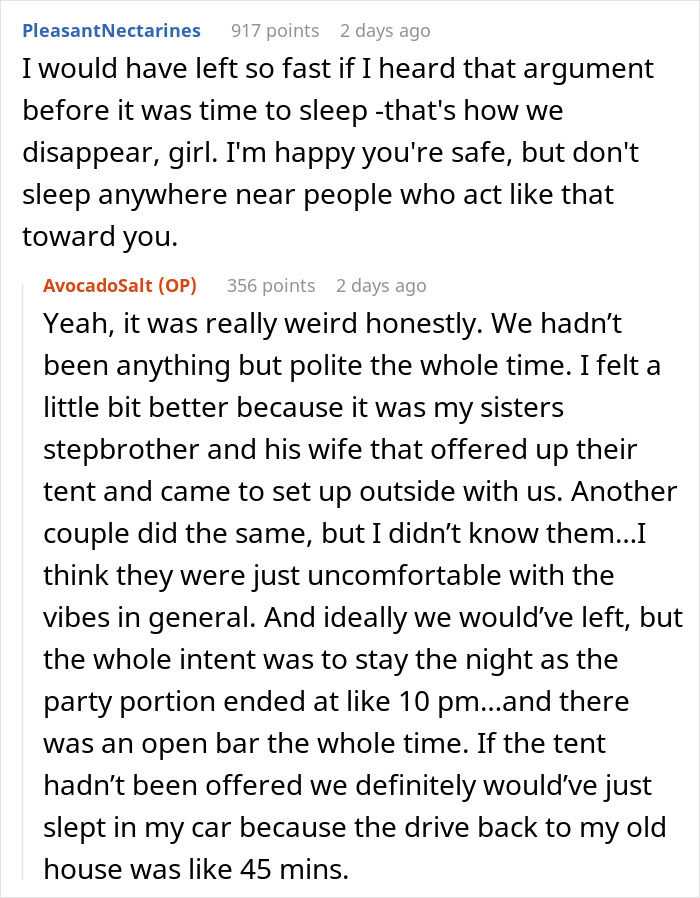
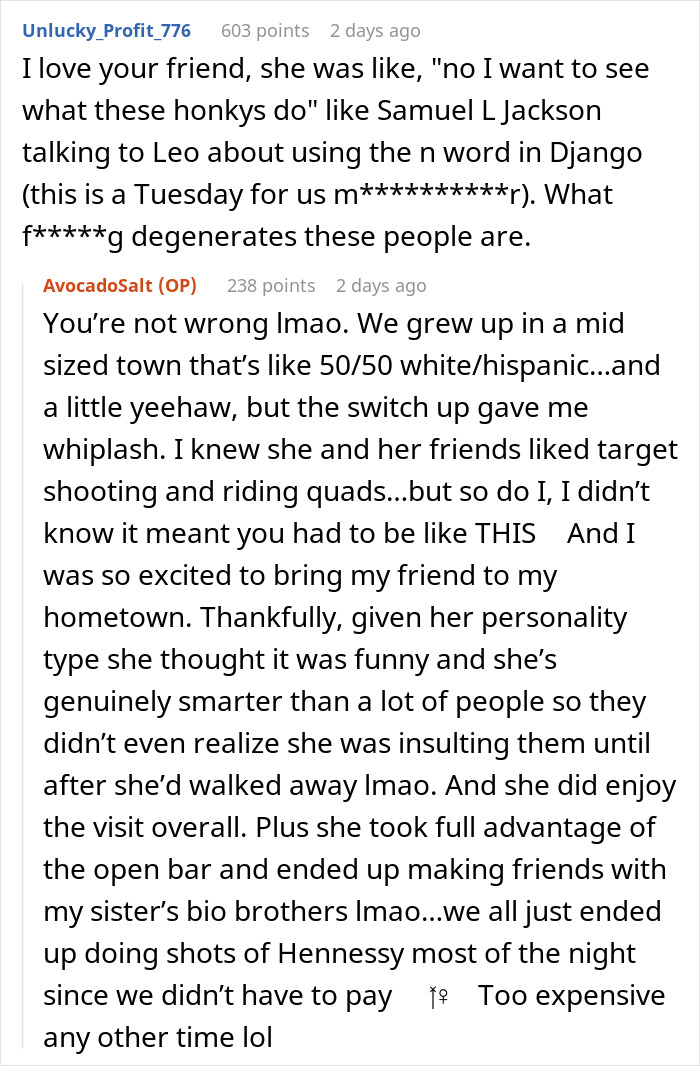
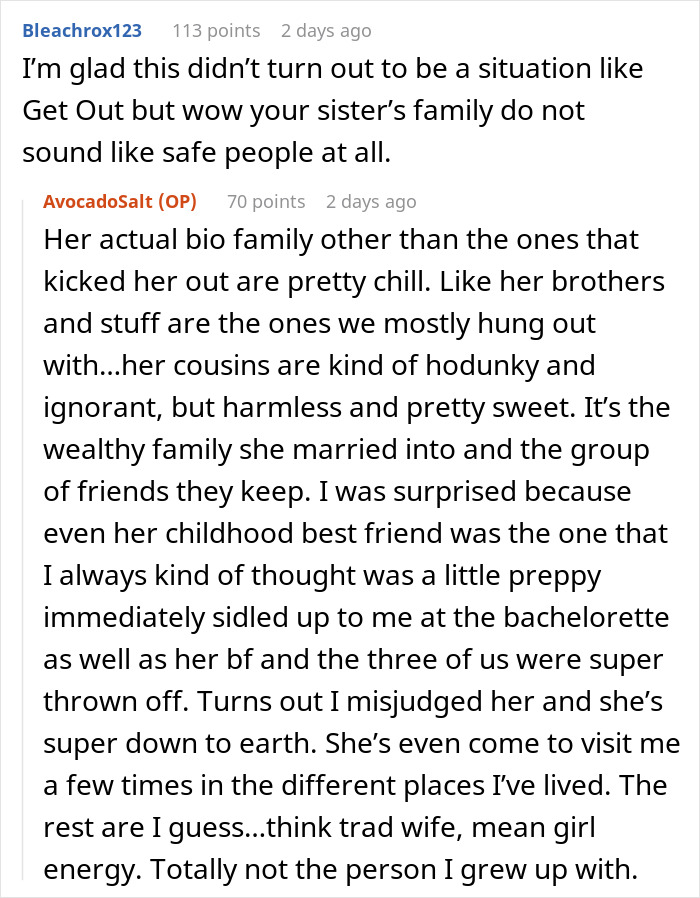
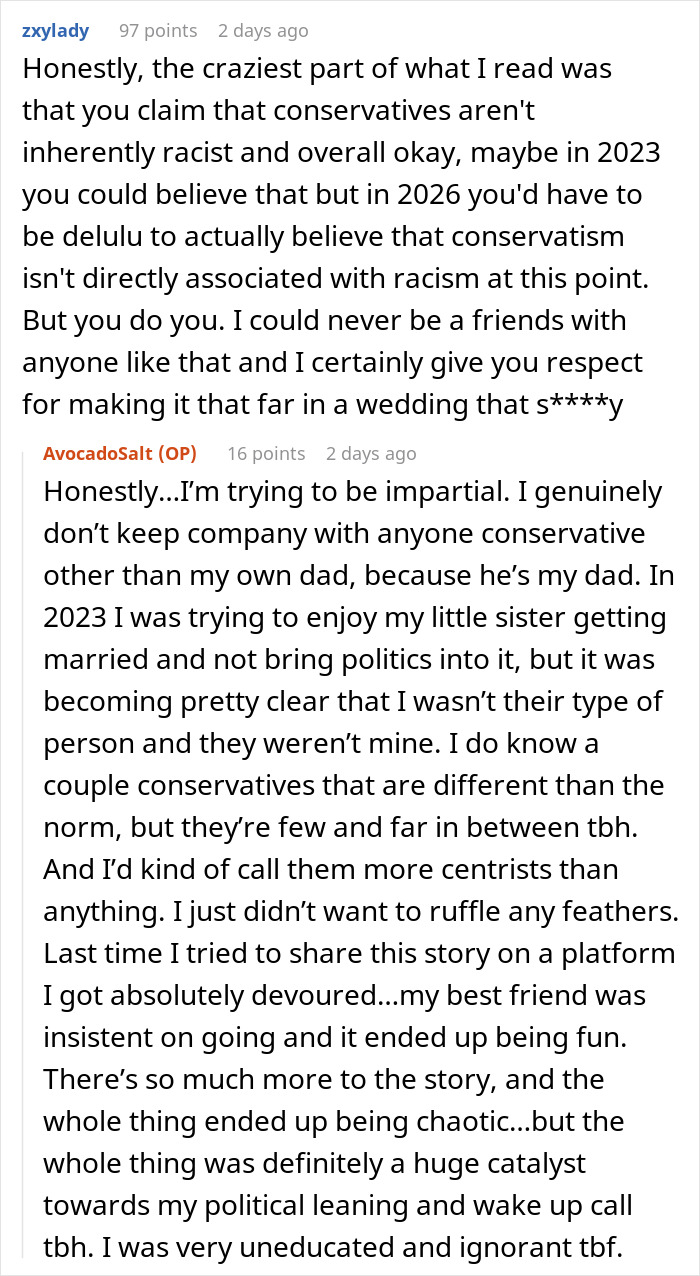


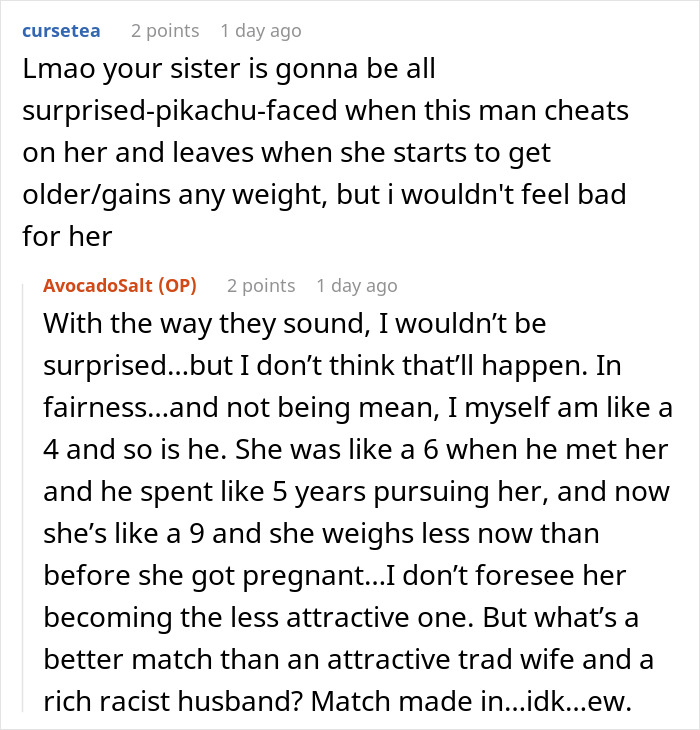
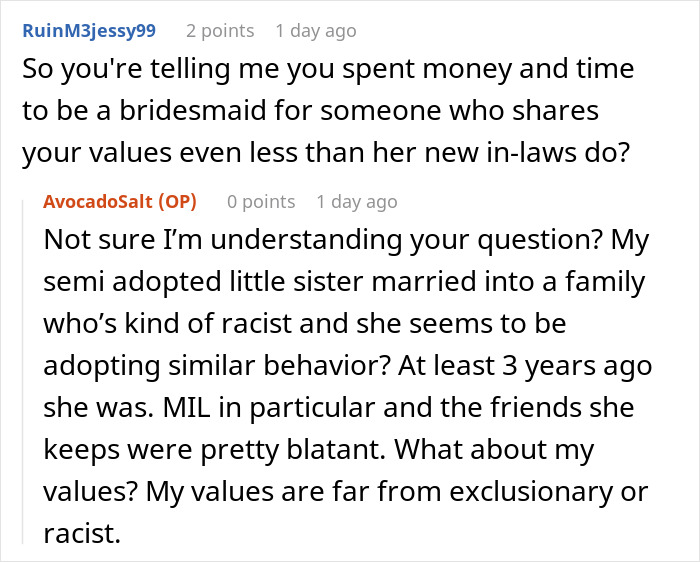
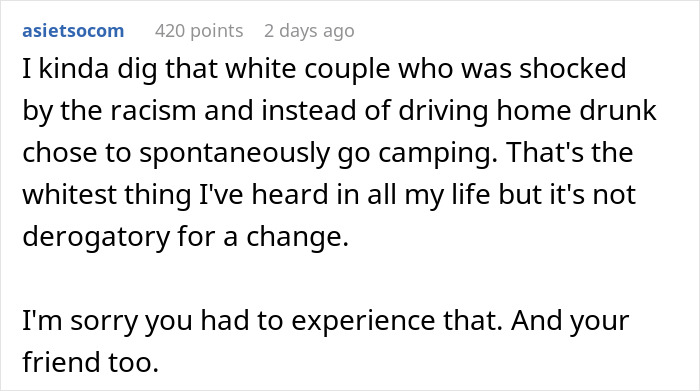
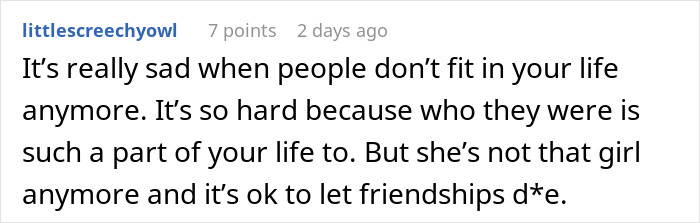


OP should have bowed out when slurs were used at the bachelorette party. I get you can't always leave a party immediately, but the next morning she should have made her excuses and made her way home. You could always arrange to meet up (even with bestie there for backup) after the wedding)



Not very surprising to me at all. In high school we had a friend group that was very liberal thinking, with the exception of one girl who would sometimes quietly express some conservative views. Now that we are all adults and Facebook is a thing, she is very vocal and VERY conservative. Over time, other members of the friend group started dropping regular communication with her. It's just too awkward for us to include her anymore, because we often share our political concerns, thoughts on social topics of the day, and she's not really someone who can take an "agree to disagree" approach to anything.
OP should have bowed out when slurs were used at the bachelorette party. I get you can't always leave a party immediately, but the next morning she should have made her excuses and made her way home. You could always arrange to meet up (even with bestie there for backup) after the wedding)
Not very surprising to me at all. In high school we had a friend group that was very liberal thinking, with the exception of one girl who would sometimes quietly express some conservative views. Now that we are all adults and Facebook is a thing, she is very vocal and VERY conservative. Over time, other members of the friend group started dropping regular communication with her. It's just too awkward for us to include her anymore, because we often share our political concerns, thoughts on social topics of the day, and she's not really someone who can take an "agree to disagree" approach to anything.

























 No fees, cancel anytime












25
7