Get Premium
Dark mode theme is available exclusively for premium users. Learn more about the benefits of subscribing.
No fees, cancel anytime.

 Dark Mode Ad-Free Browsing Unlimited Content
 Ad-Free Browsing Unlimited Content Dark Mode
Join 1.2 million Panda readers who get the best art, memes, and fun stories every week!

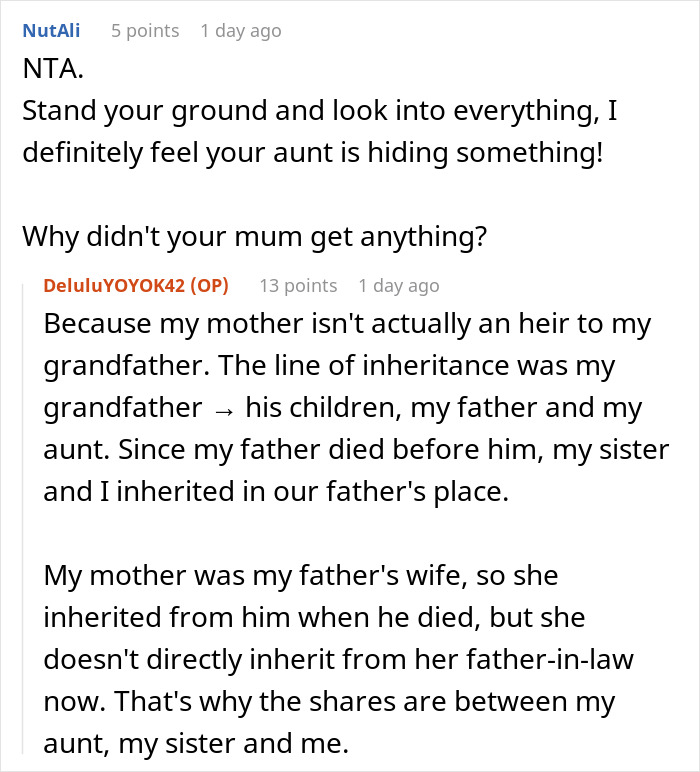
Inheriting property should be a positive thing, especially with the cost of houses skyrocketing. Typically, once the property becomes yours, you should be able to decide whether to keep it or sell it. But what happens when you inherit only a share of real estate, along with a relative that you really don’t like?
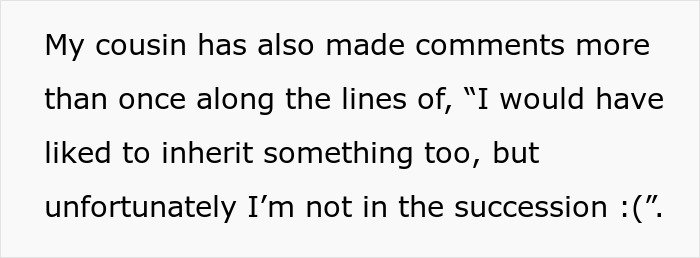
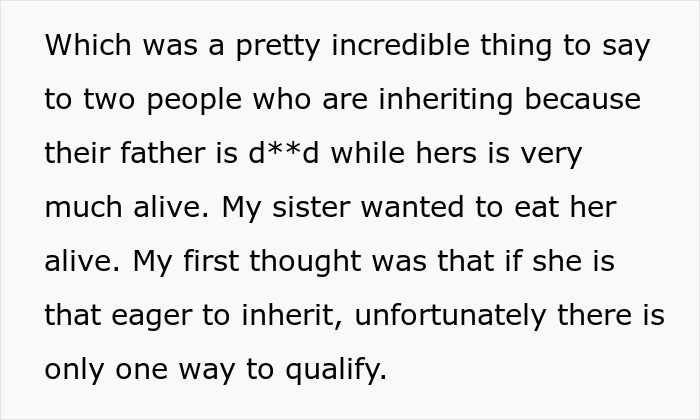
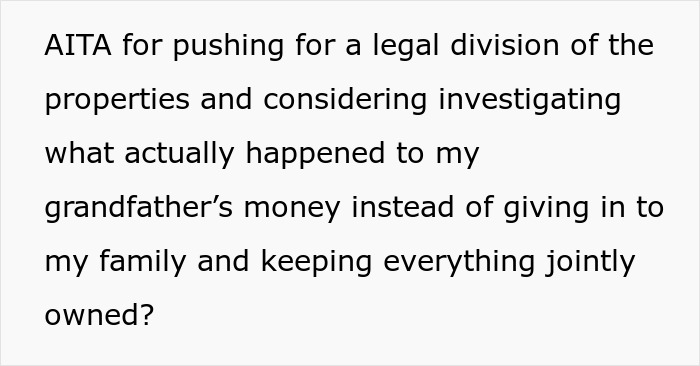
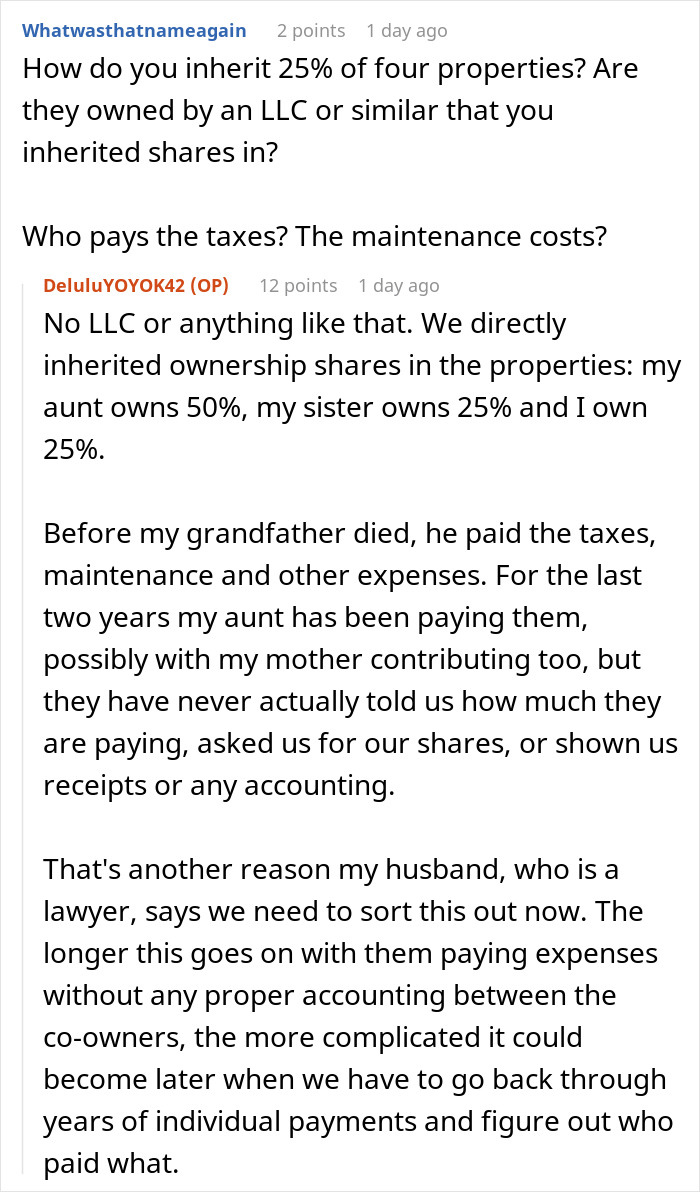
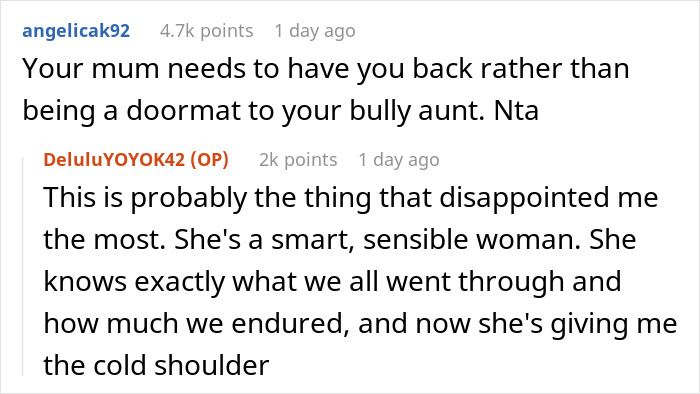
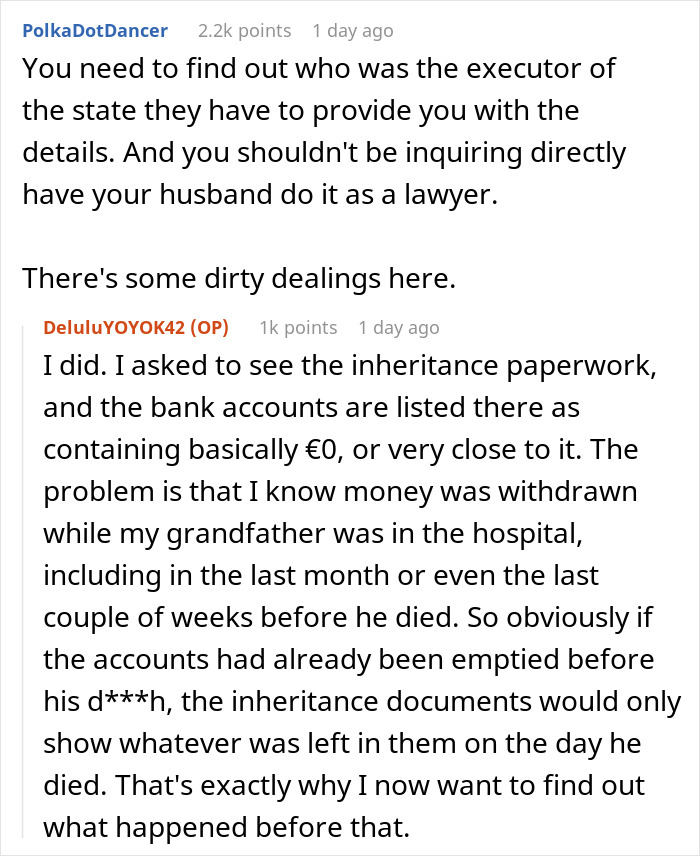
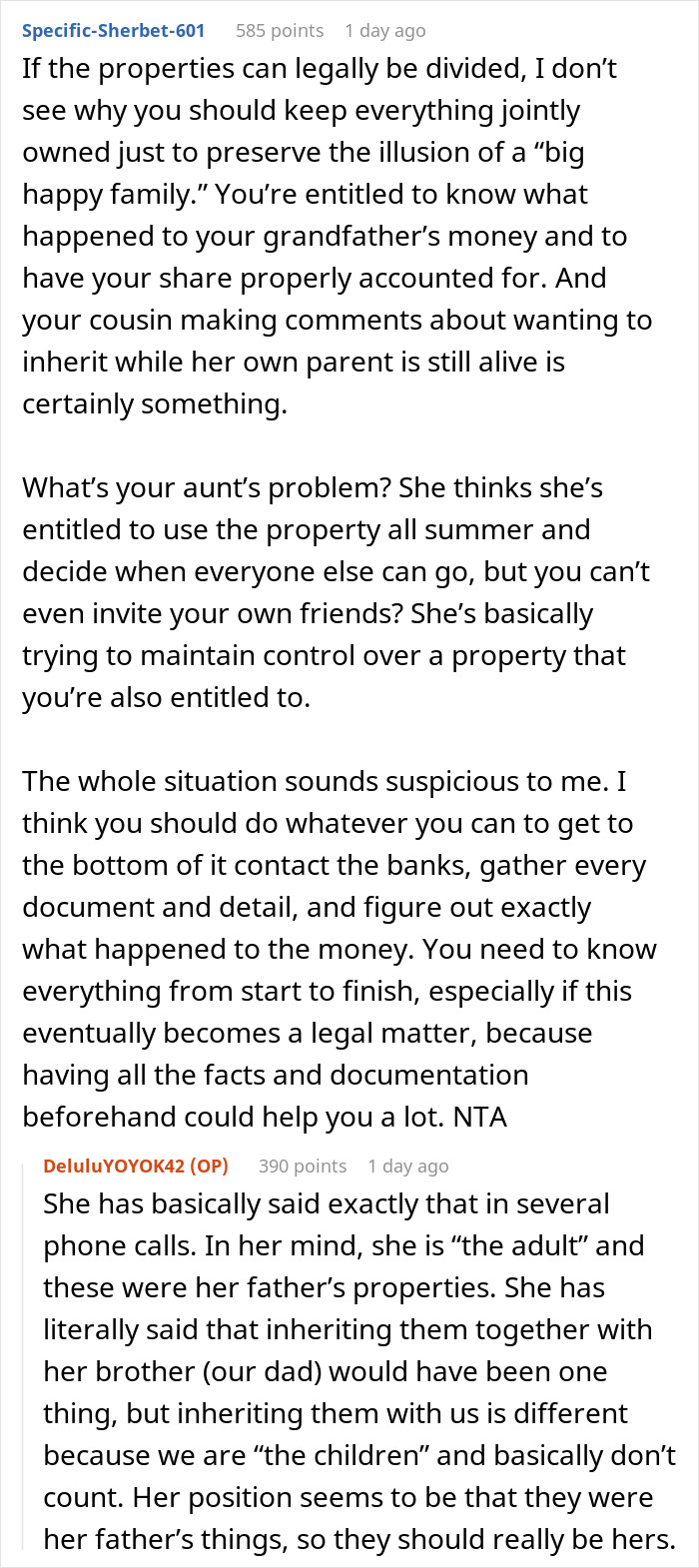
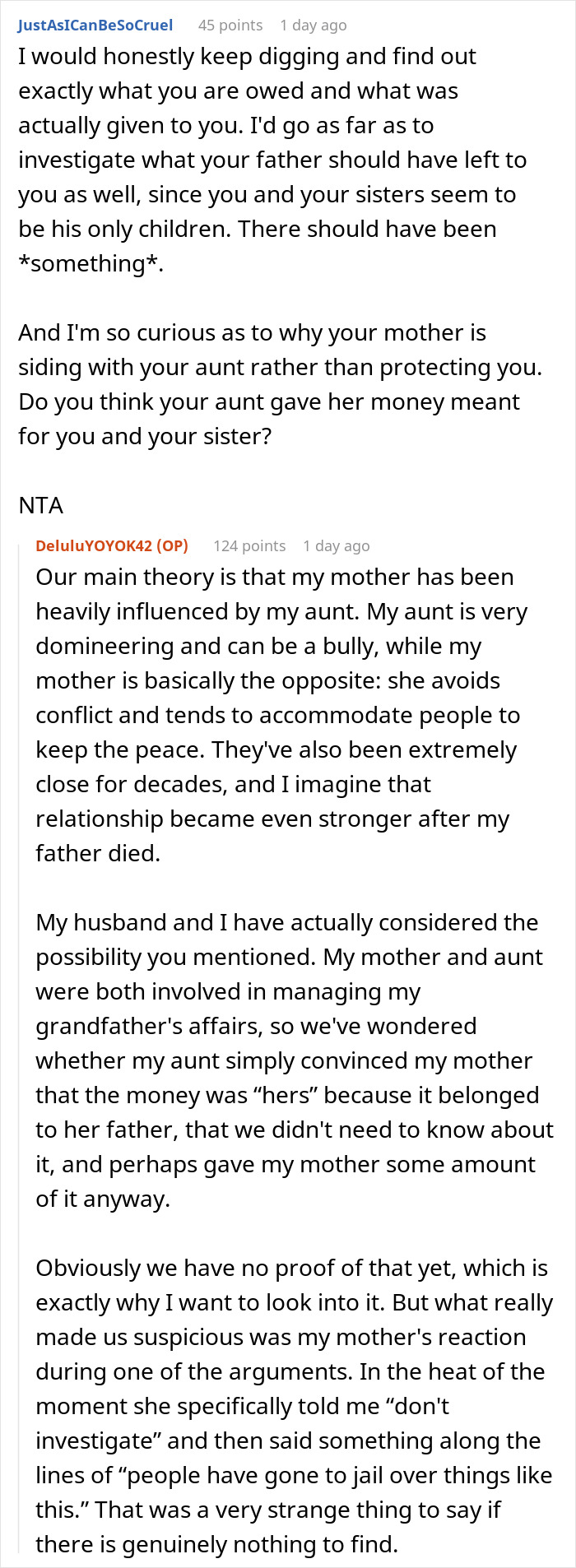
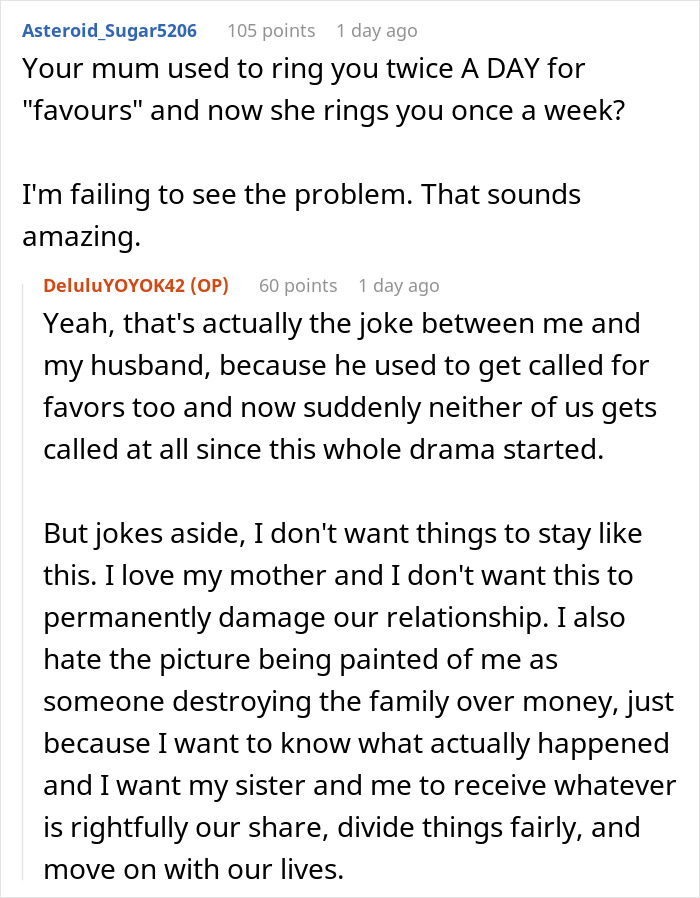
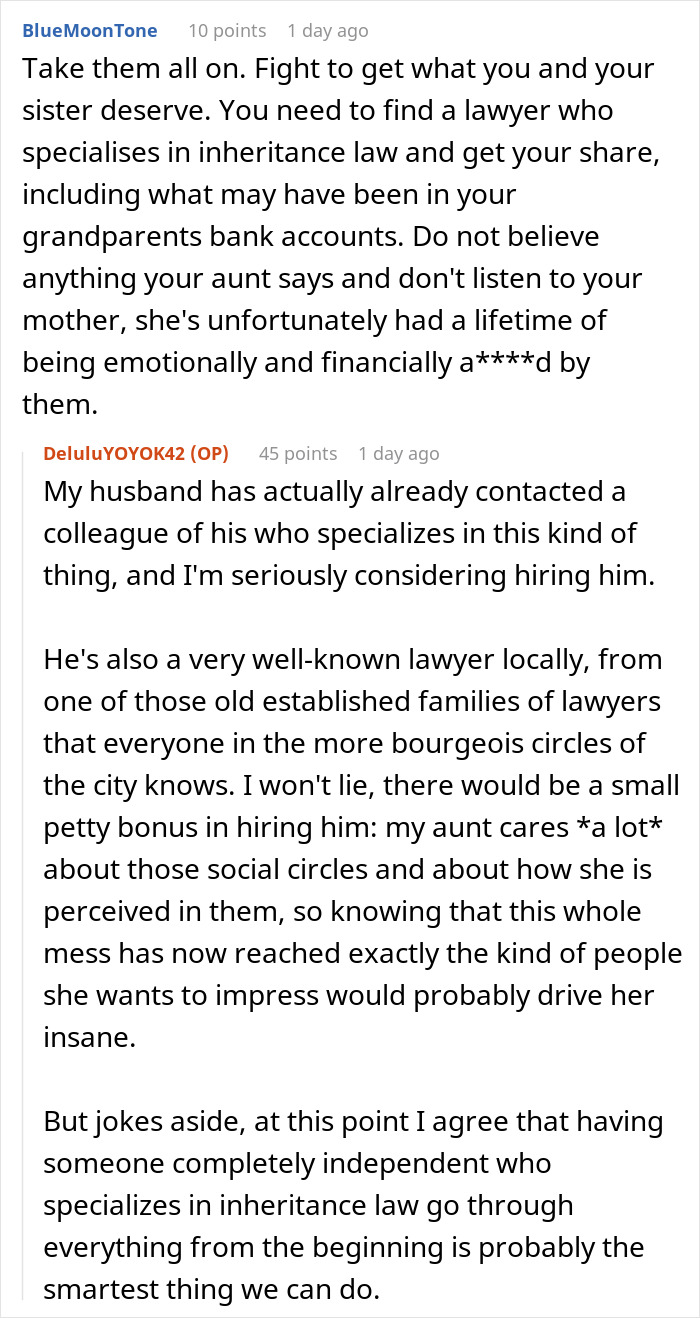
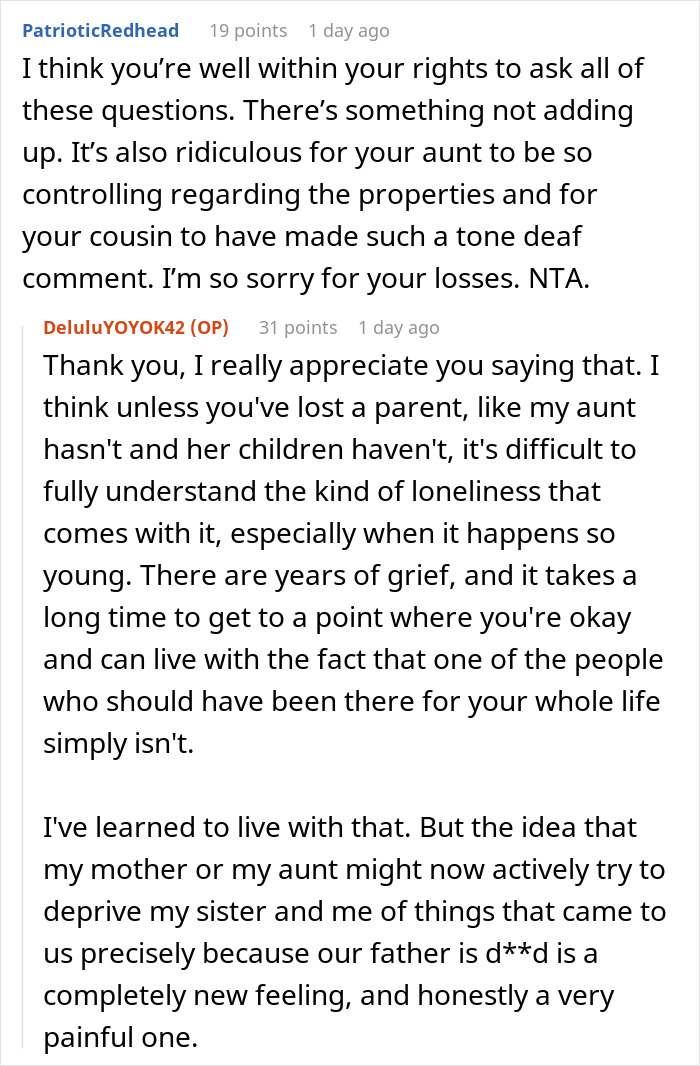
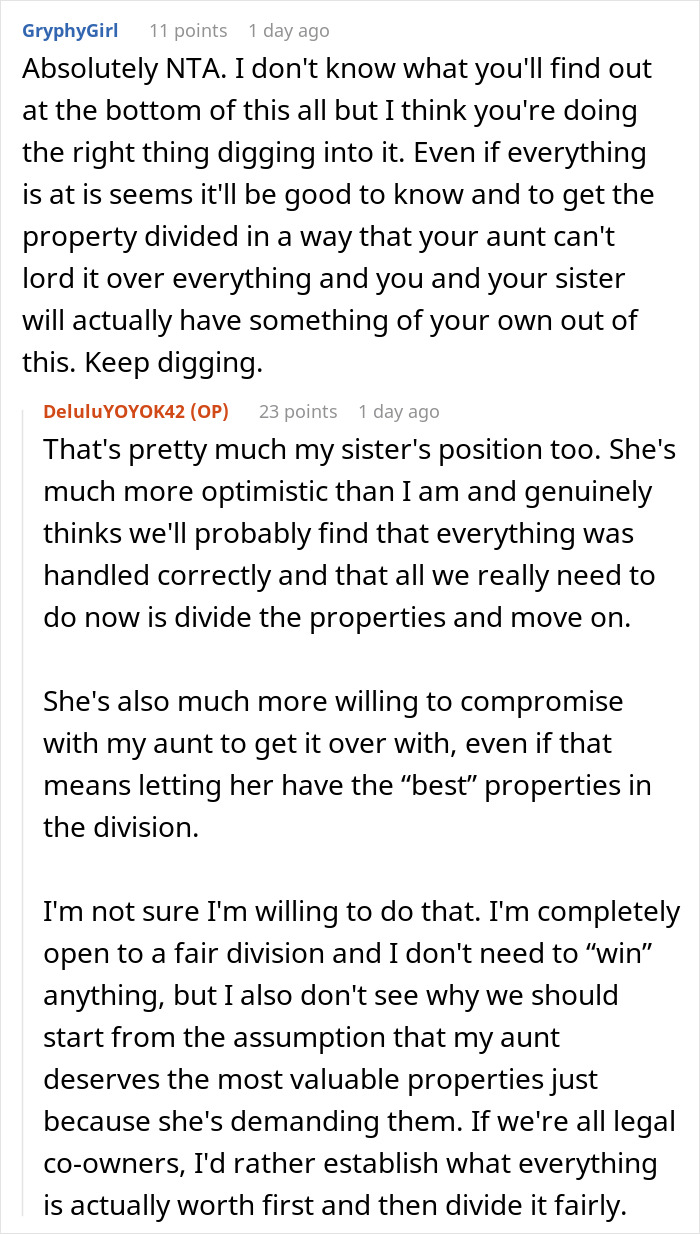
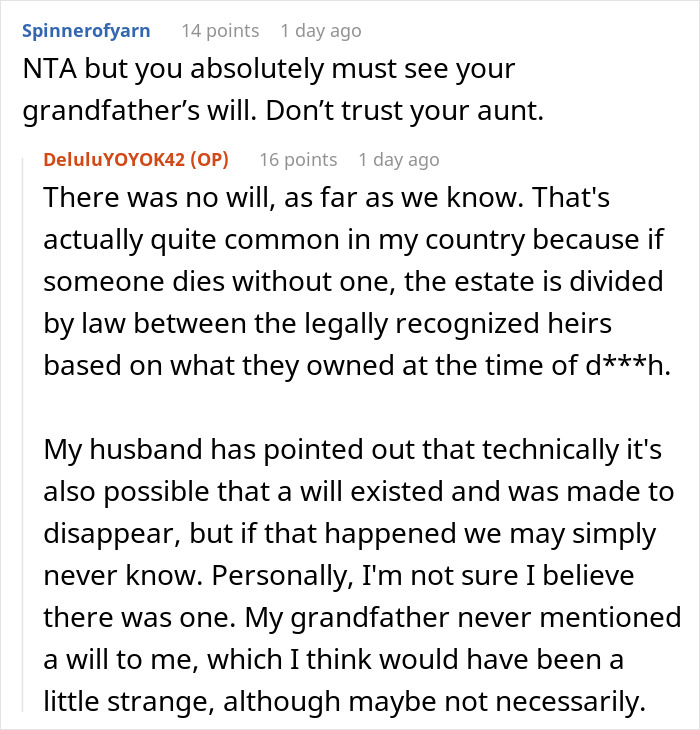
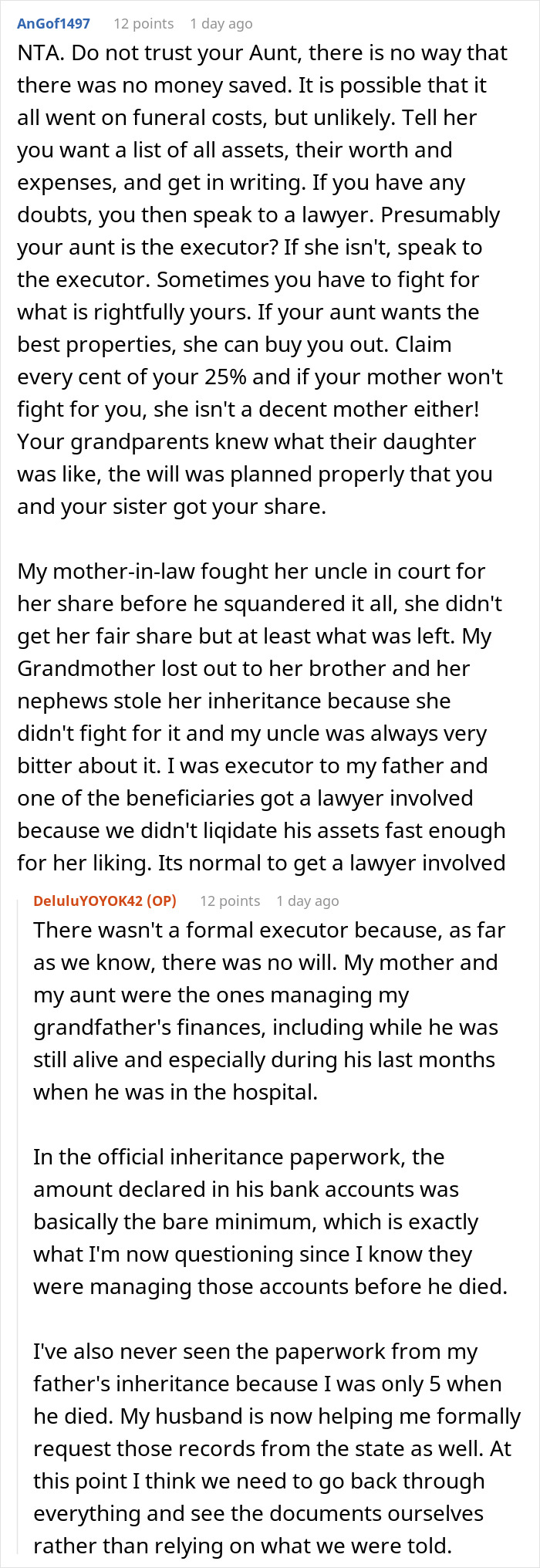
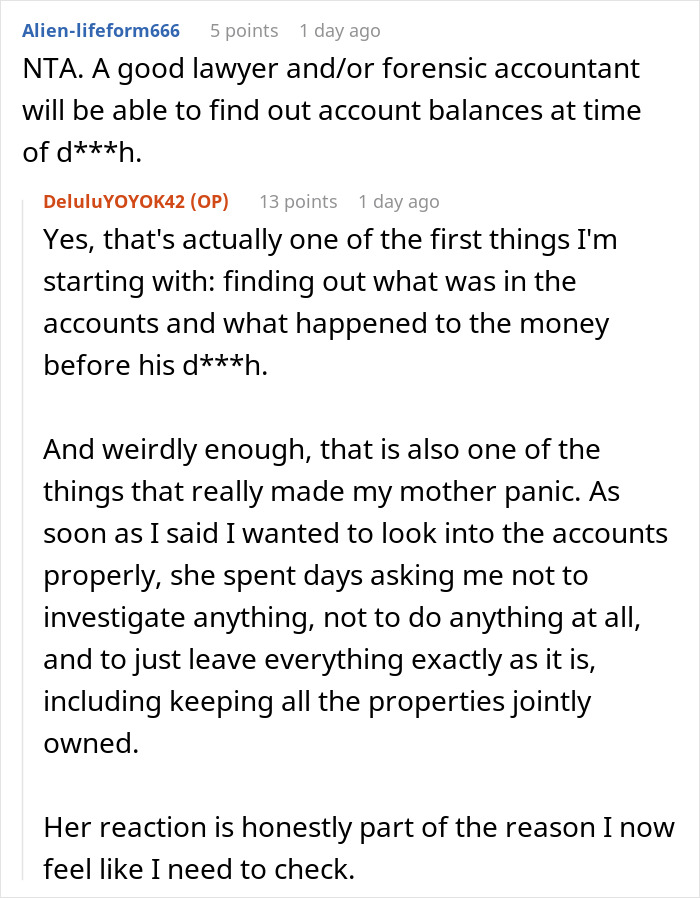
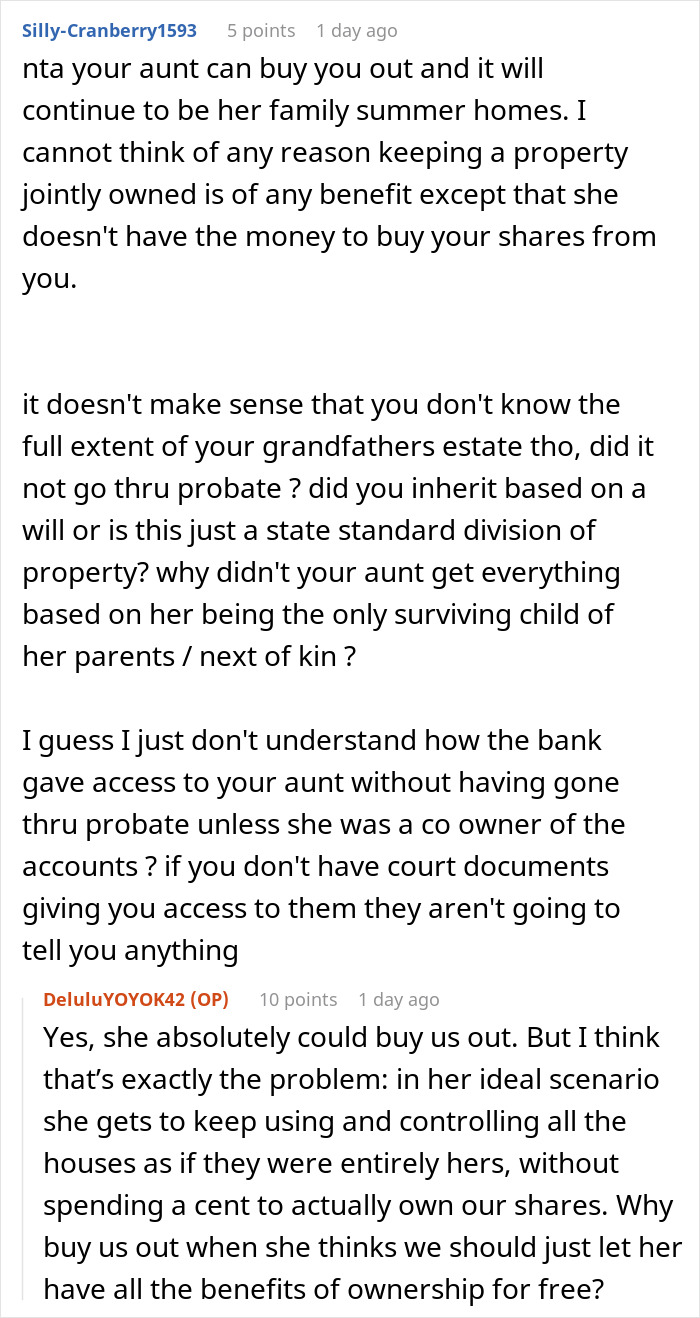
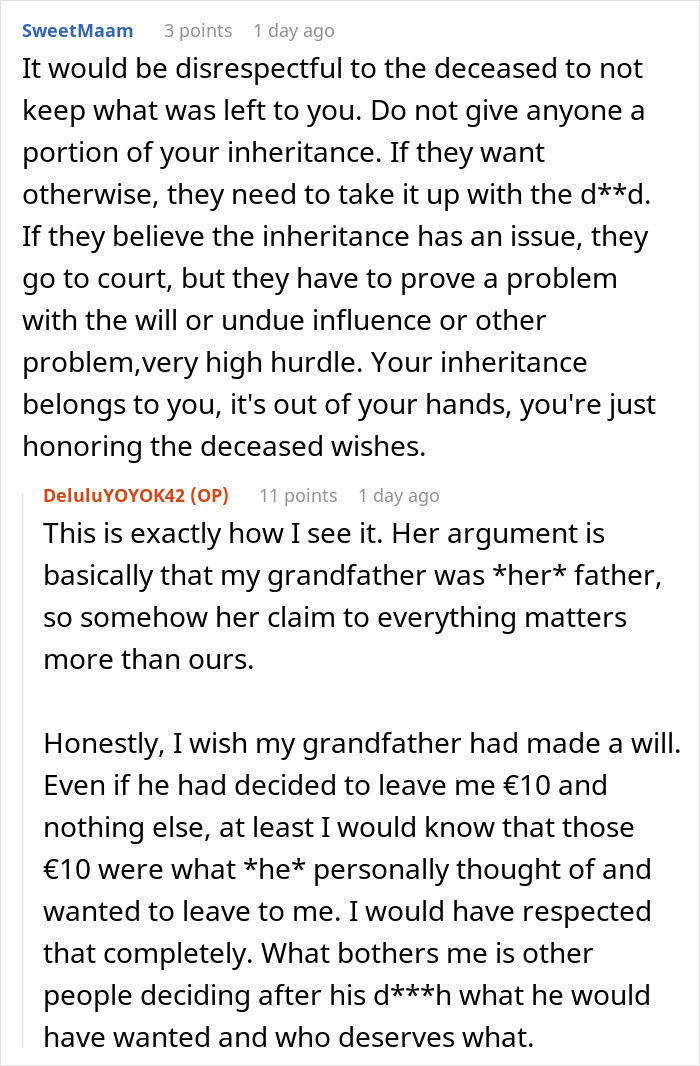
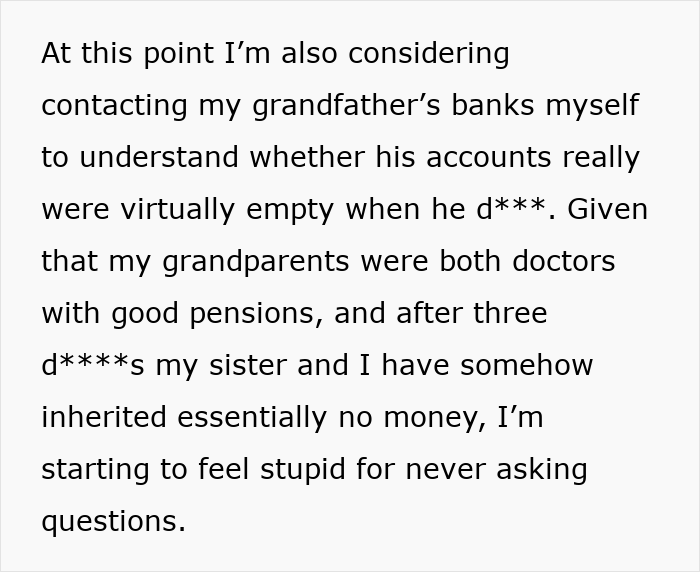
That’s the dilemma one woman is facing. She says her grandfather left his three adjoining beach houses to her, her sister and their aunt. The aunt has been acting like she’s the sole owner, going as far as dictating who is allowed to spend time there and when. The woman now wants the properties legally divided but she’s being accused of breaking up the “big happy family.”
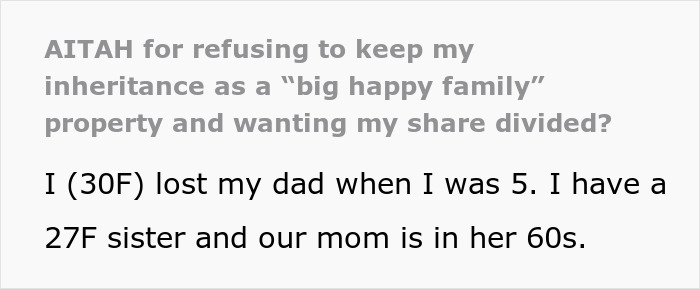
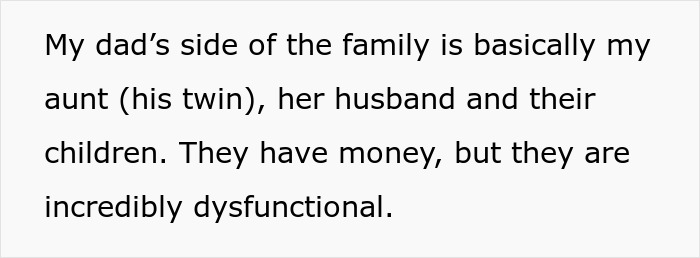
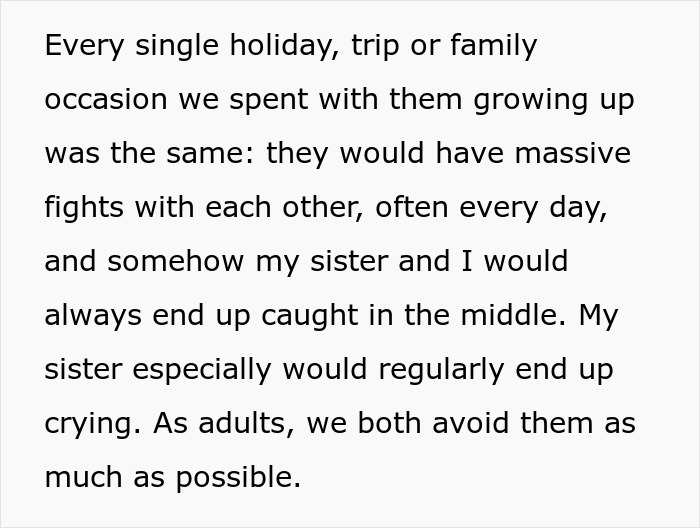

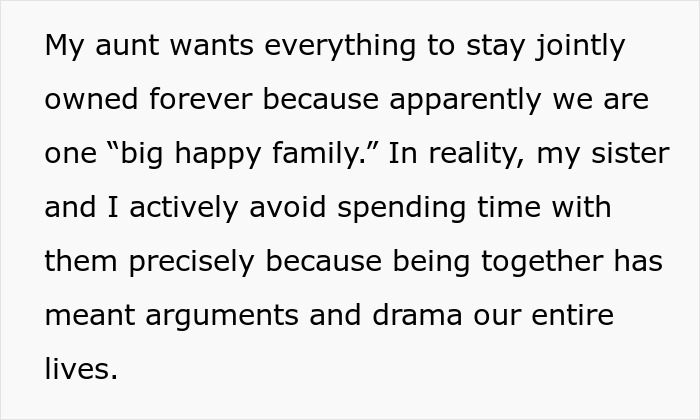
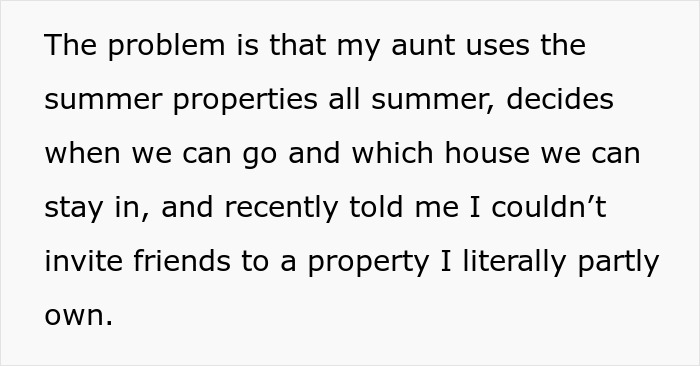
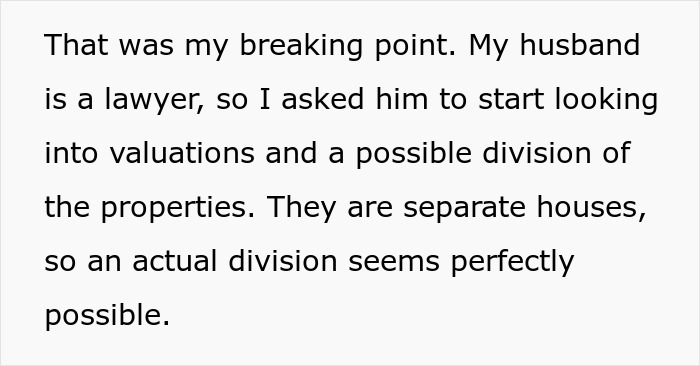
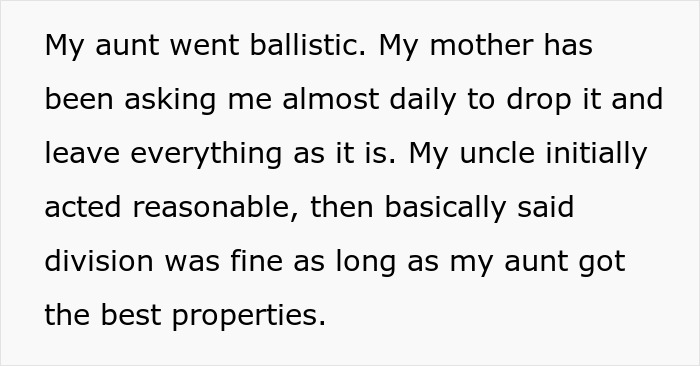

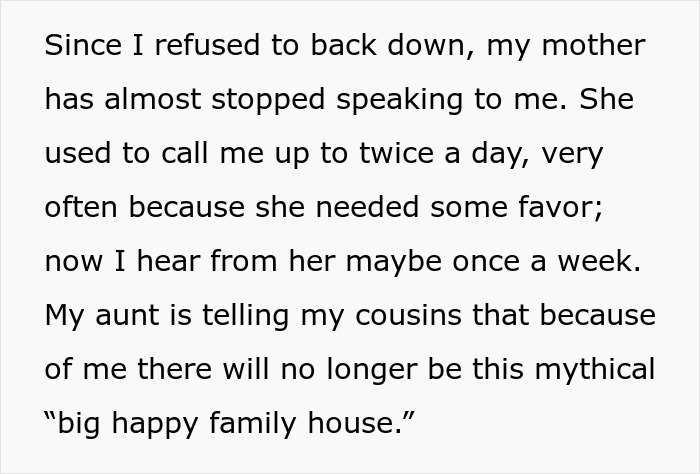

It’s not unusual for multiple heirs to inherit the same property or properties. In this case, each person will receive a share of the asset. These shares can be divided equally between all parties, or in another way, depending on the wishes of the person who passed away.
Those who inherited the property can decide whether they want to sell it and divide the proceeds fairly. Or, they can keep it and share the ownership. This is something known as ‘co-ownership.’ But as we’ve seen, co-ownership can come with its own set of struggles. That’s why experts say it is crucial that everyone involved reaches a consensus on the purpose of the property.
“Challenges can arise when one beneficiary is more emotionally invested or has personal objectives for the property,” warn the estate agents at U.K.-based Martin & Co. “An example of this could be one person wanting to live in the property while others included in the inheritance do not.”
They add that resolving such situations fairly requires calm and careful consideration, and the more heirs there are, the trickier it becomes to reach a consensus.
The lawyers over at The Law Offices of Michael Kuldiner explain that when a house is left to multiple relatives, they typically become “tenants in common”, unless the will or trust specifies otherwise. This means that each relative owns a share of the property and that each has equal rights to use and occupy the home, regardless of their percentage of ownership.
They also note that any of the heirs can force a sale through a court process called a partition action if there is disagreement.
Disagreements can come in many forms. There might be arguments over the use of the property (e.g., who gets to stay in the home for holidays). There could be drama if the property isn’t maintained and loses its value. And, warn the legal experts, delayed decisions can create financial strain on everyone involved.
Regardless of how close the relatives are, Michael Kuldiner advises that there is always a written agreement. This legal co-ownership document should include things like each person’s rights and obligations, a plan for repairs and expenses, a process for resolving disputes and exit strategies (e.g., how to sell or buy out).

By entering your email and clicking Subscribe, you're agreeing to let us send you customized marketing messages about us and our advertising partners. You are also agreeing to our Privacy Policy.
Thank you! You've successfully subscribed to newsletters!


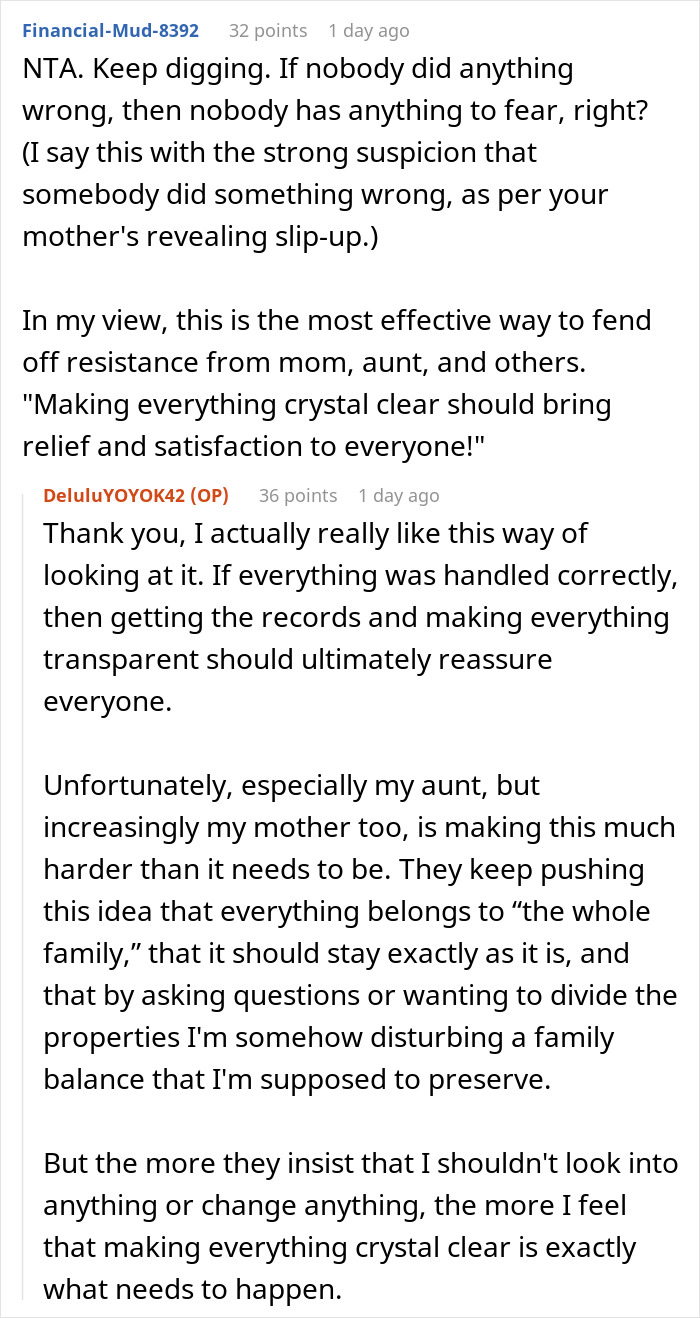
Oh, OP should absolutely get to the bottom of things. It's clear there is something fishy going on: as soon as people start saying 'we're a big happy family' or 'family sticks together' or 'it's family, so you need to keep the peace' you can bet some of your hard-earned money that something is wrong and people don't want you to know about it. So, just exercise your legal rights. The nice thing is, justice is blind, so it doesn't take family ties into account and nor should OP.

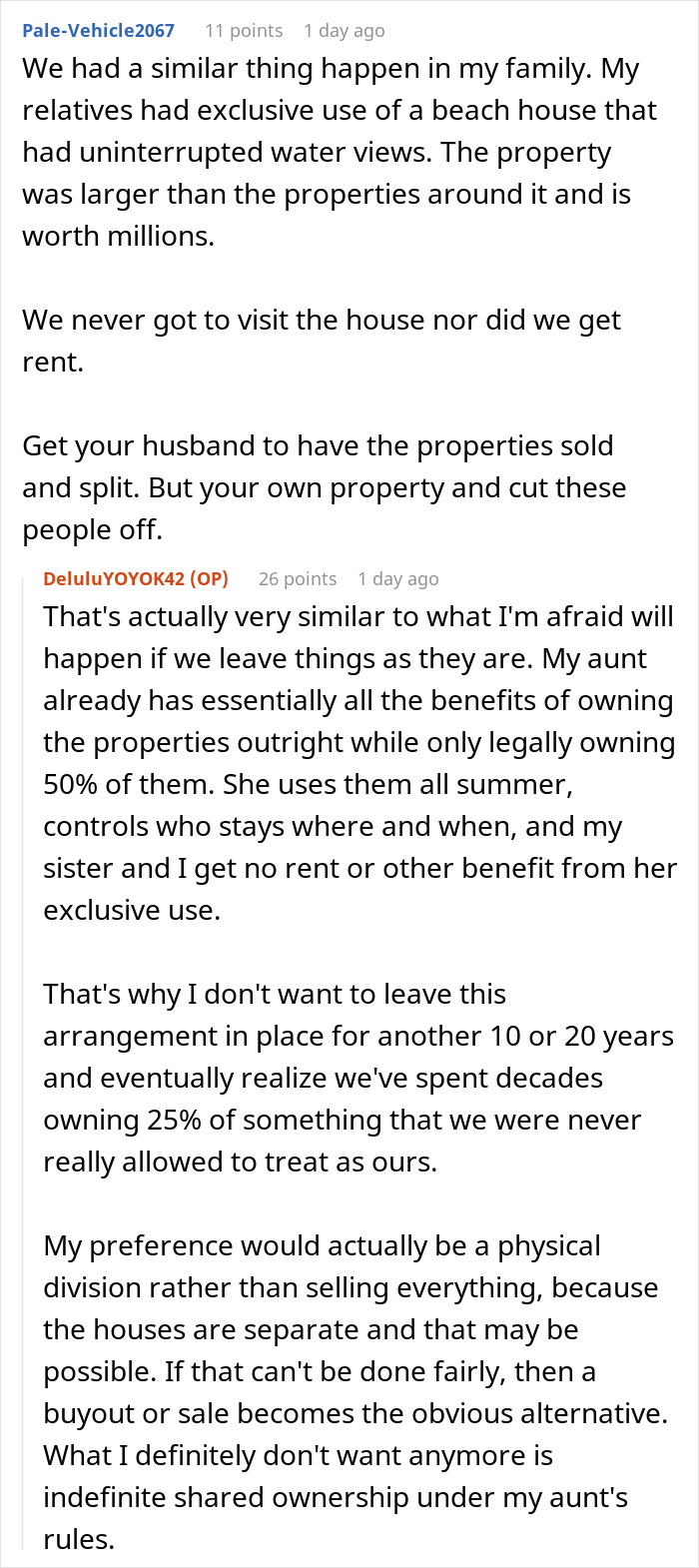
As someone who went through something similar: I would never again split property and would let the lawyers talk asap. It took ages to reach an agreement between my aunt, me and my siblings. (my aunt finally bought our part)
Oh, OP should absolutely get to the bottom of things. It's clear there is something fishy going on: as soon as people start saying 'we're a big happy family' or 'family sticks together' or 'it's family, so you need to keep the peace' you can bet some of your hard-earned money that something is wrong and people don't want you to know about it. So, just exercise your legal rights. The nice thing is, justice is blind, so it doesn't take family ties into account and nor should OP.
As someone who went through something similar: I would never again split property and would let the lawyers talk asap. It took ages to reach an agreement between my aunt, me and my siblings. (my aunt finally bought our part)



























 No fees, cancel anytime









31
2