Get Premium
Dark mode theme is available exclusively for premium users. Learn more about the benefits of subscribing.
No fees, cancel anytime.

 Dark Mode Ad-Free Browsing Unlimited Content
 Ad-Free Browsing Unlimited Content Dark Mode
Join 1.2 million Panda readers who get the best art, memes, and fun stories every week!

Friendships often mean accepting the little things that make people different from us. In fact, I enjoy having friends who aren’t like me and have different points of view, even on political issues. How else do you expand your perspective on the world?
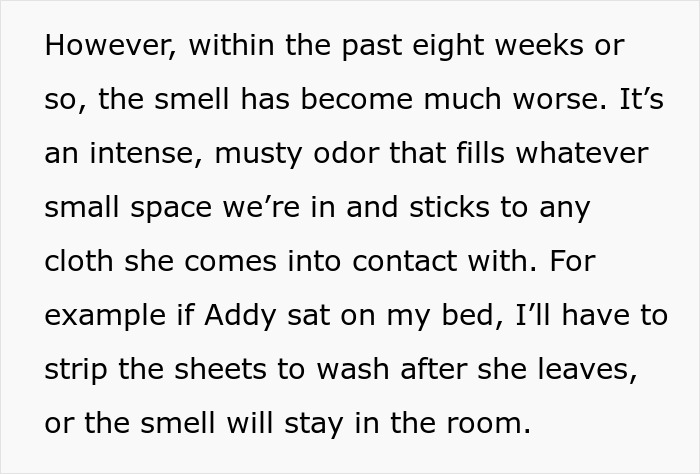
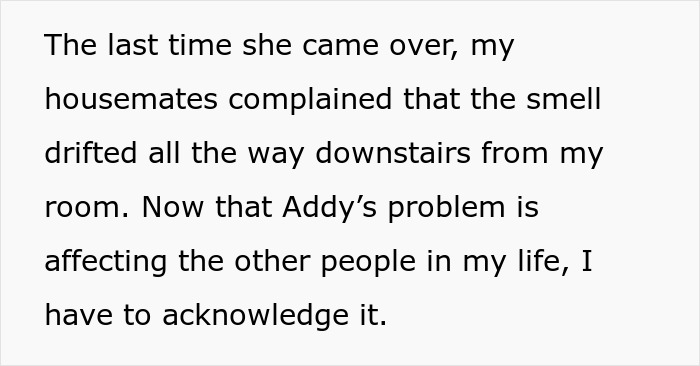
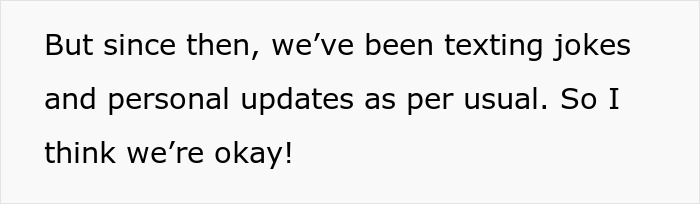
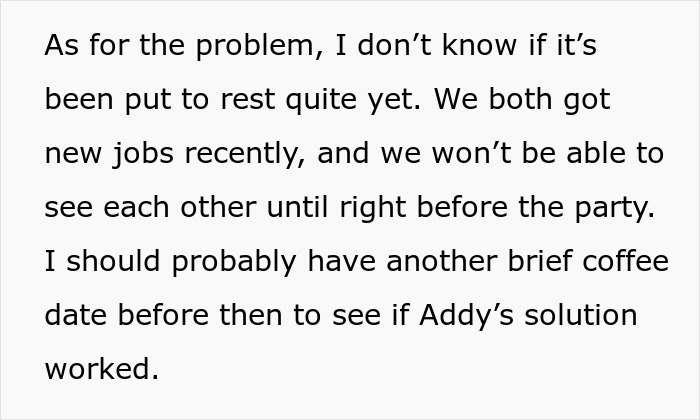
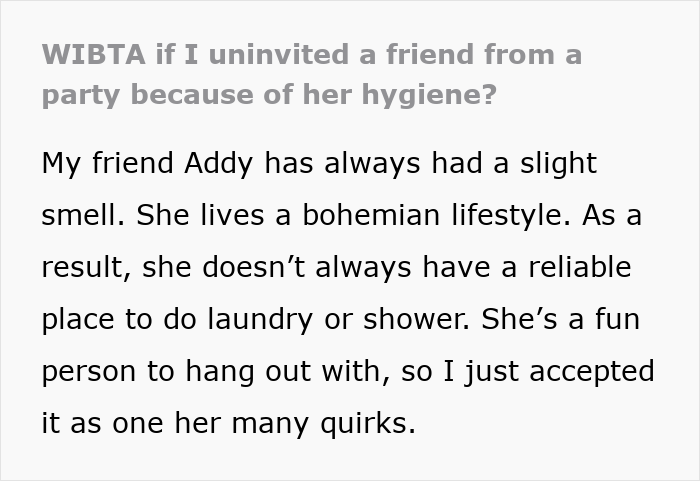
Well, our next story is about people with diverse lifestyles fighting for their friendship. A woman turned to Reddit to share her issues with the community before risking losing her friend. She had always accepted her friend’s bohemian lifestyle, including her occasional struggles with showering and doing laundry.
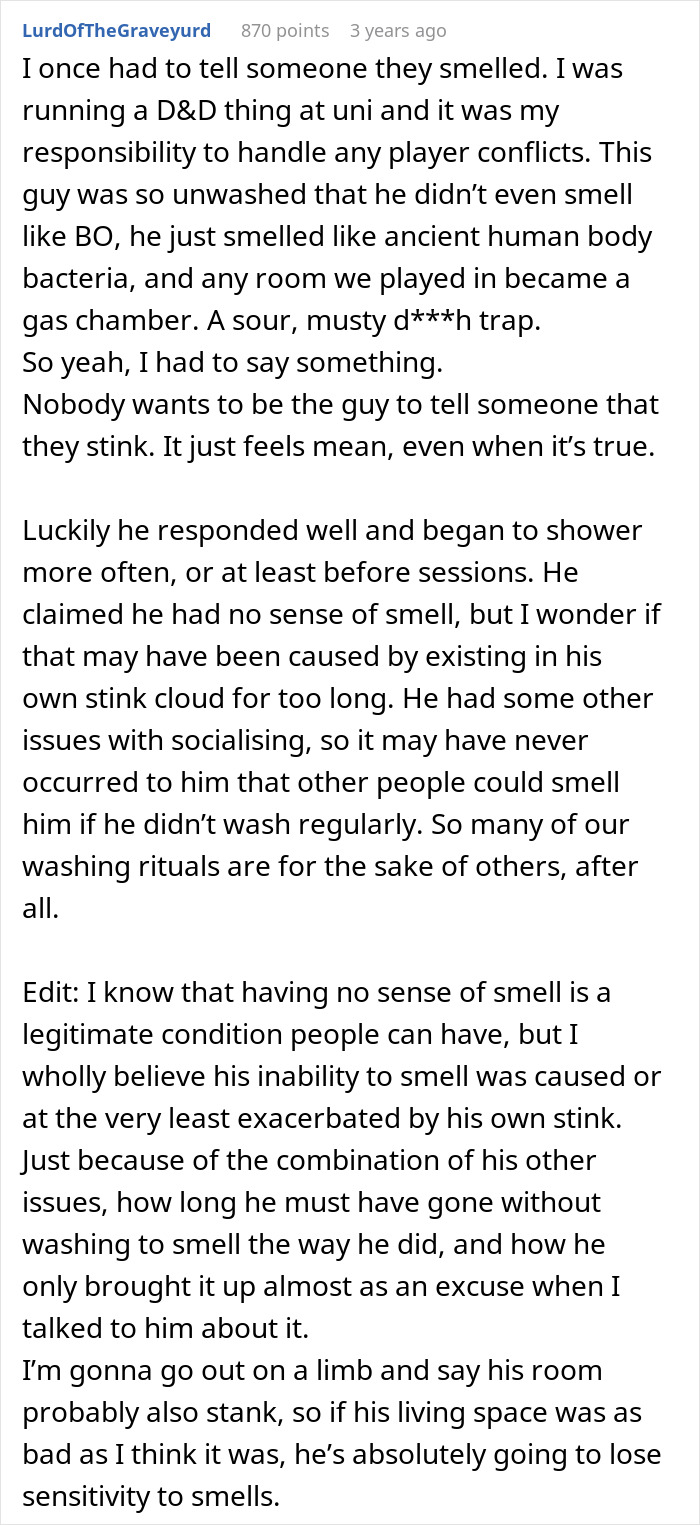
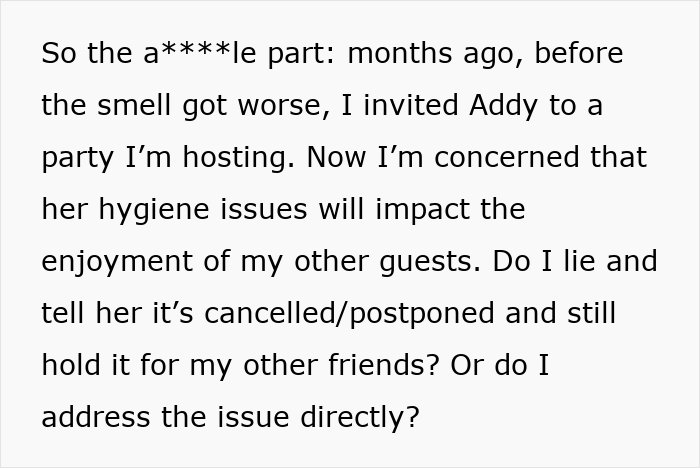
But this unusual hygiene habit became a real issue. After a while, her friend’s strong, musty smell was hard to ignore. So, if someone’s hygiene starts to affect your social life, is it wrong to uninvite them from a party?

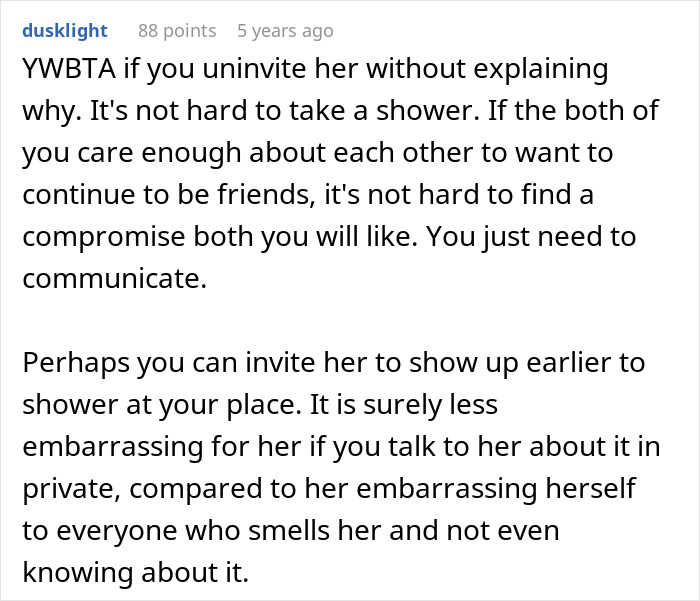


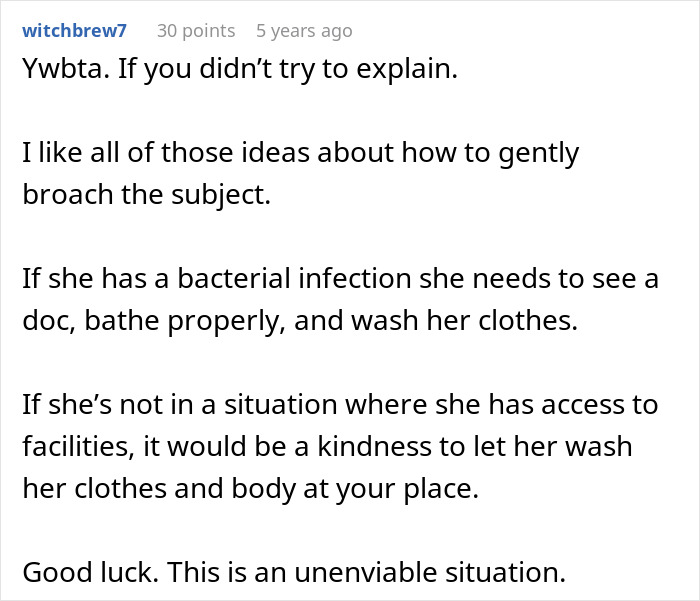
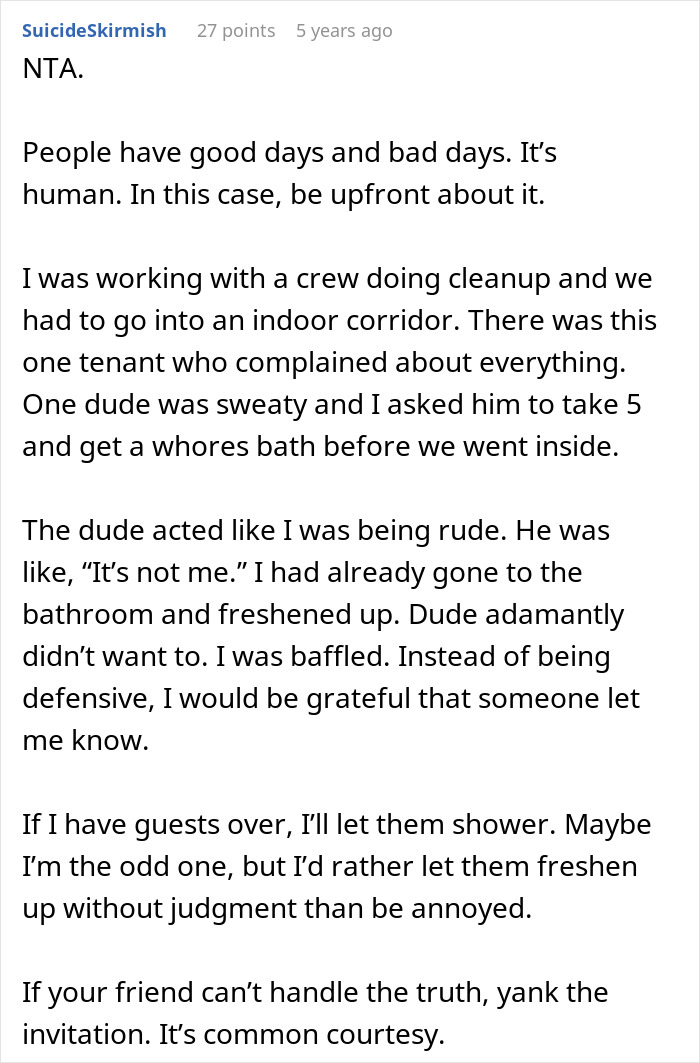


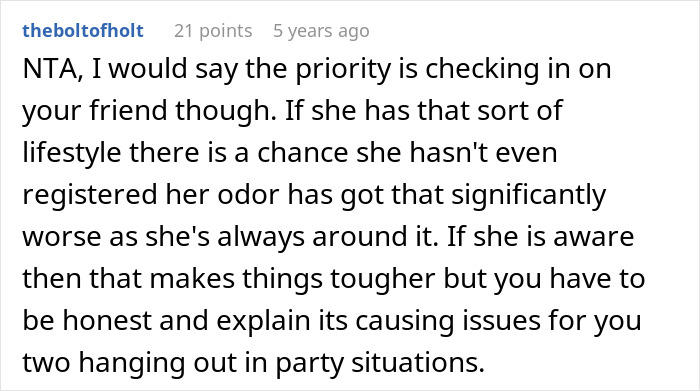




Did you know the word “bohemian” once referred to the Roma? The French used bohemién in the 15th century to reference the Roma people coming from the east because they wrongly believed they came from Bohemia. Centuries later, the word developed another meaning for people who rejected conventional social standards and embraced unconventional ways of living.
Modern bohemians may choose lifestyles that look unusual to other people, but our relationship with hygiene goes much further back, in fact it has ancient evolutionary roots. As humans, like other animals, we developed behaviors that helped us avoid parasites and infectious agents long before modern societies created today’s cleanliness standards.
Hygiene is also deeply connected with disgust, a reaction that can push people away from things linked to disease. Research explains that people often struggle to explain why certain bodily fluids, rotten food or insects repelled them. Instead, they described an instinctive reaction. So Inside Out’s Disgust was actually saving our lives after all.
People have practiced forms of hygiene for thousands of years, yes, but modern bathing habits took much longer to develop. Bathing and cleanliness became increasingly important among some upper-class Europeans toward the end of the 18th century. By the middle of the 19th century, periodic bathing had become way more common.
Today, many of us follow a routine that includes showering, brushing our teeth, waxing our magnificent moustaches, and using products that help us smell clean. Advances in science, technology, plumbing and architecture are major factors in spreading modern hygiene practices. Those changes also shaped what we now expect from personal cleanliness, even from our peers.
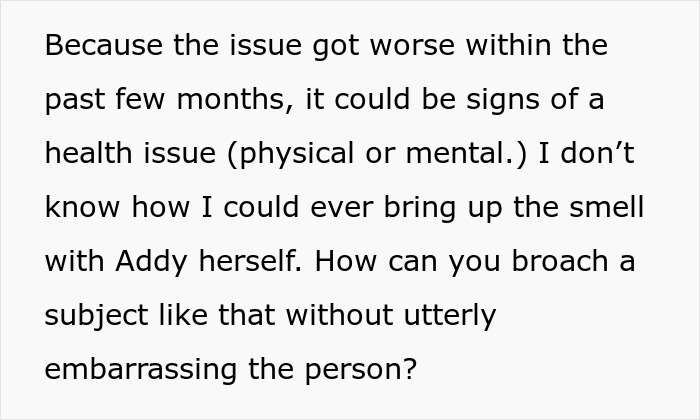
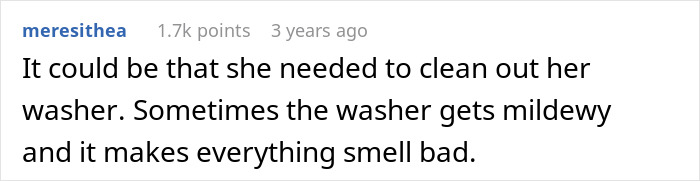
So it’s a no-brainer that the narrator wondered if something was wrong with her friend’s health when the smell got more pungent. Cleveland Clinic explains that body odor can change for many reasons, including hormones, food, medications and certain medical conditions. A sudden change in someone’s usual body odor doesn’t really mean poor hygiene.
The thing is, body odor does not come from sweat alone. However, food, stress, genetics and some health conditions can also influence that smell. The list that can create a bad body smell is long: diabetes, thyroid problems, liver disease, kidney disease and infections are among possible causes.
Scientists have also examined the role of bacteria in unpleasant body smells. A review shared in the U.S. National Library of Medicine found that microbiota can produce odorous molecules, such as ammonia, volatile sulfur compounds and trimethylamine. These compounds can accumulate in bodily fluids and contribute to noticeable odors.
The same review warns that frequent showers or teeth brushing may not solve every case of pungent smells. Researchers identified many possible problems with how the body processes or removes odor-producing compounds. That means an unusual smell does not automatically point to poor hygiene or a simple lack of washing.
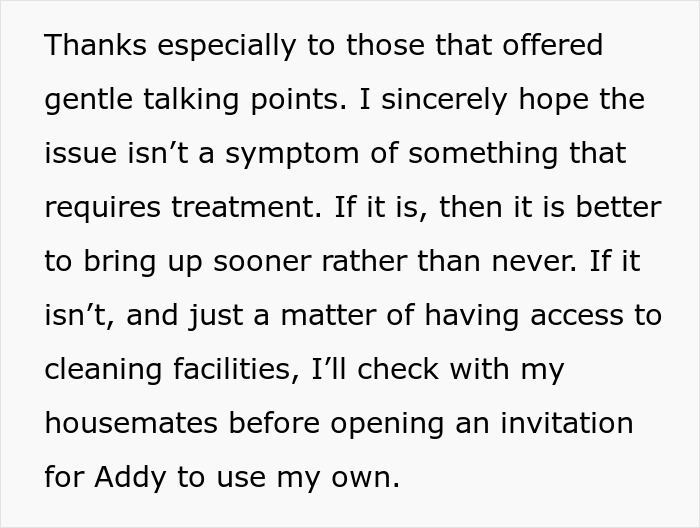
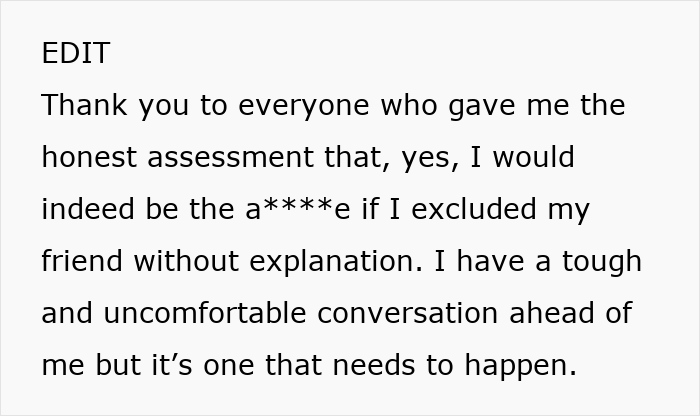
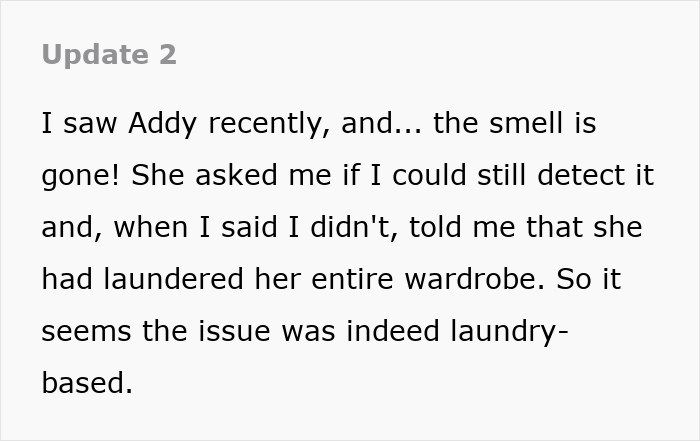
In that sense, it’s a good thing the narrator chose to speak with her friend instead of quietly excluding her from the party. And, fortunately, it wasn’t a health issue. If someone you know develops a noticeable odor, a respectful conversation can give them a chance to address the problem without unnecessary embarrassment. Sometimes, saying something kindly can help far more than staying silent.
Do you think the woman handled the awkward situation with her friend the right way? What would you have done in her place? Share your thoughts in the comments!













By entering your email and clicking Subscribe, you're agreeing to let us send you customized marketing messages about us and our advertising partners. You are also agreeing to our Privacy Policy.
Thank you! You've successfully subscribed to newsletters!


Really glad this had a positive outcome! Makes a change from all the stories with depressing endings.

Reminded me of a situation early in my career. I had three young men working in a single large room. Two of them reported to me, the third was part of a diff group but his work needed to be coordinated with the other two, so effectively I managed all three. People visiting the room or sitting close by started to complain to me about the smell, which I noticed as well. But having them each visit my office individually, I was able to determine that the problem was B, not P or R. I knew I had to address it, but first I spoke with P and R, because they had never once complained about B's smell. They told me that B had recently switched to an all-natural lifestyle with chemical-free deodorant. Clearly it wasn't working for him. They begged me to let THEM address it with him because they were all friends and as his female "boss" if similar age, he would be mortified if I brought up his hygiene issues. I don't know what they said, but the smell went away soon after and never returned.

Hygiene issues are awkward to address in any social situation. Years ago I was asked to speak to an associate when I worked in a craft store. The store manager was male and honestly this man’s incompetence was weaponized to a level I had never seen. The associate in question had animals and would muck out the goats stall/area before coming to work wearing the same footwear. Like OP’s Addy “Jane” was a bit of a hippy (no judgement here I have been a hippy most of my life) but Jane didn’t use soap/deodorant so it was a combination of body odor, animals and overall funk. She was also only washing her work top once every two weeks. Jane worked maybe 12 hours a week. Once she started washing it more and not wearing her barn shoes to work the issue was resolved. The only thing I refused to address was the fact Jane didn’t wear a bra. Nothing in the dress code stated women had to wear a bra and it wasn’t super obvious she never wore one.
Really glad this had a positive outcome! Makes a change from all the stories with depressing endings.
Reminded me of a situation early in my career. I had three young men working in a single large room. Two of them reported to me, the third was part of a diff group but his work needed to be coordinated with the other two, so effectively I managed all three. People visiting the room or sitting close by started to complain to me about the smell, which I noticed as well. But having them each visit my office individually, I was able to determine that the problem was B, not P or R. I knew I had to address it, but first I spoke with P and R, because they had never once complained about B's smell. They told me that B had recently switched to an all-natural lifestyle with chemical-free deodorant. Clearly it wasn't working for him. They begged me to let THEM address it with him because they were all friends and as his female "boss" if similar age, he would be mortified if I brought up his hygiene issues. I don't know what they said, but the smell went away soon after and never returned.
Hygiene issues are awkward to address in any social situation. Years ago I was asked to speak to an associate when I worked in a craft store. The store manager was male and honestly this man’s incompetence was weaponized to a level I had never seen. The associate in question had animals and would muck out the goats stall/area before coming to work wearing the same footwear. Like OP’s Addy “Jane” was a bit of a hippy (no judgement here I have been a hippy most of my life) but Jane didn’t use soap/deodorant so it was a combination of body odor, animals and overall funk. She was also only washing her work top once every two weeks. Jane worked maybe 12 hours a week. Once she started washing it more and not wearing her barn shoes to work the issue was resolved. The only thing I refused to address was the fact Jane didn’t wear a bra. Nothing in the dress code stated women had to wear a bra and it wasn’t super obvious she never wore one.

































 No fees, cancel anytime











32
5