Get Premium
Dark mode theme is available exclusively for premium users. Learn more about the benefits of subscribing.
No fees, cancel anytime.

 Dark Mode Ad-Free Browsing Unlimited Content
 Ad-Free Browsing Unlimited Content Dark Mode
Join 1.2 million Panda readers who get the best art, memes, and fun stories every week!

Adopting a kid is one of the most rewarding things you can do — you’re literally giving a child a chance at a better life. But let’s be real, it’s not always sunshine and rainbows. Adoption can get messy, especially when family drama is involved.
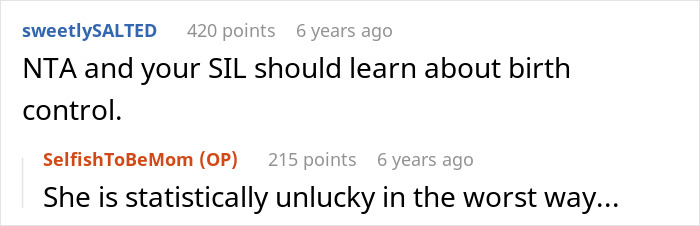
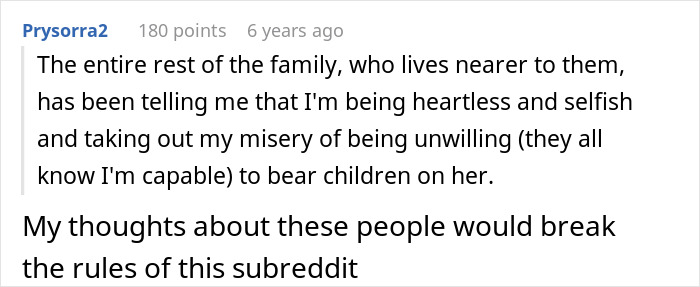
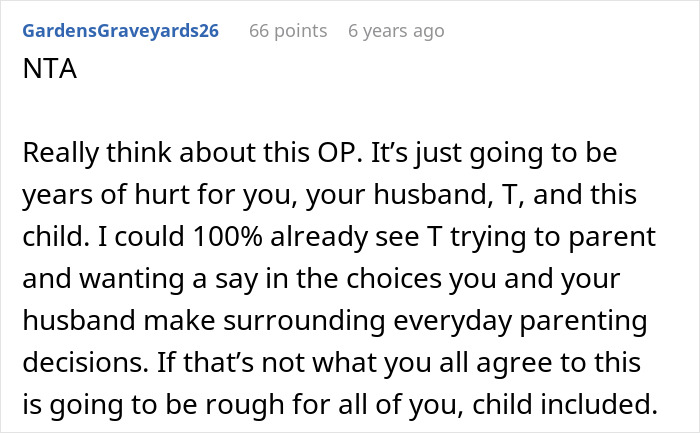
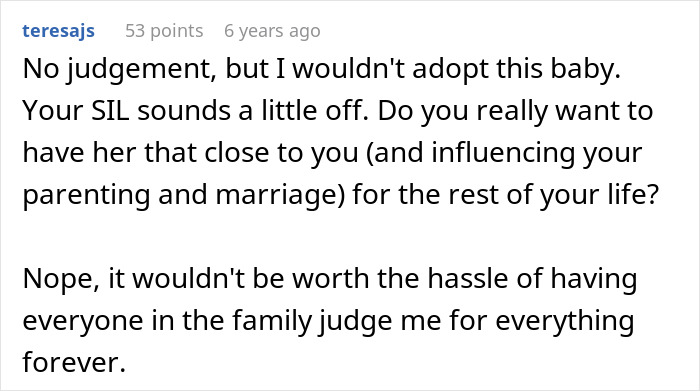
In a story shared online, a woman said her husband’s sister got pregnant but realized she couldn’t handle raising the child. So she approached the couple for adoption.
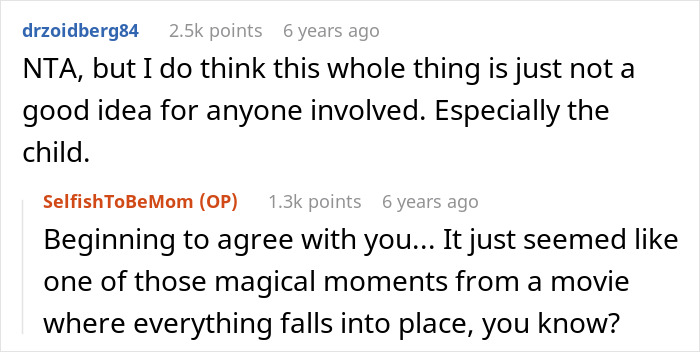
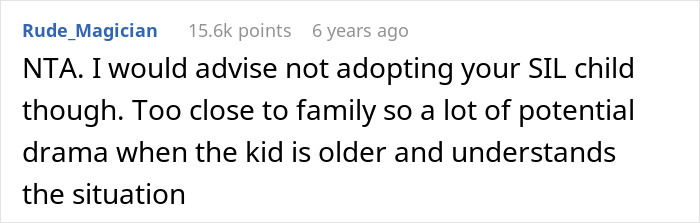
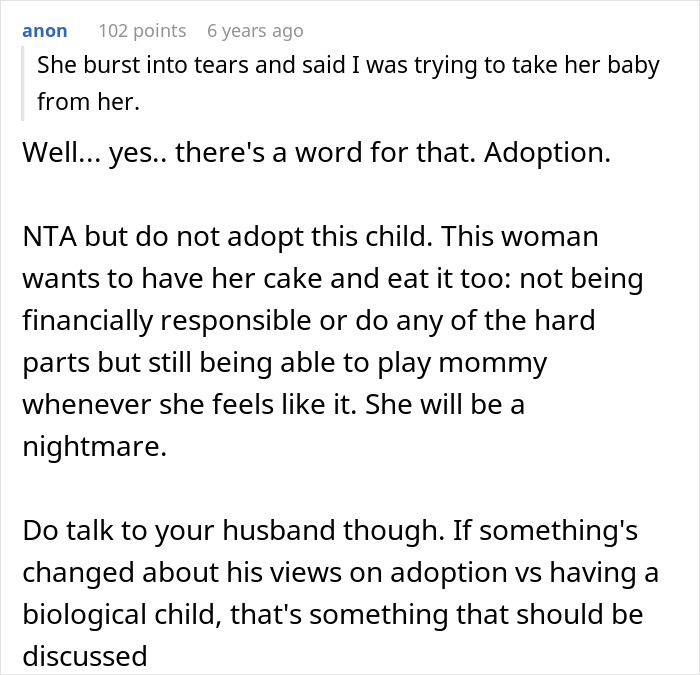
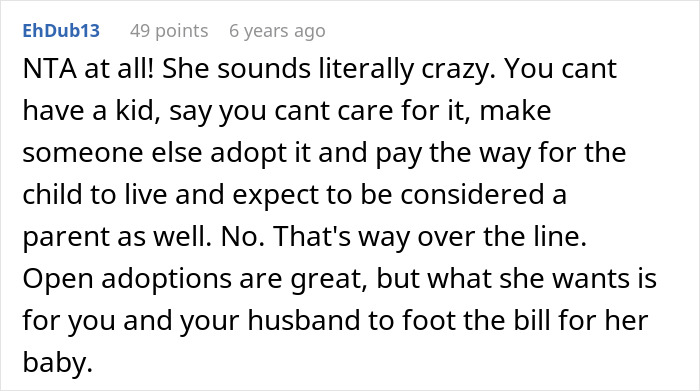
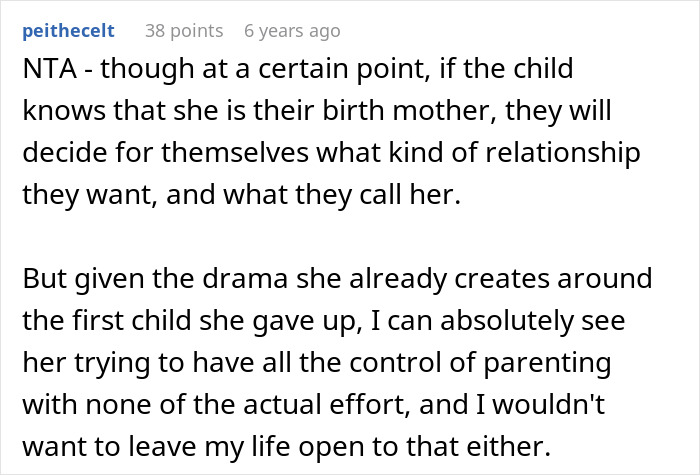
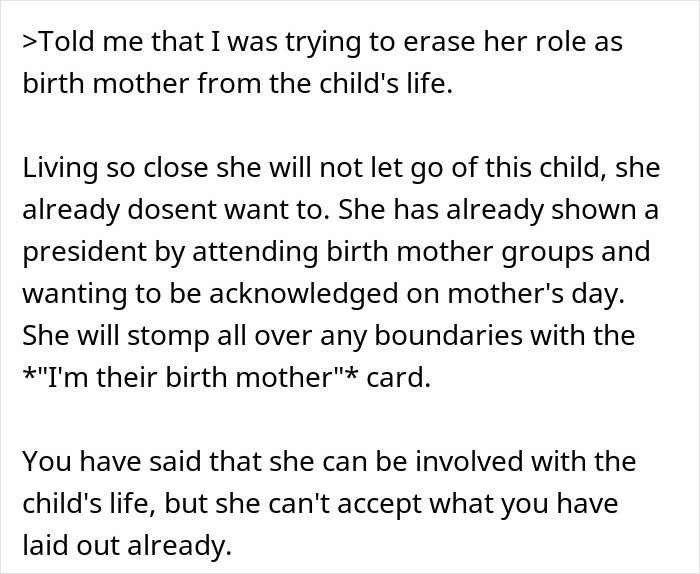
They were quite happy since they had been looking to adopt anyway, but with one condition: the child would call the adoptive mother “mom” and the birth mother “aunt.” That’s when all the problems began.
Image credits: freepic.diller / freepik (not the actual photo)
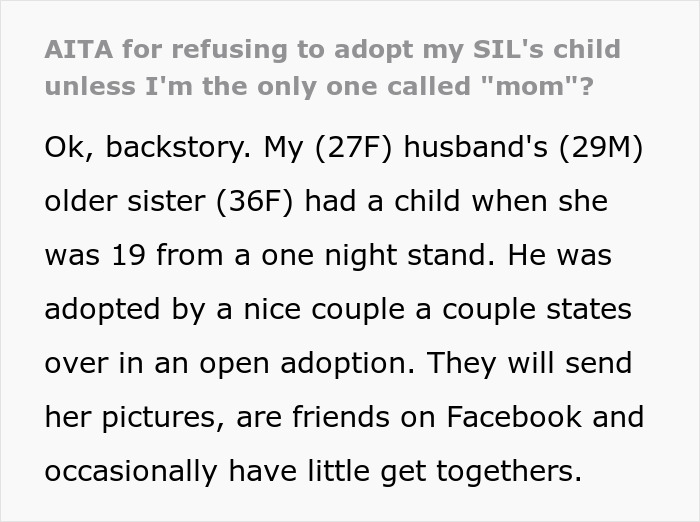
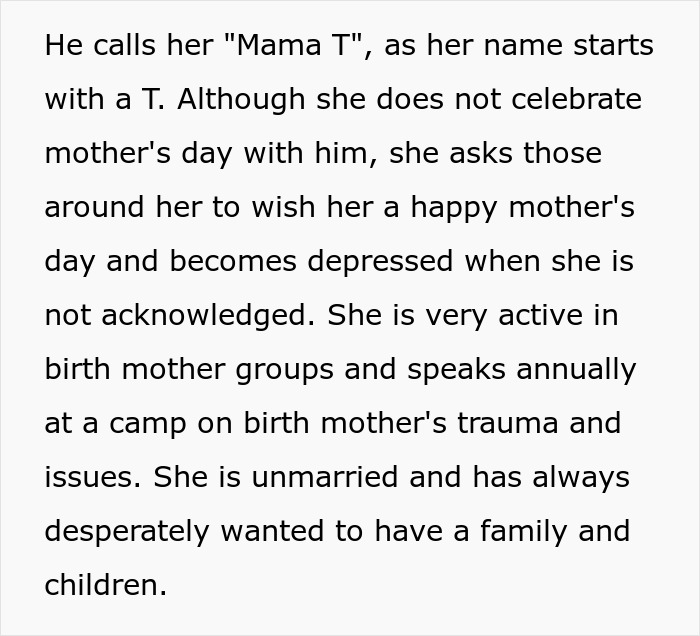
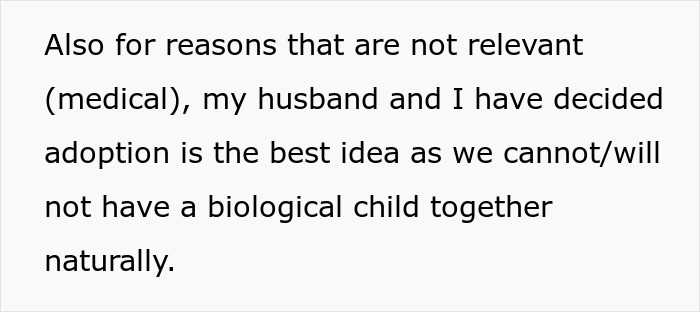
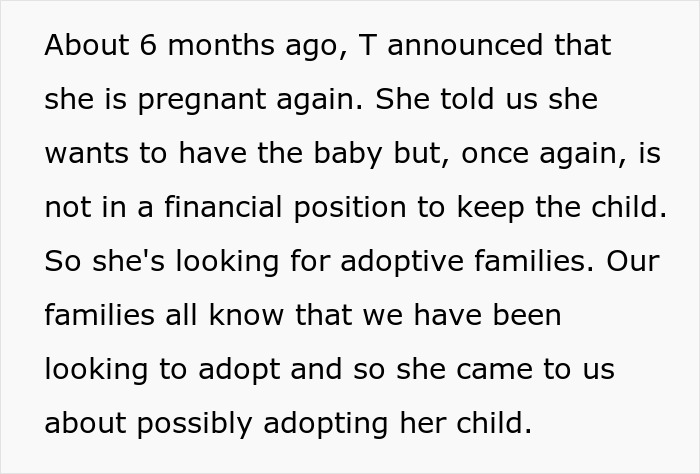
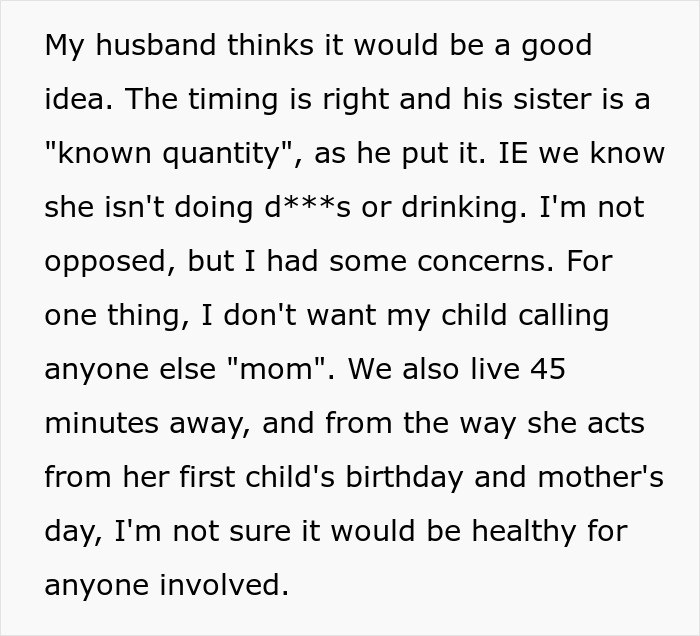
Image credits: frimufilms / freepik (not the actual photo)
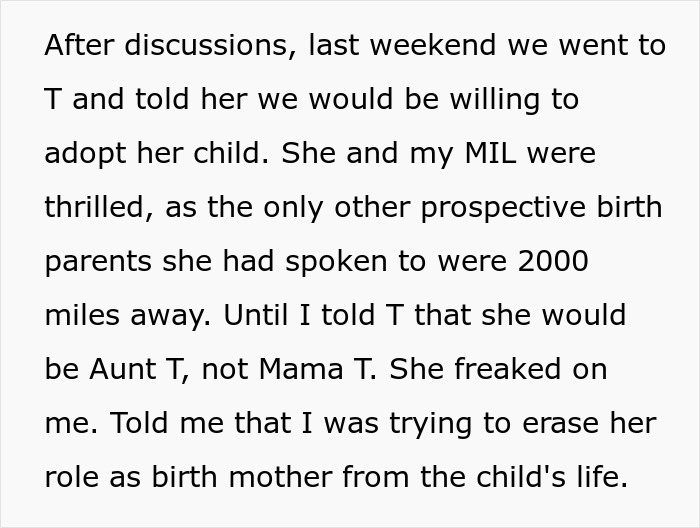
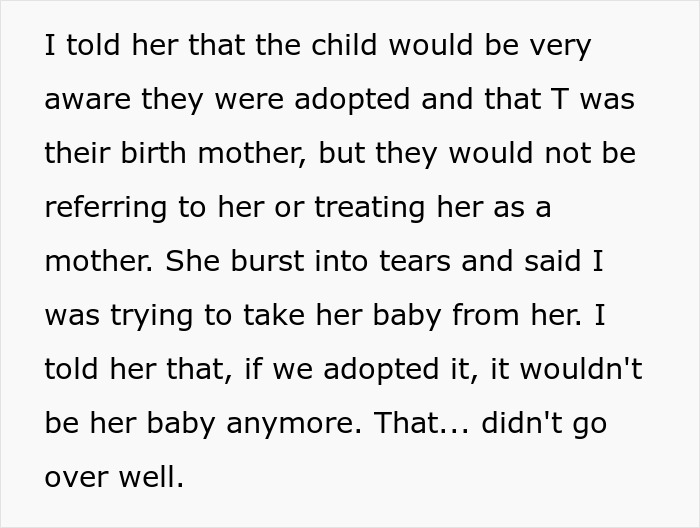
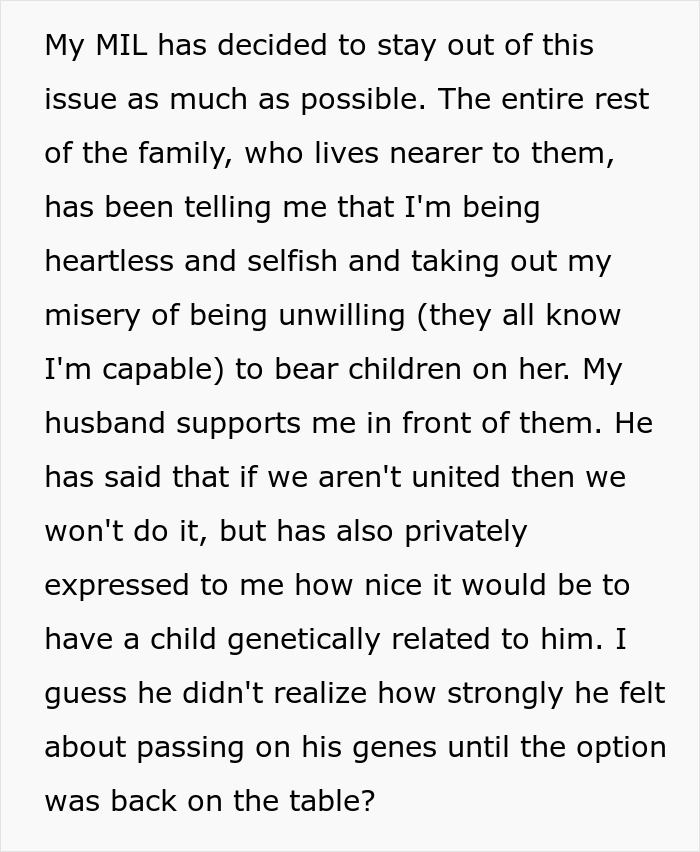
Image credits: tan4ikk / freepik (not the actual photo)
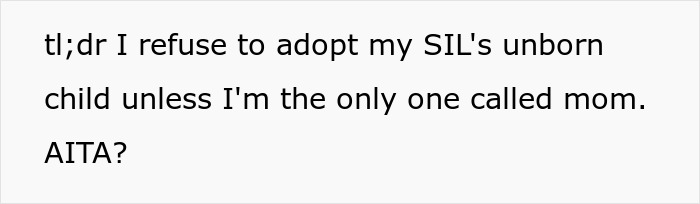
Image credits: SelfishToBeMom
In the early 20th century, families usually adopted within their own circles — cousins, aunts, neighbors — and it wasn’t much of a taboo. Adoption was just another way families helped each other out, and kids often stayed in touch with their birth relatives.
In the early 1900s, American society got a lot more obsessed with the idea of the “perfect family” — the white picket fence, mom, dad, two kids, the whole nuclear family package. That put a lot of pressure on single mothers.
Being an unwed mother was stigmatized so intensely that a lot of these women were pushed to give up their babies, and agencies made adoption secretive on purpose. Records were sealed, birth parents disappeared from the paperwork, and adoptive families were encouraged to act like the child had always been theirs.
This secrecy peaked in what historians call the Baby Scoop Era — roughly from the end of World War II through the early 1970s. During this time, adoptions were mostly “closed,” meaning the birth mom and the child had no contact and often never even knew each other’s names.
But things began to change soon after that, once adoptees and birth moms pushed back.
By the 1990s and into the 2000s, most US agencies were offering open adoption options, where birth parents and adoptive families could agree on how much contact there would be — from letters and photos to actual visits. Nowadays, open adoptions are the norm rather than the exception.
Research shows knowing the birth family can actually be really good for adopted kids. Just understanding where they came from, their family history, and why their birth parents made the decision to place them for adoption can make a big difference.
A study found that moms who kept in touch with their kids after adoption felt way less grief and were happier with how the whole adoption went than moms who didn’t see or hear from their child at all.
Another study also found that birth mothers who remained in contact with their child reported “significantly more satisfaction with their decision to relinquish.”
Adoptive parents who were okay with some contact also felt more confident and happy with the process.
But it’s not just about whether contact happens; it’s about how it happens.
For example, a kid might get letters and pics from their birth mom every once in a while, which can keep the conversation going. Or a family might agree on a yearly meetup, which can create a connection without making anyone feel smothered. It’s all about finding what works for that family.
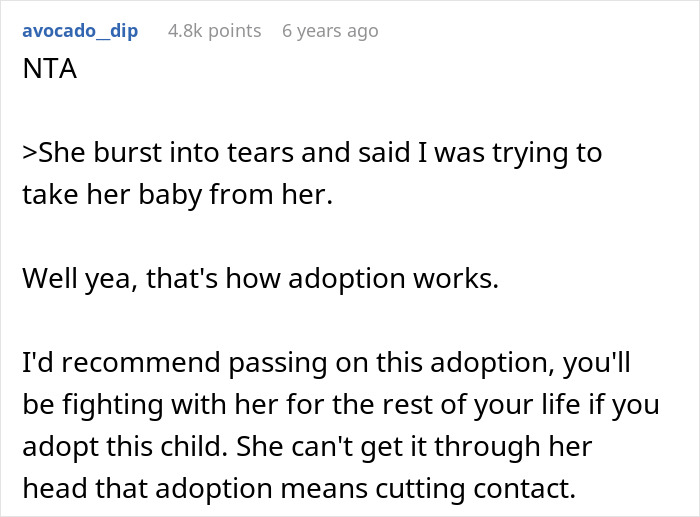
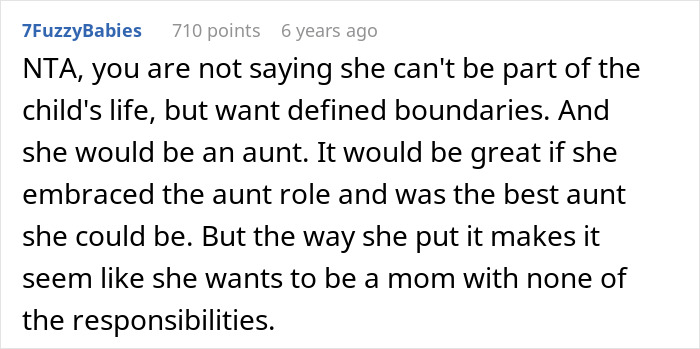
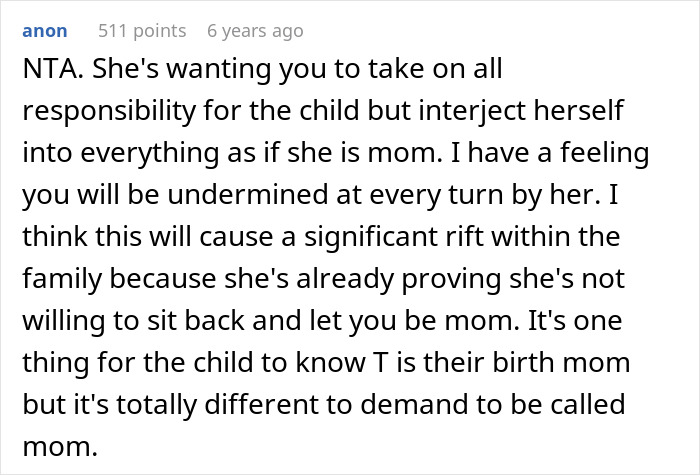
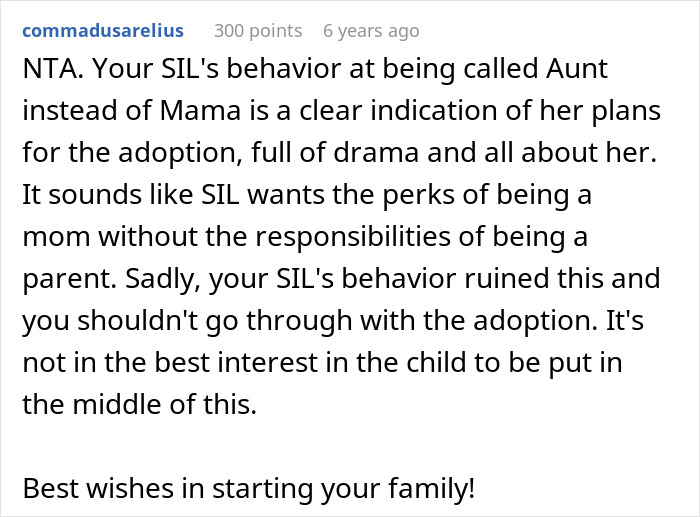
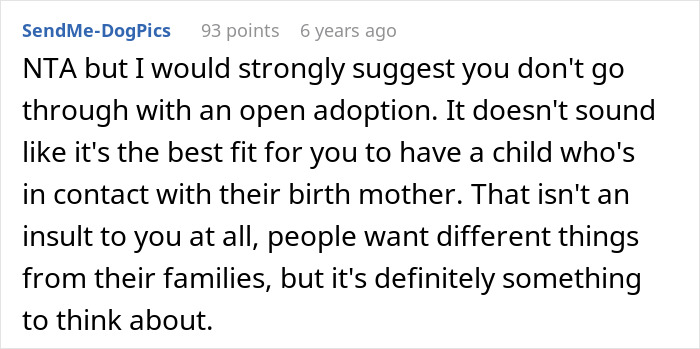
But sometimes, what a birth parent or adoptive parent hopes for might not end up matching reality. Even in open adoptions, a birth parent can make unnecessary demands, such as wanting to be called “mom” or “dad” or trying to make major decisions about the child’s upbringing.
On the other hand, adoptive parents might try to limit contact or withhold information about the child’s history. This can make the adoption feel less open than intended.
“We talk about open adoption like it solves all the ills of adoption, as if it’s okay for everyone because there are no secrets. In reality, the hurts of open adoption are just different,” says Kelsey Vander Vliet Ranyard, a birth mother and co-author of the book Adoption Unfiltered.
A recent study found that 17% of the 223 birth mothers surveyed had previously been in contact with their child but were no longer. About 70% said they wanted more contact than they had at present. Among birth mothers who reported having no current contact with their child, 95.6% said that they hoped to reunite with their child one day.
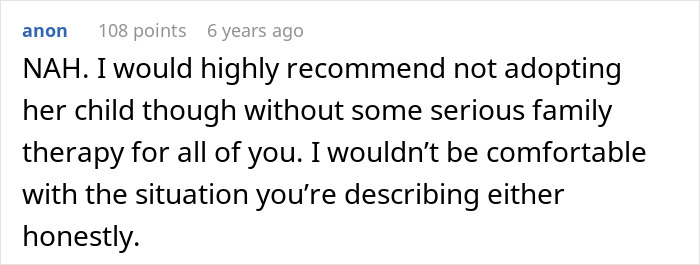
This shows that adoption is not shared custody or co-parenting. Once an adoption is finalized, the adoptive parents become the only legal parents, with the right to make decisions about their child — including who has access to them.
Another risk to open adoption is that continued contact or blurred boundaries could interfere with bonding between the adoptee and the adoptive parents. This could confuse and cause additional harm to the child.
But if issues do come up, experts say parents don’t have to just shut things down.
They can try a bunch of ways to keep things healthy:
The takeaway is simple: before any adoption moves forward, all parents need to be honest and united. Because at the heart of it, the point of adoption is to give a child the safest and most secure life possible.


By entering your email and clicking Subscribe, you're agreeing to let us send you customized marketing messages about us and our advertising partners. You are also agreeing to our Privacy Policy.
Thank you! You've successfully subscribed to newsletters!

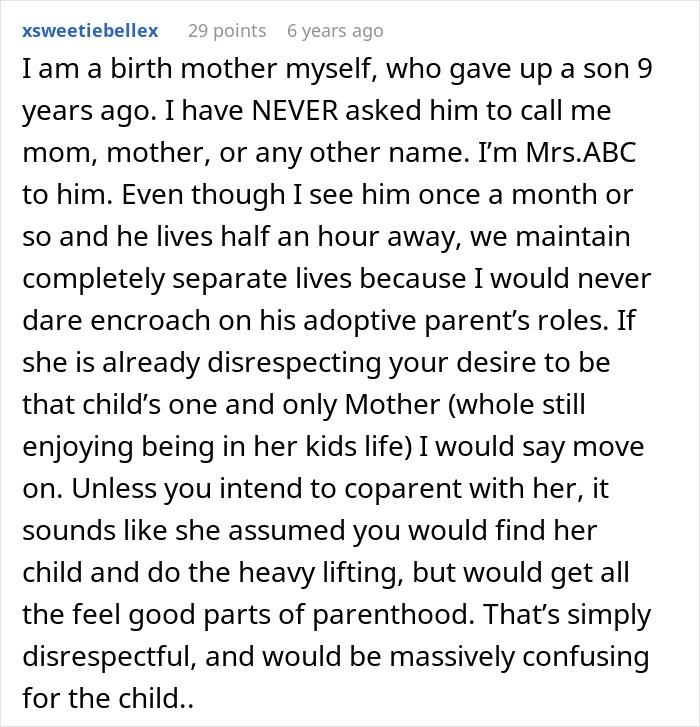
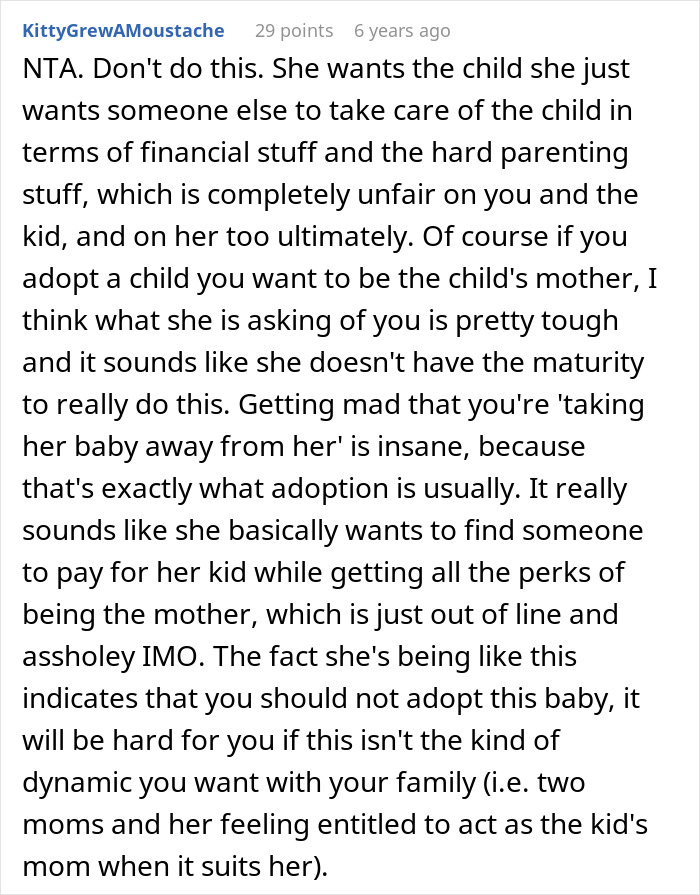
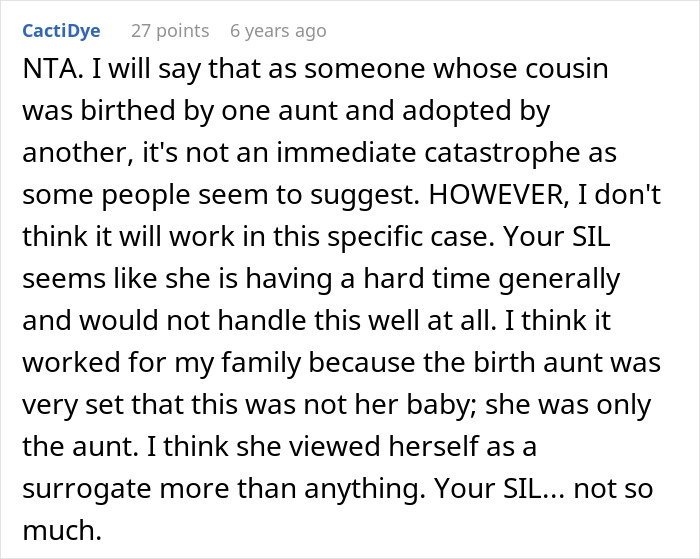
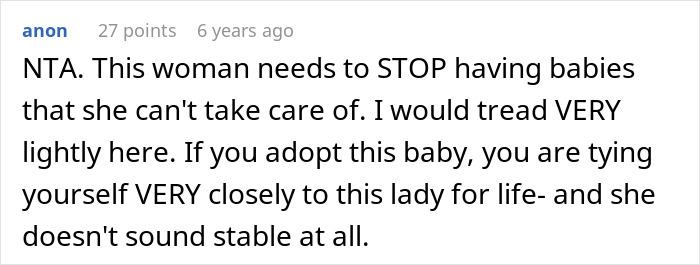
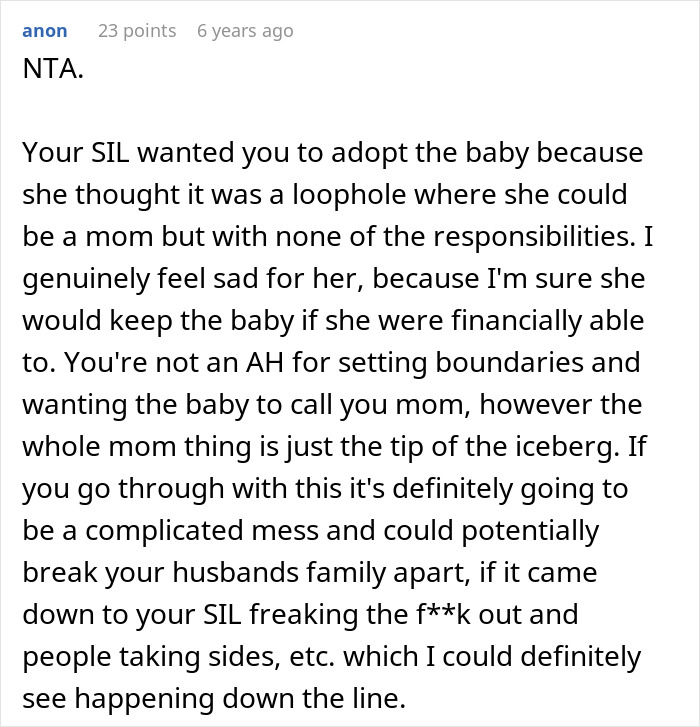
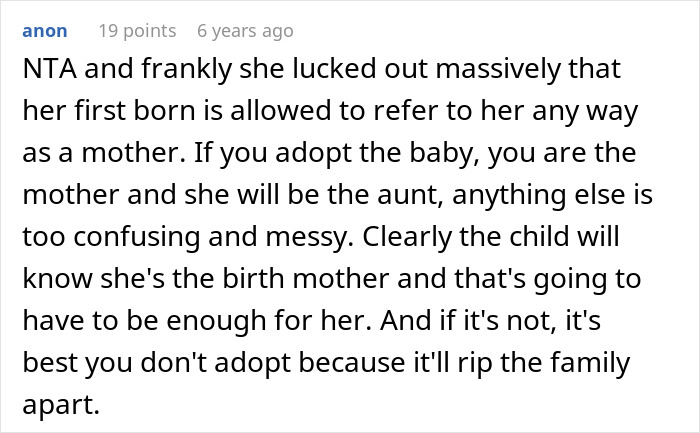
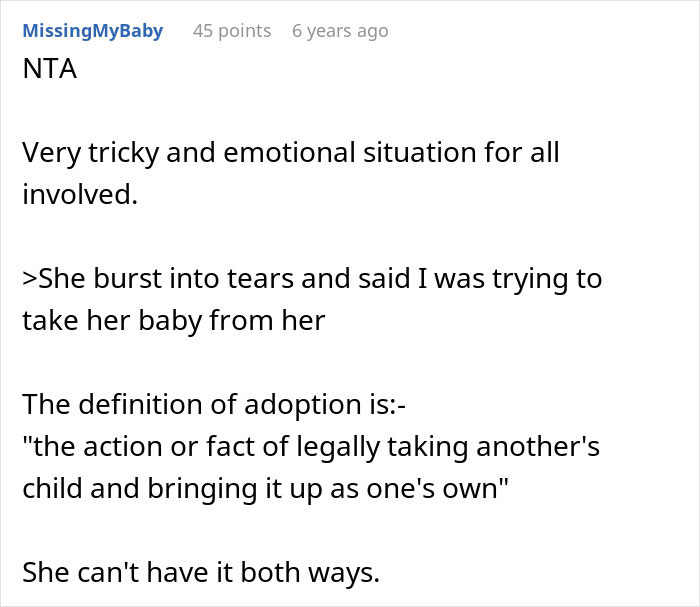
“Here’s my baby. I want you to have all the responsibility and expense of raising the baby but I’m still the mother and I demand that you respect me as the mother and treat me as such.” Yeah, that’s just crazy. If SIL wants to be the mother then she needs to BE the mother. She literally wants to have her cake and east it too.

For the second time too. At 19, I can imagine an "oopsie baby". At 30, when you *know* you can't afford it, you have no excuse. I would give anything to be able to afford to become a mum. Every day I die inside. But I can't. And precisely because I know for a fact that I can't afford to raise a child, and because I love my dream baby so incredibly much, I would rather cry and grit my teeth than put us in the above situation.
Load More Replies...
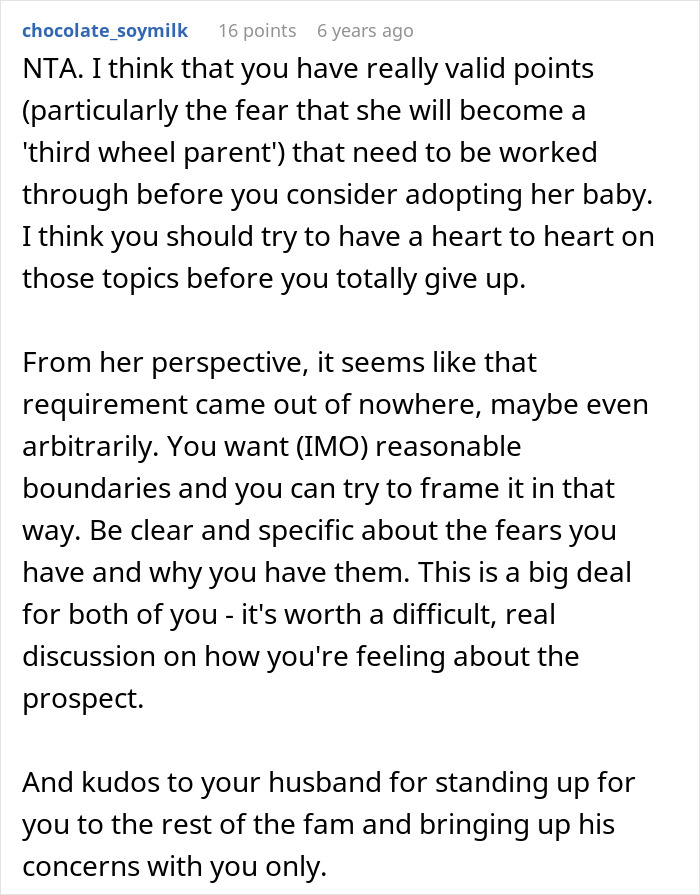
My youngest daughter is my niece, she learned I was bio-mother after she was 18. Yes it can be hard and yes, I was far away during her childhood. That made it easier on both my sister and myself. Their rules are fair.
“Here’s my baby. I want you to have all the responsibility and expense of raising the baby but I’m still the mother and I demand that you respect me as the mother and treat me as such.” Yeah, that’s just crazy. If SIL wants to be the mother then she needs to BE the mother. She literally wants to have her cake and east it too.
For the second time too. At 19, I can imagine an "oopsie baby". At 30, when you *know* you can't afford it, you have no excuse. I would give anything to be able to afford to become a mum. Every day I die inside. But I can't. And precisely because I know for a fact that I can't afford to raise a child, and because I love my dream baby so incredibly much, I would rather cry and grit my teeth than put us in the above situation.
Load More Replies... My youngest daughter is my niece, she learned I was bio-mother after she was 18. Yes it can be hard and yes, I was far away during her childhood. That made it easier on both my sister and myself. Their rules are fair.





 No fees, cancel anytime









31
5