Get Premium
Dark mode theme is available exclusively for premium users. Learn more about the benefits of subscribing.
No fees, cancel anytime.

 Dark Mode Ad-Free Browsing Unlimited Content
 Ad-Free Browsing Unlimited Content Dark Mode
Join 1.2 million Panda readers who get the best art, memes, and fun stories every week!
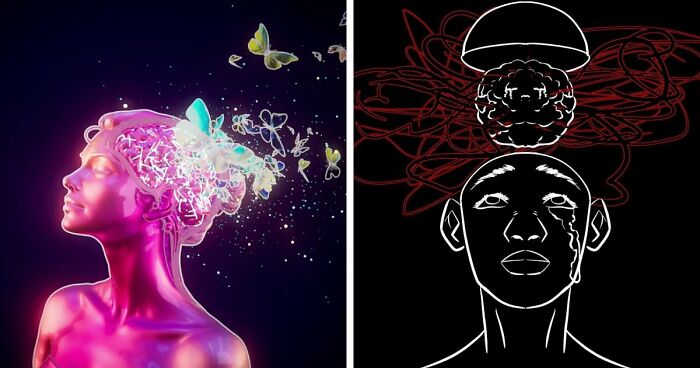
Happy crying catches us off guard every time. You finally land the job, watch your best friend say "I do," or open a birthday card from someone you love, and there it is: tears.
Not the sad kind. The kind that sneak up on you during the happiest moments of your life.
We tend to brush it off as being "emotional," but science tells a much more interesting story.
Your brain, your nervous system, and millions of years of human evolution all play a role in those unexpected waterworks.
We've mapped out ten science-backed reasons why happy crying happens, and why it's actually a sign your body is working exactly as it should.
This post may include affiliate links.
Despite being contrasting emotions like happiness and grief, your brain has an overwhelmingly uniform reaction to both.
This isn’t a mere coincidence; in fact, researchers have inferred that this simultaneous display of contradictory emotional expressions is a phenomenon called dimorphous expression, which typically occurs when one is overwhelmed by intense emotion.
When one experiences heightened positivity, the body can often produce an expression typically associated with a negative emotion to regulate these overwhelming feelings. The same phenomenon is also associated with cute aggression.
So the next time you find yourself crying after getting tickets to a Taylor Swift concert or passing your driver’s test, you can rest assured your brain is just going wild with positive frenzy and cooling things down (via APS).
We’ve already established that different emotions lead to tears, and it turns out there’s further variation within the happy-crying category. The human brain is so complex; we love it.
A study published on OSF that aimed to investigate tears of joy revealed that affectionate tears, or positive tears conjured by unexpected kindness, were the most common form of happy tears.
In fact, 55% of the participants recalled instances where they felt an overwhelming surge of emotion due to warmth, communality, and compassion.
These are the tears one usually sheds during weddings or in reaction to a surprise proposal.
Humans are social beings who like to share their emotions with those around them, be it happiness or grief.
When someone cries happy tears at a significant milestone, such as a graduation or a long-awaited promotion, it serves as a social signal to those around them of the value of that moment.
These tears of joy almost serve as a silent signal, inviting them to respond with care or to partake in your delight. Though underrated, it serves as a powerful tool that encourages social connection and empathy (via Healthline).
Even British evolutionary biologist Charles Darwin noted that happy tears, or “tender feelings” like joy, affection, and especially compassion, are powerful markers of gratitude and connection.
He used the example of a child crying after their mother shows them compassion when they’re hurt, a reaction not to the pain itself, but to the overwhelming warmth of being cared for (via Academic).
Have you ever felt so happy that you also felt a tinge of sadness? Despite the tears being joyous, there could be an underlying reason making you feel a bit blue.
Child, adolescent, and adult psychiatrist Dr. Naomi Weinshenker offers an alternative explanation for positive tears, describing crying as a form of relief.
These tears are inherently happy, but they often occur at the end of intense hardship or after meeting someone after a prolonged separation.
People tend to cry at these moments because they finally allow themselves to express their emotions, not just for the happy event itself, but for the hardship that led up to it.
A fitting example would be couples who’ve been struggling to conceive or who have faced multiple miscarriages, finally holding their newborn in their arms.
It’s a bittersweet moment that brings them full circle, allowing them to finally close the chapter on their hardships (via Psychology Today).
These happy tears act almost like a time stamp between the past and present versions of yourself.
The unique characteristics of the human body continue to surprise us, as there are instances when we shed happy tears solely because of someone else’s joy.
The usual suspects who experience this form of happy crying are empaths and highly sensitive people (HSPs).
They experience emotions more vividly, and their heightened sensitivity is linked to a variant of the serotonin transporter gene (5-HTTLPR), which affects how the brain regulates mood and emotional responses.
Essentially, this is the part of the brain responsible for regulating emotions, which is why HSPs tend to feel joy, sadness, or awe more strongly than others.
Apart from experiencing their own emotions more intensely, they also tend to absorb the emotions of those around them, making them incredibly empathetic individuals.
This is completely normal, except that you may need to keep an extra pack of tissues on hand for unsolicited moments of sensitivity.
So, if you find yourself crying because your mom is teary-eyed or reaching for your hanky at your friend’s graduation, chances are you’re an HSP (Highly Sensitive Refuge).
There is another theory, happy crying, that suggests it’s a result of the brain being unable to distinguish between intense emotions.
At times when you experience strong emotions like joy or anger, a region in the brain known as the amygdala processes the emotion and sends a direct signal to another part of the brain that helps regulate bodily functions, the hypothalamus.
What’s interesting about the hypothalamus is that it sends signals to your nervous system, but doesn't really differentiate what specific emotion you’re experiencing; it simply reacts to the intensity. It knows the emotion is extreme and that your body needs help managing it.
The autonomic nervous system is divided into two branches: sympathetic and parasympathetic.
The sympathetic branch often triggers during high arousal, but once the high-intensity signal has subsided, tears, both happy and sad, are the medium that helps the parasympathetic branch calm your system down (Harvard Health).
There are very few individuals who have sat through the opening sequence of Disney Pixar’s Up or glanced at Claude Monet’s Water Lilies for the first time without shedding a few tears.
The founding Director of the Center for Neuroeconomics Studies and Professor at Claremont Graduate University, Paul J. Zak, boils the reasoning down to the modulation of empathy by the neuropeptide oxytocin.
Oxytocin engages the brain, prompting humans to care about others, even strangers, as seen in our reactions to various forms of art and entertainment.
Zak believes that we shed tears during movies because of the imperfect tuning of oxytocin in the human brain.
It cannot perfectly distinguish between real humans and fictional characters on screen, inevitably leading to a surge of emotions during viewing (via Psychology Today).
The reason for happy crying isn’t always sunshine and rainbows. Sometimes it could be the result of repressed emotions like stress or anxiety.
When negative emotions like sadness are buried within for a long time, they may emerge as happy tears, almost like a sign of relief.
This can be triggered by traumatic events from the past, such as stressful life experiences or a difficult childhood (via Choosing Therapy).
These are often referred to as emotional tears. Researchers stated that crying releases oxytocin and endogenous opioids, aka endorphins, that help ease both physical and emotional pain (Harvard Health).
Essentially, the joyous occasion acts as a safe harbor, finally allowing your body to drop its guard and shed the weight of everything you’ve been carrying.
From a broader perspective, crying is often associated with being weak or emotionally unstable. In reality, however, tears are a testament to vulnerability, a critical aspect of human connection.
According to Michael Trimble, a behavioral neurologist and one of the world’s leading experts on crying, “the same neuronal areas of the brain are activated by seeing someone emotionally aroused as being emotionally aroused oneself.”
He believes that the ability to cry emotionally and the capacity to respond to that in others are vital parts of being human (via TIME).
In fact, happy crying can help in emotional regulation, providing a more tangible outlet for emotional release, one that is often healthier than verbal expression alone.
This physical response is beneficial for positively managing complex feelings, rather than simply suppressing them. (via Choosing Therapy).
We’re rounding off this list with the most mainstream and possibly heartwarming form of happy crying: social bonding.
In her book, Braving the Wilderness: The Quest for True Belonging and the Courage to Stand Alone, author Brené Brown recalls watching a YouTube video of a massive crowd of Australian Liverpool Football Club fans gathered at the Melbourne Cricket Ground for a soccer match.
They were swaying in unison, chanting the club’s anthem, “You’ll Never Walk Alone,” with tears in their eyes. Brown was so enamored by the team spirit that she even found herself getting teary-eyed, with goosebumps creeping up.
She reflected on how collective joy can transcend division. It is at the heart of both joyous celebrations and heated protests where human emotions are at an all-time high, uniting people toward a common goal.
The author expressed how being physically present in such moments is incredibly powerful, creating a heightened level of shared humanity.
Ultimately, these tears act as the social glue that reminds us we aren’t just individuals, but part of a much larger, beautiful story (via Greater Good).


































 No fees, cancel anytime