Get Premium
Dark mode theme is available exclusively for premium users. Learn more about the benefits of subscribing.
No fees, cancel anytime.

 Dark Mode Ad-Free Browsing Unlimited Content
 Ad-Free Browsing Unlimited Content Dark Mode
Join 1.2 million Panda readers who get the best art, memes, and fun stories every week!
Somewhere in New Guinea, a bird is turning itself into a giant blue smiley face to impress a date. It’s real. So are frogs you can see straight through, a mole with a pink star for a nose and a spider that dances with a rainbow fan.
On November 9, Threads user @iicy_mun asked people to name animals that look completely made up, adding that nature had some explaining to do. Thousands were ready to testify. The post has since reached 1.4 million views and nearly 39,000 likes, and its 6,000-plus comments read like evidence submitted to a very strange court.
We’ve gathered some of the most convincing exhibits below. Scroll down to meet them, upvote the ones that made you look twice, and tell us which animal you still don’t quite believe in.
More info: threads.com
This post may include affiliate links.
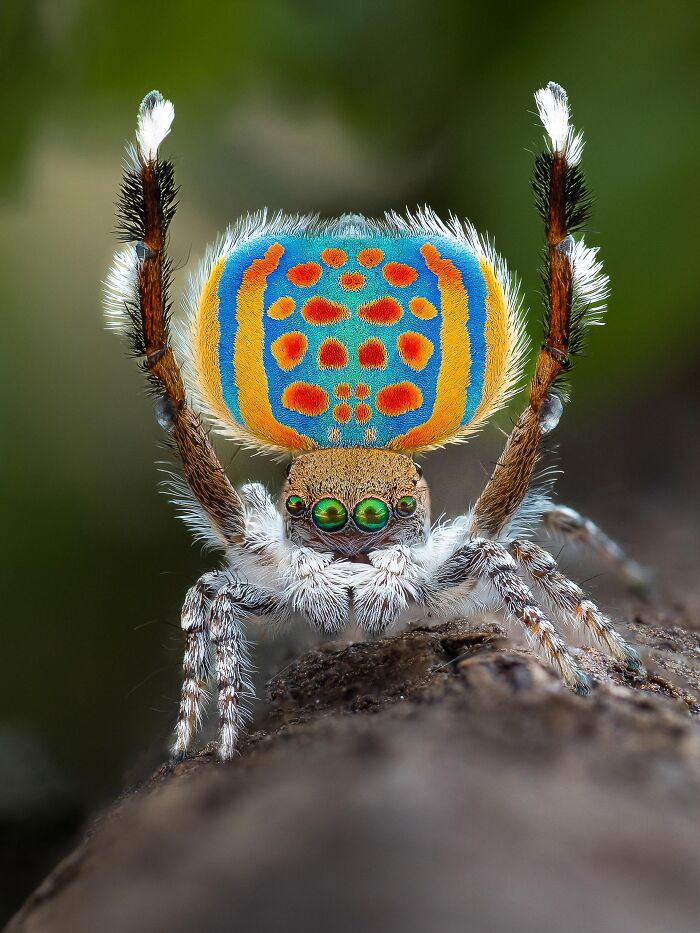
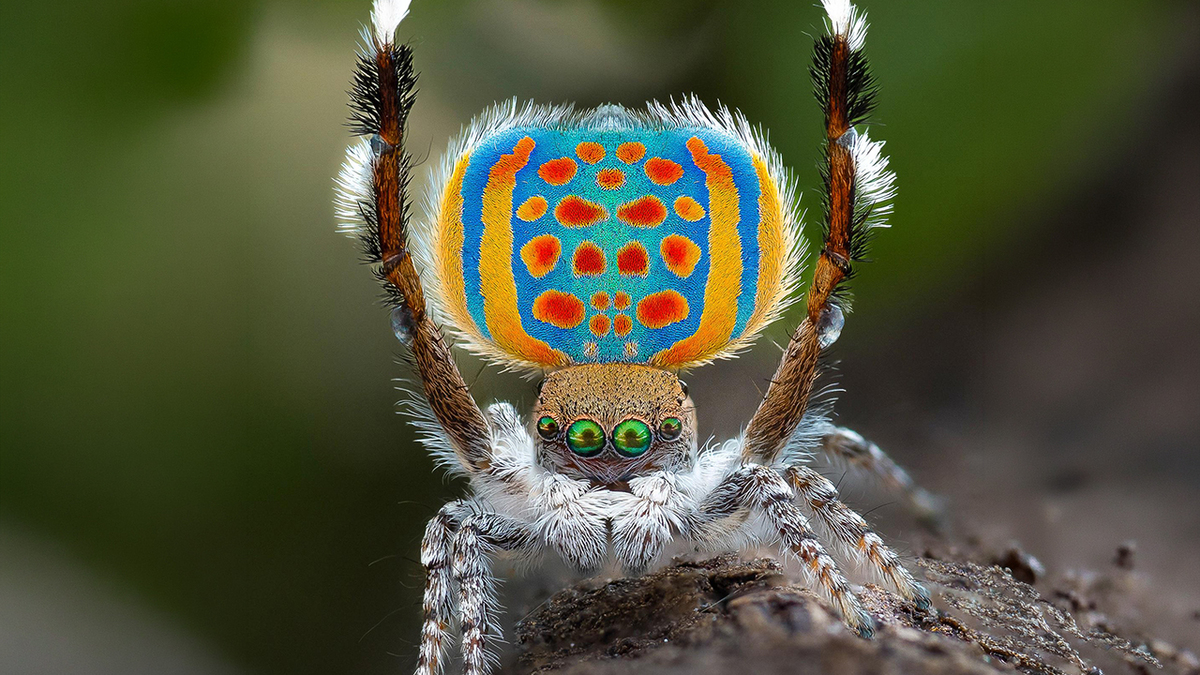
About the size of a grain of rice, Maratus volans is an Australian peacock spider whose males put on one of the most elaborate courtship shows of any arthropod. The male lifts a vividly patterned flap on his abdomen like a peacock’s tail, waves his legs overhead and drums vibrations through the ground, sometimes for up to 50 minutes, while the female decides if he’s worth it. Its name means “flying,” from an old belief that the flaps helped it glide, but the spider can’t actually fly.
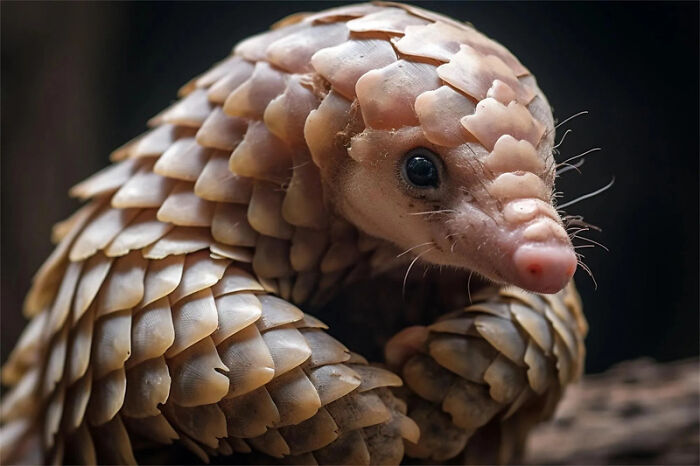
With its overlapping scales, the pangolin looks more like a walking pinecone than a mammal, yet it’s the only mammal on Earth covered in them. The scales are made of keratin, the same material as human fingernails, and when danger comes close, the pangolin rolls into a tight ball to protect its soft belly. It has no teeth and relies on an extremely long, sticky tongue to scoop up ants and termites. Those same scales have also made it the most trafficked wild mammal in the world, and all eight species are now threatened with extinction.
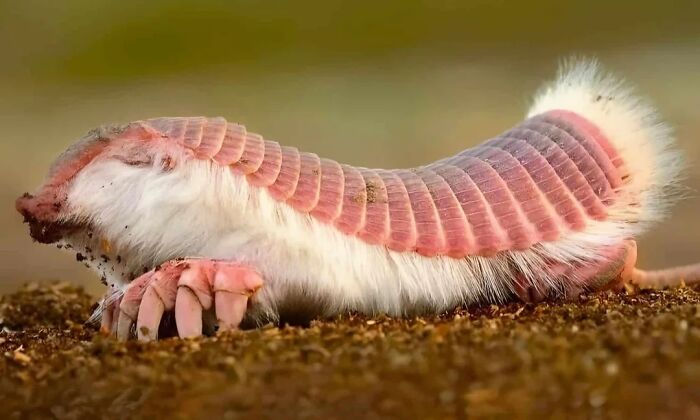
The smallest armadillo in the world, with a pale pink shell and fluffy white fur, from Argentina.
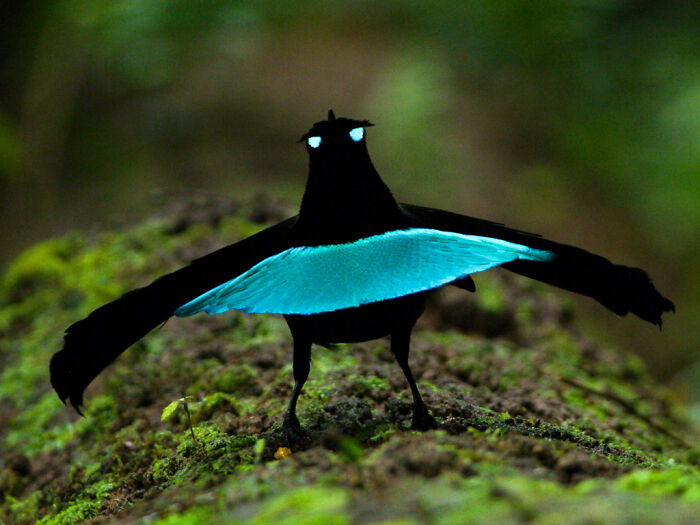
Found in the rainforests of New Guinea, the superb bird-of-paradise looks like an ordinary black bird until it starts courting. Then the male fans his cape into a black oval, a bright blue “smiley face” appears in the middle, and he bounces around the female to show it off.
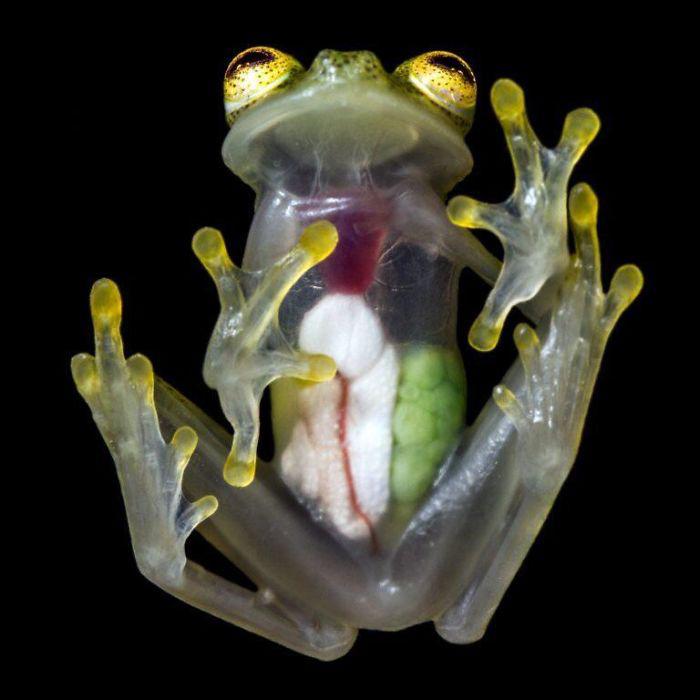
Found in the forests of Central and South America, the glass frog has skin so translucent that, seen from below, you can look straight through its belly at its heart, liver and gut.
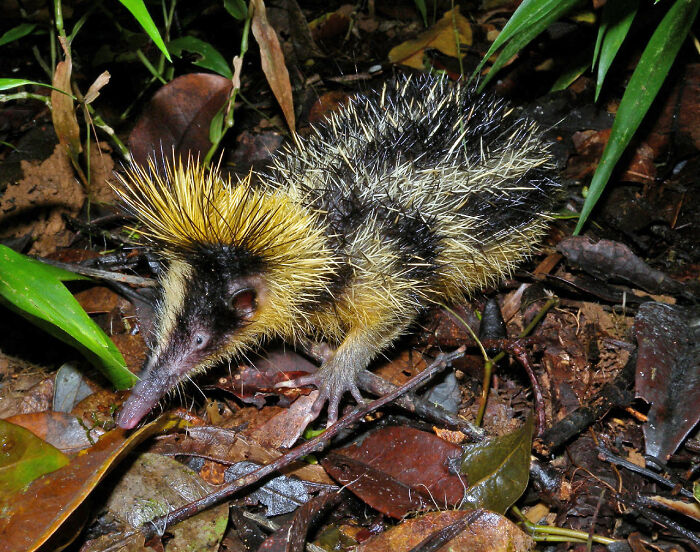
A spiky little Madagascar mammal striped in black and yellow, like a cross between a hedgehog and a bumblebee.
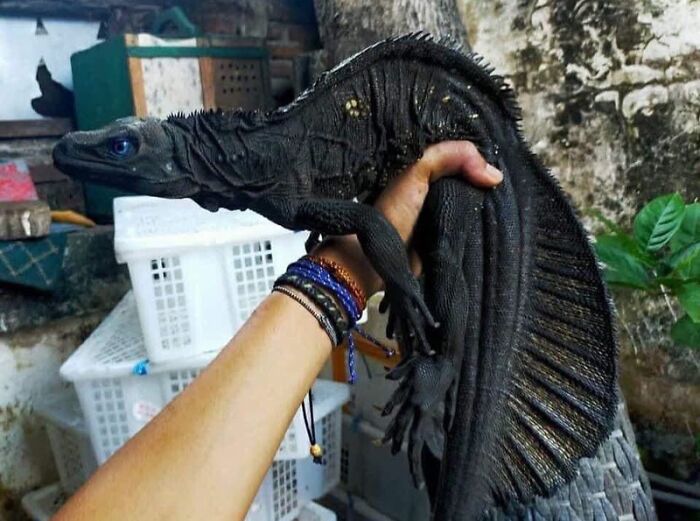
With a tall black sail rising from its tail and scales flecked with gold, the Sulawesi black sailfin lizard looks closer to a dragon than most real animals ever get. Found only on the Indonesian island of Sulawesi, it can grow to more than a meter (3.3 feet) long. It lives near rivers, where it dives into the water to hide when it senses danger.
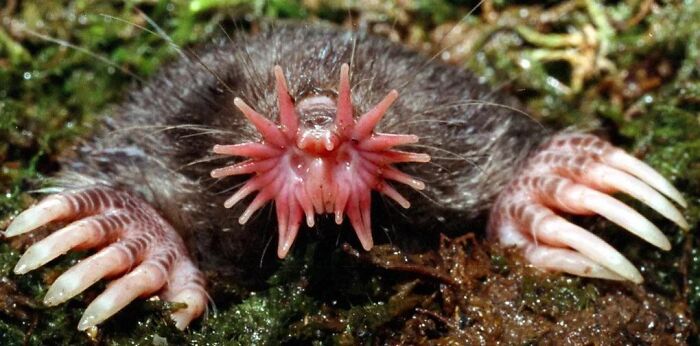
Its snout ends in 22 pink, fleshy tentacles that look like a tiny alien flower.
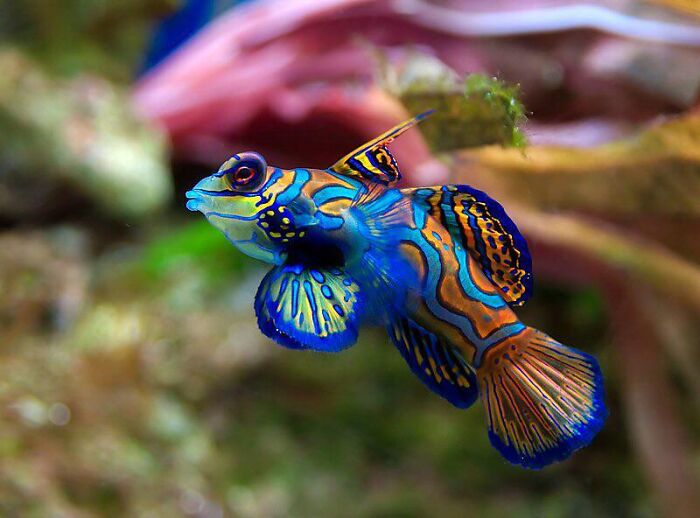
About the size of a paperclip, the mandarinfish wears one of the boldest outfits on the reef: electric-blue skin swirled with orange, yellow and green, like the robes of an imperial Chinese official, which is where it gets its name. That blue is rarer than it looks. Most blue animals get their color from light bouncing off tiny structures, but the mandarinfish is one of only two vertebrates known to make blue with actual pigment. It has no scales either. It’s coated in a smelly, bad-tasting slime that helps keep predators away.
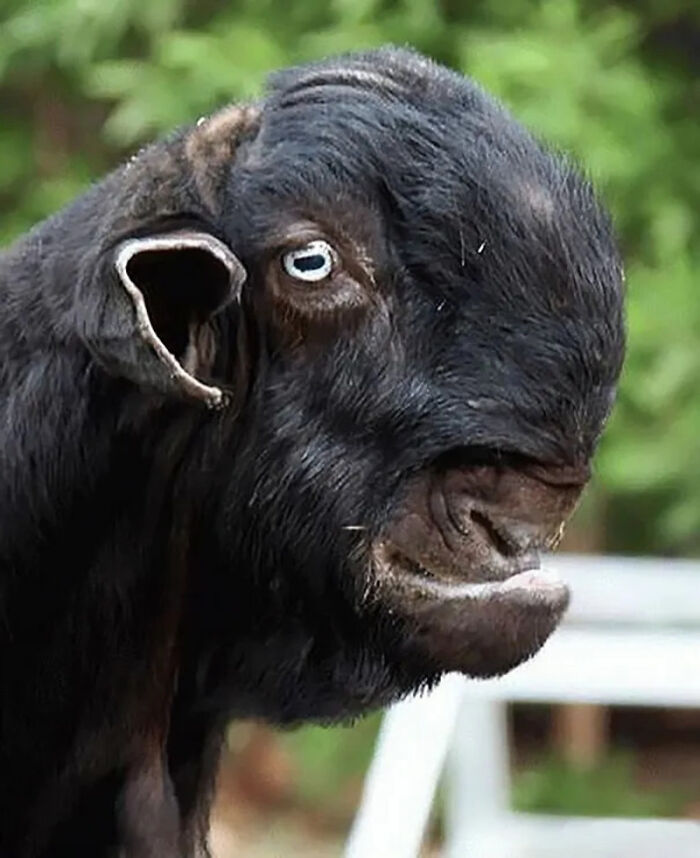
With its sharply hooked Roman nose and long ears that hang well below its jaw, the Damascus goat, also called the Shami, looks unlike almost any other breed. It comes from Syria and the surrounding region, where farmers value it for its high milk yield, and its unusual face has even won it top prize at a goat beauty contest in Saudi Arabia.
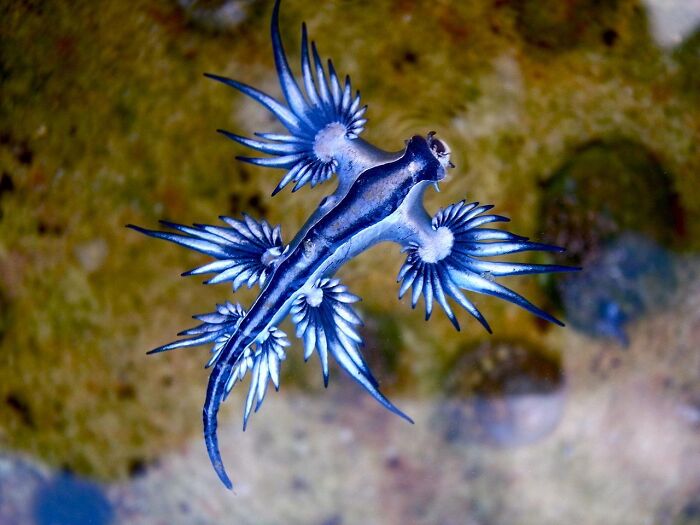
Barely the size of a grape, the blue dragon is a sea slug that drifts upside down across tropical and subtropical oceans, kept afloat by an air bubble it stores in its stomach. Its colors work as camouflage in both directions: the bright blue side faces up and blends with the water, while the silvery side faces down and matches the glare of the surface. Despite its delicate look, it feeds on the venomous Portuguese man o’ war and stores the stinging cells in its own feathery arms, so touching one can give you a painful sting.
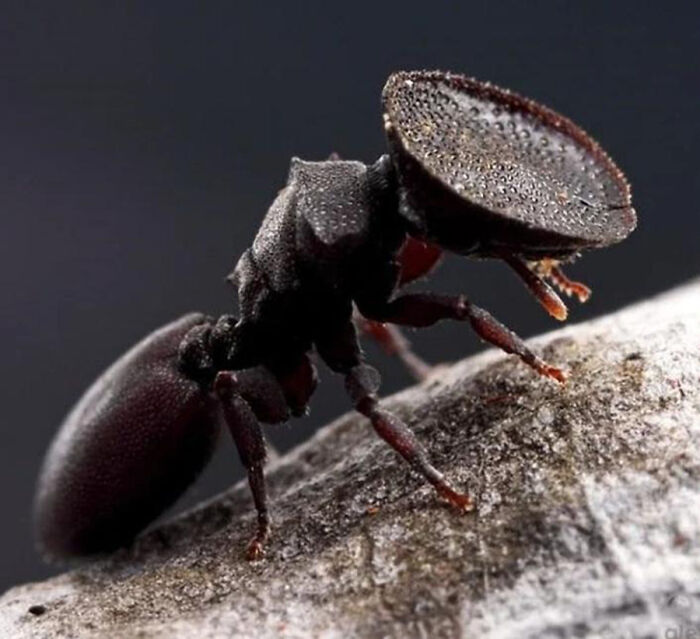
Turtle ants live in trees across the Americas, nesting in old tunnels left behind by wood-boring beetles. In some species, the soldiers’ heads are flat discs shaped like tiny manhole covers, and the soldiers guard the colony by wedging them into the entrance. If one of these ants falls from a branch, it can even steer its drop to land back on the trunk.
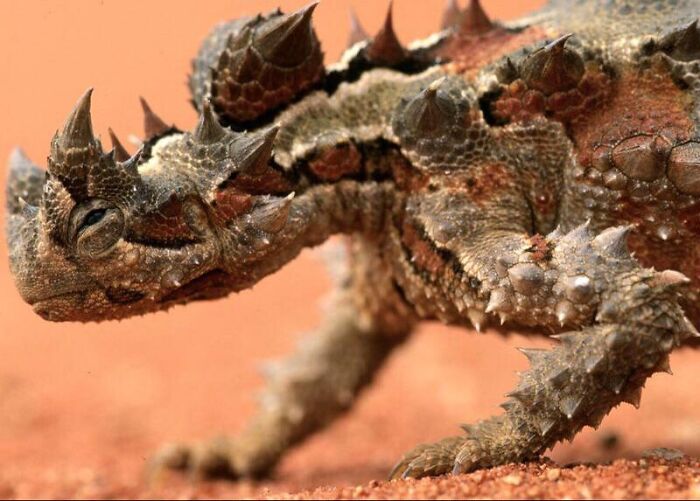
The thorny devil looks as if it were assembled from cactus spines, but this Australian desert lizard is a harmless ant-eater, only about 20 centimeters (8 inches) long, that can eat thousands of ants in a single day. It doesn’t need to bend down to drink, either: grooves between its spikes draw water from rain, dew or damp sand along its skin to the corners of its mouth. If a predator gets too close, it tucks its real head between its front legs and offers a spiky knob on its neck instead, a decoy known as a “false head.”
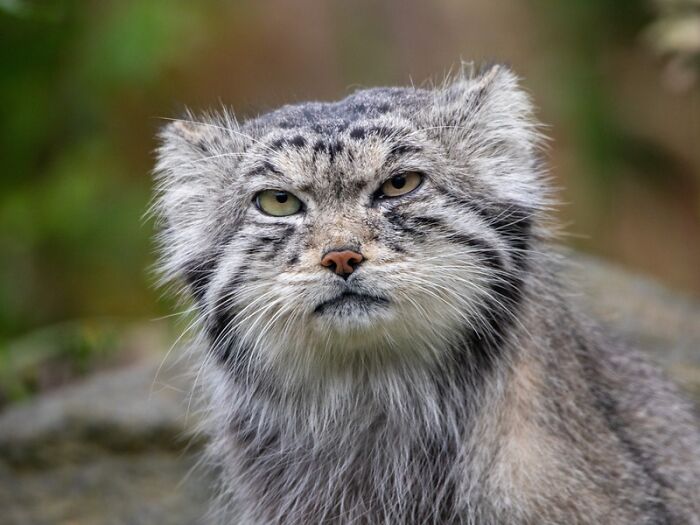
Pallas’s cat, also called the manul, is a small wild cat from the cold steppes of Central Asia, with dense fur, low-set rounded ears and a face that always seems slightly unimpressed.
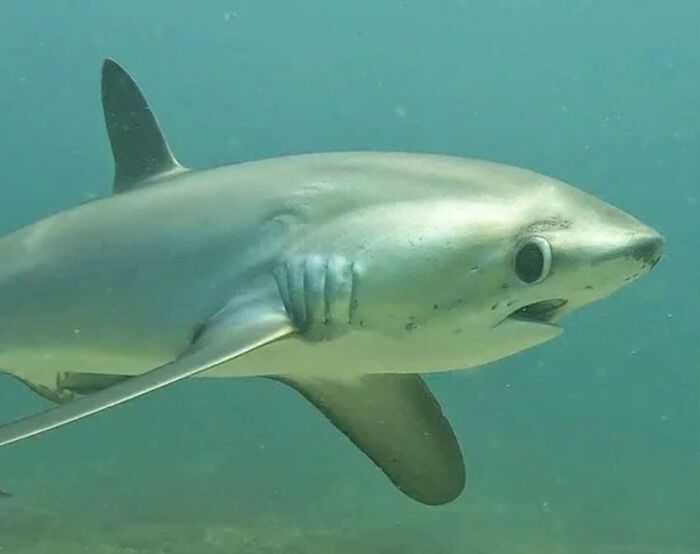
Up to half of a thresher shark’s length is tail, and it uses that tail as a hunting weapon. It cracks the tail like a whip through a school of sardines, so fast that the strike can make bubbles form in the water and leaves several stunned fish behind.
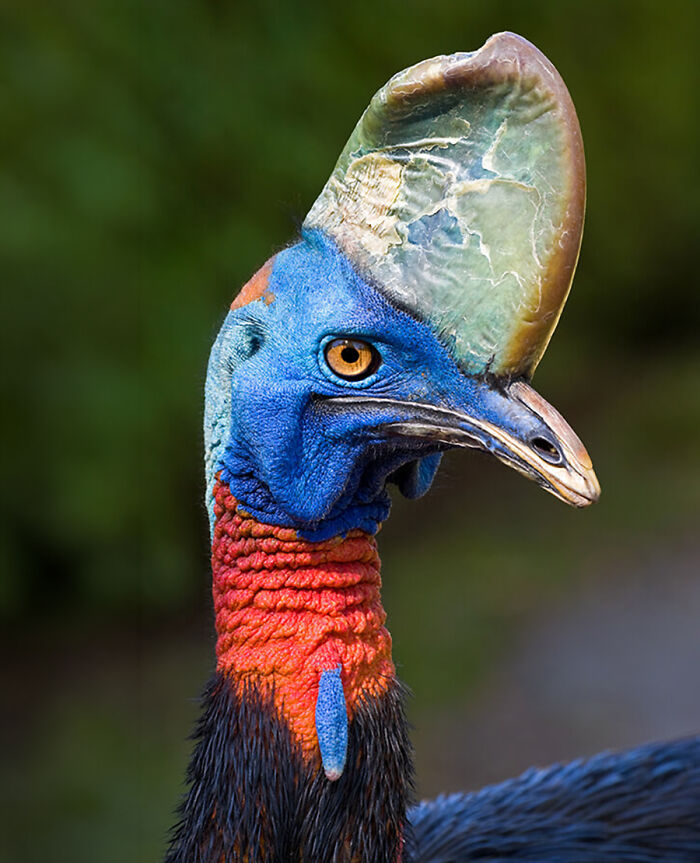
The southern cassowary is the world’s second-heaviest bird after the ostrich, and it looks every bit as tough. Found in the rainforests of New Guinea and northeastern Australia, it has a bare, bright blue head and neck, a tall casque that rises like a helmet, and a dagger-like claw up to 12 centimeters (5 inches) long on each foot.
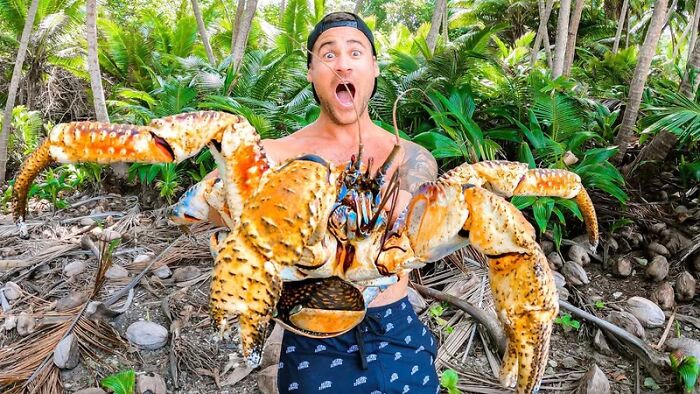
The coconut crab (Birgus latro) is the largest arthropod on land, with a leg span of up to one meter (about 3 feet) and a weight of more than 4 kg (9 lb). Its claws can pinch with a force comparable to a lion’s bite, which is how it breaks into its namesake fruit.
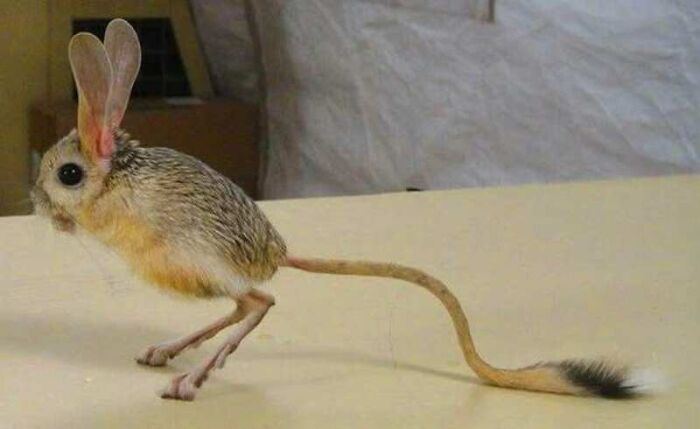
The jerboa, a tiny rodent from the deserts of North Africa and Asia, moves almost entirely on its long hind legs, which can be three times the length of its front ones. Its hops look kangaroo-like at first, but when a predator closes in, it switches to sharp zigzags and sudden leaps that make it very hard to catch.
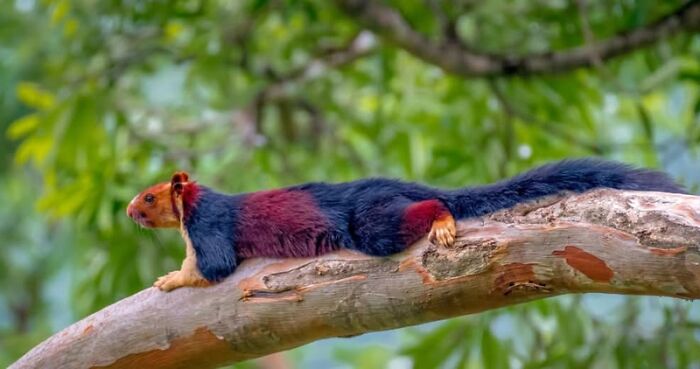
Found only in the forests of India, the Malabar giant squirrel can grow to about 3 feet (90 centimeters) from nose to tail tip. Its maroon, orange and cream coat has earned it the nickname “rainbow squirrel,” and it can leap 6 meters (20 feet) or more between trees.
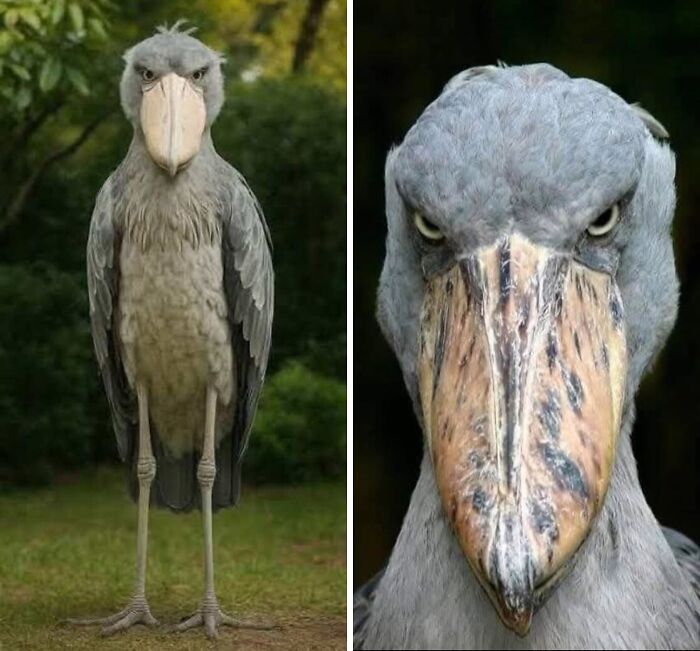
Standing up to 1.4 meters (4.5 feet) tall, the shoebill stalks the swamps of East and Central Africa, from South Sudan to Zambia. Its huge, clog-shaped bill gives it a prehistoric look, and it hunts with extreme patience: it can stand as still as a statue for hours until a lungfish rises for air, then lunge.
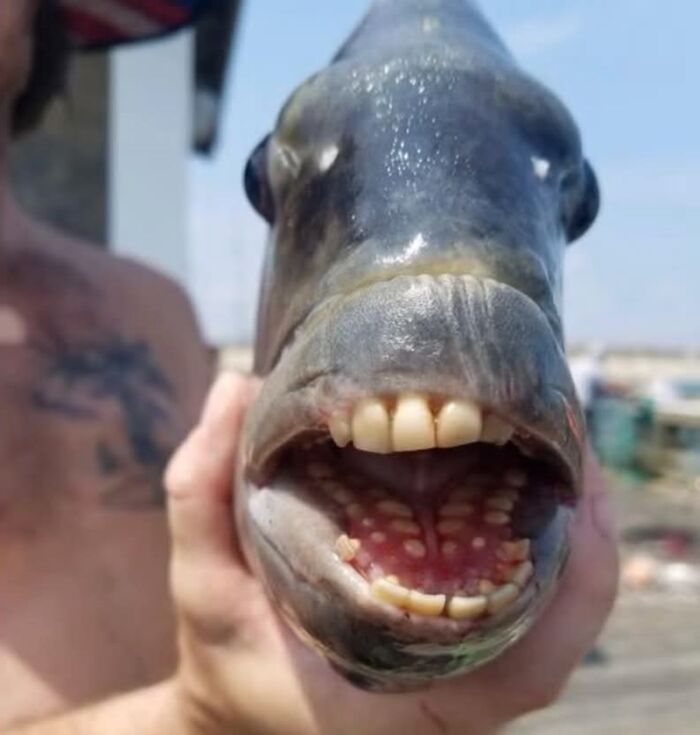
The sheepshead, a striped fish found from Nova Scotia to Brazil, has a mouth that looks unnervingly human: flat incisors in front for scraping barnacles off rocks and piers, and rows of molars behind them for crushing crabs, clams and oysters.
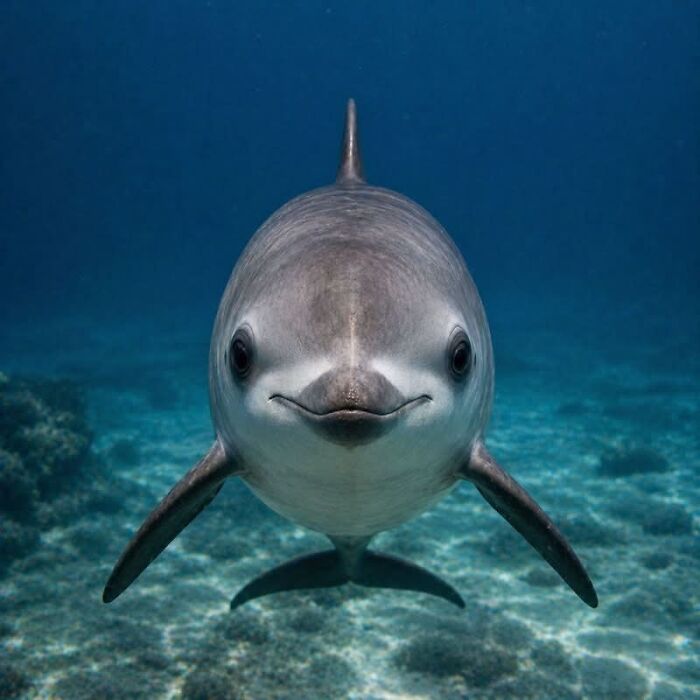
The vaquita, the world’s smallest porpoise, lives only in a small stretch of Mexico’s northern Gulf of California, and it is now the most endangered marine mammal on Earth. Scientists believe fewer than a dozen remain, though recent sightings of healthy calves have given them some hope.
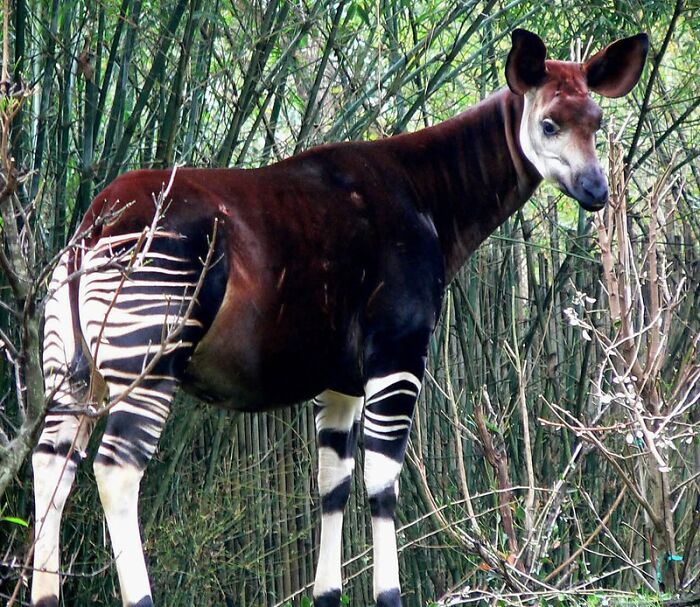
The okapi’s striped legs suggest a zebra, but its only living relative is the giraffe. Found in the wild only in the rainforests of the Democratic Republic of the Congo, it shares its cousin’s long, dark tongue, which can even reach its own ears.


























 No fees, cancel anytime