Get Premium
Dark mode theme is available exclusively for premium users. Learn more about the benefits of subscribing.
No fees, cancel anytime.

 Dark Mode Ad-Free Browsing Unlimited Content
 Ad-Free Browsing Unlimited Content Dark Mode
Join 1.2 million Panda readers who get the best art, memes, and fun stories every week!
32submissions
1week left

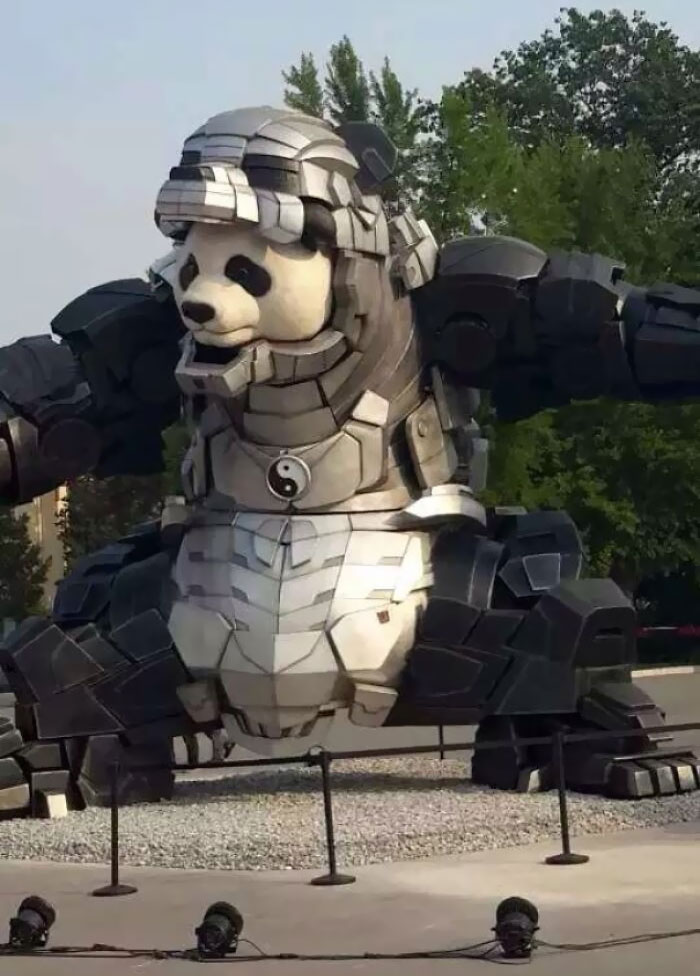
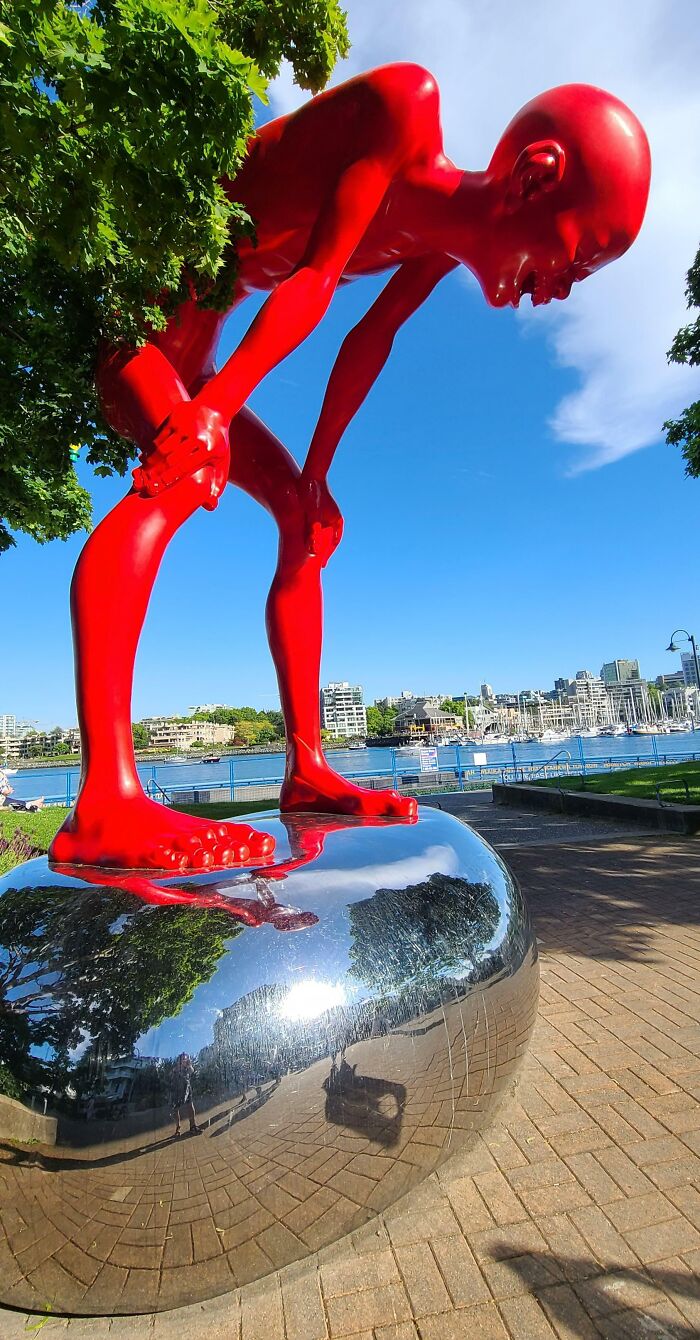
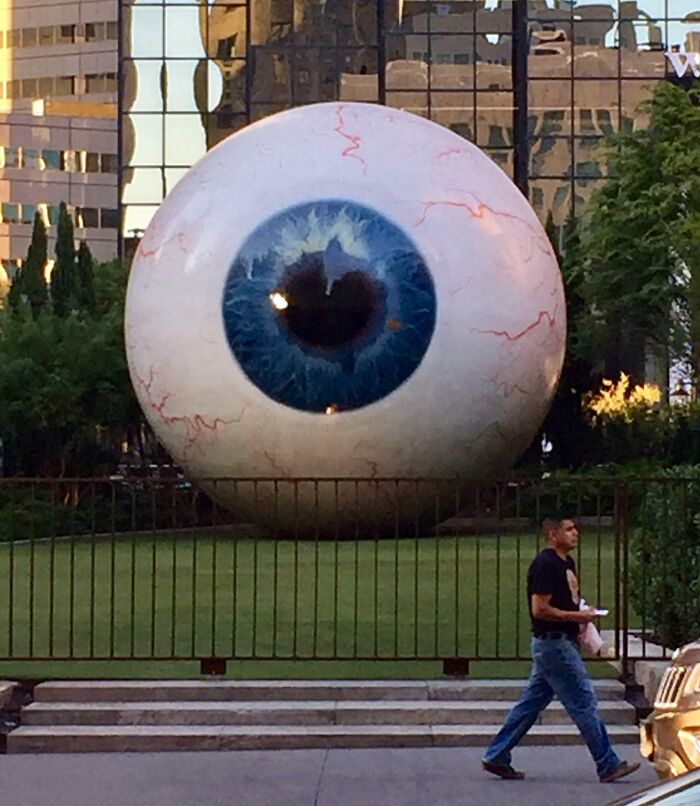
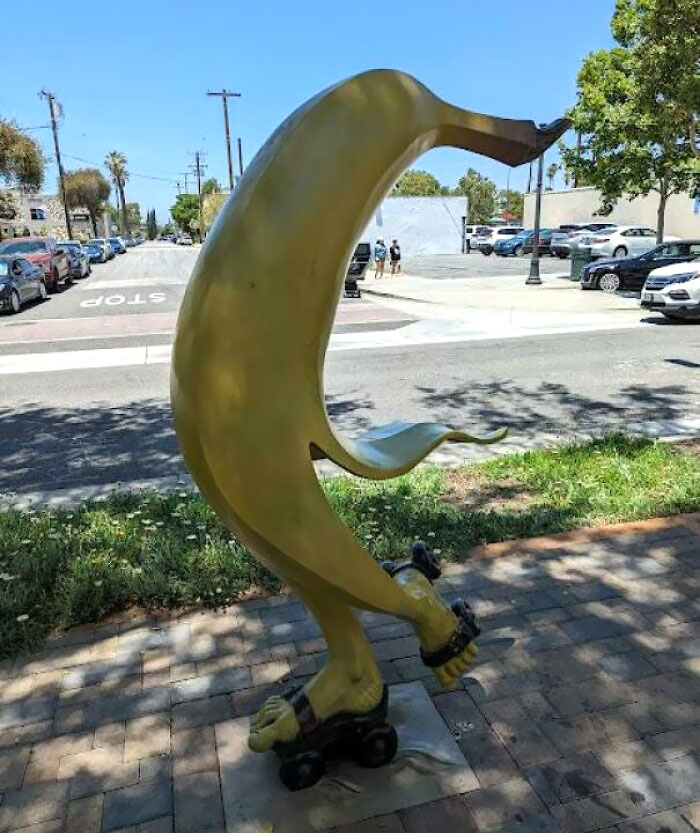
From giant eyeballs in the middle of a park to hyper-realistic pandas in mech suits or Ronald McDonald statues straight from our nightmares - the art world is full of really weird, and occasionally creepy, wonders. Wonders that can sometimes scare the bejeezus out of us or leave our jaws on the floor.
While these outlandish artifacts are scattered all over the world (some of them hidden 7 feet deep in the ocean!), thanks to the power of the internet, we can marvel at their peculiar weirdness right from our own homes. So if you're tired of the same old works of art by Michelangelo and Auguste Rodin, Bored Panda has gathered some of the most wackiest and mind-bending sculptures known to man. Buckle up, because things are about to get weird.
Click here & follow us for more lists, facts, and stories.
This post may include affiliate links.
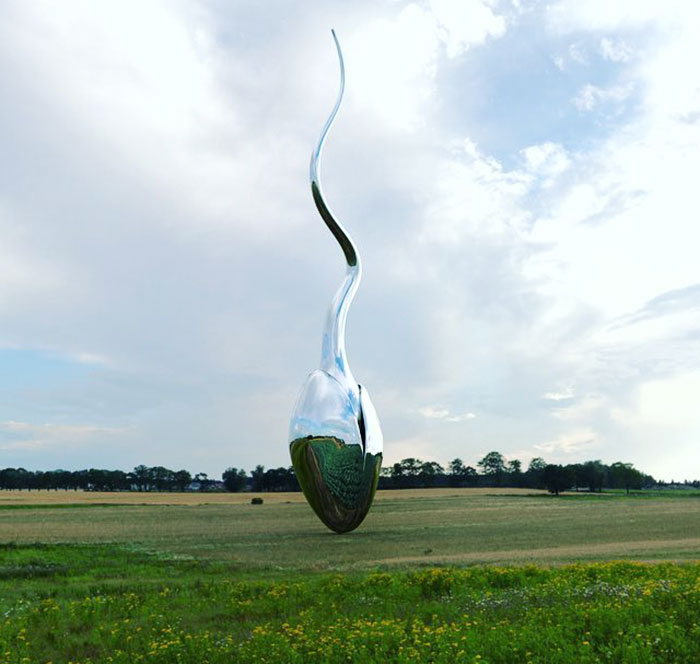
Have you ever seen a sculpture that made you say "What the duck?" Well, there are more of them than you can think of. Just in the UK alone, more than 13,000 public sculptures were recorded and shared online for the first time last year. A good amount of them are pretty unconventional. Others, like a giant silver spoon in the middle of a field, are downright bewildering, to say the least. Imagine taking a stroll on the outskirts of your hometown and stumbling into a giant spoon.
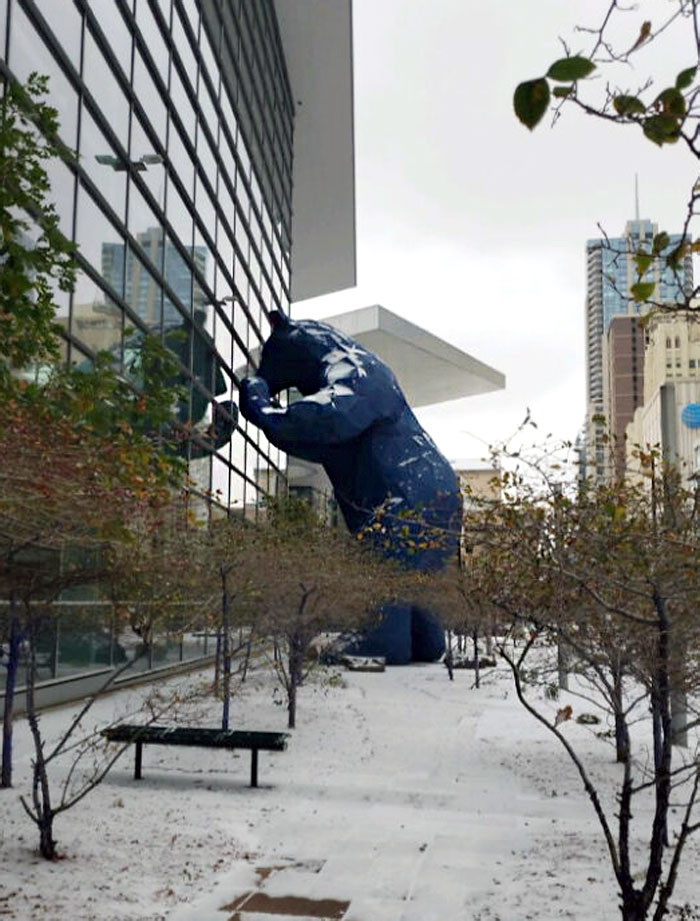
Of course, that's pretty mild stuff when you compare it with a 40-foot bear statue standing and peering into Denver's Convention Center. Yeah, you read that right. Right in the heart of Denver, Colorado, the sculpture titled "I see what you mean" is a whimsical interpretation of the wild animals that roam the Rockies. Since being erected in 2005, it has become a symbol of the city's playful, creative spirit and a pretty great conversation starter as well. Whether you're a tourist or a local, you can't help but be a little shocked when you see this big blue behemoth staring at you.
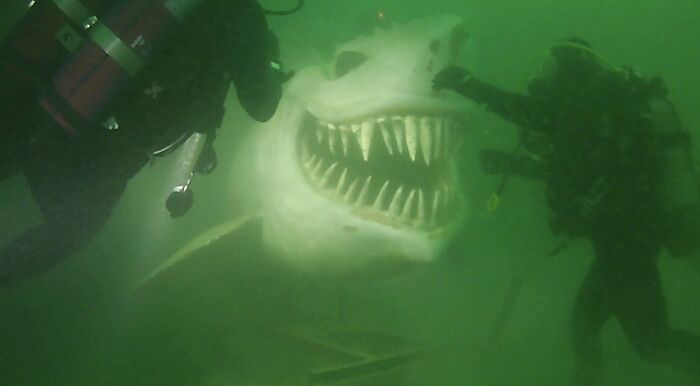
While we're talking about Godzilla-sized animal statues, deep beneath Lake Neuchâtel's surface lies a sculpture that's sure to give you goosebumps: an underwater 16-feet-tall shark statue. Of course, not everyone has access to this plastic Megalodon since it‘s buried a couple of feet down into the dark waters.
According to one internet user, it was made in 2007 by 176 kids and a couple of professionals for the short movie called "Choc au lac". The video and the beast's performance in it are long gone. But if you have the guts and a few spare oxygen tanks, this frightening bag of jaws is eager to meet new visitors 24/7 (souvenirs include a bad case of thalassophobia).
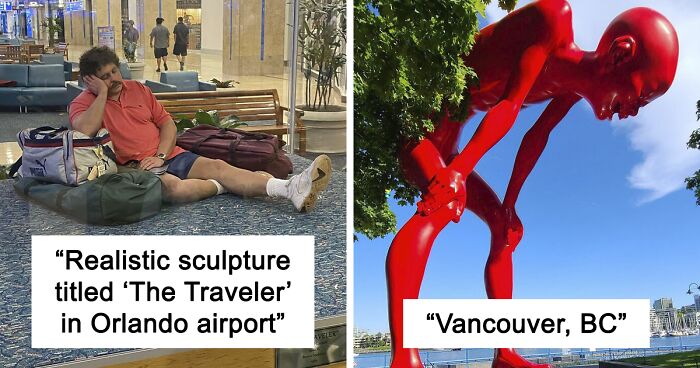
And yet: what's the deal with these phantasmagorical sculptures? Why are we so drawn to them? Part of the appeal of these strange and often unsettling works, we guess, lies in their ability to evoke a strong emotional response. Just take a look at “The Traveler” napping inside the glass cage of Orlando International Airport. It looks so real and relatable that it's pretty difficult not to be awe-struck by its hyper-realism. They challenge us to look beyond the surface and engage with art on a deeper, more meaningful level. Even if they remind you of Slenderman coming to life.
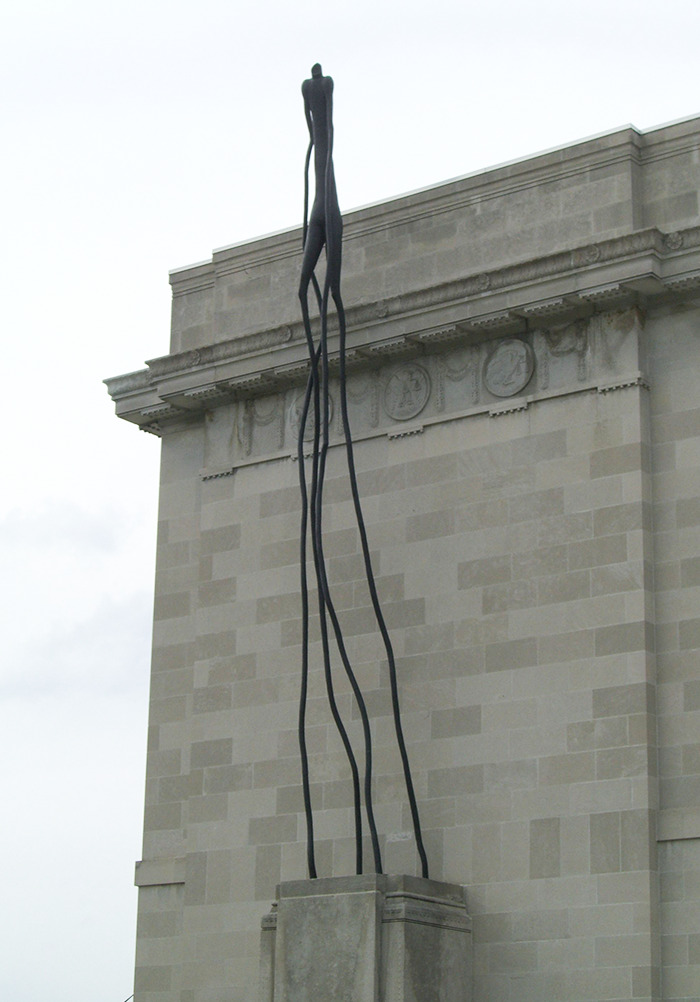
At the same time, weird sculptures offer a sense of escapism from the world where everything seems to be designed to fit neatly into preconceived categories. Whether it's artists like Willard Wigan, who makes sculptures so comically tiny they can be accidentally inhaled, or ones that stretch to infinity ("Karma" by Korean artist Do [jerk] Suh), it creates a bit of much-needed magic in our over-explained world. More importantly - you can actually touch it! Or swallow it, if you're part of Wigan's exhibition.
What's great about seeking art, then, is its multi-layered effect on our minds. As it turns out, there's a scientific explanation for why our brains light up like the 4th of July's sky when we're confronted with a piece of art. According to the book "The Singularity Is Near", our brains have an awesome ability to organize patterns until they start making sense. And when it does add those random elements into something recognizable, something you can emotionally respond to - it's pretty darn amazing.
Robert Pepperell, a professor at Cardiff School of Art and interdisciplinary researcher who combines art, science, and philosophy, describes this phenomenon as 'visual indeterminacy.' Or "an image or scene that is full of visual information yet defies easy or immediate recognition," Pepperell explained to Bored Panda via email. He believes many of Picasso's and Braque's cubist pieces, made just before WWI, fit into this description.
The first time Robert recognized this profound feeling was in the mid-1980s while watching Robert Wiene's silent horror hit "The Cabinet of Dr. Caligari". "Although the screen was full of clearly delineated forms, I was momentarily lost, unable to recognize what I was seeing. Some 2 seconds later—as a human figure rose from a bending posture—a wave of recognition overcame me, even though the image had changed only marginally," Pepperell remembered, describing the powerful moment as "marked by a mild sense of panic, mixed with a brief euphoria." Since then he wrote multiple papers on visual indeterminacy while also coining the term.
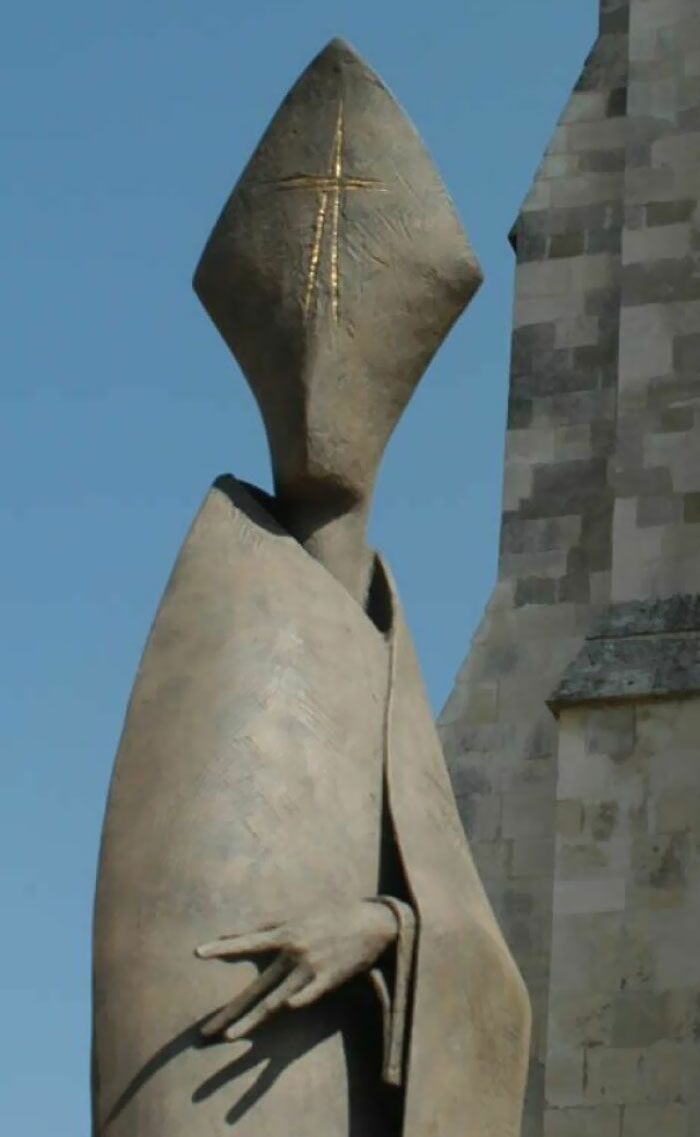
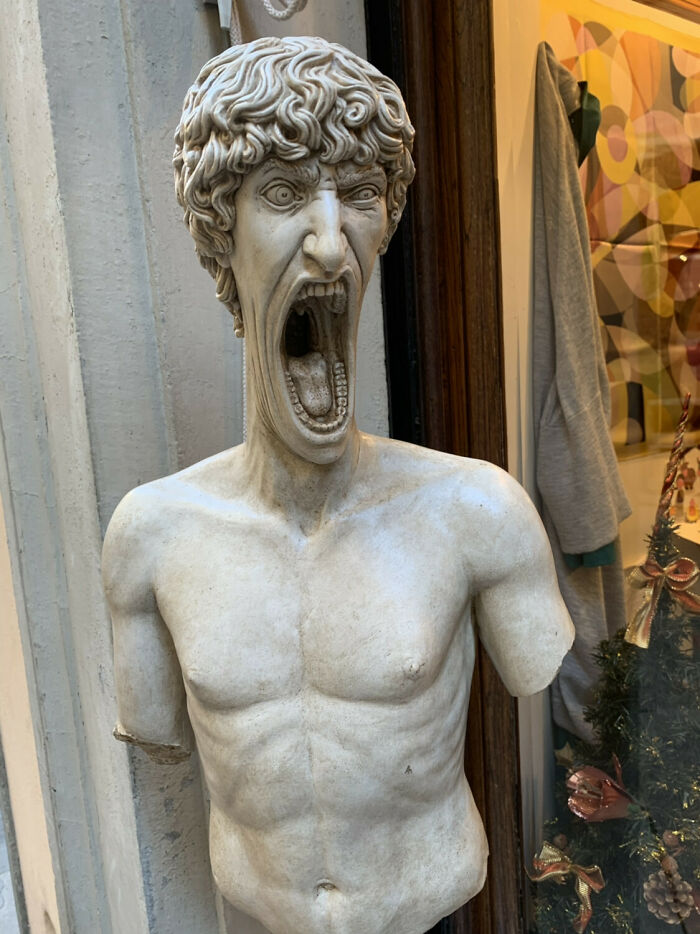
When we're looking at a piece of art, we're not just seeing colors and shapes, a slab of hand-formed clay - we're actively trying to give shape and meaning to the incoming information. Remember that "religious statue that looks like a sinister alien creature" trying to steal your soul away? Well, yes, it's creepy. But more importantly, your brain is trying to give the sculpture meaning by relating it to things you're already familiar with.
This is called 'associations’ and it's one of two things that make people resonate with a sculpture, or any piece of art, no matter how weird it is. The first factor ('formal'), then, relies on its physical properties - shapes, colors, size, and even location. "So a sculpture that is very big and brightly colored will have a different effect than one that is small and dull, regardless of what the sculpture represents," told Pepperell. Combine these two, and you're pretty much experiencing art to its fullest.
What makes art truly great? It's a sweat-breaking question that has been asked for generations with no simple answer. So, we turned to Professor Pepperell to give us his take on the subject. "In my view, great works of art heighten our senses and feelings by challenging our preconceptions about the world, whether conceptually or perceptually," he said. "By doing so, they make us more conscious of what we're seeing, allowing us to feel more vivid and alive."
You might also like: 50 People Who Tried To Be Creative With Their Homes And Failed (New Pics)


























 No fees, cancel anytime