Get Premium
Dark mode theme is available exclusively for premium users. Learn more about the benefits of subscribing.
No fees, cancel anytime.

 Dark Mode Ad-Free Browsing Unlimited Content
 Ad-Free Browsing Unlimited Content Dark Mode
Join 1.2 million Panda readers who get the best art, memes, and fun stories every week!
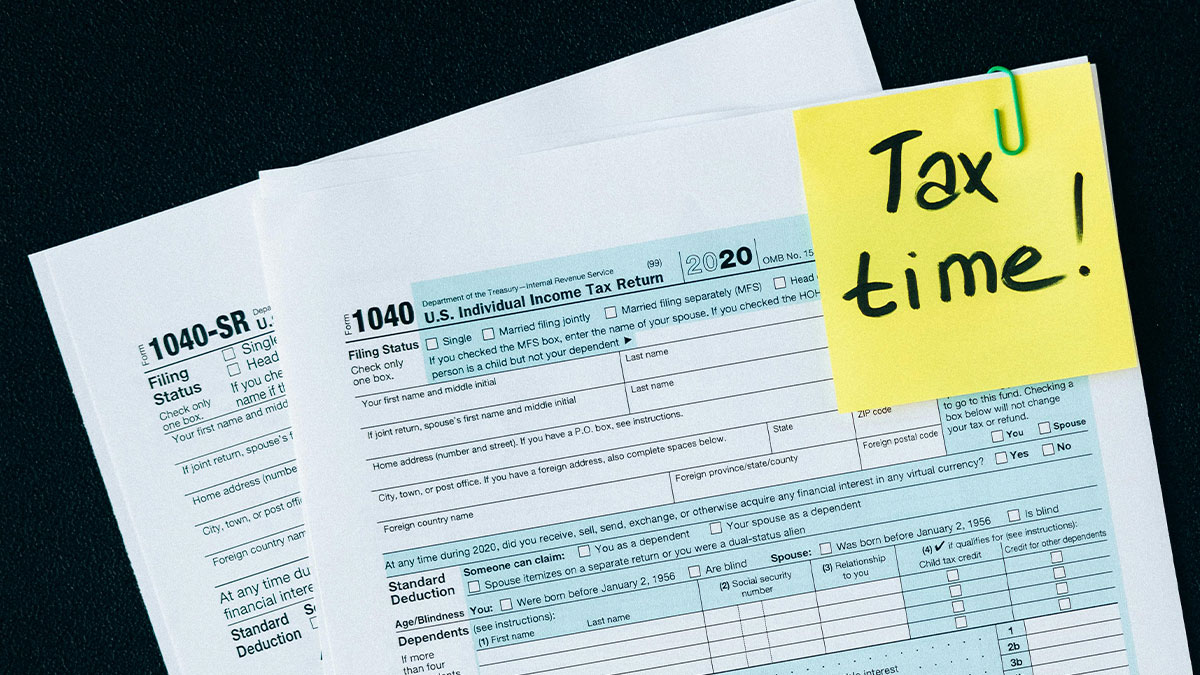
The famous 19th-century American poet and writer Oliver Wendell Holmes once said, “I hate paying taxes. But I love the civilization they give me.” And indeed, over the last few centuries, as social contract theory took shape, taxes became its keystone.
In other words, the principle of “I give up part of my income so that the state will return its services and protection” still holds true. It works better in some places, worse in others, but almost no one questions it. Neither the US nor the UK, where the tax systems are among the oldest in the world—are similar in some ways, but in others they differ significantly. And today we’ll explore those differences.
Image credits: Getty Images / Unsplash (not the actual photo)
The tax systems of the US and the UK have much in common – after all, both countries share a common history – but over the past two and a half centuries, their systems have diverged significantly. Thus, the fundamental principle of the US tax system is decentralized federalism, while the British system is unitary and centralized.
The main feature of the US tax system is its three-tier structure: federal, state, and local. This creates unique imbalances between states, as each has its own tax laws, allowing individuals and businesses to choose the state with the most favorable tax laws depending on their income level.
Image credits: Aron Van de Pol / Unsplash (not the actual photo)
For example, income tax in the US is paid at two levels: to the federal and state budgets. That is, the state rate is added to the basic federal tax rate (which is generally lower than in the UK). However, some states, such as Florida and Texas, have no state tax.
In other words, the US has a progressive income tax scale (the more you earn, the more you pay), ranging from 10% to 37%, plus 0% to 13.3% state tax. The tax-free amount is $15,750 for single taxpayers and $31,500 for married filing jointly.
Image credits: Kelly Sikkema / Unsplash (not the actual photo)
Another way the US tax system differs from those adopted worldwide is the absence of a value-added tax (VAT). Instead, there is a sales tax, set by states and municipalities at rates ranging from 0% to 10%, and collected only at the point of final sale to the consumer.
Yes, this isn’t very convenient for foreigners unfamiliar with the tax system, as the price at the checkout is higher than the price tag. Meanwhile, five states, Alaska, Delaware, Montana, New Hampshire, and Oregon, have no sales tax, but in certain regions of Alaska, local authorities can implement it at the local level.
As for corporate tax, the federal rate in the US is 21% plus state taxes. At the same time, virtually every state offers tax incentives for “green manufacturing,” R&D, and other related activities.
Another unusual aspect of the US tax system for many foreigners is its citizenship-based taxation system. Yes, the US is one of the few countries in the world that taxes its citizens regardless of their place of residence, provided their income exceeds a certain threshold. At the same time, the US and the UK have agreements to avoid double taxation.
Image credits: Nik Shuliahin 💛💙 / Unsplash (not the actual photo)
The UK has a much more uniform tax system, and residents of any part of the country have the same tax obligations. For example, regarding income tax, taxpayers are entitled to a so-called Personal Allowance of £12,570 (around $17,000), which is tax-free. Further, depending on annual income, the rates are 20% (basic), 40% (high), and 45% (additional).
Value Added Tax in the UK is levied at the standard rate of 20%. This rate is included in the product price, so you won’t encounter any surprises at checkout. Unlike in the US, VAT in the UK can be levied at every stage of product or service creation, rather than just once at final sale to the consumer.
Image credits: www.kaboompics.com / Pexels (not the actual photo)
Distinctive features of the UK tax system include contributions to the National Health Service and pension contributions. While in the US, the health tax is primarily implemented through private insurance and Medicare, in the UK, National Insurance is part of the state-run NHS system.
Finally, the UK taxes only its tax residents. Until 2025, the so-called Non-Dom regime existed, allowing tax exemption on foreign income under certain conditions. However, the system is currently undergoing significant changes, both simplifying and tightening.
Image credits: Towfiqu barbhuiya / Unsplash (not the actual photo)
Regarding the common features of the tax systems of both countries, the main taxes are present in both the US and the UK, and their foundations are progressive tax scales. Both countries have systems of tax deductions for various circumstances, such as families with children and charities. The deadline for filing online returns is also at the beginning of the year following the tax year.
In the US, the deadline for filing federal income and tax returns is typically April 15th, while in the UK it is usually January 31st. Regarding state and local taxes, these are determined by local legislation at the relevant level.
Image credits: Nataliya Vaitkevich / Unsplash (not the actual photo)
Given that a tax treaty exists between the countries, which tax system is more advantageous? Well, it depends on many factors, particularly income level and state of residence. For example, the British system is more favorable for low- and mid-earners, thanks to more generous personal allowances and no state taxes.
At the same time, high earners may find the US more tax-friendly, given that Texas and Florida, for example, are low-tax states. The US may also offer a more favorable environment for investors due to lower capital gains rates. On the other hand, the UK’s well-developed social security system also has its advantages.
In any case, everything depends on each individual case, so if you have a choice, the specifics of each country’s tax system truly allow you to find the best option. And isn’t it wonderful to have a choice between several good, well-thought-out options?

The United Kingdom is not the same thing as England. The statement "The United Kingdom tax system is more centralised than in the US and is uniform throughout the whole country" is simply untrue. Setting aside it's four countries rather than one, Scotland has differing income tax rates to England, Wales, or N.Ireland.

The US system is worse. My mom hadn't lived in the US since the 1970s and she had to file a tax return every single freaking year just in case she owned anything to Uncle Sam for services she doesn't use in a country she never went back to (and doesn't hold assets in). I'm all for paying tax in the country you're living in, but being expected to pay it in the country she was born in, f that noise...

I've read people complaining about NHS + how long the wait times are to see a specialist. Now that I'm on Medicare (basically health insurance for old people!) I can see a specialist usually within 3 weeks if my doctor deems it "medically necessary."
The United Kingdom is not the same thing as England. The statement "The United Kingdom tax system is more centralised than in the US and is uniform throughout the whole country" is simply untrue. Setting aside it's four countries rather than one, Scotland has differing income tax rates to England, Wales, or N.Ireland.
The US system is worse. My mom hadn't lived in the US since the 1970s and she had to file a tax return every single freaking year just in case she owned anything to Uncle Sam for services she doesn't use in a country she never went back to (and doesn't hold assets in). I'm all for paying tax in the country you're living in, but being expected to pay it in the country she was born in, f that noise...
I've read people complaining about NHS + how long the wait times are to see a specialist. Now that I'm on Medicare (basically health insurance for old people!) I can see a specialist usually within 3 weeks if my doctor deems it "medically necessary."





































 No fees, cancel anytime








30
4