Get Premium
Dark mode theme is available exclusively for premium users. Learn more about the benefits of subscribing.
No fees, cancel anytime.

 Dark Mode Ad-Free Browsing Unlimited Content
 Ad-Free Browsing Unlimited Content Dark Mode
Join 1.2 million Panda readers who get the best art, memes, and fun stories every week!
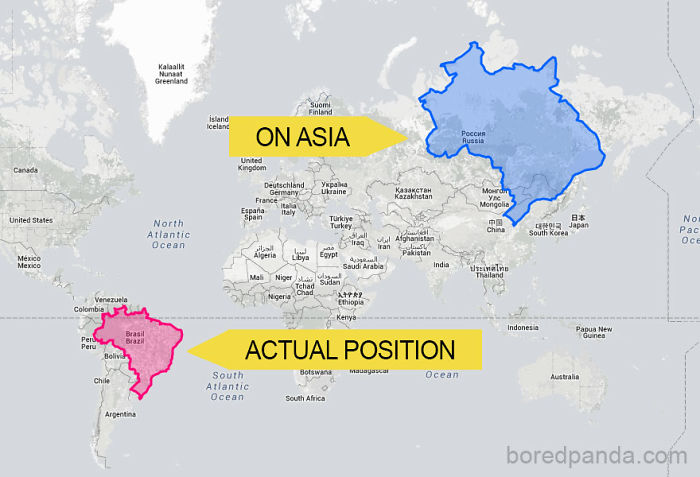
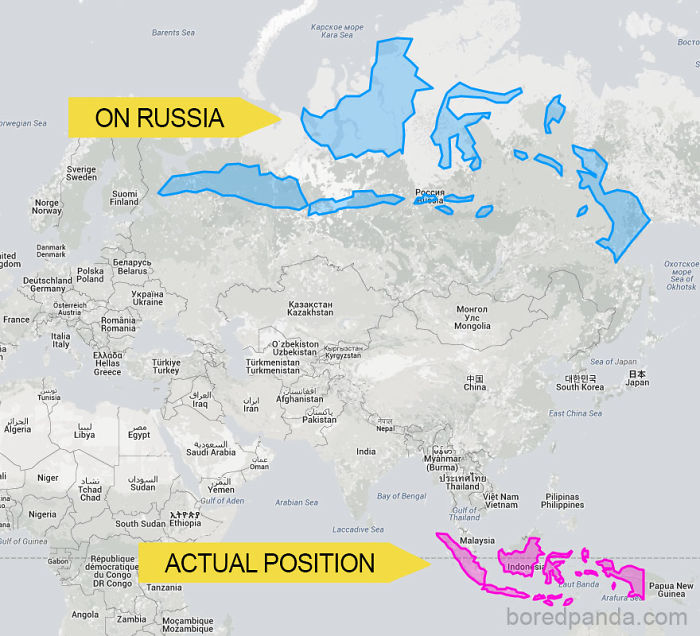
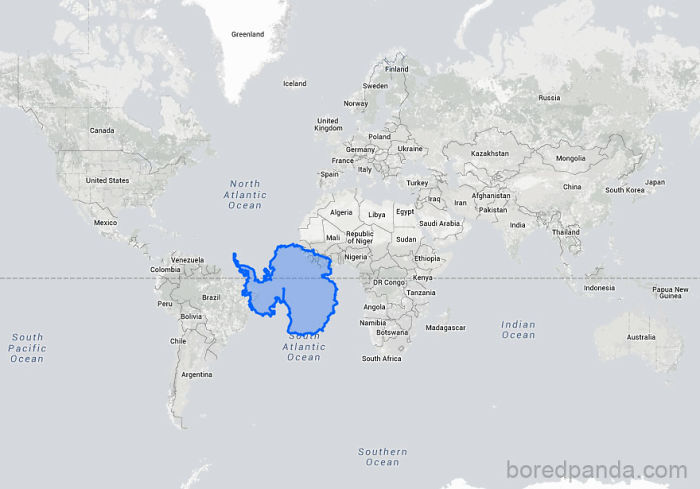
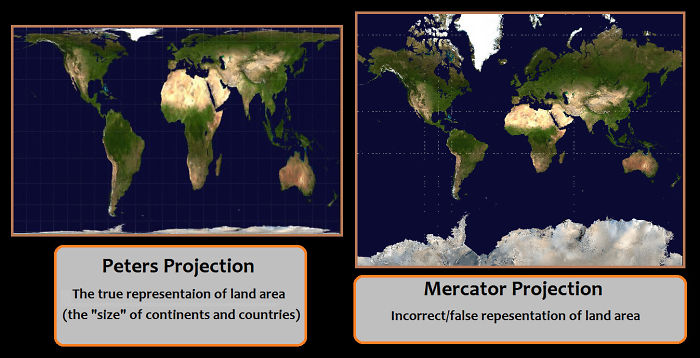
Ever wondered why Greenland looks as big as Africa on the map? It’s because of something called the Mercator projection. Putting a 3-D planet on a two-dimensional world map was challenging for early cartographers. So, a Flemish geographer and cartographer named Gerardus Mercator came up with a solution for the most accurate world map.
In 1569, he designed an atlas that could be accurately used for navigation. Still, the downside was that his system distorted the size of objects depending on their position relative to the equator.
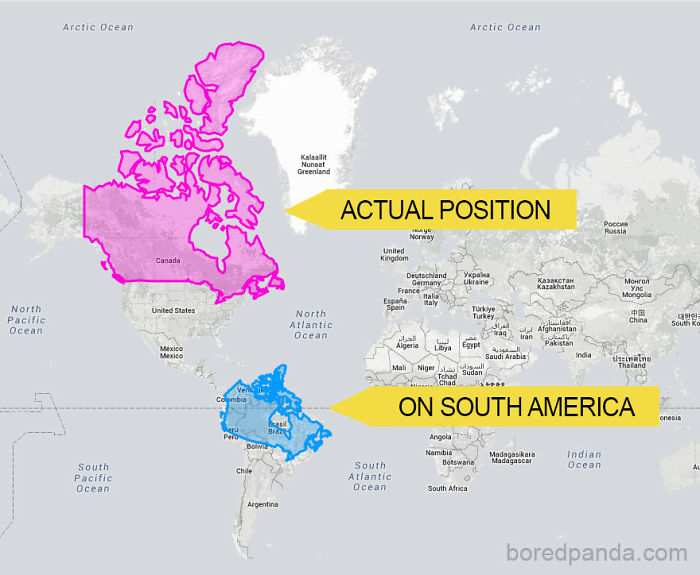
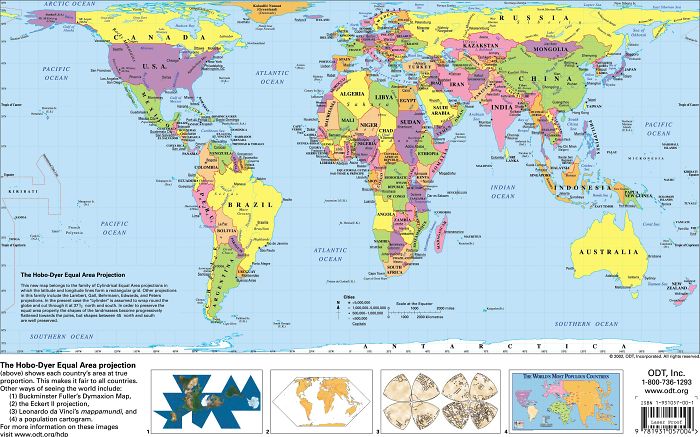
Because of this, landmasses like Antarctica and Greenland appear much bigger than they are. Though there are around 40 types of map projections, from conical to polyhedral and retroazimuthal, depicting the actual size of the world, this one is still used the most because of its convenience and simplicity, even by Google Maps. None of these projections can be titled the real world map because they all depict the same Earth through a different lens.
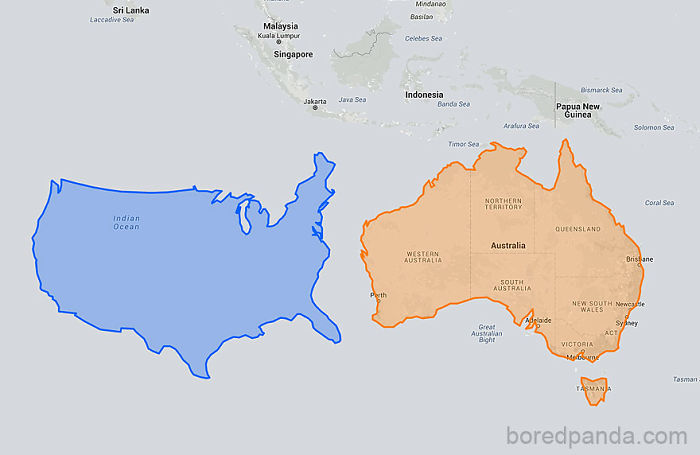
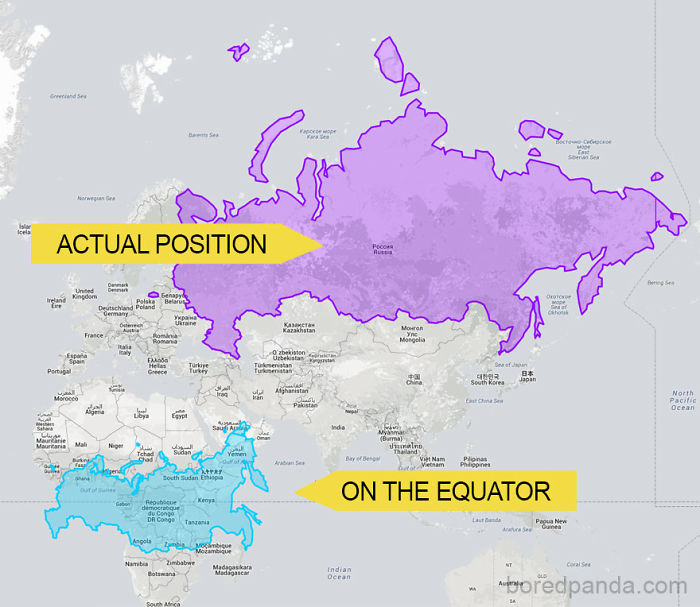
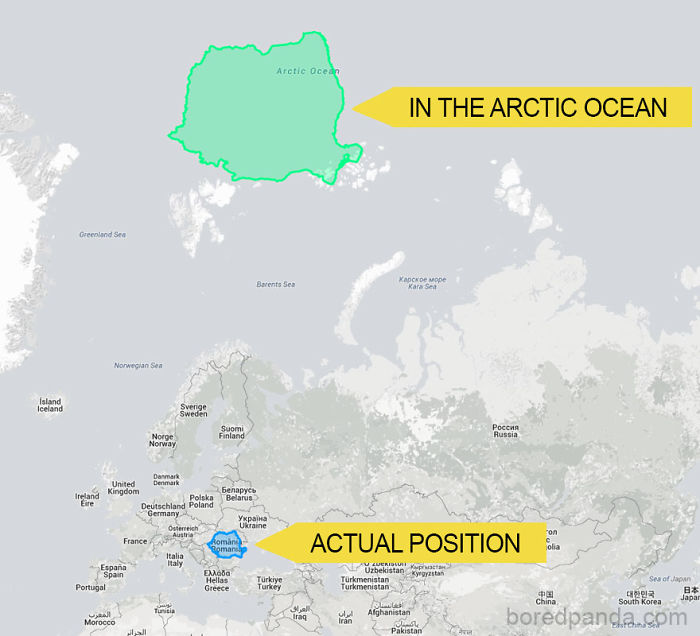
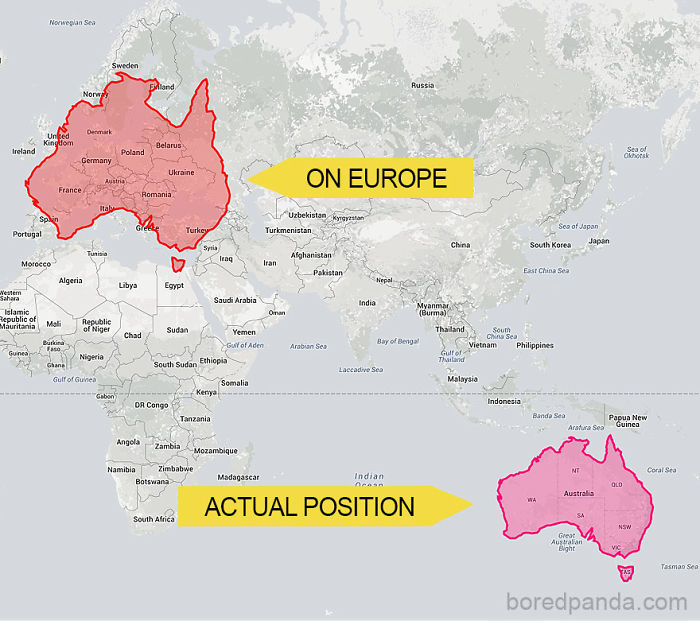
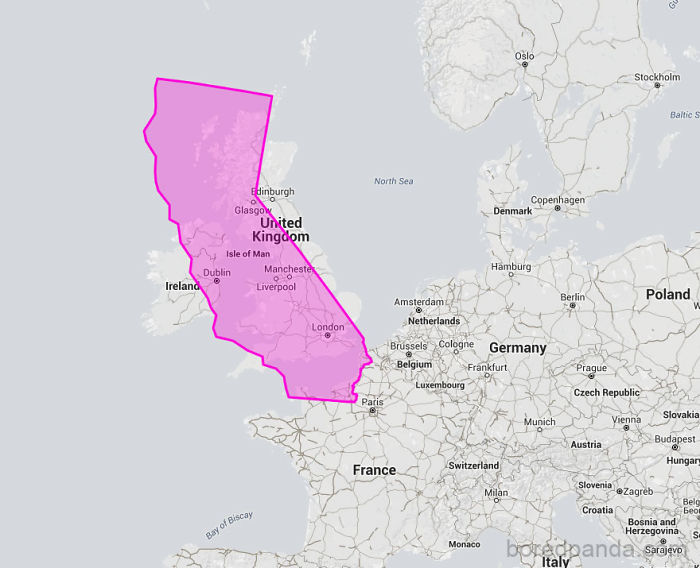
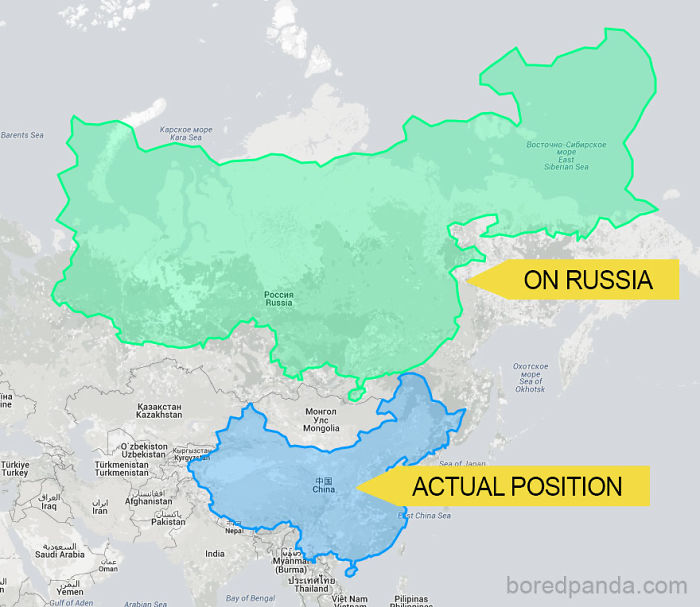
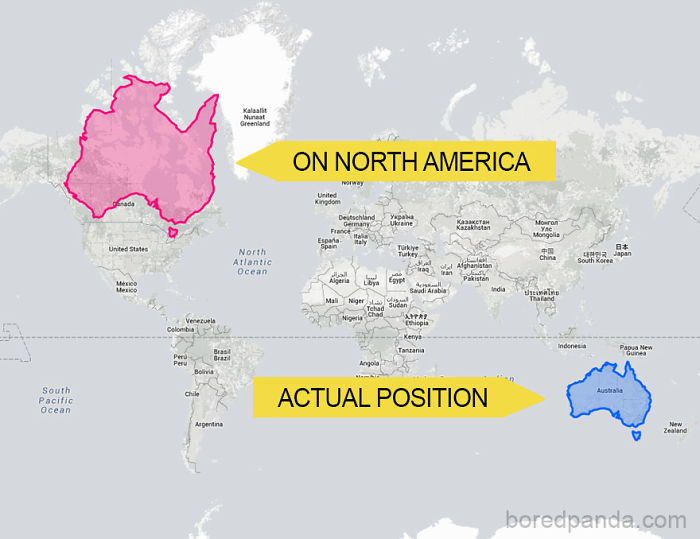
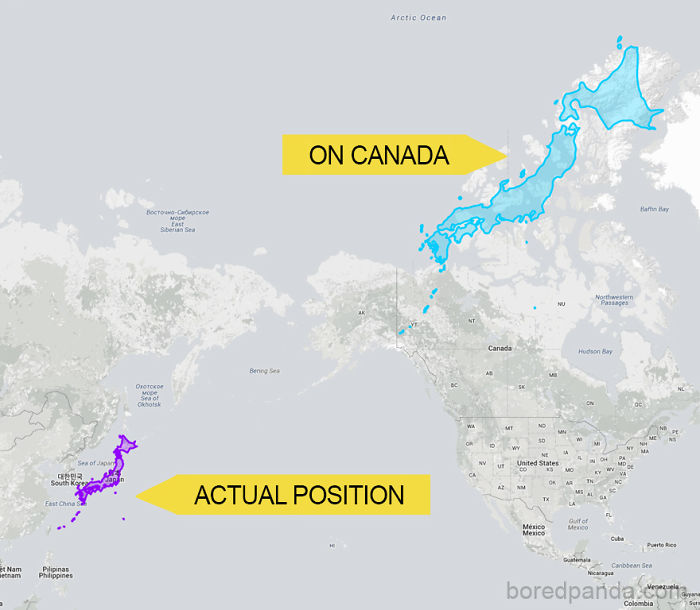
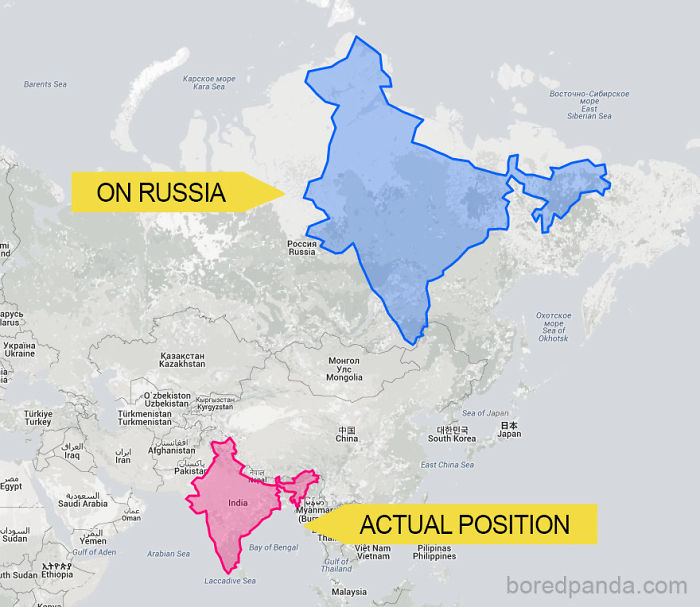
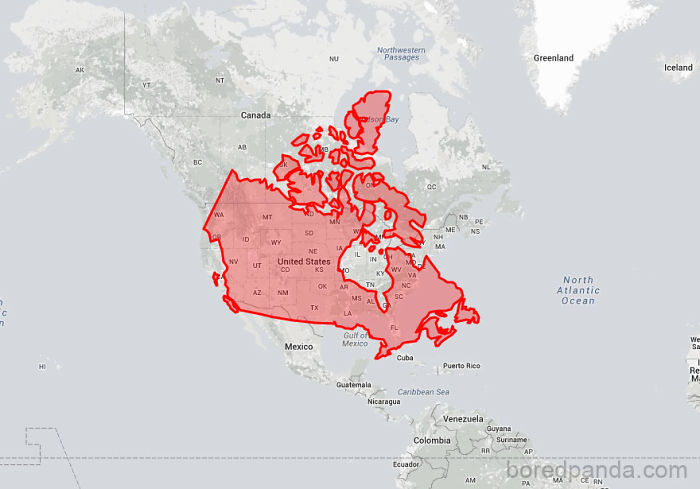
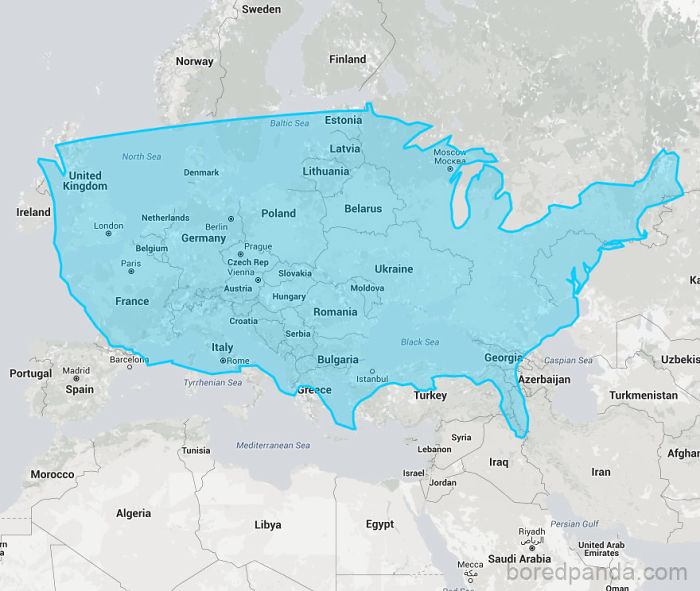
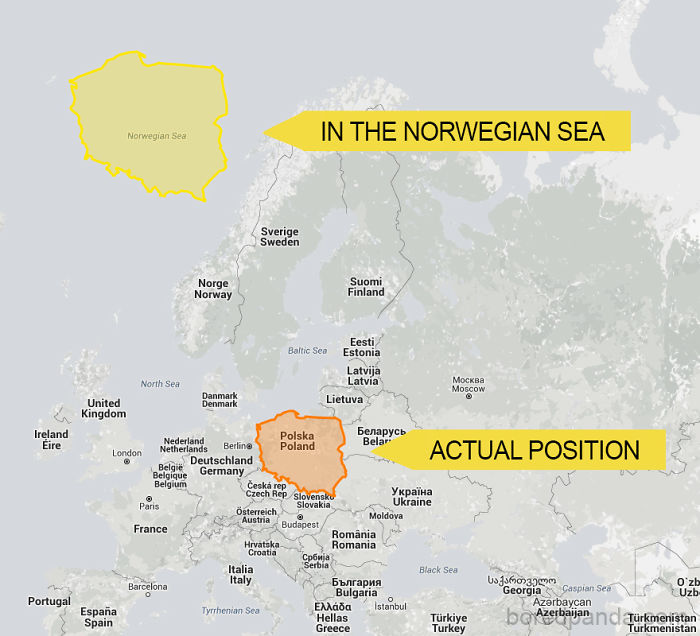
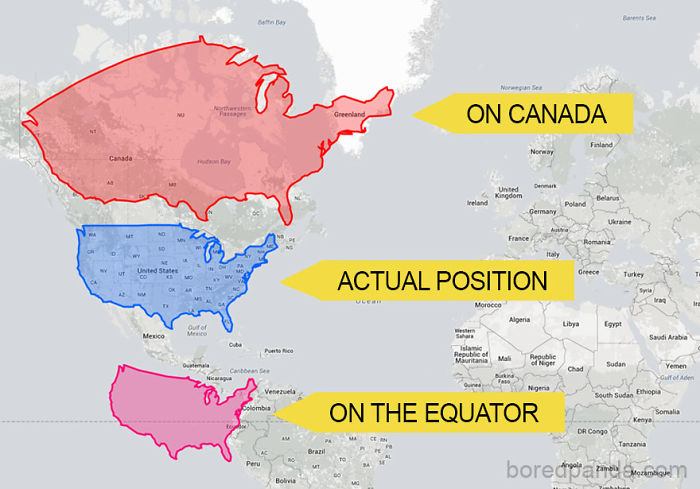
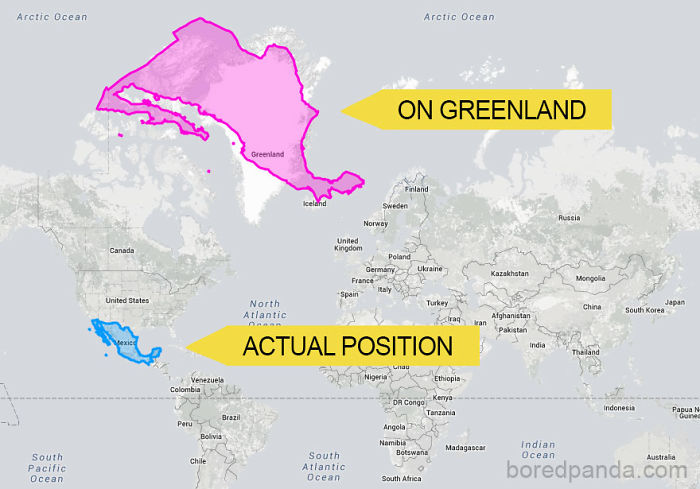
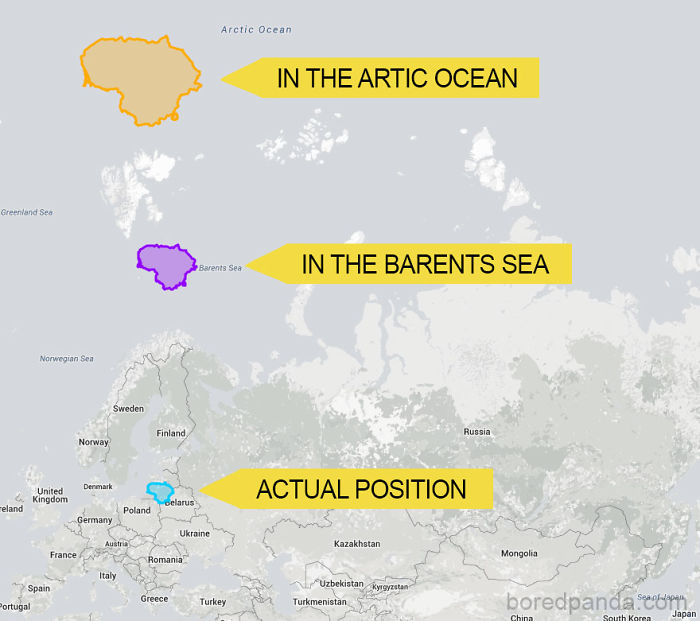
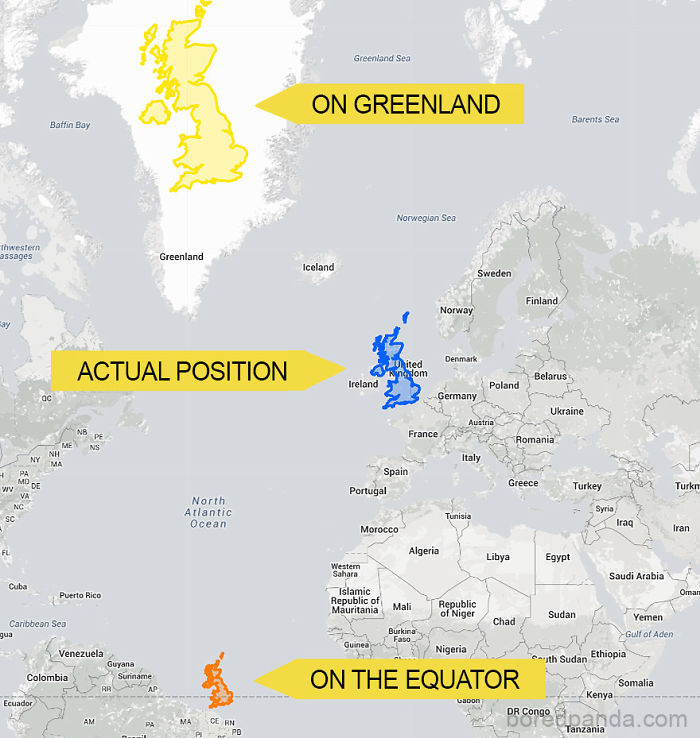
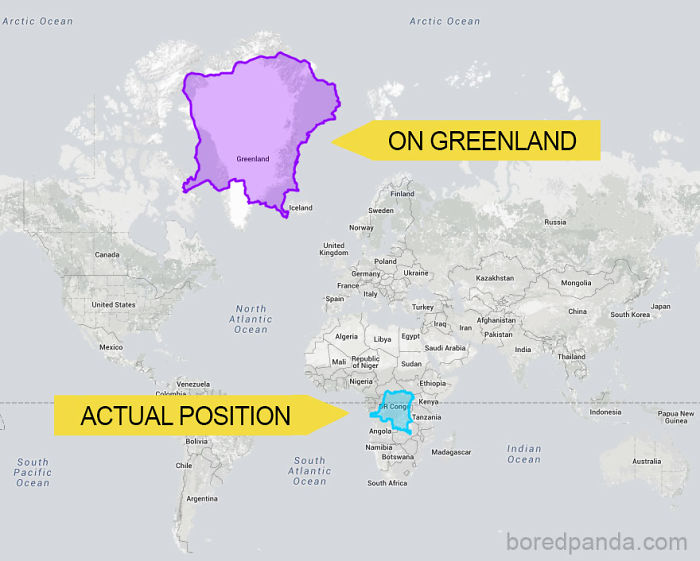
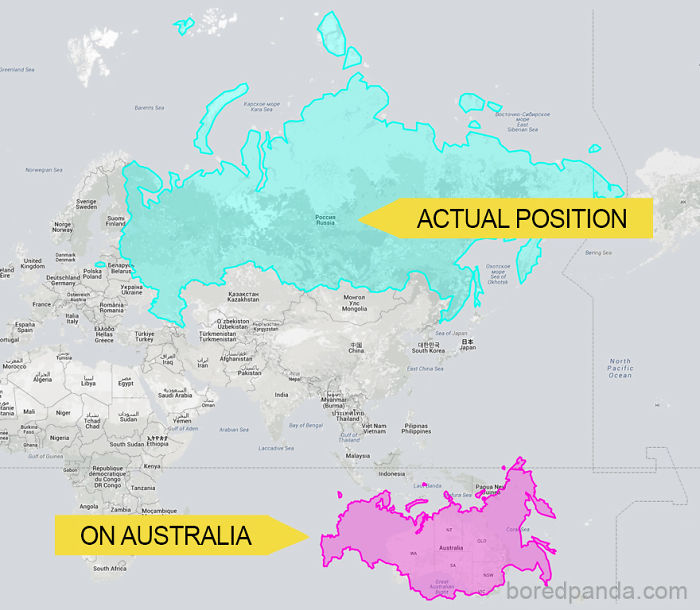
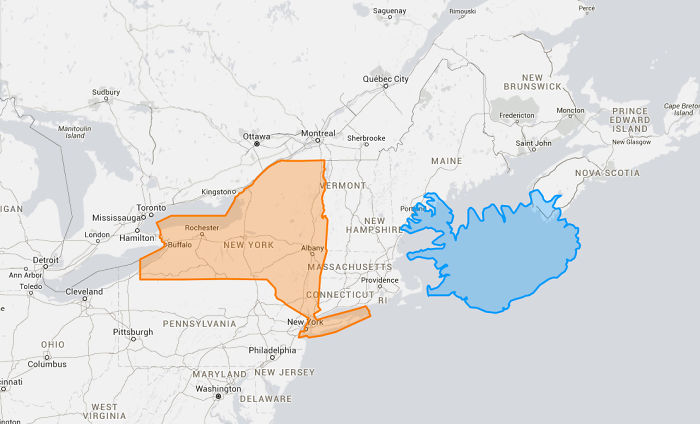
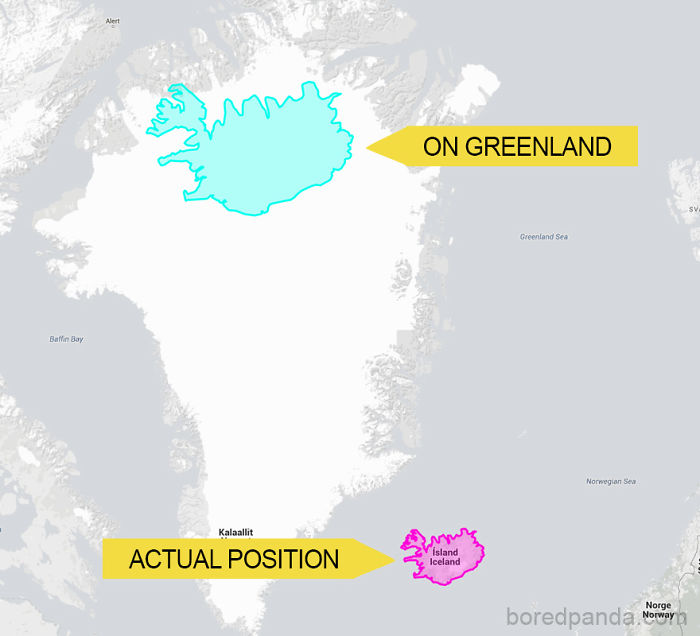
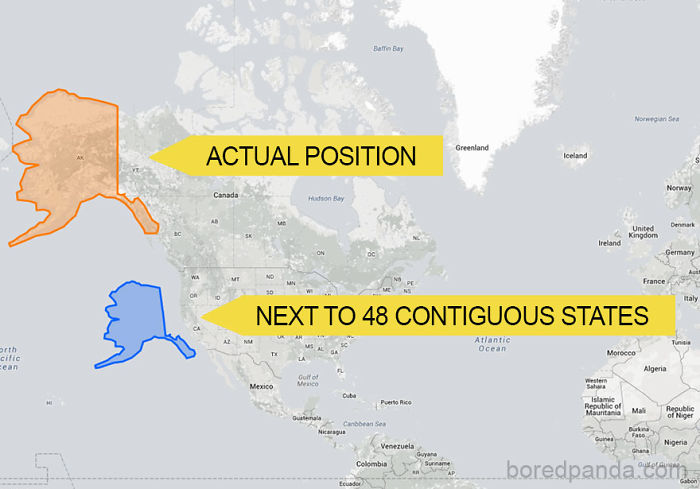
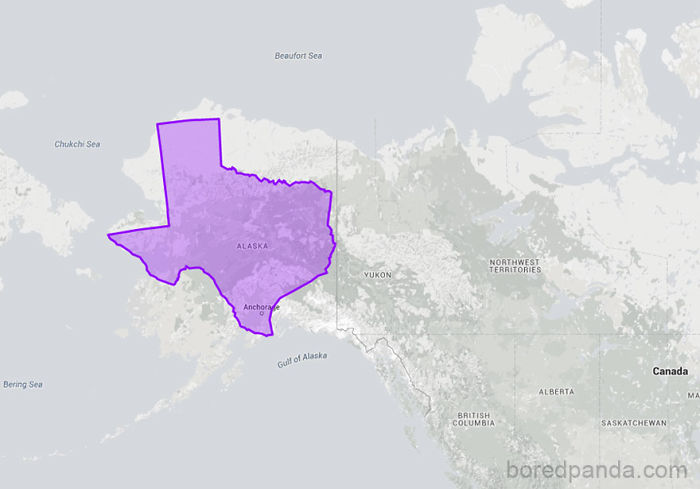
So, what does the real-world map look like? To show how incorrect our understanding of countries by size is, a website called thetruesize.com lets you move land masses into different locations. This helps you understand the actual size of countries.
We at Bored Panda played a bit with this tool, and what we found will change your perspective on our planet’s geography. The website lets you juxtapose two countries to compare their relative size, and if you’re wondering which countries are the best to live in, we explored that too.
Here’s what the real size of countries looks like.
Click here & follow us for more lists, facts, and stories.
This post may include affiliate links.
Yes, Africa is significantly larger than it appears on many traditional maps. An interesting fact about the Mercator projection is that it distorts the sizes of landmasses as they get farther from the equator. This distortion disproportionately enlarges countries near the poles while diminishing the size of equatorial regions. As a result, Africa, which straddles the equator, is typically misrepresented as much smaller than it is in reality.
In reality, Africa covers an expansive area of about 11.7 million square miles. Its vastness is often underestimated on conventional maps, leading to misconceptions about its size and significance. On an accurate world map, Africa would appear three times the size of US.
The AuthaGraph is considered to be the real world map that shows the true size of countries.
Unlike the Mercator projection, which distorts the sizes of landmasses, the AuthaGraph projection aims to maintain equal area property. This means that the relative size of continents and countries is preserved accurately. This is essential for understanding the true proportions of different regions of the world.
The AuthaGraph projection minimizes distortion by dividing the Earth’s surface into 96 regions, which are then transferred to a tetrahedron. This tetrahedron is unfolded and flattened to create a two-dimensional map.
While no projection can be perfect in preserving both area and shape, the AuthaGraph projection comes really close to showing the real size of countries.
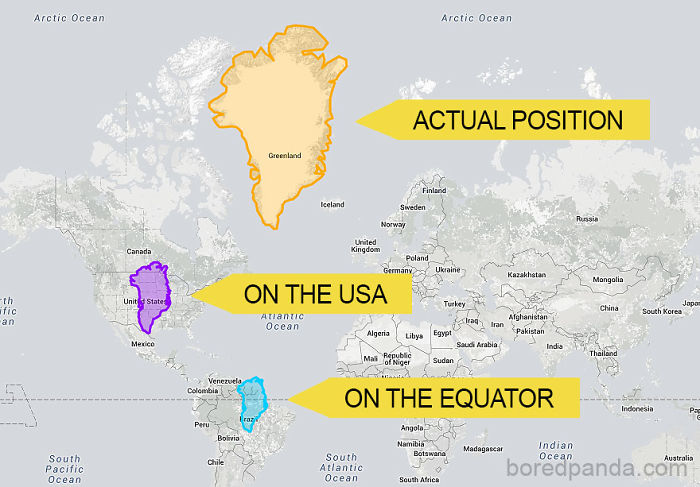
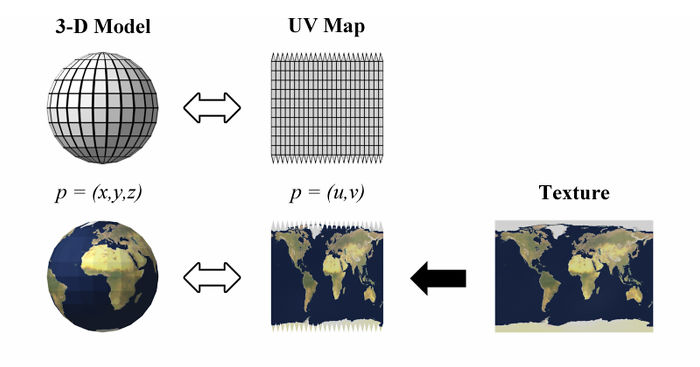
Greenland appears disproportionately large on the maps due to an inherent distortion in translating the Earth’s three-dimensional, spherical surface onto a two-dimensional map.
The Mercator projection is widely used for navigational purposes because it preserves angles and, therefore, helps sailors navigate straight lines or constant compass headings. However, it doesn’t preserve area or size accurately, particularly as you move away from the equator.
It exaggerates the sizes of landmasses as they approach the poles, causing polar regions to appear much larger than they are in reality.
Greenland is situated near the North Pole, and as a result, it is significantly distorted on Mercator maps. In reality, Greenland is much smaller than it appears on traditional maps. It covers an area of approximately 850,000 square miles, making it only slightly larger than Saudi Arabia (830,000 square miles).
The True Size Of… is an interactive tool that lets you visually compare landmass. It provides a more accurate representation of landmass sizes and minimizes distortion.

The second article discusses the inaccuracies of the Mercator projection, similar to the detailed exploration in the first article.
For a deeper look into how maps can distort perceptions of country sizes, you might explore the interesting ways countries are depicted in size.
You might also like: 50 ‘Weird Facts’ About The World That Might Give You A Fresh Perspective


















 No fees, cancel anytime