Get Premium
Dark mode theme is available exclusively for premium users. Learn more about the benefits of subscribing.
No fees, cancel anytime.

 Dark Mode Ad-Free Browsing Unlimited Content
 Ad-Free Browsing Unlimited Content Dark Mode
Join 1.2 million Panda readers who get the best art, memes, and fun stories every week!
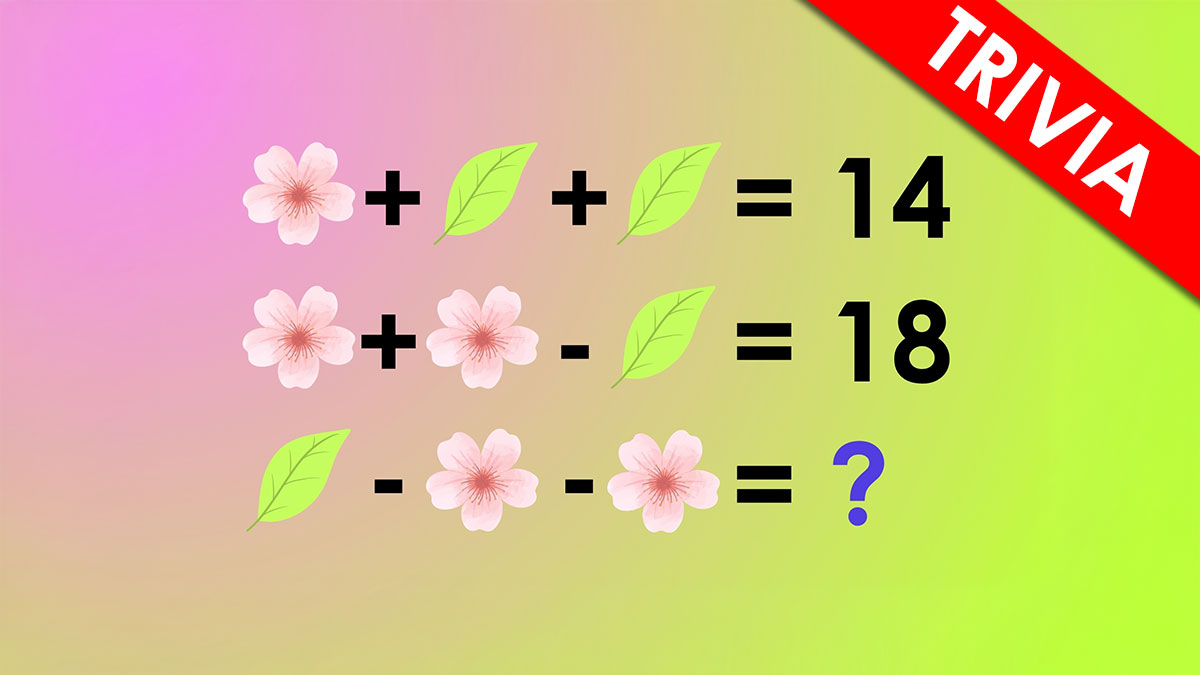
What is your actual IQ when it comes to logical deduction? We have assembled a collection of challenging numerical brain teasers and math riddles to put your mind to the test. Instead of forcing you to memorize complex formulas, this logic quiz evaluates how quickly you can spot hidden patterns and apply critical thinking to solve clever problems.
In this number puzzle quiz, you will face 14 deceptive math riddles designed to challenge your logical deduction skills. While some questions seem straightforward, others are intentionally misleading to test your focus. See if you can decode the hidden clues, spot the logic patterns, and reach the perfect score of 14/14!
🚀 💡 Want more or looking for something else? Head over to the Bored Panda Quizzes and explore our full collection of quizzes and trivia designed to test your knowledge, reveal hidden insights, and spark your curiosity.💡 🚀
Image credits: Mikhail Nilov
Not Quite Done Yet!
Subscribe Premium to Compare Your Stats with Others
| User | Result | Reward |
|---|---|---|
  | / 14 | |
| | / 14 | |





#12 has two possible correct answers in the options but the one that's marked correct is less obvious. Both 16 and 22 on the left link to *smaller* numbers on the right, so having 9 on the left link to a *larger* number on the right is not really following the pattern. However, both 16 and 22 are linked link to their closest lower prime number (13 & 19), so logically 9 should also link to the nearest smaller prime number, which is 7.
#12 has two possible correct answers in the options but the one that's marked correct is less obvious. Both 16 and 22 on the left link to *smaller* numbers on the right, so having 9 on the left link to a *larger* number on the right is not really following the pattern. However, both 16 and 22 are linked link to their closest lower prime number (13 & 19), so logically 9 should also link to the nearest smaller prime number, which is 7.






























 No fees, cancel anytime





20
8