Get Premium
Dark mode theme is available exclusively for premium users. Learn more about the benefits of subscribing.
No fees, cancel anytime.

 Dark Mode Ad-Free Browsing Unlimited Content
 Ad-Free Browsing Unlimited Content Dark Mode
Join 1.2 million Panda readers who get the best art, memes, and fun stories every week!
We talk constantly, from morning texts to late-night chats and random updates in between, but none of this is done in person.
Somewhere between “wyd?” and “goodnight,” we’ve built entire relationships that rarely leave the screen these days.
Texting has become the backbone of modern relationships, but experts believe it may be creating an illusion of intimacy—one that’s curated, controlled, and carefully edited.
Our phone habits help us maintain constant contact and a steady stream of interaction, but without the vulnerability that makes any of this real.
Image credits: JD Chow/Unsplash (Not the actual photo)
It’s never been easier to stay in touch than it is today. And it’s never been harder to truly connect as well.
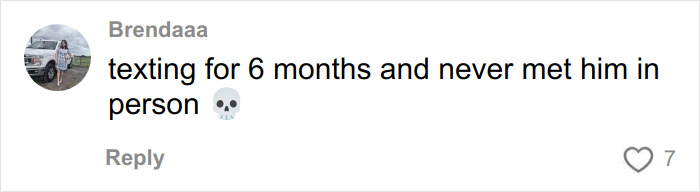
Welcome to the era of the textlationship, a relationship that lives almost entirely on your phone through texting, constant check-ins, flirting, and emotional closeness. However, there is very little real-world follow-through.
Texting can create a powerful sense of connection, but it’s not always the kind that holds up offline.
“When two people are apart and busy, texting can serve as a way to stay connected. It can create a false sense of closeness if over-used for intimate conversations/exchanges, without translation into real life encounters,” Natasha K. Sharma, Psy.D, Founder NKS Therapy, Therapist, and Professor, told Bored Panda.
Image credits: Ben Collins/Unsplash (Not the actual photo)
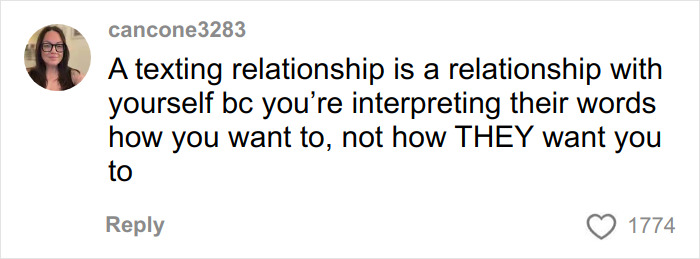
In textlationships, you’re not necessarily connecting with someone as they are in real life. You’re connecting with the version of them they have had time to compose.
“Texting allows people to carefully curate how they present themselves, removing the messiness of real-time emotional exposure,” said Sara Moore, Associate Professor and Chairperson, Sociology Department Faculty Fellow, Frederick E. Berry Institute of Politics Meier Hall, Salem State University.
“The feeling of closeness is real, but it’s built on an edited, asynchronous performance rather than unguarded presence. There’s connection without risk.” added the Family and Intimate Relationships expert.
Image credits: sadaf amininia/Unsplash (Not the actual photo)
Part of the appeal is simple. Texting is easy, involves low stakes, and is always accessible. This allows it to fit perfectly into our busy lives.
“Modern life produces profound uncertainty about selfhood and belonging,” Moore said. “Texting is low-stakes enough to feel safe.”
“Changing norms also matter here,” she added. “As digital communication becomes the default register of social life, in-person vulnerability can feel disproportionately exposing by comparison.”
This shift has been playing out in everyday relationships, with 25% of married or partnered adults who text having messaged their partner when they were both home together, researchers found.
At the same time, digital communication isn’t entirely hollow, as around 21% of cell owners or internet users in a committed relationship have said they felt closer to their spouse or partner because of exchanges they had online or via text message.
In some cases, it even works better than face-to-face, with a small but notable 9% of married or partnered adults saying they have resolved an argument with their partner online or by text message after having difficulty resolving it in person.
Image credits: Daria Nepriakhina /Unsplash (Not the actual photo)
For younger people who’ve grown up online, this shift may feel less like a change and more like the norm. Young adults were more likely to report feeling closer to their spouse or partner thanks to technology, researchers said.
23% of young adults in serious relationships aged 18 to 29 said they resolved an argument using digital tools.
As digital communication becomes more embedded in our relationships, people have their own quiet ways of decoding what a message might mean.
56% of Gen Z daters on the popular dating app, Hinge, have admitted they have overanalyzed someone’s Digital Body Language (DBL), which, according to Hinge’s experts, includes factors like message length, emojis, punctuation, and response time.
Image credits: Sherman, L. E., Michikyan, M., & Greenfield, P. M. (2013)
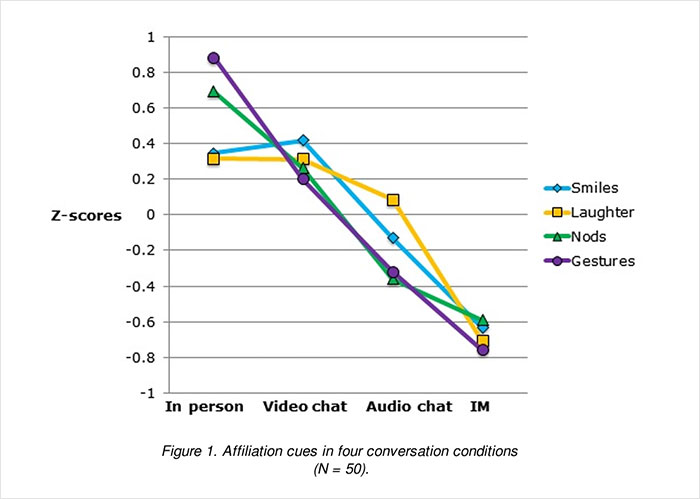
The obsession over things like punctuation and reply time could be because texting takes away the most natural, instinctive feelings we rely on to feel connected to a person, such as smiling, laughing, nodding, and other gestures.
Studies have found that these natural connection cues are most prevalent in “in-person” conversations. They drop significantly in video and audio calls, and are almost absent in texting messages (IM).
However, in digital interactions, these cues don’t strongly determine how connected people feel. In other words, texting may lack visible warmth, but people adapt and build connections in different ways.
Image credits: Russel Bailo/Unsplash (Not the actual photo)
“In the absence of Quality communication, Quantity of communication can become the benchmark by which younger people can falsely measure intimacy,” Sharma said.
“Intimacy is defined as a close, deep connection between people that involves emotional, psychological, or physical closeness,” she continued. “It usually involves trust, openness, and mutual understanding. It can be physical, emotional, intellectual or experiential. So intimacy can take place in many ways, but what is consistently needed to achieve it is quality in the interactions – not quantity.”
“Quality interactions involve presence, attentiveness, attunement to your partner’s needs, sharing and listening, and feeling seen, understood and valued. Not the number of times you texted, got together, or talked.”
Image credits: Priscilla Du Preez/Unsplash (Not the actual photo)
When relationships are largely hosted online, the constant accessibility also comes with a cost: the pressure to always be available, always responsive, and always “on.”
Somewhere along the way, the constant communication can start to feel like work. People can feel stressed about the constant cycle of replying, interpreting, and maintaining the connection.
For about 31% of people, texting can be a daily source of anxiety, and about 1 in 5 people say they struggle to keep up with responses, according to a study by Viber. Almost 1 in 6 people admitted to ignoring messages because of the sheer number of texts they receive, the study said.
@therapyandwellness If it only exists through text…that’s not love, that’s a textationship.📱💔 #healthyrelationship#moderndating#situationship#communicationskills#therapytiktok#therapytok#mentalhealthawareness♬ DAISIES – Justin Bieber
Texting anxiety would include feeling too overwhelmed to respond or even dreading certain names when they pop up on the phone. On the flip side, it could also include constantly checking your phone for a reply.
43% of Americans admitted to “constantly checking” their devices, according to a survey by the American Psychological Association, and one-fifth of the respondents associated technology with significant stress.
What makes textlationships particularly tricky is how they interact with our emotional wiring. The same patterns that make texting feel exciting and reassuring can also trigger insecurity or withdrawal, depending on how someone is used to giving and receiving love or intimacy.
Anxiously attached individuals may cling to texting for validation. In such a scenario, they may read into every pause or change in tone. On the other hand, avoidantly attached people tend to keep things on the surface level and engage on their terms. They may withdraw when closeness starts to build or feel overwhelming.
Image credits: Andrej Lišakov/Unsplash (Not the actual photo)
Textlationships are “almost tailor-made to reinforce” both anxious and avoidant attachment styles, Moore said.
“For anxiously attached people, constant texting provides the reassurance-seeking loop they crave,” she explained.
“At the same time, the ambiguity of response times can intensify anxiety,” she continued. “For avoidantly attached people, text offers intimacy at a controllable distance. It provides closeness without the vulnerability of embodied presence. The medium doesn’t create these styles, but it amplifies and entrenches them.”
Image credits: Vitaly Gariev/Unsplash (Not the actual photo)
It is likely that people with an avoidant attachment style exhibit “text-behavior patterns in line with that attachment style,” Sharma said.
This would include “deferring to text as preferred method of communication instead of a phone call or in-person meeting, taking longer times to respond [in the absence] of reasonable activities that require that, or not responding to some texts at all,” she explained.
Meanwhile, “Anxious types” may have a higher tendency to “over-communicate via text and follow up when an Avoidant fails to respond, which pushes the Avoider further away, leading the Anxious person to follow up again.”
Image credits: René Ranisch/Unsplash (Not the actual photo)
Put the Anxious and Avoidant pattern together, and things can start to feel complicated for both parties.
It can “create a ‘push-pull’ loop dynamic, forming a relational pattern between these 2 types of individuals,” Sharma went on to say.
Attachment styles aren’t the only thing shaping how people communicate in textlationships.
Broader patterns, like the way different genders tend to use texting, can also affect how an individual interprets messages.
“Speaking very broadly and generally – men tend to use text more for practical purposes (e.g. ‘Let’s meet at this address at 3 pm’), while women use text for that in addition to more intimate conversations,” Sharma said.
Image credits: Toa Heftiba/Unsplash (Not the actual photo)
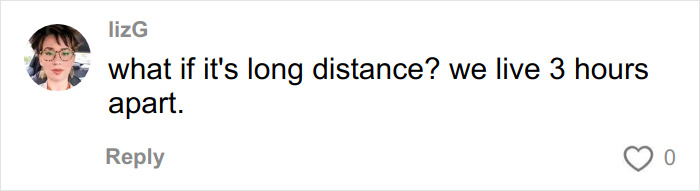
Age is also another factor, as online communication is growing to be the default method for younger people to connect.
A 2015 study found that teenagers in romantic relationships are likely to use text messaging as their primary means of communication.
As per the findings, 87% of teens spent time talking on the phone with their significant other, while 69% spent time with their significant other using instant or online messaging.
Image credits: Behzad Soleimanian/Unsplash (Not the actual photo)
In terms of the big picture, all of this put together isn’t just a shift in how people text. It’s a much larger change in how human connections itself are defined. The idea of “being there” for someone is no longer tied to physical presence, but to how consistently and quickly we show up on each other’s screens.
“In her book Alone Together, Sherry Turkle suggests a shift from ‘being together’ to ‘being in touch,’” Moore said.
“That is, presence is increasingly signaled through response patterns rather than co-presence. Some people see this as a general preference, but it actually reflects structural conditions like geographic mobility and precarious and complex schedules.”
Image credits: Alicia Christin Gerald/Unsplash (Not the actual photo)
For some, texting might not just be an add-on to physical connections but might even start replacing it.
“Some of the key signals might be a declining investment in face-to-face relationships, using digital connection to avoid the discomfort of physical social settings, treating responsiveness as a substitute for emotional attunement, and the sense that the online version of a person feels more ‘real’ or comfortable than any embodied version,” Moore said.
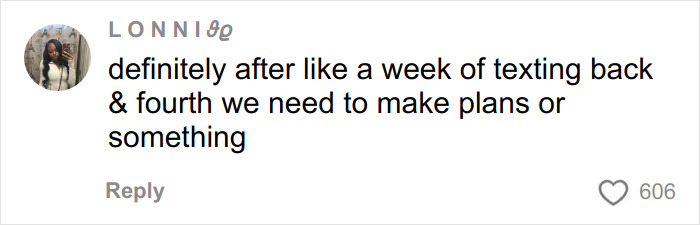
When it comes to finding out the “markers” for whether a textlationship is not emotionally healthy, Moore said one cause for concern would be if the relationship exists only in the digital register without any progression toward shared time or space.
Another indicator would be seeing communication patterns that are driven by anxiety rather than a genuine desire to connect.
“There might also be a cause of concern if there’s asymmetry in investment or responsiveness that neither person addresses directly, and if there’s no capacity for repair since conflict or misunderstanding can’t be as navigated skillfully through texting,” she added.
@keishornescott Are you in a TEXTLATIONSHIP 🤨 ❤️ #relationshipadvice#datingadvice#datingtips#relationshiptips#viralvideos#fy#fyp♬ original sound – Keishorne Scott
Sharma also believes people might be losing the “quality” of human connections.
This might be through “the regression of verbal and language skills, the lack of presence and attention when we are in on another’s presence (everyone is looking at their phones while out on a date), there is an increasing lack attunement and thoughtfulness toward’s partner’s needs, and young people feel more misunderstood and lonlier than ever for these reasons,” she said.
In some cases, where online communication does not translate to real-life encounters that “outweigh” the texting, it may not be a “good sign,” Sharma said.
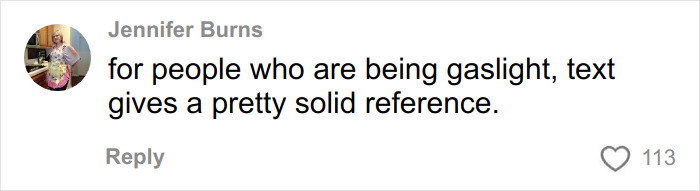
“Additionally, abusive, manipulative, controlling, or domineering language via text is not emotionally healthy. Lastly, unresponsiveness without good reasons (e.g. at work, at a function, etc.) is also potentially a sign of emotional unhealthiness,” she went on to say.
Image credits: Surface/Unsplash (Not the actual photo)
A balanced, healthy version of digital intimacy can certainly include texting, as it can “undoubtedly promote intimacy,” Sharma said.
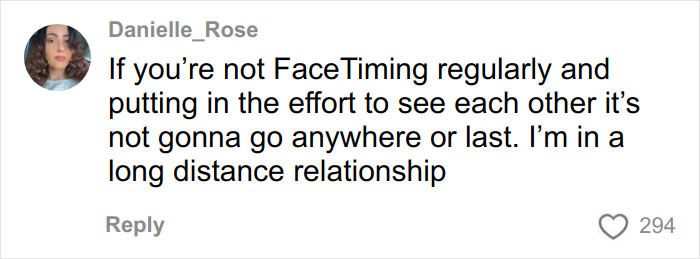
“However, it should not replace the primary basis for connection, closeness, and communication in a healthy relationship, which is through Quality physical and verbal interactions with one another on a consistent basis,” she continued.
While face-to-face conversations are often seen as the gold standard, one study showed that phone calls for some people can feel even more satisfying than in-person conversations, though texting and social media interactions tend to rank lower overall.
However, situational factors like where you are, who you’re talking to, and what the conversation is about can play an important role.
Image credits: A. C./Unsplash (Not the actual photo)
For instance, respondents of the same study reported that video calls at home were higher in quality than face-to-face meetings, whereas face-to-face was superior outside the home.
Interactions over social media tend to feel far less meaningful when they involve someone with a weaker connection, compared to conversations with people you already share a strong bond with.
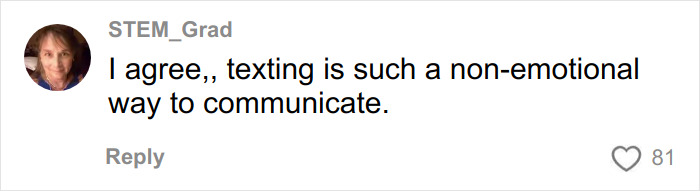
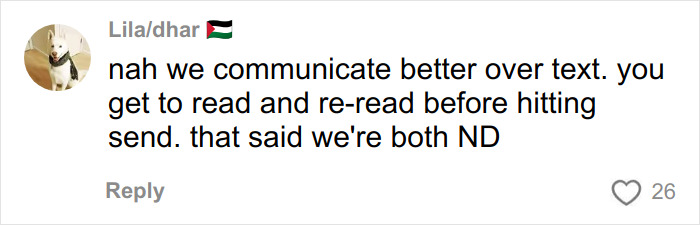
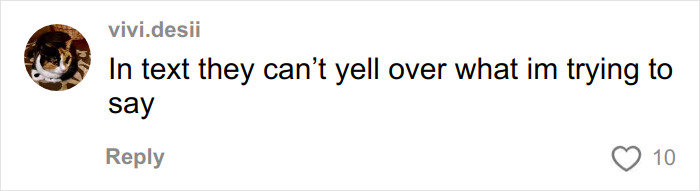
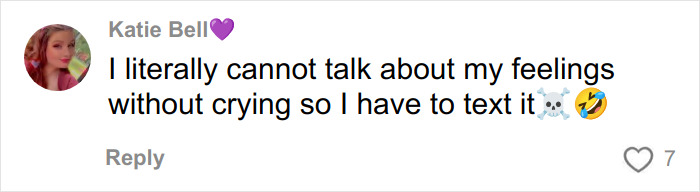
At the same time, texting isn’t always the lesser option. It can feel more effective than a face-to-face interaction, especially while dealing with emotionally charged or difficult conversations.
@callherdaddyHave you ever had a texting emotional relationship? 👀👀♬ original sound – Call Her Daddy
Healthy digital intimacy would function more like a bridge and not a destination, Moore said.
“It supplements and extends embodied relationships rather than replacing them. It involves mutual legibility, meaning that both people understand and agree on what the connection is,” she said.
“Most importantly, it exists within a broader relational ecology wherein a person’s social life isn’t organized around the digital connection but is enriched by it instead,” she added.

By entering your email and clicking Subscribe, you're agreeing to let us send you customized marketing messages about us and our advertising partners. You are also agreeing to our Privacy Policy.
Thank you! You've successfully subscribed to newsletters!





























 No fees, cancel anytime
























26
0