Get Premium
Dark mode theme is available exclusively for premium users. Learn more about the benefits of subscribing.
No fees, cancel anytime.

 Dark Mode Ad-Free Browsing Unlimited Content
 Ad-Free Browsing Unlimited Content Dark Mode
Join 1.2 million Panda readers who get the best art, memes, and fun stories every week!
In the United States, far more students attend public schools (63 million) than private ones (11.2 million).
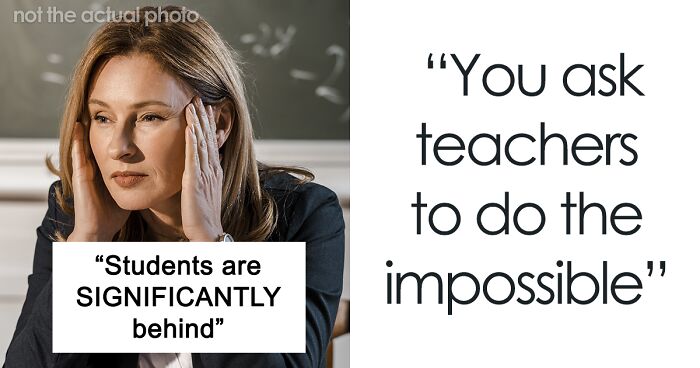
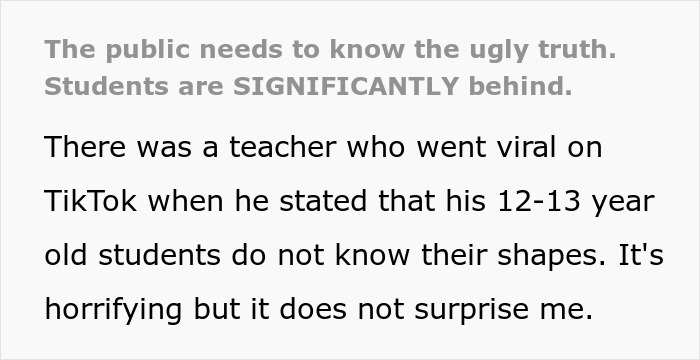
However, some teachers believe that the system is failing them. Last year, a 7th-grade teacher went viral for claiming that kids in his classes were way behind and had 4th-grade skills.
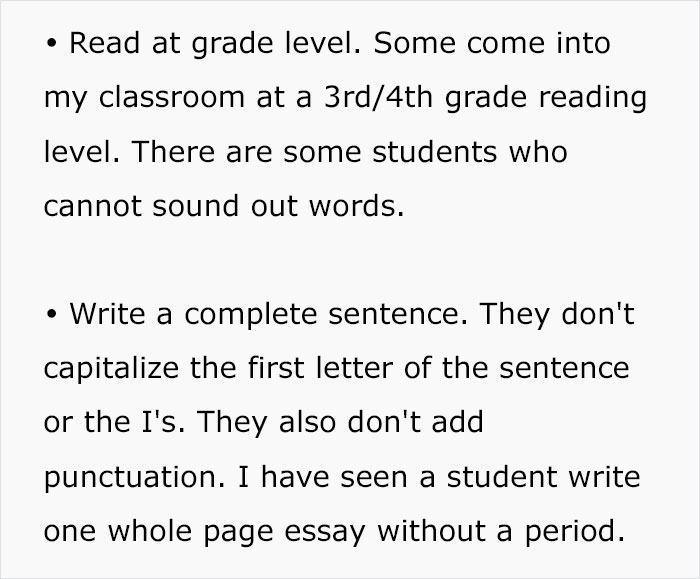
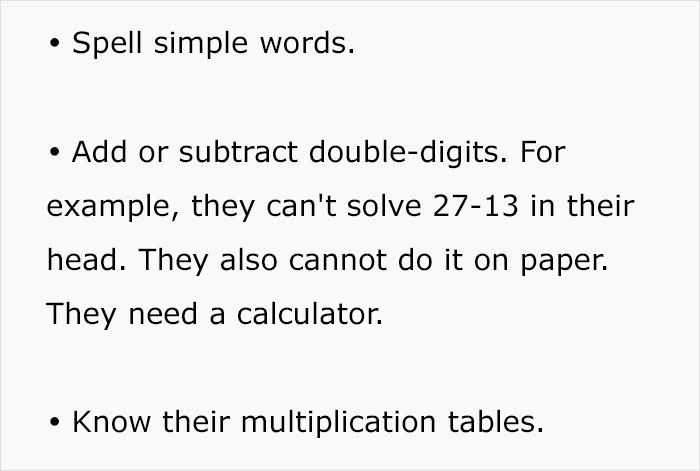
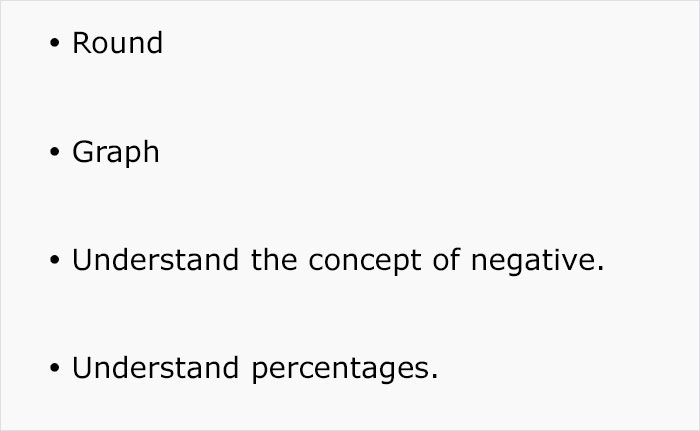
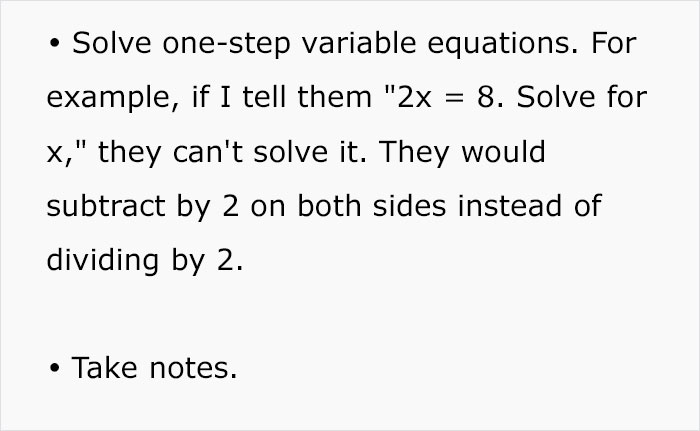
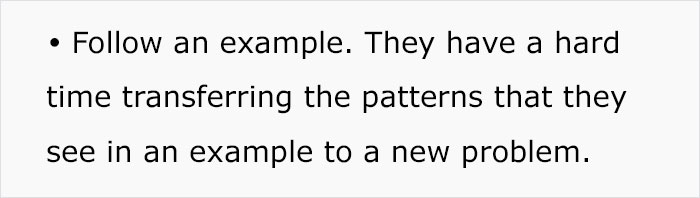
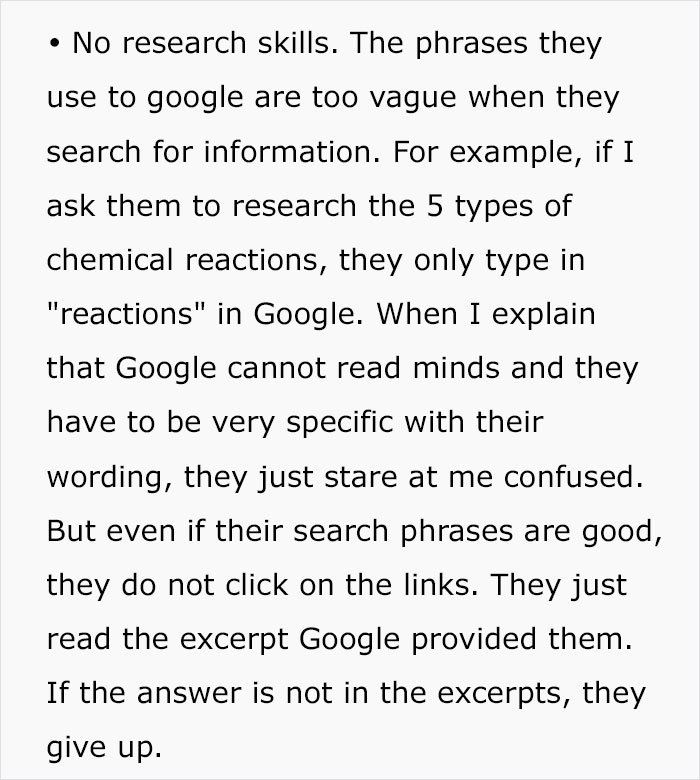
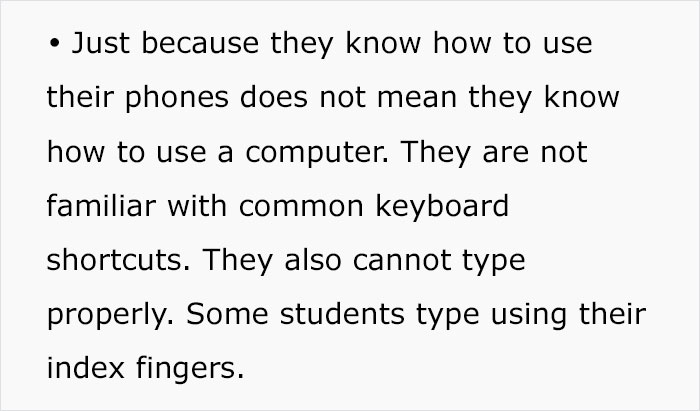
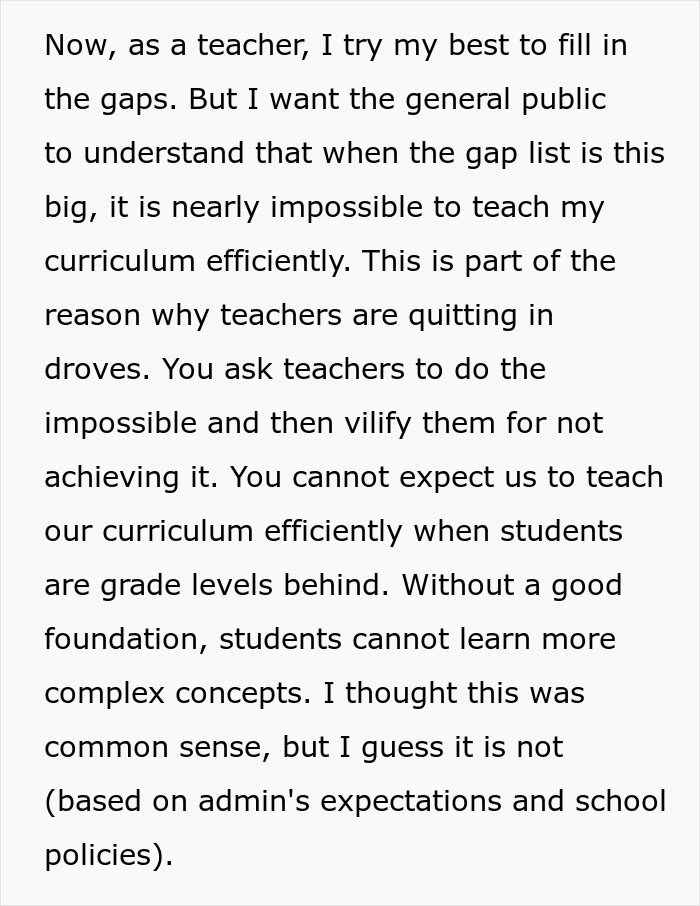
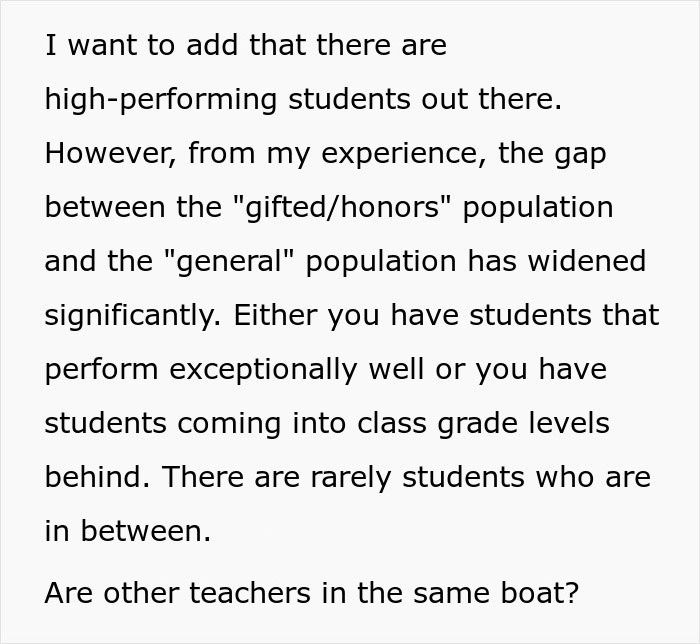
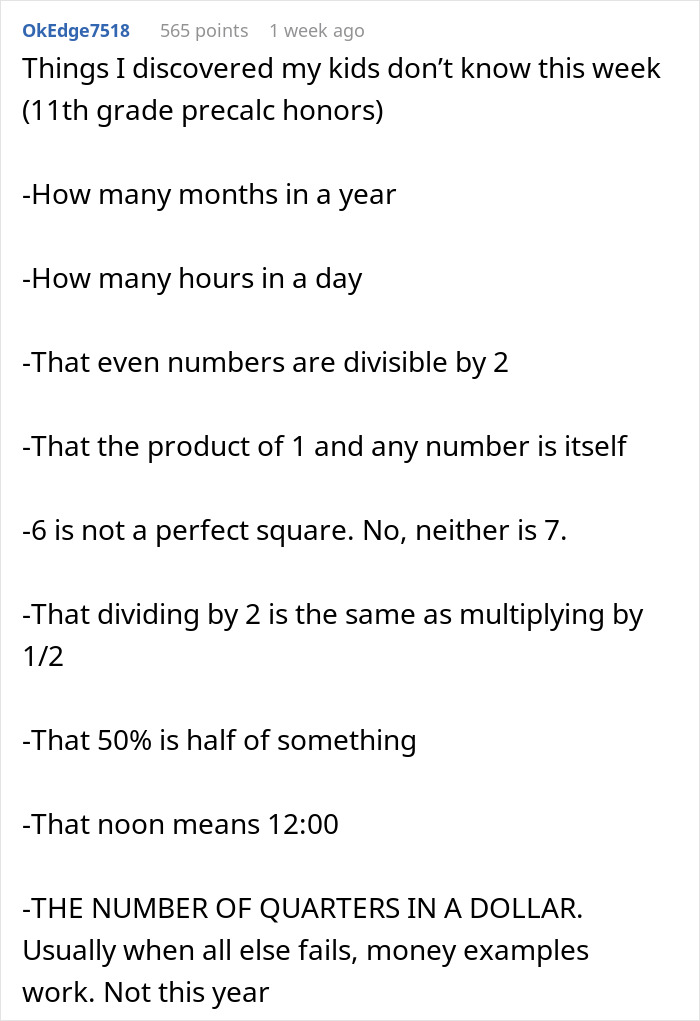
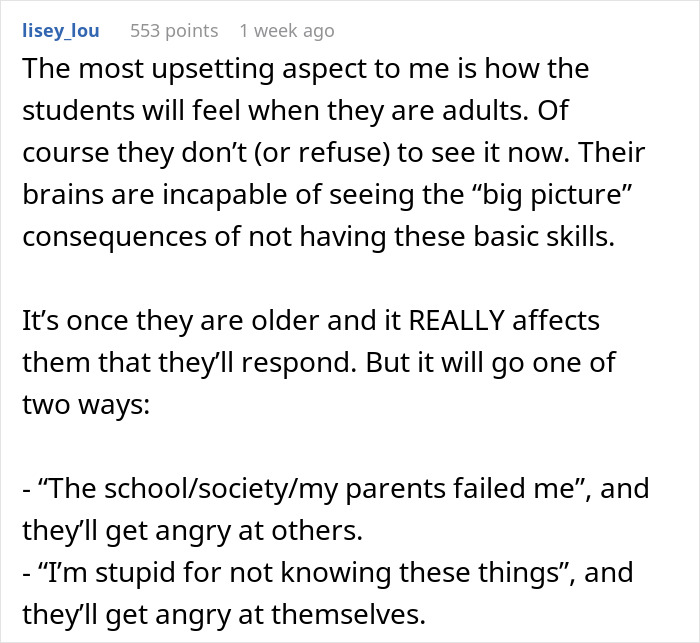
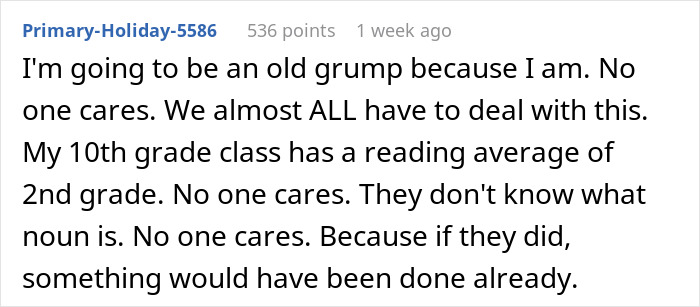
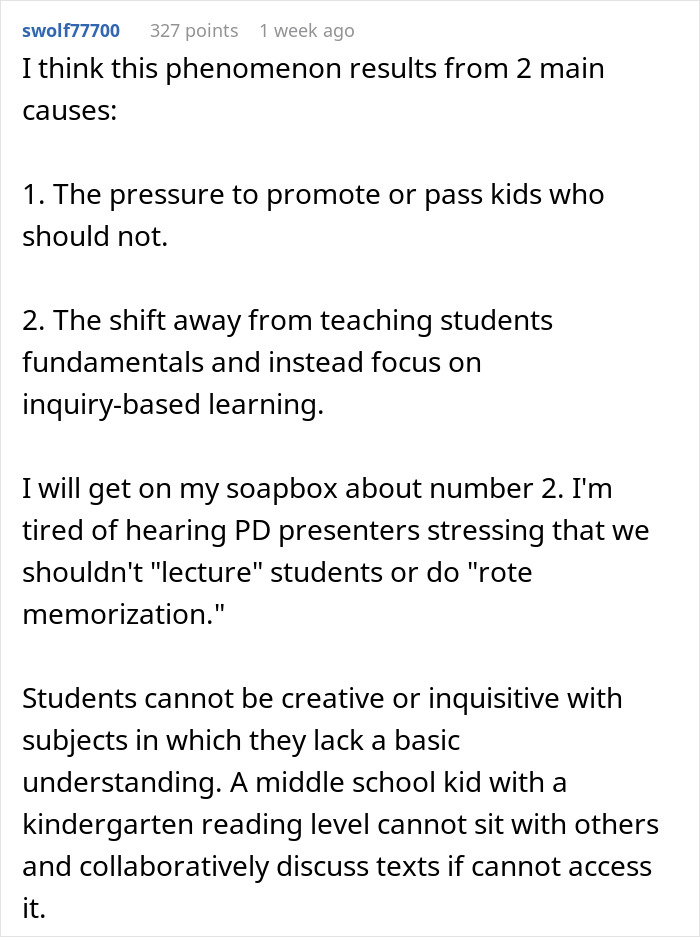
A few days ago, a now-deleted Reddit user who went on the platform by the nickname DragonfruitBright810 brought back attention to this topic by listing all the areas in which their 15- to 18-year-olds are slacking.
Image credits: LightFieldStudios/ Envato elements (not the actual photo)
Image credits: Polina Tankilevitch/Pexels (not the actual photo)
Image credits: CarlosBarquero/Envato elements (not the actual photo)
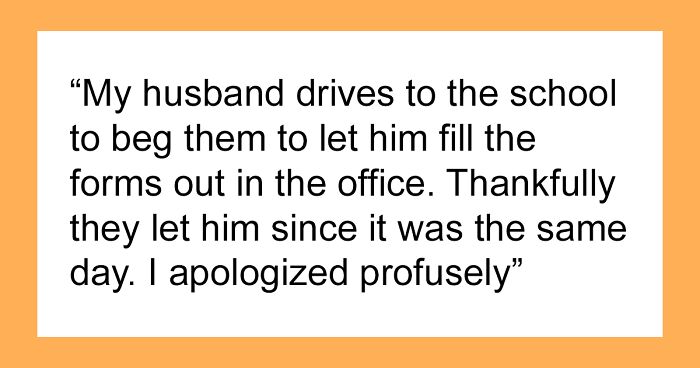
Image credits: anonymous
There’s some data to back up the teacher’s concerns. For example, math and reading scores among America’s 13-year-olds fell to their lowest levels in decades, with math scores plunging by the largest margin ever recorded, according to the results of a federal test known as the nation’s report card.
The results, released in June, are the latest measure of the deep learning setbacks incurred during the pandemic. While earlier testing revealed the magnitude of America’s learning loss, the latest test casts light on the persistence of those setbacks, dimming hopes of swift academic recovery.
More than two years after most students returned to in-person class, there are still “worrisome signs about student achievement,” says Peggy G. Carr, commissioner of the National Center for Education Statistics, a branch of the federal Education Department.
In the national sample of 13-year-old students, average math scores fell by 9 points between 2020 and 2023, while reading scores fell by 4 points. The test, formally called the National Assessment of Educational Progress, was administered from October to December in 2022 to 8,700 students in each subject.
Image credits: Max Fischer/Pexels (not the actual photo)
Similar setbacks were reported the year before when NAEP released broader results showing the pandemic’s impact on America’s fourth- and eighth-grade students.
Though math and reading scores had been sliding even before the pandemic, the latest results show a precipitous drop that erases earlier gains in the years leading up to 2012 — scores on the math exam, which has been given since 1973, are now at their lowest levels since 1990, and reading scores are their lowest since 2004.
The United States, the world’s largest economy, is far from a global leader in education, even as it spends more per student than many other countries.
In math, the US ranks 28th out of 37 participating countries from the Organization for Economic Cooperation and Development, made up mostly of industrialized democracies that account for a majority of world trade.
Even relatively affluent U.S. students did not score as high in math as the average-performing students in top places like Japan, South Korea, and Hong Kong.
Perhaps equally concerning: one in three U.S. students scored below a basic level of math proficiency, indicating that they struggle with skills they may need in the real world.
“I don’t think you can drop much lower,” says Andreas Schleicher, the director for education and skills at the O.E.C.D., which oversees the exam. “You don’t want to compare the U.S. to less advanced economies,” he adds.

By entering your email and clicking Subscribe, you're agreeing to let us send you customized marketing messages about us and our advertising partners. You are also agreeing to our Privacy Policy.
Thank you! You've successfully subscribed to newsletters!

If schools stop forging grades. My son has an A in French. No way in hell should he. He can't tell me a single word. Same went with Spanish.

Mr. Hererra : You idiots have been in this class for almost a whole school year and the only Spanish you know is what you learned at Taco Bell. And Beavis couldn't get that right. I'm gonna give you jerks 10 seconds to come up with a sentence in Spanish and if you can't, you're both going to the principal's office and you're both flunking! [pauses] Mr. Hererra : Well I'm waiting. Butt-Head : [laughs] Uh, rendo-pordo-curdoh-nut-a-ben-yubarduhvuh Rico Suave. Mr. Hererra : Principal's office, Now! Beavis : Uhh Taco supreme. [Laughs] Mr. Hererra : [the class continues laughing] Get out! Now!
Load More Replies...
Let’s look at the generations above them eh? The ones who aren’t being responsible parents, the ones who have neglected their own academic skills or who do little to pass on their skills. I have a daughter, she is the responsibility of me and her Mum, it’s our job to stretch her, challenge her and teach her, we are her parents and we have to reinforce what’s taught at school, it’s not easy sometimes, my old grey matter ain’t what it was but if it was easy then school would be too easy. I had to up my game, learn the new methods and support both my daughter and her teachers. IT’S MY JOB AS A PARENT.

As an educator myself, I agree with you for the most part. I have also noticed that kids can be sneaky and work hard to maintain appearances when they feel that what they’re experiencing doesn’t suit them. I’ve had parents find out the extent of the lies their kids are telling them halfway through the school year, or even at its end in some cases. I also had to learn to take anything my students say, with as much grace as with a grain of salt. Sometimes parents just do not know what their kids are doing because their kids know that their parents want to believe them and everything they do and they’re quick to take advantage of that. Fortunately, when the parents find out, they are to tell their kids that the behavior is not acceptable. I also think you and your wife do well to hold your daughter accountable to being a responsible and respectful child and student. Emphasizing truth and grace, and everything you do is will be difficult. You’re both doing wonderfully and keep it up!
Load More Replies...
Oh yes this is a huge problem, and I can tell you it is not new. When I started teaching college in the mid 1990s, I was shocked to discover that many of my students had significant difficulties with simple reading comprehension. I would say that about 30 to 40 percent of college freshmen in 1995 were reading at a sixth grade level. And it has only gotten worse since then. In addition, written and spoken communication skills were very low, as you can imagine. There were just so many students who could not write a sentence in English. And these were native speakers. I do not understand why K-12 public schools are passing and graduating children who do not have sufficient basic reading and writing skills. There are some bad trends in public education that contribute to this for sure, like grade inflation and not giving homework and spending too much time on autoscan testing.

I agree. When I was in high school (I'm 38) they suddenly realized a whole bunch of kids basically couldn't read. They did emergency testing to find all the kids that couldn't read and threw them all in a reading class to catch them up. I was personally struggling at math, due to alot of truancy from being poor and homeless. I missed some critical lessons (multiplication) early on and got way behind. They actually pushed a bunch of us from pre-algerbra to algebra 2 in high school skipping the in between lesson. Whole class was so lost the teacher spent half a year trying to get us moved back to algebra 1, half way thru the year we where moved back to 1... half way thru the lesson. Guess how well we did. I also knew a guy in his 50s who didn't know the name of mount Rushmore, called it "that monument with all the presidents heads" it's a complex problem that has existed for some time, it's just getting worse because it's a cumulative effect.
Load More Replies... If schools stop forging grades. My son has an A in French. No way in hell should he. He can't tell me a single word. Same went with Spanish.
Mr. Hererra : You idiots have been in this class for almost a whole school year and the only Spanish you know is what you learned at Taco Bell. And Beavis couldn't get that right. I'm gonna give you jerks 10 seconds to come up with a sentence in Spanish and if you can't, you're both going to the principal's office and you're both flunking! [pauses] Mr. Hererra : Well I'm waiting. Butt-Head : [laughs] Uh, rendo-pordo-curdoh-nut-a-ben-yubarduhvuh Rico Suave. Mr. Hererra : Principal's office, Now! Beavis : Uhh Taco supreme. [Laughs] Mr. Hererra : [the class continues laughing] Get out! Now!
Load More Replies... Let’s look at the generations above them eh? The ones who aren’t being responsible parents, the ones who have neglected their own academic skills or who do little to pass on their skills. I have a daughter, she is the responsibility of me and her Mum, it’s our job to stretch her, challenge her and teach her, we are her parents and we have to reinforce what’s taught at school, it’s not easy sometimes, my old grey matter ain’t what it was but if it was easy then school would be too easy. I had to up my game, learn the new methods and support both my daughter and her teachers. IT’S MY JOB AS A PARENT.
As an educator myself, I agree with you for the most part. I have also noticed that kids can be sneaky and work hard to maintain appearances when they feel that what they’re experiencing doesn’t suit them. I’ve had parents find out the extent of the lies their kids are telling them halfway through the school year, or even at its end in some cases. I also had to learn to take anything my students say, with as much grace as with a grain of salt. Sometimes parents just do not know what their kids are doing because their kids know that their parents want to believe them and everything they do and they’re quick to take advantage of that. Fortunately, when the parents find out, they are to tell their kids that the behavior is not acceptable. I also think you and your wife do well to hold your daughter accountable to being a responsible and respectful child and student. Emphasizing truth and grace, and everything you do is will be difficult. You’re both doing wonderfully and keep it up!
Load More Replies... Oh yes this is a huge problem, and I can tell you it is not new. When I started teaching college in the mid 1990s, I was shocked to discover that many of my students had significant difficulties with simple reading comprehension. I would say that about 30 to 40 percent of college freshmen in 1995 were reading at a sixth grade level. And it has only gotten worse since then. In addition, written and spoken communication skills were very low, as you can imagine. There were just so many students who could not write a sentence in English. And these were native speakers. I do not understand why K-12 public schools are passing and graduating children who do not have sufficient basic reading and writing skills. There are some bad trends in public education that contribute to this for sure, like grade inflation and not giving homework and spending too much time on autoscan testing.
I agree. When I was in high school (I'm 38) they suddenly realized a whole bunch of kids basically couldn't read. They did emergency testing to find all the kids that couldn't read and threw them all in a reading class to catch them up. I was personally struggling at math, due to alot of truancy from being poor and homeless. I missed some critical lessons (multiplication) early on and got way behind. They actually pushed a bunch of us from pre-algerbra to algebra 2 in high school skipping the in between lesson. Whole class was so lost the teacher spent half a year trying to get us moved back to algebra 1, half way thru the year we where moved back to 1... half way thru the lesson. Guess how well we did. I also knew a guy in his 50s who didn't know the name of mount Rushmore, called it "that monument with all the presidents heads" it's a complex problem that has existed for some time, it's just getting worse because it's a cumulative effect.
Load More Replies...

















 No fees, cancel anytime


















61
140