Get Premium
Dark mode theme is available exclusively for premium users. Learn more about the benefits of subscribing.
No fees, cancel anytime.

 Dark Mode Ad-Free Browsing Unlimited Content
 Ad-Free Browsing Unlimited Content Dark Mode
Join 1.2 million Panda readers who get the best art, memes, and fun stories every week!
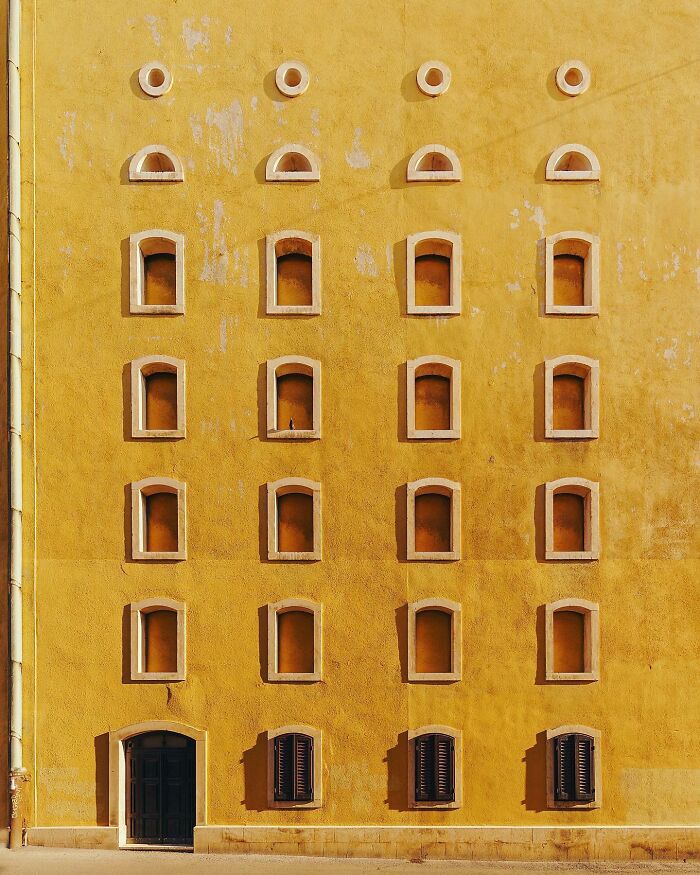
Architecture can shape how we move, gather, and experience a city, yet its patterns often fade into the background of everyday life. Argentine-born, Barcelona-based photographer Matias Galeano, known professionally as Boluddha, brings those overlooked structures back into focus through carefully composed images filled with symmetry, repetition, bold color, and dramatic perspective. Yet his work is not simply about finding perfect geometry. It explores the contrast between carefully planned architecture and the unpredictable human activity that unfolds within it.
Having lived in several countries from an early age, Matias developed the perspective of someone who continually observed and decoded unfamiliar surroundings. That experience now informs the way he photographs cities, noticing the habits, traces, and visual patterns that local residents may no longer see. His interest in modernist and postmodern architecture is particularly visible in images of dense housing estates, colorful geometric buildings, and monumental structures that balance order with a sense of overwhelming scale. Whether photographing from street level, lying beneath a building to find an unusual angle, or leaning out of a helicopter for an aerial view, he searches for the moment when the apparent disorder of a scene suddenly resolves into a coherent composition.
Bored Panda reached out to Matias to learn more about the meaning behind his unusual moniker, the experiences that shaped his visual approach, and the patience required to capture architecture at precisely the right moment. Keep scrolling to explore his work, read the full conversation, and let us know which photograph made you stop and look twice.
More info: Instagram | boluddha.com
This post may include affiliate links.
Matias explained that the name Boluddha combines humor, self-awareness, and the seriousness with which he approaches photography: “The name is a combination of ‘boludo,’ which is an affectionate way to call someone an idiot in Argentina, and of course the ‘Buddha,’ the enlightened one. So we get to an enlightened idiot, which is honestly the most accurate description of me there is.”
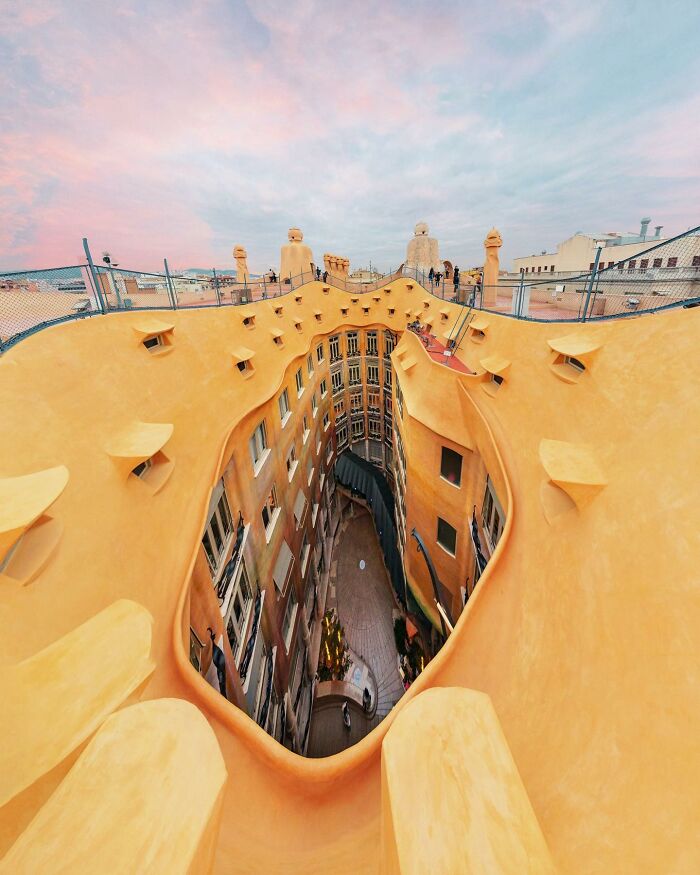
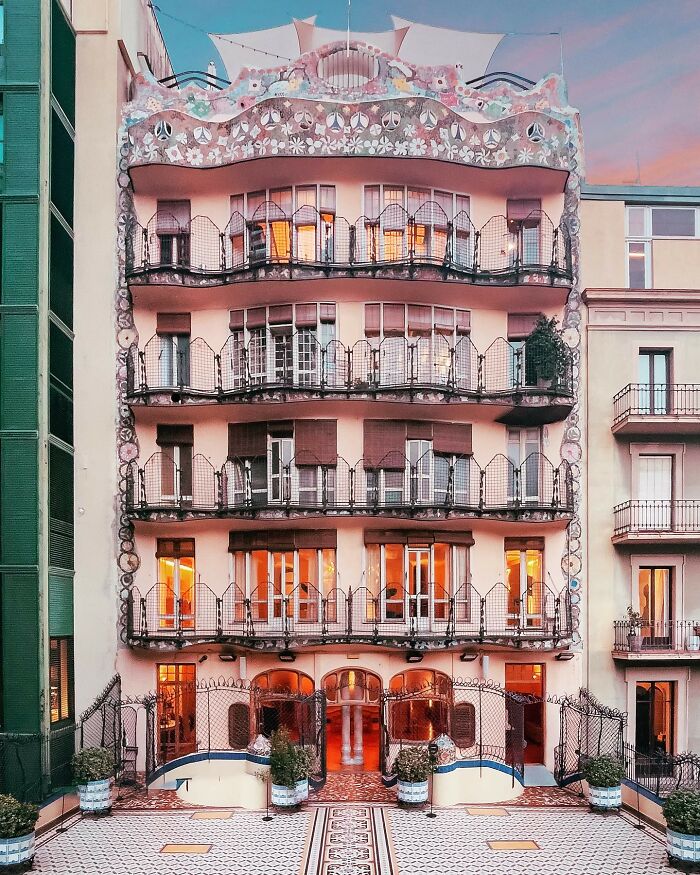
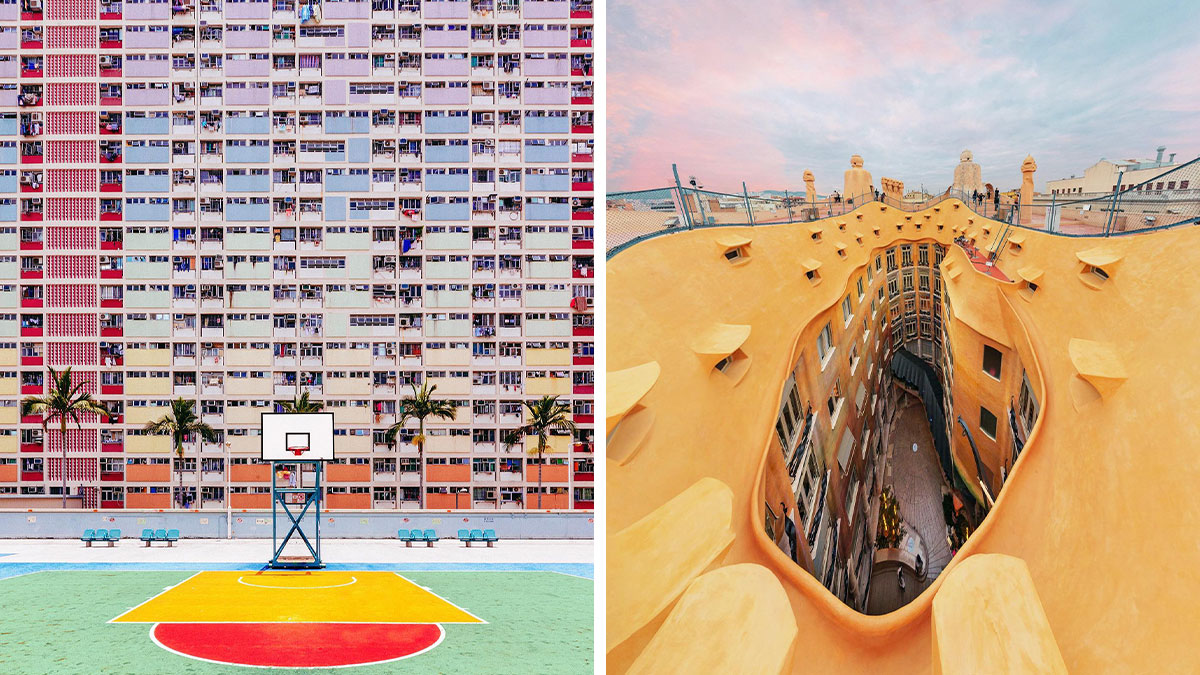
“Casa Milà, most commonly referred to as La Pedrera, is a modernist building in Barcelona designed by renowned Catalan architect Antoni Gaudi in 1906.
In typical fashion Gaudi seeks to find natural curves and organic shapes, avoiding straight lines and obvious symmetries.
On the roof we see the sculptural elements which have become one of Gaudi’s hallmarks, including a small mosaic archway which seems to perfectly frame the view to what would finally be his greatest work La Sagrada Familia. UNESCO declared La Pedrera a World Heritage Site in 1984.”
Location: Barcelona, Spain
“Photography is literally the pursuit of light, and I do take that pursuit seriously, sometimes embarrassingly so, which can easily make me look like a fool (spending a whole day circling a single building, counting tiles, lying on the floor in public, etc.). But I also refuse to pretend there’s anything mystical happening.”
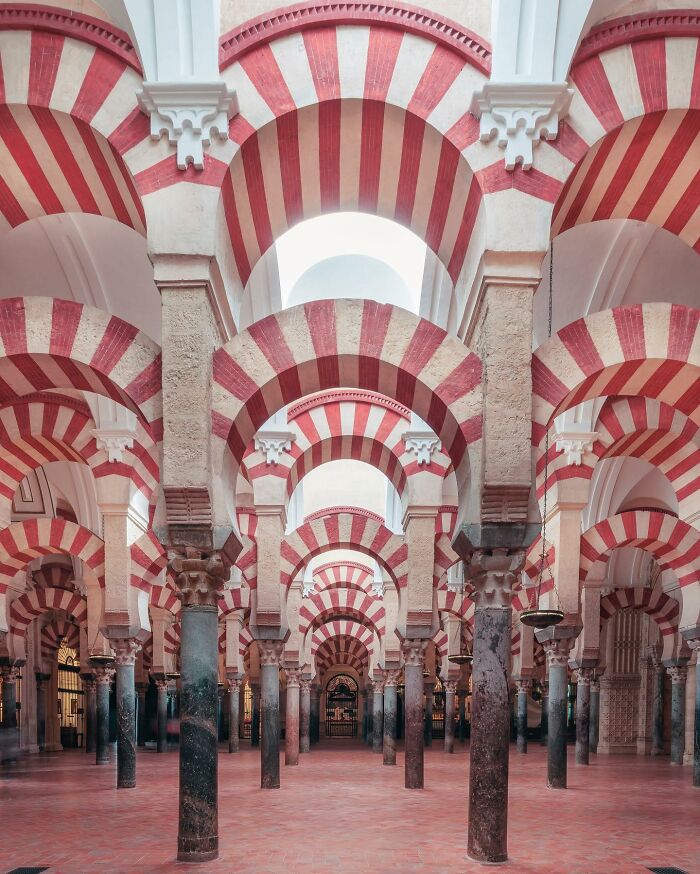
“Right in the heart of Cordoba lies one of the most interesting historical buildings in all of Spain, the Mosque–Cathedral of Córdoba.
Construction began in the year 784 as a mosque, with later expansions by the Emirates and Califates of Cordoba, reaching an impressive 23.000 square meter space, making it one of the largest mosques in the world at the time, second only to Mecca.
In 1238 during Spain's 'Reconquista' the mosque was turned into a catholic cathedral, and in 1523 a basilica was placed in the very center of the structure, making for one of the most interesting amalgams of these two religions and cultures which today coexist in this magical space.”
Location: Mosque-Cathedral of Córdoba (La Mezquita), Córdoba, Spain

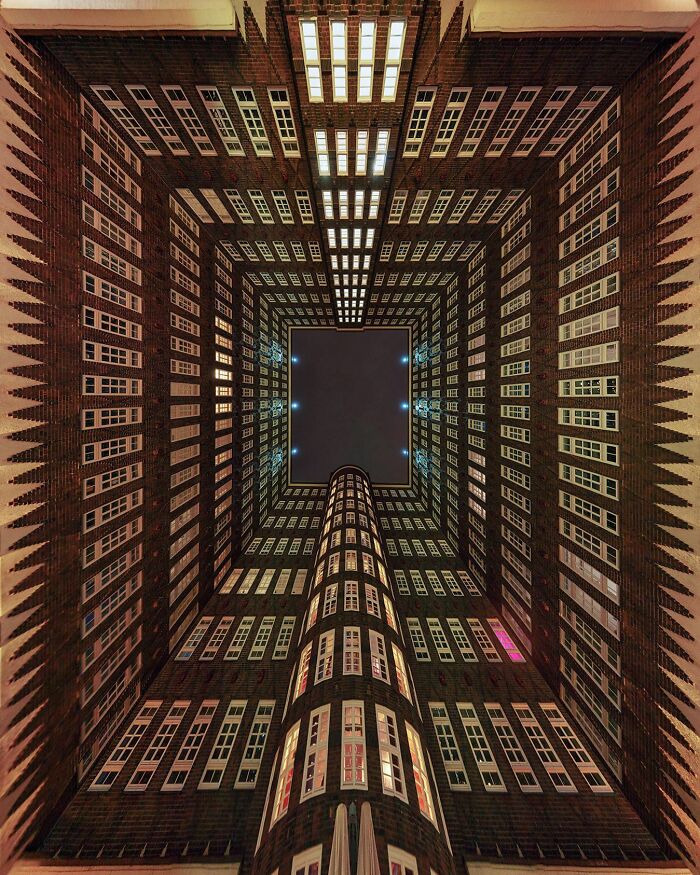
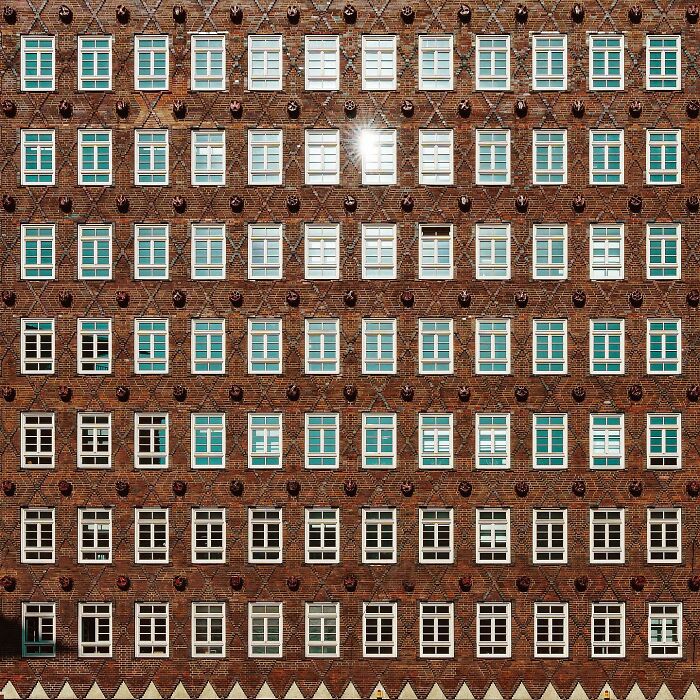
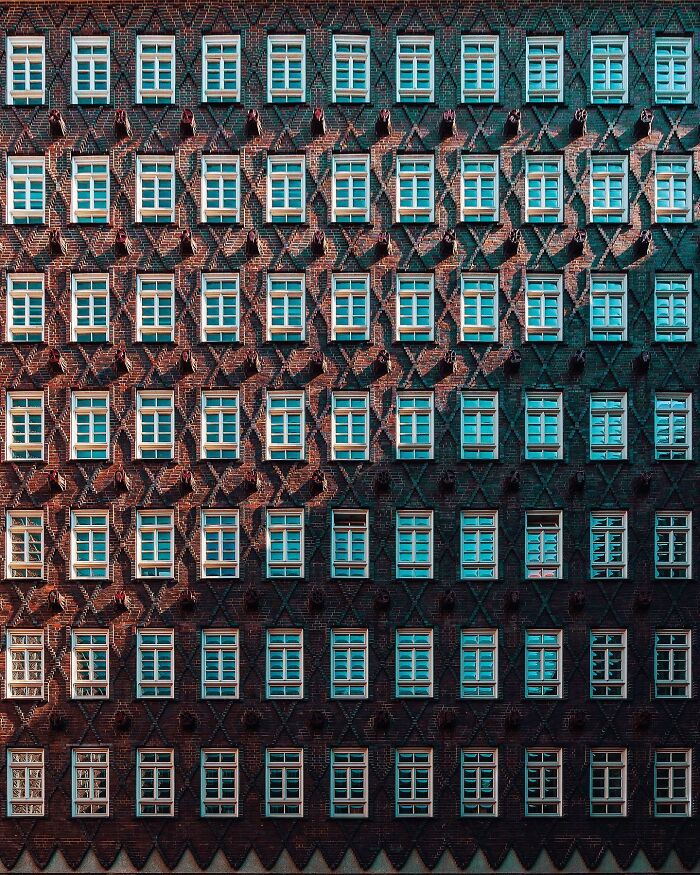
“Next to Fritz Höger's Chilehaus lies the somewhat larger, perhaps more impressive courtyard Sprinkerhof which is featured in this image. Finished in 1924, the almost 6000m square complex is a masterful example of Brick Expressionism, using almost 5 million bricks in total. The use of geometric accuracy, light, and repetition transmit an almost surreal sense of vertigo.”
Location: Hamburg, Germany
“Both things are true at once, and the name holds both. The moment you start believing you’re only the Buddha part, your photos get pretentious. The moment you’re only the boludo, you stop showing up at sunrise. You need the tension.”
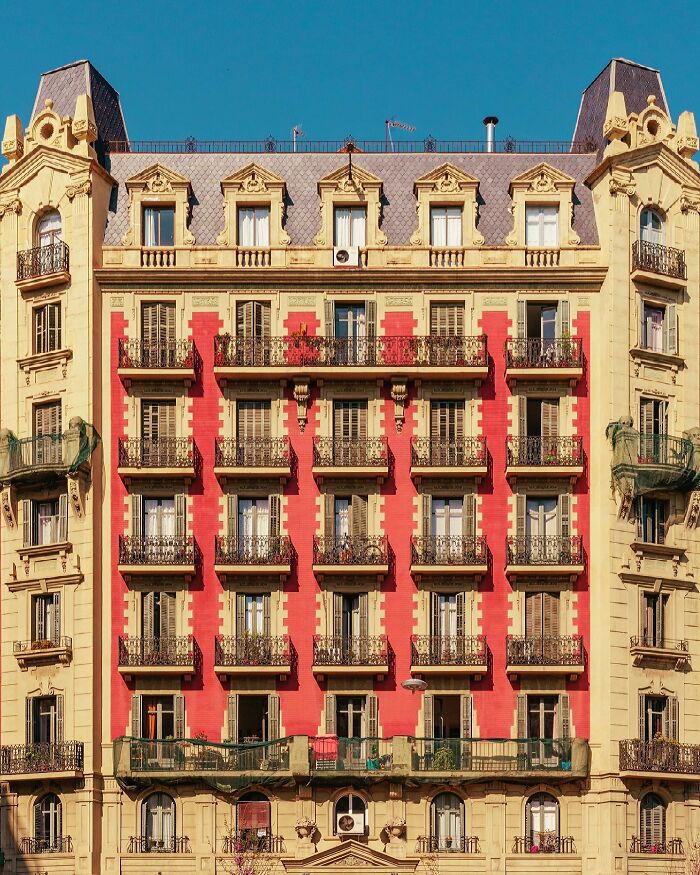
Location: Barcelona, Spain
He explained that his path toward architectural photography grew naturally from an early interest in visual art, storytelling, and graphic design: “There was no lightning bolt. I’ve always been a very visually based mind and obsessed with every kind of art and storytelling. Having worked in graphic design when I was younger helped me start to think in grids, alignment, negative space, all of that, just on a screen instead of outside. Photography came naturally out of those foundations.”
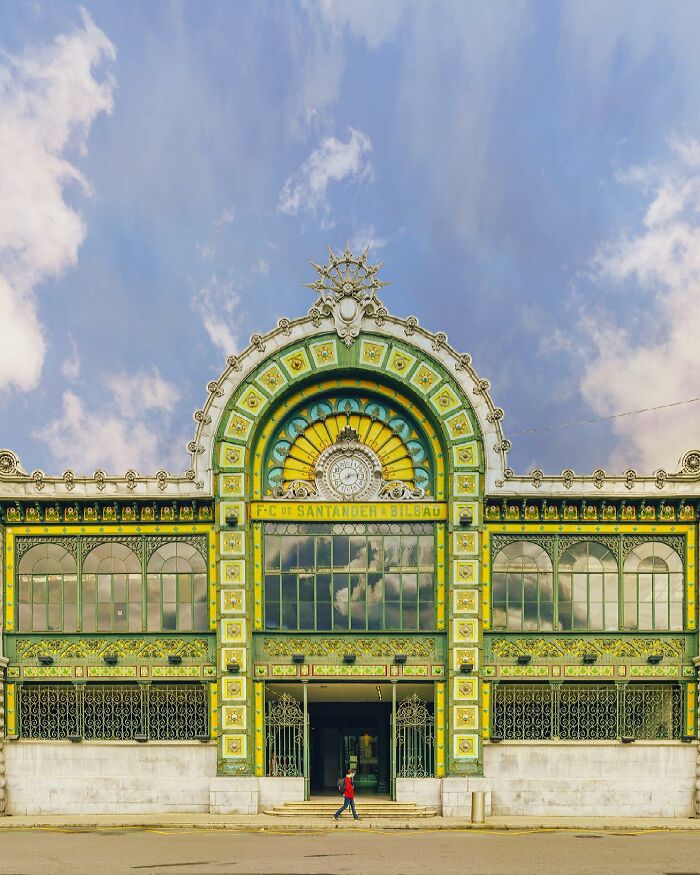
“Right by the Nervión river which runs through the entire city of Bilbao, lies this wonderful and quirky railway station which Bilbao and Santander. The iron Art Deco design adds a touch of romance and color to its more classical surroundings. Inaugurated in 1902, by architect Severino Achúcarro, this modernist use of ceramic, glass and wrought iron was a joy to stumble upon on my first ever visit to this beautiful Basque city.”
Location: Bilbao, Spain
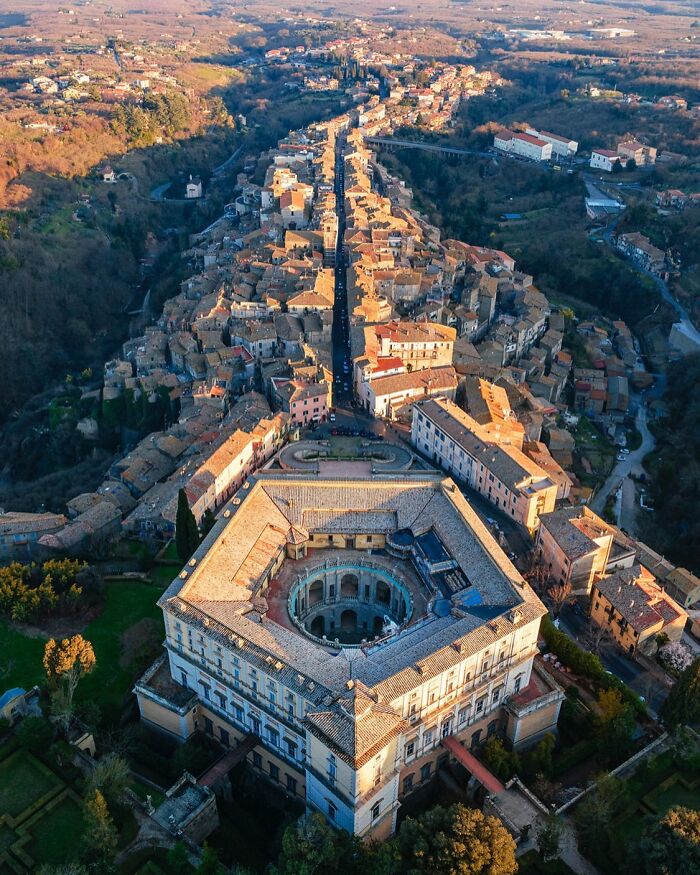
“A short drive outside of Rome we find the beautiful medieval town of Caprarola in the province of Viterbo. And at the very end of the town we find the majestic Palazzo Farnese.
Originally begun as a fortress in the 1500s, it had been transformed into a wonderful example of a lavish Renaissance residence by 1575.”
Location: Caprarola, Italy

“And architecture specifically because buildings are the most honest subject there is. A building can’t pose. It can’t have a bad day. It just stands there being exactly what someone decided it should be, decades or centuries ago, and then life happens all over it: laundry on balconies, satellite dishes, plants, graffiti, chaos. That dialogue, between the coherent thing someone dreamed up and the organic mess living inside it, that’s basically what my work is about.”
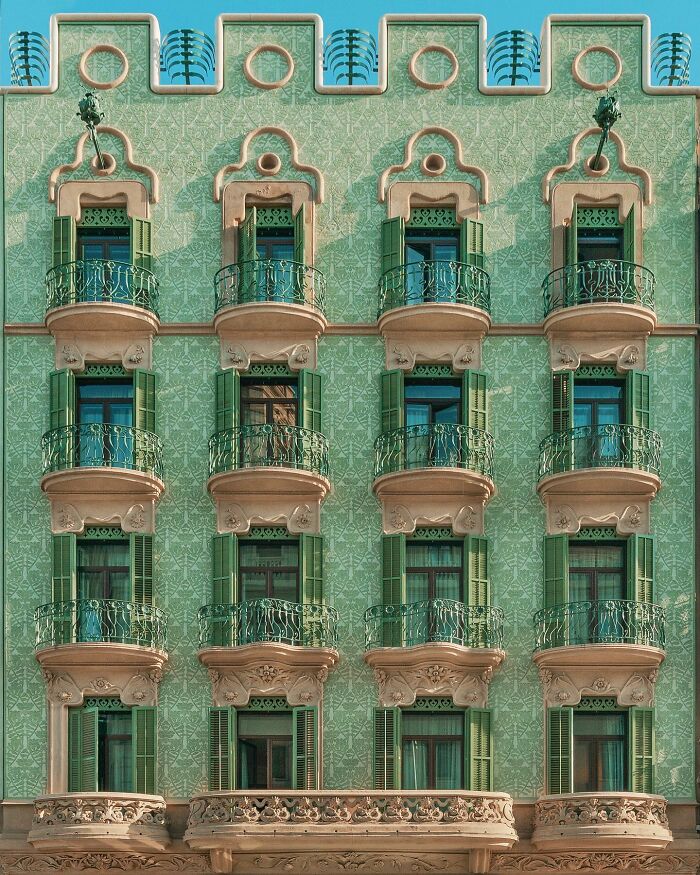
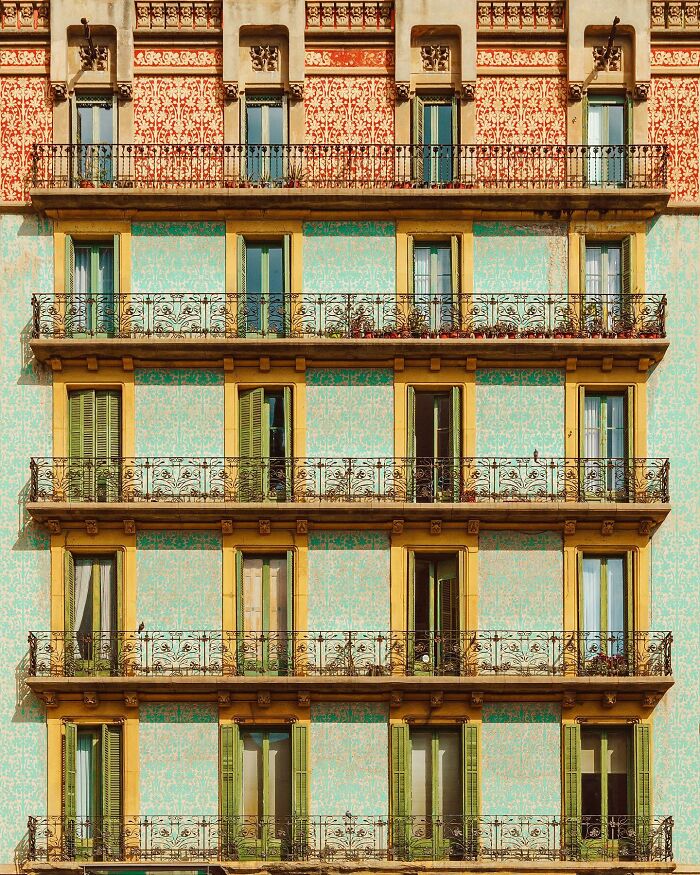
“Barcelona is an almost inexhaustible well of beautiful façades, so I always have to limit myself to stop them from taking over my feed. A lot of the beautiful ones are built in the Art Nouveau/Modernisme aesthetic, and seen next to each other they can start blending into each other to the point where one struggles to appreciate the details. This one however always really stands out to me every time I pass because the strong minty green color is rather uncommon, looking almost like a pistachio ice cream flavor.” Location: Barcelona, Spain
A few subtle changes, the building could have been garish, it's beautiful as is
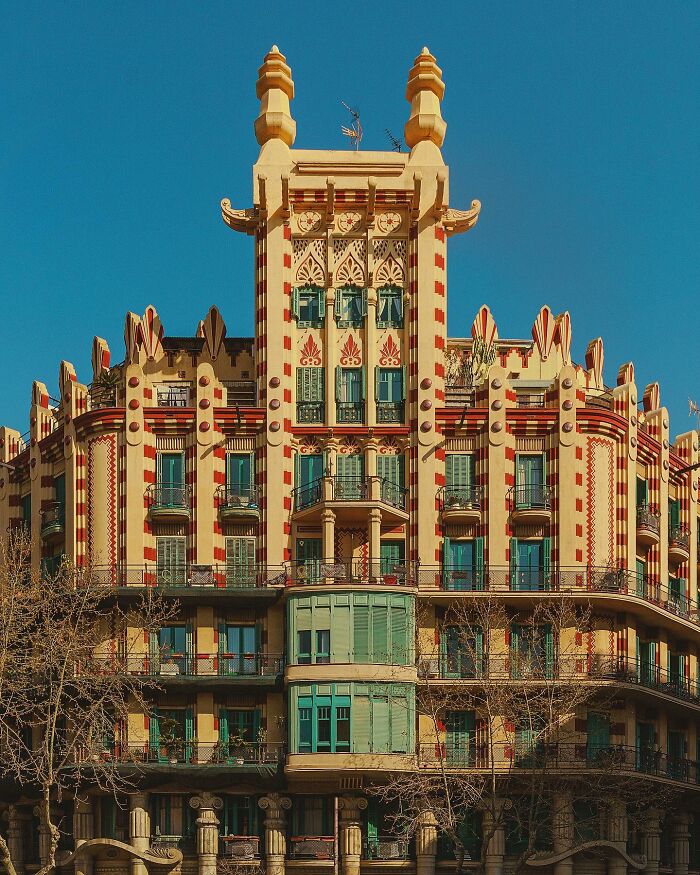
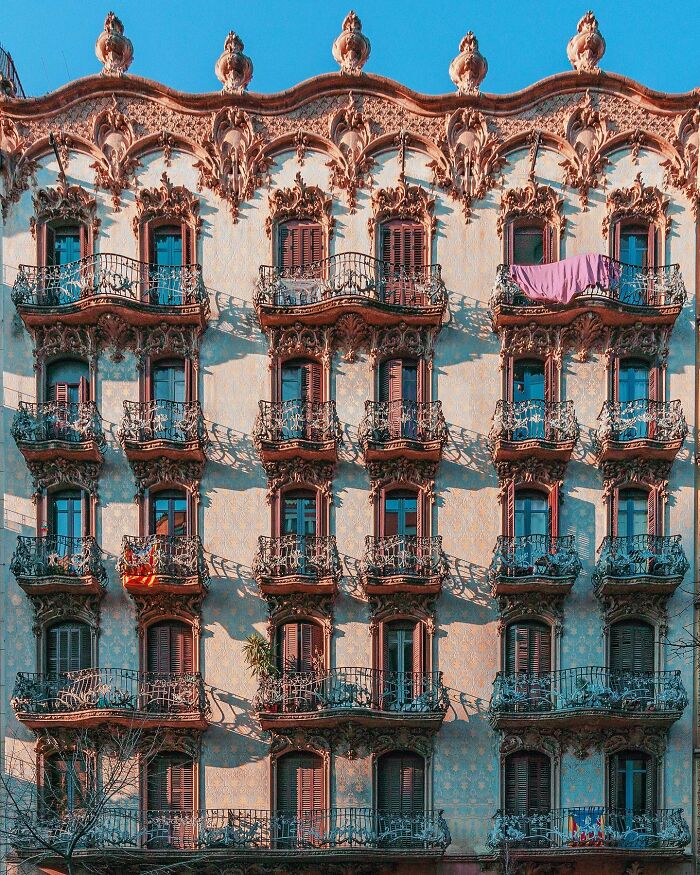
“One of Eixample's most striking façades is without a doubt Casa Ferran Guardiola. Constructed in 1929 by architect Joan Guardiol, the Modernist façade displays influences from the avant-garde Austrian Secession style as well as elements and schemes of Orientalist aesthetics. The patterns and colors also evoke a Native American imagery. On a sunny day the building almost shines and I love walking passed it.” Location: Ferran Guardiola house, Barcelona, Spain
Growing up and living across several countries taught Matias to approach every city as an outsider searching for its underlying patterns: “Quick summary: I was born in Buenos Aires, moved to Germany at age six, then the Netherlands, school in Belgium, then studied in the UK, lived in Essex, then London. Moved back to Germany again, and finally Barcelona in 2008, which was supposed to be a weekend and has now lasted eighteen years.”
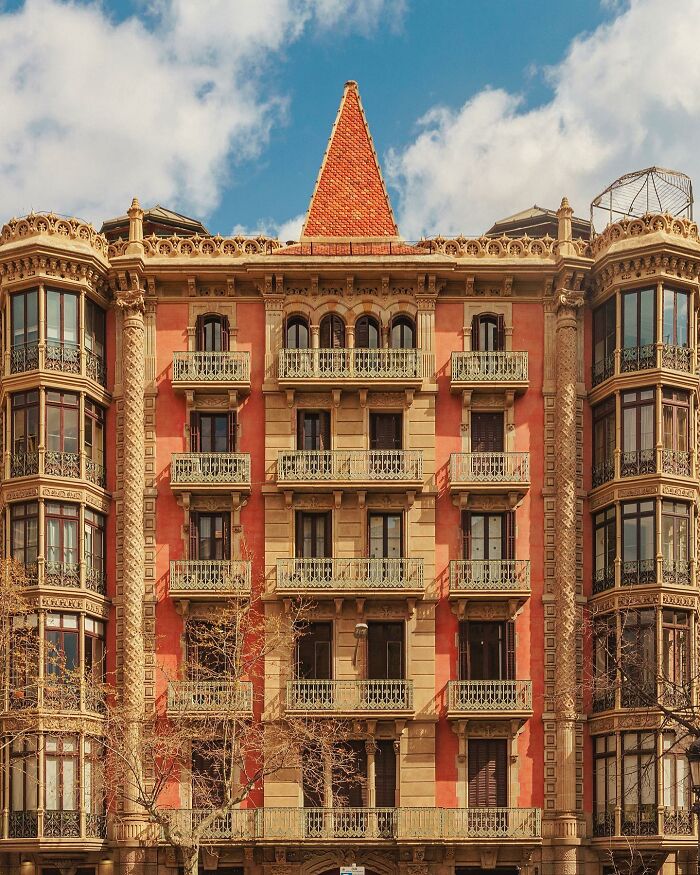
“One of the more striking façades along Barcelona’s famous Ramblas appears to wear a lovely red hat.” Location: Barcelona, Spain
“Not quite rivaling Japan's famous Cherry Blossom season in scale and fame, the early spring weeks in Barcelona do temporarily turn the city's many almond trees a beautiful shade of pink, advertising to the people that 'hey, maybe winter wasn't great but guess what, spring is here and summer coming baby!'”
Location: Barcelona, Spain
“When you grow up like that you never fully belong anywhere, so you become an observer by default. You’re always the outsider trying to decode the local patterns: how people queue, how they park, how they hang their washing. Eventually you realize every city is running the same program with different settings. Humans and their habits produce patterns everywhere, every habit leaves a residue, and once you’ve moved enough times you start to see the patterns others mistake for default reality. That double vision is the whole toolkit. The camera came later; the way of looking came from being a foreigner everywhere, permanently.”
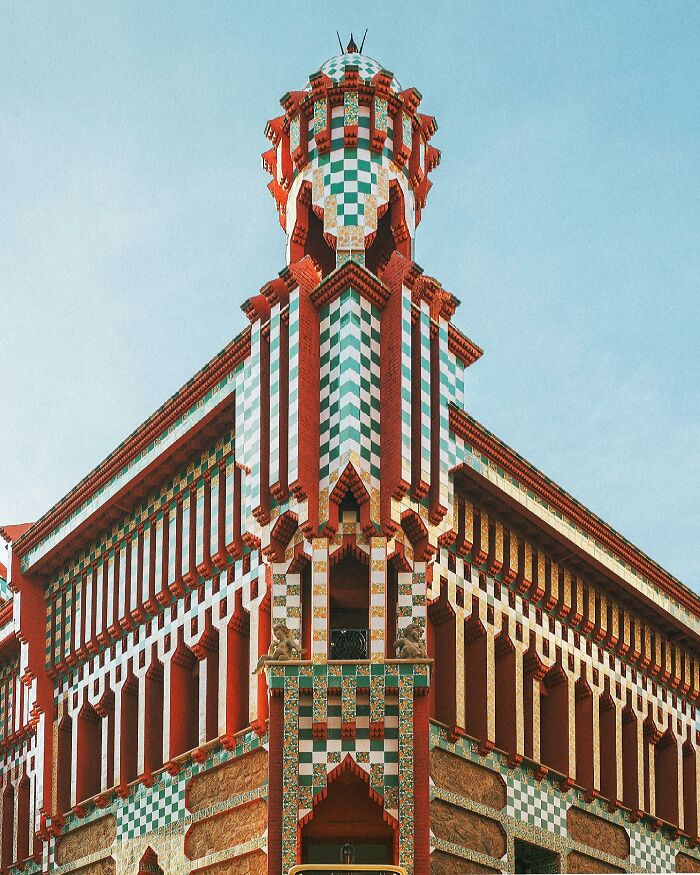
“Built between 1883 and 1888 the modernist Casa Viçens was Antoni Gaudi’s first major work of architecture following his graduation in 1878. How confident were you 5 years after graduating?😂)
The contract came from Manuel Vicens i Montaner with the purpose of creating a summer house in the nearby village of Gracia which has since become part of Barcelona.
The shapes, patterns, and colors of Casa Vicens portray Gaudi’s Oriental period with aesthetics drawn from the Middle East, India, Persia, and Japan. Additionally we already find his characteristic imitation of nature and shapes and lines found in the nearby landscape, something which would be a staple of his career.
In 2005 the building was declared World Heritage, and in November 2017 it will be opened to the public as a museum showcasing a tribute to Catalan and international architecture.”
Location: Barcelona, Spain
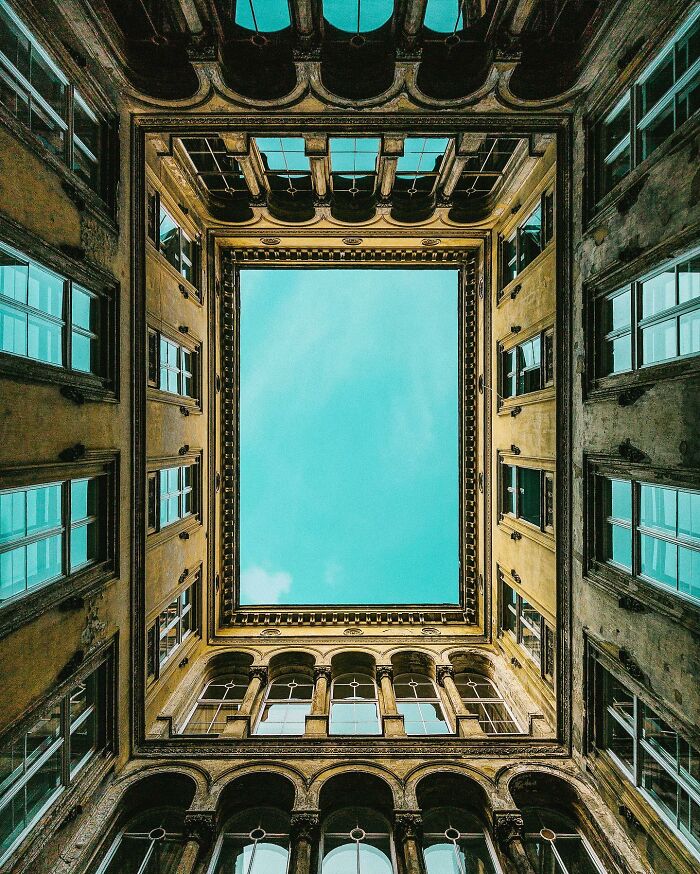
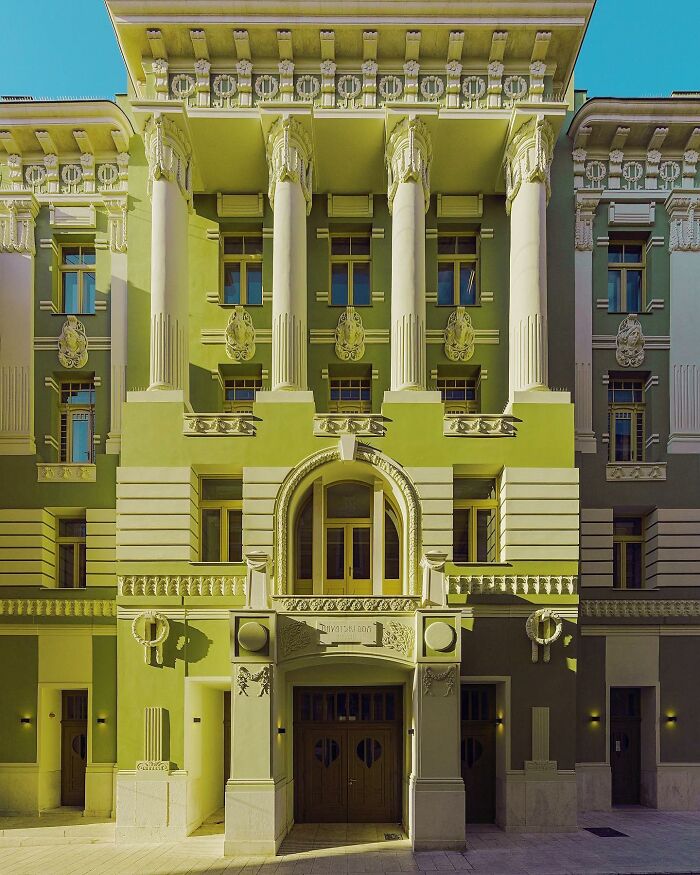
Location: Unger House, Budapest, Hungary
When describing his process, he said that discovering a location is only the beginning of a long search for the angle where every element falls into place: “It can come about at any moment through any source: a long walk through a previously unknown part of town, a screenshot, the corner of a building glimpsed from a bus, someone’s holiday photo where I ignore the person and zoom into the façade behind them.”
Location: Technische Verwaltungsgebäude der Hoechst AG, Frankfurt, Germany
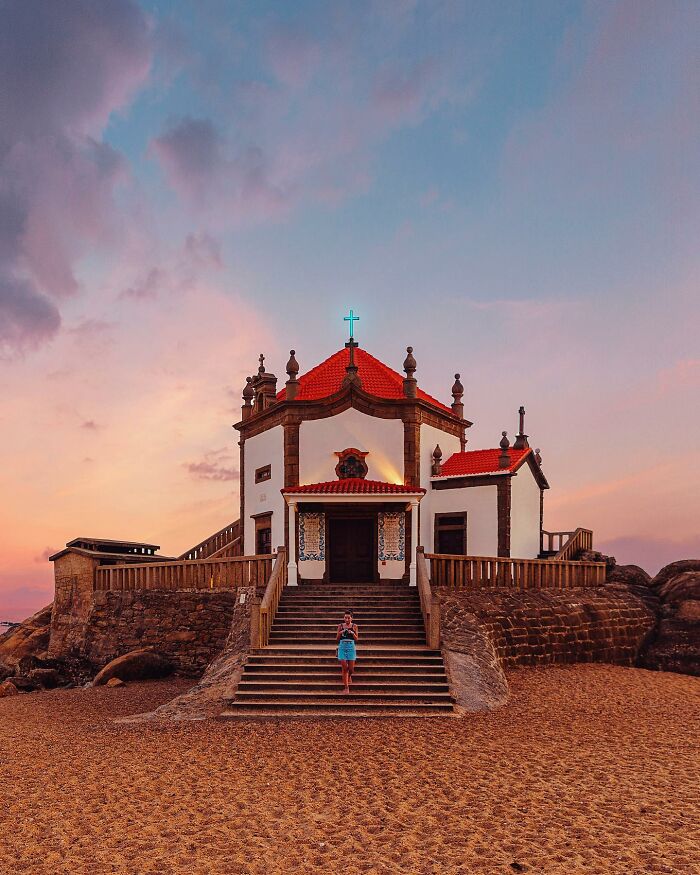
Location: Capela Senhor da Pedra (Chapel of the Lord of Stone), Vial Nova de Gaia, Portugal
“Then I research: what is it, who built it, when does the sun hit which side. Then I go visit and I walk around it, for hours. If possible I go inside, spend time looking at the details, the lines, the spaces it creates and the moods it invokes. How does it interact with the light? How do the shadows move through it? Sometimes I come back over multiple days. I’m looking for the point of view where the building resolves, where all the lines agree with each other. Every angle, every beam of light. Most of the time the ‘perfect’ spot is somewhere stupid: the middle of a road, a private rooftop, flat on my back in an entrance. For aerial work it’s helicopters, hanging off the side, which sounds cool but is mostly logistics and nausea management. The final composition is rarely a decision so much as a recognition. You move around until suddenly the chaos snaps into order, and your body knows it before your brain does.”
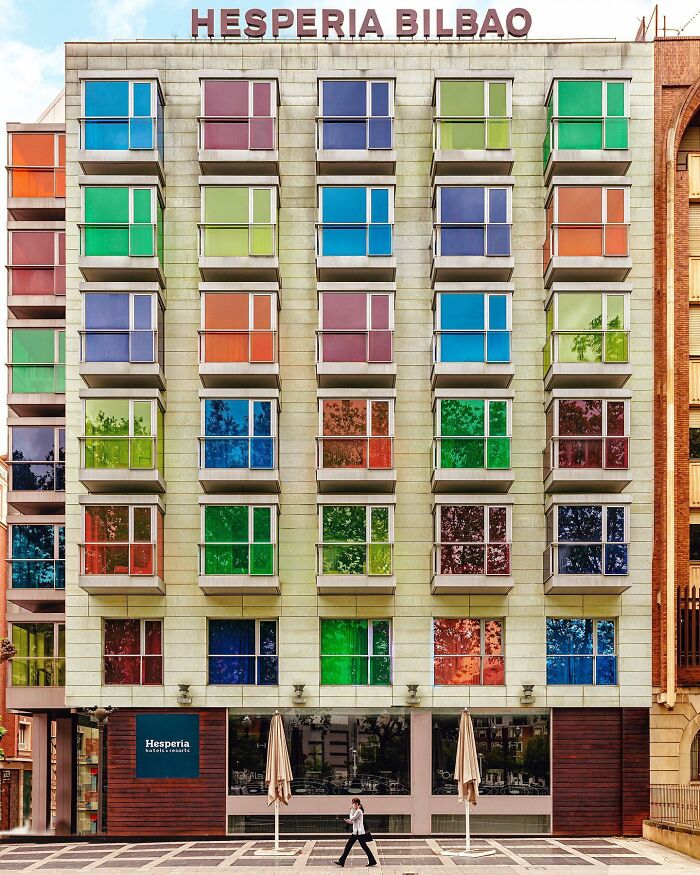
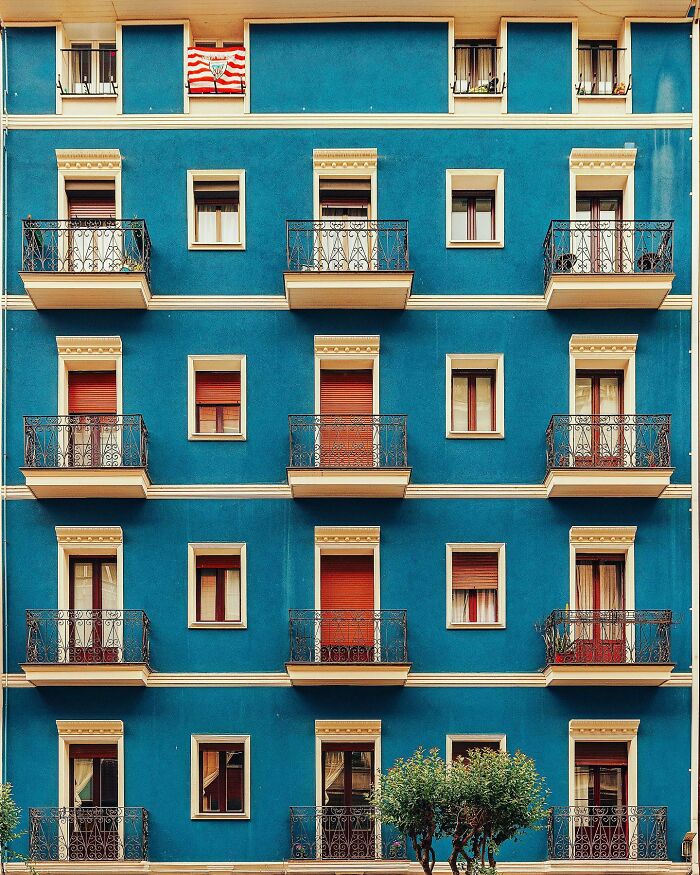
“This picture perfect blue façade was one of my favorite findings on my recent Bilbao trip. The dollhouse qualities and almost layer cake aesthetic to it.”
Location: Bilbao, Spain
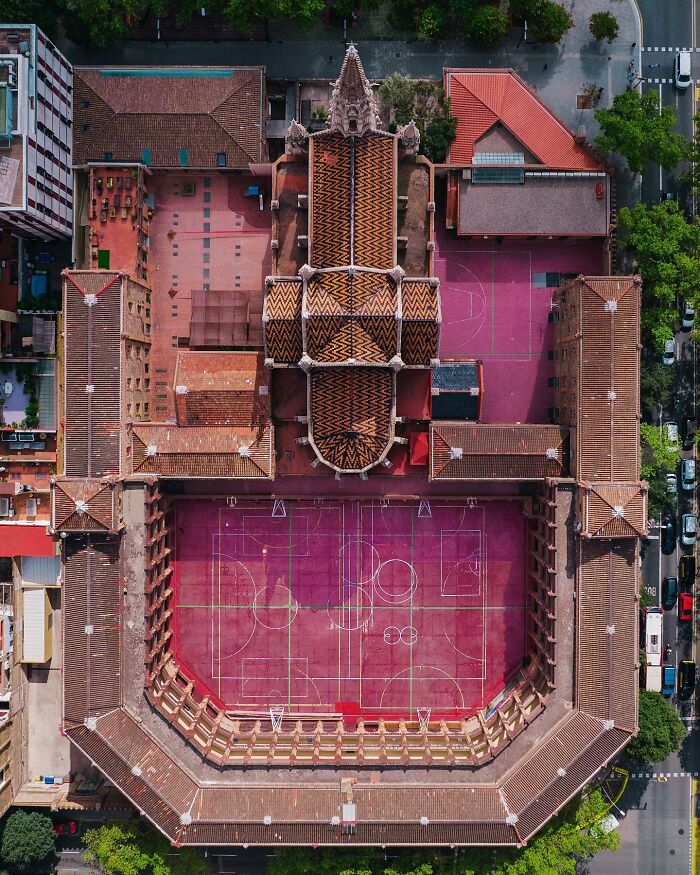
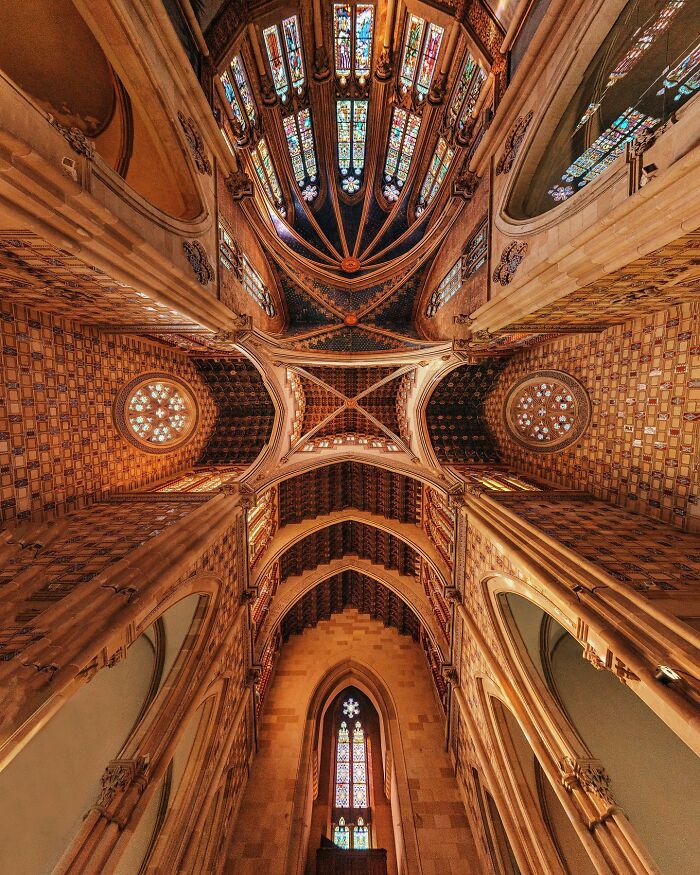
“Despite being less known than its Modernist contemporaries, the Iglesia y Convento de las Salesas in Eixample is one of the most interesting churches in Barcelona. The brick and stone interior square has been designed to follow the path of the Sun, maximizing the daylight it receives.
The adjacent church exhibits some of the most beautiful Neo-Gothic traits the city has to offer, as well as influences of the then-current Neo-Mudéjar style which borrows from the Moorish design spread around the Iberian Peninsula. According to the architect Joan Bassegoda, at different times of the project a certain young and promising Antoni Gaudi did participate, with the interior ceiling being rumored to be his work.”
Location: Barcelona, Spain
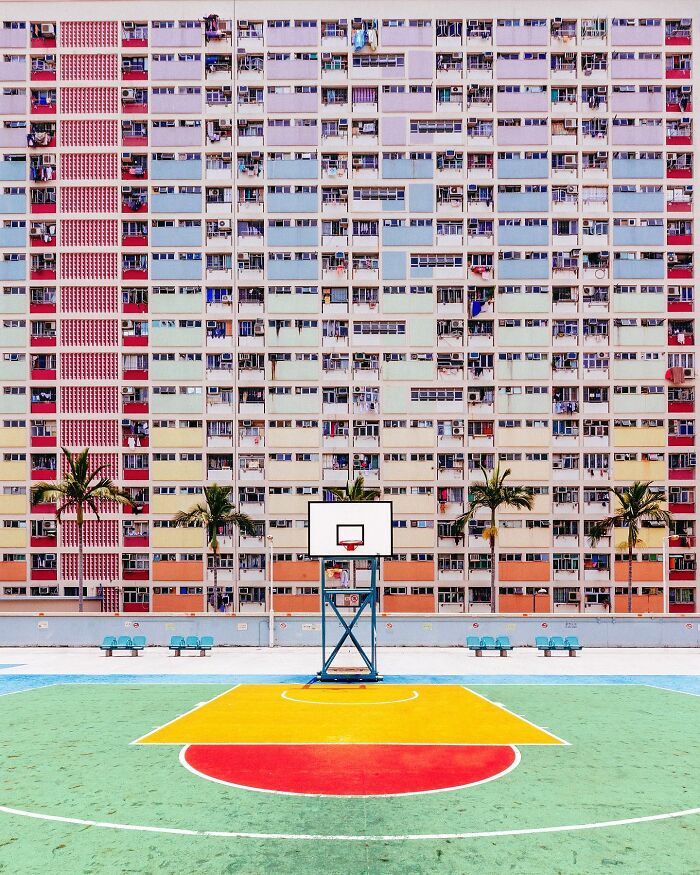
Symmetry and repetition may guide his plans, but Matias believes that observation and interpretation can never be entirely separated: “Both, and honestly at this point I think the distinctions have fully dissolved after all these years. I genuinely believe that one cannot remove themselves from an observation, that we project our views onto the world just as much as we perceive it. To produce is to reproduce, and the opposite is also true.”
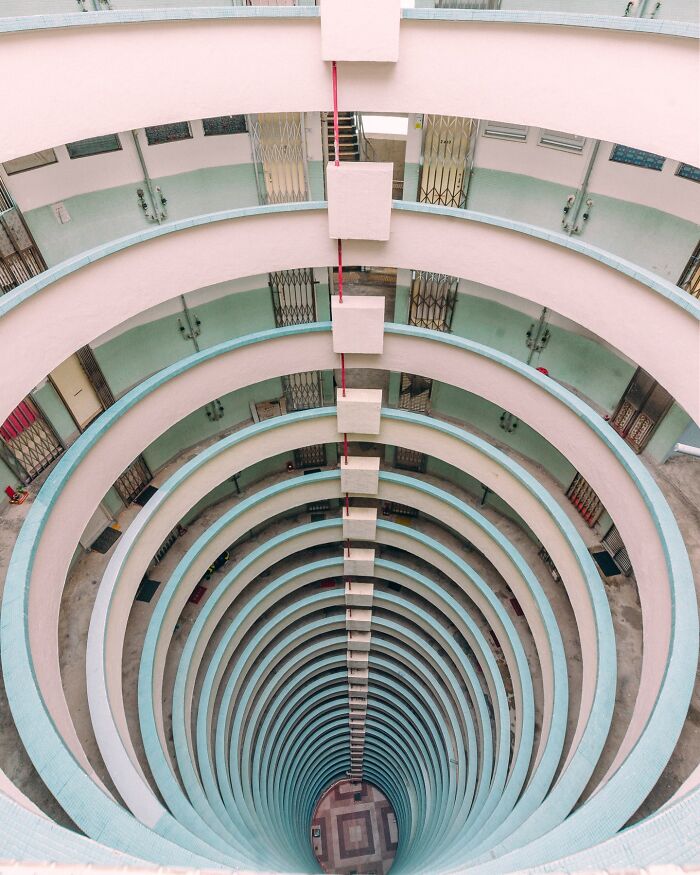
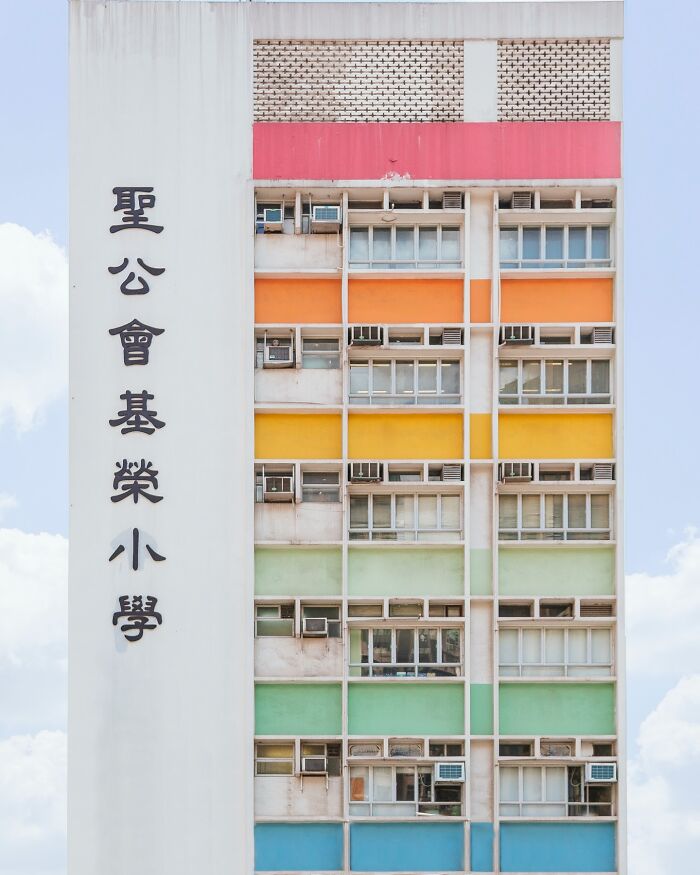
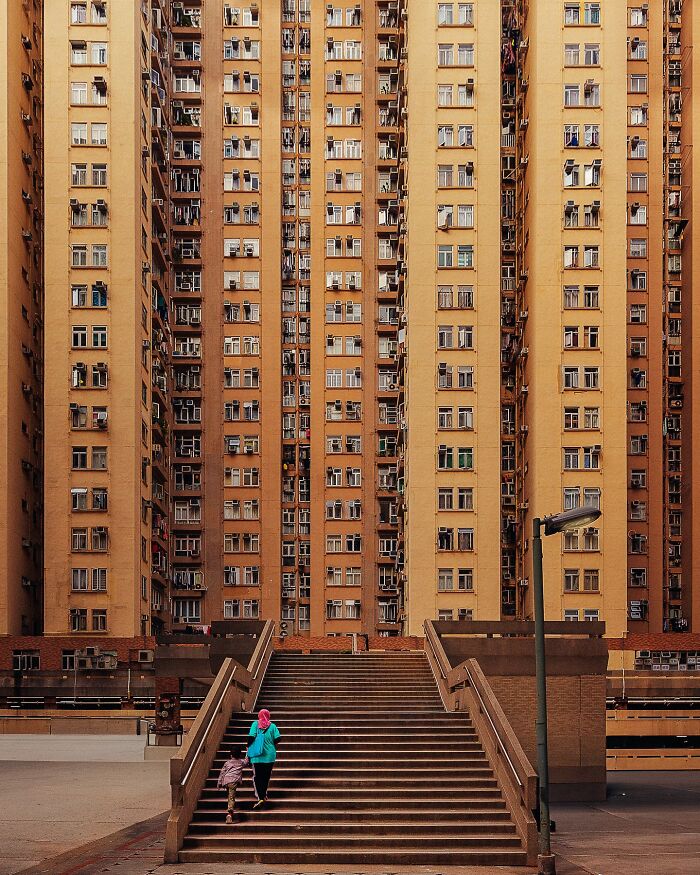
Location: Hong Kong

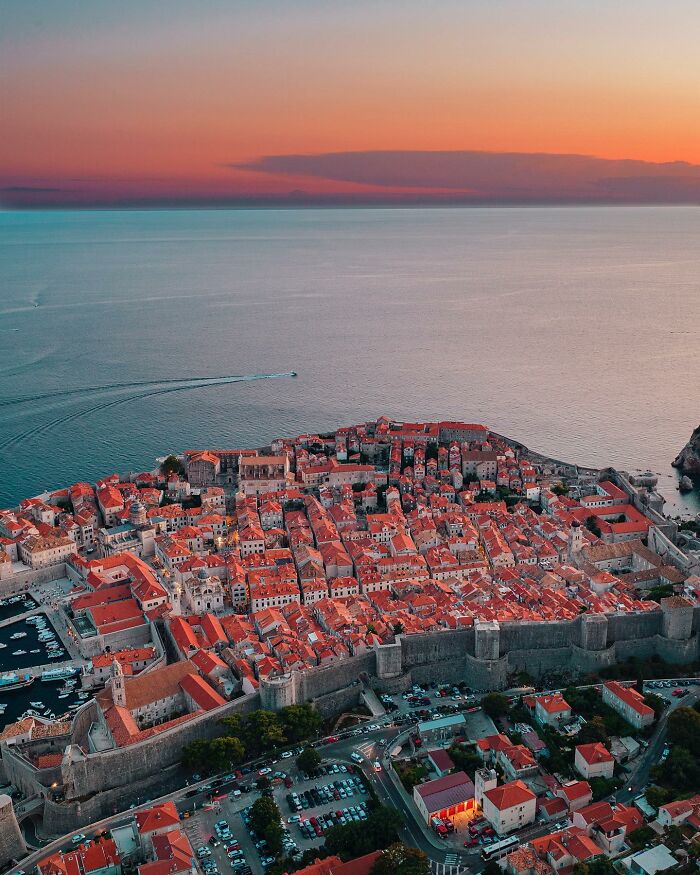
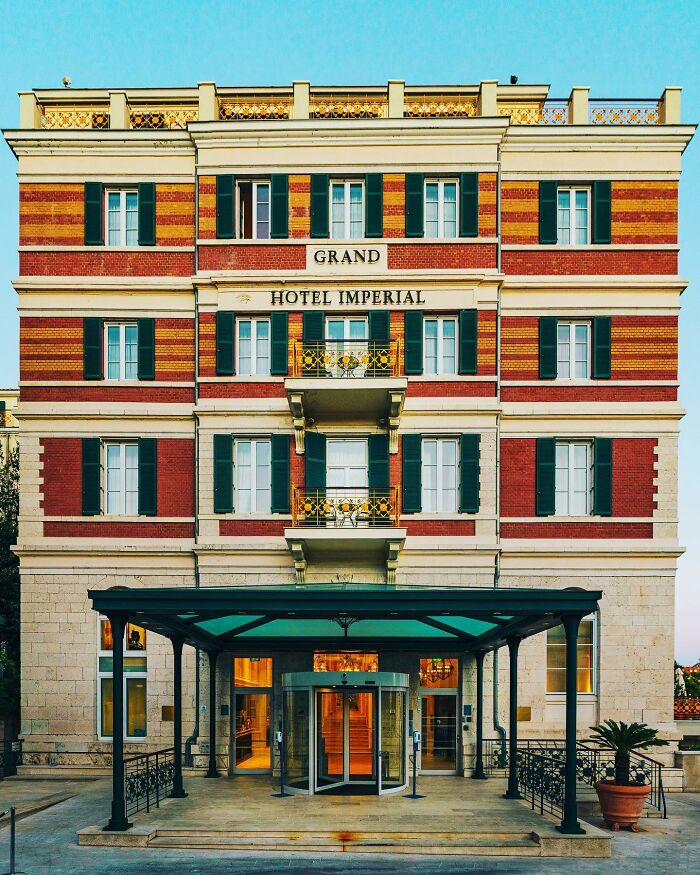
“Making your way down the Croatian coast (and after a small pit-stop through Bosnia) you eventually reach the magical city of Dubrovnik. Known as the Dalmatian Athens and one of the Crown jewels of the Adriatic Sea, Dubrovnik has been home to leading thought both the Arts and Sciences for centuries. Right in the middle between the foot of a mountain and the sea, this fortified old town was declared UNESCO World Heritage Site in 1979. Most recently the city became even more popular after being cast as King's Landing and Qarth in the popular TV show Game of Thrones, spawning countless tours between all the different corners used in the show. Far from my usual style of post-modern architecture and symmetries, I thought I'd dabble in somewhat more traditional landscape shots for a change.”
Location: Dubrovnik, Croatia
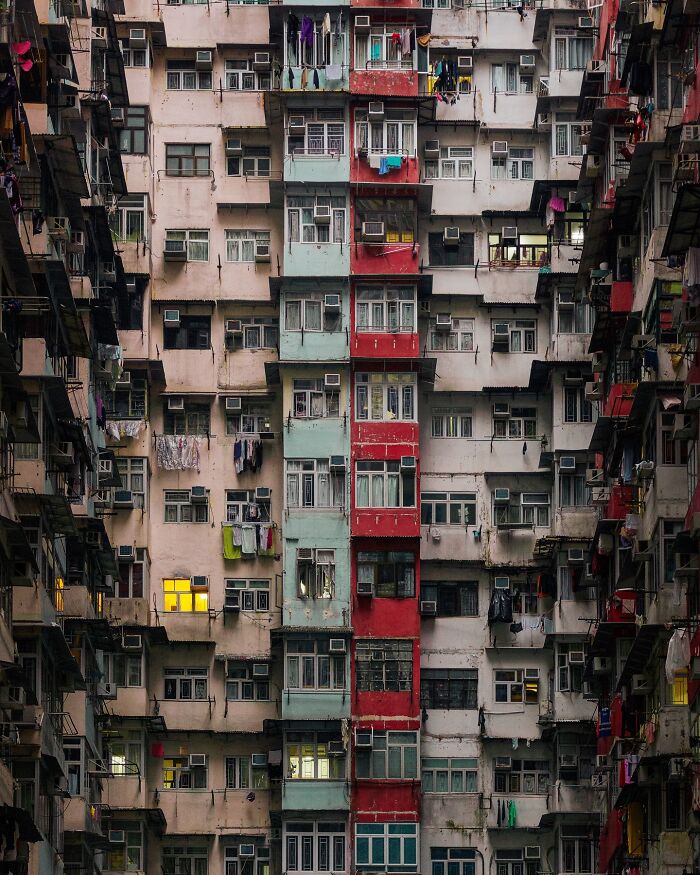
“I tend to plan trips around specific buildings, such as La Muralla Roja in Spain or Yik Fat in Hong Kong, but then spending time in those places, unexpected places and moments arise, and if I’m lucky I can photograph those too. A fire escape in a city I was in for a layover, the back of a marketplace nobody goes through. The world is constantly offering patterns; the only question is whether you’re switched on that day.”
Location: Hong Kong
Although architecture provides the structure of his images, he explained that he sees human presence as the element that gives those spaces meaning: “They complete it, absolutely, even when they’re not in frame. Especially when they’re not in frame. The whole subject of my work is that dialogue between the space and the occupant. The modern world is designed around the human experience, so their presence is there even when no one’s around.”
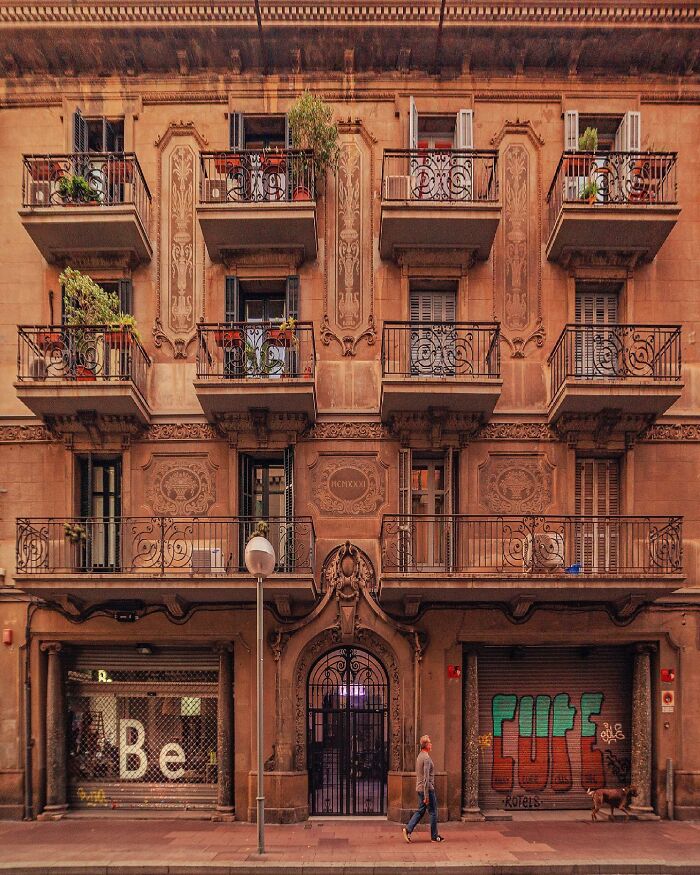
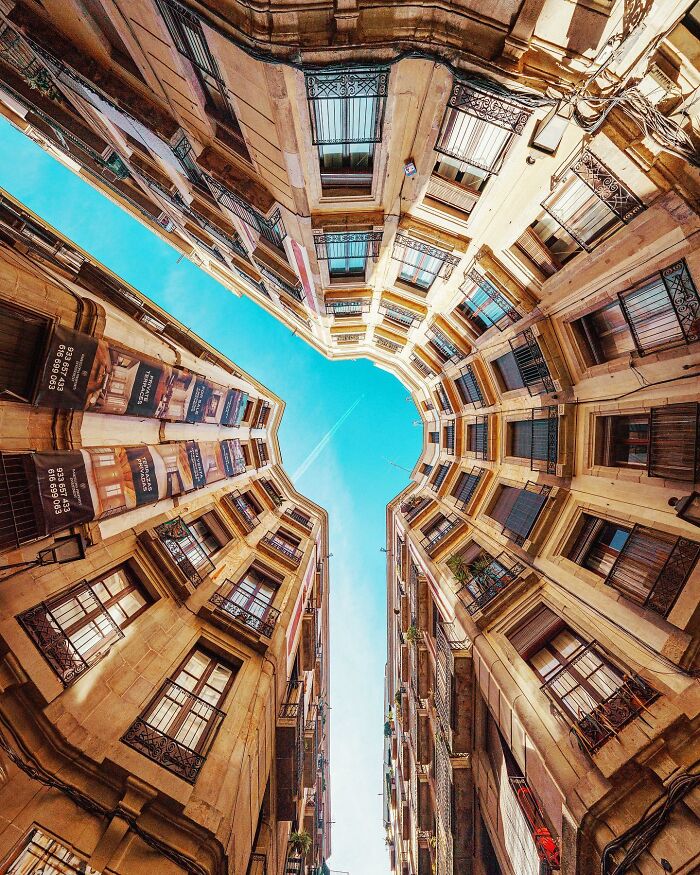
“Wonderfully ornate façade in Barcelona's Raval district, with convenient graffiti to boot.”
Location: Barcelona, Spain
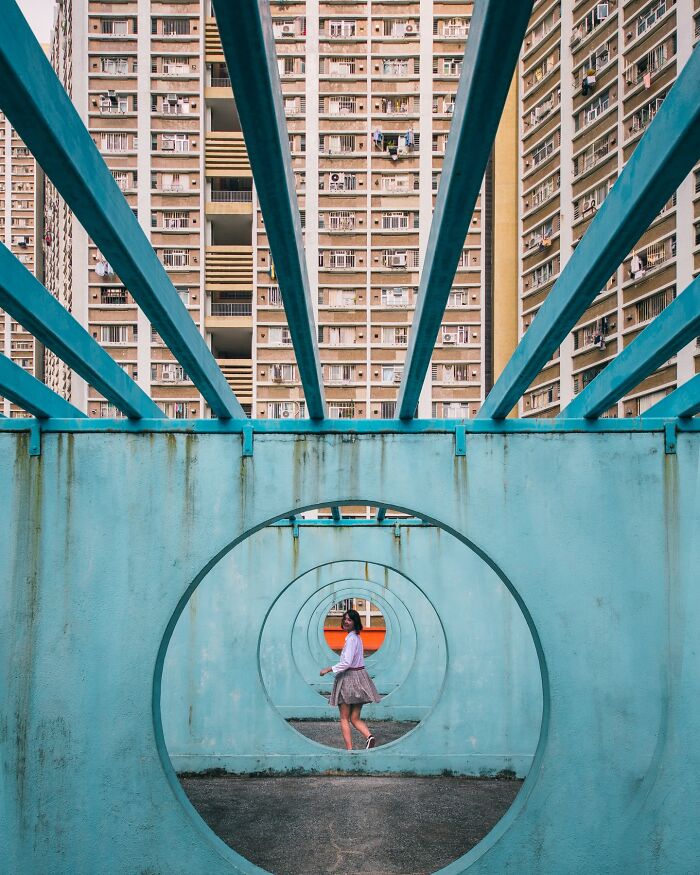
“A perfectly symmetrical façade is a nice exercise; having a person peek out of a window, smoke a cigarette on the balcony, hang sheets on a clothesline, now there’s movement, evidence of life, now it’s a photograph. The building is the grammar, but the people and their movements are what speaks. When an actual person walks into the frame at the right moment, one small figure against a massive geometric wall, it’s a gift. Suddenly there’s scale, fragility, a story. I never ask them to. Waiting is part of the job.”
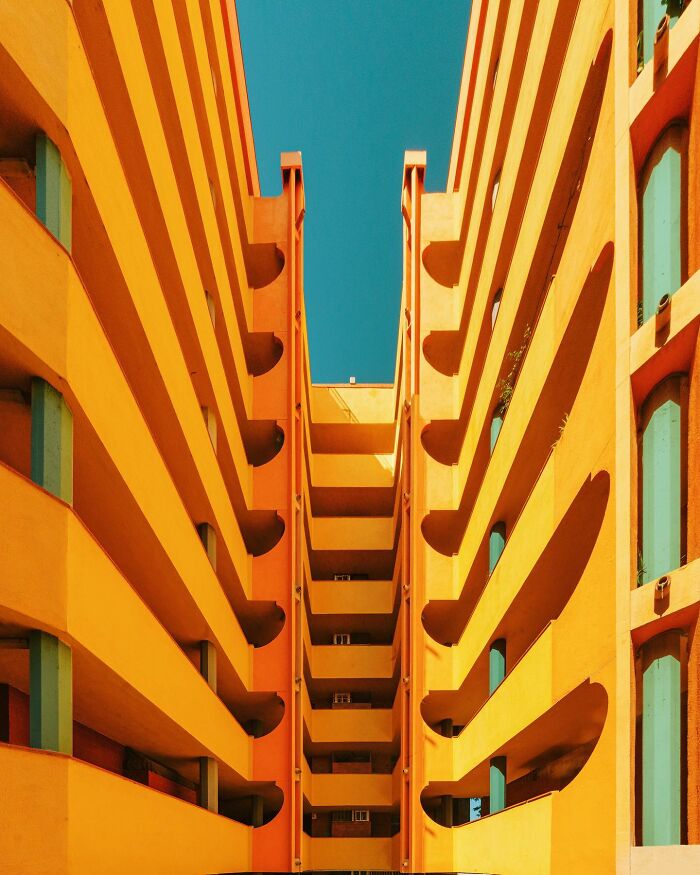
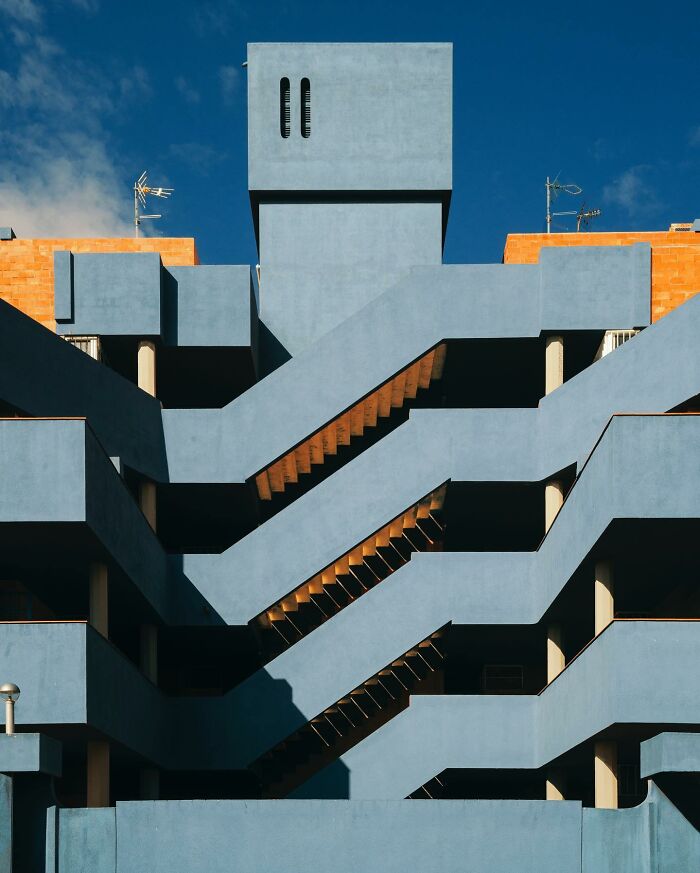
“This social housing complex in the outskirts of Reus is one of Catalan architect Ricardo Bofill earliest works. The project attempts to create a positive platform for collective life in a small diverse community. The idea was to offer a potentially self-contained community through the inclusion of commercial spaces, supermarkets, bars, and recreational facilities around the homes. The neighbourhood is divided into four different zones, aligned with the direction of the four winds, and each dominated by a different color. Blue, Red, Yellow, and Green.”
Location: Barrio Gaudí housing complex, Reus, Spain
(Title is a quote by Willian Blake)
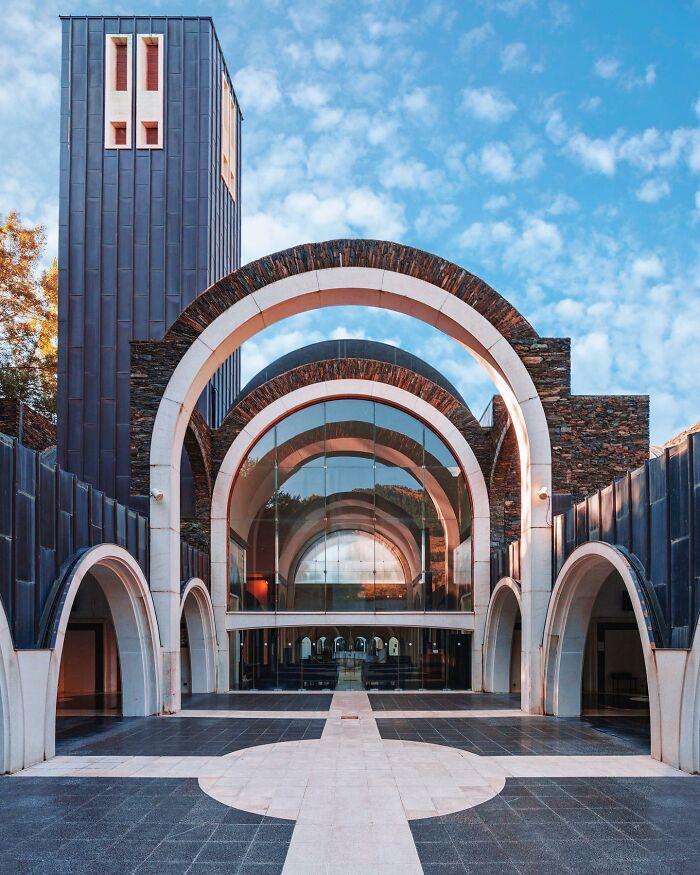
“Santuario de Meritxell, a Romanesque church in Andorra designed by Catalan architect Ricardo Bofill.
After being destroyed by a fire in 1972, the church was re-designed and rebuilt by Bofill six years later.
As the fire left the building in blackened ruins with only the original apse and vaulting over the altar and the bell tower remaining Bofill and his team decided to engage in the rebuild applying modern building techniques, without leaving behind Romanesque imagery associated with the fallen structure.
The idea was to follow the concept of a ‘black mountain wrapped in mythical vegetation’ The black and white terrazzo compositions mimic the appearance of light and shadow, a gesture intended to create an ethereal environment. The black and white design also reflects Andorra's seasonal changes, with hot summers and cold winters covered in white snow.”
Location: Sanctuary Basilica of Our Lady of Meritxell, Meritxell, Andora
Matias said he's especially drawn to dense and monumental environments because photography can hold the feeling of being overwhelmed more effectively than words: “Art should go looking for the overwhelming. Maybe the feeling of being overwhelmed is hard to put into words, but a photograph can contain it. A lot of my work deals with ‘horror vacui,’ which is Latin for ‘fear of empty space.’”
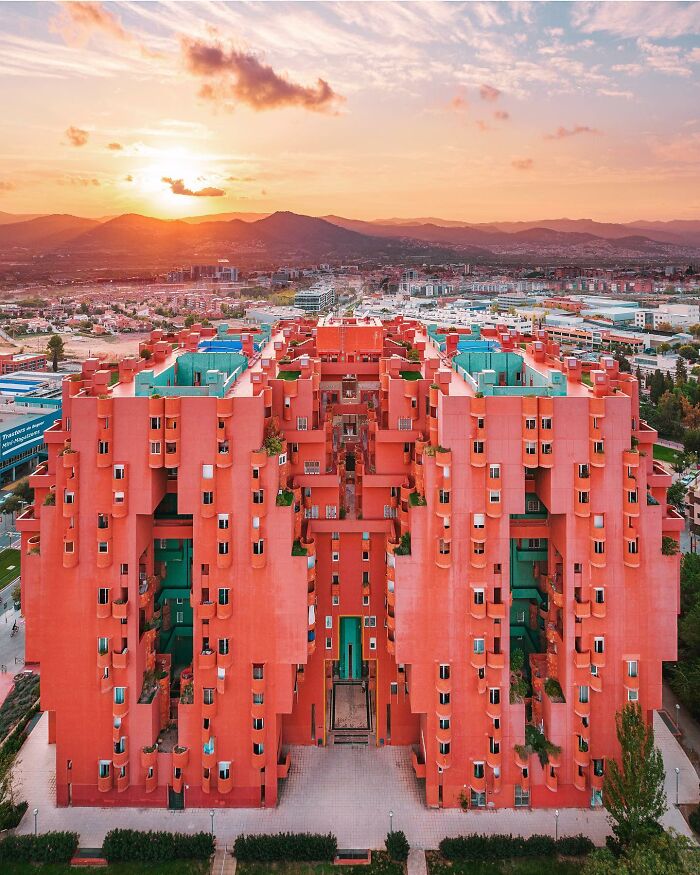
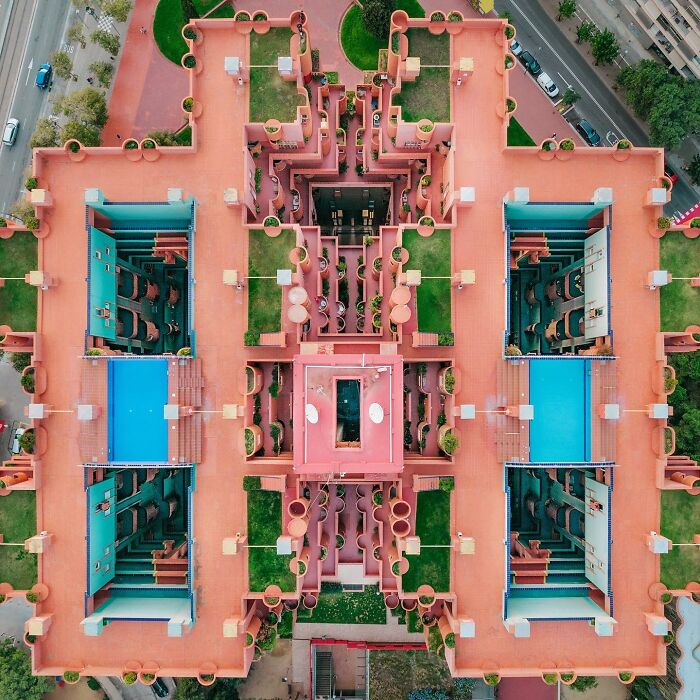
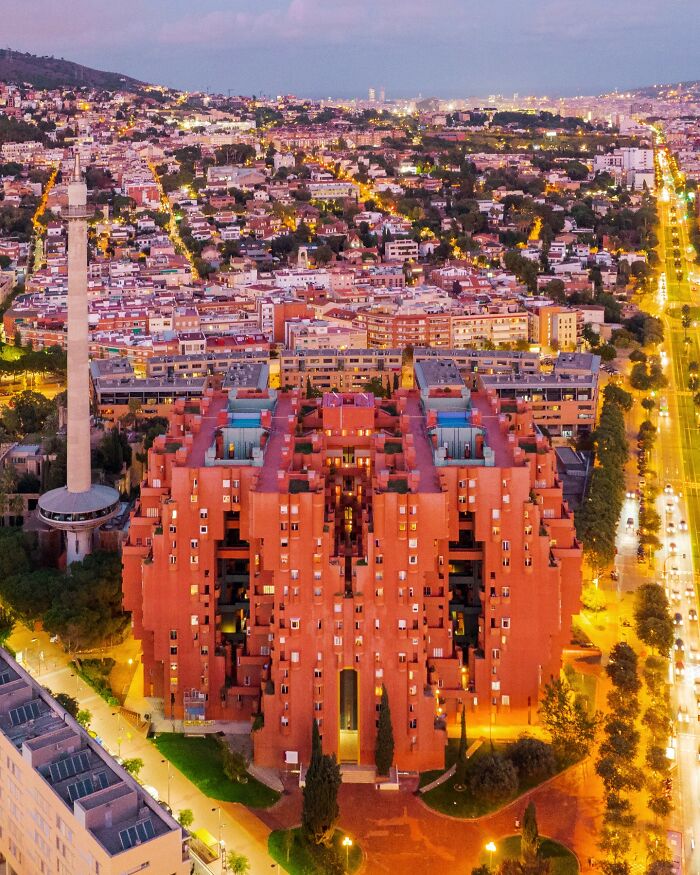
“Besides being one of my favorite structures in Spain, Walden 7 is also a beautiful example of what I'd call an architectural Rohrschach test (Or Rohrscharchitecture because I’m addicted to puns). Rather than emitting its own concept or shape, Walden 7 seems to reflect your own projections. Is it akin to a monster? An alien fruit? A spaceship? Perhaps clitorial? Let your eyes wander along this architectural cloud and see what your own personal Pareidolia throws back at you. What does it look like to you?”
Location: Barcelona, Spain
“Brutalist blocks, giant housing estates. They can appear oppressive, but stand in front of one long enough and lose yourself in the infinite lives and moments stored within. Like a grid of memories. What moves me about buildings like Walden 7 or the big estates is the optimism embedded in them. Someone’s attempt to design a better way for thousands of people to live together, and whether or not they succeeded, that ambition is right there in concrete.”
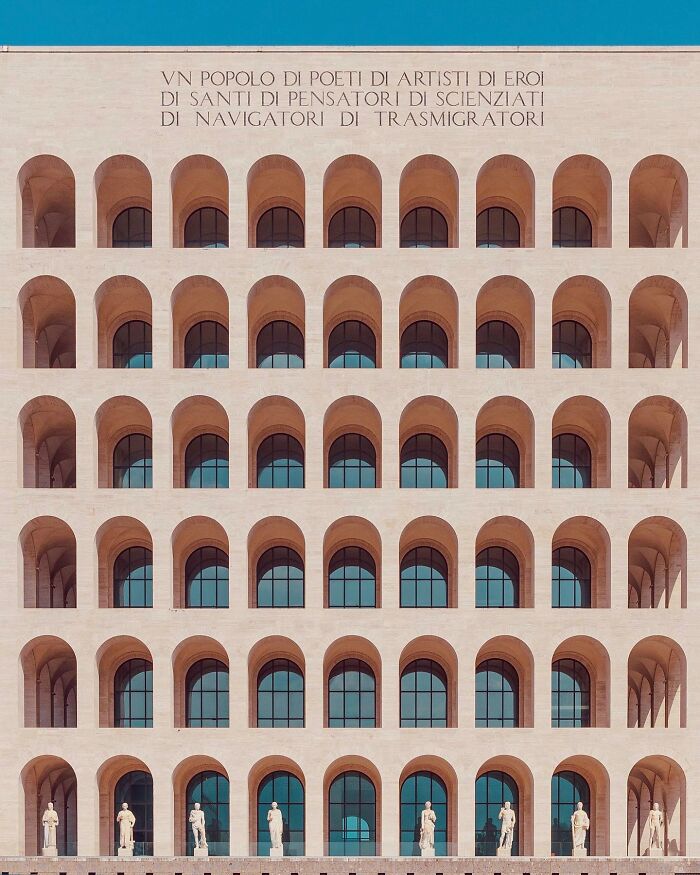
“The Palazzo della Civiltà Italiana, commonly known as the Colosseo Quadratto, is a shockingly blunt example of Italian Rationalism and fascist architecture.
The neo-classical design is meant to display Romanità, which encompasses past, present, and future all inside a single philosphy. The fascist regime's massive aspirations are symbolized by the uniform shape and massive size of the structure. The design itself draws inspiration from and is a reference to the Roman Empire's curved Colosseum with rows of arches.
According to legend, the structure's six vertical and nine horizontal arches are correlated to the number of letters in the Italian dictator Benito Mussolini's name.”
Location: Rome, Italy

A people of poets, of artists, of heroes. Of saints, of thinkers, of scientists, Of navigators and transmigrators. I like how transmigrators are considered to be part of the people.
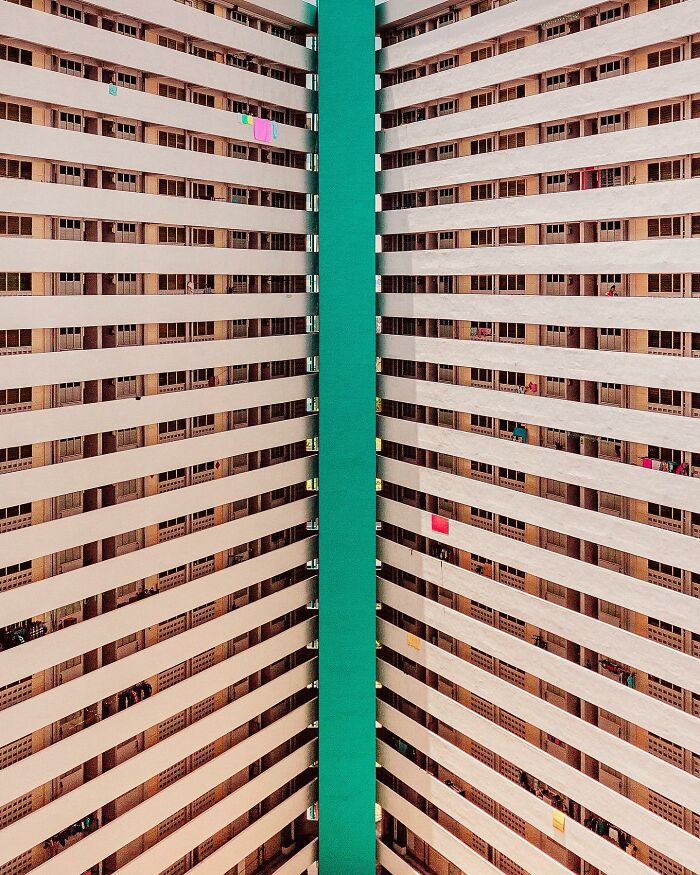
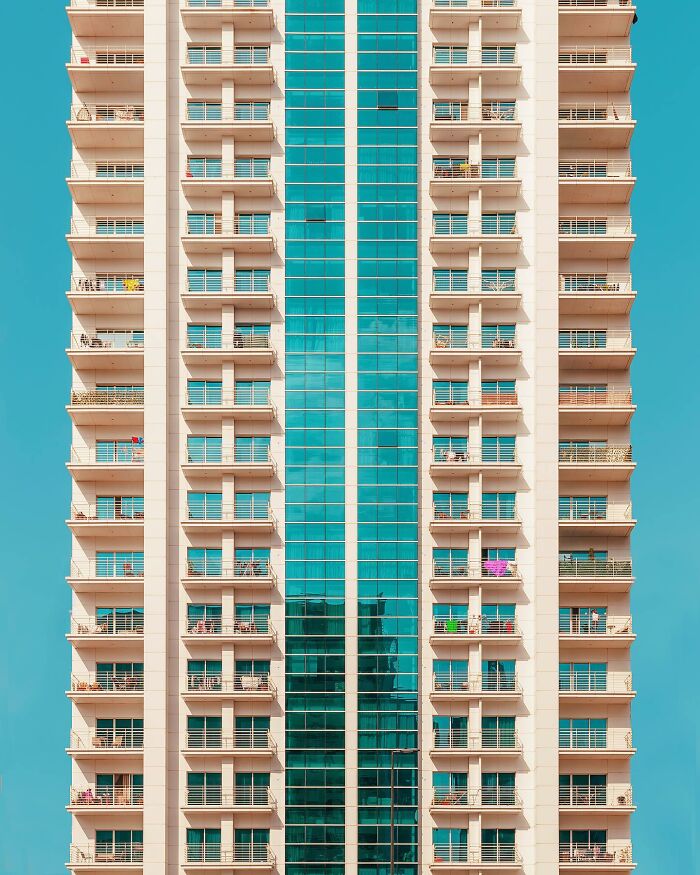
“Like looking into an open book, each word replaced by a window containing infinite stories.
One of my favorite buildings in Singapore with its endless straight lines, giant teal line cutting the white, laundry adding a dash of color, and the giant open center filling everything with light.”
Location: Diamond Blocks, Taman Jurong, Singapore
Several architects, styles, and cities continue to inspire him, from ambitious postmodern housing projects to softer, storybook-like compositions: “Ricardo Bofill, endlessly: Walden 7, La Muralla Roja, Barri Gaudí, all of it. Postmodern utopian housing in general. Núñez Yanowsky, the brutalism of the 60s and 70s from Belgrade to London. And there’s the softer register, the Wes Anderson-adjacent compositions. Pastel façades, dead-center symmetry, that storybook flatness, which is a vastly different mood from brutalism but scratches the same compositional itch.”
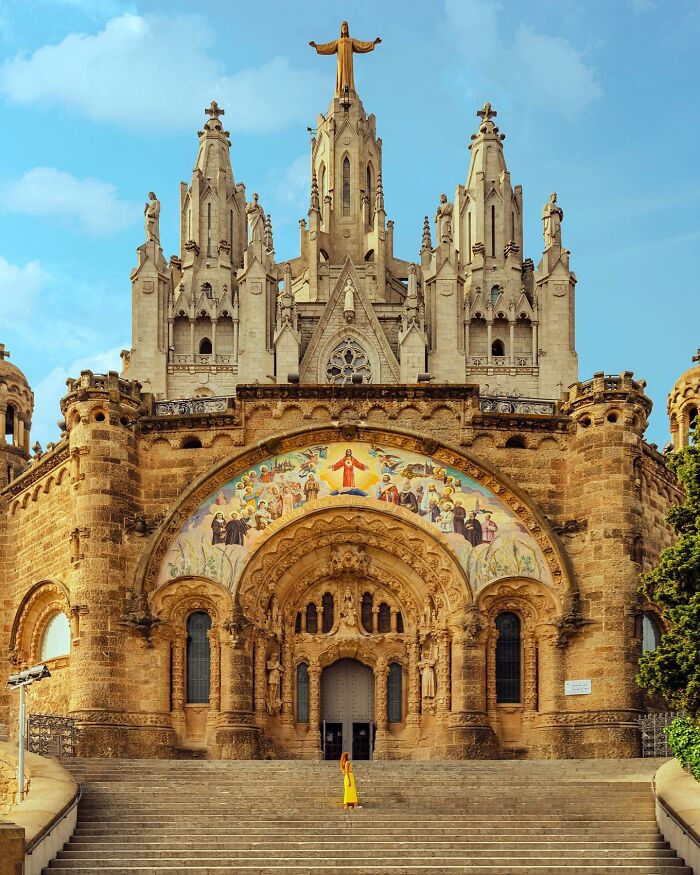
“I wanted to show how different styles can emerge from the same building. Those who follow my work know that Façades and Symmetrical Lookups are two of my obsessions, and here we have a perfect example of how, depending on where you stand and how you look at it, you can find both very different compositions at the same place. Which one do you prefer? Tibidabo is the highest point in Barcelona, overlooking the entirety of the coast. Atop the summit lies the Temple Expiatori del Sagrat Cor, which can be seen from almost every point of Barcelona. Designed by local architect Enric Sagnier and completed by his son Josep Maria Sagnier i Vidal, the construction lasted from 1902 to 1961. At the lower level, the outside the church is that of a Romanesque fortress, made from stone of the nearby Montjuïc. The crypt above was designed in a neo-Byzantine style, which combines Gothic and classical elements. The colorful mosaic decoration approximates the style of Catalan Modernisme popular among contemporaries. ” Location: Barcelona, Spain
“Constructed between 1912 and 1915 in Hamburg, The wonderfully playful Esplanadenbau sits somewhere between Art Deco and Jugendstil. With its central location it hosts offices as well as residential apartments.”
Location: Hamburg, Germany
“City-wise, Barcelona is the home base and honestly an unfair advantage, as I will never run out of new buildings to find, views to spot from a helicopter, vantage points to discover. And then I don’t think I’ll ever stop going back to Hong Kong for its naked, unashamed density.”
“Some people see the immaculate beauty of a church and believe in God, I see the beauty of a church and believe in people. The precise composition of light, patterns, and geometry guides the eye through a melody played out in space. From the architect's initial vision to the builder's last efforts, Amen.
Within the stunning Parròquia de Sant Francesc de Sales built in 1885, architect Joan Martorell i Montells combines a Neo-Gothic style with elements inspired by Iberian Neo-Mudéjar principles.”
Location: Barcelona, Spain
“The sunny façade of Fritz Höger's Chilehaus in Hamburg. Finished in 1924, the almost 6000m square complex is a masterful example of Brick Expressionism, using almost 5 million bricks in total.”
Location: Hamburg, Germany
He added that aerial photography is among the most difficult parts of his work, combining extensive preparation with only a few seconds in which to capture the planned composition: “The aerial work is where all four collide. From the ground you control almost everything except light; from a helicopter you control almost nothing. You’ve got a very limited amount of time, the doors are off, you’re strapped in and leaning out, the pilot is doing their best but the machine vibrates, the wind punches your lens, and the composition you planned for weeks exists for about three seconds before it’s gone. Days of preparation, seconds of execution, and then you land, body shaking, and you go for a beer to recover.”
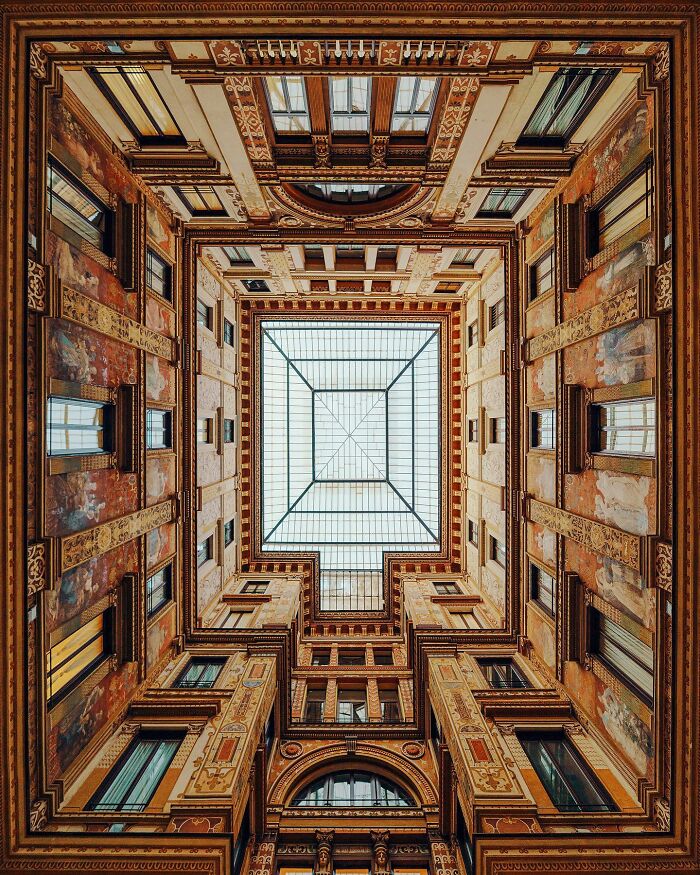
“A somewhat hidden gem, Galleria Sciarra goes unnoticed by a lot of the people walking through it. A must-see if you visit Rome, the passage offers a breathtaking reminder of why you should ALWAYS LOOK UP.”
Location: Rome, Italy
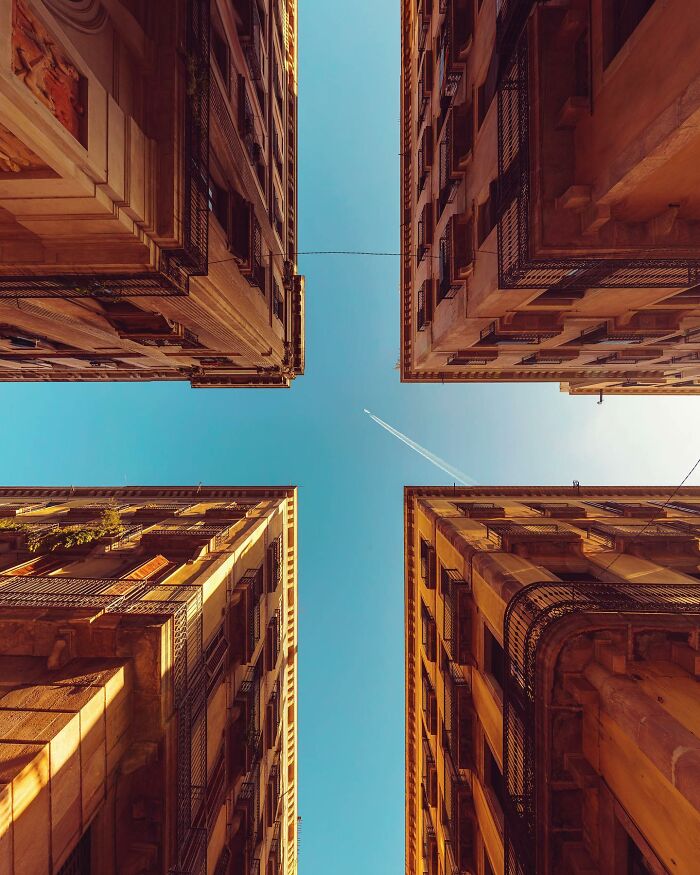
For those hoping to improve their sense of pattern, symmetry, and composition, Matias recommended looking beyond eye level, slowing down, and deliberately limiting what they photograph: “Always look up. Genuinely, that’s ninety percent of it. People tend to focus on what’s at eye level, but that’s precisely why it’s uninteresting. That’s where we live; everybody has already seen it.”
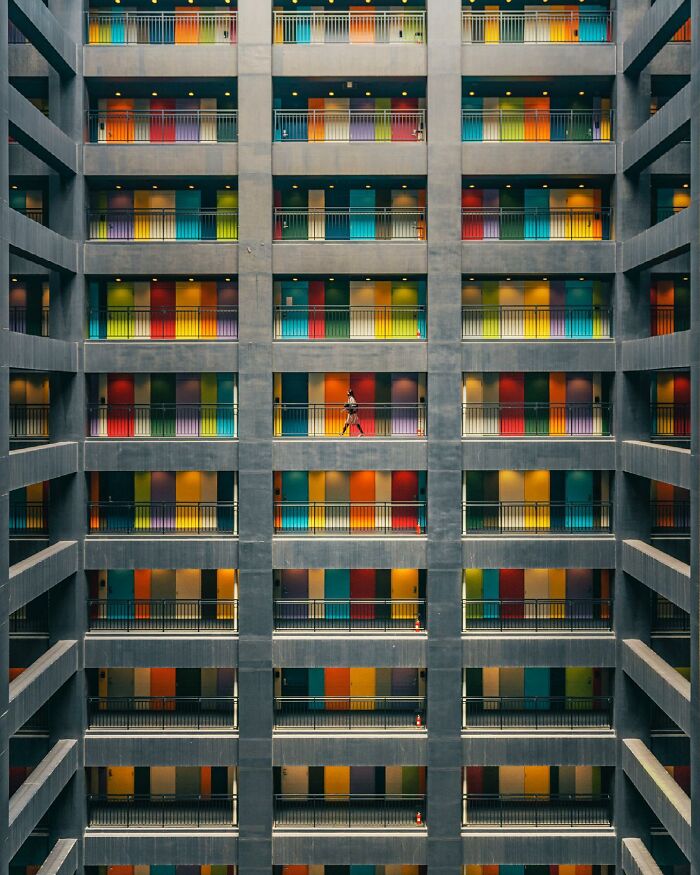
“This colorful seemingly endless collection of doors is The Soho House, a shared workspace in Odaiba. It is comprised of 13 floors of open-plan office space, and has become a very famous and unique Instagram hotspot. I knew as soon as I landed in Tokyo that it was going to be one of my first stops, and it's absolutely worth the (somewhat lengthy) trip outside of the center.”
Location: The Soho Odaiba, Tokyo, Japan
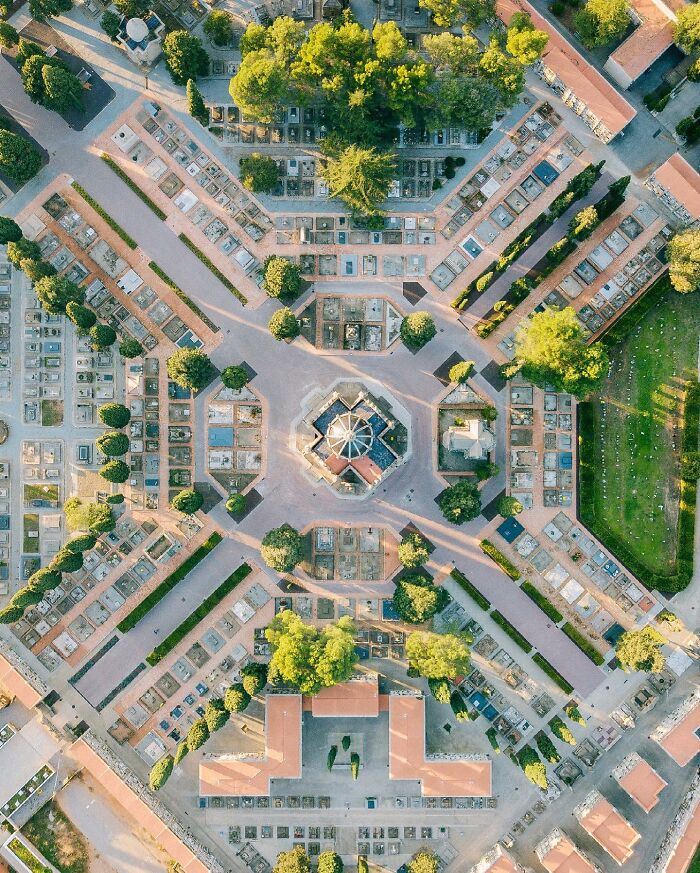
Location: Cementiri de Sabadell (Cementiri de Sant Nicolau), Sabadell, Spain
“Second: slow down to an almost antisocial degree. The eye can’t find patterns at walking speed; pick one boring building on your own street and give it twenty minutes, and I promise you interesting things start to arise.”
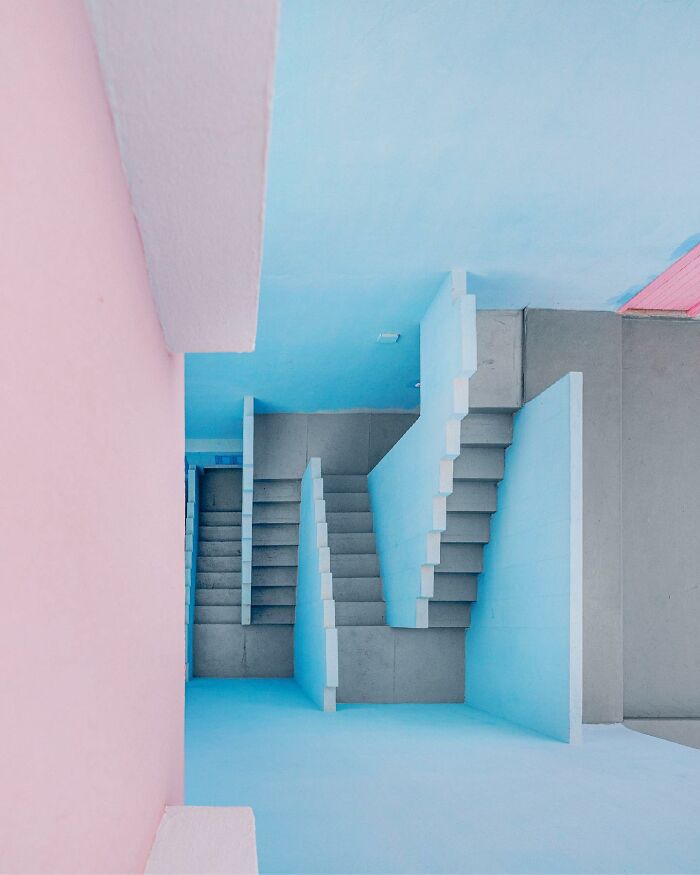
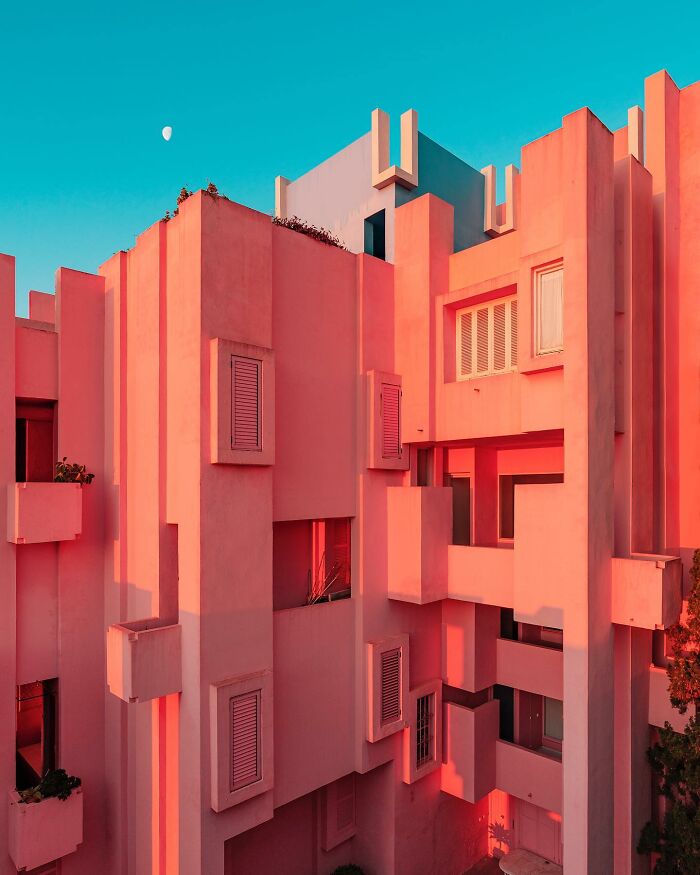
“Minimalist Escher-esque dreamscape in pastel colors taken at Ricardo Bofill’s La Muralla Roja in Calpe, Spain. The soft colors and hard lines make this a great print to hang on the wall as you won’t get tired of seeing it every day.”
Location: La Murala Roja, Calpe, Spain
“Third: constraints train you faster than freedom. Spend a few days focusing only on symmetry, another on only one color, only on shadows, only on movements, and your eye will sharpen more than in a year of shooting everything. Study people who did it obsessively before you: Escher for impossible order, the Bechers for the beauty of typologies and repetition.”
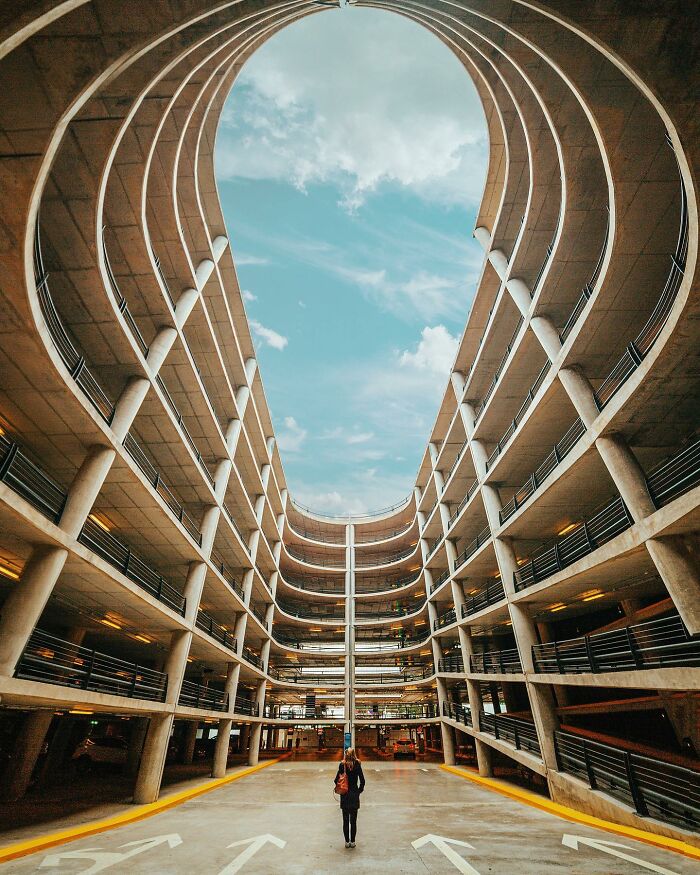
“Another project designed by Ricardo Bofill Taller de Arquitectura is Barcelona's airport El Prat. This series of pictures will focus only on the Car Parking adjacent to the Airport, a structure that has always fascinated me. With its Brutalist use of exposed raw materials, its intricate use of symmetry and repetition, as the way in which the changing light affects the structure throughout, giving it a different feel each time you visit. Due to the transitional nature of parking lots it is what has become known as a 'Liminal Space', and deciding to visit it specifically independent of its intended use brings about a type of conceptual shift one undergoes.”
Location: Josep Tarradellas Barcelona-El Prat Airport, Barcelona, Spain
“And finally, accept being the idiot. You will lie on dirty streets, you will wait for a person to walk into frame who never comes, you will return to the same spot time and time again for light that never arrives. Enlightenment is not guaranteed, but the idiot part absolutely is, so you might as well enjoy it.”
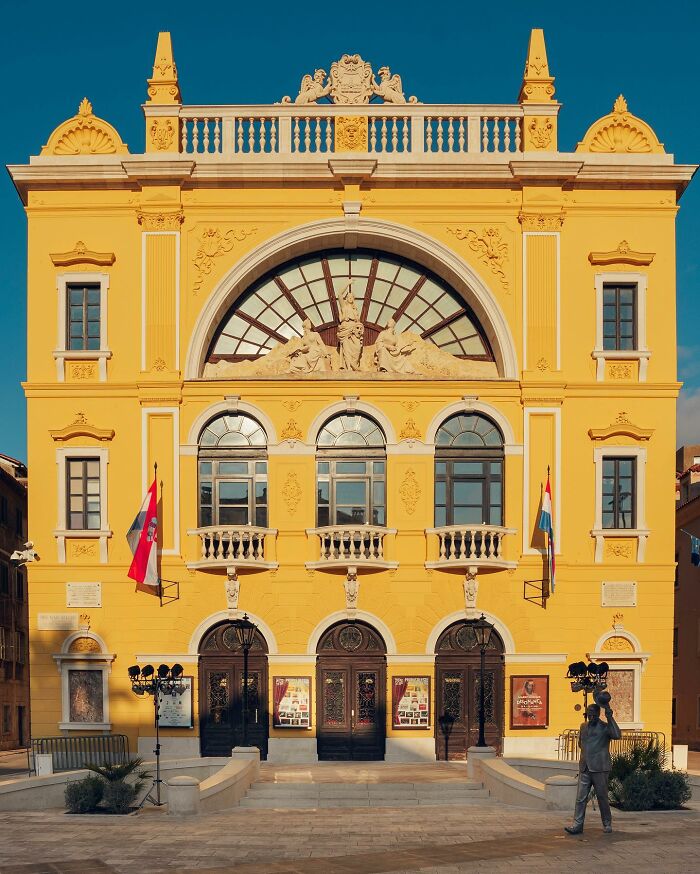
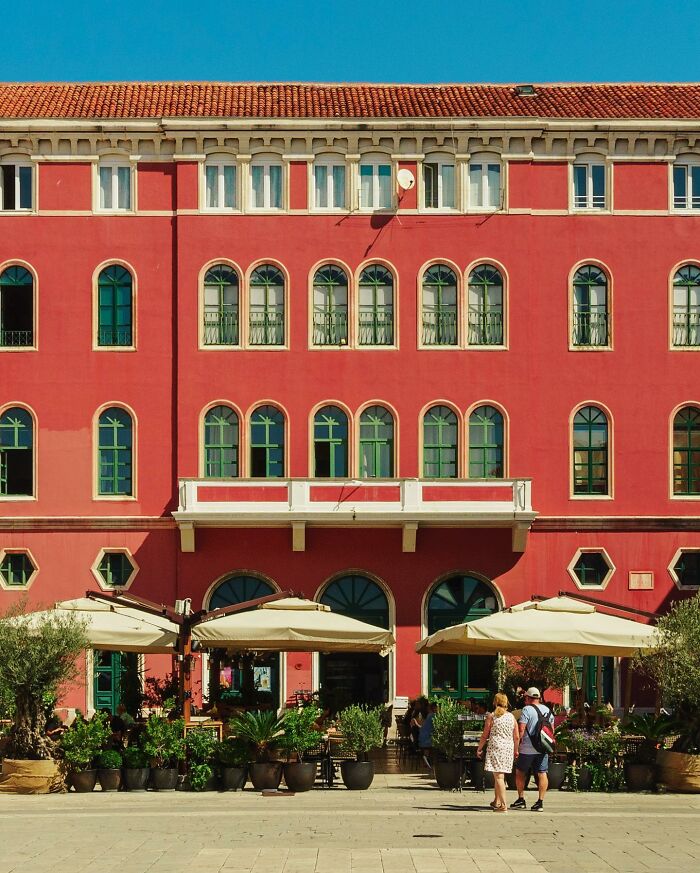
Location: Split, Croatia
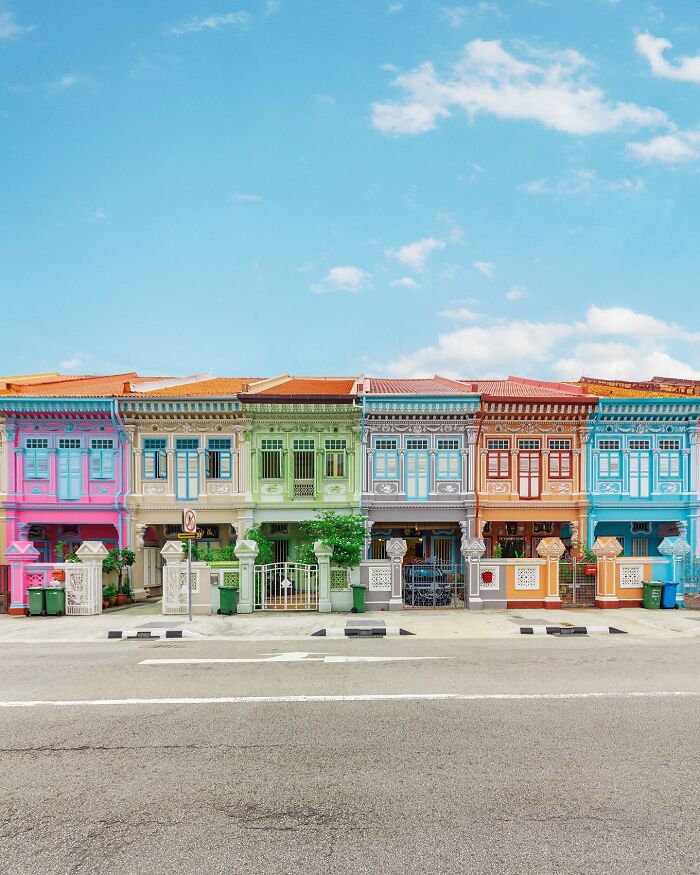
“Outside Singapore's busy center in Changi's Koon Seng Road, these colorful row-houses stand neatly aligned adorning both sides. The playful pastel colors and ornaments symbolizing fertility and good fortune are a display of the Peranakan heritage, one of the first Mainland Chinese settlers in South East Asia. These houses have become an iconic sight among Singapore's eclectic architectural offering, and even Singapore's Changi airport has modeled their stores after them.”
Location: Singapore
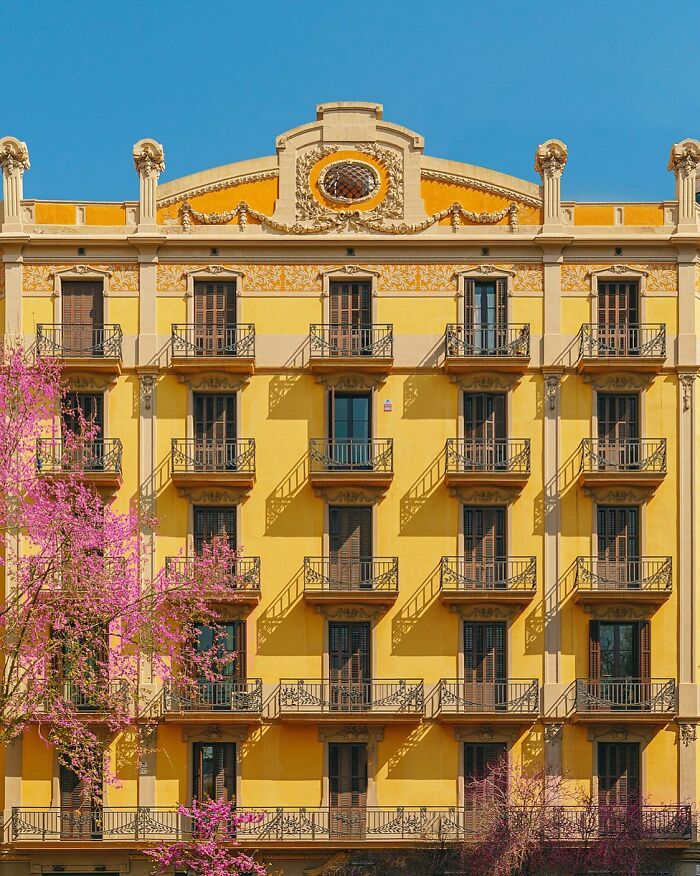
“One of the countless beautiful façades lined up on one of Barcelona's most famous streets.” Location: Barcelona, Spain
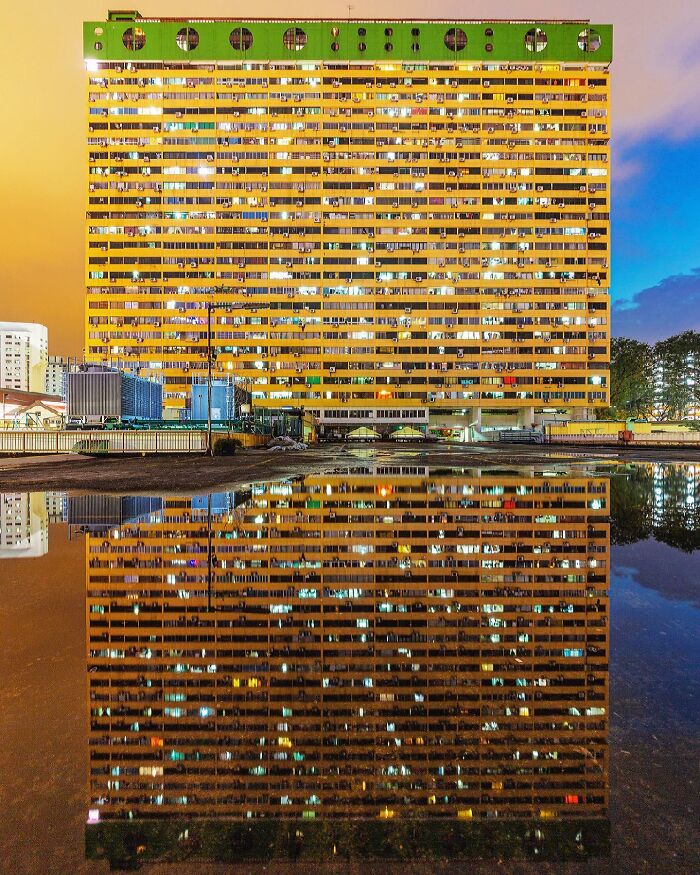
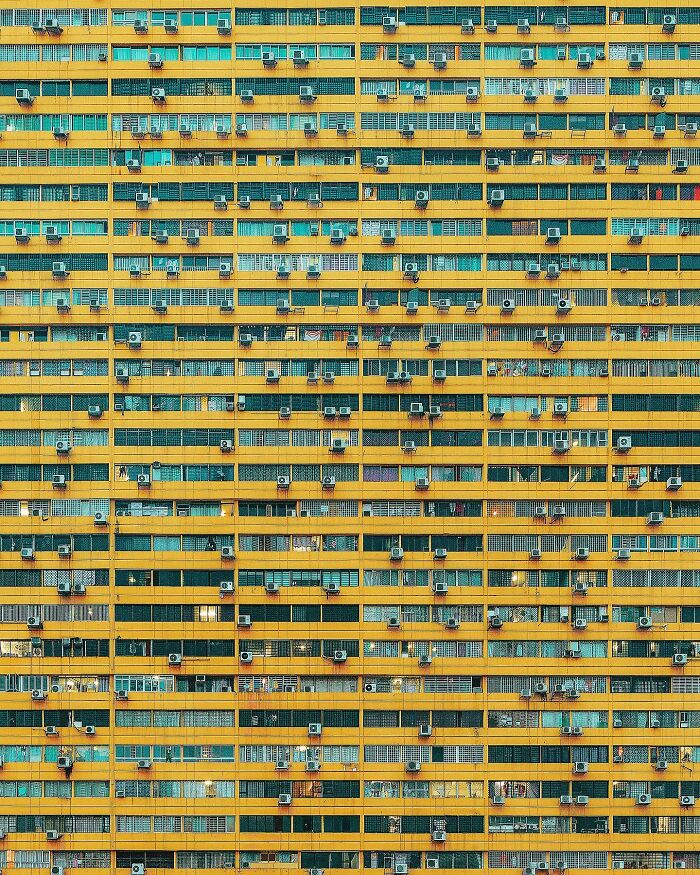
“Somewhere hidden above a mall in Outram stands The People's Park Complex. This 1973 majestic yellow residential building stands tall above a carpark, and if you wait for night, and a bit of rain (which in Singapore isn't very difficult) you are in for a treat as the building lights up with the residents returning home after a day's work to illuminate the structure and create this wonderful reflection.”
Location: Singapore
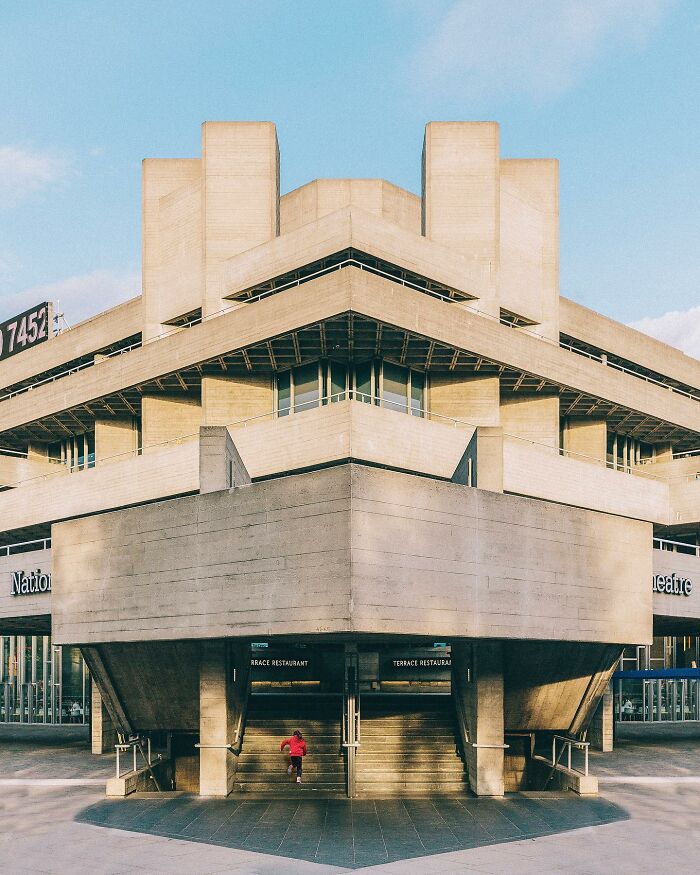
“Designed by Denys Lasdun and inaugurated in 1976, the Royal National Theatre was immediately destined to be a controversial project. In national opinion surveys it is often featured in both the "10 most loved" as well as the "10 most hated" buildings in London. Architectural writer Mark Girouard described it as "an aesthetic of broken forms". Famously Prince Charles described the building in 1988 as "a clever way of building a nuclear power station in the middle of London without anyone objecting".
Sir John Betjeman on the other hand loved it, stating that he "gasped with delight at the cube of your theatre in the pale blue sky and a glimpse of St. Paul's to the south of it. It is a lovely work and so good from so many angles...it has that inevitable and finished look that great work does."
Brutalism (the name comes from the French word for 'raw concrete' - 'béton brut', and not from the English 'brutal' as many people assume) is often depicted in black and white or desaturated tones to emphasize its harsh lines and overbearing forms. I however try to portray it via a more vibrant lens, to show how it brings forth the colors of the sky, the vegetation, and the people that surround it and breathe life into it.”
Location: Royal National Theatre, London, UK
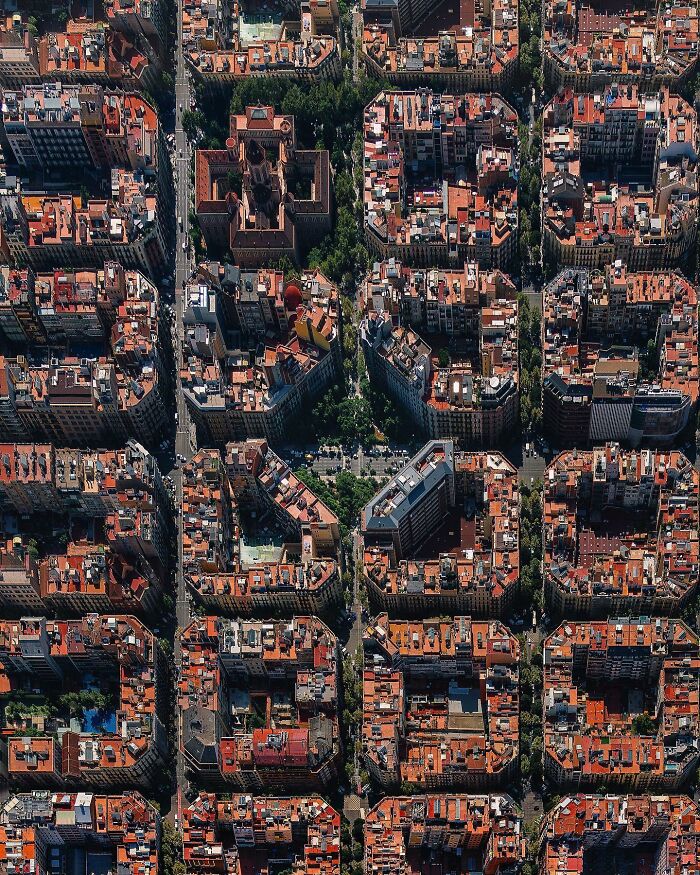
“A topdown view of Barcelona's Eixample district, designed by Ildefons Cerdà in 1859. The octagonal blocks were originally designed to allow trams to travel through the streets as those weren't able to do the tighter 90 degree turns required by traditional blocks. Today there is no tram, but the cut off corners are used for parking, loading, and recently as extended terraces for bars and restaurants.”
Location: Barcelona, Spain
“Face, Skull, Space Invader, Robot mask, Alien Butterfly, what do you see and which is the right way up? Remember not to gaze too long enough into the abyss lest it should notice you.”
Location: Walden 7 apartment building, Barcelona, Spain
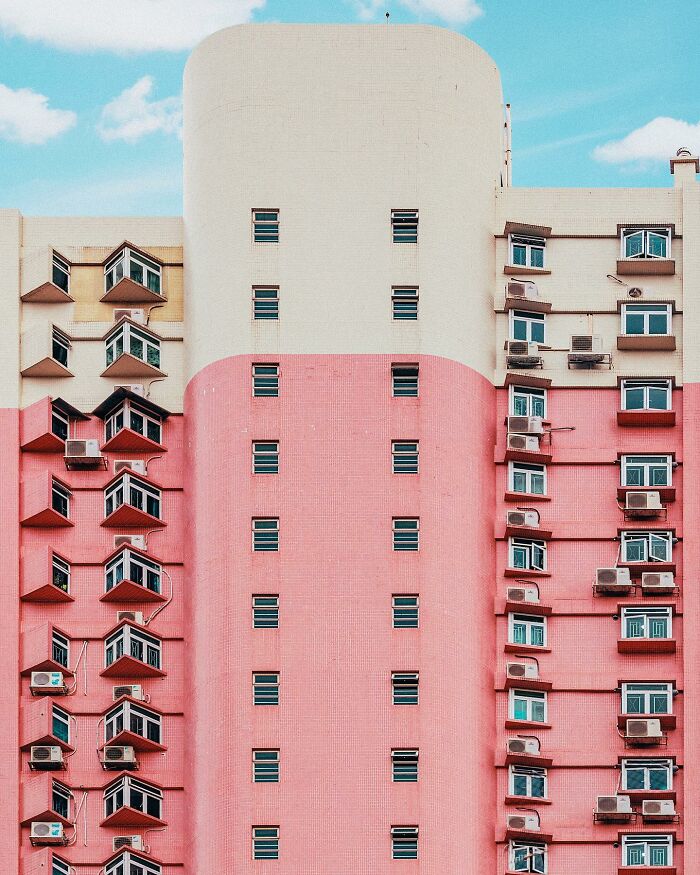
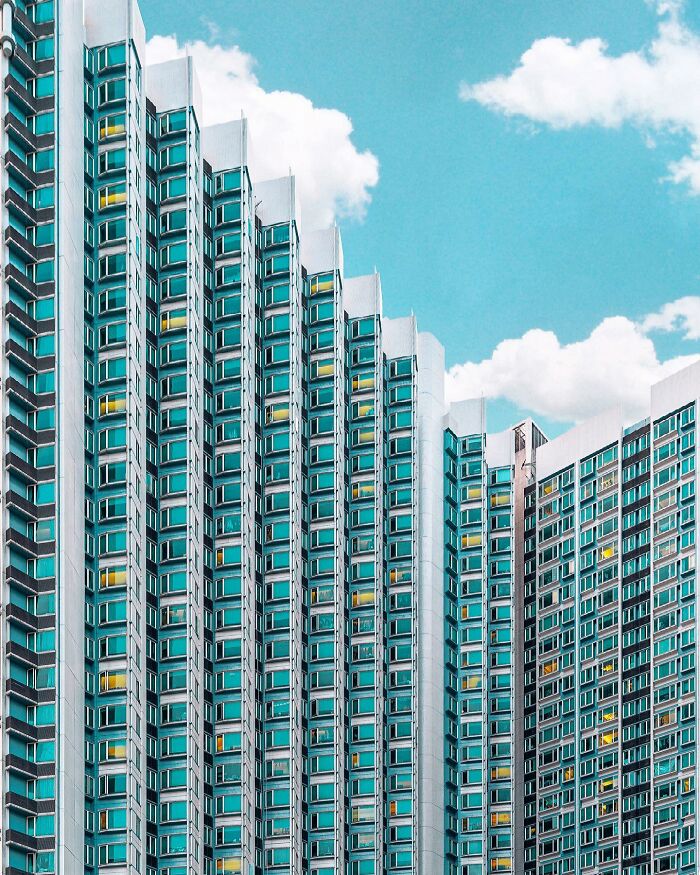
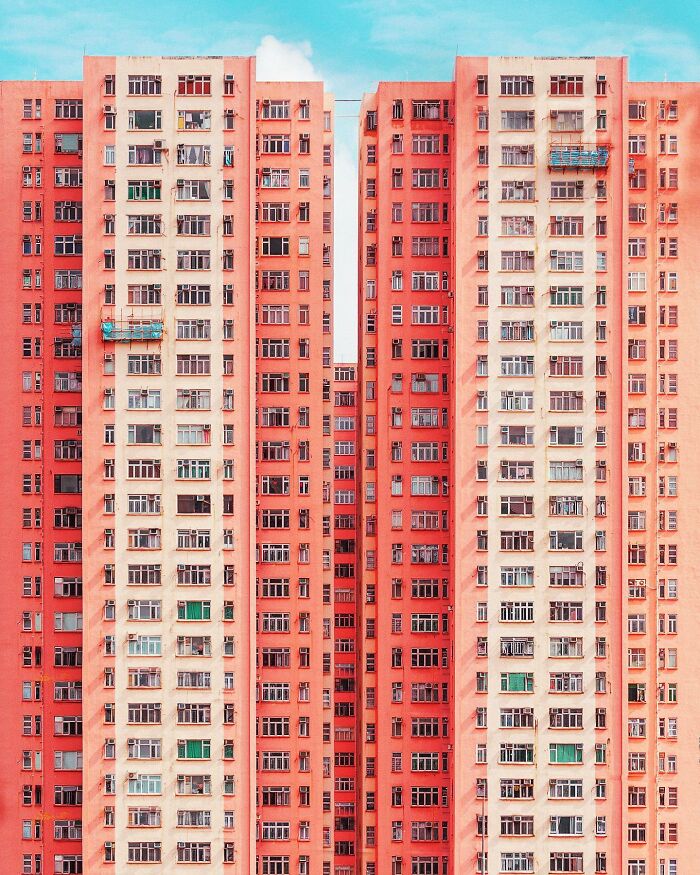
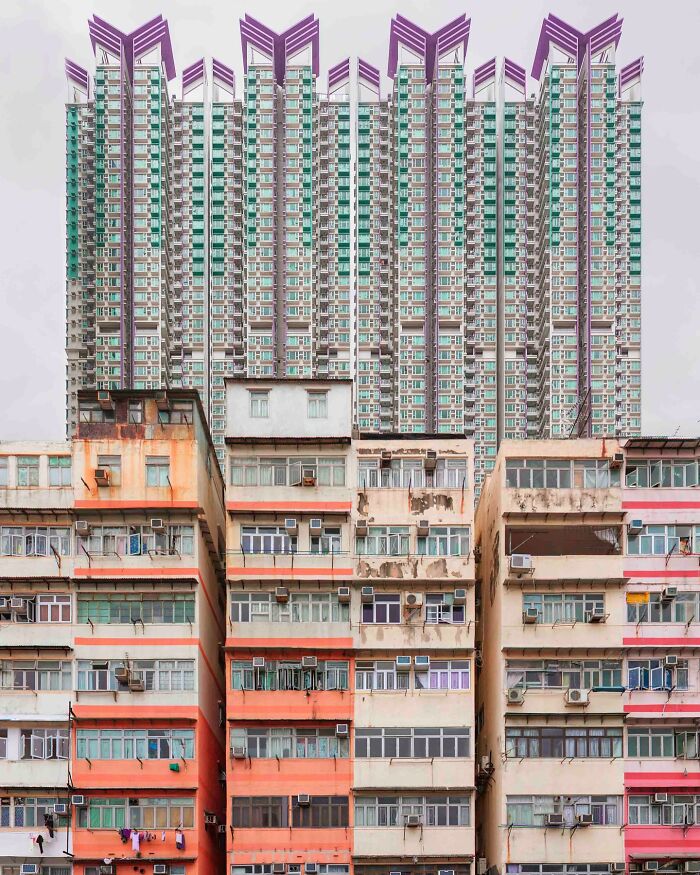
“As with most of my favorite façades I randomly stumbled upon this gorgeous structure whilst walking between two iconic landmarks with my gaze up high, much to the chagrin of passersby. This alien strawberry milkshake hides among much larger towers somewhere in Hong Kong and though it took some effort getting the shot I'm glad I spent the extra time on it, reminding me that no matter where you go, there you are..” Location: Hong Kong
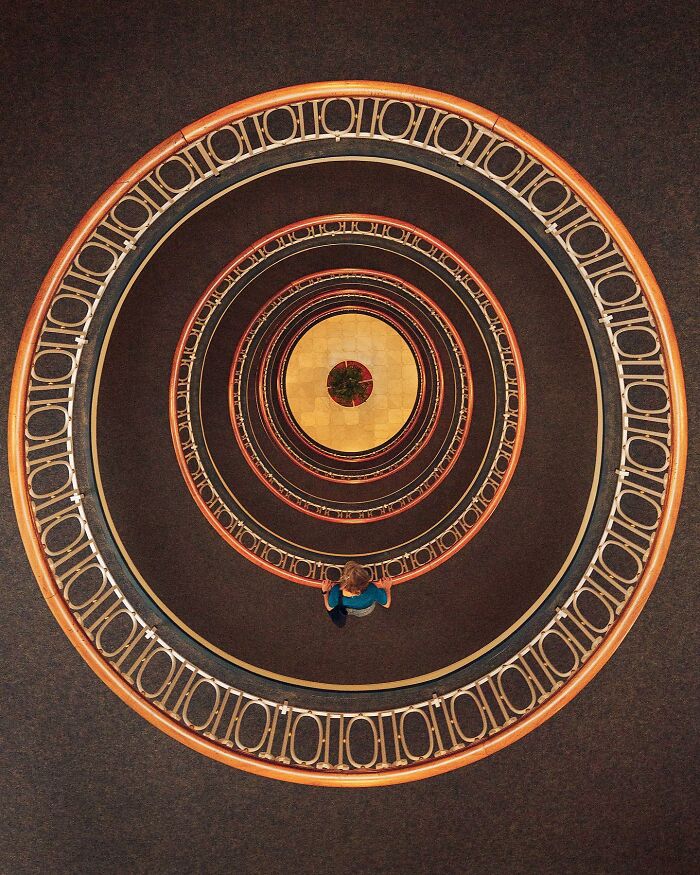
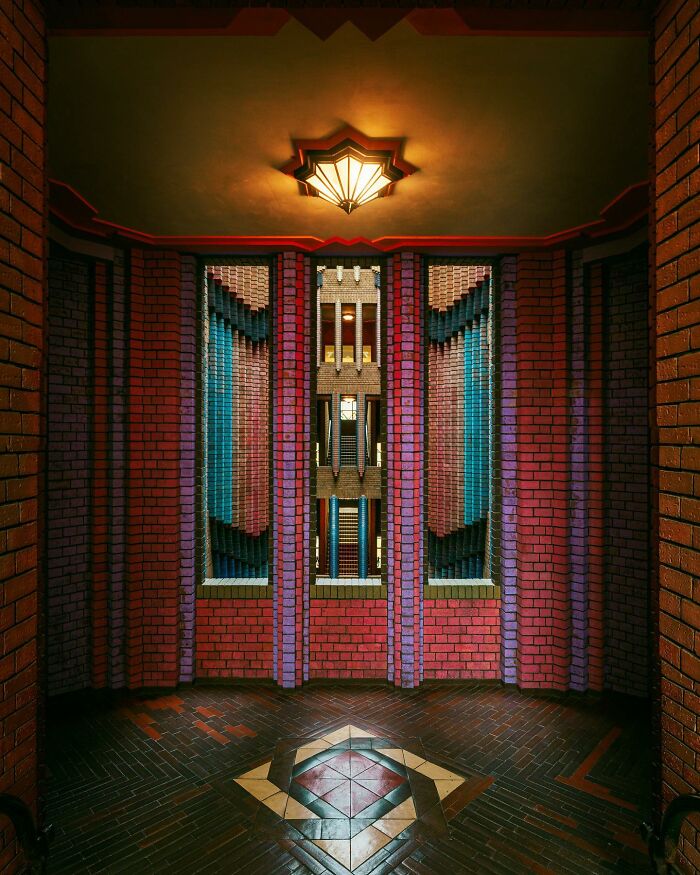
“The Pattern doesn't fall far from the Symmetry.
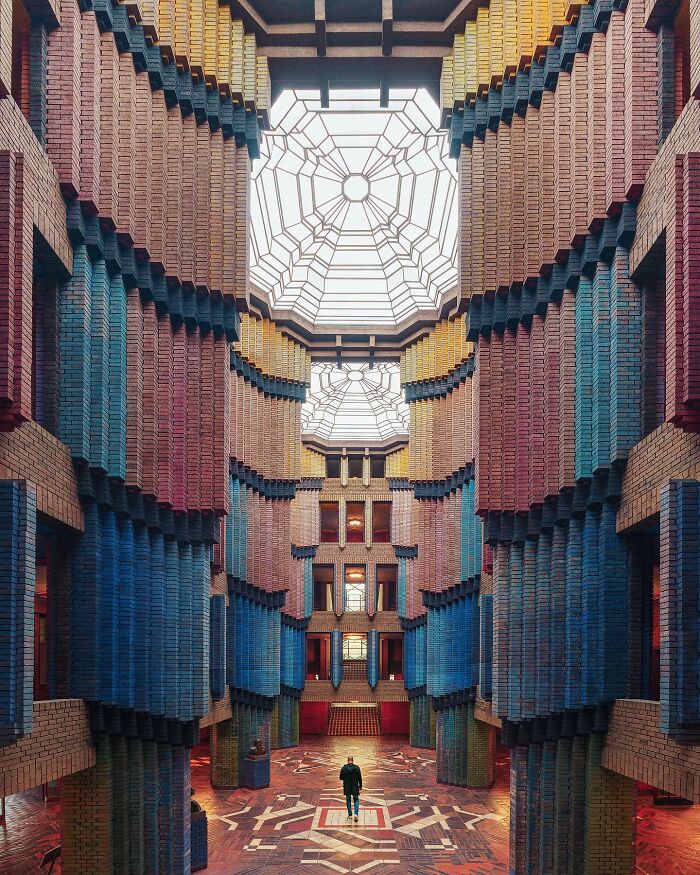
I recently had the great pleasure and honor to photograph and experience this very special building in Frankfurt, Germany. Made as a 'Shrine to Industry' the Technische Verwaltungsgebäude der Hoechst AG is a wonderful example of Brick Expressionism in all its glory. Featuring motifs of color and geometry the giant open hall is illuminated by its three massive skylights, as well as stained glass windows on both sides at each level. Dominated by symmetry I felt right at home in this space, easily guided by the building itself to the different points of interest, perfectly balanced, as all things should be.”
Location: Frankfurt, Germany
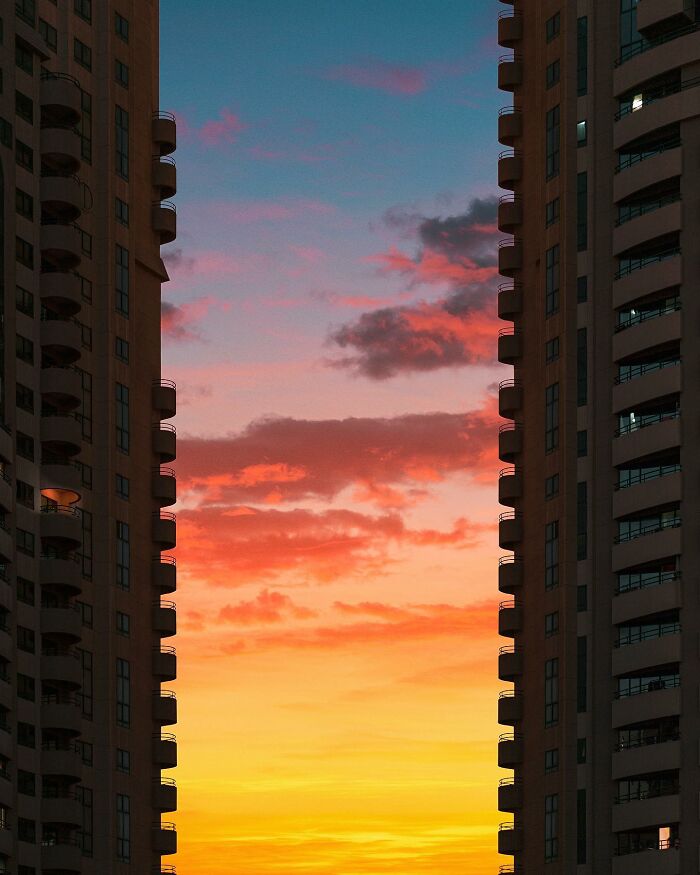
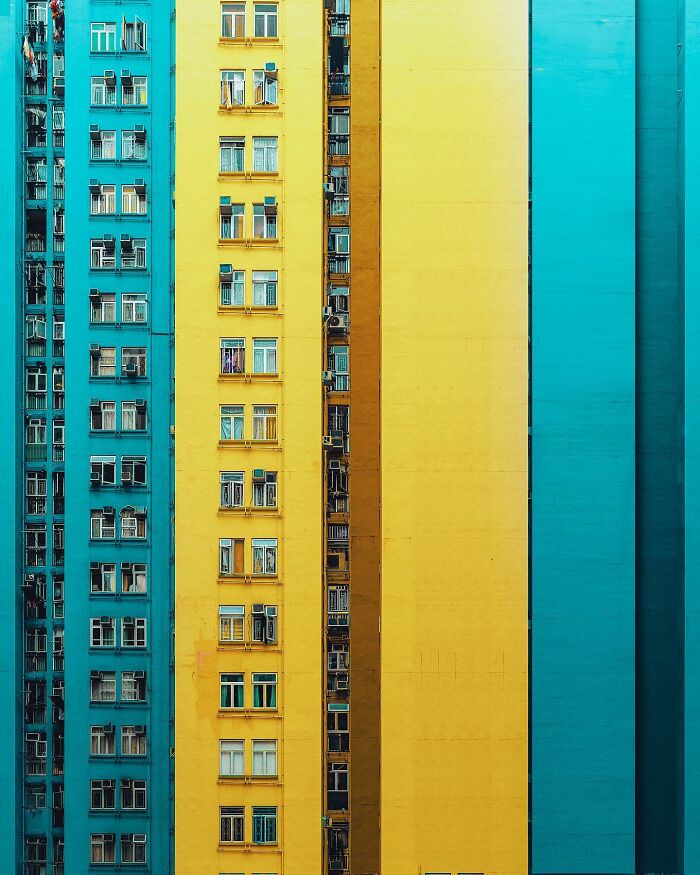
“Half-erased Eastern Block residential building in Blue and Yellow.”
Location: Hong Kong
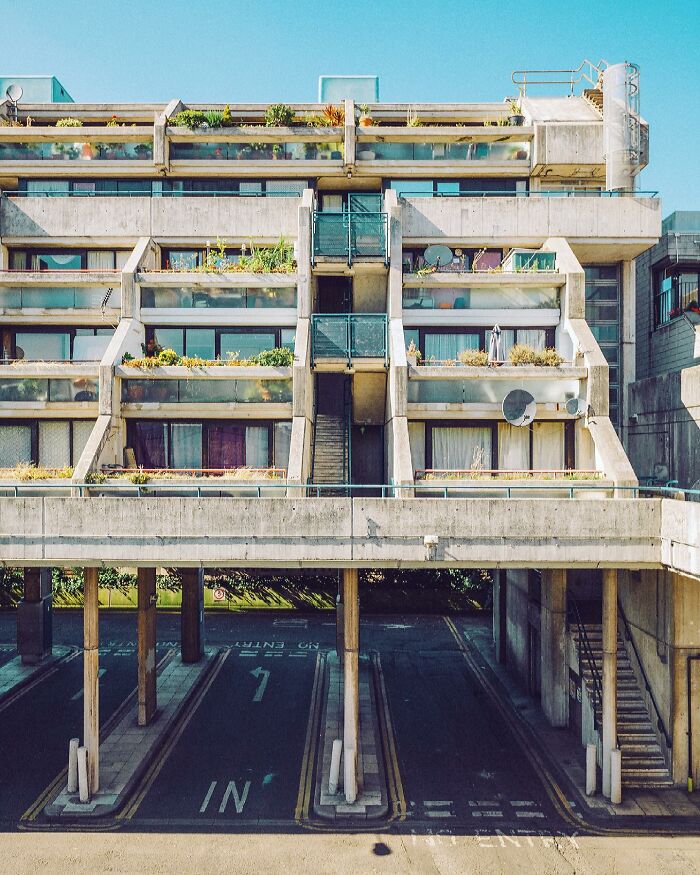
“The Alexandra Road estate is a housing estate in North West London, designed by Neave Brown in 1968 and completed in 1978. Faithful to its Brutalist aesthetic roots it is constructed from site-cast, board-marked white, unpainted reinforced concrete, and houses a school, a community center, a youth club, and over 500 apartments.
Brutalism (the name comes from the French word for 'raw concrete' - 'béton brut', and not from the English 'brutal' as many people assume) is often depicted in black and white or desaturated tones to emphasize its harsh lines and overbearing forms. However in this series of images I wanted to show some of the color and life that can spring form these types of estate complex designs, spring colors and plants blooming all around the concrete.”
Location: London, UK
Location: Split, Croatia
Location: Dubai, UAE
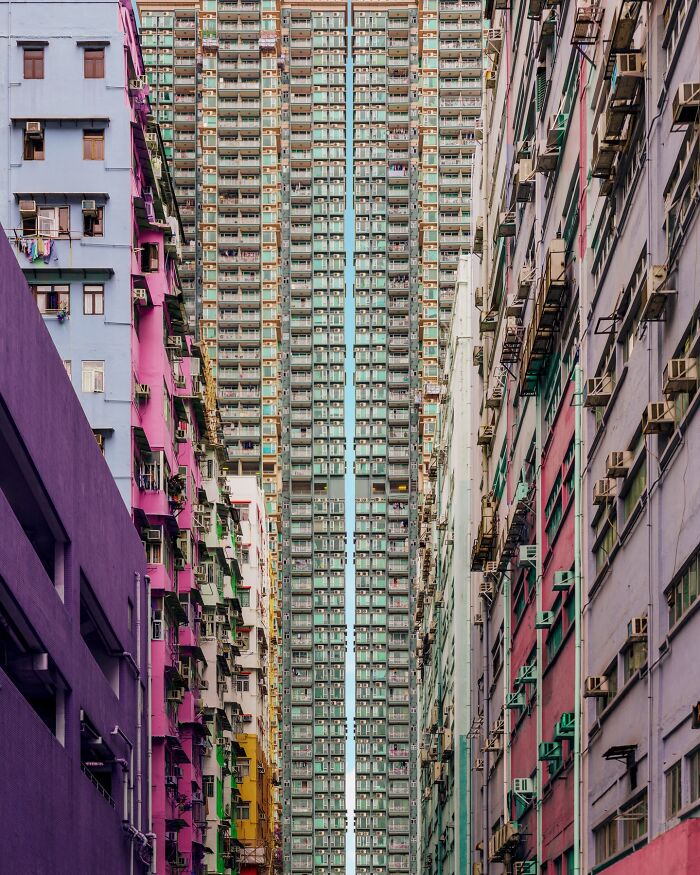
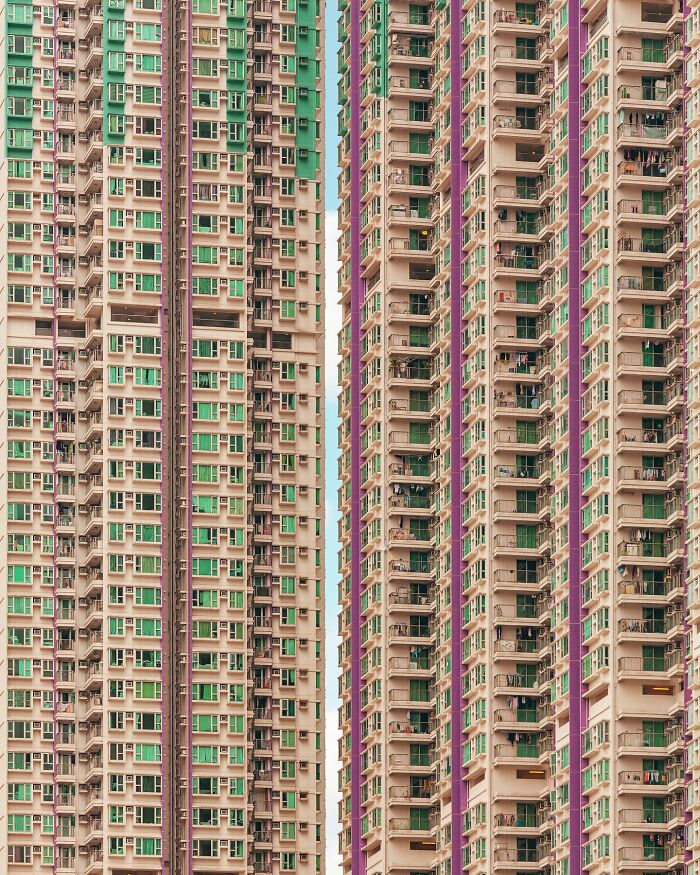
“Two buildings seeking intimacy; countless stories containing countless stories.”
Location: Hong Kong
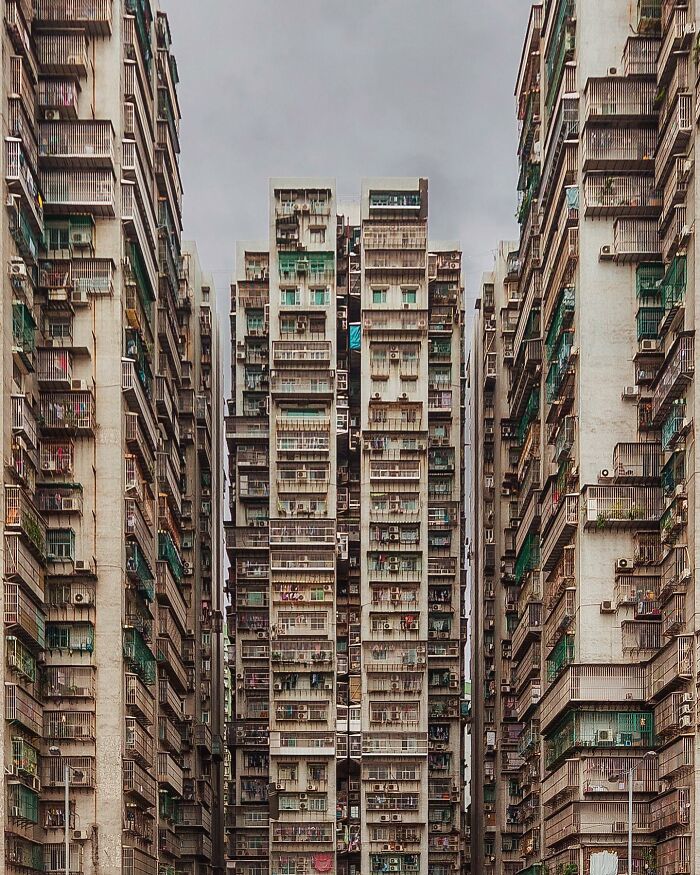
“Away from the glamorous Hotels and Casinos in Macau, standing at a small bus stop I was suddenly faced with this structure, almost histrionic in size, eerily quiet considering the sheer volume. Equal parts relic of bygone industry and oxidized shrine to a fossilized sense of future.”
Location: Macao, China

A lot of these photos remind me of the work of Andreas Gursky. And that's a compliment. 👍

Gorgeous photography, even of some places that you wouldn't have thought could be made to look good. But they all do. I find myself wondering if the designers of some of those 'apparently dystopian' apartment blocks actually did do a decent design job with lines and proportions and so on, and it's other things which cause my 'Urgh! Horrible concrete abomination!' reaction when seeing that sort of place for real with my own eyes.

They have only so much space 4 the people they have, we do not know what the instead looks like, but all n all they r homes
Load More Replies...
These are amazing!! Creative architecture and a gifted photographer!! Terrific post 💛 Thank you!!
A lot of these photos remind me of the work of Andreas Gursky. And that's a compliment. 👍
Gorgeous photography, even of some places that you wouldn't have thought could be made to look good. But they all do. I find myself wondering if the designers of some of those 'apparently dystopian' apartment blocks actually did do a decent design job with lines and proportions and so on, and it's other things which cause my 'Urgh! Horrible concrete abomination!' reaction when seeing that sort of place for real with my own eyes.
They have only so much space 4 the people they have, we do not know what the instead looks like, but all n all they r homes
Load More Replies... These are amazing!! Creative architecture and a gifted photographer!! Terrific post 💛 Thank you!!



















 No fees, cancel anytime