Get Premium
Dark mode theme is available exclusively for premium users. Learn more about the benefits of subscribing.
No fees, cancel anytime.

 Dark Mode Ad-Free Browsing Unlimited Content
 Ad-Free Browsing Unlimited Content Dark Mode
Join 1.2 million Panda readers who get the best art, memes, and fun stories every week!

Growing up with siblings can teach you patience, teamwork, and how to perfect the art of calling “dibs” before anyone else. However, there’s a big difference between occasionally helping out at home and effectively becoming a stand-in parent before you’re even old enough to make your own life decisions.
That’s the difficult situation this Original Poster (OP) found himself reflecting on. After spending years acting as a caregiver for his younger siblings while his own education was put on hold, he left home. Now, his parents are urging him to return because another baby is on the way.
More info: Reddit
Image credits: Magnific / Magnific (not the actual photo)
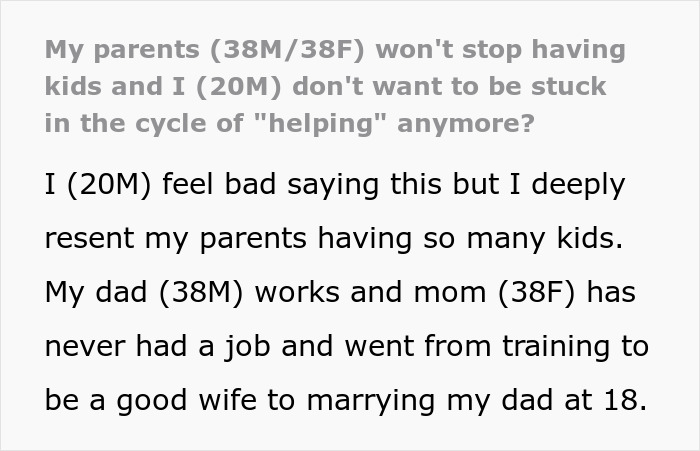

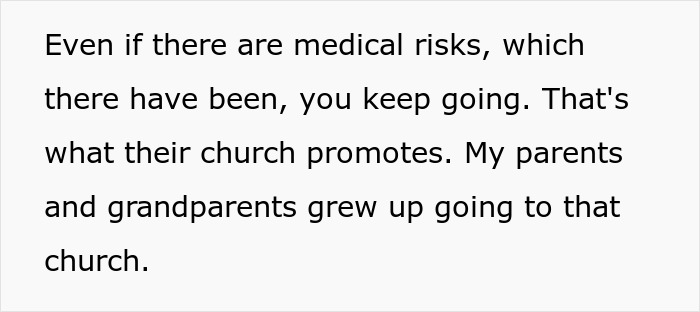

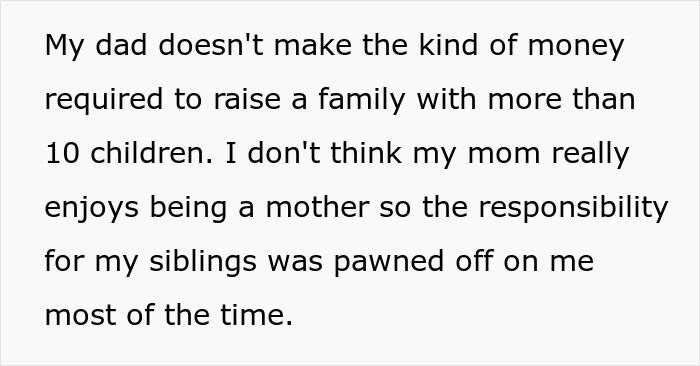
Image credits: Magnific / Magnific (not the actual photo)


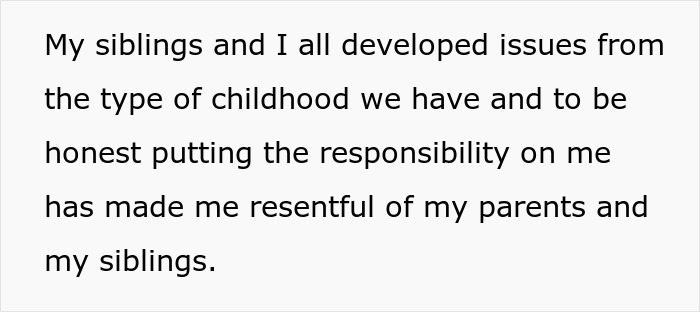
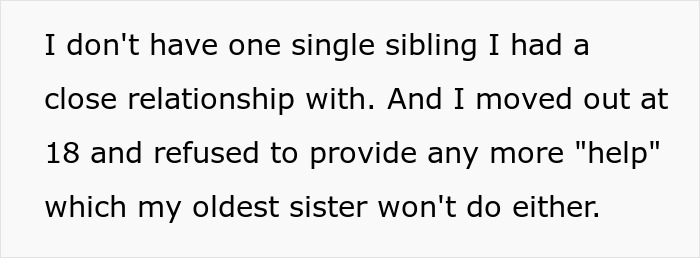

Image credits: karlyukav / Magnific (not the actual photo)
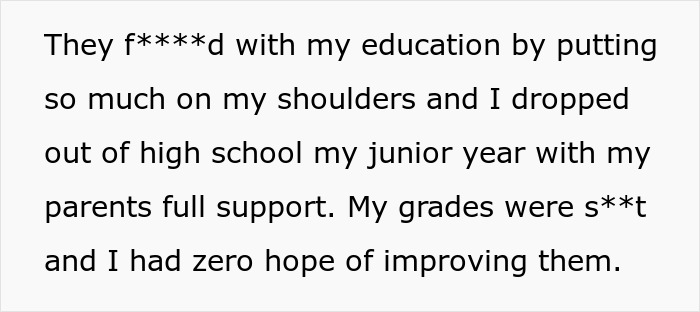

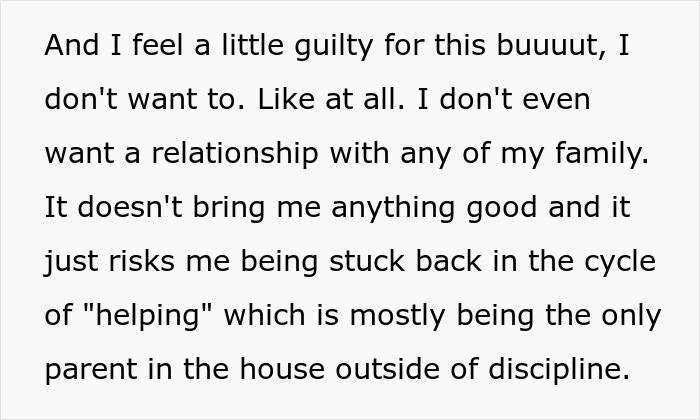

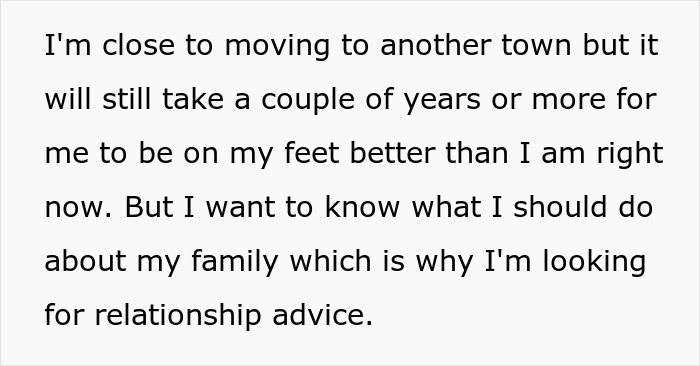
Image credits: ThrowRATempturesangs
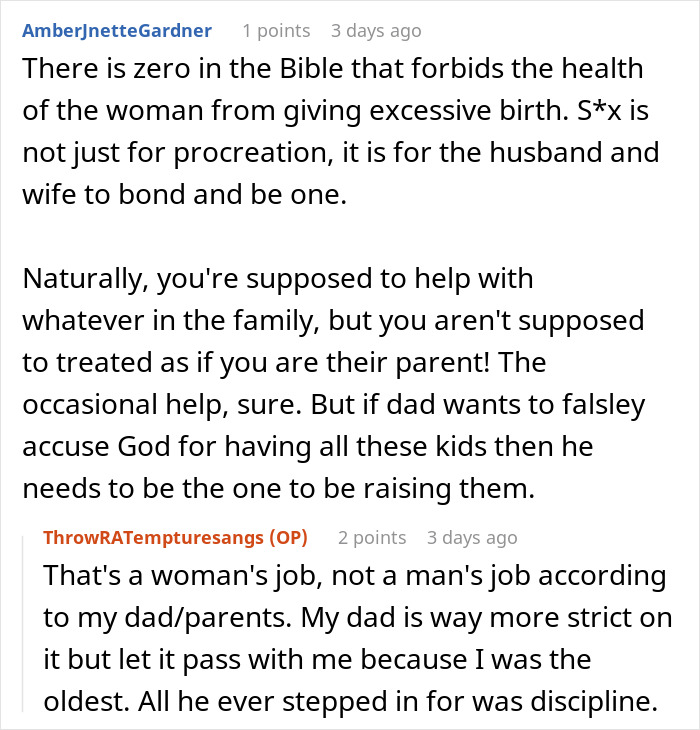
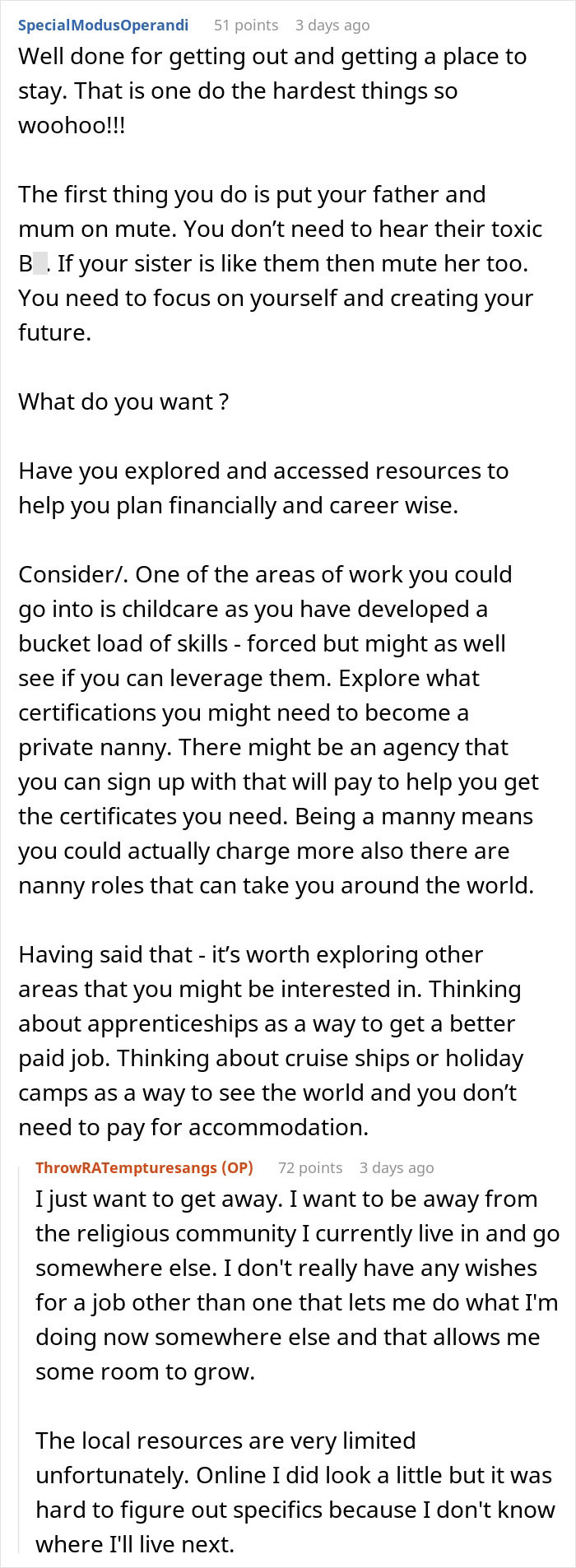
The OP explained that he is the oldest of ten children, born to parents whose religion forbids birth control or limiting family size. His mother has never worked outside the home, while his father has been the family’s sole provider despite struggling to support such a large household. He shared that as the eldest, much of the daily responsibility for raising his younger siblings fell on his shoulders.
In fact, refusing to help resulted in harsh punishments, and he was regularly expected to fill a parental role instead of enjoying a normal childhood. Naturally, this affected his education as his grades suffered to the point that he dropped out of high school during his junior year. Unfortunately, this also damaged his relationships with his siblings.
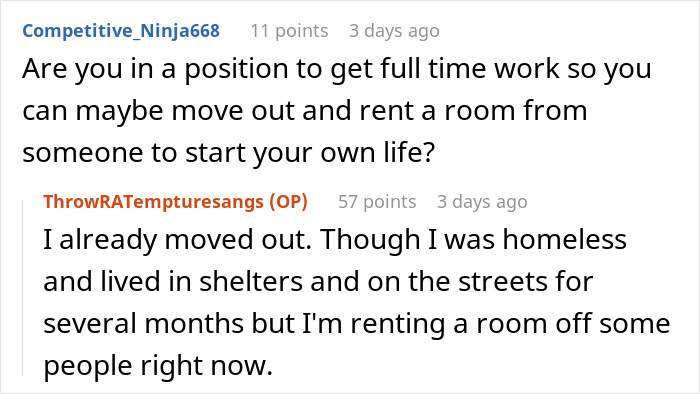
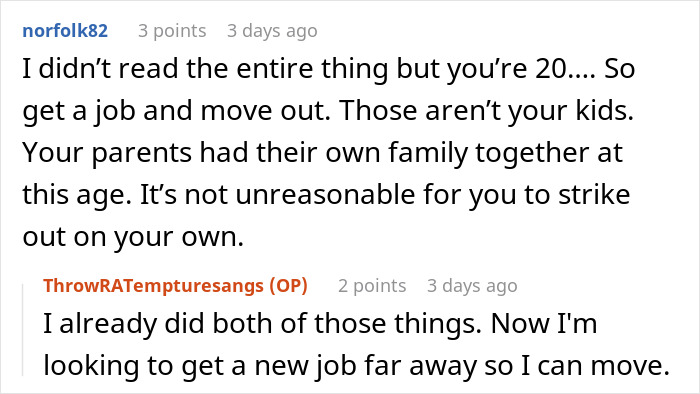
When he turned 18, he left both his parents’ home and the church he was raised in. Since then, he has refused to return to his previous caregiving role, and he says his oldest sister has done the same. Now, however, his parents have begun repeatedly contacting him because no one is effectively raising the younger children.
With his mother pregnant again with an eleventh child, they insist the family needs him back to keep everything functioning. As for the OP, he feels guilty but has no desire to move back home. He worries that returning would simply restart the same cycle of unpaid caregiving that prevented him from building his own future in the first place.
Image credits: gpointstudio / Magnific (not the actual photo)
The OP’s experience reflects a family dynamic that mental health professionals call parentification. Attachment Project explains that parentification occurs when a child takes on responsibilities that are typically meant for a parent, such as caring for siblings, managing household tasks, or providing emotional support.
The situation may have been made even more difficult by the size of the family. BetterHelp notes that having many children isn’t inherently harmful, but it can become challenging for parents to divide their time, attention, and financial resources among everyone. They refer to this as resource dilution theory, which suggests that as family size grows, each child may receive a smaller share of parental support.
Many adults who experienced parentification also report feeling guilty when they prioritize their own needs because they were raised to put everyone else first. According to Serenium Wellness, adults who have spent years putting their family’s needs before their own often struggle when they begin setting boundaries. They explain that this guilt is frequently rooted in long-standing family expectations rather than selfishness.
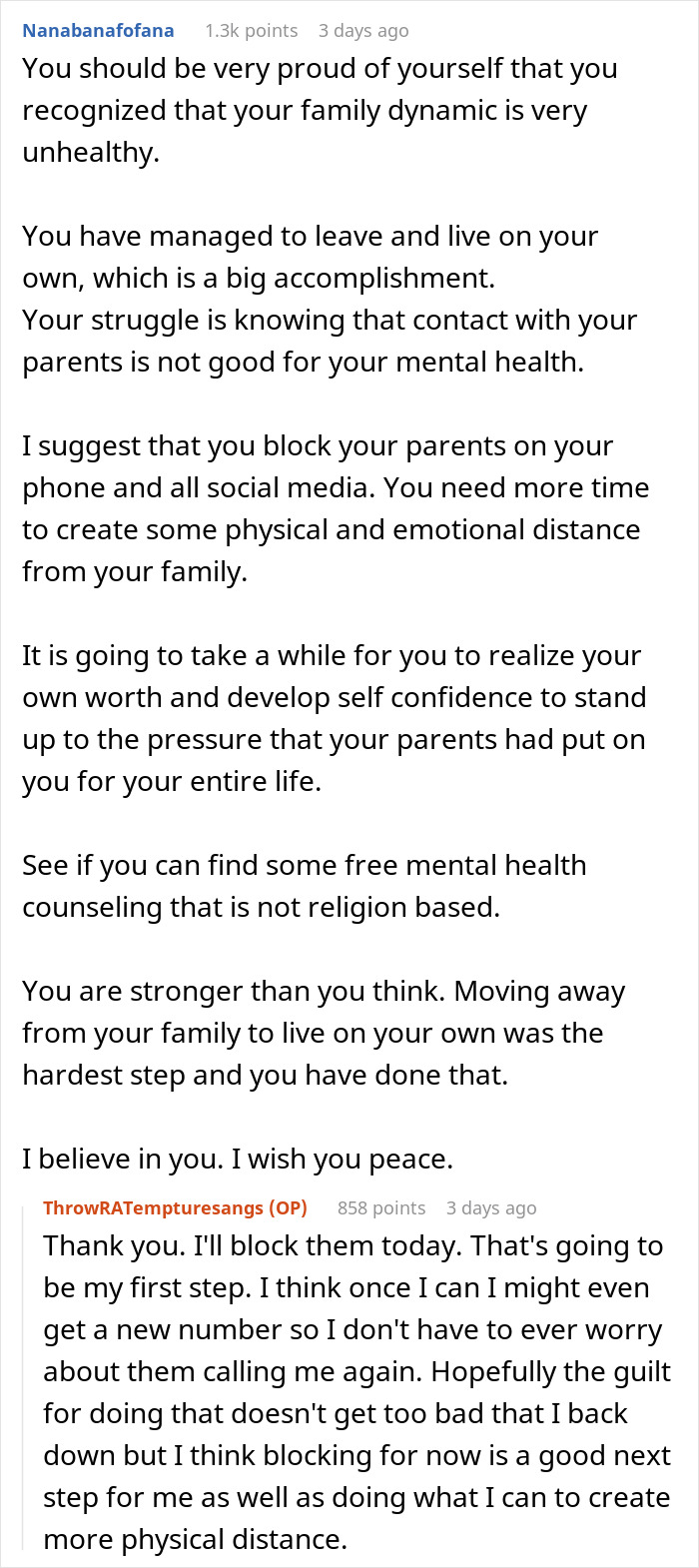
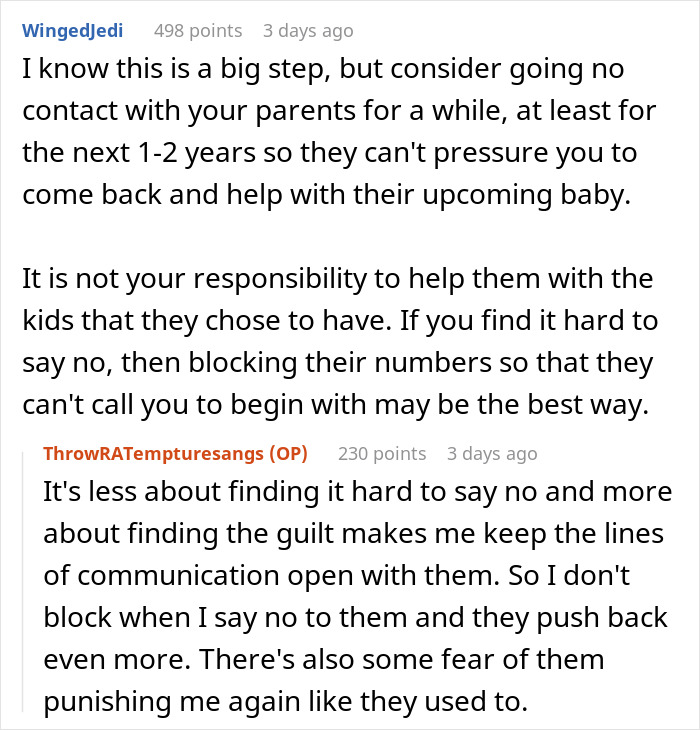
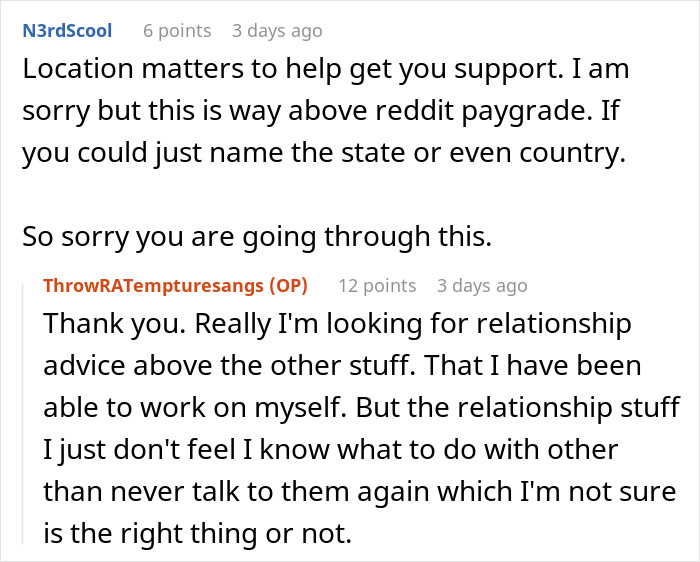
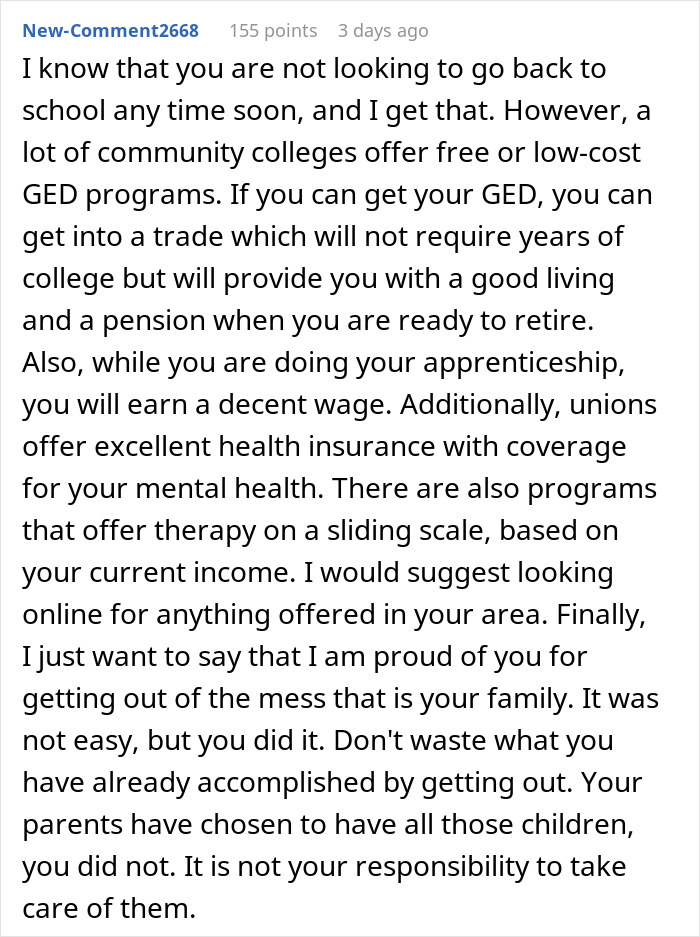
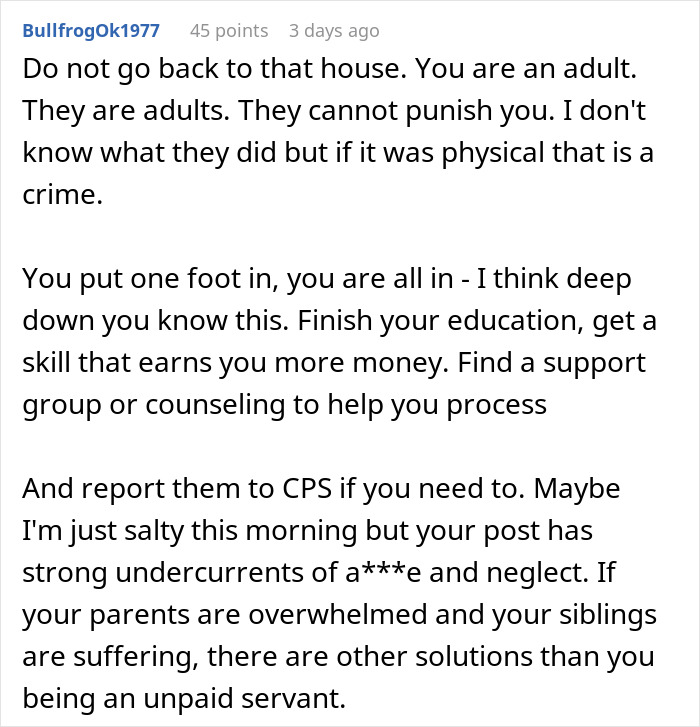
Netizens felt the OP had already sacrificed a lot, and strongly encouraged him to prioritize his own future and resist returning to the caregiving role his parents expected him to fill. What do you think about this situation? Is it selfish to put yourself first after spending years caring for others, or is it necessary for healing? We would love to know your thoughts!











Dad: "Son, you need to help raise your siblings because you're the only one who can do so. But I don't want you getting all gay from raising your siblings, so I'm also going to punish you for raising your siblings." Poor OP :(

Parents are obviously delulu af. Sounds like they make religious extremists look sane by comparison
Load More Replies...
Is job Corp still a thing? If so, could that help OP get far away, learn new skills and possibly finish their education?

Dad: "Son, you need to help raise your siblings because you're the only one who can do so. But I don't want you getting all gay from raising your siblings, so I'm also going to punish you for raising your siblings." Poor OP :(
Parents are obviously delulu af. Sounds like they make religious extremists look sane by comparison
Load More Replies... Is job Corp still a thing? If so, could that help OP get far away, learn new skills and possibly finish their education?



































 No fees, cancel anytime











26
5