Get Premium
Dark mode theme is available exclusively for premium users. Learn more about the benefits of subscribing.
No fees, cancel anytime.

 Dark Mode Ad-Free Browsing Unlimited Content
 Ad-Free Browsing Unlimited Content Dark Mode
Join 1.2 million Panda readers who get the best art, memes, and fun stories every week!

29submissions
1week left
Whether for personal or professional growth, working on developing new skills is always a good idea, be it communication and other soft skills or sewing, for that matter. But not all people are equally interested in developing a certain skill set, even if they know how beneficial it could be.
Members of the ‘Ask Reddit’ community recently discussed the advantages of learning certain skills after one user started a thread about it – they asked fellow netizens what is a skill that the whole world would benefit from if everyone mastered it. Redditors’ answers covered all sorts of soft and hard skills, so if you’re curious to learn which ones they believed to be the most useful on a global scale, scroll down to find them on the list below and make sure to upvote the ones you agree with the most.
Below you will also find Bored Panda’s interview with Dr. John Corlett, a professor in the Faculty of Health and Community Studies at MacEwan University in Edmonton, Alberta, who was kind enough to share what he considers to be the skill that the world would benefit from the most if all were to master it.
Click here & follow us for more lists, facts, and stories.
This post may include affiliate links.
Learning any skill can be beneficial, even if you end up not using it that much later in life. Take piano lessons, for instance; if you started practicing as a child, but gave it up the second you became a teenager, you might not be able to play a single piece by the time you reach adulthood, but the exercise your brain got from learning to master it does not become undone.
Covering the benefits of learning a new skill, the Office of Continuing Education at CCSU (Central Connecticut State University) pointed out that such an activity can positively alter one’s brain chemistry, as practicing a new skill tends to make the myelin—the white matter in our brain—more dense, which helps people learn even better.
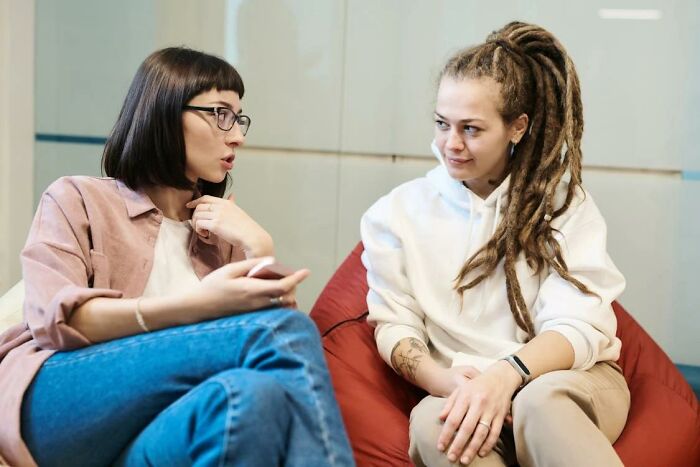
 Making someone feel valued as a person.
So that front desk worker who is struggling, because it's a holiday weekend, and they're swamped, and there's no extra help, and they're looking more than a little panicked, but they're holding it together and still being professional:
When it's my turn in line I say, "Hey, how's it going?" it snaps them out of whatever mindset they were in the middle of. "Looks a little crazy here today. Long day?" and they'll open up a bit. It literally gives them a minute to catch their breath, and be a human again, rather than an over-worked service.
I might even ask them if they have plans for the holiday weekend, or what they are going to do to unwind after the day. Anything. Be friendly.
The goal there is to get a smile. They might not say thank you, but you can see it in their eyes.
It matters. We're all here doing our thing, but we can also treat our fellow people decently along the way.
Another way learning new skills affects our brain is making it easier to learn things faster over time. That is because practicing something new stimulates the neurons in our brain, this way creating more neural pathways, which electrical impulses travel across as we try to process new information. The more pathways that are formed, according to the CCSU, the faster impulses can travel.
Other benefits of working on your skill set, according to the aforementioned source, include being able to make connections between different fields, becoming a more interesting human being, having the tools to fight boredom (which we try to do every day here at Bored Panda), being able to adapt better to change, and even staving off dementia.
It’s pretty clear that learning new skills has numerous benefits, from positively affecting our brain to making us a more interesting person. In addition to that, we get to enjoy the benefits of the thing we mastered itself, be it knitting a sweater or knowing how to fix a computer.
In a world where we can choose to learn basically any skill there is, some might prove more advantageous than others, especially on a global level. In an interview with Bored Panda, Dr. John Corlett of the Faculty of Health and Community Studies at MacEwan University in Edmonton, Alberta, shared that, in his opinion, one of the skills that people all over the world could really benefit from is empathy.
“Empathy is not usually thought of as a skill but more as seeing and feeling the world with the eyes—and hearts—of others. But it is the skill in shortest supply in a loud, divided, and self-centered world,” he said.
 De-escalation.
Imagine everyone being able to stay calm and level headed while resolving disputes.
“As for the skill, or collection of skills, that would make the world a better place if more people mastered them, critical thinking—the ability to identify misinformation and disinformation for what it is and to see the fraudsters and bullies for who they are—would be at the top of my list,” Prof. Corlett continued.
“What is to be gained by building our empathic and critical thinking skills? You can save the world. So, why not try? It is not just something we should do. It is who we should BE, every day, with everyone. By all means learn to play the piano. But make time to learn how to play with others, too.”
 This…
This…
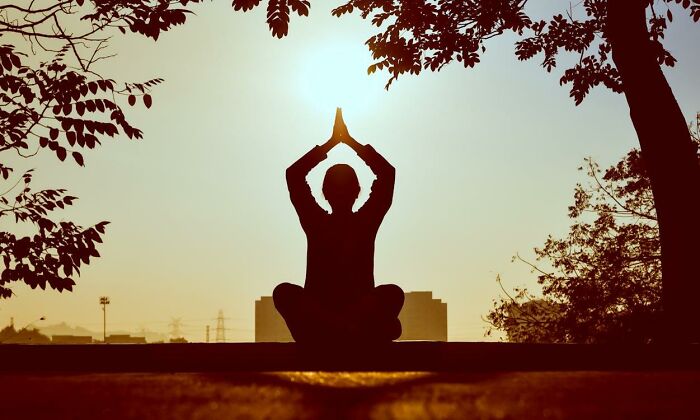
“All of humanity's problems stem from man's inability to sit quietly in a room alone.” - Blaise Pascal.
 If everyone driving knew how to drive it would be awesome. If we add driving defensively and courteously then it would make a huge difference.
1. Empathy
2. Kindness
3. Gratitude
4. Effective Communication Skills
5. Genuineness (is that a word).
You Might Also Like: 29 Unsettling Photos From The Internet’s Morbid Knowledge Community





























 No fees, cancel anytime