Get Premium
Dark mode theme is available exclusively for premium users. Learn more about the benefits of subscribing.
No fees, cancel anytime.

 Dark Mode Ad-Free Browsing Unlimited Content
 Ad-Free Browsing Unlimited Content Dark Mode
Join 1.2 million Panda readers who get the best art, memes, and fun stories every week!

“Fool me once, shame on you,” isn’t the complete quote, but if someone is diligent, they can just avoid being fooled twice. Unfortunately, some lines get a bit blurred if the person doing the fooling is family and, lo and behold, they suddenly need something from you again.
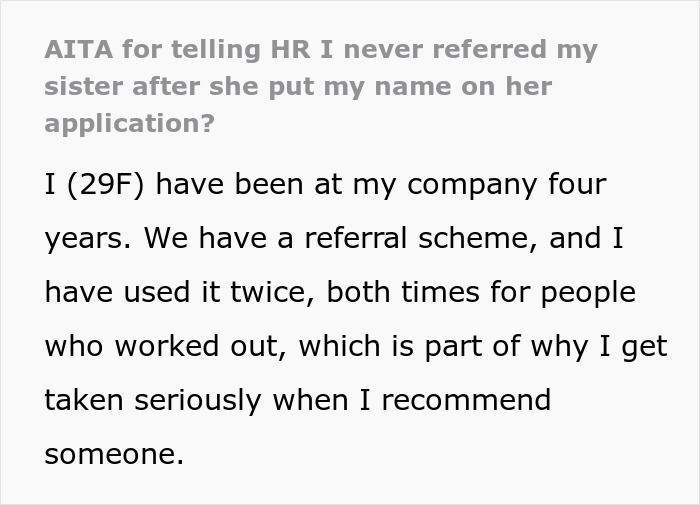
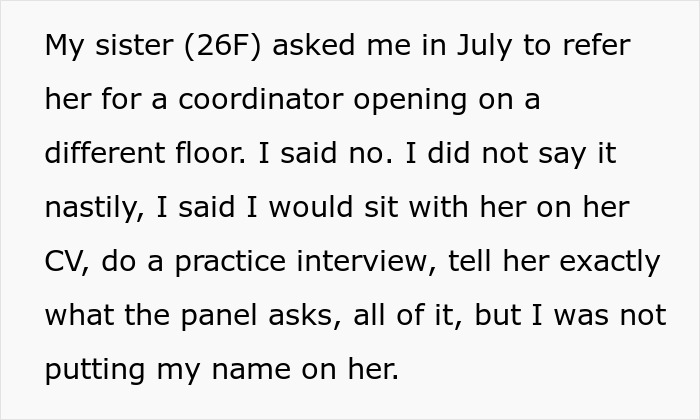
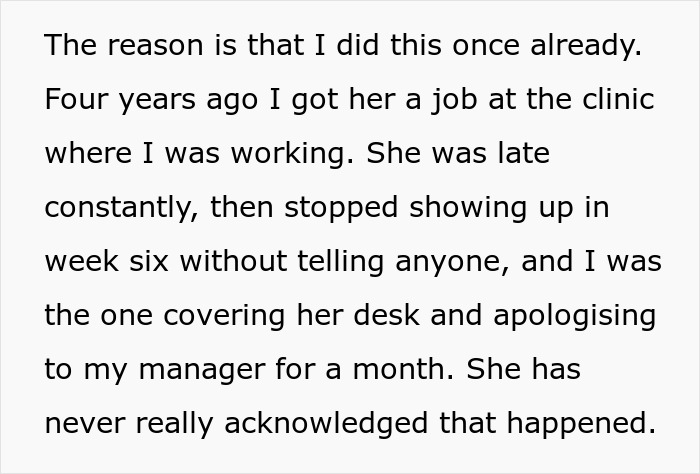
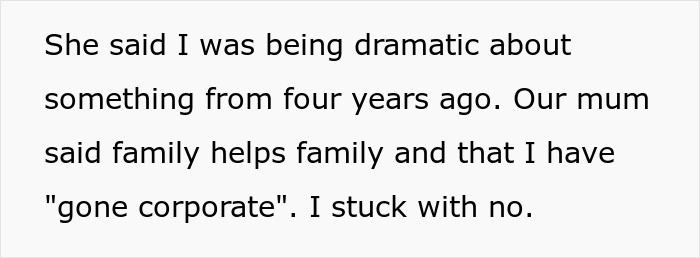
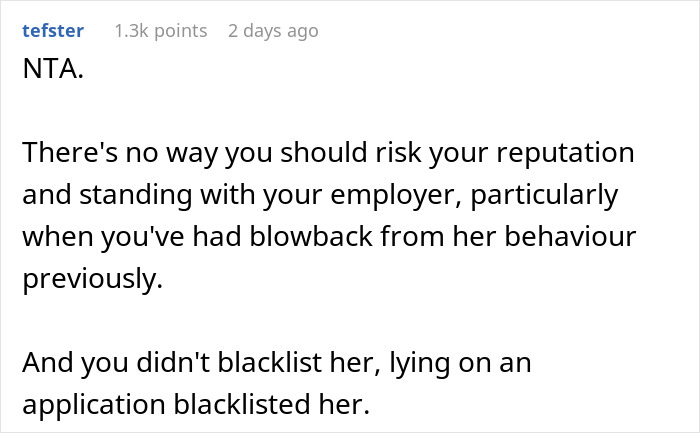
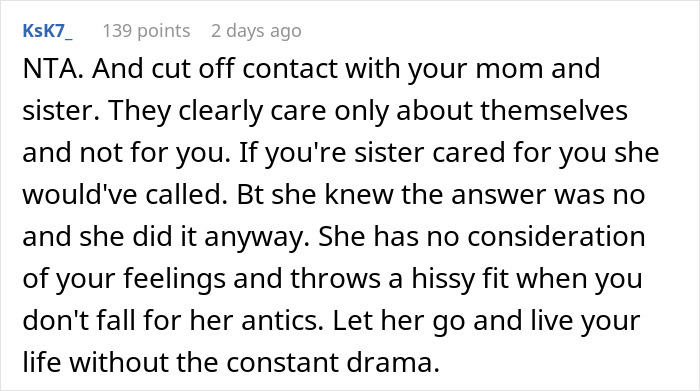
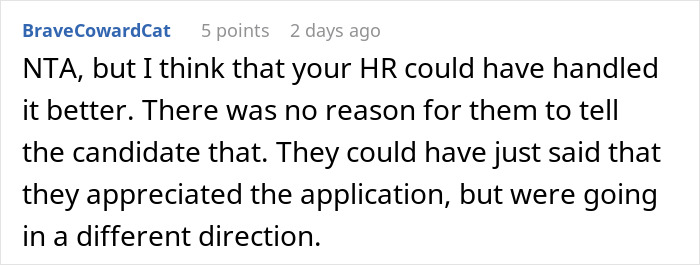
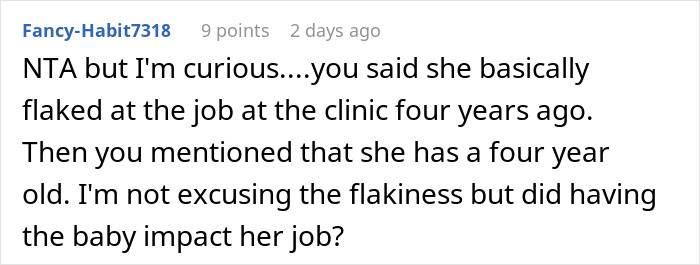
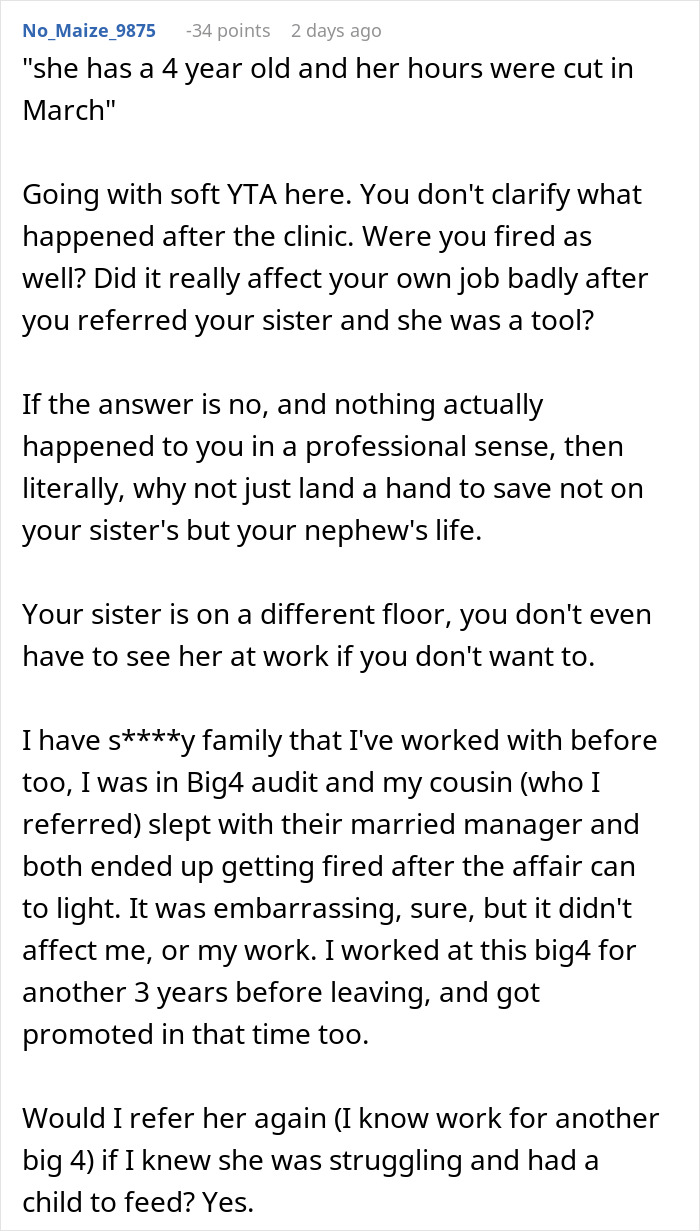
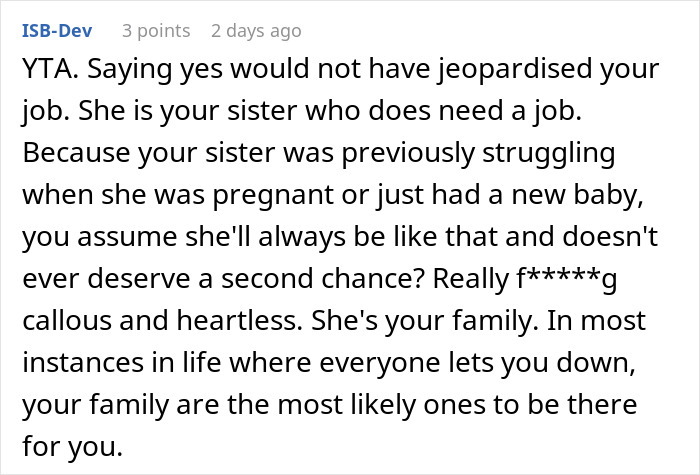
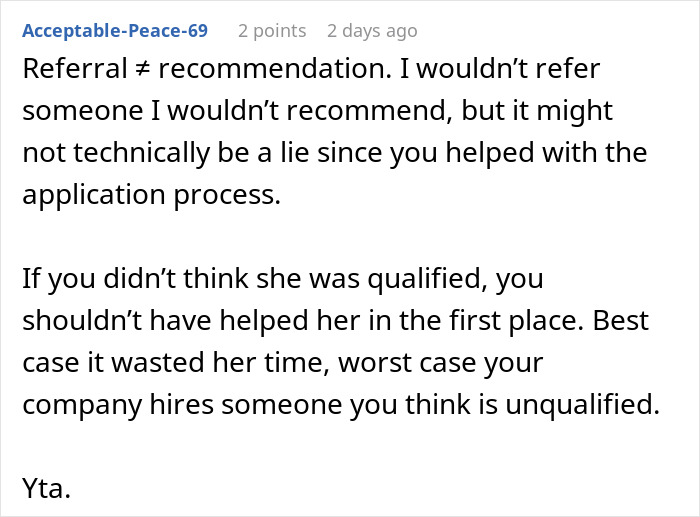
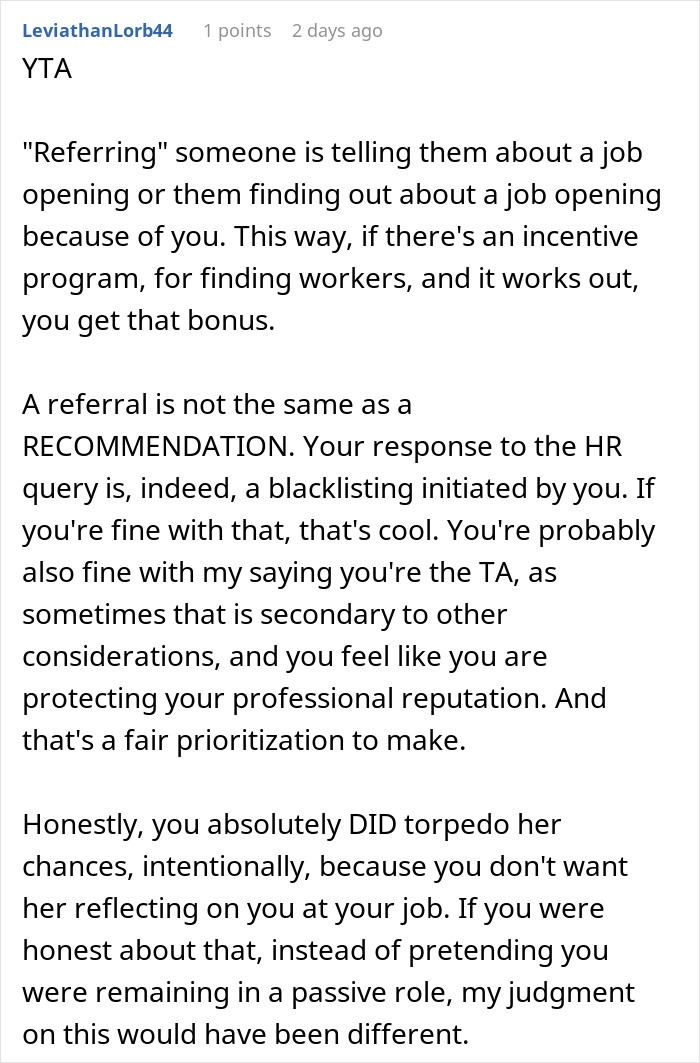
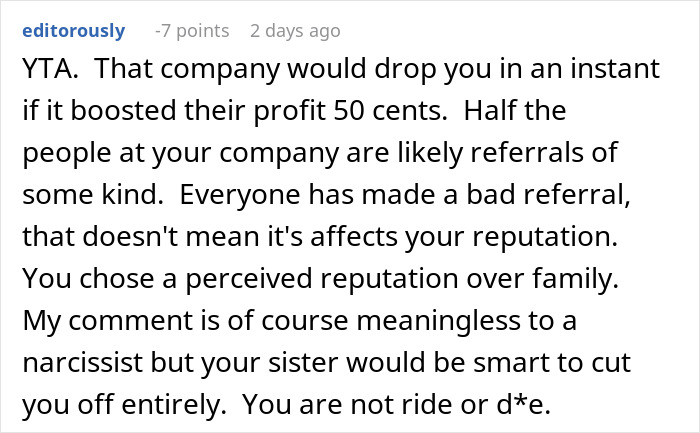
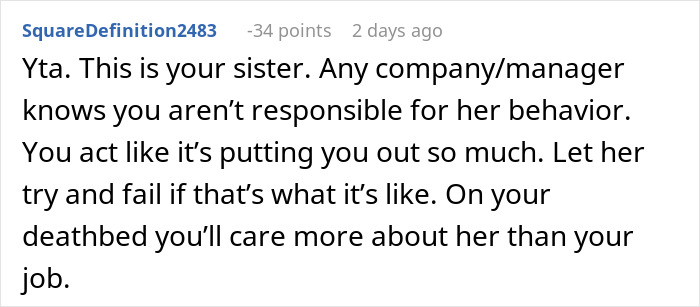
A woman turned to the internet to get a sanity check on whether she was wrong to not give her sister a job reference after her experience working with her before. Despite saying no, the woman’s sister listed her anyway and got an unpleasant surprise when human resources found they could verify the reference.
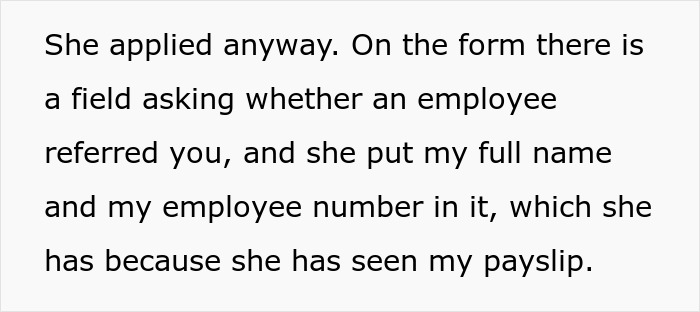
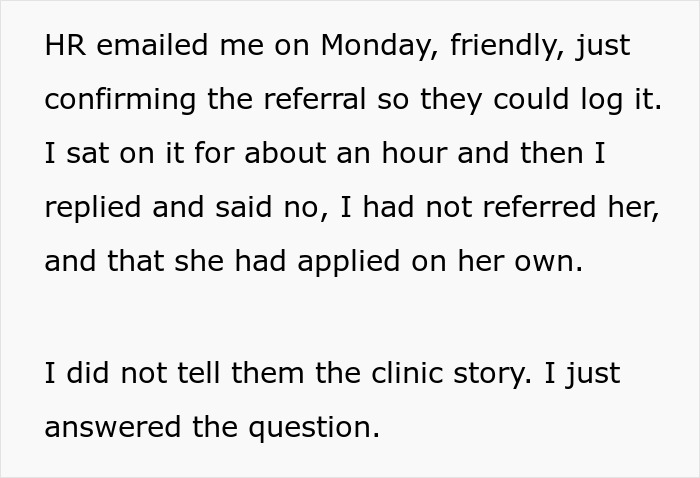
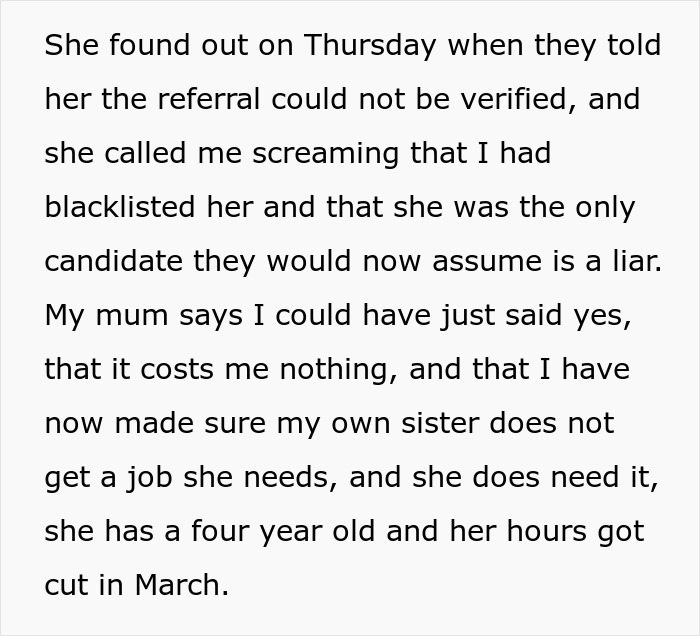
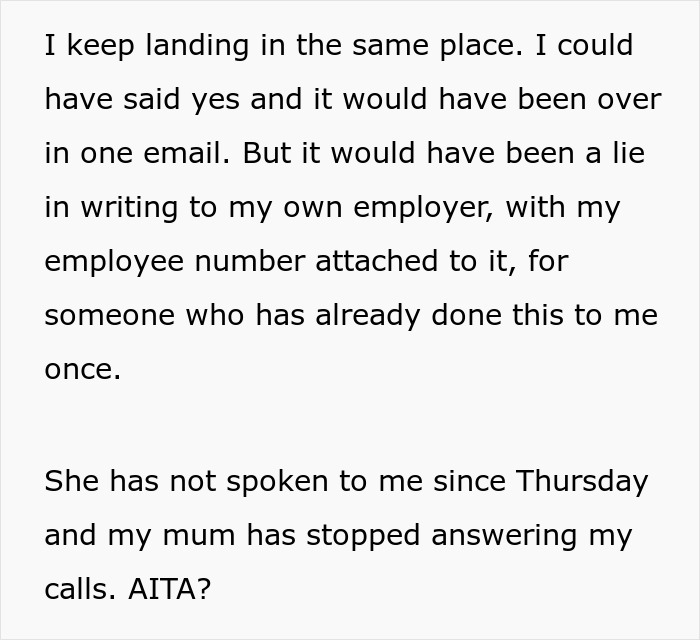
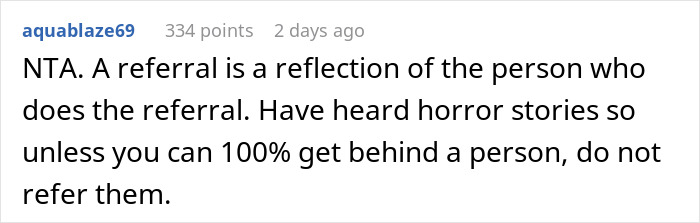
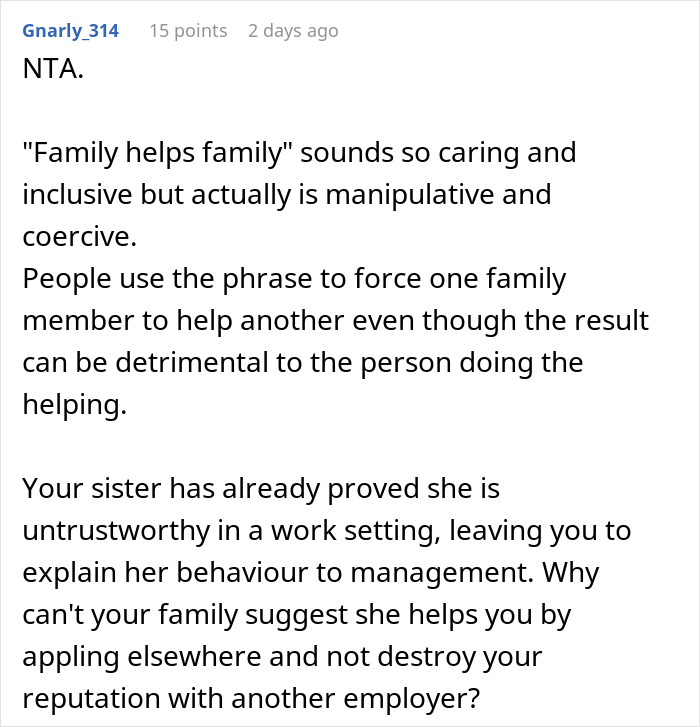
Every time a person puts their name behind someone else, whether that is a job referral, a rental guarantee, or signing onto a loan, they are handing over a piece of their own credibility and often their own liability. There is no clean way to take that back once something goes wrong, which is the part the “it costs you nothing” argument always skips over.
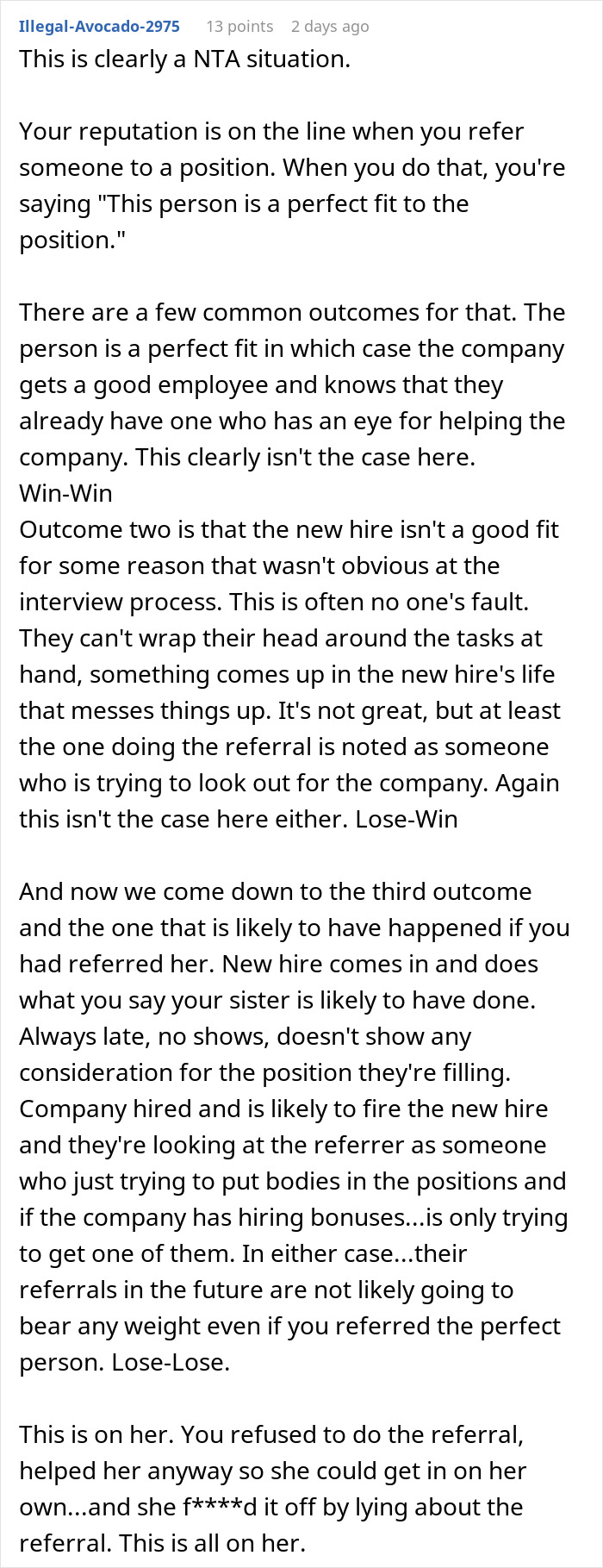
Employee referral schemes exist because a personal recommendation is worth more to a company than a stranger’s resume. That only works if the recommendation actually means something, so most programs are built around the assumption that an employee will not stake their name on someone they have real doubts about. Research on referral behavior backs this up directly. Employees treat making a referral as a personal reputational risk, not a casual favor, because the person they vouch for reflects directly on them, which is part of why successful referrers tend to feel more invested in the new hire’s outcome.
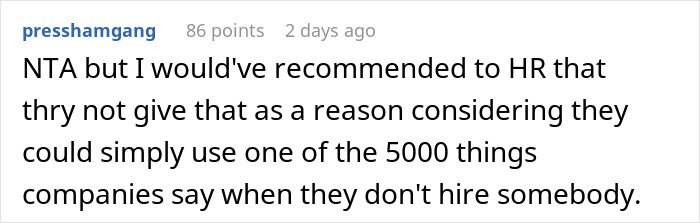
That is also why a fabricated referral is not treated as a minor paperwork mix up once HR looks into it. It reads as false information submitted to an employer, and it is verified for exactly that reason.
The instinct to say yes anyway, because refusing feels harsh or because a parent insists it costs nothing, has a close financial cousin: cosigning a loan for someone you love. People often think they are only lending their credit history, when what they are actually agreeing to is equal responsibility for the whole debt if the other person cannot pay. As the Federal Trade Commission explains, if the main borrower misses payments or stops making payments, the cosigner must repay the loan, and the lender is not required to go after the original borrower first. A missed payment lands on the cosigner’s record, not just the borrower’s, sometimes for years after everyone involved has moved on. The logic is the same as vouching for someone at work. When it goes wrong, the fallout lands on the person who spoke up, not on the person who created the risk.
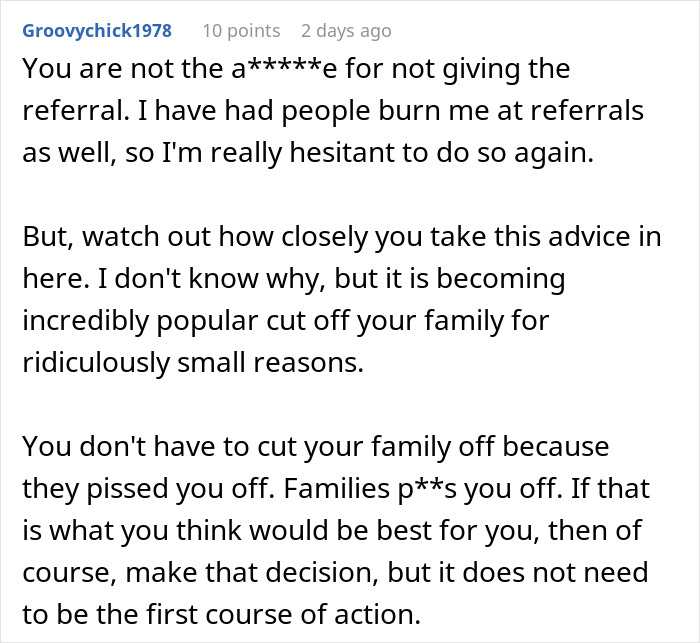
There is a reason it feels almost impossible to say no a second time after already being burned once. Family systems often run on unspoken obligation rather than negotiation, and treating a boundary as final rather than as an opening offer breaks a rule most families never wrote down but everyone still follows. Psychologists sometimes describe this as enmeshment, a pattern where individual limits blur so much that a reasonable “no” gets experienced as a betrayal instead of a fair response to past experience. As one clinical overview puts it, enmeshed systems rely heavily on obligation, and setting a boundary breaks the unwritten rule that you are responsible for keeping your relatives happy, which is what produces the guilt. That guilt shows up automatically, whether or not the boundary is fair, and whether or not the other person has ever actually acknowledged what happened the first time around.
None of this makes the family fallout painless to sit with. But agreeing to vouch for someone despite a documented pattern of the exact same failure does not actually protect the relationship. It just postpones the conversation everyone is avoiding, while quietly moving the risk from the person who caused the original problem onto the person being asked to trust them again. A boundary that survives being tested is often the only thing that finally makes a repeating pattern visible enough for a family to deal with it honestly, instead of it happening again under a slightly different name.


















By entering your email and clicking Subscribe, you're agreeing to let us send you customized marketing messages about us and our advertising partners. You are also agreeing to our Privacy Policy.
Thank you! You've successfully subscribed to newsletters!


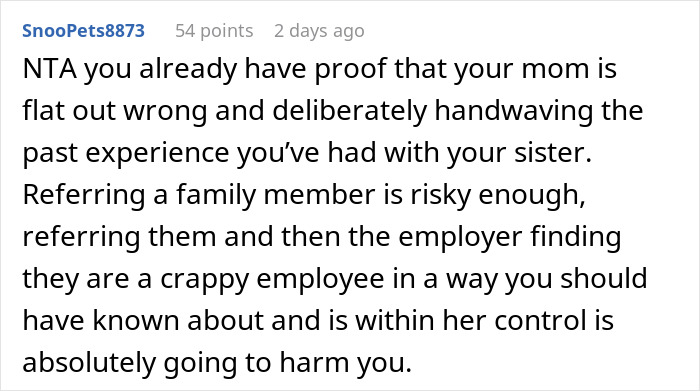
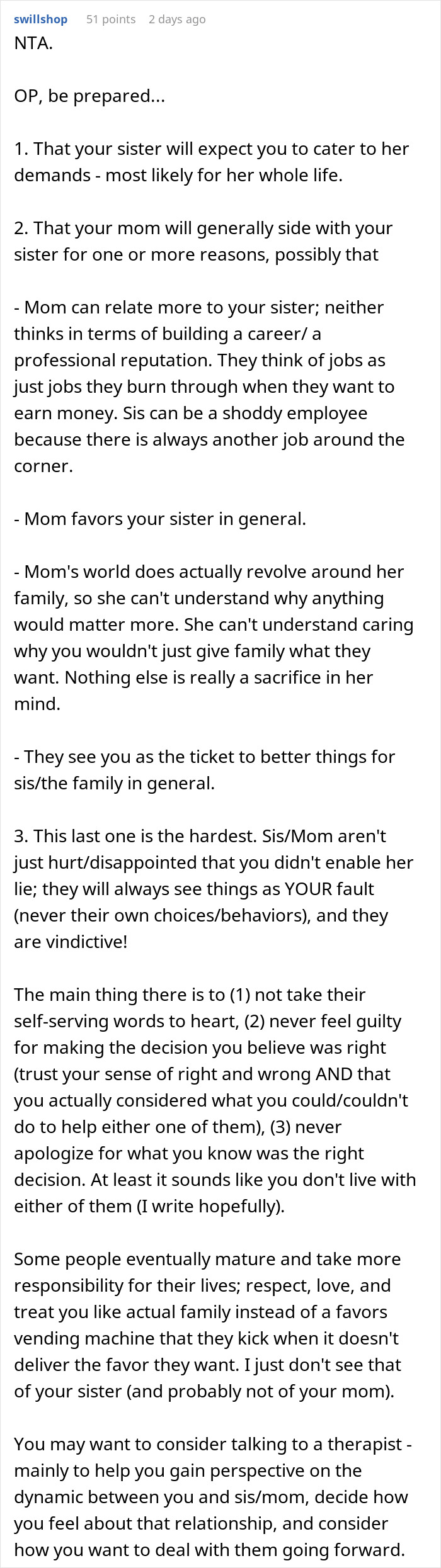
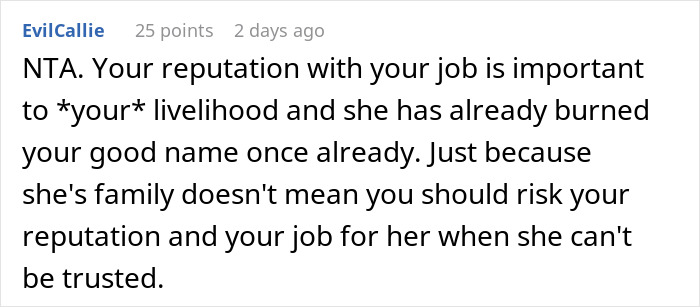
So many YTAs. The sister lied to get the job. Not worth risking the OP's reputation at work for doing a favour for a person who let her down the last time. I'll go for NTA.

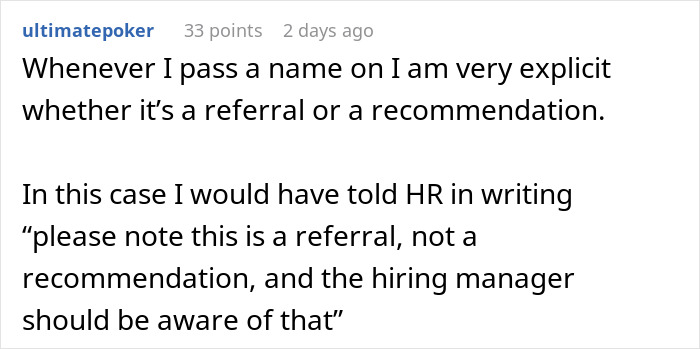
not to mention a referral is a form of recommendation. So many of the YTA are literally saying that its just you saying that you told them about it, which shows they know nothing of corporate life. A referral is you vouching for the person, it is to give them a leg up in the process, and your name a reputation is connected to it
Load More Replies...
I wouldn't trust family referrals anyway - only those from co-workers who've actually seen how they go about things in the workplace.

I once gave a manager's name to a relative (talented, but not someone I'd want to work with directly). I was relieved that nothing came of it beyond my relative grumbling "He didn't get back to me." On the other hand, after the manager quit, I gave his name to an agency, saying "It's up to your clients to decide if he has the right skills for their positions, but he has very good work ethics."
Load More Replies...
I probably would have let the sister use my name, but would speak with HR first. Tell them it was only a courtesy because she's a relative, but otherwise not vouch for her.

You mean let sis think she has the referral and behind her back tell HR it's a sham referral. Now that's a shining example of s****y behaviour!
Load More Replies... So many YTAs. The sister lied to get the job. Not worth risking the OP's reputation at work for doing a favour for a person who let her down the last time. I'll go for NTA.
not to mention a referral is a form of recommendation. So many of the YTA are literally saying that its just you saying that you told them about it, which shows they know nothing of corporate life. A referral is you vouching for the person, it is to give them a leg up in the process, and your name a reputation is connected to it
Load More Replies... I wouldn't trust family referrals anyway - only those from co-workers who've actually seen how they go about things in the workplace.
I once gave a manager's name to a relative (talented, but not someone I'd want to work with directly). I was relieved that nothing came of it beyond my relative grumbling "He didn't get back to me." On the other hand, after the manager quit, I gave his name to an agency, saying "It's up to your clients to decide if he has the right skills for their positions, but he has very good work ethics."
Load More Replies... I probably would have let the sister use my name, but would speak with HR first. Tell them it was only a courtesy because she's a relative, but otherwise not vouch for her.
You mean let sis think she has the referral and behind her back tell HR it's a sham referral. Now that's a shining example of s****y behaviour!
Load More Replies...

































 No fees, cancel anytime






39
10