Get Premium
Dark mode theme is available exclusively for premium users. Learn more about the benefits of subscribing.
No fees, cancel anytime.

 Dark Mode Ad-Free Browsing Unlimited Content
 Ad-Free Browsing Unlimited Content Dark Mode
Join 1.2 million Panda readers who get the best art, memes, and fun stories every week!
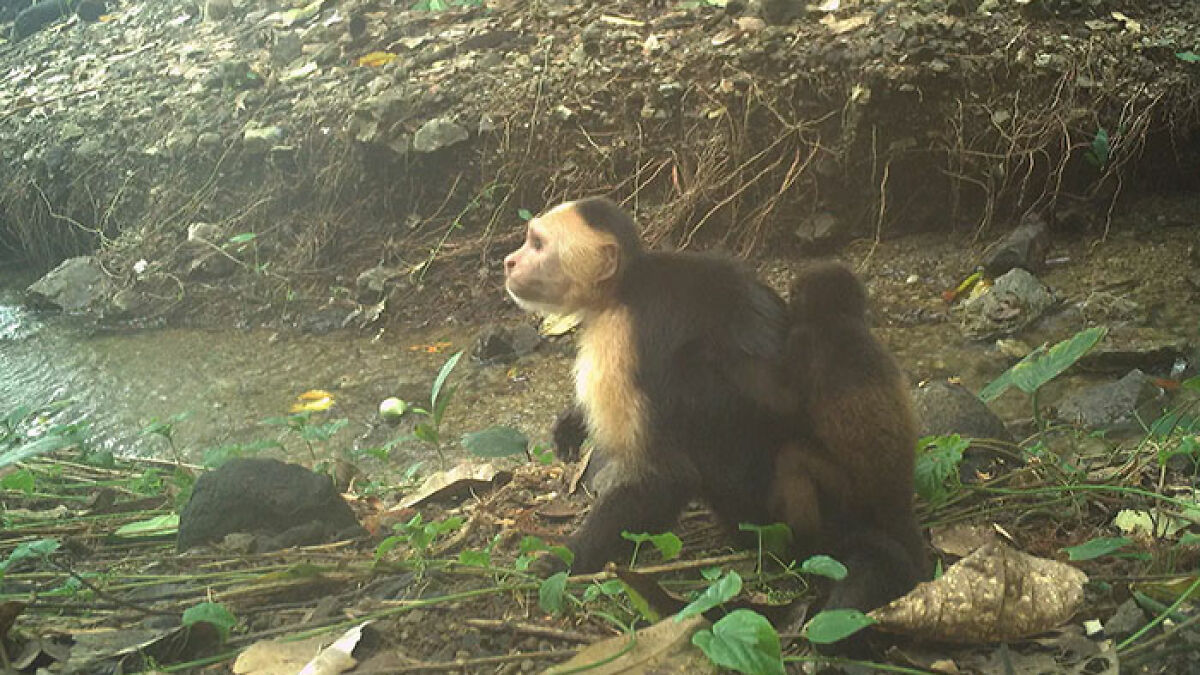
According to the Three Wise Monkeys, it’s best to see no evil, hear no evil, and speak no evil.
Except that’s not at all what’s happening with a group of capuchin monkeys on an island in Panama who appear to be kidnapping the babies of another monkey species.
Scientists are bewildered by the behavior and are looking for answers.
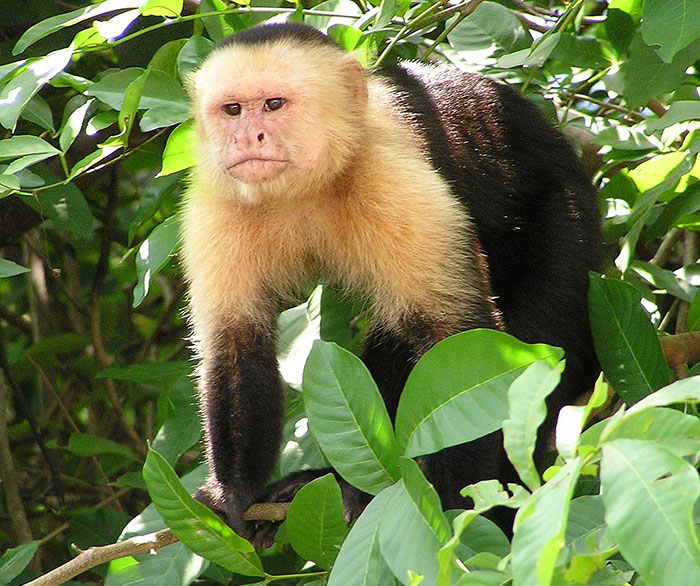
Image credits: David M. Jensen / Wikipedia (not the actual photo)
Researchers with the Max Planck Institute of Animal Behavior in Germany, as well as those from the Smithsonian Tropical Research Institute, recently observed some strange animal behavior in a group of capuchin monkeys.
They had set up several cameras on Jicarón Island, about 55 kilometers, or 34 miles, off the coast of Panama in Coiba National Park, to observe a group of capuchins, known for their white faces and cunning intelligence.
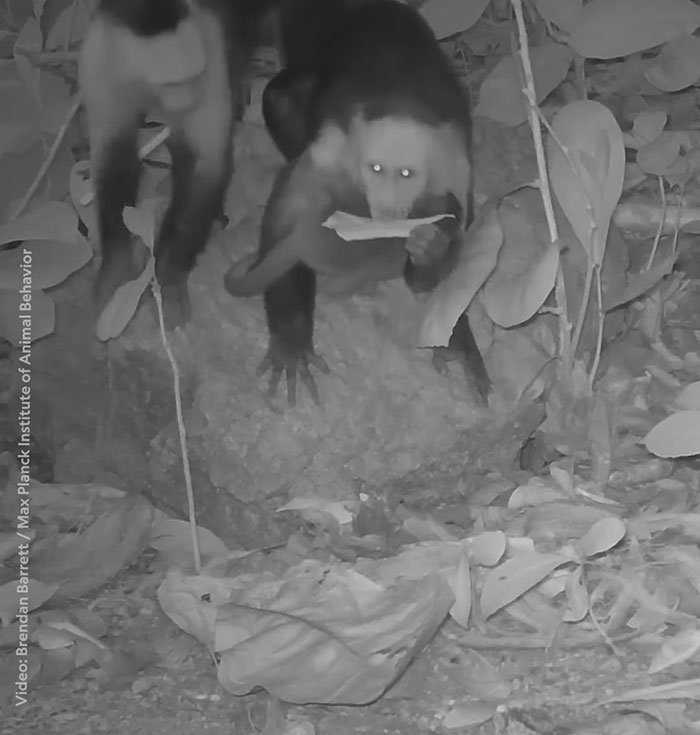
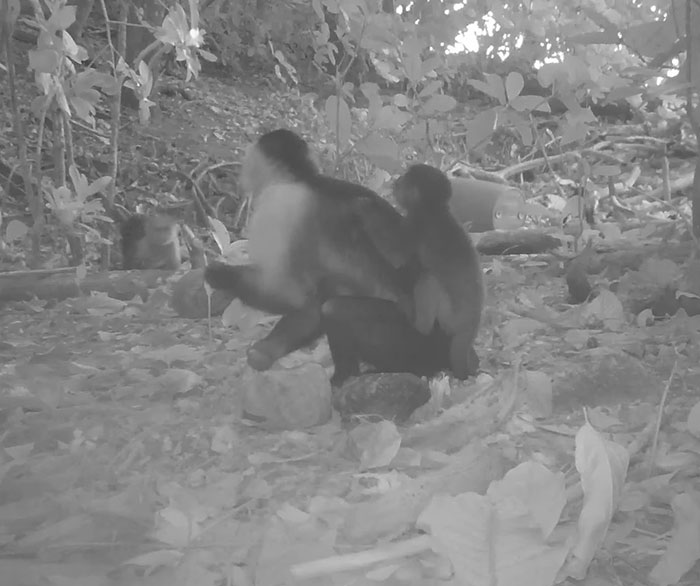
In hours of video footage, the researchers discovered that a group of adolescent male capuchins were walking off with the babies of another separate monkey species.
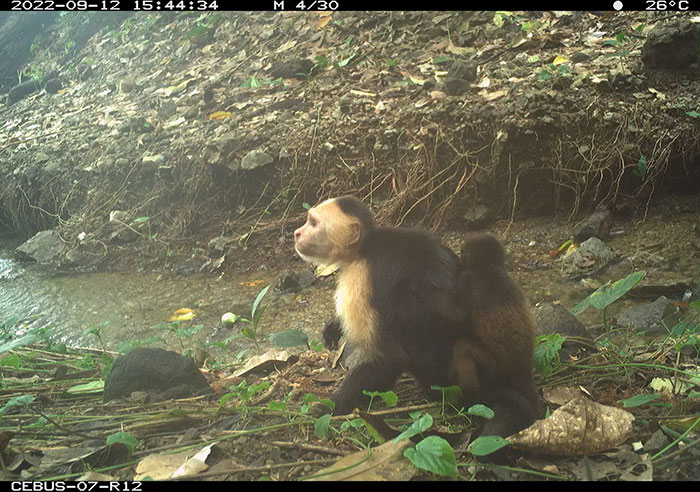
Image credits: Christian Ziegler / Max Planck Institute of Animal Behavior
Meg Crofoot, the managing director at the Max Planck Institute of Animal Behavior said that when she saw a pic of the howler clinging to the capuchin, she thought: “What? What is going on here? It looked so weird. It looked so wrong.”
It all started with one capuchin the researchers named Joker, after the Batman villain, because of a scar near his mouth.
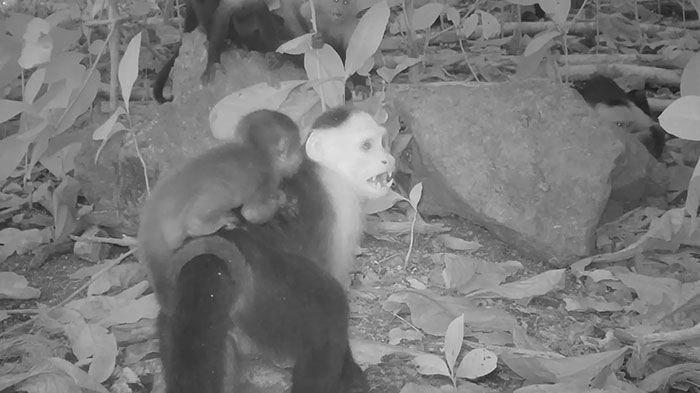
Researchers saw Joker walk off with baby after baby. At first, they thought it might have been a mistake. But then other capuchins started to copy Joker.
Image credits: Christian Ziegler / Max Planck Institute of Animal Behavior
Howler monkeys live in trees, and since the cameras were set up on the ground, the actual abductions were not recorded.
One of the scientists who helped publish the findings, Brendan Barrett, told the media that capuchins are smart and curious.
“They’re highly innovative, they’re highly explorative,” Barrett said. “They do interesting, strange things.”
View this post on Instagram
Researchers saw that the howlers, who were just a few days or weeks old, would grasp onto their abductors, not realizing what was happening.
The capuchins, meanwhile, seemed not to notice—or care—that they had just stolen a baby.
In many cases, the capuchins would basically ignore the howler clinging to its back, until it simply fell off and perished from starvation.
Barrett said the baby howlers “are likely d*ing from dehydration or lack of nutrition,” and that there were several dead howler babies seen in the video.
Image credits: Christian Ziegler / Max Planck Institute of Animal Behavior
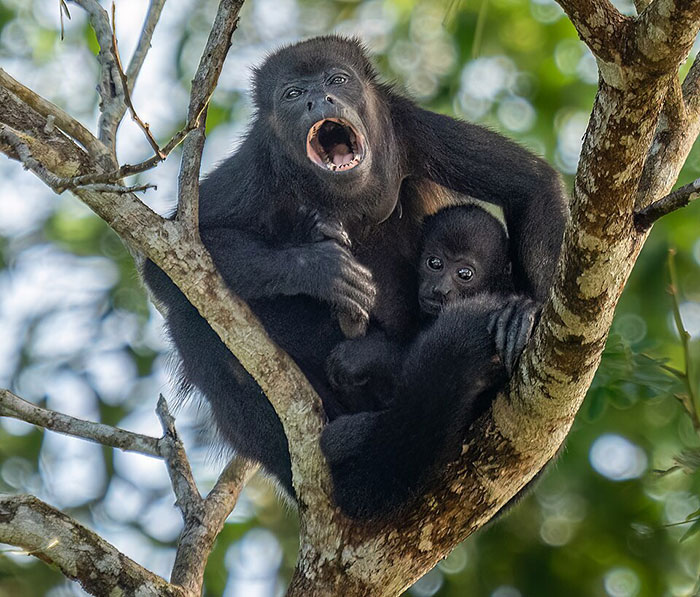
Image credits: Rhododendrites / Wikipedia (not the actual photo)
Of course the big question stumping researchers is—why? Why would the capuchins do such a thing? Was it because they wanted babies of their own?
Researchers say this kind of thing does happen, where a female monkey without a child of her own kidnaps another monkey’s baby.
But first, these are male capuchins, and second, they don’t interact with the howlers.
Image credits: natgeo / Instagram
Image credits: Max Planck Institute of Animal Behavior / YouTube
Researchers say it could just be a fad—something the capuchins do because they’re bored or looking for something risky or exciting to get into.
Zoë Goldsborough with the Max Planck Institute of Animal Behavior says, “I was shocked. I realized that it was really something that we hadn’t seen before.”
Researchers say that, for now, it appears that only one group of capuchins are kidnapping howlers.
If the capuchins were in fact just horsing around, looking for a distraction, or copying their peers, it wouldn’t be the first time such behavior was displayed in the animal kingdom.
A pod of killer whales were famously seen with dead salmon on their heads. Was it a snack or just for fashion? Scientists still aren’t sure!

By entering your email and clicking Subscribe, you're agreeing to let us send you customized marketing messages about us and our advertising partners. You are also agreeing to our Privacy Policy.
Thank you! You've successfully subscribed to newsletters!
1k+views
Share on Facebook
So it turns out our distant cousins are as evil as we are. Fascinating.

I think most of us humans feed our pets though
Load More Replies... So it turns out our distant cousins are as evil as we are. Fascinating.
I think most of us humans feed our pets though
Load More Replies...




































 No fees, cancel anytime























32
3