Get Premium
Dark mode theme is available exclusively for premium users. Learn more about the benefits of subscribing.
No fees, cancel anytime.

 Dark Mode Ad-Free Browsing Unlimited Content
 Ad-Free Browsing Unlimited Content Dark Mode
Join 1.2 million Panda readers who get the best art, memes, and fun stories every week!
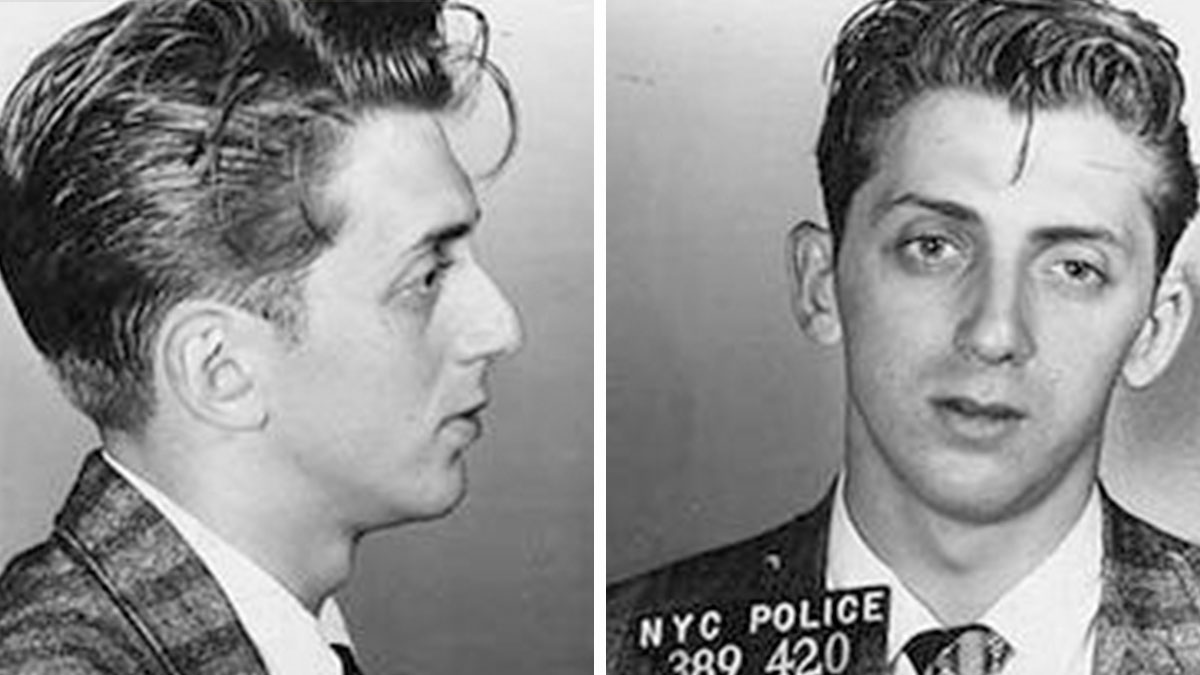
In 1601, the famous Danish astronomer Tycho Brahe was sitting at the emperor's table in Vienna at a gala dinner held in his honor. Brahe was 54 years old, a star of European science, and he had a huge number of plans ahead. During dinner, the scientist felt a strong urge to go to the restroom, but he felt it would be impolite to get up and leave in front of the emperor, so he remained seated.
As a result, Brahe suffered a ruptured bladder and passed away a few days later. An absurd, albeit terrifying, story, isn't it? However, it only proves once again that our world can sometimes be a hell of a dangerous place to live. And here are a few dozen more stories clearly confirming this.
More info: X
This post may include affiliate links.
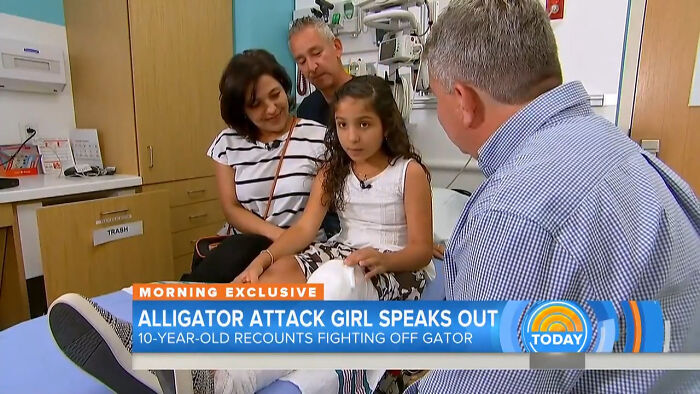 In 2017, 10-year-old Julianna Ossa was among a group of schoolers on a field trip to a wildlife park near Orlando, Florida. Before the excursion, park staff gave the kids detailed instructions on what to do in the event of, say, an alligator attack, and Julianna seemed to pay close attention.
During their walk, the girl wandered off the trail and was attacked by a ten-foot-long alligator that latched onto her leg. She tried to punch it in the head, but it was ineffective. Then, remembering her instructions, Julianna pinched the predator's nostrils with her fingers, cutting off its breath.
The alligator was forced to release its jaws, and Julianna managed to escape. She required 14 stitches to her leg, but the most important thing is that the schooler survived.

 In February 1992, 79-year-old Stella Liebeck spilled a hot cup of coffee onto her lap in Albuquerque when her grandson dropped her off at a local McDonald's drive-thru. The lady was hospitalized, and doctors diagnosed her with third-degree burns.
Liebeck later sued the company, demanding $20K in medical expenses and emotional distress. McDonald's, however, was only willing to compensate her for $800. During the trial, the victim's lawyers proved that the restaurant staff kept the coffee too hot and increased their demands.
The jury's verdict was stunning: Liebeck was awarded $160K in medical expenses and $2.7M in emotional distress. She later reached an undisclosed settlement with the company, but her story nonetheless became legendary.
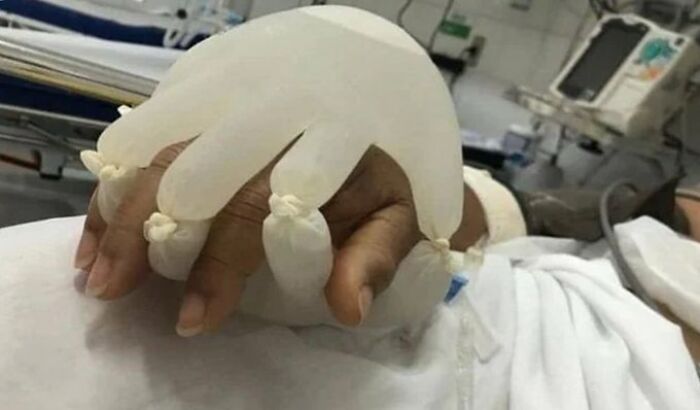 In 2021, intensive care nurses in the Brazilian city of São Carlos came up with a smart idea for supporting COVID-19 patients in isolation. The nurses filled latex gloves with warm water, tied them like balloons, and placed them around the patient's palm. This created the impression of someone constantly holding the patient's hand.
Perhaps one of the main problems in our lives is not even that humans are mortal, but that humans are, in fact, suddenly mortal. So disaster can strike literally from around the corner, and a person who was yesterday full of life and plans effectively vanishes into oblivion. Or their lives change drastically, by some strange twist of fate.
The internet is full of resources collecting strange and terrifying stories from around the world. For example, there's this dedicated page on X, called "Daily Scary Facts." So today, we offer you a selection of the most thrilling tales from that page.
Indeed, some of the stories featured here could even be called life-affirming, but most importantly, their heroes faced numerous challenges in life. And, unfortunately, they weren't always able to overcome these challenges...
 In 1988, 2-year-old Mao Yin was kidnapped in China while his father was taking him home from daycare. The toddler asked for water, they went into a store, his dad was distracted for a few minutes, and when he turned around, the kid was gone. His parents spent decades searching for their son, and his grieving mom, Li Jingzhi, helped 29 other lost children reunite with their parents.
In 2020, Mao Yin was finally found. Police artificially "aged" a photo of the child, suggesting what he might have looked like at that age. The resulting composite image was then compared with surveillance footage from across the country, and a similar man was found 1K miles from his hometown.
DNA testing confirmed that it was indeed him. It turned out that the boy had been kidnapped and sold to a childless couple, who later adopted him. Thus, the mother’s quest, which lasted 32 long years, came to a successful end.
 In 2010, in Paris, parents went shopping, leaving their two children home alone: a 4-year-old girl and a 15-month-old boy. The baby ended up falling 80 feet from a balcony but survived without any injuries.
The kid first landed on an awning stretched beneath a window, and was then deftly caught by 58-year-old Dr. Philippe Bensignor, who was strolling down the street with his son, Raphaël. The doctor immediately examined the baby and confirmed that he was alive and well. Well, that's probably a one-in-a-million chance of survival.
 In 2006, railroad worker Truman Duncan was hit by a train, and the accident severed his body above the pelvis. Doctors questioned his survival until the very end, but paradoxically, Truman remained conscious despite pain, shock, and massive blood loss.
Furthermore, he called an ambulance for himself and held on until the doctors arrived. After numerous surgeries and a long recovery, Duncan was able to return to an active life.
It often happens that a person's life takes completely unexpected turns in just a couple of years. For example, as happened with Prince Napoleon IV, who was born into the family of the Emperor of France and showed brilliant promise. However, in 1870, his father became involved in a dubious military adventure that ended in the defeat of his army and the fall of the French Empire.
The deposed emperor left for England, and his son, still a talented teenager, joined the British army and made a respectable career in just a few years. Many considered the young Prince Napoleon a rising star of European politics, but while serving in Africa, he perished unexpectedly, albeit heroically, in a routine skirmish.
However, the memory of Napoleon IV still remains. As does his nickname: "The Little Prince." Yes, if you know or have read the famous novella of the same name by the French writer Antoine de Saint-Exupéry, then now you definitely know who it's named after and who inspired the protagonist.
 In 2009, Paul Lewis, a British skydiver, was filming for a parachute center in Shropshire. He jumped out of a plane at 10K feet and spent nearly forty seconds unsuccessfully trying to open his main parachute. Lewis then tried to open his reserve parachute, but was also unsuccessful.
Luckily for him, the wind carried him onto a flexible section of a warehouse roof near the airfield. Lewis blacked out about 2.5K feet before impact, so he has no memory of how he survived. However, it turns out he didn't even break a single bone!

Some more information, his reserve parachute did open but was uncontrollable. He landed at a slow speed but had no control over where he landed. Photos after the accident show his left arm in a sling.
 In September 1925, a trolleybus collided with the bus, where the 19-year-old Mexican schooler Frida Kahlo was riding with her then-boyfriend Alejandro Gómez.
As a result of the accident, Frida suffered severe injuries: a triple fracture of the lumbar spine, a broken collarbone, broken ribs, a triple fracture of the pelvis, eleven fractures of the bones in her right leg, a shattered and dislocated right foot, and a dislocated shoulder. Her abdomen was also literally pierced by a metal handrail.
Frida's mother was struck dumb with horror for months, and doctors doubted Frida would survive. After returning home, Frida asked her dad, photographer Guillermo Kahlo, for brushes and paints, and painted a self-portrait for her boyfriend, who was also injured, though less severely.
Her relationship with Alejandro Gomez never worked out, but Frida's love for art remained with her throughout her entire life, and she became one of the most famous artists of the 20th century.
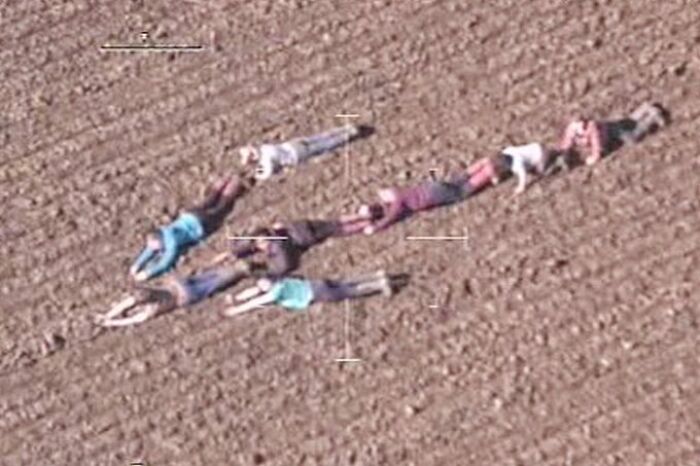 In March 2016, in Capel, Surrey, UK, police officers in a helicopter pursued two burglars fleeing retribution. But they were unlucky – several dozen kids and adults participating in a traditional Easter egg hunt spotted the criminals and quickly formed an arrow on the ground, indicating the direction in which the criminals had escaped.
Sometimes history throws up deliberately strange coincidences. For example, everyone knows that President Abraham Lincoln was assassinated in 1865 by actor John Wilkes Booth. But few people actually know that the president's son, Robert Lincoln, was nearly hit by a train at Washington Station in 1864, and was saved by the famous actor Edwin Booth, John's older brother.
An incredible coincidence, isn't it? Incidentally, this story later saved Edwin Booth's career, as saving the president's son proved he was unaware of his brother's criminal plans. Robert Lincoln also later became an outstanding statesman, serving as the US Secretary of War under President Arthur.
 In 2012, Rachel Bailey, a 23-year-old resident of Phoenix, Arizona, was lucky to survive an internal decapitation following a serious car accident. Her skull was essentially torn from her spinal column, held in place only by the skin of her head, neck, and spinal cord.
Yet, fortunately for Rachel, her spinal cord remained intact, so after several surgeries, she was able to return to a full life. Incidentally, something similar happened five years earlier to Shannon Malloy of Nebraska, who also suffered an internal decapitation following a car crash and survived not only with her life but also her health.
 In 2013, actress Isla Fisher was filming a scene in the movie Now You See Me where she had to escape from a piranha tank. However, the actress got stuck in the chains and ended up underwater for nearly three minutes.
The film crew initially mistook her desperate attempts to free herself for brilliant acting, but then someone raised the alarm, and Fisher was rescued. Fortunately, nothing serious happened to her health, but such a situation can develop into aquaphobia in literally anyone.
A special place among the stories told here is occupied by tales of mysterious disappearances, many of which occurred quite recently. One moment, a person was there, walking the Earth, interacting with others, and the next, they are simply gone, and no one knows what happened to them. Perhaps this uncertainty is the most terrifying thing in all stories.
So, the modern world, filled with surveillance cameras and the AI that operates them, may seem like a blatant violation of our privacy, but sometimes it actually helps. It helped, for example, a grieving mother in China who found her abducted son 32 years after he was stolen. Ah, and by the way, their miraculous story is also in this selection.
 In October 2018, Karlie Guzé, a 16-year-old high school student from California, attended a small party with her boyfriend. That night, she felt ill and called her stepmother, Melissa, asking for a ride home. Her parents arrived and took her home, and around 9 PM, she went to bed. However, the next morning, Melissa discovered that her stepdaughter wasn't at home.
Karlie's phone and all her belongings remained in her bedroom. Her brothers and parents searched the area but were unable to find her. Witnesses saw Karlie walking alone early that morning along a road about a couple of miles from her home, but no one knew where she was going. Karlie Guzé was officially declared missing.

May this young woman and her family find the comfort and resolution they deserve.
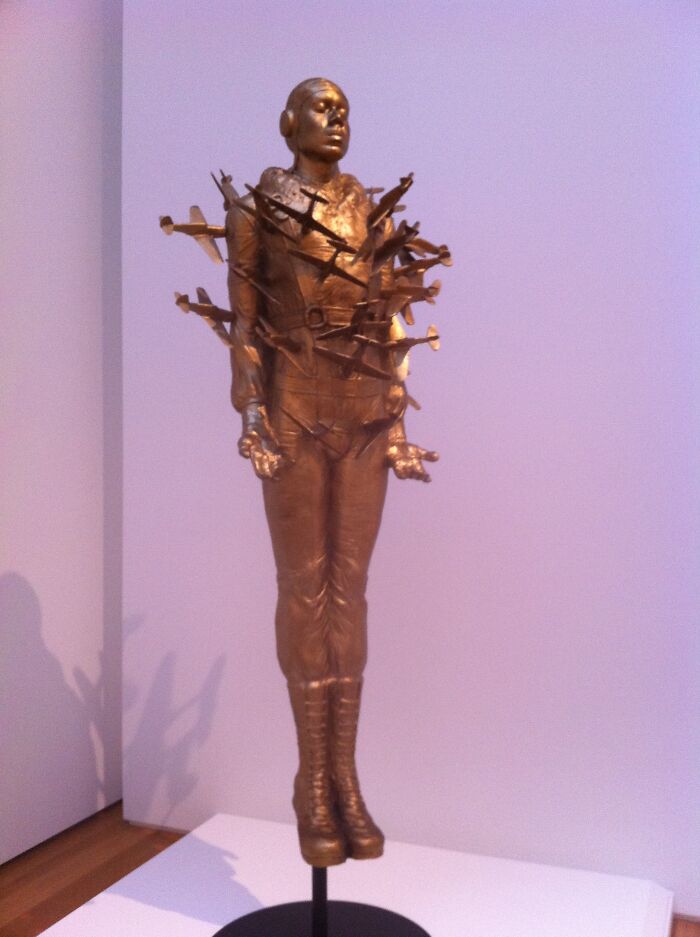 In this photo, you can see one of the sculptures by Michael Rolando Richards, an American artist who was one of the victims of 9/11 in New York City. His art studio was on the 92nd floor of the World Trade Center's North Tower.
Incredibly, this sculpture dates back to 1999 and depicts Saint Sebastian, an early Christian martyr who, according to legend, was executed by arrows. As we can see, Richards may have had a premonition…

WOW! Talk about a TIL! The name of this piece is “Tar Baby vs. St. Sebastian”. This features a Tuskegee Airman, portrayed as St. Sebastian and was part of Richard’s “Tuskegee Airmen Collection”.
 In 2022, American Caitlin Jensen went to a chiropractor for a routine neck adjustment, but her life changed dramatically afterward. Following the session, the 28-year-old woman sought medical attention, complaining of nausea and dizziness.
At the hospital, she was diagnosed with ruptured arteries in her neck, which led to a stroke and cardiac arrest. Jensen survived but was left paralyzed on the entire right side of her body, unable to walk or speak.
 Henrietta Lacks, a Virginia farmer's wife, passed away from cervical cancer at the age of 31 in 1951, but her cells, thanks to their unique properties, continue to be actively used in science and medicine even today.
The key is that after analyzing the cells, a so-called "biopsy" taken during Henrietta's lifetime, it was discovered that they reproduced twice as fast as normal tissue cells, and their growth suppression program shut off after a certain number of divisions – in other words, they were effectively immortal.
The cell culture, dubbed HeLa, has since been used to create hundreds of meds, traveled to space, and actually became a true breakthrough in science. Paradoxically, Henrietta Lacks' own grave, where a monument would ideally stand, hasn't even been found today.

Many of the stories told in this collection are completely unknown to the general public, although they've appeared in the news over the years, and some have even caused a kind of public shock and a true wave of hype.
So now, our dear readers, please feel free to read this collection of tales, and if you know some similar stories, feel free to add them in the comments below.
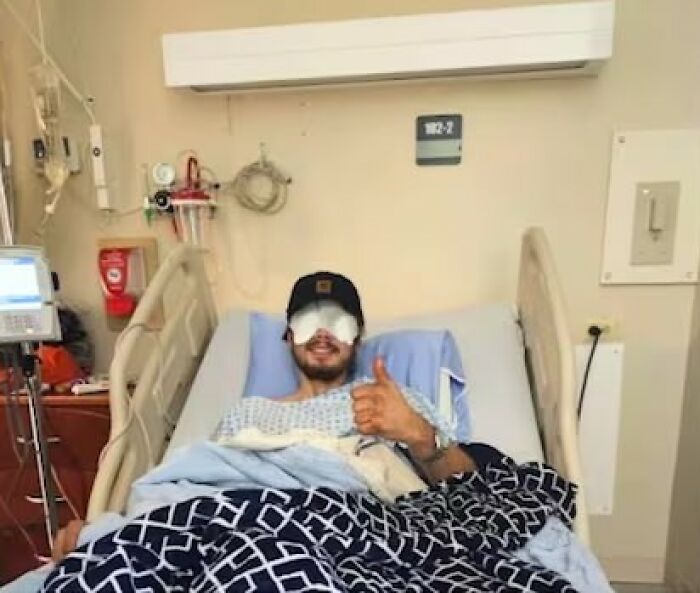 In October 2024, Canadian Sam Benastic, 33, was officially declared missing after a month of fruitless searching in the remote wilderness of British Columbia. He had gone to Redfern-Caley Park for a 10-day camping holiday, but disappeared a few days later.
In November of that same year, two men heading to work found him, struggling to walk, exhausted, but alive. He was walking with two poles and a cut-up sleeping bag wrapped around his legs.
According to the hapless tourist, he remained in his car for several days before setting out to search for people. After nearly 50 days in the wilderness, Benastic was diagnosed with frostbite and extreme fatigue, but otherwise remained healthy.
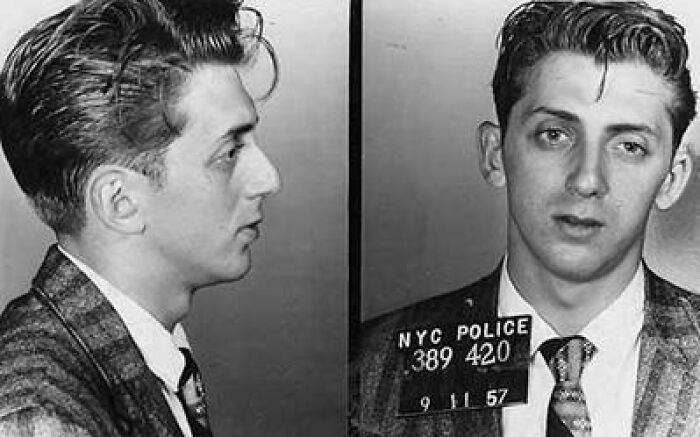 In 1986, Jerry Rosenberg, serving a life sentence in an American prison, suffered cardiac arrest during surgery in the prison hospital. However, doctors were able to revive him a few minutes later.
Rosenberg, who by then had become famous among prisoners as a jailhouse lawyer, attempted to challenge his sentence, arguing that his life sentence ended when he was actually unalive in prison. This didn't lead to his release (Rosenberg passed away behind bars a few decades later), but it did initiate a series of witty legal cases.
 In 2018, Jacqueline Ades of Arizona felt dumped by her date after just one meeting with him. The woman was apparently deeply offended, so over the next few months, she sent him 159K texts, ranging from amorous to offensive, and even outright threatening.
Paradise Valley police even stopped the woman while attempting to break into the man's home. Later, after being released, she went back to his office, claiming to be his wife. Apparently, her obsession with that guy had reached painful proportions.
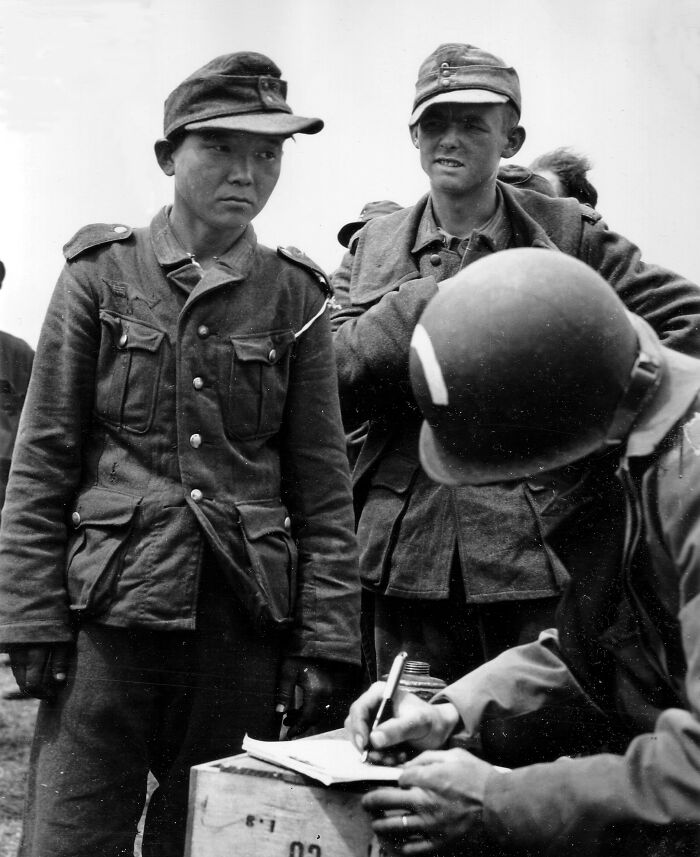 In 1944, American soldiers took a photograph dubbed "Japanese prisoner in N*zi uniform," which indeed showed an Asian man in a German uniform among captured Wehrmacht soldiers.
For nearly half a century, this photograph lay peacefully in archives until, in 1994, historian Stephen Ambrose uncovered documentary evidence of Koreans fighting alongside the Germans. Years later, British historian Antony Beevor claimed to have identified the soldier as a Korean, Yang Kyung-jong.
According to the historian, Yang was born in Korea, which was then occupied by Japan, and was conscripted into the Japanese army. He was captured by Soviet troops and later sent to Europe as a "volunteer." There, during the Battle of Kharkiv in 1942, the Korean was captured by the Germans, who, in turn, offered him the opportunity to join the German army.
In 1944, as a Wehrmacht soldier, Jan was captured by the Americans, after which he emigrated to the United States, where he lived the rest of his life, until 1992, in Illinois. His story is likely true, thus once again highlighting how bizarre human fate can be.
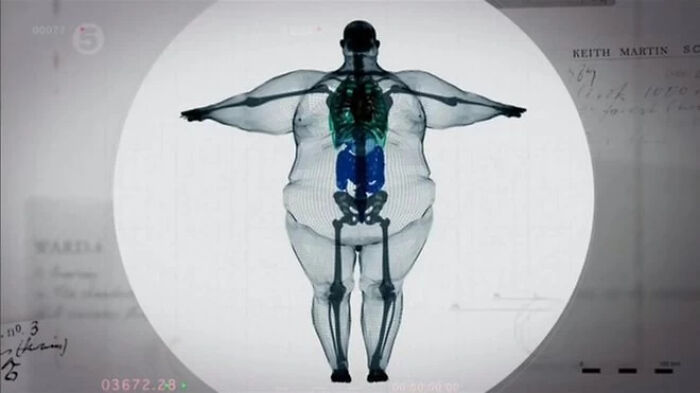 In 2014, 45-year-old British Keith Martin passed away from pneumonia shortly after undergoing surgery to remove three-quarters of his stomach. Martin, weighing over 900 pounds, was considered the heaviest person on the planet, and his diet amounted to around 20K calories per day.
According to those who knew Martin, he suffered from a severe eating disorder and literally "stress-ate." He is survived by two sisters, who cared for him until his final days. The image shows his scan during one of his medical checkups.

Correction - he was so immobile that his 2 sisters 'cared' for him by giving him 20K calories a day.
 In 2013, 67-year-old Belgian Sabine Moreau drove to visit a friend in Brussels, using her car's GPS navigation system as a guide. She likely trusted the device's directions completely, but the trip, which was supposed to be around 90 miles, ended up being 900.
It turned out that she had entered her friend's address and the GPS "found" it in the Croatian capital of Zagreb. During her two-day trip across Europe, Moreau filled up the car twice, had a minor road accident, and even managed to sleep while parked on the side of the road.
I think, around the time I decided to sleep in the car that I might realize something was amiss
 A so-called "cutaneous horn" is a specific, gray-brown, cone-shaped skin growth that occurs in some people, most often in old age. These growths are typically small, but in some cases, they can reach several inches in length.
For example, this Chinese woman, Liang Xiuzhen, had one on her head. Over time, the horn grew to a length of approximately ten inches. Doctors suggested surgery to remove the growth, but her family and the patient herself, fearing potential complications, refused.
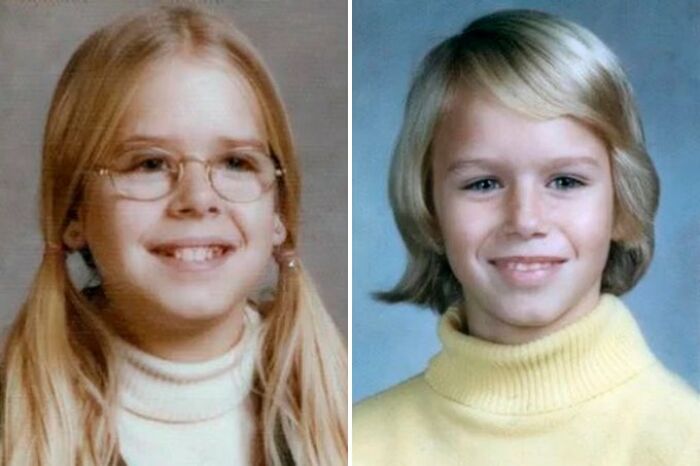 On March 25, 1975, the Lyon sisters, 10-year-old Katherine and 2-year-old Sheila, went missing from a shopping mall in Wheaton, Maryland. A lengthy search for the girls proved unsuccessful. However, many years later, detectives reviewing the case decided to reopen it.
In 2013, detectives uncovered evidence from a man named Lloyd Welch Jr., who had claimed to have information on the case back in 1975. Welch accused a relative of being responsible for the girls' disappearance, but after questioning in 2014, he was charged with the crime himself.
In 2017, Welch confessed to the crime, which he apparently committed in the basement of his parents' home. The final resting places of both girls, however, have never been found.
 Fields' condition is considered perhaps the rarest disease in the world – only three cases are known, two of which occurred in twins: sisters Katherine and Christie Fields from Wales. The girls began experiencing mobility issues at the age of 4; by age 11, they were no longer able to feed themselves, and by age 14, they had lost the ability to speak.
Today, both sisters are under the care of their parents. They use wheelchairs and require constant care. However, the Fields sisters' mental abilities remain unchanged, as doctors currently believe the disease is purely neuromuscular in nature. Unfortunately, Fields' disease is currently considered incurable.
I'm a member of a group called Unique!, whose members have unique (or very rare) genetic diseases. There are thousands of us whose disease is limited to one individual. And of course they're incurable.
 In 2023, a 53-year-old French woman named Anna fell victim to scammers who contacted her pretending to be Brad Pitt and started a "remote affair" with her. The scammers sent her AI-generated "selfies" of the actor, who was supposedly recovering from surgery, and asked for financial assistance.
Over the course of several months of this "relationship," Anna lost around €830,000 (almost a million dollars). The woman's 22-year-old daughter tried to reason with her mom, but the lovesick Anna refused to listen. It was only after the real Pitt officially announced his relationship with the model Ines de Ramon in 2024 that Anna became suspicious and contacted the police.

How awful for her. I hope she managed to get some of her money back, or at least moved on from it.
 In 2006, British intelligence agencies uncovered a large-scale terrorist plot in which the attackers planned to detonate liquid bombs, disguised as drinks, smuggled on board an airplane. It is believed that thousands of people could have suffered in a potential series of terrorist attacks.
Since then, the vast majority of airlines worldwide have imposed strict restrictions on the volume of liquids passengers are allowed to carry on board.
There was never an actual case and the ban is insensible if you can carry many small bottles of a fluid on unchecked. Security theater.
 In 2017, a British burglar planned to break into a private property to steal. He wanted to enter through a slightly open window, but his plan was thwarted when he became stuck halfway through, unable to get in or out.
A few hours later, the hapless thief was spotted, and the arriving police, before arresting him, indulged in a selfie with the burglar-to-be stuck in the window.
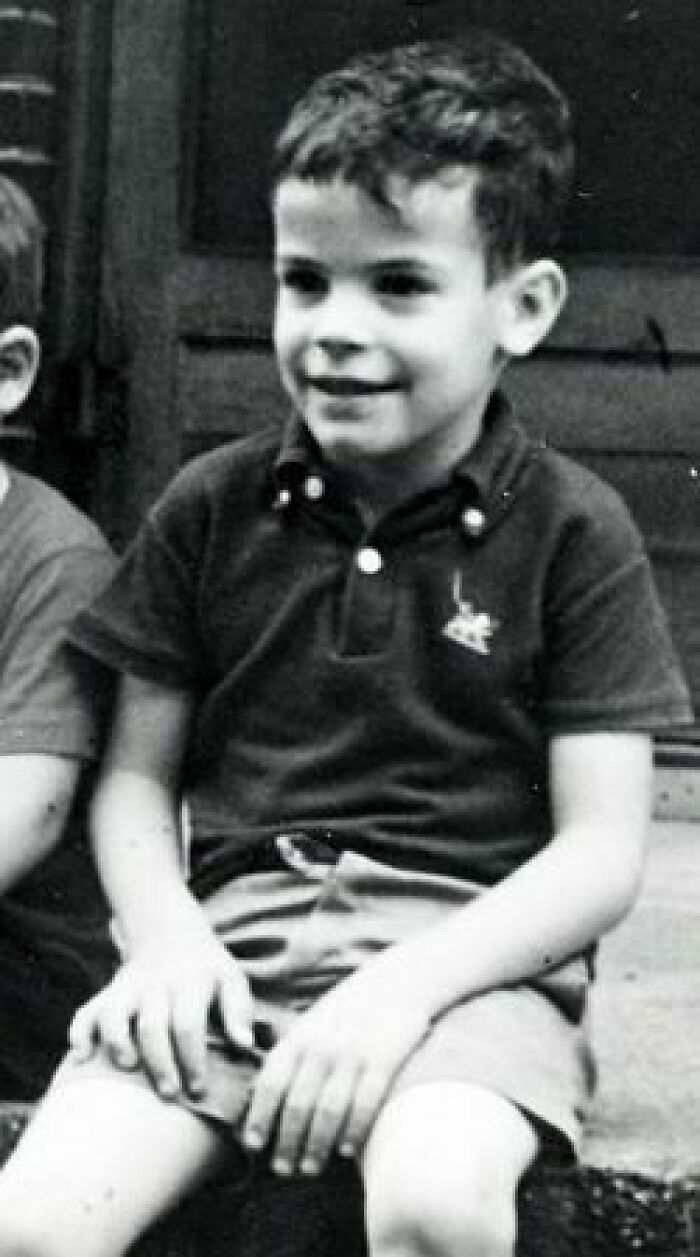 In June 1969, 6-year-old Dennis Lloyd Martin, camping with his father, grandfather, and older brother in the Great Smoky Mountains National Park in Tennessee, tried to play a prank on his elders by hiding in the bushes. The boy was never seen again...
The subsequent search operation was the largest in the history of the national park, but a rain washed away all traces, and Dennis was never found. One theory is that he became lost and perished from exposure or some other cause.
A second theory holds that the child fell victim to a large predator, possibly a bear. A third theory, supported by the boy's dad, is that he was kidnapped. However, more than half a century has passed since then, and the mystery remains.
 In January 1992, US President George W. Bush visited Japan for a 12-day visit, but the visit was marred by several unpleasant incidents. First, during a meeting with Japanese Prime Minister Kiichi Miyazawa at his residence in Tokyo, the president vomited onto Miyazawa's lap, most likely due to an acute attack of gastroenteritis.
However, this incident, which was even caught on camera and later mocked on Saturday Night Live, was followed by another. A random Idaho guy named James Edward Smith later called CNN and posed as the president's physician, claiming Bush had passed away in Japan.
The story also leaked, and the White House press office was forced to issue a denial. By the way, for several years afterward, the slang expression "Bushu-suru," which means "to pull a Bush," (or "Bushing it"), became quite common in Japan.
 In 2016, one participant in a ghost pepper contest nearly had a disastrous end. After the man fell ill right next to the pepper table, emergency doctors discovered an inch-wide hole in his esophagus. The poor guy even had to spend several days in the hospital with a feeding tube.
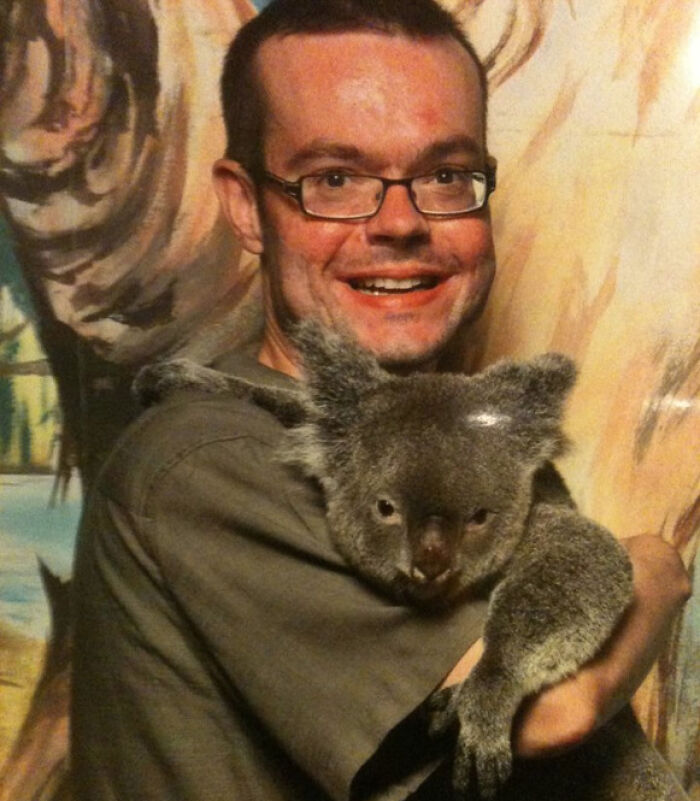 In 2018, 38-year-old accountant Darren Carville from Kent, UK, became a true news "hero." Tired of constant bullying at work, he claimed to have stolen £170K ($227K) from his employer, bringing the company to the brink of bankruptcy.
However, company representatives claim that Carville had simply been stealing little by little over several years, and when he was threatened with exposure, he stole a large sum and went on the run. Incidentally, the Briton spent the stolen money on entertainment within just a couple of weeks.
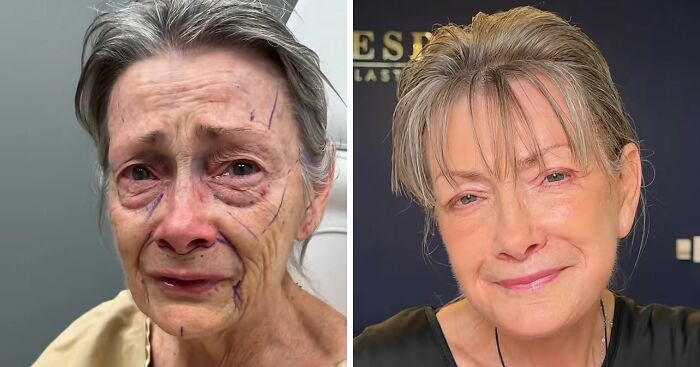
 In 2009, model Carol Bryan from Florida went to a plastic surgeon for filler injections for a facelift. Unfortunately, everything went wrong, and the fillers caused a severe allergic reaction in her face. As a result of the severe swelling, she could barely see.
She had to tape her eyes shut just to walk and hide under hats and sunglasses. It was only three years later that another team of plastic surgeons was able to at least partially reverse the effects of the botched surgery.
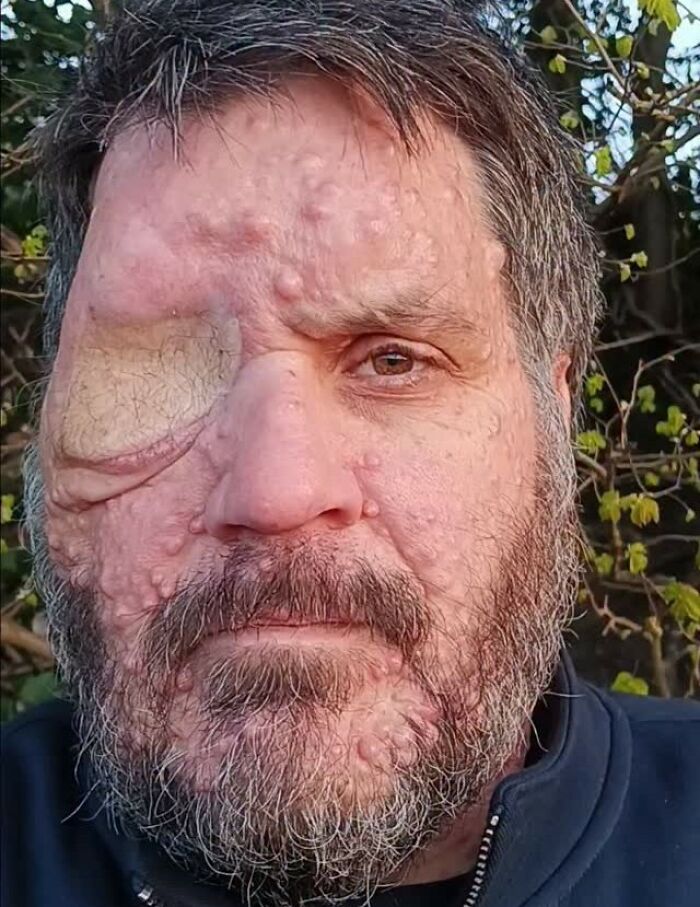 Oliver Bromley lives in London and suffers from neurofibromatosis type 1, a condition that causes noncancerous tumors to grow in his nerves. As a result, his face is covered in swellings and blisters, but they are completely non-contagious.
However, when he visited a restaurant a couple of years ago, the staff politely but firmly asked him to leave because his appearance allegedly "frightened their customers." Mr. Bromley left but later filed a complaint with the police – after all, he had experienced typical discrimination.
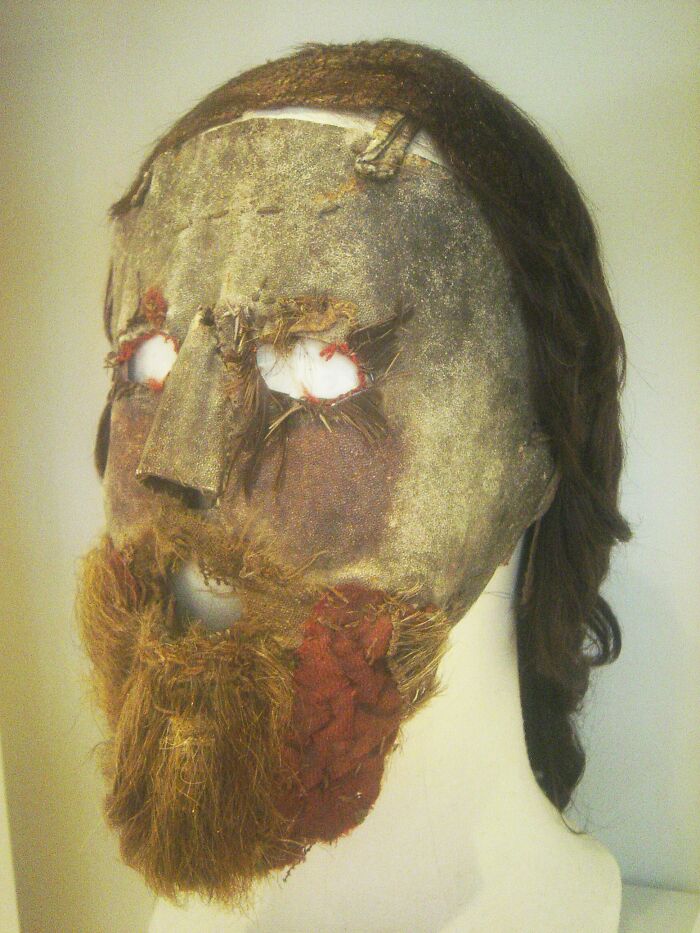 Alexander Peden was an itinerant Scottish preacher in the 17th century, and to avoid recognition, he wore this mask, made of skin (thankfully not human) and human hair. Peden was an excellent orator and a crowd favorite. He made many predictions, many of which came true.
However, the royal police managed to catch him and throw him behind bars one day, and when he was released a couple of decades later, his sermons no longer had the same impact.
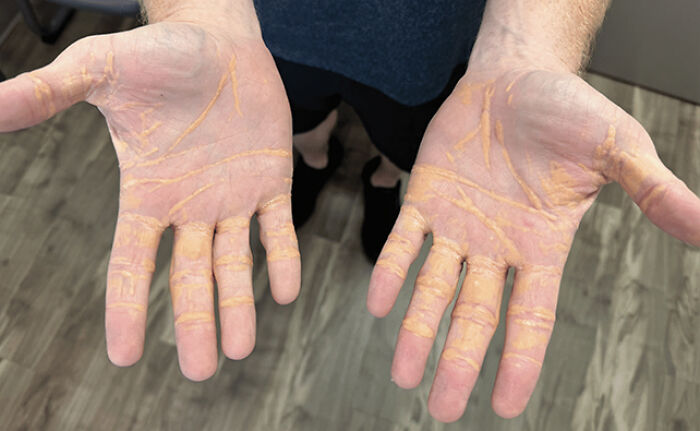 These are so-called "cholesterol hands" – the result of a dangerous experiment conducted by a Florida guy who deliberately ate 6 to 9 pounds of butter and cheese every day for eight months.
The result was "xanthelasma," a condition in which cholesterol creates visible deposits on the hands. Besides being an aesthetic concern, this also poses increased health risks.


































 No fees, cancel anytime